Hi, this is Daniel Garber at the Movies for culturalmining.com and CIUT 89.5 FM.
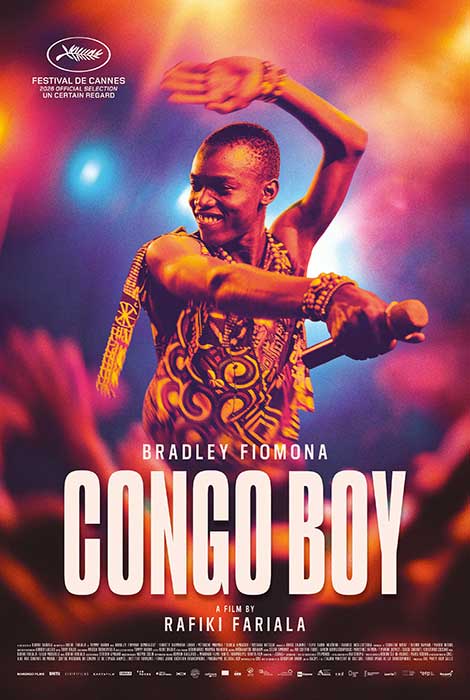
Fall Film Festival Season continues in Toronto in November with Cinefranco, showing French-language movies from around the world, from experimental shorts to crowd pleasers, films that you will probably never get another chance see on the big screen. They’re collaborating with Toronto’s own Le Labo, celebrating its 20th anniversary. The festival opens with Martin Villeneuve’s Imelda contre-attaque, and features Congo Boy, a coming of age story set in Central Africa, Daniel Auteuil’s La troisième nuit, and Quebec’s Pauline Julien, femme pays starring the Suzanne Clément as the singer and political icon. Cinefranco runs Nov 6-15 at the Carlton Cinema.
But this week, I’m looking at three great new dramas that played at TIFF, from Poland, Korea and the US. There’s a writer and his daughter examining the love of their fatherland, a documentary filmmaker who wants to “love” her subjects; and a pickpocket who robs the wrong guy.
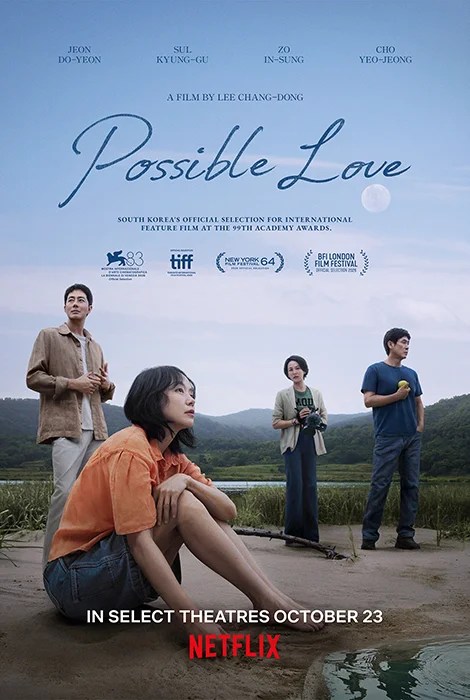 Possible Love
Co-Wri/Dir: Lee Chang-dong (review: Burning)
Ye-ji (Cho Yeo-jeong) is a documentary filmmaker in Korea. She follows certain journalistic and artistic rules: Choose a genuine story, never force your subject to say what you want, always be ready with a camera, and, above all, learn to love your film’s subjects. Her goal? A film about labour strikes in heavy industry. And she thinks she’s found the perfect subject: Ho-seok (Sul Kyung-gu) a brooding and angry former steel worker at a corporation bought up by vulture capitalists intent on breaking the company apart. He led a general strike that was brutally suppressed. She would love to capture his raw emotions on video, but he doesn’t trust her camera. Instead, she makes friends with his talkative wife Mi-ok (Jeon Do-yeon) who works in a tiny, face-mask factory. Ye-ji hopes this will eventually lead to an interview with her husband. And following her stated goal — to learn to love her subjects — Ye-ji’s becomes Mi-ok’s best bud, spending time together with her camera. Even her husband (Zo In-sung) — a tall and handsome executive at some a mysterious financial firm — is urged to hang out with them. But Mi-ok begins to realize they may be friends, but Ye-ji is much richer than she is. Her designer purse alone costs more than Mi-ok’s monthly paycheque. And everything comes to a head when Ye-ji invites them to her husband’s country home for a vacation and to finish shooting her doc.
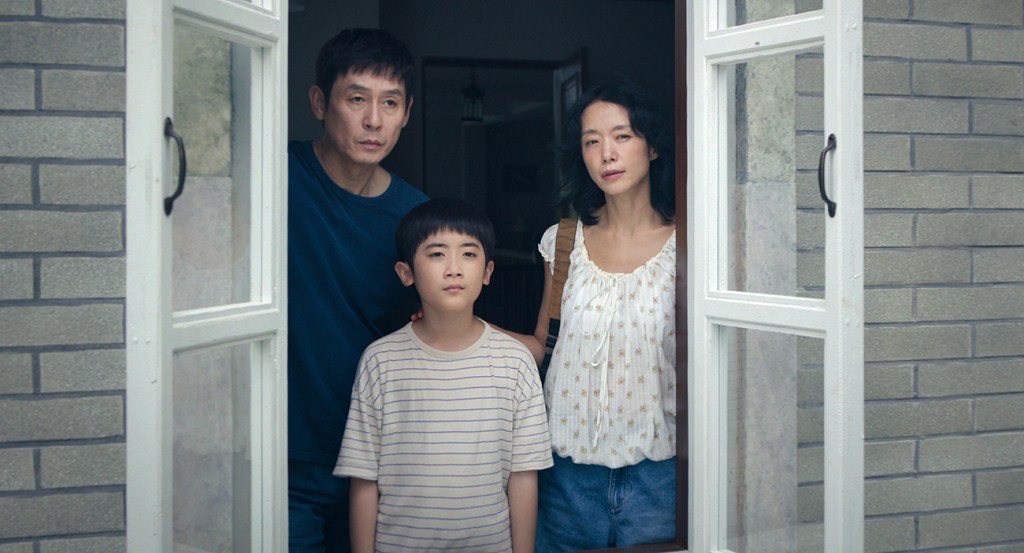
Possible Love is an amazing drama, a powerful look at two couples who form a fragile friendship across a deep class divide. It’s emotional and shocking, the kind of movie you have to think and talk about afterwards until it finally sinks in. The acting and writing is superb; exactly what I expect from Lee Chang-dong the director of Burning a few years ago. It’s funny; the poster and title suggest a simple rom-com about jealousy, but it is actually so much more, referencing everything from Korea’s sordid past as a colony of imperial Japan, the power of Chaebols, and the brutal suppression of union labour by corrupt officials. It’s also about sex, politics, friendship, art and love. Possible Love is a fantastic movie about making a movie.
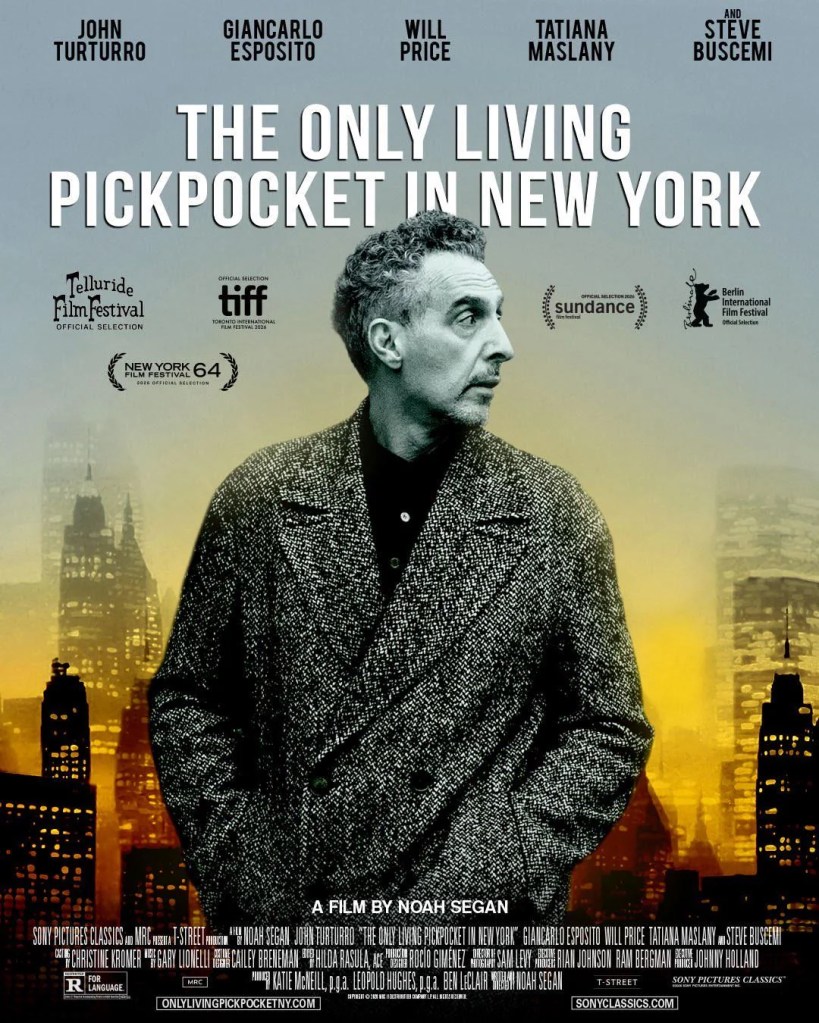
The Only Living Pickpocket in New York
Wri/Dir: Noah Segan
Harry (John Turturro) is at the peak of his career. He’s sophisticated and subtle, with skills and technique developed over half a century. None of the old snatch and grab, he thinks out each job before acting. And he sells watches and jewelry to his trusted old pal Ben (Steve Buscemi) who runs a pawn shop. He would retire but he needs a constant flow of cash to take care of his beloved wife; she’s bed-ridden, non-communicative and semi-comatose. The problem with being a pickpocket these days is people don’t carry cash anymore. Harry is an “analog thief in a digital world”.
But one day he spots a target with a whole lot of potential: a young man parking a vintage sportscar. Harry manages to score his watch, his cash and a bag of miscellaneous loot, without the kid even realizing he’d been robbed. But turns out he robbed the wrong guy. Dylan (Will Price) is the son of a gangster. More than that, Harry doesn’t understand the significance of something he stole, a MacGuffin worth a phenomenal amount of money. And once Dylan tracks him down and threatens his wife’s life he realizes he has to carry out his final job. Which sends him on a wild goose chase across the five boroughs of NY. Can Harry get back what Dylan wants? And what will happen next?
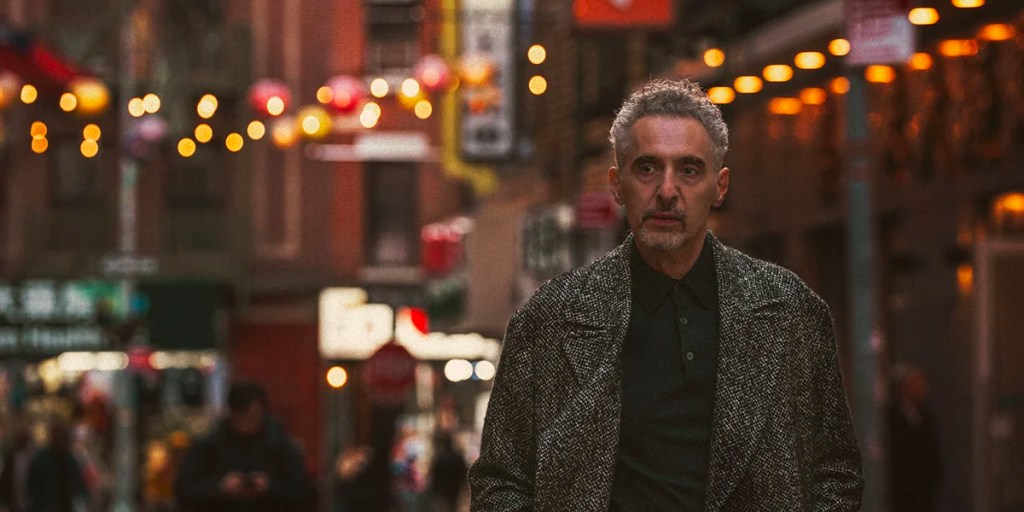
The Only Living Pickpocket in New York is a mystery/heist movie about a city that doesn’t exist anymore. Its stars — Turturro, Buscemi, Giancarlo Esposito (as a police detective) and Jamie Lee Curtis in a surprise role — are late Boomers who were the core of indie movies of the 80s and 90s (Spike Lee, Coen Brothers). Lots of familiar faces of actors all in their late 60s. It also has a wicked soundtrack written for the film that mixes jazz and soul. So I like Only Living Pickpocket, a good movie, totally watchable, it just feels like it’s missing something… it’s a nostalgic tribute to a long-gone New York.
Fatherland
Co-Wri/Dir: Paweł Pawlikowski
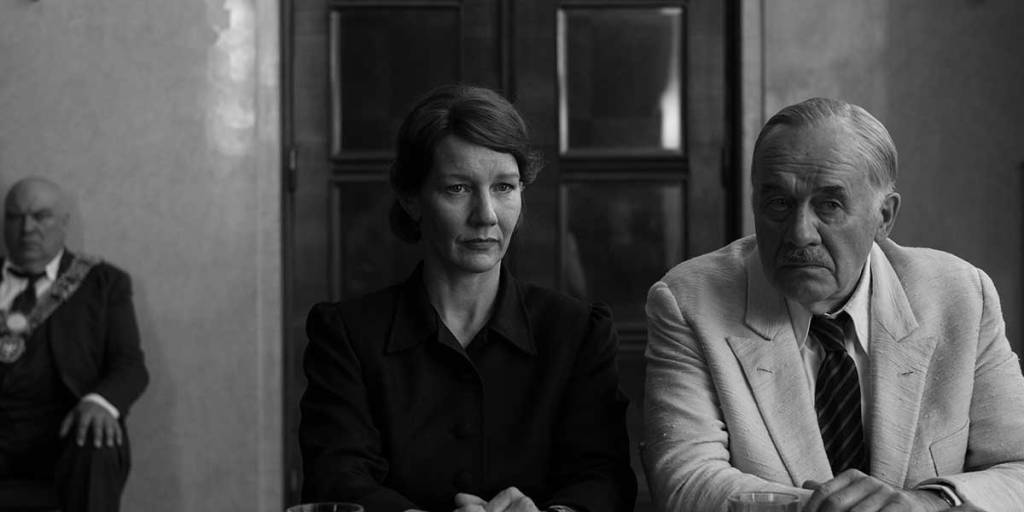
It’s 1949 in Frankfurt, West Germany. Nobel Prize winning Novelist Thomas Mann (Hanns Zischler) is there to receive the Goethe Prize. (He’s the author of The Magic Mountain, Buddenbrooks and Death in Venice.) He’s accompanied by his daughter, Erika (Sandra Hüller), a former actress who serves as his translator and assistant. But his estranged son
Klaus (August Diehl) a virulent anti-fascist, is nowhere to be seen. Thomas imagines the playwright, hidden away in a louche hotel in Cannes sharing a hypodermic with a prostitute. It would be the first time for any of them to set foot in a country they fled into exile in 1933 when Hitler came to power. Klaus is sickened by the idea of returning to the Fatherland. Erika is equally uncomfortable, but Thomas insists. He must give a speech about Germany’s soul and culture; does the land of Bach, Goethe and Schiller, still survive despite previous 15 years? But his fatherland is not the same, so he’s giving two speeches: one in Frankfurt, rife with former Nazis and American CIA agents; and the other in Weimar, ruled by the Soviets. And everyone is asking, which side is he on — Stalin or Mickey Mouse?
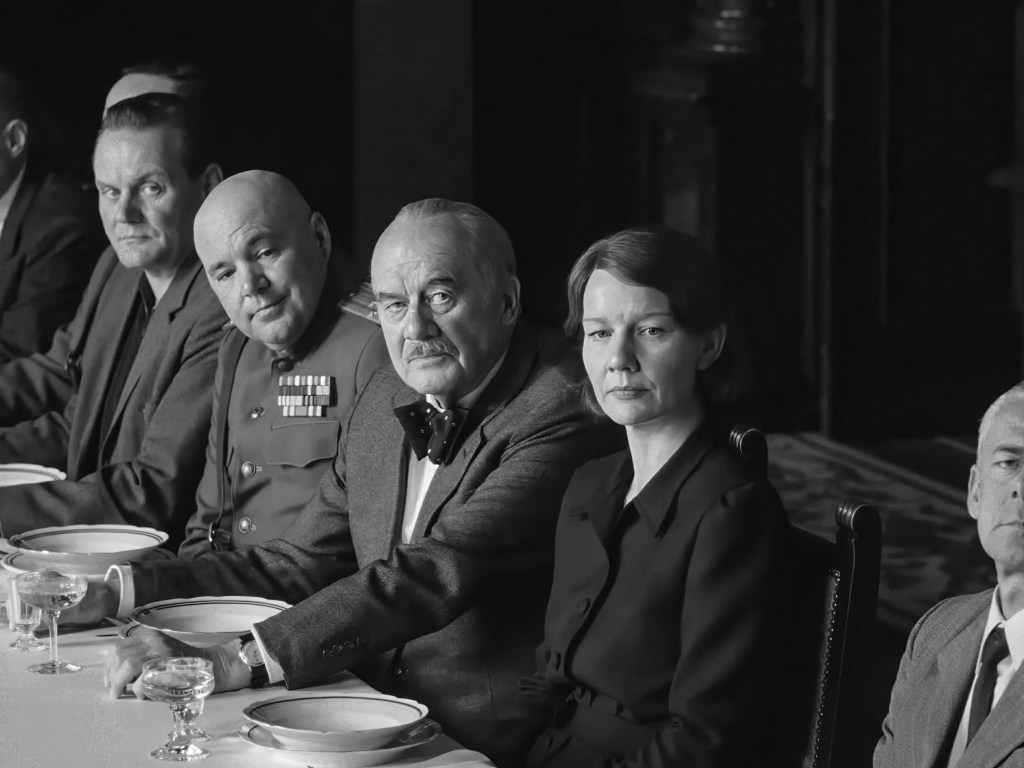
Fatherland is a fictionalized, historical drama based on actual events. It’s Polish director Paweł Pawlikowski’s third film in a trilogy, along with Ida and Cold War. They’re all set in central Europe in that tumultuous period after WWII. Like those other two films, Fatherland is beautifully composed and shot in stark black and white (mainly in Poland). And, like the others, his storytelling style is spare, including only what is crucial to the plot. This one clocks in at just 82 minutes but feels fully complete. It’s the most subtle of the three, but I found it deeply moving. Sandra Hüller is as (almost) always, sharp and emotionally expressive. I am an avid reader of Thomas Mann’s work, so it’s uncomfortable to see this bitter-sweet portrayal of him as someone out of touch, but his character is fully redeemed by the end.
I really liked this movie.
Fatherland, The Only Living Pickpocket in New York and Possible Love are all playing at the TIFF Lightbox in Toronto; check your local listings.
This is Daniel Garber at the Movies, each Saturday morning, on CIUT 89.5 FM and on my website culturalmining.com


Leave a Reply