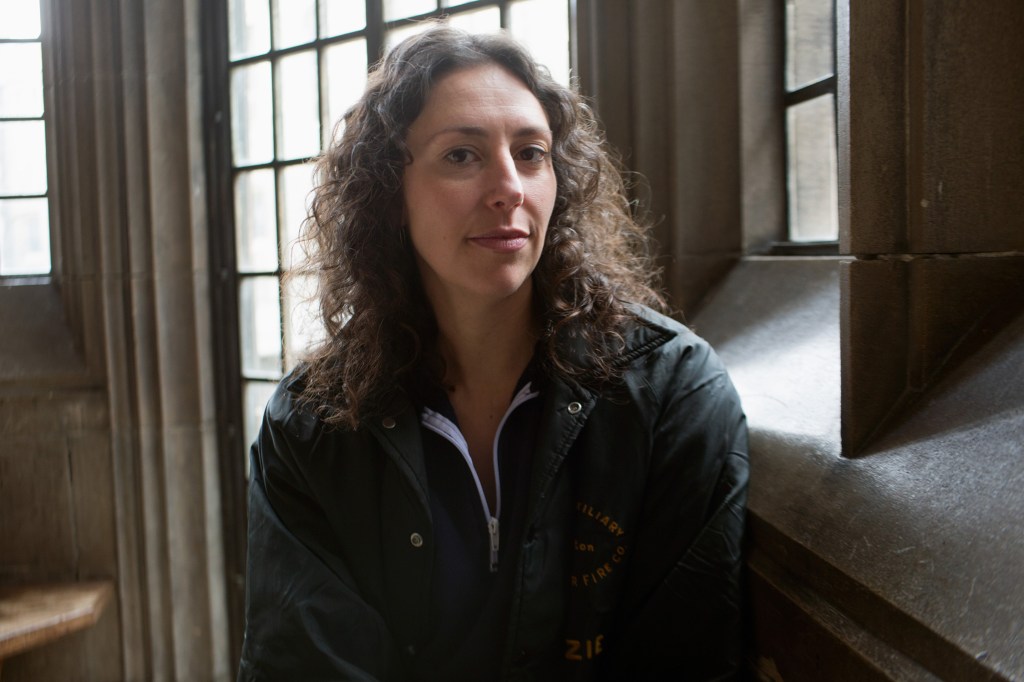
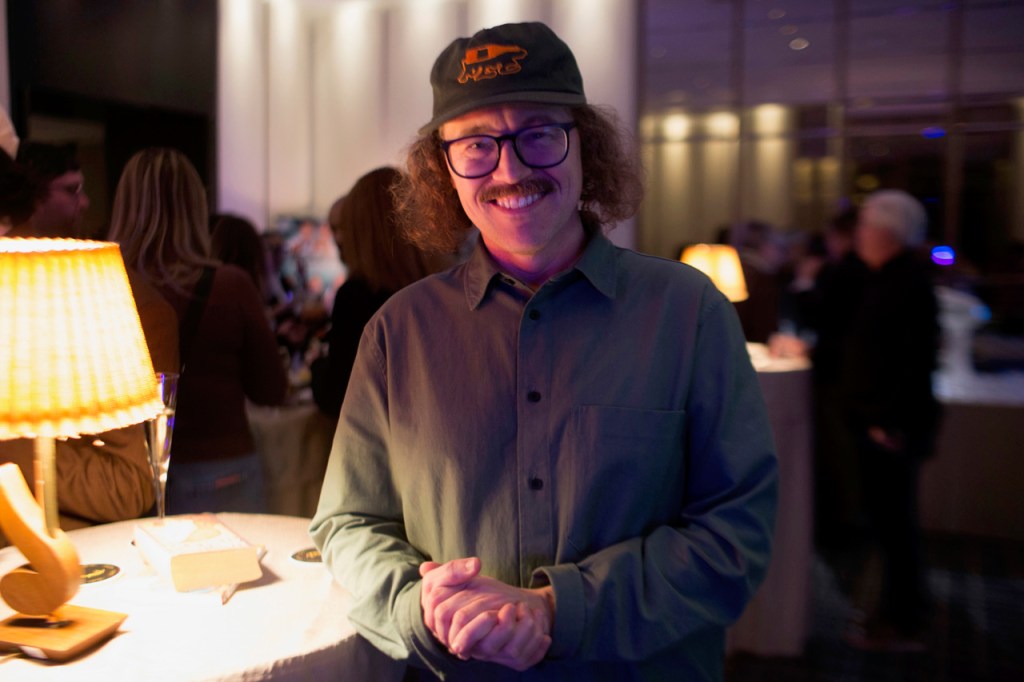
Daniel Garber talks with Anastasia Trofimova about Russians at War

Posted in Canada, documentary, Russia, Ukraine, War by CulturalMining.com on August 9, 2025

Hi, this is Daniel Garber at the Movies for culturalmining.com and CIUT 89.5 FM.

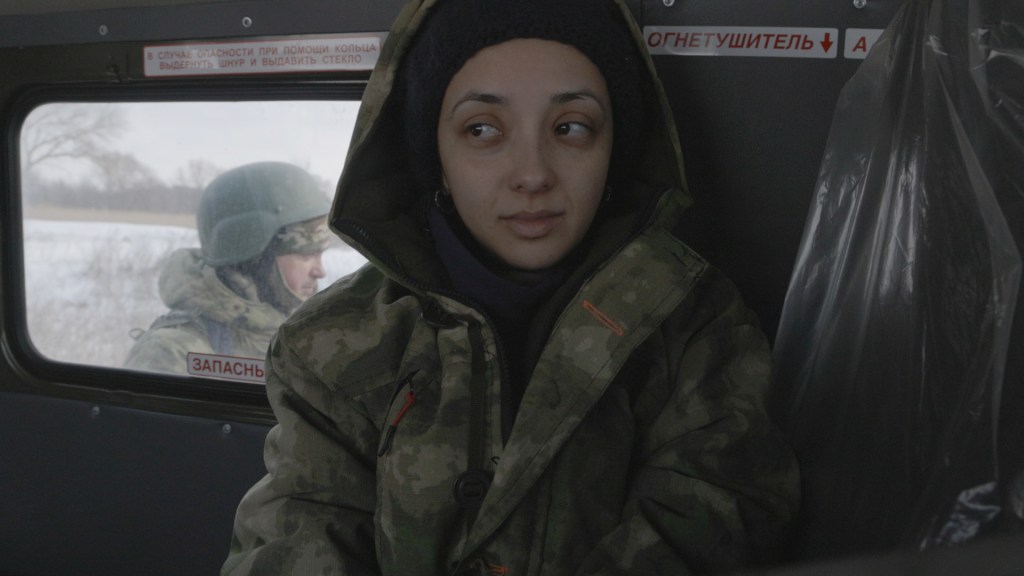
It’s 2023 near the Ukraine/Russian border, and things are bleak. Cities are filled with empty bombed out apartments, and in nearly deserted villages only the old, poor and infirm remain. Countless soldiers have been killed there, with new recruits taking their place, as they prepare to fight and kill the enemy, even as medics drive around looking for the wounded and the dead. Capturing all this is a woman with a camera, named Anastasia, asking probing questions of the soldiers she’s with. Are they justified in what they are doing? Do they want to be there? And all this is taking place… on the Russian side!

Russians at War is the name of a new documentary that goes across the border to film Russian soldiers in their war against Ukraine. It captures the cynicism, pessimism and fear of a never-ending war machine. It’s produced, directed and photographed by award-winning Russian- Canadian documentarian Anastasia Trofimova known for her TV work in the Middle East, Africa and Eastern Europe and as a fixer and translator for the CBC, New York Times, Magnum Photos, and the Washington Post . This is her first feature.

I spoke with Anastasia about her controversial film from Toronto, via ZOOM.

Her documentary will be released online (russiansatwar.com) on August 12, 2025.

Huge changes. Films reviewed: Cloud, Don’t Let’s Go to the Dogs Tonight, Eddington

Posted in 1980s, Africa, comedy, Coming of Age, Covid-19, Crime, Internet, Japan, Thriller, Western by CulturalMining.com on July 18, 2025

Hi, this is Daniel Garber at the Movies for culturalmining.com and CIUT 89.5 FM.

This week I’m looking at three great new dramas about people facing huge changes in far-flung places. There’s a man in Japan pursued by unknown enemies; a girl in Zimbabwe on the eve of an election; and a sheriff in New Mexico at the dawn of a pandemic. 

Cloud

Wri/Dir: Kiyoshi Kurusawa

It’s present-day Tokyo. Yoshi (Masaki Suda) is a guy in his 20s with a certificate from a vocational school. He’s socially and emotionally challenged. Yoshi lives in a cramped apartment with his girlfriend Akiko (Kotone Furukawa). He works in a factory, pressing clothes, but after three years is still struggling financially with no chance of advancement. Luckily, he has a side hustle: a reselling site where he marks-up cheap goods online and sells them for profit: French designer knock-offs, electronic devices, collectible toys; the content doesn’t matter, just the speed of turnover and how much profit he makes. At the moment, he’s doing so well he decides to quit his factory job, turn his reselling site into a full time occupation and relocate to a large house in the countryside with cheap rent. Akiko agrees to move with him, and he hires a local kid, Sano (Daiken Okudaira) as his assistant. And with the business doing so well, he figures he can relax now and let the cash pour in. But it’s never that simple. 

Strange things start happening. Yoshi is knocked off his motorcycle by a wire stretched across a road.  Someone tosses a chunk of metal through his glass window. And Sano does an ego-surf on Yoshi’s site and finds online chatter from dissatisfied customers threatening to kill him. (He keeps his website completely anonymous). At the same time, local police are investigating him for fraud, Akiko is reaching her breaking point, and Yoshi fires Sano for using his computer without permission, leaving him all alone in his country home. But when armed masked strangers start showing up at his door, Yoshi realizes it’s time to drop everything and get the hell out of there. Who are these angry strangers? What do they want? And how can he get away?

Cloud is both an almost surreal, cyber suspense thriller and a cautionary crime drama. Masaki Suda’s plays Yoshi as a man without any self-awareness… who assumes no one else notices him either.

It starts as a slow-burn, but explodes, halfway through, into a violent, action/thriller, with more than one totally unexpected plot turn. Though the main character spends much of his time staring at a distressingly dull website, waiting for buyers to check in, the outside world is full of geometric sets with sharp turns, cloudy windows, green forests and dark shadows. With lush music played against abandoned warehouse walls, Cloud lets suspense carry us through to the shocking finish. 

I like this suspenseful crime-thriller a lot.

Don’t Let’s Go to the Dogs Tonight

Co-Wri/Dir: Embeth Davidtz

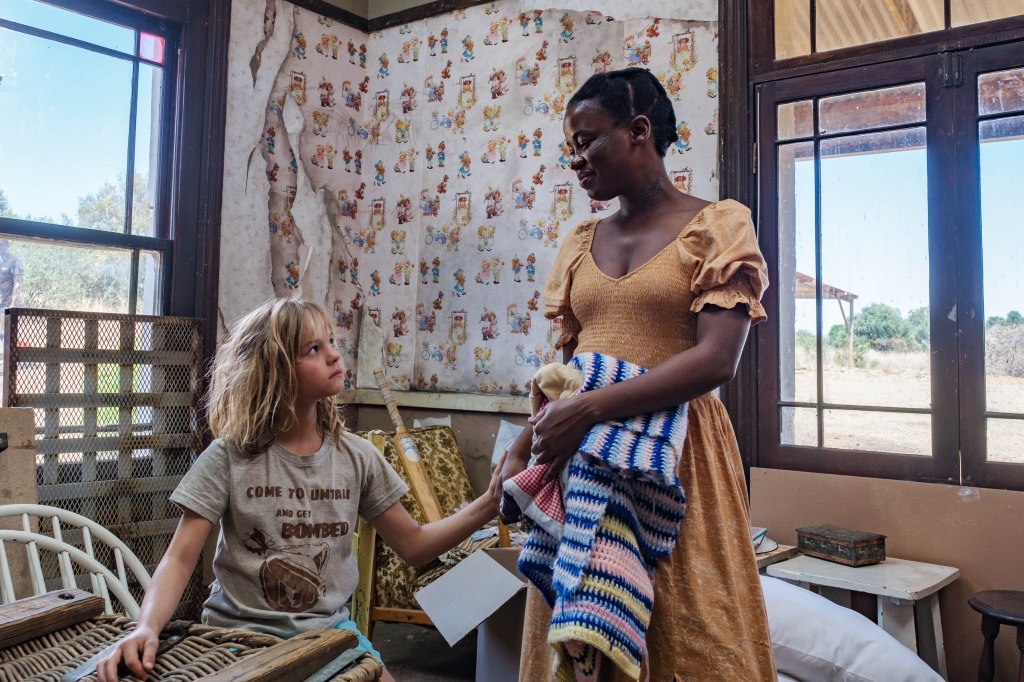
It’s 1980 in Zimbabwe-Rhodesia. The Bush War is over, and white minority rule has ended, pending its first democratic election. Bobo Fuller (Lexi Venter) is a seven-year old girl who lives with her family on a dried out cattle ranch. She wears her face dirty and blonde hair tangled. Bobo smokes cigarettes and rides her motorbike around the farm with a rifle strapped across her back. She fears two things: ticks and terrorists.

Her mom Nicola (Embeth Davidtz) makes it clear she will never leave her land. As grandma likes to say, we have breeding, not money. She’s a heavy drinker, prone to guzzling brandy and dancing with abandon during her manic episodes. Bobo’s Dad is more reasonable, but disappears for weeks at a time. Her older sister (Rob Van Vuuren) lives there too, but has no time for her bratty little sister.

So Bobo is essentially raised by Sarah (Zikhona Bali) their nanny and housekeeper. Bobo tries ordering her around like a grown up — bring me my porridge! — but Sarah sets her straight: she’s too young to be bossy. And it’s Sarah who tells her stories, answers her questions and explains what happens to us after we die.

The family gets together with other whites in nearby farms for parties and barbecues. But there’s tension in the air as they await results from the election. Sarah, too is worried: she might be targeted by nationalists if seen taking care taking care of a girl like Bobo. What will happen after the election? And will any changes be permanent?

Don’t Let’s Go to the Dogs Tonight is a drama based on the memoirs of Alexandra “Bobo” Fuller. It’s full of abrasive characters and their casual racism, and pulls no punches in their portrayal. The whole film is shot through the eyes of a little girl, so with the camera kept low, we might just see people’s legs from under a table or an obscured lens when she’s squinting at the sun.

Actress Embeth Davidtz evokes her own South African background (where the movie was shot) in telling Bobo’s story. This is her first time directing, and its a fascinating adventure in creativity. And though her excellent portrayal of a difficult, bi-polar Mom — alongside Zikhona Bali’s terrific turns as Sarah — , it’s really about Lexi Venter as Bobo, who gives a natural performance in every scene, either as the centre of attention or as quiet observer.  

Don’t Let’s Go to the Dogs Tonight is an excellent memoir of a difficult period of history.

Eddington

Wri/Dir: Ari Aster

It’s April, 2020 in Eddington, a small town in New Mexico, just as the Covid lockdowns mask mandates are kicking in. Working class Joe Cross (Joaquin Phoenix) is the town Sheriff, just as his dad was before him. He lives in a ramshackle home with his catatonically depressed wife Louise (Emma Stone) and her conspiracy-theory addled mother Dawn (Deirdre O’Connell). He works with his two faithful officers Michael (Micheal Ward) and Lodge (Clifton Collins, Jr).

On the better side of town lives the upper-middle-class Mayor Ted Garcia (Pedro Pascal) —  a smooth talker and a consummate politician — who is running for re-election. He is expected to open a mysterious tech conglomerate on the outskirts of town. His son, Eric (Matt Gomez Hidaka) is an arrogant and spoiled rich kid. He hangs out with his friend Brian (Cameron Mann), drinking beer and smoking pot. They are both after idealistic high school student Sarah (Amélie Hoeferle) who they try to impress by quoting Angela Davis. Then comes the news that George Floyd, a Black man in Minneapolis, has been killed by police. Demonstrations follow but the small town is already divided on ideological grounds, with everything recorded on cel phones and posted online: those who wear masks with social distancing, vs those who don’t. But as tensions build, and Mayor Ted publicly humiliates Sheriff Joe, he declares he’s running for mayor, too. 

Eddington is a sharp and scathing social satire about life in America during the pandemic. It’s half dark- comedy and half thriller/horror as it devolves from light absurdity into a hellish fantasy. It covers a huge variety of topics, including religious cults, false memory syndrome, big tech, culture wars, white supremacy, the dark state, and indigenous relations… to name just a few. I love all of Ari Aster’s movies — Heredity, Midsommer and Beau is Afraid — and Eddington, though more of a Western than strictly horror, continues his cycle. While Joaquin Phoenix’s Joe is the film’s focus, it’s actually an ensemble cast with at least 20 crucial roles.

Eddington is brilliant, hilarious and shocking… putting his magnifying glass on all of us, just a few years ago.

it’s a must-see.

Cloud, Don’t Let’s Go to the Dogs Tonight , and Eddington all open this weekend in Toronto; check your local listings.

This is Daniel Garber at the Movies, each Saturday morning, on CIUT 89.5 FM and on my website culturalmining.com.

Daniel Garber talks with Jason Buxton about Sharp Corner

Posted in Cars, Death, Drama, Family, Noir, Nova Scotia, Psychological Thriller by CulturalMining.com on May 10, 2025

Hi, this is Daniel Garber at the Movies for culturalmining.com and CIUT 89.5 FM.

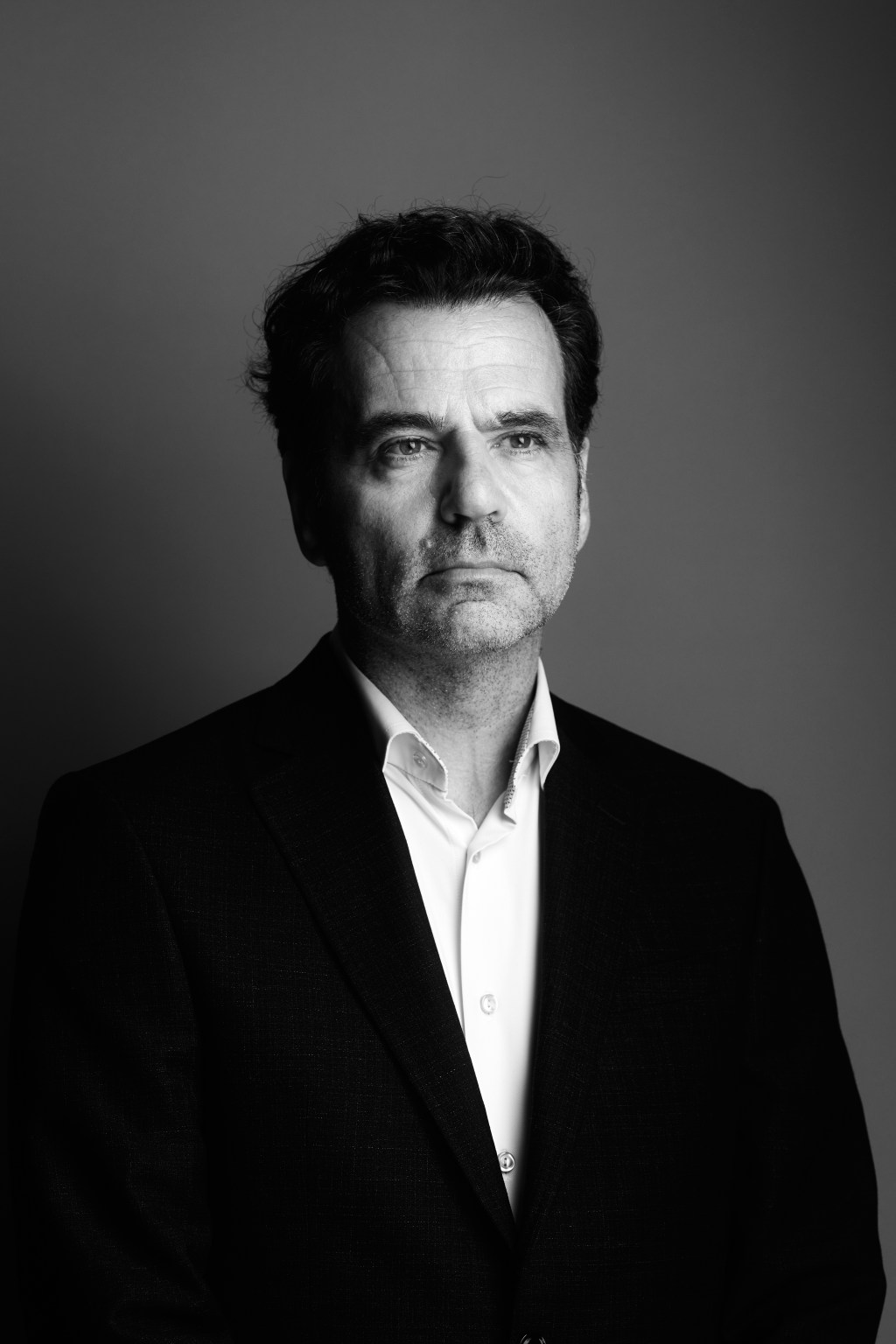
Josh McCall is a mild-mannered, middle-aged man who works at a middle management job in Halifax, Nova Scotia. He loves golf, fine wine and his family. He lives with his wife Rachel, a marriage counsellor, and their young son Max. They’re excited about moving into their new home on a peaceful country road far from the bright city lights. But from their first night, they discover their dream home is actually a nightmare. It’s parked between two hairpin turns on a badly lit road, where cars are constantly crashing. Their front lawn is a danger zone and the death toll of drivers keeps rising. Max is terrified, Rachel says they must move out, but Josh discovers his new mission — to save as many of the inevitable crash victims he can. And his new obsession overrides his career, his marriage and even his young son. The question is, how far will he go to rescue dying motorists on that sharp corner?

Sharp Corner is a new psychological drama about a man’s altruistic obsession taken to a horrifying level. It’s funny, shocking and more than a bit creepy. The film premiered at TIFF last year and stars Ben Foster and Cobie Smulders as the McCalls. Sharp Corner is  co-written and directed by Halifax-based, award-winning filmmaker Jason Buxton. His first film, Blackbird (Review), opened at TIFF in 2012, and was on my “best of” list that year. Blackbird went on to win the Canadian Screen Award for Best First Feature, and Sharp Corner is also gathering awards and high ratings. 

I spoke with Jason Buxton in Toronto via Zoom.

Sharp Corner opens across Canada on May 9, 2025.

Dangerous jobs? Movies reviewed: Love Hurts, Dark Nuns, Bring Them Down

Posted in Action, Farming, Ireland, Korea, Nun, Organized Crime, Religion, Romantic Comedy, Vengeance by CulturalMining.com on February 8, 2025

Hi, this is Daniel Garber at the Movies for culturalmining.com and CIUT 89.5 FM.

Look at Me, a movie from Nova Scotia about an insecure, bisexual actor with an eating disorder, is finally opening in Toronto! In a review about year ago, I called it a “scathing — and humorous — self-examination that exposes Taylor Olsen’s innermost thoughts and fears.” Check it out.

But this week, I’m looking at three new movies (two by first-time directors) from around the world. They’re all about people who work at peaceful and innocuous jobs who encounter danger and even death. There’s a Catholic nun in South Korea, a real estate agent in Milwaukee, Wisconsin, and a sheep farmer in rural Ireland.

Dark Nuns

Dir: Hyeok-jae Kwon

Somewhere in Korea, a teenaged boy named Hae-Jun (Moon Woo-jin) is suffering from a serious illness. The doctors are baffled by his condition; nothing they try is working. But Sister Giunia (Song Hye-kyo) a Catholic nun, identifies the problem immediately: the boy is possessed. You see, Sister Giunia is a Dark Nun, a woman born with indigenous shamanistic powers. She can hear what demons say. And this boy needs a full-blown exorcism. But she can’t do it alone.

She turns to Sister Michela (Jeon Yeo-been), a much younger nun, for help. A Dark Nun like herself, Michela is adept at reading tarot cards, and can use her powers to see vision,  and manifestations of evil. But she is a nun now, and a nurse. She said goodbye to all that mumbo-jumbo years ago, and, besides it’s expressly forbidden by the Church — especially Father Paolo (Lee Jin-wook). He may be a scholar of exorcism, but he doesn’t believe in it. But Giunia is convinced the boy will die unless they intervene. Can she get sister Michela to come aboard? Will the church ever let them do it? And can two nuns and a  stammering shaman defeat Satan himself?

Dark Nuns is a pretty typical exorcism/horror movie but with a twist: It incorporates Buddhism and Shamanism within a Catholic ritual. There are a lot of quirks in this movie. Like why do all the Korean priests and nuns have Italian names, like Paolo, and Michela? Are they Ninja Turtles? And the exorcism seemed way off: heavy on the holy water — she pours gallon after gallon of it on the kid! — but awfully light on bibles, crosses or rosary beads. Then there’s the biggest problem of all: it’s a horror movie, but it just isn’t scary. What’s good about this movie? I like the way it compares Korean patriarchal neo-Confucianism with a Catholic Church keeping women out of positions of power. I’m intrigued by the culture-clash of Christianity meets Shamanism. But if you’re looking for a Korean horror movie about shamans and possession, you should watch last year’s Exhuma, instead.

Love Hurts

Dir: Jonathan Eusebio

It’s Valentine’s Day in the suburbs of Milwaukee, and  Marvin Gable (Ke Huy Quan) is busy baking heart-shaped cookies. No, he’s not in love or in a relationship; all his efforts are focussed on his career as a real estate agent. And he considers all his clients as his friends. But everything changes when a valentine’s day letter appears on his desk. Rose (Ariana DeBose) is back in town. You see, before he went straight, he used to be a killer employed by his older brother Knuckles (Daniel Wu) who is a powerful local gangster. And killing Rose was his last job. The thing is, he didn’t kill her and now everyone wants to have a word to Marvin Gable. There’s the poet-assassin Raven (Mustafa Shakir) along with a slew of other killers, with weird names like King, Otis Merlo and Kippy. Can he dodge the bullets and kill the killers, without harming all the clients trying to buy his houses? Or will he be dragged back into a dark world he thought he had left far behind?

Love Hurts is an action movie about people trying to kill each other. Despite the extreme violence it’s told a light and somewhat humorous manner. Unfortunately, it’s also tedious and predictable. The dialogue is dumb, the plot is basically non-existent. (There is also a rom-com sub-plot, with various characters falling in love with their respective crushes, but that seems like an afterthought more than part of the story.) So what’s good about it? Two things. Jonathan Eusebio is obviously a first-time director, but what he is not  new at is fight scenes. He’s a highly experienced fight choreographer, and luckily most of the movie consists of creative takes on people throwing knives and kicks as they destroy the interiors of houses and video stores. This I like. First time I’ve ever witnessed a killing using a bubble tea straw. And the cast is appealing too. It’s nice to see Ke Huy Quan back again after his big comeback in Everything, Everywhere, All at Once. He’s funny! So are Ariana DeBose, Lio Tipton, Sean Astin and Drew Scott… the whole crew.

Is this a good movie? Not really, but it’s very light, easy to watch, and the fight scenes are well-done. 

Bring Them Down

Wri/Dir: Chris Andrews

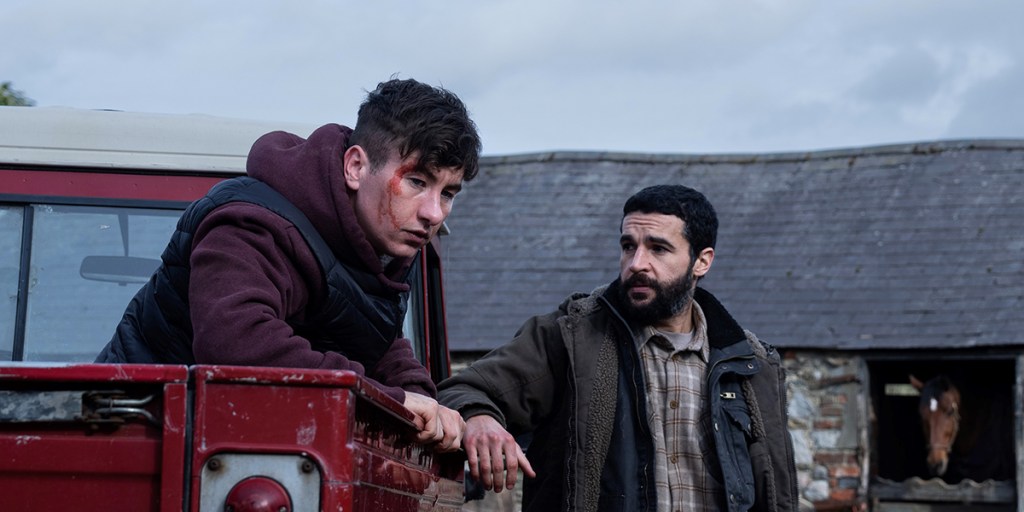
It’s rural Ireland in the present day. Michael (Christopher Abbott) runs a one-man sheep farm, where prize-winning rams graze on rocky hillsides. His abusive dad Ray (Colm Meaney) sits in the kitchen all day shouting angry epithets in Irish at Michael about all the things he’s doing wrong. In the next sheep farm over, young Jack Keeley (Barry Keoghan) does much the same as Michael but not very well. His dad Gary (Paul Ready)  — who is Michael’s age — tries to keep things going but the farm is bleeding money. Gary is married to Caroline (Nora-Jane Noone), Michael’s ex, and Jack can see his parents are not getting along. Michael hasn’t seen her for 20 years, ever since a car accident killed his mother and sent Caroline to hospital with serious injuries (The accident was Michael’s fault).

But their relatively bucolic lives are interrupted when two rams disappear from Michael’s flock. And there’s only one place they can go — to the Keeley farm just over the hill. But Jack claims they both suddenly died and he threw their bodies into a pit…a very unlikely story. This signals the start of a feud between the two families, involving simmering grudges, sheep poachers, and organized crime. Can their conflicts ever be resolved? Or are both farms headed for ruin, violence and possibly even death?

Bring Them Down is a violent, suspenseful drama about escalating grudges between two houses. It’s done in that chop-up style popular among some European arthouse directors where the narrative is not told chronologically. Your perception of “who is to blame for what” gradually shifts as new scenes fill in the blanks. I liked the acting and the dialogue — half of which is in Irish — and it has a compelling plot. The settings are just beautiful, with wide panoramic views of hillsides at dusk and dawn, and images like Michael carrying a lame sheep draped over his shoulders. There are also some strikingly original tableaux like the sheep at an auction house. This is a good first film — it reminds me of Frozen River and Winter’s Bone, all serious looks at crime in rural settings. But why are all these movies about brooding Irish men so depressing? What miserable lives these people seem to lead! If there were a bit of humour or love, Bring them Down would have been a lot easier to take.

But it’s still a good movie, anyway.

Dark Nuns, Love Hurts, and Bring them Down are all opening this weekend in Toronto; check your local listings. This is Daniel Garber at the Movies, each Saturday morning, on CIUT 89.5 FM and on my website culturalmining.com.

Jeff Harris talks with Ali Weinstein about her new documentary Your Tomorrow

Posted in Canada, documentary, History, Protest, Toronto by CulturalMining.com on February 6, 2025

Photograph and Interview by Jeff Harris

Your film points out a stark contrast between 1970s Toronto (when Ontario Place was opened) versus today. What exactly is going on? 

I’m really quite sad and devastated about what’s happening at Ontario Place right now to be honest. I was never a fan of what’s been chosen to go on the west island because I don’t think it that it retains the spirit of Ontario Place as it was meant to be, this lasting place of exploration, education and fun for Ontarians. I tried to not make the film itself be an essay for my own personal point of view, I tried really hard to show the place as it was and I heard different reactions from people where they’ve watched the film and said “yeah, it does need to be redeveloped”. In terms of what’s coming next I don’t think it’s in line with what Ontario Place was meant to be and I think that the original spirit of Ontario Place is a really beautiful one, one that should be fought for today because we have even fewer places to be outside and to be in nature in this city.

The city has only gotten far far far more dense in the last 50 years and you have places like Liberty Village that didn’t exist in 1971 when Ontario Place opened… now there’s a tonne of condos where people don’t have their own outdoor space but next door is this beautiful waterfront land with forested areas to walk, and nature and birds and foxes. There is so much nature present at Ontario Place so I don’t really understand the vision when it comes to turning it into a spa.

What are the concerns about the spa?

The fact that it’s not a Canadian venture, it’s a European / Austrian owned spa that has this very not transparent deal with a 95 year lease that has been signed. I have a hard time imagining that my great grandchildren are gonna have the desire to go to the same spa that some people today might go to as a one off. I think there were probably many other visions for that land that got sent into the government when they opened it up proposals in 2019 that could have been tourist attractions, that could have made money for the province if they really prioritized that and they could have stayed with the original intent of being about Ontario and teaching people the history, the indigenous history of Ontario, what we have to be proud of as a province and that could have been more the focus as opposed to something indoor, foreign owned, and the vision just doesn’t feel like it’s towards longevity with the spa. 

There’s a great line in the film where one of the protesters points out that this natural park is essentially a spa already!

She was part of a group of people that used the beach all the time, they would swim, hang out, exercise on the beach and it was a place for physical and mental wellbeing. I think a lot of the people that started to congregate at Ontario Place, many of them found the space during the pandemic when everyone was going loopy and stuck at home and isolated. People found community there and found other like-minded people there who wanted to be active, to be outdoors — and this was in their backyard! So when they talk about it already being a spa, they mean it’s been so beneficial for them. I felt that way myself going to Ontario Place.

Are you a fan of spas?

I enjoy going to a spa here and there… and some of my favourite parts of being at a spa are going with friends, going to catch up with people, to have sometimes a cultural experience like I love going to the Russian Spa, or the Korean Spa. The type of spa that’s going to be built at Ontario Place, I don’t foresee it being a place that people are going to go to repeatedly… it’s being marketed as a tourist attraction and I don’t know why that would go in the heart of the city on this very valuable prime land. It’s one of the few parts of the waterfront that’s actually accessible to residents of Toronto, where they can swim and boat and paddle board and run and jog and cycle and birdwatch and fish and so many different things so I think that the idea of it being a place of well being is interesting messaging from the government. So many people were using it for exactly that during the pandemic! It became this defecto public park because the government wasn’t doing anything with it.

Your Tomorrow had its world premiere at #TIFF24 and will have its broadcast premiere with TV Ontario on March 23rd at 9pm.

Daniel Garber talks with Matthew Rankin, Ila Firouzabadi and Pirouz Nemati about Universal Language at #TIFF24

Posted in Canada, comedy, Fantasy, Farsi, History, Iran, Language, Satire, Winnipeg by CulturalMining.com on January 25, 2025

Photographs by Jeff Harris.

Hi, this is Daniel Garber at the Movies for culturalmining.com and CIUT 89.5 FM.

It’s December in Winnipeg. Matthew Rankin, a Montreal bureaucrat, is travelling home to see his elderly mother. Most of his favourite spots are still there, but something is different; he feels lost, alienated. He sees two girls trying to free a large banknote frozen in ice. And he encounters a man who welcomes him into his home. After many years spent working in French, he is relieved to return to his native tongue and culture. But who would have guessed his universal language… is Farsi?

Universal Language is the name of a dream-like and haunting new feature that reimagines Canada’s two solitudes: francophone Quebec, and the rest of the country a unique mixture of Iran and the vast northern dominion. It’s as if Winnipeg froze unchanged somewhere in the 1980s and morphed into a non-religious People’s Republic of Iran. It’s co-written and directed by award-winning Winnipeg filmmaker Matthew Rankin, whose experimental films reimagine the country in a stylized and retro milieu. I interviewed him in 2020 about his first feature The Twentieth Century. The co-writers are both Iran-born and Montreal-based. Actor and multi-disciplinary artist Ila Firouzabadi is known for the violence and intimacy of her sculptures; while independent filmmaker, artist and actor Pirouz Nemati is completing an upcoming documentary on the matriarch of Montreal’s Byblos Le Petit Café.

I spoke with Matt, Ila and Pirouz on site at #TIFF24

Universal Language was lauded at Cannes and TIFF, on the list for an Oscar nomination for best international film, and will open in theatres soon. 

Daniel Garber talks with José Avelino Gilles Corbett Lourenço about Young Werther

Posted in 1700s, 2020s, Canada, Germany, Romantic Comedy, Toronto by CulturalMining.com on January 11, 2025

Hi, this is Daniel Garber at the Movies for culturalmining.com and CIUT 89.5 FM.

Photos by Jeff Harris.

It’s a sunny, summer day at Toronto’s Union Station.  Werther, a young dandy from Westmount, has just arrived with his neurotic, best friend Paul. Werther is there to pick up a family heirloom, and to explore the town. But soon after his arrival he meets Charlotte, a pretty, witty and kind young woman. It’s her birthday! They end up discussing Salinger, dancing a waltz together and smoking a joint. Werther is smitten: this is the woman he wants to marry! He plans to sweep her off her feet. But things are not so simple. Charlotte serves as a defacto mother to her six orphaned siblings, and is engaged to Albert, a much older and more successful lawyer. Can young Werther win Charlotte’s heart? Or is he headed for disaster?

Young Werther is a new Canadian romantic comedy based on Goethe’s famous 18th century coming-of-age novel, updated to modern times. It’s a love triangle full of passion and lovelorn loss. It’s written and directed by award-winning,  Toronto-based filmmaker José Avelino Gilles Corbett Lourenço. José is best known for his short films and music videos but also has an accomplished history in advertising. This is his first feature.

I spoke with José in Toronto via ZOOM.

Young Werther had its world premiere at TIFF24 and is now playing in Toronto.

Freedom or death? Films reviewed: The Seed of the Sacred Fig, The Room Next Door PLUS Canada’s Top Ten!

Posted in 2020s, Death, Family, Friendship, Iran, Protest, Spain, Thriller, Women, Writers by CulturalMining.com on January 11, 2025

Hi, this is Daniel Garber at the Movies for culturalmining.com and CIUT 89.5 FM.

Mark your calendars, boys and girls, because the annual Canada’s Top Ten film series starts in just a few weeks. If you’re into highly original movies, you really gotta check this out. I’ve already reviewed many of them, or interviewed them already, but there’s lots left to discover.  Things like David Cronenberg’s The Shrouds, a truly bizarre mystery about an entrepreneur who invents burial shrouds that allow you to see in real time the decaying buried body of your loved one. It stars Vincent Cassell, Diane Kruger and Guy Pearce. Or Kazik Radwanski (Interview: 2013)  & Samantha Chater’s brilliant Matt & Mara, with an almost totally improvised script follows old friends (Matt Johnson, Deragh Campbell) who suddenly meet each other again, opening a real can of worms. There are also short films at this festival — I can’t wait to see NFB animator Torill Kove’s latest short Maybe Elephants; her films are just enchanting. And I’m curious what Canadian actor Connor Jessup is up to now with his short film Julian and the Wind. He starred in the movies Blackbird (2013) Closet Monster (2016) and the Netflix series Locke and Key (2021) but I have never seen his own work. These are just a few of the great movies in Canada’s Top Ten and they’re all showing at the TIFF Lightbox in Toronto.

But this week, I’m looking at two new movies, one from Iran (via Germany), and another one from Spain (via the US). There are three female activists looking for freedom in Tehran; and two female writers looking for peace in New York.

The Seed of the Sacred Fig

Co-Wri/Dir: Mohammad Rasoulof

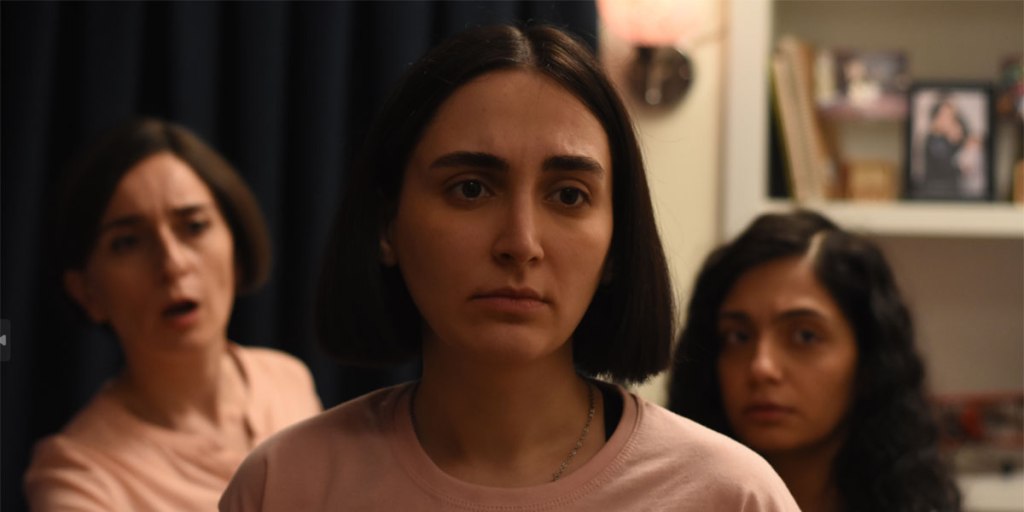
Najmeh (Soheila Golestani) and Iman (Missagh Zareh) are a happily married couple in Tehran. They live out their two daughters, Rezvahn (Mahsa Rostami) and Sana (Setareh Maleki). The kids fight a lot, but the family is still close and trusting; no secrets here. But everything changes once their Dad — a government bureaucrat — gets a promotion. He is issued a gun for protection, due to the nature of his new position. You see, he is now sort of a judge within the Islamic Revolutionary Court. This means convicting and sentencing anyone accused of disobeying religious or political laws, ranging from women who expose their uncovered hair, to anyone caught insulting the Supreme Leader or the government itself. And especially anyone caught at a pro-democracy demonstration.  

But when Rezvahn’s best friend Sadaf gets beaten up at a demo, and they hide her in the apartment they have to keep it from her Dad. Is he responsible for this crackdown? And when his gun disappears, Iman suspects everyone. Has his family turned on him? A wall of distrust divides the family, threatening its very existence. Can they reconcile or is it too late?

The Seed of the Sacred Fig is a powerful and harrowing drama about distrust and betrayal, within a family torn apart by the influence of an authoritarian government on all of their lives. It was shot entirely in Iran, on the sly, by noted director Mohammad Rasoulof who smuggled it out of the country. (It was edited in Germany.)  He fled for obvious reasons: he was sentenced to 8 years in prison, and corporal punishment — that’s whipping — for his film work.

Two thirds of it was shot within a claustrophobic apartment in Tehran, two years ago, right when a women-led, pro-democracy movement was in full swing. The final third was shot outdoors in a spectacularly eerie lunar landscape, shifting in tone from tense psychological drama to a genuine action/thriller. This movie is neither short nor easy to watch, but it is amazing. 

I recommend this one.

The Room Next Door

Co-Wri/Dir: Pedro Almodovar

Ingrid (Julianne Moore) is a successful novelist who lives in New York. At a book signing — her latest one is about her fear of dying — an old acquaintance approaches her. She tells Ingrid that Martha (Tilda Swinton), her old friend from University days, is dying of cancer. Can’t she visit her in hospital? Ingrid hasn’t seen her in decades, though they had been quite close. They even once had a boyfriend in common, Damian (John Turturro). And while Ingrid stayed close to home, Martha (Tilda Swinton) became a renowned war reporter for the NY Times. Her travels took her around the world covering frontline battles in West Africa and the Middle East. They are both happy to see each other again, and Ingrid loves keeping Martha company as she recounts some of her past adventures. 

That is until Martha makes a big request. Her death is inevitable, but she hopes Ingrid will stay with her in the room next door (hence the title) so someone will be around when the inevitable happens. (Ingrid is estranged from her only daughter). And though deathly afraid of death, Ingrid agrees. They move to a gorgeous isolated wood-and-glass  country home. But what will happen next?

The Room Next Door is a touhing, gentle story about two old friends reunited under bittersweet circumstances. Though clearly an Almodovar movie it differs in two ways. This is his first English language feature, and the dialogue seems stilted and clumsy, at least at the very beginning, but interestingly, I stopped noticing it after the first few minutes. Second, the passionate melodrama, the sex, the outrageous humour I expect to see in any Almodovar movie aren’t there. Any conflicts, secrets, betrayals or revelations are few and far between. Instead it is subtle, soft, and gentle. And yet it still clearly is Almodovar’s work. The set design, colour palette, camerawork, the  structure and the music are instantly recognizable. I love the gorgeous, two-coloured wooden lounge chairs by the swimming pool, the clothes they wear, the soundtrack. Almodovar loves long, intricately told flashbacks, and stories within stories like The Arabian Nights. It satisfies your brain and your heart. And Tilda Swinton and Julianne Moore are just right in their roles. 

So in the end, though The Room Next Door was not the Almodovar film I expected to see, it was still satisfying to watch.

The Room Next Door and The Seed of the Sacred Fig are both opening this weekend in Toronto; check your local listings.

This is Daniel Garber at the Movies, each Saturday morning, on CIUT 89.5 FM and on my website culturalmining.com.

The thrill of uncertainty. Films reviewed: Harbin, Babygirl, The Brutalist

Posted in 1900s, 1940s, Art, Class, Espionage, Korea, Sex, SMBD, War by CulturalMining.com on January 4, 2025

Hi, this is Daniel Garber at the Movies for culturalmining.com and CIUT 89.5 FM.

First let me wish you all a Happy New Year! With a new year comes renewal, hope… and potential dread. So this week, I’m looking at three new movies where people face potentially dreadful situations, partly of their own making. There’s an abused architect, a compromised CEO, and a sympathetic assassin. 

Harbin

Co-Wri/Dir: Min-ho Woo

It’s 1909 in Korea. After defeating a European empire in the Russo-Japanese war, Japan is flush with imperial ambition. They want more colonies on the mainland and are looking hungrily at Korea, Manchuria, Mongolia, and China. But some independence-minded Koreans are regrouping to fight Japan. Their leader, Ahn Jung-geun (Hyun Bin), managed to defeat a Japanese battalion in a bloody battle. But when, following international laws, Anh released the disarmed POWs, their leader Mori (Park Hoon) shot a cannon at their base killing everyone except Anh. Now the survivors are meeting in Vladivostok to decide what to do next. This includes Kim (Jo Woo-jin) his closest ally, and Woo, (Park Jeong-min) his biggest rival. And some of them think Anh is a Japanese mole. To atone for his mistakes and to do something big, he vows to assassinate Ito Hirobumi (Lilly Franky: Shoplifters, Like Father, Like Son) one of the top statesmen of Imperial Japan who is calling for the annexation of Korea. 

To do this killing Anh must make his way to Harbin, a rail hub city right on the border of Russia and northeast China where Ito plans to give a public speech. But If he travels by train he will be caught. He must turn to a former comrade turned bandit, Ms Gong (Jeon Yeo-been) to try to secure explosives. But there is a traitor in their midsts, telling the Japanese all their plans. Can they make it to Harbin undetected, find the rat, fool their enemies, and carry out the assassination? Or are they fated to be erased from their country’s history?

Harbin is a vivid and gripping retelling of a famous historical event. It’s a classic cloak & dagger, full of action, thrills, drama, and deception. It’s done in the traditional style, with the name of each character appearing on the screen to help you keep track of which moustachioed fighter is which. But easier said than done, when everyone pulls down the brims of their fedoras to cover their faces. The locations are amazing: Anh crawling across the frozen waters of the Tumen River, horse caravans on the sands of Mongolia, ancient Russian train stations… very impressive! The sets and costumes are great too, with a drunken warlord festooned in animal furs or the ceiling lamps aboard a Russian train, swinging from side to side. If you have any interest in action-thrillers, spy stories or even NE Asian history, Harbin is the film for you.

Babygirl

Co-Wri/Dir: Halina Reijn

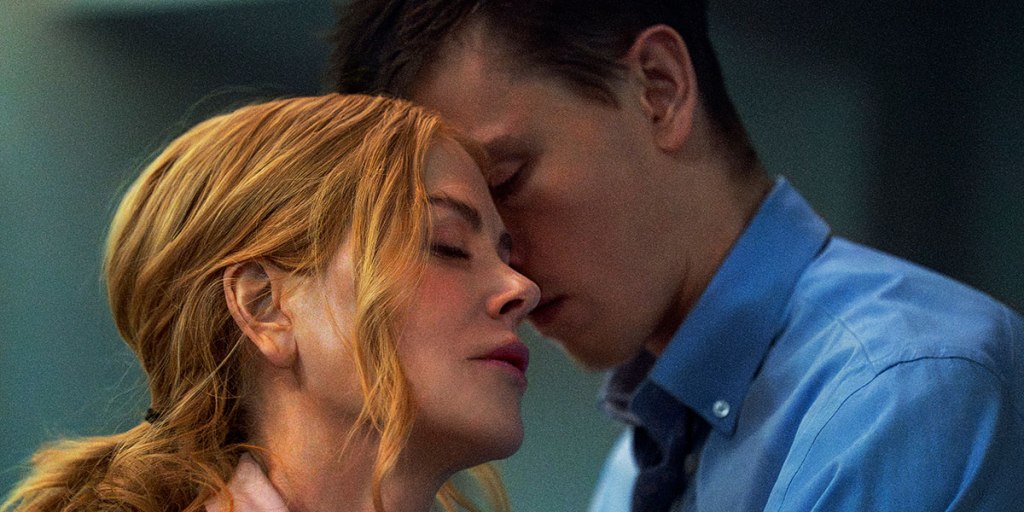
Romy (Nicole Kidman) is the CEO of a large, successful corporation that makes automated parcel-sorting equipment — similar to what Amazon has in their warehouses. She lives with her husband Jason a play director (Antonio Banderas) and their two teenage daughters, Isabel and Nora. Her life is almost perfect, but is missing a certain…. je ne said quoi. She is not sexually satisfied. One day she is startled by a vicious dog running rampant outside her office tower. She witnesses a random young man calm the dog down and return it to its owner. Later, inside her office, she is introduced to her latest intern; it’s the same guy she saw outside. Samuel (Harris Dickinson) has an unusually forthright manner, almost rude and overbearing for someone so young. He makes her feel unhinged and yet… intrigued. Who is this twerp, and why is he like that? She finds him overconfident and almost ridiculous. And yet… eventually, to her great surprise, they kiss and sparks fly.

Soon she is secretly meeting him in seedy hotel rooms for furtive sex. But he wants more — total domination over her in an S&M relationship. Romy loves her husband and kids has never done anything like this before. Even though he takes the dominant role, in real life she holds all the cards: she’s older, richer and his boss. She has more to lose, though, and it’s that threat that excites her. And she can’t got enough of him. What will happen if word gets out? Has she bit off more than she can chew?

Babygirl is an erotic drama about an older woman’s fling with a much younger man for the thrill of it all. It’s both highly sexualized and yet uncomfortable to watch in parts. It’s entirely told from Nicole Kidman’s (Before I go to Sleep, Genius, The Beguiled, The Killing of a Sacred Deer,  Boy Erased, The Upside, Destroyer, The Goldfinch,  Bombshell, The Northman) Romy’s point of view; we share her agony, her ecstasy, her cringing embarrassment (he treats her like a domesticated pet). As Samuel, Dickinson is opaque, functioning mainly as her erotic foil. He’s usually an excellent actor (Beach Rats, Triangle of Sadness, Scrapper, The Iron Claw) but in this movie he takes second all the way. Some people love this movie, others despise it. I’m somewhere in between. The plot is just a slight twist to the hoary old cliche of the powerful executive submitting to a dominatrix. I don’t need to watch a grown woman lick milk from a saucer. But other parts are quite exciting and altogether it’s worth it for Nicole Kidman’s performance. 

The Brutalist

Co-Wri/Dir: Brady Corbet

It’s post-WWII. László Tóth (Adrian Brody: Splice, Predators, The French Dispatch, Asteroid City) is a holocaust survivor from Hungary who arrives in America as a displaced person. His wife Erzsébet (Felicity Jones) and niece Zsófia are nowhere to be seen. His cousin Attila (Alessandro Nivola) gives him a place to stay in his furniture store and puts him to work designing and building chairs. Things look up when the son of an oligarch offers him a job redesigning his father’s home library. Laszlo takes to it like a fish out of water, building a modernistic room with synchronized wooden panels and shelves beneath an open skylight. But when the industrialist Harrison Lee Van Buren Sr. (Guy Pearce) sees it, he goes ballistic and fires him without pay. Soon after his cousin falsely accuses him of sleeping with his wife Laszlo finds himself unemployed, homeless and addicted to drugs. He gets work doing manual labour at a ship yard with Gordon (Isaach De Bankolé) a man he befriended earlier until the industrialist who fired him seeks him out ago. Turns out Laszlo was a Bauhaus architect before the war, and the library was featured in modern architecture. Lee immediately rehires him, this time to build a monumental memorial on a hilltop in honour of his mother. But conflicts still trouble the two men’s relationship. Will Laszlo ever complete his masterpiece? Or will Lee crush him with his oppressive and egoistical nature? 

The Brutalist is a moving drama about the American Dream and the class struggle between two men. (The title refers to the Brutalist style of architecture Laszlo favours). It’s a full-fledged four hour epic, compete with an overture, intermission and various story lines within the plot. I’m only giving you a taste of it here, a three-minute review of a four hour movie. It is visually and audibly stunning, both in design and execution, from the score to the crisp camera work, even the surprising credit roll.  The acting is superb — I’m referring to Brody, Pierce, Jones and the rest of the large cast. This is a mature film made by a young director and former child actor. I’ve only seen one other movie by him, Vox Luxe, which, while visually interesting, didn’t have much to it. The Brutalist takes a quantum leap beyond that, filling in all the parts left out of his previous work. The movie is exciting, full of both hope and crushing devastation. It’s so well done that I left the theatre assuming it was a biopic, only later realizing it’s entirely fictional. 

The Brutalist is a stupendous movie that must be seen to be appreciated.

The Brutalist and Babygirl are now playing in Toronto, with Harbin opening this weekend; check your local listings.

This is Daniel Garber at the Movies, each Saturday morning, on CIUT 89.5 FM and on my website culturalmining.com.

Best movies of 2024!

Posted in Cultural Mining, Movies by CulturalMining.com on December 28, 2024

Hi, this is Daniel Garber at the Movies for culturalmining.com and CIUT 89.5 FM.

It’s time for my annual best movies of the year, where I list the films that struck me as remarkable in some way: the novelty, shock, joy, and satisfaction the film provides. This includes the direction, acting, plot, and the look of the movie. If any of those are just mediocre, it probably won’t make the list. They make hundreds of new movies every year, but in this list I only include films that were either released in Toronto or screened at a festival here in 2024. And I’m forced leave out certain categories — like documentaries and animation — for lack of space. Otherwise movies like Pelikan Blue, Memoir of a Snail, Flow, and The Wild Robot would definitely have made my list. And finally, because it’s a holiday, I’m recording this a week in advance, even though I know I’m going to leave out some movies I meant to include. Oh well..

With no further ado, here are my fave movies from 2024 in semi-alphabetical order.

Anora
Dir: Sean Baker

…is a comedy romance about about an exotic dancer in Coney Island who falls in love with the son of a Russian oligarch. Mikey Madison is great as Anora.

The Brutalist
Dir: Brady Corbet

…is a four-hour epic about a modernist architect who leaves postwar Hungary to make it big in America, but forced to deal with his patron. The look of this movie is incredible.

Conclave
Dir: Edward Berger

…is a dramatization of a boring topic — Cardinals electing a new pope — and somehow makes it into a shocking thriller.

Emelia Perez
Dir: Jaques Audiard

…is a very unusual musical melodrama about four women in Mexico, including a transgendered woman who wants to hide her past as the former head of a drug cartel.

The Girl with the Needle
Dir: Magnus von Horn

…is a shocking historical dramatic horror movie about a woman in post WWI Copenhagen who gives her baby up for adoption, not knowing its future. This one blew me away.

Hard Truths
Dir: Mike Leigh

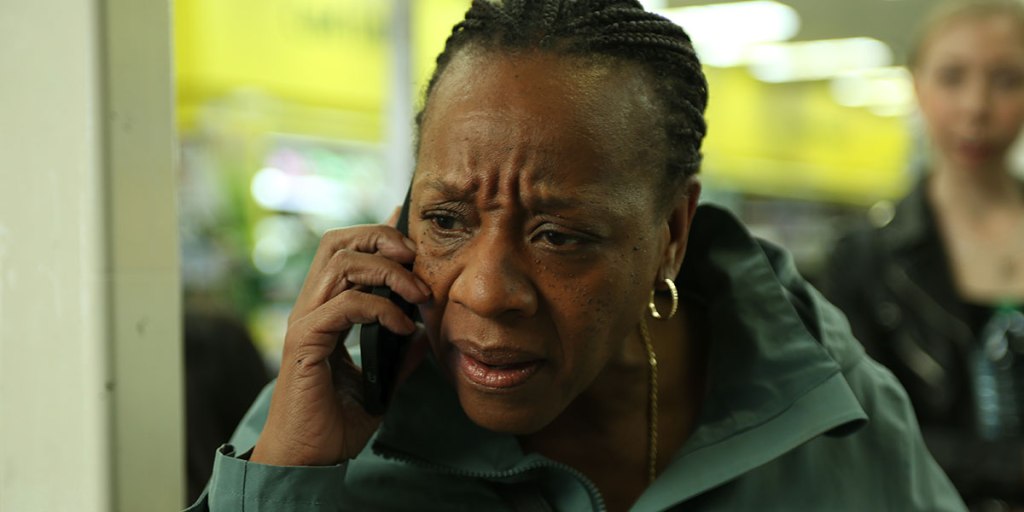
…is a powerful drama about two black families in London, with Marianne Jean-Baptiste in an stunning performance as a deeply likeable matriarch. (In my review I called this a perfect film).

Kill the Jockey
Dir: Luis Ortega

…is a brilliant, surreal and mind-blowing fantasy about a jockey in Buenos Aires. I saw this gem at TIFF, and I sure hope it gets released soon.

Love Lies Bleeding
Dir: Rose Glass

It’s a violent, sexy neon noir, about small-town crime in the southwest, with Kristen Stewart as the daughter of local kingpin who falls for a female weightlifter.

Paying for it
Dir: Sook-yin Lee

…is a low-budget, local comedy/ drama set in Toronto’s own Kensington Market about a cartoonist who gives up dating in favour of sleeping with paid sex workers.

Sing Sing
Dir: Greg Kwedar

…is a true drama about a group of prisoners at Sing Sing putting on a musical, starring Hollywood actors like Coleman Domingo and formerly incarcerated ones.

The Seed of the Sacred Fig
Dir: Mohammad Rasoulof

…is a dramatic-thriller about a Teheran family torn apart, where a father who arrests dissidents for the government, has a daughter involved in political protests. It was secretly shot within Iran.

The Substance
Dir: Coralie Fargeat

…is an over-the-top audacious, LA fantasy-horror of a fading TV celebrity who tries to create a younger, more perfect version of herself.

Universal Language
Dir: Matthew Rankin

…is a fantastical reimagining of Canada’s two solitude’s as Quebec and an Iranian/Canadian amalgam located on Winnipeg.

Runners Up (in alphabetical order)

The Apprentice, Didi, The End, Gladiator II, Heretic, Kill,  Kneecap, The Life of Chuck, Misericordia, The Order, A Real Pain, Riff Raff, Sasquatch Sunset, Smile 2, The Queen of My Dreams, Wicked.

This is Daniel Garber at the Movies, each Saturday morning on CIUT 89.5 FM and on my website culturalmining.com.