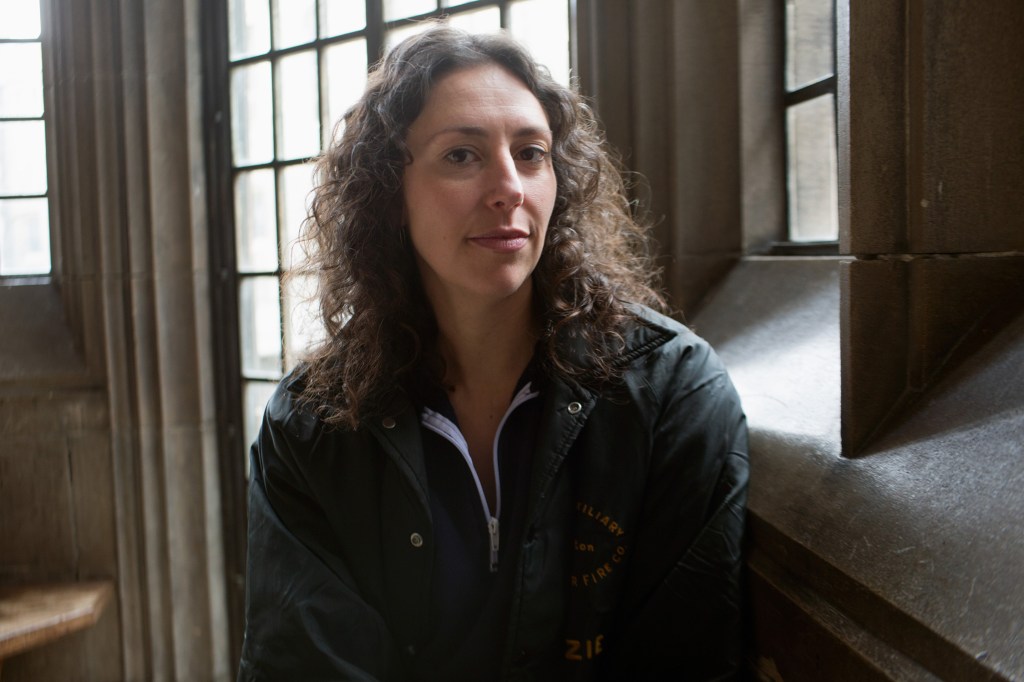
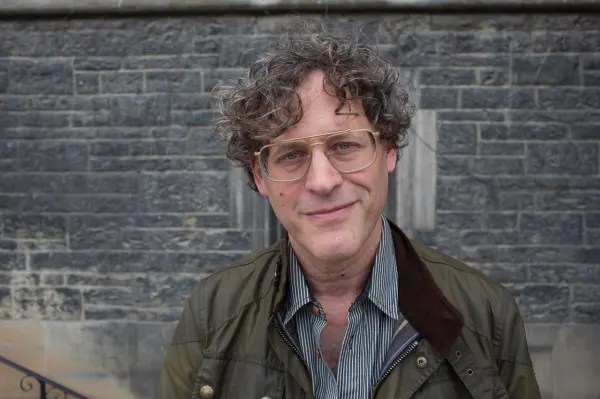
Jeff Harris talks with Ali Weinstein about her new documentary Your Tomorrow

Photograph and Interview by Jeff Harris
Your film points out a stark contrast between 1970s Toronto (when Ontario Place was opened) versus today. What exactly is going on?
I’m really quite sad and devastated about what’s happening at Ontario Place right now to be honest. I was never a fan of what’s been chosen to go on the west island because I don’t think it that it retains the spirit of Ontario Place as it was meant to be, this lasting place of exploration, education and fun for Ontarians. I tried to not make the film itself be an essay for my own personal point of view, I tried really hard to show the place as it was and I heard different reactions from people where they’ve watched the film and said “yeah, it does need to be redeveloped”. In terms of what’s coming next I don’t think it’s in line with what Ontario Place was meant to be and I think that the original spirit of Ontario Place is a really beautiful one, one that should be fought for today because we have even fewer places to be outside and to be in nature in this city.

The city has only gotten far far far more dense in the last 50 years and you have places like Liberty Village that didn’t exist in 1971 when Ontario Place opened… now there’s a tonne of condos where people don’t have their own outdoor space but next door is this beautiful waterfront land with forested areas to walk, and nature and birds and foxes. There is so much nature present at Ontario Place so I don’t really understand the vision when it comes to turning it into a spa.
What are the concerns about the spa?
The fact that it’s not a Canadian venture, it’s a European / Austrian owned spa that has this very not transparent deal with a 95 year lease that has been signed. I have a hard time imagining that my great grandchildren are gonna have the desire to go to the same spa that some people today might go to as a one off. I think there were probably many other visions for that land that got sent into the government when they opened it up proposals in 2019 that could have been tourist attractions, that could have made money for the province if they really prioritized that and they could have stayed with the original intent of being about Ontario and teaching people the history, the indigenous history of Ontario, what we have to be proud of as a province and that could have been more the focus as opposed to something indoor, foreign owned, and the vision just doesn’t feel like it’s towards longevity with the spa.
There’s a great line in the film where one of the protesters points out that this natural park is essentially a spa already!
She was part of a group of people that used the beach all the time, they would swim, hang out, exercise on the beach and it was a place for physical and mental wellbeing. I think a lot of the people that started to congregate at Ontario Place, many of them found the space during the pandemic when everyone was going loopy and stuck at home and isolated. People found community there and found other like-minded people there who wanted to be active, to be outdoors — and this was in their backyard! So when they talk about it already being a spa, they mean it’s been so beneficial for them. I felt that way myself going to Ontario Place.

Are you a fan of spas?
I enjoy going to a spa here and there… and some of my favourite parts of being at a spa are going with friends, going to catch up with people, to have sometimes a cultural experience like I love going to the Russian Spa, or the Korean Spa. The type of spa that’s going to be built at Ontario Place, I don’t foresee it being a place that people are going to go to repeatedly… it’s being marketed as a tourist attraction and I don’t know why that would go in the heart of the city on this very valuable prime land. It’s one of the few parts of the waterfront that’s actually accessible to residents of Toronto, where they can swim and boat and paddle board and run and jog and cycle and birdwatch and fish and so many different things so I think that the idea of it being a place of well being is interesting messaging from the government. So many people were using it for exactly that during the pandemic! It became this defecto public park because the government wasn’t doing anything with it.
Your Tomorrow had its world premiere at #TIFF24 and will have its broadcast premiere with TV Ontario on March 23rd at 9pm.
Daniel Garber talks with Ali Weinstein about her new doc Your Tomorrow
Hi, this is Daniel Garber at the Movies for culturalmining.com and CIUT 89.5 FM.
It’s the 1970s in Toronto, just a few years after the Centennial and Expo 67, and pride is running high. A huge new theme park, built on four islands made of reclaimed land on Lake Ontario, is opening to great fanfare. It offers an outdoor concert stadium, a geodesic Cinesphere, the first one ever built to show IMAX movies, and a kids’ park with playgrounds,
music and automatons. It’s surrounded by tall trees, grassy areas and flowers everywhere. It’s called Ontario Place, and is packed with visitors.
Flash forward to the 2020s. Ontario Place is still attracting crowds but, after decades of neglect, many of its pavilions have closed down permanently, and the park itself ain’t what it used to be. But it still has nature trails, forests and a pebble beach. And then Premier Doug Ford announces the park is closing down for renovations. They’re
fencing it off to clear cut trees and tear up the park in order to build a gigantic, private, for-profit European health spa and water park on public land, following a big-money, backroom deal. People across the province are shocked… and the protests begin. But no one knows exactly what will become of this beloved park in the days to come.
Your Tomorrow is the name of a new Canadian documentary about Ontario Place, its history and the people who love it in this crucial period of change in its future. It follows visitors, locals and park
employees to get a cross section of views. Delving deeply into people, nature and politics, it silently observes the skateboarders, polar bear swimmers, security guards and concert-goers who still flock to the park. It’s both low-key and heart breaking. The film is written, directed and produced by award winning filmmaker Ali Weinstein, who made the quirky Mermaids in 2016 and #Blessed in 2020. (My interview with Ali, Blessed, 2020)
Your Tomorrow had its world premiere at #TIFF24 and opens theatrically at Toronto’s Hot Docs Ted Rogers Cinema on Friday, December 6.
I spoke with Ali Weinstein in Toronto via ZOOM.
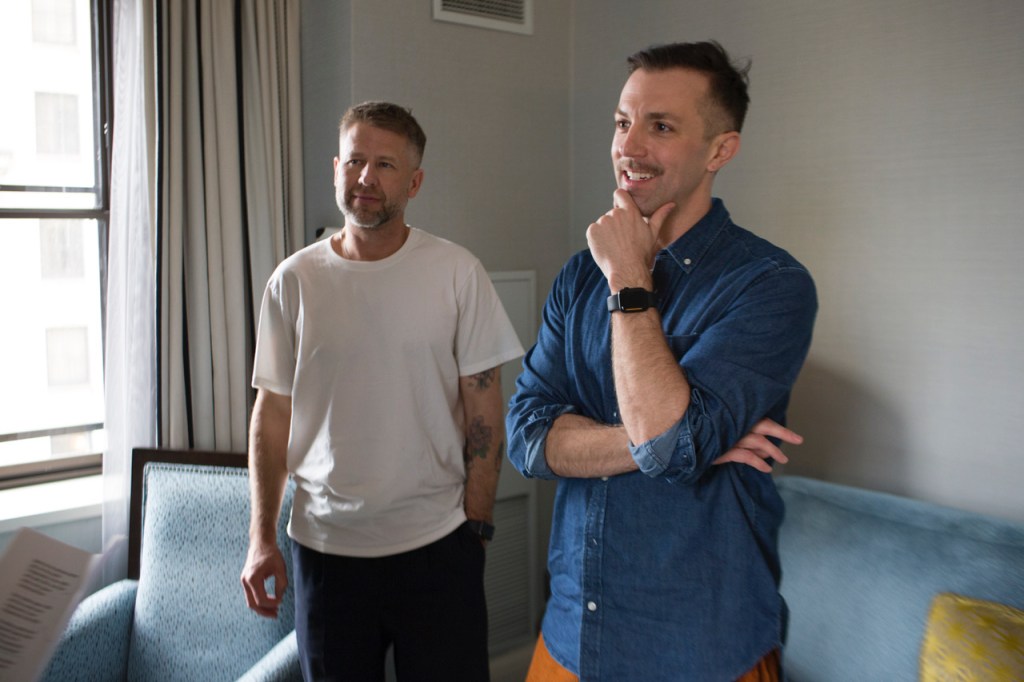
Daniel Garber talks with Amnon Carmi and Ben Ducoff about Yaniv
Hi, this is Daniel Garber at the Movies for culturalmining.com and CIUT 89.5 FM.
It’s an average day at an inner city high school in New York City… and the kids are excited about the auditions for the annual school musical. But everything comes to screeching halt when the tight-ass principal cuts their budget down to zero. Bernstein, the director, is mortified, and his students are crushed. Until his grandpa comes up with a possible solution: gambling… but of a particular type. Apparently, there’s an underground card game at a secret location in Rego Park, where Chassids run a gambling den devoted to a game called yaniv… the
same game Bernstein has played with his grandpa for years. And with the help of fellow teacher, card counter (and compulsive gambler) Jonah, maybe, just maybe, they can earn enough money to put on the play. But to make it work, Jonah will have to dress up like an actual Chassid, complete with fringes and prayer curls. Can they pull off the deception, and win enough money? Or is their downfall spelled Y-A-N-I-V?
Yaniv is also the name of a new film directed by Amnon Carmi and co-written by and starring Ben Ducoff. It’s a fish-out-of-water,
madcap, high school comedy thriller — with a hint of romance — all set on the fringes of New York’s insular Chassidic community. Amnon Carmi is a filmmaker, animator and artist. Ben Ducoff is a dramatist, producer and performer. And they both teach at H.E.R.O. High School in the South Bronx.
I spoke to Amnon and Ben in New York City via ZOOM.
The film is having its Canadian Premiere at the Toronto Jewish Film Festival, on June 6, at 7:30 pm at the Ted Rogers Hot Docs Cinema.
MassachuTIFF! Films reviewed: Dumb Money, The Holdovers, American Fiction
Hi, this is Daniel Garber at the Movies for culturalmining.com and CIUT 89.5 FM.
TIFF23 is over but it has ushered in Toronto’s Fall Film Festival Season. Toronto Palestine Film Fest offers film screenings, live concert performances and museum installations, starting on Sept 27th. And you can catch eight short dance films, called “8-Count” at the Hot Docs cinema on the 27th and at York U on the 28th. But this week, I’m talking about three more great movies that played at TIFF, all from the USA, all set in Massachusetts. There’s a prep school student named Tully, a novelist with the nom de plume Studd, and an online investor known as Roaring Kitty.
Dumb Money
Dir: Craig Gillespie
Keith Gill (Paul Dano) is a investment analyst in Brockton, Massachusetts who posts his financial details daily online on a sub/Reddit. He works out of his basement. One day he notices a stock he likes is undervalued, so he buys 50,000 shares and posts the recerd on YouTube. It’s GameStop, a shopping mall chain that buys and sells video games and equipment. And when it goes viral, and everyone starts buying them, the prices climb. The chain doesn’t go bankrupt and ordinary people — the dumb money of the movie title — start making good money on sites like Robinhood. That’s good for everyone, right? No — not for short sellers. Those are the wall street tycoons who make their fortunes by betting on the future price of a stock being lower than the current price. But this one is soaring exponentially,
resulting in a short squeeze where the short sellers have to buy back shares at a much higher rate than they bet on. Can Keith — and all his followers — keep GameStop shares afloat? Or will Wall Street triumph once again?
Dumb Money is a simple but very fun movie — based on a true story that happened just two years ago — about ordinary investors trying to beat Wall Street at their own game. It follows Gill, his wife Caroline (Shailene Woodley) his bro Kevin (Pete Davidson), and the many small investors across the country: a nurse, some college students, even a mall employee of GameStop (played by actors including America Ferrera, Anthony Ramos). They’re pitted against the Wall Street short sellers (Vincent d’Onofrio, Seth Rogan). Most of the characters never actually meet one another, but somehow it all holds together. It’s a lot like The Big Short, but the heroes and heroines are regular people not just a bunch of rich guys playing the system. There’s a warm and rustic feel to this movie — a nostalgia for last year! — with nice characters you want to get to know. Nothing spectacular but Dumb Money is highly entertaining and a hell of a lot of fun.
For some reason, I really like this one.
American Fiction
Co-Wri/Dir: Cord Jefferson
Thelonious Ellison (Jeffrey Wright) known as “Monk” to his family and friends is an upper-middle writer and academic. He’s spending time with his family in Massachusetts after being unceremoniously put on leave from his college for displaying the “N word” in class — white students said it made them feel “uncomfortable”. Coming from a family of doctors (he’s a PhD), Monk has very high standards when it comes to literature. He sneers at pulp fiction. Unfortunately his novels aren’t selling. What is selling is We’s Lives in Da Ghetto, written by an equally upper-middle-class, college-educated writer, Sintara Golden (Issa Rae). Monk holds fast to his ideals: he’s a writer who is black, not a black writer. But his agent (Jon Ortiz) wonders why Monk can’t write more “black”. In a fit of pique, Monk churns
out the trashiest novel he can imagine, full of dreadful stereotypes and contrived black slang, gangstas, single parent families and crack dealers. But to his surprise and disgust, there’s an instant bidding war for the book, finally offering him 3/4 of million dollars. (He wrote it under the pen name Stagg R. Lee, posing as a fugitive from the law.) He wants to come clean and call off the deal, but he does need the money to pay for a nursing home for her mom (Leslie Uggams). But as his mythical fame starts to grow, and Hollywood comes knocking at his door, he winders how long the truth comes out?
American Fiction is a scathing comedy about academia, literature, movies and white American attitudes toward Blacks. It’s also an interesting family drama — with his clever divorced sister Lisa, his incorrigible divorced brother Cliff (Sterling K Brown) and the family maid Lorraine (Myra Lucretia Taylor). It’s also a potential romance, when he meets Coraline (Erika Alexander) a neighbour to the family’s beach house. This is director Cord Jefferson’s first feature, but he makes a mature, clever movie. He takes what could have been a simple farce, and turns it into something bigger than that. Jeffrey Wright is perfect as Monk, never hamming or mugging, just honing his character to a sharp and pithy — but flawed — person.
Great movie.
The Holdovers
Dir: Alexander Payne
It’s December, 1969 at Barton Academy, an elite prep school in New England. Mr Hunham (Paul Giamatti) the hard-ass classics teacher, is put in charge of the kids who have nowhere to go over the winter holidays. Although its Christmas, he assigns the kids homework. These boys are troglodytes and its up to Hunham to whip them into shape, or at least try to. He’s the kind of guy who drops quotes in Latin and ancient greek to no one else’s amusement. He has a glass eye and smells like old fish. Cooking and cleaning is done by Mary Lamb (Da’Vine Joy Randolph). She works at Barton so her son can study there and go to University. But, unlike the rich kids he couldn’t afford to pay for college. So he got drafted and died in Vietnam. Mary is still at the school, because where else is she going to go? Then there’s the students — Jason, an heir to a aviation fortune but his hair is too long for his dad’s wishes; the class pot dealer, Kountse, and Alex and Ye-Joon two little kids, too far from home — their parents are in Salt Lake City and Seoul. But after an
unexpected event, only one student is left with Mary and Mr Hunham.
Angus Tully (Dominic Sessa) is the smartest kid in class, gangly and arrogant, but also a trouble maker. His divorced parents are rich but neglectful, so he’s been kicked out of a long list of prestigious boarding schools. If it happens again he’ll be sent to military school, a fate worse than death. Can the three of them, Angus, Mr Hunham and Mary, form a truce and act like a makeshift family? Or will they drive each other crazy first?
The Holdovers is a remarkably good coming-of-age comedy/drama with a compelling story and fantastic acting. It tugs at your heart without ever resorting to sentimentality. Paul Giamatti is always good, in this case as an unusual anti-hero, while the other two, Dominic Sessa and Da’Vine Joy Randolph, are totally new faces (never seen them in a movie before) but they’re both so good. They are three-dimensional and real, arrogant and vulnerable, and totally believable. I went into this movie with zero expectations, and was shocked by how good it is. I’m purposely not giving away the plot — no spoilers — but I can’t see anyone not liking this movie.
All three of these movies played at #TIFF23. with American Fiction winning the People’s Choice Award, and The Holdovers the runner up. Dumb Money opens this weekend across Canada; check your local listings.
This is Daniel Garber at the Movies, each Saturday morning, on CIUT 89.5 FM and on my website, culturalmining.com.
Daniel Garber talks with Jamie Kastner about Charlotte’s Castle

Hi, this is Daniel Garber at the Movies for culturalmining.com and CIUT 89.5 FM.
Photo by Jeff Harris.
Spadina Gardens is a legendary apartment building in the Annex, of downtown Toronto. Stratford actors, opera singers and robber barons have lived there, publishing houses were spawned there, and writers like Salman Rushdie and Patricia Highsmith passed through its doors. But when a dutch real estate conglomerate bought it, and words like renoviction started floating down its hallowed halls, the tenants decided to fight back. But can even an apartment as legendary as this one stop the rampant explosion of Toronto’s housing crisis?
Charlotte’s Castle is a new documentary that looks at one Toronto apartment building — its history, aesthetics, architecture — and the plight of its tenants: the people who live there. It’s the work of award-winning Toronto documentarian Jamie Kastner. I previously talked with Jamie about The Secret Disco Revolution in 2012, A Skyjacker’s Tale in 2016, and There are no Fakes in 2019.
Charlotte’s Castle is having its world premiere tomorrow, September 24th, at Toronto’s Hot Docs Cinema, and on TVO beginning on Tuesday, September 26th.
I spoke with Jamie in Toronto, via ZOOM.
Daniel Garber talks with Steve J. Adams and Sean Horlor about Satan Wants You!
Hi, this is Daniel Garber at the Movies for culturalmining.com and CIUT 89.5 FM.
In the 1980s, tabloids like the National Enquirer and daytime talk shows from Oprah to Jerry Springer were talking about everyone’s biggest fear: that animals and small children were being kidnapped by witches and sacrificed to the devil. A new psychological method known as Recovered Memory Syndrome was in vogue, and countless adults who suffered trauma as a child, were somehow recalling bizarre satanic rituals doing back to their earliest memories. And in courtrooms across America, daycare workers, teachers and social workers were accused of heinous crimes, leading to arrests, trials and prison sentences, based on dubious testimony. Who would have
thought this all harkened back to a young woman named Michelle Smith and her psychiatrist Lawrence Pazder in peaceful Victoria, BC?
Satan Wants You! is a new documentary that delves into the case of Michelle Smith, her psychiatrist Lawrence Pazder, the bestselling book Michelle Remembers that followed and the ramifications it led to. This compelling film tears the veil from this story, using period TV footage, and new interviews with family members and everyone involved. Satan
Wants You is written and directed by Vancouver-based documentarians Steve J. Adams and Sean Horlor. Steve and Sean are a prize-winning team known for their films on pop culture and queer topics and whose doc Someone Like Me won the Audience Choice award at Hot Docs in 2021.
I spoke with Steve and Sean, in person, at TIFF 2023.
Satan Wants You! had its world premiere at this years Hotdocs Film Festival, and is now playing at the Rogers HotDocs Cinema in Toronto.
Autobiographies? Films reviewed: North of Normal, A Compassionate Spy, Shortcomings
Hi, this is Daniel Garber at the Movies for culturalmining.com and CIUT 89.5 FM.
August is here in Toronto, a great time for some outdoor screenings. TOPS — Toronto Outdoor Picture Show — is showing films for free, after dark at Christie Pits, Corktown Common, Bell Manor, Old Fort York and the Evergreen Brickworks, with no tickets or advance registration required — just show up and sit on the grass.
This week I’m looking at three new movies — a memoir, a doc and dramedy. There’s a hippy in a tipi in Yukon, a spy in Los Alamos, and a frustrated filmmaker in Oakland.
North of Normal
Dir: Carly Stone
Cea Sunrise Person (Amanda Fix) is a teenage girl experiencing city life for the first time. She’s both naive and worldly. Her mother Michelle (Sarah Gadon) gave birth to her when she was only 15, and acts more like a sister than a mom. Since she was a child, she’s been raised, hippy style, in Yukon, by her grandparents, including Michelle’s dad Papa Dick (Robert Carlyle).
They shoot animals, go fishing and gather foraged foods. She grew up living in a tipi, where any visitor to their mobile encampments likely slept with one or more of the adults. She’s familiar with the concepts of free sex, a barter economy, and the use of soft drugs, as well as living off the grid, avoiding any government interference — Papa Dick hasn’t paid taxes in decades. So life down south (in an unnamed Canadian city) is totally alien to her. Though bright and friendly, she doesn’t understand school rules or social norms, and gets into fights with the locals. But she gradually adjusts — well, kind of — to a new life. But she really doesn’t get along with her mom’s new boyfriend, Sam (James D’Arcy) who happens to be a
married man. Why does Michelle always fall for the bad boys? But one thing keeps her steady: Cea holds onto a childhood wish to move to Paris; she carries an Eiffel Tower snow globe wherever she goes. So when she is approached on the beach by a legit modelling scout, she wonders if this will be the fulfillment of her dreams.
North of Normal is a touching, coming-of-age film based on Cea Sunrise Person’s memoir about her unusual life (she ended up as a professional fashion model and entrepreneur.) She’s beautifully portrayed by Amanda Fix as a teenager and by River Price-Maenpaa as a little girl. And it’s shot amongst the forests and lakes of Canada’s north. The plot is eliptical, bouncing back and forward in time as her suppressed memories are gradually revealed, while leaving out large parts of her life. Even so, I liked this story.
A Compassionate Spy
Dir: Steve James
It’s the 1940s and WWII is raging, and there are rumours the Third Reich is developing an atomic bomb. So the US government initiates the secretive Manhattan Project in Las Alamos, supervised by the Army. It’s a collection of scientists brought together to create the ultimate weapon before Germany does. Most of the names are already famous: Oppenheimer, Teller, Niels Bohr, von Neuman. But the youngest one of all is Ted Hall. Only 18 years old, the child prodigy has already graduated from Harvard. He’s an ardent leftist, and wants to defeat fascism in Europe. As a drafted soldier, he has to wear a uniform and sleep in a barracks on the site, but otherwise he works each day beside other scientists. Aside from his age, he is different from the rest of them in another way. He is passing intel to the Soviet Union. Hall is disturbed by the idea of an impending nuclear holocaust, and doesn’t trust the US government to show restraint, if they’re the only holder of such a dangerous tool. So totally independently — with the help of is best friend, Savvy Sax — he seeks out the Soviets to tell them what’s going on. Is he arrested? Put in the electric chair like Ethel and Julius Rosenberg? No, he (and his wife Joan) keep their secret for half a century.
A Compassionate Spy is a fascinating documentary packed with info that sheds light on what Hall did and why, and what became of his
life afterwards. Hall worked on cancer cures at the Sloane Kettering institute, and later became a professor at Cambridge University. Most surprising is that while he opposed the bomb, his own brother created and built ICBMs — Intercontinental Ballistic Missiles which may have brought the two sides closer to destruction.) The doc is made up of a confessional video Hall made before he died, new interviews with his wife Joan and their kids, as well as with Savvy Sax’s family. It also recreates dramatic scenes from the period, along with contemporary newsreels, diaries, letters and photos. Joan Hall is this really fascinating and feisty character who tells most of the story. Equally important, the film presents a lot of crucial information that is glossed over in the recent hit biopic Oppenheimer. Like the fact that many scientists (including Hall) petitioned FDR and Truman not to drop the bomb on Japan; the letter was stifled by Leslie Groves, and never sent. I never knew the US threatened to use the bomb on the USSR in 1946 after the Russian army occupied Iran. And lots more eye-openers. A Compassionate Spy is an excellent documentary by the Oscar-winning director of Hoop Dreams.
Shortcomings
Dir: Randall Park
Ben (Justin H. Min) is an aspiring filmmaker in Oakland, California. After dropping out of cinema studies at Berkeley, he’s now he’s the manager of an art house theatre, so he still has a peripheral connection. He loves all women but treats any man as a potential competitor. His best friend is Alice (Sherry Cola), a queer Korean American. They hang together ogling girls in local cafes — for Ben, that’s mainly women with blonde hair. He acts as her beard, posing as her fiancé when she has to visit her conservative family.
He lives with Miko (Ally Maki) who also wants to make films; she’s involved with the local Asian American Film Festival. She’s the love of his life. But despite the fact that he, his girlfriend and his best friend are all Asian American he is quick to point he feels no racial identity or kinship, and loathes identity politics. His abrasive and defeatist attitude leads to frequent arguments with Miko. But everything changes when she suddenly moves to NY City for a film internship, leaving Ben unexpectedly unmoored. Does their temporary separation offer him a chance to explore his sexual fantasies (that is, sleeping with a white woman)? Or will he try to win Miko back again?
Shortcomings is a hilariously deadpan look at the life and thoughts of an Asian-American man. Its observations are simultaneously scathing social satire and self-deprecating humour. It’s based on the graphic novels of Adrian Tomine whom I’ve read for decades now, so I was worried the comics wouldn’t translate well into film.
Luckily, Tomine wrote the screenplay, and it’s told, like his comics, in a series of connected vignettes. The characters are brilliant — Justin H Min is sympathetically annoying as Ben, the guy who never misses a chance to mess things up. Sherry Cola is equally brilliant, as are the many priceless side characters — Autumn, a performance artist who photographs her own toilet use, Sasha, a frustrated bisexual, Leon, an annoying fashion designer who Ben calls a rice king, and Gene, a smug popcorn maker.
From the opening parody of Crazy Rich Asians to the closing scene, this perfect comedy has no shortcomings to speak of.
North of Normal is now playing; Shortcomings opens this weekend across Canada, check your local listings; and A Compassionate Spy is on now at the Rogers Hot Docs Cinema in Toronto.
This is Daniel Garber at the Movies, each Saturday morning, on CIUT 89.5 FM and on my website, culturalmining.com.
Bikes and books. Films reviewed: The Last Rider, Umberto Eco: A Library of the World
Hi, this is Daniel Garber at the Movies for culturalmining.com and CIUT 89.5 FM.
It’s Summertime and Toronto is melting. Luckily there are lots of new movies playing at festivals, both indoors and out. The ICFF is showing great movies from Morocco to China at the distillery district throughout July. Art of Documentary Film Festival is on next Saturday, July 15th, at Innis Town Hall Theatre featuring a talk by Shasha Nakhai and Rich Williamson, the great Toronto directors who brought us Scarborough. And later this month keep an eye out for the Female Eye Film Fest featuring memorable movies and shorts directed by women.
But this week I’m looking at two new documentaries that stimulate the body and the mind. There’s an Italian film about books and American one about Bikes.
The Last Rider
Wri/Dir: Alex Holmes (Maiden)
It’s 1989. Greg LeMond is a champion professional cyclist who was the first American ever to win the Tour de France. He has trained since a teenager in Lake Tahoe, growing up with a gut-knowledge of their mountains and steep roads. He meets Cathy, his future wife, like in a movie, at a Holiday Inn. He is soon recruited as a member of the Renault team, moves to France for training, and becomes world famous. Cathy comes with him, dropping out of College.
But after winning the Tour, he falls into a deep depression, followed by a terrible accident: he is accidentally shot and almost killed on a turkey hunt with his family. This happens while Cathy is in labour, so Greg barely gets a chance to see their newborn for weeks. But after a few years of recovery, they decide he should try once again.. Not to win the Tour de France, but just to see if he can finish it (remember: competitive cycling, especially climbing up
gruelling Alpen roads like in the Tour, requires absolute perfection in strength, skill and stamina— and Greg still has metal pellets riddling his body!)
But to everyone’s surprise, it becomes a three way race for Greg, Pedro Delgado and Laurent Fignon. Who will wear the yellow jersey?
The Last Rider is a biographical sports doc about that historical and exciting race in 1989. It’s 75% period video footage — the Tour de France is heavily photographed, start to finish — and 25% new taking-head interviews with LeMond, his family and many participants in that race. 1989 was before the dirty side of professional cycling — all the scandals, illegal drugs and supplements that became endemic in the sport — so there is a sense of innocence and pathos permeating this story. I am not a big fan of the sport — I barely follow it — but it was still an exciting watch.
Umberto Eco: A Library of the World
Dir: Davide Ferrario
Umberto Eco is a writer, novelist and semiotician from Piedmont, Italy. He writes books — including international bestselling novels like The Name the Rose and Foucault’s Pendulum — and academic essays and treatises. He also accumulates and reads an astonishingly diverse number of books. And though he is an academic, he avoids ranking books by their moral or political value, ignoring the usual canons of good vs bad literature.
His shelves are filled with Charlie Brown bobble heads beside Voltaire, devoting equal space to fumetti — low-brow italian comics — and pulp fiction, as he does to obscure codices scribed by medieval monks. The more obscure the better. There are illuminated manuscripts of animals with human heads. And — unlike the current vogue of labelling works as misinformation, disinformation or “fake news” — Eco loves writers who churn out huge quantities of books of dubious credibility and provenance. Like the 17th-century German Jesuit Athanasius Kircher, who studied and wrote about practically everything, including travelogues of China (despite never having been there), and treatises on mathematics, music, medicine, the tower of Babel and Egyptian hieroglyphics. There’s always room for mysticism, conspiracy theories and apostate Cathars. Eco died in 2016 but left behind a stupendous collection of books, including his own voluminous output.
Umberto Eco: A Library of the World is a fascinating, esoteric and aesthetically pleasing documentary about Eco and his writing, the books he read, and about libraries worldwide. Members of his family tell their stories and they and actors recite aloud some of Eco’s works, both profound and mundane. There are also countless TV talks in Italian, French and English of eco himself spannng his career. And the cameras take us through lush stacks of burnished wood in libraries throughout the world, caressing atlases and thesauruses. To the whimsical music of Carl Orff and striking architectural locations, this doc, like Eco himself, is a nearly limitless compendium of everything wondrous, grotesque and interesting.
If you like Umberto Eco’s work, this is a must-see; and if you’ve never heard of him watch this movie — you’ll learn learn a thing or two.
Umbertio Eco: A Library of the World starts next Friday at Hot Docs cinema, and The Last Rider which recently opened in Toronto is playing later this month at the Lavazza INCLUCITY FESTIVAL in the distillery district; check your local listings.
This is Daniel Garber at the Movies, each Saturday morning, on CIUT 89.5 FM and on my website, culturalmining.com.
Exposing secrets. Films reviewed: John Wick: Chapter 4, The Five Devils, Ithaka
Hi, this is Daniel Garber at the Movies for culturalmining.com and CIUT 89.5 FM.
This week, I’m looking at three new movies — an action film, a mysterious drama, and a documentary— from the US, France and Australia. There’s an assassin battling a secret organization, a little girl sticking her nose into hidden places, and a journalist jailed for bringing secret war crimes into the light.
John Wick: Chapter 4
Dir: Chad Stahelski
John Wick (Keanu Reeves) is a Belorussian assassin, under the control of a powerful, international cabal known as The High Table. He’s infamous for his relentless killing skills; he can wipe out an entire squadron with a just a pair of nunchucks. Wick wants out, but to do that he needs to be free. So he embarks on a complex series of tasks to complete before the Table frees him. In the meantime, The Marquis (Bill Skarsgård), the head honcho, wants him dead… so he gets Wick’s former best friend and partner to kill him.
Caine (Donnie Yen) is an expert martial arts fighter and shooter who happens to be blind. So Wick turns to another old friend, Shimazu
(Sanada Hiroyuki) a hotelier in Osaka. Even though he could lose everything, he still agrees to hide Wick from the Marquis’ agents. Meanwhile, the marquis has put a multimillion dollar mark on Wick’s head, a reward that its steadily rising, letting loose an army of killers out for a quick buck, including a man with a dog known as the tracker
(Shamier Anderson). Can Wick survive this army of killers? Or will this be his final showdown?
John Wick: Chapter 4 is nearly three hours of non-stop violence. The characters and storyline is strictly cookie-cutter, but the settings — in New York, Osaka, Paris, Berlin and Jordan — is vast and opulent. Every chamber has cathedral ceilings and gaudy rococo elegance. And the fight choreography is spectacularly orchestrated. The cast — including Laurence Fishburne, Ian McShane and the late Lance Reddick — are fun to watch. No one will call this a great movie, but if you enjoy endless fight scenes with hundreds of extras whether among the writhing bodies of a Berlin nightclub or in a traffic jam around the Arc de Triomphe, John Wick 4 will satisfy.
The Five Devils (Les cinq diables)
Co-Wri/Dir: Léa Mysius
Vicki (Sally Dramé) is a bright young girl who lives in a small village in the French alps. Joanne, her mom (Adèle Exarchopoulos) teaches aqua fitness, while Jimmy, her dad (Moustapha Mbengue) is a fireman. But Vicki has no friends, and is constantly bullied at school, perhaps because she’s mixed-race in a mainly white town (her mom is white, her dad’s from Senegal.) Vicki has a unique skill no one else knows about: she can identify anything or anyone purely by its scent. If she picks up a leaf she instantly knows what kind of animal bit it, and its size, age, even its feelings. And she can recognize people at twenty paces, blindfolded, just by their smell. Vicki starts finding things, and like an alchemist, puts them into jars, carefully labelling each one.
But when a surprise visit by her aunt Julia, her father’s sister (Swala
Emati), things start to change. There’s something in Julia’s past that has turned the whole village against her. When Vicki discovers how to harness her power of smell to travel, temporarily, back in time, she finds that she may have played a role in Julia’s younger life. But can she influence what already happened?
The Five Devils is a very cool French mystery/drama with a hint of the supernatural and a sapphic twist. The alps may be majestic but they hide a sinister past, and a stultifyingly provincial and xenophobic culture. This is conveyed in the large, tacky murals and oddly dated architecture that pops up everywhere. The three female leads Exarchopoulos, Dramé and Emati are amazing (with full points on the Bechdel test). Mysius is an accomplished
scriptwriter who has worked with such luminaries as Claire Denis and Jacques Audiard. You can tell. And an unexpected twist at the very end will have you leaving the theatre with an extra jolt.
I like this movie.
Ithaka
Wri/Dir: Ben Lawrence
Twenty years ago this month, US- and British-led forces invades Iraq under the pretence of finding Weapons of Mass Destruction supposedly threatening the west. Nothing is ever found and over 200,000 civilians are killed, 4 million displaced, and the entire middle east thrown into disarray, leading to the rise of fundamentalists like ISIS, unrest and civil war from which, 20 years later, it has yet to recover. In 2010, army specialistChelsea Manning anonymously releases a huge trove of secret military files to Wikileaks, a website founded specifically to expose things like war crimes and corruption, without endangering news sources and reporters who cover them.
It’s founded by Australian journalist and hactivist Julian Assange. That’s when Wikileaks catches the world’s attention by exposing,
on video, the US military gunning down innocent civilians in Iraq in cold blood, including Reuters journalists. None of the perpetrators of these — and countless other war crimes — ever served time, but Manning is arrested and jailed, while Assange is forced to seek refuge in the Ecuador Embassy in London. He is afraid that travelling to Sweden for questioning will lead to him being extradited to the US. His fears are correct, and he is later jailed in Belmarsh, a maximum security prison in London, awaiting deportation to the US on charges of espionage. He remains there today.
Ithaka is a personal and intimate documentary about Assange in jail in London during the trial, and the events that led up to it. Using original interviews and contemporary news reports, it fills in the blanks you may have missed. It also reveals the CIA’s involvement, including plots to murder him. The doc follows two people: John Shipton, Assange’s dad, and Stella Moris, his wife and the mother of their two sons. Shipton is an Australian house builder and peace activist. Moris is the Johannesburg-born daughter of Swedish and
Spanish parents who were active in the anti-Apartheid movement. She also serves as his lawyer. Assange is off camera, but his cel phone voice is often present.
For a man like Assange, who has done more to expose government and corporate corruption than almost any other journalist today, to be charged with espionage and threatened with life in prison is a travesty of justice. His suffering and deterioration in solitary confinement is cruel and unusual punishment. If you want to learn more about him, or to show your support, Ithaka is a good place to start.
John Wick Chapter 4 and The Five Devils open in Toronto this weekend; check you local listings. Ithaka is now playing at the Hot Docs cinema.
This is Daniel Garber at the Movies, each Saturday morning, on CIUT 89.5 FM and on my website, culturalmining.com.
From India to Iceland. Films reviewed: To Kill a Tiger, Godland
Hi, this is Daniel Garber at the Movies for culturalmining.com and CIUT 89.5 FM.
This week, I’m looking at two new movies now playing in Toronto: a documentary and an historical drama. There’s an underdog in India standing up to her oppressors; and a Dane in Iceland cowering in fright.
To Kill a Tiger
Wri/Dir: Nisha Pahuja
(I interviewed Nisha here, in 2012)
Ranjit is a poor farmer in a rural village in the Bero district of Jharkhand, in Eastern India. Together with his wife, they are raising his beloved children, whom they hope will advance to a better life through education. But everything changed late one night, after a wedding party. Their oldest, a 13-year-old girl. is attacked and brutally gang raped by men from the village. When their parents found out what happened, they rushed her to the police and eventually the men are arrested. But the authorities decided the proper response to this is for a 13-year-old girl — their beloved daughter! — to marry one of her rapists. It’s a hellish proposition, and the entire family rejected it. And with the help of an NGO, they
decide to press charges and put the men on trial. She has the full support of her father, and agrees to testify in court. This is almost unheard of in India, and the trial became a cause celebre, with people across the country awaiting its verdict.
But the process is far from favourable. The family receives death threats, while local officials blame the victim for her attackers’ crimes. They are shunned in their home village, and strongly pressured to drop it. Can they go through with the trial? Will the girl testify? And do they have any chance of winning?
To Kill A Tiger is an NFB documentary about a young girl and her supportive family who question authority from within a strictly hierarchical society. Although the film estimates a woman is raped in India every 20 minutes, few cases are reported and fewer still are vindicated in trial. The documentary covers the family in their home, along with their many supporters — lawyers, NGOs, civil rights activists — and their detractors, including her unrepentant alleged attackers. The entire film was shot in India in the days leading up to around the trial, in the places where it was happening.
This strong documentary stands behind underdogs in their fight against the system, and provides a sliver of hope amidst very grave circumstances.
Godland
Wri/Dir: Hlynur Pálmason
It’s the late 19th Century in Denmark. Lucas (Elliott Crosset Hove) is an earnest young priest with a seemingly simple mission: to travel to a Danish colony in southeastern Iceland, build a church there before winter comes, and then start preaching. But beware, warns his supercilious superior, Iceland is not what you expect it to be. They may look sort of like us, but they speak a different language, they believe in different things, and they are primitive in their ways, not civilized like us Europeans. And the landscape though
beautiful is dangerous and treacherous, full of erupting volcanoes, flooding rivers and steep rocks. Not to be trifled with.
Ignoring him, Lucas sets out on his carefree journey, carrying his camera equipment, books and a giant cross. There’s also a large entourage of Icelandic workers. He takes an instant dislike toward Ragnar (Ingvar Sigurðsson) an older man who speaks no Danish. But he soon makes friends and bonds with his translator (Hilmar Guðjónsson), the only person he can talk with. But when things start to go wrong and the translator is killed, Lucas sinks into a deep melancholy. His depression grows deeper even as his anger, directed mainly at Ragnar, starts to swell. Can he survive until they reach the town and build the church? And will he be a suitable leader of the congregation?
Godland is an impressionistic historical drama about a clash of cultures. It follows a Danish priest’s journey into his own private heart of darkness. The film is full of love, romance, rivalry and revenge, as experienced by a group of strange and quirky characters. There is so much to love about this movie: they ride small horses with beautiful manes straight out of My Little Pony. Poetry, sagas, story-telling and Iceland’s oral history are still living things, part of everyday use, not something hidden away in dusty books. And around any twist in the trail. they might run into a breathtaking waterfall, a crackling glacier or an erupting volcano. Lucas photographs the people he’s travelling with, posing them before ethereal land- and seascapes. 
The pace is slow, but still dramatic: it takes the time to show the priest applying egg whites and silver to a pane of glass to take one of his wet plate photos. In real life a lost cache of these pictures was found there a century later — and that’s what inspired this film. The entire movie is shot to look like those photos, in an almost square shape with softly rounded corners.
And like any good Nordic film, Godland combines a dark storyline with a stunning aesthetic.
I recommend this movie.
To Kill a Tiger is now playing in Toronto at the Ted Rogers Hot Docs Cinema, and Godland at the TIFF Bell Lightbox; check your local listings.
This is Daniel Garber at the Movies, each Saturday morning, on CIUT 89.5 FM and on my website, culturalmining.com.
leave a comment