Daniel Garber talks with Brishkay Ahmed about In the Room
Hi, this is Daniel Garber at the Movies for culturalmining.com and CIUT 89.5 FM.
It’s August, 2021 in Kabul Afghanistan. The Taliban is at the city gates and large crowds are congregating at the airport. Some manage to get out, but the women who remain face unheard of restrictions imposed by the Taliban. Restrictions in dress, education, work and general daily life: there’s no school after grade 6, women barred from universities, government work and from most professions, along with freedom of speech, expression, and even congregating in
public… leaving some women virtually locked away in their rooms.
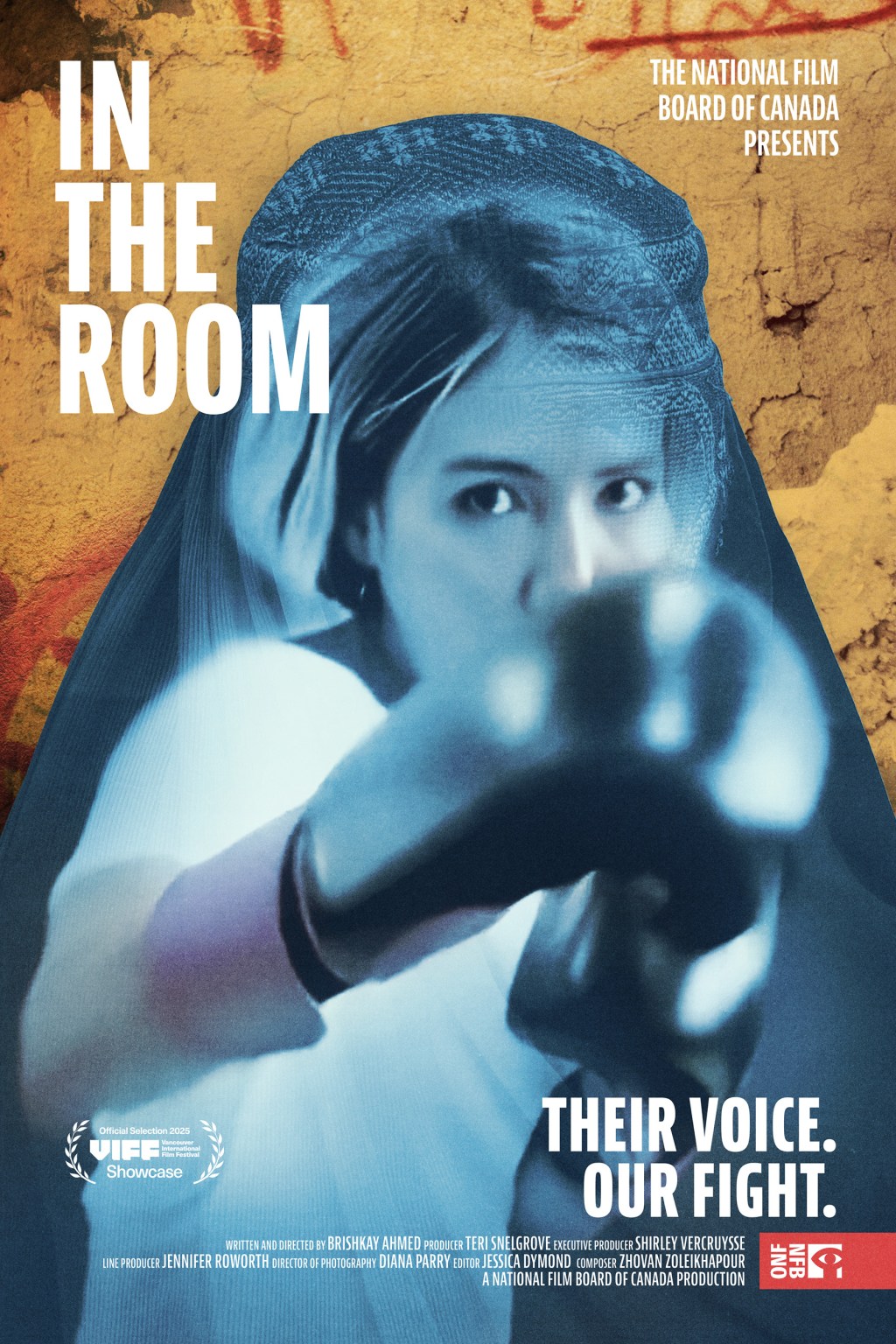
In the Room is a new NFB documentary about a group of dynamic ex-pat Afghan women who don’t fit neatly into their stereotypes. We meet a model, a TV news chief, an influencer and an actor and activist, in this unusual doc. The film is by noted Canadian documentarian Brishkay Ahmed whose work has frequently taken her back to the country of her birth. She’s known for her films In the Rumbling Belly of Motherland, Story of Burqa. The film won the Audience Award Showcase at its premiere at VIFF in Vancouver and played at the Reelworld film festival Toronto.
I spoke with Brishkay in Vancouver via Zoom.
Beginning on Tuesday, November 25, the National Film Board of Canada (NFB) will release In The Room for free streaming across the country on nfb.ca and the NFB app.
Daniel Garber talks with Alan Zweig about Love, Harold (+Tubby)
Hi, this is Daniel Garber at the Movies for culturalmining.com and CIUT 89.5 FM.
Some people’s biggest fear is of a late-night call from a hospital that someone close to them —a child, a parent, a lover or a friend — has suddenly died in an unexpected accident, something you can’t predict. It’s devastating. But what if that death was by suicide? How do you deal with news like that? Why did they choose to do it? Was it somehow your own fault or something you could have prevented? Well, a new film looks at survivors of suicide loss and the effect it has on their lives.
The film’s called Love, Harold, and it’s a sympathetic and very moving look at how the aftermath of a suicide by talking with the friends, partner or family member of the ones who died. This NFB film is written, and directed by renowned Toronto-based filmmaker Alan Zweig, whose deeply- personal and
intimate documentaries look at people — including himself — facing crises, both major and mundane, in everyday life. His films have won numerous awards including the prestigious Platform prize at TIFF, a Genie and a Canadian Screen Award.
I’ve covered many of his docs and interviewed him at this station, including Fifteen Reasons to Live (2013). And I know Alan off mic, through work, mutual friends… and he used to be my next-door neighbour! Alan is also currently hosting a self-help podcast called TUBBY about weight issues.
I spoke with Alan in Toronto via ZOOM.
Love Harold is the centrepiece film at Rendezvous with Madness on October 24.
This film contains discussions of suicide, and the effects on survivors of suicide loss. If you need support services, please call your local Distress Centre. If you need immediate help, please call or text 9-8-8.
You can listen to Tubby on Left of Dial Media.
Daniel Garber talks with Min Sook Lee about There are No Words at TIFF
Hi, this is Daniel Garber at the Movies for culturalmining.com and CIUT 89.5 FM.
Photos by Jeff Harris.
It’s the 1970s, and the Lee family — Dad, Mom and three daughters — are experiencing the typical immigrant life in Toronto. A brash dad and a soft-spoken mom spend all their time in the family convenience store so the girls can study for school in their high-rise apartment tower. But everything
changes when, seemingly out of nowhere, their mom dies by suicide, leaving only a few photos and silent memories. Now, decades later, one of those sisters has made a documentary about their hidden past… but there are no words to describe the shocking family history and generational trauma she unveils.
The film’s called There are no Words, and is written and directed by multiple award-winning Toronto-based documentary filmmaker Min Sook Lee. She is known for her moving documentaries that bring crucial global political issues down to a personal scale, as in
her doc Migrant Dreams in 2016, the last time I spoke with her on this show.
Incorporating period news footage and photos with new interviews with her family’s relatives and friends in Canada and Korea, as well as a shocking and revelatory talk with her father, There are No Words is a highly personal heart-wrenching look at the filmmaker’s own hidden family history.
I spoke with Min Sook Lee via Zoom.
There are No Words had its world premiere at TIFF, played at ReelAsian and will be released theatrically.
Born, reborn. Films reviewed: Spark, Wilfred Buck, Babes
Hi, this is Daniel Garber at the Movies for culturalmining.com and CIUT 89.5 FM.
Toronto’s Spring Festival season continues with TJFF, the Toronto Jewish Film Festival, starting on May 30th. I haven’t seen any of the films yet but some of them look really interesting: The Catskills, a doc about the heyday of borscht belt comics; Just Now Jeffrey, a coming-of-age comedy set during the last days of Apartheid South Africa; The Goldman Case, an historical chronicle of a French revolutionary; The Anarchist Lunch, a doc about the 30 year-long friendship of a group of Vancouver leftists; and Midas Man, a biopic about Brian Epstein, the man who made the Beatles into stars.
But this week I’m looking at three new features, two directed by first timers and one by an accomplished pro. There are two women preparing for births, a man who sees the same day constantly reborn, and another man who passes his knowledge on to the next generation.
Spark
Wri/Dir: Nicholas Giuricich
Aaron (Theo Germaine) is a young artist who lives with his platonic roommate Dani (Vico Ortiz). He’s single and on the prowl, looking for a lover, but with not much luck. So he is intrigued when he gets a mysterious invitation in a red envelope. A friend of his is planning a big party and she want to match up some of her friends before they arrive. So Aaron drives to the appointed place. He’s an artist at heart and draws little sketches on post-it notes to lead his potentially perfect match to his car. He is pleased to meet Trevor (three-time Olympic medalist Danell Leyva) a swarthy and smouldering athlete. In an otherwise empty house they tenuously chat, take a selfie, and pour a couple Old Fashioneds. Aaron is smitten, Trevor less so. But sparks do fly, and they wind up having passionate sex. But just at the point of climax… Aaron wakes up, groggy headed, and back in his own bed. Was that all a dream? But when Dani repeats the same
things they had said the day before, and his publisher calls again for his drawings which he had sent him yesterday, he realizes something: it’s as if that day never happened. In fact, it’s the same day. He goes through the steps again, with Trevor, this time trying to fix his past mistakes, but to no avail — he’s back in his home, in a flash, right after sex. He repeats this date, over and over, testing out tiny changes to see how they might effect him or Trevor’s reactions, but no luck. Is he doing something wrong? What can he change to fix things? Or is he trapped in a never-ending cosmic sex loop.
Spark is a queer fantasy drama about a man caught in the never-ending cycle of a repeated day. I like these kinds of movies, from Groundhog Day to Russian Doll, where people are caught in a time warp. It’s also “queer” in that it’s about a gay relationship of sorts, between Aaron a gay transman who desires Trevor, presumably a gay cis man. And this is where it gets even more interesting. First that Aaron’s gender and his sexuality are never mentioned by anyone in the film; they don’t need explanation — they’re accepted as given. And Aaron is played by a non-binary actor, Theo Germaine, who was also a terrific — though very different character — in the TV series The Politician. Dani is played a non-binary performer as well. Perhaps in some future world this will be commonplace, but for now at least this is rare in its casually deft handling of identity, gender and sexuality within a science fiction milieu.
Very good first feature.
Wilfred Buck
Wri/Dir: Lisa Jackson
Wilfred Buck is an indigenous astronomer, educator and writer. He was born in the Opaskwayak Cree Nation in Northern Manitoba, near the Saskatchewan border. As a child he learned the thrill of the hunt with his friends, fishing at a nearby lake. As a young man, he made his way south to Winnipeg, where he was jailed almost immediately. In the 1960s, he fell in with a bad crowd, there. He liked the music, the drugs and alcohol a little too much, and ended up living on the streets, a self-described liar, thief and drug dealer. He was harassed, beaten up and almost drowned left to die in icy waters. But things started to change when he was taken under the wing of elders from his first nation and educated about his culture. He learned about rocks and nature, participated in a pow wow, and gradually learned about preparing crucial ceremonies like the Sun Dance: how to build a sweat lodge, and when to present tobacco. And he learned to look up into the night sky and
understand the stars there. He became a knowledge keeper and an astronomer telling stories of what the constellations are, where the stars point and what they mean.
I grew up loving trips to the planetarium where the astronomer pointed out the three stars of Orion’s belt, or the chair-shaped throne of Cassiopeia. I took it for granted that they were discovered and named by the ancient Greeks and were accompanied by their stories. But what I didn’t know was that there are whole other constellations up there with their own stories attached to them. Wilfred Buck has devoted his life to passing on this knowledge of the skies to a new generation.
Wilfred Buck is a beautiful retelling of this charismatic man’s life story, partly narrated, partly reenacted, partly composed of period footage. Actors recreate the four stages of his life. All this is combined with the man himself pointing out gorgeous images in the night skies and on a planetarium dome. This story is both inspiring and invaluable as Buck passes on his knowledge to new generations.
Babes
Dir: Pamela Adlon
It’s early morning on Thanksgiving Day in New York City. Eden and Dawn (Ilana Glazer, Michelle Buteau) are meeting in Greenwich Village for a movie. It’s a tradition, one the best friends have kept for decades, ever since they were neighbours in Astoria, Queens. Eden, a yoga teacher, still lives there but Dawn is a dentist now, married with a kid and lives in a fancy brownstone in the Upper West Side. And she’s 9 months pregnant. But their tradition changes suddenly when her water breaks. To make sure it’s a birth to remember Eden sets out to buy her the most luxurious and expensive sushi ever… but is turned away from the hospital. Instead she shares it with a stranger in a red tux she meets in the subway. She ends up sleeping with Claude (Stephan James) and a few months later, she’s pregnant! He’s out of the picture, but she can’t wait to see her experience through from now till birth with her besty Dawn by her side. But how much time can a married mom with a full-time job, a 3 year old, and a crying newborn devote to her friend?
Babes is a comedy about how two friends deal with pregnancy and
giving birth. It’s funny, surprising and audacious. It looks at morning sickness, amniocentesis, labour, placentas, lactation, breastfeeding, daycare, and everything — I mean everything — else, in an entirely new way. But it’s mainly just funny schtick, both in dialogue and their whole-body style of acting. The lines are clever and twisted, with virtually nothing I can repeat verbatim on daytime radio. I was laughing my head off, especially in the first half hour. And the bawdy acting — things like Dawn on mushrooms shooting imaginary jets of breast milk across the room, or Eden crawling between Dawn’s legs to see how dilated her vagina looks — is just brilliant. They’re both former standup and sketch comics — Ilana Glazer is known for Broad City, Michelle Buteau for Survival of the Thickest — and with their totally different body types, size and ethnicity, they play off each other with a sort of sloppy synchronicity. Not every gag works, and the serious parts of the story are less interesting than the funny ones. It’s also loaded with scatological references, way too many for my taste, but at least they talk about their bowel movements rather than showing them. And the men serve mainly as sidekicks — this is a women’s movie. Does’t matter; the side roles, from Elena Ouspenskaia as a doula, to Susanna Guzman as a babysitter, there are a couple dozen great characters.
Babes knows how to work it just fine.
Wilfred Buck now playing at the Hot Docs cinema in Toronto; Spark had its world premiere last night at the Inside Out Film Festival; and Babes opens this weekend at the TIFF Lightbox in Toronto; check your local listings.
This is Daniel Garber at the Movies, each Saturday morning, on CIUT 89.5 FM and on my website culturalmining.com.
International Women’s Day! Film reviewed: Analogue Revolution
Hi, this is Daniel Garber at the Movies for culturalmining.com and CIUT 89.5 FM.
Wednesday is International Women’s Day, a national holiday in many countries though not in North America. And changes have been slow coming in the film industry, but they are happening. Since the first academy awards, more than a century ago, less than two dozen films directed by women have ever been nominated for best picture. This year, there are three… and these numbers are steadily growing.
So if you want to celebrate movies at home, CBC Gem is featuring movies about women this month, including 20th Century Women a coming of age drama set in the 1980s starring Greta Gerwig, Annette Benning and Elle Fanning. MUBI is featuring films with female cinematographers, including Saint Omer, the compelling French courtroom drama, and The Invisible Life of Euridice Gusmão, the mysterious drama about two sisters in Rio de Janeiro, separated against their will. And NFB has an International Women’s Day Playlist available for free on their website, including Mary Two-Axe Earley: I Am Indian Again; Margaret Atwood – A Word after a Word after a Word is Power; and The Boxing Girls of Kabul. Lots to watch at home.
So this week, also in honour of International Women’s Day, I’m looking at one new documentary about the history of modern feminism in Canada as seen through its media.
Analogue Revolution
Wri/Dir: Marusya Bociurkiw
It’s 1967, and Canada is celebrating 100 years since Confederation. There’s a burst of national pride and an explosion of tiny, independent publishing houses producing CanCon (Canadian Content) throughout the country. This was also the time when feminism gained support, and women were in the spotlight, fighting the system, en masse. They expressed themselves in books, magazines, literary journals and newspapersl. Press Gang in Vancouver and Broadside magazine in Toronto were seminal to the movement.
Women’s own bodies were a central topic, as doctors, at the time, required a husband or father’s consent for a woman to request an operation like a tubal ligation. So in the late 1968, The Montreal Health Press published a birth control guide book for women that — in contemporary parlance — went viral. One American clinic ordered
50 thousand copies right after it was published, and students on campuses across the continent were snapping it up. It was sold at cost. Writing about IUDs, diaphragms and abortion was still illegal at the time, so this book played a crucial role in the women’s movement.
Radio, too was a major force, including shows Dykes on Mykes the longest running lesbian radio show in the world on CKUT-FM in Montreal. Travelling women’s film festivals carried their movies across the country showing the movies in small town church basements on the way.
In the 1970s, the National Film Board opened a new section known simply as Studio D, a bare-bones area where women workshopped and made documentaries. The filmmaker interviews filmmakers like Bonny Sher Klein whose Not a Love Story: A Film About
Pornography was both controversial and widely watched. Janis Cole and Holly Dale’s crucial documentaries P4W Prison for Women and Hookers on Davie also came out of Studio D.
This momentum continued producing hundreds of publications across the country. Tens of thousands of people marched through city streets on International Women’s Day while others reclaimed the streets at night to stop violence against women. And the movement shifted from one centred on civil rights, women’s bodies, and pay equity, to one stressing individual rights, racial inequity and gender theory. But successive austerity governments in the 1990s effectively destroyed all but a few small publications that relied on government grants to stay afloat.
Analogue Revolution is a comprehensive look at the feminist movement in Canada from the 1960s through the 90s and beyond. It covers massive territory — from a high school filmmaker in Saskatoon, to a Ukrainian Feminist women’s group out of Edmonton to publications in Halifax. There are extensive interviews with Quebecoise activists and writers, people of colour, radical feminists, nudists, and indigenous activists, as the movement changed decade by decade. It features new and vintage footage of Susan Cole, Audre Lorde, Judy Rebick, and many others. The Toronto Women’s Bookstore — the country’s biggest feminist bookstore, which was also firebombed by American anti-abortion militants — is notable by it’s absence… but you can’t include everything.
Analogue Revolution is an important and fascinating history of a movement.
Analogue Revolution is playing tonight at 630 and tomorrow afternoon at 1:30 at the Hot Docs cinema on Bloor st in Toronto: check your local listings.
This is Daniel Garber at the Movies, each Saturday morning, on CIUT 89.5 FM and on my website culturalmining.com.
Daniel Garber talks with Jason Logan and Brian D Johnson about The Colour of Ink
Hi, this is Daniel Garber at the Movies for culturalmining.com and CIUT 89.5 FM.
What do cephalopods, cavemen, and ancient Egyptians have in common? They all used ink, that amazing substance that predates both the written word and humans themselves. But what is it and where does it come from? A stunningly beautiful documentary called The Colour of Ink delves deeply into its history and usage, and explores it as an artistic medium in contemporary times. It follows artist, designer and
illustrator Jason Logan, a Toronto-based ink maker, who concocts new colours from an astonishing variety of materials, many of which he forages in nature and creates in his home. The film traces those bottles of ink as they travel around the world — from Brooklyn to Tokyo to Mexico — as other artists incorporate them in their work.
The Colour of Ink is written and directed by renowned Toronto movie critic, writer and filmmaker Brian D Johnson. I last spoke with him at this station in 2015 about his previous documentary Al Purdy was Here.
I spoke with Jason Logan and Brian D Johnson in Toronto via Zoom.
The Colour of Ink opens across Canada this weekend, and Jason Logan is running a free, live, foraged ink event on March 25th, 2023 at the Centre for Social Innovation in Toronto.
From India to Iceland. Films reviewed: To Kill a Tiger, Godland
Hi, this is Daniel Garber at the Movies for culturalmining.com and CIUT 89.5 FM.
This week, I’m looking at two new movies now playing in Toronto: a documentary and an historical drama. There’s an underdog in India standing up to her oppressors; and a Dane in Iceland cowering in fright.
To Kill a Tiger
Wri/Dir: Nisha Pahuja
(I interviewed Nisha here, in 2012)
Ranjit is a poor farmer in a rural village in the Bero district of Jharkhand, in Eastern India. Together with his wife, they are raising his beloved children, whom they hope will advance to a better life through education. But everything changed late one night, after a wedding party. Their oldest, a 13-year-old girl. is attacked and brutally gang raped by men from the village. When their parents found out what happened, they rushed her to the police and eventually the men are arrested. But the authorities decided the proper response to this is for a 13-year-old girl — their beloved daughter! — to marry one of her rapists. It’s a hellish proposition, and the entire family rejected it. And with the help of an NGO, they
decide to press charges and put the men on trial. She has the full support of her father, and agrees to testify in court. This is almost unheard of in India, and the trial became a cause celebre, with people across the country awaiting its verdict.
But the process is far from favourable. The family receives death threats, while local officials blame the victim for her attackers’ crimes. They are shunned in their home village, and strongly pressured to drop it. Can they go through with the trial? Will the girl testify? And do they have any chance of winning?
To Kill A Tiger is an NFB documentary about a young girl and her supportive family who question authority from within a strictly hierarchical society. Although the film estimates a woman is raped in India every 20 minutes, few cases are reported and fewer still are vindicated in trial. The documentary covers the family in their home, along with their many supporters — lawyers, NGOs, civil rights activists — and their detractors, including her unrepentant alleged attackers. The entire film was shot in India in the days leading up to around the trial, in the places where it was happening.
This strong documentary stands behind underdogs in their fight against the system, and provides a sliver of hope amidst very grave circumstances.
Godland
Wri/Dir: Hlynur Pálmason
It’s the late 19th Century in Denmark. Lucas (Elliott Crosset Hove) is an earnest young priest with a seemingly simple mission: to travel to a Danish colony in southeastern Iceland, build a church there before winter comes, and then start preaching. But beware, warns his supercilious superior, Iceland is not what you expect it to be. They may look sort of like us, but they speak a different language, they believe in different things, and they are primitive in their ways, not civilized like us Europeans. And the landscape though
beautiful is dangerous and treacherous, full of erupting volcanoes, flooding rivers and steep rocks. Not to be trifled with.
Ignoring him, Lucas sets out on his carefree journey, carrying his camera equipment, books and a giant cross. There’s also a large entourage of Icelandic workers. He takes an instant dislike toward Ragnar (Ingvar Sigurðsson) an older man who speaks no Danish. But he soon makes friends and bonds with his translator (Hilmar Guðjónsson), the only person he can talk with. But when things start to go wrong and the translator is killed, Lucas sinks into a deep melancholy. His depression grows deeper even as his anger, directed mainly at Ragnar, starts to swell. Can he survive until they reach the town and build the church? And will he be a suitable leader of the congregation?
Godland is an impressionistic historical drama about a clash of cultures. It follows a Danish priest’s journey into his own private heart of darkness. The film is full of love, romance, rivalry and revenge, as experienced by a group of strange and quirky characters. There is so much to love about this movie: they ride small horses with beautiful manes straight out of My Little Pony. Poetry, sagas, story-telling and Iceland’s oral history are still living things, part of everyday use, not something hidden away in dusty books. And around any twist in the trail. they might run into a breathtaking waterfall, a crackling glacier or an erupting volcano. Lucas photographs the people he’s travelling with, posing them before ethereal land- and seascapes. 
The pace is slow, but still dramatic: it takes the time to show the priest applying egg whites and silver to a pane of glass to take one of his wet plate photos. In real life a lost cache of these pictures was found there a century later — and that’s what inspired this film. The entire movie is shot to look like those photos, in an almost square shape with softly rounded corners.
And like any good Nordic film, Godland combines a dark storyline with a stunning aesthetic.
I recommend this movie.
To Kill a Tiger is now playing in Toronto at the Ted Rogers Hot Docs Cinema, and Godland at the TIFF Bell Lightbox; check your local listings.
This is Daniel Garber at the Movies, each Saturday morning, on CIUT 89.5 FM and on my website, culturalmining.com.
Indigenous films at TIFF22. Movies reviewed: Ever Deadly, We Are Still Here
Hi, this is Daniel Garber at the Movies for culturalmining.com and CIUT 89.5 FM.
TIFF, the Toronto International Film Festival is back again with guns ablazin’, after a two-year hiatus. Yes, TIFF didn’t actually stop over the past two years — there were some great films online in 2020 and some in-person shows during last-year’s hybrid version, but very few people were in actual attendance. No celebs, no parties, no volunteers, no lineups, and no red
carpets. When the anti-piracy laws popped up on your home screen, there was no crowd there to say Grrrrr. You couldn’t turn to the stranger sitting beside you and ask what did you think of this movie. It felt more like a simulacrum than an actual event.
Well, this year it’s on again,
They’re sticking a toe in the water to see how it feels. It’s called the TIFF Experience (whatever that means) and you can experience it right now, if you go down to King Street West in Toronto, between Peter and University. Even if you’re not up to going indoors yet, they’re showing outdoor screenings of
classic movies. On stage, there are free concerts, and there are always sponsors handing out free samples to munch on, street performers, people dressed up, fans waiting to photograph arriving celebrities, the whole kit and kaboodle. This is pre-recorded so I can’t promise that’s what it will be but that’s prediction. It’s actually fun. That’s just on this weekend, so if you’re in Toronto, you should drop by.
This week I’m talking about two new movies playing at TIFF, both on indigenous peoples in the two antipodes. There’s throat singing in the far north and a new telling of history, far, far south of the equator.
But first here are a few other TIFF movies I can’t wait to see.
MOVIES AT TIFF
Chevalier (Stephen Williams) is about a little-known Guadaloupe-born composer in Paris during Mozart’s era. I want see it because it stars Kelvin Harrison Jr, one of the best new actors around who creates an entirely new character for each movie he’s in to the point he’s virtually unrecognizable.
Steven Spielberg has a world premier at TIFF with The Fablemans, his first autobiographical movie. Why do I want to see it? I’m just really curious to see what he did.
Women Talking is based on a book by Mirriam Toews about a Mennonite-type colony. It stars Rooney Mara, Claire Foy, Jessie Buckley, Sheila McCarthy, Frances McDormand, but I really want to see it because it’s directed by Sarah Polley.
The Kingdom Exodus is about a weird Danish hospital. It’s a
TV show, something I rarely bother to watch at TIFF, and I know nothing about it, but the reason I want to see it is it’s directed by Lars von Trier, and I’ll watch anything he makes, no matter how painful.
And finally I hope to catch The Hotel, about a bunch of Chinese people stranded in a hotel in Thailand during 2020’s Spring Festival, just as the pandemic lockdown hit. I want to see it because it’s directed by Wang Xiaoshuai, who is an under-appreciated but skilled and thoughtful filmmaker.
Dir:Tanya Tagaq and Chelsea McMullan
Tanya Tagaq is an Inuit throat singer and performance artist from Nunavut. Ever Deadly documents a performance accompanied by musicians and singers. It’s experimental, avant-garde music interspersed with stories and poems recited as part of the concert. Throat singing is a traditional Inuit art form, but she also experiments with it, in a unique, highly sexual, sensual, visceral, animalistic and at times even supernatural voice. If you’ve seen her before you’ll know what I mean. The film is also about her family’s history, and that of Canada. Her nomadic grandparents were forcibly relocated to a barren arctic area, with nowhere to hunt or fish, in order to
claim sovereignty of the land along the northwest passage. Chelsea McMullan also includes stunning scenes of the stark arctic landscape, polar bears, migrating birds, aurora borealis. And not just the visuals but also the sounds like the unique squeaking crunch of walking on pebbles on a beach. There are vintage footage and photos contrasting lawmakers in parliament with Inuit kids gleefully eating bloody raw seal meat. And grotesque, highly-sexualized animated drawings.
If you’ve ever seen Tagaq perform you’ll know exactly why you should see this, but if you haven’t, it’s time for you to experience it.
Dir: (Various)
At the height of the British Empire maps were coloured pink on every continent, showing both colonies and the so-called Dominions, areas, like Canada, Australia and New Zealand that were settled by Europeans who make up most of their populations. But these places weren’t empty when the British arrived.
This film rewrites the history of Australia, New Zealand and the South Pacific as seen from an indigenous point of view. It’s made by eight filmmakers, four each from Australia and Aotearoa, and it consists of a number of scenes set in the past, present and future. The first British ships appear on the horizon to a mother and daughter catching fish. A settler lost in the bush demands an aboriginal guide show him the way back to his town. A Maori village debates whether to go to war against settlers, ending in a Haka war dance. And a soldier in the trenches of Gallipoli, has an unusual conversation with his enemy, a Turkish soldier. There’s also a dystopian view if the future, and a number set in the present day, including a clandestine graffiti artist and a young protestor. One of the
most moving ones is about an ordinary guy, a tradesman, just trying to buy a bottle of wine from a grog shop (liquor store), who is stopped each time by an abusive cop because he’s indigenous, and it’s Northern Territory where, apparently, it’s legal to routinely treat some people as second-class citizens.
I shy away from reviewing short films because they’re too short and there are too many of them. But We Are Still Here functions as a feature film, telling all the stories not as individual short films, but interwoven into a common coherent thread, jumping back and forth between then and now. It’s nicely done and relevant, very moving, and made by indigenous filmmakers. And it helps restore parts of history that have up to now been erased.
We are Still Here and Ever Deadly are both playing at TIFF; Festival Street is open all weekend.
This is Daniel Garber at the Movies, each Saturday morning, on CIUT 89.5 FM and on my website, culturalmining.com
Daniel Garber talks with Jim Shedden about Moments of Perception: Experimental Film in Canada
Hi, this is Daniel Garber at the Movies for culturalmining.com and CIUT 89.5 FM.
Photo of Jim Shedden by Brody White.
Since motion pictures took the world by storm, Canadian mainstream movies have been dominated by Hollywood. But avant-garde, independent and experimental films have a very different history. Pioneers like Norman MacLaren and Arthur Lipsett at the NFB, and artists like Michael Snow and Joyce Wieland established Canadian films on the world’s stage. And creativity exploded after 1967 in a surge of national expression. But what makes a film experimental, what makes it Canadian, and how have these criteria changed over the past century?
Moments of Perception: Experimental Film in Canada is a monumental,
landmark book released this week, accompanied by a series of screenings at the TIFF Bell Lightbox in Toronto. The screenings are curated by — and the book edited by — Barbara Sternberg and Jim Shedden. It includes a meticulous history of experimental film by Mike Zryd, a series of filmographies and profiles of the major players by Stephen Broomer, shorter bios compiled by Jim and Barbara who also wrote the preface, and it’s beautifully illustrated with contemporary photos of the filmmakers and stills from the films themselves.
Jim Shedden is a curator of inter-disciplinary exhibitions and head of the publishing program at the Art Gallery of Ontario.
I spoke with Jim via Zoom in Toronto.
Moments of Perception: Experimental Film in Canada is now available from Goose Lane Editions.
In depth. Films reviewed: The Velvet Underground, Kímmapiiyipitssini: The Meaning of Empathy, The Power of the Dog
Hi, this is Daniel Garber at the Movies for culturalmining.com and CIUT 89.5 FM.
We are all flooded each day with new images and stories, both broadcast and online, but don’t they all seem to be fleeting and ethereal, lasting no longer than the average news cycle or two. Rarely do we get in-depth examinations of anything. But movies can do that, opening your eyes to deeper thoughts. So this week I’m looking at three new movies — a western and two feature-length docs —that look at things up close. There’s cowboys in Montana, First Nations in Alberta, and avant-garde rockers in Greenwich Village.
Wri/Dir: Todd Haynes
It’s the early 1960s. Lou Reed is a Brooklyn-born teenager who lives in suburban Long Island. He’s depressed and his parents send him for electroshock therapy. He teaches himself guitar listening to doo-wop and rockabilly on the radio. Later at university in Syracuse, he studies under Delmore Schwartz. He goes to Harlem with his girlfriend to buy hard drugs and writes poems about furtive sex with men he meets in dark alleys. John Cale is the son of a coal miner in Wales who studies classical music in London. They meet in the Village and start a band within the exploding world of avant-garde film, music, art and poetry. Velvet Underground plays long, drawn-out tones with a dark drone grinding in the background, combining Reed’s dark lyrics and Cale’s musicality (he plays viola in a rock band!) They perform at Andy Warhol’s Factory and Nico, the enigmatic European
actress, completes their sound. Though never a huge success and breaking up after a few years, the Velvets influenced generations of musicians.
This two-hour doc looks at the band itself (Reed and Cale, along with Moe Tucker and Sterling Morrison) and where it fit within New York’s burgeoning underground scene. Aside from the usual suspects, it talks about or interviews unexpected faces,
musicians Jonathan Richman and Jackson Browne, and experimental filmmakers like Jonas Mekas and Jack Smith. Aside from its meticulous retelling of group’s history, it’s the look of this doc that really blew me away. Todd Haynes exploits that era’s avant-garde film techniques, from split screens to three-quarter projections, along with a good dose of 60s pop culture. And there’s a constant stream of music from start to finish, including rare tracks of early songs before they found their groove. I had to watch The Velvet Underground on my laptop but this beautiful documentary deserves to be appreciated on a movie screen.
Kímmapiiyipitssini: The Meaning of Empathy
Dir: Elle-Máijá Tailfeathers
It’s the mid-2010s and opioids are ravaging the Kainai Blackfoot First Nation in Alberta (that’s the largest reserve in Canada). Families are torn apart, and hundreds of lives are lost. The abstinence and cold-turkey programs just aren’t working, especially for the most marginalized, who end up homeless in cities. So instead they start up harm reduction centres like those pioneered on the streets of Vancouver’s Downtown Eastside. This highly-personal documentary follows a number of addicts — of both opioids and alcohol — as they enter harm-reduction treatments and through its various stages. It’s spearheaded by the filmmaker’s own mother, Dr Esther
Tailfeathers, a physician, but also includes Social workers, EMS, nurses and councellors, in drop ins, detox centres, hospitals and clinics, both on the reserve and in nearby cities like Lethbridge.
As the title suggests, caring and empathy saves more lives than punishment, threats or abstinence. Rather than kicking people out, it embraces them while standing by to treat overdoses, and on a bigger scale helping them find purpose and meaning, along with food, shelter and medical care. The doc also looks at the intergenerational causes that led to these addictions, from broken treaties to residential schools. Kímmapiiyipitssini: The Meaning of Empathy is gruelling in parts — and not an easy film to watch — but it is one that turns despair into hope.
Wri/Dir: Jane Campion
It’s the 1920s. Phil Burbank (Benedict Cumberbatch) is durned mean cuss. He owns a ranch in Montana with his brother George (Jesse Plemons), and regularly drives cattle with his posse of young cowboys. They always stop by a roadhouse run by the widow Rose (Kirsten Dunst) and her skinny sensitive son Peter (Kodi Smit-McPhee). Phil went to one of them Ivy League schools in the east, but they don’t know nuthin about the life of a cowboy. He learned everything from an older buckaroo when he was just a lad, and now keeps a shrine to him in his stables. But like I said, Phil is a mean bastard who directs his venom all around him. He calls his brother fatso, and
when George marries Rose, Phil torments her and drives her to drink. And he calls her son Pete a pansy. Until… Pete discovers Phil’s secret. He finds his illicit porn stash and catches him in a hidden grove luxuriating in mud-covered self-love. That’s when Phil changes his mind and decides to mentor Pete in the old cowboy ways. But is that what Pete is really after?
I walked into The Way of the Dog at TIFF expecting a conventional Western, but I saw something much bigger than that. It’s a subversive twist on a classic genre. It’s set in the 1920s, avoiding the blatantly racist portrayals of indigenous
people in most Westerns (the “Indians” in “Cowboys and Indians”) which take place in the 19th century when settlers were slaughtering them with impunity in their western migration. This one is set 50 years later. There are also no hold-ups or show-downs; guns don’t play a major war in this Western. It’s directed by Jane Campion who won big time awards for The Piano thirty years ago, but I hadn’t heard much about her for a long time. So I wasn’t expecting much. But this film really shocked me with its gothic tone, complex characters and twisted plot. The interplay between Cumberbatch and Cody-Smit is fascinating. All of this played out against the wide, western skies (it was actually filmed in New Zealand) makes The Power of The Dog a really great movie.
The Velvet Underground is playing theatrically in Canada for one night only, Sunday, Nov 28th at 8 pm, at the Rogers Hot Docs cinema in Toronto; and Kímmapiiyipitssini: The Meaning of Empathy opens today, also at Hot Docs; and The Power of the Dog just opened at the Tiff Bell Lightbox.
This is Daniel Garber at the Movies, each Saturday morning, on CIUT 89.5 FM and on my website, culturalmining.com.


leave a comment