TIFF gems. Films reviewed: Girl, I Swear, Cover-Up

Posted in comedy, Coming of Age, Disabilities, documentary, Journalism, Psychiatry, Scotland, Taiwan, War by CulturalMining.com on September 13, 2025

Hi, this is Daniel Garber at the Movies for culturalmining.com and CIUT 89.5 FM.

TIFF, Toronto’s International Film Festival is winding down after a busy week, but there is still a lot to see, including the People’s Choice awards offering free screenings of the winning films tomorrow. So this week I’m looking at three terrific movies that premiered at TIFF but aren’t getting the degree of coverage I think they deserve. There’s a coming-of-age story about a girl in Taiwan, a biopic about a man in Scotland, and a documentary about a legendary American journalist.

Girl

Wri/Dir: Shu Qi

Lin Xiaoli  (Bai Xiao-Ying) is a working class tween in middle school in Taiwan. She lives with her mom, and her domineering stepdad who terrorizes her mother and her. Xiaoli hides inside a zip-up wardrobe in her bedroom as protection from his violent outbursts. He works as a mechanic in his Uncle’s garage, and usually comes home drunk to the gills. Her Mom works in a hair salon and makes artificial flowers at home to earn extra money, but takes out her anger on her much smaller daughter. Xiaoli takes care of her younger sister, who is favoured by both her parents. At school she tries to stay unnoticed to avoid more of the violence and anxiety he gets at home. 

Until she meets a vivacious girl named Li Lily (Lin Pin-Tung). Lily lived in the States for a few years but now she’s back and living with her grandparents who let her do whatever she wants. Though the too are complete opposites, Lily is helping Xiaoli climb out of her shell. And one day they cut class, wear makeup, smoke a cigarette, go to a video cafe, sing songs, and eventually meet a bunch teenaged boys riding motor scooters. But will this day change her life in a good way… or in a bad way?

Girl is a realistic coming-of- age drama set in the previous millennium (with no computers or cel phones) and full of poignant details. It’s a very moving story about parental abuse passed down through generations, but it’s also full of hope. It follows the points of view of all the main characters, not just Xiaoli.  Now, I have a rule, I avoid first films at TIFF directed by actors. Why? They’re usually crap. Vanity pics, Oscar bate, self-serving vehicles or relentless navel gazing. Shu Qi is a very famous Taiwanese actress, and Girl is her first try at directing. Luckily, it’s really good. She has acted in three movies by Hou Hsiao Hsien and Girl resembles his films in both style and content, though a totally original take. It’s rough and violent in parts, which is hard to handle in a realistic movie, but there’s lots of sweet stuff, too.  

Girl is an excellent first feature.

I Swear

Wri/Dir: Kirk Jones

It’s the late 1990s. John Davidson (Scott Ellis Watson) is a popular teenager in Galashiels, Scotland He’s starting at a new school, getting friendly with a girl he fancies, and is the prized goalie on the local boys’ football team. His Dad has even arranged for a scout to the next match. But then something unexpected happens. He starts twitching in class, just a little at first, like a nervous tic. But it soon turns to rapid movements, facial contortions, and barking sounds. Followed by spitting, random punching and the uttering of the most offensive words. He gets caned by the headmaster for acting the ckown, his mother makes him eat his meals on the floor facing the fireplace. HIs father abandons his family. His onetime girlfriend slaps his face and other kids bully him at school, But none of it is intentional; he has Tourette’s syndrome.

Decades later, John (Robert Aramayo) still lives with his mother, heavily sedated, not allowed to speak with anyone for fear of an incident. A miserable existence indeed.  Until he runs into an old school friend who invites him for dinner at home. He repeatedly declines — for good reason — until his friend’s mom Dottie (Maxine Peake), a psychiatric nurse diagnosed with cancer, insist he come in for spaghetti dinner. The first thing he says to her is You’re dying of cancer, haha! before skulking away, mortified. But Dottie brushes it off as the most honest thing she’s heard in years. She invites him back, and tells him to stop apologizing for things that aren’t his fault. Eventually he moves in to try to live a normal life. But is that possible with Tourettes?

I Swear is a comedy/drama, based on a true story, about one man’s life with Tourette’s.  The title refers to the profane and deeply offensive words that spew forth from his moth at the worst possible times. It’s mortifying but also excruciatingly funny, and the two actors who play him, Watson and Aramayo, exude sympathy and humour in every scene, despite their seemingly insurmountable problems. I laughed my ass off for most of this film (whenever I wasn’t crying out of sympathy). I Swear tells a heart-warming story, even as it educates —  without lecturing — about Tourette’s.

I strongly recommend this feel-good movie.

Cover-Up

Wri/Dir: Laura Poitras (All The Beauty and the Bloodshed)

and Mark Obenhaus

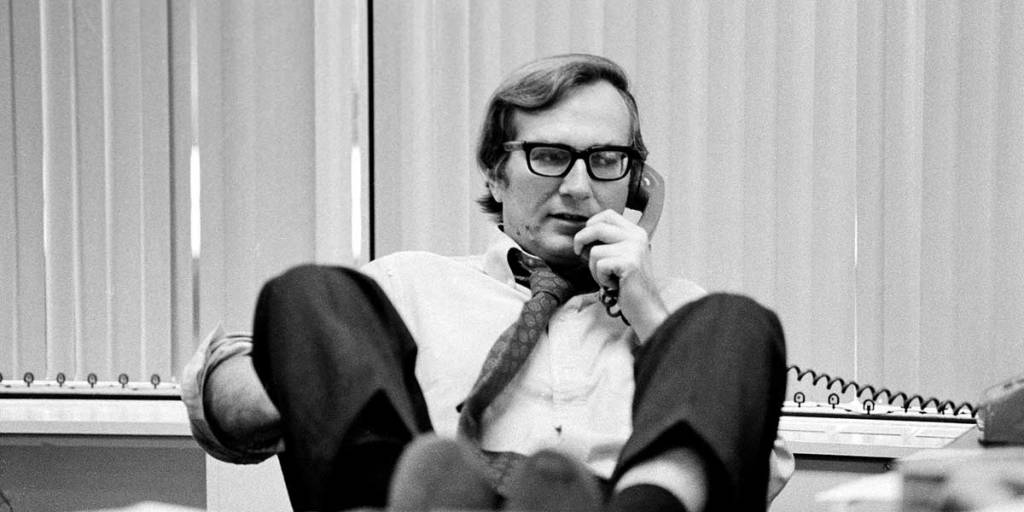
It’s the 1960s and America is at war. Sy Hersh, a freelance reporter, hears a rumour of mass murder in Vietnam by American troops. He speaks with GIs on base and the soldiers accused of these crimes. He also got a hold of a secret military investigation the massacre. And the facts he finds are horrifying. There include synchronized sexual assaults and murders of hundreds of women, men and children, and even babies, by American soldiers. Hersh blames My Lai on General Westmoreland and others who ordered the mass killings — which happened in a number of places on the same day — solely for the purpose of raising the body count. They needed more dead bodies to prove they were winning the war. The story has major repercussions all the way to the top — Nixon and Kissinger were recorded calling Hersh a son of a bitch — and played a role in turning public sentiment away from the war. For Hersh, My Lai is the first of many crucial stories he breaks in the decades to come. He becomes the NY Times daily reporter on the Watergate scandal. He uncovers US involvement in Pinochet’s bloody coup in Chile and the assassination of Allende; illegal CIA infiltration of anti-war groups, the secret bombing of Cambodia, the invasion of Gaza (ongoing), and the abuse and torture of Iraqis by American soldiers during the Gulf War at the infamous Abu Ghraib prison. 

Cover-Up is a journalistic documentary about journalism itself. It features historical documents and period photos and film — many very disturbing —  new interviews with people involved in the stories, and extended talks with Sy Hersh, who at the age of 88 is still a full-time journalist.  You get to see him see at work talking to anonymous sources and vetting incoming photos and leaks. He’s a bit prickly about protecting his sources even from the documentary makers (who take care never to reveal anyone still alive), because it’s that core of consciences bureaucrats, soldiers, and spies who still uphold the constitution and flout illegal coverups. They’re the sources who keep freedom of the press alive.

After the TIFF screening, Hersh said that American journalism is in a bad state with reporters running scared. How many important stories are being gagged or stifled now — or in the past — under White House pressure? It shows how badly we need more adversarial journalists who question the powers that be and uncover what they’re hiding.

And that’s what Cover-Up is all about.

I Swear, Girl and Cover-Up all played at TIFF and should be released over the next few months. This is Daniel Garber at the Movies, each Saturday morning, on CIUT 89.5 FM and on my website culturalmining.com.

Unexpected adversaries. Films reviewed: White Noise, Violent Night, All the Beauty and the Bloodshed

Posted in 1980s, Addiction, Art, Christmas, comedy, Conspiracy Theory, Crime, documentary, drugs, Family, Horror, Mental Illness by CulturalMining.com on December 3, 2022

Hi, this is Daniel Garber at the Movies for culturalmining.com and CIUT 89.5 FM.

It’s December now with snow on the ground, time for movies to get your blood boiling. This week I’m looking at three new movies about unexpected adversaries: there’s an artist vs a philanthropist, Scrooge vs Santa… and Elvis vs Hitler?

White Noise

Wri/Dir: Noah Baumbach,

It’s the 80s in a small rustbelt college town.  Jack (Adam Driver) is a professor in the new field of Hitler studies. Along with his wife Babette (Greta Gerwig) they raise their children, from babies to teens, in a modern, blended family. The kids Denise, Heinrich, Steffie and Wilder, are inquisitive  and precocious, and come from various marriages. At work, Jack lectures to worshipful students, and has intellectual discussions with his colleagues. His closest is Murray (Don Cheadle), a prof who specializes in cinematic car crashes, wants to raise Elvis studies to the level of Hitler studies. 

But there is trouble at home. Babette is obsessed with death and dying, and suffers from memory loss and unexplained absences. Denise suspects she’s on prescription drugs — she found a hidden bottle of Dylar, an unheard of medicine.  Meanwhile Jack is terrorized by nightmares and at times actually thinks he’s going to die. All these troubles are pushed aside when a real disaster happens: a truck crashes into a train carrying dangerous chemicals. The result? A toxic cloud floating above the area with unknown effects. The town is evacuated, the family forced to flee by station wagon to Camp Daffodil a weirdly-named military base. Rumours abound at the camp, and no one knows for sure what is happening. Can life return to normal? Will the toxic cloud blow away? Is Babette an addict? Will Jack’s academic secrets be revealed? And where does Dylar come from?

White Noise is a satirical look at dread, suspicion and alienation within an academic setting. It also looks at pop culture, art and the omnipresent consumer economy. I read Don Delillo’s novel when it first came out and I was captivated by the way it captured the dark mood at the time. Noah Baumbach takes a different path, treating the film as a comical period piece where people dress in funny 80s clothes and use obsolete technology. It looks for laughs in scenes like Jack getting tangled up in a kitchen phone cord. I have mixed feelings about this movie. Some parts just seem like running gags about those wacky 80s, turning serious scenes into absurdist jokes. Other parts are brilliant — like the pas-de-deux between Jack and Murray in a joint Hitler-Elvis lecture. Or an actual dance sequence down the aisles of a supermarket in the closing credits. And a cameo by the great Barbara Sukowa as a German nun in a hospital, should not be missed. While I couldn’t get emotionally into the characters or plot — Driver and Gerwig are both good actors but never seem real in this movie — and I felt detached from the film, I did find it interesting and visually pleasing. 

Violent Night

Dir: Tommy Wirkola

It’s Christmas Eve, and the Lightstone family are  gathered on their vast, private estate. Gertrude (Beverley D’Angelo) their autocratic matriarch, puts on an elaborate dinner each year with servants dressed as Nutcracker Suite characters. Her adult two adult children Cam and Alva, their spouses, and the grandkids Gertrude and Bertrude, (known as Trudy and Bert)outdo one another sucking up to her, to get their share of the family’s wealth. Everyone, that is, except little Trudy (Leah Brady), who doesn’t want any money or presents from Santa. She just wants her estranged parents back together again. 

This year, though, something goes terribly wrong: the costumed caterers turn out to be highly-trained paramilitary criminals, there to murder everyone and steal millions from the safe. They’re headed by a bitter man, nicknamed Scrooge (John Leguizamo) who hates Christmas. Little Trudy escapes from the family, hides in the attic, and calls to Santa Claus by walkie-talkie for help. And, to everyone’s shock, a drunken, bearded man in Christmas gear (David Harbour) comes to their rescue. He’s the real thing, but only Trudy believes in him. Can Santa and Trudy fight off dozens of ruthless killers? Can her parents overcome their differences? And can a worn-out, depressed and alcoholic Santa hang on for one more year… or is this the end of Christmas for everyone?

Violent Night is a comedy/action movie about a good little girl and a hard-ass Santa fighting cruel killers using horrific violence of their own. It’s a combination of two Christmas classics: Home Alone and Die Hard, but with the gore-level pumped up a few notches. Trudy’s booby traps turn out to be deadly, while Santa channels his past life as a Viking to wreak havoc with a hammer named Skullcrusher. Does this movie work? Totally! David Barbour (from Stranger Things) is great as a nasty Santa who pukes and pisses off his sleigh. He takes a licking but keeps on kicking. Newcomer Leah Brady as Trudy is cute — maybe too cute — but good enough. And most of the rest of the characters are sufficiently unlikeable to keep the story going. So if you’re looking for a fun and twisted action movie in time for Christmas, Violent Night fits the bill. 

All the Beauty and The Bloodshed

Dir: Laura Poitras

Nan Goldin is an artist known for her photographic portraits of the demimonde, with louche images of drugs, sex, and self-destruction. She rose to fame in the 1980s with her ever-changing performances of “The Ballad of Sexual Dependency”, which combined music and a slide show of her pictures. But far from being a dispassionate observer of the lives of strangers or, worse, an ogler of outcastes, Goldin explicitly documented the lives of her closest friends and herself, including drag queens, junkies, artists and musicians, in various stages of undress. This was also the era of AIDS, which decimated the NY City art scene. Goldin recorded this, too. It was also the start of Act Up and other movements demanding attention from the government and Big Pharma.

Flash forward to the 2000s, when pharmaceutical corporations, through doctors, were strongly pushing prescriptions of opiates as non-addictive relief from the worst levels of pain. In fact they’re highly addictive, and one addict was Goldin herself. Though she kicked the habit, many were still dying from overdoses of opioids. And she noticed something strange. A major sponsor of the galleries and museums that displayed her work were sponsored by noted philanthropists The Sackler Family. And the Sacklers made their fortune through Purdue Corporation, peddling drugs like Oxycontin.  We’re talking the Louvre, the Met, Tate Modern, and the Guggenheim, among others. So she started a protest group called P.A.I.N. (Prescription Addiction Intervention Now) which stages protests in the Sackler wings of museums world-wide.

All the Beauty and The Bloodshed is a fantastic documentary that records Goldin’s life and art, and her battle with the Sacklers. It’s engrossing and revealing, a work of art in its own right. The film includes contemporary footage as well as snapshots and films from Nan Goldin’s own personal history. She’s the cinematographer while the director is Laura Poitras, responsible for the world-changing doc Citizenfour, about Edward Snowden. All the Beauty and the Bloodshed is a rare case of a political documentary that is also respectful of art. It’s visually and audibly stunning and though almost two hours long, it’s totally engrossing; one of the best documentaries of the year.

White Noise is screening at the TIFF Bell Lightbox in Toronto; All the Beauty and the Bloodshed, is playing there and at Hot Docs cinema; while Violent Night opens this weekend across North America; check your local listings.

This is Daniel Garber at the Movies, each Saturday morning, on CIUT 89.5 FM and on my website, culturalmining.com.