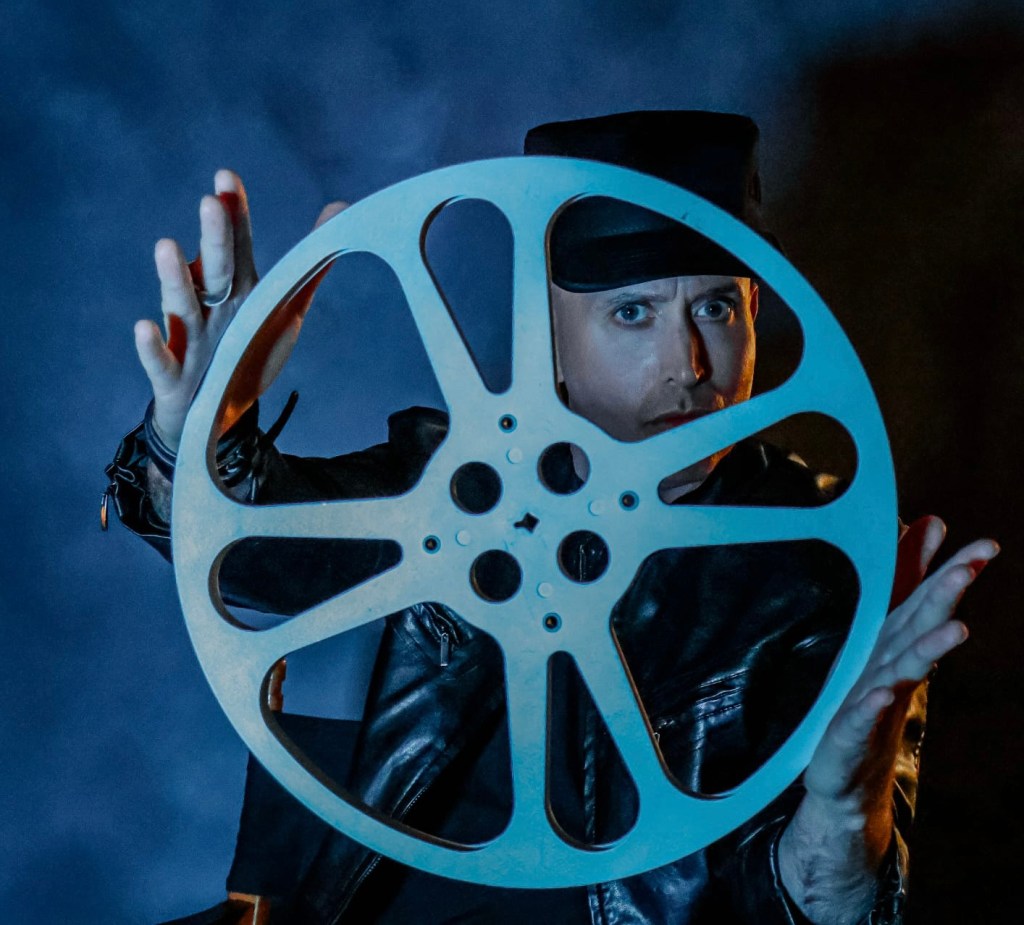
Daniel Garber talks with Chris Alexander about The Dark Side at ICFF Lavazza IncluCity
Hi, this is Daniel Garber at the Movies for culturalmining.com and CIUT 89.5 FM.
The Italian Contemporary Film Festival (ICFF), has for years brought Italian movies for Torontonians to enjoy each summer. But over the past few years it has expanded with screenings across the country, and new programs spanning all of multicultural Canada, a wonderful, feel-good celebration of love and cooperation. But one of the newest programs takes another path, one filled with shock, mystery and horror, with bold and edgy stories, something
known as… The Dark Side!
This year’s selections for The Dark Side consists of three films: Borderline, The Weekend, and Dario Argento’s iconic Deep Red. It is programmed by Canadian horror-meister Chris Alexander, known for such films as Necropolis: Legion, Queen of Blood, and Female Werewolf. Chris is a producer, director, writer and composer. He’s also a
former film critic and was the Editor-in-Chief of Fangoria — the behind-the-scenes bible of the horror industry and those who love it. These films are part of the ICFF Lavazza IncluCity Festival playing outdoors, after dark, all summer long in Toronto’s Distillery District.
I talked with Chris Alexander in Oakville, Ontario via ZOOM. He spoke about his love of horror, the origins of giallo, Dario Argento, Cocaine Bear, Nollywood… and more!
The Dark Side series is playing at the ICFF Lavazza IncluCity Festival on March 4, 5 and 12.
Rising. Films reviewed: Backspot, The Goldman Case, Handling the Undead
Hi, this is Daniel Garber at the Movies for culturalmining.com and CIUT 89.5 FM.
Toronto’s Spring Film Festival Season continues with Inside Out closing, TJFF opening, and soon followed by three more: the Toronto Japanese Film Fest offers you the chance to watch the best of contemporary Japanese cinema, including samurai, anime, dramas and arthouse films, running June 6-20 at the Japanese Canadian Cultural Centre; The Future of Film Showcase celebrating rising young Canadian talent with three world premieres, including the directorial debut for actor Aaron Poole, at the lovely Paradise Theatre from June 20-23; and the ICFF Lavazza Inclucity festival set for June 27th and continuing through most of July, featuring films from Italy and around the world, accompanied by delicious food and projected, outdoors, on a giant screen in the Distillery District.
But this week I’m looking at three new features. There’s an ambitious young cheerleader trying to rise to the top; a convicted criminal trying to elevate his innocence; and dead bodies rising from their graves.
Backspot
Co-Wri/Dir: D.W. Waterson
Riley (Devery Jacobs) is a high school student obsessed with cheerleading. Along with her best friend — and girlfriend — Amanda (Kudakwashe Rutendo) they hope to get a place on with the Thunderhawks squad, the highly competitive award-winning varsity team at their school. They do handsprings, half turns and everything else they need, to qualify, acrobatically. But despite how hard they try, it seems unlikely. Until that team has an accident leaving three empty spots open to new members. And no one is more surprised than Riley and Amanda when they both win places. (Riley is the back spot — part of the base of the human formations they build on the floor.) The third member, for the centre spot, is Tracy (Shannyn Sossamon) known for her slim build, perfect face and hair. As not-so-perfect cheerleaders point out, it’s as much about your looks as it is about your talent.
The Thunderhawks is headed by two alpha leaders: the cold-as-ice head coach Eileen (Evan Rachel Wood) of the “winning is
everything” school of thought; and assistant coach Devon (Thomas Antony Olajide) just as much of a perfectionist, but with a hidden secret life. Before joining the Thunderhawks, Riley and Amanda were inseparable, cuddling at the movies while pigging out on popcorn and liquorice (Amanda is a part-timer at a movie theatre). But as Riley becomes more and more tense, her hear of failure turning into panic attacks, they wonder whether their relationship can stand this much pressure. Can Riley balance her sports life with her love life and family? Can she survive all the potential accidents that come with the sport? Or will it drive her off the cliff?
Backspot is a good sports movie about friendships, relationships and competition. It’s a local film, set in Toronto, and stars indigenous actress Devery Jacobs (known for Reservation Dogs) of the Kahnawa:ke Mohawk nation, in a very strong performance. And they all seem to do their own stunts and acrobatics, which is very impressive. I like both the sports parts and the home parts of the film. The one small thing I wish for, though, is more camera time spent on the actual performance and less on the endless rehearsals and training. The grand finale has less oomph than its lead up. Still, it’s an exciting and moving portrait of women’s sports.
The Goldman Case
Dir: Cédric Kahn
It’s the 1970s in a Paris courtroom. Pierre Goldman (Arieh Worthalter) is on trial for the murder of two women in the armed robbery of a pharmacy. He was convicted of this crime earlier, but has always pled innocent to that crime, and is now at a retrial of his case. He wrote a celebrated autobiography in prison, outlining his story, and many supporters are there in the courtroom, calling for his freedom. Born in German-occupied France to two Jewish Polish-born Communist members of the French resistance, he later became a radical leftist himself. He travelled to Cuba and Venezuela to join the revolutionaries there, but rejected the protests of 1968 as a performance. In Paris he supported himself through small-scale holdups and robberies. He admits to those crimes but not to violence or murder, insists he would never kill someone, especially not a woman, and would never rat out another person to the authorities, even if their testimony could set him free.
At the trial, Goldman is a loose cannon, interrupting his own lawyers, calling the court system a farce, and accusing he police force as being a racist organization. His lawyer (Arthur Harari) is increasingly frustrated, saying Goldman is committing suicide with his impromptu testimony. But will he be found guilty or innocent of the crimes of murder?
The Goldman Case is a powerful, dramatic retelling of an actual
famous trial. No flashbacks, no memories, no reenactments of the crime, merely a series of witnesses, testimonies and cross-examinations. Just the facts. The acting is superb, with Arieh Worthalter winning this year’s Cesar for best actor for his amazing characterization of Goldman. In North America, we’re inundated by such trials — both real and imaginary — in the news, on TV shows, and in courtroom dramas. But French trials — which portray a very different legal system — are becoming increasingly popular, in films such as Anatomy of a Fall and Saint Omer. There’s a different kind of emotion and drama there. Courtroom dramas can be tedious, but this one kept my attention. I wanted to see this movie because its director Cedric Kahn tells stories like this of non-conformist anti-heroes who reject mainstream society while holding onto certain core beliefs. This one fills that pattern exactly. The Goldman Case is an intriguing drama about real events.
Handling the Undead
Co-Wri/Dir: Thea Hvistendahl
It’s present-day Oslo, Norway. Three families are going through a period of mourning, having lost people near and dear to their hearts. A single mom (Renate Reinsve) and father Mahler have been catatonic since the death of her little boy. She works in an industrial kitchen, while he is retired, but they can barely speak to one another. An elderly woman (Bente Børsum) is bereft when her longtime romantic lover and partner dies. She misses dancing and talking and listening to music together. And when Eva dies in an unexpected accident, her close-knit family — her husband, David (Anders Danielsen Lie: The Worst Person in the World, Oslo, August 31st ) a standup comic, their rebellious teenage daughter Flora, and their young son Kian — is left shocked and rudderless. They walk through their day on autopilot, celebrating the boy’s birthday but with little happiness.
But something strange is in the air after a city-wide power outage. Grandpa — who slept on his grandson’s grave — hears a knocking underground. He digs up the coffin, and carries him home with him. David is in hospital when his wife — who died in the accident — seems to stir again. And when Tora reclaims her lover’s living body from her casket laying in state at the funeral home, she feels like it’s a gift of the gods Somehow, the dead are waking up again. But are they still the same people the living remember?
Handling the Undead is a very slow and low-key horror movie about how ordinary people react to a seeming miracle, despite all indications to the countrary. It’s beautiful shot indoors and out among natural beauty and scenic islands on the water. And it has a compelling soundtrack. It’s based on the novel by John Ajvide Lindqvist who also wrote Let the Right One In, and like that one, despite elements of the supernatural, much of the story is devoted
to ordinary mundane lives. So part of the movie is devoted to the rebellious daughter and her boyfriend, just hanging out in their shack smoking drugs and having sex — nothing to do with the undead. There are also repeated scenes of ritual cleansing of the dead bodies, both loving and grotesque. The living interact with the undead, with one, the single mom, going so far as to carry her son to a cabin on an isolated island, to avoid trouble with the police. But there’s a dark enveloping metaphoric cloud of misery and sorrow hanging over city that seems totally empty and deserted. If you’re looking for a screaming, bloody, slasher film, you’re looking in the wrong place. But if you like pondering, pensive, Nordic art-house horror… this is a good one for you.
The Goldman case is playing at the Toronto Jewish film festival, and Handling the Dead and Backspot both open theatrically this weekend in Toronto; check your local listings.
This is Daniel Garber at the Movies, each Saturday morning, on CIUT 89.5 FM and on my website
culturalmining.com.
“I” and “L”. Films reviewed: Every Body, Blue Jean
Hi, this is Daniel Garber at the Movies for culturalmining.com and CIUT 89.5 FM.
Toronto’s Spring Film Festival continues with ICFF, the Italian Contemporary Film Fest, once again showing movies out of doors in the Distillery District. The seats are huge and comfortable, complete with large puffy earphones, and there’s a great selection of movies to watch, starting Tuesday with Freaks Out, a fantasy about a circus in Rome in the midst of WWII. The festival continues through July 22.
But this weekend, there’s another big event in this city, the Pride Parade. So, in honour of that, I’m looking at two new movies, a drama and a doc, that fall into the alphabet soup of 2SLGBTQQI+, specifically in the L and the I categories, meaning Lesbian and Intersex. There’s a gym teacher facing trouble in Thatcher’s England, and three Americans coming out as Intersex.
Every Body
Dir: Julie Cohen (RBG)
What is meant by intersex? And why is it kept a secret? And what medical practices and procedures and popular beliefs should be challenged? Intersex refers to people who don’t fall neatly into our typical male/female definitions of sexual anatomy, reproduction and genetics. But it’s not just one thing, it’s many things; there are over 40 different types of people who fall under that definition. And until recently, it was relegated to the shadows and almost never mentioned in public. This is changing.
This new documentary looks at three intersex Americans and what they’re doing to give people like themselves a public face. Alicia Roth Weigel is a political consultant in Austin, Texas who rose to fame when she testified before state hearings on a so-called Bathroom Bill, intended to prevent trans people from using public washrooms that don’t match their “biological sex”. The thing is, although Alicia presents physically as a woman since birth, her chromosomes are XY — according to this bill she is “biologically” male, and thus should be barred from using
women’s washrooms. River Gallo, a stage actor and screenwriter from New Jersey, was born without male gonads but brought up by their Salvadoran parents as a boy. And as a teenager doctors surgically implanted prosthetic testicles so they could feel more “male”. Now River presents as a woman but with a notably deep voice. They’re fighting to stop doctors from performing unnecessary cosmetic surgery on kids with atypical genitals. Sean Saifa Wall is a PhD student and intersex advocate originally from the Bronx who was raised as a girl. He was born with testicles inside his body, but doctors castrated him at puberty, saying they could lead to cancer. He ties his struggle for intersex rights with his equally intrinsic identity as a black man.
The documentary first follows all three subjects as they tell their stories, and then talks to them as a group. They are shown the notorious case of David Reimer. Born as a twin boy in Winnipeg, David’s penis was badly damaged in a botched hospital circumcision. Under the guidance of Dr John Money at Johns Hopkins University, he was raised as a girl. Money theorized any child’s gender is fluid until the age of two, and used him as a celebrated case study that proves his theory. But in fact, it didn’t work, and as a child he continued to strongly resist the gender and new name imposed on him, and upon reaching puberty he refused to go on female hormones. Though his case is now well-known in Canada — he made his story public as an adult — a generation of doctors were trained using his specific case as the basis of numerous medical decisions. Finally, the movie brings intersex people together as part of a movement, one that is little known but quickly growing.
Every Body is the first documentary I’ve seen that turns to intersex people for their information, rather than using them as objects to be examined or as research subjects. It shows you a group of people more common than you think — up to 1.7% of the population share intersex traits — and what should be done, politically, medically, and socially, to better recognize their rights.
Every Body has fascinating stories — a real eye-opener.
Blue Jean
Wri/Dir: Georgia Oakley
It’s 1988 in Newcastle, England. Jean (Rosy McEwen) is a Phys Ed teacher at a state school. She’s pretty and athletic with bleached blonde hair in a pixie cut. By day, she coaches the girls’ netball team. By night, she plays snooker at a lesbian bar. She loves spending time with her girlfriend Viv (Kerrie Hayes), who is buxom and butch with a buzz cut. But what she doesn’t want is for the two sides of her life to overlap. Boundaries are crucial. Especially since Thatcher’s government is introducing harsh anti-gay laws; Section 28 would prohibit the “promotion of homosexuality”.
Though broadly sweeping in its scope, the new measures seem aimed particularly at state schools. So Jean keeps her private life completely private. Boundaries! Then there’s her family life to make things even more complicated. Jean is divorced and wants nothing to do with her ex-husband. But when her sister suddenly appears with her five-year-old nephew when their mom has a
stroke, the privacy of her relationship with Viv is also called into question.
Meanwhile, there’s a new girl in her class. Lois (Lucy Halliday) is confident and outspoken with tousled brown hair. Jean likes her and encourages her to join the netball team. And Lois seems to have a bit of crush on her favourite gym teacher. But she has to deal with Siobhan a ginger rival on the team, who is loathe to lose her status as top player, and is prone to starting fights. As a teacher Jean knows how to defuse student problems — she does it on a daily basis. But everything starts to fall apart when she spots Lois playing snooker at her lesbian bar. If Lois comes out at school, and is somehow associated with Jean, her career would be finished. What is a woman to do?
Blue Jean is an intimate drama about the problems facing a young lesbian teacher in Thatcher’s repressive England. It’s moving and romantic with a rising tension permeating the story. Radio and TV reports in the background about Thatcher’s Section 28 along with period music, provide a constant thread that holds the narrative together. And her mundane work life is presented in opposition to the sex, music and spectacle of her nightlife. This may be writer/director Georgia Oakley’s first film, but she manages to bring together great acting and a compelling story without ever resorting to treacle.
I liked this one a lot.
Blue Jean is now playing at the TIFF Bell Lightbox and Every Body opens on July 30th in Toronto; check your local listings.
This is Daniel Garber at the Movies, each Saturday morning, on CIUT 89.5 FM and on my website, culturalmining.com.
Ambitions. Films reviewed: Minions: The Rise of Gru, Ennio, Mr Malcolm’s List
Hi, this is Daniel Garber at the Movies for culturalmining.com and CIUT 89.5 FM.
Summer is definitely here, and this long holiday weekend is the perfect time to take in some new movies. This week I’m talking about three of them: — a rom-com, a cartoon and a documentary — about people with ambitions. There’s a spinster in Victorian England who wants revenge on the man who has scorned her; a spaghetti western composer in 1960s Italy who wants to be taken seriously; and a little boy in San Francisco in the ’70s who wants to become a super villain.
Dir: Kyle Balda, Brad Ableson, Jonathan del Val
It’s the late 1970s, and Gru is a little kid in elementary school. While his classmates say they want to be a fireman or a ballet dancer when they grow up, Gru wants to be a super villain. And he has a basement filled with strange mechanical devices to prove it. They were built with the help of his minions. The minions are bright-yellow, lozenge-shaped creatures with googly eyes. Dressed in matching denim overalls, they speak their own incomprehensible dialect, a mishmash of all the world’s languages. Gru idolizes a gang of six supervillains, who are now one villain short of a pack (since they did away with their leader) and are looking for a replacement. But when he shows up for an interview at their secret hideaway they dismiss him as just a kid. To prove them wrong, he steals their prize possession, a Chinese jade-green amulet. He gives it to a minion to keep it safe, who soon loses it in exchange for a pet rock. (The minions aren’t always the brightest bulb in the chandelier.) Gru is kidnapped by the villains’ former leader, and threatened
with torture and death. Can the minions find the amulet, bring it to San Francisco, and save their best friend, Gru?
Minions: The Rise of Gru is a funny, easy-to-watch kids’ movie, where the villains are the good guys, even though they’re evil. It’s a prequel to the surprise hit from 2010, Despicable Me. The voice actors are mainly American or British, but the animated film is actually from France. The catchy soundtrack, groovy 1970s characters, the San Francisco setting, the fast-moving plot and the very colourful graphics make it a fun watch. It stars the voices of Steve Carell as Gru, Pierre Coffin as all of the minions, and Alan Arkin, Taraji P. Henson, Jean-Claude Van Damme, Jill Lawless, Danny Trejo, Dolph Lundgrin as the six villains. I enjoyed Minions, but the five-and-under set that filled the theatre absolutely loved it.
Dir: Giuseppe Tornatore
Ennio Morricone is born in Rome in 1928 to a professional trumpet player. He enters a music conservatory at the age of 12 and studies under Italian composer Goffredo Petrassi. (He spends most of his life yearning to be taken seriously by Petrassi and the rest of the traditional music establishment.) At an early age, he’s already composing and arranging pieces which include both melodic themes and counterpoint, an oft repeated characteristic of his music. He writes the tunes for a number of pop songs, and eventually gets a job working for RCA. From there he goes on to compose the soundtracks — always anonymously — for the new film genre known as Spaghetti Westerns. But when he recognizes a director’s name from his elementary school, he becomes a close friend and life-long collaborator with Sergio Leone. He quickly rises to fame writing the distinctive musical scores of films like A fistful of Dollars and The Good the Bad and the Ugly, using harmonicas, whistling, electric guitars, and sound effects in place of the more common symphony orchestras. (Today those films remain his most
recognizable works.) He also forms an experimental group that makes improvisational music out of non-musical sounds, influenced by avant-garde composer John Cage.
Morricone goes on to compose the scores of over 500 films, working with Italian masters like Pasolini, Wertmüller and Bertolucci, the giallo horror/thriller director Dario Argento, and Giuseppe Tornatore director of Oscar winner Cinema Paradiso (who also directed this doc).
Ennio died in 2020, and this film is as much a loving tribute to the composer as it is a documentary. While it reveals Morricone’s personality quirks, there are no scandals or salacious secrets of his private life. It’s told using film clips, period footage, audio tracks and many talking heads commenting about him, including fellow composers, John Williams and Hans Zimmer, stars and directors he worked with like Quentin Tarantino Terrance Mallick and Clint Eastwood. (Eastwood says something like Morricone’s music provided the emotions that he never could) Then there are also a bunch of celebs — Bruce Springsteen, Pat Metheny, Wong Kar-Wai — who probably never worked with him, but just felt like praising him or commenting on how he influenced them. Ennio is an informative and fascinating doc, and I liked it a lot, but… couldn’t Tornatore have told this story in 90 minutes, instead of the two and a half hours he took?
Dir: Emma Holly Jones
It’s England in the early 19th century. Julia and Selina were best friends at boarding school, but haven’t seen each other in years. Which is why Selina the pure and virtuous daughter of a country vicar (Freida Pinto) is surprised to receive an invitation to visit Julia an upper-class city woman (Zawe Ashton), after all these years. But she does have a reason: she was slighted by a man who took her to the opera once and never called back. The man is Jeremy Malcolm (Sope Dirisu), who is also the most eligible bachelor in town, not least because he inherited a lot of money. And Julia can’t bear being slighted in public (made even worse when it was depicted in a widely circulated cartoon pamphlet). First Julia turns to her cousin Cassy (Oliver Jackson Cohen) who happens to be Malcolm’s best friend and wingman, who knows all of his secrets. Somehow he leaks the biggest secret of all: that Mr Malcolm keeps a list of 10 characteristics a woman must have for him to consider marrying her — things like talent, poise, intelligence, a knowledge of politics, literature and the arts and one who easily forgives small offences.
Enter Selina. Would she go along with Julia’s scheme — to date Mr Malcolm, knowing what was on that list, and afterwards to dump him — so Julia can get her sweet revenge? Selina is
hesitant but agrees at least to meet him. And wouldn’t you know it? It’s love at first sight. This is further complicated by another man, a dashing military officer (Theo James), who likes Celina a lot, and happens to be in town on the same day. Which one will she choose? And if it’s Mr Malcolm, what will become of Julia’s nefarious revenge plot?
Mr Malcolm’s List is a classic, Jane Austen-style light romantic comedy, complete with a masquerade ball, a hidden scheme, whacky relatives, and star-crossed lovers. There are also some modern twists. The most obvious is the colour-blind casting, with Black, Indian, White and East Asian actors playing the various roles, without ever bringing up questions of race or ethnicity. Like the musical Hamilton, the film The Personal History of David Copperfield, and, most recently, the Netflix series Bridgerton, this film shows that race on the screen doesn’t need to have any special significance — it just is. Family bloodlines and facial resemblances are not part of the plot. I think it
works great in this movie, and I hope to see more of it. The mansions are all stately, the costumes — though a bit odd-looking — are all pretty. And the actors and the characters they play are quite delicious. They’re clearly having a good time doing this. You can revel in their ludicrous scheming without ever taking it too seriously. Even the credits — accompanied by quaint hand-coloured drawings — are delightful. Rom-coms are not my cuppa tea, but if I have to watch one, I like it when they‘re like this.
Ennio is one of many films playing at the ICFF; Mr Maxwell’s List, as well as Minions: the Rise of Gru both open this weekend: check your local listings.
This is Daniel Garber at the Movies, each Saturday morning, on CIUT 89.5 FM and on my website, culturalmining.com
Cults and kidnappers. Films reviewed: The Black Phone, One Summer Story
Hi, this is Daniel Garber at the Movies for culturalmining.com and CIUT 89.5 FM.
Spring film festival season continues in Toronto with the Japanese and Jewish film festivals coming to a close, while ICFF — the Italian contemporary film festival — and Lavazza IncluCity are just beginning. The festival features film composer Ennio Morricone, Giuseppe Tornatore (who won an Oscar for Cinema Paradiso), and Allesandro Gassmann, the son of star Vittorio Gassman, and an accomplished actor in his own right. Movies at this festival are being shown both in theatres and outdoors in open air screenings.
This week, I’m looking at two new movies. There’s a thriller-horror about a boy who is kidnapped in 1970s Colorado; and a girl who discovers her biological father was a member of a religious cult in Japan.
Dir: Scott Derrickson
It’s the late 1970s in Denver, Colorado. Finney (Mason Thames) is a kid in junior high who lives with his sister Gwen (Madeleine McGraw), and their angry and depressed dad, a widower. Finney is into rocket ships and baseball — he’s the pitcher on his team. But he’s bullied at school. Luckily his best friend Robin is always looking out for him.
But all is not well in Denver. Teenagers are disappearing, one by one, with no bodies ever found. But when Robin disappears, he turns to Gwen for help — she has psychic dreams that might tell them where he is. But before they can do anything, Finney finds himself locked in a basement cell, somewhere in the city. theres just a toilet, a mattress, and a barred window way up near the ceiling. And an old black phone mounted on the wall, but with all the wires cut. The guy who kidnapped him — known as the Grabber (Ethan Hawke) — is a freelance magician who always covers his face with hideous
masks reflecting changes in his warped psyche. Before long, Finney is in despair and figures he’s going to be killed soon, just like the other boys before him. Until… the black phone starts to ring! And coming from somewhere is the voice of one of the previous victims, who says he can tell Finney how to escape.
Is this real or just his imagination? Can the dead really speak? And will Finney ever get out of there?
The Black Phone is a fantastic thriller about a kid vs a deranged serial killer. Though billed as a horror movie, and there are some very scary scenes here and there, it’s miles ahead above most of the gory schlock passing for horror movies these days. This one is more about suspense, mystery and adventure than meaningless, gratuitous violence. There is violence, but it fits within the movie. The characters are all well-rounded with complex back stories. There are lots of red herrings to lead you astray, but the whole movie leaves you with a sense of satisfaction, not dread. And it avoids the cheap scares typical of many horror flicks. The film perfectly captures the feel of the 1970s, through the rock soundtrack, costumes and locations. The acting — especially heroes McGraw and Thames, as well as the villains including the creepy killer and the brooding father, and the many school bullies — is really well done. The Black Phone is based on a story by Joe Hill, who also
wrote the graphic novel the great TV series Locke & Key was based on. He’s an amazing storyteller… who also happens to be Stephen King’s son. (I mention that because he’s of the same calibre). And writer-director Scott Derickson has done some good stuff himself.
If you don’t want to be scared — stay far away. But if you’re looking for a good chiller-thriller, you’re really gonna like this one.
One Summer Story (Kodomo ha Wakatteagenai)
Dir: Okita Shûichi
It’s present-day Japan. Minami (Kamishiraishi Moka) is a teenaged girl who lives with her Mum, stepfather, and little brother. Backstroke is her thing — she’s on the school swim team. And she’s obsessed with a TV anime series called Koteko, about a Count who is literally a royal sack of cement and his two gloopy sons Concrete and Plaster. One day she’s at a swim practice when she sees something unbelievable on the roof of their school: a boy is painting something on a large easel. could it be true? she runs over to take a look. A boy is painting a character from her favourite anime series. They hit it iff immediately.
Moji-kun (Chiba Yûdai) comes from a long line of Japanese calligraphers. But when she visits his home, she sees a paper talisman with the exact writing as one she always carries with her. The words come from an obscure religious cult, a client of Moji’s father. After some investigation, they discover Minami’s birth father is somehow associated with the cult… and perhaps is why she never knew him. So she decides to secretly show up at his door to find out the truth. Will she find out about her missing history? Or is she just opening a can of
worms?
One Summer Story is an extremely cute coming-of-age drama about a girl discovering her birth father with unexpected results. Its also about her new friend — and his unusual family — who helps her on her way.
Based on a manga, it also incorporates a non-existent, animated TV show within the story line. Lots of quirky but likeable characters and an unpredictable plot make it a pleasure to watch. And with much of it set at a beachside home or a swimming pool, it gives off a nice cool energy on a hot summer’s day.
The Black Phone opens this weekend; check your local listings; One Summer Story’s is playing at the Toronto Japanese Film Festival for its Canadian premiere on Sunday, June 26th at 7:00pm, at the Japanese Canadian Cultural Centre.
This is Daniel Garber at the Movies, each Saturday morning, on CIUT 89.5 FM and on my website, culturalmining.com.
Reasons. Films reviewed: Silent Night, Sun Children
Hi, this is Daniel Garber at the Movies for culturalmining.com and CIUT 89.5 FM.
Toronto is finally opening up — well, kinda. Now you can see movies away from home, just not yet in theatres. The Lavazza Drive-In Film Festival is coming to Ontario Place, showing a huge selection of crowd-pleasing international films. It also incorporates the wonderful annual Italian Contemporary Film Fest, now celebrating its 10th year. It starts this Sunday and continues through July 17th, featuring, on Canada Day, the North American premier of Peace By Chocolate — based on the inspiring, true story of a family of Syrian refugees who start a chocolate factory in Nova Scotia.
And for those of you without cars, the Toronto Outdoor Picture Show (or TOPS & Friends, for short) is showing outdoor movies in person at Old Fort York, incorporating special features selected from a year of Toronto film festivals, including the Geothe Institute, Real Asian, Toronto Palestine, Inside-Out film fests, Viewers can sit on the grass, physically distanced, while watching a whole bunch of movies — for free! Details and showtimes will be released in July.
But this week I’m looking at two new movies you can watch at home: a crime flick and a coming of age story, one from the UK the other from Iran. There’s a gangster in London who agrees to kill someone in order to save his young daughter; and a 12-year-old kid in Teheran who agrees to break the law in order to save his mother.
Wri/Dir: Will Thorne
London in the present day. Mark (Bradley Taylor) is just out of a London prison, and looking for work. His six-year-old daughter Daisy is overjoyed tp see her dad again, but his ex-wife Rosey is skeptical. Mark insists he’s a different man now, and wants nothing to do with the gangsters he used to pal around with. He just wants to carve a wooden hobby horse to give to Daisy for Christmas. But when he gets a job trimming trees in a forest, who is the first guy he runs into? Alan (Cary Crankson) a truly sketchy character if he’s ever met one who is also his former cell-mate. More former “friends” start gathering around him, including Pete and Seamus a friendly pair of pot dealers; Toni, the gang’s matriarch; Nicky, girlfriend of the boss; and Caddy (Frank Harper), the gruff and paranoid kingpin.
They urge, cajole, pressure and threaten Mark offering a carrot and a stick, for this, they promise will be his final job. The carrot is enough money to keep his family secure and stable (the government jobs pay terribly). The stick is they’ll kill Daisy if he doesn’t follow through. What does he have to do? Catch and kill a rival mob boss who Caddy thinks is threatening his business. But when the bodies start piling up, with no end in sight, Mark has to make some heavy decisions. Can he
complete the job, save his daughter, and figure out who is really behind this scheme… before getting killed or sent back to prison first?
Silent Night — it’s set during the days leading up to Christmas — is a heavy-duty London crime drama. There’s lot’s of death and violence — some quite explicit, others comical — as Mark tries to navigate his life as a former criminal gone straight despite all the forces working against him. No spoilers, but there’s also a major twist that caught me totally by surprise, and raised my enjoyment level considerably. The acting is good and the script is punchy and fast-moving, without being stupid (like so many crime dramas.)
I like this one.
Co-Wri/Dir: Majid Majidi
Ali (Rouhollah Zamani) is a 12-year old boy in Teheran. His father died in an accident and the shock sent his mother to a psychiatric hospital, where she lies tied to a bed, unresponsive. He has no money and nowhere to live, but does work for a pigeon-keeper and petty criminal named Hashem, who is like Fagin in Oliver Twist. Ali is the head of a group of four young guys, with Abolfazl, Reza, and Mamad. They make money stealing hubcaps. They also look out for Zahra, a little girl who sells trinkets on the subway. Some of them are Afghan refugees, others have fathers in prison, on drugs or dead. So when the boys are offered a chance to go back to school, and get paid for it, they jump at the opportunity. Ali and his gang may be street smart but they’re uneducated. And he’s promised a safe place to live so he can take his mom out of hospital.
There’s just one catch. He has to enrol in a specific school — the Sun School — and do a bit of side work without getting caught. When they’re not in class, they’re supposed to be secretly digging a long underground tunnel using a pickaxe and their bare hands. At the end of the tunnel, beneath a cemetery, there’s buried treasure beyond their wildest dreams. So begins their new lives, studying full time but also doing hard labour
between classes. Abolfazl proves to be a great math student, and Reza excels at soccer. Ali has his own skills: he head-butts two classmates and scares off a third for insulting his mother. He still has to avoid the cops and the self-important school principal, while looking after the others, and relentlessly digging, digging, digging through the walls. What lies at the other end?
Sun Children — that’s what all the boys in the school are called — is a marvellous, realistic, entertaining and deeply-moving
look at the lives of street kids. (If this film doesn’t bring tears to your eyes, I don’t know what will.) The children are all non-actors but pull off amazing performances, including Rouhollah Zamani, who won a top prize at Venice. This coming-of-age drama looks at political corruption, poverty, child labour and the duplicitous and exploitative nature of grown-ups as seen through the eyes of children.
I strongly recommend this movie.
Sun Children and Silent Night both open today on VOD and digital platforms.
This is Daniel Garber at the Movies, each Friday morning, on CIUT 89.5 FM and on my website, culturalmining.com
Sublime mainstream. Films reviewed: Tainted, Fisherman’s Friends, Volition
Hi, this is Daniel Garber at the Movies for culturalmining.com and CIUT 89.5 FM.
Theatres are still closed indefinitely, but does that mean you can only watch movies at home? No! Drive-ins are making a big comeback, and in Toronto the Lavazza Drive-in Film Fest is running a different international film each night at Ontario Place beginning July 20-31, thanks to the Italian Contemporary Film Fest.
This week I’m looking at three mainstream movies; two from Canada and one from the UK. There’s a record exec who finds sea shanties sublime; a former hit man who wants to leave his life of crime; and a man who can read the future who wants to change time.
Wri/Dir: Brent Cote
It’s a small city in north Ontario. Lance (Alan van Sprang) is a nice guy with a bad reputation. He used to be a hitman who could take down a rival gang unarmed. He took the fall for the Russian mob and did 15 years in Millhaven, but now he’s on the straight and narrow. No more killing, no more gangs. He keeps to himself in his low-rent apartment, listening to ancient blues singers on a portable record player. The only person he talks to is Anna (Sara Waisglass: Degrassi) a lonely musician who lives down the hall and sings at a local dive bar. But when there’s a massacre of Russian gangsters by Aryan Nations, he’s
called in to even the score. You see, he’s the only one who can infiltrate the neo-nazi gang, due to the enormous swastika still tattooed on his chest.
In exchange, Gregor (John Ralston) – a small-time Finnish drug runner who operates out of his wife’s pastry bakery – promises to leave him alone forever, along with a wad of cash and a forged passport so he can just disappear. He does the job. But when they try to bring innocent Anna – the only person he feels for – into the gang war, he becomes a burning stick of dynamite that the Russians, the Finns and the neo-nazis all want to kill. But who will survive?
Tainted is an excellent action- thriller about an expert hitman trying to leave his tainted past, who finds himself sucked into the criminal spiral he wants to escape. It’s set among the mean streets of Sault Ste Marie as the opiate dealers fight for dominance. It’s tense, bitter and hardboiled, filled with choreographed fight sequences in warehouses, parking lots and dive bars. If you’re in the mood for some violent noir, this one is a cut above.
Dir: Chris Foggin
It’s 2010 in St Isaac’s a small fishing village in Cornwall, known for its lobsters, a rustic pub, and Cornish patriotic sentiments. Danny (Daniel Mays) is a record exec who specializes in boy bands. He’s there on a daytrip with his work pals for some gambling and boozing on a yacht. The boat doesn’t show, so they spend the day exploring the ancient port and stumble upon a group of fishermen singing sea shanties in the local square. His boss orders him to sign the fishermen up for a record contract, and don’t come back to London until the deals done. The singers aren’t interested, and
his own boss just meant it as a joke.
But Danny is stubborn. He moves into a bed and breakfast run by Rowan (Tuppence Middleton) a young single mom who doesn’t like him at all. (What’s a tosser, mum? asks the little girl). Rowan’s dad, Jim (James Purefoy) can’t stand him – and he’s one of the singing sailors Danny wants to represent. Can he win the sailors trust and sign them up? And would anyone, anywhere want to listen to middle aged fisherman singing old songs?
Fisherman’s Friends (like the throat lozenges) is a cute family drama about a cynical Londoner finding authenticity in a working-class small town. It’s a bit formulaic – think Kinky Boots, Made in Dagenham, or Pride – but it works. There’s music, local folklore – never wear green or say the word rabbit on a fishing boat – and even a bit of romance.
One thing: I’m no expert on Cornish accents but why did some of the actors sound like pirates? And I mean Pirates of the Caribbean not Pirates of Penzance. (Aaaargh!). Never mind that, Fisherman’s Friends is a funny, pleasant and palateable movie, a real crowd-pleaser.
Co-Wri/Dir: Tony Dean Smith
James (Adrian Glynn McMorran) is a 30-year-old who rents a room above a body shop in East Vancouver. He’s an alcoholic gambler, perpetually in debt with no ambition. He does have one unique talent, though: precognition. He can predict the future. It comes to him in a series of dream-like, disconnected visions. And he writes them down on a calendar to try to make sense of them. Ocassionally it’s useful, like when he saves a woman named Angela (Magda Apanowicz) from being attacked in an alley – she ends up crashing at his place. So he’s not surprised when he’s called in by
low-level mobster named Ray (John Cassini) for a big job. He knows about James’s special skills. Ray’s uneasy about a stolen sack of cut diamonds he’s passing on to a buyer – is it a set up? – so he asks James to hold onto the jewels for 24 hours until he gets a vision guaranteeing Ray’s safety. In exchange James will get 100K solving all his problems.
Problem is Ray’s own henchmen are the one’s trying to double-cross him. When things go south, James and Angela’s jump into a car to escape. Now the gangsters are chasing him and a mystery man steals all the diamonds. But his visions keep getting stranger and
stranger… until he makes a shocking discovery: he can physically relocate to the past in order to change the present. Can James manipulate events to save his and Angela’s life? Or will time travel be his undoing?
Volition is a gritty science- fiction mystery thriller, filled with unexpected plot turns. It really pulls you in with new twists and constant suprises. It has a tight script and small cast, set among the gritty working class neighbourhoods of BC. If you like fast-moving crime dramas and time-travel stories, you’ll love Volition.
Volition, Fisherman’s Friends and Tainted all open this week on VOD.
This is Daniel Garber at the Movies each Friday morning on CIUT 89.5 FM and on my website culturalmining.com.
Dogs and toys. Films reviewed: Child’s Play, Paris is Burning, Dogman
Hi, this is Daniel Garber at the Movies for culturalmining.com and CIUT 89.5 FM.
Pets, toys and dressing up are the innocent parts of childhood that supply endless bouts if nostalgic memories. That’s also what makes them useful fodder for shocking or surprising scenes in adult movies. This week I’m looking at three movies – a horror, a doc and a drama. There are drag balls run by fashion houses, a dog kennel run inside a house, and a kid’s toy ruining another kid’s home.
Dir: Lars Klevberg
Andy (Gabriel Bateman) is a hearing-impaired kid who has just moved into a low-rent apartment. No dad, no friends, no one to keep him company except a mean old cat. His mom (the hilarious Aubrey Plaza) is trying her best to raise him, but her thankless job in a big box store takes up most of her time. So when a disgruntled customer returns a defective new toy – a first-generation robot named Buddi – she sneaks it home and gives it to Andy as an early birthday present. Buddi – who calls himself Chucky – is the ultimate high tech best friend. Like Siri or Alexa, Chucky records everything Andy says or does and adjusts his
personality to suit it. Problem is, this particular toy has a defect – it’s missing the digital safeguards that stop it from things like using foul language.
Andy starts to make friends with people in his building, like Detective Mike (a hapless cop who visits his elderly mother down the hall) and juvenile delinquents Pugg and Falyn. Together, they watch campy slasher movies on TV, laughing at the gory parts. But what they don’t realize is Chucky takes in everything at face value. Lacking a moral compass, the robotic toy sees that violence makes Andy happy, so he begins to replicate the actions just to please his best friend.
And as the unexplained dead bodies start to pile up, it’s up to Andy to stop the toy from killing everyone around him. Will anyone believe Andy that a kid’s toy is actually a homicidal maniac? And is Andy strong enough to stop him?
Child’s Play is an updated remake of the classic horror movie from the 1980s and its many sequels… and I think this version is
even better. In the original, a voodoo spell puts an adult criminal’s evil soul into a kid’s inanimate doll who cynically manipulates the hapless child. But in this version Chucky is an actual robotic kid who genuinely wants to please his best friend, but is missing the parts that tell right from wrong. It’s also a cautionary tale about the dangers of the rampant technology, surveillance, and artificial intelligence controlled by huge corporations. It is also hilarious, with great acting, and horrifically grotesque scenes used for comic effect. It includes constant pop culture references, from Tupac to driverless cars. Child’s Play is a perfect dose of schlock for a Saturday night.
I liked this one a lot.
Dir: Jennie Livingston
If you’re looking for a way to celebrate LGBTTQQIAAP Pride Day with a movie, you cannot do better than watching the documentary Paris is Burning. Shot in the late 1980s when HiV was decimating the gay community, this movie shows the drag balls run in NY City by various competitive houses. It is shot from the inside, not as exploitation but as celebration of the players. It features the queens and kings of drag,
mainly black and brown people, back when their world was kept down low. Since this film was made, many of its subjects have died of plague or were murdered on the streets (black and brown transwomen are particularly vulnerable to violence.) These are people who have had an enormous influence on mainstream TV, music, fashion, language and culture.
Paris is Burning is definitely one of the ten best documentaries ever made, so if you have a chance, be sure to check out this newly-restored 4K version.
Dir: Matteo Garrone
Marcello (Marcello Fonte) is a hardworking, dimunitive man in his thirties who lives in a run-down section of Naples. He is dark, wiry and scruffy. Marcelo is own as the Dogman, also the kennel where he cares for and grooms dogs. He is a respected member of the local business association and shares drinks with the other men in the piazza. And he hangs out with his best friend Simone (Eduardo Pesce). But friend ship doesn’t clearly describe their relationship.
Simone is a musclebound bruiser, a competitive boxer and cokehead twice Marcelo’s size. He bullies him, steals from him and forces him into embarrassing and often dangerous situations. Marcelo regards him with equal parts fear and awe. Simone is a selfstyled gangsta who needs a constant flow of cash to fuel his extravagent tastes and drug habit. Marcelo plays along, lending a hand for petty
burglary in expensive mansions. But when Simone wants him to rob a shop in his own neighbourhood, he has to take a stand. Can Marcelo use his skill with animals to stop Simone from ruining his life? Or will this alpha dog prove to be too big to tame?
Dogman is a terrific drama, Matteo Garrone’s latest, about the period of unequal friendship of two men and tied to local loyalty. It’s funny tender,
surprising and moving. Like all of Garrone’s movies, it’s shot on location in the same poor Naples neighbourhood, and with lots of local faces and dialect. Many of the roles are played by non-actors which gives it a gritty realism you can’t always get with movie stars. This is a great film.
Paris is Burning is now playing with Dogman at the Tiff Bell Lightbox. Child’s Play also opens today in Toronto; check your local listings.
This is Daniel Garber at the Movies, each Friday morning, on CIUT 89.5 FM and on my website, culturalmining.com.
Wonderful Women. Films reviewed: Wonder Woman, Beatriz at Dinner
Hi, this is Daniel Garber at the Movies for culturalmining.com and CIUT 89.5 FM.
The Italian Contemporary Film Fest and Toronto’s Japanese Film Festival are on now showing showing wonderful movies from those two countries. And two other, not as well known festivals are also in this weekend. Breakthroughs Film Festival at the Royal Cinema features short films by emerging female directors. And TQFF, Toronto Queer Film Festival shows alternative movies from around the world, that reflect a queer aesthetic without corporate sponsorship. The films are showing at the Steelworkers Union Hall on Cecil Street.
The week I’m looking at films about wonderful women. There’s a woman with superhuman strength from a tropical island, and a woman with healing powers from southern California.
Wonder Woman
Dir: Patty Jenkins
Diana (Gal Gadot) is an Amazonian who lives on a lush, green island somewhere in the Aegean sea. It’s an all-female society, run in the manner of ancient Greece. They practice archery, horseback riding, spear chucking and woman-on-woman combat. They train for battle, but believe in peace. They will fight again only if the god Ares comes to power. Diana is the strongest of all, and is itching to fight. Paradise is disturbed by the arrival of a biplane, piloted by an American pursued by German soldiers. The Amazonians manage to fight off the invaders but Diana decides it’s time to leave the island. She enlists the American soldier, Steve (Chris Pine) to guide her to the warfront (it’s WWI). Once there, she will fulfil her sacred duty of saving humanity by slaying the war god. And she brings with her special weapons: a rope of truth, a god-killer sword, a shield, and shiny forearm bracelets.
Diana speaks and reads thousands of languages and has super-human strength, but Steve is the first man she’s ever met. Men, she says, are necessary for procreation but not for carnal pleasure. He is dumbfounded by this strange princess but promises to lead her to the battlefront.
In London, he pulls together a ragtag gang of multinational mercenaries: Charlie, a Scot (Ewen Bremner), Samir, a French Algerian (Saïd Taghmaoui), and a Blackfoot First Nations known as The Chief (Eugene Brave Rock). On the road to Belgium she learns about their enemy: Dr Poison a diabolical genius creating chemical weapons, and Ludendorff a war-loving general who huffs methamphetamines for super strength. Can Diana reach the front lines, defeat Ares, and save humanity?
Wonder Woman is a good movie – I liked it. Superhero movies are always a bit corny, but somehow setting it in the 1910s makes it easier to swallow. Diana (she’s never called Wonder Woman in the movie) is a Supeman-type character, both stronger and morally superior to ordinary people. She rejects all acts of selfishness, cannot tell a lie, and is shocked by prejudice, cruelty and callousness. She wants to save the world, one person at a time. This is a war movie that is against war. It’s very long — close to three hours — but never boring. It’s actually four complete movies: Life in Amazonia, Adjusting to London, War in the Trenches, and the Final Showdown. Gadot is great as Diana with Pine good as her male sidekick. It’s absorbing, fun and mainly forgettable, but I’d gladly see the next one in the series.
Beatriz at Dinner
Dir: Miguel Arteta
Beatriz (Salma Hayak) is a healer, a counsellor and nutritionist in southern California. She lives in a small apartment with her pet goats and buddhist paraphernalia. By day, she works in a cancer centre, helping patients cope with their illness. She puts her heart into everything she
does.
She once helped a teenaged girl recover, and in gratitude the girl’s very rich parents still hire her for massages and counselling at their mansion. Cathy (Connie Britton) is especially tense that day. She and her husband are preparing a business dinner to close a major real estate deal with a property mogul. But when Beatriz’s car won’t start, Cathie invites her to stay for dinner – since she’s like family.
Beatriz soon realizes that she doesn’t fit in with this sycophantic crowd. She’s a new-age, vegan Mother Teresa, surrounded by filthy-rich hunters of endangered species. The centre of attention is Doug Strutt (John Lithgow), a famous real estate billionaire known for his golf courses and shopping malls. He is rude, arrogant and condescending… and somehow familiar to Beatriz. Did she meet him in the past? Strutt first treats Beatriz as a
servant not a guest, because she’s a Latina, and asks where she’s “really” from and whether she’s “legal”. Already depressed (due to a recent death) and fortified by many glasses of wine, Beatriz fights back. What is he doing to the environment? And why is he kicking poor people out of their homes? He is shocked but amused, since he is usually surrounded by ass-kissers. But the conflict intensifies to the embarrassment of both her hosts and Beatriz herself, eventually heading toward an explosive encounter.
Beatriz at Dinner is a wonderful and deeply moving film. It is described as the first Trump movie. Shot last year, it’s not about Trump as President but rather Trump as an arrogant, Mexico-hating, climate-denying billionaire. Hayek turns away from her usual role as sexy leading lady to a passionate, but ordinary-looking, everywoman. And John Lithgow is perfect as the Trump-like Strutt. This is a short movie, less than 90 minutes long, but it brought me to tears.
I recommend this movie.
Wonder Woman is now playing and Beatriz at Dinner opens today in Torontol; check your local listings.
This is Daniel Garber at the Movies, each Friday morning, on CIUT 89.5 FM and on my website, culturalmining.com
It Takes a Thief. Movies Reviewed: Mona Lisa is Missing, The Life and Crimes of Doris Payne, The Rover
Hi, this is Daniel Garber at the Movies for culturalmining.com and CIUT 89.5 FM, looking at high-brow and low-brow movies, indie, cult, foreign, festival, documentary, genre and mainstream films, helping you see movies with good taste, movies that taste good, and how to tell the difference.
Pickpockets, muggers, robbers and burglars… are people, too. Or so say these movies. This week, I’m looking at films with sympathetic portraits of thieves. There’s a car thief in Australia, a jewel thief from the US, and an art thief from Italy.
Mona Lisa is Missing
Dir: Joe Medeiros
Vincenzo Perruggia is a name that lives on in infamy as the man who stole the Mona Lisa in 1912. This documentary looks at the theft with a new eye.
Peruggia is an Italian migrant in France in the early 20th century. He works as a house painter – a very dangerous job, because of the constant exposure to lead paint. Some people say it made him addle-brained. Later, he takes a job as a security guard at the Louvre in Paris. But Parisians look down on Italian labourers, calling him “macaroni” and treating him like a fool.
But he shows them. He single-handedly walks out of the museum carrying Leonardo Da Vinci’s La Giaconda – now known as the Mona Lisa – under one arm. He keeps it hidden for two years, evading the most famous detective in Paris. He is only caught when he tries to repatriate it back to Italy.
Is he an idiot? Or a genius? An Italian patriot or just in it for the money?
This documentary has a light, humorous tone, but is meticulously researched. The filmmaker goes back to the original sources – letters, police files, period photos – and even tracks down his 80-year-old daughter, Celestina. What I found most interesting is that the Mona Lisa’s current fame is, in a large part, due to the publicity generated when it was stolen. Before Peruggia, it was just one painting among many. Now, it’s The Mona Lisa.
The Life and Crimes of Doris Payne
Dir: Kirk Marcolina, Matthew Pond
Doris Payne was born to an African-American father and a Cherokee mother in a poor, coal-mining town in West Virginia. She’s a beautiful child – too beautiful. Her dad tries to beat the prettiness right out of her. So she vows to get out of there, erase her past and create a new one.
She establishes herself as a gentle, elegant, upper-class woman. And how does she support herself? As an international jewel thief, jet-setting to London, Paris and Monte Carlo. She’s a lover, not a fighter. No one is harmed, no weapons, no hold-ups. She steals from famous stores, never individuals. She’s actually a con-artist, and when things go right, the jewellers
don’t even know something is missing until after she’s long gone.
Her techniques are fascinating. She’s like a magician, moving the jewelry around, palming but never pocketing her prey. As long as the jewel is in her hand she can always dispose of it. She tells stories about her past adventures, like a clever escape involving a nun, a pair of scissors and a needle and thread. She’s a master of disguises.Using merely a scarf or a wig she can turn herself from a haughty aristocrat into a humble nurse in seconds.
If her life sounds like a Hollywood caper, that’s because it is – or will be. They’re developing a film about her (starring Halle Berry). The screenwriter tells part of her story. But this is a documentary about — and starring — the
real Doris Payne. And her current life is far from glamorous.
She’s still stealing jewels, at age 80! The movie follows her – and her defense lawyer — during a trial about her latest alleged theft (she denies everything, of course.)
Will Doris ever come clean? Has she really given up that life? And what can she do without the thrill of the Steal? This is a fascinating documentary, about a strong-willed and unrepentant black woman, and her rise and fall as the world’s best jewelry thief.
A grizzled, angry man (Guy Pearce) sits in his dusty car by the side of the road. It’s the Australian outback – mining country: vast deserts punctuated by ramshackle aluminum huts. (Not a kangaroo in sight, just menacing birds of prey.) He goes into a roadside shop to wash up. At the same time, a jeep is powering down the highway, with three men inside having it out. They’re fighting. One of them, Henry, wants to turn back to save his brother. They left him dying on the road after a shootout. The others say no. And in the scuffle, the jeep plows through a pile of roadside junk. It’s stuck. So they steal a nearby car – the one left by grizzled, angry man – and off they go.
Out comes the first guy — he wants his car back. He climbs into the stalled jeep and gets it moving again. And so begins a violent, 90-minute road movie/chase scene/shoot out. On the way, he passes your typical outback
attractions: gambling dens, gun runners, an all-male brothel, a crucified man… Wait. What?!
That’s where you realize: this isn’t normal Australia. It’s some futuristic, post-apocalyptic, Mad Max Australia. Only US dollars taken here. Chinese is the language of commerce. And if you kill someone there is no police, no army there to arrest you. It’s like the old west, but without any White Hats.
On the way he meets Rey (an uglified Robert Pattinson) the brother left dying on the road. Grizzled guy would just as soon shoot him as save him, but he needs information. So he brings him to a doctor and nurses him back to life. The two of them form an unwitting pair of road buddies – the angry and bitter older man, and the younger, idealistic slow-talker. (Rey’s a hapless oakie looking for a new father figure.) Will they find the three men – and the missing car?
This is a chilling, eerie and extremely violent movie. It feel like a Clint Eastwood spaghetti western. Pearce is excellent as the nameless, hollow-hearted drifter. Pattinson (the Twilight heartthrob) is unrecognizable as Rey — and I mean that in a good sense. Even though the story makes you want to curl up and die — is that all there is? — it’s still worth seeing.
The Rover and The Life and Crimes of Doris Payne both open today in Toronto – check your local listings. The Mona Lisa is Missing played at the Italian Contemporary Film Festival. Go to icff.ca for details.
This is Daniel Garber at the Movies, each Friday morning on CIUT 89.5 FM and on my website, culturalmining.com


leave a comment