It’s dangerous! Films reviewed: Daniela Forever, Apocalypse in the Tropics, We Were Dangerous
Hi, this is Daniel Garber at the Movies for culturalmining.com and CIUT 89.5 FM.
Guillermo del Toro, the celebrated director who splits his time between Mexico and Canada, has curated a series of classic Canadian horror movies called From Rabid to Skinamarink: Canadian Movie Madness, playing at the TIFF Lightbox this weekend. I happen to have seen everyone of them myself, and I totally agree with del Toro’s selection. You can catch Canadian gems like the feminist werewolf drama Ginger Snaps, Vincenzo Natali’s cult-hit Cube, Kyle Edward Ball’s experimental Skinamarink, and many more.
But this week, I’m looking at three new movies from abroad: a surreal fantasy from Spain, a politically documentary from Brazil, and a period drama from New Zealand.
Daniela Forever
Wri/Dir: Nacho Vigalondo
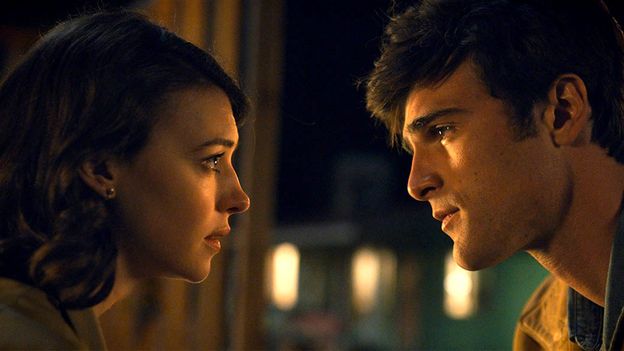
It’s present-day Madrid. Nicolas (Henry Golding: Crazy Rich Asians) is a popular DJ at the city’s hottest nightclubs. But he is thrown into a deep depression when his girlfriend, an artist named Daniela (Beatrice Grannò: The White Lotus) is killed by a negligent driver just outside his home. But things take a turn for the better when a good friend of his, Victoria (Nathalie Poza), tells him of a new, experimental drug that might be just what he needs. But it’s top secret, filled with non-disclosure clauses, and requires regular visits to the pharmaceutical labs. The scientists there tell him each pill, if taken just before bed, will produce lucid dreams, real visions where he can control the content and won’t forget about them when he wakes up. This means he can bring Daniela back to life, at least while he sleeps. But he soon discovers its limitations: he can’t dream about something he’s never seen. If he turns down an ally he’s never visited, it will be covered in unformed, writhing grey matter. Kinda creepy.
Daniela seems artificial at first, but as time progresses, she starts turning real. She even produces creative ideas and thoughts that he doesn’t remember ever experiencing in the awake world. And far from seeming etherial, his lucid dreams are now wide- screen images in living colour, while awake
time is small and drab. He can take Daniela to new places just by thinking about them and opening a door, and change the city of Madrid into something out of one of her paintings. But he soon realizes, not everything is going the way he planned. And when things from his dream world start appearing in awake time, he has to wonder what is real? Can he be in love with someone who doesn’t exist? And can she ever really love him if she’s just a figure of his imagination?
Forever Daniela is a highly- creative science fiction romance about love, death and reality. While it sounds like a Black Mirror jump-scare thriller, it actually avoids most “bad” things except for the sadness of mourning. It also has a very surprising twist at the end (no spoilers). The film is Spanish, but most of the dialogue is in English. Henry Golding (Crazy Rich Asians) is appealing as the leading man, but runs into a bit of acting trouble when he tries to do a full-fledged meltdown. The special effects are excellent, fooling around with unusual concepts like daytime light and shadows in a nighttime environment. I quite like the writer/director Nacho Vigalondo
for the way he incorporates horror movie elements within an otherwise realistic context (like his film Colossal a few years ago.) So if you’re looking for something that’s surreal and supernatural but told in a positive, though bittersweet, way, I think you’ll like Daniela Forever.
Apocalypse in the Tropics
Wri/Dir: Petra Costa
Brasilia — a capital city designed, planned and built from the ground up — was meant to be modern, secular and democratic. But after a coup-d’etat in 1964, Brazil became something other than democratic: a military dictatorship which ruled for the next two decades. So when a new, populist right-wing leader with military ties emerged in the 2010s, many Brazilians were wary of democracy falling again. But Jair Bolsonaro was different, a politician who changed his power base when he forged ties with evangelical Christians.
Apocalypse in the Tropics traces Brazilian politics over the past decade and the rise in religion within government policies. It also gives background, from the building of the capital, through the military coup, American evangelist Billy Graham, the return to democracy, and more recent developments. It uses beautiful period footage, lush music and symbolic paintings — like Hieronymus Bosch’s Garden of Earthly Delights — as a metaphoric portrayal of millenarian changes in Brazilian politics. It is narrated by the filmmaker and includes her one-on-one interviews with Bolsonaro, current President Luiz Inácio Lula da Silva, and the wildly popular televangelist, Silas Malafaia, who served as
Bolsonaro’s right-hand man. We witness Malafaia’s sermons before huge crowds — shouting his opposition to same-sex marriage, abortion rights, and feminism — as well as intimate conversations aboard his private plane. The doc also shows new footage of the beloved capital Brazilia occupied and trashed by massive demonstrators, who called for a coup after Bolsonaro’s defeat.
Apocalypse in the Tropics is a follow-up to Petra Costa’s 2019 film The Edge of Democracy with similar footage, style, and topic but concentrating this time on religion’s role in government policies. I’m not sure if this is a sequel, a reshoot or a continuation, but either way, it’s as aesthetically beautiful as it is disturbing.
We Were Dangerous
Wri/Dir Josephine Stewart-Te Whiu
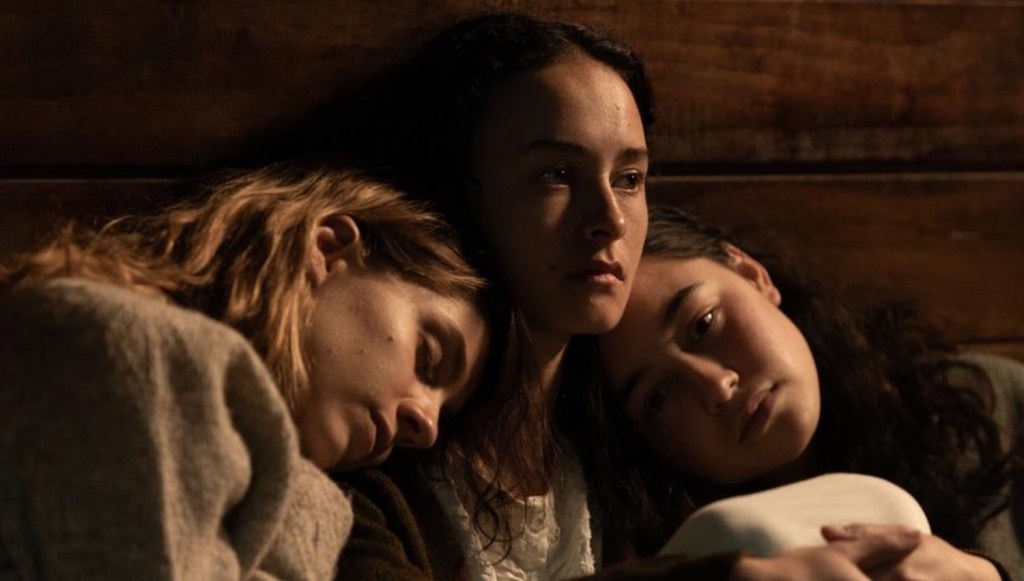
It’s the 1950s on a small island somewhere off the coast of New Zealand, where three girls share a cabin: Daisy, Nelly and Lou (Manaia Hall, Erana James, and Nathalie Morris). They were sent there by the authorities or their parents. Te Motu is a school for “incorrigible” girls or, as the administrators call them, “whores, queers, delinquents and sexual deviants.” Many are orphans or runaways caught stealing food, like Daisy or Nelly. Lou is the exception. She comes from a rich family but was caught making out with her (female) tutor. The school operates under the strict rule of Matron (Rima Te Wiata), who has a cruel streak a mile long. Raised by nuns, she feels the only way to cure these girls’ bad attitudes is through the bible and the lash. Naturally the girls all want to get the hell out of there, but it’s hard to escape from an isolated island in the south pacific. The purpose of the school is to turn bad girls into happy homemakers. They are given lessons in diction and manners but not reading or math.
Matron is frustrated by their outcome: She says they are “too stupid for school, to uncivilized to be maids and too barbaric to work”. Every so often, Matron is visited by men in suits from the mainland, one of whom suggests a horrifying treatment. But when Nelly find out, the three girls decide they have to do something to stop it.
We Were Dangerous is a moving, coming-of-age story about girls surviving in 1950s New Zealand. It’s bright and exuberant, full of playfulness and dancing, Haka and history, and though fictional, it tackles the very real issue of the mistreatment of indigenous girls. The acting is excellent all around, full of subtle clues and delightful details. For a first film, Stewart-Te Whiu avoids many potential stumbles and instead gives us a solid film that’s fun to watch. It played at ImagineNative this year, and is definitely worth seeing.
Apocalypse in the Tropics is playing this weekend at HotDocs and will be streaming on Netflix this coming week; Daniela Forever opens this weekend in Toronto; check your local listings; and We Were Dangerous is available now on VOD.
This is Daniel Garber at the Movies, each Saturday morning, on CIUT 89.5 FM and on my website culturalmining.com.
Guy stuff. Films reviewed: The Fall Guy, The Ride Ahead, Pelikan Blue
Hi, this is Daniel Garber at the Movies for culturalmining.com and CIUT 89.5 FM.
This week, I have some movies about guy stuff — two documentaries and an action movie. There’s a guy in Sydney not afraid to get his hands dirty, a guy in New Hampshire who wants to know the real dirt, and three guys in Budapest playing dirty with some train tickets.
The Fall Guy
Dir: David Leitch
Colt Seavers (Ryan Gosling) is the stunt double for a heartthrob Hollywood action star named Tom Ryder (Aaron Taylor-Johnson). Tom claims to do all his own stunts but those in the know know it’s Colt falling off buildings, crashing cars, and catching fire. Colt loves the excitement and thrill of doing the undoable — and he’s really good at it, too. Especially at his current film, because he works beside a camera operator named Jody (Emma Blunt). They’re spending time together, on and off duty, trading quips on set or making out behind the klieg lights. It’s his dream job. Until a terrible accident breaks his back, and he disappears from the scene entirely. And from Jody, too. Until, 18 months later, he gets a call from a producer. Gail (Hannah Waddingham), a big shaker and mover, wants him on Tom’s latest flick, a sci-fi action rom-com. He doesn’t want to, until she drops the other shoe: Jody is directing this movie and she specifically asked for him.
So off he flies to Sydney, Australia, to join a shoot in progress. It’s a shlock-fest about a space
cowboy fighting aliens using weapons that look like heavy-metal guitars. Turns out Jody had no idea he’s coming and is still offended he dumped her for no good reason. Then Gail, the producer, asks for Colt’s help. Tom has disappeared with a gang of undesirables and she’s worried he’s in trouble. Can’t Colt find and rescue him? If not they’ll have to cancel the movie… and Jody’s career (this is her first time as a director). Tom agrees, but soon discovers he’s the target of a slew of gunmen, trying to get back a missing video. Can Colt rescue Tom, survive the bullets, catch the baddies and make it back to set in time to woo the love of his life?
The Fall Guy is a combination rom-com and action movie set within the confine of the film industry. So it’s full of references to mediocre movies. I thought the witty banter wasn’t particularly clever, and the plot twists propelling the story pretty threadbare. There are lots of unnecessary
jokes written into the script with a nudge and a wink. Like when Jody asks Colt if she should use a split screen in the film she’s directing… immediately after which The Fall Guy movie starts using a split screen, too. That’s just weak. And yet I walked out of this film feeling totally entertained. Why?
First of all the acting is great, all the main characters well-played, especially Gosling’s Colt Seavers. More than that, though, the action is really good. The chase scenes are elaborate, the fight scenes are like watching ballet, and even the gratuitous explosions — and there are quite a few of them — are just fun to watch. And of course, in a movie about stuntmen, the stunts are all done just right. So if you’re looking for a couple of hours of forgettable entertainment, this one’s for you.
The Ride Ahead
Dir: Dan Habib, Samuel Habib
Samuel Habib is a young man who lives with his parents in Concord New Hampshire. He has tattoos, likes music and sports. He went to public school and is getting ready for college, but realizes he hasn’t yet done a lot of things many high school kids have already done: things like going on a date or having sex. Yes, the media is filled with sexual images and porn but rarely relevant to people like him. Samuel is disabled. The thing is, movies and TV shows portray people like him in one of three ways: get help, get cured or die. He wants some advice that’s relevant to him, preferably NOT from his parents (awkward…) And he can’t stand being talked down to or underestimated by people who only see his disability. So he decides to go to the source and talk with some well-known disabled people, including many of his heroes. He does it — and makes a film out of it.
He meets with musician Keith Jones, co-founder of Krip-Hop, for some basic rules about having sex. Says Jones: “always remember: put a bag on it!”Judy Heumann, the late, great leader of the Disability Rights Movement, says “using a wheelchair means spending a lot of time staring at people’s butts!”
Andrew Peterson who lives with Fetal Alcohol Spectrum Disorder tells how he became a long-distance runner and a sports coach. And Maysoon Zayid, a Palestinian-American

Dan and Samuel Habib, The Ride Ahead at HotDocs, Photo by Jeff Harris
stand-up comic, provides both constant humour and some really tough talk. The film takes Sam (and his father, co-director Dan Habib) across the country, in boats, planes and automobiles, each of which pose separate accessibility issues, especially airplanes; Samuel uses an electric wheelchair to get around and they don’t go well with those tight spaces on planes. He also turns to his own big brother for all-around moral support and inspiration. But will Sam ever move beyond his parents’ house?
The Ride Ahead is a touching, funny and informative documentary told from the subject’s point of view. It helps correct a lot of misconceptions about disabilities, and introduces a lot of other things you probably never considered. The film is made in the form of a dialogue between Samuel, his dad and the people he encounters, often with the camera positioned either facing him or facing out. At times, Samuel’s both the subject and the filmmaker. He can speak, but in the film mainly uses an electronically generated voice whose texts he writes in advance.
I liked this documentary a lot, partly the way it makes people with disabilities the subject not the object. It covers diverse intellectual territory, from disability rights to ableism and disability justice. It also deals frankly with real aspects of everyday life. And the cast and crew, both behind and in front of the camera, from editor to soundtrack, are largely disabled themselves.
The Ride Ahead is a good movie to watch.
Pelikan Blue
Wri/Dir: László Csáki
It’s the late 1980s in Budapest, Hungary and the iron curtain may be rattling but it’s not yet opened. Still, the government is introducing new measures. It’s now legal to keep foreign currency and travel abroad. Everyone, especially young people, are dying to see what it’s like in Western Europe. But train tickets are prohibitively expensive, and no one has any money. When three guys — Rozi, Petya, and Akos — buy a forged ticket on the black market, they are dismayed and disgusted by its poor quality: smudged ink, misspelled words… They’d be caught immediately. They can do better than that using just advanced planning and simple high school chemistry. So they decide to take the bull by the horns, and make themselves some fake tickets. This involves spying on the sellers, stealing some covers, and getting a phony rubber stamp made (not an easy task in communist Hungary). But they also have to buy a cheap ticket, bleach out the ink and carefully enscribe the forgery through a page of Pelican Blue carbon paper.
After much trial and error, they manage to ride a train to Scandinavia for pocket change. But
when they get back, rumours leak, and everyone wants a piece of the action. Should they expand their business or get out of it before the police find out?
Pelikan Blue is a beautiful, animated feature-length documentary that follows the story over three decades, using old voice recordings and new interviews. This is basically a heist movie, but one involving minimal stakes — just forged tickets across Europe. But what really struck me was the stunning art. It involves the garish lavenders and electric blues of 1980s colours, distinct characters, and simple but instantly recognizable images: a payphone, an answering machines, the brutalist rooftops of Budapest. Backgrounds are brushed with tempera paints, and the faces have squashed noses, and eyes that are tiny green dots. I cannot describe the joy I felt looking at this animation, it’s unique, it’s amazing, it’s handmade, it’s just so cool. There’s also a chill soundtrack of 1990s Hungarian music percolating through the whole film. There are lots of funny parts, and some psychedelic dream sequences, too…I just can’t get enough of Pelikan Blue.
The Fall Guy opens this weekend; check your local listings. The Ride Ahead, Pelikan Blue are two of the many movies playing at Hot Docs through Sunday.
This is Daniel Garber at the Movies, each Saturday morning, on CIUT 89.5 FM and on my website culturalmining.com.
Authoritarian. Films reviewed: Humane, Occupied City PLUS Hotdocs!
Hi, this is Daniel Garber at the Movies for culturalmining.com and CIUT 89.5 FM.
This is a busy weekend, with tons of new releases, so many that’s it’s hard to keep them straight. Like these two, I covered last fall at TIFF: a first feature about a man sexually assaulted on the streets of Toronto called I Don’t Know Who You Are; and a sharp social satire from Romania about a woman who takes on the offensive persona of Andrew Tate online, called Do Not Expect Too Much from the End of the World. I dare you to remember those two titles: I Don’t Know Who You Are, and Do Not Expect Too Much from the End of the World.
But this week, I’m looking at two new movies set in totalitarian regimes. There’s a city in the future where medically assisted death is mandatory, and a city in the past under Nazi occupation.
But first, some more news about the Hot Docs festival, on now.
Hot Docs
Films are showing now through next weekend in Toronto, with daytime screenings free for students and seniors, and many of the filmmakers and subjects on hand for a Q&A. Here are some I’m looking forward to seeing: The Ride Ahead is a coming-of-age look at a young disabled man navigating dating, love, and sex. Fly looks at the extremely dangerous sport of base jumping and the people who do it. And Any Other Way: The Jackie Shane Story about a Nashville-born soul singer who became a chart-topping trans entertainer in Toronto… before disappearing. All of these and many more are playing now at Hotdocs… and students and seniors can see daytime screenings for free.
Humane
Dir: Caitlin Cronenberg
It’s the near future, in a huge mansion in a city like Toronto. Charles York (Peter Gallagher) is a famous TV anchorman, someone everyone looks up to and trusts. Tonight he’s having his dysfunctional family — four adult children — in his home for a special announcement: Rachel (Emily Hampshire), the selfish oldest child, who works for big pharma; Jared (Jay Baruchel) an arrogant professor, known for his right-wing cable news punditry; Noah (Sebastian Chacon) a neurotic piano prodigy turned drug addict, now in a 12-step program; and the youngest, Ashley (Alanna Bale), an insecure and unsuccessful aspiring actress. Charles’s second wife, Dawn, a restauranteur, who is there too, has prepared an exquisite meal. But why are they all there? Charles and Dawn have agreed to “enlist” in a heavily promoted government program to serve as role models. Enlist is a euphemism for voluntary death. After an ecological disaster, the worlds’ governments have declared there are too many people, so 20% of the population is expect to die to save the planet — voluntarily of course (the government sends a cheque to families that enlist).
The York family is shocked they’re planning to die right after dinner. But when Charles goes through with it, Dawn is nowhere to be seen — she got cold feet and ran away. And that’s when armed guards appear at the door. Bob (Enrico Colantoni), a former prison guard now working for a private agency that enforces these laws, says he’s there to claim two cadavers. And if Dawn isn’t there, it has to be another body from the family — and he doesn’t care whether it’s Rachel, Jared, Noah, or Ashley. It’s up to them to decide who dies. What will happen
to the York family?
Humane is a dark, drawing-room horror-thriller about a futuristic, dystopian world. It deals with class issues, kinship, racism and authoritarian laws. It’s told in a creepy, tongue-in-cheek manner, reminiscent of movies like Robocop, and never loses its dark, ironic humour. It is horror, though, so be be prepared for a fair amount of violence and blood. It’s Caitlin Cronenberg (David Cronenberg’s daughter)’s first feature and it’s surprisingly good. Well paced, low-budget, with a good, largely Canadian cast, it neatly captures the widespread helplessness, suspicion and fear spawned during the Covid years.
I’m impressed.
Occupied City
Dir: Steve McQueen
What happens to a city after a major event by an occupying power wipes out a large portion of its population? A new documentary looks at the city of Amsterdam under the Nazi occupation from 1940-1945. It’s a geographical look at various places and addresses during that period, but without any footage, photographs or recordings from that era. Instead, it films exactly what Amsterdam is today with a narrator’s voice describing what happened to the people who lived there under the Nazis. So we see things like people dancing or doing yoga, kids at school, an art museum, and the elderly at a musical performance. But we hear about how that location was once a prison, or a site used for deportation. Children hid — like Anne Frank — in one home; in another, a collaborator sent them to their deaths in a concentration camp. Each segment ends with a simple description of the building today, like “demolished”. The building no longer stands but the history remains.
Occupied City is a meticulously precise journey through that city,
played against a history of occupation and genocide.
The unseen camera spins its way through Amsterdam, from the red light district to public squares, along streetcar tracks and up to rooftops looking down at the peopler below. It covers all types of current demonstrations, including angry anti-vaxers, and anarchists pursued by swarms of police drones. Did you know the Germans melted down most of Amsterdam’s church bells to make munitions? It’s filled with obscure historical facts like that.
Amsterdam-born Bianca Stigter wrote the script based on her book, Atlas of an Occupied City: Amsterdam 1940-1945. It’s directed by the great UK filmmaker Steve McQueen. The two are a couple and frequent collaborators, which gives this a highly personal feel. One thing you should know, though: the film is over four hours long! Four hours!!
Even so, it wasn’t a strain to watch, I found it warm and enveloping, offering a constant, soothing contrast between horrific words and mundane images.
I liked this film, but be sure to dress comfortably and bring lots of water.
Hotdocs is on now, Humane and Occupied City both open this weekend at the TIFF Lightbox and elsewhere; check your local listings.
This is Daniel Garber at the Movies, each Saturday morning, on CIUT 89.5 FM and on my website culturalmining.com.
International Women’s Day! Film reviewed: Analogue Revolution
Hi, this is Daniel Garber at the Movies for culturalmining.com and CIUT 89.5 FM.
Wednesday is International Women’s Day, a national holiday in many countries though not in North America. And changes have been slow coming in the film industry, but they are happening. Since the first academy awards, more than a century ago, less than two dozen films directed by women have ever been nominated for best picture. This year, there are three… and these numbers are steadily growing.
So if you want to celebrate movies at home, CBC Gem is featuring movies about women this month, including 20th Century Women a coming of age drama set in the 1980s starring Greta Gerwig, Annette Benning and Elle Fanning. MUBI is featuring films with female cinematographers, including Saint Omer, the compelling French courtroom drama, and The Invisible Life of Euridice Gusmão, the mysterious drama about two sisters in Rio de Janeiro, separated against their will. And NFB has an International Women’s Day Playlist available for free on their website, including Mary Two-Axe Earley: I Am Indian Again; Margaret Atwood – A Word after a Word after a Word is Power; and The Boxing Girls of Kabul. Lots to watch at home.
So this week, also in honour of International Women’s Day, I’m looking at one new documentary about the history of modern feminism in Canada as seen through its media.
Analogue Revolution
Wri/Dir: Marusya Bociurkiw
It’s 1967, and Canada is celebrating 100 years since Confederation. There’s a burst of national pride and an explosion of tiny, independent publishing houses producing CanCon (Canadian Content) throughout the country. This was also the time when feminism gained support, and women were in the spotlight, fighting the system, en masse. They expressed themselves in books, magazines, literary journals and newspapersl. Press Gang in Vancouver and Broadside magazine in Toronto were seminal to the movement.
Women’s own bodies were a central topic, as doctors, at the time, required a husband or father’s consent for a woman to request an operation like a tubal ligation. So in the late 1968, The Montreal Health Press published a birth control guide book for women that — in contemporary parlance — went viral. One American clinic ordered
50 thousand copies right after it was published, and students on campuses across the continent were snapping it up. It was sold at cost. Writing about IUDs, diaphragms and abortion was still illegal at the time, so this book played a crucial role in the women’s movement.
Radio, too was a major force, including shows Dykes on Mykes the longest running lesbian radio show in the world on CKUT-FM in Montreal. Travelling women’s film festivals carried their movies across the country showing the movies in small town church basements on the way.
In the 1970s, the National Film Board opened a new section known simply as Studio D, a bare-bones area where women workshopped and made documentaries. The filmmaker interviews filmmakers like Bonny Sher Klein whose Not a Love Story: A Film About
Pornography was both controversial and widely watched. Janis Cole and Holly Dale’s crucial documentaries P4W Prison for Women and Hookers on Davie also came out of Studio D.
This momentum continued producing hundreds of publications across the country. Tens of thousands of people marched through city streets on International Women’s Day while others reclaimed the streets at night to stop violence against women. And the movement shifted from one centred on civil rights, women’s bodies, and pay equity, to one stressing individual rights, racial inequity and gender theory. But successive austerity governments in the 1990s effectively destroyed all but a few small publications that relied on government grants to stay afloat.
Analogue Revolution is a comprehensive look at the feminist movement in Canada from the 1960s through the 90s and beyond. It covers massive territory — from a high school filmmaker in Saskatoon, to a Ukrainian Feminist women’s group out of Edmonton to publications in Halifax. There are extensive interviews with Quebecoise activists and writers, people of colour, radical feminists, nudists, and indigenous activists, as the movement changed decade by decade. It features new and vintage footage of Susan Cole, Audre Lorde, Judy Rebick, and many others. The Toronto Women’s Bookstore — the country’s biggest feminist bookstore, which was also firebombed by American anti-abortion militants — is notable by it’s absence… but you can’t include everything.
Analogue Revolution is an important and fascinating history of a movement.
Analogue Revolution is playing tonight at 630 and tomorrow afternoon at 1:30 at the Hot Docs cinema on Bloor st in Toronto: check your local listings.
This is Daniel Garber at the Movies, each Saturday morning, on CIUT 89.5 FM and on my website culturalmining.com.
Bikes and books. Films reviewed: The Last Rider, Umberto Eco: A Library of the World
Hi, this is Daniel Garber at the Movies for culturalmining.com and CIUT 89.5 FM.
It’s Summertime and Toronto is melting. Luckily there are lots of new movies playing at festivals, both indoors and out. The ICFF is showing great movies from Morocco to China at the distillery district throughout July. Art of Documentary Film Festival is on next Saturday, July 15th, at Innis Town Hall Theatre featuring a talk by Shasha Nakhai and Rich Williamson, the great Toronto directors who brought us Scarborough. And later this month keep an eye out for the Female Eye Film Fest featuring memorable movies and shorts directed by women.
But this week I’m looking at two new documentaries that stimulate the body and the mind. There’s an Italian film about books and American one about Bikes.
The Last Rider
Wri/Dir: Alex Holmes (Maiden)
It’s 1989. Greg LeMond is a champion professional cyclist who was the first American ever to win the Tour de France. He has trained since a teenager in Lake Tahoe, growing up with a gut-knowledge of their mountains and steep roads. He meets Cathy, his future wife, like in a movie, at a Holiday Inn. He is soon recruited as a member of the Renault team, moves to France for training, and becomes world famous. Cathy comes with him, dropping out of College.
But after winning the Tour, he falls into a deep depression, followed by a terrible accident: he is accidentally shot and almost killed on a turkey hunt with his family. This happens while Cathy is in labour, so Greg barely gets a chance to see their newborn for weeks. But after a few years of recovery, they decide he should try once again.. Not to win the Tour de France, but just to see if he can finish it (remember: competitive cycling, especially climbing up
gruelling Alpen roads like in the Tour, requires absolute perfection in strength, skill and stamina— and Greg still has metal pellets riddling his body!)
But to everyone’s surprise, it becomes a three way race for Greg, Pedro Delgado and Laurent Fignon. Who will wear the yellow jersey?
The Last Rider is a biographical sports doc about that historical and exciting race in 1989. It’s 75% period video footage — the Tour de France is heavily photographed, start to finish — and 25% new taking-head interviews with LeMond, his family and many participants in that race. 1989 was before the dirty side of professional cycling — all the scandals, illegal drugs and supplements that became endemic in the sport — so there is a sense of innocence and pathos permeating this story. I am not a big fan of the sport — I barely follow it — but it was still an exciting watch.
Umberto Eco: A Library of the World
Dir: Davide Ferrario
Umberto Eco is a writer, novelist and semiotician from Piedmont, Italy. He writes books — including international bestselling novels like The Name the Rose and Foucault’s Pendulum — and academic essays and treatises. He also accumulates and reads an astonishingly diverse number of books. And though he is an academic, he avoids ranking books by their moral or political value, ignoring the usual canons of good vs bad literature.
His shelves are filled with Charlie Brown bobble heads beside Voltaire, devoting equal space to fumetti — low-brow italian comics — and pulp fiction, as he does to obscure codices scribed by medieval monks. The more obscure the better. There are illuminated manuscripts of animals with human heads. And — unlike the current vogue of labelling works as misinformation, disinformation or “fake news” — Eco loves writers who churn out huge quantities of books of dubious credibility and provenance. Like the 17th-century German Jesuit Athanasius Kircher, who studied and wrote about practically everything, including travelogues of China (despite never having been there), and treatises on mathematics, music, medicine, the tower of Babel and Egyptian hieroglyphics. There’s always room for mysticism, conspiracy theories and apostate Cathars. Eco died in 2016 but left behind a stupendous collection of books, including his own voluminous output.
Umberto Eco: A Library of the World is a fascinating, esoteric and aesthetically pleasing documentary about Eco and his writing, the books he read, and about libraries worldwide. Members of his family tell their stories and they and actors recite aloud some of Eco’s works, both profound and mundane. There are also countless TV talks in Italian, French and English of eco himself spannng his career. And the cameras take us through lush stacks of burnished wood in libraries throughout the world, caressing atlases and thesauruses. To the whimsical music of Carl Orff and striking architectural locations, this doc, like Eco himself, is a nearly limitless compendium of everything wondrous, grotesque and interesting.
If you like Umberto Eco’s work, this is a must-see; and if you’ve never heard of him watch this movie — you’ll learn learn a thing or two.
Umbertio Eco: A Library of the World starts next Friday at Hot Docs cinema, and The Last Rider which recently opened in Toronto is playing later this month at the Lavazza INCLUCITY FESTIVAL in the distillery district; check your local listings.
This is Daniel Garber at the Movies, each Saturday morning, on CIUT 89.5 FM and on my website, culturalmining.com.
Daniel Garber talks with Valerie Kontakos and David Bourla about Queen of the Deuce

Hi, this is Daniel Garber at the Movies for culturalmining.com and CIUT 89.5 FM.
New York City in the 1970s is a gritty city with a chip on its shoulder. Crime is rampant, and its government faces bankruptcy. But it’s also exploding with creativity and freedom of expression, in film, theatre, music and art, while the sexual revolution, the women’s movement and gay rights are in full swing. The city’s centre is 42nd street, and the strip running from Times Square to the Port Authority and north on 8th ave is filled with porn theatres and peep shows. And on top of it all sits a Jewish Greek-American woman, Chelly Wilson, ruling over her porn empire.
Queen of the Deuce is a fantastic new documentary about Chelly’s
life, her work, her family and the world she built. Born in Thessaloniki, she hid her children, escaped the Nazi invasion, and gradually made her way to the top of the NY porn movie industry. The doc includes personal photos and letters, period footage, animation and talking heads to give a first-hand look at a previously unknown hero.
The film was directed by Valerie Kontakos, a well-known documentarian, founder of the NY Greek Film festival and on the Board of Directors of the Greek Cinematheque. The film features members of Chelly’s family, including her grandson, David Bourla, a screenwriter in his own right, known for action films like Push.
I spoke with Valerie in Athens and David in New York City from Toronto, via Zoom.
Queen of the Deuce is playing in Toronto at the Hot Docs Cinema as part of TJFF on June 3rd, 2023.
Filming the Impossible. Movies reviewed: Fire of Love, Come Back Anytime, Nope
Hi, this is Daniel Garber at the Movies for culturalmining.com and CIUT 89.5 FM.
You know how I’m always talking about big-screen movies, how they show you things that you don’t get on a TV, device or phone? Well, movies don’t just walk to your cinemas, they take a hell of a lot of work to get there. Sometimes it’s almost impossible to get them on the screen.
So this week I’m looking at three beautiful movies, two of which are about filming the impossible. There’s a ramen chef who reveals his secret recipes; brother-and-sister ranchers who try to take pictures of a UFO; and husband-and-wife scientists who try to film volcanos, up close, as they erupt.
Dir: Sara Dosa
It’s the early 1960s in France. Katia and Maurice Krafft meet at a scientific conference, and never part. Katia is a petite geochemist with a pixie haircut, while Maurice is a geologist, twice her size, with a face like John C Reilly. The two are so fascinated by volcanoes. That they call themselves Volcanologists. They go to anti-war protests and eventually marry, honeymooning on Santorini island in Greece (an active volcano, naturally). They form a team of two, investigating and recording on film,
volcanoes around the world. Dressed in metallic space suits, they measure everything from the arcs that volcanic bombs (large chunks of molten lava) take as they are expelled into the air, to the degree if acid in water pools nearby. And most of all, the volcanoes themselves. Each volcano has a unique personality and should be approached in a different way. But they make one distinction. Red volcanoes are safe if you take precautions. They’re caused by tectonic plates pulling apart, exposing the magma beneath. Molten lava spills out and flows in a clear path, and can be filmed from a relatively close distance. Grey volcanoes, though, are caused by tectonic plates crashing into each other, expel ash into the sky. When they explode, they can be more powerful than an atom bomb, leading to landslides and widespread death and destruction. The power of the earth,
the Kraffts say, dwarfs anything mankind can attempt. But they photograph and film it all, providing much of the images of volcanoes the world sees. The Kraffts died in 1991 while following their passion at the eruption of Mt Unzen, a grey volcano in Japan. Their bodies were never found.
Fire of Love is a stunningly beautiful documentary about Katia and Maurice in their search for active volcanoes around the earth. It is illustrated by their own extensive footage, including surprising and breathtaking images from Iceland to Zaire to Krakatau, Indonesia. They went where no one else dared. Wistfully narrated by Miranda July, the film also looks at their long-lasting love affair, devoted to each other and volcanoes. Beautifully illustrated by animated drawings it delves into their private thoughts including Maurice’s fantasy of rowing a canoe down a river of molten lava as it spills into the open sea. You’re probably familiar with the volcanoes in movies and TV shows, but this doc takes you right into the middle of them, like nothing you’ve seen before. Spectacular.
Dir: John Daschbach
Over the past decade, ramen has become popular worldwide with dozens of restaurants opening everywhere. It’s considered a classic Japanese dish, but in Japan it’s thought of as Chinese food. Ramen first gained popularity in Yokohama’s Chinatown. It consists of noodles in a hearty broth made of pork or chicken bones — typically flavoured with salt, miso, or soy sauce — and topped with roast pork and vegetables.
After WWII, it became wildly popular in Japan, with ramen stalls opening on every street corner. This documentary follows Ueda, the chef, along with his wife, of a particular ramen shop. It shows us, season by season, one year of its existence, including a behind the scenes look at what goes into that bowl of ramen you’re probably craving right now. (My mouth started watering about five minutes into the film.) 
Come Back Anytime is a very low-key, realistic look at a ramen shop — not one that’s famous or prize-winning, not a chain or a corporation, not one that uses fancy or unique flavours like dried sardines — just an ordinary ramen place. But its devoted clientele — some of whom have been going there for 30 years — would argue that this place is something special. It consists of scenes in the restaurant, up at his farm where he grows vegetables, and interview with customers, family and friends. While nothing remarkable, this gentle, ordinary doc leaves you with a nice warm feeling inside, like after eating a hot bowl of ramen.
Wri/Dir: Jordan Peele
OJ Haywood and his sister Emerald (Daniel Kaluuya, Keke Palmer) are unsuccessful horse wranglers who live in a huge wooden house on a dry-gulch ranch somewhere in southern California. Em is outgoing, selfish and spontaneous; she loves listening to LPs full blast. OJ is a monosyllabic cowboy, prone to pondering, and is more comfortable with horses than with people. While he’s on the farm taming mustangs, she’s out there trying to get rich and famous in LA.Their dad built up a big business in Hollywood, providing horses for westerns, but they’ve fallen on hard times, especially since Pops died in a
freak accident. Now they’re forced to sell their horses, one by one, to Ricky (Steven Yuen) who runs a tacky cowboy theme-park nearby. Ricky is a former child-actor whose hit sitcom was cancelled, years earlier, when his co-star (a chimpanzee) ran amok on set.
But something else is happening on the ranch. Power turns off spontaneously, metallic objects seem to fly around, and what might be a UFO keeps appearing in the distance. Em thinks they can get rich if they can just capture on film a clear, “Oprah-quality” shot of the UFO. Problem is their security cameras fizzle out whenever the flying saucer appears. So they make a trip to a big box store to buy some better quality equipment. And that’s when they meet Angel (Brandon Perea) a cashier there who is totally into both electronic surveillance and UFOs. He volunteers to help them . But have they bit off more than they can chew?
Nope is a weirdly excellent western / mystery / horror movie with a good amount of humour. It bombards you with shocking, seemingly unrelated events, but eventually they all make sense. While Peele’s previous movies, Get Out and Us, were small, drawing room horror, this one is grand and expansive, with sweeping skies and rolling hills, horseback chases and terrifying attacks from above. Daniel Kaluuya is great as the almost mute cowboy, Keke Palmer hilarious as Em, with Steven Yuen as a slimy actor-turned-entrepreneur and Brandon Perea as an enthusiastic third wheel rounding off a great cast. It has wonderful cinematography and art direction: your eyes are flooded with bright oranges, greens and reds. There’s a bit of social commentary — how blacks were erased from Hollywood westerns, as well as just the general ersatz creepiness of American pop culture; and there are also the meta aspects — after all, this is a movie about making a movie — but Nope is mainly just entertainment. And that’s what it did. I saw it on an enormous IMAX screen and enjoyed every minute of it.
Come Back Anytime is now playing at the Toronto Hot Docs cinema; you can see Fire of Love at the TIFF Bell Lightbox; and Nope opens on IMAX this weekend worldwide; check your local listings.
This is Daniel Garber at the Movies, each Saturday morning, on CIUT 89.5 FM and on my website, culturalmining.com
In depth. Films reviewed: The Velvet Underground, Kímmapiiyipitssini: The Meaning of Empathy, The Power of the Dog
Hi, this is Daniel Garber at the Movies for culturalmining.com and CIUT 89.5 FM.
We are all flooded each day with new images and stories, both broadcast and online, but don’t they all seem to be fleeting and ethereal, lasting no longer than the average news cycle or two. Rarely do we get in-depth examinations of anything. But movies can do that, opening your eyes to deeper thoughts. So this week I’m looking at three new movies — a western and two feature-length docs —that look at things up close. There’s cowboys in Montana, First Nations in Alberta, and avant-garde rockers in Greenwich Village.
Wri/Dir: Todd Haynes
It’s the early 1960s. Lou Reed is a Brooklyn-born teenager who lives in suburban Long Island. He’s depressed and his parents send him for electroshock therapy. He teaches himself guitar listening to doo-wop and rockabilly on the radio. Later at university in Syracuse, he studies under Delmore Schwartz. He goes to Harlem with his girlfriend to buy hard drugs and writes poems about furtive sex with men he meets in dark alleys. John Cale is the son of a coal miner in Wales who studies classical music in London. They meet in the Village and start a band within the exploding world of avant-garde film, music, art and poetry. Velvet Underground plays long, drawn-out tones with a dark drone grinding in the background, combining Reed’s dark lyrics and Cale’s musicality (he plays viola in a rock band!) They perform at Andy Warhol’s Factory and Nico, the enigmatic European
actress, completes their sound. Though never a huge success and breaking up after a few years, the Velvets influenced generations of musicians.
This two-hour doc looks at the band itself (Reed and Cale, along with Moe Tucker and Sterling Morrison) and where it fit within New York’s burgeoning underground scene. Aside from the usual suspects, it talks about or interviews unexpected faces,
musicians Jonathan Richman and Jackson Browne, and experimental filmmakers like Jonas Mekas and Jack Smith. Aside from its meticulous retelling of group’s history, it’s the look of this doc that really blew me away. Todd Haynes exploits that era’s avant-garde film techniques, from split screens to three-quarter projections, along with a good dose of 60s pop culture. And there’s a constant stream of music from start to finish, including rare tracks of early songs before they found their groove. I had to watch The Velvet Underground on my laptop but this beautiful documentary deserves to be appreciated on a movie screen.
Kímmapiiyipitssini: The Meaning of Empathy
Dir: Elle-Máijá Tailfeathers
It’s the mid-2010s and opioids are ravaging the Kainai Blackfoot First Nation in Alberta (that’s the largest reserve in Canada). Families are torn apart, and hundreds of lives are lost. The abstinence and cold-turkey programs just aren’t working, especially for the most marginalized, who end up homeless in cities. So instead they start up harm reduction centres like those pioneered on the streets of Vancouver’s Downtown Eastside. This highly-personal documentary follows a number of addicts — of both opioids and alcohol — as they enter harm-reduction treatments and through its various stages. It’s spearheaded by the filmmaker’s own mother, Dr Esther
Tailfeathers, a physician, but also includes Social workers, EMS, nurses and councellors, in drop ins, detox centres, hospitals and clinics, both on the reserve and in nearby cities like Lethbridge.
As the title suggests, caring and empathy saves more lives than punishment, threats or abstinence. Rather than kicking people out, it embraces them while standing by to treat overdoses, and on a bigger scale helping them find purpose and meaning, along with food, shelter and medical care. The doc also looks at the intergenerational causes that led to these addictions, from broken treaties to residential schools. Kímmapiiyipitssini: The Meaning of Empathy is gruelling in parts — and not an easy film to watch — but it is one that turns despair into hope.
Wri/Dir: Jane Campion
It’s the 1920s. Phil Burbank (Benedict Cumberbatch) is durned mean cuss. He owns a ranch in Montana with his brother George (Jesse Plemons), and regularly drives cattle with his posse of young cowboys. They always stop by a roadhouse run by the widow Rose (Kirsten Dunst) and her skinny sensitive son Peter (Kodi Smit-McPhee). Phil went to one of them Ivy League schools in the east, but they don’t know nuthin about the life of a cowboy. He learned everything from an older buckaroo when he was just a lad, and now keeps a shrine to him in his stables. But like I said, Phil is a mean bastard who directs his venom all around him. He calls his brother fatso, and
when George marries Rose, Phil torments her and drives her to drink. And he calls her son Pete a pansy. Until… Pete discovers Phil’s secret. He finds his illicit porn stash and catches him in a hidden grove luxuriating in mud-covered self-love. That’s when Phil changes his mind and decides to mentor Pete in the old cowboy ways. But is that what Pete is really after?
I walked into The Way of the Dog at TIFF expecting a conventional Western, but I saw something much bigger than that. It’s a subversive twist on a classic genre. It’s set in the 1920s, avoiding the blatantly racist portrayals of indigenous
people in most Westerns (the “Indians” in “Cowboys and Indians”) which take place in the 19th century when settlers were slaughtering them with impunity in their western migration. This one is set 50 years later. There are also no hold-ups or show-downs; guns don’t play a major war in this Western. It’s directed by Jane Campion who won big time awards for The Piano thirty years ago, but I hadn’t heard much about her for a long time. So I wasn’t expecting much. But this film really shocked me with its gothic tone, complex characters and twisted plot. The interplay between Cumberbatch and Cody-Smit is fascinating. All of this played out against the wide, western skies (it was actually filmed in New Zealand) makes The Power of The Dog a really great movie.
The Velvet Underground is playing theatrically in Canada for one night only, Sunday, Nov 28th at 8 pm, at the Rogers Hot Docs cinema in Toronto; and Kímmapiiyipitssini: The Meaning of Empathy opens today, also at Hot Docs; and The Power of the Dog just opened at the Tiff Bell Lightbox.
This is Daniel Garber at the Movies, each Saturday morning, on CIUT 89.5 FM and on my website, culturalmining.com.
Endless Cookie (Peter and Seth Scriver) is a highly original animated film that uses bright colours and stylized characters — in the form of elastic bands, or peaches — to retell the stories of two half brothers, one from the Shamattawa First Nation in Northern Manitoba, the other from Toronto’s Kensington Market.
Coexistence, My Ass by Canadian filmmaker Amber Fares (Speed Sisters:
My Boyfriend the Fascist (Matthias Lintner) is an intimate, personal film about a leftist Italian filmmaker in South Tyrol and his virulently anti-communist Cuban-Italian lover who is drifting further and further to the extreme right.
Supernatural (Ventura Durall) is about an MD forced to deal with the legacy of his own dad, who was famous as a shaman, and a telepathic healer who still has a grateful followers including one woman who swears he saved her life.
Ragnhild Ekner’s Ultras is a stunning, impressionistic look at the shared subculture of superfans at soccer clubs on four continents, including chants and Tifos, both elaborate synchronized formations in the stands and the creation of massive cloth banners that span a stadium and then disappear in just a few minutes.
Another Small Favour
Dante (Michele Morrone), her handsome brooding fiancé; and Portia (Elena Sofia Ricci) Dante’s acid-tongued matriarch. The danger comes from the fact that Dante’s family are connected to the mob, and almost everyone at the party holds a deadly grudge toward at least someone else. Poor Stephanie is left fending off the eye-daggers that everyone is sending her way, but even so, some of the main characters are being killed, one by one. Who is behind these murders? What is their motive? And can Stephanie make it out of there alive?
On Swift Horses
the diner she works at, discussing sure-fire horses to bet on. She makes to he tracks to try her luck. And with some newfound earnings she feels confident enough to pay a visit to Sandra down the road. Is this just a fling? Or the real thing? Will Julius ever join them in San Diego? And what would Lee do if he ever discovered both his brother and his wife are flirting with same-sex partners?
dancing to music in Sandra’s living room in her underwear seems much more sexualized than her having obligatory coitus with her husband. Likewise Elordi as Julius exudes sexual desire in every scene. While the film does verges on the sentimental with its gushing music and tragic near misses, by the end, you’ll be siding with the characters and hoping their love will be eternal.


leave a comment