Scary creatures. Films reviewed: Jurassic World Rebirth, 40 Acres, Sorry Baby
Hi, this is Daniel Garber at the Movies for culturalmining.com and CIUT 89.5 FM.
Yorgos Lanthimos, who brought us films like The Favourite and Poor Things, didn’t come from nowhere; he’s been directing weird, original movies for two decades. One of his first — and one of my first reviews on this show — is Dogtooth, which still holds a place in my heart. It’s being re-released on the big screen in July, so if you haven’t seen it, now’s your chance.
But this week, I’m looking at three new movies about people dealing with scary creatures. There are dinosaurs on the equator, cannibals on the prairies, and a monster in a New England college town.
Jurassic World: Rebirth
Dir: Gareth Edwards
It’s present-day New York City, where giant, benign dinosaurs amble through city parks. Bennet (Scarlett Johansson) is a hard-boiled mercenary who dares to go where you’re not supposed to be to steal things you aren’t supposed have. Her latest client? A certain Mr Krebs (Rupert Friend), the sketchy rep of a Big Pharma multinational. And the job? To bring back blood samples from three of the biggest and most dangerous dinosaurs in the world: one from the sea, one from the sky, and one from the ground. The only place these creatures live is around the equator, in areas international law says we can’t go. But Bennet will, along with her longtime collaborator Kinkaid (Mahershala Ali) and their henchmen. Rounding out the pack is Dr Loomis (Jonathan Bailey) a palaeontologist whose dream has always been to see the dinosaurs (whose fossils he studies) alive and in the flesh.
Along the way they rescue a family whose plans — to sail across the Atlantic — are capsized when their boat is attacked by a giant sea monster. They all end up on an island, full of
hybrid dinosaurs created in labs a generation ago by genetic scientists who abandoned the project when it became too dangerous. But which of them will survive 24 hours among those killer beasts?
Jurassic World: Rebirth is an action adventure, the latest instalment in the ongoing franchise. It’s a cautionary tale of what happens when ambitious scientists bring dinosaurs back to life to build a profitable theme park. Ironically, while the theme parks are gone, the movie feels like a series of carnival rides. First you’re in a speedboat escaping something in the water, then you’re hanging from a cliff, avoiding killer Pterodactyls… Which makes it fun and entertaining, but in an entirely predictable way.
I loved the thrill of the raptors in the first Jurassic Park, but the weird and artificial dino-hybrids in this version look more sad or silly than scary.
40 Acres
Co-Wri/Dir: R.T. Thorne
It’s the near future in rural Canada after an apocalyptic pandemic has left the whole world in ruins, starving for food. Hailey Freeman (Danielle Deadwyler) lives on the same farm her African-American ancestors moved to after the US Civil War. She’s a hard-ass mom who rules her family like a sergeant (she spent time in the military). Her oldest son, Manny, (Kataem O’Connor) still responds to her questions with only a yes ma’am / no ma’am. Though they live a calm and peaceful life — trading goods with other farmers using shortwave radio and a shared depot — just outside the gate marauders rove around, trying to break into farms and steal their coveted farmland. The Freemans are a blended family, Black and indigenous, with Galen as Dad (Michael Greyeyes) Hailey as Mom, the older kids from previous marriages, and the younger kids born here. They are trained not just how to plant and harvest, but also how to handle heavy artillery, hidden beneath their house. Hailey may operate in a constant state of paranoia, but there are reasons for her extreme caution. If the predators at the gate break through, they won’t just take the farm, they’ll eat the family. Yes, the outsiders are cannibals!
But Manny is growing up, and when he sees a beautiful young
woman (Milcania Diaz-Rojas) swimming in a lake outside the farm, he is stricken with equal parts love and lust. And when she appears at the fence begging for help he sneaks her inside. Can she be trusted? Or is she a cannibal? And could this mean the end of the Freemans?
40 Acres is a post-apocalyptic, science fiction action thriller. It’s gripping, surprising and pretty scary. It presents an unusual point of view, combining an American individualistic, top-down, gun-friendly “get off of my lawn” attitude with a multicultural, work-together Canadian ethos. It’s also a zombie-pocalypse movie, but without the walking dead — it’s humans who do the killing and eating. And in between violent shootouts and fights, the lovely cinematography gives us lots of misty cornfields and lush forests on which to feast our eyes. But the biggest reason to see 40 Acres is Danielle Deadwyler, a dynamic powerhouse in her role as Hailey.
All I can say is: Wow!
Sorry Baby
Wri/Dir Eva Victor
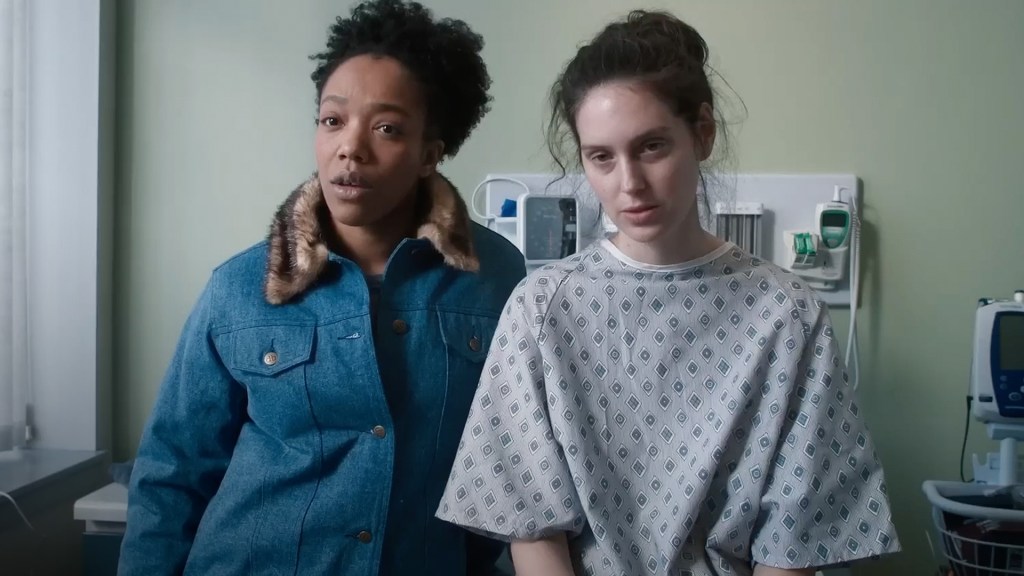
Agnes is an assistant prof in English Lit at a small liberal arts college in New England. She’s lonely, depressed and frightened living in a draughty home with just her cat to keep her company. Well, that and a neighbour who occasionally drops to share her bed (Lucas Hedges). Thankfully, her best friend and former housemate Lydie (Naomi Ackie) is back for a much-needed visit. They lived together as grad students, but while Lydie found work — and a female lover — in New York City, Agnes is trapped in the same college, with same home, same faculty, same courses… she even works out of the same office that used to belong to her thesis advisor. On the surface, she has achieved all the measures of academic success… so why is Agnes so miserable?
Flashback to a few years ago. Even as she is struggling to finish her grad thesis, something very bad happens to her: she is sexually assaulted on campus by someone she knows very well. Though Lydie is supportive, her doctor and the school administration are not. The bad thing is made worse by how messed up she gets afterwards. How can Agnes deal with, accept and overcome her past?
Sorry Baby is a deeply personal coming-of-age story about one woman’s life in the academic world and the dark incident that colours it. Now, I bet you’re thinking: this is an
important issue, but it sounds like a real drag so I don’t want to watch it. And listening to how I just described it, I understand why you’d think that. But you’d be totally wrong. This is a very funny, sardonic dark comedy, with quirky characters and realistic situations anyone can relate to; the sexual assault is never shown, only talked about. And the film is packed with brilliant scenes: Agnes talking with a snack bar owner, meeting Lydie’s unfriendly partner and their new baby, serving jury duty, her relationship with her sex buddy, and dealing with her fellow student and detestable rival Natasha (wonderfully played by Kelly McCormack). So I really liked watching this movie but was wondering who is this actress I’ve never seen before, sort of a new Aubrey Plaza? But it wasn’t till the final credits rolled that I realized the writer/director is also the lead actress! Eva Victor plays a literary version of herself.
Sorry, Baby is her first film and it’s pretty fantastic.
Jurassic World: Rebirth, 40 Acres and Sorry Baby all open this weekend in Toronto; check your local listings.
This is Daniel Garber at the Movies, each Saturday morning, on CIUT 89.5 FM and on my website culturalmining.com.
Beautiful. Films reviewed:Beautiful Evening, Beautiful Day, Two Women, Bring Her Back
Hi, this is Daniel Garber at the Movies for culturalmining.com and CIUT 89.5 FM.
This week I’m looking at three new movies: a historical drama, a sex comedy and a thriller/horror. There are four filmmakers facing censorship in Yugoslavia, two sexually frustrated moms in Montreal, and a pair of siblings in Australia who find themselves in a very strange foster home.
Beautiful Evening, Beautiful Day
Wri/Dir: Ivona Juka
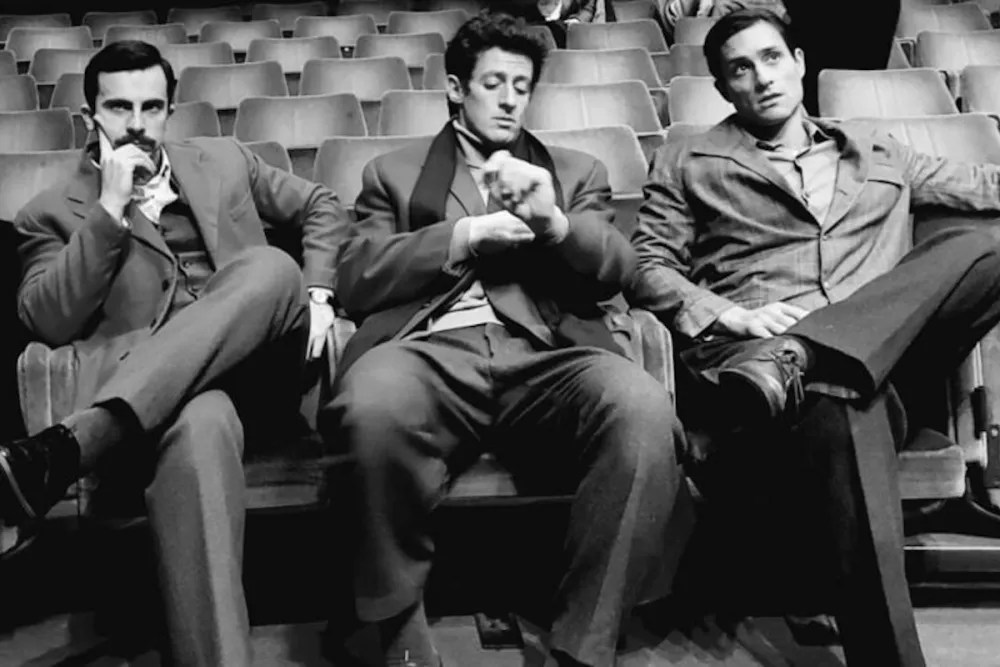
It’s 1957 in Zagreb, Yugoslavia, where a group of filmmakers are shooting a drama. Lovro (Dado Ćosić) its director and Nenad (Đorđe Galić) its writer are both national heroes. While still university students, they led a revolt against the Nazis and Ustashe, the Croation Fascist Party and later joined the resistance. As did Stevan (Slaven Došlo), their cinematographer. But the government doesn’t like their movie; it’s not patriotic enough. So they send in an apparatchik named Emir (Emir Hadžihafizbegović) who specializes in propaganda. Emir is there to “fix” the movie, with a new storyline, dialogue and actors. But also to catch and punish filmmakers who aren’t towing the party line. Tito’s Yugoslavia, though a “non-aligned” country, is warming up toward the post-Stalinist Soviet government. And is also conducting a crackdown on dissidents and undesirables in the arts. In particular, homosexuals. And this includes long time lovers Lovro and Nenad, Stevan and other gay men working on the film, all of whom had risked their lives as anti-fascist partisans in the past.
The filmmakers are interrogated, bribed, threatened, and even tortured when asked to name names… but production continues. Emir treats it all like just another job… until, four of the men he’s spying on save his life. Now Emir faces a dilemma: follow the rules or his own conscience. Can the lovers stay together? Will they finish their film? Or will the
administration gather enough evidence to convict them of the serious crime of being gay and sentence them to a penal colony?
Beautiful Evening, Beautiful Day is a powerful drama about a group of gay men in 1950s Yugoslavia, and the harsh persecution they faced for their sexuality. It’s both tender and brutal, with touching scenes and horrific violence. Although the story is fiction, it’s based on director Ivona Juka’s own research she did for her PhD dissertation. Gay men did play an important role in the resistance, and hundreds were later imprisoned and tortured by the government.
The film boasts excellent acting and stunning B&W cinematography by Dragan Ruljančić. It sheds light on a topic which until now has been virtually non-existent in Yugoslavian cinema. This is an excellent indie movie that deserves to be seen.
Two Women (Deux Femmes en Or)
Dir: Chloé Robichaud
It’s wintertime in Montreal. Florence and Violette (Karine Gonthier-Hyndman, Laurence Leboeuf) are next door neighbours in a housing coop. They can be seen gazing longingly out their windows. Florence, a translator, has a 10 year old son with her common law husband David (Mani Soleymanlou). Vivi is on maternity leave taking care of their new baby daughter, while her husband Benoit (French actor Félix Moati) is on the road. He makes a good salary in pharma sales (and is having a secret affair with a younger woman he works with). But Vivi is losing sleep over a sound she keeps hearing: a Caaaw, Caaaw, Caaaw coming through her walls. Is it a crow? A crying baby? Or, the most likely reason, it’s her neighbour Florence loudly performing her orgasms through the thin apartment walls. She casually brings it up to her, but there the penny drops: Florence admits she hasn’t had sex for many years. It can’t be her; she’s on anti-depressants which totally destroyed her sex drive. But why should both their lives be so miserable?
They decide it’s time to have fun. Florence goes off her meds,
and the two of them start hanging out in bars. They’re also viewing men differently than they used to. The exterminator, the cable guy, the housecleaner, the window washer, the linesman… why should these neglected moms pass on all these potential sexual adventures? But how would their husbands react to sudden changes in their wives’ behaviour? And what will happen to their marriages?
Two Women is a delightful, bittersweet comedy about a pair of sexually frustrated mothers in Montréal and how they deal with their non-functional marriages. It’s sexy, silly, satirical and savvy. The main characters are as likely to be seen seducing a plumber, as quoting Simone de Beauvoir or discussing the ramifications of the #Metoo movement on Facebook.
Count on Québec to thumb its nose at sexual prudishness in mainstream North America, meaning lots of casual full frontal nudity (as well as from every other conceivable angle). Now apparently this is a remake of Claude Fournier’s hit film from 1970 starring Monique Mercure. I’ve never seen the original but let me tell you, Two Women is a great one all on it’s own. Loved it.
Bring Her Back
Co-Wri/Dir: Danny and Michael Philippou (Talk to me)
It’s a normal day in Australia. Andy (Billy Barratt) is Piper’s (Sora Wong) step-brother; a few years older, but they share the same Dad. Piper is visually impaired but doesn’t use a white cane — she doesn’t like people staring at her. She’s funny and self-confident, but Andy still keeps an eye out on her at school; some kids can be cruel. But their lives are torn apart that day when they discover their father dead in the shower.
They’re immediately sent to child services, who attempt to send them to separate places — Andy has a juvenile record — but they insist on remaining together; he’s basically Piper’s caregiver. In the end the social worker sends them off to stay with a kindly foster mom until she can find them a permanent home. The house is cluttered and shabby, with a drained swimming pool in the back and a padlocked toolshed. Laura (Sally Hawkins) is funny, wacky, and more than a bit eccentric. She’s overjoyed to have them there since her husband’s gone, and her daughter — who was blind like Piper — is dead. She’s quick to introduce them to her favourite dog — but he’s stuffed! Taxidermy. And then there’s her son
Oliver, a little boy with a shaved head and a vacant look on his face. He seems innocent… until he catches their cat and starts to eat it, alive!
He’s been a bit off since their accident, Laura says. Piper really likes her, so Andy tries not to interfere. But bad things start to happen. Andy is wetting his bed at night — he hasn’t done that since he was a little kid, and Laura is whispering stuff to Piper all the time, turning her against him. He knows there’s something really wrong here, but he can’t figure out what it is. Why is there a chalk circle around the house? Why is Oliver acting so strange? And what’s in that shed? But when he discovers the truth… is it too late?
Bring Her Back is a relentlessly terrifying horror movie about a frightened teenaged boy and his innocent step-sister. It’s every kid’s nightmare — trapped in a potentially dangerous place, ignored by authorities, and gaslit by a foster mom who is supposed to be on their side. The movie starts with a cold open, a horrific, found-footage VHS snuff film, that remains unexplained for much off the film. Frustrating and terrifying, this movie keeps you on tenterhooks till the end. The Phillipou
brothers (identical twins) weave a contemporary fairytale as scary as the Brothers Grimm. Great acting, beautifully made, but quite difficult to watch.
Bring her Back is brilliant horror like you seldom see.
Two Women (which premiered at Inside Out), Beautiful Evening, Beautiful Day, and Bring Her Back all open in Toronto this weekend; check your local listings.
This is Daniel Garber at the Movies, each Saturday morning, on CIUT 89.5 FM and on my website culturalmining.com.
When to stop. Films reviewed: Friendship, Hurry up Tomorrow, The Old Woman with the Knife
Hi, this is Daniel Garber at the Movies for culturalmining.com and CIUT 89.5 FM.
This week, I’m looking at three new movies — an action thriller, a dark comedy, and a fictional music biopic — all about people who don’t know when to stop. There’s a middle-aged dad looking for a friend, a super-fan looking for the object of her obsession; and an elderly hitman in her declining years who refuses to retire.
Friendship
Wri/Dir: Andrew DeYoung
Craig (Tim Robinson) is an ordinary guy in the suburbs who works at a tech communications firm. He’s geeky and boorish with marginal social skills. He spends time with his wife Katie (Kate Mara) who is in remission and their teenaged son Steven (Jack Dylan Grazer). He likes watching TV or for a real treat ordering the dinner specials at his favourite chain restaurant. But everything changes one day when a package is delivered to his house by mistake. He carries it over, rings the bell, and meets his neighbour for the first time. Austin (Paul Rudd) is everything Craig is not. He’s suave, handsome and self-confident. He’s even a minor celebrity as the weatherman on the local TV station.
And he smiles at Craig. Wow… Craig is ensorcelled. And when Austin takes him under his wing for an adventure in the woods, he is absolutely thrilled. A real friend! But the bromance is short-lived, when he makes a number of unforgivable faux pas at a get together with Austin’s entourage. He’s cancelled and so is their friendship. But Craig refuses to accept it, and vows to do anything to get Austin back. And as his obsession grows so does his hazardous behaviour. Is Craig a stalker or just an unrequited friend. And how far is too far?
Friendship is a very dark and very funny comedy about adult male friendships. Tim Robinson — best known for his show I
Think You Should Leave — is famous for his uncomfortable style of humour. This is comedy that makes you squirm, cringe or look away. You can see the results of his terrible mistakes coming a mile away but there’s you can do to stop it and it’s still painfully funny. Paul Rudd is good as his “straight man” but this is all about Tim Robinson.
I haven’t laughed this hard or this often at a comedy movie in at least six months.
Hurry up Tomorrow
Co-Wri/Dir: Trey Edward Shults
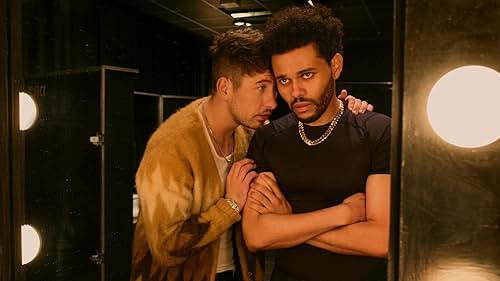
It’s the green room of a huge concert hall. The Weeknd (Toronto musician Abel Tesfaye) is a superstar in the midst of an exhausting world tour. He depends on his mellifluous voice to perform the songs his fans come to see. But he’s tense tonight and his throat is contracting. He’s upset with a voicemail from a woman he knows who recents his selfish and cold behaviour. Now plagued with self-doubt, he doesn’t feel up to performing. But his ever-present manager (Barry Keoghan) convinces him — through a combination of confidence-building words plus copious drugs and alcohol — that he owes it to his fans. But once on stage his voice fails him in the middle of a song and he runs off in disgrace.
There he collides with a super-fan who somehow got past bouncers and security. Anima (Jenna Ortega) offers words of love and comfort. They spend an enchanted day together far from his source of stress. But the next morning brings unanticipated and perilous consequences. Can The Weeknd return to his tour as of that day never happened?
Hurry Up Tomorrow is a complex but deeply flawed look at one day in the life of a singer on his world tour. The story is told at least four times through elliptical points of view. Anima sees herself as The Weeknd’s soulmate who only she can understand. But she is portrayed by the neutral camera as a deranged sadistic arsonist determined to erase her past problems by burning them down — literally. Ortega is allowed to run wild here. Keoghan as his manager sees himself as his best bud, almost his brother, the only one who can save The Weeknd from self-destruction (there are countless shots of him gazing longingly into his eyes.) Neutral camera? A sleazy, mercenary drug dealer. Then there’s the star himself. His mind drifts into hallucinatory depictions from deep in his psyche conveying, paranoia, claustrophobia and childlike helplessness. Neutral camera? A self-obsessed narcissist. So watching it with all these different points of view floating around, it’s hard to tell what’s real and what is a fantasy. Are the frequent tear-filled eyes actual or in one of their
imaginations? I’ve seen director Trey Edward Shults’s features It Comes at Night and Waves, both excellent movies — he’s highly skilled, but this one seems more muddy with less of an identifiable narrative. And it starts with a shockingly inappropriate music video… why? Why? On the other hand, the references to Stephen King movies like The Shining and Misery are much more interesting.
I’m glad I watched Hurry Up Tomorrow, but I wish it were a bit better.
The Old Woman with the Knife
Co-Wri/Dir: Min Kyu-dong
It’s winter in Seoul in the 1970s. A starving young woman, barefoot and dressed in rags is desperately searching for food in the drifting snow like The Little Match Girl. A kindly couple save her life by inviting her into their tiny diner for a meal, and later take her on as a dishwasher in exchange for room and board. But her relatively stable new life is shattered one night when she is cornered by an American GI in the cafe’s kitchen. She manages to fight off his sexual advances until he turns violent and starts to choke her to death with his barehands. In desperation, she grabs a nearby knife and stabs him. He dies. This is witnessed by a man named Ryu (Kim Mu-yeol) who invites her to join a secret organization that specializes in pest control. That’s their euphemism for the murderers, rapists and torturers, the scum of the earth, whom they are hired to kill.
Fifty years later and she’s still at it. Now known as Hornclaw (Lee Hye-yeong), she’s the hitman with the best reputation in the business. No one suspects an unassuming old woman — she can get away from any murder scene without anyone noticing. But she’s showing compassion — a complete taboo in the business — for a stray dog she finds. Her doctor is telling her to slow down, and her boss wants her to retire. Hornclaw, retire? Nevah!
But things really start to change when a brash newcomer
walks in. Bullfight (Kim Sung-cheol) doesn’t know the codes or rules, he just plays it by ear. He’s violent fearless and will stop at nothing to get her out of his way. Can he usurp her seat on the throne? And what grudge does he hold against his rival?
The Old Woman with the Knife is an action thriller with an elderly woman as the protagonist. And if you think this is a Murder She Wrote with little handguns and stilettos you couldn’t be more wrong.
She’s tough as Helen Mirren, and can take down and slice up a room full of thugs singlehandedly. And since it’s a Korean action movie, you can bet there’s a melodramatic subplot and at least one character whose motivation is revenge. (No spoilers.)
I liked this movie a lot.
Friendship, Lady with the Knife and Hurry up Tomorrow all open in Toronto this weekend; check your local listings. This is Daniel Garber at the Movies, each Saturday morning, on CIUT 89.5 FM and on my website culturalmining.com.
Dangerous, exotic. Films reviewed: Sinners, Yadang: the Snitch, The Legend of the Ochi
Hi, this is Daniel Garber at the Movies for culturalmining.com and CIUT 89.5 FM.
Hotdocs International Documentary Film festival is on now in Toronto, with free daytime admission for students and seniors. So get out there and watch some docs!
But this week I’m looking at three new movies about unexpected dangers in exotic locales. There are vampires in the Mississippi Delta, snitches in the drug wars of South Korea, and elusive, sharp-toothed creatures on an island in Carpathia.
Sinners
Wri/Dir: Ryan Coogler
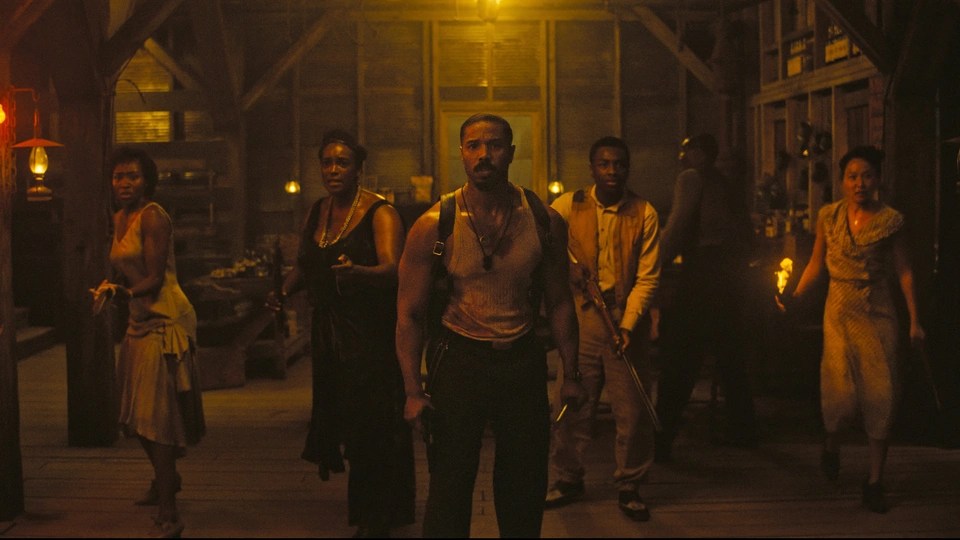
It’s 1932 in a small town in the Mississippi Delta. The Smokestack brothers aka Smoke and Stack (Michael B Jordan: The Fantastic Four, Chronicle) are identical twin who spent years making money working for the mob in Chicago. Now they’re back in town with a truck full of bootleg alcohol, a wad of cash and big ideas on how to make it rich. Namely, they’re opening a juke joint in an abandoned woodmill they bought from a local good ol’ boy. They’re rounding up the necessary musicians, like their cousin Sammie (Miles Caton), the preacher’s son, on blues guitar and Delta Slim (Delroy Lindo) on the piano and mouth organ. Bo and Grace Chow furnish the provisions and Cornbread minds the door. Even Smoke’s and Stack’s ex-partners show up: Mary (Hailee Steinfeld) a glamorous married woman who can pass for white, and Annie (Wunmi Mosaku) an experienced practitioner of Hoodoo. By sunset the place is hopping, the
customers are drinking and gambling, everything is going great, until… a mysterious, smiling stranger who loves Irish music (Jack O’Connell; Seberg, Unbroken, ’71, Starred Up ) appears at the door asking to be let in. They don’t know who he is but he just looks shifty. Turns out he’s a vampire who wants all their blood — not to wipe them out, just to turn everyone over to the dark side. But can the people on the inside keep the demons on the outside until the sun comes up in the morning?
The Sinners is a black history drama about life in the Jim Crow south in the 1930s combined with the action and horror of a conventional genre movie, that succeeds on both fronts. It’s rich in meticulous historical detail in the background: sharecroppers picking cotton in the same fields as their grandparents had as slaves, paid in company scrip not dollars; chain gangs on the highway; and the omnipresent KKK.
All this is counterposed with raunchy dialogue and the sexualized dancing and singing of the juke joint. Every character has a backstory, devoid of cookie-cutter cliches. The costumes, scenery and especially the music — from delta blues to Irish folk songs — evoke that period in a way only a movie can. The acting is superb, though I do wish Michael B Jordan made Smoke and Stack a little less identical. The vampires are more conventional. They still hate garlic, sunlight and stakes through the heart but interestingly these demons lose also racial prejudice once they become vampires. Put this all together and you end up with this amazing movie that’s multifaceted, educational and really fun to watch.
Yadang: The Snitch
Dir: Hwang Byeong-gug
It’s present-day Korea. Lee Kang-su (Kang Ha-neul) is a self-confident young man with a perpetual grin. Why does he swagger and show off his gold lighter? It’s because he’s always two steps ahead of anyone else. He’s a yadang, an informant, and plays a crucial role in the government’s war on drugs. But things weren’t always this way. He was incarcerated after being falsely accused of drug dealing, where he was beaten up and bullied on a daily basis. Until Ku Gwan-hee (Yoo Hai-jin) an ambitious prosecutor pulled him out of that world to be his personal Yadang. Now the two of them are pledged as eternal brothers, functioning like a well-oiled machine, pulling off repeated sting operations and arrests of drug kingpins and thugs across the country. Much to the chagrin of a police detective trying to arrest those same criminals. So Det. Oh Sang-jae (Park Hae-joon) a.k.a. the Jade Emperor of Narcotics Division, finds a Yadang of his own, a rising young actress (Chae Won-been) who is caught using illegal amphetamines as diet pills. Now the lines are drawn and the two sides — the prosecutors and the police — are in direct competition. But the Prosecutor, in his rapid rise to the top, has to make some uncomfortable political alliances, including a rich junkie named Cho Hoon, whose dad just happens to be running for President. Will Cho-hoon’s influence on the Prosecutors rise in power threaten the Yadang’s status and the delicate balance of that world?
Yadang: the Snitch is a Korean action-thriller about
crime, corruption, and the complex relationships among politicians, police and informants in the world of organized drug-crime. Fast moving and compelling, it maintains a frenetic pace throughout the film, with some flashbacks that last only a few seconds. It’s dizzying. It’s also quite violent, sometimes disturbingly so. Luckily, it has interesting characters and a clever plot with enough double- and triple-crosses to keep you guessing until the very end.
Yadang: The Snitch is an entertaining action flic.
The Legend of Ochi
Wri/Dir: Isaiah Saxon
Yuri (Helena Zengel) is a teenaged girl who lives with her dad and adopted brother, Petro. She likes reading library books and listening to loud music. Her farm is on a mountainous island in the Black Sea, off the coast of Romania, and though it’s decades since the fall of Ceausescu, people there still drive Ladas and keep to the old ways. Above all, they fear the Ochi, mythical beasts unique to their island who live in trees, attack sheep and kidnap children. Her Dad (Willem Dafoe) lives in constant fear of the Ochi. He leads a ragtag army of children to capture and kill the monsters… though they have never been successful. Her step-brother Petro (Finn Wolfhard) is a member too, though her rarely speaks. Yuri, on the other hand, is angry at her father and wonders why her mother (Emily Watson) abandoned her. (It’s the Ochi! says her dad.)
One day, when her father sends her out to do her rounds, she finds a small ochi with its paw caught in an animal trap. She frees him and takes him home in her knapsack. He looks like a blue-faced koala until he bares his teeth revealing long pointed fangs. But Yuri is not afraid, she nurses him back to health and eventually the two form an unexpected bond. But can she get him back to his homeland without her father finding out?
The Legend of Ochi is a highly-original adventure story about a young girl and the creature she befriends. It’s warm and delightful. While on the surface it’s a kids’ movie, the
sumptuous, painted scenery and retro feel makes it an instant cult classic. (Think ET, and Charlie and the Chocolate Factory.) It’s full of panpipes and medieval crusaders overladen with Soviet kitsch. Even the odd faces of the kids in the army are straight out of Dr Seuss. I’ve never heard of director Isaiah Saxon before, but I get the impression he’s been doodling pictures of Ochis since he was a little kid. And they are amazing: not cheap-ass CGI, but a combination of puppetry and animatronics that make them seem totally real in their own fantastical way.
I love this movie.
The Legend of the Ochi, Yadang: The Snitch and The Sinners all open this weekend in Toronto; check your local listings. This is Daniel Garber at the Movies, each Saturday morning, on CIUT 89.5 FM and on my website culturalmining.com.
American battles. Films reviewed: G20, Drop, Warfare PLUS National Canadian Film Day!
Hi, this is Daniel Garber at the Movies for culturalmining.com and CIUT 89.5 FM.
Yearning for some Can-Con? We’ll mark your calendars: next Wednesday is Canada Film Day with over 1700 screenings and discussions about great Canadian movies across this country! In Toronto alone, directors and actors like Sophie Desraspe, Helen Lee, Eric Peterson, and Cody Lightning will be there at the screenings. There’s also a Town Hall discussion of Canadian culture with Don McKellar, Mary Walsh and Elle-Maija Tailfeathers. Canadian Films suddenly seem acutely relevant. Go to canfilmday.ca for showtimes.
But this week, I’m looking at three new movies from south of the border. There are Navy Seals in Iraq attacked by armed combatants; the US President locked in hand-to-hand combat with international terrorists; and a single mom terrorized by her cel phone.
G20
Dir: Patricia Riggen
It’s a resort hotel in Capetown, South Africa, and US President Danielle Sutton (Viola Davis), America’s first black female POTUS is preparing for the G20 summit. When she’s not practicing martial arts with her Secret Service bodyguard Manny (Ramón Rodríguez) she’s hanging with her family: loving husband Derek and her two teenaged kids. Serena, the older one, (Marsai Martin) is an accomplished hacker who can sneak, undetected, out of any building, even the White House. President Sutton is decked out in an elegant red evening gown — complete with cape — for the all-important photo-op. But something is rotten in the city of Capetown. There’s a conspiracy at work, led by evil Aussie mercenaries. And now armed soldiers are rounding up the presidents and their families! If they can pull this off, they’ll have trillions in “untraceable” crypto currency, and the leaders of the most powerful nations in the world will grovel at their feet.
But some of the leaders have escaped their clutches. Sutton, the elderly Korean First Lady, the pompous British PM, and a few others have form an impromptu posse. Can this ragtag group of heads of state beat the musclebound mercenaries in a contest of physical strength and mental acuity? Or is this world doomed?
G20 is a ludicrous but fun action thriller, told from the point
of view of a female, superhero-type president. This is not a unique movie theme: Many Americans love venerating their presidents. Think: Harrison Ford in Air Force One or even Abraham Lincoln Vampire Hunter. But G20 is so silly… The villains carry the bitcoin wallet — with all the money — as if it’s a physical object, a MacGuffin they have to possess. And they eforce the leaders to read a nonsense speech (the quick brown fox jumps over the lazy dog) so they can make a deep-fake video… as if world leaders haven’t made hundreds of speeches already. A 60-year-old president who’s also an Iraq War hero and also a jiujitsu champ. Sure, why not…? It’s just a movie. The main story may be a hackneyed farce, but Viola Davis is a joy to watch.
Not a masterpiece but a watchable TV movie.
Drop
Dir: Christopher Landon
Violet (Meghann Fahy) is dressed-up but nervous. She’s on her first date since her husband died, five years ago. A single mom and an online therapist, she likes working from home so she can keep a close eye on Toby, her adorable, autistic son. But her wacky sister Jen (Violett Beane) insists she step out of her shell and have some fun. Jen’s babysitting Toby tonight to give her all the time she needs. And if there’s no chemistry with the guy she’s meeting, she can always just leave. So here she is in a fancy restaurant with a dramatic view of the city. In comes Henry (Brandon Sklenar) her first date, and there’s instant attraction. Henry is handsome, rugged and friendly, and has a steady job at City Hall. He likes her looks, her smarts and her honesty. They go to their table and start the date.
But the electricity between is interrupted by anonymous memes and texts that keep appearing on her phone, apparently dropped by someone somewhere in the restaurant. The messages become threatening, along with a warning: if you tell anything to Henry (the guy she just met) we’ll kill your son. Followed by live security footage from her home… with a masked man roving her halls with a gun. Whoever it is has control of all her security cameras and all the cels in the restaurant. They can see and hear everything she’s doing.
They want her to commit a crime in plain view, and there’s no way to stop them. Can Violet save her son and outsmart this invisible villain on this date from hell?
Drop is a classic suspense thriller that plays on our fear of technology and surveillance. Afterwards I realized there are some major plot holes or impossibilities, but they don’t stand out while watching it. It’s a tightly budgeted Blumhouse movie so the actors are likeable but not A-list, and everything takes place in two tight locations – her home and the restaurant. It uses psychological fear instead of pyrotcechnics. And it works. This is a good, traditional suspense thriller, the kind where the tension keeps growing and never lets up.
I like this one.
Warfare
Co-Wri/Co-Dir: Alex Garland (Ex Machina, Annihilation, Civil War), Ray Mendoza
It’s November, 2006, in Ramadi, a city in central Iraq, between Baghdad and Fallujah. Ray (D’Pharaoh Woon-A-Tai) is leading a squad of Navy Seals on a mission. They commandeer two houses, knocking down walls and pushing the families into their bedrooms. They’re setting up for a long wait, until a marine unit arrives with tanks to evacuate them. But armed enemy soldiers are setting up on nearby roofs, taking pot-shots at them. And when the tank finally arrives, the Seals are ambushed by an IED buried in the road. The Iraqi soldiers they are working with are killed, while some of their own are badly injured. They have to pull their bodies back into the house and try to save who they can. Can they fight off the insurgents until the Marines arrive? And who will survive this tense battle?
Warfare is a hyper-realistic depiction of an actual battle in Iraq as remembered by the US soldiers who were there (including writer/director Ray Mendoza). It’s not like your usual war movie. The film favours accuracy over character- building or back stories. And the characters speak in military jargon, full of Frogmen (navy seals), Bushmen (an aerial unit, overhead) and many more I couldn’t catch. The cast is
excellent, especially Woon-A-Tai, Will Poulter (The Revenant, We’re The MIllers, Midsommar) and Cosmo Jarvis — it really felt like you’re there, witnessing actual soldiers, showing bravery, camaraderie, and brotherhood. What the movie doesn’t deal with is why? Why were they there at all? What did that particular mission accomplish? Where are all those WMDs, the supposed reason for this war? Thousands of US soldiers were killed there, and many times more tragically killed themselves afterwards. And an estimated one million civilians in Afghanistan, Pakistan and the Middle East were wiped out, millions more displaced and the whole region made unstable till today… and for what?
I’m glad I saw Warfare — it’s a rare chance to experience a non-jingoistic, up-close and personal look at US soldiers on the frontline. But don’t go to this docudrama expecting to be entertained. Because fun… it ain’t
G20 is now screening on Prime Video, and Warfare and Drop both open this weekend in Toronto; check your local listings. This is Daniel Garber at the Movies, each Saturday morning, on CIUT 89.5 FM and on my website culturalmining.com.
Assorted monsters. Films reviewed: The Apprentice, Piece by Piece, Don’t F**k with Ghosts
Hi, this is Daniel Garber at the Movies for culturalmining.com and CIUT 89.5 FM.
Toronto’s fall film festival season is in full swing with Planet in Focus, celebrating it’s 25th anniversary. It’s running from Tuesday through Sunday next week, with international features and shorts on climate change, activism, environmentalism and indigenous issues. And on Friday, October 18, there’s a free screening at Hot Docs of We Will Be Brave, about Good Guise, a Toronto collective that sparks conversations around healthy masculinity through art. That’s part of the For Viola series honouring Viola Desmond.
But this is also October, when ghouls and ghosties flock to our screens. So this week, I’m talking about three new movies about various types of monsters. There’s a monstrously popular music producer from Virginia Beach; a notorious real estate developer trained by a monster in New York; and two guys searching for ghosts in Winnipeg.
The Apprentice
Dir: Ali Abassi (Review: Border)
It’s the mid 1970s, and New York is a wreck, with soaring crime, homelessness and bankruptcy. When the Mayor asks the feds for help, Gerald Ford tells them to “drop dead”. Into the world emerges an ambitious young developer. Donald Trump (Sebastian Stan) was born rich, but cowers under his oppressive father’s rule. Fred Trump (Martin Donovan) a real estate developer from Queens, made his fortune building segregated public housing. Donald is stuck at crap jobs, collecting rent and evicting destitute tenants. But he has big ideas. His plan? To buy the venerable Commodore, an old hotel with 2000 rooms on 42nd street a hotbed of porn palaces and drug dealers. But how can he raise the money with his dad being sued by the feds for his racist rental practices? Donald has an idea. He joins an exclusive club with the hopes of meeting a certain lawyer he thinks can solve all his problems. The lawyer is Roy Cohn (Jeremy Strong) a notorious rightwing attorney with ties to organized crime. Cohn played a central role in the
McCarthy Hearings, and still brags about executing the Rosenbergs. He agrees to take on Donald as his protege, and teaches him his three crucial rules: Attack, attack, attack (whether lawsuits, blackmail or intimidation) Deny everything , and always declare victory, even when you lose. (See: 2020 election). The club is also where he meets the beautiful and brash Ivana (Maria Bakalova), whom he is destined to marry. She will instill in him a love of garish, nouveau-riche interiors. The film follows these three people’s intertwined lives through the 70s and 80s until Cohn’s death.
The Apprentice (absolutely no connection to Trump’s much later reality show) is a very dark biopic about the origin of Trump’s bizarre motivations and strategies. Sebastian Stan gives an excellent portrayal of Trump; he’s actually sympathetic for his earnestness and naivety in the beginning, but who spirals into something deeply disturbing by the end. This is not an SNL parody, it’s a realistically developed character. Likewise, Strong plays Roy Cohn as a dead-eyed, sybaritic bully, hosting gay orgies, even while publicly denying his sexuality to the end. He doesn’t look like Roy Cohn, but he sure does act like him. With a great selection of 70s and 80s pop songs throughout the film, and the grotesque golden opulence of Trump’s homes captured on grainy colour film of the era, The Apprentice is a funny and disturbing biopic.
Piece by Piece
Co-Wri/Dir: Morgan Neville (Review: Best of Enemies)
Pharrell Williams is a highly successful music producer, musician, singer, composer and fashion designer. His work spans the genres from hiphop, to pop music and electronica. But his life hasn’t always been that way. He grows up in a working-class housing area in Virginia Beach, Va. and starts drumming at an early age using kitchen utensils. He’s into Star Trek, Stevie Wonder and Greek Gods (his apartment is actually named Atlantis!) He soon forms a band with his schoolmates, and later, starts working at a nearby recording studio, learning the ins and outs of music producing.
He soon rises in popularity, both for his own work, and that of the stars he works with, a who’s who of hip hop and pop. He has a succession of hits with Kendrick Lamar, Snoopdog, Timbaland, and Jay-Z, then branches out to include pop stars like Justin Timberlake, Gwen Stefani, Robin Thicke, and Daft Punk, all producing worldwide hits. They come to him for the tracks he creates and samples, as well as a certain je ne sais quoi he adds to their music. But how long will his popularity last?
Piece by Piece is a documentary about the life and career of Pharrell Williams. It’s narrated by Pharrell himself, in an interview with the director, as well as talking heads of most of the stars he’s worked with. What’s unusual about this doc is it’s all done using LEGO animation. Instead of the actual people, you see LEGO people who waddle when they walk and have basic faces
painted onto cylindrical plastic heads. But does it work? I’m of mixed feelings. I was expecting a LEGO movie — fast moving, constant jokes, mind-blowing psychedelic animation — featuring Pharrell, but what I got was an interview with Pharrell using the style of LEGO. (Picture the movie Barbie, but without people just Barbie and Ken dolls) There are some cool creative parts. I love the animation of waves on the beach, the re-creation of video clips, and a cool conceit running through the story — Pharrell’s magic musical touch symbolized by glowing geometric shapes that he puts together for that perfect beat. And I loved the constant music. But in general the images and interviews were more or less the same as any music doc venerating its star— largely unremarkable. A LEGO recording studio is still just a recording studio. And those LEGO people are just irritating. This movie is OK, but I was not blown away.
Don’t F**k with Ghosts
Co-Wri/Dir: Stuart Stone
Stu and Adam (Stuart Stone and Adam Rodness, who co-wrote the script) are a pair of Toronto filmmakers pitching their latest project — Bigfoot! But their financiers have another idea in mind: put together a film proving the existence of ghosts, and it’s sure to be a hit. But, just in case, they take their contract to a ginger- bearded entertainment lawyer (Josh Cruddas) for help. He warns them to find some real ghosts or else they won’t get paid. So they head off to Winnipeg “the Murder Capital of Canada”. And to help them find the spooks, they enlist a series of experts to help them in their quest. It seems Winnipeg is also the capital of supernatural hustlers: ouija board specialists, psychics, aura readers, fortune tellers, magicians, clowns… even a “ghost sherpa” (Tony Nappo), who takes them on a strange journey involving smoking jackets, psilocybin and a
jacuzzi. They finally locate a house where some grizzly murders once took place. But will they ever find any real ghosts?
Don’t F**k with Ghosts is a low-budget, semi-supernatural Canadian comedy, done in the form of a reality show. So there’s the usual bickering between the two main characters (who also happen to be in-laws), hot mic “gotcha” scenes, and various other embarrassments “accidentally” caught on camera. And no spoilers, but I will say there are some unexpectedly well-done special effects toward the end.
Is Don’t F**k with Ghosts scary? No, not a bit. But is it funny? Well, not too bad…
The Apprentice, Piece by Piece, and Don’t F**K with Ghosts all open this weekend in Toronto; check your local listings. This is Daniel Garber at the Movies, each Saturday morning, on CIUT 89.5 FM and on my website culturalmining.com.
Reduplicatives. Films reviewed: Didi, Sing Sing, Kneecap
Hi, this is Daniel Garber at the Movies for culturalmining.com and CIUT 89.5 FM.
Any given movie can be placed somewhere between truth and fiction — just depends on how close a fictionalization sticks to the true story. But when actors play themselves it tends to shift toward the truth side. This week, I’m looking at three great new movies that deal in dramatizations, semi-autobiographies, and fictionalizations. There’s a group of actors in a maximum security prison, some Irish rappers in Belfast, and a Taiwanese-American adolescent in the Bay Area.
Didi (弟弟)
Wri/Dir: Sean Wang
Chris (Izaac Wang) is a preteen schoolboy in Fremont, California in the Bay Area. He lives with his Mom (Joan Chen) his big sister Vivian (Shirley Chen) and his elderly grandmother Nai-nai (Zhang Li Hua). Missing from this picture is his dad who supports the family from his job in their native Taiwan but whom they rarely see in person. Home life is fractious at best — Chris is waging a long war with Vivian, and their practical jokes are getting increasingly extreme. Nai-nai feels isolated and takes out her anger on his mom, while she just tries to keep the family from falling apart. At school and in the streets, Chris’ best bro is Fahad (Raul Dial), who hangs with the rest of their crew. They’re all Asian-Americans — Filipino, Korean, Indian — but no one else is Taiwanese. He goes to his first house parties, and decides to meet a girl. He has crush on Madi (Mahaela Park) but doesn’t know what to do once they meet. And this is a seminal year. Vivian is heading off to college, and Nai-nai is rapidly aging. His mom pressures him to take tutoring with her friends’ kids, but he can’t stand that group.
When his first try at dating ends ends up in a fiasco, he feels betrayed by his usual crew. So he tries to make new, cooler friends. He approaches three skaters at a skate park and proposes shooting their videos. He doesn’t know the first thing about it, but at least he has new friends to hang with. He reinvents himself and hides his
ethnicity (I’m half, he says). But as his anger, frustrations, insecurities and self-doubt build up, and his whole life feels uncertain, he doesn’t know which way to turn. Can Chris survive the unbearable pressures of adolescence?
Didi (the title means younger brother in Chinese) is a semi-autobiographical coming-of-age story about Sean Wang’s own life growing up in Fremont in 2008. It feels honest and real, full of the angst and heartbreak of youth. It’s full of myspace and early texting, his computer screens filled with nihilistic accidents and explosions. Something about this movie really hit me; yes it’s a coming-of-age story with many of the expected scenes, but without any of the usual cliches. The acting is all-around great and for a first feature this one’s a real accomplishment.
I quite liked this one.
Sing Sing
Dir: Greg Kwedar
It’s Sing Sing, the infamous, maximum security prison, 30 miles up the river from New York City. Divine G (Coleman Domingo) is a long-time prisoner there, known for his acting and oratory skills, as well as his kind and giving nature. He’s also a star of the plays they put on at the prison. And they’re looking for new participants. Like Clarence “Divine Eye” Macklin (played by himself). Macklin shakes down people in the yard and always displays a tough, gangsta image. But Divine G recognizes his talent and encourages him to join up. And at the same time he’s working on the play, he also helps other prisoners appeal for parole or pardons. He himself was wrongfully convicted, but has less luck than the people he helps.
Now prisoners don’t just act there, they also direct, come up with the story, and do the production work as well. But despite his efforts to help him, Macklin brushes him off and puts down the acting exercises. This year’s play is made up of a fantastical amalgam of concepts: pirates, aliens, ancient Egyptians, and Shakespeare’s Hamlet, to name just a few. But obstacles threaten the whole production. Will Divine Eye learn to get along with Divine G? And can this experimental play work?
Sing Sing is a wonderfully revealing and well-acted drama about people putting on a show while incarcerated. It tells, sequentially, all the stages of putting on a play: auditions,
exercises, read- throughs, dress-rehearsals and the show itself. Some of the main characters are played by accomplished actors, like the wonderful Coleman Domingo, and Paul Raci as the director. But co-star Clarence “Divine Eye” Macklin plays himself; the film is based on his own story. Other formerly incarcerated performers play themselves or other prisoners. More than that, it fleshes out the true stories of the characters they play. Some of the actors — huge bruisers with facial tattoos — if you ran into them in a dark alley, you’d probably scream and run away. But they’re actually nice, creative, and intelligent guys who needed something like this. Rehabilitation Through the Arts (RTA) is a highly successful program that gives meaning and purpose to the lives of prisoners. Within three years of being released from prison in New York State, 43% are back behind bars. But for participants in RTA the 3-year recidivism rate is less than 3%. That shows you how important it is.
Despite the desolate, horrific and overcrowded conditions in prisons, this drama will make you feel good about the world again.
Kneecap
Co-Wri/Dir: Rich Peppiatt
(Co-written by Móglaí Bap, Mo Chara)
JJ teaches music and the Irish language to bored students at a public school in West Belfast. He also speaks Irish at home with his girlfriend. They’re interrupted in bed one night by a phone call asking her to translate at the police station. She doesn’t want to, so JJ goes in her stead. The suspect is Liam, a lad in trackies arrested at a rave in the woods, who claims to speak only Irish no English. The detective wants JJ to help with the interrogation. She’s also curious about Liam’s notebook, filled with scrawled poems. Thing is, speaking Irish has a political dimension, too — it’s been an act of rebellion since long before independence from the British. So JJ stealthily sides with Liam, pocketing the book while Liam distracts the detective. JJ loves the rhymes, and wants Liam to rap them, in Irish, to hip hop beats (something never done before). Liam says, never without Naoise, his best pal and business partner.
They’re childhood friends, since Naoise’s IRA dad taught them to speak Irish before he went underground. Now they’re not just besties, they’re the main local dealers in drugs and hallucinogens. They agree to make a go of it, and come up with a name, Kneecap. (Kneecapping was a form of torture and punishment during The
Troubles). Naoise calls himself Móglaí Bap, Liam’s handle is Mo Chara, and JJ is DJ Próvai. But he has to hide his face behind an Irish-flag-striped balaclava, or risk losing his job. Their first gig is at a local pub before a handful of old geezers. But word spreads, and soon enough, kids everywhere are copying their rhymes to JJ’s backbeats.
But not everyone loves them. The police detective is watching them closely, with veiled threats. A vigilante group — Radical Republicans Against Drugs — threaten physical punishment for snorting coke on stage. Naoise’s dad says their performance jeopardizes the cause. And even Liam’s clandestine girlfriend, Georgia — a Protestant no less! — hurls abuse at him as they have passionate sex in her bedroom. Will this Irish rap trio become famous? Or will they die trying?
Kneecap is a fast-moving musical, and a sex-and-drug-filled romp, with a large dose of Irish republican politics. This hilariously fictionalized biopic of the hiphop trio shows the nitty gritty of their sketchy lives. Surprisingly, the three chose to play themselves… and more surprising, they can actually act! They’re good. The rest of the cast are pro actors, including Josie Walker as the cop and Jessica Reynolds as Georgia, Liam’s sex friend. Gerry Adams plays himself, and Michael Fassbender — who was Bobby Sands in Steve McQueen’s gruelling Hunger — plays a similar role as Naoise’s underground Dad.
The film is stylized in presentation, with lots of cute animated details worked into the live action, plus occasional drug-filled fantasies using claymation. Even the violence — be it from guns or police clubs — is fantasy-like not gruesome. Most of the dialogue, and the rap, is in Irish/Gaelige, a once nearly dead language having a modern renaissance. Now, I don’t speak the language, but still, many of the Irish speakers in the movie sounded like absolute beginners, sounding out the words; but at least the three mains were speaking like it’s their native tongue, which is quite remarkable.
I found Kneecap a lot of fun.
Didi, Sing Sing and Kneecap all open in Toronto at the TIFF Lightbox this weekend; check your local listings.
This is Daniel Garber at the Movies, each Saturday morning, on CIUT 89.5 FM and on my website culturalmining.com.
Separated. Films reviewed: I Used to be Funny, Longing, Robot Dreams
Hi, this is Daniel Garber at the Movies for culturalmining.com and CIUT 89.5 FM.
Not all love is sexual, and not all relationships lead to marriage. This week, I’m looking at three bittersweet dramas about people separated, against their will, from those they love. There’s a teenaged girl separated from her nanny (who is also a standup comic); a man separated from his biological son (who is also dead); and a dog separated from his best friend (who is also a robot).
I Used To Be Funny
Wri/Dir: Ally Pankiw
Sam (Rachel Sennott: Shiva Baby) is a standup comic in downtown Toronto. She shares an apartment with friends and fellow comics Paige and Philip (Sabrina Jalee, Caleb Hearon). But Sam can’t do her act anymore. She rarely showers, changes her clothes, or eats. She dumped her longtime boyfriend Noah (Ennis Esmer), and she quit the day job that used to pay her rent. Now she just sits around all day, staring at the wall. Why? Well, obviously she’s severely depressed. She’s also recovering from a traumatic violent event.
Things used to be better. She had a job in the suburbs as a nanny for a troubled 12-year-old named Brooke (Olga Petsa). Brooke’s mother was dying in hospital, her aunt had little free time and her dad was always busy — he’s a cop. But now Brooke has disappeared and her aunt doesn’t even know where to look for her. And when Brooke throws a rock through her window, Sam decides maybe she should join the effort to find the runaway and bring her home. But where is she hiding, why is she angry at Sam, and what will happen if she finds her?
I Used to Be Funny is a bittersweet comedy about a wise-
But it’s also Sam dealing with a not-at-all funny event — no spoilers here. It costars many Canadian comic actors, including Hoodo Hersi, Dan Beirne (The Twentieth Century, Great, Great, Great) and Jason Jones in a rare serious role. Rachel Sennott is excellent as Sam.
I Used to be Funny is a humorous look at depression and assault.
Longing
Wri/Dir: Savi Gabizon
Daniel Bloch (Richard Gere) is a successful businessman, and committed bachelor. He enjoys sex, not commitment or kids. He owns a factory and lives in a luxurious penthouse suite looking down on Manhattan. But when a when a surprise visitor arrives at his door, he is floored by her message. Rachel (Suzanne Clément) is a Canadian woman he had a fling with 20 years earlier. She reveals she was pregnant when she returned to Canada, later married and raised Allen — his biological son — with another man she married. But Allen died in an accident two weeks earlier. Daniel is floored. She hasn’t come for money or legal action, just to tell him the news. So he travels north to Hamilton, to attend a memorial and find out more about the son he never knew. And what he found was both frightening and endearing.
He talks to the people who played a key role in his son’s life, and discovers some surprising facts. He was a piano virtuoso. His best friend (Wayne Burns) says Allen was involved in a drug deal. A much younger girl (Jessica Clement) was in love with him, but says the feelings were not reciprocal. And his school teacher Alice (Diane Kruger) says he was obsessed with her and painted romantic poems about her on the school walls. What was Daniel’s son really like? And what can he do to remember someone he never knew?
Longing is a quirky, disjointed drama about kinship and death as a father desperately tries to become a belated part of his late son’s life. Richard Gere underplays his role, almost to the point of absurdity, but it somehow makes sense within the nature of his character. It’s also about the boy’s parents, not just Daniel and Rachel, but his other de facto parents And it all takes place in a very posh and elegant version of Hamilton, unlike any Hamilton I’ve ever seen. This is a strange movie that sets up lots of tension-filled revelations, but then attempts to resolve them all using an absurd ceremony.
Longing never blew me away, but it stayed interesting enough to watch.
Robot Dreams
Co-Wri/Dir: Pablo Berger
It’s the early 1980s in the East Village of NY City. There are tons of people, but they’re not people, they’re animals. Literally. Bulls and ducks, racoons and gorillas. Dog — a dog with floppy ears and a pot belly — lives there, alone in an apartment, gazing longingly out the window at happy couples cavorting in the summer sun. Dog plays pong by himself, or eats TV dinners while watching TV. He’s bored and lonely, with no one to play Pong with or just hang out. Until he orders a robot — as advertised on TV, some assembly required — and waits eagerly for it to arrive. He’s a delight with tubular arms, a mailbox shaped trunk, an elongated German helmet as a head, with round eyes and a happy smile. They are instant friends, maybe soulmates. They go rollerskating in central park, take pictures in a photo booth. Feelings grow. Another day they head out for the beach. They sunbathe and swim together — a perfect day. Until the robot finds himself rusted solid just as the beach is closing for the night. And despite Dog’s efforts, he is too heavy to drag home, so he comes back one next day to get him. But the beach is closed for the season, locked up behind a metal fence. And despite repeated tries, Dog can’t
seem to rescue Robot from his sandy prison. Can Robot survive for a year, unmoving, in the great outdoors? And will that spark between Robot and Dog still remain in the spring?
Robot Dreams is an amazing animated film about friendship and loss. It’s called Robot Dreams because much of the film takes place inside the robot’s imagination as he lay on the beach, It’s set in the grittiness of 1980s New York, with graffiti-filled subways, punks in East Village, break dancing teens and Jean-Michel Basquiat. Remember Zootopia, that animated movie where everyone is an animal? Robot Dreams is the flip side of
that, darker, cooler, adult, more Fritz the Cat than Disney or Pixar. There’s also no dialogue, but it’s anything but silent, with constant music and grunts and quick-changing gags and cultural references. But it’s also very moving — you can feel the pathos between Dog and Robot. I saw this movie cold (without reading any descriptions) and it wasn’t till afterwards that I realized it’s by Pablo Berger, the Spanish director who, more than a decade ago, made the equally amazing Blancanieves, a silent, B&W version of Snow White as a toreador. The man’s a genius.
I totally love Robot Dreams.
I Used To Be Funny, Longing and Robot Dreams all open theatrically this weekend in Toronto; check your local listings.
This is Daniel Garber at the Movies each Saturday morning on CIUT 89.5 FM and on my website culturalmining.com.
Trouble at home. Films reviewed: Civil War, Sting, Housekeeping for Beginners
Hi, this is Daniel Garber at the Movies for culturalmining.com and CIUT 89.5 FM.
This week I’m looking a three interesting movies: from the US, North Macedonia, and Australia. There’s a carful of journalists heading to an apocalyptic Washington, a makeshift family in Skopje, and a carnivorous spider that fell from outer space.
Civil War
Wri/Dir: Alex Garland
It’s the near future in the United States, but these states are not united. The country is in the midst of a violent civil war, with a Texas- and California-based militia battling the federal government in an East vs West conflict. WF (Western Forces) vs the USA. The rebels are slowly advancing southward toward Washington DC.
Lee (Kirsten Dunst) a veteran war photographer is in New York, chasing a terror bombing alongside Joel a journalist (Wagner Moura). Lee has covered many wars at the frontline, but never one like this, on her home turf. Still, she and Joel want to cross the battlefront to get to DC and interview the president (Nick Offerman) ahead of the advancing rebel troops.
Sammy (Stephen McKinley Henderson), a grizzled newspaperman from way back, wants to hitch a ride as far as the Charlottesville front line. And greenhorn Jessie (Cailee Spaeny), straight out of school, says she idolizes Lee and her work. She caries a camera around her neck. Couldn’t she come too? Lee doesn’t mind mentoring young photographers, but not while she’s dodging bullets. In the end, all four of them begin their perilous in a 4WD.
It’s an apocalyptic journey, along broken highways filled with abandoned cars. Burnt out towns have snipers standing guard on roofs. Gas stations only take cash, preferably Canadian. Fear, hatred and the stench of rotting bodies floats in the air. Soldiers in camo, their hair dyed fluorescent colours casually brandish assault weapons. Accused collaborators hang from
rafters. Will their press passes be enough to save them from friendly fire? And who will enter the Whitehouse?
Civil War is a Heart of Darkness plunge into an apocalyptic America where the enemy is ourselves. It’s thrilling, chilling, and quite disturbing. The theme is politics and war (and journalism), but you never quite find out what the two sides are fighting about, what they stand for, who’s right or who’s wrong. Rather, it’s about the hellish nature of war, and how conflict can destroy a country. Alex Garland (Ex Machina, Annihilation) made 28 Days Later, where an infection that leads to fast-moving zombies destroying the world. This has a similar feel but with a very different type of monster. And it will have you on the edge of your seat all the way through.
Sting
Wri/Dir: Kiah Roache-Turner
It’s a cold winter night in a big, American city, where a record-breaking ice storm has trapped everyone in their homes. Charlotte (Alyla Browne), an intense, blonde Wednesday Addams, lives in a tenement with her mom, her cartoonist stepdad Ethan (Ryan Corr), and her infant brother. Ice storms are boring, but luckilly, Charlotte knows the building through and through. She easily crawls through vents to spy on other tenants: her sweet but demented Grandma (Noni Hazlehurst), her cruel great aunt Gunter (Robyn Nevin), the slumlord who owns the building; Maria, a sangria-guzzling alky with a yapping chihuahua, and Erik, a reclusive scientist. To keep herself occupied, Charlotte keeps a tiny spider she found in a glass jar. She names her Sting. But this is no ordinary spider. Sting can communicate with Charlotte, perfectly imitating her whistles. And Charlotte doesn’t know Sting is an intelligent alien that fell to earth inside a meteor.
As Sting voraciously consumes the bugs she feeds her, the spider rapidly grows in size and strength. Charlotte moves her into an aquarium, but even that won’t contain her. Like Charlotte, it can run through the vents, snatching, mummifying or scarfing up small animals on the spot. But when Charlotte notices people are disappearing, she realizes something is not right. She teams up with Ethan and a professional exterminator named Frank (Jermaine Fowler) to get Sting under control… but are they too late?
Sting is a ridiculously silly horror film about a man-eating alien insect who spins slimy webs and cocoons out of slimy mucous. Lots of fake blood and gore. At the same time, it always keeps a humorous tone, even in the scary and gross-out scenes. One interesting fact: Charlotte names her spider Sting after reading The Hobbit, but JRR Tolkien fans will notice Sting was actually the dagger Bilbo Baggins used to kill… a giant, man-eating spider! Another interesting fact: although it’s set in a snowy city like New York, Sting is an Australian movie, with an almost completely Aussie cast (including the delightful Noni Hazlehurst.)
Suffice it to say, Sting is an unabashedly B-movie that’s also a fun night out.
Housekeeping for Beginners
Wri/Dir: Goran Stolevski
It’s present-day Northern Macedonia. Dita is an older woman who works at a social welfare office in Skopje. She’s descended from a prominent family in Tito’s Yugoslavia and shares a big house with a middle-aged man named Toni (Vladimir Tintor). Suada (Alina Serban) — a client from work — lives there too; she fled her abusive husband. Suada brought her two kids with her: tough, teenaged Vanessa (Mia Mustafi) and 6-year-old Mia (Dzada Selim). Today, there’s a new face in the house: 19 year old Ali (Samson Selim). He’s a sweet-talker who dyes his hair blond and is fond of green fingernail polish. He also knows everyone and everything happening in his neighbourhood. This means now there are two moms, one and a half dads, and a bunch of kids. The unusual thing is Dita and Suada are lovers, and Ali is Toni’s latest hookup. But that’s not all. Dita and Toni are ethnic Macedonians, while Ali, Suada and the kids all come from Shutka, a Muslim Romani neighbourhood. Dita’s house serves as an underground Mecca for outcastes, whether LGBT, Romani or both.
But everything changes when Suada is diagnosed with a fatal illness. She wants to make sure her kids are taken care of after she dies, and to give them a chance at success. The Roma are severely discriminated against, at school, work and even in accessing social services. If Rita and Toni adopt Mia, a bright and creative little girl, perhaps she can escape this endemic racism. But can a group of misfits live like a normal heterosexual family? Or is their experiment doomed for failure?
Housekeeping for Beginners is a sweet and realistic drama about the daily life of an unusual family and the tribulations they face. It’s also a real eye-opener! I never knew there are Muslim Romani communities, nevermind gay subcultures, within Northern Macedonia. It gives a glimpse into the street life of Shutka, and the complex social structures within that
neighbourhood. The acting is great, the characters they play are bold and fascinating. Apparently Samson Selim who plays Ali is the real-life father of Dzada Selim, the girl who plays Mia. It’s directed by Macedonian-Australian filmmaker Goran Stolevski, who spins amazing stories. This is the third movie I’ve seen by him (Reviews: Of an Age, You Won’t Be Alone) and even though his genres vary widely, he has a distinct style of storytelling, a bittersweet intimacy, which I’m liking more and more with each new film.
This is a good movie.
Sting, Civil War and Housekeeping for Beginners all open this weekend in Toronto: check your local listings.
This is Daniel Garber at the Movies, each Saturday morning, on CIUT 89.5 FM and on my website culturalmining.com.
Three Women. Films reviewed: Immaculate, Exhuma, The Queen of my Dreams
Hi, this is Daniel Garber at the Movies for culturalmining.com and CIUT 89.5 FM.
This week, I’m looking at three new movies about three distinct women from three different religions. There’s a nun fighting for her life in Italy, a shaman fighting demons in Korea, and a Canadian woman fighting with her Mom in Karachi.
Immaculate
Dir: Michael Mohan
Sister Cecilia (Sydney Sweeney) is a novice at a convent in Italy. It’s an ancient edifice dating back hundreds of years, with an airy courtyard surrounded by lovely white pillars, and situated amongst Italy’s rolling hills. She has just arrived from Michigan, but is already taking her vows of chastity, poverty and obedience. She was invited to join the convent by Father Sal Tedeschi (Álvaro Morte) a former scientist who, like Cecilia, had a calling. Her job? To tend to the sick and dying, mainly older nuns who have lived their entire lives within their stone walls. There is little privacy there, especially for novices. Anyone can wander into their rooms, day or night.
But something strange is going on. When she touches a relic of the true cross, she faints. She wakes up days later with few memories of what happened. She goes to confession but her priest seems to fade away inside the booth. And one morning she throws up in the shared baths. Could that be morning sickness? Could she be pregnant? Bishops and doctors examine her closely: she is still a virgin. Which makes this an immaculate conception! It’s a miracle! It’s the second coming! Soon people are gazing at her in awe, reaching out to touch
her face. But this is not why Cecilia took her vows. She doesn’t trust the convent’s doctor — who just happens to be an obstetrician in a convent full of nuns. And then there are the frightening sisters who cover their faces in masques of red gauze to carry out enforcement. When her only friend, Sister Gwen (Benedetta Porcaroli) disappears, Cecilia realizes she has get out of this place — or this nun will be done. But how can she escape?
Immaculate is a thriller/horror about an innocent young woman trapped in an Italian house of by some religious fanatics. But for a movie about a nunnery there sure are a lot of breasts on display… draped in damp white diaphanous gowns in the baths or partly exposed late at night. That’s half of this exploitation movie: soft-core porn. The other half, though, is extreme, bloody violence and sadistic torture — what I call “gorno”: Disgusting, extended violence you’re forced to watch for its titillating effect. This leaves the movie both ridiculous and over the top, and more gross than scary, in the manner of an Italian Giallo movie from the 70s… but without any camp.
That said, I actually liked Sydney Sweeney as the innocent woman who fights back. And while this is clearly a B movie, it does end on a suitably shocking note.
Exhuma
Wri/Dir: Jang Jae-hyun
Hwarim (Kim Go-eun) is a young Korean woman on a Japanese flight to LA. She’s going there to investigate a client from a filthy-rich Korean family that suffers from strange dreams and illnesses. Not just the man himself, but his new born baby, and other relatives. She’s a shaman, travelling with her coworker Bong-Gil a heavily-tattooed, former baseball player (Lee Do-hyun) who can see visions and dreams. They determine evil forces are at work here, and call for an exhumation of a distant ancestor’s grave to rectify some unknown problem. The family agrees and pays them a hefty salary to make it work. Back in Korea, they turn to Kim a geomancer (Choi Min-sik) and his assistant. He knows about how Yin and Yang, Feng Shui and the Five Elements all must be correctly aligned to make for a peaceful grave. But the grave they find is anything but peaceful. The coffin is buried beneath an unmarked tombstone, on a distant hilltop near North Korea, reachable only through a chain-locked road where no one ever goes. It’s home to a skulk of foxes and a pit of snakes. And despite their lengthy shamanic
rituals, somehow an ancient evil spirit escapes from the grave wreaking havoc on everyone nearby. It’s not just a ghost that says “boo”; it takes on a physical form, looking for humans as his slaves, to feed him sweet melons and mincemeat. And woe be to him or her who disobeys. Human livers taste just as good. Can these four brave souls defeat a dark evil from a rich family’s hidden past?
Exhuma is a supernatural horror/thriller about a fight against the deep, dark mysteries from Korea’s history (including references to their brutal occupation under Imperial Japan). The film is done in an interesting way, incorporating actual shamanic rituals into the story. In one scene, to the sound of pounding drums, Hwarim does an extended ecstatic dance around the bodies of four hogs impaled on skewers. Not the sort of thing you usually see in a horror movie.
Exhuma was a huge hit in Korea when it was released there a month ago, and I’m not at all surprised.
I like this one.
The Queen of My Dreams
Wri/Dir: Fawzia Mirza
It’s 1999 in Toronto. Azra (Amrit Kaur) is an aspiring actress with a steady girlfriend. She has been on bad terms with her mother Mariam (Nimra Bucha: Polite Society) since she was caught playing spin the bottle with a girl at her teenage birthday party. But she still communicates with her friendly Dad (Hamza Haq: Transplant) a doctor. The one thing Azra has in common with her mother is their obsession with an old Bollywood movie starring Sharmila Tagore. But when her Dad suddenly dies on a visit to Karachi, Pakistan, Azra and her brother must fly there for the funeral. This sets off a series of revealing memories both from Azra and Mariam. Suddenly we’re
transported back to 1969, when Mariam is a totally different person and Karachi a swinging city, filled with bars, discos, VW bugs and Beatlemania.
Mariam is a rebel who rejects her parents’ arranged marriages when she falls for her future husband. Then we’re in Sydney, Nova Scotia, in 1989. Young Azra (wonderfully played by Ayana Manji) joins her mom’s work as a Tupperware lady. These scenes are a coming of age replete with a moustache on her upper lip, her first dance with a boy, and being excused from class during Christian prayers. But can the 1999 mother and daughter reconcile with their pasts in 1989 Nova Scotia and 1969 Karachi and learn to love each other again?
The Queen of my Dreams is a wonderful family drama that deftly weaves three eras and three generations across two continents. It deals with religion and sexuality, rules that are made to be broken and others that are upheld. I don’t know if this film is autobiographical or not, but it really rings true. Amrit Kaur plays both the adult Azra and a younger version of Mariam, while Hamza Haq plays the Dad both in youth and middle age. Not just that: Nimra Bucha (Mariam) and Kaur in their daydreams are both transformed into the main character in their favourite Bollywood film. Sounds really complicated, right? It’s not! It’s totally accessible and understandable with wonderful realistic characters, funny lines and deeply moving dialogue. The production design deserves a special mention. The ’60s scenes use traditional film to perfectly capture the look of Kodacolor movies from the period, through costumes, hair, locations, cars — and especially its cinematography. And on top of everything else, this is Fawzia Mirza first feature film.
I’ve seen The Queen of my Dreams twice now and I still love it.
Exhuma opens at the TIFF Lightnox; Immaculate, and The Queen of My Dreams also playing this weekend in Toronto; check your local listings.
This is Daniel Garber at the Movies, each Saturday morning, on CIUT 89.5 FM and on my website culturalmining.com.
leave a comment