Daniel Garber talks with Jeff Harris about the Oscars, 2025

Posted in Uncategorized by CulturalMining.com on February 22, 2025

Hi, this is Daniel Garber at the Movies for culturalmining.com and CIUT 89.5 FM.

Photo of Jeff Harris by Jeff Harris.

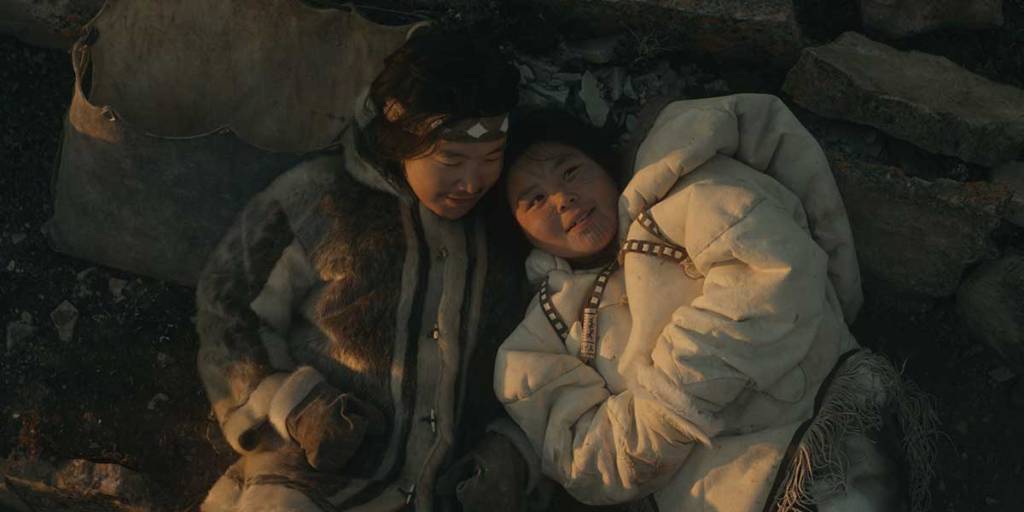
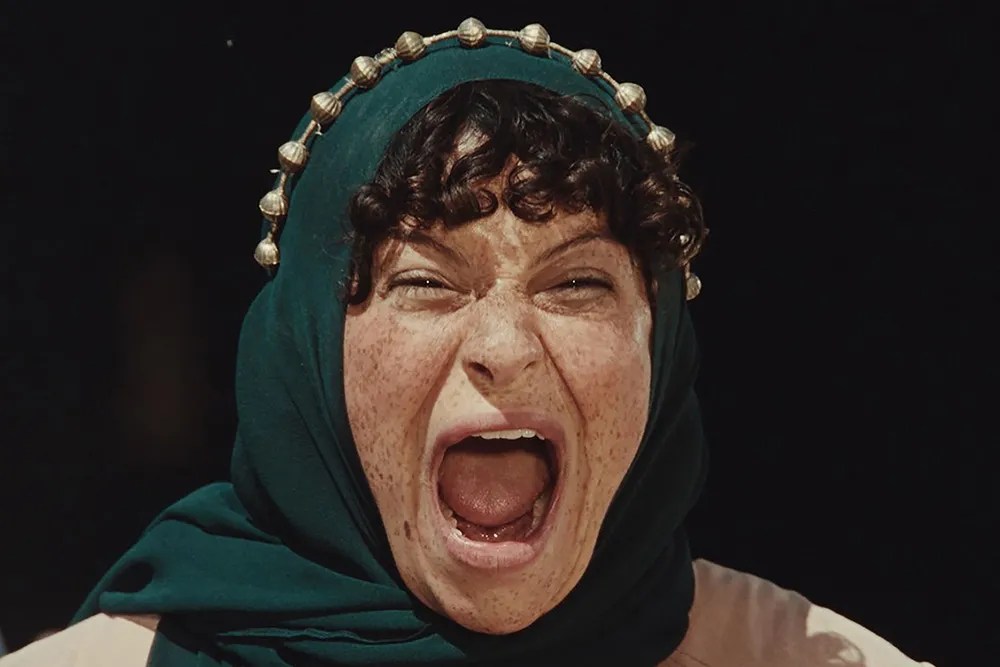
It’s Oscar time again, when Hollywood’s  biggest celebrities walk down a red carpet on their way to the the most-watched cinematic award show in the world. Is it a celebration of excellence, or a curdling cauldron of petty grievances and backstabbing? Will it really choose great movies, or just movies of the week? And what big surprise will we witness this year…? Well, the show is one week away, so to help me look at this years Academy award nominations, is cinephile Jeff Harris. Jeff is a Toronto-based Award-winning photographer, former photo editor at Maclean’s, and is continuing a twenty-year long art project of self portraits taken each day. 

We look at the good, the bad, the beautiful and the ugly, Oscar Bait and the truly original, what’s new and what’s the same old thing, who we think will win, and who we hope will win.

Recorded on February 18, 2025.

Tagged with:

Broken. Films reviewed: Parthenope, The Unbreakable Boy, The Monkey

Posted in 1950s, 1960s, 1970s, Autism, comedy, Family, Horror, Italy, Women by CulturalMining.com on February 22, 2025

Hi, this is Daniel Garber at the Movies for culturalmining.com and CIUT 89.5 FM.

This week, I’m looking at three new movies: there’s a boy with breakable bones, a toy monkey who could break your bones, and a woman whose beauty breaks every man’s heart. 

Parthenope

Wri/Dir: Paolo Sorrentino (Reviews: Youth, Hand of God, The Great Beauty)

It’s Naples, 1950 and a woman gives birth in the waters of the Tyrrhenian Sea. The baby is called Parthenope, named for both the city and the Greek myth. She grows up to be a young woman of epic beauty and legendary intellect (Celeste Dalla Porta). Men who try to seduce her, find their own words silenced by her pithy comebacks. Her days are filed with a search for beauty, happiness and meaning. She absorbs everything she reads, from John Cheever to Claude Levi-Strauss. Her closest friends are her brother Sandrino (Dario Aita) and Raimondo (Daniele Rienzo) the son of a maid. Together they form sort of a quasi menage a trois.

Parthenope aces her orals and is accepted into the prestigious anthropology department at the local university. From there she follows three very different paths: Academia — a professor takes her under his wing; Love, deciding which of her countless suitors should she consent to sleep with; and the city of Naples, itself. Along the way she encounters a corrupt and carnal bishop, a depressed superstar diva, a millionaire with a private helicopter, and many others. But will any of these people provide her with the answers she seeks?

Parthenope is a gorgeous  and sumptuous look at post-war Naples as seen through the eyes of a beautiful woman as she lives her life. Celeste Dalla Porta is appealing to watch, but she is opaque and impenetrable: she merely observes without ever doing anything. Paolo Sorrentino is known for his his beautiful images, especially women as objects of desire. But he doesn’t seem to know what to do with a woman as his subject. Instead we get a hollow simulacrum of a main character, who drifts aimlessly but happily through her life as she encounters quirky strangers. I love the photography, the scenery, the people and the music — a collection of bright and shiny colours — but watching Parthenope leaves you feeling like you just flipped the glossy pages of a fashion magazine: superficially attractive but pointless.

The Unbreakable Boy

Co-Wri/Dir: Jon Gunn (Reviews: Ordinary Angels, I Still Believe, American Underdog, Jesus Revolution)

Scott (Zachary Levi) is a young salesman with big ambitions: he plans to move to Manhattan someday and make it big. But in the meantime, he likes golf, fine wine and travelling. He spends most of his time with his best friend Joe, a burley bearded man who is always giving him advice (Drew Powell). One day he meets a pretty and charming woman named Teresa (Meghann Fahy). Sparks fly, and nine months later, she gives birth to Austin (Jacob Laval). They’re not married but decide to bring him up together. But there’s a catch: he requires special care. Like his mom, Austin has Osteogenesis imperfecta (OI), a genetic condition that makes your bones very brittle. He suffers his first fracture in the birth canal, with many more breakages to follow. Eventually he is joined by a younger brother, Logan, who doesn’t share his breakability.  

13 years later, Austin — aka the Aus-man — is now a happy school kid with a vivid imagination. He’s also on the autistic spectrum, but contrary to stereotypes, he’s outgoing, talkative and attends normal classes. He talks constantly, just like his dad. (I forgot to mention: Scott’s best friend Joe is imaginary) But all is not well. The family is deeply in debt. Austin is bullied at school. And Scott is drinking way too much, especially since he lost his job. Can the family pull itself back together? Or are they headed for ruin?

The Unbreakable Boy is a very cute, true story about an ordinary family working together to overcome their problems. As narrated by Jacob Laval  as the Aus Man, it’s simple, touching and funny. I like the way it demystifies kids with medical conditions and autism. And unlike most medical dramas, it’s not a weeper, though perhaps overly earnest. One warning: it is a faith-based movie, generally a red flag for cringe. Not my thing. Thankfully this one avoids most of the problems of that genre; preachiness and finger wagging and in-your-face prayers. If you’re in the mood for a light, informative, feel-good Christian movie that won’t make you squirm, check this one out.

The Monkey

Wri/Dir: Osgood Perkins (Reviews: Longlegs, Gretel and Hansel)

Hal and Bill (Christian Convery) are identical twins, but they couldn’t be more different. Bill, who was born a few minutes earlier, is self confident, athletic and  aggressive. Hal is withdrawn and wears glasses as he tries to keep out of Bill’s way. But his brother is a bully, humiliating and hurting Hal on a daily basis, using a posse of popular girls as his private army.  The two live with their single Mom (Tatiana Maslany) ever since their Dad, an airline pilot, walked away one day and never came back. When the boys go through the many souvenirs he brought home from around the world, they uncover something very unusual. It’s a mechanical automaton that’s an organ-grinder monkey. You wind him up and he plays a drum to the sound of carnival music. A harmless toy, right? Not exactly. When the drumstick comes down something terrible happens. Like when their babysitter is accidentally decapitated at a Benihana restaurant. But when it kills their beloved mother, the boys decided to hide the monkey somewhere that it can do no more harm. They are adopted by their aunt and uncle, a pair of swingers in small-town Maine. But they too are eventually killed in gruesome accidents. Was the money to blame? 

Flash-forward 25 years. Hal (Theo James) still lives in Maine close to his teenaged son Petey (Colin O’Brien). He visits him only once a year, to lesson the chances of the cursed monkey in harming him. But then two cataclysmic events threaten Hal’s normal life. First, Petey’s stepfather Ted (Elijah Wood) announces his plans to adopt him, making this the last time Hal will see him. Second, a series of terrible events are killing countless people in and around the town he grew up in. Can Hal find that damned Monkey and stop it from killing someone else? And can he simultaneously spend his last days with his son while keeping him out of danger?

The Monkey is a shocking and disgustingly hilarious movie about an evil toy and the people it affects. It’s done in a retro style, like Mad Magazine meets the Twilight Zone. It’s directed by Oz Perkins, known for his stylized movies that feel like fairytales (Gretel and Hansel) or nightmares (Longlegs). With this one, based on a short story by Stephen King, he seems to have found a happy medium. Simultaneously comical and grotesque, you watch the movie waiting with baited breath for the next disaster to happen. Theo James is perfect as the hapless Hal, but so is every other character in this weird movie, each given their own minute of ghastly glory: a pawn shop owner, a girl gang, a real estate agent, a pot dealer, a televangelist… it’s a limitless, mind-blowing romp. The Monkey is grotesque comedy/horror at its peak.

I love this movie. 

Parthenope, The Unbreakable Boy, and The Monkey all open this weekend in Toronto; check your local listings.

This is Daniel Garber at the Movies, each Saturday morning, on CIUT 89.5 FM and on my website culturalmining.com.

Remote houses. Films reviewed: Anacoreta, Eat the Night + TBFF!

Posted in Acting, Cabin in the Woods, Canada, Crime, Family, Fantasy, France, Games, LARPing, LGBT, Mystery by CulturalMining.com on February 14, 2025

Hi, this is Daniel Garber at the Movies for culturalmining.com and CIUT 89.5 FM.

February is Black History Month, the perfect time to check out Toronto’s Black Film Festival. It features movies, docs and shorts from Canada and around the world. Like Karen Chapman’s Village Keeper a drama set in Toronto’s Laurence Heights neighbourhood, about an overprotective mom with her two teenage kids who are forced to move into their grandmother’s crowded apartment. And in the documentary feature category, Tara Moore tells the history of apartheid South Africa and how it affects that country now, in Legacy: The De-colonized History of South Africa. Toronto Black Film Festival is running now through February 17th at the Carlton Cinema.

But this week, I’m looking at two new movies, from Canada and France, about remote houses.  There’s a group of friends at a haunted cabin in the woods, and a teenage girl and her brother living in a world that only exists online.

Anacoreta

Co-Wri/Dir: Jeremy Schuetze

It’s a beautiful cabin in a remote part of  Vancouver Island. Jeremy (Jeremy Schuetze) is there with three friends Antonia (Antonia Thomas), Matt (Matt Visser) and Jess (Jess Stanley) for one last look at his late grandfather’s cabin before it’s sold. It’s a beautiful old building overlooking pristine blue waters and mountains rising dramatically right behind them. It’s like paradise: they grill sausages and play beer pong, pick low-hanging fruit while watching a black bear cub sun itself on the grass. But despite all the natural beauty, something is creepy here. Antonia sees  a truck following them whenever they’re driving. They find a dead black cat in their freezer. And things get really spooky when Jess starts sleepwalking. Is this place haunted? The thing is, they’re also there to shoot a film. And some of those scary parts might have been planned and executed by Jeremy, their director, to get some good reactions out of the cast. He’s a bit of dick, and the rest of them are not happy about it. 

But that’s not all. Jeremy’s grandfather made his fortune writing Hardy Boys -type mysteries in this very cabin. And when they find an unpublished script things get even weirder. It mentions a place called Afterglow, a mausoleum about seven hours away. That’s where ghosts are said to live just underground. So of course they have to go there and see for themselves. Is it all a hoax?  Or is it real? And who will survive this perilous journey?

Anacoreta is a horror movie about four friends in a cabin in the woods and a documentary (or mockumentary) about making a movie. All the actors and crew use their real names, Jeremy and Matt wrote the script, and Anotonia and Jess produced it. Same with the cameraman and the boom, who also appear as characters in the film. But it also takes pains to remind us they’re shooting a movie, often repeating scenes two or three times, till Jeremy is satisfied. Which partly interrupts the scariness, but also makes the scary parts seem more real, in a found-footage / Blair Witch Project kind of way. Does it work? It kinda does. It makes you believe the movie you’re watching is a disaster project, while at the same time, reminding you it’s all just a scripted story. 

Budget? Low. 

Indie? Yes. 

Acting? Good. 

Canadian? Very.

Meta? You bet! 

Scary? Not too shabby, especially near the end.

Eat the Night

Wri/Dir: Caroline Poggi, Jonathan Vinel

Apolline (Lila Gueneau) is a high school student with curly reddish hair. She lives with her big brother  Pablo (Théo Cholbi). They spend most of their time online, on a role-playing game called Darknoon. It’s an apocalyptic fantasy land, where their avatars live exciting lives, killing thousands of competitors in exotic sword fights. Apo much prefers Darknoon to real life. At school she’s an ordinary girl somewhere in France. Online she’s an anime figure with enormous breasts and sharp, pink leather spikes coming out of her shoulder. Pablo’s avatar has pierced nipples and carries a sabre. Apo rides on the back of a giant blue cat she tamed. In real life, Pablo drops her off at school each day on his acid-green Kawasaki. Their mom’s gone and their dad is never around, so they take turns cooking for each other. But the tide turns when Darknoon announces it’s shutting down, permanently, on the Winter Solstice, just a few weeks away. Apo is devastated. 

Pablo also has a side hustle selling colourful little pills at clubs and parties. It’s a one-man operation using a metal crank-press to turn out tiny batches of uppers, molly and acid, one by one. But when a big-time dealer sees him encroaching on his turf, his henchmen beat Pablo up. That’s when a stranger appeared to tend his wounds and wipe up the blood. His name is Night (Erwan Kepoa Falé). Pablo needs a bodyguard and a business partner. Night quits his job, and moves in, and soon they’re having passionate, violent sex in Pablo’s hideaway. But Darknoon’s last day is coming soon and the gangster are gathering forces to find and kill Pablo. Can Apo and Pablo leave Darknoon in a blaze of glory? And in the real world, can Pablo and Night permanently leave this crappy town and go somewhere safe and new?

Eat the Night is a glorious French thriller about online role-playing games and real-life crime. It’s passionate and tragic. About 25% takes place inside the otherworldly  game, the rest in a cinematically cool, louche real world. Two very different places but visually harmonious.  And as the movie progresses characters increasingly appear in the game as like their actual selves. Lila Gueneau plays Apo as a young artist who lives in an animated, comic book world complete with an elaborate pink cos-play outfit. As Pablo, Théo Cholbi is a nihilistic fighter/criminal with a pet green snake. As his lover and defender Night, Erwan Kepoa Falé is kinder and gentler but just as dangerous. Eat the Night (under the even more carnal title Devore la nuit) played in the Directors Fortnight at Cannes. a very violent and highly sexual film. 

I think it’s great.

Eat the Night is playing at the Revue Cinema in Toronto on Feb 19, and opens at the Carlton and Yonge/Dundas on the 21st; check your local listings. Anacoreta will be available on demand starting the 21st. 

This is Daniel Garber at the Movies, each Saturday morning, on CIUT 89.5 FM and on my website culturalmining.com.

Daniel Garber talks with Toshiaki Aoyagi about Cinema Kabuki

Posted in 1600s, Acting, Dance, Japan, Romance, Theatre by CulturalMining.com on February 9, 2025

Hi, this is Daniel Garber at the Movies for culturalmining.com and CIUT 89.5 FM.

When you hear the word “kabuki”, you’re probably familiar with what it looks like, perhaps the costumes and makeup, or its movement. You might think it’s complex, performative or inscrutable. But it’s actually a living and breathing performance art form, a medium still practiced and popular. But, unless you’ve been to Japan, you’ve probably never seen a performance of a kabuki play. Well, now’s your chance.

Cinema Kabuki is a series of three kabuki plays filmed for the big screen, starring some of its biggest stars. They are full of love, romance, tragedy and glory. The first is the salacious-sounding Love Letters from the Pleasure Quarters; the second show is Princess Sakurahime, Part I, full of death, tragedy, lust and a fair bit of supernatural LGBT content; and the third performance is Lion Dance, Kagami-jishi, a one-man, or one-animal performance.

The series is co-presented by the Japan Foundation and the Consulate General of Japan in Toronto and programmed
by their program officer Toshi Aoyagi, known for his love of the arts, from origami to performing art. This is a rare opportunity to see kabuki in a Toronto theatre.

I spoke with Toshiaki Aoyagi in person at CIUT 89.5 FM.

The films are playing at the TIFF Lightbox in Toronto on Sunday, February 23rd, from 1 pm until the evening.

Dangerous jobs? Movies reviewed: Love Hurts, Dark Nuns, Bring Them Down

Posted in Action, Farming, Ireland, Korea, Nun, Organized Crime, Religion, Romantic Comedy, Vengeance by CulturalMining.com on February 8, 2025

Hi, this is Daniel Garber at the Movies for culturalmining.com and CIUT 89.5 FM.

Look at Me, a movie from Nova Scotia about an insecure, bisexual actor with an eating disorder, is finally opening in Toronto! In a review about year ago, I called it a “scathing — and humorous — self-examination that exposes Taylor Olsen’s innermost thoughts and fears.” Check it out.

But this week, I’m looking at three new movies (two by first-time directors) from around the world. They’re all about people who work at peaceful and innocuous jobs who encounter danger and even death. There’s a Catholic nun in South Korea, a real estate agent in Milwaukee, Wisconsin, and a sheep farmer in rural Ireland.

Dark Nuns

Dir: Hyeok-jae Kwon

Somewhere in Korea, a teenaged boy named Hae-Jun (Moon Woo-jin) is suffering from a serious illness. The doctors are baffled by his condition; nothing they try is working. But Sister Giunia (Song Hye-kyo) a Catholic nun, identifies the problem immediately: the boy is possessed. You see, Sister Giunia is a Dark Nun, a woman born with indigenous shamanistic powers. She can hear what demons say. And this boy needs a full-blown exorcism. But she can’t do it alone.

She turns to Sister Michela (Jeon Yeo-been), a much younger nun, for help. A Dark Nun like herself, Michela is adept at reading tarot cards, and can use her powers to see vision,  and manifestations of evil. But she is a nun now, and a nurse. She said goodbye to all that mumbo-jumbo years ago, and, besides it’s expressly forbidden by the Church — especially Father Paolo (Lee Jin-wook). He may be a scholar of exorcism, but he doesn’t believe in it. But Giunia is convinced the boy will die unless they intervene. Can she get sister Michela to come aboard? Will the church ever let them do it? And can two nuns and a  stammering shaman defeat Satan himself?

Dark Nuns is a pretty typical exorcism/horror movie but with a twist: It incorporates Buddhism and Shamanism within a Catholic ritual. There are a lot of quirks in this movie. Like why do all the Korean priests and nuns have Italian names, like Paolo, and Michela? Are they Ninja Turtles? And the exorcism seemed way off: heavy on the holy water — she pours gallon after gallon of it on the kid! — but awfully light on bibles, crosses or rosary beads. Then there’s the biggest problem of all: it’s a horror movie, but it just isn’t scary. What’s good about this movie? I like the way it compares Korean patriarchal neo-Confucianism with a Catholic Church keeping women out of positions of power. I’m intrigued by the culture-clash of Christianity meets Shamanism. But if you’re looking for a Korean horror movie about shamans and possession, you should watch last year’s Exhuma, instead.

Love Hurts

Dir: Jonathan Eusebio

It’s Valentine’s Day in the suburbs of Milwaukee, and  Marvin Gable (Ke Huy Quan) is busy baking heart-shaped cookies. No, he’s not in love or in a relationship; all his efforts are focussed on his career as a real estate agent. And he considers all his clients as his friends. But everything changes when a valentine’s day letter appears on his desk. Rose (Ariana DeBose) is back in town. You see, before he went straight, he used to be a killer employed by his older brother Knuckles (Daniel Wu) who is a powerful local gangster. And killing Rose was his last job. The thing is, he didn’t kill her and now everyone wants to have a word to Marvin Gable. There’s the poet-assassin Raven (Mustafa Shakir) along with a slew of other killers, with weird names like King, Otis Merlo and Kippy. Can he dodge the bullets and kill the killers, without harming all the clients trying to buy his houses? Or will he be dragged back into a dark world he thought he had left far behind?

Love Hurts is an action movie about people trying to kill each other. Despite the extreme violence it’s told a light and somewhat humorous manner. Unfortunately, it’s also tedious and predictable. The dialogue is dumb, the plot is basically non-existent. (There is also a rom-com sub-plot, with various characters falling in love with their respective crushes, but that seems like an afterthought more than part of the story.) So what’s good about it? Two things. Jonathan Eusebio is obviously a first-time director, but what he is not  new at is fight scenes. He’s a highly experienced fight choreographer, and luckily most of the movie consists of creative takes on people throwing knives and kicks as they destroy the interiors of houses and video stores. This I like. First time I’ve ever witnessed a killing using a bubble tea straw. And the cast is appealing too. It’s nice to see Ke Huy Quan back again after his big comeback in Everything, Everywhere, All at Once. He’s funny! So are Ariana DeBose, Lio Tipton, Sean Astin and Drew Scott… the whole crew.

Is this a good movie? Not really, but it’s very light, easy to watch, and the fight scenes are well-done. 

Bring Them Down

Wri/Dir: Chris Andrews

It’s rural Ireland in the present day. Michael (Christopher Abbott) runs a one-man sheep farm, where prize-winning rams graze on rocky hillsides. His abusive dad Ray (Colm Meaney) sits in the kitchen all day shouting angry epithets in Irish at Michael about all the things he’s doing wrong. In the next sheep farm over, young Jack Keeley (Barry Keoghan) does much the same as Michael but not very well. His dad Gary (Paul Ready)  — who is Michael’s age — tries to keep things going but the farm is bleeding money. Gary is married to Caroline (Nora-Jane Noone), Michael’s ex, and Jack can see his parents are not getting along. Michael hasn’t seen her for 20 years, ever since a car accident killed his mother and sent Caroline to hospital with serious injuries (The accident was Michael’s fault).

But their relatively bucolic lives are interrupted when two rams disappear from Michael’s flock. And there’s only one place they can go — to the Keeley farm just over the hill. But Jack claims they both suddenly died and he threw their bodies into a pit…a very unlikely story. This signals the start of a feud between the two families, involving simmering grudges, sheep poachers, and organized crime. Can their conflicts ever be resolved? Or are both farms headed for ruin, violence and possibly even death?

Bring Them Down is a violent, suspenseful drama about escalating grudges between two houses. It’s done in that chop-up style popular among some European arthouse directors where the narrative is not told chronologically. Your perception of “who is to blame for what” gradually shifts as new scenes fill in the blanks. I liked the acting and the dialogue — half of which is in Irish — and it has a compelling plot. The settings are just beautiful, with wide panoramic views of hillsides at dusk and dawn, and images like Michael carrying a lame sheep draped over his shoulders. There are also some strikingly original tableaux like the sheep at an auction house. This is a good first film — it reminds me of Frozen River and Winter’s Bone, all serious looks at crime in rural settings. But why are all these movies about brooding Irish men so depressing? What miserable lives these people seem to lead! If there were a bit of humour or love, Bring them Down would have been a lot easier to take.

But it’s still a good movie, anyway.

Dark Nuns, Love Hurts, and Bring them Down are all opening this weekend in Toronto; check your local listings. This is Daniel Garber at the Movies, each Saturday morning, on CIUT 89.5 FM and on my website culturalmining.com.

Jeff Harris talks with Ali Weinstein about her new documentary Your Tomorrow

Posted in Canada, documentary, History, Protest, Toronto by CulturalMining.com on February 6, 2025

Photograph and Interview by Jeff Harris

Your film points out a stark contrast between 1970s Toronto (when Ontario Place was opened) versus today. What exactly is going on? 

I’m really quite sad and devastated about what’s happening at Ontario Place right now to be honest. I was never a fan of what’s been chosen to go on the west island because I don’t think it that it retains the spirit of Ontario Place as it was meant to be, this lasting place of exploration, education and fun for Ontarians. I tried to not make the film itself be an essay for my own personal point of view, I tried really hard to show the place as it was and I heard different reactions from people where they’ve watched the film and said “yeah, it does need to be redeveloped”. In terms of what’s coming next I don’t think it’s in line with what Ontario Place was meant to be and I think that the original spirit of Ontario Place is a really beautiful one, one that should be fought for today because we have even fewer places to be outside and to be in nature in this city.

The city has only gotten far far far more dense in the last 50 years and you have places like Liberty Village that didn’t exist in 1971 when Ontario Place opened… now there’s a tonne of condos where people don’t have their own outdoor space but next door is this beautiful waterfront land with forested areas to walk, and nature and birds and foxes. There is so much nature present at Ontario Place so I don’t really understand the vision when it comes to turning it into a spa.

What are the concerns about the spa?

The fact that it’s not a Canadian venture, it’s a European / Austrian owned spa that has this very not transparent deal with a 95 year lease that has been signed. I have a hard time imagining that my great grandchildren are gonna have the desire to go to the same spa that some people today might go to as a one off. I think there were probably many other visions for that land that got sent into the government when they opened it up proposals in 2019 that could have been tourist attractions, that could have made money for the province if they really prioritized that and they could have stayed with the original intent of being about Ontario and teaching people the history, the indigenous history of Ontario, what we have to be proud of as a province and that could have been more the focus as opposed to something indoor, foreign owned, and the vision just doesn’t feel like it’s towards longevity with the spa. 

There’s a great line in the film where one of the protesters points out that this natural park is essentially a spa already!

She was part of a group of people that used the beach all the time, they would swim, hang out, exercise on the beach and it was a place for physical and mental wellbeing. I think a lot of the people that started to congregate at Ontario Place, many of them found the space during the pandemic when everyone was going loopy and stuck at home and isolated. People found community there and found other like-minded people there who wanted to be active, to be outdoors — and this was in their backyard! So when they talk about it already being a spa, they mean it’s been so beneficial for them. I felt that way myself going to Ontario Place.

Are you a fan of spas?

I enjoy going to a spa here and there… and some of my favourite parts of being at a spa are going with friends, going to catch up with people, to have sometimes a cultural experience like I love going to the Russian Spa, or the Korean Spa. The type of spa that’s going to be built at Ontario Place, I don’t foresee it being a place that people are going to go to repeatedly… it’s being marketed as a tourist attraction and I don’t know why that would go in the heart of the city on this very valuable prime land. It’s one of the few parts of the waterfront that’s actually accessible to residents of Toronto, where they can swim and boat and paddle board and run and jog and cycle and birdwatch and fish and so many different things so I think that the idea of it being a place of well being is interesting messaging from the government. So many people were using it for exactly that during the pandemic! It became this defecto public park because the government wasn’t doing anything with it.

Your Tomorrow had its world premiere at #TIFF24 and will have its broadcast premiere with TV Ontario on March 23rd at 9pm.

Disappeared. Films reviewed: Dark Match, I’m Still Here

Posted in 1970s, 1980s, Alberta, Brazil, Drama, Family, History, Horror, Pro Wrestling by CulturalMining.com on February 1, 2025

Hi, this is Daniel Garber at the Movies for culturalmining.com and CIUT 89.5 FM.

You may have heard about Sook-Yin Lee’s indie movie Paying For It, starring Dan Beirne as graphic novelist Chester Brown, and Emily Le as Sunny, modelled on Sook-yin herself as a TV VJ in the 1990s. It’s about their relationship after they broke up, when Chester decides only to sleep with paid sex workers. I interviewed Sook-yin and Dan way back in August on this show, and later ranked the movie on my Best-of-the-Year list. Well, good news: you can finally see Paying for It on the big screen starting this weekend. Check it out, it’s  very cool, very indie and very local.

But this week I’m looking at two other new movies: a family drama set in Rio de Janeiro in the 1970s, during the military dictatorship; and a horror movie about pro-wrestlers in the sticks of northern Alberta in the 1980s.

Dark Match

Wri/Dir: Lowell Dean

It’s 1988, and a team of pro-wrestlers are getting ready for a big match in a small town somewhere north of Edmonton, Alberta. They’re there under the direction of a sleazy promoter named Rusty Beans (Jonathan Cherry). The wrestlers have worked together for years and know all the rules: the good guys win and the heels lose. This goes for men and women alike.  And Nick — aka Miss Behave (Ayisha Issa) — doesn’t like it. She’s a damn good wrestler and wants some wins… along with a raise. But it’s always Kate the Great (Sara Canning) who gets the cheers while she gets the boos.  The only ones she can complain to are the enigmatic Enigma (Mo Jabari) who never speaks or takes off his lucha libre mask… and Joe. She spends most of her off-time with Mean Joe Lean (Steven Ogg) a veteran wrestler, and a heel like her. It’s ambiguous whether they’re a couple or “friends with benefits”. Either way, they keep it on the down low. But (back to the story) everything went wrong when she lost her temper in the ring, which left her facing a pay cut and maybe losing her job altogether. Until, out of the blue, Rusty comes by with some good news for a change. They’ve all been offered a gig in a village they’ve never heard of somewhere up north. It pays really well, maybe even a cut of the door. It’s for a dark match — a special wrestling show, for their eyes only, with no cameras present. So they all pile into Rusty’s old rusty van and head into the sticks. When they get there, things seem a bit fishy. Joe think’s they’re all rednecks or Jesus freaks, led by a mysterious leader in a cowboy hat (Chris Jericho).

But hey, a gig’s a gig. Things get stranger the night before the big event. They stumble into some kind of weird orgy involving handcuffs, a hot tub, a threesome, a suckling pig, and some glowing green plonk. They wake up the next morning with aches and pains all over.  But that’s just the beginning. The match is not what they’re used to. There are armed guards with  AK47s standing outside the locked door of their green room. And the wrestlers aren’t coming back after their match!  What’s going on… and why? Miss Behavin’, Mean Joe Lean and Enigma realize they have to do something… but can they stand up to a crowd of bloodthirsty satanic fans?

Dark Match is a horror movie about a wrestling match gone wild at the headquarters of a bizarre religious cult on the Canadian prairies. It’s bloody and gory with a hint of the supernatural at work.  The cast is composed of both professional actors and pro-wrestlers (who, as we all know, do their own fair share of acting). It’s loaded with 80s music, big hair and grainy video footage with lurid red lighting. I was surprised how much I liked this sleazy, gritty B-movie, and I’m not even a wrestling fan. Of course you have to be comfortable with extreme violence, blood and death — it’s that kind of horror — but it’s also quite funny and goofy, too.  So if you’re jonesing for some western-Canadian gore, Dark Match is it.

I’m Still Here

Dir: Walter Salles

It’s the early 1970s in Rio de Janeiro, Brazil. The Paivas are an upper middle class family who live so close to Leblon beach they can walk there barefoot. Eunice, their mom (Fernanda Torres) loves to float in the waves; she finds it relaxing. With five kids to take care of, she needs a bit of down time. Rubens Paiva (Selton Mello), the dad, is an engineer and former congressman for the Labour Party. He loves whisky, cigars and playing foosball with the kids. His firm is working on a huge project, an underground tunnel. But they still find time to get together with their close circle of friends and families: intellectuals, journalists, artists and activists, all on the left. Then there are the five kids: four girls: Veroca, Eliana, Babiu, and Ana, and one boy, Marcello. They love beach volleyball, soccer, pop music and a fluffy dog they find on the beach. Rubens names him Pimpão, after Verona’s shaggy friend. 

But a dark cloud hangs over their otherwise idyllic lives. Brazil is ruled by a right-wing military dictatorship and they’re using a series of kidnappings of European diplomats to question and harass anyone vaguely on the ‘left”. Vera is sent off to London for her own safety. Then one day, five sketchy men invade their home draw the curtains, and without a warrant drive Rubens away to an unnamed location. When Eunice tries to free him, the government denies they ever took him. It’s up to Eunice to take care of the kids as she tries to find him. Has he been disappeared?

I’m Still Here is the  incredibly moving, true story of a Brazilian family,  based on the bestselling memoirs of their son, Marcello.  While it covers the secret arrest of Rubens Paiva by the military dictatorship it’s also about the repercussions it had on the lives of Eunice, their entire family, their friends, and the country of Brazil as a whole.  And that’s where it hits you — the intimate details of a remarkable family’s everyday lives: the super-8 movies they record, the records they listen to. I though it was going to be just an historical retelling of an important event. But it’s actually about everything, good and bad, that the family goes through. Now I’m not Brazilian, I don’t live on a beach in Rio, but for some reason I totally identified with this family, I felt a real connection.

Walter Salles directs an epic movie like this every decade or so, films like The Motorcycle Diaries and Central Station. Apparently he had personal ties to the Paiva family as a young man. Fernanda Torres gives an amazingly nuanced performance as Eunice, that had my eyes tearing up. I’m Still Here has been nominated for three oscars — best actress, best picture and best foreign film — and rightly so. I can’t say enough good things about this movie.

Dark Match and I’m Still Here are both opening this weekend in Toronto; check your local listings.

This is Daniel Garber at the Movies, each Saturday morning, on CIUT 89.5 FM and on my website culturalmining.com.

Daniel Garber talks with Matthew Rankin, Ila Firouzabadi and Pirouz Nemati about Universal Language at #TIFF24

Posted in Canada, comedy, Fantasy, Farsi, History, Iran, Language, Satire, Winnipeg by CulturalMining.com on January 25, 2025

Photographs by Jeff Harris.

Hi, this is Daniel Garber at the Movies for culturalmining.com and CIUT 89.5 FM.

It’s December in Winnipeg. Matthew Rankin, a Montreal bureaucrat, is travelling home to see his elderly mother. Most of his favourite spots are still there, but something is different; he feels lost, alienated. He sees two girls trying to free a large banknote frozen in ice. And he encounters a man who welcomes him into his home. After many years spent working in French, he is relieved to return to his native tongue and culture. But who would have guessed his universal language… is Farsi?

Universal Language is the name of a dream-like and haunting new feature that reimagines Canada’s two solitudes: francophone Quebec, and the rest of the country a unique mixture of Iran and the vast northern dominion. It’s as if Winnipeg froze unchanged somewhere in the 1980s and morphed into a non-religious People’s Republic of Iran. It’s co-written and directed by award-winning Winnipeg filmmaker Matthew Rankin, whose experimental films reimagine the country in a stylized and retro milieu. I interviewed him in 2020 about his first feature The Twentieth Century. The co-writers are both Iran-born and Montreal-based. Actor and multi-disciplinary artist Ila Firouzabadi is known for the violence and intimacy of her sculptures; while independent filmmaker, artist and actor Pirouz Nemati is completing an upcoming documentary on the matriarch of Montreal’s Byblos Le Petit Café.

I spoke with Matt, Ila and Pirouz on site at #TIFF24

Universal Language was lauded at Cannes and TIFF, on the list for an Oscar nomination for best international film, and will open in theatres soon. 

Dangerous places. Films reviewed: Flight Risk, Presence, Nickel Boys

Posted in 1960s, African-Americans, Coming of Age, High School, Suspense, Thriller by CulturalMining.com on January 25, 2025

Hi, this is Daniel Garber at the Movies for culturalmining.com and CIUT 89.5 FM.

Mike Leigh’s Hard Truths is finally opening theatrically this weekend; I loved it at TIFF, it’s one of the best movies of the year and Marianne Jean-Baptiste’s performance as Pansy is unparalleled — don’t miss Hard Truths. 

But this week I’m looking at three more movies set in dangerous places. There’s a witness in a prop plane in Alaska, a family in a haunted house, and two teens in a reform school that’s rotten to the core. 

Flight Risk

Dir: Mel Gibson (Review: Hacksaw Ridge) 

Winston (Topher Grace) is a bookkeeper on the lam. He used to work for the mob, but when they found out he was pocketing too much of their earnings he decided to run. Now he’s hidden away in a remote corner of Alaska where he’s sure they’ll never find him. They didn’t find him, but a pair of US Marshalls did. The cops are led by the hardboiled Madolyn (Michelle Dockery). She’s eager to be on active duty, after years stuck at her desk. She promises Winston full immunity if he agrees to testify. Now she just has to safely bring him to the lower 48. But first to an international airport in Anchorage. It’ll be a short ride over some mountains, and they’ll be on their way. Sure enough, there’s an old prop plane waiting on the tarmac the next morning. The pilot, Daryl (Mark Wahlberg) is a bit of a character, who directs his non-stop patter toward Madolyn. She sits beside him in the cockpit, with Winston — a potential flight risk — safely chained down in the back. Everything’s going perfectly until they realize the plane isn’t heading in the right direction. And the face on Daryl’s pilot license? Well, it isn’t Daryl. Who is in danger, who is dangerous, and who can safely fly the plane to Anchorage?

Flight Risk is a compact, action-thriller set aboard an old prop plane flying over the Alaskan mountains. It’s fast-moving, funny and a bit violent. The characters are all cartoonish: Mark Wahlberg has his head shaved with a deranged smile like Jack Nicholson in the Shining. Michelle Dockery, an English actress makes a good tough-as-nails cop. And  Topher Grace completes the triumvirate playing Winston as an awkward petty criminal trying to overcome his fears. It feels like those Covid-era movies, with its small cast and single location. But in this case, it’s the constant fights and the changing balance of power in a tiny enclosed space — aboard a fast-moving plane — that give this film its oomph.  

Flight Risk is no masterpiece, but I enjoyed it. 

Presence

Dir: Steven Soderbergh (The Laundromat, Side Effects, And Everything is Going Fine)

A typical family is moving into their new home. It’s beautiful, quite old, with lots of wood and windows. Chloe and Tyler (Callina Liang, Eddy Maday) each have their own room, but that doesn’t stop them from bugging each other. Tyler is a self-centred high school jock who wants to join the in crowd, and will do anything to get there. To booster his chances, he brings a popular, but suspect, guy Ryan (West Mulholland) into the house. Ryan has his eyes on Tyler’s younger sister Chloe, who is going through the trials and tribulations of adolescence and self doubt. Their Mom and Dad (Lucy Liu and Chris Sullivan) are also adjusting. She’s the main breadwinner in this family, and is facing a crisis at work. Has she been cooking the books? Dad — an educator — is more laid back, but still senses trouble, especially when it’s interfering with their relationship. But none of them seem aware of a bigger problem that affects them all: The place is haunted! There’s a ghostly presence in this house, that has been there a long time, and is not going anywhere. It floats through the place, unseen and unheard, observing everything but doing nothing. Until it starts letting itself be known. Is this presence a ghost or a poltergeist? Is it good or evil? And what will it do to this family? 

Presence is a typical family drama but seen through the eyes of a ghost. The camera (meaning the presence) never leaves the house, and if someone steps outside we can’t hear what they’re saying. It’s not a real horror movie; while there is a hint of the supernatural, and a fair bit of suspense, it doesn’t overpower the drama. 

And yet… I quite liked this movie. Steven Soderbergh is hit and miss. Some of his films are cheap-looking and predictable, filled with clichéd characters and cookie-cutter stories. Others are innovative and surprising. This one totally works

If you’re looking for a typical horror movie, this ain’t it, but if you want something new and different, you should check out Presence. 

Nickel Boys

Co-Wri/Dir: RaMell Ross (Hale County This Morning, This Evening)

(Based on the novel by Colson Whitehead)

It’s the early 1960s in segregated Tallahassee, Fla. Elwood (Ethan Herisse) is an earnest and polite young student who lives with his grandmother (Aunjanue Ellis-Taylor). He loves reading and studying and is interested in Black American history and the civil rights movement happening all around him. When his history teacher, Mr Hill  — an actual Freedom Rider! — gets him a scholarship at a prestigious Black technical school, everything is falling into place. Until, Elwood,  while hitchhiking to his new school is arrested for riding while black! The driver of the car he’s in — a total stranger — is charged with some crime, and Elwood is his accessory. He ends up sentenced to serve time at a notorious reform school called Nickel Academy. 

Nickel is a cesspool of corruption and cruelty, a school in name only. The kids are rented out as prison labour, like picking oranges off a tree. When he defends a little kid being beaten up at the school, Elwood is the one punished, not the bullies. And the punishment is severe: beaten until he bleeds or locked into a “sweat box”. Worse than that are the kids who suddenly “disappear”, never to be seen again. Luckily one kid stands up for him and becomes his best friend. Turner (Brandon Wilson) is as cynical as Elwood is idealistic. Elwood’s Nana has hired a lawyer to overturn his sentence — that’s what keeps him going. Turner — from Texas — has never had it easy, so he has no hope, just the will to survive. For a black kid in the Jim Crow south, the law doesn’t mean much. He tells Elwood that to get out of this place alive you have to know the rules. There are no laws, or right and wrong; last till you’re 18 and you’ll be free.

But as time passes, and Elwood’s future looks increasingly bleak, he starts to keep copious records of the violence crimes and corruption at Nickel Academy. Can he get the information to the authorities? Will it do any good? And which of the Nickel boys will survive?

Nickel Boys is an excellent historical drama about two young black men trapped in a horrific reform school. While historical in its details, it’s experimental and unconventional in its form. Most scened are shot from Elwood’s or Turner’s POV, with the focus often the ground, the sky, someone else’s hands or feet or the inside of his own head. It’s disconcerting at the beginning but you get used to it. The narrative is not completely linear either, with time jumping forward 20 and 40 years, to show what happens to Elwood in the future. It’s full of compelling memorable images, like kids picking oranges using high wooden stilts. The two main actors are newcomers but very good in their portrayals. But over everything hangs the awful truth of the terrible crimes at these sorts of places (like the Residential Schools in Canada).

Nickel Boys is both moving and upsetting to watch. 

Nickel Boys is now playing, with Flight Risk and Presence both opening in Toronto this weekend; check your local listings.

This is Daniel Garber at the Movies, each Saturday morning, on CIUT 89.5 FM and on my website culturalmining.com.

Wolf men and assassins. Films reviewed: Wolf Man, Soundtrack to a Coup d’Etat

Posted in Africa, Cabin in the Woods, CIA, Cold War, documentary, Family, History, Horror, United Nations, Werewolves by CulturalMining.com on January 17, 2025

Hi, this is Daniel Garber at the Movies for culturalmining.com and CIUT 89.5 FM.

It may be cold outside, but things are burning up on the big screen. This week I’m looking a two new movies, a thriller horror and a documentary. There are wolf men in Oregon, and assassins in Congo. 

Wolf Man

Co-Wri/Dir: Leigh Whannell

It’s present-day San Francisco. Blake (Christopher Abbot) is a lapsed writer who devotes his life to his wife and daughter. Charlotte (Julia Garner) is a careerist who is rarely at home, so Blake takes on the parenting role. He spends all his time with their precocious 10-year-old daughter, Ginger (Matilda Firth). But he and Charlotte are constantly bickering about her absentee-mom-ism. So when a package arrives with his late father’s will and a set of keys, he wonders if this is the miracle they need to keep thew family together. He has inherited — a house, a barn, and countless acres of lush green forest —  the beautiful country he grew up in. Blake suggests the three of them go on a road trip together for some quality time. Young Blake was raised in isolation by a hard-ass survivalist who was strict and demanding toward his motherless son. That’s why Blake is so indulgent towards Ginger, who still dresses like a Disney princess at age 10.

So off they head for his isolated cabin in remote Oregon. But what Blake seems to have forgotten is there are wolves in them thar hills! Big bad wolves, mean ugly wolves, the kind who stand on two feet and like wolfing down people like them. Sure enough, as they approach their farm one of them woolfies drives their u-haul off the road… and they’re forced to run for their lives. Luckily the house is still wolf-proof, with iron bars on all the windows. Unluckily, Blake gets himself slashed by the Wolf Man, and he’s changing into something different. Can he keep his vulpine urges in check and protect his family from harm? Or will he be the biggest danger to them of all?

Wolf Man is a cabin-in-the-woods werewolf movie with a few new twist. In this version, people don’t turn into wolves on a full moon and then change back again; they’re in it for the long haul. And these werewolves aren’t sleek, or sexy or furry, never mind cute or loveable. They’re more like zombies infected with a horrible virus that makes their teeth and hair fall out and their skin go bumpy and gross. These werewolves want to eat flesh and blood, preferably human. Once infected, they can no longer speak or understand people.

There’s no sex in this movie, not even a kiss, it’s totally sterile. In this neck of the woods everyone’s a guy, with literally no women at all. And every man could be a wolf man. Women and girls are urban sophisticates, while men and boys are potential redneck killers. Christopher Abbot plays Blake as a male Oprah mom who is inevitably drawn back to the dangerous manliness he grew up with. Julia Garner’s Charlotte is a less developed character, just an aloof woman forced to either scream and run or fight back.

There are a lot of misfires in this movie. Charlotte dresses in black and white like an English barrister emerging from a courtroom; but turns out she’s a journalist leaving her newsroom… huh?? Blake who grew up in a world of misery and death that he left far behind, now decides to take his family back there… for vacation? Why? There are some good parts, too. Like when the story is told through a werewolf’s eyes and ears, we hear the pounding footsteps of a tiny insect, and see the world as a glowing colourful prism — very cool.

But not enough to save a story that doesn’t quite cut it.

Soundtrack to a Coup d’Etat

Co-Wri/Dir: Johan Grimonprez

It’s June 30, 1960, and the Democratic Republic of Congo is reborn as a free, democratic state,  after nearly a century of brutal colonial rule under the King of Belgium. Leopold II is notorious for chopping off the hands of men, women and children who didn’t produce their quota of rubber. Congo (under the Union Minière) is a very rich country full of diamonds, copper, tin, and uranium, extracted and shipped to Europe and the US.  Its rubber and copper were crucial to winning the world wars and their uranium fuelled the atomic bombs dropped on Japan.  Its first elected prime minister, Patrice Lumumba, gives a speech on independence day, celebrating the transfer of power from their previous colonial rulers. He rightly condemns the colonial atrocities and speaks out in favour of the non-aligned movement (former colonies in Europe and Asia). While his speech is well-received locally, Europeans — including the Belgian royal family — are shocked and aghast. Will they lose control of the Union Minière, and will the US give up its uranium source? Not a chance. They accuse Lumumba of being a communist, despite his stressing independence and nationalism. So they declare Katanga, an area rich in minerals, as independent from the DRC. The seceded state is essentially ruled by white Europeans and Rhodesian mercenary police and a military that operates with impunity, kidnapping miners and bombing uncooperative villages.

The US (especially the CIA), fearing the so-called communist Lumumba, launch a two-pronged campaign: a covert one, involving assassinations, bombings, kidnappings and regime change; and a diplomatic one, where famous American jazz musicians are flown to independent African states to perform as ambassadors of Jazz. Louis Armstrong, Dizzy Gillespie, Nina Simone and Max Roach, have no idea they ware working for a CIA front. By January, 1961, the wildly popular Lumumba is dead, assassinated in Katanga with Belgian and American complicity.

Soundtrack of a Coup d’Etat is a fantastic documentary that retells the events of those six months. The doc is 2 1/2 hours long, so I can only give you the briefest outline of what it’s about. But the film itself is amazing, covering  everything from pan-African nationalism and the Cold War, to non-aligned nations, colonialism, and the UN. We hear Malcolm X in Harlem, Andrée Blouin on women’s rights in Africa, Castro in NY, and Nikita Khrushchev’s famous shoe speech (where apparently he didn’t actually say what they said he said) in the general assembly. It’s filled with compelling imagery:  Alan Dulles the head of the CIA smoking his pipe; a North Rhodesian mercenary recounting the tens of thousands of people they killed with impunity; the Soviets crushing Hungary, and Voice of America broadcasts. There are hilarious propaganda newsreels like the US parachuting record players and vinyl discs across the iron curtain. And through it all, jazz music from America to Africa. 

The film is made of excerpts from previously-made audio documentaries combined with non-stop black and white footage and stills. Most cuts are only about 2-3 seconds, giving the whole film the feeling of a glorious collage of African history. (It’s similar to the films of Adam Curtis, but without his spoken narration.) Many of the subtitles are large fonts superimposed on photos in blues, yellows and pinks, like the cover of a Blue Note jazz album. 

A crucial historical document and a work of art, Johan Grimonprez’s Soundtrack to a Coup d’Etat is a must-see.

Soundtrack to a Coup d’Etat and Wolf Man both open this weekend in Toronto; check your local listings.

This is Daniel Garber at the Movies, each Saturday morning, on CIUT 89.5 FM and on my website culturalmining.com.