Daniel Garber talks with Lena MacDonald about Betrayal at Hotdocs

Posted in Canada, Corruption, documentary, Family, History, Liberia, US, War by CulturalMining.com on April 19, 2025

Hi, this is Daniel Garber at the Movies for culturalmining.com and CIUT 89.5 FM.

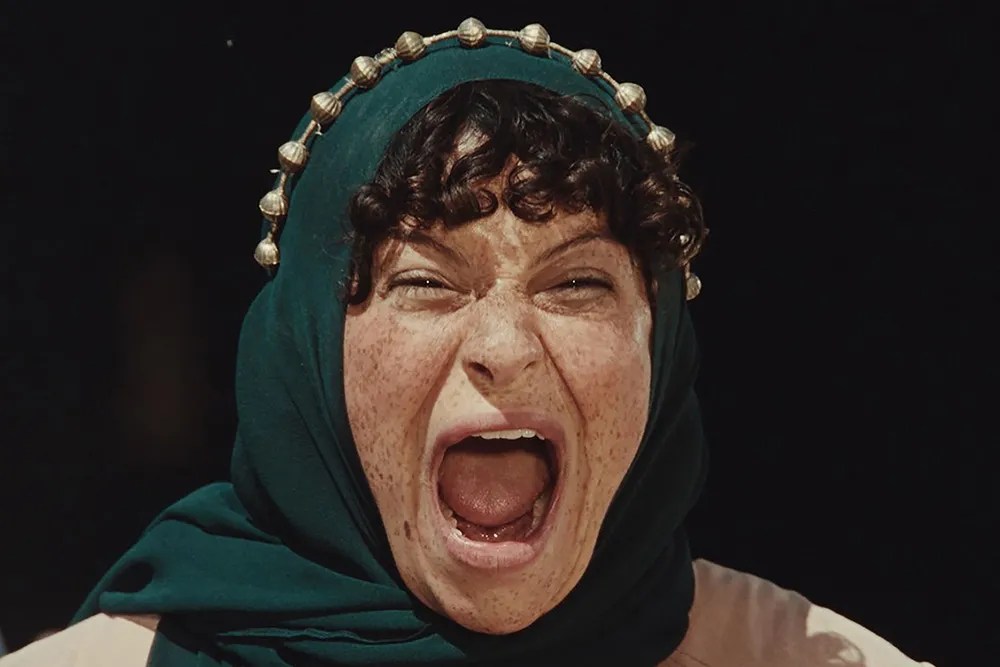
It’s 1981 in Liberia, West Africa. Cindor Reeves is a young man in a small town.  But when his sister marries strongman Charles Taylor, his life totally changes. He moves from his humble home into a mansion in Monrovia the capital. He gains wealth, glamour and a father-figure to learn from. Taylor teaches him right from wrong. So he us crushed when he discovers his idol is actually a corrupt politician, amassing great wealth by exploiting everything from rubber plantations to blood diamonds. And when Taylor begins a campaign of mass killings, transnational wars armed with child soldiers, blood diamonds, international weapon deals and even collusion with Al Qaeda, Cindor decides it’s time to act. He presents his findings to an international court intending to stop the violence. But this places him in great physical danger. Is Cindor blowing a whistle… or betraying his own family?

Betrayal is a new documentary that follows the unusual case of Cindor Reeves and Charles Taylor over decades on the world stage. It’s narrated by the film’s subject himself, supplemented by talking heads in the form of journalists, lawyers and public figures.  The documentary is illustrated with amazing period news footage and background materials. It’s directed by prize-winning Toronto-based filmmaker Lena Macdonald, who appeared on this show a decade ago about he first documentary feature, the highly-personal Mom and Me. (Full disclosure, I worked with Lena on an early stage of Betrayal, and am blown away by the final version.)

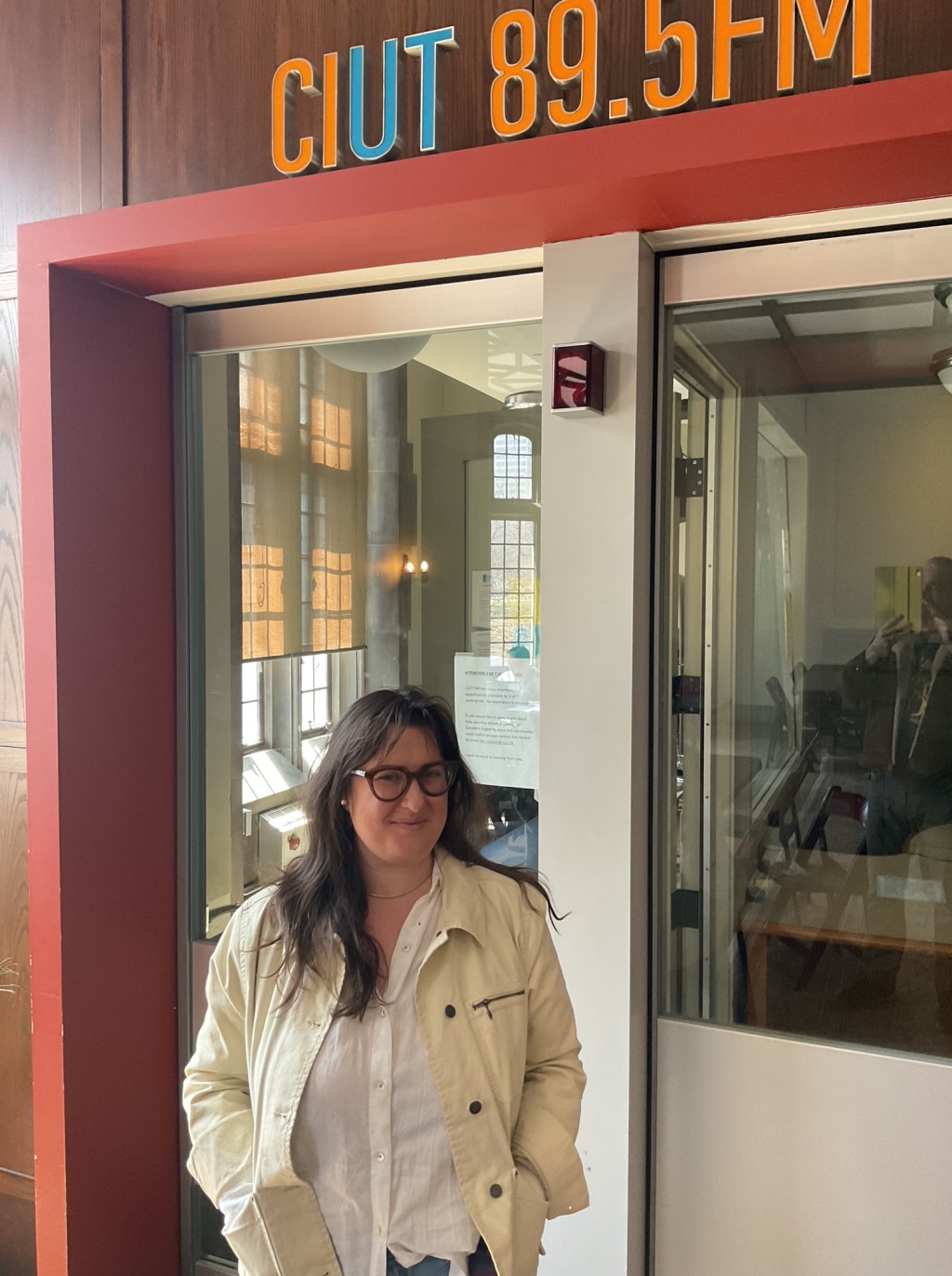
I spoke with Lena MacDonald in person at CIUT.

Betrayal is having its world premiere at Hotdocs on Tuesday April 29th, 2025.

American battles. Films reviewed: G20, Drop, Warfare PLUS National Canadian Film Day!

Posted in 2000s, Action, Diplomacy, Iraq War, Suspense, Terrorism, US, violence, War, Women by CulturalMining.com on April 12, 2025

Hi, this is Daniel Garber at the Movies for culturalmining.com and CIUT 89.5 FM.

Yearning for some Can-Con? We’ll mark your calendars: next Wednesday is Canada Film Day with over 1700 screenings and discussions about great Canadian movies across this country! In Toronto alone, directors and actors like Sophie Desraspe, Helen Lee, Eric Peterson, and Cody Lightning will be there at the screenings.  There’s also a Town Hall discussion of Canadian culture with Don McKellar, Mary Walsh and Elle-Maija Tailfeathers. Canadian Films suddenly seem acutely relevant. Go to canfilmday.ca for showtimes.

But this week, I’m looking at three new movies from south of the border. There are Navy Seals in Iraq attacked by armed combatants; the US President locked in hand-to-hand combat with international terrorists; and a single mom terrorized by her cel phone.

G20 

Dir: Patricia Riggen

It’s a resort hotel in Capetown, South Africa, and US President Danielle Sutton (Viola Davis), America’s first black female POTUS is preparing for the G20 summit. When she’s not practicing martial arts with her Secret Service bodyguard Manny (Ramón Rodríguez) she’s hanging with her family:  loving husband Derek and her two teenaged kids. Serena, the older one, (Marsai Martin) is an accomplished hacker who can sneak, undetected, out of any building, even the White House. President Sutton is decked out in an elegant red evening gown — complete with cape — for the all-important photo-op. But something is rotten in the city of Capetown. There’s a conspiracy at work, led by evil Aussie mercenaries. And now armed soldiers are rounding up the presidents and their families! If they can pull this off, they’ll have trillions in “untraceable” crypto currency, and the leaders of the most powerful nations in the world will grovel at their feet.  

But some of the leaders have escaped their clutches. Sutton, the elderly Korean First Lady, the pompous British PM, and a few others have form an impromptu posse. Can this ragtag group of heads of state beat the musclebound mercenaries in a contest of physical strength and mental acuity? Or is this world doomed?

G20 is a ludicrous but fun action thriller, told from the point of view of a female, superhero-type president. This is not a unique movie theme: Many Americans love venerating their presidents. Think: Harrison Ford in Air Force One or even Abraham Lincoln Vampire Hunter. But G20 is so silly… The villains carry the bitcoin wallet — with all the money — as if it’s a physical object, a MacGuffin they have to possess. And they eforce the leaders to read a nonsense speech (the quick brown fox jumps over the lazy dog) so they can make a deep-fake video… as if world leaders haven’t made hundreds of speeches already. A 60-year-old president who’s also an Iraq War hero and also a jiujitsu champ. Sure, why not…? It’s just a movie. The main story may be a hackneyed farce, but Viola Davis is a joy to watch.

Not a masterpiece but a watchable TV movie.

Drop

Dir: Christopher Landon

Violet (Meghann Fahy) is dressed-up but nervous. She’s on her first date since her husband died, five years ago. A single mom and an online therapist, she likes working from home so she can keep a close eye on Toby, her adorable, autistic son. But her wacky sister Jen (Violett Beane) insists she step out of her shell and have some fun. Jen’s babysitting Toby tonight to give her all the time she needs. And if there’s no chemistry with the guy she’s meeting, she can always just leave. So here she is in a fancy restaurant with a dramatic view of the city. In comes Henry (Brandon Sklenar) her first date, and there’s instant attraction. Henry is handsome, rugged and friendly, and has a steady job at City Hall. He likes her looks, her smarts and her honesty.  They go to their table and start the date.                

But the electricity between is interrupted by anonymous memes and texts that keep appearing on her phone, apparently dropped by someone somewhere in the restaurant. The messages become threatening, along with a warning: if you tell anything to Henry (the guy she just met) we’ll kill your son. Followed by live security footage from her home… with a masked man roving her halls with a gun. Whoever it is has control of all her security cameras and all the cels in the restaurant. They can see and hear everything she’s doing. They want her to commit a crime  in plain view, and there’s no way to stop them. Can Violet save her son and outsmart this invisible villain on this date from hell?

Drop is a classic suspense thriller that plays on our fear of technology and surveillance. Afterwards I realized there are some major plot holes or impossibilities, but they don’t stand out while watching it. It’s a tightly budgeted Blumhouse movie so the actors are likeable but not A-list, and everything takes place in two tight locations – her home and the restaurant. It uses psychological fear instead of pyrotcechnics. And it works. This is a good, traditional suspense thriller, the kind where the tension keeps growing and never lets up.

I like this one.

Warfare

Co-Wri/Co-Dir: Alex Garland (Ex Machina, Annihilation, Civil War), Ray Mendoza

It’s November, 2006, in Ramadi, a city in central Iraq, between Baghdad and Fallujah. Ray (D’Pharaoh Woon-A-Tai) is leading a squad of Navy Seals on a mission. They commandeer two houses, knocking down walls and pushing the families into their bedrooms. They’re setting up for a long wait, until a marine unit arrives with tanks to evacuate them. But armed enemy soldiers are setting up on nearby roofs, taking pot-shots at them. And when the tank finally arrives, the Seals are ambushed by an IED buried in the road. The Iraqi soldiers they are working with are killed, while some of their own are badly injured. They have to pull their bodies back into the house and try to save who they can. Can they fight off the insurgents until the Marines arrive? And who will survive this tense battle?

Warfare is a hyper-realistic depiction of an actual battle in Iraq as remembered by the US soldiers who were there (including writer/director Ray Mendoza). It’s not like your usual war movie. The film favours accuracy over character- building or back stories. And the characters speak in military jargon, full of Frogmen (navy seals), Bushmen (an aerial unit, overhead) and many more I couldn’t catch. The cast is excellent, especially Woon-A-Tai, Will Poulter (The Revenant, We’re The MIllers,  Midsommar) and Cosmo Jarvis — it really felt like you’re there, witnessing actual soldiers, showing bravery, camaraderie, and brotherhood. What the movie doesn’t deal with is why? Why were they there at all? What did that particular mission accomplish? Where are all those WMDs, the supposed reason for this war? Thousands of US soldiers were killed there, and many times more tragically killed themselves afterwards. And an estimated one million civilians in Afghanistan, Pakistan and the Middle East were wiped out, millions more displaced and the whole region made unstable till today… and for what? 

I’m glad I saw Warfare — it’s a rare chance to experience a non-jingoistic, up-close and personal look at US soldiers on the frontline. But don’t go to this docudrama expecting to be entertained. Because fun… it ain’t

G20 is now screening on Prime Video, and Warfare and Drop both open this weekend in Toronto; check your local listings. This is Daniel Garber at the Movies, each Saturday morning, on CIUT 89.5 FM and on my website culturalmining.com.

Daniel Garber talks with Neha Hallim, Roni Harel Haber and Taf Mangwiro about TIFF Next Wave 2025!

Posted in Argentina, Coming of Age, High School, Movies, Road Movie, Tunisia, US by CulturalMining.com on April 5, 2025

Hi, this is Daniel Garber at the Movies for culturalmining.com and CIUT 89.5 FM.

If you believe the trades, the lucrative 14-24 year old movie market only really want to see action movies preferably based on either a plastic toy or video game, or else set somewhere in the superhero Universe. The bog studios bet big bucks on this prediction. But is it true? Aren’t there any movies without middle- aged men in tights that interest today’s youth?

Apparently there are. The Next Wave film festival, presented at the TIFF Lightbox, offers exactly that: a selection of innovative international features and shorts, aimed at 14-24 year olds, programmed by youth, for youth and about youth. The films and events are curated by a diverse posse of teenagers who apparently really know their stuff. Curators include cinephiles, movie geeks and future filmmakers, aged 14-18.

I spoke with programmers Neha Hallim, Roni Harel Haber, and Taf Mangwiro, in person at TIFF.

Instagram: @Nehahallim,  @roni.haber @tafmangwiro

Letterboxd: @Nehahallim,  @r0nii,  @tafmangwiro

Next Wave runs from April 10-13, 2025.

Go to tiff.net/tiff-next-wave-2025 for details.

A coup, a cult and a cry. Films reviewed: The Penguin Lessons, AUM: the cult at the end of the world, Bob Trevino Likes It

Posted in 1970s, 1990s, Argentina, comedy, documentary, Family, High School, Japan, Protest, Religion, Social Networks, US by CulturalMining.com on March 29, 2025

Hi, this is Daniel Garber at the Movies for culturalmining.com and CIUT 89.5 FM.

In these times of extreme uncertainty, many people feel there’s something missing in their lives but they’re not sure what. Some turn to new religions for spiritual fulfillment, others to pets they can love, or to chosen families to replace their inadequate biological ones.

So this week, I’m looking at three new movies, two dramas and a documentary about people trying to replace something missing. There’s an English teacher in Argentina who talks to a penguin, a  caregiver in Kentucky looking for a replacement dad, and a religious cult in Japan trying to bring about the end of the world.

The Penguin Lessons 

Dir: Peter Cattaneo

(Based on a true story)

It’s March, 1976 in Buenos Aires, Argentina. Tom Michell (Steve Coogan) is a newly-hired English teacher at a boys’ prep school for rich kids. It’s run by the strictly by-the-book Headmaster Buckle (Jonathan Pryce). No pets and no politics. Divorced, middle-aged and jaded, Michell cares little about morals. He describes himself as like Hemingway but without money and who never wrote anything. The boys in his class are spoiled and unruly; they don’t listen to a word he says. But bombs and rifles can be heard even within the walls of this elite academy. There’s a US-backed coup d’etat going on out there to install a military dictatorship! When the school closes for a week, Michell and fellow-teacher Tapio, a hapless Finn (Björn Gustafsson) head out to the Punta del Este in Uruguay to sit out the coup. But a romantic seaside stroll with a woman Michell meets turns —  much to his chagrin — into a mission to save a flock of birds caught in an oil spill. They clean a penguin’s feathers, but by morning, the woman’s gone, and the penguin won’t leave him alone. He reluctantly takes him back to the school, in the hopes of donating him to a zoo. But the school kids adore him, and actually start to pay attention as long as the bird is around. But all is not well. Plainclothes police are disappearing anyone who disagrees with the government, including the beautiful but opinionated Sofia (Vivian El Jaber), the school’s cleaning woman.

Can a little penguin bring peace to the school and pull them all together? What will happen if Headmaster catches him with the bird? And will Michell ever stick his neck out to challenge the status quo?

The Penguin Lessons is a touching, cute, nostalgic and easily digestible story set during a dark and sinister era. Director Cattaneo brought us similar English crowd-pleasers like The Full Monty. And I’ll see anything with Steve Coogan in it. This movie is full all the cliched crowd pleasers: kids, animals, history, and a wise-cracking cynic who might have a soul. But I don’t care. That penguin is just soooo cute. 

OK, I admit it, I’ve been played, I’m a sucker of a critic who fell for a bird… but so will you. 

I liked this movie.

AUM: The Cult at the End of the World

Wri/Dir: Ben Braun, Chiaki Yanagimoto

It’s March, 1995 in Tokyo when something unexpected and terrifying happens. Someone lets loose poison gas at Kasumigaseki station, where three train lines converge. 5,800 people are injured and 13 of them killed. And this is a planned attack, not an accident. Who is responsible and why did they do it?

Decades early, a child named Chizuo is born into a post-WWII family with visual disabilities. Years later he opens a yoga school to attract paying customers. Somewhere along the way, it changes first into a religious sect, and later into a bonafide cult with tens of thousands of members. The group is called Aum Shinrikyo, and they set up headquarters on the banks of the sacred Mt Fuji.  Their guru, now known as Shoko Asahara, with long hair and beard and flowing pink robes, convinces his worshippers that he is a god with supernatural powers. Popular music and anime videos extolling Asahara attract lots of favourable media attention, and detached young Japanese join in droves to experience miracles like levitation. These followers drink his bathwater or take tiny transfusions of his blood, even as he drains their bank accounts dry. Others have wires attached to their brains. Only bland food is permitted, no sex, no free-thinking. The cult expands internationally, migrating to Moscow once the Soviet Union falls, converting countless Russians to their cause. And while they’re there, they get ahold of military-grade artillery, chemical and biological weapons which they ship back to Japan. And eventually this leads to the horrific Sarin gas killings, in Tokyo and Matsumoto.

AUM: The Cult at the End of the World is an extensive, shocking and at terrifying documentary about this bizarre and dangerous cult. It covers the story throughout Asahara’s life and beyond, using period footage and new talking-head interviews. It goes right to the source — its victims, innocent people wrongly blamed for Aum’s crimes, journalists who follow the story, and advocates who — long before the sarin attacks — were trying to free friends and relatives from their clutches. Perhaps most chilling of all are the interviews with Joyu the high-ranked Aum Shinrikyo member who was allegedly behind some of its most heinous chemicals weapons.

I found this documentary extremely engrossing and well researched, narrated  in the form of an oral history by those most affected by these atrocities. I couldn’t stop watching this one. I wonder why there have been loads of movies about the Manson Family, but relatively few on Aum Shinrikyo. This one helps fill that gap.

Bob Trevino Likes It

Wri/Dir: Tracie Laymon 

(Based on a true story) 

It’s present-day northern Kentucky. Lily Trevino (Barbie Ferreira) is young woman who works as a caregiver for Dapne (Laureen “Lolo” Spencer) a woman with a degenerative condition. Lily has no friends, and 

her boyfriend dumped her using texts. Robert Trevino, her dad (French Stewart) is a flippantly cruel and self-centred man-boy responsible for most of Lily’s neuroses. He blames her for ruining his life (her mom died as an addict when she was a child). But things hit rock-bottom when her dad cuts off all communication with her. In a desperate search on Facebook to see what he’s up to, she ends up “liking” a different Bob Trevino. This Bob (John Leguizamo) is everything her own father is not. He’s kind, honest and giving, someone who pays attention to her texts. Bob works as a contractor out of his trailer. He has few hobbies — he likes gazing at the shooting stars, while his wife Jeanie (Rachel Bay Jones) is into making scrap books. When childless Bob and parentless Lily finally meet face to face, they feel a familial warmth they can’t quite explain. Jeanie thinks Lily’s a grifter or an aspiring catfish, trying to get his money. While insecure Lily is afraid of messing things up. Can two people, who live in different states ever have a real friendship? And is this new friendship superficial or deep?

Bob Trevino Likes It is a very cute, very sweet tear-jerker of a movie about friendship, kinship and chosen families. Much of the story is told through text messages and Facebook posts. Barbie Ferreira plays Lily as a non-stop faucet. She weeps in the opening, she cries in the middle and bawls at the end. And as the viewer, I cried along with her. John Leguizamo — once known for his over-the-top comedy — is at his most restrained in this one. But despite all the tears, it’s told in a light, humorous way.

This is a really nice indie movie.

Bob Trevino Likes It is now playing across Canada, with The Penguin Lessons opening this weekend in Toronto; check your local listings. And Aum is now available on VOD.

This is Daniel Garber at the Movies, each Saturday morning, on CIUT 89.5 FM and on my website culturalmining.com.

Americans abroad. Films reviewed: Queer, September 5, Oh Canada

Posted in 1950s, 1960s, 1970s, Addiction, Canada, Dreams, drugs, Germany, Journalism, LGBT, Mexico, Resistance, Sex, Sports, TV, US, War by CulturalMining.com on December 14, 2024

Hi, this is Daniel Garber at the Movies for culturalmining.com and CIUT 89.5 FM.

This week I’m looking at three new movies set in the 1950s, 60s and 70s, about Americans abroad. There’s a novelist in Mexico City, a TV sportswriter in Munich, and a documentary filmmaker in Montreal.

Queer 

Dir: Luca Guadagnino (I am Love, A Bigger Splash, Call me by your Name, Suspiria)

It’s the 1950s in Mexico City. William Lee (Daniel Craig) is a middle-aged American writer addicted to heroine who hangs around local bar called Ship Ahoy. If he doesn’t get completely drunk he might spend the night with a man he meets. He’s friends with other flamboyant ex-pats, especially Joe (Jason Schwartzman) a portly, bearded man who shares Lee’s lascivious predilections. Lately, he has had his eyes on Eugene Alerton (Drew Starkey), an ex-GI who spends most of his days playing chess with an older red-haired woman. Eugene is no “queer”, but is up to talking with Lee.

After repeated drinks, and some opiates he eventually shares Lee’s bed in his seedy rental. Lee is smitten, Eugene content. Later the two head south in their quest for ever more potent drugs culminating in a journey toward the ultimate psychedelic experience. They end up in the Ecuadorean Amazon, in a remote shack guarded by a vicious but slow-moving three toed sloth. Inside, a mysterious doctor (Lesley Manville) holds the answers to all their questions. Is Eugene the man of his dreams? Will they ever reach hallucinatory nirvana? Or is life just an illusion?

Queer is a bizarre, sex-and-drug-filled psychedelic fantasy. It’s divided into three chapters: their meeting in Mexico City; their journey south; and their adventures in Ecuador.  It’s adapted from William S Burroughs’ semi-autobiographical novel written in the 1950s but not published for another 34 years. It swerves wildly between actual memoirs and pure imagination. Burroughs was a writer in the beat movement, and was married and had a son with another writer Joan Vollmer (perhaps she’s the red-haired woman Mary in the film).

The thing is, Queer is not a grave, serious movie, it’s a high-camp comic fantasy. Psychedelia has always been difficult to film, and there’s a fine line between the profound and the ridiculous. Some scenes, like the unfortunate semi-nude, interpretive dance sequence, falls on the (unintentionally) funny side. Others scenes were kinda cool. It’s a beautiful film to watch, for its music, set, costumes and art direction. Shot entirely in Rome’s Cinecitta, it’s never meant to look realistic. Daniel Craig plays Burroughs not as the usual chill junkie observer, but as a panting and sweating horndog, with bulging eyes, nearly choking on his own lust. 

If your looking for a sentimental romance a la Call Me by You Name, or a deeply profound meditation on psychedelic trips, this ain’t it. But if you just want a weird and funny drug-infused dream-filled movie with lots of soft-core gay sex, you’ll probably have a great time.

September 5

Co-Wri/Dir: Tim Fehlbaum

It’s September 5, 1972 at the Munich Summer Olympics and the crowds are roaring. Americans are glued to their sets watching the US cleaning up, with swimmer Mark Spitz winning an unheard of seven gold medals.  ABC is the perennial loser of the top three networks. So their sportscasters are thrilled to have won exclusive coverage rights. The team behind the cameras are hard at work. Geoffrey Mason (John Magaro) is the newbie, trying to prove his chops. His boss Marvin (Ben Chaplin) wants things to run smoothly, and his boss’s boss (Peter Sarsgaard) is thinking of the bigger picture. Jacques (Zinedine Soualem) is their French cameraman with Marianne (Leonie Benesch) the only woman on the team, is a German journalist, and their de facto translator. Everything is great until they hear gunshots… not at the games, but at the nearby Olympic village. A group of masked militants, known as the Black September Organization is holding Israel’s Olympic team hostage. 

Suddenly, the ABC sportscasters realize they are the only American TV journalists in Munich. They have the cameras, the boom mics and the broadcast and satellite rights ready to send stories home. They shift their telephoto lenses from pointing toward the swimming pools to the athletes’ dormitories, trying to catch a glimpse of the hostages. What will happen next? Will German authorities step in? And can a sports crew handle crisis news?

September 5 is a journalistic thriller about 24 hours at the Munich Olympics. Despite its title, this isn’t about the Israel/Palestine conflict — they barely delve into it. That’s just the backdrop. What it really looks at is how a team of US journalists — at the right place at the wrong time —  figure out how to get the news out even as the crisis grows. I love the period details: giant-sized spools of reel-to-reel videotapes, and how little white tiles on a black background were superimposed onto a sports channel screen. So cool. I’ve never heard of Swiss director Tim Fehlbaum before, but he keeps the action moving in the midst of constantly shifting mayhem. The acting is ok, but best by far is Leonie Benesch who starred in last year’s The Teacher’s Lounge. I went into this movie full of dread. It’s clearly Oscar-bait; Hollywood churns out journalistic dramas every year. But this one is surprisingly good, and had my heart pumping all the way through. If you’re looking for some journalistic excitement, check out September 5. 

Oh Canada

Co-Wri/Dir: Paul Schrader (First Reformed)

Based on the story by Russell Banks   

Leo Fife (Richard Gere) is a renowned documentary filmmaker in Montreal. He is getting ready for an interview in his own living room in the grand old home he shares with his wife Emma (Uma Thurman).  The director, Malcolm (Michael Imperioli) and his crew are longtime admirers of Leo’s legendary work. After crossing the northern border in the 1960s to protest the war in Vietnam, he ended filming docs that changed the course of history. He uncovered the use of Agent Orange at the military base in Gagetown, New Brunswick, and became a university prof teaching young journalists how to make movies. Now, decades later, Leo is on his deathbed, dying of cancer, so Malcolm wants to record his final thoughts.

Leo treats this film as a confession — he wants to clear the record. He starts by talking about his first wife and son, a family he left behind in Virginia. But she’s not the only skeleton in his closet. His past life is full of lies, deceptions and possibly terrible acts. Emma doesn’t like him talking like this and wants him to stop. Leo’s nurse thinks can’t take all this stress. But the filmmakers persist and Leo perseveres.  Are any of his stories true? Was he a good man or a bad man? And what do we really know about Leo Fife?

Oh Canada is a fictional story about a day in the life of an American filmmaker and activist recalling his past. It’s a simple concept with a slight plot. It’s structurally divided between the documentary being made about him, and his hidden past, shown in a series of flashbacks (He is played by Jacob Elordi as his younger self.) The film is  almost too simple. But with Paul Schrader at the helm, you know there’s going to be more to it. He wrote Taxi Driver and Raging Bull for Scorsese, and directed movies like The Yakuza (1974) First Reformed (2017) and American Gigolo (1980) that also starred Richard Gere.

Unfortunately, Gere is the weakest part of this film; he rants and complains, but there’s no heart in his performance. The film’s called Oh Canada, but it’s really Oh America. It was entirely shot there, with so-called Canadian characters using americanisms like “restroom”. What’s interesting is Schrader’s use of false visual narratives. There are  flashback scenes where Elordi as a young Leo is suddenly replaced by a contemporary Gere while all the other characters remain unchanged. Likewise, the names of past lovers seem to melt away. Perhaps Leo has dementia, or maybe this contrasts Leo’s current story with his past truths. Also interesting is the way we see Leo’s face throughout the eye of Malcolm’s camera, giving it a meta aspect that messes with your brain.

Oh Canada is not one of Schrader’s better films, but there’s enough stuff going on to keep it intriguing. 

Oh Canada, Queer and September 5 all open this weekend in Toronto; check your local listings.

This is Daniel Garber at the Movies, each Saturday morning, on CIUT 89.5 FM and on my website culturalmining.com.

Only in the Movies. Films reviewed: Teenage Mutant Ninja Turtles: Mutant Mayhem, My Love Affair with Marriage, Talk to Me

Posted in Animation, Australia, Fantasy, Feminism, Ghosts, Latvia, Monsters, New York City, Science, Supernatural, US, USSR by CulturalMining.com on July 29, 2023

Hi, this is Daniel Garber at the Movies for culturalmining.com and CIUT 89.5 FM.

In the film industry, one of the biggest gender gaps is with directors — very few movies are directed by women, and corporate studios are loathe to hire them. Which means we get tons of stories told from a male point of view, but far fewer from women. (Documentaries are an exception.) The Female Eye Film Festival showing this week in Toronto is trying to even the odds, by presenting new movies by women from around the world. But things might be changing. I went to a midweek promo screening when theatres are usually quiet, and was shocked to encounter a bright pink crowd. Women in pink skirts and wigs posing for selfies, skinny guys sporting neckerchiefs, kids, grownups, even grannies, were lined up for popcorn and packing the house with a degree of enthusiasm I haven’t seen since Harry Potter. Clearly, Greta Gerwig’s Barbie is a cultural phenomenon, and I do plan to see it, once the pink tsunami dies down.

This week, though, I’m looking at three new films, one horror and two animation. There’s a hand in Adelaide, Australia, a girl in Riga, Latvia, and four turtles in the sewers beneath Manhattan.

Teenage Mutant Ninja Turtles: Mutant Mayhem

Dir: Jeff Rowe, Kyler Spears

For anyone who hasn’t heard, Raphael, Michelangelo, Donatello, and Leonardo are four teenagers who live together in the sewer underground in New York City. When they were babies, a secret lab was raided spilling radioactive goo, turning four tiny turtles into mutant humanoid creatures. They were raised by a rat who also was exposed to the slime, and who trained them in martial arts. He has just one rule: never let humans see you, or they will call you a monster and hand you over to evil scientists who will milk you dry to create supersonic weapons. But the masked foursome, being teenagers, wish they could just be like normal humans, going to high school, the prom, meeting other friends… They finally get their chance when they team up with April O’Neil, an aspiring student journalist (nicknamed Puke Girl).  If the TMNTs can stop a bizarre crime spree plaguing the city — and April report that story on TV news —  maybe the people will welcome them in as heroes. Alas, it’s not as easy as it looks. There’s a gang of evil scientists who want their blood, and a mysterious group of mutant supervillains who may be just as strong they are. Can the Turtles avoid the scientists and defeat the mutants? Or will they live their lives eating pizza in the sewers of Manhattan?

Teenage Mutant Ninja Turtles: Mutant Mayhem is a new reboot of the  beloved comic, TV and movie franchise. Gone are the skateboards, surfer slang and whitebread voices of their earlier versions; this origin story starts again from scratch, in a multiracial city moving to the tune of 90s hiphop. At least they still eat pizza.. As always, it’s meant for small children, who seemed to like it a lot at the screening I went to. I liked it too. It’s visually stunning, with a colour palette ranging from acid green to day-glo blue and fluorescent red projected against dark city alleys. The characters themselves are a combo of 3-D models and hand-drawn illustration, with squiggles and scribbles appearing everywhere. And the voices —of the Ninja Turtles — are actual teenagers instead of grown ups faking it. I went in expecting very little and was surprised and pleased by its fast pace, sophisticated art work and fine music. 

My Love Affair with Marriage

Wri/Dir: Signe Baumane (Rocks in my Pockets)

It’s the Soviet Union. Zelma is a little girl at her first day of school in Latvia. She’s tough and self-assured. When a boy starts bothering her, she clocks him. So she’s shocked when she is punished and ostracized for defending herself. “Girls don’t fight” she is told. She doesn’t wear makeup or bows un her hair, so the boy she has a crush on, studiously ignores her. Her mother instructs her to find a man, get married and put up with whatever he does. Later at university, she meets a fellow artist, Sergei, who flatters her and says he loves her. Could he be her soulmate?

Or is love just an illusion?

My Love Affair with Marriage is an animated, feminist coming-of-age story about a Latvian girl — and later as a woman and an artist trying to fit into a society that doesn’t seem ready to accept her. It handles her first period, her sex life, and her frustrating relationships and marriages. And it takes place both both during the USSR and after its collapse. (There’s even some scenes in Toronto.) It’s presented in the form of a highly-stylized animated musical, with three, bird-like women who sing songs about her progress like a veritable Greek chorus. The characters are beautifully-coloured, hand-drawn pen and ink, that vary from spare, to surreal, to scientific and even psychedelic. And that’s not all. It’s narrated through a series of medical drawings, narrated by a talking synapse. Each time Zelma falls in love or gets angry, it’s explained as her hypothalamus secreting hormones, oxytocin and dopamine. The film is told and sung in American English (Baumane is Latvian, based in Brooklyn) but it’s totally Eastern European in its humour, style and look. This is the second movie of hers I’ve seen, and I quite liked it. 

Talk to Me

Dir: Danny and Michael Philippou

There’s a phenomenon going around on TikTok in Adelaide, South Australia. On the clips, people have weirdly distorted faces for a little while before they turn back to normal. Those who have done it swear it’s the most incredible thing they’ve ever experienced. So some friends decide to try it out one night. It isn’t drugs, it isn’t hypnotism, it’s something totally different. Mia (Sophie Wilde) has been deeply depressed since her mom died of a sleeping pill overdose so she’s  sleeping on her best friend Jade’s couch (Alexandra Jensen). They go to high school together. Mia helps out with Jade’s younger brother  Riley (Joe Bird). She picks him up from school and comforts him when he has one of his frequent nightmares. Riley and Jade’s single mom is working all the time. So they decide it’s time to try this new thing out, along with Jade’s boyfriend Daniel.

The party — if that’s what it is — focuses on a graffiti covered plaster hand. You light a candle, hold onto the hand and say “talk to me”. Then you say “I let you in” and that’s where the fun starts. You experience mind-blowing visions, your face distorts wildly, and some people do or say godawful things. 90 seconds later you blow out the candle and let go of the hand and it’s all over. The thing is, what you’re doing is opening the gate between the living and the dead, and allowing these ghosts/spirits/demons into your brain, for that short period of time. But when Mia, Jade, Daniel And Riley try it out, things don’t go exactly as planned. What is that hand? What does it do, exactly? And can they undo what they unwittingly started? 

Talk to Me is a terrifying thriller/horror, one of the scariest movies I’ve seen in a long time. I’m talking pounding heart, gasping for breath, out-and-out horrifying sensations. It also includes a good dose of psychological thriller, in case you like that too. So if you don’t like scary — stay far away. There are some short-lived but shocking scenes of violence at key points in the film.  I’ve seen countless movies about seances and ouija boards going bad, but there’s something about this one that feels entirely fresh and new. If you’re looking for some great horror, see Talk To Me.

Talk to Me opens this weekend, check your local listings; My Love Affair with Marriage is the closing film at the Female Eye Film Festival at the HotDocs Cinema in Toronto; and Teenage Mutant Ninja Turtles: Mutant Mayhem opens across the continent on August 2nd.

This is Daniel Garber at the Movies, each Saturday morning, on CIUT 89.5 FM and on my website, culturalmining.com.

Bikes and books. Films reviewed: The Last Rider, Umberto Eco: A Library of the World

Posted in Books, documentary, France, History, Italy, Language, Philosophy, Semiotics, Sports, US by CulturalMining.com on July 8, 2023

Hi, this is Daniel Garber at the Movies for culturalmining.com and CIUT 89.5 FM.

It’s Summertime and Toronto is melting. Luckily there are lots of new movies playing at festivals, both indoors and out. The ICFF is showing great movies from Morocco to China at the distillery district throughout July. Art of Documentary Film Festival is on next Saturday, July 15th, at Innis Town Hall Theatre featuring a talk by Shasha Nakhai and Rich Williamson, the great Toronto directors who brought us Scarborough.  And later this month keep an eye out for the Female Eye Film Fest featuring memorable movies and shorts directed by women.

But this week I’m looking at two new documentaries that stimulate the body and the mind. There’s an Italian film about books and American one about Bikes.

The Last Rider

Wri/Dir: Alex Holmes (Maiden)

It’s 1989. Greg LeMond is a champion professional cyclist who was the first American ever to win the Tour de France. He has trained since a teenager in Lake Tahoe, growing up with a gut-knowledge of their mountains and steep roads. He meets Cathy, his future wife, like in a movie, at a Holiday Inn. He is soon recruited as a member of the Renault team, moves to France for training, and becomes world famous. Cathy comes with him, dropping out of College.

But after winning the Tour, he falls into a deep depression, followed by a terrible accident: he is accidentally shot and almost killed on a turkey hunt with his family. This happens while Cathy is in labour, so Greg barely gets a chance to see their newborn for weeks.  But after a few years of recovery, they decide he should try once again.. Not to win the Tour de France, but just to see if he can finish it (remember: competitive cycling, especially climbing up gruelling Alpen roads like in the Tour, requires absolute perfection  in strength, skill and stamina— and Greg still has metal pellets riddling his body!)

But to everyone’s surprise, it becomes a three way race for Greg, Pedro Delgado and Laurent Fignon. Who will wear the yellow jersey?

The Last Rider is a biographical sports doc about that historical and exciting race in 1989. It’s 75% period video footage — the Tour de France is heavily photographed, start to finish — and 25% new taking-head interviews with LeMond, his family and many participants in that race. 1989 was before the dirty side of professional cycling — all the scandals, illegal drugs and supplements that became endemic in the sport — so there is a sense of innocence and pathos permeating this story. I am not a big fan of the sport — I barely follow it — but it was still an exciting watch.

Umberto Eco: A Library of the World

Dir: Davide Ferrario 

Umberto Eco is a writer, novelist and semiotician from Piedmont, Italy. He writes books — including international bestselling novels like The Name the Rose and Foucault’s Pendulum — and academic essays and treatises. He also accumulates and reads an astonishingly diverse number of books. And though he is an academic, he avoids ranking books by their moral or political value, ignoring the usual canons of good vs bad literature.

His shelves are filled with Charlie Brown bobble heads beside Voltaire, devoting equal space to fumetti — low-brow italian comics — and pulp fiction, as he does to obscure codices scribed by medieval monks. The more obscure the better. There are illuminated manuscripts of animals with human heads. And — unlike the current vogue of labelling works as misinformation, disinformation or “fake news” — Eco loves writers who churn out huge quantities of books of dubious credibility and provenance. Like the 17th-century German Jesuit Athanasius Kircher, who studied and wrote about practically everything, including travelogues of China (despite never having been there), and treatises on mathematics, music, medicine, the tower of Babel and Egyptian hieroglyphics. There’s always room for mysticism, conspiracy theories and apostate Cathars.  Eco died in 2016 but left behind a stupendous collection of books, including his own voluminous output.

Umberto Eco: A Library of the World is a fascinating, esoteric and aesthetically pleasing documentary about Eco and his writing, the books he read, and about libraries worldwide. Members of his family tell their stories and they and actors recite aloud some of Eco’s works, both profound and mundane.  There are also countless TV talks in Italian, French and English of eco himself spannng his career. And the cameras take us through lush stacks of burnished wood in libraries throughout the world, caressing atlases and thesauruses. To the whimsical music of Carl Orff and striking architectural locations, this doc, like Eco himself,  is a nearly limitless compendium of everything wondrous, grotesque and interesting.

If you like Umberto Eco’s work, this is a must-see; and if you’ve never heard of him watch this movie — you’ll learn learn a thing or two. 

Umbertio Eco: A Library of the World starts next Friday at Hot Docs cinema, and The Last Rider which recently opened in Toronto is playing later this month at the Lavazza INCLUCITY FESTIVAL in the distillery district; check your local listings.

This is Daniel Garber at the Movies, each Saturday morning, on CIUT 89.5 FM and on my website, culturalmining.com.

“I” and “L”. Films reviewed: Every Body, Blue Jean

Posted in 1980s, documentary, Drama, Education, High School, Intersex, Sports, UK, US, Women by CulturalMining.com on June 24, 2023

Hi, this is Daniel Garber at the Movies for culturalmining.com and CIUT 89.5 FM.

Toronto’s Spring Film Festival continues with ICFF, the Italian Contemporary Film Fest, once again showing movies out of doors in the Distillery District. The seats are huge and comfortable, complete with large puffy earphones, and there’s a great selection of movies to watch, starting Tuesday with Freaks Out, a fantasy  about a circus in Rome in the midst of WWII. The festival continues through July 22. 

But this weekend, there’s another big event in this city, the Pride Parade. So, in honour of that, I’m looking at two new movies, a drama and a doc, that fall into the alphabet soup of  2SLGBTQQI+, specifically in the L and the I categories, meaning Lesbian and Intersex. There’s a gym teacher facing trouble in Thatcher’s England, and three Americans coming out as Intersex.

Every Body

Dir: Julie Cohen (RBG)

What is meant by intersex? And why is it kept a secret? And what medical practices and procedures and popular beliefs should be challenged? Intersex refers to people who don’t fall neatly into our typical male/female definitions of sexual anatomy, reproduction and genetics. But it’s not just one thing, it’s many things; there are over 40 different types of people who fall under that definition. And until recently, it was relegated to the shadows and almost never mentioned in public. This is changing.

This new documentary looks at three intersex Americans and what they’re doing to give people like themselves a public face.  Alicia Roth Weigel is a political consultant in Austin, Texas who rose to fame when she testified before state hearings on a so-called Bathroom Bill, intended to prevent trans people from using public washrooms that don’t match their “biological sex”. The thing is, although Alicia presents physically as a woman since birth, her chromosomes are XY — according to this bill she is “biologically” male, and thus should be barred from using women’s washrooms. River Gallo, a stage actor and  screenwriter from New Jersey, was born without male gonads but brought up by their Salvadoran parents as a boy. And as a teenager doctors surgically implanted prosthetic testicles so they could feel  more “male”. Now River presents as a woman but with a notably deep voice. They’re fighting to stop doctors from performing unnecessary cosmetic surgery on kids with atypical genitals. Sean Saifa Wall is a PhD student and intersex advocate originally from the Bronx who was raised as a girl. He was born with testicles inside his body, but doctors castrated him at puberty, saying they could lead to cancer. He ties his struggle for intersex rights with his equally intrinsic identity as a black man.

The documentary first follows all three subjects as they tell their stories, and then talks to them as a group. They are shown the notorious case of David Reimer. Born as a twin boy in Winnipeg, David’s penis was badly damaged in a botched hospital circumcision. Under the guidance of Dr John Money at Johns Hopkins University, he was raised as a girl. Money theorized any child’s gender is fluid until the age of two, and used him as a celebrated case study that proves his theory. But in fact, it didn’t work, and as a child he continued to strongly resist the gender and new name imposed on him, and upon reaching puberty he refused to go on female hormones. Though his case is now well-known in Canada — he made his story public as an adult — a generation of doctors were trained using his specific case as the basis of numerous medical decisions. Finally, the movie brings intersex people together as part of a movement, one that is little known but quickly growing.

Every Body is the first documentary I’ve seen that turns to intersex people for their information, rather than using them as objects to be examined or as research subjects. It shows you a group of people more common than you think — up to 1.7% of the population share intersex traits —  and what should be done, politically, medically, and socially, to better recognize their rights. 

Every Body has fascinating stories — a real eye-opener.

Blue Jean

Wri/Dir: Georgia Oakley

It’s 1988 in Newcastle, England. Jean (Rosy McEwen) is a Phys Ed teacher at a state school. She’s pretty and athletic with bleached blonde hair in a pixie cut.  By day, she coaches the girls’ netball team. By night, she plays snooker at a lesbian bar. She loves spending time with her girlfriend Viv (Kerrie Hayes), who is buxom and butch with a buzz cut. But what she doesn’t want is for the two sides of her life to overlap. Boundaries are crucial. Especially since Thatcher’s government is introducing harsh anti-gay laws; Section 28 would prohibit the “promotion of homosexuality”.

Though broadly sweeping in its scope, the new measures seem aimed particularly at state schools. So Jean keeps her private life completely private. Boundaries! Then there’s her family life to make things even more complicated. Jean is divorced and wants nothing to do with her ex-husband. But when her sister suddenly appears with her  five-year-old nephew when their mom has a stroke, the privacy of her relationship with Viv is also called into question.

Meanwhile, there’s a new girl in her class. Lois (Lucy Halliday) is confident and outspoken with tousled brown hair. Jean likes her and encourages her to join the netball team. And Lois seems to have a bit of crush on her favourite gym teacher. But she has to deal with Siobhan a ginger rival on the team, who is loathe to lose her status as top player, and is prone to starting fights. As a teacher Jean knows how to defuse student problems — she does it on a daily basis. But everything starts to fall apart when she spots Lois playing snooker at her lesbian bar. If Lois comes out at school, and is somehow associated with Jean, her career would be finished. What is a woman  to do?

Blue Jean is an intimate drama about the problems facing a young lesbian teacher in Thatcher’s repressive England. It’s moving and romantic with a rising tension permeating the story. Radio and TV reports in the background about Thatcher’s Section 28 along with period music, provide a constant thread that holds the narrative together. And her mundane work life is presented in opposition to the sex, music and spectacle of her nightlife. This may be writer/director Georgia Oakley’s first film, but she manages to bring together great acting and a compelling story without ever resorting to treacle.

I liked this one a lot. 

Blue Jean is now playing at the TIFF Bell Lightbox and Every Body opens on July 30th in Toronto; check your local listings.

This is Daniel Garber at the Movies, each Saturday morning, on CIUT 89.5 FM and on my website, culturalmining.com.

From Paper to Film. Films reviewed: My Name is Andrea, The Zen Diary

Posted in 1980s, Buddhism, Cooking, documentary, Feminism, Food, Japan, Poetry, Protest, US, Vegetarianism, violence, Women, 日本映画 by CulturalMining.com on June 10, 2023

Hi, this is Daniel Garber at the Movies for culturalmining.com and CIUT 89.5 FM.

Toronto’s Spring Film Festival season continues with the Jewish Film festival closing this weekend and the Japanese Film Festival just starting up. And ICFF, the Italian Contemporary Film Festival starting in two weeks.

This week, I’m looking at two new movies playing at the two TJFFs, both based on writings and their writers. There is a radical feminist on violence against women, and a zen Buddhist on sustainable vegetarianism.

My Name is Andrea

Wri/Dir: Pratibha Parmar

Based on the writings of Andrea Dworkin

Andrea Dworkin was a poet, a writer and a radical feminist theorist who wrote about the outrage of violence against women, abuse, harassment and rape. Born in the 1940s in Camden, NJ, she grew up in a happy, middle-class family in suburban Cherry Hill. She was assaulted as a teenager, and later, as a college student protesting against the War in Vietnam, she was arrested and sent to the notorious Women’s House of Detention in New York. There she and other political prisoners were subject to horrible abuses by the doctors there. (Her testimony against the prison led to its eventual closing.) She travelled to Europe where she was exposed to the writings of Franz Fanon, Kate Millet and others, which, together with her own experiences, helped develop her radical feminist theory that the patriarchal system of power was based on violence against. And as a poet and writer, she expanded her critique to include the arts by deconstructing the male gaze within literature 

She was also an activist, participating in movements like Take Back the Streets, the aftermath of the École Polytechnique massacre and later, along with Catherine McKinnon, in the movement of Women Against Pornography. She died in 2005. 

My Name is Andrea is an unusual biographical documentary, that looks at Dworkin’s life, her writings and her philosophy. It includes early home movies, TV footage and personal letters and notes. What’s unusual is there’s no outside narrator or recent talking heads; instead it relies on recordings of her own voice (and those of other people she talked to) to advance the narrative. And since much of her writing was never recorded, a number of actors — including Christine Lahti, Ashley Judd and Amandla Stenberg — take on her role. I’ve read some of her writing before but this is one of the first times I’ve heard her voice and she was an extremely passionate speaker, whether giving a speech at Cambridge or on the Phil Donahue show. And it also lets her own voice defend herself from misrepresentation of her ideas (at various times she was accused of hating men, of calling intercourse rape, and of advocating obscenity laws). My Name is Andrea is a fascinating tribute to Dworkin’s work.

The Zen Diary

Wri/Dir: Yuji Nakae

Based on the book “Tsuchi wo Kurau Hibi; Waga Shojin Juuni ka Getsu” by Mizukami Tsutomu

Tsutomu (Sawada Kenji) is a prize-winning Japanese novelist who lives alone in a remote farmhouse in the mountains. His wife died 13 years earlier but he still keeps her ashes. He’s under pressure by Machiko, his publisher (Matsu Takako ) to write another book, so he decides to record what happens each month over the course of a year (hence the title). Interestingly, while this includes big events in his life, it’s also about the minutiae of living. As a kid, he was a novice monk at a Buddhist monastery in Kyoto, where he was trained in cooking, cleaning, planting, harvesting and foraging for food. He brings those childhood memories into play as an elderly man who is also a vegetarian.

Everything he does is done by hand: from cleaning rice to finding edible roots in the garden. He digs up bamboo shoots in a forest and looks for mushrooms and fiddleheads on the hillside. Even seemingly inedible vegetables — like the first sprouts of certain tree leaves in the spring — are delicately picked, scrubbed clean, cut-up and cooked. He shines the wooden floor on his hands and knees. He also visits his elderly mother-in-law who lives in a tiny shack, and trades foods with far-off neighbours. But a surprise death — and the threat of his own mortality — makes him rethink his daily life. Should he settle things and prepare to die? Or forge ahead with new projects?

The Zen Diary is a subtle, low-key drama about life off the grid. It feels almost like a documentary, but the parts are actually all played by actors (Sawada Kenji has been a pop idol, composer, actor and celebrity for 60 years.) And the book it’s based on is real — it’s Mizukami Tsutomu’s last work (he died in 2004). There’s something deeply satisfying and inspiring about watching the foods being made from the dirt to the table — and some of the dishes he makes, like tofu made from sesame seeds and daikon with miso, look truly delicious. It’s also a  bittersweet story about death and remembrance, family, kinship and relationships. The storyline is simple, and the film is extremely low-key, but it leaves you with something you didn’t have deep inside you before you saw this movie.

The Zen Diary is playing at the Japanese Canadian Culture Centre on June 17th, at the Toronto Japanese Film Festival; and My Name is Andrea played at the Toronto Jewish Film Festival.

This is Daniel Garber at the Movies, each Saturday morning, on CIUT 89.5 FM and on my website, culturalmining.com.

Hot Docs 22! Films reviewed: Hunting in Packs, Midwives PLUS other docs to look out for

Posted in Canada, documentary, Movies, Myanmar, Politics, UK, US, Women by CulturalMining.com on April 30, 2022

Hi, this is Daniel Garber at the Movies for culturalmining.com and CIUT 89.5 FM.

Hotdocs, Canada’s International Documentary Festival is on now, showing more than 200 selected movies, many having their world premier. Filmmakers are now in Toronto from all around the world, and so are many of the films subjects. And as always daytime screenings are free for students and seniors: go to hotdocs.ca for details and restrictions. 

And — unlike with mainstream motion pictures — a large number of the directors are women. This year they’re featuring films by the legendary documentarians Janis Cole and Holly Dale, whose films P4W: Prison for Women and Hookers on Davie (about sex workers in Vancouver) are not to be missed. I saw both of these many years ago, and they’re unforgettable.

This week I’m looking at two more movies — both directed by and about women — playing at hotdocs. There are midwives in Myanmar and politicos in Parliaments and Congress.

But before that I’m talking about some of the movies playing at Hotdocs that I haven’t seen yet but look like they’re worth checking out 

Movies at Hotdocs.

One is Jennifer Baichwal’s newest doc Into the Weeds. It’s about a groundskeeper who stood up to the agro-chemical giant Monsanto when he (and tens of thousands of others) got sick after using the herbicide Roundup. Baichwal has won numerous awards for her breathtakingly beautiful documentaries like Manufactured Landscapes and Anthropocene: The Human Epoch, so I’m sure this one is worth seeing too.

Reg Harkema has a new documentary all about the Kids in the Hall, the great Toronto comedy group. They’re getting back together, and three of them — Scott Thompson, Bruce McCulloch, and Mark McKinney — will be at Hotdocs premier in person. Can’t wait to see that.

Another celeb in town is Abigail Disney (of the Disney family) who is now a social activist and filmmaker, She co-directed The American Dream and Other Fairy Tales, which talks about the great class divide and economic inequality in the US, using her own family as the starting point. 

Atomic Hope: Inside the Pro-Nuclear Movement talks with scientists campaigning for nuclear energy as an alternative to fossil fuels in slowing climate change. This sounds very interesting. 

In the Eye of the Storm: The Political Odyssey of Yanis Varoufakis is about the former Finance Minister of Greece who fought against the brutal austerity measures imposed by European banks.

Riotsville, USA tells the true story of two fake towns built in the 1960s to train military troops to crack down on demonstrations and civil disobedience.

On a lighter note, Her Scents of Pu Er looks at the first female tea master in China’s history, who shares the secrets of that fragrant and much sought after tea.  And Patty vs Patty tells the bizarre true story of Toronto city hall trying to force sellers of Jamaican beef patties to call them something else, because they’re not hamburger patties. This actually happened.

All of these movies are playing at Hotdocs, right now.

Hunting in Packs

Dir: Chloe Sosa-Sims

Michelle Rempel is a conservative MP from Calgary, who is an ardent supporter of building more pipelines and encouraging the fossil fuel industry.  Jess Philips is an MP from Birmingham from the Labour Party. An ardent feminist, she opposes the leftist Jeremy Corbyn, veering toward Keir Starmer on the party’s centre-right. And Pramila Jayapal is a congresswoman from Seattle. Born in Chennai, India, she is a longtime advocate for immigrant rights and represents the progressive wing of the Democratic Party. So what do these three very different people have in common? They’re all outspoken politicians with firm beliefs… who are also women.

Hunting in Packs is a great, behind-the-scenes look at women in politics over the course of a few years, and the particular abuse they face, up to and including recent elections. It takes you to political “war rooms”, TV appearance, door-to-door canvassing, and the daily drudgery of a politician’s life. It shows them dealing with hecklers and potentially violent protesters (Jess Philips brings up the terrible murder of another Labour MP, Jo Cox, by a politically motivated killer, just a few years ago.) It also reveals some hidden aspects of these women’s personalities. Rempel can curse a blue streak that would make a sailor blush. Philips keeps her cool passing in-your-face protesters. And Jayapal, while the most polished of the three, sticks to her guns and faces down abusive comments on the floor of the House. And regardless of your politics, the three women are each likeable in her own way. This is an entertaining look at the game of politics in the US, UK and Canada.

Midwives

Dir: Hnin Ei Hlaing (Snow)

Hla is an established midwife in Rakhine state in western Myanmar, where she functions as the local doctor, caring for women, not just when they’re giving birth. She notices that a lot of women in her village receive no medical care at all, with some forced to give birth, alone, in the middle of their fields. This is unheard of. So Hla decides to hire a young woman named Nyo Nyo as her apprentice so she can care for this underserved population.

Seems pretty straightforward, right?

No!

Rakhine is a deeply troubled area with rebels fighting the central government, as well as ethnic strife within. This is where a million Rohingya were forced to flee to squalid refugee camps across the border in Bangladesh following brutal violence, rape and arson directed against  them. And what do we have here? Hla (Rakhine and Buddhist) hiring Nyo Nyo  (Rohingya and Muslim) as her apprentice. And nationalists, soldiers, and rebels are not happy about this. Can two very different women work together as midwives? Or will ethnic strife tear their arrangement apart?

Midwives is a fascinating, observational-style documentary that gives us a glimpse of two women as out follows them over several years. It shows the raw and rough aspects of their lives — including an actual childbirth on camera — as Nyo Nyo gradually learns her profession. It also exposes the casual racism — from rude, everyday comments about Nyo Nyo’s darker skin, to pop songs on the radio inciting violence against the Rohingya, that shapes the attitudes in that region. All this set against a tumultuous political climate, with a violent military that eventually overthrows the democratically elected government. It’s not unusual to hear missiles and bombs exploding outside the village. But it also gives us an intimate view of the two women and their families as they navigate their uncertain futures, through assimilation, learning languages, and opening a new business. You learn to love and laugh with these two unusual women. It gives an honest and realistic look at this troubled area, as rarely seen on film. 

Midwives and Hunting in Packs are both premiering at hotdocs. Go to hotdocs.ca for tickets.

This is Daniel Garber at the Movies, each Saturday morning, on CIUT 89.5 FM and on my website, culturalmining.com.