Canadian Film Fest! Movies reviewed: The Players, To the Moon, Skeet
Hi, this is Daniel Garber at the Movies for culturalmining.com and CIUT 89.5 FM.
With the warmer weather, spring film festival season comes to Toronto, starting with the Canadian Film Fest. It features world-, national- and local premieres of great Canadian movies that will be opening later this year. It has a wide variety of genres and topics — sci-fi, comedies, dramas and documentaries — from across the land. They’re very accessible and a lot of fun, and they bring to light current topics unique to this country. And each screening includes a feature and a short film along with the filmmakers themselves in person.
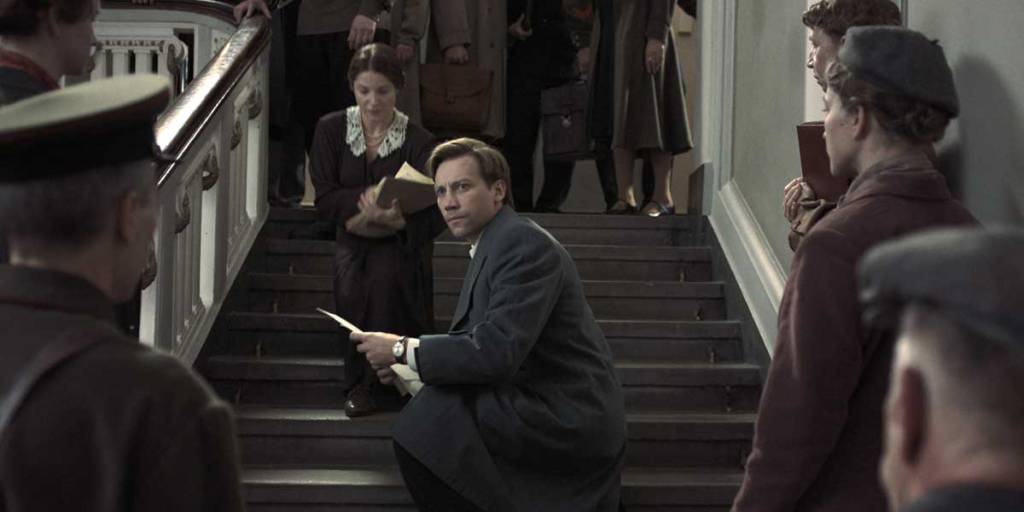
So this week, I’m writing some shorter-than-normal reviews to give you an idea of what’s playing at the CFF this year. There’s a teenaged girl in Toronto trying to broaden her horizons, an ex-con in Saint Johns, trying to follow the straight and narrow, and a middle-aged single dad in Halifax who does ritual dances to the moon.
The Players
Wri/Dir: Sarah Galea-Davis
It’s summer in the early 1990s in Toronto. Emily (Stefani Kimber) is a naive but listless 15 year old girl who wishes her parents would get back together. Her dad moved when her mom returned to University and started sleeping with her prof. But Emily thinks she’s found her calling when she runs into an experimental theatre group in a park, and successfully auditions for a show. But this is no ordinary theatrical troupe. It’s run by a Svengali-like director named Reinhardt (Eric Johnson) and his girlfriend actress Marley (Jess Salgueiro). Rehearsals last for hours, full of primal screams and heavy body contact. Emily is in heaven, viewing herself and the world in brand new ways. Reinhardt pays special attention to Emily, giving her readings in French literature so she can really “understand” the art their creating (an eight-hour version of Hamlet). Even when she spends days at the studio without going home, and strange bruises start appearing on her body, she accepts that it’s part of becoming an actor. But the cultish nature of the group, and Reinhardt’s increasingly dangerous, abusive and sexualized behaviour starts to gnaw at Emily’s psyche. Should she see it through, or get the hell out of that place while she still can?
The Players is a gripping, coming-of-age drama about life as a
young actress in the 1990s, long before the #MeToo movement. It’s first exhilarating and then horrifying. Stefani Kimber is excellent and well-rounded as Emily, through whose eyes the entire story is told. And though it’s director Sarah Galea-Davis first feature, it’s powerful and prescient.
To the Moon
Wri/Dir: Kevin Hartford
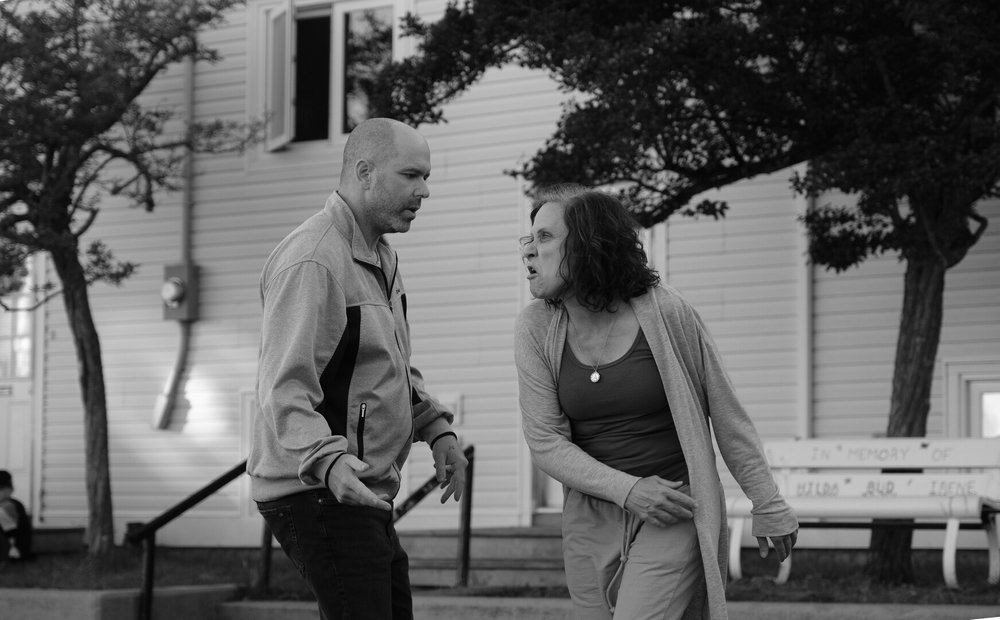
Sam (Jacob Sampson) is a corporate executive in Halfax, Nova Scotia. He has recently moved to a picturesque suburb with his rudderless teenaged daughter Ella (Phoebe Rex); his wife died soon after Ella was born. Since then he has given up all sex and dating. Instead, each morning, Sam and Ella do an elaborate dance ritual, ostensibly to stop the moon from crashing into earth! But everything changes when Sam’s sexuality begins to reveal itself when he meets an attractive man at a lunch spot. Is Sam gay? Ella, meanwhile, auditions for a play at her new school, in the hopes of meeting a guy she has a crush on… but is thwarted at every step by a cruel, bully-girl named Isobel. And all of Sam and Ella’s lives are observed by Claire (Amy Groening) a neurotic and nosy next-door neighbour novelist, facing writers block. Can Ella find
satisfaction at her new school? Can Sam come out as gay, even to himself? And what will happen to their lives if they stop doing the sacred moon dance?
To the Moon is a funny, oddball comedy set in Nova Scotia. It’s the kind of comedy where every character is quirky and armed with a quick witty comeback. It’s cute though hard to believe, but what’s truly hard to believe is the totally unexpected wack ending (no spoilers here.) This may be the first film of Kevin Hartford I’ve ever seen, but it has the blessing of Thom Fitzgerald, the film’s producer, who is an icon in the world of LGBT movies and directed two classics: The Hanging Garden and Cloudburst. If you’re looking for a zany gay comedy from down east, check out To The Moon.
Skeet
Co-Wri/Dir: Nik Sexton
St John’s, Newfoundland. Billy Skinner (Sean Dalton) is a skeet, a tough-guy enforcer who did three years hard time for violent crime. Now he’s out again, back in his sketchy neighbourhood, still ruled by a gangster-poet named Leo (Garth Sexton). But things look worse than what he left. His brother can barely walk, his former crime buddy collects empty beer cans, his mom’s a fentanyl head, and she snorted all the money he was sending her to take care of his teenaged son Brandon (Jackson Petten). But Billy is determined to turn his life around — no more crime or fighting. He’s gets a job mopping floors at the chicken plant, spends time with his son, stays off drugs and attends an obligatory support group. And strangest of all, makes friends with his neighbour Mo (Jay Abdo), a taxi driver, one of many Syrian refugees recently
housed in his neighbourhood. Can Billy shake off the cursed Skinner family name? Or will he revert to life as a skeet?
Skeet is a moving and hard-hitting drama about a ne’erdowell trying to make it in the tough parts of St Johns. Well acted and shot in glorious black and white, it gives us a sympathetic portrayal of the bleak parts of Newfoundland we rarely if ever see. Luckily, director Nik Sexton — who has honed his craft for years at the Rick Mercer Report and This Hour has 22 Minutes — doesn’t know how not to be funny, so there’s enough humour to keep it from being a drag. I guess you could call Skeet Donnie Dumphy’s evil twin.
Great movie.
Skeet won People’s Pick for Best Flick (Nik Sexton) at CFF.
The Players won Best Director award (Sarah Galea-Davis) and Best Acting award (Stefani Kimber) at CFF.
Skeet, To the Moon, and The Players are three of the movies premiering at the Canadian Film Festival, running Monday March 24th through Saturday, March 29 at the Scotiabank cinema in Toronto. Go to canfilmfest.ca for tickets and showtimes.
This is Daniel Garber at the Movies, each Saturday morning, on CIUT 89.5 FM and on my website culturalmining.com.
Daniel Garber talks with Toshiaki Aoyagi about Cinema Kabuki
Hi, this is Daniel Garber at the Movies for culturalmining.com and CIUT 89.5 FM.
When you hear the word “kabuki”, you’re probably familiar with what it looks like, perhaps the costumes and makeup, or its movement. You might think it’s complex, performative or inscrutable. But it’s actually a living and breathing performance art form, a medium still practiced and popular. But, unless you’ve been to Japan, you’ve probably never seen a performance of a kabuki play. Well, now’s your chance.
Cinema Kabuki is a series of three kabuki plays filmed for the big screen, starring some of its biggest stars. They are full of love, romance, tragedy and glory. The first is the salacious-sounding Love Letters from the Pleasure Quarters; the second show is Princess
Sakurahime, Part I, full of death, tragedy, lust and a fair bit of supernatural LGBT content; and the third performance is Lion Dance, Kagami-jishi, a one-man, or one-animal performance.
The series is co-presented by the Japan Foundation and the Consulate General of Japan in Toronto and programmed
by their program officer Toshi Aoyagi, known for his love of the arts, from origami to performing art. This is a rare opportunity to see kabuki in a Toronto theatre.
I spoke with Toshiaki Aoyagi in person at CIUT 89.5 FM.
The films are playing at the TIFF Lightbox in Toronto on Sunday, February 23rd, from 1 pm until the evening.
Blacks, Jews and Irishmen. Films reviewed: The Piano Lesson, A Real Pain, Small Things Like These
Hi, this is Daniel Garber at the Movies for culturalmining.com and CIUT 89.5 FM.
Fall Film Festival Season continues with the EU Film Fest, showing free films from across Europe at Spadina Theatre starting on the 14th.
This week, I’m looking at three family dramas. There’s Black siblings in Pittsburgh, Jewish cousins in Warsaw, and an Irish dad with his five daughters, in… well, Ireland.
The Piano Lesson
Dir: Malcolm Washington
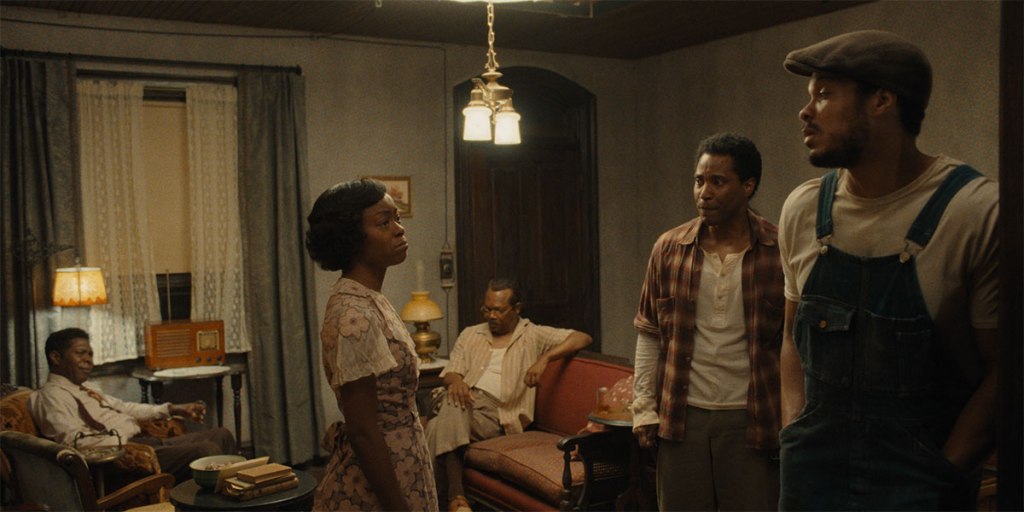
It’s 1936. Boy Willie Charles (John David Washington) and his friend Lymon are driving north from Mississippi with a truckload of watermelons, to visit his sister Berniece (Danielle Deadwyler) in Pittsburgh, Pennsylvania. She’s living with their uncle Doaker (Samuel L. Jackson). Once they sell the melons, Boy Willie plans to take his share of the profit (along with his savings) to purchase Sutter’s land. That’s the same place where his great grandparents were slaves, and where he still toils the land as a share-cropper. This is his one chance to own it. But he’ll only have enough money if he sells the family piano. That’s why he’s visiting Pittsburgh. But Berniece refuses to sell it. Why? She grew up playing that piano, and more to the point it has family faces elegantly carved into the wood itself, dating back to pre-Civil War days. Besides, she says, that piano is haunted… and the ghost is getting meaner. Meanwhile various family and friends, like a trickster and a preacher, are congregating at this house with different motives for being there. Can Boy Willie and Berniece come to terms about the piano? Or will bad spirits — both supernatural and human — ruin everything first?
The Piano Lesson is an excellent filmed version of playwright August Wilson’s drama. Fine acting all around, with Danielle Deadwyler outstanding as Berniece. Now, plays and movies are two different things. Actors emote louder and move bigger on
stage (so everyone can see and hear them). And even the blocking and dialogue is different. Movies are no more real, but different. This Piano Lesson is very much a play. So I was a bit put off by it’s style… until the my brain started watching it as a play, at which point I really liked it.
If you notice a lot of Washingtons here, it’s no coincidence. Denzel Washington is the producer, and actor John David and director Malcolm are both sons of his. Denzel is committed to putting all ten of August Wilson’s Pittsburg Cycle on the big screen to preserve crucial Black American culture. Witness Fences in 2016 and Ma Rainey’s Black Bottom in 2020. The Piano Lesson is a fine addition to this series and should be watched.
A Real Pain
Wri/Dir: Jesse Eisenberg
Benji and David Kaplan are cousins in their 30s, as close as brothers, but totally different. Benji (Kieran Culkin) is loud, gregarious, obnoxious and larger than life. He likes to raise a ruckus and mess things up. He lives alone in Binghamton, NY. David is shy, insecure and withdrawn. He’s married with a small kid and lives in Manhattan. He’s in a constant state of dithering and worrying. They’re travelling together to Poland to explore their family’s heritage. Their grandmother was Polish and a Holocaust survivor.
Benji was very close to her and devastated by her recent death, much more so than David. They’re part of a small tour group, all Jewish. Their guide (Will Sharpe) is a nerdy English guy, very accommodating. Also on the tour are Marcia (Jennifer Grey) who suffers from intergenerational trauma; Eloge (Kurt Egyiawan) from Winnipeg but originally from Rwanda where he survived Tutsi genocide; and a middle-class couple whose family immigrated from Poland generations ago but want to see where they came from. (“We’re Mayflower Jews”, he says).
Their journey takes in cultural and historical sites across Poland, but the closer they get to the concentration camp where their
grandmother was imprisoned, the more agitated Benji gets. He slips into shouted diatribes and lectures, causing scenes within their group and in public places — to David’s acute embarrassment. Can they both make it through the whole tour? Or will one of them drop out?
A Real Pain is a low-key, social comedy — yes, a comedy — about the uncomfortable dynamics within a family. it’s actually pretty funny, No slapstick or pratfalls, rather unexpected squirmy riffs on the two main characters’ personalities. (Like Benji telling David his bare feet are gorgeous, making him stare at them for the rest of the trip.) It’s told in a series of clever vignettes over the course of the trip, all hovering over unvoiced feelings of personal and collective mourning. I’m always suspicious when actors play at directing, but this is no vanity pic. Eisenberg stays suitably subdued, letting Culkin go wild.
I like this movie.
Small Things Like These
Dir: Tim Mielants
It’s winter in a small town in Ireland in the 1980s. Bill Furlong (Cillian Murphy) is a working man who scrubs coal dust off his hands and face each day. But he doesn’t work in a coal mine; he has his own business, built from scratch, selling coal. His wife Eileen (Eileen Walsh) and his eldest daughter handle the finances. One day, he’s making a delivery when he’s alarmed to see a teenaged girl being dragged, kicking and screaming, into the local convent. That’s not right. She may be unmarried and pregnant, but why are they kidnapping that poor girl?
So he steps inside to take a look. It’s the Magdalene Laundries, a Church organization that operates across Ireland, to care for unwed mothers. They put the babies up for adoption, and the girls and young women are trained to work as industrial laundresses. But to Bill it seems almost like a prison, where the girls are treated horribly. When one girl runs over, begging him to help her escape, he doesn’t know to do. The nuns quickly disabuse him of any notions he might have, and rush him out the front door.
But Bill has history. He was brought up in this same town by his own single mum, who chose to stay away from that convent. He was bullied as a child because of this, but he still remembers how his mother — and her employer, an independently wealthy woman — defied the church. He feels he has to do something for that girl. But the nuns have their fingers in every pie; the school, government, they’re even a client of his own business. Should he confront the cold-eyed Sister Mary (Emily Watson) who runs everything? Or should he just worry about his own family, and pretend nothing is wrong?
Small Things Like These is a deeply-moving drama about families, moral dilemmas and the checkered history of the Catholic Church in Ireland. This is the third such movie, after The Magdalene
Sisters and Philomena, but its repercussions are still very much alive. Cillian Murphy — who you probably recognize from Oppenheimer or Peaky Blinders — once again pulls you into the character he plays. He rarely speaks but the emotion in his features really affect you. So if you’re looking for a real tear-jerker, this is the one to watch.
A Real Pain, Small Things Like These, and The Piano Lesson all open in Toronto this weekend; check your local listings.
This is Daniel Garber at the Movies, each Saturday morning, on CIUT 89.5 FM and on my website culturalmining.com.
Films reviewed: Your Monster, Drive Back Home, Conclave
Hi, this is Daniel Garber at the Movies for culturalmining.com and CIUT 89.5 FM.
More Film Festivals are coming up soon, with ReelAsian, Cinefranco and BITS, Blood in the Snow, just around the corner.
But this week, I’m looking at three great new movies. There’s a consortium of cardinals locked in their chambers; a monster discovered in a closet by a NY actress, and a Toronto man forced out of his closet by the police.
Your Monster
Wri/Dir: Caroline Lindy
It’s present day Manhattan. Laura (Melissa Barrera) is a triple threat — she can sing, dance and act. She’s helping her boyfriend Jacob (Edmund Donovan) write his breakout musical, soon to open on Broadway with her in the lead role. But when she gets sick — the big C! — and needs surgery, he dumps her — out of the blue — while still in hospital. And casts another actress (Meghann Fahy), in her part. The surgery is a success but Laura is a total wreck. She’s doubly devastated, both from the sudden end of her five year relationship and for being cheated out of her big break. Her anger, frustration and self pity are all ready to explode. That’s when she makes an unexpected discovery. There’s a monster in her closet!
The creature (Tommy Dewey) is an actual monster, bearded with long hair, sharp teeth and leonine features, who talks like a dude. Apparently he has lived there all her life (she grew up in this house) she just never saw him before. It’s hate and fear at first sight. He threatens to tear out her throat and eat her alive — and tells her to
leave the place and never come back. Meanwhile, Laura shows up for the audition uninvited and becomes the understudy for her own role. But things gradually warm up at home, as Laura and her monster get to know each other. But can she take him to the Halloween Ball? Will she ever get to perform her role on stage? And will her boyfriend ever take her back?
Your Monster is a very cute, rom-com/horror with a fair bit of singing, too. It’s a riff on Disney’s Beauty and the Beast but with a funnier monster and brooding beauty with a lot of anger inside. Melissa Barrera and Tommy Dewey have lots of chemistry while Edmund Donovan is suitably villainous as the bad boyfriend. He looks strangely like Jared Kushner. The movie as a whole is enjoyable and adorable. It takes a funny concept to its extreme. I like the costumes, I like tight script — the whole movie is much better than I expected. There’s a play within the play (half the scenes are rehearsals or performances) but even the “real” home scenes are theatrical. Your Monster will make a great date movie, but just keep in mind there’s a bit of horror within this rom-com.
Drive Back Home
Wri/Dir: Michael Clowater
It’s 1970 in the village of Stanley, New Brunswick.
Weldon (Charlie Creed-Miles) is a mechanic who lives with his mom, his wife and his son in the house he was born and grew up in. One night he gets a long distance phone call from Toronto. His estranged younger brother Perly (Alan Cumming) — an advertising exec who he hasn’t heard from in many years — has been arrested for gross indecency (meaning consensual sex with another man). The cop lays it out. If you can pick him up and take him home, all charges will be dropped. If not, he’s going to prison for five years. So Weldon loads up his pickup truck with enough sandwiches and gasoline for a long trip and leaves his village for the first time in his life. He’s terrified of having to speak French so he takes a circuitous route avoiding Montreal altogether.
He picks up Perly from the cop shop but there is no love lost between them. Perly is a city boy who wears a jaunty cravat while his big brother is a hick, who’s never seen a high-rise apartment or an answering machine. He just wants to drive back home. Perly isn’t a happy camper either: His marriage is a shambles, his career has tanked and his dog is dead, since the cops arrested him. But what’s left for him in Toronto? And so they begin their long journey home. But what secrets will be revealed along the way?
Drive Back Home is a bittersweet drama about family and trauma. It’s done in the style of classic Canadian Road movies, like Don
Shebib’s Goin’ Down the Road, but this one is about leaving the big city. Their trip through rural Ontario and Quebec alternates between scenic beauty, rustic kindness, and vicious, small-town bigotry. Canada was still rife with homophobic hatred at the time — it was only decriminalized a year earlier, and there are disturbing gay-bashing scenes in this film along with a lot of homophobic F bombs.
The two main actors are English and Scottish but both quite good, and maintain decent Canadian accents, gruff for Creed Miles and arch for Cumming. The rest of the cast features prominent Canadian actors, with Clare Coulter as Adelaide, the hard-ass mom, Guy Sprung, as a Francophone farmer, Dan Beirne as a priest and Alexandre Bourgeois as a young guy they meet in a roadhouse bar. Drive Back Home is a moving look at Canada’s bad ol’ days.
Conclave
Dir: Edward Berger
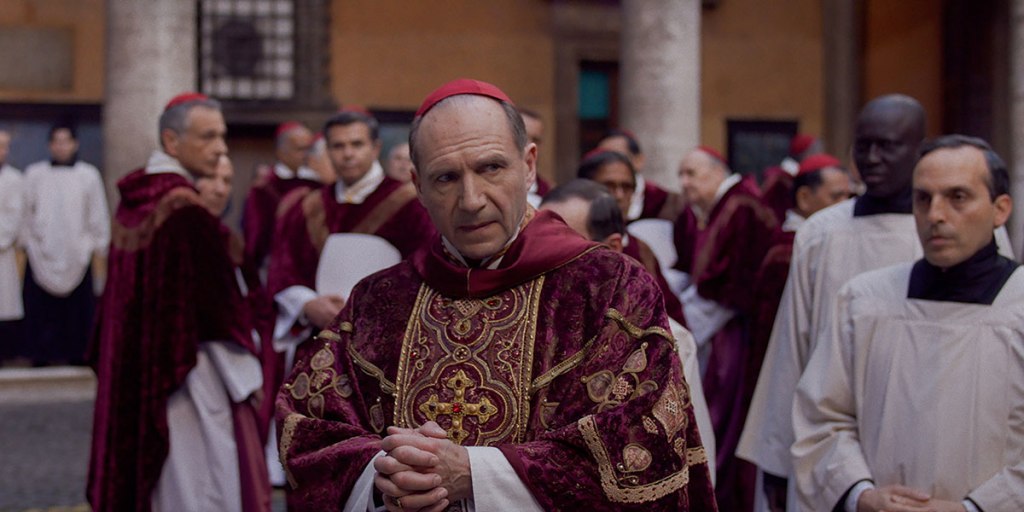
A hush hangs over the Vatican; his holiness the Pope is dead. And the world’s Cardinals, in red robes with white mitres, are congregating to choose the next pontiff from within their group. Ballots are secret, but until one receives 2/3 of the votes, they are literally locked-in, no contact with the outside world. What are their criteria for the next pope? He must be virtuous and humble, but also healthy and strong. And he must be honest as the Pope is infallible. Bishop Lawrence (Ralph Fiennes) is the Dean in charge of the highly secretive process. The most popular candidates: Bellini (Stanley Tucci), a modest liberal reformer, Tedesco (Sergio Castellitto), a bombastic traditionalist, and the highly respected Adeyami (Lucian Msamati). But Lawrence is privy to new information just before the lockdown. A drunken monsignor alleges the Pope fired Tremblay (John Lithgow) just before he died. And mystery man, Benitez (Carlos Diehz), appears out of nowhere claiming to be the Cardinal of Kabul, Afghanistan. And then there are the nuns, including Sister Agnes (Isabella Rossellini) who remain
silent but see and hear everything. Which bishop will they choose to turn the conclave’s smoke from black to white?
Conclave is a stunningly- good thriller about secrets and subterfuge within the Vatican. The constant changes of political alliances as well as shocking revelations will keep your rapt attention until the very end. It presents a Vatican that’s both exquisite and decadent, with black mould spreading on it’s columns. It’s all the work of German director Edward Berger who made All Quiet on the Western Front, with Volker Bertelmann’s powerful music, and fascinating camerawork. It was filmed at Rome’s famous Cinecitta studio who are always deft at recreating the Vatican. I love this constant attention to detail — red sealing wax, Latin prayers, and tortellini soup.The acting is superb, especially Ralph Fiennes. I’ve never been a fan, but he is just sooo good in this role, maybe his best I’ve ever seen. Altogether, this makes Conclave a great night out.
Your Monster and Conclave both open this weekend in Toronto; check your local listings. And Drive Back Home is having its Toronto premiere tonight at CAMH on Queen West as part of the Rendezvous with Madness film fest.
This is Daniel Garber at the Movies, each Saturday morning, on CIUT 89.5 FM and on my website culturalmining.com.
Reduplicatives. Films reviewed: Didi, Sing Sing, Kneecap
Hi, this is Daniel Garber at the Movies for culturalmining.com and CIUT 89.5 FM.
Any given movie can be placed somewhere between truth and fiction — just depends on how close a fictionalization sticks to the true story. But when actors play themselves it tends to shift toward the truth side. This week, I’m looking at three great new movies that deal in dramatizations, semi-autobiographies, and fictionalizations. There’s a group of actors in a maximum security prison, some Irish rappers in Belfast, and a Taiwanese-American adolescent in the Bay Area.
Didi (弟弟)
Wri/Dir: Sean Wang
Chris (Izaac Wang) is a preteen schoolboy in Fremont, California in the Bay Area. He lives with his Mom (Joan Chen) his big sister Vivian (Shirley Chen) and his elderly grandmother Nai-nai (Zhang Li Hua). Missing from this picture is his dad who supports the family from his job in their native Taiwan but whom they rarely see in person. Home life is fractious at best — Chris is waging a long war with Vivian, and their practical jokes are getting increasingly extreme. Nai-nai feels isolated and takes out her anger on his mom, while she just tries to keep the family from falling apart. At school and in the streets, Chris’ best bro is Fahad (Raul Dial), who hangs with the rest of their crew. They’re all Asian-Americans — Filipino, Korean, Indian — but no one else is Taiwanese. He goes to his first house parties, and decides to meet a girl. He has crush on Madi (Mahaela Park) but doesn’t know what to do once they meet. And this is a seminal year. Vivian is heading off to college, and Nai-nai is rapidly aging. His mom pressures him to take tutoring with her friends’ kids, but he can’t stand that group.
When his first try at dating ends ends up in a fiasco, he feels betrayed by his usual crew. So he tries to make new, cooler friends. He approaches three skaters at a skate park and proposes shooting their videos. He doesn’t know the first thing about it, but at least he has new friends to hang with. He reinvents himself and hides his
ethnicity (I’m half, he says). But as his anger, frustrations, insecurities and self-doubt build up, and his whole life feels uncertain, he doesn’t know which way to turn. Can Chris survive the unbearable pressures of adolescence?
Didi (the title means younger brother in Chinese) is a semi-autobiographical coming-of-age story about Sean Wang’s own life growing up in Fremont in 2008. It feels honest and real, full of the angst and heartbreak of youth. It’s full of myspace and early texting, his computer screens filled with nihilistic accidents and explosions. Something about this movie really hit me; yes it’s a coming-of-age story with many of the expected scenes, but without any of the usual cliches. The acting is all-around great and for a first feature this one’s a real accomplishment.
I quite liked this one.
Sing Sing
Dir: Greg Kwedar
It’s Sing Sing, the infamous, maximum security prison, 30 miles up the river from New York City. Divine G (Coleman Domingo) is a long-time prisoner there, known for his acting and oratory skills, as well as his kind and giving nature. He’s also a star of the plays they put on at the prison. And they’re looking for new participants. Like Clarence “Divine Eye” Macklin (played by himself). Macklin shakes down people in the yard and always displays a tough, gangsta image. But Divine G recognizes his talent and encourages him to join up. And at the same time he’s working on the play, he also helps other prisoners appeal for parole or pardons. He himself was wrongfully convicted, but has less luck than the people he helps.
Now prisoners don’t just act there, they also direct, come up with the story, and do the production work as well. But despite his efforts to help him, Macklin brushes him off and puts down the acting exercises. This year’s play is made up of a fantastical amalgam of concepts: pirates, aliens, ancient Egyptians, and Shakespeare’s Hamlet, to name just a few. But obstacles threaten the whole production. Will Divine Eye learn to get along with Divine G? And can this experimental play work?
Sing Sing is a wonderfully revealing and well-acted drama about people putting on a show while incarcerated. It tells, sequentially, all the stages of putting on a play: auditions,
exercises, read- throughs, dress-rehearsals and the show itself. Some of the main characters are played by accomplished actors, like the wonderful Coleman Domingo, and Paul Raci as the director. But co-star Clarence “Divine Eye” Macklin plays himself; the film is based on his own story. Other formerly incarcerated performers play themselves or other prisoners. More than that, it fleshes out the true stories of the characters they play. Some of the actors — huge bruisers with facial tattoos — if you ran into them in a dark alley, you’d probably scream and run away. But they’re actually nice, creative, and intelligent guys who needed something like this. Rehabilitation Through the Arts (RTA) is a highly successful program that gives meaning and purpose to the lives of prisoners. Within three years of being released from prison in New York State, 43% are back behind bars. But for participants in RTA the 3-year recidivism rate is less than 3%. That shows you how important it is.
Despite the desolate, horrific and overcrowded conditions in prisons, this drama will make you feel good about the world again.
Kneecap
Co-Wri/Dir: Rich Peppiatt
(Co-written by Móglaí Bap, Mo Chara)
JJ teaches music and the Irish language to bored students at a public school in West Belfast. He also speaks Irish at home with his girlfriend. They’re interrupted in bed one night by a phone call asking her to translate at the police station. She doesn’t want to, so JJ goes in her stead. The suspect is Liam, a lad in trackies arrested at a rave in the woods, who claims to speak only Irish no English. The detective wants JJ to help with the interrogation. She’s also curious about Liam’s notebook, filled with scrawled poems. Thing is, speaking Irish has a political dimension, too — it’s been an act of rebellion since long before independence from the British. So JJ stealthily sides with Liam, pocketing the book while Liam distracts the detective. JJ loves the rhymes, and wants Liam to rap them, in Irish, to hip hop beats (something never done before). Liam says, never without Naoise, his best pal and business partner.
They’re childhood friends, since Naoise’s IRA dad taught them to speak Irish before he went underground. Now they’re not just besties, they’re the main local dealers in drugs and hallucinogens. They agree to make a go of it, and come up with a name, Kneecap. (Kneecapping was a form of torture and punishment during The
Troubles). Naoise calls himself Móglaí Bap, Liam’s handle is Mo Chara, and JJ is DJ Próvai. But he has to hide his face behind an Irish-flag-striped balaclava, or risk losing his job. Their first gig is at a local pub before a handful of old geezers. But word spreads, and soon enough, kids everywhere are copying their rhymes to JJ’s backbeats.
But not everyone loves them. The police detective is watching them closely, with veiled threats. A vigilante group — Radical Republicans Against Drugs — threaten physical punishment for snorting coke on stage. Naoise’s dad says their performance jeopardizes the cause. And even Liam’s clandestine girlfriend, Georgia — a Protestant no less! — hurls abuse at him as they have passionate sex in her bedroom. Will this Irish rap trio become famous? Or will they die trying?
Kneecap is a fast-moving musical, and a sex-and-drug-filled romp, with a large dose of Irish republican politics. This hilariously fictionalized biopic of the hiphop trio shows the nitty gritty of their sketchy lives. Surprisingly, the three chose to play themselves… and more surprising, they can actually act! They’re good. The rest of the cast are pro actors, including Josie Walker as the cop and Jessica Reynolds as Georgia, Liam’s sex friend. Gerry Adams plays himself, and Michael Fassbender — who was Bobby Sands in Steve McQueen’s gruelling Hunger — plays a similar role as Naoise’s underground Dad.
The film is stylized in presentation, with lots of cute animated details worked into the live action, plus occasional drug-filled fantasies using claymation. Even the violence — be it from guns or police clubs — is fantasy-like not gruesome. Most of the dialogue, and the rap, is in Irish/Gaelige, a once nearly dead language having a modern renaissance. Now, I don’t speak the language, but still, many of the Irish speakers in the movie sounded like absolute beginners, sounding out the words; but at least the three mains were speaking like it’s their native tongue, which is quite remarkable.
I found Kneecap a lot of fun.
Didi, Sing Sing and Kneecap all open in Toronto at the TIFF Lightbox this weekend; check your local listings.
This is Daniel Garber at the Movies, each Saturday morning, on CIUT 89.5 FM and on my website culturalmining.com.
Daniel Garber talks with Amnon Carmi and Ben Ducoff about Yaniv
Hi, this is Daniel Garber at the Movies for culturalmining.com and CIUT 89.5 FM.
It’s an average day at an inner city high school in New York City… and the kids are excited about the auditions for the annual school musical. But everything comes to screeching halt when the tight-ass principal cuts their budget down to zero. Bernstein, the director, is mortified, and his students are crushed. Until his grandpa comes up with a possible solution: gambling… but of a particular type. Apparently, there’s an underground card game at a secret location in Rego Park, where Chassids run a gambling den devoted to a game called yaniv… the
same game Bernstein has played with his grandpa for years. And with the help of fellow teacher, card counter (and compulsive gambler) Jonah, maybe, just maybe, they can earn enough money to put on the play. But to make it work, Jonah will have to dress up like an actual Chassid, complete with fringes and prayer curls. Can they pull off the deception, and win enough money? Or is their downfall spelled Y-A-N-I-V?
Yaniv is also the name of a new film directed by Amnon Carmi and co-written by and starring Ben Ducoff. It’s a fish-out-of-water,
madcap, high school comedy thriller — with a hint of romance — all set on the fringes of New York’s insular Chassidic community. Amnon Carmi is a filmmaker, animator and artist. Ben Ducoff is a dramatist, producer and performer. And they both teach at H.E.R.O. High School in the South Bronx.
I spoke to Amnon and Ben in New York City via ZOOM.
The film is having its Canadian Premiere at the Toronto Jewish Film Festival, on June 6, at 7:30 pm at the Ted Rogers Hot Docs Cinema.
Movies, big and small. Films reviewed: Theater Camp, Afire, Oppenheimer
Hi, this is Daniel Garber at the Movies for culturalmining.com and CIUT 89.5 FM.
Running out of things to do? I’m looking at three good movies this week, both big and small. There’s an historical drama about a scientists confronting the atom bomb he created, a comedy drama set on the Baltic Sea about vacationers facing a potential forest fire, and a comic mockumentary about summer campers whose beloved camp might close down permanently.
Theater Camp
Dir: Molly Gordon, Nick Lieberman
It’s July at a theatre camp in the Adirondacks, simply called “Adirond-acts”. It’s where kids, 5-15, come to learnt the craft of acting, dancing and singing. And they put on actual plays at the end of the summer. The kids love it and so do their counsellors, many of whom used to be campers there. Glenn (Noah Galvin) is the techie stage manager, while others function as costume, voice, and dance masters as well. Most sought after though are the team of Amos and
Rebecca-Diane (Ben Platt, Molly Gordon), who write and direct an entirely new production each summer. And heading it all is the much beloved Joan (Amy Sedaris) the camp’s founder. But when an unexpected accident leaves Joan in a coma, her dumb-as-a-post son Troy (Jamie Tatro) is forced to take over, thus putting the

The cast of THEATER CAMP. Courtesy of Searchlight Pictures. © 2023 20th Century Studios All Rights Reserved.
whole camp at risk. He fires some long-time teachers operating on austerity mode. And when the financial vultures start circling the camp, trying for a cheap buy-out, things look dire. Even Amos and Rebecca-Diane’s show looks like it might not make it through the summer. Is this the end of Theatre Camp?
Theatre Camp is a delightfully squirmy, clever and hilarious mockumentary about acting. It’s suitably diverse, reflecting the actual live New York theatre scene. The fake doc follows the young players through auditions, casting, rehearsals, and behind-the-scenes action, through to the final production. Obviously these kids have talent — and so do the grownup kids. They manage to act as if they are actors who are acting… which isn’t as easy as it sounds. It’s full of surprises and unexpected oddities — like, this is a musical where Ben Platt doesn’t sing a note. I was laughing through most of it, and if a moviegoer like me can appreciate it, avid playgoers will go wild. The Toronto cast of HadesTown was sitting in my row at the advanced screening on Monday night, and they were whooping it up the entire time. If you like “Theatre”, you’ll love Theatre Camp.
Afire
Dir: Christian Petzold
It’s summertime in northern Germany. Felix (Langston Uibel) and Leon (Thomas Schubert) are best friends in their twenties spending a few weeks at Felix’s family’s summer home on the Baltic sea. It’s a beautiful place with a thatched roof, just a quick hike away from a sandy beach. Felix is friendly, fit and personable; he’s working on his photo portfolio to get into an arts program. Leon is a published author, trying to finish his second novel. He’s also a chunky, self loathing schlump, both brooding and frustrated. His inappropriately named novel — Club Sandwich —
is not coming together. And his publisher, Helmut (Matthias Brandt), is dropping by in a few days — what does Leon have to show him? Things get worse when they realize they’re sharing the house with an unknown visitor. Nadja (Paula Beer) is the daughter of a friend of Felix’s mother. She’s working at the ice cream stand in a nearby quaint village. Leon is smitten by her carefree beauty, but tongue-tied whenever he talks with her. Worse still he is kept awake each night by the sounds of Nadja and Devid (Enno Trebs) — the hunky lifeguard at the nearby beach — having loud sex in the
next room. And all of this is taking place as wildfires in the forests that surrounds the beach are igniting all around them, as prop planes futilely drop water bombs on the flames. Will Leon’s love be forever unrequited? Can he survive his wonderfully miserable summer vacation?
Afire is a comic drama about a self-centred writer and the people all around him. Like all of Petzold’s films, Afire is spare, precise and minimalist — he never includes a scene — not even a single line — that’s not crucial to the story he’s telling. I love that about him. He deals with very real issues and their potentially tragic consequences, but told almost like a fable. At the same time, he not afraid to make firm moral judgements but always in a humorous way. The tiny cast is excellent, as is the music and cinematography. I like this one a lot.
Openheimer
Wri/Dir: Christopher Nolan
It’s the 1930s. J Robert Oppenheimer (Cillian Murphy) known as “Oppie” to his friends, is a researcher and scientist at Berkeley. With a distinguished background — he studied at Harvard, Cambridge and Göttingen — he has published crucial papers on physics and quantum mechanics that have changed scientific practices. He hangs out with activists at the University who are trying to unionize the teachers, and lend support to the Republicans in the Spanish Civil war, as fascism creeps across Europe. He also sympathizes with the plight of Jewish scientists in Nazi Germany (not only because his parents are German-Jewish immigrants). Originally from Manhattan, Oppie much prefers the wide- open spaces of New Mexico where his brother lives. His ultimate dream? To somehow combine his two great loves: science and the American southwest. His dream comes true during WWII when he is approached by Groves, a hard-ass army officer (Matt Damon), who wants to set up a top-secret lab. It’s goal? To create an atomic bomb before Germany does. Where? In Los Alamos, New Mexico. Oppenheimer brings in the top scientists to work on it: Feynman, Teller, Fermi, Bohr and many others, living in a jerry-built town in the middle of the desert. But as the prototype nears completion, theory turns to reality. By 1945, Germany has already surrendered, but the US government
needs to drop it somewhere to prove they have the ultimate weapon of mass destruction. How can Oppenheimer both create an atomic bomb and oppose the enormity its use would bring to the world?
Oppenheimer is an sweeping historical drama about the life of a conflicted scientific genius, his lovers, his accomplishments, and a government that turns against him. It covers three parts of his life: as a student and academic, at Los Alamos, and in the cold war/ McCarthy era that follows WWII. The first part concentrates on his life and work — the parties he attends, the women he sleeps with (Frances Pugh, Emily Blunt), and the leftist political meetings he goes to not as a communist but as a “fellow traveller”. The second part captures the tension, stress and claustrophobia of the Manhattan Project, culminating in the devastating atomic test at Trinity. The third part concentrates on his rivalry with Lewis Strauss a right- wing bureaucrat on the AEC, the Atomic Energy Commission (Robert Downey Jr) and a series of congressional appearances and secret trials Oppenheimer is subjected to. But as a Christopher Nolan film, it is expertly edited to include all three stages simultaneously, bouncing back and forth, while proceeding chronologically, throughout the picture. And punctuated, from the beginning, with incredible animated images of the devastating fireball an atomic weapon brings.
I’m not a fan of Christopher Nolan’s movies. They’re often overly complicated for no apparent reason, and clumsily including things like time travel dreams and memory. Dunkirk, another historical drama, was exciting but overly nationalistic in its slant. This one avoids almost all of these potential pitfalls, and manages to tell a three-hour, historical drama about science without boring the hell out of the audience. On the negative side, there are so many characters — 40-50 at my count — it’s hard to keep track of who’s
who. These are mainly cameos about famous people (Einstein, Niels Bohr, Truman) played by equally famous actors — Tom Conti, Kenneth Branagh, Gary Oldman, Casey Affleck, Rami Malek, to name just a few — who pop up for a few minutes then go away. And aside from the women Oppenheimer sleeps with, virtually everyone else in the movie (much like Dunkirk) is male. Even so, I think Oppenheimer is Nolan’s best film since Memento — it’s exciting, politically intriguing and visually stunning, from the vistas of horseback riding in a western desert, to the terrifying flames of the atomic weapon. It’s three hours long, but well worth the effort.
Afire is playing now; check your local listings. And Oppenheimer and Theatre Camp both open this weekend.
This is Daniel Garber at the Movies, each Saturday morning, on CIUT 89.5 FM and on my website, culturalmining.com.
On the media. Films reviewed: A Wounded Fawn, Spoiler Alert, Empire of Light
Hi, this is Daniel Garber at the Movies for culturalmining.com and CIUT 89.5 FM.
It’s December, but not everything is about Christmas. This week I’m looking at three new movies with themes set in the arts: there’s a woman who works at a cinema but never watches movies; a serial killer who finds himself part of an ancient greek play, and a writer for TV Guide who thinks his life is like a sitcom.
Co-Wri/Dir:Travis Stevens
It’s a fine art auction in NY City, and the collectors and dealers are in fighting mode tonight. The prized item is a small bronze sculpture from ancient Greece showing the Furies seeking revenge on a prone man. Kate (Malin Barr) gets the high bid and returns home triumphant with the piece in hand. So she’s surprised to see Bruce (Josh Ruben) a rival bidder, show up at her door. His boss still covets the statue and is willing pay double. Doubling her money in 24 hours seems like a good deal. She invites him in for a glass of champagne. But before long, she is dead on
the floor in a pool of blood, and the sculpture — and Bruce — are long gone.
Later, Meredith, another beautiful young woman (Sarah Lind) is excited over an upcoming weekend in the country with her latest paramour. Her last boyfriend was abusive, but her new one seems nice, generous and attractive. And he’s into fine art just like Mer (she works in a museum).They set off for a fun filled adventure at his isolated cottage in the woods. She is thrilled to see the cabin is actually a finished home overlooking a dense forest, and decorated with modern art. But something is strange: she hears a woman’s voice in her ear warning her to leave. And she recognizes the Greek sculpture of the Furies on his coffee table — she authenticated it for an auction just a few weeks ago. (It’s just a copy, says Bruce) What she doesn’t know is that Bruce is a
serial killer… and she might be his next victim. (Bruce is waiting for directions from a gigantic man-owl with blood red feathers who tells him who he should kill). Can Mer fight him off? And where do those strange voices come from?
A Wounded Fawn is a low budget, exquisitely-crafted art-house thriller horror. What starts as a simple slasher, soon turns into a revenge pic about halfway through, where Meredith, Kate and a third victim return as the Furies to visit punishment upon Bruce. What’s really remarkable is how it incorporates greco-roman aesthetics, mythology and theatre into what could have been a simple scary horror movie, to turn it into something totally original. While it’s not always clear whether something happens for real, or just inside Bruce’s damaged brain, it doesn’t matter. A Wounded Fawn is weird and fascinating, either way.
Dir: Michael Showalter
It’s the 1990s. Michael Ausiello (Jim Parsons) is a nerdy gay guy who lives in NJ but works in Manhattan. He grew up obsessed by TV, living his life as if he were a character on an 80s sitcom. Now he’s a writer for TV Guide, where he devotes himself to work and remains perpetually single. Until he meets Kit Cowan (Ben Aldridge) at a dance club — he’s handsome, fit and popular and says Michael is just his type —a tall geek. Kit’s also in the media — he’s a professional photographer. They hit it off, but keep certain secrets to themselves. Kit lives a free-wheeling sex life — he’s not one to settle down. And Michael never came out to his small-town parents (Sally Field and Bill Irwin); he’s afraid they won’t accept him. And he’s afraid to show Kit his apartment. What is he hiding there? His Smurf collection; a veritable fuzzy blue tsunami filling every nook and cranny. But after settling their deferences, they eventually move in together. Most of the Smurfs are packed away, Michael comes out to his parents (they still love him) and they settle into domestic bliss.
Flash forward 15 years, and their relationship is on the rocks; the spark has died and they’ve grown a bit distant toward each other. But everything changes when — spoiler alert! — Kit discovers he has terminal cancer. Can they handle his
imminent death? Will their love be rekindled? And how will they spend what might be their last year together?
Spoiler Alert is a touching dramady about love and loss, based on a true story — Michael Ausiello’s own memoir of his life with Kit. Like the book, the movie begins with the death of Kit in Michael’s arms, hence “spoiler alert”. The director Michael Showalter, previously made The Big Sick, also about a couple and their family facing a serious illness. So is this the gay Big Sick? Not exactly — it’s a new story with a different style, like his version of Michael’s childhood as a sitcom, complete with laugh-track. And there are lots of funny parts. The bigger question is, is Jim Parsons up to playing a dramatic role, or is he forever stuck in peoples’ minds as Sheldon on the Big Bang? In this case, I think he pulls it off. He fits the role and manages to make him quirkily sympathetic. So if you’re into terminal illness comedies, here’s a good one to try on for size.
Wri/Dir: Sam Mendes
Its the winter of 1981 in a sea-side city in southern England. Hilary (Olivia Coleman) is a middle-aged woman who works at the Empire Theatre as the front of house manager. It’s an art-deco movie palace, but like the town, it’s long past its prime. Half the screens are closed and the third floor ballroom has been taken over by pigeons. Hilary is lonely and depressed, on meds, recovering from a hospital stay. Her social life consists of ballroom dancing with old men, and her sex life is furtive encounters with her sleazy, married boss (Colin Firth) in his darkened office.
But her life changes when a young man, Stephen (Michael Ward) is hired to work there. She finds him attractive, ambitious (he wants to study architecture at university)` and compassionate: he nurses a wounded pigeon back to health. He’s mom’s a nurse, from the Windrush generation, but he wants more. Hillary may be his mom’s age but there’s something there. After a few intimate moments they start a clandestine relationship. But Michael’s real ambition is to leave this town — to escape increasingly racist street violence (he’s black), and to become more than just an usher. Can their
relationship last? And if they break up, can the fragile Hilary handle it?
Empire of Light is a romantic time capsule of life in Thatcher’s England. It’s also about the joy and troubles of an intergenerational, mixed-race love affair. And it’s also about sexual harassment and anti-black racism in everyday life. And it’s also about Hillary’s mental illness, including her sudden, manic episodes. And it’s also about the rise of skinheads and the National Front, and the concurrent anti-racist ska revival. And it’s also about the collective friendship that develops among the people working at the Empire theatre. (Maybe too many ands for one movie?)
Like many of Sam Mendes films (which I generally don’t like), it’s pandering and emotionally manipulative and has a meandering storyline, that keeps you watching while it’s on, but
leaves you feeling vaguely unsatisfied afterwards. But the acting is really good, especially Olivia Coleman and Michael Ward, who rise above the movie’s many flaws. Maybe even good enough to make Empire of Light worth a watch, despite all its problems.
Empire of Light and Spoiler Alert both open this weekend in Toronto; check your local listings. And A Wounded Fawn is now streaming on Shudder.
This is Daniel Garber at the Movies, each Saturday morning, on CIUT 89.5 FM and on my website, culturalmining.com.
Potential explosions. Films reviewed: House of Gucci, Resident Evil: Welcome to Raccoon City, Drive My Car
Hi, this is Daniel Garber at the Movies for culturalmining.com and CIUT 89.5 FM.
With all the stress in people’s lives these days, movies are a good place to purge personal tensions by watching other people’s explosive disasters. This week I’m looking at three new movies about potential explosions.
There’s a zombie-infested city about to be bombed to oblivion, a Hiroshima theatre festival facing an explosive personal conflict; and a bombshell in Italy who threatens a powerful family.
Wri/Dir: Ridley Scott
It’s the 1970s in northern Italy. Gucci is a major luxury brand specializing in leather goods. Founded 50 years earlier, it is now in the hands of the second generation. Rodolfo Gucci (Jeremy Irons), an ailing but piss-elegant man who surrounds himself with priceless art, works behind the scenes, He is grooming his smart but nerdish son Maurizio (Adam Driver) to take over. But the law school student shows little interest in the company or the family. The other half is headed by Aldo (Al Pacino) a hands-on guy who heads the company’s American branch, and wants to expand into the Asian market. But he considers his hapless son Paolo (Jared Leto) an idiot. Enter Patrizia Reggiani (Lady Gaga). She’s an accountant at her dad’s trucking business, but has greater ambitions. She meets Maurizio at a party, when she
mistakes him for the bartender, but when she hears the name Gucci, her ears perk up. She wants in. After a few dates it’s true love, but Rodolfo doesn’t want his family name besmirched by a trucker’s daughter (forgetting that his own father who founded the company was not a rich man.) So Maurizzio marries into her family gives up his inheritance, and starts hosing down trucks — the best job he’s ever had, he says. But not for long. Following her TV psychic’s instructions Patricia manipulates and manoeuvres Maurizzio’s family to bring him back into the fold (with her at his side) to claw his way back to the top. And she’ll stop at nothing to get what she wants. But can they survive the troubles yet to come?
House of Gucci is a true crime/corporate family drama about the rise and fall of a rich family… which isn’t that interesting on its own. And I can’t stand an entire movie of American actors putting on vaguely foreign euro accents — we’re supposed to imagine them speaking their native Italian — why the awful accents?
But that’s not why the movie is so much fun. What makes this movie work are two things. One is the amazing fashion and design of the whole movie. Everyone is constantly dressing up— more dresses and purses and tuxes and jewelry than you can shake a stick at.. Even more than this are all the campy, over-the-top characters, chewing the scenery as each one tries to out-do the others. Effete Jeremy Irons, a dazed Salma Hayek, a wonderful Al Pacino, and best of all, Jared Leto, as the hilarious Paolo. Lady Gaga is OK, but can’t compare to the masterful performers all around her. And Adam Driver is the dull straight man who steps back and lets the others shine. House of Gucci is a very enjoyable feast of high-fashion schlock.
Resident Evil: Welcome to Raccoon City
Wri/Dir: Johannes Roberts
It’s the 1990s, somewhere in the US. Chris and Claire Redfield are an estranged brother and sister. They grew up in the Racoon City Orphanage, a creepy place filled with weird dolls and strange creatures that appear late at night. It is run by the Umbrella corporation the worlds largest pharmaceutical company. But Claire (Kaya Scodelario) runs away when she sees something terrible, while Chris (Robbie Amell) joins the local police force. But now she’s back… to warn Chris that something terrible is about to happen. A leak at the lab has let loose a horrible epidemic infecting nearly everyone in the town. But rather than getting sick, this virus
makes your eyes bleed, your hair fall out and you turn into a flesh eating zombie. Or worse (no spoilers). They have until 6 am to fight off these monsters and escape from this hell-hole, or else they, and the rest of the town will be wiped off the face of the earth. They split up; Chris, and fellow cops Wesker and Valentine (Tom Hopper, Hannah John-
Kamen) investigate the Spencer mansion, while Claire, the Police Chief, and Leon, a newby on his first day of work (Avan Jogia) set out from the police station. Will they ever get together? Who will live and who will die? And what secrets do these labs hold?
Resident Evil: Welcome to Raccoon City is a movie based on a video game, plain and simple. There are some good laughs, and a threadbare plot line, but it’s mainly reenacting the game, from the long dark hallways where zombies run towards you, to the dark and scary Spencer mansion. Even some of the camera angles and pans duplicate the game itself. But it’s very cool to see on the big screen scary pitch-black scenes lit only by a lighter and the flash of gunfire revealing zombie faces. That said, it’s more eerie than scary, more action than horror. Not bad, but not much to it.
Dir: Hamaguchi Ryusuke
Kafuku and Oto are a happily married couple in Tokyo. Kafuku (Hidetoshi Nishijima) is an actor and director in theatres, while Oto (Reika Kirishima) is a famous scriptwriter for TV and film. Oto’s ideas come to her at an unexpected time — while they’re having sex. Her bizarre stories are generated in the throws of orgasmic bliss, recited aloud to her husband, so it’s up to him to listen and remind her the next morning of what she said. But everything changes one day when he comes back early from a cancelled flight to Vladivostok. He catches sight of her making love to another, much younger, man in their bedroom. He sneaks
away instead of barging in, but before they have a chance to talk about it, she dies of an unexpected cerebral hemorrhage.
Years later he’s invited to direct a play — Chekhov’s Uncle Vanya — for a festival in Hiroshima. Kafuku’s trademark method is to cast his plays with actors who speak other languages and can’t understand each other. In this one the actors speak Japanese, Korean, Chinese, and even signs language. So they practice under his exacting direction, forced to keep each line perfectly timed. But there’s a twist: the most famous actor in the play is Takatsuki (Masaki Okada) a handsome and arrogant star who says he idolizes Kafuku and his late wife Oto. And he’s the one Kafuku thinks he saw having sex with his wife before she died.
Meanwhile, in line with the theatre company’s rules, all directors must be driven to and from the theatre each day. So Kafuku gets to know the introverted Misaki (Tôko Miura), a young female driver from Hokkaido with a strange story. But as the production nears its premier date something terrible happens, forcing all the main players to reevaluate their priorities.
Drive My Car is a beautiful drama about love, loss, jealousy, and guilt. The movie builds slowly in an exacting manner, as the director and the various actors get to know one another. And the excerpts from Uncle Vanya we see as they rehearse exactly mirror the feelings and thoughts of the characters in the movie. That’s not the only story. There’s also Oto’s own stories she told her husband, and the personal confessions from the driver herself about her dark past. The acting is superb, and the panoramic views, ranging from drives on causeways and through tunnels to footage of a vast municipal incinerator, are breathtaking. The film is based on a Murakami story, with all the weird quirky fantasy combined with mundane realism you’d expect from him. Drive My Car is a long movie but one that is deeply, emotionally satisfying.
House of Gucci and Resident Evil: Welcome to Racoon City are now playing theatrically in Toronto; check your local listings; and Drive My Car has just opened at the Tiff Bell Lightbox.
This is Daniel Garber at the Movies, each Saturday morning, on CIUT 89.5 FM and on my website, culturalmining.com.
Daniel Garber talks with documentary filmmaker Joanne Belluco about Stuck, premiering at Cinefranco
Hi, this is Daniel Garber at the Movies for culturalmining.com and CIUT 89.5 FM.
What do these people have in common?
A writer and storyteller in Toronto; a dancer in France; a stand-up comic in New Brunswick; a theatre director in Sudbury; a cinematographer in Winnipeg; an electronic musician in Northern Ontario; and a brother/sister musical duo in Montreal?
They’re all francophone Canadians who work in the performing arts. And during the pandemic they all find themselves stuck! Stuck à la maison, stuck at home.
Stuck is also the name of a new documentary feature that looks at the effect of the coronavirus — and the restrictions it brought — on these people’s lives and careers.
Stuck was directed by Joanne Belluco, a French-born, Toronto-based documentary filmmaker, producer, writer and journalist.
I spoke with Joanne in Toronto via ZOOM.
Stuck is having its world premiere at Toronto’s Hot Docs Cinema on November 1, at 7:30 pm at Toronto’s CineFranco film festival.


leave a comment