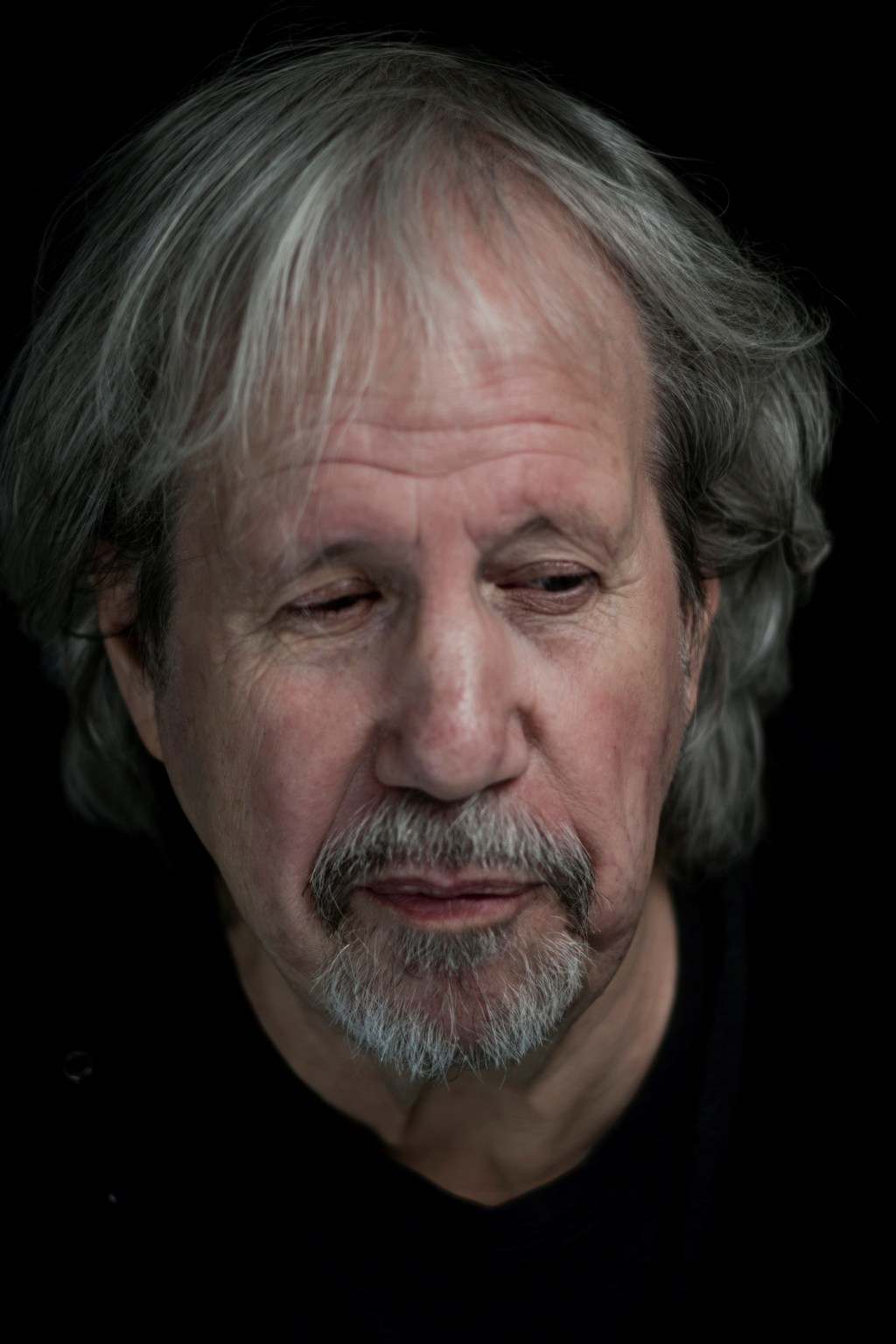
Daniel Garber talks with Alan Zweig about Love, Harold (+Tubby)
Hi, this is Daniel Garber at the Movies for culturalmining.com and CIUT 89.5 FM.
Some people’s biggest fear is of a late-night call from a hospital that someone close to them —a child, a parent, a lover or a friend — has suddenly died in an unexpected accident, something you can’t predict. It’s devastating. But what if that death was by suicide? How do you deal with news like that? Why did they choose to do it? Was it somehow your own fault or something you could have prevented? Well, a new film looks at survivors of suicide loss and the effect it has on their lives.
The film’s called Love, Harold, and it’s a sympathetic and very moving look at how the aftermath of a suicide by talking with the friends, partner or family member of the ones who died. This NFB film is written, and directed by renowned Toronto-based filmmaker Alan Zweig, whose deeply- personal and
intimate documentaries look at people — including himself — facing crises, both major and mundane, in everyday life. His films have won numerous awards including the prestigious Platform prize at TIFF, a Genie and a Canadian Screen Award.
I’ve covered many of his docs and interviewed him at this station, including Fifteen Reasons to Live (2013). And I know Alan off mic, through work, mutual friends… and he used to be my next-door neighbour! Alan is also currently hosting a self-help podcast called TUBBY about weight issues.
I spoke with Alan in Toronto via ZOOM.
Love Harold is the centrepiece film at Rendezvous with Madness on October 24.
This film contains discussions of suicide, and the effects on survivors of suicide loss. If you need support services, please call your local Distress Centre. If you need immediate help, please call or text 9-8-8.
You can listen to Tubby on Left of Dial Media.
Sagas. Films reviewed: All My Puny Sorrows, The Northman
Hi, this is Daniel Garber at the Movies for culturalmining.com and CIUT 89.5 FM.
If you’re looking for new opportunities to see movies in Toronto, there are a lot of opportunities coming up. This coming Wednesday is the annual Canada Film Day, with great Canadian movies playing for free across the country, and at embassies around the world. Whether you’re in Arviat, Saskatoon, or downtown Toronto, go to canfilmday.ca to find the movie closest to you. Also free, if you’re under 25, is the Next Wave Festival at TIFF with workshops, competitions and a well-curated slate of screenings for you to watch.
This week, I’m looking at two new movies — one from the US, the other from Canada. There’s a brooding Mennonite drama, and a swashbuckling Icelandic saga.
Co-Wri/Dir: Michael McGowan (Based on the novel by Miriam Toews)
Elf and Yoli are sisters who grew up in a small Mennonite community in Canada. Elf (Sarah Gadon) is a world-renowned concert pianist, rich famous and glamorous. Her loving husband is always there to lend a hand. Yoli (Alison Pill), the black sheep of the family, was pregnant at 18, and lives with her daughter in Toronto. She’s a published writer but her last novel sold just a few hundred copies. And now she has writer’s block, her husband is divorcing her, and she’s sleeping with a lawyer named Finbar she doesn’t even like. So when their Mom (Mare Winningham) gets a late
night phone call that her daughter had attempted suicide, she’s not surprised. The thing is, it’s Elf, not Yoli, who wants to die.
So Yoli flies back to her hometown to visit Elf in hospital and to convince her that life is worth living. But the visit awakens lost memories of their childhood, including gossipy small-town life, and various encounters with the repressive church leadership. They never wanted Elf to study music or for their father to open a public library. And she’s not the first one in the family with suicidal tendencies — the movie starts with their dad walking in front of a train a decade earlier.
All My Puny Sorrows is a literary look at the lives of two sisters. By “literary” I mean they literally talk like characters in a book, with witty bon mots spilling off their tongues. I mean, why say hey Elf, how’s it going? when you can quote Coleridge and Virginia Woolf instead? The problem is some of the dialogue and voice-overs come across as stilted and wooden, not how real people talk. There are some great scenes in the movie — like a flashback, where their mom expresses her anger at the Elders’ interference by loudly pounding a chicken breast in the kitchen while Elf plays Rachmaninoff on the piano, full blast, to drown out their voices. And I also liked some of the interactions among Elf, Yoli, their mom and their aunt.
But as a whole, the movie doesn’t quite cut it, with too many parts that fall flat.
Co-Wri/Dir: Robert Eggers (read my 2019 interview with Eggers here)
It’s the middle ages in Scandinavia. Amleth (Alexander Skarsgård) is a little prince who lives a quiet life with his mother, the Queen (Nicole Kidman) in a seaside village. But when his father the king returns home, everything changes. He leads the prince into a secret cave to perform sacred rituals. Between farts and belches, Amleth becomes an adult, receives an amulet, and is inducted into the order of the wolves by howling at the moon. But his new status is interrupted by his insidious uncle Fjölnir (Claes Bang). He witness his uncle murdering the king, kidnapping the queen, and ordering the prince’s death, too. His father’s last words: avenge my death by killing my brother and rescuing the Queen. The
little boy fights off his killer by slicing off his nose, and flees in a small boat across the seas.
Years later, he’s a fierce warrior, raiding coastal and riverside towns dressed as a wolf berserker, massacring, looting and pillaging as his team passes through. But a mystical soothsayer orders him to fulfil her predictions and leave the vikings for a new voyage. So he disguises himself as a slave, and climbs aboard a ship destined for Iceland. On board he meets Olga (Anya Taylor-Joy) the blonde slave warrior from his visions, and together they make a pact. But will he ever fulfill his destiny?
The Northman is a brilliant new Icelandic saga about a hero’s wars, battles, magic and family lines. It blends pre-christian legends and rituals with sacred swords, Dwarves, animism and nordic gods. It’s also about reclaiming masculinity, including a spectacularly homoerotic sword fight fought in the nude over flowing lava. (Not joking.) It also has proto-football matches, magical crows and wolves, and psychedelic mushroom.
In order to appreciate The Northman you have to buy into the whole concept, otherwise you’ll reject it as ludicrous (there are a few moments where you wonder what the hell are you watching.) But it’s so beautifully done and carefully crafted that it’s much more than a Game of Thrones episode. This one has depth and meaning. And knowing Robert Eggers, I’m sure he and his crew deeply researched the film — his other ones used things like dialogue taken directly from a 19th century diary. It also includes incredible images you’ve never seen before, like a three-dimensional family tree that appears to him in his visions, that looks like a cross between a Japanese ghost story and a mediaeval tapestry. Just amazing. It’s extremely violent and harshly amoral, so if that upsets you, don’t see this movie. But if you like sword fights, vikings and authentic mediaeval adventures, you’ll probably love The Northman as much as I did.
All My Puny Sorrows is now playing in Toronto; check your local listings; and The Northman opens next Friday.
This is Daniel Garber at the Movies, each Saturday morning, on CIUT 89.5 FM and on my website, culturalmining.com
Wood, Bricks and Rocks. Films reviewed: Black Bear, 18 to Party, Rocks
Hi, this is Daniel Garber at the Movies for culturalmining.com and CIUT 89.5 FM.
This week I’m looking at three new indie movies. We’ve got alienated teens in the 1980s standing by a wall of bricks, a homeless high school girl in London named Rocks, and a fractious ménage a trois in a cabin made of wood.
Wri/Dir: Lawrence Michael Levine
It’s summertime in upstate New York. Allison (Aubrey Plaza) is an actress, a director and a writer. She’s staying in a beautiful wooden house, completely off the grid as she tries to write a new screenplay. But she’s easily distracted from her work: there’s a ramp running down from the house into a wide wooden doc on a placid lake. Then there’s the attractive couple who own the house and live there: Blair (Sarah Gadon), a feminist and former dancer, pregnant with their first child; and Gabe (Christopher Abbott) her bearded husband who holds antediluvian views. But freindy banter over wine and dinner turns to bitter bickering, with Allison caught between the two. Blair is convinced that Gabe is cheating on her with Allison. Tension builds until it explodes… leading to a dangerous outcome.
But wait! It’s not over.
We now watch the same scene again, but this time Allison
and Gabe are married and own the cabin and Blair is the visiting actress. And they’re no longer alone: they’re actually shooting a movie, which Gabe is directing, surrounded costumes, makeup, camera, script, continuity, ADs and everyone else. And Allison (the actress playing the role) thinks Gabe – the director not the character “Gabe” (played by a bearded lookalike) – is fooling around with Blair, both in the script they’re shooting and off-set. So Allison is guzzling Jack Daniels straight from the bottle, the crew is all
stoned on cannabis, and a big black bear is lurking outside. Can they finish making the movie? Which part is real, the first act or the second act? Or is it all just a meta illusion?
Black Bear is a fascinating study of brain-twisting double-think, as well as a slapstick comedy and living room drama. But does it work? I think it does, and that’s because of the great acting by the three. Aubrey Plaza is the queen of indies, always great, and in this film playing a slinky and sly independent woman almost losing it. Abbott and Gadon are equally good, each playing two very different versions of the same role, almost like an exercise in acting school.
Black Bear is a marvelous intellectual exercise that’s also fun to watch.
Wri/Dir: Jeff Roda
It’s September in the mid-1980s in a small town in New York. A group of 14-year-old friends are gathering outside a club where a big party is supposed to happen that night. But the doorman says no entry until the older teens are there. So they meet around the corner in a vacant lot, to catch up after summer vacation. They don’t have to worry about being out late; all the grownups in town are at a meeting about UFOs. There are two computer nerds, two former best friends, Kira and Missy (Ivy Miller, Taylor Richardson), an introverted artist, and best buddies Shel and Brad. But these friendships are built on strict hierarchies. Shel (Tanner Flood) is self-conscious kid who idolizes Brad (Oliver Gifford) a star soccer player. But a girl has a crush on Shel not Brad. Will they make out? Kira and Missy both hold festering grudges. And one friend is missing from
the picture: Lanky (James Freedson-Jackson). Something major happened over the summer, and rumours abound. Is he in prison? Reform school? Or is everything just like it used to be? And hanging over them all is a suicide epidemic, with half a dozen kids at their school dead. There’s bullying, sexual insecurities, internalized anger and alienation. And a gun someone brought that night. Can these fragile friendships last through the evening? And will they actually get into the party?
18 to Party is a social drama that draws on movies from the 80s, sort of a combination of The Breakfast Club (but not as commercial and retrogressive) and River’s Edge (but not as creepy). It’s dressed up with the hairstyles, clothes and music from that era, but the story is all it’s own. It’s shot in a very small area, like a play, where people exit and enter and cross the stage, but the camera seldom leaves the brick-wall area. The characters work, because while some of them fit classic stereotypes, they’re all multi layered. And the film deals with prejudices and themes unique to that era. I haven’t seen any of the actors before but they play their parts very well, especially Ivy Miller as the rebel, Tanner Flood as the main character and James Freedson-Jackson as the loose cannon.
This film’s worth seeing.
Dir: Sarah Gavron
Rocks (Bukky Bakray) is a young woman who goes to an all-girl London highschool. She’s warm, funny, clever and buoyant, with a close circle of friends. Her bestie Sumaya (Kosar Ali) helps her with her first tampon – they’re that close. She lives with her little brother Emmanuel (D’angelou Osei Kissiedu) and their mom, originally from Lagos, Nigeria. (Their dad died years earlier.) But one day, her mom doesn’t come home from the bakery where she works. Turns out she was fired two weeks earlier. Then Emmanuel notices the food in the fridge has gone bad – the power was cut off. And when, coming home from school, she notices some officials at their door, she realizes it’s time to get out of there.
So she heads out, exploring London while asking her school friends for sleepovers. She brings her brother everywhere, who, in turn, carries a little frog in a terrarium that he got from school. She takes care of Emmanuel he protects his friog. But as her money runs out and stress grows, she’s increasingly alienated from her friends. Will the social workers track her down? Will her mother ever come back? And what
about Emmanuel?
Rocks – which debuted at TIFF last year – is an excellent high school drama told in that super-realistic European style. It’s a different sort of coming-of-age drama, with kids facing much harsher conditions than you usually see in movies. But it’s not depressing. While there are some heavy tear-jerk scenes, its mainly funny, surprising and upbeat. It explores underground contemporary London, like sketchy hoods, makeup artists, pompous school teachers, and a fascinating portrayal of a Somali family. And Bukky Bakray is really, really good as Rocks.
I liked this movie.
Rocks, 18 to Party, and Black Bear are all playing theatrically in select theatres today – check your local listings, or are available digitally or Video on Demand.
This is Daniel Garber at the Movies each Friday morning on CIUT 89.5 FM and on my website culturalmining.com.
Lower Budget. Films reviewed: Dead in a Week, Nothing Like a Dame, Clara
Hi, this is Daniel Garber at the Movies for culturalmining.com and CIUT 89.5 FM.
There are lots of big-budget blockbusters and Oscar bait cluttering the theatres these days, but I thought I’d give you a break from all that. So this week I’m looking at three lower- budget films that might otherwise fall through the cracks. There’s a documentary on the hidden side of acting; a dark comedy about the humorous side of suicide; and a scientific romance about the spiritual side of astronomy and quantam physics.
Dead in a Week (or your money back)
Wri/Dir: Tom Edmunds
William (Aneurin Barnard: Dunkirk, Bigger, Bitter Harvest ), a brooding young English writer, is a total mess. He’s lonely and depressed, with a dead-end job, and daily rejection letters for his
unpublished book. Things are so bad he wants to off himself. But he has terrible luck with that too. Each time he tries to kill himself something goes wrong, saving his life. In desperation, he hires an assassin to kill him. “Dead in a week or your
money back.” His assassin, Leslie O’Neil (Tom Wilkinson: Selma, Denial, The Happy Prince ) was the country’s top hitman in his heyday, but no more. His homey wife and the Assassins League president are both pushing for him retire. But this hit could change his luck, putting him over the required minimum murders so he’s stoked and ready to
kill. Everybody’s happy, until…
William gets an unexpected call from a publisher who wants to meet him. Ellie (Freya Mavor: The Sense of an Ending, The Lady in the Car with Glasses and a Gun), an editor, is intrigued by his book. She’s also bright, cynical and pretty. Suddenly William has a reason to live. Trouble is you can’t cancel a contract
once it’s been signed. And through a series of mishaps, other assassins are also on their tail. Are they both doomed? Or will they find love beneath a dark cloud in the picturesque southern counties of England?
Dead in a Week is Tom Edmunds’s first film, and it’s a very enjoyable, twisted comedy. It starts with a ridiculously implausible premise, but manages to ride it to a fun and unexpected conclusion. It twins bland, small town life – budgies and needlepoint – with bloody violence and an almost supernatural “League of Assassins”. And the main actors stick to their oddball characters in absurd situations without resorting to mugging or hamming.
This would make a perfect date movie for an emo and a goth.
Dir: Roger Michel
What do actors Judy Dench, Maggie Smith, Joan Plowright and Eileen Atkins have in common? They are longtime actors of the London stage, and good friends since the 1950s. They are also all addressed as “Dame” a title awarded by the
Queen, the equivalent of Sir for men. This documentary follows them at their retreat in the English countryside as they reminisce about life on the stage, and reveal untold stories about
what really was going on; their homelives and marriages. They talk abut naturalism, stagefright, forgotten lines, and whether they read critics of their work. And what it’s like growing old before the cameras.
I’m not a big celebrity hound, so a lot of what they say
that might be common knowledge to you was all new to me. I never realized Joan Plowright was married to Lawrence Olivier. (How could I have missed that?) I remember as a kid seeing Maggie Smith as Lady MacBeth at Stratford… but until
now I never knew that the reason she was in Canada was she was scared to perform Shakespeare in England. And that all four of them protested the Vietnam War at demos in London.
Nothing like a Dame is an enjoyable look at famous actors chatting. There’s also amazing footage of stage,
film and TV performances spanning their careers. But if you’re expecting salty stories about clandestine romances and shocking backstage sex scandals, you’re not going to find them here. Everything they say is guarded and carefully worded, suitable language for a Dame.
Wri/Dir: Akash Sherman
Dr Isaac Bruno (Pattrick J Adams) is a young astronomy prof at a Canadian University, who works in a lab beside his best friend Charlie (Ennis Esmer: Sex after Kids). Isaac is a sweater nerd with wire rimmed glasses and a neck beard. He hates teaching, preferring to study the stars using Extremely Large Telescopes, continents
away. He feels angry and adrift since his marriage collapsed. His only obsession? His search for evidence of life on a distant planet. And he needs to find it soon, before the WEBB telescope is introduced, opening the universe to amateur star searchers.
But when he loses his research priveleges he hires an unpaid research assistant to help analyze data in his home. But she’s not like his normal students. Clara (Troian Bellisario) is a free spirit in a duffelcoat with long
black hair. She travels the world, carrying a pouch of small stones, one from each continent, to plot out her next journey. She’s a study in contradictions, a highschool dropout who can speaks five languages. And whenever she closes her eyes, she’s overwhelmed with images of galaxies, stars and planets… Can Clara’s spiritual views coexist with Isaac’s die-hard
science-based research? Do they share a cosmic entanglement? And could there be a populated planet like Earth somewhere far, far away?
Clara is a nicely-made first film set in Toronto. It’s filled with amazing telescopic footage of quasars, meteors, galaxies and stars rushing through space, as visualized in Clara’s brain, and as seen through super telescopes. And I’m no astronomer, but the film seems accurate in its reading of space data. This is not a perfect film — some of the characters’ motivations seem too simplistic – but I still liked it.
Clara, Nothing Like a Dame, and Dead in a Week all open today in Toronto; check your local listings.
This is Daniel Garber at the Movies, each Friday morning, on CIUT 89.5 FM and on my website, culturalmining.com.
Cracks in the Foundation. The Continent, Rocks in my Pockets, Rosewater
Hi, this is Daniel Garber at the Movies for culturalmining.com and CIUT 89.5 FM.
From far away, porcelain looks smooth, shiny and flawless, but look too close and fine cracks appear. This week, I‘m looking at movies that expose the cracks in faraway Latvia, China and Iran. There’s an Iranian man who wants to leave prison; three Chinese men who want to leave their island, and a Latvian woman who, at times, wants to leave life altogether.
The Continent
Dir: Han Han
Three young men have lived their lives on a tiny, windswept island off the east coast of China. But they decide it’s time to check out the continent. Like in the classic Chinese novel, they set out on a “Journey to the West. They each have a different reason. Jianghe (Chen Bolin [陈柏霖], who also starred in Buddha Mountain [觀音山] — read my review here) a school teacher an”d eternal optimist, is transferred by the government to a remote location far, far away. Haohan (Feng Shaofeng [冯绍峰]) is a blustering young man dying to see the world. He longs to stand on a determined mountaintop and shout to the world about the size of his dick. And he has a childhood pen-pal Yingying
(Yolanda Yuan [袁泉]), a pretty girl he’ll finally meet face to face. And true love will soon follow. Their third friend, Hu Sheng, is mentally challenged, and depends on the other two to tell him what to do.
But they soon discover life outside their tiny island is bewildering and confusing. They stumble onto a movie set in WWII. And at their first hotel Jianghe is approached by an escort named Sumi, immediately followed by knocks on the door from aggressive police. Bewildered, he plays the hero,
busting out through a barred window and “saving” Sumi from a fate worse than death. Or so he thinks. And a sketchy, Cantonese hitchhiker helps them with their navigating – but can he be trusted? Maybe not, in a place where anything that you don’t hold onto with both hands when you gp to sleep will likely be gone by morning. But it’s also a country with stunning and empty vast vistas, rockets flying to outer-space, and cool and savvy people at every turn.
The Continent is writer-director Han Han’s (韩寒) first film, but he’s far from unknown. His blog is the best-known one in China which automatically makes him one of the most famous people in the world. This is not just a simple, picaresque road movie. It’s also a slyly humorous — if bleak — cautionary tale about life in contemporary China.
Rocks in My Pockets
Wri/Dir Signe Baumane
Signe is a Brooklyn artist, originally from Latvia, with a hidden family past. She wants to find out the truth behind the family matriarch, her late grandmother. On the surface, she was a preternaturally hard-worker, known for her Sisyphean feat of carrying endless buckets of water up a steep mountain. She had retreated to a backwoods cabin with her husband, an eccentric entrepreneur, to escape the difficulties of life in the city. But, after a bit of digging, Signe discovers a streak of depression, suicide and mental illness in her family stretching back three generations. The title refers to her grandmother’s attempted suicide by drowning – she was unsuccessful because she forgot to fill her pocket with rocks. Even if the mind wants to end it all, the body – until the last breath — will fight against dying. At the same time, Signe realizes that the many children and grandchildren managed to survive and succeed despite harsh time. In this film, Riga is imagined as a
place with enormous human faces on their buildings, within a country filled with animistic creatures with long tails, dog ears and goggly eyes that lurk everywhere, just out of sight.
Her odd family history is portrayed in a series of short, animated episodes, using panels of sketched characters moving against brightly-tinted
backgrounds. These are interspersed with super-imposed stop-motion images made of rope and papier-mache figurines. This giuves the whole movie an unusual three-dimensional feel, combining classic drawing with computer-manipulated mixes. And omnipresent is the wry and funny –though at times grating – voice of the narrator telling and commenting on her family history. The director shows the deleterious effects of Soviet era psychiatry – one where cures consist of medicinal corrections to chemical imbalances – and how it makes some people long to “erase themselves” and ceasing to exist. A poignant, fascinating and great animated feature.
Rosewater
Dir: Jon Stewart
Maziar Bahari (Gael Garcia Bernal) is an Iranian-Canadian journalist based in London. He lives there with his beautiful (and pregnant) wife. He is assigned to cover the upcoming elections in Iran, but quickly runs unto trouble as soon as he arrives. He quickly makes friends with a politically active and sympathetic taxi driver who takes him to areas fertile with dissent. But after witnessing a potentially explosive event he is arrested. His charge? Spying.
Ironically, a comic TV interview he had given to an American comedian on the Daily Show is used as evidence of his wrong doing. He is quickly thrown into solitary confinement in a notorious prison. He is psychologically tortured until — says the warden — his will is broken and he will lose all hope.
His family, it turns out, is no stranger to death and imprisonment for
political views under earlier regimes. Both his father and his sister had gone through it, and appear, in his mind, to convince him to hold on. But will he make it?
Rosewater is Jon Stewart’s first film, and it shows it. Stewart is known for the brilliant and funny The Daily Show that skewers mass media from a left-ish perspective. But a feature film is not a three-minute sketch. The movie starts out great with exciting scenes of news-gatering, but it starts to drag, heavily, once it moves to the prison. While it conveys the loneliness and suffering, solitary confinement does not make for good cinema. Bernal and the supporting actors are fine, but the buffoonish prison guard and the sinister administrator seem too much like the evil twins of Schultz and Klink to take seriously.
The Continent played at the ReelAsian Film Festival which continues for another week (reelasian.com), Rosewood played at TIFF this year and opens today in Toronto, check your local listings; and Rocks in my Pockets opened the Rendezvous with Madness Film Festival (which features films on addiction and mental health – with an additional screening tomorrow: go to rendezvouswithmadness.com for times. Also opening: next week at Hot Docs there’s the great documentary called Point and Shoot about a young American traveler/journalist who, despite being non-religious and non-radicalized, nevertheless joins the rebel armies fighting in Libya (listen to my review here). And a surprising story about the Life of Pigeons on CBC’s the Nature of Things.
This is Daniel Garber at the Movies, each Friday morning on CIUT 89.5 FM and on my website, culturalmining.com.
Daniel Garber talks to Emmanuel Shirinian and Michael D. Cohen about their new film It Was You, Charlie
Hi, this is Daniel Garber at the Movies for culturalmining.com and CIUT 89.5 FM.
Poor Abner.
He was once a successful sculptor and a popular art prof, in love with a beautiful girl, best friends with his brother. A bearded bohemian, high on life.
Now he’s a total wreck, lonely and depressed, working as a doorman in a monkey suit. How did he sink into this pit of despair and degradation and can he claw his way back out? Or will he just end it all…?
So asks a new, dark comedy called IT WAS YOU, CHARLIE. It’s a first feature by film
fest favourite writer/ director Emmanuel Shirinian, and stars rising comic actor and ACTRA award nominee Michael D. Cohen as Abner. It opens today in Toronto at the TIFF Bell Lightbox. I speak with Emmanuel and Michael about this film, its story, the character Abner, magic realism, Buster Keaton… and more!
Marital Difficulties. Movies Reviewed: Side Effects, All in Good Time.
Hi, this is Daniel Garber at the Movies for culturalmining.com and CIUT 89.5 FM, looking at high-brow and low-brow movies, indie, cult, foreign, festival, documentary, genre and mainstream films, helping you see movies with good taste, movies that taste good, and how to tell the difference.
After last week’s dip into low-brow genre movies, I’m back with some higher-brow dramas, suitable for viewing by grown-ups. This week I’m looking two enjoyable movies about marital difficulties. One’s a light family drama from the UK about newlyweds, and an American suspense/drama about the effect of prescription drugs on a young couple.
Dir: Stephen Soderbergh
Emily (Rooney Mara) is young woman married to a Wall Street broker who’s in prison for insider trading. She’s nervous but excited – Martin (Channing Tatum) is getting out: they’ll be together again after four years. But she’s getting more and more nervous. They were barely newlyweds when he was locked up and she’s worried about their relationship. Can their marriage just pick up where they left off?
So when things don’t live up to their potential (bad sex) Emily spontaneously steps on the gas in a parking garage and drives her car, full speed, into a concrete wall. In the emergency room she’s treated by a psychiatrist, Dr Banks (Jude Law).
He’s kindly and honest, but also scruffy and middle aged. He’s married to a brittle, ambitious Wall Street trader. So he’s touched by Emily’s stunning beauty, youth and neediness, and really wants to help her out. (Perhaps he even has romantic thoughts?)
So, after checking with her previous psychiatrist, the sultry Dr Siebert, (Catherine Zeta-Jones) he takes on her case and
starts prescribing various medications – Zoloft, Abrixa — to ease depression, others to modify the side effects of the antidepressants, mood stabilizers… But they seem to just make things worse. Then a pharmacy saleswoman gets him to sign on for a lucrative, new drug-testing program – he needs the money.
But what about the side effects of all these drugs? For Emily, they lead to sleep-walking, bizarre mood changes, strange sexual response, and, eventually, to a bizarre, shocking incident. The case explodes onto the front pages, and the hapless doctor is drawn into a complicated drama. Suddenly his marriage is at risk, his career is in jeopardy and his private life is interrupted by droves of reporters. Who’s to blame? The drug company? The psychiatrist? The patient?
Full disclosure: I can’t stand most of Stephen Soderbergh’s recent movies. They’re misanthropic, bleak, drab, depressing. The people in his movies all seem obsessed with the crass problems of everyday life: things like real estate, accounting, medical problems, career advancement… as opposed to love, passion, family, art, religion or morality. They are also often incredibly drab in style – just blah. Especially lately, with terrible movies like The Girlfriend Experiment, The Informant, and Magic Mike. Never mind his five-hour snoozefest about Che Guevara.
I’m not saying he doesn’t know what he’s doing; he does. He constructs formulaic dramas in a spare style. I just don’t like them: they’re disturbing or distressing, not fun at all (not like some of his old stuff, like the terrific Out of Sight.)
But…but…but… That said, I actually really liked this movie! It has enough twists and shocks and plot turns to keep me glued to the screen. It starts as a straightforward, slow-moving drama, but becomes suspenseful, psychological drama, where even the doctor forced to question his own sanity. He also plays around with conventions, turning some on their head. The film and the camera function as unreliable narrators: what you see is not necessarily what happened.
Rooney Mara and Jude Law are great in this movie, and Channing Tatum does his usual job. But Zeta-Jones, on the other hand, stands out like a sore thumb. She’s unbelievably awful. It’s a smaller role, but still, just putting on a pair of glasses and pulling back your hair doesn’t equal “psychiatrist”. She looks and acts like a breathy soap-opera character – nothing like a doctor in a realistic drama. Is it just this movie, or is she always this terrible? Anyway, she’s not enough to ruin the movie. I really liked Side Effects.
Dir: Nigel Cole
Things are great at the wedding. amid the jumble and confusion of two extended families living near Manchester, in the UK. Working-class Atul (Reese Ritchie) hangs out in a movie theatre and still lives with his parents in a council flat, while the much richer Vina (Amara Karan) is accustomed to a posher lifestyle. The newlyweds are quite in love. But, since the wedding, as his mother says, there has “been no planting in the Shalimar Gardens.” With his dad snoring and farting through the thin walls, Atul can’t get it up. And when word leaks out — via a trio of gossipy popcorn ladies at the local Bollywood show-palace — the scandal grows. He hasn’t yet shown his manhood – was the wedding just a failure?
His father, Eeshwar (Harish Patel), is a self-centred, bombastic boor, given to arm-wrestling and bad jokes. He’s
constantly at war with his son. Things aren’t helped by a generation gap and Eeshwar’s own obsession with one-upmanship. Atul’s mother is much more understanding and pragmatic and is trying to get things back to normal. She reminds Eeshwar that their marriage also had a rocky start.
Will father and son ever see eye-to-eye? Will love keep the newlyweds together, or will stress destroy their marriage before it even starts? All In Good Time is adapted from a play by by UK playright Ayub Khan-Din, who did the fantastic East is East and its sequel West is West.
And his was adapted from the 1960’s play All in Good Time (by Bill Naughton, who brought us Alfie), but set within a UK South Asian community. The father and son, the main characters (Patel and Richie) are just great, as are all of the female actors.
This movie is confusing and messy in the beginning, and takes a while to get into its groove, but when it does, it’s just delightful. Director Nigel Cole (known for Made in Dagenham and other small English dramas) is in fine form. All in Good Time is a very enjoyable romantic family drama.
Side Effects and All in Good Time both open today in Toronto. Also playing and worth checking out are some great documentaries, including West of Memphis, a epic documentary that tells the decades long story of three teenagers in small-town Arkansas who were arrested and charged with the satanic murder of a teenager… This is a harrowing case where the DA’s evidence consisted mainly of the fact that they wore black and listened to heavy metal bands. Check your local listings for times and screens.
This is Daniel Garber at the Movies, each Friday morning on CIUT 89.5 FM and on my website, culturalmining.com .
June 8, 2012. Bodies. Movies Reviewed: Marina Abramovic: The Artist is Present, Harakiri: Death of a Samurai, Guilty of Romance
Hi, this is Daniel Garber at the Movies, for culturalmining.com and CIUT 89.5 FM, looking at high-brow and low-brow movies, indie, cult, foreign, festival, genre and mainstream movies, helping you see movies with good taste, movies that taste good, and how to tell the difference.
Does art bore you? Do foreign movies with subtitles seem dull? Well, you’re in for a shock. Three shocks actually, that should rid you of that notion. This week I’m looking at three movies about people who use and abuse their bodies. One’s a Japanese drama about men who stick sharp objects into their stomachs in the name of honour; another is a Japanese dramatic thriller about two women who sell their bodies, but only for the thrill of it; and one is an American documentary about a woman who throws her naked body, full-force, at immobile naked men – but purely for artistic reasons.
To start with, here’s an art movie — well, a movie about art — that definitely won’t put you to sleep.
Marina Abramovic: The Artist is Present
Dir: Matthew Akers
Marina Abramovic is a beautiful artist in her 60’s, born in Belgrade to parents who were hardcore Communists who fought in the resistance in WWII. They were cold, militaristic and authoritarian, so she chooses to go in the opposite direction with her art. She becomes a pioneer in radical performance art, beginning in the 1970’s. She’s famous for using her own body — usually naked — as the medium of her art.
She cuts herself, burns herself, starves herself, hurts herself, throws herself against immutable objects, and whips herself. But she brings the military discipline with which she was raised to sustain these extended and painful performances.
Then she meets another artist in the Netherlands who does similar things, and they fall madly in love. Now she has a performance partner — Ulay — and a life partner. They slap
each others faces, over and over, throw themselves body first into one another… things like that. And always naked, of course.
But all things end, and when they break up, she is devastated, both emotionally and artistically. She had always handled the artistic side but not the “business” side of art…
Flash-forward to the present. She has transformed herself into a hugely successful art superstar – mow as much a theatrical performer as an ideological artist — and the Museum of Modern Art decides to do a retrospective. But she’s in her sixties, so she gathers a whole gang of young artists with nice bodies in a performance art bootcamp and meditation lodge! They’re going to re-perform her old pieces using their new bodies.
And Marina herself sets up a (now famous) performance at MoMA that consists of her sitting in a chair in a huge, empty white hall for long periods of time in a chair, facing another chair. The viewers sit across from her, one by one, and look deeply into her eyes — no speaking, no moving, no eating… just staring, completely still. It becomes more and more popular, until it reaches the point where people are camped out on the sidewalk overnight, coming into New York City from distant places. Marina as superstar. The movie follows her past (using period footage and photos), her ascent to celebrity-hood, her amazing performance, and her behind-the- scenes look at constructing this work. It’s equal parts art, fame, emotion and philosophy… with just a bit of hucksterism.
If you’ve never seen a movie about art (or if fine art intimidates you), this is a good one to start with — it’s exciting, sexy, entertaining, funny, shocking and totally accessible. Great movie!
Harakiri: Death of a Samurai
Dir: Takashi Miike
Did you know that Samurai were basically bureaucrats and tax collectors not fighters? Around 1600 after the Battle of Sekigahara unified the country under the Tokugawa military government, the samurai who had fought on the losing sides often found themselves as Ronin – samurai without a master. That left them penniless, aimless, and with a great loss in status.
So this movie’s about a poor ronin named Hanshiro
who shows up at the House of Yii saying he wants to commit harakiri (ritual suicide). That’s where a samurai takes his smaller sword and slices up his belly until he dies… at which point, another samurai chops off his head… nice.
But what does the Daimyo’s rep say? “Oh no, not again…!” You see, a younger ronin named Motome had tried the same thing not long before. He was a scammer who just wanted a few coins as a payoff for not bloodying up their nice courtyard. But they called his bluff – go ahead and kill yourself. But he didn’t have the short sword – he pawned it and replaced it with a bamboo replica. But the cruel samurai says,
doesn’t matter – and there’s a long painful scene where they force this young ronin to go through with this, to pierce his belly with a piece of broken wood! …ouch!
Anyway, back to the present, they tell this story and tell the older ronin he can go home, no problem. But here the plot turns…. Turns out he’s that younger ronin’s father in law, and he came to prove a point: that the samurai code, the vaunted code of warriors, that bastion of dignity and honour, is just a load of crap.
The movie culminates in a scene that wouldn’t be out of place in a Zatoichi (the blind swordsman) pic!
My description can’t do justice to this movie (and I don’t want to give it all away), but it’s a dark, tense drama and a damning challenge to authority and corruption, showing how false and hollow the whole thing is. It’s directed by Takashi Miike, who is known for his violence and excess, but is amazingly restrained here, with an almost Shakespearean take on a 17th century Japanese samurai drama.
Guilty of Romance
Dir: Sion Sono
(Restricted to age 18+)
Tokyo police detectives find a bloody scene in a love hotel, and want to uncover this mystery. But what a mystery it is!
It starts with a new bride who has a dictatorial husband. She’s a sexually naïve, traditional Japanese housewife who wears a kimono, with her hair pulled back, bows to her lover, and when he leaves for work in the morning (he’s a novelist) she dutifully turns his slippers around so they’ll be ready for him when he comes home.
Then one day she decides to take a job in a grocery
store dressed in a little hat and a uniform offering sausage samples on toothpicks to passing shoppers. Soon, a woman claiming to be a modelling agent convinces her to pose for photos. This soon turns to nude photos, then to hardcore porn on video.
She is shaken by the experience, but also sexually awakened. She starts picking up guys she meets in central Shibuya, and gradually drifts into the nearby love hotel district (Maruyama). There she meets a crazed streetwalker who takes her under her wing, and tells her about a mythical, Kafkaesque “castle” where all things will be made clear to her.
So she becomes almost a disciple to this mysterious fiery-eyed and raven haired woman who tells her never, ever to have sex for free… unless she is with the one who loves her. But she soon finds out, this scary streetwalker is, like her, living a double life! She’s actually a well-known university professor who lectures to packed halls by day, but trolls the alleys in disguise by night.
But there’s still further deceit in their secret lives. Guilty of Romance is a violent, sexually explicit exploitation drama, based on a true story.
The director, Sion Sono, is amazing in that he takes very recent pulp news stories, and turns them into way-over-the-top funny, gory, emotionally fraught, and semi-pornographic sexual movies. I’ve seen three of his recent movies, and they’re all amazing. Not for the faint of heart, but if you like female-centred shock movies, with terrific pot-boiler stories and super creepy characters (like the grandmother who speaks ultra politely but drips venom with every phrase), this is the movie for you.
Guilty of Romance plays tonight, and Harakiri on Sunday – with a live Taiko performance — both as part of the Toronto Japanese Film Festival (which runs until the 20th at the JCCC); and Marina Abramovic: The Artist is Present opens next week – check your local listings. The CFC World Short Film Festival is on right now through Sunday, and NXNE, Toronto’s enormous music, film, and digital festival, begins on the 13th, next Thursday.
This is Daniel Garber at the Movies each Friday morning on CIUT 89.5 FM, with podcasts and complete reviews available on my web site CulturalMining. com.
February 17, 2012. Movies Reviewed: Monsieur Lazhar, Sholem Aleichem: Laughing in the Darkness
Hi, this is Daniel Garber at the Movies, for culturalmining.com and CIUT 89.5 FM, looking at high-brow and low-brow movies, indie, cult, foreign, festival, genre and mainstream movies, helping you see movies with good taste, movies that taste good, and how to tell the difference.
I’m back again…
This week I’m looking at two movies about men trying to preserve a culture. One is a drama about an Algerian refugee working as a schoolteacher in Quebec who turns toward his French childhood education for solace; and the other is a documentary about a sophisticated Yiddish writer who turned toward memories of his childhood in a small village as the inspiration for many of his stories.
Monsieur Lazhar
Dir: Philippe Falardeau
Two public school kids, Simon and Alice (Sophie Nélisse and Émilien Néron) make a shocking discovery one morning. Their teacher hanged herself the night before in their classroom. So now there’s a class without a teacher, a whole bunch of kids recovering from the trauma, and no one willing to take her place. So in walks Bachir Lazhar (Fellag) to the principle’s office and offers his services. He says he taught for 19 years in Algeria and would be honoured to take over the class. And for lack of an alternative, he’s the new teacher.
But he’s a recent newcomer to Canada, trying to qualify for refugee status after a horrific event back in Algeria. He’s recovering from one trauma while the kids in the class are getting over another one. He was raised in an Algeria that had been annexed by France, so he’s steeped in a lost culture, in a country on the brink of violent collapse. The kids don’t get him.
He regiments the desks in neat rows – no circles for him; and he does old-school stuff — like reading Balzac for dictee – and making the kids memorize conjugations and recite them in class.
He doesn’t understand all the new rules. No hitting students – in fact no touching students at all, anywhere, ever. Never talk about the teacher’s death – leave that to the psychologist. But the kids are clearly ridden with guilt, and Bachir wants to get through to them. Maybe by letting them lose their baggage he can release some of his own.
But can he get through to them with his old-fashioned, rigid and formal ways? Will he purge his own loss and let them – especially Simon And Alice – recover from theirs?
Monsieur Lazhar is a really good, complex, and subtle movie (nominated for the Best Foreign Film Oscar.) The French actor Fellag manages to convey Bachir’s grief and compassion while remaining reserved, formal and secretive. It’s also quite funny – its not a drag-you-down movie. It was directed by Philippe Falardeau, who also made another great movie just a few years ago, also about a troubled kid in Quebec: C’est pas moi, je te jure! You should try to catch that one, too. Falardeau is amazing at capturing kids on film, with complete characters. Monsieur Lazhar is nominated for an Academy Award for Best Film in a Foreign Language, and for Genie Awards for Best Picture, Director (Falardeau) , Actor (Fellag), Supporting Actress (Sophie Nélisse), Adapted Screenplay, Cinematography, Editing, Music, and Sound.
Sholem Aleichem: Laughing in the Darkness
Dir: Joseph Dorman
Sholem Aleichem was the penname of a Yiddish writer who lived in the Pale of Settlement in Tsarist Russia. This is the long but narrow area stretching from the Baltic to the Black Sea where Jews were permitted to live. Sholem Aleichem – a pen name meaning Mr how-do-you-do — wrote the classic tales of Tevye the milkman and the others in the village of Kasrilevka. He’s best known today because his stories were adapted into the famous musical Fiddler on the Roof. But he was also one of the pioneers who attempted to turned a looked-down-upon vernacular language, Yiddish, into a font of literature and high culture.
What I had never heard before, and which the movie shows, is that he was a really interesting character, that goes against the homey, nostalgic stereotype of his writing. He was a dandy, a dilettante, and a stock market gambler in Kiev, discussing poetry in cafes and squandering a small fortune.
This excellent documentary tears away the mythos of the renowned writer and exposes both his dark
and embarrassing moments as well as his unknown triumphs. It uses black and white photos, playbills, posters, and even an actual audio recording of the writer voice, along with found footage and snapshots from the era to set the mood. Most interesting to me is the way the documentary situates the author, not just as some independent hero, but as one character in a broader political, historical and sociological context.
Monsieur Lazhar is playing now, and Sholem Aleichem: Laughing in the Dark opens next week in Toronto. And of course the documentary, Puppet opens on the 17th. Also coming soon in Toronto and Vancouver is a series of Kabuki performances captured on film, featuring the legendary onnagata actor, Tamasaburo, who plays only female roles, in the Heron Maiden. Check out the Japan Foundation for more information.
This is Daniel Garber at the Movies each Friday morning on CIUT 89.5 FM, and on my web site CulturalMining.com.


leave a comment