By Women. Films reviewed: Angela’s Shadow, Samia, Oh, Hi!

Hi, this is Daniel Garber at the Movies for culturalmining.com and CIUT 89.5 FM.

If you’re feeling overwhelmed by big, blockbuster movies, try something smaller. Cinecycle is having a free, open screening of super-8 films this Sunday. Bring your own or watch other people’s — just no videos, please.  Also on now at the TIFF Lightbox is Marlee Matlin: Not Alone Anymore, a surprisingly intimate documentary about the Oscar winning deaf actress — a really great doc.

Speaking of films directed by women, this week I’m looking at three more movies wth female directors. There’s a girl in Somalia running in circles, a woman north of Ottawa pulled in two directions, and a couple in New York… whose relationship is tied up in knots.

Angela’s Shadow

Co-Wri/Dir: Jules Koostachin

It’s the 1930s in Ottawa. Angela (Sera-Lys McArthur) is a happy middle-class housewife who lives with her husband Henry (Matthew Kevin Anderson) an aspiring journalist.  She’s pregnant with their first child.  But everything changes when an urgent letter arrives from her childhood nanny Mary (Renae Morriseau). She writes that she must see Angela on her reserve (Mary is Cree) before the baby is born. While Angela is hesitant, Henry is gung-ho. He loves a good adventure, and hopes to get some good shots and news scoops in Canada’s North. But once they get there, Angela is separated from Henry — she to meet the elders and he to try his hand at “native style” hunting.

Angela is taken to a sacred area where she discovers the secrets of her past: she was born to a Cree mother and an Irish father, and when both parents died, she was sent to live with her father’s sister in Ottawa. Turns out, Mary is actually her aunt, too, on her mother’s side. This was kept a secret to keep Angela safe from the  Residential Schools. And they tell her the meaning of a little girl she keeps imagining.

Henry, meanwhile, is taken on a hunting trip by two young men: Isaiah and Malachi, Angela’s cousins (Asivak and Mahiigan Koostachin). Henry is eager to learn about there way of life, but understands everything from his Christian upbringing. So when he starts to see visions after a sweat lodge, something snaps. And while Angela welcomes her visions and feels an attachment to the land, Henry feels a deep fear and repulsion, and an urgent need to take his wife out of there. Can they reconcile their differences? Or will their visions prove hazardous to their health?

Angela’s Shadow is an historical drama about a clash of cultures between Anglo and Cree, Christianity and spirituality, and education in residential schools vs the passing on of outlawed culture, language and rituals. Visually, it’s quite lavish, with period costumes, sets, and lush camerawork, a la Murdoch Mysteries. It’s also meticulous in its portrayals of indigenous culture. I found the acting a bit over the top in the beginning, but it redeems itself once it turns into a psychological thriller. 

Yes, Angela’s Shadow is a bit melodramatic, but, hey,  I like melodramas. This is an engrossing indigenous story about Canada’s chequered history.

Samia

Co-Dir: Yasemin Samdereli, Deka Mohamed   

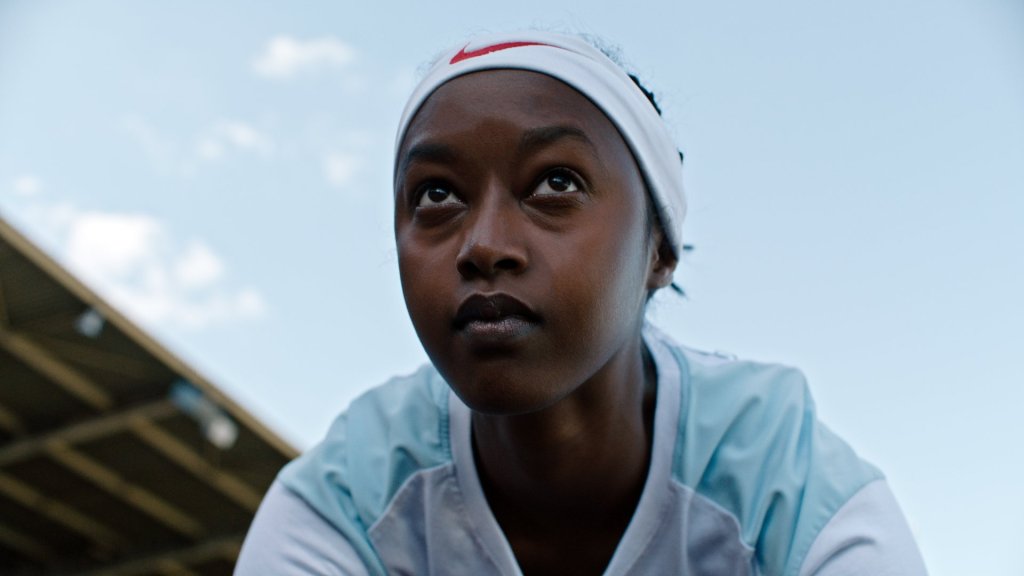
Samia (Riyan Roble) loves to run. Though only a little girl, she places among the top 10 runners in her town’s annual race. She lives in a walled compound with her strict mother, her fun-loving dad, her conservative brother Said, and her singing sister Hodan. She’s also good friends with Ali (Zakaria Mohammed) who is almost like a brother to her; his family shares their compound. But he’s a terrible runner so he appoints himself Samia’s coach.Like Rocky, they train outdoors, racing around corners and down back allies. Their goal? To make her the fastest girl in town! And as they grow older, the teenaged Samia and Ali (llham Mohamed Osman, Elmi Rashid Elmi) discover there’s a world beyond their city, beckoning Samia toward international competition.

But Somalia is unstable, with armed military tanks roaming the streets. Fundamentalists demand all girls wear a head scarf — but what about my running? asks Samia. Regional differences are on the rise and so are religious fights. Local armies and child soldiers are popping up everywhere, making it a dangerous place to live. Can Samia fulfill her dreams in an unstable country? Will she ever make it to the Olympics? And will her family support her if she does?

Samia is a bittersweet, naturalistic biopic inspired by true events. It’s told in a series of extended flashbacks from her past remembered by an adult Samia, now fleeing Somalia for Italy, via Libya. This is an Italian film, co-directed by a Kurdish German, and an all-Somali cast. It reminds me a lot of Io Capitano (review here) from a few years ago, though this one, while touching and sympathetic, is less triumphant. It’s also rare — the first movie I’ve seen set in Somalia with Somali actors.

I liked this movie.

Oh, Hi!

Co-Wri/Dir: Sophie Brooks

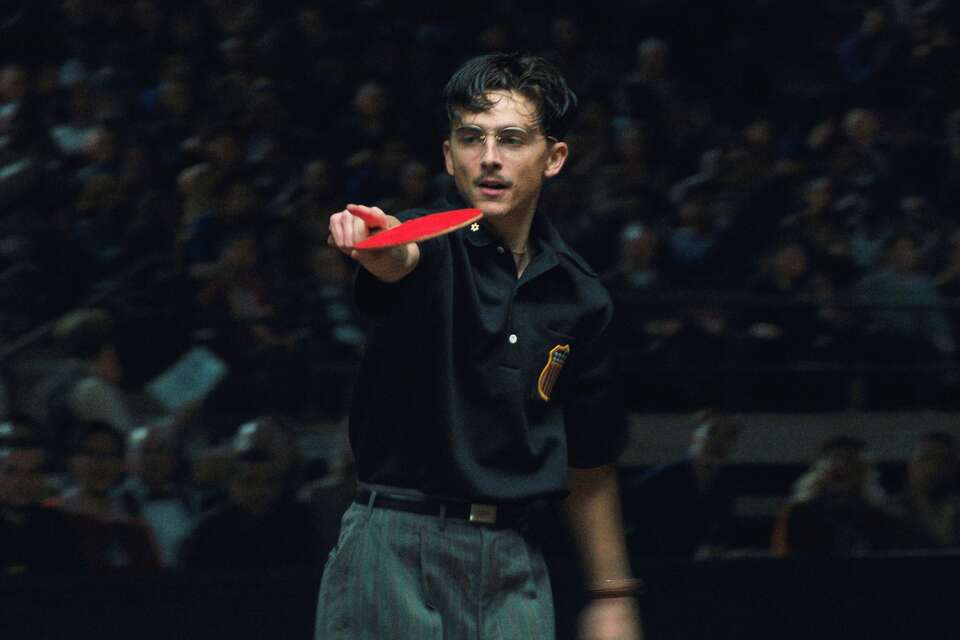
Iris and Isaac (Molly Gordon, Logan Lerman: Indignation, The Lightning Thief) are a young couple in their twenties staying at a BnB in upstate New York. She is pretty, sexy and fond of practical jokes. He is good looking, chill, and open-minded. They’ve been dating for three months, but this one looks like a turning point. Isaac has perfectly arranged everything for the weekend: a beautiful house to stay in with a lake in the back, and delicious meals he cooks for her. And the sex! They are adventurous and passionate together. So when they uncover some bondage material in closet, they decide to try it out. Isaac agrees to be chained to the bed and it works out better than either of them hoped. But somehow the post-coital cuddling leads to some discussions, which reveal she thinks they have a monogamous long term relationship, while he thinks she’s fun and friendly but just another sex partner with no commitment. And all of this happens while he is still tied to the bed.

Iris does not take this lightly; she feels betrayed. Isaac, on the other hand is genuinely frightened with her jokes about wanting to stab a previous boyfriend to death. And as time passes with little progress, both sides begin to panic. If she lets him go, will he call the cops and have her arrested for kidnapping? Is his life in danger? And when Iris’s best friend Max (Geraldine Viswanathan) and her boyfriend arrive to find Isaac still tied to the bed, it gets even more complicated. How will they ever get themselves out of this colossal mess?

Oh, Hi! is a hilarious sex comedy about trust, relationships and a date gone wrong. While I found some of the relationship psychologizing wasn’t fun, it only made up a small part of the movie. I’ve never seen Molly Gordon before —  she co-wrote the script — but she has this uncanny ability to suddenly switch from gorgeous sex-goddess to google-eyed maniac. Logan Lerman is more of the straight man, but carries off his laid-back role quite nicely, considering he’s tied to the bedpost for much of the film. The story itself — along with the unexpected  twists it takes — keeps you squirm-laughing almost all the way through. Though the audience at the screening I saw was maybe 80% women (who really seemed to like it), I think there’s lots there for men to think about, too.

This is a very funny movie.

Angela’s Shadow, Samia and Oh, Hi! all open this weekend in Toronto; check your local listings.

This is Daniel Garber at the Movies, each Saturday morning, on CIUT 89.5 FM and on my website culturalmining.com.

Americans abroad. Films reviewed: Queer, September 5, Oh Canada

Posted in 1950s, 1960s, 1970s, Addiction, Canada, Dreams, drugs, Germany, Journalism, LGBT, Mexico, Resistance, Sex, Sports, TV, US, War by CulturalMining.com on December 14, 2024

Hi, this is Daniel Garber at the Movies for culturalmining.com and CIUT 89.5 FM.

This week I’m looking at three new movies set in the 1950s, 60s and 70s, about Americans abroad. There’s a novelist in Mexico City, a TV sportswriter in Munich, and a documentary filmmaker in Montreal.

Queer 

Dir: Luca Guadagnino (I am Love, A Bigger Splash, Call me by your Name, Suspiria)

It’s the 1950s in Mexico City. William Lee (Daniel Craig) is a middle-aged American writer addicted to heroine who hangs around local bar called Ship Ahoy. If he doesn’t get completely drunk he might spend the night with a man he meets. He’s friends with other flamboyant ex-pats, especially Joe (Jason Schwartzman) a portly, bearded man who shares Lee’s lascivious predilections. Lately, he has had his eyes on Eugene Alerton (Drew Starkey), an ex-GI who spends most of his days playing chess with an older red-haired woman. Eugene is no “queer”, but is up to talking with Lee.

After repeated drinks, and some opiates he eventually shares Lee’s bed in his seedy rental. Lee is smitten, Eugene content. Later the two head south in their quest for ever more potent drugs culminating in a journey toward the ultimate psychedelic experience. They end up in the Ecuadorean Amazon, in a remote shack guarded by a vicious but slow-moving three toed sloth. Inside, a mysterious doctor (Lesley Manville) holds the answers to all their questions. Is Eugene the man of his dreams? Will they ever reach hallucinatory nirvana? Or is life just an illusion?

Queer is a bizarre, sex-and-drug-filled psychedelic fantasy. It’s divided into three chapters: their meeting in Mexico City; their journey south; and their adventures in Ecuador.  It’s adapted from William S Burroughs’ semi-autobiographical novel written in the 1950s but not published for another 34 years. It swerves wildly between actual memoirs and pure imagination. Burroughs was a writer in the beat movement, and was married and had a son with another writer Joan Vollmer (perhaps she’s the red-haired woman Mary in the film).

The thing is, Queer is not a grave, serious movie, it’s a high-camp comic fantasy. Psychedelia has always been difficult to film, and there’s a fine line between the profound and the ridiculous. Some scenes, like the unfortunate semi-nude, interpretive dance sequence, falls on the (unintentionally) funny side. Others scenes were kinda cool. It’s a beautiful film to watch, for its music, set, costumes and art direction. Shot entirely in Rome’s Cinecitta, it’s never meant to look realistic. Daniel Craig plays Burroughs not as the usual chill junkie observer, but as a panting and sweating horndog, with bulging eyes, nearly choking on his own lust. 

If your looking for a sentimental romance a la Call Me by You Name, or a deeply profound meditation on psychedelic trips, this ain’t it. But if you just want a weird and funny drug-infused dream-filled movie with lots of soft-core gay sex, you’ll probably have a great time.

September 5

Co-Wri/Dir: Tim Fehlbaum

It’s September 5, 1972 at the Munich Summer Olympics and the crowds are roaring. Americans are glued to their sets watching the US cleaning up, with swimmer Mark Spitz winning an unheard of seven gold medals.  ABC is the perennial loser of the top three networks. So their sportscasters are thrilled to have won exclusive coverage rights. The team behind the cameras are hard at work. Geoffrey Mason (John Magaro) is the newbie, trying to prove his chops. His boss Marvin (Ben Chaplin) wants things to run smoothly, and his boss’s boss (Peter Sarsgaard) is thinking of the bigger picture. Jacques (Zinedine Soualem) is their French cameraman with Marianne (Leonie Benesch) the only woman on the team, is a German journalist, and their de facto translator. Everything is great until they hear gunshots… not at the games, but at the nearby Olympic village. A group of masked militants, known as the Black September Organization is holding Israel’s Olympic team hostage. 

Suddenly, the ABC sportscasters realize they are the only American TV journalists in Munich. They have the cameras, the boom mics and the broadcast and satellite rights ready to send stories home. They shift their telephoto lenses from pointing toward the swimming pools to the athletes’ dormitories, trying to catch a glimpse of the hostages. What will happen next? Will German authorities step in? And can a sports crew handle crisis news?

September 5 is a journalistic thriller about 24 hours at the Munich Olympics. Despite its title, this isn’t about the Israel/Palestine conflict — they barely delve into it. That’s just the backdrop. What it really looks at is how a team of US journalists — at the right place at the wrong time —  figure out how to get the news out even as the crisis grows. I love the period details: giant-sized spools of reel-to-reel videotapes, and how little white tiles on a black background were superimposed onto a sports channel screen. So cool. I’ve never heard of Swiss director Tim Fehlbaum before, but he keeps the action moving in the midst of constantly shifting mayhem. The acting is ok, but best by far is Leonie Benesch who starred in last year’s The Teacher’s Lounge. I went into this movie full of dread. It’s clearly Oscar-bait; Hollywood churns out journalistic dramas every year. But this one is surprisingly good, and had my heart pumping all the way through. If you’re looking for some journalistic excitement, check out September 5. 

Oh Canada

Co-Wri/Dir: Paul Schrader (First Reformed)

Based on the story by Russell Banks   

Leo Fife (Richard Gere) is a renowned documentary filmmaker in Montreal. He is getting ready for an interview in his own living room in the grand old home he shares with his wife Emma (Uma Thurman).  The director, Malcolm (Michael Imperioli) and his crew are longtime admirers of Leo’s legendary work. After crossing the northern border in the 1960s to protest the war in Vietnam, he ended filming docs that changed the course of history. He uncovered the use of Agent Orange at the military base in Gagetown, New Brunswick, and became a university prof teaching young journalists how to make movies. Now, decades later, Leo is on his deathbed, dying of cancer, so Malcolm wants to record his final thoughts.

Leo treats this film as a confession — he wants to clear the record. He starts by talking about his first wife and son, a family he left behind in Virginia. But she’s not the only skeleton in his closet. His past life is full of lies, deceptions and possibly terrible acts. Emma doesn’t like him talking like this and wants him to stop. Leo’s nurse thinks can’t take all this stress. But the filmmakers persist and Leo perseveres.  Are any of his stories true? Was he a good man or a bad man? And what do we really know about Leo Fife?

Oh Canada is a fictional story about a day in the life of an American filmmaker and activist recalling his past. It’s a simple concept with a slight plot. It’s structurally divided between the documentary being made about him, and his hidden past, shown in a series of flashbacks (He is played by Jacob Elordi as his younger self.) The film is  almost too simple. But with Paul Schrader at the helm, you know there’s going to be more to it. He wrote Taxi Driver and Raging Bull for Scorsese, and directed movies like The Yakuza (1974) First Reformed (2017) and American Gigolo (1980) that also starred Richard Gere.

Unfortunately, Gere is the weakest part of this film; he rants and complains, but there’s no heart in his performance. The film’s called Oh Canada, but it’s really Oh America. It was entirely shot there, with so-called Canadian characters using americanisms like “restroom”. What’s interesting is Schrader’s use of false visual narratives. There are  flashback scenes where Elordi as a young Leo is suddenly replaced by a contemporary Gere while all the other characters remain unchanged. Likewise, the names of past lovers seem to melt away. Perhaps Leo has dementia, or maybe this contrasts Leo’s current story with his past truths. Also interesting is the way we see Leo’s face throughout the eye of Malcolm’s camera, giving it a meta aspect that messes with your brain.

Oh Canada is not one of Schrader’s better films, but there’s enough stuff going on to keep it intriguing. 

Oh Canada, Queer and September 5 all open this weekend in Toronto; check your local listings.

This is Daniel Garber at the Movies, each Saturday morning, on CIUT 89.5 FM and on my website culturalmining.com.

Americana, Canadiana. Films reviewed: Reagan, You Gotta Believe PLUS Canadian films at #TIFF24

Posted in 1980s, Canada, Hollywood, Politics, Sports, Texas by CulturalMining.com on August 31, 2024

Hi, this is Daniel Garber at the Movies for culturalmining.com and CIUT 89.5 FM.

The Toronto International Film Festival is less than a week away, bringing you the best of next year’s movies today. So this week I’m going to share a bit of Canadiana, an overview of movies playing at TIFF. But first, some Americana, two nostalgic biopics opening this weekend. There’s a president straight out of Hollywood, and a baseball team deep in the heart of Texas.

Reagan

Wri/Dir: Sean McNamara (The King’s Daughter, The Miracle Season)

Ronald Reagan is born in the town of Tampico, Ill, in 1911, to a bible-thumping mom, and an alcoholic dad. After summer jobs as a lifeguard he plays on a college football team for three years. His life in show business starts as a radio announcer, but he is eventually is drawn to Hollywood, where he has minor success in B-Movies. He marries Jane Wyman (Mena Suvari) a much bigger star than he is. They get divorced and he eventually marries Nancy Reagan (Penelope Ann Miller), who stays with him throughout his career, He rises in the union ranks till he’s head of the Screen Actors Guild. As his acting career tanks he turns to politics, and is elected Republican governor of California, from 1967 through 1985. And eventually becomes the 40th president of the United States. 

He runs on an upbeat conservative platform, and wins he a landslide. He cuts taxes to the very rich, brings a huge increase in military spending and a decimation of public welfare, while also running up the national debt. He pointedly ignores the AIDS epidemic, killing 100,000 mainly young people in the 1980s. And he brings the world to the brink of a nuclear holocaust, before switching to a more cooperative stance with the USSR’s new leader Gorbachev. He survives an assassination attempt, the Iran Contra scandal, and much, much more, all carefully noted in the film.

Reagan (the movie) is a comprehensive dramatic biopic about the life and career of this man. It’s hagiographic in its outlook and revisionist in its politics. It clocks in at 2:15 minutes but seems even longer, with its plodding retelling of every one of Reagan’s more famous moments or speeches. The costumes all look like recreations of Ralph Lauren fashion spreads in Vanity Fair. The acting varies widely. Dennis Quaid is adequate but not  believable as the much older Reagan. Lesley-Anne Down is absurd as a genteel and elegant Margaret Thatcher. But Penelope Ann Miller is uncanny as Nancy Reagan, perfectly capturing her look, voice, and expressions. It’s chronologically precise but full of blatant opinions and half-truths. Were the Contras really freedom fighters? Was it Reagan’s speeches and policies that brought down the Berlin Wall and the fall of the Iron Curtain? If you think so, this movie is for you. The twist is it’s all narrated by Jon Voigt (with a heavy Russian accent) as a KGB agent who supposedly followed Reagan’s career. Which fits, given the Cold War propaganda vibe of the whole movie.

This one’s a clunker.

You Gotta Believe

Dir: Ty Roberts (12 Mighty Orphans)

It’s the early 2000s in Fort Worth, Texas. Bobby and Jon (Luke Wilson, Greg Kinnear) are best friends. They go fishing together and are the coach and manager of the local Little League baseball team. Both their sons are players. Unfortunately, the team is terrible, ranked last in their division. They can’t even make it to first base. They’re a gang of 

oddballs and misfits. One with glasses, one with braces, a redhead, sleepy, happy, sneezy, doc… you get the picture.  Due to some odd circumstances they’re asked to go to the playoffs. But both Jon and the team members are less than enthusiastic. Why subject ourselves to even more of this constant failure?  Until they come up with a real reason to play, to try hard… and maybe even to win. Bobby has cancer. And he would love to see them in the championships. So they get together, enter heavy training, exercise and practice, practice, practice. And guess what? They make it all the way to the Little League World Cup in Massachusetts! But now they’re in the big (little) leagues… can they pull off a win? And can their enthusiasm help Bobby in his fight against cancer?

You Gotta Believe is a cute and funny family picture about kids and baseball. It’s based on a true story, and shows where the characters are now, 20 years later. The teams are all male, and so are most of the characters, except Sarah Gadon and Molly Parker as Jon and Bobby’s wives.  I am the opposite of a baseball fan, but even I know the difference between a strike out and a home run. (Lots of both in this film, though strangely very few singles doubles or triples.) There’s nothing terribly new or original in the story, but it’s still watchable by kids and some grownups. If you like baseball, and stories of comradery and teamwork, you’ll like this one.

Canada at TIFF24

TIFF brings us great movies from around the world; here are a few Canadian movies that I want to see. From the classics there’s Young Werther a contemporary retelling of Goethe’s famous novel, minus the sturm und drang; as well as a new version of  Bonjour Tristesse, based on the 1950s book written by a teenager. Guy Maddin’s Rumours is about the G7 leaders lost in the woods, while David Cronenberg’s The Shrouds has an inventor connecting with the dead. Matthew Rankin’s Universal Language envisions a bilingual Canada where everyone speaks French or Farsi; and Sofia Bohdanowicz’s Measures for a Funeral, about a renowned violinist. Sophie Deraspe’s Shepherds (Bergers) tells of a Montreal copywriter who flees to the alps; and Kazik Radwanski’s Matt and Mara about college friends reconnecting.

There are also some first features: Omar Wala’s Shook about a writer who falls for a barista, and Marie-Hélène Viens and Philippe Lupien’s Vous n’êtes pas seuls, about a pizza deliverer who falls for a musician but gets kidnapped by aliens. And Seeds, by Kaniehtiio Horn, about an influencer who signs a juicy contract promoting a multinational corporation only to discover they’re bad, bad, bad. And I’ve already told you about Sook-Yin Lee’s Paying for It. That’s just some of the Canadian films at TIFF this year. 

Reagan and You Gotta Believe both open this weekend in Toronto; check your local listings. TIFF starts next Thursday — go to tiff.net for tickets.

This is Daniel Garber at the Movies, each Saturday morning, on CIUT 89.5 FM and on my website culturalmining.com.

Daniel Garber talks with Neil Diamond and Catherine Bainbridge about Red Fever

Posted in Canada, Cree, documentary, Fashion, Indigenous, Interview, Movies, Music, Sports by CulturalMining.com on June 8, 2024

Hi, this is Daniel Garber at the Movies for culturalmining.com and CIUT 89.5 FM.

Photos by Jeff Harris.

What do a feathered headdress on the cover of Vogue, a 70s pop video by Cher, and the gesture used by fans of the Kansas City chiefs have in common? They’re all about the world’s obsession with North American indigenous culture and how it’s been appropriated by the mainstream for fun and profit. And it’s used and misused everywhere, in Europe, North America — even in Asian culture — but with little or no attributions or compensation ever given to the people who originated them. What’s wrong with this, how can it be corrected, and what is the cause of Red Fever?

Red Fever is a punchy new documentary that takes a look at cultural appropriation of indigenous art, religion, customs, and their bodies and faces within the mainstream of art, fashion, sports, entertainment, and even democracy. Using fast-moving historical footage, photos and music, it brings us back to the largely unrecognized origins of many aspects of our daily lives. It’s seen through the eyes of Cree filmmaker Neil Diamond who guides us across oceans and continents, as he confronts, in a humorous way. Neil Diamond is known for Reel Injun, The Last Explorer and One More River. It’s co-directed by Catherine Bainbridge, a Canadian writer, producer and director who co-founded the award-winning indigenous production company Rezolution Pictures, and is best known for co-directing the award doc Rumble: The Indians Who Rocked the World.

I spoke with Neil and Catherine in person, in Toronto during Hot Docs.

Red Fever opens in Toronto on June 14th, 2024 at the TIFF Lightbox.

Rising. Films reviewed: Backspot, The Goldman Case, Handling the Undead

Posted in 1970s, Canada, Courtroom Drama, Death, France, High School, Horror, LGBT, Norway, Protest, Sports, Zombie by CulturalMining.com on June 1, 2024

Hi, this is Daniel Garber at the Movies for culturalmining.com and CIUT 89.5 FM.

Toronto’s Spring Film Festival Season continues with Inside Out closing, TJFF opening, and soon followed by three more: the Toronto Japanese Film Fest offers you the chance to watch the best of contemporary Japanese cinema, including samurai, anime, dramas and arthouse films, running June 6-20 at the Japanese Canadian Cultural Centre;  The Future of Film Showcase celebrating rising young Canadian talent with three world premieres, including the directorial debut for actor Aaron Poole, at the lovely Paradise Theatre from June 20-23; and the ICFF Lavazza Inclucity festival set for June 27th and continuing through most of July, featuring films from Italy and around the world, accompanied by delicious food and projected, outdoors, on a giant screen in the Distillery District.

But this week I’m looking at three new features. There’s an ambitious young cheerleader trying to rise to the top; a convicted criminal trying to elevate his innocence; and dead bodies rising from their graves.

Backspot

Co-Wri/Dir: D.W. Waterson

Riley (Devery Jacobs) is a high school student obsessed with cheerleading. Along with her best friend — and girlfriend — Amanda (Kudakwashe Rutendo) they hope to get a place on with the Thunderhawks squad, the highly competitive award-winning varsity team at their school. They do handsprings, half turns and everything else they need, to qualify, acrobatically. But despite how hard they try, it seems unlikely. Until that team has an accident leaving three empty spots open to new members. And no one is more surprised than Riley and Amanda when they both win places. (Riley is the back spot — part of the base of the human formations they build on the floor.) The third member, for the centre spot, is Tracy (Shannyn Sossamon) known for her slim build, perfect face and hair. As not-so-perfect cheerleaders point out, it’s as much about your looks as it is about your talent. 

The Thunderhawks is headed by two alpha leaders: the cold-as-ice head coach Eileen (Evan Rachel Wood) of the “winning is everything” school of thought; and assistant coach Devon (Thomas Antony Olajide) just as much of a perfectionist, but with a hidden secret life. Before joining the Thunderhawks, Riley and Amanda were inseparable, cuddling at the movies while pigging out on popcorn and liquorice (Amanda is a part-timer at a movie theatre). But as Riley becomes more and more tense, her hear of failure turning into panic attacks, they wonder whether their relationship can stand this much pressure. Can Riley balance her sports life with her love life and family? Can she survive all the potential accidents that come with the sport? Or will it drive her off the cliff?

Backspot is a good sports movie about friendships, relationships and competition. It’s a local film, set in Toronto, and stars indigenous actress Devery Jacobs (known for Reservation Dogs) of the Kahnawa:ke Mohawk nation, in a very strong performance. And they all seem to do their own stunts and acrobatics, which is very impressive. I like both the sports parts and the home parts of the film. The one small thing I wish for, though, is more camera time spent on the actual performance and less on the endless rehearsals and training. The grand finale has less oomph than its lead up. Still, it’s an exciting and moving portrait of women’s sports. 

The Goldman Case

Dir: Cédric Kahn

It’s the 1970s in a Paris courtroom. Pierre Goldman (Arieh Worthalter) is on trial for the murder of two women in the armed robbery of a pharmacy. He was convicted of this crime earlier, but has always pled innocent to that crime, and is now at a retrial of his case. He wrote a celebrated autobiography in prison, outlining his story, and many supporters  are there in the courtroom, calling for his freedom. Born in German-occupied France to two Jewish Polish-born Communist members of the French resistance, he later became a radical leftist himself. He travelled to Cuba and Venezuela to join the revolutionaries there, but rejected the protests of 1968 as a performance. In Paris he supported himself through small-scale holdups and robberies. He admits to those crimes but not to violence or murder, insists he would never kill someone, especially not a woman, and would never rat out another person to the authorities, even if their testimony could set him free.

At the trial, Goldman is a loose cannon, interrupting his own lawyers, calling the court system a farce, and accusing he police force as being a racist organization. His lawyer (Arthur Harari) is increasingly frustrated, saying Goldman is committing suicide with his impromptu testimony. But will he be found guilty or innocent of the crimes of murder?

The Goldman Case is a powerful, dramatic retelling of an actual famous trial. No flashbacks, no memories, no reenactments of the crime, merely a series of witnesses, testimonies and cross-examinations. Just the facts. The acting is superb, with Arieh Worthalter winning this year’s Cesar for best actor for his amazing characterization of Goldman. In North America, we’re inundated by such trials — both real and imaginary —  in the news, on TV shows, and in courtroom dramas. But French trials — which portray a very different legal system — are becoming increasingly popular, in films such as Anatomy of a Fall and Saint Omer. There’s a different kind of emotion and drama there. Courtroom dramas can be tedious, but this one kept my attention. I wanted to see this movie because its director Cedric Kahn tells stories like this of non-conformist anti-heroes who reject mainstream society while holding onto certain core beliefs. This one fills that pattern exactly. The Goldman Case is an intriguing drama about real events. 

Handling the Undead

Co-Wri/Dir: Thea Hvistendahl

It’s present-day Oslo, Norway. Three families are going through a period of mourning, having lost people near and dear to their hearts. A single mom (Renate Reinsve) and father Mahler have been catatonic since the death of her little boy. She works in an industrial kitchen, while he is retired, but they can barely speak to one another. An elderly woman (Bente Børsum) is bereft when her longtime romantic lover and partner dies. She misses dancing and talking and listening to music together. And when Eva dies in an unexpected accident, her close-knit family — her husband, David (Anders Danielsen Lie: The Worst Person in the World, Oslo, August 31st ) a standup comic, their rebellious teenage daughter Flora, and their young son Kian —  is left shocked and rudderless. They walk through their day on autopilot, celebrating the boy’s birthday but with little happiness. 

But something strange is in the air after a city-wide power outage. Grandpa — who slept on his grandson’s grave — hears a knocking underground. He digs up the coffin, and carries him home with him. David is in hospital when his wife — who died in the accident — seems to stir again. And when Tora reclaims her lover’s living body from her casket laying in state at the funeral home, she feels like it’s a gift of the gods Somehow, the dead are waking up again. But are they still the same people the living remember?

Handling the Undead is a very slow and low-key horror movie about how ordinary people react to a seeming miracle, despite all indications to the countrary. It’s beautiful shot indoors and out among natural beauty and scenic islands on the water. And it has a compelling soundtrack. It’s based on the novel by John Ajvide Lindqvist who also wrote Let the Right One In, and like that one, despite elements of the supernatural, much of the story is devoted to ordinary mundane lives. So part of the movie is devoted to the rebellious daughter and her boyfriend, just hanging out in their shack smoking drugs and having sex — nothing to do with the undead. There are also repeated scenes of ritual cleansing of the dead bodies, both loving and grotesque. The living interact with the undead, with one, the single mom, going so far as to carry her son to a cabin on an isolated island, to avoid trouble with the police. But there’s a dark enveloping metaphoric cloud of misery and sorrow hanging over city that seems totally empty and deserted. If you’re looking for a screaming, bloody, slasher film, you’re looking in the wrong place. But if you like pondering, pensive, Nordic art-house horror… this is a good one for you.

The Goldman case is playing at the Toronto Jewish film festival, and Handling the Dead and Backspot both open theatrically this weekend in Toronto; check your local listings. 

This is Daniel Garber at the Movies, each Saturday morning, on CIUT 89.5 FM and on my website 

culturalmining.com.

Dark movies. Films reviewed: Night Swim, The Zone of Interest, All of us Strangers

Posted in 1940s, Death, Drama, Family, Ghosts, Holocaust, Horror, LGBT, Nazi, Sports, Thriller, UK by CulturalMining.com on January 5, 2024

Hi, this is Daniel Garber at the Movies for culturalmining.com and CIUT 89.5 FM.

With winter comes grey skies and cold winds that can chill you to the bone.  So this week I’m looking at three new movies with a dark theme. There’s an evil swimming pool, a Nazi Commandant, and a man visiting his parents… who died decades earlier.

Night Swim

Co-Wri/Dir: Bryce McGuire

Ray and Eve Waller (Wyatt Hawn Russell, Kerry Condon) are moving into a new home in suburban Minneapolis-St Paul. Their two kids, Izzie and Eliot, are less than pleased to be moving again. Izzie (Amélie Hoeferle) is popular and athletic, so she’ll have no trouble making new friends, but her little brother Eliot (Gavin Warren) is shy and withdrawn. But they are all happy their new home has a huge, built-in swimming pool, whose water comes directly from an underground hot spring. Ray used to be a pro baseball player but was forced to retire because he has Progressive Multiple Sclerosis. He hopes exercise and physio will help him recover and return to pro ball, though his doctor thinks that’s unlikely. Until Ray starts to improve  — with a great gain in strength and stamina — which Rayattributes to the waters in their pool. But all is not well in swimming pool-land. There’s something strange in those waters. Apparently, a little girl drowned there 30 years earlier. Next, Eliot’s cat disappers. And now everyone in the family is seeing creatures — and hearing voices! — when they spend too much time underwater. What is going on? Is this pool haunted? Do its waters hold magical powers? And can it be trusted around Izzie and Eliot?

Nightswim is a thriller/horror where the unlikely villain is a swimming pool. While the title “night swim” hints at skinny dipping (or other vaguely erotic plot devices) this film is strictly P.G. No sex, no nudity, just all around spookiness. Even Izzie’s crush is on a squeaky clean Christian swim club member. It’s all about families and little league. But is it scary? Maybe a little. There are some disturbing and violent scenes, but for the most part it’s pretty tame. I love the underwater camera work — you see the swimmers from an unknown point of view somewhere deep down in the water. Sometimes the pool feels a hundred feet deep. And the cast is pretty good, especially Kerry Condon (The Banshees of Inisherin). On the other hand, there are a lot of red herrings — scares that don’t go anywhere. And there’s a little plastic pool toy, a wind-up boat, that I guess is supposed to terrify moviegoers, but it just doesn’t.

Night Swim is not bad, but it’s not very scary, either. 

The Zone of Interest

Dir: Jonathan Glazer 

It’s the 1940s in Poland. Rudolph Höss (Christian Friedel) is a careerist member of the Nazi SS who is doing very well for himself. He lives a comfortable, middle class life in a nice suburban home with his wife Hedwig (Sandra Hüller) and his daughter and two sons. There are attentive staff to serve their every need, along with all the luxuries of modern living. Rudolf is later transferred to an office job in Germany, but his family stays behind to enjoy their cherished home. He eventually is transferred back again and they continue to live their wonderful lives. Except there’s a twist. His job is Commandant of Auschwitz-Birkenau, a death camp where 1.1 million people were being murdered.

But except for a few small hints of what’s going on inside the camp, it’s pretty easy for the Höss family to ignore all of that. The subtle hints include women fighting over newly-arrived stolen clothes; Rudolf having clandestine sex with a female prisoner; and human body parts floating past Rudolf and the kids while they bathe in the river. In one poignant scene the daughter plays a piano piece she found scrawled on a piece of paper by one of the prisoners. She leaves apples tucked into shrubbery by the wall in the hope of helping the music’s composer. But it all ends up with him and other prisoners killed because of what she did. And that scene is filmed using a green, night-vision camera, presumably from the point of view of the guards.

Zone of Interest is a drama about the lifestyles of the SS during the Holocaust. It’s loosely based on a novel by Martin Amis, and wholly embraces Hannah Arendt’s concept of the “banality of evil” — that the men who carried out mass murder were just boring, ordinary bureaucrats.  But it’s really about the supposition that everyone already knows everything there is to know about the Nazi death camps, so why not make a Holocaust movie all about the Nazis, instead. And Glazer (review: Under the Skin) does that very well. He’s an innovative and fascinating filmmaker.  But let me ask you this: do you really want to spend one hour and 45 minutes watching a boring but creepy Nazi family living their mundane daily lives just outside of Auschwitz? 

I sure don’t. 

All of Us Strangers

Wri/Dir: Andrew Haigh (Lean on Pete, 45 Years)

Adam (Andrew Scott) is a guy in his forties who lives on the 27th floor of a new condo in London. He’s working on a screenplay. Adam is gentle quiet and a bit depressed. One night, when a fire alarm goes off, he has to step out of the building, and he realizes he’s the only one in the tower, except a man he sees in a window. Later, Harry (Paul Mescal) the guy he saw, shows up at his door. He’s a real charmer in his 20s, and talks his way inside.  They chat, flirt, and eventually end up in bed together.

But aside from Harry and the script he’s writing, there’s something else on Adam’s mind. One day he spontaneously hops on a train out to the London suburb where he grew up. He walks to his childhood home and thinks he sees a boy in his old bedroom window. So he knocks on the door. And to his surprise, it’s his Mum and Dad (Claire Foy, Jamie Bell) still living in the same house. Except “living” isn’t quite right; they both died in an accident in the 1980s when he was twelve, leaving his as an orphan. But here they are, the same age as they were then, now younger than Adam is now, but still his parents. They don’t know how long they’ll still be there but they want to make use of this time. Could he take Harry to meet them? How will they react if he tells them he’s gay? Or is this just a fleeting dream?

All of us Strangers is a lovely fantasy drama about isolation and alienation vs family, companionship and love. It’s languidly paced and elegantly presented, though with a surprising end. It’s full of wide, panoramic sunsets, open fields, and empty parks. I’ve never thought of London this way, but in All of us Strangers, this city is nearly empty and full of natural beauty, seen through the window of his high-rise condo. From the excellent tiny cast — Andrew Scott, Paul Mescal, Claire Foy and Jane Bell — to the exquisite cinematography, this is a well-crafted film that manages to be —simultaneously — eerie, dreamlike and romantic.

I like this one.

The Zone of Interest is now playing, with Night Swim and All of us Strangers both opening this weekend in Toronto; check your local listings.

This is Daniel Garber at the Movies, each Saturday morning, on CIUT 89.5 FM and on my website, culturalmining.

Famous men. Films reviewed: Anselm, Ferrari, The Iron Claw

Posted in 1950s, 1980s, Art, Biopic, Cars, documentary, Germany, Italy, Pro Wrestling, Sports by CulturalMining.com on December 22, 2023

Hi, this is Daniel Garber at the Movies for culturalmining.com and CIUT 89.5 FM.

The end of the year is coming up, so it’s a good time to reflect on what we’ve done over the past year — or even longer. It’s also useful to look at what famous people did, and whether you would have made the same mistakes — and accomplishments —  that they did. So this week, I’m looking at three new movies — two biopics and a documentary — about famous men from very different backgrounds. There’s a family of pro wrestlers who carry a curse; an Italian industrialist who buries a family secret; and a German painter who digs up unpleasant things from his country’s past.

Anselm

Dir: Wim Wenders

Anselm Kiefer is an artist born into a bombed-out Germany just as WWII was ending. His paintings reflect this, using living, natural media, like wood, grass, leaves, ash and liquified metals. He creates much of his work in isolated factories and warehouses in places like Odenwald, a forest in Germany. He uses the spaces both as a studios and as a source of materials for his work. He resurrects controversial themes once co-opted by the Nazis — like Germanic heroes, nordic gods and Wagnerian winged valkyries— in order to confront a part of his country’s history most of his colleagues were trying to ignore. Especially controversial are a series of photos of himself posing in a Heil Hitler salute in cities across Europe. In fact, though, much of his work focuses on Germany’s history, specifically the Holocaust, featuring quotes from poet Paul Celan. Other paintings show blackened sunflowers beneath cold grey skies, or haunting rows of white sticks. Quite unnerving.

Anselm is a documentary by Wim Wenders that shows him at work making his art. It’s filmed in a format more often used in superhero movies. I’m talking 3-D here — very unusual for an art film.  And, along with the big screen, it gives you a sense of the grandeur of his paintings, which you just don’t get looking at them on your phone or computer screen. They are huge. He creates his work using enormous blowtorches attached to rubber hoses, bulldozers, forklifts and cast iron vats of liquid metals. He works in buildings so big you’d expect them to be smelting steel or building airplanes not painting canvases. There are also some very cool techniques that only seem accessible in the form of film. For example he uses slide and video projections of his work superimposed on an outdoor cloth screen stretched between trees in a forest beneath a dark, starry sky. It also uses actors — played by his and Wim Wenders own family members — to reenact Keifer’s history and the inspirations of many of his themes, including self-portraits of him lying on his back looking at the sky.

To be honest, I had heard of Kiefer and probably seen a painting or two, but knew little about him before this doc. Embarrassingly I even confused his work with that of Gerhard Richter (who also paints large canvases, at times semi-abstract, with references to Germany’s past, as in this fictionalized story of his life). Not any more. Kiefer is as dark and foreboding as Richter is bright and colourful. Now I can say I know a lot about Anselm Kiefer and his art. Is he my favourite artist? No, not by a long shot, but the doc makes his work more interesting and accessible, and now I’d like to see more of it in person. So if you’re into contemporary European art, or a fan of Wim Wenders, you should see Anselm. 

Ferrari 

Dir: Michael Mann

Enzo Ferrari (Adam Driver) is an automobile industrialist with a passion for race cars in Modena, Italy in the 1950s. It’s a typical morning: he kisses his wife Lina (Shailene Woodley) and says goodbye to his son as he drives away from their isolated villa into town.  He has a meeting planned with a new racing car driver for the company’s team. Less typical is the reception he gets when he arrives at his city home and a woman pulls out a gun and shoots him. Laura Ferrari (Penélope Cruz) — is his actual wife! Luckily the bullet misses, but their relationship is clearly not doing well. Their son died and the business is on the rocks. She controls half of Ferrari — they founded the company together with Enzo doing the engineering and Laura handling the business side.

Ferrari makes their money by selling hand-made sportscars to very rich people around the world. And to keep their reputation, they also race. If Ferrari’s team wins, the company’s value goes up and more people buy their cars. But they’re also Enzo’s passion. And though Modena may be a small city, it’s where Italian race cars are made — Not just Ferrari but Maserati, De Tomaso, Lamborghini — they’re all built in or around there. Can Ferrari win the upcoming race? Can the company survive on its own or will they be taken over by a bigger, foreign corporation? Will Enzo ever admit he has a lover and a son? And will his relationship with Laura ever turn back to normal? 

Ferrari is a biopic about the founder of the famed Italian car company, his family and his racing cars. It has some nice locations and authentic looking costumes and sets. Other than that I can’t think of many good things to say about it. This movie is a real clunker.  It’s a corny, melodramatic story filled with stiff dialogue and acting or the occasional overacting by people like Penelope Cruz. The non-italian actors all speak with terrible fake accents. It’s directed by Michael Mann, the notorious 80s TV director who brought us shows like Miami Vice — never known their deep emotions. 

And what’s with Adam Driver? Does he think putting on a suit and hat is enough to turn you into an Italian CEO? He made  House of Gucci just two years ago and now he’s Ferrari. While Gucci was total kitsch, at least it was memorable and (unintentionally) funny. But this one is just a bore.  

The Iron Claw

Wri/Dir: Sean Durkin

It’s the late 1970s in Denton, Texas, near Dallas-Fort Worth. 

The von Erich family is known for its athletic prowess in the world of pro-wrestling for two generations. Their Dad, Fritz, runs the Dallas Sportatorium. He and his wife Doris have four sons, all very close: Kevin (Zac Efron) is following his dad into the world of pro wresting, and adopting his signature move — the Iron Claw of the title. He’s a heavyweight wrestler, big and vascular, and wants to win the coveted heavyweight belt. But he’s shy and tongue-tied whether inside or out of the ring. Kerry (Jeremy Allen White) is on the US Track & Field Olympic team in training for the upcoming games in Moscow. David (Harris Dickinson) is a pro wrestler, too, tag-teaming alongside his brother. He’s not a heavyweight like Kev, but he’s agile, bright, and great at trash talking to the crowds. And Mike (Stanley Simons) the youngest one, is staying away from wrestling altogether, turning instead to music — he’s the lead singer in a band. 

Their lives are lived under the close watch and heavy hand of

This image released by A24 shows Zac Efron, right, in a scene from “The Iron Claw.” (Brian Roedel/A24 via AP)

their father, a hard-ass manager and coach. Winning is everything. Their mom won’t get involved in family disputes — it’s for the boys to work it out. But Fritz is relentless, forcing his sons to do things they don’t really want to do. It’s a rough and hostile world. And hanging over everyone is the von Erich curse. This is because their oldest brother died in a terrible accident when he was just a boy. Kevin finally meets a woman, Pam (Lily James) and the family continues to be close as they pursue their futures as a team. But a dark cloud seems to be holding them all back. Can the brothers survive the harsh world of pro wrestling and the toxic atmosphere created by their father? Or will they succumb to the von Erich curse?

The Iron Claw is a great drama based on the lives of the actual von Erich family. It’s tense, exciting, and emotionally draining. The wrestling scenes are shot in extreme close-up, bringing you right into the ring. Zac Efron (The Greatest Beer Run Ever, At Any Price, Baywatch) plays it strong and dumb, looking like he’s OD-ed on steroids and botox.  Jeremy Allen White (he’s the star of the TV show The Bear) is intense and angry. Harris Dickinson (Beach Rats, Triangle of Sadness, Scrapper) plays a tragicomic character, and newcomer Stanley Simons is a naive innocent kid, totally unsuited for the ring. This is an honest look at the good and bad side of the sport and what a famous wrestling family went through. (Surprised it’s not about the Hart family, but that would be a different movie.)

I went into this film expecting a cheesy biopic, but it had me bawling in my seat by the end. The Iron Claw is a terrific tear-jerker.

Anselm is opening at the TIFF Bell Lightbox this weekend, with The Iron Claw and Ferrari also playing this weekend in Toronto; check your local listings.

This is Daniel Garber at the Movies, each Saturday morning, on CIUT 89.5 FM and on my website, culturalmining.com.

Based on true stories? Films reviewed: Next Goal Wins! May/December

Posted in Acting, Biopic, comedy, Family, melodrama, Polynesia, Sports by CulturalMining.com on November 18, 2023

Hi, this is Daniel Garber at the Movies for culturalmining.com and CIUT 89.5 FM.

Do you have hankering for some good European movies? Well, you can see two movies a night — from Cyprus to Finland, from Bulgaria to Ireland — at the European Union Film Festival, on right now through Nov 30th. The films are showing at the Alliance Francaise where you can buy delicious treats and drinks in the lounge. Best of all, all the movies are free, first come, first served. It’s a small theatre, but line up an hour in advance and you should be good. Go to euffto.com for details.

This week, I’m looking at two new movies. There’s a Hollywood film inspired by an intergenerational love affair, and an uninspired soccer team near the international dateline.

Next Goal Wins!

Dir: Taika Waititi

Thomas (Michael Fassbender) is a professional soccer coach, but one with a bad temper. He’s in the doghouse with his ex-wife Gail and hasn’t seen their daughter in a long time. When he acts out and loses his job, he ends up far, far away — American Samoa, to be precise. He’s there to coach their FIFA World Cup team who played a record-breaking game against Australia. Record breaking in that they lost 31 to zero, making them possibly the worst national soccer team ever. It’s his job to pull the team back together well enough, not that they can become world champions, rather so that they can score a single goal. First problem is he, he’s arrogant and frustrated — he doesn’t want to be there in the first place. He also knows nothing about Samoan culture, so it’s hard to get the team back together again. Third, all the players are quirky in their own way. Can Thomas build back team spirit? Or is that one goal just a pipe dream? 

Next Goal Wins is an extremely light, not-terribly-original sports comedy. The characters themselves are interesting and well-played, embodying Polynesian culture. The team does a sa’asa’a dance (similar to a Maori kata). And the roles are cast with local players, plus indigenous actors from New Zealand, Australia and Polynesia. Jaiyah (Kaimana) the star player on the team is a fa’afafine — someone of a third gender. There’s also a reluctant goalie, a local multi-talented newscaster, and a host of others. Very cute. Problem is this film is so light you could blow it out of the room if you sneeze. There are a lot of chuckles, but the plot is strictly paint-by-numbers — I’ve seen it so many times already. This is Taika Waititi who brought us Jojo Rabbit and Boy, and Hunt for the Wilderpeople. This one just doesn’t live up to that. Yeah, Next Goal Wins is entertaining, but in a very shallow way.

May / December

Wri/Dir: Todd Haynes (Wonderstruck, The Velvet Underground)

Savannah, Georgia, 2011. Elizabeth (Natalie Portman) is a famous movie star preparing for her next role. Its a biopic based on a true story. She’s a method actor so wants to get to know, intimately, all the real-life players in her story. At the top of the list? Gracie (Julianne Moore) and her husband Joe (Charles Melton). They’ve been married for decades, are still deeply in love. Joe is a radiologist and Gracie arranges flowers. And for the first time in a generation, they will soon be empty-nesters with the twins, Charlie and Marie, about to graduate from high school and head off to college.

So why are they making a biopic about this ordinary, even mundane, family? Gracie is 20+ years older than Joe. When they met she was in her 30s married with children… and he was still a very young teenager. They worked together in a local pet shop, had a sexual relationship,  were caught in flagrante delicto in the storage room, and in came the tabloids. Gracie goes to prison, pregnant with his child. They later marry and raise a family… but their story is still a hot button topic, with strangers, even now, sending obscene or abusive packages in the mail. The question remains: Were they a naive couple madly in love? Or was Joe a victim, exploited by a much older woman? And will Elizabeth (the actress) tell their story the way they want it told, or the way she wants to tell it?

May / December is an amazing melodrama told in the style of the so-called “women’s films” of old Hollywood, from the 1920s-60s. The fantastic performances in this movie harken back to Joan Crawford and Bette Davis in their prime. Julianne Moore plays Gracie as an incredibly naive — and insecure — believer in true love… but the character is so multifaceted that by the end you question the whole concept as either a self-delusion or possibly a diabolical plot. And Natalie Portman’s Elizabeth who at first seems to be a genuinely caring person, is gradually revealed as (possibly) the stereotypical Hollywood actor:  mercenary and self-centred unafraid to rundown any innocent bystanders blocking her way. The men, like Joe, are mainly inarticulate lunks. 

Todd Haynes deftly incorporates a gay camp sensibility into the film giving it a slightly surreal and often funny air. The soundtrack is adapted from Joseph Losey’s The Go-Between (1971), a story of forbidden love. But in May/ December, to the sound of dark, gushing melodramatic music, we get Gracie opening the fridge door saying: “I don’t think we have enough hotdogs!” (for a BBQ). A movie like this can easily fall into ridiculousness, but May/December gets it exactly right. This a powerful — and uncomfortable — movie.

I recommend it.

May/December is now playing at the TIFF Bell Lightbox, and Next Goal Wins opens this weekend in Toronto; check your local listings. 

This is Daniel Garber at the Movies, each Saturday morning, on CIUT 89.5 FM and on my website, culturalmining.com.

Sharks! Films reviewed: NYAD, Dicks: the Musical

Posted in Biopic, comedy, Cuba, Family, LGBT, Musical, Sports, Women by CulturalMining.com on October 21, 2023

Hi, this is Daniel Garber at the Movies for culturalmining.com and CIUT 89.5 FM.

Toronto Fall Film Festival season continues with three festivals on this weekend: ImagineNative, showing indigenous films from around the world, including an art crawl! Toronto After Dark, with action, horror and fantasy and a devoted audience of fans like you’ve never seen;  and Planet in Focus showing some great ecological documentaries, including world premiers. 

But this week I’m talking about two more movies that played at TIFF and are now opening theatrically in Toronto this weekend. There’s a long-distance swimmer battling sharks, and two Wall Street sharks searching for their hidden history.

NYAD

Dir: Jimmy Chin, Elizabeth Chai Vasarhelyi

Diana Nyad (Annette Benning) is a long-distance swimmer, at the top of her game. A competitive swimmer since she was a teen, she broke world records for marathon swimming, starting in 1970. She swims in Naples, Lake Ontario, the English Channel, and other challenges around the world. But her biggest dream is to do something no one has ever done before: swimming from Havana, Cuba to Key West, Florida. But those are shark infested waters, so they build a special metal shark tank to save her from being eaten. Sadly, the swim proves to be a washout, and after that failure, she gives up competitive swimming altogether, becoming a TV sportscaster instead.

Thirty years later, on her 60th birthday, she has an epiphany: looking at herself in the mirror she just sees a “bag of bones”. But with the encouragement of her best friend (and ex-lover) Bonnie Stoll (Jodie Foster), she decides to give it one more try… but only if she agrees to be Diana’s coach. This time, they’re going to do it right. Bonnie finds a guy who knows how to scare away approaching sharks, and a captain who never speaks but knows how to handle a boat. Most important, she finds her a navigator (Rhys Ifans) who knows how to read the gulf stream and the weather to avoid swimming against the tide.

After extensive training they all go to Cuba to start the journey. Diana is armed with a playlist of hundreds of songs inside her head to keep swimming to the rhythm,  and Bonnie has food and water to drop into her mouth all along the way (Diana is not allowed to board or even hold onto the boat for a short rest.) Can a woman in her sixties accomplish something no one in the world has done before? Or is it just a delusion?

Nyad is an inspirational biopic about the famous long-distance swimmer and her many tries at accomplishing a seemingly impossible goal. In general, I hate biopics, sports movies, and inspirational stories. But in this case, it totally works. I wanted to see it mainly because it’s directed by Jimmy Chin and Elizabeth Chai Vasarhelyi, a husband-and-wife team of documentarians who specialize in movies about driven individuals trying to accomplish the dangerous and impossible. Like Free Solo, their Oscar-winning doc about a mountain climber who wants to scale a sheer cliff without nets or other safety measures. But this is their first try directing  actors. Annette Benning plays Diana realistically, as a sometimes difficult, self-centred woman with a 60-year-old body without the usual Hollywood nips and tucks. Jodie Foster and  Rhys Ifans deliver reserved but supportive performances. And the underwater photography is brilliant, all the way through.

If you feel like giving up, watch Nyad for some reasons to keep on trying. 

Dicks: The Musical

Dir: Larry Charles

It’s present-day Manhattan. Trevor (Aaron Jackson) and Craig (Josh Sharp) are dicks — in the sense they are selfish, insensitive and obnoxious. They both sleep with beautiful women on one nights stands and make big bucks in sales, due to their ruthless ambition — they’re Number One in their respective regions. They live next door to each other, but they’ve never actually met.  Until Gloria, their hard-ass boss (Megan Thee Stallion), brings them together in a company-wide competition. It’s hate at first sight… until they make a startling discovery: they’re not just cut-throat rivals, they’re identical twins, separated at birth! They were each raised by one of their parents.

With their sudden ties, they put their careers on hold in favour of a new goal: to meet each other’s parents discover why they did it, and perhaps to bring them together again. Since this is a musical comedy, they switch places using wigs and

disguises. Turns out, both their parents are totally whack. Harris (Nathan Lane), their Dad, is gay and has no interest in remarrying  a woman. Furthermore, he keeps a pair of tiny demons with pointy teeth in his apartment; he calls them the sewer boys, Backpack and Whisper. Evelyn (Megan Mullally) has been a recluse since her vagina fell out, and presumably ran away. Can the two dicks ever get their parents back together again?

Dicks: The Movie is a funny, very campy musical-comedy based on the play of the same name, written by the two stars.  Each song is more ridiculous than the one before, featuring an amazing number with Megan Thee Stallion. And there’s a thread of absurdity running through the entire film.   It simultaneously makes fun of musical comedy while  totally embracing it. And it really is hilarious, like a Parent Trap without kids, or a Fringe comedy with a bigger budget. It’s directed by Larry Charles, best known for Seinfeld, Borat and Curb Your Enthusiasm, so expect lots of ribald, in-your-face comedy. Bowen Yang narrates the story playing God as a gay man, while Nathan Lane and Megan Mullally are hilarious as the eccentric parents. But it’s mainly all about writers and stars Jackson and Sharp.

Never heard of them before, but I can’t wait for the next thing they do.

Dicks the Musical and Nyad both open this weekend in Toronto; check your local listings.

This is Daniel Garber at the Movies, each Saturday morning, on CIUT 89.5 FM and on my website, culturalmining.com.

Summer tentpoles. Films reviewed: The Deepest Breath, Mission: Impossible — Dead Reckoning, Indiana Jones and the Dial of Destiny

Posted in 1940s, 1960s, Action, Adventure, documentary, Italy, Japan, Morocco, Sports by CulturalMining.com on July 15, 2023

Hi, this is Daniel Garber at the Movies for culturalmining.com and CIUT 89.5 FM.

A tentpole is a movie that, despite its extremely high budget, is expected to help a studio stay afloat so they can make lots of mid- or low-budget movies — the films I try to cover. But since a lot of these tentpoles are popping up this summer and inundating us with ads and publicity, I can’t completely ignore them. So this week, I’m looking at two of them — an action movie and an action/adventure —  plus a sports doc.

The Deepest Breath

Wri/Dir: Laura McGann

Alessia Zecchini is an Italian woman whose dream — since she was a little girl — has always been to free dive. Freediving refers to an extreme sport usually done in natural settings. While there are many variations, it generally involves swimming straight down underwater as deep as you can go, and then turning around and swimming back up to the surface. The type Alessia competes in involves a weighted rope that she follows when swimming down and up. The deeper you go, the better your chance of winning a competition or breaking a world record. But countless people go deep-sea diving — what sets this type apart? Free diving is done without scuba gear; competitors hold their breath the entire time they’e underwater. (We’re talking two, three or four minutes or longer!) It’s considered an extreme sport because if you swim too deep you might black out and drown. So there are safety divers who accompany you, to mitigate the danger — they propel your body to the surface if you pass out. One such safety diver is Stephen Keenan, an Irishman known for his skills and dedication. The two become close in their repeated dives. But can they remain safe in such a dangerous sport?

The Deepest Breath is a sports documentary about Stephen, Allessia and other free divers both in and out of competition, as well as talking-head interviews with their friends and relatives. I was attracted to this documentary because I love underwater photography — the deep blues, the colourful fish, the coral reefs, whales and orca people might see as they explore the depths. And the photography is quite beautiful. But I hadn’t realized that most of the movie would just be people competing as they swim down and then up again. Free climbing — rock climbing without ropes or nets — is a highly skilled and very hazardous sport. (A great doc called Free Solo came out a few years ago). Free diving is not the equivalent. It’s just about who can hold their breath the longest as they swim up and down a rope, like a human yo-yo. 

There are historical precedents, like women in Japan known as ama (海女) who used to swim topless in deep and rocky waters searching for pearls in oyster beds. But they did it as an occupation, not as a hobby. For the life of me, why do people risk their lives at something so pointless? I also found the movie manipulative: misleading audiences about implied relationships which may or may not have been real, while dropping false hints about the death of certain characters (no spoilers).

If you are a fan of (or a competitor in) free diving or other extreme sports, you’ll love this movie. Otherwise… maybe not.

Mission: Impossible — Dead Reckoning, Part 1

Dir:  Christopher McQuarrie

Ethan Hunt (Tom Cruise) is a spy who carries out top secret assignments as part of the IMF — the Impossible Mission Team,  known only to Kittridge, his boss (Henry Czerny) who works for the US government, and other members of the team. His mission? To rescue a special key from another agent, Ilsa (Rebecca Ferguson) and bring it back. But this is no ordinary key. When interlocked with a second, one, this key can activate a lethal  weapon so powerful it makes atomic bombs look like BB guns. The key was stolen from the Russians by an unknown entity, possibly an example of artificial intelligence gone rogue.  Hunt liberates the key, but his plans are interrupted by a new player on the scene. Grace (Hayley Atwell) is a beautiful and glamorous thief, who can pick any pocket and open any lock. She’s working for Gabriel (Esai Morales), a mysterious and ruthless villain who represents The Entity — that unknown person, group or computer program seeking to rule the world. And her nimble fingers soon take possession of the key. It’s up to Hunt and his team to follow her through scenic spots in Europe and get back the key, before the Entity blows us all up. But who can he trust?

Mission: Impossible — Day of Reckoning is a light, fun movie with non-stop action. I find Mission: Impossible movies annoying for their ponderous plots and Tom Cruise-centric focus. This time, it’s funnier than usual, and also has many interesting characters: Ilsa, Grace, but also a deranged assassin named Paris (Pom Klementieff) and a diffident criminal broker known only as The White Widow (Vanessa Kirby). That’s right, this is an action movie with four fascinating female central characters!  That’s rare. The stunts and special effects are really impressive, as is the scenery in Rome, Venice, and across the continent. 

On the other hand, the dialogue in this movie is atrocious. I mean abysmally bad, in some scenes.  A sequence set in the Pentagon may live on in history as some of the worst lines ever written. (Could it have been written by AI? No, it’s even worse than that.) It’s also Part One of a two-part series, so you’ll have to watch another one next year to  tie up the loose ends. 

But if you’re looking for pure summer entertainment, check this one out.

Indiana Jones and the Dial of Destiny

Dir: James Mangold

It’s 1944 in Nazi Germany. Indiana Jones (a de-aged Harrison Ford) is an archaeologist known for his bravery and derring-do. With his side-kick Basil Shaw (Toby Jones), they’re hoping to find a priceless relic amongst countless crates of stolen loot. They are captured and tortured by their cruel adversaries, but manage to escape, along with part of an ancient Greek device invented by Archimedes— the Dial of Destiny. Flash forward 25 years to Manhattan in the late 1960s. Indie is now an over-the-hill college professor, whose get up and go has got up and went. His treasure-hunting days are over, his wife (Karen Allen) has left him and his students don’t care what he says. But everything changes when Helena Shaw (Phoebe Waller-Bridge), Basil’s daughter, shows up unannounced. She grabs the dial and runs off with it to Morocco. She’s not the only one interested in this dial — government agents want it, too, and so does Dr Voller (Mads Mikkelsen) a former Nazi turned NASA rocket scientist who Indie and Basil encountered back in 1944. Indie reverts to his old personality, and complete with hat and whip, he flies off to Morocco. And after some jostling and negotiations, he joins Helena and her loyal street-urchin pal Teddy (Ethann Isidore) on a transcontinental journey to locate the other half of the dial. But who will get there first?

Indiana Jones and the Dial of Destiny is the latest, and possibly the last of the movie franchise. Considering Harrison Ford is 81 now, I think he carries it off pretty well. Does the movie work? Totally. It’s a family-oriented action/ adventure film. Maybe I like it for the nostalgia factor, which is the basis of the whole series — Spielberg and Lucas made Raiders of the Lost Arc in the 80s in an attempt to recapture the movies they grew up with. But it has enough twists and turns, secrets and surprises, to keep you interested, start to finish. Mads Mikkelsen plays a perfect villain, and Phoebe Waller-Bridge is great, too. I actually really liked this one — it redeems the whole series. 

One thing I don’t normally do is compare two movies, but I was struck by how similar this movie is to the latest Mission: Impossible. They both have chase scenes driving tiny cars pursued by gun-crazed drivers — a yellow Fiat 500 in Rome in Mission: Impossible, vs a Morrocan tuk-tuk in Indiana Jones. They both have half of a device with incredible power — a key and a dial — and are searching for the other half. They both have fight scenes on the roof of a fast-moving train passing in and out of tunnels. And there’s a clever pick-pocket — Grace in Mission, Teddy in Indie — who befuddles both the hero and the villains. And each of these tentpoles cost about $350 million each to make: That’s more than the budget of every feature made in Canada that year put together. Which is better? I liked them both, but I’d say Dial of Destiny is the better one. 

Indiana Jones and thee Dial of Destiny is playing now, Mission: Impossible — Dead Reckoning, Part 1 and The Deepest Breath both open this weekend; check your local listings. 

This is Daniel Garber at the Movies, each Saturday morning, on CIUT 89.5 FM and on my website, culturalmining.com.