Parts of history. Films reviewed: Fanon, Train Dreams, Christy

Posted in 1920s, 1950s, 1990s, Algeria, Biopic, Boxing, Class, Colonialism, Lesbian, LGBT, Politics, Psychiatry, Resistance, Trains, violence by CulturalMining.com on November 9, 2025

Hi, this is Daniel Garber at the Movies for culturalmining.com and CIUT 89.5 FM.

Toronto’s Fall Film Festival season continue with two series on right now. Reelasian features films from Asia and its diaspora, including two great ones from Canada: Min Sook Lee’s heart-wrenching doc There are No Words, and Koala Kid’s whimsical, animated Space Cadet. Cinefranco has movies in French from Europe, Africa, and Quebec, including many Toronto premieres: look out for la Venue de l’Avenir by Cedric Klapisch (Ma Part du Gateau), and le Dernier Souffle by the legendary Costa-Gavras. 

But this week, I’m looking at three new films set in historical eras. There’s a lumberjack at the turn of the previous century, a psychiatrist in Algeria in the 1950s, and a female boxer from West Virginia in the 1990s. 

Fanon

Co-Wri/Dir: Jean-Claude Flamand-Barny

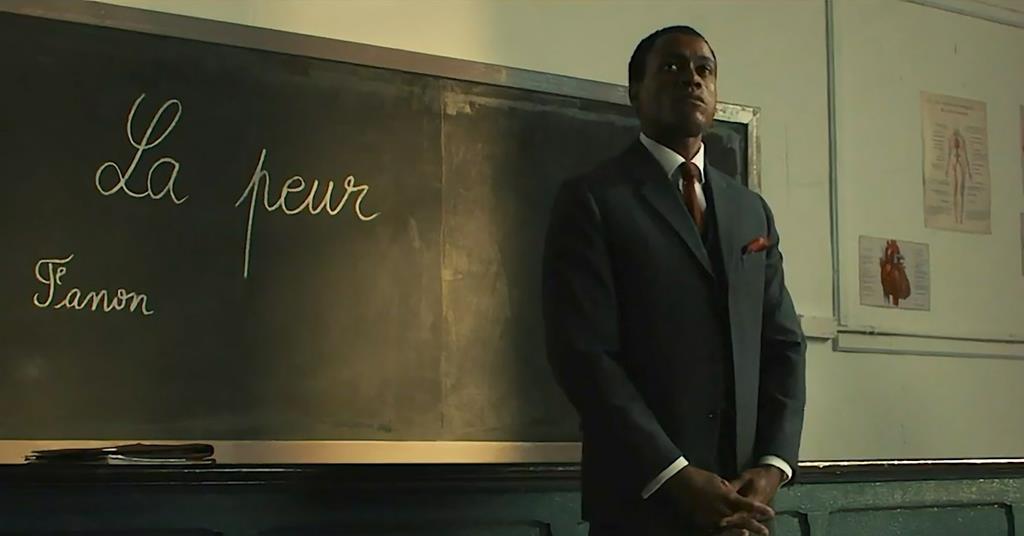
It’s the early 1950s in Algeria. Frantz Fanon (Alexandre Bouyer) is a renowned psychiatrist from the French Island of Martinique. He is starting his new job at a mental hospital. But he’s shocked at how Algerian patients are treated there. In contrast to Europeans, the “savage” north Africans are kept shackled in filthy cells, because of their “barbarous and dangerous” nature. Fanon (who is black) insists his North African patients be treated like any others. He lets them walk in the garden, plant vegetables, play soccer and make friends. Their mental health quickly improves. He’s assisted by diverse Algerian interns and staff: Hocine (Mehdi Senoussi) Jacques (Arthur Dupont) and Alice (Salomé Partouche), all followers of his techniques. But he’s strongly opposed by traditionalists and the French military, who are increasingly violent in their tactics. (Algeria was annexed by France but most of the locals are not considered full citizens.) He and his wife Josie (Déborah François) are upper-middle-class French citizens playing their role supporting the sprawling Empire. Fanon fought the Nazis in WWII. He likes Sartre, elegant suits and and fine wine. But his views are changing. He now writes books (dictated to his wife) about the effect of colonization on the mental health of the colonized in Algeria. Their own self-image is denigrated by their oppressors, he writes, when they internally accept their status as “the other”. Word gets out and he’s invited to join the FLN, (considered terrorists by the French). But the threat of violence reaches his hospital, as personified by Sergeant Rolland (Stanislas Merhar), a particularly violent soldier who checks in as a patient. How can Frantz Fanon simultaneously balance his various roles — as a husband and father, as a Black man serving the French empire, as an innovative psychiatrist, and as an intellectual joining the Algerian struggle for independence?

Fanon is a vibrant biopic about a decade in the life of the renowned author. I find it gripping and fascinating. Alexandre Bouyer is strong and statesman-like in the title role. I’ve known of Fanon for many years — as the author of books like The Wretched of the Earth and Black Skin, White Masks — but never knew about his background in psychiatry. Though occasionally heavy-handed and hagiographic, this movie opened my eyes to the exciting and intellectually stimulating story of his life in Algeria and the history that surrounded it. 

I like this one a lot.

Train Dreams

Co-Wri/Dir: Clint Bentley (Jockey) 

It’s the early twentieth century in the US Northwest. Robert Grainier (Joel Edgerton) is a bearded lumberjack who rarely speaks. He earns his living chopping down trees at migrant lumber camps and building the railroad.  He meets a woman named Gladys (Felicity Jones), they fall in love and build a homestead in a grassy patchl near a flowing river. He cuts all of the wood by hand. Gladys is good with a rifle and shoots foul and deer to eat. The rest they buy in town at a general store owned by Ignatius Jack (Nathaniel Arcand).

He spends lonely months away earning money, but always returns home in the end. He makes friends with a Chinese labourer named Fu Sheng — they don’t talk but that’s fine with Rainier who never has much to stay. But he is shocked when a crowd decides to murder Fu Sheng just because he’s a celestial. He later makes friends with an old-timer named Peebles (William H. Macy) who handles the dynamite explosions. He loves their new baby girl  but his home and family are threatened when a wildfire sweeps through the forest while he’s away. What will Grainier do?

Train Dreams is a series of events in one unremarkable man’s life set along the early 20th century northwestern frontier. A folksy omniscient voice narrates the story, hoping to add profundity; it doesn’t work. The film is meandering,  pointless and stupid. It gives token nods toward environmentalism and against racism but they’re not really part of the plot. I hated this movie from the first few seconds, with its over-produced images and inappropriate soundtrack. We see a guy sawing wood until the camera pulls back revealing…? Nothing, just more trees, as if we’re supposed to applaud the scenery! At times it’s twee, like a Wes Anderson film, but without the humour or intellect. The men all look like they’re posing for a Carhartt fashion shoot. I try to feel sympathy toward Rainier  but he’s deliberately opaque. Worst of all are the Train Dreams of the title — we keep seeing the same montages of flashbacks from previous scenes… but the original ones are as short-lived as his memories of them. 

You might enjoy the pretty pictures in Train Dreams, but I can’t see any other reason to watch this annoying blunderbuss of a film.

Christy

Co-Wri/Dir: David Michôd (The Rover)

It’s 1989 in West Virginia. Christy Salters (Sydney Sweeney) is a high school kid, and a star player on the girls’ basketball team. She’s also in love with her girlfriend Rosie (Jess Gabor), a relationship her mom (Merritt Wever) doesn’t approve. She ends up trying out as a novelty act at a boxing match, and, though she has zero training, she scores a KO on her first try. She’s a natural. She catches the eye of a middle-aged boxing entrepreneur named Jim Martin (Ben Foster). He reluctantly takes her on and lets her train at his gym, but he will not allow her to see — or even talk to — Rosie. He sets her up in a trailer park where he can keep an eye on her. Though a great fighter, she’s isolated and unprotected outside of the ring. 

Christy is a powerhouse. Her career takes off, including a new hairstyle and a trademark pink silk hooded robe to make her look more “feminine”. She knocks out all contenders and after much pressure, the 22-year-old Christy sleeps with the middle- aged Jim… and they eventually marry. 

Her career soars, she meets Don King (hilariously played by Chad Coleman) and is signed to Mike Tyson’s slate. She gains fans worldwide, but her life is micromanaged by her Svengali husband. She may be a professional fighter but he’s twice her size, unstable, and increasingly violent. And he tries matching her up with boxers way above her weight class; that’s just dangerous. Is there any way to escape this oppressive relationship?

Christy is a biopic about the first prizewinning female boxer, who paved the way for a new professional women’s sport. I was hesitant about this one — ugh, yet another boxing movie — but Christy is as good as Rocky. It’s exciting, thrilling and moving, and despite her flaws, Christy Martin’s life is super-sympathetic. Sydney Sweeney is amazing. Yes, it’s Oscar-bait (you can tell by the prosthetic teeth and mullet haircuts, playing down her image as a sex-object) but she totally gets into this role. And Ben Foster is superbly hate-able as Jim — I seriously didn’t realize it was him till the credits rolled; he’s that skillful.

Christy is a good, old-fashioned biopic and a hell of a great boxing movie. 

Train Dreams and Christy both played at TIFF and are opening in Toronto this weekend; check your local listings. And Fanon is premiering today at Cinefranco, 4 pm at the Carlton Cinema.

This is Daniel Garber at the Movies, each Saturday morning, on CIUT 89.5 FM and on my website culturalmining.com.

TIFF gems. Films reviewed: Girl, I Swear, Cover-Up

Posted in comedy, Coming of Age, Disabilities, documentary, Journalism, Psychiatry, Scotland, Taiwan, War by CulturalMining.com on September 13, 2025

Hi, this is Daniel Garber at the Movies for culturalmining.com and CIUT 89.5 FM.

TIFF, Toronto’s International Film Festival is winding down after a busy week, but there is still a lot to see, including the People’s Choice awards offering free screenings of the winning films tomorrow. So this week I’m looking at three terrific movies that premiered at TIFF but aren’t getting the degree of coverage I think they deserve. There’s a coming-of-age story about a girl in Taiwan, a biopic about a man in Scotland, and a documentary about a legendary American journalist.

Girl

Wri/Dir: Shu Qi

Lin Xiaoli  (Bai Xiao-Ying) is a working class tween in middle school in Taiwan. She lives with her mom, and her domineering stepdad who terrorizes her mother and her. Xiaoli hides inside a zip-up wardrobe in her bedroom as protection from his violent outbursts. He works as a mechanic in his Uncle’s garage, and usually comes home drunk to the gills. Her Mom works in a hair salon and makes artificial flowers at home to earn extra money, but takes out her anger on her much smaller daughter. Xiaoli takes care of her younger sister, who is favoured by both her parents. At school she tries to stay unnoticed to avoid more of the violence and anxiety he gets at home. 

Until she meets a vivacious girl named Li Lily (Lin Pin-Tung). Lily lived in the States for a few years but now she’s back and living with her grandparents who let her do whatever she wants. Though the too are complete opposites, Lily is helping Xiaoli climb out of her shell. And one day they cut class, wear makeup, smoke a cigarette, go to a video cafe, sing songs, and eventually meet a bunch teenaged boys riding motor scooters. But will this day change her life in a good way… or in a bad way?

Girl is a realistic coming-of- age drama set in the previous millennium (with no computers or cel phones) and full of poignant details. It’s a very moving story about parental abuse passed down through generations, but it’s also full of hope. It follows the points of view of all the main characters, not just Xiaoli.  Now, I have a rule, I avoid first films at TIFF directed by actors. Why? They’re usually crap. Vanity pics, Oscar bate, self-serving vehicles or relentless navel gazing. Shu Qi is a very famous Taiwanese actress, and Girl is her first try at directing. Luckily, it’s really good. She has acted in three movies by Hou Hsiao Hsien and Girl resembles his films in both style and content, though a totally original take. It’s rough and violent in parts, which is hard to handle in a realistic movie, but there’s lots of sweet stuff, too.  

Girl is an excellent first feature.

I Swear

Wri/Dir: Kirk Jones

It’s the late 1990s. John Davidson (Scott Ellis Watson) is a popular teenager in Galashiels, Scotland He’s starting at a new school, getting friendly with a girl he fancies, and is the prized goalie on the local boys’ football team. His Dad has even arranged for a scout to the next match. But then something unexpected happens. He starts twitching in class, just a little at first, like a nervous tic. But it soon turns to rapid movements, facial contortions, and barking sounds. Followed by spitting, random punching and the uttering of the most offensive words. He gets caned by the headmaster for acting the ckown, his mother makes him eat his meals on the floor facing the fireplace. HIs father abandons his family. His onetime girlfriend slaps his face and other kids bully him at school, But none of it is intentional; he has Tourette’s syndrome.

Decades later, John (Robert Aramayo) still lives with his mother, heavily sedated, not allowed to speak with anyone for fear of an incident. A miserable existence indeed.  Until he runs into an old school friend who invites him for dinner at home. He repeatedly declines — for good reason — until his friend’s mom Dottie (Maxine Peake), a psychiatric nurse diagnosed with cancer, insist he come in for spaghetti dinner. The first thing he says to her is You’re dying of cancer, haha! before skulking away, mortified. But Dottie brushes it off as the most honest thing she’s heard in years. She invites him back, and tells him to stop apologizing for things that aren’t his fault. Eventually he moves in to try to live a normal life. But is that possible with Tourettes?

I Swear is a comedy/drama, based on a true story, about one man’s life with Tourette’s.  The title refers to the profane and deeply offensive words that spew forth from his moth at the worst possible times. It’s mortifying but also excruciatingly funny, and the two actors who play him, Watson and Aramayo, exude sympathy and humour in every scene, despite their seemingly insurmountable problems. I laughed my ass off for most of this film (whenever I wasn’t crying out of sympathy). I Swear tells a heart-warming story, even as it educates —  without lecturing — about Tourette’s.

I strongly recommend this feel-good movie.

Cover-Up

Wri/Dir: Laura Poitras (All The Beauty and the Bloodshed)

and Mark Obenhaus

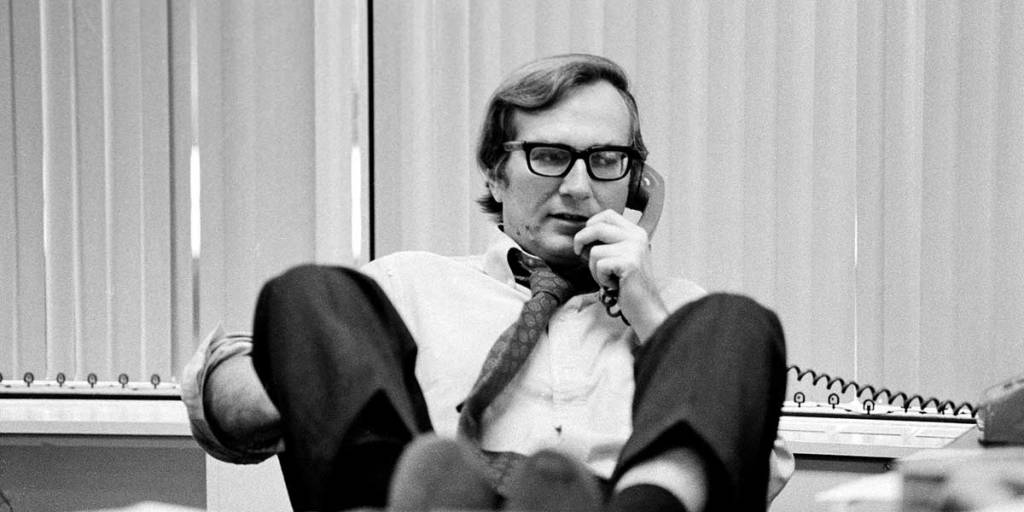
It’s the 1960s and America is at war. Sy Hersh, a freelance reporter, hears a rumour of mass murder in Vietnam by American troops. He speaks with GIs on base and the soldiers accused of these crimes. He also got a hold of a secret military investigation the massacre. And the facts he finds are horrifying. There include synchronized sexual assaults and murders of hundreds of women, men and children, and even babies, by American soldiers. Hersh blames My Lai on General Westmoreland and others who ordered the mass killings — which happened in a number of places on the same day — solely for the purpose of raising the body count. They needed more dead bodies to prove they were winning the war. The story has major repercussions all the way to the top — Nixon and Kissinger were recorded calling Hersh a son of a bitch — and played a role in turning public sentiment away from the war. For Hersh, My Lai is the first of many crucial stories he breaks in the decades to come. He becomes the NY Times daily reporter on the Watergate scandal. He uncovers US involvement in Pinochet’s bloody coup in Chile and the assassination of Allende; illegal CIA infiltration of anti-war groups, the secret bombing of Cambodia, the invasion of Gaza (ongoing), and the abuse and torture of Iraqis by American soldiers during the Gulf War at the infamous Abu Ghraib prison. 

Cover-Up is a journalistic documentary about journalism itself. It features historical documents and period photos and film — many very disturbing —  new interviews with people involved in the stories, and extended talks with Sy Hersh, who at the age of 88 is still a full-time journalist.  You get to see him see at work talking to anonymous sources and vetting incoming photos and leaks. He’s a bit prickly about protecting his sources even from the documentary makers (who take care never to reveal anyone still alive), because it’s that core of consciences bureaucrats, soldiers, and spies who still uphold the constitution and flout illegal coverups. They’re the sources who keep freedom of the press alive.

After the TIFF screening, Hersh said that American journalism is in a bad state with reporters running scared. How many important stories are being gagged or stifled now — or in the past — under White House pressure? It shows how badly we need more adversarial journalists who question the powers that be and uncover what they’re hiding.

And that’s what Cover-Up is all about.

I Swear, Girl and Cover-Up all played at TIFF and should be released over the next few months. This is Daniel Garber at the Movies, each Saturday morning, on CIUT 89.5 FM and on my website culturalmining.com.

Current cinema. Films reviewed: Destroy All Neighbours, Freud’s Last Session, T.I.M.

Posted in 1940s, AI, Christianity, comedy, Ghosts, Horror, Ireland, Music, Psychiatry, Robots, UK, WWI, WWII by CulturalMining.com on January 13, 2024

Hi, this is Daniel Garber at the Movies for culturalmining.com and CIUT 89.5 FM.

It’s “award season” when prizes are handed out to the best — or most widely publicized — movies. But not every film is prestigious or a blockbuster. So this week, I’m looking at three new movies — one each from the US, Ireland and England — that might otherwise fall through the cracks. There’s a robot with human traits, a music producer turned serial killer, and a psychoanalyst talking about God. 

Destroy All Neighbours

Wri/Dir: Jonah Ray Rodrigues

William (Jonah Ray Rodrigues) lives in a rundown apartment with his girlfriend Emily (Kiran Deol) a lawyer. He’s tall, skinny, and wears unfashionable clothes and nerd glasses. He works in a studio at the soundboard, helping bands record their music. But sometimes he feels like he’s just a knob- turner, going through the motions. His real passion is recording the ultimate prog-rock album, and is constantly coming up with new ideas, but never finishing it.  Emily encourages him to give up and move on, but he feels he has to do it. But he’s getting more and more tired and frustrated by the people around him. At work, his boss is constantly ragging him for being late. And the latest client, Caleb Bang Jansen is insufferable. Even the panhandler where he parks his car is getting on his nerves. At home, Eleanor, the elderly pothead superintendent (Randee Heller) is constantly calling him for help with the fuses. Another neighbour, Phillip, lets his pet pig roam the halls. But worst of all is the new tenant next door. Vlad (Alex Winter) is hideously ugly, aggressive and incredibly loud, playing non-stop euro disco all night long. Vlad lifts weights using buckets of cement attached to his barbell. He’s a scary guy, William is passive aggressive and terrified of face to face confrontations.

When he finally visits Vlad to ask him to turn down the music, they get in a fight and somehow Vlad ends up impaled on a stake, and — accidentally —  decapitated! William doesn’t know what to do, but finally realizes he has to dispose of the body. But things have changed since Vlad —  new bodies keep piling up — always killed unintentionally by him, by strange coincidences. He becomes a serial killer by default, or a serial manslaughterer, as he likes to say. 

But when the all the people he killed come back to life, he realizes something really strange is going on. Can William keep his boss and girlfriend happy, record his prog rock album, stop killing people, and living a normal life? Is he destined for a very dark future? Or is he just losing his marbles?

Destroy all Neighbours (the title says it all) is a comedy/horror movie, with an emphasis on in-your-face, gross-out humour. So there’s lots of disgusting blood and gore, but it’s always so exaggerated it’s funny, not scary, in the manner of Monte Python or Army of Darkness. Jonah Ray Rodrigues is the writer/ director/star and the current host of Mystery Science Theatre 3000. I admit it’s an acquired taste, and some of the gags and schtick fall flat, but I was laughing more than not. I happen to like that kind of humour (in moderation) but, admittedly, it’s not for everyone. So if you’re into bloody horror-comedy set in L.A.s skid row, or even if you’ve ever had annoying neighbours, I think you’ll love Destroy all Neighbours. 

Freud’s Last Session

Co-Wri/Dir: Matt Brown

It’s September, 1939. Germany has invaded Poland and Great Britain is about to go to war. Sigmund Freud (Anthony Hopkins) and his daughter Anna (Liv Lisa Fries) left their homes and vocations in Vienna after the Anschluss — the unification of Austria and the Third Reich, and moved to London. His office is decorated with the art and bric-a-brac of home: Persian rugs, African fertility statues and Catholic saints. Anna continues to research and give lectures on psychoanalysis and child psychology, but Sigmund, due to his age (he’s 83) and poor health (he’s dying of cancer) rarely leaves his home now. But on this day he has an unusual visitor: CS Lewis (Matthew Goode). Lewis is a don at Oxford where he teaches English and has written a book about Pilgrims Progress. (He later goes on to write The Chronicles of Narnia.) And he’s still suffering from shell shock from WWI. But why are they meeting? Lewis wants to talk with Freud about God and religion. He once was an atheist but now has adopted theism and Christianity as his guiding light. Freud, on the other hand, is a committed atheist and finds all religions equally fascinating and equally false. Still, they have a spirited discussion on a wide range of issues. But certain topics are taboo. For example, Freud refuses to talk about the fact that Anna has a female lover. And Lewis considers his own sexual relationship with his late best friend’s mother as something too private to share. Meanwhile, air raid sirens are going off, Freud is struggling with the oral prosthetic he calls his “Monster” and nobody knows what the future will bring. Will this be Freud’s very last session?

Freud’s Last Session is a fictional historical drama adapted from the successful stage play. There’s no evidence that an elderly Freud and a younger Lewis ever actually met; the story functions more as an intellectual exercise than a theatrical drama. So it’s not captivating, but it did keep my attention. They try to perk it up a bit with flashbacks — Lewis in the trenches in WWI; Freud as a small child — but I found them lacklustre at best. There are some clever touches, where Freud ends up reclining on the settee while Lewis takes on the analysts role. Of course it has nice period costumes and sets, but the main reasons to see this film is first the topics and second the acting. The topics range from sex to psychoanalysis to theology. Devotees of Freud and/or Lewis may get a kick out of it, but no major revelations here. The acting, though is delightful. Hopkins walks through his usual role — along with a few artfully-placed wunderbars and ja ja ja and das ist gut! so we don’t forget he’s Austrian. Goode is more passionate, fearful and sad. Best of all is German actress Liv Lisa Fries (from Babylon Berlin) as Anna Freud, who gets to rush around London looking for meds for her Dad.

Freud’s Last Session is not bad, but not noteworthy, either.

T.I.M.

Co-Wri/Dir: Spencer Brown

Abi and Paul Granger (Georgina Campbell, Mark Rowley) are married, professionals, double-income, no kids, moving into a beautiful, modern home in rural England. It’s at the end of a long country road, with open staircases, glass walls and a huge garden, all paid for and arranged by Abi’s employer. She’s an engineer who specializes in AI robotic prostheses.  She designs the human-looking hands of robots. Paul is currently unemployed, but is in line for a corporate position in London. They’re both looking forward to their first child, and are working hard at it each night.

Now this house is completely on the grid. Everything’s smart — smart windows, locks, heating, computers, lighting — all controlled through a central console, and co-ordinated with their smart watches and  phones. The central console, though, is something her company invented. It’s a Technologically Integrated Manservant, T.I.M. for short, or just Tim. Tim (Eamon Farren) is a humanoid robot with perfect male features, blond hair, and artificial intelligence; he’s constantly learning. He’s a prototype: he can cook gourmet foods, do heavy lifting, play the piano, send and answer emails. Abi’s boss is adamant that all his employees have a T.I.M., so they can get rid of the bugs in the system before the upcoming release. Abi, loves her new toy, but Paul is less enthusiastic. Why did T.I.M. barge into their bedroom while they were making love? T.I.M. says Abi’s blood pressure and temperature had risen, he just wanted to make sure she was OK. But Paul suspects T.I.M. of spying on him. He thinks TIM sends messages to Abi whenever Paul visits Rose their only neighbour (Amara Karan), feeding Abi’s suspicious jealousies. And when he catches T.I.M. perving through Abi’s clothes, he knows something is very wrong. Is T.I.M. morphing into something bad? Can a robot even have feelings? And if things go wrong, who will Abi trust: Paul, the fallible human, or T.I.M., the perfect machine?

T.I.M. is a sci-fi thriller about the potential dire consequences of AI given a human form. This isn’t the first humanoid movie — there have been at least a dozen in the past few years — and some of the plot is predictable. And it does have that “pandemic movie feel” to it, with a tiny cast (just four main characters) located in an isolated country setting, but, in this case, it really works. It’s scary, it’s creepy, it’s interesting. It feeds on your worst fears about electronic devices communicating without your knowledge, and the possibility of the singularity, when humans will no longer be essential. I’m not familiar with any of the actors but the cast is good. The storyline is compelling, and most of all, the movie feels believable. So if you ever feel like your smart phone is a bit too smart, you’ll like this scary, sci-fi thriller. It’s a good one.

Freud’s Last Session opens this weekend in Toronto; check your local listings. Destroy All Neighbours is streaming exclusively on shudder.com, starting today; and T.I.M. is now available digitally and on V.O.D. 

This is Daniel Garber at the Movies, each Saturday morning, on CIUT 89.5 FM and on my website culturalmining.com.

Daniel Garber talks with Steve J. Adams and Sean Horlor about Satan Wants You!

Posted in 1970s, 1980s, Canada, documentary, Memory, Psychiatry, Psychology, Satanism, Secrets, Supernatural by CulturalMining.com on August 12, 2023


Hi, this is Daniel Garber at the Movies for culturalmining.com and CIUT 89.5 FM.

In the 1980s, tabloids like the National Enquirer and daytime talk shows from Oprah to Jerry Springer were talking about everyone’s biggest fear: that animals and small children were being kidnapped by witches and sacrificed to the devil. A new psychological method known as Recovered Memory Syndrome was in vogue, and countless adults who suffered trauma as a child, were somehow recalling bizarre satanic rituals doing back to their earliest memories. And in courtrooms across America, daycare workers, teachers and social workers were accused of heinous crimes, leading to arrests, trials and prison sentences, based on dubious testimony. Who would have thought this all harkened back to a young woman named Michelle Smith and her psychiatrist Lawrence Pazder in peaceful Victoria, BC?

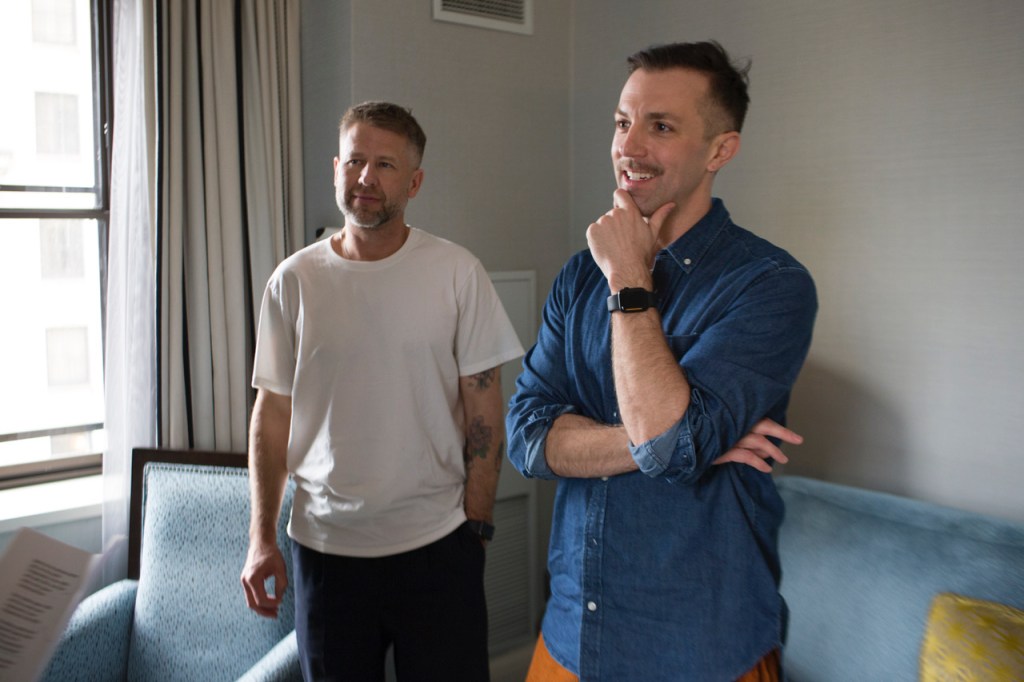
Satan Wants You! is a new documentary that delves into the case of Michelle Smith, her psychiatrist Lawrence Pazder, the bestselling book Michelle Remembers that followed and the ramifications it led to. This compelling film tears the veil from this story, using period TV footage, and new interviews with family members and everyone involved. Satan Wants You is written and directed by Vancouver-based documentarians Steve J. Adams and Sean Horlor. Steve and Sean are a prize-winning team known for their films on pop culture and queer topics and whose doc Someone Like Me won the Audience Choice award at Hot Docs in 2021.

I spoke with Steve and Sean, in person, at TIFF 2023.

Satan Wants You! had its world premiere at this years Hotdocs Film Festival, and is now playing at the Rogers HotDocs Cinema in Toronto.

The best movie of the year? Films reviewed: Chevalier, Quasi, Beau is Afraid

Posted in 1700s, comedy, Fantasy, France, Medieval, Music, Parody, psychedelia, Psychiatry by CulturalMining.com on April 22, 2023

Hi, this is Daniel Garber at the Movies for culturalmining.com and CIUT 89.5 FM.

Spring film festival season continues with Images, where indie film and experimental video meets avant-garde art and media culture. And Hot Docs Documentary Festival starts next week. But this week I’m talking about three new features — a comedy, a historical drama and a movie that defies categorization. There’s a hunchback whose name rings a bell, a musician whose work rivals Mozart’s, and a recluse who must confront what he fears most.

Chevalier 

Wri/Dir: Stephen Williams

It’s the 1780s in Paris, and Joseph de Boulogne (Kelvin Harrison, Jr) is the talk of the town. He’s handsome, witty, educated  and highly-skilled. He’s a champion fencer and a violin virtuoso. He can also compose a score for opera, ballet or orchestra. When Mozart comes to town, he jumps onto the stage and challenges him to a duel — using violins as their weapons. Men admire him, and women swoon. And the Queen of France, Marie Antoinette (Lucy Boynton) dubs him Chevalier de Saint-George, the highest title he can receive. Most unusual of all, Joseph de Bologne is Black. Born in the French Caribbean, his father is a wealthy colonist, and his mother a West-African-born slave. 

He takes on as his lover the beautiful Marie Josephine (Samara Weaving); together they hope to launch his career in opera. But he faces opposition from people in high places. His lover is married to a powerful, but abusive man. The Chevalier earlier snubbed another patron La Guimard (Minnie Driver) who bears a grudge. Can a black man in 18th century France rise to the top of a rigid system? And what about the revolution?

Chevalier tells an interesting story about an almost-forgotten historical figure. It’s full of ornate wigs and costumes, dancing ensembles, and crowds on cobblestone streets shouting Liberté, Egalité, Fraternité! What it’s missing, though, is a soul. It’s hard to get past the big issues and petty intrigues to care deeply about the main characters. This film has great production values and acting. In fact Kelvin Harrison, Jr is one of the best young actors around, and I’ll see anything he’s in — he’s that good. Sadly, he’s better than the material he has to work with. Chevalier is good enough, but it never reaches the greatness I was hoping for.

Quasi 

By Broken Lizard

It’s France in the 1400s, and Quasimodo, the legendary hunchback with a twisted face, works not as a bellringer in Notre Dame but as a royal torturer. He got the job because he invented the rack to straighten out the hump of fatty tissue on his back. Didn’t work, but turns out the rack is great for causing pain. And the new queen (Adrienne Palicki) has taken a shine to Quasi. She likes his outspoken nature, and the fact he listens to what she says, unlike the vain and egotistical King Guy. Things are looking up when Quasi wins the national lottery. But the grand prize —  meeting with the King — ends up a fiasco. Far from being a fun filled smorgasbord, Quasi leaves the palace with orders to kill the Pope! If not, the King will kill him and all his friends instead. To add to his troubles, when he meets the Pope, Quasi is ordered to assassinate the King! He’s caught in the middle of a feud between two cruel and powerful leaders. How will he ever get out of this one?

Quasi is a sketch comedy parody that transplants The Hunchback of Notre Dame into a new setting.  Unfortunately — aside from a bit of bawdy humour — most of the jokes never go beyond foul language, torture humour and opaque references to oysters. (Why oysters? Why indeed). Then there are scenes like one character having his testicles nailed to a wooden board. (Is this supposed to be funny? I don’t get it.) The film is the product of comedy troupe  Broken Lizard whose five members — Jay Chandrasekhar, Paul Soter, Kevin Heffernan, Steve Lemme, and Eric Hanske — wrote, produced and starred in multiple roles, with Heffernan at the helm. Apparently, they’re quite well-known and popular and have made some other movies, including “Super Troopers 1 & 2”. Perhaps they’re an acquired taste (which I have yet to develop) and if I ever do, I’ll be sure to let you know.  But in the meantime, I failed to find humour anywhere in this unfortunate exercise in juvenile excess. 

I guess we could call this a quasi-comedy. 

Beau is Afraid

Wri/Dir: Ari Aster

Beau (Joaquin Phoenix) is a meek, mild-mannered, middle-aged man who lives in an unnamed city. He’s the ultimate passive introvert, whose main goal is to avoid conflict. He has no job or friends and lives alone, but does see a therapist regularly. His main topic? His mom, Mona Wasserman (Patti Lupone) a very successful entrepreneur from a small town called Wasserton. His dad died before Beau was born, so Mona has always been the main influence in his life. Then there’s Elaine, the girl of his dreams, whose Polaroid photo he carries with him wherever he goes. Their time together as teenagers was brief but he will never forget her.

Now he’s supposed to fly to visit his mother, but Beau is afraid. And for good reason. He lives in a dystopian slum full of criminals, drug addicts and naked serial killers roaming the streets. He’s in danger the moment he steps out his door. And his apartment isn’t safe either — it’s infested with poisonous spiders, and bloodthirsty neighbours who slide threatening notes under his door. Nowhere is safe. Luckily his analyst prescribed him a new medication he’s sure will calm Beau down. But it comes with unexpected side effects. 

When he misses his flight, he sets out on foot, beginning a picaresque journey full of strange, wonderful and sometimes hazardous people he encounters along the way. His face and body are battered and bruised, his survival due to sheer luck. But will he ever see his mother again?

Beau is Afraid is a hilarious, dreadful, shocking and amazing drama. It’s uncategorizable, one of those few movies that stand alone, like work by David Lynch, Gaspar Noe  or Lars Von Trier. It’s three hours long, uncomfortable to watch, but clearly something special. It’s multiple-layers deep with more detail than you can absorb in a single viewing. I’m purposely not touching most of the characters and plot because one of the joys of watching this thing is the constant surprises. 

The whole movie is intentionally ambiguous as to what is real, what is imagined, and whether you’re inside a dream or a drug-induced psychosis.

The acting is superb, from Joaquin Phoenix as the eternally abused milquetoast to Patty Lupone as his monstrous mother (possibly her best film performance, ever?), with unforgettable scenes by Parker Posey as an unexpected visitor, Kylie Rogers as a vindictive teen, and Amy Ryan as a Gold Star Mother. Beau is Afraid chews up and spits out everything, from the collapse of the American Dream, to psychoanalysis, hippy communes, police violence, poverty, Big Pharma, and rampant capitalism.

Some people will hate this movie, but I think it’s amazing; maybe the best film of the year.

Beau is Afraid and Chevalier both open across Canada this weekend; check your local listings. Quasi is now streaming across Canada on Disney+.

This is Daniel Garber at the Movies, each Saturday morning, on CIUT 89.5 FM and on my website, culturalmining.com.

Smiles and frowns. Films reviewed: Smile, Triangle of Sadness

Posted in Class, Horror, Mental Illness, Psychiatry, Psychological Thriller, Psychology, Supernatural, Thriller by CulturalMining.com on October 8, 2022

Hi, this is Daniel Garber at the Movies for culturalmining.com and CIUT 89.5 FM.

Weather changes with the seasons and so do our moods: one minute it may be sunny, the next dark and overcast. So this week I’m looking at two new movies about changing emotions. There’s a comedy about a frown and a horror movie about a smile.

Smile

Wri/Dir: Parker Finn

Dr Rose Cotter (Sosie Bacon) is a therapist who works in the emergency psych ward at a large New Jersey hospital. She’s always prim and proper, wearing buttoned shirts, with her hair neatly pulled back from her face. She spends most of her time at work, up to 80 hours a week, but on her free time she likes nothing better than sipping white wine in her bungalow, cuddling her fluffy cat Moustache or just chatting with Trevor, her nondescript fiancé. She is devoted to helping her patients, having survived her own mother’s mental illness and suicide when she was a little girl.

It’s just a normal day when she examines a new patient in intake. Laura is a grad student showing signs of paranoid delusions. She is terrified that someone is out to get her. “I’m not crazy, I’m a PhD candidate!” says Laura (as if the two were mutually exclusive).  She’s not sure whether it’s an evil spirit, a ghost or a satanic possession, but whatever it is, it’s been haunting her since she witnessed her prof commit suicide just a few days earlier. It takes the form of people closest to her, that only she can see. And worst of all, it has a horrible smile. And before Rose can do anything, Laura violently kills herself right in front of her… with that awful smile plastered on her face. And from that moment on things feel different for Rose. 

Her nightmares turn into daydreams. She begins to hallucinate — with figures from her past, including a dead patient, reappear before her, smiling. She has very few people to talk to outside of the hospital: Trevor, and her older sister Holly, who only talks about family and real estate. She visits her own former therapist, who refuses to prescribe anti-psychotics, saying it’s just stress and overwork. But Rose knows it’s something more. Everything that happened to Laura — and her professor before her — seems to be inflicted on Rose now. She finally turns to her ex-boyfriend Joel (Kyle Gallner) for help. He’s a police detective now, investigating Laura’s death; perhaps he can find out what’s causing these suicides. Because Rose is sure she’s either going insane, or is controlled by an evil entity… or both! And if she doesn’t do something fast, she’ll be dead in three days. Can Rose figure out what’s happening to her, and stop her impending, smiling suicide? Or is she out of time?

Smile is a good psychological thriller/horror. While it’s occasionally predictable — with some dubiously freudian plot turns — it’s mainly a gripping, scary flick. Great spooky music and some cool visuals, like disorienting, upside down drone shots of a cityscape, and a delightful scene change using the camera’s iris. And lots of cute, smiley-face images popping up everywhere in the background. I’ve never seen Sosie Bacon before, (she’s second generation Hollywood, the daughter of Kevin Bacon and Kyra Sedgwick) but she’s quite good as Rose, gradually transforming from uptight doctor to terrified heroine. 

If you’re in the mood for a good screamer, check out Smile. 

Triangle of Sadness

Wri/Dir: Ruben Östlund

Yaya and Carl (Charlbi Dean, Harris Dickinson) are a millennial power couple. Carl is a fashion model who is featured shirtless in perfume and underwear ads. He is known for his looks. But he still has to show up for cattle-calls. Yaya, though, is an influencer — her posts and selfies are followed by millions, and sponsors are constantly sending her money and goods to promote. But their unequal status spurs an argument. Why does he have to pick up the cheque when they go out to dinner? He’s the man in the relationship but Yaya is much more famous and earns way more money than Carl. It’s just not fair. So she invites him to join her on an elite cruise ship, all expenses paid.

The boat is an exclusive luxury liner, and the passengers are some of the richest people in the world. One couple made billions selling bombs and landmines. Another oligarch, named Dimitri (Zlatko Buric) proudly says he earned his fortune selling shit — literally. He cornered the market in fertilizer. And the staff are trained by Paula, the head of the crew (Vicki Berlin), to fulfill any whims or demands of the passengers no matter how outlandish or nonsensical. And Carl and Yaya soon find out that any casual complaint or criticism of a staff member they might make may lead to their instant dismissal. But the ship hits trouble on the high seas, and the captain (Woody Harrelson), an alcoholic communist, can’t stay sober long enough to prevent a disaster. 

Later, the passengers and staff regroup on a tropical isle, situated somewhere between Gilligan’s Island and Lord of the Flies. But with a new power structure in place, who will make it out of there alive?

Triangle of Sadness — the title refers to that part of the face from the brow to the bridge of the nose that supposedly conveys happy or sad emotions — is a scathing satire about the state of the world. Told in three chapters — in the city, on a ship, and on a remote island — it follows a young couple as they navigate life among the powerful and super-rich. It also shows what could happen if existing power structures (and the money that reinforces them) ceased to exist. Did I mention this is a comedy? I found it bitingly and bitterly hilarious, though at times disgusting. For humour’s sake, it reverses many presumptions: by presenting men — not women — as sexual objects subject to exploitation; and by pulling away the curtains hiding  the transgressions of the rich and powerful.

The acting in this dark comedy — especially by the late Charlbi Dean and Harris Dickinson, as well as Zlatko Buric and Dolly De Leon as Abigail a former toilet cleaner who suddenly finds herself as the big fish in a small pond — is excellent all around. The story is told as a comic fable, intentionally never realistic, with settings, costumes, and music, all reinforcing its farcical nature. This is not Swedish director Ruben Östlund first dark comedy — he previously directed such great movies as The Square and Force Majeure — but Triangle of Sadness is the most extreme of all his films, one that takes his themes beyond the expected limits. Though not universally loved, in my opinion this is one great movie.

Smile is now playing and Triangle of Sadness, which played at #TIFF22 earlier this year, opens at the TIFF Bell Lightbox this weekend.

This is Daniel Garber at the Movies, each Saturday morning, on CIUT 89.5 FM and on my website, culturalmining.com

Psychic bonds. Films reviewed: Marionette, Archive 81

Posted in 1990s, Meltdown, Mental Illness, New York City, Psychiatry, Psychological Thriller, Scotland, Supernatural, TV, VHS by CulturalMining.com on January 22, 2022

Hi, this is Daniel Garber at the Movies for culturalmining.com and CIUT 89.5 FM.

We’re in another lockdown in Toronto with the cinemas all closed, but there are still lots of ways to watch movies at home. Kanopy is a movie service that’s free with your library card, and has a huge catalogue of really good movies. Recent additions include Swedish director Roy Andersson’s ethereal and melancholy About Endlessness;  the splendid Spanish film Blancanieves, a silent movie from 2012 in gorgeous black and white that retells the story of Snow White as a female bullfighter; and the French romantic comedy Belle Epoque, among dozens of others. They’re on Kanopy.

Also playing for free online across Canada is a fascinating new series of five feature-length movies called Difficult Women, 40 years of German Feminist Films. It’s curated by the Goethe Institute. I haven’t seen it yet, but their films always deserve viewing. Just go to their website online and enjoy.

But today I’m talking about two more things you can  watch online or on your TV; a limited series and a new psychological thriller. 

There’s a psychiatrist who wants to get away from a boy she thinks wants to kill her; and a video archivist who wants to get together with a woman he’s seen on a 30-year-old VHS tape.

Marionette

Dir: Elbert van Strien

Dr Marianne Winter (Thekla Reuten) is a child psychiatrist. After losing her husband in a terrible car accident in upstate NY, she decides to turn over a new life by taking a job in Aberdeen, Scotland. She ’s last-minute hire because their previous child psychiatrist was driven to self-immolation for unknown reasons and his patients have no one taking care of them. Marianne arrives at an enormous gothic building and immediately starts to work. One of her patients, a little blond orphan named Manny (Elijah Wolf) piques her interest. Since his parents’ recent death he has stopped talking, expressing himself only by drawing pictures using a black marker. The pictures depict people dying in a horrible circumstances, just like his parents. 

So Marianne settles into a new life. When she’s not working, she hands out a local pub or attends meetings of a book-reading group. There she meets a man named Kieran (Emun Elliot) and sparks fly. He takes her for a ride in his boat where they make passionate love. But around this time, strange things start to happen. The drawings, that her ten-year-old patient Manny scribbles during their sessions, start to come true. She witnesses a car crash in a tunnel that looks exactly like Manny had drawn. Worse still, other drawings depicting Kieran’s death and even her own. Can Manny  predict the future? Or is he actually making these things come true? And is Marianne merely a marionette controlled by an evil little boy?

Marionette is a strange psychological mystery /drama about a psychiatrist brought near the brink of insanity by one of her patients, and her slide into paranoia, madness and revenge.  It delves into the doctor’s own psyche as if her mind were a box containing Schrödinger’s cat. But unlike most psychological thrillers, it doesn’t follow the normal story line you might expect. (No spoilers). Does it work? Yeah, in a strange sort of way. And it kept me interested, but it might leave you scratching your head in the end. 

Archive 81

Dan (Mamoudou Athie) is a museum archivist in New York City. He specializes in restoring and transferring older media — like cassette tapes and VHS — into digital formats. And he nags with his best friend Mark who buys and sells collectables and also hosts a podcast. But one day a stranger named Virgil approaches Dan with an offer he can’t refuse: a $100,000 contract just for restoring and archiving a collection of old video tapes. They are all damaged and partly burned, recovered from an apartment building called the Visser, 30 years earlier. What’s the catch? He must do the archiving and restoration at an isolated concrete building in the Poconos, that’s off the grid: no internet, and no cel phone towers. Any communication must be by the landline.

So he takes the job meticulously restoring each tape in chronological order, and watching the films. They were all made at the Visser, 30 years earlier, by a young woman named Melody (Dina Shihabi).  And from here the story flashes back and forth between Dan (now) and Melody (then). She’s living in the building in search of her birth mother, carrying a video camera everywhere she goes — the source of the tapes that Dan is restoring. And with the help of a 12-year-old girl named Jess (Ariana Neal) who was born in the building, she meets and interviews many of the Visser’s oddball residents. There’s Samuel, a friendly university prof (Evan Jonigkeit), who runs meetings in the common room (which one nosey neighbours claims are  actually satanic sex orgies). There’s also an art collector and spiritualist interested in holding seances.  But she’s distracted by a series of musical notes she hears, and strange dreams she starts to have. And back in the present, Dan is bothered by his isolation, and the feeling he’s being spied on.

Here’s where it gets interesting. Dan keeps dozing off during his monotonous work and having dreams where he meets Melody. The weird thing is, his earlier conversations eventually appear on VHS tapes as he finishes them. In other words, they are actually meeting on recordings from the past. What are these strange faces suddenly appearing on old tapes? Is he going mad? Did she perish in the Visser’s fire? Or can he contact her in the past to save her life?

Archive 81 is a fantastical, science fiction supernatural TV series about alternate realities, communication across time and between the living and the dead, as well as vast conspiracies, evil billionaires, sinister entities, and strange cults. Great writing and acting, with exquisite production design, music and art direction. It starts as a typical found-footage horror movie, but veers away from that genre early on.

I’d call it Stranger Things for grown-ups.

It does have a tendency to fetishize commonplace things from an earlier era (in this case the 90s) but with a contemporary mindset. For example, The character Melody carries her video  camera making selfies and recording everything she sees (much like a smart phone today) but without anyone objecting or finding it strange. Archive 81 came out a week ago, and I binge watched the whole thing in just a few days. It’s interesting, unusual, unpredictable and quite spooky in parts, and will keep you glued to the screen and eagerly awaiting Season 2. 

I recommend this series.

Marionette is now available on VOD, you can catch Archive 81 on Netflix, and for free movies online visit the Goethe Instutute’s website, and watch Kanopy with just your library card.

This is Daniel Garber at the Movies, each Saturday morning, on CIUT 89.5 FM and on my website, culturalmining.com