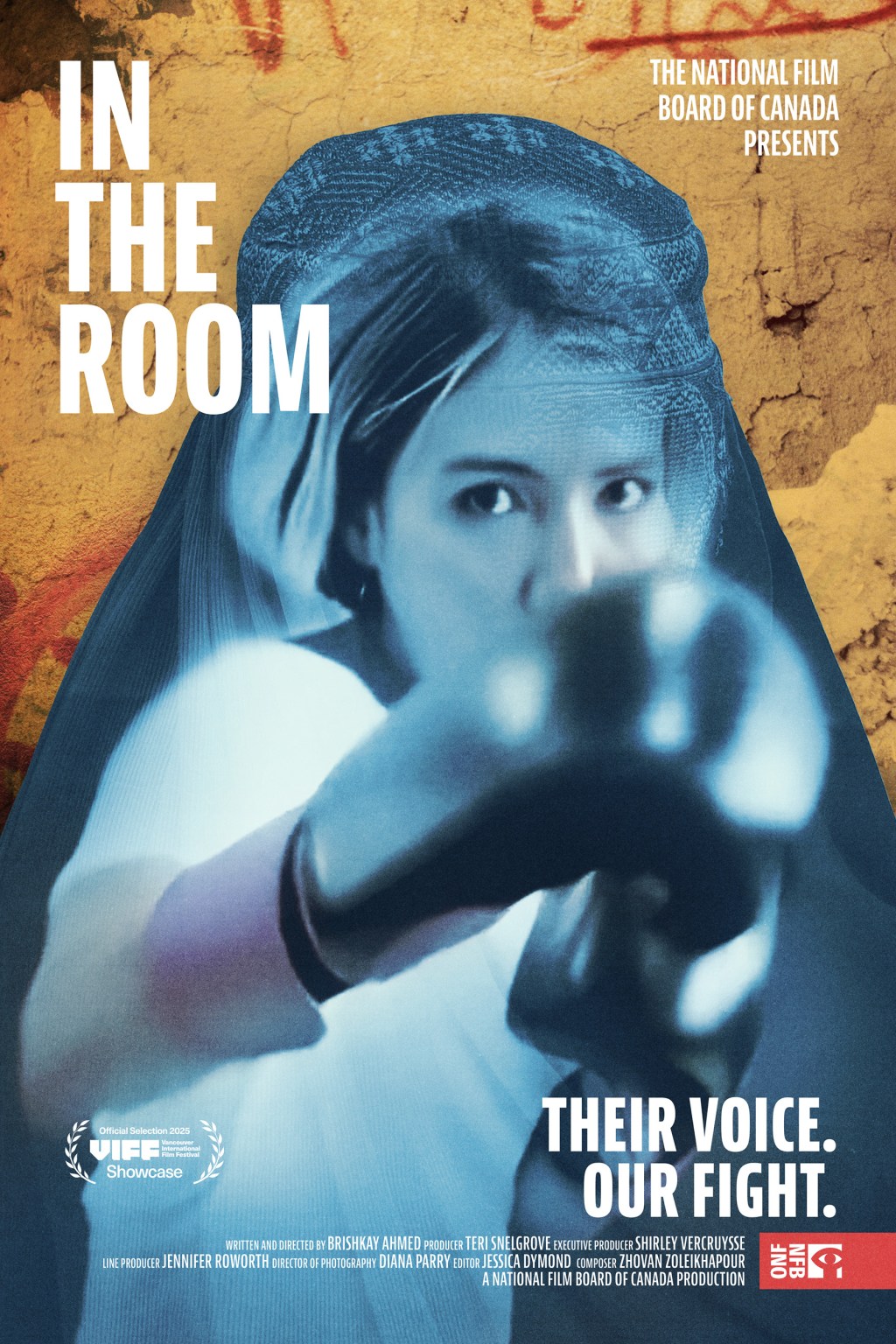
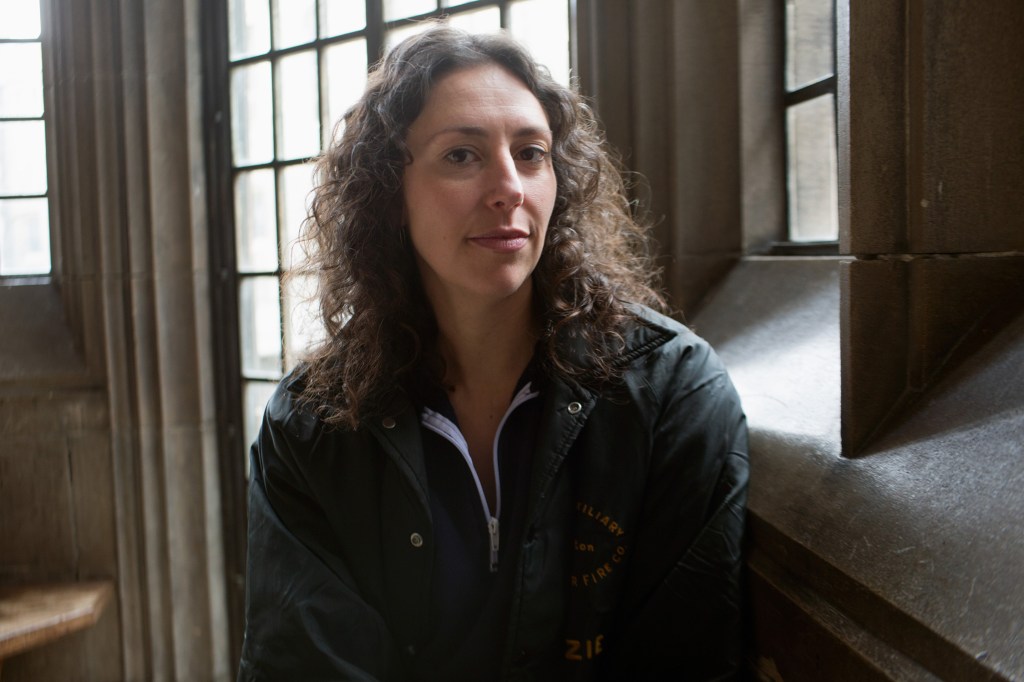
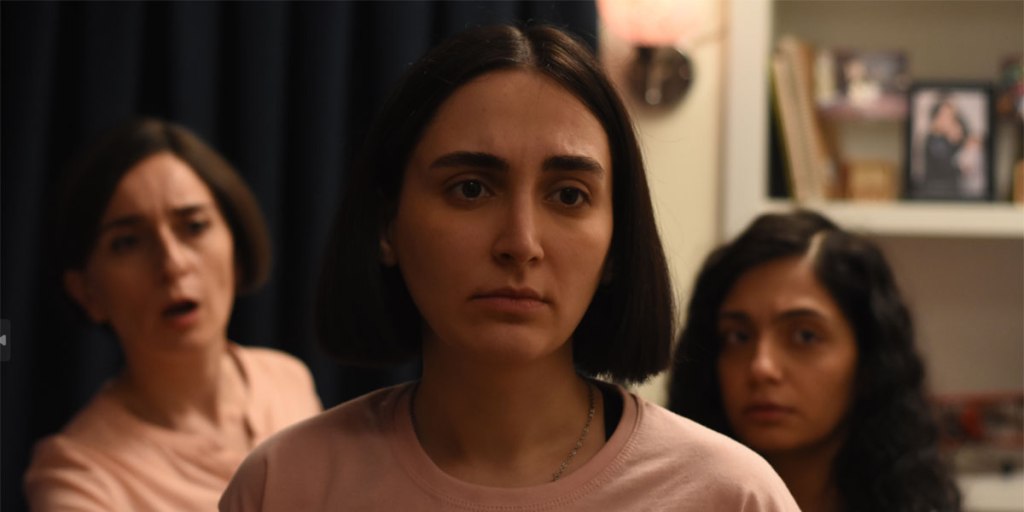
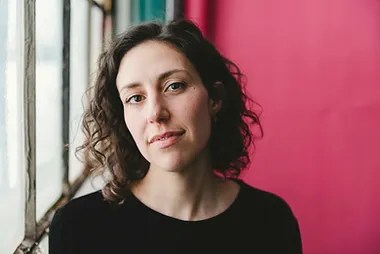
Daniel Garber talks with Brishkay Ahmed about In the Room

Posted in Afghanistan, Boxing, Canada, documentary, Feminism, Journalism, Protest, War by CulturalMining.com on November 15, 2025

Hi, this is Daniel Garber at the Movies for culturalmining.com and CIUT 89.5 FM.

It’s August, 2021 in Kabul Afghanistan. The Taliban is at the city gates and large crowds are congregating at the airport. Some manage to get out, but the women who remain face unheard of restrictions imposed by the Taliban. Restrictions in dress, education, work and general daily life: there’s no school after grade 6, women barred from universities, government work and from most professions, along with freedom of speech, expression, and even  congregating in public… leaving some women virtually locked away in their rooms.

In the Room is a new NFB documentary about a group of dynamic ex-pat Afghan women who don’t fit neatly into their stereotypes. We meet a model, a TV news chief,  an influencer and an actor and activist, in this unusual doc. The film is by noted Canadian documentarian Brishkay Ahmed whose work has frequently taken her back to the country of her birth. She’s known for her films In the Rumbling Belly of Motherland, Story of Burqa. The film won the Audience Award Showcase  at its premiere at VIFF in Vancouver and played at the Reelworld film festival Toronto.

I spoke with Brishkay in Vancouver via Zoom.

Beginning on Tuesday, November 25, the National Film Board of Canada (NFB) will release In The Room for free streaming across the country on nfb.ca and the NFB app.

A coup, a cult and a cry. Films reviewed: The Penguin Lessons, AUM: the cult at the end of the world, Bob Trevino Likes It

Posted in 1970s, 1990s, Argentina, comedy, documentary, Family, High School, Japan, Protest, Religion, Social Networks, US by CulturalMining.com on March 29, 2025

Hi, this is Daniel Garber at the Movies for culturalmining.com and CIUT 89.5 FM.

In these times of extreme uncertainty, many people feel there’s something missing in their lives but they’re not sure what. Some turn to new religions for spiritual fulfillment, others to pets they can love, or to chosen families to replace their inadequate biological ones.

So this week, I’m looking at three new movies, two dramas and a documentary about people trying to replace something missing. There’s an English teacher in Argentina who talks to a penguin, a  caregiver in Kentucky looking for a replacement dad, and a religious cult in Japan trying to bring about the end of the world.

The Penguin Lessons 

Dir: Peter Cattaneo

(Based on a true story)

It’s March, 1976 in Buenos Aires, Argentina. Tom Michell (Steve Coogan) is a newly-hired English teacher at a boys’ prep school for rich kids. It’s run by the strictly by-the-book Headmaster Buckle (Jonathan Pryce). No pets and no politics. Divorced, middle-aged and jaded, Michell cares little about morals. He describes himself as like Hemingway but without money and who never wrote anything. The boys in his class are spoiled and unruly; they don’t listen to a word he says. But bombs and rifles can be heard even within the walls of this elite academy. There’s a US-backed coup d’etat going on out there to install a military dictatorship! When the school closes for a week, Michell and fellow-teacher Tapio, a hapless Finn (Björn Gustafsson) head out to the Punta del Este in Uruguay to sit out the coup. But a romantic seaside stroll with a woman Michell meets turns —  much to his chagrin — into a mission to save a flock of birds caught in an oil spill. They clean a penguin’s feathers, but by morning, the woman’s gone, and the penguin won’t leave him alone. He reluctantly takes him back to the school, in the hopes of donating him to a zoo. But the school kids adore him, and actually start to pay attention as long as the bird is around. But all is not well. Plainclothes police are disappearing anyone who disagrees with the government, including the beautiful but opinionated Sofia (Vivian El Jaber), the school’s cleaning woman.

Can a little penguin bring peace to the school and pull them all together? What will happen if Headmaster catches him with the bird? And will Michell ever stick his neck out to challenge the status quo?

The Penguin Lessons is a touching, cute, nostalgic and easily digestible story set during a dark and sinister era. Director Cattaneo brought us similar English crowd-pleasers like The Full Monty. And I’ll see anything with Steve Coogan in it. This movie is full all the cliched crowd pleasers: kids, animals, history, and a wise-cracking cynic who might have a soul. But I don’t care. That penguin is just soooo cute. 

OK, I admit it, I’ve been played, I’m a sucker of a critic who fell for a bird… but so will you. 

I liked this movie.

AUM: The Cult at the End of the World

Wri/Dir: Ben Braun, Chiaki Yanagimoto

It’s March, 1995 in Tokyo when something unexpected and terrifying happens. Someone lets loose poison gas at Kasumigaseki station, where three train lines converge. 5,800 people are injured and 13 of them killed. And this is a planned attack, not an accident. Who is responsible and why did they do it?

Decades early, a child named Chizuo is born into a post-WWII family with visual disabilities. Years later he opens a yoga school to attract paying customers. Somewhere along the way, it changes first into a religious sect, and later into a bonafide cult with tens of thousands of members. The group is called Aum Shinrikyo, and they set up headquarters on the banks of the sacred Mt Fuji.  Their guru, now known as Shoko Asahara, with long hair and beard and flowing pink robes, convinces his worshippers that he is a god with supernatural powers. Popular music and anime videos extolling Asahara attract lots of favourable media attention, and detached young Japanese join in droves to experience miracles like levitation. These followers drink his bathwater or take tiny transfusions of his blood, even as he drains their bank accounts dry. Others have wires attached to their brains. Only bland food is permitted, no sex, no free-thinking. The cult expands internationally, migrating to Moscow once the Soviet Union falls, converting countless Russians to their cause. And while they’re there, they get ahold of military-grade artillery, chemical and biological weapons which they ship back to Japan. And eventually this leads to the horrific Sarin gas killings, in Tokyo and Matsumoto.

AUM: The Cult at the End of the World is an extensive, shocking and at terrifying documentary about this bizarre and dangerous cult. It covers the story throughout Asahara’s life and beyond, using period footage and new talking-head interviews. It goes right to the source — its victims, innocent people wrongly blamed for Aum’s crimes, journalists who follow the story, and advocates who — long before the sarin attacks — were trying to free friends and relatives from their clutches. Perhaps most chilling of all are the interviews with Joyu the high-ranked Aum Shinrikyo member who was allegedly behind some of its most heinous chemicals weapons.

I found this documentary extremely engrossing and well researched, narrated  in the form of an oral history by those most affected by these atrocities. I couldn’t stop watching this one. I wonder why there have been loads of movies about the Manson Family, but relatively few on Aum Shinrikyo. This one helps fill that gap.

Bob Trevino Likes It

Wri/Dir: Tracie Laymon 

(Based on a true story) 

It’s present-day northern Kentucky. Lily Trevino (Barbie Ferreira) is young woman who works as a caregiver for Dapne (Laureen “Lolo” Spencer) a woman with a degenerative condition. Lily has no friends, and 

her boyfriend dumped her using texts. Robert Trevino, her dad (French Stewart) is a flippantly cruel and self-centred man-boy responsible for most of Lily’s neuroses. He blames her for ruining his life (her mom died as an addict when she was a child). But things hit rock-bottom when her dad cuts off all communication with her. In a desperate search on Facebook to see what he’s up to, she ends up “liking” a different Bob Trevino. This Bob (John Leguizamo) is everything her own father is not. He’s kind, honest and giving, someone who pays attention to her texts. Bob works as a contractor out of his trailer. He has few hobbies — he likes gazing at the shooting stars, while his wife Jeanie (Rachel Bay Jones) is into making scrap books. When childless Bob and parentless Lily finally meet face to face, they feel a familial warmth they can’t quite explain. Jeanie thinks Lily’s a grifter or an aspiring catfish, trying to get his money. While insecure Lily is afraid of messing things up. Can two people, who live in different states ever have a real friendship? And is this new friendship superficial or deep?

Bob Trevino Likes It is a very cute, very sweet tear-jerker of a movie about friendship, kinship and chosen families. Much of the story is told through text messages and Facebook posts. Barbie Ferreira plays Lily as a non-stop faucet. She weeps in the opening, she cries in the middle and bawls at the end. And as the viewer, I cried along with her. John Leguizamo — once known for his over-the-top comedy — is at his most restrained in this one. But despite all the tears, it’s told in a light, humorous way.

This is a really nice indie movie.

Bob Trevino Likes It is now playing across Canada, with The Penguin Lessons opening this weekend in Toronto; check your local listings. And Aum is now available on VOD.

This is Daniel Garber at the Movies, each Saturday morning, on CIUT 89.5 FM and on my website culturalmining.com.

Jeff Harris talks with Ali Weinstein about her new documentary Your Tomorrow

Posted in Canada, documentary, History, Protest, Toronto by CulturalMining.com on February 6, 2025

Photograph and Interview by Jeff Harris

Your film points out a stark contrast between 1970s Toronto (when Ontario Place was opened) versus today. What exactly is going on? 

I’m really quite sad and devastated about what’s happening at Ontario Place right now to be honest. I was never a fan of what’s been chosen to go on the west island because I don’t think it that it retains the spirit of Ontario Place as it was meant to be, this lasting place of exploration, education and fun for Ontarians. I tried to not make the film itself be an essay for my own personal point of view, I tried really hard to show the place as it was and I heard different reactions from people where they’ve watched the film and said “yeah, it does need to be redeveloped”. In terms of what’s coming next I don’t think it’s in line with what Ontario Place was meant to be and I think that the original spirit of Ontario Place is a really beautiful one, one that should be fought for today because we have even fewer places to be outside and to be in nature in this city.

The city has only gotten far far far more dense in the last 50 years and you have places like Liberty Village that didn’t exist in 1971 when Ontario Place opened… now there’s a tonne of condos where people don’t have their own outdoor space but next door is this beautiful waterfront land with forested areas to walk, and nature and birds and foxes. There is so much nature present at Ontario Place so I don’t really understand the vision when it comes to turning it into a spa.

What are the concerns about the spa?

The fact that it’s not a Canadian venture, it’s a European / Austrian owned spa that has this very not transparent deal with a 95 year lease that has been signed. I have a hard time imagining that my great grandchildren are gonna have the desire to go to the same spa that some people today might go to as a one off. I think there were probably many other visions for that land that got sent into the government when they opened it up proposals in 2019 that could have been tourist attractions, that could have made money for the province if they really prioritized that and they could have stayed with the original intent of being about Ontario and teaching people the history, the indigenous history of Ontario, what we have to be proud of as a province and that could have been more the focus as opposed to something indoor, foreign owned, and the vision just doesn’t feel like it’s towards longevity with the spa. 

There’s a great line in the film where one of the protesters points out that this natural park is essentially a spa already!

She was part of a group of people that used the beach all the time, they would swim, hang out, exercise on the beach and it was a place for physical and mental wellbeing. I think a lot of the people that started to congregate at Ontario Place, many of them found the space during the pandemic when everyone was going loopy and stuck at home and isolated. People found community there and found other like-minded people there who wanted to be active, to be outdoors — and this was in their backyard! So when they talk about it already being a spa, they mean it’s been so beneficial for them. I felt that way myself going to Ontario Place.

Are you a fan of spas?

I enjoy going to a spa here and there… and some of my favourite parts of being at a spa are going with friends, going to catch up with people, to have sometimes a cultural experience like I love going to the Russian Spa, or the Korean Spa. The type of spa that’s going to be built at Ontario Place, I don’t foresee it being a place that people are going to go to repeatedly… it’s being marketed as a tourist attraction and I don’t know why that would go in the heart of the city on this very valuable prime land. It’s one of the few parts of the waterfront that’s actually accessible to residents of Toronto, where they can swim and boat and paddle board and run and jog and cycle and birdwatch and fish and so many different things so I think that the idea of it being a place of well being is interesting messaging from the government. So many people were using it for exactly that during the pandemic! It became this defecto public park because the government wasn’t doing anything with it.

Your Tomorrow had its world premiere at #TIFF24 and will have its broadcast premiere with TV Ontario on March 23rd at 9pm.

Freedom or death? Films reviewed: The Seed of the Sacred Fig, The Room Next Door PLUS Canada’s Top Ten!

Posted in 2020s, Death, Family, Friendship, Iran, Protest, Spain, Thriller, Women, Writers by CulturalMining.com on January 11, 2025

Hi, this is Daniel Garber at the Movies for culturalmining.com and CIUT 89.5 FM.

Mark your calendars, boys and girls, because the annual Canada’s Top Ten film series starts in just a few weeks. If you’re into highly original movies, you really gotta check this out. I’ve already reviewed many of them, or interviewed them already, but there’s lots left to discover.  Things like David Cronenberg’s The Shrouds, a truly bizarre mystery about an entrepreneur who invents burial shrouds that allow you to see in real time the decaying buried body of your loved one. It stars Vincent Cassell, Diane Kruger and Guy Pearce. Or Kazik Radwanski (Interview: 2013)  & Samantha Chater’s brilliant Matt & Mara, with an almost totally improvised script follows old friends (Matt Johnson, Deragh Campbell) who suddenly meet each other again, opening a real can of worms. There are also short films at this festival — I can’t wait to see NFB animator Torill Kove’s latest short Maybe Elephants; her films are just enchanting. And I’m curious what Canadian actor Connor Jessup is up to now with his short film Julian and the Wind. He starred in the movies Blackbird (2013) Closet Monster (2016) and the Netflix series Locke and Key (2021) but I have never seen his own work. These are just a few of the great movies in Canada’s Top Ten and they’re all showing at the TIFF Lightbox in Toronto.

But this week, I’m looking at two new movies, one from Iran (via Germany), and another one from Spain (via the US). There are three female activists looking for freedom in Tehran; and two female writers looking for peace in New York.

The Seed of the Sacred Fig

Co-Wri/Dir: Mohammad Rasoulof

Najmeh (Soheila Golestani) and Iman (Missagh Zareh) are a happily married couple in Tehran. They live out their two daughters, Rezvahn (Mahsa Rostami) and Sana (Setareh Maleki). The kids fight a lot, but the family is still close and trusting; no secrets here. But everything changes once their Dad — a government bureaucrat — gets a promotion. He is issued a gun for protection, due to the nature of his new position. You see, he is now sort of a judge within the Islamic Revolutionary Court. This means convicting and sentencing anyone accused of disobeying religious or political laws, ranging from women who expose their uncovered hair, to anyone caught insulting the Supreme Leader or the government itself. And especially anyone caught at a pro-democracy demonstration.  

But when Rezvahn’s best friend Sadaf gets beaten up at a demo, and they hide her in the apartment they have to keep it from her Dad. Is he responsible for this crackdown? And when his gun disappears, Iman suspects everyone. Has his family turned on him? A wall of distrust divides the family, threatening its very existence. Can they reconcile or is it too late?

The Seed of the Sacred Fig is a powerful and harrowing drama about distrust and betrayal, within a family torn apart by the influence of an authoritarian government on all of their lives. It was shot entirely in Iran, on the sly, by noted director Mohammad Rasoulof who smuggled it out of the country. (It was edited in Germany.)  He fled for obvious reasons: he was sentenced to 8 years in prison, and corporal punishment — that’s whipping — for his film work.

Two thirds of it was shot within a claustrophobic apartment in Tehran, two years ago, right when a women-led, pro-democracy movement was in full swing. The final third was shot outdoors in a spectacularly eerie lunar landscape, shifting in tone from tense psychological drama to a genuine action/thriller. This movie is neither short nor easy to watch, but it is amazing. 

I recommend this one.

The Room Next Door

Co-Wri/Dir: Pedro Almodovar

Ingrid (Julianne Moore) is a successful novelist who lives in New York. At a book signing — her latest one is about her fear of dying — an old acquaintance approaches her. She tells Ingrid that Martha (Tilda Swinton), her old friend from University days, is dying of cancer. Can’t she visit her in hospital? Ingrid hasn’t seen her in decades, though they had been quite close. They even once had a boyfriend in common, Damian (John Turturro). And while Ingrid stayed close to home, Martha (Tilda Swinton) became a renowned war reporter for the NY Times. Her travels took her around the world covering frontline battles in West Africa and the Middle East. They are both happy to see each other again, and Ingrid loves keeping Martha company as she recounts some of her past adventures. 

That is until Martha makes a big request. Her death is inevitable, but she hopes Ingrid will stay with her in the room next door (hence the title) so someone will be around when the inevitable happens. (Ingrid is estranged from her only daughter). And though deathly afraid of death, Ingrid agrees. They move to a gorgeous isolated wood-and-glass  country home. But what will happen next?

The Room Next Door is a touhing, gentle story about two old friends reunited under bittersweet circumstances. Though clearly an Almodovar movie it differs in two ways. This is his first English language feature, and the dialogue seems stilted and clumsy, at least at the very beginning, but interestingly, I stopped noticing it after the first few minutes. Second, the passionate melodrama, the sex, the outrageous humour I expect to see in any Almodovar movie aren’t there. Any conflicts, secrets, betrayals or revelations are few and far between. Instead it is subtle, soft, and gentle. And yet it still clearly is Almodovar’s work. The set design, colour palette, camerawork, the  structure and the music are instantly recognizable. I love the gorgeous, two-coloured wooden lounge chairs by the swimming pool, the clothes they wear, the soundtrack. Almodovar loves long, intricately told flashbacks, and stories within stories like The Arabian Nights. It satisfies your brain and your heart. And Tilda Swinton and Julianne Moore are just right in their roles. 

So in the end, though The Room Next Door was not the Almodovar film I expected to see, it was still satisfying to watch.

The Room Next Door and The Seed of the Sacred Fig are both opening this weekend in Toronto; check your local listings.

This is Daniel Garber at the Movies, each Saturday morning, on CIUT 89.5 FM and on my website culturalmining.com.

Daniel Garber talks with Ali Weinstein about her new doc Your Tomorrow

Posted in Canada, documentary, History, Protest, Toronto by CulturalMining.com on November 30, 2024

Hi, this is Daniel Garber at the Movies for culturalmining.com and CIUT 89.5 FM.

It’s the 1970s in Toronto, just a few years after the Centennial and Expo 67, and pride is running high. A huge new theme park, built on four islands made of reclaimed land on Lake Ontario, is opening to great fanfare. It offers an outdoor concert stadium, a geodesic Cinesphere, the first one ever built to show IMAX movies, and a kids’ park with playgrounds, music and automatons. It’s surrounded by tall trees, grassy areas and flowers everywhere. It’s called Ontario Place, and is packed with visitors.

Flash forward to the 2020s. Ontario Place is still attracting crowds but, after decades of neglect,  many of its pavilions have closed down permanently, and the park itself ain’t what it used to be. But it still has nature trails, forests and a pebble beach. And then Premier Doug Ford announces the park is closing down for renovations. They’re fencing it off to clear cut trees and tear up the park in order to build a gigantic, private, for-profit European health spa and water park on public land, following a big-money, backroom deal.  People across the province are shocked… and the protests begin. But no one knows exactly what will become of this beloved park in the days to come.

Your Tomorrow is the name of a new Canadian documentary about Ontario Place, its history and the people who love it in this crucial period of change in its future. It follows visitors, locals and park employees to get a cross section of views. Delving deeply into people, nature and politics, it silently observes  the skateboarders, polar bear swimmers, security guards and concert-goers who still flock to the park. It’s both low-key and heart breaking. The film is written, directed and produced by award winning filmmaker Ali Weinstein, who made the quirky Mermaids in 2016 and #Blessed in 2020. (My interview with Ali, Blessed, 2020)

Your Tomorrow had its world premiere at #TIFF24 and opens theatrically at Toronto’s Hot Docs Ted Rogers Cinema on Friday, December 6.

I spoke with Ali Weinstein in Toronto via ZOOM.

Daniel Garber talks with Charles Uwagbai about Kipkemboi

Posted in Action, Adventure, Africa, Canada, Coming of Age, Computers, Economics, Espionage, Kenya, Protest by CulturalMining.com on June 29, 2024

Hi, this is Daniel Garber at the Movies for culturalmining.com and CIUT 89.5 FM.

Kipkemboi is a young man who lives with his family in a small town in Kenya. His parents may be farmers but he has been a gifted mathematician since he was a child. He can tell you how many birds are flying in a flock in the sky, scored 100% on his SATs and has been accepted into MIT. But an unexpected family tragedy has kept him close to home. Instead, he has invented a new financial algorithm that allows him — with unbelievable accuracy — to predict stock market gains and losses worldwide. All operated out of a simple mud hut. But when word gets out, police, military, and foreign interests descend on his village to take everything away. He’s accused of being a criminal or even a terrorist. Can Kipkemboi outrun and outsmart the powers that be?

Kipkemboi is the name of a  highly entertaining, dramatic film filled with humour, thrills and romance. Kipkemboi is the first Canada-Kenya co-production ever made and word is spreading. It’s directed by Charles Uwagbai and stars Thamela Mpumlwana in the title role. Charles is a Canadian-based director known for The Ghost and the Tout, Esohe and Charlie Charlie, and whose work has been seen on Netflix, Amazon Prime Video and Canal Plus.

I spoke with Charles Uwagbai in Toronto via ZOOM>

Kipkemboi recently had its gala premiere in Toronto, will be streaming on CBC Gem in 2025, and is currently showing in theatres at film festivals worldwide.

Rising. Films reviewed: Backspot, The Goldman Case, Handling the Undead

Posted in 1970s, Canada, Courtroom Drama, Death, France, High School, Horror, LGBT, Norway, Protest, Sports, Zombie by CulturalMining.com on June 1, 2024

Hi, this is Daniel Garber at the Movies for culturalmining.com and CIUT 89.5 FM.

Toronto’s Spring Film Festival Season continues with Inside Out closing, TJFF opening, and soon followed by three more: the Toronto Japanese Film Fest offers you the chance to watch the best of contemporary Japanese cinema, including samurai, anime, dramas and arthouse films, running June 6-20 at the Japanese Canadian Cultural Centre;  The Future of Film Showcase celebrating rising young Canadian talent with three world premieres, including the directorial debut for actor Aaron Poole, at the lovely Paradise Theatre from June 20-23; and the ICFF Lavazza Inclucity festival set for June 27th and continuing through most of July, featuring films from Italy and around the world, accompanied by delicious food and projected, outdoors, on a giant screen in the Distillery District.

But this week I’m looking at three new features. There’s an ambitious young cheerleader trying to rise to the top; a convicted criminal trying to elevate his innocence; and dead bodies rising from their graves.

Backspot

Co-Wri/Dir: D.W. Waterson

Riley (Devery Jacobs) is a high school student obsessed with cheerleading. Along with her best friend — and girlfriend — Amanda (Kudakwashe Rutendo) they hope to get a place on with the Thunderhawks squad, the highly competitive award-winning varsity team at their school. They do handsprings, half turns and everything else they need, to qualify, acrobatically. But despite how hard they try, it seems unlikely. Until that team has an accident leaving three empty spots open to new members. And no one is more surprised than Riley and Amanda when they both win places. (Riley is the back spot — part of the base of the human formations they build on the floor.) The third member, for the centre spot, is Tracy (Shannyn Sossamon) known for her slim build, perfect face and hair. As not-so-perfect cheerleaders point out, it’s as much about your looks as it is about your talent. 

The Thunderhawks is headed by two alpha leaders: the cold-as-ice head coach Eileen (Evan Rachel Wood) of the “winning is everything” school of thought; and assistant coach Devon (Thomas Antony Olajide) just as much of a perfectionist, but with a hidden secret life. Before joining the Thunderhawks, Riley and Amanda were inseparable, cuddling at the movies while pigging out on popcorn and liquorice (Amanda is a part-timer at a movie theatre). But as Riley becomes more and more tense, her hear of failure turning into panic attacks, they wonder whether their relationship can stand this much pressure. Can Riley balance her sports life with her love life and family? Can she survive all the potential accidents that come with the sport? Or will it drive her off the cliff?

Backspot is a good sports movie about friendships, relationships and competition. It’s a local film, set in Toronto, and stars indigenous actress Devery Jacobs (known for Reservation Dogs) of the Kahnawa:ke Mohawk nation, in a very strong performance. And they all seem to do their own stunts and acrobatics, which is very impressive. I like both the sports parts and the home parts of the film. The one small thing I wish for, though, is more camera time spent on the actual performance and less on the endless rehearsals and training. The grand finale has less oomph than its lead up. Still, it’s an exciting and moving portrait of women’s sports. 

The Goldman Case

Dir: Cédric Kahn

It’s the 1970s in a Paris courtroom. Pierre Goldman (Arieh Worthalter) is on trial for the murder of two women in the armed robbery of a pharmacy. He was convicted of this crime earlier, but has always pled innocent to that crime, and is now at a retrial of his case. He wrote a celebrated autobiography in prison, outlining his story, and many supporters  are there in the courtroom, calling for his freedom. Born in German-occupied France to two Jewish Polish-born Communist members of the French resistance, he later became a radical leftist himself. He travelled to Cuba and Venezuela to join the revolutionaries there, but rejected the protests of 1968 as a performance. In Paris he supported himself through small-scale holdups and robberies. He admits to those crimes but not to violence or murder, insists he would never kill someone, especially not a woman, and would never rat out another person to the authorities, even if their testimony could set him free.

At the trial, Goldman is a loose cannon, interrupting his own lawyers, calling the court system a farce, and accusing he police force as being a racist organization. His lawyer (Arthur Harari) is increasingly frustrated, saying Goldman is committing suicide with his impromptu testimony. But will he be found guilty or innocent of the crimes of murder?

The Goldman Case is a powerful, dramatic retelling of an actual famous trial. No flashbacks, no memories, no reenactments of the crime, merely a series of witnesses, testimonies and cross-examinations. Just the facts. The acting is superb, with Arieh Worthalter winning this year’s Cesar for best actor for his amazing characterization of Goldman. In North America, we’re inundated by such trials — both real and imaginary —  in the news, on TV shows, and in courtroom dramas. But French trials — which portray a very different legal system — are becoming increasingly popular, in films such as Anatomy of a Fall and Saint Omer. There’s a different kind of emotion and drama there. Courtroom dramas can be tedious, but this one kept my attention. I wanted to see this movie because its director Cedric Kahn tells stories like this of non-conformist anti-heroes who reject mainstream society while holding onto certain core beliefs. This one fills that pattern exactly. The Goldman Case is an intriguing drama about real events. 

Handling the Undead

Co-Wri/Dir: Thea Hvistendahl

It’s present-day Oslo, Norway. Three families are going through a period of mourning, having lost people near and dear to their hearts. A single mom (Renate Reinsve) and father Mahler have been catatonic since the death of her little boy. She works in an industrial kitchen, while he is retired, but they can barely speak to one another. An elderly woman (Bente Børsum) is bereft when her longtime romantic lover and partner dies. She misses dancing and talking and listening to music together. And when Eva dies in an unexpected accident, her close-knit family — her husband, David (Anders Danielsen Lie: The Worst Person in the World, Oslo, August 31st ) a standup comic, their rebellious teenage daughter Flora, and their young son Kian —  is left shocked and rudderless. They walk through their day on autopilot, celebrating the boy’s birthday but with little happiness. 

But something strange is in the air after a city-wide power outage. Grandpa — who slept on his grandson’s grave — hears a knocking underground. He digs up the coffin, and carries him home with him. David is in hospital when his wife — who died in the accident — seems to stir again. And when Tora reclaims her lover’s living body from her casket laying in state at the funeral home, she feels like it’s a gift of the gods Somehow, the dead are waking up again. But are they still the same people the living remember?

Handling the Undead is a very slow and low-key horror movie about how ordinary people react to a seeming miracle, despite all indications to the countrary. It’s beautiful shot indoors and out among natural beauty and scenic islands on the water. And it has a compelling soundtrack. It’s based on the novel by John Ajvide Lindqvist who also wrote Let the Right One In, and like that one, despite elements of the supernatural, much of the story is devoted to ordinary mundane lives. So part of the movie is devoted to the rebellious daughter and her boyfriend, just hanging out in their shack smoking drugs and having sex — nothing to do with the undead. There are also repeated scenes of ritual cleansing of the dead bodies, both loving and grotesque. The living interact with the undead, with one, the single mom, going so far as to carry her son to a cabin on an isolated island, to avoid trouble with the police. But there’s a dark enveloping metaphoric cloud of misery and sorrow hanging over city that seems totally empty and deserted. If you’re looking for a screaming, bloody, slasher film, you’re looking in the wrong place. But if you like pondering, pensive, Nordic art-house horror… this is a good one for you.

The Goldman case is playing at the Toronto Jewish film festival, and Handling the Dead and Backspot both open theatrically this weekend in Toronto; check your local listings. 

This is Daniel Garber at the Movies, each Saturday morning, on CIUT 89.5 FM and on my website 

culturalmining.com.

International Women’s Day! Film reviewed: Analogue Revolution

Posted in Books, Canada, documentary, Feminism, Journalism, Protest, Women by CulturalMining.com on March 1, 2024

Hi, this is Daniel Garber at the Movies for culturalmining.com and CIUT 89.5 FM.

Wednesday is International Women’s Day, a national holiday in many countries though not in North America. And changes have been slow coming in the film industry, but they are happening. Since the first academy awards, more than a century ago, less than two dozen films directed by women have ever been nominated for best picture. This year, there are three… and these numbers are steadily growing. 

So if you want to celebrate movies at home, CBC Gem is featuring movies about women this month, including 20th Century Women a coming of age drama set in the 1980s starring Greta Gerwig, Annette Benning and Elle Fanning. MUBI is featuring films with female cinematographers, including Saint Omer, the compelling French courtroom drama, and The Invisible Life of Euridice Gusmão, the mysterious drama about two sisters in Rio de Janeiro, separated against their will. And NFB has an International Women’s Day Playlist available for free on their website, including Mary Two-Axe Earley: I Am Indian Again; Margaret Atwood – A Word after a Word after a Word is Power; and The Boxing Girls of Kabul. Lots to watch at home.

So this week, also in honour of International Women’s Day, I’m looking at one new documentary about the history of modern feminism in Canada as seen through its media.

Analogue Revolution

Wri/Dir: Marusya Bociurkiw

It’s 1967, and Canada is celebrating 100 years since Confederation. There’s a burst of national pride and an explosion of tiny, independent publishing houses producing CanCon (Canadian Content) throughout the country. This was also the time when feminism gained support,  and women were in the spotlight, fighting the system, en masse. They expressed themselves in books, magazines, literary journals and newspapersl. Press Gang in Vancouver and Broadside magazine in Toronto were seminal to the movement. 

Women’s own bodies were a central topic, as doctors, at the time, required a husband or father’s consent for a woman to request an operation like a tubal ligation. So in the late 1968, The Montreal Health Press published a birth control guide book for women that — in contemporary parlance — went viral. One American clinic ordered 50 thousand copies right after it was published, and students on campuses across the continent were snapping it up. It was sold at cost. Writing about IUDs, diaphragms and abortion was still illegal at the time, so this book played a crucial role in the women’s movement. 

Radio, too was a major force, including shows Dykes on Mykes the longest running lesbian radio show in the world on CKUT-FM in Montreal. Travelling women’s film festivals carried their movies across the country showing the movies in small town church basements on the way.

In the 1970s, the National Film Board opened a new section known simply as Studio D, a bare-bones area where women workshopped and made documentaries. The filmmaker interviews filmmakers like Bonny Sher Klein whose Not a Love Story: A Film About Pornography was both controversial and widely watched. Janis Cole and Holly Dale’s crucial documentaries P4W Prison for Women and Hookers on Davie also came out of Studio D.

This momentum continued producing hundreds of publications across the country. Tens of thousands of people marched through city streets on International Women’s Day while others reclaimed the streets at night to stop violence against women. And the movement shifted from one centred on civil rights, women’s bodies, and pay equity, to one stressing individual rights, racial inequity and gender theory. But successive austerity governments in the 1990s effectively destroyed all but a few small publications that relied on government grants to stay afloat. 

Analogue Revolution is a comprehensive look at the feminist movement in Canada from the 1960s through the 90s and beyond.  It covers massive territory — from a high school filmmaker in Saskatoon, to a Ukrainian Feminist women’s group out of Edmonton to publications in Halifax. There are extensive interviews with Quebecoise activists and writers, people of colour, radical feminists, nudists, and indigenous activists, as the movement changed decade by decade. It features new and vintage footage of Susan Cole, Audre Lorde, Judy Rebick, and many others. The Toronto Women’s Bookstore — the country’s biggest feminist bookstore, which was also firebombed by American anti-abortion militants — is notable by it’s absence… but you can’t include everything. 

Analogue Revolution is an important and fascinating history of a movement.

Analogue Revolution is playing tonight at 630 and tomorrow afternoon at 1:30 at the Hot Docs cinema on Bloor st in Toronto: check your local listings. 

This is Daniel Garber at the Movies, each Saturday morning, on CIUT 89.5 FM and on my website culturalmining.com.

Fighting. Films reviewed: Seagrass, The Hunger Games: The Ballad of Songbirds and Snakes, Testament

Posted in Canada, Family, Politics, Protest, Quebec, Satire, Science Fiction, violence, Y.A. by CulturalMining.com on November 12, 2023

Hi, this is Daniel Garber at the Movies for culturalmining.com and CIUT 89.5 FM.

Fall Film Festival Season keeps on rolling. I had the pleasure of attending the opening-night screening of the ReelAsian film festival. It’s the delightful comedy/drama The Queen Of My Dreams, directed by Fawzia Mirza. It follows a queer Toronto woman in Karachi for a funeral as she recalls her own and her estranged mother’s) history in Pakistan in the 60s and Halifax in the 80s — all while listening and dancing to Bollywood songs. ReelAsian is in its 27th year showing films from across that continent and in the asian diaspora, now through November 19th. And the Shorts not Pants festival opens on November 17th. In case you’re wondering it’s not about cut-offs or basketball shorts — it’s a curated short film festival, which I’ve heard is quite good.

This week, I’m looking at three new movies — one of which is playing at ReelAsian. There’s a fight over a painting in Montreal, a fighting couple on an island near Nanaimo, and a fight to the death in the city of Panem.

Seagrass

Wri/Dir: Meredith Hama-Brown

It’s the summer of 2011. Judith and Steve (Ally Maki, Luke Roberts) are riding a ferry with their kids to a rocky island near Nanaimo, BC. They’re renting a cabin complete with a kitchen, and there’s even a swimming pool with lots of games and hikes planned for all the kids there. It’s a shady forest that leads to a mysterious dark cave on the shore. The couple in the next cabin, Pat and Carol (Chris Pang and Sarah Gadon) —  a white and asian pair like Judith and Steve — swear the last time they spent on the island was a life-changer. The thing is, they’re not there for a vacation. It’s a place where couples can look at their relationship and try to work out their differences through daily group therapy sessions. The kids, Steph and Emmy (Nyha Huang Breitkreuz,  Remy Marthaller) have problems of their own to work out. 10-year-old Steph doesn’t want to babysit her 6-year-old sister — she’d rather mess around with friends at get-togethers. 

The problem is Judith is depressed — she’s been that way since her mom died many months earlier. And now she’s regretting she never talked with her about the internment camps Japanese Canadians were put in during WWII. Or what happened to her dad’s fishing boat. It’s like there’s a ghost or spirit lurking above the family — is it the kids’ late grandmother or just the general bad feelings?  It’s not just that, Judith isn’t sleeping with Steve anymore. And Steve is increasingly jealous and angry that Pat — the husband next-door — seems to be spending too much time with Judith. As the pressure builds it begins to affect the kids too, leading to a potentially frightening conclusion.

Seagrass is a stunning look at secrets revealed at a getaway in British Columbia. It’s also about identity, history and family, especially of Japanese-Canadians. I found it very moving, a bit of a tear-jerker actually. At the same time, it makes you uneasy to watch the story unfold, and the unexpected revelations it leads to. It’s not your typical marriage counselling movie; it’s equally about the kids, and the subtle racism they face. The cast is uniformly great, but especially Ally Maki as a woman on the verge of a nervous breakdown. This movie also does amazing things  both visually and audibly, from pop songs to eerie sound effects.

Great movie.

The Hunger Games: The Ballad of Songbirds and Snakes

Dir: Francis Lawrence

Coriolanus Snow (Tom Blyth) is a young man with a keen intellect. He’s handsome, popular and ambitious. He lives in Panem, the capital city of a post-apocalyptic world. A top student at the Academy, the training grounds for the nation’s top leaders, he’s in line for the Plinth prize. He needs to win it because, although he’s from an aristocratic family, he’s poor. So poor, his cousin Tigris makes his shirt buttons out of bathroom tiles, and school lunches keep him alive. 

But the scholarship is at risk when Dean Highbottom (Peter Dinklage) declares all students must participate in the Hunger Games as a mentor to a tribute, the kids sent to the capital from each outlying district. Lucy Gray (Rachel Zegler) from District 12 is his Tribute — if she wins the Hunger Games, Coriolanus gets the prize money. So he will do anything to keep her alive. She’s a pretty songbird — from a long line of travelling musicians — who dresses in colourful outfits. The two hit it off, and prove a formidable team of underdogs. Will they beat the odds, and survive? And is there relationship more than just a game?

The Hunger Games: The Ballad of Songbirds and Snakes is a gripping action-adventure movie based on the dystopian YA novels. I read avidly the trilogy when it first came out, but was less attached to the related movies — I only watched the first one, maybe because I knew what was going to happen. But this one took me by surprise; it’s a prequel, set half a century before the other books. So I found it exciting, dark and gripping. It is violent — after all, this game is about 24 kids murdering one another in a stadium. But this is set in the early years of the Hunger Games: the capital is battle-scarred and decrepit. Drones sent to the tributes are primitive and dangerous, as likely to kill a player as to send them food or water. These hunger games are darker and grittier. I like the novelistic turns of plot, and the truly evil characters, especially Dr. Volumnia Gaul wonderfully played by Viola Davis as a mad scientist who creates terrifying animals — the snakes and birds of the title — to stymie the districts and their tributes. Zegler is good as Lucy, singing as much as she talks, and Blyth is great as the conflicted Corio. The explosions and pyrotechnics look fantastic on a big screen, so if you’re into this kind of  movie, see it now, not on some future TV streamer.  

Testament

Wri/Dir: Denys Arcand

Jean-Michel Bouchard (Rémy Girard) is a retired writer and archivist in Montreal. He still has an office but lives in a venerable, public retirement home. Never married, no kids, but he still has many friends to spend time with.  Suzanne Francoeur (Sophie Lorain) is the directrice of the building, and keeps her eagle eye on anything that could disrupt her tightly-run edifice. But when a group of college protesters set up camp across the street chanting Free First Nations! she isn’t sure how to handle it. The anglophone demonstrators say the building is full of racist art.

The issue at hand? A 19th century fresco on a wall in the music room depicting Champlain’s first meeting with the Iroquois. The protesters say the French are settler-colonists in fancy dress while indigenous men are depicted as primitive barbarians, while the women are topless. Meanwhile, Jean- Michel’s close friend Roger, a fitness and health food nut, suddenly drops dead right in front of him. Jean- Michel receives a literary prize, but is mistaken for someone else with a similar name. And Suzanne seems to be standing just outside his door whenever a young woman visits him in his bedroom — why is she there? As the tension from the protesters grows, media, Quebec nationalists, bureaucrats and politicians all descend on the home. Can Jean-Michel stop the madness? Or is this the beginning of the end? And what will happen to the mural?

Testament is a political and social satire about Quebec’s aging boomers, as their rule ends. Denys Arcand has been covering this cohort for four decades, in films like The Decline of the American Empire, The Barbarian Invasions, and The Fall of the American Empire. This one shares similar themes and some of the same actors as well. The characters are stereotypical and amusing — anglo protesters are buffoons, seniors are clueless busybodies, feminists snarl, while politicians tell baldfaced lies — but he pokes at the politics from all sides. It has a huge cast, including Robert Lepage (who had his own controversy involving indigenous issues) as an effete arts/politics leader in an hilarious parody of himself. There’s also a romantic subplot — no spoilers — and, surprisingly, some very moving moments.

If you want to understand Quebec cultural politics — with a lot of laughs — you must watch Denys Arcand’s Testament. 

Seagrass is playing at the TIFF Bell Lightbox, one of many great films at the ReelAsian Film Festival. Testament and Hunger Games both open this weekend in Toronto; check your local listings. 

This is Daniel Garber at the Movies, each Saturday morning, on CIUT 89.5 FM and on my website, culturalmining.com.

Daniel Garber talks with Mehdi Fikri about After the Fire at #TIFF23

Posted in 2000s, Corruption, Drama, France, Movies, Police, Protest, violence by CulturalMining.com on September 16, 2023

Hi, this is Daniel Garber at the Movies for culturalmining.com and CIUT 89.5 FM.

Photograph by Jeff Harris

Driss, Malika, Karim and Nour are close-knit siblings who live in the banlieux of Strasbourg, France, sworn by their late mother to stay together. When the black sheep, Karim turns to drugs and petty crime, Malika writes him off as a lost cause. But when he is arrested and dies in police custody, she decides to take action. And as she finds herself the main spokesperson for large scale protesters and rioters, she must learn to navigate the world of French politics, justice, media and police. Can Malika find justice for Karim after the fires have ended?

After the Fire is a stirring, dynamic, and hard-hitting look at immigrant communities — personified by one family — fighting back against an oppressive establishment. It’s exciting, surprising and deeply moving. It’s French writer and filmmaker Mehdi Fikri’s first feature, and it had it’s world premiere at TIFF.

Mehdi talks about the justice system, political films, BPM, La haine, Camélia Jordana, media training, Algerian music… and more!

I spoke with Mehdi in person at #TIFF23.