Beautiful. Films reviewed:Beautiful Evening, Beautiful Day, Two Women, Bring Her Back
Hi, this is Daniel Garber at the Movies for culturalmining.com and CIUT 89.5 FM.
This week I’m looking at three new movies: a historical drama, a sex comedy and a thriller/horror. There are four filmmakers facing censorship in Yugoslavia, two sexually frustrated moms in Montreal, and a pair of siblings in Australia who find themselves in a very strange foster home.
Beautiful Evening, Beautiful Day
Wri/Dir: Ivona Juka
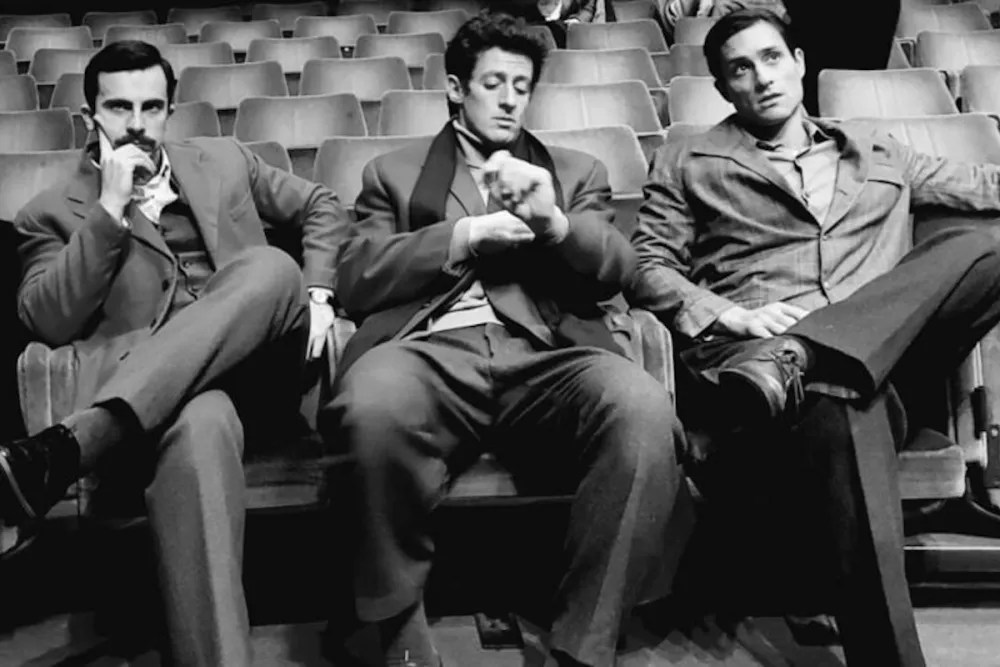
It’s 1957 in Zagreb, Yugoslavia, where a group of filmmakers are shooting a drama. Lovro (Dado Ćosić) its director and Nenad (Đorđe Galić) its writer are both national heroes. While still university students, they led a revolt against the Nazis and Ustashe, the Croation Fascist Party and later joined the resistance. As did Stevan (Slaven Došlo), their cinematographer. But the government doesn’t like their movie; it’s not patriotic enough. So they send in an apparatchik named Emir (Emir Hadžihafizbegović) who specializes in propaganda. Emir is there to “fix” the movie, with a new storyline, dialogue and actors. But also to catch and punish filmmakers who aren’t towing the party line. Tito’s Yugoslavia, though a “non-aligned” country, is warming up toward the post-Stalinist Soviet government. And is also conducting a crackdown on dissidents and undesirables in the arts. In particular, homosexuals. And this includes long time lovers Lovro and Nenad, Stevan and other gay men working on the film, all of whom had risked their lives as anti-fascist partisans in the past.
The filmmakers are interrogated, bribed, threatened, and even tortured when asked to name names… but production continues. Emir treats it all like just another job… until, four of the men he’s spying on save his life. Now Emir faces a dilemma: follow the rules or his own conscience. Can the lovers stay together? Will they finish their film? Or will the
administration gather enough evidence to convict them of the serious crime of being gay and sentence them to a penal colony?
Beautiful Evening, Beautiful Day is a powerful drama about a group of gay men in 1950s Yugoslavia, and the harsh persecution they faced for their sexuality. It’s both tender and brutal, with touching scenes and horrific violence. Although the story is fiction, it’s based on director Ivona Juka’s own research she did for her PhD dissertation. Gay men did play an important role in the resistance, and hundreds were later imprisoned and tortured by the government.
The film boasts excellent acting and stunning B&W cinematography by Dragan Ruljančić. It sheds light on a topic which until now has been virtually non-existent in Yugoslavian cinema. This is an excellent indie movie that deserves to be seen.
Two Women (Deux Femmes en Or)
Dir: Chloé Robichaud
It’s wintertime in Montreal. Florence and Violette (Karine Gonthier-Hyndman, Laurence Leboeuf) are next door neighbours in a housing coop. They can be seen gazing longingly out their windows. Florence, a translator, has a 10 year old son with her common law husband David (Mani Soleymanlou). Vivi is on maternity leave taking care of their new baby daughter, while her husband Benoit (French actor Félix Moati) is on the road. He makes a good salary in pharma sales (and is having a secret affair with a younger woman he works with). But Vivi is losing sleep over a sound she keeps hearing: a Caaaw, Caaaw, Caaaw coming through her walls. Is it a crow? A crying baby? Or, the most likely reason, it’s her neighbour Florence loudly performing her orgasms through the thin apartment walls. She casually brings it up to her, but there the penny drops: Florence admits she hasn’t had sex for many years. It can’t be her; she’s on anti-depressants which totally destroyed her sex drive. But why should both their lives be so miserable?
They decide it’s time to have fun. Florence goes off her meds,
and the two of them start hanging out in bars. They’re also viewing men differently than they used to. The exterminator, the cable guy, the housecleaner, the window washer, the linesman… why should these neglected moms pass on all these potential sexual adventures? But how would their husbands react to sudden changes in their wives’ behaviour? And what will happen to their marriages?
Two Women is a delightful, bittersweet comedy about a pair of sexually frustrated mothers in Montréal and how they deal with their non-functional marriages. It’s sexy, silly, satirical and savvy. The main characters are as likely to be seen seducing a plumber, as quoting Simone de Beauvoir or discussing the ramifications of the #Metoo movement on Facebook.
Count on Québec to thumb its nose at sexual prudishness in mainstream North America, meaning lots of casual full frontal nudity (as well as from every other conceivable angle). Now apparently this is a remake of Claude Fournier’s hit film from 1970 starring Monique Mercure. I’ve never seen the original but let me tell you, Two Women is a great one all on it’s own. Loved it.
Bring Her Back
Co-Wri/Dir: Danny and Michael Philippou (Talk to me)
It’s a normal day in Australia. Andy (Billy Barratt) is Piper’s (Sora Wong) step-brother; a few years older, but they share the same Dad. Piper is visually impaired but doesn’t use a white cane — she doesn’t like people staring at her. She’s funny and self-confident, but Andy still keeps an eye out on her at school; some kids can be cruel. But their lives are torn apart that day when they discover their father dead in the shower.
They’re immediately sent to child services, who attempt to send them to separate places — Andy has a juvenile record — but they insist on remaining together; he’s basically Piper’s caregiver. In the end the social worker sends them off to stay with a kindly foster mom until she can find them a permanent home. The house is cluttered and shabby, with a drained swimming pool in the back and a padlocked toolshed. Laura (Sally Hawkins) is funny, wacky, and more than a bit eccentric. She’s overjoyed to have them there since her husband’s gone, and her daughter — who was blind like Piper — is dead. She’s quick to introduce them to her favourite dog — but he’s stuffed! Taxidermy. And then there’s her son
Oliver, a little boy with a shaved head and a vacant look on his face. He seems innocent… until he catches their cat and starts to eat it, alive!
He’s been a bit off since their accident, Laura says. Piper really likes her, so Andy tries not to interfere. But bad things start to happen. Andy is wetting his bed at night — he hasn’t done that since he was a little kid, and Laura is whispering stuff to Piper all the time, turning her against him. He knows there’s something really wrong here, but he can’t figure out what it is. Why is there a chalk circle around the house? Why is Oliver acting so strange? And what’s in that shed? But when he discovers the truth… is it too late?
Bring Her Back is a relentlessly terrifying horror movie about a frightened teenaged boy and his innocent step-sister. It’s every kid’s nightmare — trapped in a potentially dangerous place, ignored by authorities, and gaslit by a foster mom who is supposed to be on their side. The movie starts with a cold open, a horrific, found-footage VHS snuff film, that remains unexplained for much off the film. Frustrating and terrifying, this movie keeps you on tenterhooks till the end. The Phillipou
brothers (identical twins) weave a contemporary fairytale as scary as the Brothers Grimm. Great acting, beautifully made, but quite difficult to watch.
Bring her Back is brilliant horror like you seldom see.
Two Women (which premiered at Inside Out), Beautiful Evening, Beautiful Day, and Bring Her Back all open in Toronto this weekend; check your local listings.
This is Daniel Garber at the Movies, each Saturday morning, on CIUT 89.5 FM and on my website culturalmining.com.
Same-sex couples. Films reviewed: Unicorns, Solo, Rotting in the Sun
Hi, this is Daniel Garber at the Movies for culturalmining.com and CIUT 89.5 FM.
Fall Film Festival Season in Toronto continues in October with ImagineNative — brilliant films and art by and about indigenous people in Canada and around the world from 17-22; and Planet in Focus, the International Environmental film festival, with features, docs and talks on nature, activism, and climate change, from the 12-22.
This week, I’m looking at three new movies about same-sex relationships, two of which played at #TIFF23. There’s a straight mechanic who unwittingly falls for a drag queen in a London pub; a Quebecois drag queen who falls for a French one in a Montreal bar; and a Chilean artist who meets an American influencer on a nude beach in Mexico.
Unicorns
Co-Dir: Sally El Hosaini, James Krishna Floyd
Luke (Ben Hardy) is a mechanic who lives in Essex, near London. He works at his father’s garage, and spends the rest of his time with his 5 year old son. His wife abandoned them when his kid was still a baby, but luckily his dad will babysit if he’s out on a date. For Luke dating usually means furtive sex and one-night stands with women he hooks with online. But one day, after leaving a London curry house, he stumbles into a nearby nightclub, and is riveted by the eyes of a beautiful woman performing an alluring dance on stage. Clearly, the feelings are mutual — Aysha seeks him out afterwards, for a snog and a grope at the stage door. Only afterwards does Luke realize the woman is actually a man in drag. He freaks and leaves. Aysha (Jason Patel) is disappointed — he thought Luke knew they were in a South Asian drag bar. But Luke is straight and almost sickened by what happened.
Still, there is something there. Luke agrees to act as a paid driver (and unpaid bodyguard) for Aysha and her fellow drag queens. They need transportation to get them safely to private “gaysian” (gay+asian) parties on the down low, in places like Manchester.
The tips she gets at these parties pays her rent. Gradually, they get to know one another better. When Aysha really hits it off with his son, Luke starts thinking maybe she is just the woman he’s looking for. Problem is, he’s not trans, he’s a man named Afik. Aysha is just his drag name. Will the attraction still be there if Aysha goes away? And can a straight white man and a gay South Asian drag queen form a couple?
Unicorns is a poignant, romantic drama about two people from two sides of a deep divide. And while there is some shocking violence and unexpected plot turns, the filmmakers keep it real and subtle. This is co-director James Krishna Floyd’s (of mixed heritage) first feature, and does an excellent job of it. Ben Hardy is a well-known heart throb and soap star in the UK, while Jason Patel is a newcomer — this is his first role. Luckily, the two have amazing chemistry and are compelling to watch.
This is a good first movie.
Solo
Wri/Dir: Sophie Dupuis
Simon (Theodore Pellerin) is the youngest drag artist at a Montreal bar. He’s naive, trusting and sexually inexperienced. He performs elaborate acts dressed in outfits his older sister helps design. And he always looks forward to visiting his Dad, stepmother and sister for Sunday brunch. His mother is an internationally famous opera star, who left the family for greener pastures when he was a teen. But everything changes when Olivier (Félix Maritaud) a charismatic older guy in his late twenties shows up at the drag bar direct from Paris. Simon is blown away by his sex-centred drag performances, and wants to learn from him. Soon they are an item, in and out of bed, and onstage. Simon will do
anything Olivier wants: moving in together, staying away from his family, even how Simon should perform his own acts.
But the concessions all seem to be one-way. Olivier sleeps with other men, insults Simon’s judgement, and plays mental tricks on him. Around this time, Simon hears some shocking news: his mother is coming to Montreal, back from a triumphant tour off Europe. He hasn’t seen her in years, so this will be the crucial reunion Simon has been longing for and waiting for for so long. How will their meeting go? What role will Olivier play? And will she come to watch his Solo drag performance?
Solo is a moving and tender portrayal — set within Montreal’s drag community — of a young man forced to face his demons and figure out who are his friends and who are his enemies. I know very little about the drag scene (I’ve never seen Rupaul’s Drag Race, for example) but it doesn’t require outside knowledge to understand what the movie’s trying to say. Theodore Pellerin is amazing as Simon, and — though much less sympathetic — so is Félix Maritaud. And for a movie about drag it’s surprisingly devoid of camp. If you’re looking for a tear-jerker with lots of musical performances, you’ll enjoy Solo.
Rotting in the Sun
Dir: Sebastian Silva
Sebastian Silva (Sebastian Silva) is a jaded Chilean artist and filmmaker who lives in an apartment in Mexico. He enjoys reading books about suicide and depression. When he’s not dodging work deadlines or dealing with construction noise in his minimalist apartment, he’s likely walking his dog Chima, doing pop art paintings of giant cartoony penises, or snorting bumps of pentobarbital. His beleaguered housekeeper Señora Vero (Catalina Saavedra, in a great performance) takes it all in, but never comments.
On the recommendation of a colleague he takes some time off to relax at a gay nude beach in Zicatela, but is non-plussed by all the body parts on display. When he almost drowns there, he meets Jordan Firstman (Jordan Firstman) an instagram influencer. Jordan thinks it’s Kismet — he saw one of Sebastian’s films just the night before, and here they both are washing up on shore. They must collaborate on a production. Sebastian is less
enthusiastic, but Jordan insists. But when he arrives at Sebastian’s door in the city, he is nowhere to be seen. Is he ghosting him? Or has something really bad happened to Sebastian? And will Jordan ever solve this mystery?
Rotting in the Sun is a contemporary indie film in the style of a highly-sexualized comedy. It’s equal parts mystery, screwball comedy, and scathing social satire, with a fair amount of
nonchalant, explicit sex. Silva reimagines Mexico as an uber-gay paradise, where the local park fountain has a statue of Michelangelo’s David, the beaches are packed with nude men, and every room in his apartment reveals an orgy behind closed doors. This constant decadence is contrasted with the panicky and naive Señora Vero desperately trying to hide Sebastian’s whereabouts. Silva and Firstman play exaggerated versions of themselves, to hilarious effect.
You know the expression “a bag of dicks”? This movie is a dump truck of dicks. But if you don’t mind looking at lots and lots and lots of penises, you’ll get a kick out of this shockingly subversive comedy.
Unicorns had its world premiere at TIFF; Solo had its Toronto premiere there and opens this weekend in Toronto; check your local listings. And Rotting in the Sun — along with a selection of other films by Sebastian Silva — is now streaming on Mubi.
This is Daniel Garber at the Movies, each Saturday morning, on CIUT 89.5 FM and on my website, culturalmining.com.
Daniel Garber talks with Gail Maurice about Rosie at #TIFF22
Hi, this is Daniel Garber at the Movies for culturalmining.com and CIUT 89.5 FM.
Photos by Jeff Harris.
It’s the 1980s in a working-class neighbourhood of Montréal. Fred is an artist whose day job is working at a sex boutique. Adopted as a child, she ran away from home at 16 and never
looked back. Now she’s best friends with Flo and Mo, two gay streetwalkers who make up her current family. But she’s thrown for a loop when a social worker shows up at her door with a six-year-old girl, who says Fred is her closest living relative. What??
She tries to explain she’s close to eviction, living hand-to-mouth, she’s a Francophone while Rosie only speaks English, and knows absolutely nothing about raising a child. But who can resist a cutie-pie like Rosie?
ROSIE is a new, feel-good comedy/drama about life on the edge in 1980s Montreal. It deals with chosen families,
marginalized groups, homelessness, and indigenous and queer people in urban settings. (Both Rosie and Fred were adopted as indigenous kids into white families)
The film is directed by actor and filmmaker Gail Maurice. It may be her first feature, but you’ve probably seen her unforgettable roles on TV shows like Trickster, and in movies like Night Raiders.
I spoke to Gail in Toronto via ZOOM.
ROSIE is having its World Premiere at #TIFF22 on Sept. 9th.
Daniel Garber talks with Tracey Deer about Beans
Hi, this is Daniel Garber at the Movies for culturalmining.com and CIUT 89.5 FM.
It’s the summer of 1990.
Tekehentahkhwa or “Beans” for short (Kiawentiio) is a typical,
innocent 12-year-old girl who lives near Montréal with her Dad, her ambitious mom, and her little sister. Her biggest worry is getting into a posh private school to guarantee a successful future. But her life is totally changed when the town of Oka tries to grab Mohawk burial grounds to expand a golf course. Protests erupt and her family, being Mohawk, joins in. But when it turns into a blockade and a stand off involving police and the military, it reveals acts of violence and virulent racism she has never witnessed before. Now she has to make a decision: should she
toughen up like her dad? Or keep to the straight and narrow like her mom? And how will she emerge from these life-shattering events?
Beans is a fantastic new drama – told from an indigenous point of view – that combines the historical record with a highly personal and intimate coming-of-age story. Since it premiered at TIFF last fall, it has garnered dozens of awards for filmmaker, Tracey Deer who has created a work of personal and national importance.
I spoke with Tracey Deer via Zoom.
Beans is now playing in Toronto and all across Canada, from Victoria to Halifax.
O Canada! Films reviewed: Jump Darling, Underplayed, Death of a Ladies’ Man
Hi, this is Daniel Garber at the Movies for culturalmining.com and CIUT 89.5 FM.
There are tons of great movies finally opening up this week, including Night of the Kings which I reviewed last fall, one of my favourite movies of the year, at the digital TIFF Bell Lightbox.
This week I’m looking at three new Canadian movies ready to be seen There are female DJs who want to be noticed, a Toronto drag queen who who wants to see his grandmother, and a Montreal poet who wonders why he keeps seeing his dead father.
Wri/Dir: Phil Connell
Russell (Thomas Duplessie) is an aspiring actor whose career is going nowhere. His only role? As Fishy Falters, a drag queen gig he landed at a Toronto gay bar called Peckers. And even that falls apart when he trips on his way to the stage in a symphony of disaster. His husband, a successful Bay Street lawyer who bankrolls his acting career, rubs salt in the wound: take some acting courses or go to. auditions, but no more drag, it embarrasses me.
Russell takes this as an ultimatum, packs up a suitcase and heads out the door. He lands up at his grandmother’s place in Prince Edward County to borrow her car os he can drive off to unknown parts.. She greets him at the door with a scream and a knife. Margaret (Cloris Leachman) lives alone. She was once a figure skater (I was hired by the Ice Capades! she says) and a formidable bridge player, but since her husband died she’s been frail, forgetful and depressed. Russel’s mom (Linda Kash) wants to send her off to an old-age home, but Margaret would rather die. So Russel agrees to stick around and
help take care of her. Meanwhile he starts frequenting a tiny bar in town, where he thinks his drag act could catch on. Will he pull Margaret out of the dumps? And will hr return to Toronto, triumphant?
Jump, Darling is a bittersweet family drama about a young gay man trying to express himself in the inly way he knows, and an elderly woman dealing with old age and loss. (The title Jump Darling refers to her husband’s suicide) This is a first time feature both for the director and Thomas Duplessie as Russell, and they pull it off quite nicely. The characters are three-dimensional not cookie-cutter. Of course it helps having the late, great Cloris Leachman in her final role, and Linda Kash who ties the two sides firmly together. This is a good movie.
Dir: Stacey Lee
The music business is vast and diverse, but not equitable. Did you know that of Billboard’s top 100 DJs, only 7 are women? Same holds true in the electronic music sector, even fewer studio producers are women. And only a tiny fraction of these are women of colour. Why are there so few and why don’t we ever hear about them? This documentary looks at the industry and its history, and follows a handful of female DJs, electronic musicians and producers as they play their music in clubs, concerts and festivals over the course one summer.
Many trailblazers in electronica — from Wendy Carlos to Daphne Oram — were women, but names like Moog dominate the collective memory. And in the electronic DJ world, at raves and festivals, women find it nearly impossible to get their proverbial feet in the door.
The filmmakers talk to stars like Tokimonsta, musician Alison Wonderland, Toronto-based superstar Rezz, and newcomers like Tygapaw out of Brooklyn. The documentary shows both their professional lives — at concerts and in studios — and also gives them a soapbox to talk about the troubles they face on the road and in the workplace. Underplayed is an informative look at under-representation and equity in the electronic music world, with some cool digital graphics and great beats playing in the background.
Wri/Dir: Matthew Bissonnette
Samuel O’Shea (Gabriel Byrne) is a Canadian poetry prof at McGill and a notorious philanderer. He sees his ex-wife Geneviève (Suzanne Clément) at Thanksgiving and Christmas along with his adult children. Josée (Karelle Tremblay) is a foul-mouthed artist who hangs out with a junkie, and his son Layton (Antoine Olivier Pilon) is a brawler for a minor league hockey team who is also gay. He meets them each once a week for lunch. But his life is falling apart. He drinks heavily and his creative output — he’s a writer — is zero. And when he catches his second wife in bed with another man, he is deeply offended — How dare she… he’s the adulterer, not her! But that’s not all.
His father (Brian Gleeson) is frequently visiting him at home. Problem is, he died in Ireland decades
ago when Samuel was just a boy. Other hallucinations come and go: a female bodybuilder with a tiger’s head, and the grim reaper himself. Is he going crazy? Turns out Samuel has an inoperable tumour pressing on his brain. So he decides to turn his life around. He packs up and heads to Ireland, to write his novel. There he meets Charlotte (Jessica Paré) a Quebecoise former model who works in a corner. Is third time the charm? Will he beat his tumour? Will he ever stop boozing? And will he reconcile with the ones he loves?
Death of a Ladies Man, is a densely-packed, mood-heavy saga about an Irish-Canadian man in his sixties dealing with his life.
Although it’s set in present day Montreal and Ireland, the movie has a very nostalgic feel, and it’s brimming with Canadiana.. The title comes from a Leonard Cohen song, whose music appears throughout the film. Samuel feels like equal parts Duddy Kravitz and Ginger Coffey, a Montreal everyman… all grown up. His son is named Layton (Irving Layton was Leonard Cohen’s poetry mentor.) When he leaves Canada the soundtrack instantly switches to Un Canadien Errant. He hallucinates figure-skating hockey players and fur trappers… Could he possibly be any more Canadian?
The movie — a Canadian-Irish co-production — runs into trouble with all the “meta” elements: it’s hard to tell whether you’re watching the character’s hallucinations, the plot of the book he’s writing, or the writer-director’s own fantasies. Everything centres on Samuel, and though Gabriel Byrne (who is great) is surrounded by some of Quebec’s best actors, they’re all only background figures.
Does it work? I think it does — it’s delightful to watch, wonderfully photographed and redolent with great Canadian music — just don’t mistake art for reality.
Underplayed and Jump, Darling are now playing, and Death of a Ladies’ Man opens today.
This is Daniel Garber at the Movies, each Friday morning, on CIUT 89.5 FM and on my website, culturalmining.com
Daniel Garber talks with filmmaker Sophie Deraspe about Antigone
Hi, this is Daniel Garber at the Movies for culturalmining.com and CIUT 89.5 FM.
Photos by Jeff Harris.
Antigone is a straight-A high school student in Montreal. She lives with two brothers and a sister, raised by ther grandmother. They immigrated from North Africa when she was still a child. She’s heading for university and is dating Hémon, the son of a prominent politician. But her normal life is shattered when the
police kill one brother and jail the other. She comes up with a scheme to take her brothers place in prison. But what will become of Antigone?
Antigone is the title of a fantastic new film from Québec, about a strong young woman willing to confront the government and risk everything for the love of her brother. The film transplants the classic Greek play into
modern day Montréal, incorporating contemporary cinema, drama, literature, and music. The film is written and directed by Sophie Deraspe who also served as cinematographer and editor. Antigone is her first feature and has won countless prizes, including best Canadian Film at TIFF and is Canada’s choice for Best Foreign Film Oscar.
I spoke with Sophie at CIUT 89.5 FM.
Antigone opens today in Toronto.
Bro Movies. Films reviewed: Bigger, First Man, Free Solo
Hi, this is Daniel Garber at the Movies for culturalmining.com and CIUT 89.5 FM.
It’s Fall Film Festival season in Toronto now, meaning more movies than you can shake a stick at. Toronto After Dark will thrill and chill you with horror, cult and fantasy pics.
Cinefranco brings brand new French language comedies, dramas and policiers from Quebec and Europe. And Rendezvous with Madness plays fascinating films
accompanied by panel discussions on addiction and mental health.
But this week I’m talking about bro films, two biopics and a doc about men with lofty goals. One wants to climb a sheer cliff, another wants to build the perfect body, and a third one who just wants to fly to the moon.
Dir: George Gallo
Joe Weider (Tyler Hoechlin) is a poor jewish kid in depression-era Montreal. On the streets tough kids beat him up and steal his paper route money, and at home his cruel mom beats him for not keeping clean. At least his little brother Ben (Aneurin Barnard) looks up to him. Joe finds inspiration in unusual places: a
strongman at the circus and photos of weight lifters he see at newsstands. He begins to obsessively draw pictures of perfect male bodies, copying from textbooks at the McGill library. He wants to promote beautiful physiques, bodies that are muscular, symmetrical and healthy. But fitness for health and looks is still a new concept. In those days people guzzled booze, smoked like chimneys, and thought exercise was a dangerous thing best left to
olympic athletes.
Weider challenges all that with self-published magazines, promoting new exercises, diets and weight training, illustrated with glamour shots of barely-dressed muscle men. It’s a smash hit, he gets a US contract and Joe and Ben’s empire expands to bodybuilder contests, weights, and a wide range of magazines. And when business takes him to Hollywood, he spots a bleached blonde pin up model working out at Jack LaLanne’s gym. Betty (Julianne Hough) is everything he desires: beautiful, fit and
smart (he is separated from his first wife). Is this true love? Later he discovers Austrian bodybuilder Arnold Schwarzenegger – the personification of his childhood drawings – and brings him to America.
Bigger is a fun, if idealized, look at the life and career of Canadian fitness mogul Joe Weider. It’s a bit corny, with Montreal-born Joe talking in an unplaceable, choppy accent. And it steers clear of his lawsuits and scandals. But Hoechlin and Hough are enjoyable as Joe and Betty, and there’s even a super villain, a racist, anti-semitic homophobe named Hauk (wonderfully played by Kevin Durand) who is his business rival and real-life enemy. Not a great movie, but an enjoyable one.
Dir: Damien Chazelle
It’s the 1960s in America, the space race is on, and the Soviets are winning. Neil Armstrong (Ryan Gosling) is a test pilot exploring the skies. He can land any plane, even one about to explode. He’s married to Janet (Claire Foy), a pixie-ish woman with a fierce temper. They have a young daughter they both love. But when the girl dies of an incurable illness, and Neil loses his
job despite his skills they know things have to change. So Neil makes a big decision: NASA needs astronauts, and he’s going to be one. They move down to Houston and settle in to suburban life.
First Man follows the career and home life of the renowned astronaut, from Gemini missions, to Apollo’s first landing. Armstrong is portrayed as a strong silent type, a no-nonsense guy who drives off alone to handle anger and depression. It also deals
with astronauts and their uncertain lives (lots of them died). And director Chazelle makes you feel like you’re there with them in the planes and rockets. He even inserts showtunes into his astronaut movie. (Wait — showtunes?) So why didn’t I Iike it? First Man is too heavy, too long, too ponderous. It’s one of those overly stern and patriotic American movies about national heroes. And where’s the suspense? We already know he was the first man on the moon. What’s the point? Ok, there are a few powerful scenes, but First Man consists mainly of rattling cockpits, brooding astronauts and suburban housewives yelling about their husbands.
Ryan Gosling is wasted in this boring example of Oscar Bait.
Dir: Elizabeth Chai Vasarhelyi and Jimmy Chin
It’s 2016 and Alex Honnold has one obsession: to scale a sheer cliff in Yosemite. Mountain climbers have done it before in teams rapelling with ropes, pitons and caribiners. But Alex wants to do it “free solo”, that is, by himself
and without safety ropes. One slip, one miscalculated reach, will send him plunging to his death. But he really wants to climb El Cap, and if it’s not free solo, what’s the point?
Alex is a boyish, wiry vegetarian who cares little for material things. He’s a loner who lives out of a trailer. He’s also in perfect shape, lithe, bendy and incredibly strong. He has to be to hold onto a crack in a rock with just a few fingers while stretching his body
sideways to the next outcropping. He intensely studies the cliff, practicing each stage in separate small climbs using ropes. And he is accompanied by the filmmakers, who are accomplished climbers themselves. Alex proves to be a bit camera shy, hesitant to “let go” before the cameras. Is it performance anxiety? And will Alex make it to the top of El Capitan… or plunge to his death?
Free Solo is an amazing and spectacular look at one climber
attempting the nearly impossible. I have no deep-seated passion for rock climbing – I even have a fear of falling – but this movie kept me riveted the whole time. Scenes that show Alex’s quirky nature and the people around him — including other climbers, his family and his girlfriend – help give him a more rounded portrayal. But it’s the climb itself, and the truly amazing photography, that really keeps your attention.
Bigger, First Man, and Free Solo and open today in Toronto; check your local listings.
This is Daniel Garber at the Movies, each Friday morning, on CIUT 89.5 FM and on my website, culturalmining.com.
Changes. Films reviewed: Venus, RBG, Boom for Real
Hi, this is Daniel Garber at the Movies for culturalmining.com.
Spring Film Festival Season is going strong in Toronto with world premiers, features and short films to reflect every taste. Inside Out is one of the world’s largest LGBT film festivals; ICFF, the Italian Contemporary film festival, has parallel screenings in eight cities across Canada; and Toronto’s Japanese Film Festival features great movies and a special appearance by Nobel Peace Prize co-recipient Setsuko Thurlow. And brand new this year is Toronto’s True Crime Film Festival – the title says it all. They’re all coming soon.
This week I’m looking at three new movies – a dramedy ad two documentaries – opening today, which (coincidentally) are all directed by women. There’s a teenaged boy who changes New York’s art scene, a diminutive judge who changes US laws, and a woman in her thirties who just wants to change herself.
Dir: Eisha Marjara
Sid (DeBargo Sanyal) is a Montrealer in her thirties going through some major changes. Her longtime boyfriend Daniel (Pierre-Yves Cardinal: Tom at the Farm) dumped her, and a strange, 14-year-old kid has been following her
around. But the biggest change of all is her gender – she’s transitioning from male to female, and is about to appear as a woman, in public, for the very first time. That’s when Ralph (Jamie Mayers) the 14 year
old skate kid who’s been following her around finally tells her why: Sid, he says, you’re my dad!
What?! First of all, she says, I only have sex with men, second of all I’m brown – Sid is of a Punjabi ancestry – and you’re white. But doesn’t she remember Kristin from high school? (Kristin is
Ralph’s mom and Ralph read in her diary that she had a fling with Sid as a teenager).
When she gets over the shock Sid takes a crash course in Parenting for Dummies, and starts to bond with Ralph. Her
ex-partner Daniel reappears in her life, and accepts her change of gender. And her estranged parents, her transphobic Mamaji (Zena Darawalla) and laid-back Papaji (Gordon Warnecke: My
Beautiful Launderette), welcome her back with open arms when they discover they’re grandparents. But trouble lurks. Will Daniel come out publicly as her partner? Will Ralph tell his Mom he found his birth parent? And will Sid survive the stress of transition?
Venus is a very cute dramedy, one that shows pathos without too much treacle, and keeps you interested. And the cast is uniformly believable and endearing, especially the principals: Sanyal, Mayers and Cardinal.
Dir: Julie Cohen, Betsy West
In 1970s America it was not illegal to refuse women bank loans without a man’s signature, to fire them for being pregnant, to pay them less than men, to bar them from public schools, private clubs and other institutions… even for husbands to rape their own wives.
Enter noted lawyer Ruth Bader Ginsburg. Born in Brooklyn, she is one of few female students at Harvard Law in the 1950s which helps shape her legal outlook. She observes the oppression and panic of
the Red Scare. She also experiences discrimination first hand, as she and other women are ignored by professors and barred from accessing archives. Later, she works for the ACLU (American Civil Liberties Union) and begins to challenge laws that discriminate against women,
one at a time, through lawsuits. Many of her cases make it to the all-male Supreme Court, whose members understand civil rights on the basis of race, but can’t yet conceive of it on the basis of sex.
She teaches them what’s what.
Later this diminutive, shy woman becomes a law professor, a circuit judge in the Washington, D.C. Appeals Court and eventually a Supreme Court
justice herself, often leading dissenting positions on the increasingly conservative court. More recently, in her eighties, she has been adopted by young feminist activists as a “rock star” or celebrity of sorts; an unusual role model for a youth-obsessed culture.
RBG is an interesting and informative – if conventional – look at her policies, her home life, her late husband, and her love of opera.
Boom For Real: The Late Teenage Years of Jean-Michel Basquiat
Dir: Sara Driver
It’s 1978 and New York is a bombed out city. Crime rates are soaring, the government is bankrupt, and poor neighbourhoods like the Lower East side are abandoned and crumbling. With hard times come big changes. Both Punk rock and hip hop culture
are developing side by side, and into this incubator steps a 16 year old boy named Jean-Michel Basquiat.
Born in Brooklyn, the son of a Haitian Dad and a Puerto Rican mom, Jean Michel is homeless,
kicked out for dropping out of high school. Now he’s couch-surfing in the lower east side, and becoming an artist. He expresses himself as SAMO, a graffiti artist. But instead of the
bold, chunky murals and tags that cover the subways Jean-Michel scrawls pensive poetry and enigmatic thoughts using plain – though distinctive — letters. He later develops his images – childlike hearts, crosses, three pointed crowns, Batman and science books – and applies them to diverse media: everything from walls, to clothing, to refrigerator doors. He targets walls near Soho, so galleries will notice. He already
thinks of himself as a superstar, just one who is not famous yet.
But Soho galleries don’t care much about youth, punk, hip hop or black culture in general. So the artists create their own spaces in a DIY mode. Still a teenager he attends seminal art happenings and events around the city, whether or not he is actually invited, spontaneously adding his art directly
to gallery walls And he refines his distinctive look, with short dreads and a partly shaved skull.
Boom for Real is a brilliant documentary about an artist life before his incredible fame in the art boom of the 1980s and his untimely death. It situates him within an era: of Fab 5 Freddy and Planet Rock; Club 57 and the Mudd Club; Grafitti art, Jim Jarmusch, club kids and Quaaludes, fashion, music, rap and art. It’s the best sort of documentary, one that functions as a constantly-flowing oral history told by the people who were there. It shows a fantastic array of period photos, videos and images documenting Basquiat’s teenaged years. Even the closing credits are thoughtfully laid out.
Beautiful movie.
Venus, RBG, and Boom for Real all open today in Toronto; check your local listings.
This is Daniel Garber at the Movies, each Friday morning, on CIUT 89.5 FM and on my website, culturalmining.com.
Flashback. Films Reviewed: The Apprenticeship of Duddy Kravitz, Rings, Shepherds and Butchers
Hi, this is Daniel Garber at the Movies for culturalmining.com and CIUT
89.5 FM.
If the 1970s was Hollywood’s golden age then the 80s and 90s were its tin foil age —when a series of corporate takeovers placed short-term profits over creativity, and the Oscars celebrated forgettable, middle-brow pap. Even so, there were some fun and popular movies from 80s and 90s. Films like Alien, Shallow Grave, and Starship Troupers are playing at Cineplex’s Flashback Film Festival (FBFF) across Canada starting today, giving you a chance to revisit favourites on the big screen.
This week I’m looking at flashbacks. There’s a rerelease of a Canadian coming-of-age classic from the 70s, a flashback to a courtroom drama set in apartheid South Africa in the 80s; and a new sequel to a Japanese horror movie from the 90s.
The Apprenticeship of Duddy Kravitz (1974)
Dir: Ted Kotcheff Based on the novel by Mordecai Richler
It’s the 1940s in a poor, Jewish section of Montreal. Duddy Kravitz (Richard Dreyfuss) is a teenager recently graduated from Fletcher’s Field (a.k.a. Baron Byng) High School.
He lives with his widowed father Max (Jack Warden) who works as a taxi driver and part-time pimp, and his big brother Lennie. Lennie is a smart and sophisticated med student at McGill. But Duddy has neither the brains nor the inclination to study.
He’s a boorish and loud, nervous and uncouth, always sweating and scratching, jumping
and cussing. He has a filthy mouth and an intrusive manner. With no friends or admirers he just wants to get rich quick. His idol is a gangster known as The Boy Wonder (Henry Ramer), and his favourite retort is kiss my Royal Canadian Ass.
He gets a summer job at a holiday resort in the Laurentiens, but is relentlessly put down by rich kids from Westmount and Outrement. He makes friend with a pretty waitress named Yvette (Micheline Lanctot). They fall for each other and she takes him to a secret spot beside a pristine lake. He’s struck by its beauty and vows to buy it, but is blocked by Québécois farmers who never sell property to jewish people. And Yvette is turned off by his constant drive for profits and
wealth.
Duddy sets off on a series of impossible ventures he thinks will make enough money to buy the land: Importing Pinball machines with his friend Virgil, an American he meets on a train (Randy Quaid); and producing films with an alcoholic British communist (Denholm Elliot). But in his quest for success, he risks alienates his friends, his lover and his family. What will he learn from his apprenticeship with the real world?
The Apprenticeship of Duddy Kravitz is a hilarious and audacious drama from the 70s which deserves to be seen on the big screen. It’s a dark slice of Canadian life, a world full of bigotry, snobbery, selfishness and deceit, tempered with the glorious freedom of a young man pursuing his dreams.
Rings
Dir: F. Javier Gutierrez
Julia (Matilda Lutz ) is a high school grad in small town USA. She’s sad because her pretty, but dumb-as-a-post boyfriend (Alex Roe) is heading off to university in Seattle. Don’t worry, Holt says, I’ll skype you every night. But when the calls stop coming and he doesn’t answer her texts, brave Julia heads off to Seattle to investigate. And she finds something strange: there’s an old black-and-white video everyone tells her to watch. What she doesn’t know is that anyone who watches this video will be dead in seven days. But if you trick someone else into
watching it, you get another seven days added to your life.
Like Orpheus in the Underworld, Julia decides to forge ahead, rescuing her boyfriend from Hell. She intentionally watches the dreaded video, and using her powers of second sight – she’s clairvoyant — she decides to follow a ghost to its point of origin. But first she has to deal with a secretive professor named Gabriel (Johnny Galecki) and a blind graveyard custodian (Vincent d’Onofrio).
Can Julia rescue Holt, defeat a ghost with long black hair, and figure out the meaning behind the cursed video tape?
Rings is a reboot of the scary Japanese movie Ring and its sequels. Last week I interviewed two ghosts from that era, Sadako vs Kayako. In the American films, Sadako is called Samara, and urban Japan becomes a village somewhere in Washington State. More than that, Rings trades the chill feel of video static for a more conventional American ghost story.
Is it scary? A little, especially towards the end as Julie’s visions start to pay off. But the story is so ridiculously disjointed it’s laughable. It treats the original Ring as just a jumping-off point for an unrelated story, discarding much of what made that film so scary.
Shepherds and Butchers
Dir: Oliver Schmitz
It’s 1987 in Apartheid-era South Africa. Leon Labuschagne (Garion Dowds) a white Afrikaner, is arrested for murdering seven black African members of a soccer club in a quarry. The seven bodies were found neatly lined up in a row. The accused refuses to defend himself or even to say anything about what he did; he says he can’t remember. It’s an open
and shut case. Or is it?
In walks the famed jurist Johan Webber (Steve Coogan), a staunch opponent to the death penalty. While not contesting the actual crime, instead he says it is the brutal South African justice system that led to the crime. A shy, church-going kid turned into a mass murderer in just a few years? Preposterous!
It turns out Leon, since age 17, has been forced to work on death row in a maximum security prison. His work is like a shepherd, tending to the needs — food, showers, and prayers — of men “on the rope” (waiting to be hanged). But he’s also a butcher, forced to
kill — en masse, often seven at a time — the same men he takes care of.
His story is told at his trial in a series of gruesome and realistic flashbacks. Johan goads him into recounting what he – and the prisoners — has been through. This film shows the horrors of capital punishment, and particularly
the mass executions held in South Africa, in graphic detail. It is horrifying and extremely hard to watch, because it brings you, the viewer, right into the gallows itself. Shepherds and Butchers is a touching story about an important topic, but believe me, it is not for the faint of heart.
Rings and Shepherds and Butchers both open today in Toronto; check your local listings. The Apprenticeship of Duddy Kravitz is playing for free this Sunday as part of the Canada on Screen series. Go to tiff.net for details.
This is Daniel Garber at the Movies, each Friday morning, on CIUT 89.5 FM and on my website, culturalmining.com


leave a comment