Daniel Garber talks with Brishkay Ahmed about In the Room
Hi, this is Daniel Garber at the Movies for culturalmining.com and CIUT 89.5 FM.
It’s August, 2021 in Kabul Afghanistan. The Taliban is at the city gates and large crowds are congregating at the airport. Some manage to get out, but the women who remain face unheard of restrictions imposed by the Taliban. Restrictions in dress, education, work and general daily life: there’s no school after grade 6, women barred from universities, government work and from most professions, along with freedom of speech, expression, and even congregating in
public… leaving some women virtually locked away in their rooms.
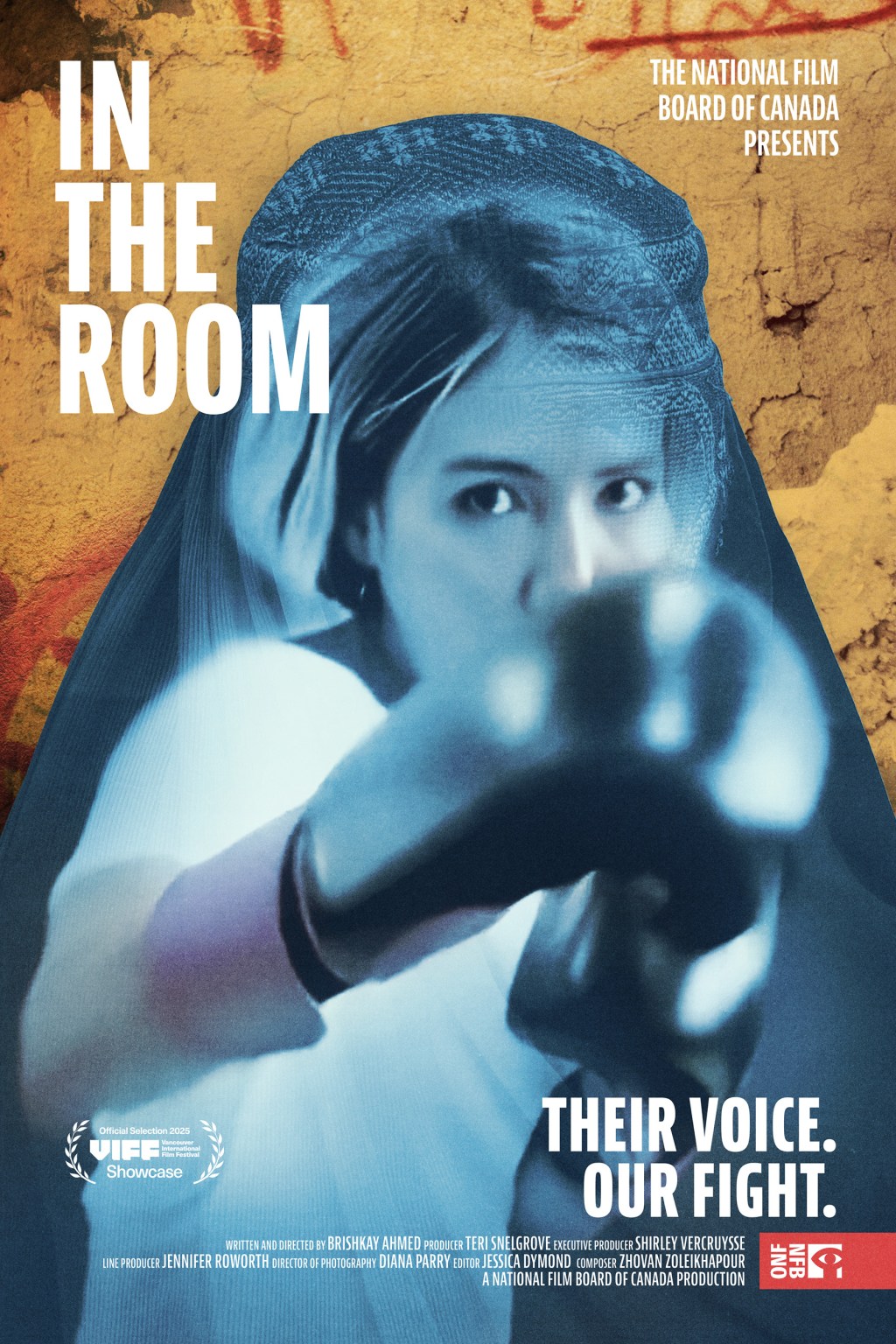
In the Room is a new NFB documentary about a group of dynamic ex-pat Afghan women who don’t fit neatly into their stereotypes. We meet a model, a TV news chief, an influencer and an actor and activist, in this unusual doc. The film is by noted Canadian documentarian Brishkay Ahmed whose work has frequently taken her back to the country of her birth. She’s known for her films In the Rumbling Belly of Motherland, Story of Burqa. The film won the Audience Award Showcase at its premiere at VIFF in Vancouver and played at the Reelworld film festival Toronto.
I spoke with Brishkay in Vancouver via Zoom.
Beginning on Tuesday, November 25, the National Film Board of Canada (NFB) will release In The Room for free streaming across the country on nfb.ca and the NFB app.
TIFF gems. Films reviewed: Girl, I Swear, Cover-Up
Hi, this is Daniel Garber at the Movies for culturalmining.com and CIUT 89.5 FM.
TIFF, Toronto’s International Film Festival is winding down after a busy week, but there is still a lot to see, including the People’s Choice awards offering free screenings of the winning films tomorrow. So this week I’m looking at three terrific movies that premiered at TIFF but aren’t getting the degree of coverage I think they deserve. There’s a coming-of-age story about a girl in Taiwan, a biopic about a man in Scotland, and a documentary about a legendary American journalist.
Girl
Wri/Dir: Shu Qi
Lin Xiaoli (Bai Xiao-Ying) is a working class tween in middle school in Taiwan. She lives with her mom, and her domineering stepdad who terrorizes her mother and her. Xiaoli hides inside a zip-up wardrobe in her bedroom as protection from his violent outbursts. He works as a mechanic in his Uncle’s garage, and usually comes home drunk to the gills. Her Mom works in a hair salon and makes artificial flowers at home to earn extra money, but takes out her anger on her much smaller daughter. Xiaoli takes care of her younger sister, who is favoured by both her parents. At school she tries to stay unnoticed to avoid more of the violence and anxiety he gets at home.
Until she meets a vivacious girl named Li Lily (Lin Pin-Tung). Lily lived in the States for a few years but now she’s back and living with her grandparents who let her do whatever she
wants. Though the too are complete opposites, Lily is helping Xiaoli climb out of her shell. And one day they cut class, wear makeup, smoke a cigarette, go to a video cafe, sing songs, and eventually meet a bunch teenaged boys riding motor scooters. But will this day change her life in a good way… or in a bad way?
Girl is a realistic coming-of- age drama set in the previous millennium (with no computers or cel phones) and full of poignant details. It’s a very moving story about parental abuse passed down through generations, but it’s also full of hope. It follows the points of view of all the main characters, not just
Xiaoli. Now, I have a rule, I avoid first films at TIFF directed by actors. Why? They’re usually crap. Vanity pics, Oscar bate, self-serving vehicles or relentless navel gazing. Shu Qi is a very famous Taiwanese actress, and Girl is her first try at directing. Luckily, it’s really good. She has acted in three movies by Hou Hsiao Hsien and Girl resembles his films in both style and content, though a totally original take. It’s rough and violent in parts, which is hard to handle in a realistic movie, but there’s lots of sweet stuff, too.
Girl is an excellent first feature.
I Swear
Wri/Dir: Kirk Jones
It’s the late 1990s. John Davidson (Scott Ellis Watson) is a popular teenager in Galashiels, Scotland He’s starting at a new school, getting friendly with a girl he fancies, and is the prized goalie on the local boys’ football team. His Dad has even arranged for a scout to the next match. But then something unexpected happens. He starts twitching in class, just a little at first, like a nervous tic. But it soon turns to rapid movements, facial contortions, and barking sounds. Followed by spitting, random punching and the uttering of the most offensive words. He gets caned by the headmaster for acting the ckown, his mother makes him eat his meals on the floor facing the fireplace. HIs father abandons his family. His onetime girlfriend slaps his face and other kids bully him at school, But none of it is intentional; he has Tourette’s syndrome.
Decades later, John (Robert Aramayo) still lives with his mother, heavily sedated, not allowed to speak with anyone for fear of an incident. A miserable existence indeed. Until he runs into an old school friend who invites him for dinner at home. He repeatedly declines — for good reason — until his friend’s mom Dottie (Maxine Peake), a psychiatric nurse
diagnosed with cancer, insist he come in for spaghetti dinner. The first thing he says to her is You’re dying of cancer, haha! before skulking away, mortified. But Dottie brushes it off as the most honest thing she’s heard in years. She invites him back, and tells him to stop apologizing for things that aren’t his fault. Eventually he moves in to try to live a normal life. But is that possible with Tourettes?
I Swear is a comedy/drama, based on a true story, about one man’s life with Tourette’s. The title refers to the profane and deeply offensive words that spew forth from his moth at the worst possible times. It’s mortifying but also excruciatingly funny, and the two actors who play him, Watson and Aramayo, exude sympathy and humour in every scene, despite their seemingly insurmountable problems. I laughed my ass off for most of this film (whenever I wasn’t crying out of sympathy). I Swear tells a heart-warming story, even as it educates — without lecturing — about Tourette’s.
I strongly recommend this feel-good movie.
Cover-Up
Wri/Dir: Laura Poitras (All The Beauty and the Bloodshed)
and Mark Obenhaus
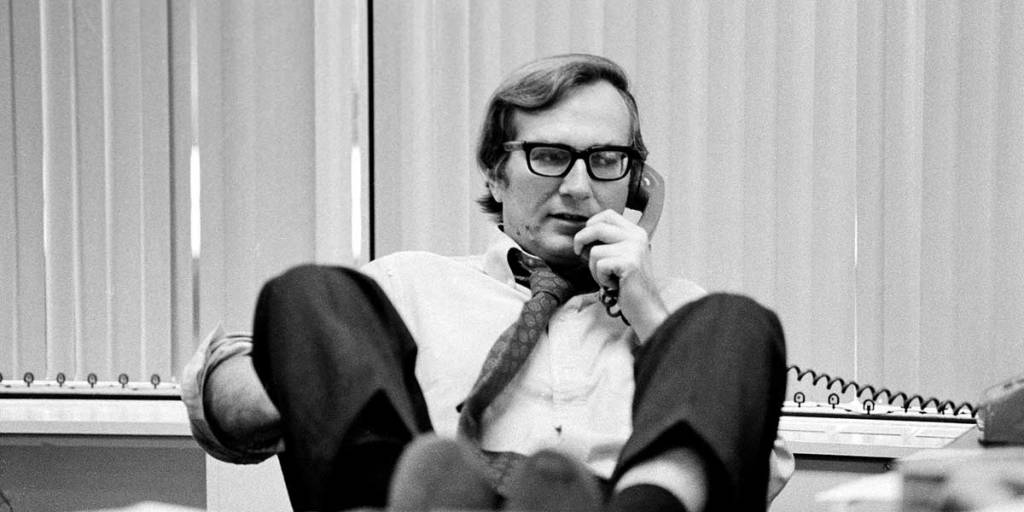
It’s the 1960s and America is at war. Sy Hersh, a freelance reporter, hears a rumour of mass murder in Vietnam by American troops. He speaks with GIs on base and the soldiers accused of these crimes. He also got a hold of a secret military investigation the massacre. And the facts he finds are horrifying. There include synchronized sexual assaults and murders of hundreds of women, men and children, and even babies, by American soldiers. Hersh blames My Lai on General Westmoreland and others who ordered the mass killings — which happened in a number of places on the same day — solely for the purpose of raising the body count. They needed more dead bodies to prove they were winning the war. The story has major repercussions all the way to the top — Nixon and Kissinger were recorded calling Hersh a son of a bitch — and played a role in turning public sentiment away from the war. For Hersh, My Lai is the first of many crucial stories he breaks in the decades to come. He becomes the NY Times daily reporter on the Watergate scandal. He uncovers US involvement in Pinochet’s bloody coup in Chile and the assassination of
Allende; illegal CIA infiltration of anti-war groups, the secret bombing of Cambodia, the invasion of Gaza (ongoing), and the abuse and torture of Iraqis by American soldiers during the Gulf War at the infamous Abu Ghraib prison.
Cover-Up is a journalistic documentary about journalism itself. It features historical documents and period photos and film — many very disturbing — new interviews with people involved in the stories, and extended talks with Sy Hersh, who at the age of 88 is still a full-time journalist. You get to see
him see at work talking to anonymous sources and vetting incoming photos and leaks. He’s a bit prickly about protecting his sources even from the documentary makers (who take care never to reveal anyone still alive), because it’s that core of consciences bureaucrats, soldiers, and spies who still uphold the constitution and flout illegal coverups. They’re the sources who keep freedom of the press alive.
After the TIFF screening, Hersh said that American journalism is in a bad state with reporters running scared. How many important stories are being gagged or stifled now — or in the past — under White House pressure? It shows how badly we need more adversarial journalists who question the powers that be and uncover what they’re hiding.
And that’s what Cover-Up is all about.
I Swear, Girl and Cover-Up all played at TIFF and should be released over the next few months. This is Daniel Garber at the Movies, each Saturday morning, on CIUT 89.5 FM and on my website culturalmining.com.
Americans abroad. Films reviewed: Queer, September 5, Oh Canada
Hi, this is Daniel Garber at the Movies for culturalmining.com and CIUT 89.5 FM.
This week I’m looking at three new movies set in the 1950s, 60s and 70s, about Americans abroad. There’s a novelist in Mexico City, a TV sportswriter in Munich, and a documentary filmmaker in Montreal.
Queer
Dir: Luca Guadagnino (I am Love, A Bigger Splash, Call me by your Name, Suspiria)
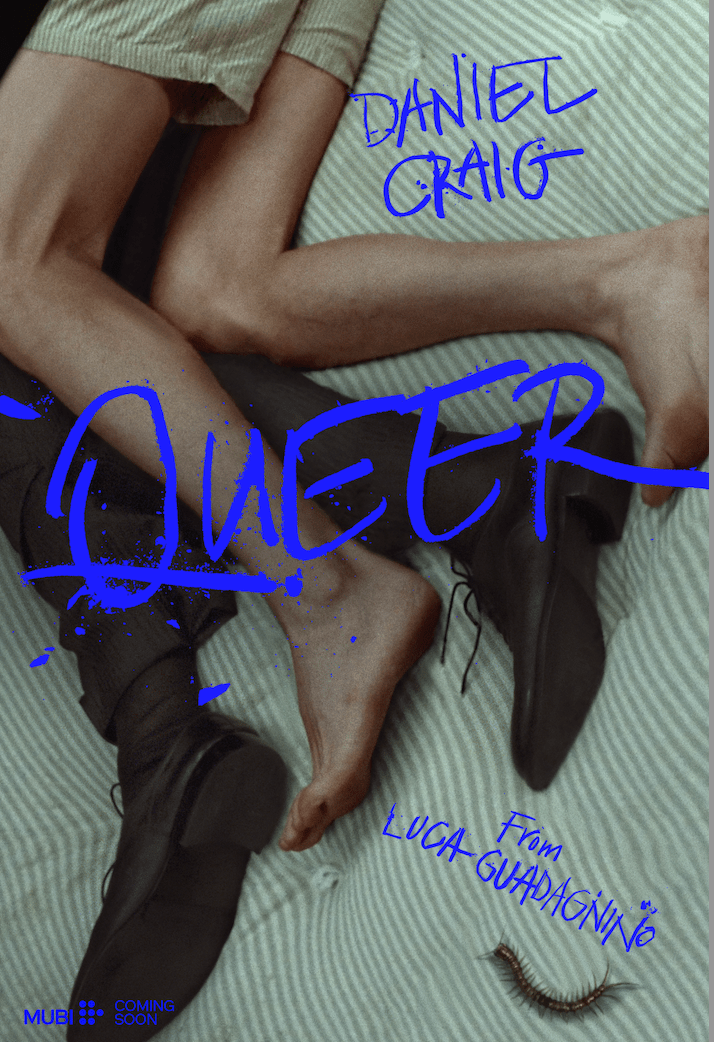
It’s the 1950s in Mexico City. William Lee (Daniel Craig) is a middle-aged American writer addicted to heroine who hangs around local bar called Ship Ahoy. If he doesn’t get completely drunk he might spend the night with a man he meets. He’s friends with other flamboyant ex-pats, especially Joe (Jason Schwartzman) a portly, bearded man who shares Lee’s lascivious predilections. Lately, he has had his eyes on Eugene Alerton (Drew Starkey), an ex-GI who spends most of his days playing chess with an older red-haired woman. Eugene is no “queer”, but is up to talking with Lee.
After repeated drinks, and some opiates he eventually shares Lee’s bed in his seedy rental. Lee is smitten, Eugene content. Later the two head south in their quest for ever more potent drugs culminating in a journey toward the ultimate psychedelic experience. They end up in the Ecuadorean Amazon, in a remote shack guarded by a vicious but slow-moving three toed sloth. Inside, a mysterious doctor (Lesley Manville) holds the answers to all their questions. Is Eugene the man of his dreams? Will they ever reach hallucinatory
nirvana? Or is life just an illusion?
Queer is a bizarre, sex-and-drug-filled psychedelic fantasy. It’s divided into three chapters: their meeting in Mexico City; their journey south; and their adventures in Ecuador. It’s adapted from William S Burroughs’ semi-autobiographical novel written in the 1950s but not published for another 34 years. It swerves wildly between actual memoirs and pure imagination. Burroughs was a writer in the beat movement, and was married and had a son with another writer Joan Vollmer (perhaps she’s the red-haired woman Mary in the film).
The thing is, Queer is not a grave, serious movie, it’s a high-camp comic fantasy. Psychedelia has always been difficult to film, and there’s a fine line between the profound and the ridiculous. Some scenes, like the unfortunate semi-nude, interpretive dance sequence, falls on the (unintentionally) funny side. Others scenes were kinda cool. It’s a beautiful film to watch, for its music, set, costumes and art direction. Shot
entirely in Rome’s Cinecitta, it’s never meant to look realistic. Daniel Craig plays Burroughs not as the usual chill junkie observer, but as a panting and sweating horndog, with bulging eyes, nearly choking on his own lust.
If your looking for a sentimental romance a la Call Me by You Name, or a deeply profound meditation on psychedelic trips, this ain’t it. But if you just want a weird and funny drug-infused dream-filled movie with lots of soft-core gay sex, you’ll probably have a great time.
September 5
Co-Wri/Dir: Tim Fehlbaum
It’s September 5, 1972 at the Munich Summer Olympics and the crowds are roaring. Americans are glued to their sets watching the US cleaning up, with swimmer Mark Spitz winning an unheard of seven gold medals. ABC is the perennial loser of the top three networks. So their sportscasters are thrilled to have won exclusive coverage rights. The team behind the cameras are hard at work. Geoffrey Mason (John Magaro) is the newbie, trying to prove his chops. His boss Marvin (Ben Chaplin) wants things to run smoothly, and his boss’s boss (Peter Sarsgaard) is thinking of the bigger picture. Jacques (Zinedine Soualem) is their French cameraman with Marianne (Leonie Benesch) the only woman on the team, is a German journalist, and their de facto translator. Everything is great until they hear gunshots… not at the games, but at the nearby Olympic village. A group of masked militants, known as the Black September Organization is holding Israel’s Olympic team hostage.
Suddenly, the ABC sportscasters realize they are the only American TV journalists in Munich. They have the cameras, the boom mics and the broadcast and satellite rights ready to send stories home. They shift their telephoto lenses from pointing toward the swimming pools to the athletes’ dormitories, trying to catch a glimpse of the hostages. What
will happen next? Will German authorities step in? And can a sports crew handle crisis news?
September 5 is a journalistic thriller about 24 hours at the Munich Olympics. Despite its title, this isn’t about the Israel/Palestine conflict — they barely delve into it. That’s just the backdrop. What it really looks at is how a team of US journalists — at the right place at the wrong time — figure out how to get the news out even as the crisis grows. I love the period details: giant-sized spools of reel-to-reel videotapes, and how little white tiles on a black background were superimposed onto a sports channel screen. So cool. I’ve never heard of Swiss director Tim Fehlbaum before, but he keeps the action moving in the midst of constantly shifting mayhem. The acting is ok, but best by far is Leonie Benesch who starred in last year’s The Teacher’s Lounge. I went into this movie full of dread. It’s clearly Oscar-bait; Hollywood churns out journalistic dramas every year. But this one is surprisingly good, and had my heart pumping all the way through. If you’re looking for some journalistic excitement, check out September 5.
Oh Canada
Co-Wri/Dir: Paul Schrader (First Reformed)
Based on the story by Russell Banks
Leo Fife (Richard Gere) is a renowned documentary filmmaker in Montreal. He is getting ready for an interview in his own living room in the grand old home he shares with his wife Emma (Uma Thurman). The director, Malcolm (Michael Imperioli) and his crew are longtime admirers of Leo’s legendary work. After crossing the northern border in the 1960s to protest the war in Vietnam, he ended filming docs that changed the course of history. He uncovered the use of Agent Orange at the military base in Gagetown, New Brunswick, and became a university prof teaching young journalists how to make movies. Now, decades later, Leo is on his deathbed, dying of cancer, so Malcolm wants to record his final thoughts.
Leo treats this film as a confession — he wants to clear the record. He starts by talking about his first wife and son, a family he left behind in Virginia. But she’s not the only skeleton in his closet. His past life is full of lies, deceptions and possibly terrible acts. Emma doesn’t like him talking like this and wants him to stop. Leo’s nurse thinks can’t take all this stress. But the filmmakers persist and Leo perseveres. Are any of his stories true? Was he a good man or a bad man? And what do we really know about Leo Fife?
Oh Canada is a fictional story about a day in the life of an American filmmaker and activist recalling his past. It’s a simple concept with a slight plot. It’s structurally divided between the documentary being made about him, and his
hidden past, shown in a series of flashbacks (He is played by Jacob Elordi as his younger self.) The film is almost too simple. But with Paul Schrader at the helm, you know there’s going to be more to it. He wrote Taxi Driver and Raging Bull for Scorsese, and directed movies like The Yakuza (1974) First Reformed (2017) and American Gigolo (1980) that also starred Richard Gere.
Unfortunately, Gere is the weakest part of this film; he rants and complains, but there’s no heart in his performance. The film’s called Oh Canada, but it’s really Oh America. It was entirely shot there, with so-called Canadian characters using americanisms like “restroom”. What’s interesting is Schrader’s use of false visual narratives. There are flashback scenes where Elordi as a young Leo is suddenly replaced by a contemporary Gere while all the other characters remain unchanged. Likewise, the names of past lovers seem to melt away. Perhaps Leo has dementia, or maybe this contrasts Leo’s current story with his past truths. Also interesting is the way we see Leo’s face throughout the eye of Malcolm’s camera, giving it a meta aspect that messes with your brain.
Oh Canada is not one of Schrader’s better films, but there’s enough stuff going on to keep it intriguing.
Oh Canada, Queer and September 5 all open this weekend in Toronto; check your local listings.
This is Daniel Garber at the Movies, each Saturday morning, on CIUT 89.5 FM and on my website culturalmining.com.
Trouble at home. Films reviewed: Civil War, Sting, Housekeeping for Beginners
Hi, this is Daniel Garber at the Movies for culturalmining.com and CIUT 89.5 FM.
This week I’m looking a three interesting movies: from the US, North Macedonia, and Australia. There’s a carful of journalists heading to an apocalyptic Washington, a makeshift family in Skopje, and a carnivorous spider that fell from outer space.
Civil War
Wri/Dir: Alex Garland
It’s the near future in the United States, but these states are not united. The country is in the midst of a violent civil war, with a Texas- and California-based militia battling the federal government in an East vs West conflict. WF (Western Forces) vs the USA. The rebels are slowly advancing southward toward Washington DC.
Lee (Kirsten Dunst) a veteran war photographer is in New York, chasing a terror bombing alongside Joel a journalist (Wagner Moura). Lee has covered many wars at the frontline, but never one like this, on her home turf. Still, she and Joel want to cross the battlefront to get to DC and interview the president (Nick Offerman) ahead of the advancing rebel troops.
Sammy (Stephen McKinley Henderson), a grizzled newspaperman from way back, wants to hitch a ride as far as the Charlottesville front line. And greenhorn Jessie (Cailee Spaeny), straight out of school, says she idolizes Lee and her work. She caries a camera around her neck. Couldn’t she come too? Lee doesn’t mind mentoring young photographers, but not while she’s dodging bullets. In the end, all four of them begin their perilous in a 4WD.
It’s an apocalyptic journey, along broken highways filled with abandoned cars. Burnt out towns have snipers standing guard on roofs. Gas stations only take cash, preferably Canadian. Fear, hatred and the stench of rotting bodies floats in the air. Soldiers in camo, their hair dyed fluorescent colours casually brandish assault weapons. Accused collaborators hang from
rafters. Will their press passes be enough to save them from friendly fire? And who will enter the Whitehouse?
Civil War is a Heart of Darkness plunge into an apocalyptic America where the enemy is ourselves. It’s thrilling, chilling, and quite disturbing. The theme is politics and war (and journalism), but you never quite find out what the two sides are fighting about, what they stand for, who’s right or who’s wrong. Rather, it’s about the hellish nature of war, and how conflict can destroy a country. Alex Garland (Ex Machina, Annihilation) made 28 Days Later, where an infection that leads to fast-moving zombies destroying the world. This has a similar feel but with a very different type of monster. And it will have you on the edge of your seat all the way through.
Sting
Wri/Dir: Kiah Roache-Turner
It’s a cold winter night in a big, American city, where a record-breaking ice storm has trapped everyone in their homes. Charlotte (Alyla Browne), an intense, blonde Wednesday Addams, lives in a tenement with her mom, her cartoonist stepdad Ethan (Ryan Corr), and her infant brother. Ice storms are boring, but luckilly, Charlotte knows the building through and through. She easily crawls through vents to spy on other tenants: her sweet but demented Grandma (Noni Hazlehurst), her cruel great aunt Gunter (Robyn Nevin), the slumlord who owns the building; Maria, a sangria-guzzling alky with a yapping chihuahua, and Erik, a reclusive scientist. To keep herself occupied, Charlotte keeps a tiny spider she found in a glass jar. She names her Sting. But this is no ordinary spider. Sting can communicate with Charlotte, perfectly imitating her whistles. And Charlotte doesn’t know Sting is an intelligent alien that fell to earth inside a meteor.
As Sting voraciously consumes the bugs she feeds her, the spider rapidly grows in size and strength. Charlotte moves her into an aquarium, but even that won’t contain her. Like Charlotte, it can run through the vents, snatching, mummifying or scarfing up small animals on the spot. But when Charlotte notices people are disappearing, she realizes something is not right. She teams up with Ethan and a professional exterminator named Frank (Jermaine Fowler) to get Sting under control… but are they too late?
Sting is a ridiculously silly horror film about a man-eating alien insect who spins slimy webs and cocoons out of slimy mucous. Lots of fake blood and gore. At the same time, it always keeps a humorous tone, even in the scary and gross-out scenes. One interesting fact: Charlotte names her spider Sting after reading The Hobbit, but JRR Tolkien fans will notice Sting was actually the dagger Bilbo Baggins used to kill… a giant, man-eating spider! Another interesting fact: although it’s set in a snowy city like New York, Sting is an Australian movie, with an almost completely Aussie cast (including the delightful Noni Hazlehurst.)
Suffice it to say, Sting is an unabashedly B-movie that’s also a fun night out.
Housekeeping for Beginners
Wri/Dir: Goran Stolevski
It’s present-day Northern Macedonia. Dita is an older woman who works at a social welfare office in Skopje. She’s descended from a prominent family in Tito’s Yugoslavia and shares a big house with a middle-aged man named Toni (Vladimir Tintor). Suada (Alina Serban) — a client from work — lives there too; she fled her abusive husband. Suada brought her two kids with her: tough, teenaged Vanessa (Mia Mustafi) and 6-year-old Mia (Dzada Selim). Today, there’s a new face in the house: 19 year old Ali (Samson Selim). He’s a sweet-talker who dyes his hair blond and is fond of green fingernail polish. He also knows everyone and everything happening in his neighbourhood. This means now there are two moms, one and a half dads, and a bunch of kids. The unusual thing is Dita and Suada are lovers, and Ali is Toni’s latest hookup. But that’s not all. Dita and Toni are ethnic Macedonians, while Ali, Suada and the kids all come from Shutka, a Muslim Romani neighbourhood. Dita’s house serves as an underground Mecca for outcastes, whether LGBT, Romani or both.
But everything changes when Suada is diagnosed with a fatal illness. She wants to make sure her kids are taken care of after she dies, and to give them a chance at success. The Roma are severely discriminated against, at school, work and even in accessing social services. If Rita and Toni adopt Mia, a bright and creative little girl, perhaps she can escape this endemic racism. But can a group of misfits live like a normal heterosexual family? Or is their experiment doomed for failure?
Housekeeping for Beginners is a sweet and realistic drama about the daily life of an unusual family and the tribulations they face. It’s also a real eye-opener! I never knew there are Muslim Romani communities, nevermind gay subcultures, within Northern Macedonia. It gives a glimpse into the street life of Shutka, and the complex social structures within that
neighbourhood. The acting is great, the characters they play are bold and fascinating. Apparently Samson Selim who plays Ali is the real-life father of Dzada Selim, the girl who plays Mia. It’s directed by Macedonian-Australian filmmaker Goran Stolevski, who spins amazing stories. This is the third movie I’ve seen by him (Reviews: Of an Age, You Won’t Be Alone) and even though his genres vary widely, he has a distinct style of storytelling, a bittersweet intimacy, which I’m liking more and more with each new film.
This is a good movie.
Sting, Civil War and Housekeeping for Beginners all open this weekend in Toronto: check your local listings.
This is Daniel Garber at the Movies, each Saturday morning, on CIUT 89.5 FM and on my website culturalmining.com.
International Women’s Day! Film reviewed: Analogue Revolution
Hi, this is Daniel Garber at the Movies for culturalmining.com and CIUT 89.5 FM.
Wednesday is International Women’s Day, a national holiday in many countries though not in North America. And changes have been slow coming in the film industry, but they are happening. Since the first academy awards, more than a century ago, less than two dozen films directed by women have ever been nominated for best picture. This year, there are three… and these numbers are steadily growing.
So if you want to celebrate movies at home, CBC Gem is featuring movies about women this month, including 20th Century Women a coming of age drama set in the 1980s starring Greta Gerwig, Annette Benning and Elle Fanning. MUBI is featuring films with female cinematographers, including Saint Omer, the compelling French courtroom drama, and The Invisible Life of Euridice Gusmão, the mysterious drama about two sisters in Rio de Janeiro, separated against their will. And NFB has an International Women’s Day Playlist available for free on their website, including Mary Two-Axe Earley: I Am Indian Again; Margaret Atwood – A Word after a Word after a Word is Power; and The Boxing Girls of Kabul. Lots to watch at home.
So this week, also in honour of International Women’s Day, I’m looking at one new documentary about the history of modern feminism in Canada as seen through its media.
Analogue Revolution
Wri/Dir: Marusya Bociurkiw
It’s 1967, and Canada is celebrating 100 years since Confederation. There’s a burst of national pride and an explosion of tiny, independent publishing houses producing CanCon (Canadian Content) throughout the country. This was also the time when feminism gained support, and women were in the spotlight, fighting the system, en masse. They expressed themselves in books, magazines, literary journals and newspapersl. Press Gang in Vancouver and Broadside magazine in Toronto were seminal to the movement.
Women’s own bodies were a central topic, as doctors, at the time, required a husband or father’s consent for a woman to request an operation like a tubal ligation. So in the late 1968, The Montreal Health Press published a birth control guide book for women that — in contemporary parlance — went viral. One American clinic ordered
50 thousand copies right after it was published, and students on campuses across the continent were snapping it up. It was sold at cost. Writing about IUDs, diaphragms and abortion was still illegal at the time, so this book played a crucial role in the women’s movement.
Radio, too was a major force, including shows Dykes on Mykes the longest running lesbian radio show in the world on CKUT-FM in Montreal. Travelling women’s film festivals carried their movies across the country showing the movies in small town church basements on the way.
In the 1970s, the National Film Board opened a new section known simply as Studio D, a bare-bones area where women workshopped and made documentaries. The filmmaker interviews filmmakers like Bonny Sher Klein whose Not a Love Story: A Film About
Pornography was both controversial and widely watched. Janis Cole and Holly Dale’s crucial documentaries P4W Prison for Women and Hookers on Davie also came out of Studio D.
This momentum continued producing hundreds of publications across the country. Tens of thousands of people marched through city streets on International Women’s Day while others reclaimed the streets at night to stop violence against women. And the movement shifted from one centred on civil rights, women’s bodies, and pay equity, to one stressing individual rights, racial inequity and gender theory. But successive austerity governments in the 1990s effectively destroyed all but a few small publications that relied on government grants to stay afloat.
Analogue Revolution is a comprehensive look at the feminist movement in Canada from the 1960s through the 90s and beyond. It covers massive territory — from a high school filmmaker in Saskatoon, to a Ukrainian Feminist women’s group out of Edmonton to publications in Halifax. There are extensive interviews with Quebecoise activists and writers, people of colour, radical feminists, nudists, and indigenous activists, as the movement changed decade by decade. It features new and vintage footage of Susan Cole, Audre Lorde, Judy Rebick, and many others. The Toronto Women’s Bookstore — the country’s biggest feminist bookstore, which was also firebombed by American anti-abortion militants — is notable by it’s absence… but you can’t include everything.
Analogue Revolution is an important and fascinating history of a movement.
Analogue Revolution is playing tonight at 630 and tomorrow afternoon at 1:30 at the Hot Docs cinema on Bloor st in Toronto: check your local listings.
This is Daniel Garber at the Movies, each Saturday morning, on CIUT 89.5 FM and on my website culturalmining.com.
Exposing secrets. Films reviewed: John Wick: Chapter 4, The Five Devils, Ithaka
Hi, this is Daniel Garber at the Movies for culturalmining.com and CIUT 89.5 FM.
This week, I’m looking at three new movies — an action film, a mysterious drama, and a documentary— from the US, France and Australia. There’s an assassin battling a secret organization, a little girl sticking her nose into hidden places, and a journalist jailed for bringing secret war crimes into the light.
John Wick: Chapter 4
Dir: Chad Stahelski
John Wick (Keanu Reeves) is a Belorussian assassin, under the control of a powerful, international cabal known as The High Table. He’s infamous for his relentless killing skills; he can wipe out an entire squadron with a just a pair of nunchucks. Wick wants out, but to do that he needs to be free. So he embarks on a complex series of tasks to complete before the Table frees him. In the meantime, The Marquis (Bill Skarsgård), the head honcho, wants him dead… so he gets Wick’s former best friend and partner to kill him.
Caine (Donnie Yen) is an expert martial arts fighter and shooter who happens to be blind. So Wick turns to another old friend, Shimazu
(Sanada Hiroyuki) a hotelier in Osaka. Even though he could lose everything, he still agrees to hide Wick from the Marquis’ agents. Meanwhile, the marquis has put a multimillion dollar mark on Wick’s head, a reward that its steadily rising, letting loose an army of killers out for a quick buck, including a man with a dog known as the tracker
(Shamier Anderson). Can Wick survive this army of killers? Or will this be his final showdown?
John Wick: Chapter 4 is nearly three hours of non-stop violence. The characters and storyline is strictly cookie-cutter, but the settings — in New York, Osaka, Paris, Berlin and Jordan — is vast and opulent. Every chamber has cathedral ceilings and gaudy rococo elegance. And the fight choreography is spectacularly orchestrated. The cast — including Laurence Fishburne, Ian McShane and the late Lance Reddick — are fun to watch. No one will call this a great movie, but if you enjoy endless fight scenes with hundreds of extras whether among the writhing bodies of a Berlin nightclub or in a traffic jam around the Arc de Triomphe, John Wick 4 will satisfy.
The Five Devils (Les cinq diables)
Co-Wri/Dir: Léa Mysius
Vicki (Sally Dramé) is a bright young girl who lives in a small village in the French alps. Joanne, her mom (Adèle Exarchopoulos) teaches aqua fitness, while Jimmy, her dad (Moustapha Mbengue) is a fireman. But Vicki has no friends, and is constantly bullied at school, perhaps because she’s mixed-race in a mainly white town (her mom is white, her dad’s from Senegal.) Vicki has a unique skill no one else knows about: she can identify anything or anyone purely by its scent. If she picks up a leaf she instantly knows what kind of animal bit it, and its size, age, even its feelings. And she can recognize people at twenty paces, blindfolded, just by their smell. Vicki starts finding things, and like an alchemist, puts them into jars, carefully labelling each one.
But when a surprise visit by her aunt Julia, her father’s sister (Swala
Emati), things start to change. There’s something in Julia’s past that has turned the whole village against her. When Vicki discovers how to harness her power of smell to travel, temporarily, back in time, she finds that she may have played a role in Julia’s younger life. But can she influence what already happened?
The Five Devils is a very cool French mystery/drama with a hint of the supernatural and a sapphic twist. The alps may be majestic but they hide a sinister past, and a stultifyingly provincial and xenophobic culture. This is conveyed in the large, tacky murals and oddly dated architecture that pops up everywhere. The three female leads Exarchopoulos, Dramé and Emati are amazing (with full points on the Bechdel test). Mysius is an accomplished
scriptwriter who has worked with such luminaries as Claire Denis and Jacques Audiard. You can tell. And an unexpected twist at the very end will have you leaving the theatre with an extra jolt.
I like this movie.
Ithaka
Wri/Dir: Ben Lawrence
Twenty years ago this month, US- and British-led forces invades Iraq under the pretence of finding Weapons of Mass Destruction supposedly threatening the west. Nothing is ever found and over 200,000 civilians are killed, 4 million displaced, and the entire middle east thrown into disarray, leading to the rise of fundamentalists like ISIS, unrest and civil war from which, 20 years later, it has yet to recover. In 2010, army specialistChelsea Manning anonymously releases a huge trove of secret military files to Wikileaks, a website founded specifically to expose things like war crimes and corruption, without endangering news sources and reporters who cover them.
It’s founded by Australian journalist and hactivist Julian Assange. That’s when Wikileaks catches the world’s attention by exposing,
on video, the US military gunning down innocent civilians in Iraq in cold blood, including Reuters journalists. None of the perpetrators of these — and countless other war crimes — ever served time, but Manning is arrested and jailed, while Assange is forced to seek refuge in the Ecuador Embassy in London. He is afraid that travelling to Sweden for questioning will lead to him being extradited to the US. His fears are correct, and he is later jailed in Belmarsh, a maximum security prison in London, awaiting deportation to the US on charges of espionage. He remains there today.
Ithaka is a personal and intimate documentary about Assange in jail in London during the trial, and the events that led up to it. Using original interviews and contemporary news reports, it fills in the blanks you may have missed. It also reveals the CIA’s involvement, including plots to murder him. The doc follows two people: John Shipton, Assange’s dad, and Stella Moris, his wife and the mother of their two sons. Shipton is an Australian house builder and peace activist. Moris is the Johannesburg-born daughter of Swedish and
Spanish parents who were active in the anti-Apartheid movement. She also serves as his lawyer. Assange is off camera, but his cel phone voice is often present.
For a man like Assange, who has done more to expose government and corporate corruption than almost any other journalist today, to be charged with espionage and threatened with life in prison is a travesty of justice. His suffering and deterioration in solitary confinement is cruel and unusual punishment. If you want to learn more about him, or to show your support, Ithaka is a good place to start.
John Wick Chapter 4 and The Five Devils open in Toronto this weekend; check you local listings. Ithaka is now playing at the Hot Docs cinema.
This is Daniel Garber at the Movies, each Saturday morning, on CIUT 89.5 FM and on my website, culturalmining.com.
Daniel Garber talks with Lewis Cohen about his new TVO documentary series Truth & Lies
Hi, this is Daniel Garber at the Movies for culturalmining.com and CIUT 89.5 FM.
Our current media are filled with reports of a new threat to democracy — conspiracy theories, misinformation, disinformation and “fake news” — due to the power of social networks, contemporary devices and digital communication. But is it really that new? Or have these lies been challenging the truth for thousands of years?
Truth & Lies is the title of a new six-part documentary series that takes a new look at contemporary issues through a historical perspective. It deals with scandals and rumours, conspiracies and wars, and the power of wealth and religion in influencing our opinions. Illustrated with period news footage, animation, and brand new interviews by journalists and historians from Vietnam to France, Germany to Turkey and
North America, it delves deeply into our preconceived notions of what we consider true and false. The series is written and produced by Emmy Award-winning documentarian Lewis Cohen, whose previous series include the Vice Guide to Film, Fighting Words, a doc on artists against political polarization, and The Beat, on police in Vancouver’s Downtown Eastside.
I spoke with Lewis in Montreal via Zoom.
Truth & Lies has its broadcast premier on January 17th, 2023 on TVO at 9 PM, and is also available on tvo.org, roku, youtube, and the TVO Today mobile app.
Daniel Garber talks with writer-director Jake Horowitz about Cup of Cheer on CBC Gem
Hi, this is Daniel Garber at the Movies for culturalmining.com and CIUT 89.5 FM.
Mary is a rising star at a big city, clickbait website. So what’s she doing in a small town in December? She’s chasing a story about the true meaning of Christmas… if it still exists. The village is like a simulacrum of a long gone era, where people dress in red and green and people still say “gosh” and “golly”. A young man dressed like an elf, and a kindly old woman are there to help anyone who asks. And after Mary’s run-in with Chris, the cocoa-shop owner, it looks like true love. But not everything is as it seems. Dirty words start creeping into the town’s vocabulary, and that kindly old lady… is actually a white supremacist! Worst of all, Chris’s cocoa shop faces eviction on Christmas Eve unless he can come up with the rent. Can Mary save the day? Or will a cup of cheer turn to weak tea?
Cup of Cheer is a Christmas comedy that uses social satire to
poke fun at our notions of the holidays and small town life. It takes cliches and twists them around till they’re almost unrecognizable, and uses sketch-comedy humour to keep it rolling. Cup of Cheer is the work of Toronto-based, award-winning TV and film writer/director Jake Horowitz. Jake’s work has premiered at festivals worldwide, his features have reached #1 at the Canadian box office and are available on Prime, Crave, and Super Channel.
I spoke with Jake in Toronto via Zoom.
Cup of Cheer is now streaming in Canada on CBC Gem.
A donkey and a wolf. Films reviewed: Eo, She Said
Hi, this is Daniel Garber at the Movies for culturalmining.com and CIUT 89.5 FM.
Fall Film Festival Season continues in Toronto with the EU film festival, offering free screenings from across Europe from now till Dec 2 at the Alliance Française. The Ekran film festival is also on now, showing the latest Polish movies at the Revue Cinema on Roncevalles; and Blood in the Snow or B.I.T.S. features made-in-Canada horror movies next week at the Elizabeth Bader Theatre from November 24-26th.
But this week I’m looking at two new movies about animals. There’s a defenceless donkey in Poland, and a dangerous wolf in Hollywood.
EO
Co-Wri/Dir: Jerzy Skolimowski
Eo is an adorable miniature donkey who works at a one-ring circus. He is lovingly cared for by a woman dressed in red, who performs with him on stage. But when animal rights activists close the circus down, Eo finds himself pulling a wooden cart full of scrap metal at a junk yard. Later he is trucked off to an elegant estate that raises championship horses. From there he’s sold to a farmer, wanders through a wolf-filled forest on his own, and fights off dangerous football hooligans. His journeys take him across Europe, among the rich and poor, the kind and cruel, but will he ever be reunited with his long lost love?
Eo is an incredibly beautiful and tender film about an adorable
donkey and the people — both good and bad — he encounters. Oe never speaks, but conveys his emotions through tear-filled eyes, cuddling gestures and loud angry wails. This is not a cutesy animal movie, it’s about adult emotions — like lust, betrayal, cruelty and violence. Stunningly cinematic, the film tells its story in an impressionistic manner, as seen through a donkey’s eyes. Periodically the entire screen is blood red; but there are also breathtaking, panoramic views of palazzi in Italy, manors in Poland, magnificent white horses, ancient, arched bridges,
green fields, flowing rivers, and dark skies: gorgeous images that can only be appreciated on a big screen. There’s very little dialogue, in Polish, English, French and Italian, with most of the meaning conveyed visually. There are cameo appearances by actors like Isabelle Huppert, but Eo (and the donkeys who play him) is the real star.
Jerzy Skolimowski, who attended the Łódź Film School, is not as well known as fellow alumni Andrzej Wajda, Roman Polanski and Krzysztof Kieślowski, but I think his films are just as amazing, with a dream-like quality.
OE must not be missed.
It’s 2015, in New York City. Meghan Twohey and Jodi Kantor are two investigative reporters within the juggernaut of that Gray Lady, the New York Times. Meghan (Grey Mulligan) is following a string of women all of whom say the Republican candidate for president, Donald Trump, sexually harassed them in the past. But they are all afraid to come forward in public. When she finally does get a woman willing to reveal her name in print, she suffers terribly, sent packages of human excrement in the mail, while Meghan gets death threats. So she takes maternal leave to care for her first baby.
Meanwhile, cub reporter Jodi Kantor (Zoe Kazan), also married with two young kids, is pursuing a very different story. Hollywood actress Rose McGowan is hinting that someone at Miramax, that extraordinarily successful independent movie studio, sexually harassed her in the past. Jodi wants to find out whodunnit — Rose isn’t saying — and to get her to commit to details on the record. So she turns to Meghan for help. How do I get women to talk? The two of them join forces, doing extensive research stretching back decades, using legal documents, withdrawn lawsuits, secret payments, and
clandestine Non-disclosure agreements. They discover there are women as far away as London and Hong Kong who suffered from horrible incidents of bullying, abuse, and sexual assault, all of which were later covered up. And the arrows pointed toward one man: Harvey Weinstein. Can the reporters get even one woman to commit using her name in an article against the formidable and frightening Hollywood powerbroker? Or will the paper be forced to retract it’s allegations?
She Said is a fascinating retelling of two journalists pursuing a major story just a few years ago. It takes us deep into the weeds of investigative journalism. And it’s told like a police procedural, as the journalists slowly uncover the facts. The thing is, computer screens and cel phones do not make for good cinema. Hollywood seems to churn out these newsroom dramas every couple years, including Spotlight about the Boston Globe’s revelation of pedophile priests, and The Post about the Washington Post and the Pentagon Papers. This is one is about the New York Times. So we sit through lots of dull editorial meetings.
Luckily, most of the story takes us out of the office and into the real world, with the reporters knocking on doors and approaching victims who haven’t spoken of the incidents for 30 years. This — and the victims’ own stories, always spoken verbally, never reenacted— is where it gets interesting and moving. The film faces problems telling a history that’s still happening (Although convicted and in prison, Weinstein has yet to be tried for many other alleged crimes.) And it’s all about real, living people, so it runs the risk of anodyne (if truthful) portrayals of the characters. Luckily the acting is terrific, and the characters — not just the reporters, but the sources — are believable. And Maria Schrader is an excellent German director (she did last year’s I’m Your Man), who knows how to avoid those excessive blubbery, gushing “Hollywood moments” that ruin so many movies. She Said might not be a great movie, but it is the first one about this major issue, and projects it on a wider screen. As they keep saying in the movie, it’s not about one man, it’s about an entire system that protects and supports the powerful and persecutes their victims.
EO is playing tonight at Ekran, Toronto’s Polish film festival, and opens next Friday at the TIFF Bell Lightbox. She Said starts this weekend; check your local listings.
This is Daniel Garber at the Movies, each Saturday morning, on CIUT 89.5 FM and on my website, culturalmining.com.
Daniel Garber talks with Wendy Hill-Tout about her new film Marlene
Hi, this is Daniel Garber at the Movies for culturalmining.com and CIUT 89.5 FM.
It’s 1959 in Clinton, Ontario near a Canadian Air Force Base. The body of Cheryl Lynne Harper, a 12-year- old girl, is found brutally raped and murdered in the woods nearby. And Steven Truscott, a 14 year old classmate is charged and convicted with first degree murder and sentenced to death by hanging. This despite the fact the police hid or destroyed evidence, and failed to pursue other, more likely, suspects. Truscott spends a decade in prison, often in solitary confinement, the victim of psychological torture. And when eventually set free, he is forced to change his name and live with the shadow of the conviction still hanging over his head. But a crusader takes up his case and plays a crucial role in both his personal life and in his eventual exoneration. Her name is Marlene.
Marlene is a new drama based on this true story, as told through the eyes of an unsung hero, Marlene Truscott, who started working on Steven’s behalf even while he was still in prison. They eventually marry and raise a family, but it is Marlene’s dogged pursuit of the truth that led Steven to freedom. The film is made by noted Calgary-based writer/producer/director Wendy Hill-Tout, a member of the Calgary Society of Independent Filmmakers and known for her documentaries, dramas, TV and genre pics.
I spoke with Wendy Hill-Tout in Calgary via Zoom.
The film opens in select theatres this weekend across Canada.

leave a comment