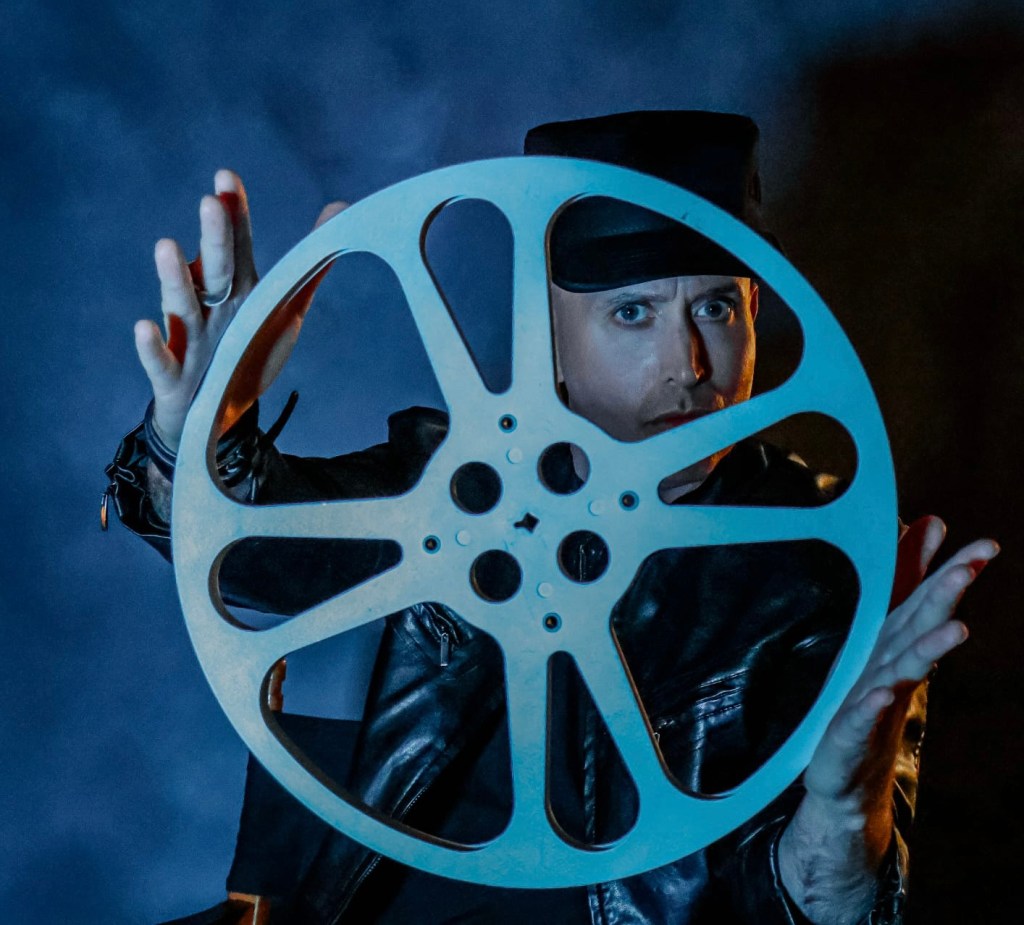
Daniel Garber talks with Chris Alexander about The Dark Side at ICFF Lavazza IncluCity
Hi, this is Daniel Garber at the Movies for culturalmining.com and CIUT 89.5 FM.
The Italian Contemporary Film Festival (ICFF), has for years brought Italian movies for Torontonians to enjoy each summer. But over the past few years it has expanded with screenings across the country, and new programs spanning all of multicultural Canada, a wonderful, feel-good celebration of love and cooperation. But one of the newest programs takes another path, one filled with shock, mystery and horror, with bold and edgy stories, something
known as… The Dark Side!
This year’s selections for The Dark Side consists of three films: Borderline, The Weekend, and Dario Argento’s iconic Deep Red. It is programmed by Canadian horror-meister Chris Alexander, known for such films as Necropolis: Legion, Queen of Blood, and Female Werewolf. Chris is a producer, director, writer and composer. He’s also a
former film critic and was the Editor-in-Chief of Fangoria — the behind-the-scenes bible of the horror industry and those who love it. These films are part of the ICFF Lavazza IncluCity Festival playing outdoors, after dark, all summer long in Toronto’s Distillery District.
I talked with Chris Alexander in Oakville, Ontario via ZOOM. He spoke about his love of horror, the origins of giallo, Dario Argento, Cocaine Bear, Nollywood… and more!
The Dark Side series is playing at the ICFF Lavazza IncluCity Festival on March 4, 5 and 12.
Broken. Films reviewed: Parthenope, The Unbreakable Boy, The Monkey
Hi, this is Daniel Garber at the Movies for culturalmining.com and CIUT 89.5 FM.
This week, I’m looking at three new movies: there’s a boy with breakable bones, a toy monkey who could break your bones, and a woman whose beauty breaks every man’s heart.
Parthenope
Wri/Dir: Paolo Sorrentino (Reviews: Youth, Hand of God, The Great Beauty)
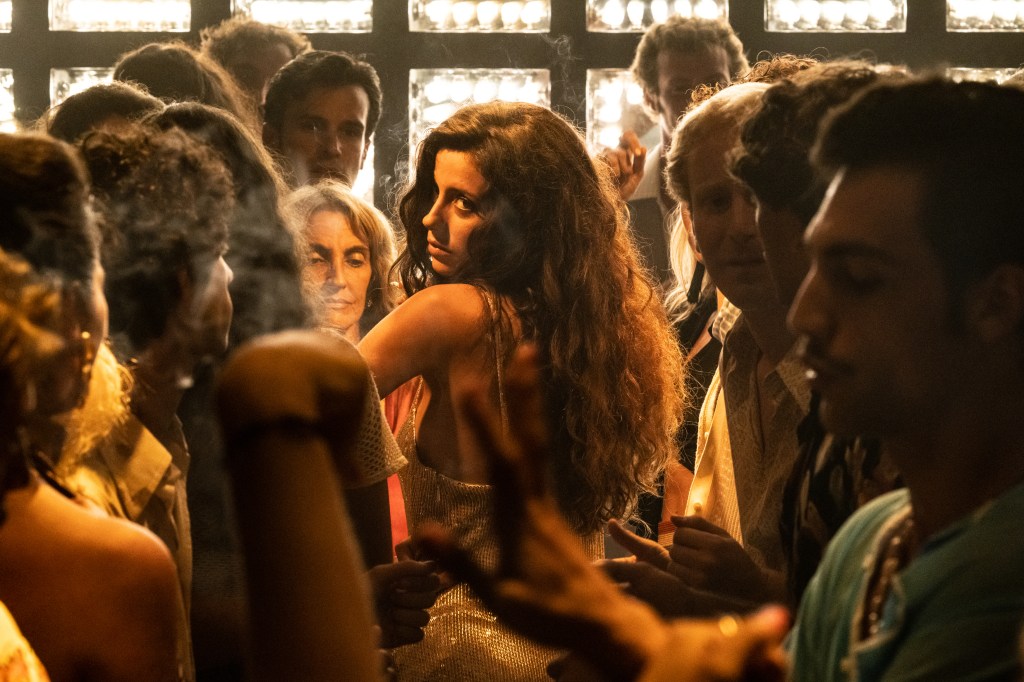
It’s Naples, 1950 and a woman gives birth in the waters of the Tyrrhenian Sea. The baby is called Parthenope, named for both the city and the Greek myth. She grows up to be a young woman of epic beauty and legendary intellect (Celeste Dalla Porta). Men who try to seduce her, find their own words silenced by her pithy comebacks. Her days are filed with a search for beauty, happiness and meaning. She absorbs everything she reads, from John Cheever to Claude Levi-Strauss. Her closest friends are her brother Sandrino (Dario Aita) and Raimondo (Daniele Rienzo) the son of a maid. Together they form sort of a quasi menage a trois.
Parthenope aces her orals and is accepted into the prestigious anthropology department at the local university. From there she follows three very different paths: Academia — a professor takes her under his wing; Love, deciding which of her countless suitors should she consent to sleep with; and the
city of Naples, itself. Along the way she encounters a corrupt and carnal bishop, a depressed superstar diva, a millionaire with a private helicopter, and many others. But will any of these people provide her with the answers she seeks?
Parthenope is a gorgeous and sumptuous look at post-war Naples as seen through the eyes of a beautiful woman as she lives her life. Celeste Dalla Porta is appealing to watch, but she is opaque and impenetrable: she merely observes without ever doing anything. Paolo Sorrentino is known for his his beautiful images, especially women as objects of desire. But he doesn’t seem to know what to do with a woman as his subject. Instead we get a hollow simulacrum of a main character, who drifts aimlessly but happily through her life as she encounters quirky strangers. I love the photography, the scenery, the people and the music — a collection of bright and shiny colours — but watching Parthenope leaves you feeling like you just flipped the glossy pages of a fashion magazine: superficially attractive but pointless.
The Unbreakable Boy
Co-Wri/Dir: Jon Gunn (Reviews: Ordinary Angels, I Still Believe, American Underdog, Jesus Revolution)
Scott (Zachary Levi) is a young salesman with big ambitions: he plans to move to Manhattan someday and make it big. But in the meantime, he likes golf, fine wine and travelling. He spends most of his time with his best friend Joe, a burley bearded man who is always giving him advice (Drew Powell). One day he meets a pretty and charming woman named Teresa (Meghann Fahy). Sparks fly, and nine months later, she gives birth to Austin (Jacob Laval). They’re not married but decide to bring him up together. But there’s a catch: he requires special care. Like his mom, Austin has Osteogenesis imperfecta (OI), a genetic condition that makes your bones very brittle. He suffers his first fracture in the birth canal, with many more breakages to follow. Eventually he is joined by a younger brother, Logan, who doesn’t share his breakability.
13 years later, Austin — aka the Aus-man — is now a happy school kid with a vivid imagination. He’s also on the autistic spectrum, but contrary to stereotypes, he’s outgoing, talkative and attends normal classes. He talks constantly, just like his dad. (I forgot to mention: Scott’s best friend Joe is imaginary) But all is not well. The family is deeply in debt. Austin is bullied at school. And Scott is drinking way too much, especially since he lost his job. Can the family pull itself back together? Or are they headed for ruin?
The Unbreakable Boy is a very cute, true story about an ordinary family working together to overcome their problems. As narrated by Jacob Laval as the Aus Man, it’s simple, touching and funny. I like the way it demystifies kids with
medical conditions and autism. And unlike most medical dramas, it’s not a weeper, though perhaps overly earnest. One warning: it is a faith-based movie, generally a red flag for cringe. Not my thing. Thankfully this one avoids most of the problems of that genre; preachiness and finger wagging and in-your-face prayers. If you’re in the mood for a light, informative, feel-good Christian movie that won’t make you squirm, check this one out.
The Monkey
Wri/Dir: Osgood Perkins (Reviews: Longlegs, Gretel and Hansel)
Hal and Bill (Christian Convery) are identical twins, but they couldn’t be more different. Bill, who was born a few minutes earlier, is self confident, athletic and aggressive. Hal is withdrawn and wears glasses as he tries to keep out of Bill’s way. But his brother is a bully, humiliating and hurting Hal on a daily basis, using a posse of popular girls as his private army. The two live with their single Mom (Tatiana Maslany) ever since their Dad, an airline pilot, walked away one day and never came back. When the boys go through the many souvenirs he brought home from around the world, they uncover something very unusual. It’s a mechanical automaton that’s an organ-grinder monkey. You wind him up and he plays a drum to the sound of carnival music. A harmless toy, right? Not exactly. When the drumstick comes down something terrible happens. Like when their babysitter is accidentally decapitated at a Benihana restaurant. But when it kills their beloved mother, the boys decided to hide the monkey somewhere that it can do no more harm. They are adopted by their aunt and uncle, a pair of swingers in small-town Maine. But they too are eventually killed in gruesome accidents. Was the money to blame?
Flash-forward 25 years. Hal (Theo James) still lives in Maine close to his teenaged son Petey (Colin O’Brien). He visits him only once a year, to lesson the chances of the cursed monkey in harming him. But then two cataclysmic events threaten Hal’s normal
life. First, Petey’s stepfather Ted (Elijah Wood) announces his plans to adopt him, making this the last time Hal will see him. Second, a series of terrible events are killing countless people in and around the town he grew up in. Can Hal find that damned Monkey and stop it from killing someone else? And can he simultaneously spend his last days with his son while keeping him out of danger?
The Monkey is a shocking and disgustingly hilarious movie about an evil toy and the people it affects. It’s done in a retro style, like Mad Magazine meets the Twilight Zone. It’s directed by Oz Perkins, known for his stylized movies that feel like fairytales (Gretel and Hansel) or nightmares (Longlegs). With this one, based on a short story by Stephen King, he seems to have found a happy medium. Simultaneously comical and grotesque, you watch the movie waiting with baited breath for the next disaster to happen. Theo James is perfect as the hapless Hal, but so is every other character in this weird movie, each given their own minute of ghastly glory: a pawn shop owner, a girl gang, a real estate agent, a pot dealer, a televangelist… it’s a limitless, mind-blowing romp. The Monkey is grotesque comedy/horror at its peak.
I love this movie.
Parthenope, The Unbreakable Boy, and The Monkey all open this weekend in Toronto; check your local listings.
This is Daniel Garber at the Movies, each Saturday morning, on CIUT 89.5 FM and on my website culturalmining.com.
Returns. Films reviewed: All We Imagine as Light, The Return PLUS Streaming Sites!
Hi, this is Daniel Garber at the Movies for culturalmining.com and CIUT 89.5 FM.
As the days grow shorter and colder, people tend to snuggle up at home. I’m here to tell you to get off your collective asses and go see a real movie on a big screen! But I know some of you are going to stay at home so today, I’m going to talk about some of the streaming sites out there you might want to join. And I’m looking two new dramas. A warrior king in ancient Greece returning to his island, and three nurses in Mumbai returning to Kerala.
Streaming Sites
Here are some streaming sites you might want to try.
First the free ones: CBC Gem, Kanopy and Tubi. CBC Gem has ads, but also plays some great docs, including There are no Fakes. You can find Tubi — a commercial site — online, again with irritating ads but a huge selection of middlebrow films. You can check out terrific movies on Kanopy using your library card, but you’re limited to a certain number per month. Britbox and Acorn TV both specialize in British TV series, especially detective mysteries. If you want Miss Marple peeking over your shoulder, this is what you want. Apple TV produces all their own stuff, including Slow Horses and the great Steve McQueen’s new film Blitz. On the other hand, the Apple TV app itself is extremely aggressive — you can only watch full screen and it flips back to the main site every time you navigate away.
If you’re into horror, thriller and the supernatural Shudder is the site for you. It’s exceptionally well-curated, with excellent art-house movies right beside slashers. Paramount+ has a seemingly endless supply of cop and military shows, plus CIA, FBI, firemen, navy, and — count ‘em! — 7 different NCIS spinoffs! Not my thing, but they do land some good movies like Smile 2, playing right now. Crave gives you access to everything HBO makes, as well as Canadian movies you might otherwise miss like the NFB doc Wilfred Buck. Criterion has the rights to some of the best movies of all time, from early Kurosawa to recent releases. MUBI streams new movies likely heading for the Oscars this year, including Maria, Girl with the Needle and The Substance.
And finally Netflix, the grande-dame of all streamers, has the most consistent and sheer quantity of good TV and self-produced movies, like Emilia Perez… but it’s getting way too expensive! They even have a new website called netflixinyourneighbourhood.ca which takes you to

THE MADNESS. The Donut Shop, 617 Parkdale Avenue, Hamilton, Ontario, featured in Episode 107 of The Madness. Cr. Courtesy of Netflix © 2024
locations where their movies are shot: in places like Toronto, Ottawa, Hamilton, Brockville, Dundas and Oshawa!
I still think movies should be seen in theatres but if you’re determined to stay at home, those are some of streaming sites you might want to subscribe to.
All We Imagine as Light
Wri/Dir: Payal Kapadia
It’s present-day Mumbai.
Prabha (Kani Kusruti) is a middle-aged hospital nurse. She is skilled at her job, teaching young trainees how to get over their feelings of revulsion. She spends time with a starry-eyed Doctor Manoj, who writes poems to her, but she is still very much married. Her husband moved to Germany to work in a factory, and he may as well not exist. Prabha shares an apartment with Anu (Divya Prabha), a vivacious young nurse at the same hospital. She likes shopping, fashion and romance, and most of all her secret boyfriend Shiaz (Hridhu Haroon). They’re in love (or at least young lust) but frustrated; it’s hard to find a private space to be together. More than that, she’s Hindu and he’s Muslim, and never the twain shall meet – their families will prevent that. Finally, Parvaty (Chhaya Kadam), an older nurse and a close friend of Prabha’s, is facing eviction from her home. Developers want to tear it down to build a high-rise condo. Since she’s a widow and doesn’t have the proper papers to
prove the place is hers, they’re sending goons to her door to kick her out.
For all these reasons the three of them end up back in Kerala, the place of their birth in southwest India. They stay in a beautiful beach town, where the three of them can finally shake off the heavy responsibility and stress of life in that big city. But how long will this last?
All We Imagine as Light is a personal, intimate drama about the lives of three women in Mumbai. It’s notable for a number of reasons. This is director Payal Kapadia’s first feature, and tells her story from a distinctly feminine gaze. It deals with big contemporary political and social issues — like Parvaty attending an angry tenants’ rights meeting — but also the importance of personal friendships among the three woman. In look and style, this film is strictly European cinema verite, about as far from Bollywood as a movie could possibly be. But it is set in Bombay and exults in that city, from the slums to the skyscrapers, with stunning aerial views of rooftop clotheslines and raucous street festivals. There’s amazing footage taken through the window of a fast-moving commuter train. Some scenes have documentary-style unidentified voices, expressing their bittersweet love and hatred for that
city that never sleeps, spoken in a plethora of languages: Hindi, Gujarati, Malayalam, and Bengali. I liked this movie for it’s emotions, but found much of it bleak and slow-moving; the story drags you down until it finally shifts from Mumbai to the beaches of Kerala, two-thirds of the way through.
But by the end it redeems itself with an unexpectedly satisfying finish.
All We Imagine as Light has been nominated for Best Foreign Language Film at the Golden Globes.
The Return
Dir: Uberto Pasolini
It’s 1200 BC in ancient Greece, and the island of Ithaca has no ruler. Decades ago, it was a mighty kingdom, ruled by the hero Odysseus — known for his bravery, fighting skills and intelligence. He devised the Trojan Horse and led the army that defeated Troy. But the soldiers — and their leader — never came home, and Ithaca has gone to seed. The queen, Penelope (Juliette Binoche) sits alone in her tower, weaving cloth, as she patiently waits for Odysseus’s return. Their son, Telemachus (Charlie Plummer) doesn’t know his father except from legends. The palace is filled aggressive brutes from abroad, each wanting to marry the widow Penelope so they can take over the kingdom. But is she actually a widow?
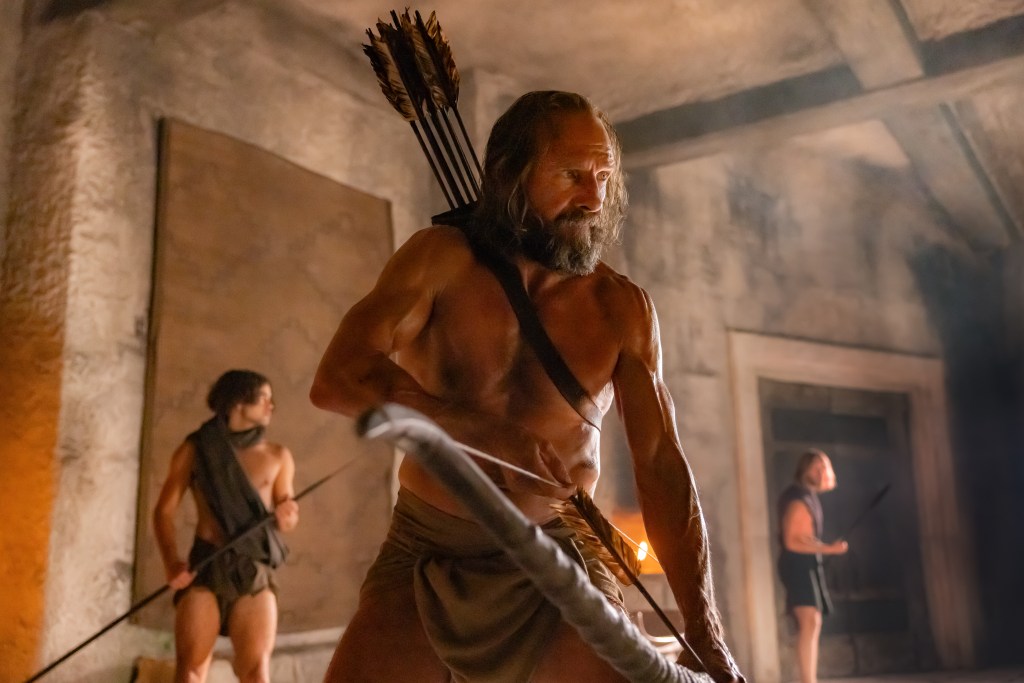
Around this time, the battle-scarred body of a soldier washes up on shore. He’s barely alive, but is nursed back to health by an honest pig farmer named Eumeo (Claudio Santamaria) and his sons. It is of course Odysseus (Ralph Fiennes), but without any uniform or weapon. He’s actually naked. He wraps himself in a blanket and carries a bowl — the clothing of a homeless beggar. And when he approaches the palace, almost no one recognizes him. Only Eurycleia (Ángela Molina), both his and his son Telemachus’s nurse as a child, realizes who

The Return, directed by Uberto Pasolini, with Ralph Fiennes (Odysseus), Juliette Binoche (Penelope), Charlie Plummer (Telemachus), Marwan Kenzari (Antinous), Claudio Santamaria (Eumaeus).
that beggar is. Is he still fit to be king? Can one man, tired and old, confront a bloodthirsty mob of young toughs? And will Penelope ever forgive him for staying away so long?
The Return is a magnificent retelling of a chapter in Homer’s The Odyssey. But it’s not about triumphant heroes; it’s more about the grinding effects war has upon both the victors and the vanquished. It contrasts Odysseus’s shame and self-doubt with Penelope’s eternal fidelity. Yes, this is an ancient greek story, with swords and sandals, but it feels very immediate. Parts of it even resemble a Hollywood action/thriller, with chase scenes and some very bloody fights.
The film was shot among the rocky cliffs of Corfu and the ruins of an ancient castle, which is echoed in the soundtrack. I love the dramatic look and sound of waves crashing on the sharp rocks. Though the women are all wrapped up, most of the male actors are dressed in togas or prancing around half naked, with Ralph Fiennes going full monty at the drop of a hat. I didn’t used to like him much, but after Conclave and now this one, I gotta admit, he’s a really good actor. Juliette Binoche is skillfully understated as Penelope, and Dutch actor Marwan Kenzari is very creepy as Antinous, the threateningly oleaginous suitor closest to Penelope.
The Return is a really good movie.
The Return and All we Imagine as Light is on at the TIFF Lightbox in Toronto; and Standing on the Shoulders of Kitties, A Trailer Park Boys movie featuring Bubbles and his band on tour, is now playing; check your local listings.
This is Daniel Garber at the Movies, each Saturday morning, on CIUT 89.5 FM and on my website culturalmining.com.
Good Euro at #TIFF24. Films reviewed: Miséricordia, Vermiglio, The Girl with the Needle
Hi, this is Daniel Garber at the Movies for culturalmining.com and CIUT 89.5 FM.
There was a dearth of European movies at TIFF this year with far fewer high-profile films from countries like France, Benelux, Scandinavia, Romania and Poland. But there were still some very good ones. So this week, I’m talking about three new European films that were featured at TIFF. There’s a mom with a baby in Copenhagen, an army deserter in Tyrol, and a funeral-goer in southeastern France.
Miséricordia
Dir: Alain Guiraudie (Review: Stranger by the Lake)
Jeremie (Félix Kysyl) is a boyish-looking man from Toulouse returning to the tiny village of L’Aveyron in southeastern France. He’s there for a funeral, the untimely death of the village’s baker. Jeremie knows the village and all its people very well, as he was the baker’s assistant for many years. He asks the baker’s widow, Martine (Catherine Frot), if he can stay there for a few days.
She puts him up in her adult son Vincent’s old room (Jean-Baptiste Durand) — which still look’s like it’s a kid’s room. Vincent, though, is a married adult, a tough guy known for his moodiness and sudden bursts of anger. Then there’s Walter (David Ayala), the town recluse, a large, droopy man with coarse features who seldom speaks with anyone other than his dog and Vincent. And an Abbey from an ancient monastery who always seems to turns up when anything significant happens.
So Jeremie’s presence upsets the local rhythm. Vincent treats Jeremie like they’re still kids, picking play-fights with him, grabbing and punching. He uses his key to barge in on Jeremie in bed at 4 am (on his way to work, he says). He suspects Jeremie is sleeping with his
mom. But in reality, Jeremie seems more attracted to the late baker than his wife. When Jeremie drops by Walter’s place for some chat and a few glass of the local pastis — Walter warns him not to let Vincent know he was there. With his tongue and inhibitions loosened Jeremie comes on to Walter sexually which shocks and confuses the much bigger man. By the next morning there’s a dead body buried in the woods, a witness, a killer trying to keep it a secret, and the gendarmes starting an investigation. Whodunnit, who will get caught, and what will happen to the rest of the characters?
Miséricordia is a cross between dark comedy and film noir. Like a stage play, it’s full of dialogue overheard through half open doors, people disappearing behind curtains or hiding in someone else’s bed. It deals with lust and passion — and compassion, anger but also forgiveness (Misericordia is Latin for mercy). And a fair amount of unexpected erotic nudity. It’s shot on grainy colour film, among the ancient whitewashed houses, stone monastery, and the wilds of the nearby forests — it’s visually beautiful. Alain Guiraudie who directed the great Stranger by the Lake once again crafts an unusual mystery with a queer undercurrent.
This is a really good movie.
Vermiglio
Dir: Maura Delpero
It’s near the end of WWII in a mountainous village tucked away in Tyrolia, northern Italy. Two faces arrive in town one day, one familiar, one unknown. They are both deserters, Italian soldiers press-ganged into the German army, but the stranger, a Sicilian named Pietro (Giuseppe De Domenico), knows only this friend Attilio, he served with. He also saved his life and practically carried him all the way home. Pietro’s Italian is totally different to them so he seldom speaks. They put them up in a barn, just to be safe, and feed them.
The patriarch of this village is Cesare (Tommaso Ragno) a highly respected schoolteacher with ten kids of his own. Most of the kids sleep together, some three to a bed, and there’s a constant stream of patter and dialogue within the family. The oldest daughter is Lucia (Martina Scrinzi), named after the village’s patron saint. There’s also Flavia, the precocious daughter and Ada the religious one. Lucia knows nothing about sex, but does know she likes Pietro. They flirt, court, kiss, and marry. He signs up for the adult literacy lessons his new father-in-law teaches. And finally, as Lucia’s belly grows, he abruptly leaves the village for a short visit home in far-off Sicily. But when he fails to return after months away without even a postcard, Lucia begins to worry. What has happened to her Pietro?
Vermiglio gives a look at the consequences of ambition, rivalry, love and betrayal in an isolated village where everyone knows what everyone else is doing. It follows all the members of this family, though especially the daughters and their hard-working mother (10 kids!) over the course of one year.There’s a lovely ebb and flow, with
characters appearing and disappearing, deftly interwoven throughout the film in dialogue and action. Though linear in structure there’s no clear explanation of much of what is going on — you have to figure that out yourself. Filmed under soft natural lighting, you’re as likely to see an extreme closeups of milking a cow’s udders, as you are a furtive kiss. I found Vermiglio fascinating and empathetic — you really care about what happens to all these characters.
I like this one.
The Girl with the Needle
Co-Wri/Dir: Magnus von Horn
It’s WWI in Copenhagen Denmark. Karoline (Vic Carmen Sonne) works in a sweatshop making uniforms. She hasn’t heard from her husband Peter since he enlisted with the Germans, and without his income she’s behind on her rent and faces eviction. In desperation she visits the factory owner Jørgen (Joachim Fjelstrup) and asks for her military widow’s pension. But without any proof of his death, there’s nothing he can do. But he does find her attractive and soon they are having furtive sex in back alleys. Inevitably she gets pregnant so he does the honourable thing and proposes… until his aristocratic mother stops him cold. Not only won’t he marry her, she must be
fired from her job. Meanwhile, it seems her husband was not killed at the battlefront, but he’s unrecognizable. Peter (Besir Zeciri) now wears a mask to cover his face that had been blown off and them sewn back together. Peter now works at a carnival freak show revealing his face for a few krone.
In desperation, Karoline takes a knitting needle to a public bath and attempts to kill the foetus in her womb by jabbing it, but ends up injuring herself and nearly passing out. But she’s spotted by Dagmar (Trine Dyrholm) who runs a local candy store, and her pretty, blonde daughter Erena (Ava Knox Martin). She nurses her and tells her what to do if she starts bleeding again. And she gives her a bag of candy with the shop’s address on it. Dagmar is always there when there’s no one else to turn to. And when she finally gives birth, penniless and homeless, Caroline shows up at the candy store asking for help give away her baby. She can’t afford to pay her — this is a business, Dagmar reminds her — but agrees to let her stay there for now, as an
on-call wet nurse. Many young women pass through there with their kids, so she’s always ready to lend a hand. But what really happens to those babies?
Based on a true story, The Girl with the Needle is a powerful movie about a horrifying case that shocked the world (no spoilers). It shows us a Copenhagen riddled with friction and sharp divisions between the haves and have-nots. It also repeats a theme of disturbing images of grotesquely deformed faces. It’s shot in glorious black and white by the Polish cinematographer Michal Dymek, who also filmed Jerzy Skolimowski’s EO two years ago. There’s some serious acting here, especially the three main women. This is one of those jaw-dropping movies where you go in expecting a conventional, scary-type horror movie, but you end up watching something much bigger than that. This is a fantastic and very disturbing movie, but with a touch of hope.
And it’s Denmark’s choice for the Oscar for best international Feature.
Keep your eyes peeled for Miséricordia, The Girl with the Needle, and Vermiglio, that all played at TIFF and should be opening theatrically over the next year.
This is Daniel Garber at the Movies, each Saturday morning, on CIUT 89.5 FM and on my website culturalmining.com.
Parents and their children. Films reviewed: Tuesday, Kidnapped
Hi, this is Daniel Garber at the Movies for culturalmining.com and CIUT 89.5 FM.
Sunday is Fathers Day, so this week I’m looking at two movies about parents and children. There’s a mother whose daughter is threatened by a big ugly bird, and parents whose son is kidnapped by the Pope.
Tuesday
Wri/Dir: Daina Oniunas-Pusic
Tuesday (Lola Petticrew) is a teenaged girl in London who is dying of an incurable disease. She likes comics and drawing. She spends most of her time in her bedroom with her Nurse Billie (Leah Harvey) or else in the walled garden outside her home, because she is too weak to get around anymore. She only sees her mother at night when she comes home from work. Until a stranger shows up in her life. It’s a huge bird, like a giant parrot, covered in filthy, black feathers. He is death incarnate, and he’s come to take her away by placing his wing over her body. But instead, she asks to talk to him. She helps him clean up, revealing colourful plumage, and she tells him a joke — the first time he’s laughed in centuries. So he lets her live, for now, but she can’t tell anyone about him. Meanwhile Tuesday’s mom Zora (Julia Louis-Dreyfus), has a secret of her own. She quit work a long time ago, to take care of her dying daughter. But she can’t face it; instead she spends all day sitting alone in a nearby park, doing nothing. And she’s been selling off all their possessions to help pay for the nurse. But everything changes when Tuesday tells her about her imaginary friend… and Zora is shocked to find she’s telling the truth. But she refuses to accept her daughter’s death, and takes an extraordinarily drastic step to stop the inevitable from happening. But what will these new changes bring to the family and the world and can Zora ever accept the inevitable loss waiting to happen.
Tuesday is an unusual but strangely moving fantasy about a
mother and daughter confronting death. It starts out a bit odd, and gradually turns into a very strange movie indeed. But while it deals with some horrific ideas, it’s not a horror movie. It has supernatural elements, but it’s not meant to be scary. And despite its religious concepts of life and death, it’s not a faith-based movie. What it is is a very moving, mother/daughter drama about death. Julie Louis Dreyfuss, best known for her deadpan comedy in Seinfeld and Veep, plays it straight in this one, and really bares her soul in a deeply moving performance. And Lola Petticrew is equally sympathetic as Tuesday. This is nothing like most movies you see, but very effective nonetheless; come prepared both to laugh and cry.
I really liked this movie.
Kidnapped
Co-Wri/Dir: Marco Bellocchio
It’s the 1850s in a middle-class neighbourhood in Bologna. Salomone Mortara (Fausto Russo Alesi) lives with his wife Marianna Padovani Mortara (Barbara Ronchi) and their children. One night there is a banging on their front door: it’s the police demanding an inspection. They want to see Edgardo Mortara, an angelic little boy, number six of eight kids. Local officials are apologetic, but they must hand him over, under the orders of Father Feletti (Fabrizio Gifuni), the local inquisitor. But surely there’s some mistake, they say, what could this little boy have done? He was secretly baptized as a baby by his maid, they say, and no Christian child can be brought up in a Jewish family. Bologna — and much of Italy — was then part of the Papal States, where the government, the police, and the judiciary were all under the direct rule of the Vatican’s representatives and ultimately Pope Pius IX. And despite their vehement objections and petitions, they whisk the crying child off to Rome.
He is brought to the House of Catachumens, a special school for converts to be taught the Latin Mass. Little Edgardo (Enea Sala) misses his family terribly but a friend he meets says if you want to go home soon, just cooperate and learn the prayers, you don’t have to believe them. His flabbergasted father and devastated mother are desperately trying to get him out of there, but to no avail. But the story has caught the eye of the international press, making
banner headlines in Paris, London and New York. And this makes Pope Pius IX even more steadfast in his beliefs. Will the family all convert to Catholicism to get back their son? Will Pope Pius relent and let him go home again? And who will the little boy choose as his guardians: his Mama and Papa or Il Papa, the Pope himself?
Kidnapped: The Abduction of Edgardo Mortara is an overwhelming drama based on true historic events. Though little-known today, it had a huge affect on world politics, history and, ultimately, the unification of Italy. It takes place in their homes of Bologna, The Roman Ghetto, in courtrooms, on canals, and within the Vatican itself. Its powerful music, lush photography and opulent sets and costumes support the passionate almost melodramatic acting. Barbara Ronchi is fantastic as Mrs Mortara, while Paolo Pierobon as Pope Pius comes across as a creepily salacious Mafia don, cuddling up to his favourite little boy and letting him hide beneath his robes (as he had huddled in his mother’s skirts when first abducted.) It also veers into fantasy within the dreams of various characters, from little Edgardo who dreams of de-crucifying Jesus so he can go home, and the Pope who has nightmares of being forcibly circumcised by a gang of rabbis. Kidnapped is an amazingly powerful historical drama set within the changing tides of 19th century Europe.
On a personal note, my childhood next door neighbour, Mrs Sharon Stahl, ended up writing her doctoral theological dissertation on this case, so I had head about it many years ago and it’s amazing to finally see it dramatized on the big screen.
Fantastic movie.
Tuesday is now playing at the TIFF Lightbox, and Kidnapped also opened this weekend; check your local listings.
This is Daniel Garber at the Movies, each Saturday morning, on CIUT 89.5 FM and on my website culturalmining.com.
Three Women. Films reviewed: Immaculate, Exhuma, The Queen of my Dreams
Hi, this is Daniel Garber at the Movies for culturalmining.com and CIUT 89.5 FM.
This week, I’m looking at three new movies about three distinct women from three different religions. There’s a nun fighting for her life in Italy, a shaman fighting demons in Korea, and a Canadian woman fighting with her Mom in Karachi.
Immaculate
Dir: Michael Mohan
Sister Cecilia (Sydney Sweeney) is a novice at a convent in Italy. It’s an ancient edifice dating back hundreds of years, with an airy courtyard surrounded by lovely white pillars, and situated amongst Italy’s rolling hills. She has just arrived from Michigan, but is already taking her vows of chastity, poverty and obedience. She was invited to join the convent by Father Sal Tedeschi (Álvaro Morte) a former scientist who, like Cecilia, had a calling. Her job? To tend to the sick and dying, mainly older nuns who have lived their entire lives within their stone walls. There is little privacy there, especially for novices. Anyone can wander into their rooms, day or night.
But something strange is going on. When she touches a relic of the true cross, she faints. She wakes up days later with few memories of what happened. She goes to confession but her priest seems to fade away inside the booth. And one morning she throws up in the shared baths. Could that be morning sickness? Could she be pregnant? Bishops and doctors examine her closely: she is still a virgin. Which makes this an immaculate conception! It’s a miracle! It’s the second coming! Soon people are gazing at her in awe, reaching out to touch
her face. But this is not why Cecilia took her vows. She doesn’t trust the convent’s doctor — who just happens to be an obstetrician in a convent full of nuns. And then there are the frightening sisters who cover their faces in masques of red gauze to carry out enforcement. When her only friend, Sister Gwen (Benedetta Porcaroli) disappears, Cecilia realizes she has get out of this place — or this nun will be done. But how can she escape?
Immaculate is a thriller/horror about an innocent young woman trapped in an Italian house of by some religious fanatics. But for a movie about a nunnery there sure are a lot of breasts on display… draped in damp white diaphanous gowns in the baths or partly exposed late at night. That’s half of this exploitation movie: soft-core porn. The other half, though, is extreme, bloody violence and sadistic torture — what I call “gorno”: Disgusting, extended violence you’re forced to watch for its titillating effect. This leaves the movie both ridiculous and over the top, and more gross than scary, in the manner of an Italian Giallo movie from the 70s… but without any camp.
That said, I actually liked Sydney Sweeney as the innocent woman who fights back. And while this is clearly a B movie, it does end on a suitably shocking note.
Exhuma
Wri/Dir: Jang Jae-hyun
Hwarim (Kim Go-eun) is a young Korean woman on a Japanese flight to LA. She’s going there to investigate a client from a filthy-rich Korean family that suffers from strange dreams and illnesses. Not just the man himself, but his new born baby, and other relatives. She’s a shaman, travelling with her coworker Bong-Gil a heavily-tattooed, former baseball player (Lee Do-hyun) who can see visions and dreams. They determine evil forces are at work here, and call for an exhumation of a distant ancestor’s grave to rectify some unknown problem. The family agrees and pays them a hefty salary to make it work. Back in Korea, they turn to Kim a geomancer (Choi Min-sik) and his assistant. He knows about how Yin and Yang, Feng Shui and the Five Elements all must be correctly aligned to make for a peaceful grave. But the grave they find is anything but peaceful. The coffin is buried beneath an unmarked tombstone, on a distant hilltop near North Korea, reachable only through a chain-locked road where no one ever goes. It’s home to a skulk of foxes and a pit of snakes. And despite their lengthy shamanic
rituals, somehow an ancient evil spirit escapes from the grave wreaking havoc on everyone nearby. It’s not just a ghost that says “boo”; it takes on a physical form, looking for humans as his slaves, to feed him sweet melons and mincemeat. And woe be to him or her who disobeys. Human livers taste just as good. Can these four brave souls defeat a dark evil from a rich family’s hidden past?
Exhuma is a supernatural horror/thriller about a fight against the deep, dark mysteries from Korea’s history (including references to their brutal occupation under Imperial Japan). The film is done in an interesting way, incorporating actual shamanic rituals into the story. In one scene, to the sound of pounding drums, Hwarim does an extended ecstatic dance around the bodies of four hogs impaled on skewers. Not the sort of thing you usually see in a horror movie.
Exhuma was a huge hit in Korea when it was released there a month ago, and I’m not at all surprised.
I like this one.
The Queen of My Dreams
Wri/Dir: Fawzia Mirza
It’s 1999 in Toronto. Azra (Amrit Kaur) is an aspiring actress with a steady girlfriend. She has been on bad terms with her mother Mariam (Nimra Bucha: Polite Society) since she was caught playing spin the bottle with a girl at her teenage birthday party. But she still communicates with her friendly Dad (Hamza Haq: Transplant) a doctor. The one thing Azra has in common with her mother is their obsession with an old Bollywood movie starring Sharmila Tagore. But when her Dad suddenly dies on a visit to Karachi, Pakistan, Azra and her brother must fly there for the funeral. This sets off a series of revealing memories both from Azra and Mariam. Suddenly we’re
transported back to 1969, when Mariam is a totally different person and Karachi a swinging city, filled with bars, discos, VW bugs and Beatlemania.
Mariam is a rebel who rejects her parents’ arranged marriages when she falls for her future husband. Then we’re in Sydney, Nova Scotia, in 1989. Young Azra (wonderfully played by Ayana Manji) joins her mom’s work as a Tupperware lady. These scenes are a coming of age replete with a moustache on her upper lip, her first dance with a boy, and being excused from class during Christian prayers. But can the 1999 mother and daughter reconcile with their pasts in 1989 Nova Scotia and 1969 Karachi and learn to love each other again?
The Queen of my Dreams is a wonderful family drama that deftly weaves three eras and three generations across two continents. It deals with religion and sexuality, rules that are made to be broken and others that are upheld. I don’t know if this film is autobiographical or not, but it really rings true. Amrit Kaur plays both the adult Azra and a younger version of Mariam, while Hamza Haq plays the Dad both in youth and middle age. Not just that: Nimra Bucha (Mariam) and Kaur in their daydreams are both transformed into the main character in their favourite Bollywood film. Sounds really complicated, right? It’s not! It’s totally accessible and understandable with wonderful realistic characters, funny lines and deeply moving dialogue. The production design deserves a special mention. The ’60s scenes use traditional film to perfectly capture the look of Kodacolor movies from the period, through costumes, hair, locations, cars — and especially its cinematography. And on top of everything else, this is Fawzia Mirza first feature film.
I’ve seen The Queen of my Dreams twice now and I still love it.
Exhuma opens at the TIFF Lightnox; Immaculate, and The Queen of My Dreams also playing this weekend in Toronto; check your local listings.
This is Daniel Garber at the Movies, each Saturday morning, on CIUT 89.5 FM and on my website culturalmining.com.
Road movies. Io Capitano, Ordinary Angels, Drive Away Dolls
Hi, this is Daniel Garber at the Movies for culturalmining.com and CIUT 89.5 FM.
The road from the festival circuit to your local cinema is a slow and tortuous one. I reviewed Meredith Hana-Brown’s Seagrass — a moving drama about a young couple and their daughters at an island retreat in BC — five months ago, but it’s finally hitting theatres this weekend — check it out! (Review here).
So, in recognition of that long and twisted path, this week I’m looking at three new road movies. There’s two lesbians in their twenties driving south from Philly, two teenaged boys travelling across the Sahara desert from Dakar, and a middle-aged hairdresser trying to get a little girl to a far-off hospital in time for a transplant.
Io Capitano
Co-Wri/Dir: Matteo Garrone
It’s present-day in Dakar, Senegal. Seydou (Seydou Sarr) is a 16-year-old student who works part time as a builder. With his best friend Moussa (Moustapha Fall) they’re saving money for a major purchase. Their goal? To travel to Europe to make it big as singer-songwriters. But though Seydou’s mother and others object — People die at sea! Europe is not like what they show on TV — the two boys sneak out one night, and head off on their journey. They buy their tickets for a long trip across the Sahara, via Mali and Niger to Tripoli, Libya, and from their on to Europe. They are promised modern new trucks to whiz them there. But they soon discover, the world is full of thieves, swindlers, and worse. They are forced to pay bribes to cross borders. Anyone who falls out of the rusty flatbed trucks is left behind to die. They are set upon by cruel bandits, separating the boys, with Seydou sent to a prison run by the Libyan Mafia. Inmates are subject to extortion and torture. And those who survive are sold into de facto slavery. But, somehow, Seydou makes it to Tripoli. Now he has to find Moussa, and get a boat to take them to Italy. But what will the future bring?
Io Capitano is a powerful, heartfelt drama about two young
migrants trying to reach Europe. Seydou is a heroic figure who gradually matures from boy to man to leader. (The title means I am the Captain.) Garrone, as in most of his films (Reviews: Dogman, Reality, Gomorrah), again casts first-time actors in the main roles, giving the movie a hyper-realistic feel. Seydou, for one, is amazing, totally believable. And lest you think this is a gruelling journey, it is also filled with music, dance and magical fantasies that appear in Seydou’s mind.
Io Capitano is an uplifting and heroic story.
Ordinary Angels
Co-Wri/Dir: Jon Gunn (Writer/Producer: I Still Believe, American Underdog, Jesus Revolution)
It’s the 1990s in Louisville, Kentucky. Sharon (Hilary Swank) is a hair stylist who owns a beauty parlour. She’s known for her sparkling skirts, fringed leather jackets, and her long, curly hair with frosted tips. She likes getting drunk at roadhouses and dancing on the bar. But her best friend and coworker Rose (Tamala Jones), sees trouble ahead if she doesn’t stop drinking. Clearly, Sharon needs something — a lover, a religion, or a cause — to devote herself to. But her first marriage was a bomb (her adult son won’t even talk with her), and going to church isn’t her thing. But when she spots a local newspaper headline — Man’s wife dies, his 5-year-old daughter is suffering from a rare illness — she decides to do something about it. She starts raising funds at the hair salon, and spreading awareness of this family’s plight. Ed Schmitt (Alan Ritchson) is a simple roofer in debt half a million bucks, and his daughter Michelle (Emily Mitchell) needs expensive treatment. Sharon starts giving him envelopes of cash she raises, but he doesn’t feel comfortable. Why is this strange alcoholic woman giving him money?
But the kids and Ed’s mom take to Sharon like bees to honey.
She helps him balance his books, and raises money from the bigwigs in Louisville. Soon everyone knows about Michelle’s plight. But when the big day comes for a liver transplant, the city is closed down by a freak snowstorm. And the hospital is halfway across the country. Are Sharon — and the community’s — wits and determination be enough to save a dying girl?
Ordinary Angels is an uplifting, non-preachy faith-based drama about an ordinary woman trying to change the world. It feels a bit manipulative at times, with gushing music, and twinkling stars overhead . Ed barely talks — he’s the strong, silent type, just yes ma’am, no ma’am — and little dying Michelle is way too cute. Luckily, Hilary Swank is just great as the indefatigable Sharon, a woman who won’t take “no” for an answer. Yeah, the movie is a little bit forced and a little too long, but it also tugs your heart-strings in just the right places. And it’s great seeing a large group of people working together in an attempt to save a life. (It’s based on a true story.)
So if you like tear-jerkers, this one is a two-hankie classic, one that’ll leave you crying, for sure.
Drive Away Dolls
Co-Wri/Dir: Ethan Coen
It’s 1999 in Philadelphia.
Jamie and Marion are best friends, but couldn’t be more different. Jamie (Margaret Qualley) has a southern drawl and a wild-at-heart attitude. She’s always up for a roll in the hay with any chick she meets in a lesbian bar. Marian (Geraldine Vishvanathan) is reserved and uptight, stuck in a futureless, cubicle office job. But when Jamie’s long-time girlfriend Sukie (Beanie Feldstein) catches her cheating in their own apartment, she goes ballistic. Sukie is a hot-headed cop and Jamie knows when it’s time to skedaddle. So she decides to go for a drive home to Tallahassee with Marian as her co-pilot. Luckily, Jamie knows about a great deal at Drive Away autos — they deliver the car to Tallahassee and they get the ride for free. What they don’t know, is they’re driving the wrong car, carrying unexpected cargo in the trunk: a metal suitcase… and a human head!
You see, that metal suitcase contains something of crucial importance to someone with a lot of power, and a gang of ruthless men want it back. And they’re racing down the highway trying to catch up with
Jamie and Marion and take back the suitcase. But the clueless pair are taking their own sweet time, with Jamie smoking pot and meeting up with nubile soccer players in honky-tonk bars and sleazy motel rooms on the way, while Marion has to deal with over-zealous redneck sheriffs. But the criminals are steadily getting closer, and who knows what will happen if they meet. What’s in the metal suitcase? Can Jamie and Marion stay friends? And is there something deeper going on between them?
Drive Away Dolls is an unapologetic B-movie, a non-stop comedy-thriller about lesbians on the road. It’s full of wanton sex and gratuitous violence, though nothing overly explicit. It also features cameos by A-listers like Matt Damon, Pedro Pascal and Colman Domingo. And it’s all strangely interspersed with vintage, psychedelic soft-core hippy-porn, (its meaning only revealed at the end). This is like a Coen Brothers movie, but no Joel. Instead Ethan is paired with longtime film-editor (and wife) Tricia Cooke who also co-directed and cowrote it, apparently based on her own salad days. It’s great raunchy fun. The only thing that puzzles me is, in a movie that’s all about lesbians, why does the trailers completely hide that fact? (Not to mention changing the title from Drive Away Dykes to Drive Away Dolls.) But I guess you have to sell a movie to a broader audience or you won’t get the crowds.
Either way, I really enjoyed this one.
Io Capitano is now playing at the TIFF Lightbox; with Drive Away Dolls and Ordinary Angels both opening theatrically this weekend in Toronto; check your local listings.
This is Daniel Garber at the Movies, each Saturday morning, on CIUT 89.5 FM and on my website culturalmining.com.
Famous men. Films reviewed: Anselm, Ferrari, The Iron Claw
Hi, this is Daniel Garber at the Movies for culturalmining.com and CIUT 89.5 FM.
The end of the year is coming up, so it’s a good time to reflect on what we’ve done over the past year — or even longer. It’s also useful to look at what famous people did, and whether you would have made the same mistakes — and accomplishments — that they did. So this week, I’m looking at three new movies — two biopics and a documentary — about famous men from very different backgrounds. There’s a family of pro wrestlers who carry a curse; an Italian industrialist who buries a family secret; and a German painter who digs up unpleasant things from his country’s past.
Anselm
Dir: Wim Wenders
Anselm Kiefer is an artist born into a bombed-out Germany just as WWII was ending. His paintings reflect this, using living, natural media, like wood, grass, leaves, ash and liquified metals. He creates much of his work in isolated factories and warehouses in places like Odenwald, a forest in Germany. He uses the spaces both as a studios and as a source of materials for his work. He resurrects controversial themes once co-opted by the Nazis — like Germanic heroes, nordic gods and Wagnerian winged valkyries— in order to confront a part of his country’s history most of his colleagues were trying to ignore. Especially controversial are a series of photos of himself posing in a Heil Hitler salute in cities across Europe. In fact, though, much of his work focuses on Germany’s history, specifically the Holocaust, featuring quotes from poet Paul Celan. Other paintings show blackened sunflowers beneath cold grey skies, or haunting rows of white sticks. Quite unnerving.
Anselm is a documentary by Wim Wenders that shows him at
work making his art. It’s filmed in a format more often used in superhero movies. I’m talking 3-D here — very unusual for an art film. And, along with the big screen, it gives you a sense of the grandeur of his paintings, which you just don’t get looking at them on your phone or computer screen. They are huge. He creates his work using enormous blowtorches attached to rubber hoses, bulldozers, forklifts and cast iron vats of liquid metals. He works in buildings so big you’d expect them to be smelting steel or building airplanes not painting canvases. There are also some very cool techniques that only seem accessible in the form of film. For example he uses slide and video projections of his work superimposed on an outdoor cloth screen stretched between trees in a forest beneath a dark, starry sky. It also uses actors — played by his and Wim Wenders own family members — to reenact Keifer’s history and the inspirations of many of his themes, including self-portraits of him lying on his back looking at the sky.
To be honest, I had heard of Kiefer and probably seen a painting or two, but knew little about him before this doc. Embarrassingly I even confused his work with that of Gerhard Richter (who also paints large canvases, at times semi-abstract, with references to Germany’s past, as in this fictionalized story of his life). Not any more. Kiefer is as dark and foreboding as Richter is bright and colourful. Now I can say I know a lot about Anselm Kiefer and his art. Is he my favourite artist? No, not by a long shot, but the doc makes his work more interesting and accessible, and now I’d like to see more of it in person. So if you’re into contemporary European art, or a fan of Wim Wenders, you should see Anselm.
Ferrari
Dir: Michael Mann
Enzo Ferrari (Adam Driver) is an automobile industrialist with a passion for race cars in Modena, Italy in the 1950s. It’s a typical morning: he kisses his wife Lina (Shailene Woodley) and says goodbye to his son as he drives away from their isolated villa into town. He has a meeting planned with a new racing car driver for the company’s team. Less typical is the reception he gets when he arrives at his city home and a woman pulls out a gun and shoots him. Laura Ferrari (Penélope Cruz) — is his actual wife! Luckily the bullet misses, but their relationship is clearly not doing well. Their son died and the business is on the rocks. She controls half of Ferrari — they founded the company together with Enzo doing the engineering and Laura handling the business side.
Ferrari makes their money by selling hand-made sportscars to
very rich people around the world. And to keep their reputation, they also race. If Ferrari’s team wins, the company’s value goes up and more people buy their cars. But they’re also Enzo’s passion. And though Modena may be a small city, it’s where Italian race cars are made — Not just Ferrari but Maserati, De Tomaso, Lamborghini — they’re all built in or around there. Can Ferrari win the upcoming race? Can the company survive on its own or will they be taken over by a bigger, foreign corporation? Will Enzo ever admit he has a lover and a son? And will his relationship with Laura ever turn back to normal?
Ferrari is a biopic about the founder of the famed Italian car company, his family and his racing cars. It has some nice locations and authentic looking costumes and sets. Other than that I can’t think of many good things to say about it. This movie is a real clunker. It’s a corny, melodramatic story filled with stiff dialogue and acting or the occasional overacting by people like Penelope Cruz. The non-italian actors all speak
with terrible fake accents. It’s directed by Michael Mann, the notorious 80s TV director who brought us shows like Miami Vice — never known their deep emotions.
And what’s with Adam Driver? Does he think putting on a suit and hat is enough to turn you into an Italian CEO? He made House of Gucci just two years ago and now he’s Ferrari. While Gucci was total kitsch, at least it was memorable and (unintentionally) funny. But this one is just a bore.
The Iron Claw
Wri/Dir: Sean Durkin
It’s the late 1970s in Denton, Texas, near Dallas-Fort Worth.
The von Erich family is known for its athletic prowess in the world of pro-wrestling for two generations. Their Dad, Fritz, runs the Dallas Sportatorium. He and his wife Doris have four sons, all very close: Kevin (Zac Efron) is following his dad into the world of pro wresting, and adopting his signature move — the Iron Claw of the title. He’s a heavyweight wrestler, big and vascular, and wants to win the coveted heavyweight belt. But he’s shy and tongue-tied whether inside or out of the ring. Kerry (Jeremy Allen White) is on the US Track & Field Olympic team in training for the upcoming games in Moscow. David (Harris Dickinson) is a pro wrestler, too, tag-teaming alongside his brother. He’s not a heavyweight like Kev, but he’s agile, bright, and great at trash talking to the crowds. And Mike (Stanley Simons) the youngest one, is staying away from wrestling altogether, turning instead to music — he’s the lead singer in a band.
Their lives are lived under the close watch and heavy hand of

This image released by A24 shows Zac Efron, right, in a scene from “The Iron Claw.” (Brian Roedel/A24 via AP)
their father, a hard-ass manager and coach. Winning is everything. Their mom won’t get involved in family disputes — it’s for the boys to work it out. But Fritz is relentless, forcing his sons to do things they don’t really want to do. It’s a rough and hostile world. And hanging over everyone is the von Erich curse. This is because their oldest brother died in a terrible accident when he was just a boy. Kevin finally meets a woman, Pam (Lily James) and the family continues to be close as they pursue their futures as a team. But a dark cloud seems to be holding them all back. Can the brothers survive the harsh world of pro wrestling and the toxic atmosphere created by their father? Or will they succumb to the von Erich curse?
The Iron Claw is a great drama based on the lives of the actual von Erich family. It’s tense, exciting, and emotionally draining. The wrestling scenes are shot in extreme close-up, bringing you right into the ring. Zac Efron (The Greatest Beer Run Ever, At Any Price, Baywatch) plays it strong and dumb, looking like he’s OD-ed on steroids and botox. Jeremy Allen White (he’s the star of the TV show The Bear) is intense and angry. Harris Dickinson (Beach Rats, Triangle of Sadness, Scrapper) plays a tragicomic character, and newcomer Stanley Simons is a naive innocent kid, totally unsuited for the ring. This is an honest look at the good and bad side of the sport and what a famous wrestling family went through. (Surprised it’s not about the Hart family, but that would be a different movie.)
I went into this film expecting a cheesy biopic, but it had me bawling in my seat by the end. The Iron Claw is a terrific tear-jerker.
Anselm is opening at the TIFF Bell Lightbox this weekend, with The Iron Claw and Ferrari also playing this weekend in Toronto; check your local listings.
This is Daniel Garber at the Movies, each Saturday morning, on CIUT 89.5 FM and on my website, culturalmining.com.
Summer tentpoles. Films reviewed: The Deepest Breath, Mission: Impossible — Dead Reckoning, Indiana Jones and the Dial of Destiny
Hi, this is Daniel Garber at the Movies for culturalmining.com and CIUT 89.5 FM.
A tentpole is a movie that, despite its extremely high budget, is expected to help a studio stay afloat so they can make lots of mid- or low-budget movies — the films I try to cover. But since a lot of these tentpoles are popping up this summer and inundating us with ads and publicity, I can’t completely ignore them. So this week, I’m looking at two of them — an action movie and an action/adventure — plus a sports doc.
The Deepest Breath
Wri/Dir: Laura McGann
Alessia Zecchini is an Italian woman whose dream — since she was a little girl — has always been to free dive. Freediving refers to an extreme sport usually done in natural settings. While there are many variations, it generally involves swimming straight down underwater as deep as you can go, and then turning around and swimming back up to the surface. The type Alessia competes in involves a weighted rope that she follows when swimming down and up. The deeper you go, the better your chance of winning a competition or breaking a world record. But countless people go deep-sea diving — what sets this type apart? Free diving is done without scuba gear; competitors hold their breath the entire time they’e underwater. (We’re talking two, three or four minutes or longer!) It’s considered an extreme sport because if you swim too deep you might black out and drown. So there are safety divers who accompany you, to mitigate the danger — they propel your body to the surface if you pass out. One such safety diver is Stephen Keenan, an Irishman known for his skills and dedication. The two become close in their repeated dives. But can they remain safe in such a dangerous sport?
The Deepest Breath is a sports documentary about Stephen, Allessia and other free divers both in and out of competition, as well as talking-head interviews with their friends and relatives. I was attracted to this documentary because I love underwater
photography — the deep blues, the colourful fish, the coral reefs, whales and orca people might see as they explore the depths. And the photography is quite beautiful. But I hadn’t realized that most of the movie would just be people competing as they swim down and then up again. Free climbing — rock climbing without ropes or nets — is a highly skilled and very hazardous sport. (A great doc called Free Solo came out a few years ago). Free diving is not the equivalent. It’s just about who can hold their breath the longest as they swim up and down a rope, like a human yo-yo.
There are historical precedents, like women in Japan known as ama (海女) who used to swim topless in deep and rocky waters searching for pearls in oyster beds. But they did it as an occupation, not as a hobby. For the life of me, why do people risk their lives at something so pointless? I also found the movie manipulative: misleading audiences about implied relationships which may or may not have been real, while dropping false hints about the death of certain characters (no spoilers).
If you are a fan of (or a competitor in) free diving or other extreme sports, you’ll love this movie. Otherwise… maybe not.
Mission: Impossible — Dead Reckoning, Part 1
Dir: Christopher McQuarrie
Ethan Hunt (Tom Cruise) is a spy who carries out top secret assignments as part of the IMF — the Impossible Mission Team, known only to Kittridge, his boss (Henry Czerny) who works for the US government, and other members of the team. His mission? To rescue a special key from another agent, Ilsa (Rebecca Ferguson) and bring it back. But this is no ordinary key. When interlocked with a second, one, this key can activate a lethal weapon so powerful it makes atomic bombs look like BB guns. The key was stolen from the Russians by an unknown entity, possibly an example of artificial intelligence gone rogue. Hunt liberates the key, but his plans are interrupted by a new player on the scene. Grace (Hayley Atwell) is a beautiful and glamorous thief, who can pick any pocket and open any lock. She’s working for Gabriel (Esai Morales), a mysterious and ruthless villain who represents The Entity — that unknown person, group or computer program seeking to rule the world. And her nimble fingers soon take possession of the key. It’s up to Hunt and his team to follow her through scenic spots in Europe and get back the key, before the Entity blows us all up. But who can he trust?
Mission: Impossible — Day of Reckoning is a light, fun movie with non-stop action. I find Mission: Impossible movies annoying for their ponderous plots and Tom Cruise-centric focus. This time, it’s funnier than usual, and also has many interesting characters: Ilsa,
Grace, but also a deranged assassin named Paris (Pom Klementieff) and a diffident criminal broker known only as The White Widow (Vanessa Kirby). That’s right, this is an action movie with four fascinating female central characters! That’s rare. The stunts and special effects are really impressive, as is the scenery in Rome, Venice, and across the continent.
On the other hand, the dialogue in this movie is atrocious. I mean abysmally bad, in some scenes. A sequence set in the Pentagon may live on in history as some of the worst lines ever written. (Could it have been written by AI? No, it’s even worse than that.) It’s also Part One of a two-part series, so you’ll have to watch another one next year to tie up the loose ends.
But if you’re looking for pure summer entertainment, check this one out.
Indiana Jones and the Dial of Destiny
Dir: James Mangold
It’s 1944 in Nazi Germany. Indiana Jones (a de-aged Harrison Ford) is an archaeologist known for his bravery and derring-do. With his side-kick Basil Shaw (Toby Jones), they’re hoping to find a priceless relic amongst countless crates of stolen loot. They are captured and tortured by their cruel adversaries, but manage to escape, along with part of an ancient Greek device invented by Archimedes— the Dial of Destiny. Flash forward 25 years to Manhattan in the late 1960s. Indie is now an over-the-hill college professor, whose get up and go has got up and went. His treasure-hunting days are over, his wife (Karen Allen) has left him and his students don’t care what he says. But everything changes when Helena Shaw (Phoebe Waller-Bridge), Basil’s daughter, shows up unannounced. She grabs the dial and runs off with it to Morocco. She’s not the only one interested in this dial — government agents want it, too, and so does Dr Voller (Mads
Mikkelsen) a former Nazi turned NASA rocket scientist who Indie and Basil encountered back in 1944. Indie reverts to his old personality, and complete with hat and whip, he flies off to Morocco. And after some jostling and negotiations, he joins Helena and her loyal street-urchin pal Teddy (Ethann Isidore) on a transcontinental journey to locate the other half of the dial. But who will get there first?
Indiana Jones and the Dial of Destiny is the latest, and possibly the last of the movie franchise. Considering Harrison Ford is 81 now, I think he carries it off pretty well. Does the movie work? Totally. It’s a family-oriented action/ adventure film. Maybe I like it for the
nostalgia factor, which is the basis of the whole series — Spielberg and Lucas made Raiders of the Lost Arc in the 80s in an attempt to recapture the movies they grew up with. But it has enough twists and turns, secrets and surprises, to keep you interested, start to finish. Mads Mikkelsen plays a perfect villain, and Phoebe Waller-Bridge is great, too. I actually really liked this one — it redeems the whole series.
One thing I don’t normally do is compare two movies, but I was struck by how similar this movie is to the latest Mission: Impossible. They both have chase scenes driving tiny cars pursued by gun-crazed drivers — a yellow Fiat 500 in Rome in Mission: Impossible, vs a Morrocan tuk-tuk in Indiana Jones. They both have half of a device with incredible power — a key and a dial — and are searching for the other half. They both have fight scenes on the roof of a fast-moving train passing in and out of tunnels. And
there’s a clever pick-pocket — Grace in Mission, Teddy in Indie — who befuddles both the hero and the villains. And each of these tentpoles cost about $350 million each to make: That’s more than the budget of every feature made in Canada that year put together. Which is better? I liked them both, but I’d say Dial of Destiny is the better one.
Indiana Jones and thee Dial of Destiny is playing now, Mission: Impossible — Dead Reckoning, Part 1 and The Deepest Breath both open this weekend; check your local listings.
This is Daniel Garber at the Movies, each Saturday morning, on CIUT 89.5 FM and on my website, culturalmining.com.
Bikes and books. Films reviewed: The Last Rider, Umberto Eco: A Library of the World
Hi, this is Daniel Garber at the Movies for culturalmining.com and CIUT 89.5 FM.
It’s Summertime and Toronto is melting. Luckily there are lots of new movies playing at festivals, both indoors and out. The ICFF is showing great movies from Morocco to China at the distillery district throughout July. Art of Documentary Film Festival is on next Saturday, July 15th, at Innis Town Hall Theatre featuring a talk by Shasha Nakhai and Rich Williamson, the great Toronto directors who brought us Scarborough. And later this month keep an eye out for the Female Eye Film Fest featuring memorable movies and shorts directed by women.
But this week I’m looking at two new documentaries that stimulate the body and the mind. There’s an Italian film about books and American one about Bikes.
The Last Rider
Wri/Dir: Alex Holmes (Maiden)
It’s 1989. Greg LeMond is a champion professional cyclist who was the first American ever to win the Tour de France. He has trained since a teenager in Lake Tahoe, growing up with a gut-knowledge of their mountains and steep roads. He meets Cathy, his future wife, like in a movie, at a Holiday Inn. He is soon recruited as a member of the Renault team, moves to France for training, and becomes world famous. Cathy comes with him, dropping out of College.
But after winning the Tour, he falls into a deep depression, followed by a terrible accident: he is accidentally shot and almost killed on a turkey hunt with his family. This happens while Cathy is in labour, so Greg barely gets a chance to see their newborn for weeks. But after a few years of recovery, they decide he should try once again.. Not to win the Tour de France, but just to see if he can finish it (remember: competitive cycling, especially climbing up
gruelling Alpen roads like in the Tour, requires absolute perfection in strength, skill and stamina— and Greg still has metal pellets riddling his body!)
But to everyone’s surprise, it becomes a three way race for Greg, Pedro Delgado and Laurent Fignon. Who will wear the yellow jersey?
The Last Rider is a biographical sports doc about that historical and exciting race in 1989. It’s 75% period video footage — the Tour de France is heavily photographed, start to finish — and 25% new taking-head interviews with LeMond, his family and many participants in that race. 1989 was before the dirty side of professional cycling — all the scandals, illegal drugs and supplements that became endemic in the sport — so there is a sense of innocence and pathos permeating this story. I am not a big fan of the sport — I barely follow it — but it was still an exciting watch.
Umberto Eco: A Library of the World
Dir: Davide Ferrario
Umberto Eco is a writer, novelist and semiotician from Piedmont, Italy. He writes books — including international bestselling novels like The Name the Rose and Foucault’s Pendulum — and academic essays and treatises. He also accumulates and reads an astonishingly diverse number of books. And though he is an academic, he avoids ranking books by their moral or political value, ignoring the usual canons of good vs bad literature.
His shelves are filled with Charlie Brown bobble heads beside Voltaire, devoting equal space to fumetti — low-brow italian comics — and pulp fiction, as he does to obscure codices scribed by medieval monks. The more obscure the better. There are illuminated manuscripts of animals with human heads. And — unlike the current vogue of labelling works as misinformation, disinformation or “fake news” — Eco loves writers who churn out huge quantities of books of dubious credibility and provenance. Like the 17th-century German Jesuit Athanasius Kircher, who studied and wrote about practically everything, including travelogues of China (despite never having been there), and treatises on mathematics, music, medicine, the tower of Babel and Egyptian hieroglyphics. There’s always room for mysticism, conspiracy theories and apostate Cathars. Eco died in 2016 but left behind a stupendous collection of books, including his own voluminous output.
Umberto Eco: A Library of the World is a fascinating, esoteric and aesthetically pleasing documentary about Eco and his writing, the books he read, and about libraries worldwide. Members of his family tell their stories and they and actors recite aloud some of Eco’s works, both profound and mundane. There are also countless TV talks in Italian, French and English of eco himself spannng his career. And the cameras take us through lush stacks of burnished wood in libraries throughout the world, caressing atlases and thesauruses. To the whimsical music of Carl Orff and striking architectural locations, this doc, like Eco himself, is a nearly limitless compendium of everything wondrous, grotesque and interesting.
If you like Umberto Eco’s work, this is a must-see; and if you’ve never heard of him watch this movie — you’ll learn learn a thing or two.
Umbertio Eco: A Library of the World starts next Friday at Hot Docs cinema, and The Last Rider which recently opened in Toronto is playing later this month at the Lavazza INCLUCITY FESTIVAL in the distillery district; check your local listings.
This is Daniel Garber at the Movies, each Saturday morning, on CIUT 89.5 FM and on my website, culturalmining.com.
leave a comment