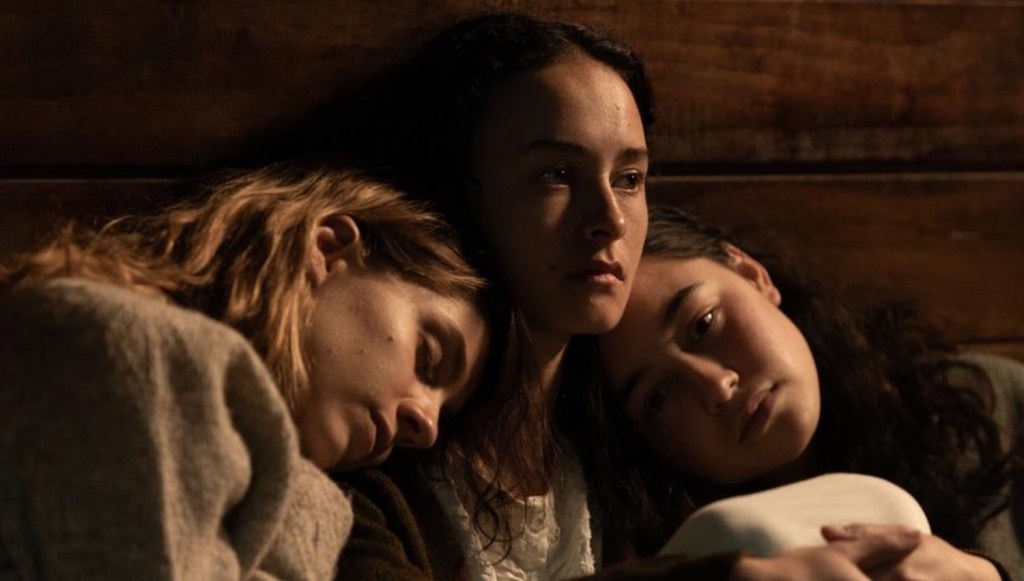
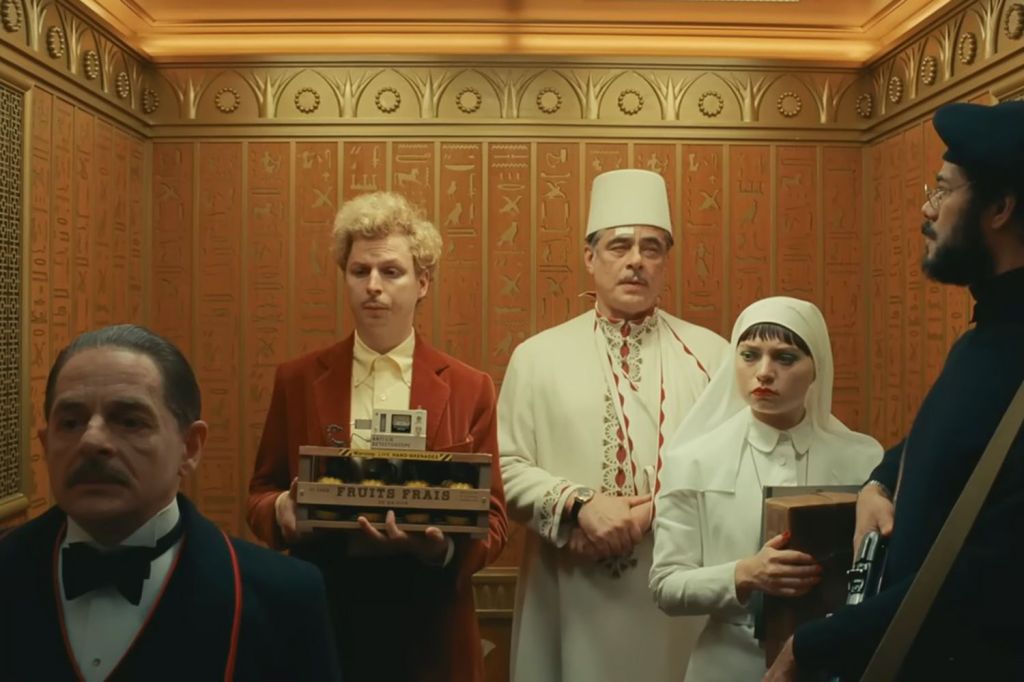
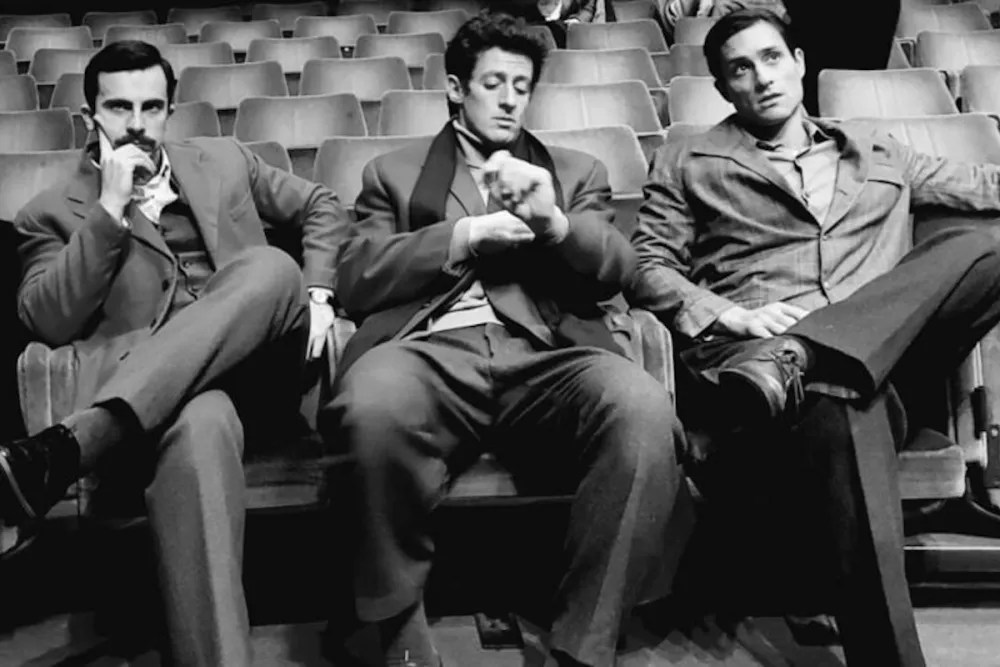
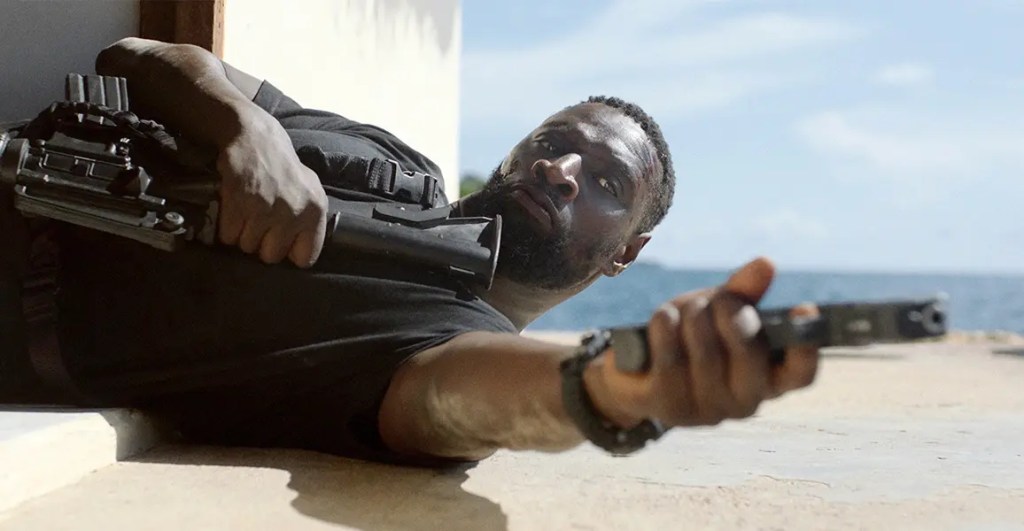
Beautiful. Films reviewed:Beautiful Evening, Beautiful Day, Two Women, Bring Her Back

Posted in 1950s, Adoption, Australia, comedy, Croatia, Horror, LGBT, Montreal, Movies, Sex by CulturalMining.com on May 31, 2025

Hi, this is Daniel Garber at the Movies for culturalmining.com and CIUT 89.5 FM.

This week I’m looking at three new movies: a historical drama, a sex comedy and a thriller/horror. There are four filmmakers facing censorship in Yugoslavia, two sexually frustrated moms in Montreal, and a pair of siblings in Australia who find themselves in a very strange foster home.

Beautiful Evening,  Beautiful Day

Wri/Dir: Ivona Juka

It’s 1957 in Zagreb, Yugoslavia, where a group of filmmakers are shooting a drama. Lovro (Dado Ćosić) its director and Nenad (Đorđe Galić) its writer are both national heroes. While still university students, they led a revolt against the Nazis and Ustashe, the Croation Fascist Party and later joined the resistance. As did Stevan (Slaven Došlo), their cinematographer. But the government doesn’t like their movie; it’s not patriotic enough. So they send in an apparatchik named Emir (Emir Hadžihafizbegović) who specializes in propaganda. Emir is there to “fix” the movie, with a new storyline, dialogue and actors. But also to catch and punish filmmakers who aren’t towing the party line. Tito’s Yugoslavia, though a “non-aligned” country, is warming up toward the post-Stalinist Soviet government. And is also conducting a crackdown on dissidents and undesirables in the arts. In particular, homosexuals. And this includes long time lovers Lovro and Nenad, Stevan and other gay men working on the film, all of whom had risked their lives as anti-fascist partisans in the past.

The filmmakers are interrogated, bribed, threatened, and even tortured when asked to name names… but production continues. Emir treats it all like just another job… until, four of the men he’s spying on save his life. Now Emir faces a dilemma: follow the rules or his own conscience. Can the lovers stay together? Will they finish their film? Or will the administration gather enough evidence to convict them of the serious crime of being gay and sentence them to a penal colony? 

Beautiful Evening, Beautiful Day is a powerful drama about a group of gay men in 1950s Yugoslavia, and the harsh persecution they faced for their sexuality. It’s both tender and brutal, with touching scenes and horrific violence. Although the story is fiction, it’s based on director Ivona Juka’s own research she did for her PhD dissertation. Gay men did play an important role in the resistance, and hundreds were later imprisoned and tortured by the government. 

The film boasts excellent acting and stunning B&W cinematography by Dragan Ruljančić. It sheds light on a topic which until now has been virtually non-existent in Yugoslavian cinema. This is an excellent indie movie that deserves to be seen.

Two Women (Deux Femmes en Or)

Dir: Chloé Robichaud

It’s wintertime in Montreal. Florence and Violette (Karine Gonthier-Hyndman, Laurence Leboeuf) are next door neighbours in a housing coop. They can be seen gazing longingly out their windows. Florence, a translator, has a 10 year old son with her common law husband David (Mani Soleymanlou). Vivi is on maternity leave taking care of their new baby daughter, while her husband Benoit (French actor Félix Moati) is on the road. He makes a good salary in pharma sales (and is having a secret affair with a younger woman he works with). But Vivi is losing sleep over a sound she keeps hearing: a Caaaw, Caaaw, Caaaw coming through her walls. Is it a crow? A crying baby? Or, the most likely reason, it’s her neighbour Florence loudly performing her orgasms through the thin apartment walls. She casually brings it up to her, but there the penny drops: Florence admits she hasn’t had sex for many years. It can’t be her; she’s on anti-depressants which totally destroyed her sex drive. But why should both their lives be so miserable?

They decide it’s time to have fun. Florence goes off her meds, and the two of them start hanging out in bars. They’re also viewing men differently than they used to. The exterminator, the cable guy, the housecleaner, the window washer, the linesman… why should these neglected moms pass on all these potential sexual adventures? But how would their husbands react to sudden changes in their wives’ behaviour? And what will happen to their marriages?

Two Women is a delightful, bittersweet comedy about a pair of sexually frustrated mothers in Montréal and how they deal with their non-functional marriages. It’s sexy, silly, satirical and savvy. The main characters are as likely to be seen seducing a plumber, as quoting Simone de Beauvoir or discussing the ramifications of the #Metoo movement on Facebook. 

Count on Québec to thumb its nose at sexual prudishness in mainstream North America, meaning lots of casual full frontal nudity (as well as from every other conceivable angle). Now apparently this is a remake of Claude Fournier’s hit film from 1970 starring Monique Mercure. I’ve never seen the original but let me tell you, Two Women is a great one all on it’s own. Loved it.

Bring Her Back

Co-Wri/Dir: Danny and Michael Philippou (Talk to me)

It’s a normal day in Australia. Andy (Billy Barratt) is Piper’s (Sora Wong) step-brother; a few years older, but they share the same Dad. Piper is visually impaired but doesn’t use a white cane — she doesn’t like people staring at her. She’s funny and self-confident, but  Andy still keeps an eye out on her at school; some kids can be cruel. But their lives are torn apart that day when they discover their father dead in the shower.

They’re immediately sent to child services, who attempt to send them to separate places —  Andy has a juvenile record —  but they insist on remaining together; he’s basically Piper’s caregiver. In the end the social worker sends them off to stay with a kindly foster mom until she can find them a permanent home. The house is cluttered and shabby, with a drained swimming pool in the back and a padlocked toolshed. Laura (Sally Hawkins) is funny, wacky, and more than a bit eccentric. She’s overjoyed to have them there since her husband’s gone, and her daughter — who was blind like Piper — is dead. She’s quick to introduce them to her favourite dog — but he’s stuffed! Taxidermy.  And then there’s her son Oliver, a little boy with a shaved head and a vacant look on his face. He seems innocent… until he catches their cat and starts to eat it, alive!

He’s been a bit off since their accident, Laura says. Piper really likes her, so Andy tries not to interfere. But bad things start to happen. Andy is wetting his bed at night —  he hasn’t done that since he was a little kid, and Laura is whispering stuff to Piper all the time, turning her against him. He knows there’s something really wrong here, but he can’t figure out what it is. Why is there a chalk circle around the house? Why is Oliver acting so strange? And what’s in that shed? But when he discovers the truth… is it too late?

Bring Her Back is a relentlessly terrifying horror movie about a frightened teenaged boy and his innocent step-sister. It’s every kid’s nightmare — trapped in a potentially dangerous place, ignored by authorities, and gaslit by a foster mom who is supposed to be on their side. The movie starts with a cold open, a  horrific, found-footage VHS snuff film, that remains unexplained for much off the film. Frustrating and terrifying, this movie keeps you on tenterhooks till the end. The Phillipou brothers (identical twins) weave a contemporary fairytale as scary as the Brothers Grimm. Great acting, beautifully made, but quite difficult to watch.

Bring her Back is brilliant horror like you seldom see. 

Two Women (which premiered at Inside Out), Beautiful Evening, Beautiful Day, and Bring Her Back all open in Toronto this weekend; check your local listings.

This is Daniel Garber at the Movies, each Saturday morning, on CIUT 89.5 FM and on my website culturalmining.com.

More drive-in movies. Films reviewed: Shadow Force, Rust, Clown in a Cornfield

Posted in Action, Death, Horror, Slasher, Thriller, Western by CulturalMining.com on May 10, 2025

Hi, this is Daniel Garber at the Movies for culturalmining.com and CIUT 89.5 FM.

It’s finally getting warm outside and you’re probably unpacking your shorts and slides. Don’t you want to watch a movie outdoors? Well, this week, I’m looking at three drive-in type movies: a western, a slasher and an action movie. There’s a pair of super-spy-assassins… and their cute little son; a notorious outlaw… and his little grandson; and a small-town doctor whose rebellious daughter is being chased by a killer clown!

Shadow Force

Co-Wri/Dir: Joe Carnahan

It’s present day in the USA. Isaac (Omar Sy) is a defacto single Dad (his wife has disappeared)  taking care of his young son, Ky  (Jahleel Kamara). He likes driving around in  his car with his son and singing along to middle-of-the-road R&B classics He keeps a low profile and avoids all cameras. He’s also hearing impaired, his eardrums shattered in an explosion. But when a random gang of robbers attacks a bank he’s in and threaten his son’s life, his years of training kick into action. He manages to disarm or kill all his attackers in just a few seconds. The footage goes viral and his identity is blown. You see, Isaac was once a member of an elite international paramilitary troupe known as Shadow Force. Their job? To keep G7 nations safe by assassinating anybody their boss wants them to. And who is this boss?Jack Cinder (Mark Strong) a ruthless killer. But when Isaac and another Shadow Force agent Kyrah (Kerry Washington) started dating and fell in love they both  went AWOL. Fraternization is strictly verboten (except between Cinder and female members). And no one ever leaves the shadow force. The remaining members have orders to eliminate them both, and the one who kills them first gets a huge reward. But now Kyra and Isaac are back together and their son is in danger. With the help of their longtime CIA  agents Auntie and Unc (Da’Vine Joy Randolph, Method Man) maybe they can rescue him, But with the Shadow Force closing in, what are their chances of survival?

Shadow Force is an extremely light and vapid action/thriller with a bit of humour. The premise — a secret kill team run by the G7 — is totally ridiculous. What’s different about this one? It’s a husband-and-wife kill-team taking care of an innocent kid as they try to live a normal life. Also, they’re both Black, quite unusual in action movies. So there are lots of parenting jokes, and mundane husband/wife patter. The flight scenes are blurry or too close up, not great. The shooting scenes are only a bit better while some of the chases — like in a motorboat — are not that bad. I wanted to see this one because I like French star Omar Sy, and he was not disappointing. Nor was the rest of the cast; Washington, Strong, Randolph, and  Method Man are all good (though much better actors than the crap material they’re forced to work with.)

Shadow Force is a passable action film and instantly forgettable. 

Rust

Co-Wri/Dir: Joel Souza 

It’s the 1880s in the old west. Lucas Hollister (Patrick Scott McDermott) is an orphan who lives with his little brother Jacob in the family homestead. Their Ma died of the fever and their Pa shot himself afterwards. Now it’s Lucas who provides for and protect Jacob — cook his food, buy the supplies and protect him from any dangers. But when an errant shot aimed at a wolf, accidentally killed a townsman, Lucas is arrested, tried and, though still a young boy, os sentenced to death by hanging. A local matriarch, Evelyn Basset (Frances Fisher) a great aunt, pleads for his release, but to no avail. But that night, an outlaw breaks into the prison, and after a shootout escapes on horseback with Jacob. The man is a gruff, grizzled and mean old cuss. But Harland Rust (Alec Baldwin) is also Lucas’s grandpa. He promises to find his brother, and take Lucas somewhere the law can’t reach him. The boy doesn’t like him but doesn’t want to die. So they start on a long journey southbound from Montana. But what they don’t realize is they’re being pursued by a large number of people.  Wood Helm (Josh Hopkins) is a rare, honest lawman, who wants to bring them both back alive so he can hang ‘em. He’s got a posse to back him up. Then there’s ‘Preacher’ Lang a notorious, black-hat bounty hunter (Travis Fimmel), who had his start murdering escaped slaves for cash. Rust and Lucas are way ahead, but their pursuers are catching up. Will Rust fulfil his promise? Will Lucas ever get to know his newfound grandpa? Or will they both be caught and killed by the bounty hunters?

Rust is a classic, bittersweet western about an outlaw and his grandson being tracked by bounty hunters. It has everything you expect — an outlaw and a sheriff, shootouts, showdowns… the usual. The acting is OK and there’s a credible narrative, but much of the movie is a muddled mess, with lots of people shouting and shooting but you’re never really sure why and at whom. In case you haven’t heard, Rust is that notorious western where the cinematographer was accidentally shot and killed on set by Alec Baldwin due to a firearms mixup… The director was wounded, too. Three years later, they managed to reshoot missing scenes, recast some roles and cobble it all together. This is the result, released as a tribute to Halyna Hutchins, the woman who Baldwin killed, including some of the many incredible scenes she shot — all on film —  against magnificent western skies. The lighting alone is exceptional.

Rust is not a great movie, but if you are curious like I was, now might be your only chance to see it on the big screen.

Clown in a Cornfield

Dir: Eli Craig

It’s Kettle Falls, a small town in corn country, middle-America.  Quinn (Katie Douglas) is a city girl from Philly, who has just arrived with her dad (Aaron Abrams), the town’s new MD.  He had a nervous breakdown when Quinn’s mom (his wife) died, so they’re relocating to somewhere less stressful. It may be more relaxing for him, but it sure isn’t for Quinn. Their house smells like dead bodies, and, most frightening of all,   they’re in a no-signal zone! Luckily, their gigantic neighbour Rust (Vincent Muller) who likes huntin’ and fishin’ offers to walk her to school. 

But things just get worse. She falls in a with the bad kids — who happen to throw the best parties — and is immediately given detention. Her new friends are Janet the snob, Ronnie the regular girl, Tucker the class clown, and Matt the dumb jock. And their undeclared leader, Cole (Carson MacCormac). He’s a self-described son of an oligarch; his family founded this one-horse town and own the only business — a corn syrup factory represented by the logo of a clown. But, Cole, like his friends, just want it tear it all down, and get out of this place. So Tucker and Matt have been creating short videos portraying Frendo as a evil serial killer, acting out gory scenes that go viral on the socials. But things take a drastic turn for the worse when the actual Frendo embarks on a murderous rampage… and the bad kids — including Quinn — are on his hit list. Is Frendo a ghost or is he a person? Why is he killing the teens? And who — if anyone — will survive?

Clown in a Cornfield is a classic slasher/horror pic about a killer in a small town. It’s bloody, scary and funny. The killer-clown — who appears after anyone uses a Frendo jack-in-the-box —  uses a butcher’s hook, a bow an arrows and a chainsaw to decapitate and disembowel his various victims. It follows many of the typical slasher plot turns but with enough new twists to make it very enjoyable. I especially liked the generation-gap gags, like where the teens are trapped in a house but don’t know how to use a dial phone. The entire movie was filmed in Winnipeg with an all-Canadian cast… which makes me wonder: is Frendo an evil-twin version of the Nutty Club’s Can-D-Man clown?

I pre-judged this movie by its title as something derivative and stupid, but you know what? Clown in a Cornfield is a whole bunch of fun.

Shadow Force, Rust, and Clown in a Cornfield all open this weekend; check your local listings.

This is Daniel Garber at the Movies, each Saturday morning, on CIUT 89.5 FM and on my website culturalmining.com.

Broken. Films reviewed: Parthenope, The Unbreakable Boy, The Monkey

Posted in 1950s, 1960s, 1970s, Autism, comedy, Family, Horror, Italy, Women by CulturalMining.com on February 22, 2025

Hi, this is Daniel Garber at the Movies for culturalmining.com and CIUT 89.5 FM.

This week, I’m looking at three new movies: there’s a boy with breakable bones, a toy monkey who could break your bones, and a woman whose beauty breaks every man’s heart. 

Parthenope

Wri/Dir: Paolo Sorrentino (Reviews: Youth, Hand of God, The Great Beauty)

It’s Naples, 1950 and a woman gives birth in the waters of the Tyrrhenian Sea. The baby is called Parthenope, named for both the city and the Greek myth. She grows up to be a young woman of epic beauty and legendary intellect (Celeste Dalla Porta). Men who try to seduce her, find their own words silenced by her pithy comebacks. Her days are filed with a search for beauty, happiness and meaning. She absorbs everything she reads, from John Cheever to Claude Levi-Strauss. Her closest friends are her brother Sandrino (Dario Aita) and Raimondo (Daniele Rienzo) the son of a maid. Together they form sort of a quasi menage a trois.

Parthenope aces her orals and is accepted into the prestigious anthropology department at the local university. From there she follows three very different paths: Academia — a professor takes her under his wing; Love, deciding which of her countless suitors should she consent to sleep with; and the city of Naples, itself. Along the way she encounters a corrupt and carnal bishop, a depressed superstar diva, a millionaire with a private helicopter, and many others. But will any of these people provide her with the answers she seeks?

Parthenope is a gorgeous  and sumptuous look at post-war Naples as seen through the eyes of a beautiful woman as she lives her life. Celeste Dalla Porta is appealing to watch, but she is opaque and impenetrable: she merely observes without ever doing anything. Paolo Sorrentino is known for his his beautiful images, especially women as objects of desire. But he doesn’t seem to know what to do with a woman as his subject. Instead we get a hollow simulacrum of a main character, who drifts aimlessly but happily through her life as she encounters quirky strangers. I love the photography, the scenery, the people and the music — a collection of bright and shiny colours — but watching Parthenope leaves you feeling like you just flipped the glossy pages of a fashion magazine: superficially attractive but pointless.

The Unbreakable Boy

Co-Wri/Dir: Jon Gunn (Reviews: Ordinary Angels, I Still Believe, American Underdog, Jesus Revolution)

Scott (Zachary Levi) is a young salesman with big ambitions: he plans to move to Manhattan someday and make it big. But in the meantime, he likes golf, fine wine and travelling. He spends most of his time with his best friend Joe, a burley bearded man who is always giving him advice (Drew Powell). One day he meets a pretty and charming woman named Teresa (Meghann Fahy). Sparks fly, and nine months later, she gives birth to Austin (Jacob Laval). They’re not married but decide to bring him up together. But there’s a catch: he requires special care. Like his mom, Austin has Osteogenesis imperfecta (OI), a genetic condition that makes your bones very brittle. He suffers his first fracture in the birth canal, with many more breakages to follow. Eventually he is joined by a younger brother, Logan, who doesn’t share his breakability.  

13 years later, Austin — aka the Aus-man — is now a happy school kid with a vivid imagination. He’s also on the autistic spectrum, but contrary to stereotypes, he’s outgoing, talkative and attends normal classes. He talks constantly, just like his dad. (I forgot to mention: Scott’s best friend Joe is imaginary) But all is not well. The family is deeply in debt. Austin is bullied at school. And Scott is drinking way too much, especially since he lost his job. Can the family pull itself back together? Or are they headed for ruin?

The Unbreakable Boy is a very cute, true story about an ordinary family working together to overcome their problems. As narrated by Jacob Laval  as the Aus Man, it’s simple, touching and funny. I like the way it demystifies kids with medical conditions and autism. And unlike most medical dramas, it’s not a weeper, though perhaps overly earnest. One warning: it is a faith-based movie, generally a red flag for cringe. Not my thing. Thankfully this one avoids most of the problems of that genre; preachiness and finger wagging and in-your-face prayers. If you’re in the mood for a light, informative, feel-good Christian movie that won’t make you squirm, check this one out.

The Monkey

Wri/Dir: Osgood Perkins (Reviews: Longlegs, Gretel and Hansel)

Hal and Bill (Christian Convery) are identical twins, but they couldn’t be more different. Bill, who was born a few minutes earlier, is self confident, athletic and  aggressive. Hal is withdrawn and wears glasses as he tries to keep out of Bill’s way. But his brother is a bully, humiliating and hurting Hal on a daily basis, using a posse of popular girls as his private army.  The two live with their single Mom (Tatiana Maslany) ever since their Dad, an airline pilot, walked away one day and never came back. When the boys go through the many souvenirs he brought home from around the world, they uncover something very unusual. It’s a mechanical automaton that’s an organ-grinder monkey. You wind him up and he plays a drum to the sound of carnival music. A harmless toy, right? Not exactly. When the drumstick comes down something terrible happens. Like when their babysitter is accidentally decapitated at a Benihana restaurant. But when it kills their beloved mother, the boys decided to hide the monkey somewhere that it can do no more harm. They are adopted by their aunt and uncle, a pair of swingers in small-town Maine. But they too are eventually killed in gruesome accidents. Was the money to blame? 

Flash-forward 25 years. Hal (Theo James) still lives in Maine close to his teenaged son Petey (Colin O’Brien). He visits him only once a year, to lesson the chances of the cursed monkey in harming him. But then two cataclysmic events threaten Hal’s normal life. First, Petey’s stepfather Ted (Elijah Wood) announces his plans to adopt him, making this the last time Hal will see him. Second, a series of terrible events are killing countless people in and around the town he grew up in. Can Hal find that damned Monkey and stop it from killing someone else? And can he simultaneously spend his last days with his son while keeping him out of danger?

The Monkey is a shocking and disgustingly hilarious movie about an evil toy and the people it affects. It’s done in a retro style, like Mad Magazine meets the Twilight Zone. It’s directed by Oz Perkins, known for his stylized movies that feel like fairytales (Gretel and Hansel) or nightmares (Longlegs). With this one, based on a short story by Stephen King, he seems to have found a happy medium. Simultaneously comical and grotesque, you watch the movie waiting with baited breath for the next disaster to happen. Theo James is perfect as the hapless Hal, but so is every other character in this weird movie, each given their own minute of ghastly glory: a pawn shop owner, a girl gang, a real estate agent, a pot dealer, a televangelist… it’s a limitless, mind-blowing romp. The Monkey is grotesque comedy/horror at its peak.

I love this movie. 

Parthenope, The Unbreakable Boy, and The Monkey all open this weekend in Toronto; check your local listings.

This is Daniel Garber at the Movies, each Saturday morning, on CIUT 89.5 FM and on my website culturalmining.com.

Disappeared. Films reviewed: Dark Match, I’m Still Here

Posted in 1970s, 1980s, Alberta, Brazil, Drama, Family, History, Horror, Pro Wrestling by CulturalMining.com on February 1, 2025

Hi, this is Daniel Garber at the Movies for culturalmining.com and CIUT 89.5 FM.

You may have heard about Sook-Yin Lee’s indie movie Paying For It, starring Dan Beirne as graphic novelist Chester Brown, and Emily Le as Sunny, modelled on Sook-yin herself as a TV VJ in the 1990s. It’s about their relationship after they broke up, when Chester decides only to sleep with paid sex workers. I interviewed Sook-yin and Dan way back in August on this show, and later ranked the movie on my Best-of-the-Year list. Well, good news: you can finally see Paying for It on the big screen starting this weekend. Check it out, it’s  very cool, very indie and very local.

But this week I’m looking at two other new movies: a family drama set in Rio de Janeiro in the 1970s, during the military dictatorship; and a horror movie about pro-wrestlers in the sticks of northern Alberta in the 1980s.

Dark Match

Wri/Dir: Lowell Dean

It’s 1988, and a team of pro-wrestlers are getting ready for a big match in a small town somewhere north of Edmonton, Alberta. They’re there under the direction of a sleazy promoter named Rusty Beans (Jonathan Cherry). The wrestlers have worked together for years and know all the rules: the good guys win and the heels lose. This goes for men and women alike.  And Nick — aka Miss Behave (Ayisha Issa) — doesn’t like it. She’s a damn good wrestler and wants some wins… along with a raise. But it’s always Kate the Great (Sara Canning) who gets the cheers while she gets the boos.  The only ones she can complain to are the enigmatic Enigma (Mo Jabari) who never speaks or takes off his lucha libre mask… and Joe. She spends most of her off-time with Mean Joe Lean (Steven Ogg) a veteran wrestler, and a heel like her. It’s ambiguous whether they’re a couple or “friends with benefits”. Either way, they keep it on the down low. But (back to the story) everything went wrong when she lost her temper in the ring, which left her facing a pay cut and maybe losing her job altogether. Until, out of the blue, Rusty comes by with some good news for a change. They’ve all been offered a gig in a village they’ve never heard of somewhere up north. It pays really well, maybe even a cut of the door. It’s for a dark match — a special wrestling show, for their eyes only, with no cameras present. So they all pile into Rusty’s old rusty van and head into the sticks. When they get there, things seem a bit fishy. Joe think’s they’re all rednecks or Jesus freaks, led by a mysterious leader in a cowboy hat (Chris Jericho).

But hey, a gig’s a gig. Things get stranger the night before the big event. They stumble into some kind of weird orgy involving handcuffs, a hot tub, a threesome, a suckling pig, and some glowing green plonk. They wake up the next morning with aches and pains all over.  But that’s just the beginning. The match is not what they’re used to. There are armed guards with  AK47s standing outside the locked door of their green room. And the wrestlers aren’t coming back after their match!  What’s going on… and why? Miss Behavin’, Mean Joe Lean and Enigma realize they have to do something… but can they stand up to a crowd of bloodthirsty satanic fans?

Dark Match is a horror movie about a wrestling match gone wild at the headquarters of a bizarre religious cult on the Canadian prairies. It’s bloody and gory with a hint of the supernatural at work.  The cast is composed of both professional actors and pro-wrestlers (who, as we all know, do their own fair share of acting). It’s loaded with 80s music, big hair and grainy video footage with lurid red lighting. I was surprised how much I liked this sleazy, gritty B-movie, and I’m not even a wrestling fan. Of course you have to be comfortable with extreme violence, blood and death — it’s that kind of horror — but it’s also quite funny and goofy, too.  So if you’re jonesing for some western-Canadian gore, Dark Match is it.

I’m Still Here

Dir: Walter Salles

It’s the early 1970s in Rio de Janeiro, Brazil. The Paivas are an upper middle class family who live so close to Leblon beach they can walk there barefoot. Eunice, their mom (Fernanda Torres) loves to float in the waves; she finds it relaxing. With five kids to take care of, she needs a bit of down time. Rubens Paiva (Selton Mello), the dad, is an engineer and former congressman for the Labour Party. He loves whisky, cigars and playing foosball with the kids. His firm is working on a huge project, an underground tunnel. But they still find time to get together with their close circle of friends and families: intellectuals, journalists, artists and activists, all on the left. Then there are the five kids: four girls: Veroca, Eliana, Babiu, and Ana, and one boy, Marcello. They love beach volleyball, soccer, pop music and a fluffy dog they find on the beach. Rubens names him Pimpão, after Verona’s shaggy friend. 

But a dark cloud hangs over their otherwise idyllic lives. Brazil is ruled by a right-wing military dictatorship and they’re using a series of kidnappings of European diplomats to question and harass anyone vaguely on the ‘left”. Vera is sent off to London for her own safety. Then one day, five sketchy men invade their home draw the curtains, and without a warrant drive Rubens away to an unnamed location. When Eunice tries to free him, the government denies they ever took him. It’s up to Eunice to take care of the kids as she tries to find him. Has he been disappeared?

I’m Still Here is the  incredibly moving, true story of a Brazilian family,  based on the bestselling memoirs of their son, Marcello.  While it covers the secret arrest of Rubens Paiva by the military dictatorship it’s also about the repercussions it had on the lives of Eunice, their entire family, their friends, and the country of Brazil as a whole.  And that’s where it hits you — the intimate details of a remarkable family’s everyday lives: the super-8 movies they record, the records they listen to. I though it was going to be just an historical retelling of an important event. But it’s actually about everything, good and bad, that the family goes through. Now I’m not Brazilian, I don’t live on a beach in Rio, but for some reason I totally identified with this family, I felt a real connection.

Walter Salles directs an epic movie like this every decade or so, films like The Motorcycle Diaries and Central Station. Apparently he had personal ties to the Paiva family as a young man. Fernanda Torres gives an amazingly nuanced performance as Eunice, that had my eyes tearing up. I’m Still Here has been nominated for three oscars — best actress, best picture and best foreign film — and rightly so. I can’t say enough good things about this movie.

Dark Match and I’m Still Here are both opening this weekend in Toronto; check your local listings.

This is Daniel Garber at the Movies, each Saturday morning, on CIUT 89.5 FM and on my website culturalmining.com.

Wolf men and assassins. Films reviewed: Wolf Man, Soundtrack to a Coup d’Etat

Posted in Africa, Cabin in the Woods, CIA, Cold War, documentary, Family, History, Horror, United Nations, Werewolves by CulturalMining.com on January 17, 2025

Hi, this is Daniel Garber at the Movies for culturalmining.com and CIUT 89.5 FM.

It may be cold outside, but things are burning up on the big screen. This week I’m looking a two new movies, a thriller horror and a documentary. There are wolf men in Oregon, and assassins in Congo. 

Wolf Man

Co-Wri/Dir: Leigh Whannell

It’s present-day San Francisco. Blake (Christopher Abbot) is a lapsed writer who devotes his life to his wife and daughter. Charlotte (Julia Garner) is a careerist who is rarely at home, so Blake takes on the parenting role. He spends all his time with their precocious 10-year-old daughter, Ginger (Matilda Firth). But he and Charlotte are constantly bickering about her absentee-mom-ism. So when a package arrives with his late father’s will and a set of keys, he wonders if this is the miracle they need to keep thew family together. He has inherited — a house, a barn, and countless acres of lush green forest —  the beautiful country he grew up in. Blake suggests the three of them go on a road trip together for some quality time. Young Blake was raised in isolation by a hard-ass survivalist who was strict and demanding toward his motherless son. That’s why Blake is so indulgent towards Ginger, who still dresses like a Disney princess at age 10.

So off they head for his isolated cabin in remote Oregon. But what Blake seems to have forgotten is there are wolves in them thar hills! Big bad wolves, mean ugly wolves, the kind who stand on two feet and like wolfing down people like them. Sure enough, as they approach their farm one of them woolfies drives their u-haul off the road… and they’re forced to run for their lives. Luckily the house is still wolf-proof, with iron bars on all the windows. Unluckily, Blake gets himself slashed by the Wolf Man, and he’s changing into something different. Can he keep his vulpine urges in check and protect his family from harm? Or will he be the biggest danger to them of all?

Wolf Man is a cabin-in-the-woods werewolf movie with a few new twist. In this version, people don’t turn into wolves on a full moon and then change back again; they’re in it for the long haul. And these werewolves aren’t sleek, or sexy or furry, never mind cute or loveable. They’re more like zombies infected with a horrible virus that makes their teeth and hair fall out and their skin go bumpy and gross. These werewolves want to eat flesh and blood, preferably human. Once infected, they can no longer speak or understand people.

There’s no sex in this movie, not even a kiss, it’s totally sterile. In this neck of the woods everyone’s a guy, with literally no women at all. And every man could be a wolf man. Women and girls are urban sophisticates, while men and boys are potential redneck killers. Christopher Abbot plays Blake as a male Oprah mom who is inevitably drawn back to the dangerous manliness he grew up with. Julia Garner’s Charlotte is a less developed character, just an aloof woman forced to either scream and run or fight back.

There are a lot of misfires in this movie. Charlotte dresses in black and white like an English barrister emerging from a courtroom; but turns out she’s a journalist leaving her newsroom… huh?? Blake who grew up in a world of misery and death that he left far behind, now decides to take his family back there… for vacation? Why? There are some good parts, too. Like when the story is told through a werewolf’s eyes and ears, we hear the pounding footsteps of a tiny insect, and see the world as a glowing colourful prism — very cool.

But not enough to save a story that doesn’t quite cut it.

Soundtrack to a Coup d’Etat

Co-Wri/Dir: Johan Grimonprez

It’s June 30, 1960, and the Democratic Republic of Congo is reborn as a free, democratic state,  after nearly a century of brutal colonial rule under the King of Belgium. Leopold II is notorious for chopping off the hands of men, women and children who didn’t produce their quota of rubber. Congo (under the Union Minière) is a very rich country full of diamonds, copper, tin, and uranium, extracted and shipped to Europe and the US.  Its rubber and copper were crucial to winning the world wars and their uranium fuelled the atomic bombs dropped on Japan.  Its first elected prime minister, Patrice Lumumba, gives a speech on independence day, celebrating the transfer of power from their previous colonial rulers. He rightly condemns the colonial atrocities and speaks out in favour of the non-aligned movement (former colonies in Europe and Asia). While his speech is well-received locally, Europeans — including the Belgian royal family — are shocked and aghast. Will they lose control of the Union Minière, and will the US give up its uranium source? Not a chance. They accuse Lumumba of being a communist, despite his stressing independence and nationalism. So they declare Katanga, an area rich in minerals, as independent from the DRC. The seceded state is essentially ruled by white Europeans and Rhodesian mercenary police and a military that operates with impunity, kidnapping miners and bombing uncooperative villages.

The US (especially the CIA), fearing the so-called communist Lumumba, launch a two-pronged campaign: a covert one, involving assassinations, bombings, kidnappings and regime change; and a diplomatic one, where famous American jazz musicians are flown to independent African states to perform as ambassadors of Jazz. Louis Armstrong, Dizzy Gillespie, Nina Simone and Max Roach, have no idea they ware working for a CIA front. By January, 1961, the wildly popular Lumumba is dead, assassinated in Katanga with Belgian and American complicity.

Soundtrack of a Coup d’Etat is a fantastic documentary that retells the events of those six months. The doc is 2 1/2 hours long, so I can only give you the briefest outline of what it’s about. But the film itself is amazing, covering  everything from pan-African nationalism and the Cold War, to non-aligned nations, colonialism, and the UN. We hear Malcolm X in Harlem, Andrée Blouin on women’s rights in Africa, Castro in NY, and Nikita Khrushchev’s famous shoe speech (where apparently he didn’t actually say what they said he said) in the general assembly. It’s filled with compelling imagery:  Alan Dulles the head of the CIA smoking his pipe; a North Rhodesian mercenary recounting the tens of thousands of people they killed with impunity; the Soviets crushing Hungary, and Voice of America broadcasts. There are hilarious propaganda newsreels like the US parachuting record players and vinyl discs across the iron curtain. And through it all, jazz music from America to Africa. 

The film is made of excerpts from previously-made audio documentaries combined with non-stop black and white footage and stills. Most cuts are only about 2-3 seconds, giving the whole film the feeling of a glorious collage of African history. (It’s similar to the films of Adam Curtis, but without his spoken narration.) Many of the subtitles are large fonts superimposed on photos in blues, yellows and pinks, like the cover of a Blue Note jazz album. 

A crucial historical document and a work of art, Johan Grimonprez’s Soundtrack to a Coup d’Etat is a must-see.

Soundtrack to a Coup d’Etat and Wolf Man both open this weekend in Toronto; check your local listings.

This is Daniel Garber at the Movies, each Saturday morning, on CIUT 89.5 FM and on my website culturalmining.com.

Bobby, Robbie and Tom. Films reviewed: A Complete Unknown, Better Man, Nosferatu

Posted in 1800s, 1960s, 1990s, Folk, Gothic, Horror, Music, Thriller, UK, Vampires by CulturalMining.com on December 21, 2024

Hi, this is Daniel Garber at the Movies for culturalmining.com and CIUT 89.5 FM.

Christmas is coming in just a few days, so this week I’m looking at three new movies — two musical biopics and a gothic horror — all opening on the 25th. There’s a  young man named Bobby who hails from Minnesota, another named Robbie who looks like a gorilla, and a third named Tom who is headed for Transylvania. 

A Complete Unknown

Co-Wri/Dir:James Mangold (Indiana Jones…)

It’s 1961 in Greenwich Village. Bobby Dylan (Timothée Chalamet: Dune, The French Dispatch, Call Me by Your Name, ) is a 19 year old boy from Minnesota, who arrives penniless with just a guitar on his back. The Village is the centre of the folk revival sweeping across America, alongside the civil rights and anti-war movements. Bobby is looking for his hero Woody Guthrie (Scoot McNairy), and tracks him down at a Psychiatric Hospital in New Jersey. Guthrie is suffering from a debilitating case of Hunnington’s disease. He communicates using grunts and gestures, but clearly likes Bobby’s songs. Pete Seeger (Edward Norton) — the folk giant and political activist — is there too, visiting Woody. He takes Bob under his wing and later introduces him at an open mic show at the Gaslight Cafe. There he meets the beautiful and talented Joan Baez (Monica Barbaro), a wildly popular folksinger and activist in her own right.

Bob’s still broke and prone to couch surfing, but soon settles into a casual relationship with Sylvie Russo (Elle Fanning: Somewhere, Super 8, Ginger and Rosa, Neon Demon, Twentieth Century Women, The Beguiled,  The Roads Not Taken, Mary Shelley). Is it love? And despite his unconventional voice, he quickly attracts fans — including stars like Johnny Cash — and his recording career takes off. Joan Baez adapts some of his songs with great success, and the two of them go on tour together — where they become intimate on and off stage. But Bob feels constrained by the folk community and wants to forge new musical pathways. What will happen when Bob Dylan goes electric?

A Complete Unknown: The Ballad of a True Original is a biopic about Bob Dylan. It spans a relatively short period of his life and music from his arrival in New York until the Newport Folk Festival of 1965. Chalamet is excellent as the young Bob Dylan, portraying him both as kind and self centred, ambitious and indifferent… usually sitting around in his underwear strumming a guitar. Norton is surprisingly believable as Pete Seeger. Elle Fanning, as Dylan’s neglected lover, seems less real, more of a cinematic concoction to add a romantic undertone to the story. Indeed, much of the plot and characters are invented out of whole cloth— with Dylan’s approval.

What’s really good though is the music. 75% of the movie is just singing and playing instruments, performed by the actors themselves. Maybe it’s me, but those songs, those joyful songs… they made me sing along and literally brought tears to my eyes. Live concerts, jams, hootenannies, jamborees, recording gigs… this movie includes everything. Whatever its false notes or historical inaccuracies, the music makes it. 

I enjoyed this movie so much.

Better Man

Co-Wri/Dir: Michael Gracey

It’s the 1980s in Stoke-on-Trent, England. Robbie Williams (Jonno Davies) is a boy who lives with his dad, mum and grandmother (Steve Pemberton, Kate Mulvany, and Alison Steadman). He goes to Catholic school where he’s the class clown. He loves singing, acting and telling jokes. He’s not particularly talented but he is charming and cheeky, always ready with a smile, a wink, and a  wiggle. He longs for approval from his neglectful father, but rarely gets it. So he vows to become famous some day to prove his worth. Unfortunately he’s the only one who thinks he can make it. Still, somehow he passes the auditions and is invited to join a new boy band called Take That.

Robbie doesn’t mind performing semi-clad at gay bars; their popularity is growing, and their catchy tunes are being listened to. And when they finally make it big, he is dazzled by the adoration of countless fans. He falls for the allure of alcohol, drugs and willing sex partners.  But why isn’t he making much money? It’s because he doesn’t write the songs, he just performs them.His drug use is getting out of hand. When he quits the band for a solo career, thing look rough. Will his own talent ever be recognized? Will his father ever be proud of him? And can he overcome the self doubt that plagues his career?

Better Man is a music biopic about the rise, fall and rise again of the pop singer and performer. The music and plot of this film are both pretty basic. What’s interesting is how he is portrayed. Through the use of CGI, Robbie Williams  looks like a human but with the features and fur of a chimpanzee. No one ever mentions it, he doesn’t eat bananas or climb trees, but throughout the movie, he looks like an ape. It represents the self-doubt and insecurity that drives him.

Director Michael Gracey had his start as an animator who learned special effects from the ground up, which leaves him with a vast supply of techniques to dazzle audiences. He has no fear of green screens and embraces CGI whole heartedly. Most of the movie feels like a non-stop, never-ending music video, expertly made. I’m not a fan of boy-band pop, but the sparkling presentation makes Better Man fun to watch.

Nosferatu 

Co-Wri/Dir: Robert Eggers (Lighthouse Eggers interview, The Northman, The VVitch Reviews)

It’s the 1830s in a small port city in Northern Germany. Thomas and Ellen Hutter (Nicholas Hoult, Lily-Rose Depp) are a young couple, passionately in love. To support their family and any future kids, Tom has a new position at a financial firm, run by the eccentric Mr Knock. Tom is a Bob Cratchit, always trying to please his boss. His first assignment: to visit a fabulously wealthy noble, have him sign a contract, and accompany him back to the city. It seems like a simple task. But Ellen is dead-set against it. Count Orlov cannot be trusted — he will kill you, Tom, she says. How does she know? The nightmares she’s had since adolescence predict it.

But, despite her warnings, Tom heads off to Transylvania. Count Orlov’s (Bill Skarsgård) castle is intimidating, set amongst the stark Carpathian mountain, and none of the local villagers dare to go with him, even draped in ropes of garlic. Tom braves it on his own, but finds the Count mysterious and oppressive. The castle is filled of vicious wolves and with rats. Tom wakes up each morning feeling drained, with teeth marks on his torso.

Meanwhile, back in Germany, Ellen is tormented with nightmares, driving her toward insanity, despite help from her friends Friedrich and Anna (Aaron Taylor-Johnson, Emma Corrin). Tom disappears and, when the Count arrives in the German town, unaccompanied, people start dropping dead from the plague. Can Tom and Ellen free themselves of Count Orlov’s treachery? And what are this vampire’s real motives? 

Nosferatu is a remake of Murnau’s 1922 silent film, which in turn was an adaptation of Bram Stoker’s Dracula. But far from being just another vampire movie, this one is totally original. It’s sexualized, scary, funny and grotesque. I saw it in IMAX in all its gothic glory. 

Murnau’s Nosferatu was a masterpiece of German expressionism, both modern and iconoclastic; Ironically, this one, made a century later, is deeply rooted in the distant past. Robert Eggers loves this old stuff, and pays meticulous attention to every word of the script and every frame of the film. It’s full of unnecessary but delightful scenes, like Roma singers and Magyar slap dancers, and rat infested canals. Eggers went to Transylvania just to capture that castle on film. He gives us a new Dracula, no Bela Lugosi accent or widow’s peak. This Nosferatu is a burly, imposing man, draped in fur robes, with a grand Hungarian moustache. His skin and muscles are rotting away, putrid with decay. He is driven not by an insatiable thirst for human blood but by lust: he covets a woman. 

If you’re into new explorations in horror, I think you’ll love Nosferatu.

Better Man, A Complete Unknown, and Nosferatu all open on Christmas Day in Toronto; check your local listings.

This is Daniel Garber at the Movies, each Saturday morning, on CIUT 89.5 FM and on my website culturalmining.com.

Blockbusters. Movies reviewed: Gladiator II, Wicked, PLUS Scared Sh*tless at #BITS

Posted in Fairytales, Family, Horror, Magic, Musical, Romance, Rome, Toronto by CulturalMining.com on November 23, 2024

Hi, this is Daniel Garber at the Movies for culturalmining.com and CIUT 89.5 FM.

What’s a blockbuster? Apparently they were named after the American bombs in WWII that were so powerful they could flatten a city block. And as winter holidays approach, the big studios are releasing potential blockbusters; real movies not just Disney, Marvel and Star Wars drivel. Two new movies, Wicked and Gladiator II, open this weekend perhaps in an attempt to duplicate the way Barbie and Oppenheimer drew crowds into theatres. If they’re both hits, I wonder what people will call them? Wick-iator? Gladwick? Who knows? (Since recording, “Glicked” has become the word of choice.) This week I’m looking at those two big-budget Hollywood films: swords and sandals in ancient Rome and songs and dances in the land of Oz. But before that, for something completely different, a low-budget horror comedy about Toronto toilets.

Scared Shitless

Dir: Vivieno Caldinelli

Sonny (Daniel Doheny) is a depressed college drop out. Since his mom died of an unspecified infection, he’s suffered from a pathological fear of germs. He relentlessly washes his hands after touching almost anything and is always armed with small plastic bottles of Pepto-Bismol to keep himself from being sick. He lives with his dad, Don Donahue (Steven Ogg), the owner and sole employee of Donahue plumbing. Unlike Sonny, Don has no qualms about getting his hands dirty — it’s part of his job. So he decides to take a leap, and bring his germaphobic, OCD son with him on his next assignment. Maybe the shock of plumbing will pull him out of his stupor.

Luckily, it’s an easy one. Old Mrs Applebaum (Marcia Bennett) calls him almost weekly to help with a dripping faucet or a backed up toilet. “I think she just likes the company” he says. Sonny gets the dry heaves from look at a toilet, never mind touching one. But he agrees to do it. Meanwhile, all is not well at the Palmer Estates,  that low-rise 1960s apartment building with questionable plumbing. Turns out, one of the tenants is a mad scientist who has created an apocalyptic monster, which is living within the building’s pipes. (The biologist is played by Kids in the Hall’s Mark McKinney channelling Captain Kangaroo). The beast is shaped like a giant fleshy tadpole, but with four lethal appendages dangling out of its razor sharp gullet, big enough to bite off your head or your nether regions. 

And when blood starts appearing in the toilets, Sonny realizes this is bigger than he thought. He turns to the building’s superintendent to call 911. But Patricia, the super, (Chelsea Clark) who coincidentally was Sonny’s classmate at university, refuses to call. The building belongs to her parents, and she doesn’t like any bad PR. So the two of them — and his Dad — bravely set off to find the trouble before it gets any worse. But are they two late?

Scared Shitless is a crude and funny comedy/horror movie about a monster who lives in your toilet. Since it takes place in an apartment, you get to meet all sorts of weird and kinky characters, like an elderly couple into S&M role play. I think it’s trying more for the funny than the scary, and that’s fine with me. It’s also very much a Toronto movie, with both the main actors and the supporting ones — including perennial horror favourite Julian Richings — are recognizable as locals. Ogg, Doheney and Clark are all fun in their roles, as is the monster, known as Project X. It’s the creation of the legendary Steven Kostanski  who previously brought us Manborg and Psycho Goreman. So if you’re the kind of person who keeps copies of Fangoria hidden under your bed, you will love Scared Shitless. 

Paul Mescal plays Lucius in Gladiator II from Paramount Pictures.

Gladiator II

Dir: Ridley Scott

It’s the early 200s in ancient Rome. Lucius (Paul Mescal) is a gladiator preparing for a fight in the coliseum. But he’s not there for the coins he might win or the chance of buying his freedom in the future. He wants revenge and he wants it now. He’s a slave,  captured after a battle in Numidia where his wife was killed. And he blames Marcus Acacius (Pedro Pascal), a much-admired  general. Lucius was discovered by entrepreneur and kingmaker Macrinus (Denzel Washington) who thought he noticed rage in Lucius face — just what a great fighter needs. But others are interested in Lucius too. The crowds cheer for him, the Senators scheme for him, and the two emperors Geta (Joseph Quinn) and his brother Caracalla (Fred Hechinger) have ideas of their own. But it’s Lucilla (Connie Nielsen) — a major character in the first Gladiator movie — who has personal reasons for him to stay alive. Who is Lucius? Why is he so important? And will he get the revenge he seeks?

Denzel Washington plays Macrinus in Gladiator II from Paramount Pictures.


Gladiator is an epic action drama set within a decadent ancient Rome, complete with senators, citizens plebes, gladiators, slaves and the Pretorian Guard. I have a low bar when it comes to action movies; as long as they have good fights and chase scenes, it’s acceptable. This one has so much more: a compelling plot with unexpected twists, great characters and excellent acting. Paul Mescal plays the driven gladiator as a classic hero on a quest. Denzel Washington is nicely

Pedro Pascal plays General Acacius in Gladiator II from Paramount Pictures.

slippery, and Pedro Pascal is truly majestic as the military hero. The cast is rounded out by Derek Jacobi — who brought ancient Rome to a generation as I,Claudius — and Little Britain’s Matt Lucas as the MC. There are even quotes from Virgil in the dialogue — not your usual action movie fare. Gladiator II is not perfect. There was no romance or love aside from filial piety.  I thought the CGI animals — especially a vicious troupe of man-eating monkeys — was ridiculously fake. And though it harkens back to the sword and sandal flics of the 50s and 60s, Gladiator is no Spartacus, and Ridley Scott ain’t Stanley Kubrick. But Scott still knows how to craft a totally watchable, old-skool Hollywood drama like almost nobody else.

What can I say? I had a great time watching Gladiator II.

Wicked

Dir: Jon M. Chu

It’s the land of Oz. Elphaba (Cynthia Erivo) is a new student at Shiz, an exclusive boarding school like Hogwarts but without much magic.  Her Dad — the governor of Munchkinland — sent her there to take care of Nessarose, her beloved little sister.  Elphaba doesn’t get along with her roommate, the most popular girl in school. Glinda (Ariana Grande) is everything Elphaba is not. She’s a rich, frivolous, self-centred airhead, who cares more about fashion than thinking. She wears pink frocks, and tosses her blond tresses from side to side, to get whatever she wants.  Elphaba is smart, diligent and pure-hearted. She dresses only in black, so as not to draw attention to herself. Why then is Glinda adored and envied, while Elphaba is mocked and feared?

It’s because of her skin colour; as Kermit the Frog said, it’s not easy being green.

But one person does like her: Madame Morrible (Michelle Yeoh). She believes Elphaba possesses magical powers she just needs to keep them under control. If she does, perhaps the kind and benevolent Wizard of Oz (Jeff Goldblum) may even allow her to visit him in the Emerald City. When Glinda hears this, she decides it’s time to kiss and make up. .. and maybe she’ll get to learn some magic, too?

But their relationship is complicated. Glinda is dating a dashing young prince (Jonathan Bailey) who seems more intrigued by the green-faced and moody Elphaba than by her. And Dr. Dillamond, their history teacher, is a goat. Animals once were equal to humans, but not any more. While Glinda is indifferent to their plight, Elphaba thinks the animals must be respected and protected. With all these ideas whirling around Elphaba’s head, what will happen next? Is Glinda her friend or her rival? And will she ever get to meet the Wizard of Oz?

Wicked is a spectacular musical about the origin of a misunderstood young girl who later becomes known as the wicked witch of the West. It’s a whopping 2:45 long, but you wouldn’t know it; it whizzes by at a very fast pace. Even so, it’s only part one of a two-part saga. It’s based on a broadway musical, which was adapted from the novel Wicked by Gregory Maguire , which in turn was a riff on the movie The Wizard of Oz and the L Frank Baum books. Apparently, the musical was a huge hit and has a fanatical following — at my screening there were people in at my screening loudly applauding after every great solo. And I bet they also liked a scene where Kristin Chenoweth and Idina Menzel — who starred in the original stage production — sing a duet, sort of a play within a play.

But I went in an absolute beginner, knowing nothing about it. Didn’t matter.

Wicked is an excellent movie.  It’s all shot on a set, but is cinematic, not theatrical. There’s seamless editing, great acting, and impressive art direction. Dozens of professional dancers twist and leap across the stage.  Cynthia Erivo is a powerful singer whose Elphaba is nicely empathetic.  We can feel her. She’s amazing. Ariana Grande may be a pop star but she shows genuine talent here: a skilled actor with a beautiful voice.

I am not a devotee of Broadway musicals, but I really enjoyed Wicked.

Wicked and Gladiator II open this weekend in Toronto; check your local listings. And Scared Shitless is playing tonight (November 23) at 9:30 pm, as part of B.I.T.S. Canadian horror festival.

This is Daniel Garber at the Movies, each Saturday morning, on CIUT 89.5 FM and on my website culturalmining.com.

Bullies and the bullied. Films reviewed: Memoir of a Snail, The Line

Posted in Animation, Australia, Bullying, College, Family, Friendship, Horror, LGBT, Sex by CulturalMining.com on November 16, 2024

Hi, this is Daniel Garber at the Movies for culturalmining.com and CIUT 89.5 FM.

Fall Film Festival Season continues in Toronto with ReelAsian and BITS. ReelAsian, which is on right now, brings features docs and shorts from East and South Asia, and from the Diaspora in North America. Many of the films are premieres! BITS — Blood in the Snow — is an all-Canadian festival of horror, genre and underground films that shatter taboos and conventions — including the second season of David J Fernandes’ TV series Creepy Bits. The festival runs from November 18th-23rd.

But this week, I’m looking at two new indie movies, from Australia and the US. There’s a frat boy in Oklahoma caught between the horns of a dilemma; and a bullied girl in Canberra who wants to curl up in her shell.

Memoir of a Snail

Wri/Dir: Adam Elliot

Grace and Gilbert are twins who live with their dad in a high-rise tenement in a big Australian city. Their mom died in childbirth, so they’ve only ever known their father, a former Parisian street busker known for his pyrotechnics. Gilbert embraces his love of fire and gunpowder. Grace models herself after her mother, a specialist in snails; she always wears antennae over her knit cap, and thinks of herself as a mollusk. And since she still shows the scars of a cleft palette, she is constantly bullied at school and called rabbit face. Gilbert is always there to defend her, and the two are best friends.  Until their father dies, leaving them both as orphans. The twins are separated and adopted on opposite ends of the country.

Grace ends up in the nation’s capital, Canberra. She’s adopted by a dull, beige couple with no kids. They also happen got be nudists and swingers. Grace’s only friend is an elderly woman named Pinky she meets at the library where Grace spends all her time. Pinky is both warm and eccentric and shares her lusty history with Grace who participates vicariously. 

Gilbert finds himself on the other side of the continent in an isolated apple farm, outside Perth. He is put to work at a Dickensian conveyor belt controlled by his dictatorial, bible-thumper of a stepmother named Ruth, and her troglodyte sons. The two survive only by sending one another letters. Gilbert wants desperately to leave, while Grace becomes a recluse holed up in her home surrounded by the kitty snail-like objects she hoards. Can they survive in their dystopian prisons? And will they ever see one another again?

Memoir of a Snail is a dark animated comedy about coming of age of a shy and introverted young woman. It’s entirely made of stop- motion figures and locations. The stories take place within a wonderful, wabi-sabi world of the crumbling and dingy detritus that Grace compulsively collects. And you can’t call this a kids’ movie, as it deals with all sorts of squirmy adult concepts including bodies and sexuality. And it’s not disneyfied happy stuff either; it’s hilarious and quirky, Roald Dahl meets Tim Burton.The voices are provided by fave Aussie actors Sarah Snook and Kodi Smit-McPhee as the twins, Jacki Weaver as Pinky, with Eric Bana and Nick Cave in other roles.

Memoir of a Snail is a wonderfully depressing comedy with a satisfying end.

I like this one a lot.

The Line

Co-Wri/Dir: Ethan Berger

It’s 2014 at a university in the deep south. Tom (Alex Wolff) is a student there, paid for by his single mom’s savings (she’s a nurse). But his grade point average is low, and his interests are focused mainly on snorting coke and getting laid. He shares a room with his best friend Mitch (Bo Mitchell) who calls Tom “Sunshine”. He is constantly hugging and touching Tom. Mitch is rich, but he’s a total wreck —irresponsible, slovenly, self-pitying and undependable. They met the year before while being pledged at a powerful frat house and have had each others’ backs since then. He’s even met Mitch’s father (John Malkovich) who promises to set him up with a good job after graduation — one of the benefits of “Greek” life. They live inside the frathouse now.

As sophomores, they are full members of KNA, and Tom is being groomed as their next president. But things start to deteriorate as this years pledges start their initiation. The problem is Mitch has a hate on for a new pledge named Gettys O’Brien (Austin Abrams). O’Brien is totally chill and publicly mocks the ridiculous hierarchy, and homo-erotic rituals. He also disrespects Mitch’s insecurities about his own looks and body. So Mitch despises the popular freshman and goes out of his way to make his life miserable… but to no avail.

Tom, meanwhile, is ambitious. He wants to improve his grades and he’s crushing on a smart woman in his class. Annabelle (Halle Bailey) is extremely self-confident,  hates frats, and dares to publicly denounces the university’s biases. But Tom persists, even while knowing his all-white ultraconservative frat will never accept him dating a black, feminist who doesn’t shave her armpits. And the university itself is coming down hard on the Greeks, following reports of dangerous practices going on there.  They lay down the law: a total ban on hazing and off-campus retreats. Of course Mitch ignores all this and immediately plans the ultimate hazing retreat adventure, where he can get revenge on O’Brien. The frat’s president makes Tom goes to keep it all safe. This puts Tom between a rock and a hard place. Can he calm the waters? Or are they heading toward a genuine Hell Week?

The Line is a very dark and unsettling drama that gives an inside look at the secretive world of fraternities. It’s also about friendship and obligation, hierarchy and the chilling power of money over basic morality. The title refers to a hazing ritual where pledges are hooded and tied together in a dangerous setting. I saw this movie because Alex Wolff is in it, and he only seems to be in worthwhile movies. In an interesting performance, he puts on a deliberately-acquired, heavy southern drawl — interspersed with extended mumbling — a style of talking apparently de rigueur at frats. Bo Mitchell is also very good. The plot is told without easy solutions and obvious heroes and villains; it’s more subtle than that, but this is not a feel good movie. And while a good film, it’s quite disturbing with unexpected violence and is not for the faint of heart. 

Memoirs of a Snail and The Line both open this weekend in Toronto; check your local listings.

This is Daniel Garber at the Movies, each Saturday morning, on CIUT 89.5 FM and on my website culturalmining.com.

Unobtainable, unsustainable, inevitable. Films reviewed: Bookworm, Monkey on a Stick, Smile 2

Posted in 1970s, 1980s, Addiction, Canada, Crime, Family, Hippies, Horror, India, Kids, Magic, New York City, New Zealand, Religion by CulturalMining.com on October 19, 2024

Hi, this is Daniel Garber at the Movies for culturalmining.com and CIUT 89.5 FM.

Toronto Fall Film Festival season continues with Rendezvous with Madness presenting docs and dramas, features and shorts, about addiction and mental health followed by in-person discussions, starting on October 25th. 

But this week, I’m looking at three new films, a kids’ movie, a doc and a horror film. There’s a precocious girl looking for the unobtainable; a group of deranged gurus trying to hold onto the unsustainable; and a pop starch wants to escape the inevitable. 

Bookworm

Co-Wri/Dir: Ant Timpson

Mildred (Nell Fisher) is a young girl who lives with her mom in New Zealand. She loves reading but hates school. Her desk is surrounded by leather-bound books alongside a microscope, a telescope, a typewriter and a record player. She talks like a grownup, and is obsessed by wild animals. Her dream? To catch on film a black panther said to be roaming in the woods (along with a big fat cash prize for anyone who can take a picture of it.) But her plans all change when her mother is sent to hospital in critical condition following an exploding toaster. That’s when her biological father comes into the picture. He flies in from America to save the day.

Strawn (Elijah Wood) is a professional magician — he prefers “illusionist” — who loves magic: like making small things disappear or pulling coins from behind someone’s ears. Most people are wowed by Strawn’s prestidigitations and puppy dog eyes, but not Mildred. She scoffs at magic and is quick to reveal all his tricks. They two are opposites at heart.  If you say “David Copperfield” she thinks of Dickens while he thinks of the magician. Nonetheless, they are stuck together for now, so he agrees to take her camping. But little do they know of the exciting adventures and frightening dangers — like criminals, wild animals and crazy escapes — that lie ahead.

Bookworm is a very cute coming-of-age adventure about two strangers put together to form a makeshift family. It feels like a cross between a Roald Dahl Matilda and Taika Waititi’s Hunt for the Wilderpeople. It’s shot in the New Zealand wilderness amidst stunning mountains, cliffs and lakes. Nell Fisher is adorable as the obnoxiously mature Mildred, while Elijah Wood is equally adorable as the man-child who won’t grow up. I wanted to see this one because I loved director Ant Timpson’s bizarre debut, the violent comedy Come to Daddy. Bookworm is as different as any film could be but just as enjoyable.

I liked this one a lot.

Monkey on a Stick

Dir: Jason Lapeyre

It’s 1965 and America is in high hippie mode.  A. C. Bhaktivedanta Swami Prabhupada arrives in New York City from Calcutta. He’s there to sell books, including his own translation of the Baghdad Gita. But he ends up heading the Hare Krishna movement, a vast multinational phenomenon, a religion that espouses dancing, singing and chanting mantras in order to achieve a better afterlife. After picking up many devotees in New York, the movement exploded in popularity once he reaches California. Allen Ginzburg endorses it and George Harrison writes a song about it. Countless people join  the religion, throwing away material possessions to dance, chant and collect alms in airports. But when the Swami dies, he leaves behind eleven gurus. That’s when things start to fall apart. This documentary — based on a bestselling book — exposes the crimes and excesses of the Hare Krishna movement in the 1970s and 80s.

One guru — in order to generate more money —  sets up a drug ring of devotees instructed to smuggle hash from Pakistan to Canada. They have ties to the mob, leading to a series of violent crimes until it is finally exposed. Another guru collects automatic weapons, and goes on a shooting spree in California.  A third guru — a self-declared Swami —  the scariest of them all, builds himself an ornate golden castle in West Virginia, while his disciples — who have given away all their worldly possessions — live in a shanty town beside the castle without toilet paper or plumbing. He later plans murders and is suspected of molesting children. 

In fact, the movement as a whole is riddled with problems. Women are treated as inferior beings who distract male practitioners from their religious obligations. Homosexuality is strictly forbidden as is all sex outside marriage. And heavy censorship prevails — no TV, magazines, newspapers, movies, or books are allowed, except for one official newspaper. And by the second generation — the 1970s and 80s, when most of the documentary takes place — kids are sent to schools with teachers who have no training. They lock kids in dark closets or dump them in trashcans as punishment, among even worse crimes. 

Monkey on a Stick is a documentary that looks at crimes of the Hare Krishna movement. It’s told using talking heads — including former devotees — period footage, and many reenactments, with actors visually demonstrating what the narrators are talking about. There’s also a series of random people sharing their views on religion, God and the afterlife. Though quite disturbing in parts, on the whole, it’s a fascinating story that exposes events I had never heard about before.

Smile 2

Wri/Dir: Parker Finn

Skye Riley (Naomi Scott) is a pop superstar, about to launch a worldwide tour. She lives in a luxury apartment on Park Avenue, and can buy anything she wants. She’s busy 24/7 at dance rehearsals, talk show appearances and autograph signings, under the constant supervision of her stage mom (Rosemarie DeWitt) and her PA (Miles Gutierrez-Riley). It’s her big comeback, after a year of rehab. This follows a bout of addiction culminating in a terrible car crash that killed her boyfriend and put her in intensive care. A year later, she still suffers from intense pain, pain so bad she is forced to buy opioids on the sly. But everything changes when she witnesses her high school friend (and drug supplier), Lewis (Lucas Gage) kill himself in front of her eyes in the most gruesome manner imaginable. And he dies with a rictus grin plastered on his face.

That’s when things start to go bad. Everywhere she looks she sees that awful smile. It’s like she caught a disease by witnessing her friend’s death. She starts seeing people who aren’t really there, and experiencing events that never happened — even though they feel so real. She begins to doubt her sanity. It’s like some alien presence has lodged itself into her brain. Her friends, family and colleagues look at her in a strange way, even as she fears she’ll end up dead in a matter of days, with that same awful smile. Can she break this smile cycle? Or is she headed for insanity and death?

Smile 2 is a genuinely-scary psychological thriller/ horror about fame, celebrity, and a deadly condition passed on from person to person. It’s also one of those Hollywood rarities: a sequel that’s demonstrably better than the original. Naomi Scott is terrific as Skye, a punky, self-centred celebrity; Skye’s not just a horror movie screamer, she’s a real character, complete with a psyche and a believable back story. The movie itself is really well made, with beautiful art direction, cool choreography, and ingenious camerawork and editing, where a scene can flip, elliptically, from an elevator ride to an overhead view of the street. Warning: it’s quite violent, so if you don’t like seeing blood and guts, stay away. But otherwise, Smile 2 is a really good, heart-pounding genre movie.

Bookworm, Monkey on a Stick and Smile 2 all open this weekend in Toronto; check your local listings.

This is Daniel Garber at the Movies, each Saturday morning, on CIUT 89.5 FM and on my website culturalmining.com.

Good Euro at #TIFF24. Films reviewed: Miséricordia, Vermiglio, The Girl with the Needle

Posted in Denmark, Feminism, France, Horror, Italy, LGBT, Mystery, WWI, WWII by CulturalMining.com on September 21, 2024

Hi, this is Daniel Garber at the Movies for culturalmining.com and CIUT 89.5 FM.

There was a dearth of European movies at TIFF this year with far fewer high-profile films from countries like France, Benelux, Scandinavia, Romania and Poland. But there were still some very good ones. So this week, I’m talking about three new European films that were featured at TIFF. There’s a mom with a baby in Copenhagen, an army deserter in Tyrol, and a funeral-goer in southeastern France.

Miséricordia 

Dir: Alain Guiraudie (Review: Stranger by the Lake)

Jeremie (Félix Kysyl) is a boyish-looking man from Toulouse returning to the tiny village of L’Aveyron in southeastern France. He’s there for a funeral, the untimely death of the village’s baker. Jeremie knows the village and all its people very well, as he was the baker’s assistant for many years. He asks the baker’s widow, Martine (Catherine Frot), if he can stay there for a few days. 

She puts him up in her adult son Vincent’s old room (Jean-Baptiste Durand) — which still look’s like it’s a kid’s room. Vincent, though, is a married adult, a tough guy known for his moodiness and sudden bursts of anger. Then there’s Walter (David Ayala), the town recluse, a large, droopy man with coarse features who seldom speaks with anyone other than his dog and Vincent.  And an Abbey from an ancient monastery who always seems to turns up when anything significant happens. 

So Jeremie’s presence upsets the local rhythm. Vincent treats Jeremie like they’re still kids, picking play-fights with him, grabbing and punching. He uses his key to barge in on Jeremie in bed at 4 am (on his way to work, he says). He suspects Jeremie is sleeping with hismom. But in reality, Jeremie seems more attracted to the late baker than his wife.  When Jeremie drops by Walter’s place for some chat and a few glass of the local pastis — Walter warns him not to let Vincent know he was there. With his tongue and inhibitions loosened Jeremie comes on to Walter sexually which shocks and confuses the much bigger man. By the next morning there’s a dead body buried in the woods, a witness, a killer trying to keep it a secret, and the gendarmes starting an investigation. Whodunnit, who will get caught, and what will happen to the rest of the  characters?

Miséricordia is a cross between dark comedy and film noir. Like a stage play, it’s full of dialogue overheard through half open doors, people disappearing behind curtains or hiding in someone else’s bed. It deals with lust and passion — and compassion,  anger but also forgiveness (Misericordia is Latin for mercy). And a fair amount of unexpected erotic nudity. It’s shot on grainy colour film, among the ancient whitewashed houses, stone monastery, and the wilds of the nearby forests — it’s visually beautiful. Alain Guiraudie who directed the great Stranger by the Lake once again crafts an unusual mystery with a queer undercurrent. 

This is a really good movie.

Vermiglio

Dir: Maura Delpero

It’s near the end of WWII in a mountainous village tucked away in Tyrolia, northern Italy. Two faces arrive in town one day, one familiar, one unknown. They are both deserters, Italian soldiers press-ganged into the German army, but the stranger, a Sicilian named Pietro (Giuseppe De Domenico), knows only this friend Attilio, he served with. He also saved his life and practically carried him all the way home. Pietro’s Italian is totally different to them so he seldom speaks. They put them up in a barn, just to be safe, and feed them. 

The patriarch of this village is Cesare (Tommaso Ragno) a highly respected schoolteacher with ten kids of his own. Most of the kids sleep together, some three to a bed, and there’s a constant stream of patter and dialogue within the family. The oldest daughter is Lucia (Martina Scrinzi), named after the village’s patron saint. There’s also Flavia, the precocious daughter and Ada the religious one. Lucia knows nothing about sex, but does know she likes Pietro. They flirt, court, kiss, and marry. He signs up for the adult literacy lessons his new father-in-law teaches. And finally, as Lucia’s belly grows, he abruptly leaves the village for a short visit home in far-off Sicily. But when he fails to return after months away without even a postcard, Lucia begins to worry. What has happened to her Pietro?

Vermiglio gives a look at the consequences of ambition, rivalry, love and betrayal in an isolated village where everyone knows what everyone else is doing. It follows all the members of this family, though especially the daughters and their hard-working mother (10 kids!) over the course of one year.There’s a lovely ebb and flow, with characters appearing and disappearing, deftly  interwoven throughout the film in dialogue and action. Though linear in structure there’s no clear explanation of much of what is going on — you have to figure that out yourself.  Filmed under soft natural lighting, you’re as likely to see an extreme closeups of milking a cow’s udders, as you are a furtive kiss. I found Vermiglio fascinating and empathetic — you really care about what happens to all these characters.

I like this one.

The Girl with the Needle

Co-Wri/Dir: Magnus von Horn

It’s WWI in Copenhagen Denmark. Karoline (Vic Carmen Sonne) works in a sweatshop making uniforms. She hasn’t heard from her husband Peter since he enlisted with the Germans, and without his income she’s behind on her rent and faces eviction. In desperation she visits the factory owner Jørgen (Joachim Fjelstrup) and asks for her military widow’s pension. But without any proof of his death, there’s nothing he can do. But he does find her attractive and soon they are having furtive sex in back alleys. Inevitably  she gets pregnant so he does the honourable thing and proposes… until his aristocratic mother stops him cold. Not only won’t he marry her, she must be fired from her job. Meanwhile, it seems her husband was not killed at the battlefront, but he’s unrecognizable. Peter (Besir Zeciri) now wears a mask to cover his face that had been blown off and them sewn back together. Peter now works at a carnival freak show revealing his face for a few krone.

In desperation, Karoline takes a knitting needle to a public bath and attempts to kill the foetus in her womb by jabbing it, but ends up injuring herself and nearly passing out. But she’s spotted by  Dagmar (Trine Dyrholm) who runs a local candy store, and her pretty, blonde daughter  Erena (Ava Knox Martin). She nurses her and tells her what to do if she starts bleeding again. And she gives her a bag of candy with the shop’s address on it. Dagmar is always there when there’s no one else to turn to. And when she finally gives birth, penniless and homeless, Caroline shows up at the candy store asking for help give away her baby. She can’t afford to pay her — this is a business, Dagmar reminds her — but agrees to let her stay there for now, as an on-call wet nurse. Many young women pass through there with their kids, so she’s always ready to lend a hand. But what really happens to those babies?

Based on a true story, The Girl with the Needle is a powerful movie about a horrifying case that shocked the world (no spoilers). It shows us a Copenhagen riddled with friction and sharp divisions between the haves and have-nots. It also repeats a theme of disturbing images of grotesquely deformed faces. It’s shot in glorious black and white by the Polish cinematographer Michal Dymek, who also filmed Jerzy Skolimowski’s  EO two years ago. There’s some serious acting here, especially the three main women. This is one of those jaw-dropping movies where you go in expecting a conventional, scary-type horror movie, but you end up watching something much bigger than that. This is a fantastic and very disturbing movie, but with a touch of hope.

And it’s Denmark’s choice for the Oscar for best international Feature.

Keep your eyes peeled for Miséricordia, The Girl with the Needle, and Vermiglio, that all played at TIFF and should be opening theatrically over the next year.

This is Daniel Garber at the Movies, each Saturday morning, on CIUT 89.5 FM and on my website culturalmining.com.