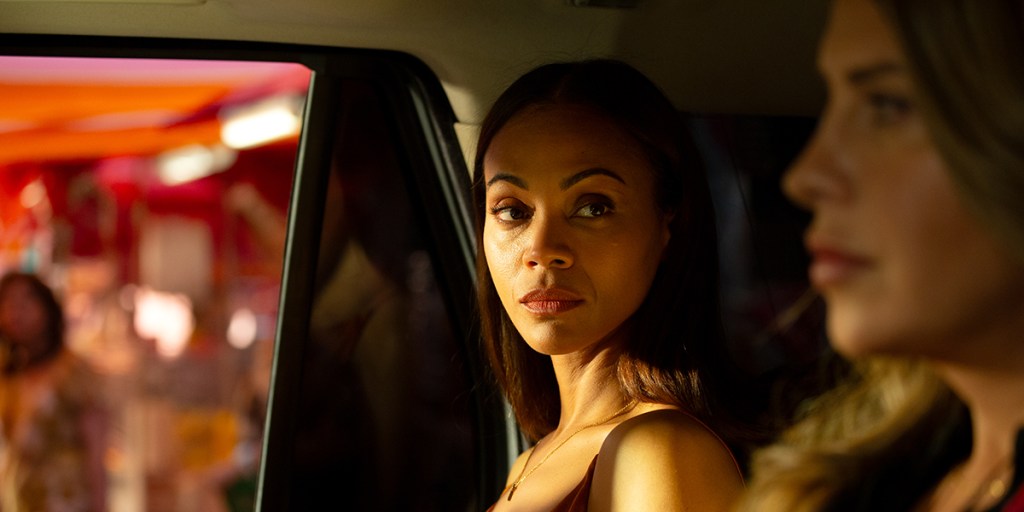
Not tourists. Films reviewed: Souleymane’s Story, The Legacy of Cloudy Falls

Posted in Canada, comedy, France, Mystery, Niagara Falls, Refugees by CulturalMining.com on August 9, 2025

Hi, this is Daniel Garber at the Movies for culturalmining.com and CIUT 89.5 FM.

August is when people scour the earth for vacation spots, where they can soak up the glamour and romance of famous locales without ever actually living there. This week I’m looking at two new movies about the people who live in popular tourist destinations. There are asylum-seekers in Paris, and psychic-debunkers in Niagara Falls.

Souleymane’s Story

Co-Wri/Dir: Boris Lojkine

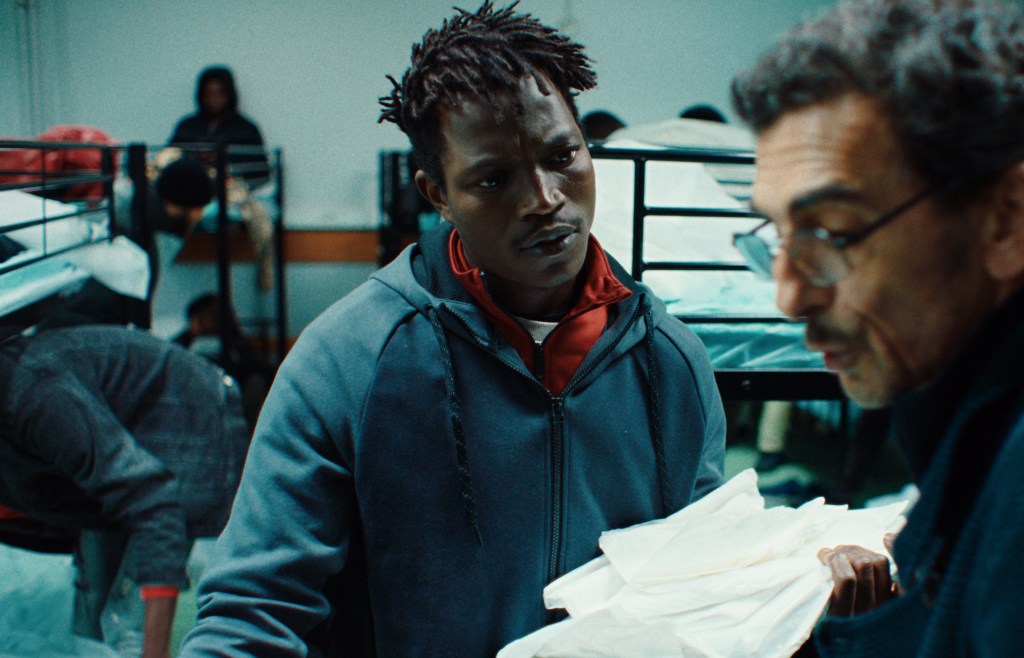
Souleymane Sangaré (Abou Sangaré) is a young man on a bike. His friends call him Souleye de Paris. He earns his keep delivering meals to paid customers across the city using his smartphone to record the deliveries and pass on his next assignment. Other young men from West Africa look up to him as a role model, and beg him to help them become couriers too. But Souleymane’s life is more complicated than it seems. 

Originally from Guinee, he arrived in France as a refugee seeking asylum. His beloved girlfriend back home (they speak by phone) is talking about marrying someone else, and his mother seems particularly out of touch when he speaks with her. He is homeless, and sleeps in a dormitory far from the Gare du Nord. But he never gets a full night’s sleep because he is forced to wake up in the middle of the night to electronically reserve his next night’s bed. He catches a bus ride to and from the shelter, and if he’s late he’s forced to sleep in the rough. Even his delivery job is done on the sly, using someone else’s name who takes a large cut of each transaction (he’s undocumented and can’t work legally.) And everything he does is done for one goal: his asylum interview scheduled in just a few days. He’s studying hard to pass that ordeal. And to do that correctly, he needs to hire a coach to fill in the forms and train him on exactly what to say. 

So when an accident messed up a single delivery, his carefully constructed life suddenly becomes precarious. Can Souleymane keep his job, pay his asylum coach, and pass the government interview? Or will he be sent back to the country he fled?

Souleymane’s Story is a powerful, fast-moving, slice-of-life drama about a refugee in Paris. Souleymane is in constant motion, on a bike, climbing staircases, on trying to catch the metro or a bus. Most of the movie is in the form of a flashback as he waits for his immigration interview. And as it slowly builds to that event, everything leading p to it is exposed, climaxing in a heart wrenching, tear jerking finish. The dialogue shifts between French and a number of other West African languages, showing the polyglot nature of life in the big city. 

I don’t recognize the director or any of the actors, but it has a realistic feel. 

Good movie.

The Legacy of Cloudy Falls

Wri/Dir: Nick Butler

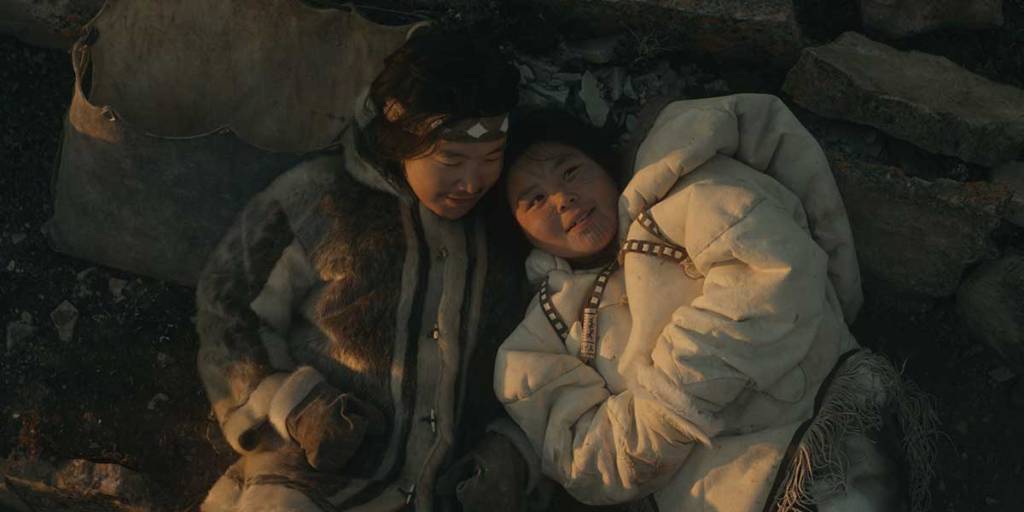
It’s summertime in the city of Niagara Falls. A group of long-term tenants at a seedy apartment building live in close proximity. Terry (Andrew Moodie) is a single, middle-aged gay, Black man who runs an unsuccessful souvenir shop. He spends his lonely days surrounded by fridge magnets and snow globes that nobody seems to want. But he has one goal: to locate the son of a man he once knew. Terry fantasizes about his next door neighbour, Edwin, a compulsive, body-conscious young man who lifts weights and decorates himself with home-made tattoos. Edwin (Josh Dohy) just appeared there one day, claiming he is the nephew of the hotel’s owner but Terry has never seen them together. 

Brigit  (Grace Glowicki) sees herself as a debunker of the lies and scams perpetrated by fortune tellers and mind-readers. (She’s also having an affair with a croupier at the casino, but that’s another story.)  She has a website devoted to her whistle-blowing, which no one seems to read. Still, she’s ready to catch her Moby Dick,  a man named Walter Pryce, due to arrive in town soon.  Pryce is a tele-psychic whose YouTube videos are watched by millions, and who Brigit vows to take down.

Finally there’s Riley (Amanda Martínez) a cynical, compulsive liar, who pretends she’s the director of a talent agency. She keeps her boss semi-conscious through the use of sleeping powders generously sprinkled into her drinks. But she feels strangely drawn to Calvin (Richard Zeppieri) a shy man who appears at the office one day, with dreams of becoming a professional  actor. These are just a few of the plot streams happening simultaneously in and around the apartments as recounted in a nasal voice by Rita (Susan Berger) a senior with bottle-red hair who sees everything going on at the Cloudy Falls.

The Legacy of Cloudy Falls is a comedy/drama about a group of quirky and tragically lonely characters as they interact with one another. (I kept hearing the lyrics to Eleanor Rigby in the back of my mind.) Vendettas, scams and conspiracy theories ebb and flow like the misty waterfall nearby. Amid walls painted with UFOs, no one seems to do what they’re supposed to be doing but somehow, still continue to get along. This film is retro kitsch mixed with Wes Anderson-style odd-balls. There’s something about Niagara Falls that brings all these strange people to one place — especially in movies. (I’m thinking Albert Shin’s Disappearance at Clifton Hill from 2019, for example).

This is director Nick Butler’s first feature after a series of shorts and many years oworking in casting for various TV series — which may explain the episodic nature of this film — stories that are linked and coexist but have their own separate narratives.

So if you’re in the mood for something whack but oddly compelling, check out this one.

The Legacy of Cloudy Falls opens on August 25 in Toronto, with Souleymane’s Story playing this weekend at the TIFF Lightbox; check your local listings.

This is Daniel Garber at the Movies each Saturday Morning on CIUT 89.5 FM and on my website www.culturalmining.com. 

Pleasant danger. Films reviewed: How to Train a Dragon, The Life of Chuck PLUS TJFF!

Posted in 1940s, 1960s, Dragons, Fairytales, Fantasy, Finland, France, Kids by CulturalMining.com on June 14, 2025

Hi, this is Daniel Garber at the Movies for culturalmining.com and CIUT 89.5 FM.

As the days get longer and the skies get warmer, people want to go out and have fun, looking for an enjoyable night out. So this week, I’m looking at two new entertaining, feel-good movies, that at first glance seem to be just the opposite. One’s about horrible monsters terrorizing a small island, the other’s about the end of the world. 

But before that, let me tell you about a few movies playing at the Toronto Jewish Film Festival showing movies from around the world through this weekend, and digitally until June 18th.

TJFF, 2025

The festival opened with Once Upon My Mother, (Ma Mere, Dieu et Sylvie Vartan), bilingual-Canadian director Ken Scott’s (review: Starbuck) humorous look at the memoir of Roland Perez, a renowned Parisian attorney and writer. He’s the 6th child in a crowded family of Moroccan immigrants born with a clubfoot in 1963, but whose driven mother, Esther (wonderfully played by Leïla Bekhti), refuses to accept it. She — and will power alone  — will make him walk, no, dance!, as if there were no physical problems standing in his way. These efforts are all done to the tunes of pop singer Sylvie Vartan on his sisters’ record player, as he struggles to learn to read.

This is a charming and quirky family comedy.

In The Other, documentarian Joy Sela attempts the impossible: to film people from two sides of an intractable conflict — that of Israel and Palestine — talking frankly with each other. Ordinary Israelis, and Palestinians from the West Bank, East Jerusalem, Gaza and those from Israel proper, voluntarily getting together. People on both sides of this polarizing conflict, whose families or friends have been killed, kidnapped, jailed or persecuted, attempt to share personal photos and stories, and actually get to know “The Other”. While most of the film was shot before the enormities of the current Gaza war took place, it’s still important in that it holds out the hope of peace and understanding, and the end of this brutal war and the events and conditions that led up to it.

Never Alone (by Finnish director Klaus Härö) is a true story set in Helsinki in 1942, where an outspoken, prominent businessman, Abraham Stiller (Ville Virtanen), comes to the rescue of a group of Jewish refugees who arrive by ship from Austria. And soon after, Stiller has a noisy run-in in his store with a random man who loudly opposes the presence of refugees. What he doesn’t realize is he has picked a fight with Arno Anthoni, a Nazi collaborator and the head of the Finnish State Police. The movie has a noir-ish feel, full of secret papers, clandestine backroom deals, and shadowy prison cells. Never Alone is a tense, historical drama that looks at Finland’s somewhat spotty record in the first half of WWII.

How to Train Your Dragon

Co-Wri/Dir: Dean DeBlois

It’s the middle ages on a remote, mountainous island populated by a multicultural Viking consortium. They speak with Scottish brogues and wear pointy horns on their helmets. Their biggest problem? Dragons — of every shape and form —  who steal their sheep and wreak havoc. Stoic, the island’s ridiculously bearded chieftain (Gerard Butler) leads them repeatedly into dangerous battles with these fire-breathing monsters, in the hope of someday discovering their lair, and killing them all. But young Hiccup (Mason Thames), an inventive, non-conformist, doesn’t want to kill dragons. He’s a lover, not a fighter, and has a major crush on the young swordswoman Astrid (Nico Parker).  When he discovers a disabled Night Fury dragon that he names Toothless, Hiccup fashions a prosthesis so he can fly again. He trains Toothless to fill a space somewhere between rival, best friend and pet. And by closely observing his strengths and foibles Hiccup learns all the dragons’s secrets. But his dad — the Chieftain — enrols him in a gladiator-like training camp, full of ambitious viking wannabes — like Snotlout, Fishlegs, Ruffnut and Tuffnut,—  to teach him to kill the beasts, including his secret best friend. Are dragons the dreaded enemies of the Vikings, or are they just big misunderstood puppy dogs?

If “How to Train Your Dragon” sounds familiar, it’s because it’s a live action remake of the hit 2010 3-D animated kids’ movie by the same name. (And in the same vein, this review is largely the same as the one I wrote 15 years ago. If they can do it, so can I) But I was a bit trepidacious about what they might do to the cartoon version which I really liked. Well no need to worry. It’s similar but not identical. The animated version is funnier and goofier. I like the new costumes, especially the furry mukluks they all wear. Part of the cast — like Gerard Butler —  are back again, and the newbies, especially Mason Thames, with his cartoon-like features, fit their parts fine. But as I watched this one on the big screen, I was blown away by the spectacular mid air flying scenes, where Hiccup rides through the skies on Toothless’s back. I don’t remember that from the first one. When I looked at my old review, there it was. The “…effects were great…with a lot of breathtaking scenes and battles, and a good amount of suspense. At times it felt like being part of a good video game – weaving between rock formations, through the clouds, under the northern lights – and I mean that as a compliment.”

This may be a kids’ movie, but I totally enjoyed watching How to Train Your Dragon all over again.

The Life of Chuck

Co-Wri/Dir: Mike Flanagan

Marty (Chiwetel Ejiofor) is a school teacher in a bucolic small town… who feels a bit strange. Things aren’t functioning like they used do. Everyday people and buildings disappear, even as the stars in the sky fizzle out, one by one. The one thing that is working are posters, billboards, skywriters and flashy ads everywhere celebrating an unknown man named Chuck. Who is this Chuck? What’s going on? Is this the end of the world? Yes, it is… well, sort of.

But then comes act two.

A well dressed man in a business suit hears a busker playing the drums in a city square in Boston. He begins to dance, first alone, and then with a ginger-haired woman, who, caught up in the excitement, joins him. Here is the ‘Chuck’ Krantz (Tom Hiddleston) we’ve been hearing so much about. Act three fills in the blanks: where Chuck came from (played here as a young man by Jacob Tremblay), why he is so central to this story, and what he represents for this world, and how magic plays a small part.

While The Life of Chuck is ostensibly a film about the end of the world as seen through horror-meister Stephen King’s eyes —  the man who brought us The Shining, and Carrie and Misery and Cujo and Pet Semetary —  it’s actually a sweet and gentle revelatory movie that owes more to the poems of Walt Whitman than to any ghosts or vampires.

I have to admit, I’m no fan of Tom Hiddleston I didn’t like him in the Hank Williams biopic, or as Loki in the Thor Movies.  But he is perfect in this movie about Chuck. So if you’re in the mood for a really nice, inspiring, easy-to-watch movie with lots of semi-profundities, you should see the uncategorizable and always surprising Life of Chuck.

I really liked this one.

How TO Train Your Dragon and The Life of Chuck open this weekend in Toronto; check your local listings. Never Alone, The Other and Ma Mere, Dieu et Sylvie Vartan. Are among many films playing at TJFF in person and digitally.

This is Daniel Garber at the Movies, each Saturday morning, on CIUT 89.5 FM and on my website culturalmining.com.

Two Couples and a Single Mom. Films reviewed: The Wedding Banquet, The Courageous PLUS Hotdocs!

Posted in Clash of Cultures, documentary, Drama, Family, France, LGBT, Poverty, Romantic Comedy by CulturalMining.com on April 19, 2025

Hi, this is Daniel Garber at the Movies for culturalmining.com and CIUT 89.5 FM.

Hot Docs Toronto’s  International Documentary Film Festival, is back with a vengeance, next week after last year’s misadventure in potential ruin. The world breathes a sigh of relief! And there are tons of great films to see, many having their world premieres at the festival. And as aways, rush tickets for daytime shows are available for free for students and seniors. So this week, I’m talking about some of the docs I’m looking forward tov watching.  And after that, two new movies, one from the US and another from France. There’s a romcom involving two couples and one fake marriage; and a drama about a struggling single mom and her three young kids. 

New films at Hotdocs! 

Here are some brief description of upcoming docs that look interesting:

Ai Weiwei’s Turandot is a record of the noted Chinese artist and activist’s production in Rome of Puccini’s opera set in a mythical China, and somehow combines ancient themes with modern politics.

Parade: Queer Acts of Love & Resistance by Winnipeg director Noam Gonick is a comprehensive look at the history of queer politics in Canada from the 1960s to the present, focusing on Pride parades as a catalyst for liberation movements. 

Virginial Tangvald directs Ghosts of the Sea about a life spent aboard her famous father’s sailing boat, and the dark secrets her family keeps.

Life After is director Reid Davenport’s examination of Medically Assisted Dying from the point of view of devalued, disabled persons, unwillingly pushed toward death to relieve their very real suffering caused by the absence of necessary care.

Spare My Bones, Coyote! (Jonah Malak) is about a volunteer couple who for years have scouted the desert borderlands to rescue migrants lost and dying in the extreme heat and cold.

Deaf President Now! (Nyle DiMarco, Davis Guggenheim) is about a 1988 student strike at a DC University for the deaf when they hired a hearing president. The protests inspired a generation of disability rights activists.

Sasha Wortzel’s River of Grass looks at the unique ecosystem of the Everglades.


The Dating Game (Violet Du Feng) looks at the crazy lengths unmarried men in China are going through these days to try to land a wife. 

Heightened Scrutiny (Sam Feder) looks at ACLU attorney Chase Strangio preparing his landmark case on trans rights before the Supreme Court.

Unwelcomed (Sebastián González and Amílcar Infante) a Chilean film about the violent reaction to migrants who fled Venezuela to seek refuge there.

Shifting Baselines (Julien Elie) is about a small Texan town dominated by gigantic, 50-storey tall rocket ships that are part of the new space race.

These are just a few of the films playing at Hotdocs.

The Wedding Banquet 

Co-Wri/Dir: Andrew Ahn

It’s present-day Seattle. Min (Han Gi-Chan) is a man in his twenties from South Korea. He was raised by very rich grandparents, who now expect him to take over the family business. But he doesn’t want to. Min’s an artist who cuts up colourful silk kimonos as his medium. And he’s in love with a guy named Chris (Bowen Yang) and wants to marry him. If his grand-parents ever find out, he’ll be written out of the will. And he’s in the US on a limited visa — he needs a green card. Meanwhile, Angela (Kelly Marie Tran), a science geek who does experiments with worms is in love with Lee, a social worker (Lily Gladstone). They want kids, and artificial insemination is proving to be very expensive. What’s the connection? Chris is good friends with Angela and Min thinks he can pull the wool over his grandparents’s eyes if he “marries” Angela and sends them the video. He gets a green card, she gets a baby, it’s as easy as pie. Not so fast. Granny (Youn Yuh-jung) is already on a flight from Seoul sending the four of them on a frantic clean up. Can they de-gayify Min and Chris’s home? Can Angela pass as straight?  And what will this new wrinkle do to both those couples’ relationships? 

The Wedding Banquet is a cute, screwball social comedy. Not uproarious, roll-on-the-floor comedy, but lots of quirky characters and unexpected  plot twists. It’s adapted from Ang Lee’s movie of the same name in 1993, but quickly veers on a different path from 30 years ago. The original focused on a clash pf cultures involving a White and Taiwanese couple and the prevailing anti-gay taboos of that generation. In this version, Homophobia is alluded to but kept off screen, and the multi-ethnic humour comes from clueless Asian Americans navigating their way through the vagaries of a traditional Korean Wedding.The main actors don’t just play gay, they are gay. The cast is very impressive. Lily Gladstone was nominated for an Oscar for Killers of the Flower Moon, Youn Yuh-jung who plays Min’s grandmother, won one for  Minari, and the legendary Joan Chen has a great cameo as Angela’s mom. Bowen Yang plays against type, while Kelly Marie Tran of Star Wars fame is endearingly awkward as Angela. 

So while not terribly challenging, The Wedding Banquet presents a modern take on gay-asian relationships that is both endearing and gently funny. 

The Courageous

Co-Wri/Dir: Jasmin Gordon

It’s a small town in northeastern France. Jule (Ophélia Kolb) is a single mom with three young kids in public school. Claire (Jasmine Kalisz Saurer) is the take-charge older sister. Loïc (Paul Besnier) is friendly, shy, and possibly on the spectrum; and Sami (Arthur Devaux) the youngest is prone to running around and getting in trouble. But one day the kids find themselves in a roadside diner with no mom. Their car is still in the parking lot, but she’s nowhere to be seen. So  they take a long walk beside a highway back to their apartment. She shows up the next morning, but with no explanation. Instead she drives them to see what she says is their new home. It’s out of the way, and a bit run down, but much more spacious than their cramped apartment. But mom forces the kids to take cover and climb out the back door when strangers appear at the front. 

You see, Mom isn’t completely honest with her kids. She has very little income, is way behind rent, and can barely find enough money to buy then basic food and clothes. And yet she struggles to provide them with normal kid lives: toys, sports and going to birthday parties. But her ventures with petty theft and shoplifting haven’t worked out well. She has an ankle bracelet to prove it. But their dream home is still up for sale. Can Jule come up with the down payment in time? Or will the law and the system catch up with her?

The Courageous is an amazing family drama about a mother who goes to great lengths to keep her family together. It’s told as a slice of life — starting in the middle and finishing before an obvious end. If you’re looking for an easy-to-watch, crowd-pleaser, you won’t find it here, but the bittersweet story-telling, endearing characters and shocking incidents make it much more satisfying. 

Beautiful movie!

The Courageous and The Wedding Banquet opens this weekend in Toronto; check your local listings. Hotdocs runs from Thursday Apr 24, 2025 – Sun, May 4.

This is Daniel Garber at the Movies, each Saturday morning, on CIUT 89.5 FM and on my website culturalmining.com.

All Canadian. Films reviewed: Seven Veils, Night of the Zoopocalypse, Shepherds

Posted in Aliens, Animals, Animation, Canada, Farming, France, Opera, Quebec, Zombie by CulturalMining.com on March 8, 2025

Hi, this is Daniel Garber at the Movies for culturalmining.com and CIUT 89.5 FM.

Most of the movies we see come out of Hollywood, but now that the US government has declared (economic) war, I figure why not look at more Canadian movies, instead.

So for this week, I’m talking about three new Canadian movies all opening this weekend. There’s a Montreal PR exec who wants to become a shepherd, a wolf in a theme park who doesn’t want to become a zombie, and an opera director in Toronto who says the show must go on. 

Seven Veils

Wri/Dir: Atom Egoyan

It’s winter in Toronto. Jeanine (Amanda Seyfried) has flown in for a new project: she has been selected (by the late director) to remount his production of the opera Salome. She knows this version inside and out, as she was his assistant on it while still a student. But by taking on this role, she has opened a pandora’s box of hidden secrets: The male lead, Johann (Michael Kupfer-Radecky), is notorious for his roving hands. Ambur (Ambur Braid) sings the part of Salome but her past misgivings with Johann threaten to erupt. Then there are the understudies. Johann’s second knew Jeanine from their student days, and follows her with puppy dog eyes and long-held hurt. Rachel, Ambur’s understudy, is dating the same woman Ambur used to be with, before she was a superstar.  

Jeanine is requested to add personal changes to the remount, but whenever she tries something outrageous, the management swoops in to stop her. And then there’s her home life: She left their young daughter with her husband,  but her mother whispers her pretty and young caregiver is sleeping with Jeanine’s husband.All of these pressure-points seem ready to burst at any time. Can Jeanine survive this trouble-filled production? Or is it headed for disaster?

Seven Veils is a dramatic, behind-the scenes look of the remounting of an opera. It has some good acting and lovely cinematography, but it’s laden down by a messy, overly-complicated plot. It feels like a full season of a reality show condensed into 1 hour and 50 minutes. Atom Egoyan filmed this movie even as he was directing a live performance off the same opera with the same singers on the same set. Is this creative brilliance, or just double-dipping? Egoyan has long been known as a pioneer in incorporating video footage within his films and stage productions. But he went whole hog with this one, including more mixed media than you can shake a stick at: Zoom calls, a snarky podcast recording, a making-of doc filmed on the prop director’s cel phone, and even creepy childhood home videos by Jeanine’s dad. Some of these fall flat — Jeanine’s voiceover narration is embarrassingly clunky.  Others examples are brilliant: like a giant projection of Johann’s mouth on a scrim on stage objecting haughtily with any directions Jeanine tries to give him. The film also covers myriad diverse topics, including intersectionality,  sexual harassment, women fighting the patriarchy, a severed head, backstabbing, entrapment and revenge.

Way too much stuff to fit in one film, but with enough good parts to keep it going. 

Night of the Zoopocalypse

Co-Dir: Ricardo Curtis, Rodrigo Perez-Castro

Gracie is a young wolf who likes hunting on his own. He ignores his Alpha grandma’s warnings to always stay with the pack. After all, what does it matter; they live in a theme park (the Colepepper Zoo) with no predators! But Gracie has spoken too soon. That night, a radioactive meteor crashes through the sky and lands smack-dab into their collective home. Anyone who touches the glowing rock is instantly transformed into a hideous version of their former self with glowing eyes and zombie-like behaviour. The infection spreads across the zoo, with ever more animals being zombified. Luckily Gracie finds safety in the zoo hospital, along with Ash the ostrich, Xavier the lemur, Felix, a self-centred proboscis monkey, Frida a capybara, and a dangerous-looking mountain lion called Dan. If they work together maybe they can fend off this otherworldly ailment; or they could split up and see who can make it out of the park. Can these creatures find a common aim? Or will they all be zombified before dawn? And what will happen to the outside world once the park’s gates reopen?

Night of the Zoopocalypse is a cute, animated kids movie about animals infected by an alien disease, featuring  the voices of David Harbour, Scott Thompson, and Paul Sun-Hyung Lee. The unoriginal dialogue seems aimed at very young children, not adults, but perhaps zombies are too scary for the youngest ones. But I do like a lot of things in Zoopocalypse, from the obnoxious theme songs, to the eerie Kenny Scharf-like cut-out designs of grotesquely smiling figures. And who couldn’t like Poot, the baby pygmy hippo!  If your kids don’t scare easily, I think they’ll like Night of the Zoopocalypse. 

Shepherds (Bergers)

Co-Wri/Dir: Sophie Deraspe (Interview: Antigone)

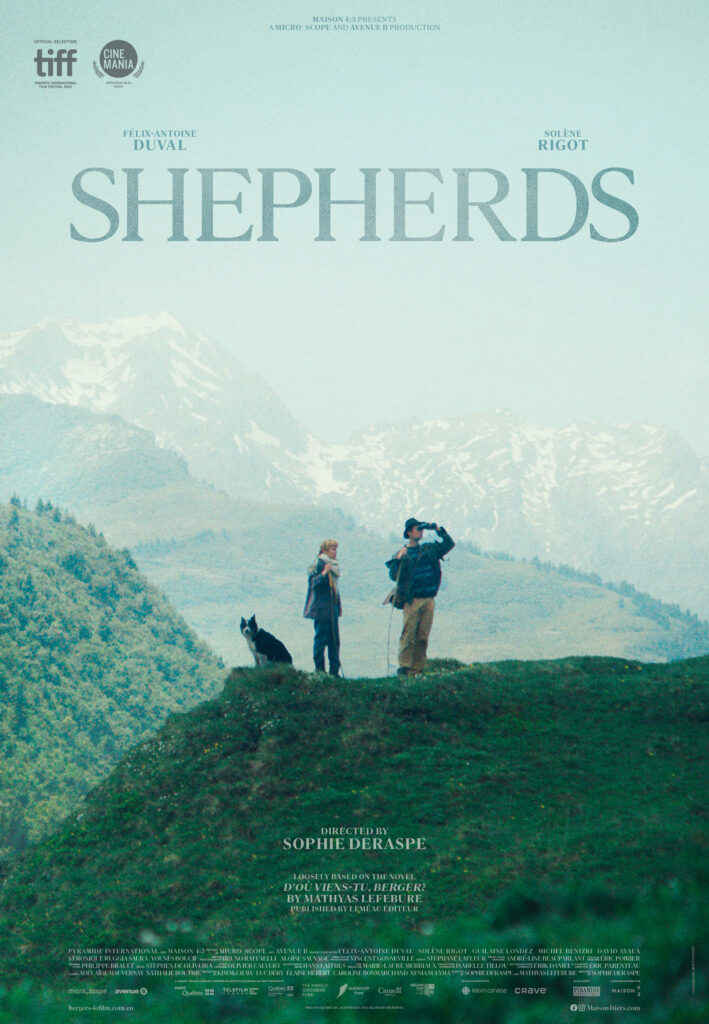
Mathyas (Félix-Antoine Duval) is a young man who works as a copywriter at a Montreal PR firm. He’s creative, sensitive and ambitious. So what is he doing sipping yellow Pastis in a small town cafe in Provence? To change his life from pointless and unfulfilling to a simpler one, entirely off the grid. He’s in Provence because he wants to become a shepherd. You heard me: someone who herds sheep. And he wants to write a book about his experiences afterwards. He has already bought a requisite black hat and leather satchel, and he’s been boning up on all the books on how to herd sheep. But he’s having trouble finding a sheep breeder willing to take him on. His try is a total wash-out: he’s never stood in a flock of sheep in his life.  

So he pays a visit to the local government office, in hopes of getting a work visa. No such luck, but he does meet the cute bureaucrat behind the counter. Elise (Solène Rigot) is smart, pretty and bored with her job, too. She’s impressed by Mathyas’ convictions, but is sorry to tell him you can’t apply from within the country. But he keeps up his correspondence with her via handwritten snail mail, and her simple responses keep him sane.

He eventually finds under-the-counter work as an apprentice shepherd for a retired, childless couple looking for someone to take over. But he finds the environment hostile and violent, full of cruelty and insanity… nothing like what he was looking for. So when Elise shows up suddenly, he decides to quit. Surprisingly, the two of them are hired almost immediately as a team, to work through the summer tending sheep in a stone cottage way up in the Alps. Can two non-shepherds learn the lay of the land and how to take care of hundreds of pregnant sheep? And will their friendship develop into something more?

Shepherds is a wonderful movie about going back to the land. The story is based on the novel D’où viens tu, berger? by the real Mathyas Lefebure who actually did leave Quebec to seek his fortune as a shepherd in Provence. I’ve always liked Sophie Deraspe’s brilliant films. And while Shepherds is very different from her past work, it’s just as good.  Félix-Antoine Duval is amazing as Mathyas with just the right blend of vulnerability and sincerity, like a gawky teenager trapped in an adult’s body. French actress Solène Rigot conveys such warmth she’s totally loveable.

Shepherds is a gorgeous movie with unforgettable images, like rivers of sheep pouring across a valley and through alpine city streets. Absolutely breathtaking.  One warning: After watching Bergers, you might consider becoming a shepherd, too.

Night of the Zoopocalypse,  Shepherds, and Seven Veils all open this weekend in Toronto; check your local listings. This is Daniel Garber at the Movies, each Saturday morning, on CIUT 89.5 FM and on my website culturalmining.com.

Remote houses. Films reviewed: Anacoreta, Eat the Night + TBFF!

Posted in Acting, Cabin in the Woods, Canada, Crime, Family, Fantasy, France, Games, LARPing, LGBT, Mystery by CulturalMining.com on February 14, 2025

Hi, this is Daniel Garber at the Movies for culturalmining.com and CIUT 89.5 FM.

February is Black History Month, the perfect time to check out Toronto’s Black Film Festival. It features movies, docs and shorts from Canada and around the world. Like Karen Chapman’s Village Keeper a drama set in Toronto’s Laurence Heights neighbourhood, about an overprotective mom with her two teenage kids who are forced to move into their grandmother’s crowded apartment. And in the documentary feature category, Tara Moore tells the history of apartheid South Africa and how it affects that country now, in Legacy: The De-colonized History of South Africa. Toronto Black Film Festival is running now through February 17th at the Carlton Cinema.

But this week, I’m looking at two new movies, from Canada and France, about remote houses.  There’s a group of friends at a haunted cabin in the woods, and a teenage girl and her brother living in a world that only exists online.

Anacoreta

Co-Wri/Dir: Jeremy Schuetze

It’s a beautiful cabin in a remote part of  Vancouver Island. Jeremy (Jeremy Schuetze) is there with three friends Antonia (Antonia Thomas), Matt (Matt Visser) and Jess (Jess Stanley) for one last look at his late grandfather’s cabin before it’s sold. It’s a beautiful old building overlooking pristine blue waters and mountains rising dramatically right behind them. It’s like paradise: they grill sausages and play beer pong, pick low-hanging fruit while watching a black bear cub sun itself on the grass. But despite all the natural beauty, something is creepy here. Antonia sees  a truck following them whenever they’re driving. They find a dead black cat in their freezer. And things get really spooky when Jess starts sleepwalking. Is this place haunted? The thing is, they’re also there to shoot a film. And some of those scary parts might have been planned and executed by Jeremy, their director, to get some good reactions out of the cast. He’s a bit of dick, and the rest of them are not happy about it. 

But that’s not all. Jeremy’s grandfather made his fortune writing Hardy Boys -type mysteries in this very cabin. And when they find an unpublished script things get even weirder. It mentions a place called Afterglow, a mausoleum about seven hours away. That’s where ghosts are said to live just underground. So of course they have to go there and see for themselves. Is it all a hoax?  Or is it real? And who will survive this perilous journey?

Anacoreta is a horror movie about four friends in a cabin in the woods and a documentary (or mockumentary) about making a movie. All the actors and crew use their real names, Jeremy and Matt wrote the script, and Anotonia and Jess produced it. Same with the cameraman and the boom, who also appear as characters in the film. But it also takes pains to remind us they’re shooting a movie, often repeating scenes two or three times, till Jeremy is satisfied. Which partly interrupts the scariness, but also makes the scary parts seem more real, in a found-footage / Blair Witch Project kind of way. Does it work? It kinda does. It makes you believe the movie you’re watching is a disaster project, while at the same time, reminding you it’s all just a scripted story. 

Budget? Low. 

Indie? Yes. 

Acting? Good. 

Canadian? Very.

Meta? You bet! 

Scary? Not too shabby, especially near the end.

Eat the Night

Wri/Dir: Caroline Poggi, Jonathan Vinel

Apolline (Lila Gueneau) is a high school student with curly reddish hair. She lives with her big brother  Pablo (Théo Cholbi). They spend most of their time online, on a role-playing game called Darknoon. It’s an apocalyptic fantasy land, where their avatars live exciting lives, killing thousands of competitors in exotic sword fights. Apo much prefers Darknoon to real life. At school she’s an ordinary girl somewhere in France. Online she’s an anime figure with enormous breasts and sharp, pink leather spikes coming out of her shoulder. Pablo’s avatar has pierced nipples and carries a sabre. Apo rides on the back of a giant blue cat she tamed. In real life, Pablo drops her off at school each day on his acid-green Kawasaki. Their mom’s gone and their dad is never around, so they take turns cooking for each other. But the tide turns when Darknoon announces it’s shutting down, permanently, on the Winter Solstice, just a few weeks away. Apo is devastated. 

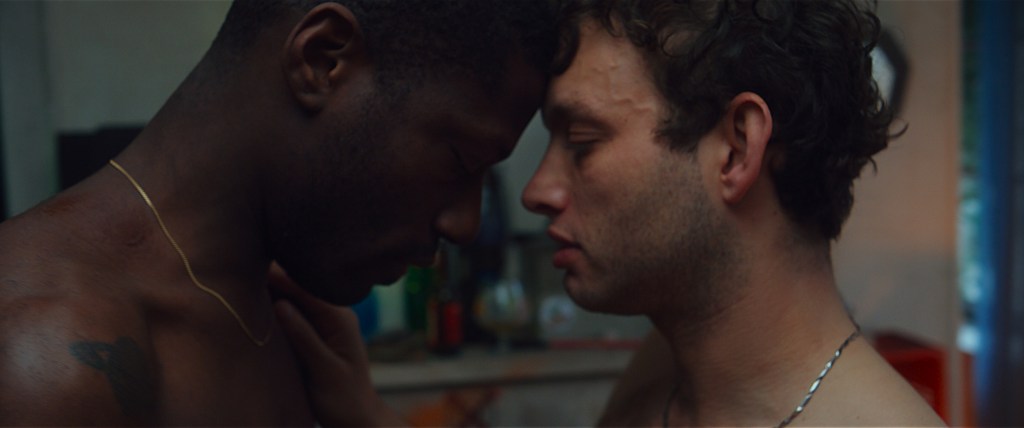
Pablo also has a side hustle selling colourful little pills at clubs and parties. It’s a one-man operation using a metal crank-press to turn out tiny batches of uppers, molly and acid, one by one. But when a big-time dealer sees him encroaching on his turf, his henchmen beat Pablo up. That’s when a stranger appeared to tend his wounds and wipe up the blood. His name is Night (Erwan Kepoa Falé). Pablo needs a bodyguard and a business partner. Night quits his job, and moves in, and soon they’re having passionate, violent sex in Pablo’s hideaway. But Darknoon’s last day is coming soon and the gangster are gathering forces to find and kill Pablo. Can Apo and Pablo leave Darknoon in a blaze of glory? And in the real world, can Pablo and Night permanently leave this crappy town and go somewhere safe and new?

Eat the Night is a glorious French thriller about online role-playing games and real-life crime. It’s passionate and tragic. About 25% takes place inside the otherworldly  game, the rest in a cinematically cool, louche real world. Two very different places but visually harmonious.  And as the movie progresses characters increasingly appear in the game as like their actual selves. Lila Gueneau plays Apo as a young artist who lives in an animated, comic book world complete with an elaborate pink cos-play outfit. As Pablo, Théo Cholbi is a nihilistic fighter/criminal with a pet green snake. As his lover and defender Night, Erwan Kepoa Falé is kinder and gentler but just as dangerous. Eat the Night (under the even more carnal title Devore la nuit) played in the Directors Fortnight at Cannes. a very violent and highly sexual film. 

I think it’s great.

Eat the Night is playing at the Revue Cinema in Toronto on Feb 19, and opens at the Carlton and Yonge/Dundas on the 21st; check your local listings. Anacoreta will be available on demand starting the 21st. 

This is Daniel Garber at the Movies, each Saturday morning, on CIUT 89.5 FM and on my website culturalmining.com.

Tough Cookies. Films reviewed: Maria, Flow, The G

Posted in 1950s, 1960s, 1970s, Animals, Animation, Corruption, Crime, France, Latvia, Opera, Vengeance, Women by CulturalMining.com on November 30, 2024

Hi, this is Daniel Garber at the Movies for culturalmining.com and CIUT 89.5 FM.

With a rapidly aging population, the traditional image of frightened, little-old cat ladies is gradually shifting to one of strength and cunning. Witness new TV shows like Matlock. So this week I’m looking at two new movies about tough older women and one about a cat. There’s an opera diva in Paris preparing her swan song; a rustbelt widow who wants to go out with a bang; and a cat on a sailboat in a world covered in water.

Maria

Dir: Pablo Larraín (Reviews: Spencer, The Club)

It’s 1977 in Paris, and Maria Callas (Angelina Jolie: Salt, The Tourist, Unbroken) — one of the greatest divas in opera history, is not doing well. She rarely eats, often never leaving the bedroom of her palatial apartments for days at a time. She rarely speaks with anyone anymore, aside from her servants. She runs her butler ragged (Pierfrancesco Favino: The Hummingbird, in a red monkey suit) and she relies on her cook (Alba Rohrwacher: Sworn Virgin, Hungry Hearts, The Ties/Lucci ) for judgement on the quality of her vocal chords. 

But she’s not completely alone. She is seeing a pianist for his unvarnished opinion on whether her legendary “voice” has returned. And has agreed to an unheard-of interview with a young journalist named Mandrax (Kodi Smit-McPhee: The Road, The Congress, The Power of the Dog, Memoir of a Snail). But Maria faces a number of problems. She refuses to see a doctor, despite her rapidly declining health, and she won’t stop popping Quaaludes, leading to frequent hallucinations and delusions. Can her devoted servants save her life? Or is this the end?

Maria is a biopic about the death of a legendary Greek-American diva. The movie begins with her demise at age 53, then goes back in time to show what led up to it. This includes flashbacks to her chubby adolescence in German-occupied Athens in WWII, her failed marriage, and at the peak of career, including trysts with Aristotle  Onassis and JFK. 

But is this biopic any good? I have very mixed feelings about that. I love the beautifully shot interiors, the ostentatious costumes and the amazing arias provided by recordings of Callas herself. Italian actors Rohrwacher and Favino provide wonderfully painful performances. And, as the latest in a series of films about famous woman by Chilean director Pablo Larraín it has good pedigree, especially Spencer (with Kristen Stewart as Princess Diana). But this movie depends on Angeline Jolie, and she doesn’t carry it off. She always seems to be acting. I don’t see Maria Callas here, I see Jolie posing for the camera, with  a haughty face here and a dramatic gestures there; so you rapidly lose sympathy with the main character. Perhaps Maria Callas really did act like that, even behind closed doors, but Jolie plays her somewhere between high camp and kitsch. 

Maria is never boring… just a bit embarrassing. 

Flow

Co-Wri/Dir: Gints Zilbalodis

It’s some time in the future, somewhere in the world. A small grey cat with golden eyes and pointy ears is enjoying a walk in the woods. The cat lives by an abandoned old house surrounded by enormous cat statues. The cat is very shy, and fears, most of all, a pack of feral dogs. Suddenly, there’s a stampede of animals running in one direction, full speed. They‘re trying to avoid a massive flood, sweeping away everything in its path. But cat and a friendly, white dog are among its victims. Survival instinct kicks in and eventually cat manages to climb on board a tattered sailboat. There Cat discovers a gentle, sloth-like capybara already on board. Other animals make their way onto the sailboat, including an ingenious lemur, that big, white dog and a majestic-looking phoenix. Together they form an uneasy friendship as they brave a dangerous water-covered world. But can they learn to get along? And is this world worth living in?

Flow is a brilliantly animated film about a picaresque journey by a mismatched troupe of animals. It’s tender, heart moving and lovely to watch. It’s all about friendship and cooperation learned by animals living in a gently hostile world. And though they behave a tiny bit like humans, there are no people in the story, and no dialogue either; just grunts meows and barks. Dogs still want to fetch. Cats want to catch fish.  

And though it’s post-apocalyptic, there is nothing futuristic in this film; human technology is limited to abandoned ancient cities, glass bottles and sailboats; no cars or smartphones to be seen. The science fiction comes in with its universality, where animals from different continents, along with mythical beasts like sea monsters, can randomly encounter and learn from one another. I just watched Flow, and I already want to see it again.

Flow is Latvia’s Oscar submission for Best International Feature.

The G

Wri/Dir: Karl R. Hearne

It’s a rust-belt city somewhere in North America. Ann Hunter (Dale Dickey) is a tough cookie in her 70s, who is feeling depressed. You can see it  in every wrinkle on her face. She lives with her ailing husband in their fully-owned condo. He was once a tough guy, but is rapidly sliding into immobility and dementia. She grudgingly takes care of him, and drowns her sorrows in rot-gut alcohol straight from the bottle. Aside from him, she only spends time with Emma, step-granddaughter (Romane Denis). Emma models her life on The G (as she calls her grandmother) someone who doesn’t take crap from anyone. The G also helps her out financially, and doles out hardboiled words of wisdom.

But everything changes when a man in a suit  named Rivera (Bruce Ramsay), out of the blue, breaks down The G’s front door, accompanied by two toughs:  Matt (Joey Scarpellino), a handsome but simple-minded gardener; and Ralph, a psychopath with bleach blond hair (Jonathan Koensgen). Together they violently shove Ann and her husband into a van, who wind up locked in a threadbare room without a phone, in a nursing home that feels more like a prison. This is your new home, Rivera says, and there’s nothing you can do to stop me. He’s now their legal guardian and has the documents to prove it; their doctor (a silent partner in the scam) has declared them both incompetent. No one’s allowed to go in or out for the first month. He roughs up her husband to try to find the proverbial pot of gold he thinks they’re hiding. But they underestimate the G, her stubbornness, and her shady connections back in Texas.

Meanwhile, Emma is shocked when she discovers her grandparents have suddenly disappeared, leaving behind just a torn-up home. She scours the city to find them, and makes friends with a caretaker who works at the home (who also happens to be Matt, the friendly thug). It’s too late to save her grandpa but she vows to get the G out of there. And even while Emma is trying to free her, the G has vowed vengeance on all her enemies — and she’s not messing around. Who can they trust? Can two women best a criminal organization? Or will they end up buried alive? 

The G is a great revenge thriller about the very real phenomenon of organized criminals attacking and abusing the elderly. It’s dark and disturbing. Dale Dickey blows this movie out of the water, supported by a good Quebecois cast. (It’s shot in Montreal). If you’re looking for a gratifyingly violent revenge flic, this is the one to see.

Maria and Flow are now playing at the TIFF Lightbox, with Maria streaming on MUBI on December 11th; and The G is opening across Canada; check your local listings.

This is Daniel Garber at the Movies, each Saturday morning, on CIUT 89.5 FM and on my website culturalmining.com.

Trapped. Films reviewed: Captives, Here, Emilia Pèrez

Posted in 1800s, 1950s, 1960s, 1970s, AI, Crime, Family, France, Mental Illness, Mexico, Musical, Tom Hanks, Trans, Women by CulturalMining.com on November 1, 2024

Hi, this is Daniel Garber at the Movies for culturalmining.com and CIUT 89.5 FM.

Toronto Fall Film Festival Season continues with Cinefranco showing  contemporary French language movies from around the world at the Carlton Cinema. But this week, I’m looking at three new movies about traps. There’s a big-hearted woman trapped in a male drug-lord’s body, a French woman trapped in a mental hospital, and a movie camera trapped… in somebody’s living room!

Captives

Co-Wri/Dir: Arnaud des Pallières

It’s Paris in the late 19th century. Fanni Devander (Mélanie Thierry) is an elegant and educated woman searching for her mother. She disappeared when Fanni was just a child, but she has reasons to believe she is locked away somewhere in the city’s mental hospital. So Fanni voluntarily checks herself in to try to find her. Pitié-Salpêtrière is a home for the destitute, people with mental illness, learning disabilities or epilepsy, convicted criminals and even some foundling children. The one common factor is they’re all “undesirables” and all women. But once inside she realizes you can check in, but you can’t check out. It’s a de facto prison, presided over by the Matronly Bobette (Josiane Balasko),  and a hench-woman who would make Nurse Ratchet look like Florence Nightingale. Bobette’s one obsession is to perfectly execute their upcoming ball featuring her patients singing and dancing before a crowd of wealthy patrons. 

Fanni quickly learns the ropes and makes allies with Hersilie, a music teacher (Carole Bouquet)  and a lesbian school teacher with an eating disorder. And she finally meets a nearsighted older woman named Camomile (Yolande Moreau) who just might be her real mother. Can Fanni perform at the ball and safely escape with her supposed mother? Or will they all be stuck there forever? 

Captives is a fascinating historical thriller about the treatment of women in state institutions. It’s harrowing in parts — including scenes of torture — as Fanni navigates class and hierarchy within this enclosed universe. I purposely only mentioned some of the characters and plot turns, because the surprise is what makes it worth watching. But rest assured, it’s full of great acting, pathos, and beautiful period costumes — even within that terrible place.

I like this one.

Here

Dir: Robert Zemeckis (Reviews: Flight, Allied)

Ricky (Tom Hanks) is a teenaged baby boomer living the American dream. His Dad and Mom (Paul Bettany and Kelly Reilly) have lived in a house across the street from Ben Franklin’s historical home since they bought it on the GI Bill after WWII. Now Ricky and his kid brother and sister happily share the place, congregating in the living room for holidays, dinners, or just to watch TV. Ricky wants to be an artist, while his girlfriend Margaret (Robin Wright) dreams of going to law school. Unfortunately, when she gets pregnant while they’re both still in high school, they marry and settle down, still within Ricky (now called Richard’s) parents’ home. Life goes on, and the decades pass, and people are born, live and die. But will they always stay “here” in the same house?

Here is a movie about a place, specifically a living room facing the picture window and the street beyond. The camera never movies. It follows this location not just for Ricky’s family, but also the dinosaurs, the ice age, indigenous people, Ben Franklin, and various couples across the 20th century, constantly jumping back and forth in time. The one constant is the frame, the fourth wall, which never shifts. Picture this: a pop-up square will appear with different furniture and wallpaper in it, taking you to another era, in the style of a virtual staging of a house for sale on a real estate website. Indeed we get to meet real estate agents throughout the twentieth century. Which makes sense because its really about the place, not the meat puppets who wander around in it.

Does this new, experimental concept work?  No!  It’s indescribably awful.

I cannot convey the aesthetic revulsion I felt viewing this horrible non-movie movie. It features a de-aged, 68-year-old Tom Hanks playing himself as a teenager with a fake young teenage face plastered on, but who still talks and walks like the old man he is. What were they thinking?! Here is a tired, platitudinous high-concept exercise in futility disguised as an innovative film. All the characters are painful cliches, including a token black family whose sole purpose seems to be to recite a version of Ta-Nehisi Coates Letter to My Son… to their son.

Keep in mind, Zemeckis is known both for classics like Back to the Future but also unforgivable, semi-animated dreck like Polar Express and Forrest Gump. Here falls neatly into the dreck pile.

Emilia Pérez

Co-Wri/Dir: Jacques Audiard 

Rita (Zoe Saldaña) is an ambitious young defence lawyer in Mexico City. She spends hours crafting powerful opening statements for trials, but, as a black woman —  originally from the Dominican Republic — she gets none of the credit. But somebody is watching her and appreciates her skill. She finds out who, when she’s kidnapped with a black hood over her head and driven into the middle of the desert. There she meets the notorious head of a huge drug cartel, personally responsible for countless killings. Juan “Manitas” Del Monte, the cartel chief, needs her to help him disappear, in a way no one — including his wife Jessi (Selena Gomez) — will ever find him again.

The twist? This murderous, pock-marked, bearded monster… is trans, and wants to shed the awful male body and face, to live the rest of her life as an attractive woman. She needs someone she can trust to handle all this, both the finances and the surgery, leaving no paper trail. In exchange, Rita will have all the money she needs for the rest of her life, and her own private firm.

Years later, she meets with a potential client, a fabulously rich European woman named Emilia Pèrez (Karla Sofía Gascón). It’s her client from years back, who wants to re-enter the world and be reunited with her beloved family, all of whom think she is dead. And to atone for some of her past sins without revealing who she was. What will happen to these three remarkable women in the next chapter of their lives?

Emilia Pérez is an incredibly passionate and shocking movie. It’s simultaneously an action-thriller, an epic drama, and a musical. Yes, that’s right, a musical, where  characters do break into songs and dances throughout the film. But with its latin beats and shouting crowds, it’s the sort of songs you rarely encounter in a musical.  Zoe Saldaña is amazing as this tough-as-nails lawyer, and Karla Sofía Gascón, a Spanish actress I’ve never seen before, is unmatchable, both as Perez, and as the drug lord Manitas. (She’s a  transwoman herself.) French director Audiard (who previously brought us masterpieces like A Prophet, and Rust and Bone) seems to have no trouble creating a Mexican musical. I gotta say, Netflix churns out a load of content, most of which is forgettable crap, but, every year, they also produce a few really remarkable films. Emilia Pèrez is one of those.

I strongly recommend this movie.

Here and Amelia Perez both open this weekend in Toronto; check your local listings. And Captives is having its English Canada premiere at 8:45 tonight (Saturday, Nov 2, 2024) at Cinefranco at the Carlton.

This is Daniel Garber at the Movies, each Saturday morning, on CIUT 89.5 FM and on my website culturalmining.com.

Twentieth century troubles. Films reviewed: White Bird, Hold Your Breath, Saturday Night

Posted in 1930s, 1940s, 1970s, comedy, Depression, France, Nazi, Psychological Thriller, Romance, TV, WWII, Y.A. by CulturalMining.com on October 5, 2024

Hi, this is Daniel Garber at the Movies for culturalmining.com and CIUT 89.5 FM.

Lots and lots of movies coming to Toronto. Opening this weekend is the monster comedy Frankie Freako by Toronto’s own Steven Kostanski; and next week, look out for the Goethe Films, Aftermath: Echoes of War series featuring classics by Fassbinder and Wim Wenders at the TIFF Lightbox.

But today, I’m looking at three new movies, all set in the 20th Century. There’s dustbowl horror in 1930s Oklahoma, Nazi occupation in 1940s France, and the opening night of a live TV show in 1970s New York City.

White Bird

Dir: Marc Forster

It’s 1943, during WWII, in a picturesque French village near the Swiss border. Sarah Blum (Ariella Glaser) is a happy middle class kid in her school with high marks and many friends. And she loves drawing pictures in the margins of her notebook. One young boy clearly has a crush on her.  Julien (Orlando Schwerdt) is smart and kind, but also a victim of bullying. Not only does his father work in the sewers but Julien has a brace on one leg and uses a crutch to get around, making him a ready target for cruel bullies. But things change rapidly under the Nazi Occupation. Sarah and the other Jewish kids are pulled out of class one day to be deported to the camps. She alone manages to escape and hide in the woods. But the former class bullies are now classroom Nazis and they’re always on the look out for Sarah. Luckily she has a saviour — it’s Julien, of course, who lets her hide in the hayloft of his barn. As the months go by, he serves as her one-man classroom, relating the lessons she misses each day. And as they get to know each other better, they grow closer — is love at hand? And can they keep her hidden during the Nazi Occupation?

White Bird is an historical romantic drama. Adapted from a YA graphic novel by R. J. Palacio, it’s a sequel to an earlier book (also adapted into a film) called Wonder. The historical plot is framed by a kid named Julien in present-day New York, whose French Grand-mère (Helen Mirren) is telling him a story from her youth. I found the movie OK, with some real weepy moments. It does have odd details: why is the French resistance’s oath Vive l’Humanité!? But I like the graphic novel feel of the whole thing, with rapid story development and unexpected twists and turns. If you’re looking for a good, historical, teenaged tearjerker, check out White Bird.

Hold Your Breath

Co-Dir: Karrie Crouse, William Joines

It’s 1933 on the Oklahoma panhandle. Margaret Bellum (Sarah Paulson) lives with her two daughters on a farm. Life is miserable. Once their land was covered with acres of wheat, the cows and horses thriving in the barn. But years of drought has turned their land into a giant dustbowl. It’s so bad that you can choke to death in a dust storm. Her husband Henry is in Philadelphia looking for paid work, leaving the three women alone, waiting for his first paycheque to arrive so they can join him. Rose (Amiah Miller) the older daughter is yearning to see a big city, while little sister Ollie, who is deaf (Alona Jane Robbins) is shy and easily frightened. Especially so since Rose read her a scary book about The Gray Man, a mythical bogeyman who embodies the terror of a dust storm. The neighbours are nervous, too — rumours abound that a drifter made his way into someone’s home and killed all the women. 

So Margaret is on high alert, her rifle cocked and ready to fire, when a drifter appears in their barn. Wallace Grady (Ebon Moss-Bachrach) calms her down, saying he knows her husband who told him to check up on his family. I’m a man of the cloth, he says, and a faith healer. But strange unexplained things start happening. Is he a killer or a pastor? Does he have supernatural powers? Or is he the mythical Gray Man?

Hold Your Breath is a psychological thriller in a gothic setting. It’s spooky and creepy, and a little bit scary, full of feelings of suspicion and psychosis. the acting, especially Sarah Paulson, is quite good. One thing I found interesting is, though it’s ostensibly set during the Great Depression, it feels like an allegory of the recent pandemic. The family puts on elaborate white face masks to protect from the lethal dust whenever they go outside, are afraid to leave their home, and they are terrified of an unknown invisible enemy who can “get inside their home and their bodies unnoticed, just by breathing”. 

Nothing is very surprising here, and the story seemed less scary than tragic, but if you’re heavily into southern gothic horror, I think you’ll appreciate Hold your Breath.

Saturday Night 

Co-Wri/Dir: Jason Reitman

It’s October 11, 1975 in New York City, and in a few hours a new show will be broadcast live across the United States. It’s a new concept; not the “live” part; that was a staple of TV programming from its earliest days. What’s new are the guests — Jim Henson and his muppets — the comedians — Andy Kaufman and George Carlin —  the controversial topics, the live musicians, and the “not ready for prime time” players.  The show is meant otherwise be produced on the fly with minimal rehearsals — they plan to read their lines from cue cards or just wing it. The show is Saturday Night Live, and up until the moment it airs, no one’s sure whether the show will be canceled even before it starts. 

It’s up to the creators Lorne Michaels (Gabriel LaBelle) and Dick Ebersol to get the show ready in time. Lorne is working closely with his writer (and partner) Rosie Shuster (Rachel Sennot). But he’s badgered by network VPs who seem to be determined to make it fail. On top of this, John Belushi has passed out somewhere, the union crew refuse to put the set together, they can’t find a live audience to sit in a studio at midnight, snd all the local station bosses are there with their own gripes.

What can a guy do?

Saturday Night is an instantly forgettable but warmly nostalgic look at the start of an iconic TV show.  More surprising is the movie is genuinely funny. A lot funnier, in fact,  than the TV show it’s celebrating. This is not a documentary; it’s a comic dramatization of what might have been going on that first night, exactly 50 years ago next week. There’s an enormous cast, with every producer, writer and comic portrayed by people who weren’t even born when that show started.

I love the frenetic energy running through this film, as the camera flies around the set following a plethora of characters all talking at once as they try to get the show on the air. It has a cast of thousands, it’s fun to watch and never boring. Like I said, there’s nothing much to it, but I enjoyed Saturday Night.

Saturday Night and White Bird both open this weekend in Toronto; check your local listings. Hold Your Breath is now streaming on Disney+.

This is Daniel Garber at the Movies, each Saturday morning, on CIUT 89.5 FM and on my website culturalmining.com.

Good Euro at #TIFF24. Films reviewed: Miséricordia, Vermiglio, The Girl with the Needle

Posted in Denmark, Feminism, France, Horror, Italy, LGBT, Mystery, WWI, WWII by CulturalMining.com on September 21, 2024

Hi, this is Daniel Garber at the Movies for culturalmining.com and CIUT 89.5 FM.

There was a dearth of European movies at TIFF this year with far fewer high-profile films from countries like France, Benelux, Scandinavia, Romania and Poland. But there were still some very good ones. So this week, I’m talking about three new European films that were featured at TIFF. There’s a mom with a baby in Copenhagen, an army deserter in Tyrol, and a funeral-goer in southeastern France.

Miséricordia 

Dir: Alain Guiraudie (Review: Stranger by the Lake)

Jeremie (Félix Kysyl) is a boyish-looking man from Toulouse returning to the tiny village of L’Aveyron in southeastern France. He’s there for a funeral, the untimely death of the village’s baker. Jeremie knows the village and all its people very well, as he was the baker’s assistant for many years. He asks the baker’s widow, Martine (Catherine Frot), if he can stay there for a few days. 

She puts him up in her adult son Vincent’s old room (Jean-Baptiste Durand) — which still look’s like it’s a kid’s room. Vincent, though, is a married adult, a tough guy known for his moodiness and sudden bursts of anger. Then there’s Walter (David Ayala), the town recluse, a large, droopy man with coarse features who seldom speaks with anyone other than his dog and Vincent.  And an Abbey from an ancient monastery who always seems to turns up when anything significant happens. 

So Jeremie’s presence upsets the local rhythm. Vincent treats Jeremie like they’re still kids, picking play-fights with him, grabbing and punching. He uses his key to barge in on Jeremie in bed at 4 am (on his way to work, he says). He suspects Jeremie is sleeping with hismom. But in reality, Jeremie seems more attracted to the late baker than his wife.  When Jeremie drops by Walter’s place for some chat and a few glass of the local pastis — Walter warns him not to let Vincent know he was there. With his tongue and inhibitions loosened Jeremie comes on to Walter sexually which shocks and confuses the much bigger man. By the next morning there’s a dead body buried in the woods, a witness, a killer trying to keep it a secret, and the gendarmes starting an investigation. Whodunnit, who will get caught, and what will happen to the rest of the  characters?

Miséricordia is a cross between dark comedy and film noir. Like a stage play, it’s full of dialogue overheard through half open doors, people disappearing behind curtains or hiding in someone else’s bed. It deals with lust and passion — and compassion,  anger but also forgiveness (Misericordia is Latin for mercy). And a fair amount of unexpected erotic nudity. It’s shot on grainy colour film, among the ancient whitewashed houses, stone monastery, and the wilds of the nearby forests — it’s visually beautiful. Alain Guiraudie who directed the great Stranger by the Lake once again crafts an unusual mystery with a queer undercurrent. 

This is a really good movie.

Vermiglio

Dir: Maura Delpero

It’s near the end of WWII in a mountainous village tucked away in Tyrolia, northern Italy. Two faces arrive in town one day, one familiar, one unknown. They are both deserters, Italian soldiers press-ganged into the German army, but the stranger, a Sicilian named Pietro (Giuseppe De Domenico), knows only this friend Attilio, he served with. He also saved his life and practically carried him all the way home. Pietro’s Italian is totally different to them so he seldom speaks. They put them up in a barn, just to be safe, and feed them. 

The patriarch of this village is Cesare (Tommaso Ragno) a highly respected schoolteacher with ten kids of his own. Most of the kids sleep together, some three to a bed, and there’s a constant stream of patter and dialogue within the family. The oldest daughter is Lucia (Martina Scrinzi), named after the village’s patron saint. There’s also Flavia, the precocious daughter and Ada the religious one. Lucia knows nothing about sex, but does know she likes Pietro. They flirt, court, kiss, and marry. He signs up for the adult literacy lessons his new father-in-law teaches. And finally, as Lucia’s belly grows, he abruptly leaves the village for a short visit home in far-off Sicily. But when he fails to return after months away without even a postcard, Lucia begins to worry. What has happened to her Pietro?

Vermiglio gives a look at the consequences of ambition, rivalry, love and betrayal in an isolated village where everyone knows what everyone else is doing. It follows all the members of this family, though especially the daughters and their hard-working mother (10 kids!) over the course of one year.There’s a lovely ebb and flow, with characters appearing and disappearing, deftly  interwoven throughout the film in dialogue and action. Though linear in structure there’s no clear explanation of much of what is going on — you have to figure that out yourself.  Filmed under soft natural lighting, you’re as likely to see an extreme closeups of milking a cow’s udders, as you are a furtive kiss. I found Vermiglio fascinating and empathetic — you really care about what happens to all these characters.

I like this one.

The Girl with the Needle

Co-Wri/Dir: Magnus von Horn

It’s WWI in Copenhagen Denmark. Karoline (Vic Carmen Sonne) works in a sweatshop making uniforms. She hasn’t heard from her husband Peter since he enlisted with the Germans, and without his income she’s behind on her rent and faces eviction. In desperation she visits the factory owner Jørgen (Joachim Fjelstrup) and asks for her military widow’s pension. But without any proof of his death, there’s nothing he can do. But he does find her attractive and soon they are having furtive sex in back alleys. Inevitably  she gets pregnant so he does the honourable thing and proposes… until his aristocratic mother stops him cold. Not only won’t he marry her, she must be fired from her job. Meanwhile, it seems her husband was not killed at the battlefront, but he’s unrecognizable. Peter (Besir Zeciri) now wears a mask to cover his face that had been blown off and them sewn back together. Peter now works at a carnival freak show revealing his face for a few krone.

In desperation, Karoline takes a knitting needle to a public bath and attempts to kill the foetus in her womb by jabbing it, but ends up injuring herself and nearly passing out. But she’s spotted by  Dagmar (Trine Dyrholm) who runs a local candy store, and her pretty, blonde daughter  Erena (Ava Knox Martin). She nurses her and tells her what to do if she starts bleeding again. And she gives her a bag of candy with the shop’s address on it. Dagmar is always there when there’s no one else to turn to. And when she finally gives birth, penniless and homeless, Caroline shows up at the candy store asking for help give away her baby. She can’t afford to pay her — this is a business, Dagmar reminds her — but agrees to let her stay there for now, as an on-call wet nurse. Many young women pass through there with their kids, so she’s always ready to lend a hand. But what really happens to those babies?

Based on a true story, The Girl with the Needle is a powerful movie about a horrifying case that shocked the world (no spoilers). It shows us a Copenhagen riddled with friction and sharp divisions between the haves and have-nots. It also repeats a theme of disturbing images of grotesquely deformed faces. It’s shot in glorious black and white by the Polish cinematographer Michal Dymek, who also filmed Jerzy Skolimowski’s  EO two years ago. There’s some serious acting here, especially the three main women. This is one of those jaw-dropping movies where you go in expecting a conventional, scary-type horror movie, but you end up watching something much bigger than that. This is a fantastic and very disturbing movie, but with a touch of hope.

And it’s Denmark’s choice for the Oscar for best international Feature.

Keep your eyes peeled for Miséricordia, The Girl with the Needle, and Vermiglio, that all played at TIFF and should be opening theatrically over the next year.

This is Daniel Garber at the Movies, each Saturday morning, on CIUT 89.5 FM and on my website culturalmining.com.

TIFF24! Films reviewed: The Substance, Anora PLUS curtain-raisers

Posted in Acting, comedy, Dance, France, Horror, New York City, Romance, Sex, Sex Trade, Uncategorized by CulturalMining.com on September 7, 2024

Hi, this is Daniel Garber at the Movies for culturalmining.com and CIUT 89.5 FM.

TIFF, the Toronto International Film Festival is now in full swing, showing films from around the world — basically what you’ll be seeing in local theatres over the next year or so. Though tickets have gotten a bit pricey and are hard to get, there are still some free screenings, and you can also stand in line for rush tickets even if they’re sold out. Meanwhile King Street West between University and Spadina is closed to traffic this weekend, and worth checking out — lots of games, free samples, drinks, food, and endless fans looking for a glance at celebrities.

So this week I’ll talk briefly about some TIFF movies to look out for, as well as two TIFF reviews. There’s an exotic dancer who meets a young Russian in Coney Island, and a TV dancercise star who meets her better self in Hollywood.

Curtain raisers

Here are a few movies coming to TIFF that look good.

Triumph, set in post communist Bulgaria, is about some high-ranking military brass on a top-secret mission to find a powerful, secret chamber, with the help of a psychic. 


The Brutalist starring Adrian Brody, Felicity Jones and Guy Pearce, is a drama about a post-WWII Hungarian architect brought to America by a powerful industrialist who will change his and his wife’s lives forever. 


Diciannove, is a first feature about a 19 year old man leaving Sicily to satisfy his obsession with 19th century (and older) literature. 


And We Live In Time, starring Florence Pugh and Andrew Garfield as two people who meet at random and form a couple.


These are just a few of many movies premiering at TIFF.

Anora

Wri/Dir: Sean Baker (reviews: Tangerine, The Florida Project, Red Rocket)

Ani (Mikey Madison) is an exotic dancer in her early twenties. She lives with her sister in a small house in Brooklyn. When she’s not performing on stage or doing lap dances in private rooms, she’s probably talking to her friends in the green room. Her best friend works there, and so does rival frenemy. Her whole life is centred on this nightclub, until one night when she is requested to handle a client who specifically wants a Russian-speaking dancer. Ivan (Mark Eydelshteyn)

is just a kid, barely legal. After they have fun in the back, he invites her to spend a weekend at his house. It’s a mammoth gated mansion with huge windows and designer furniture.  His king sized bed has red silk sheets, and they make love all night long. She meets his coney island entourage and his moustached body guard. Ivan is infatuated with Anora and she likes him a lot, too. On a whim, he flies them all to Vegas on a private jet where he claims his own special suite at a casino. Ivan throws $1000 chips on the table like petty cash. Then this kid buys Ani a huge diamond ring and a sable coat before he proposes. They are married the same day. What she doesn’t realize is he’s the son of an immemsely rich and powerful Russian oligarch.  All this money and possessions belong to  his parents and they want him back in Russia. They’re flying back to NY to annul the wedding and three tough guys arrive to keep them company. Is this legal? And can Ivan and Ani escape from their clutches?

Anora is a fantastic, high-speed adventure, full of emotion, humour, thrills, a bit of violence and lots and lots of sex. Mikey Madison is amazing as the tough but tender Anora, and newcomer Mark Eydelshteyn bounces around like a bag of springs waiting to uncoil. All of Sean Baker’s movies — Tangerine, The Florida Project, Red Rocket — are about sex work, and are always told from the point of view of the sex workers themselves. But Anora goes far beyond his previous work in both depth and feelings.

Rarely do I walk out of a movie thinking I want to watch this one again. Anora is that good.

The Substance

Wri/Dir: Coralie Fargeat

Elisabeth Sparkle (Deni Moore) is a TV star. She’s the queen of primetime dancercise, and has millions of fans. She’s been pumping away at it for decades in her trademark lycra leotards. She wears brightly coloured designer fashion, drives a snazzy convertible, and lives in a luxurious penthouse suite facing an enormous rooftop billboard with her smiling face and fit body staring back at her. But one day she overhears her oleaginous producer Harvey (Dennis Quaid) talking about her behind her back. To hell with ratings, he says, she’s jumped the shark. We need someone younger and prettier. Is her time running out?

She gets so flustered that she crashes her beautiful sports car and ends up in hospital. Miraculously, she escaped without a scratch, but an unnaturally handsome young medic, slips her a note. It’s a secret clinic where scientists have concocted a substance that can develop a “better” version of yourself — prettier, younger, and with more sex appeal — to keep you on top of your game. And after some misgivings, she follows the instructions to a secret place where she picks up the stuff. What she doesn’t realize is, it doesn’t actually make you any younger looking or prettier. No, it creates a fully formed body double to take your place.  Sue (Margaret Qualley) takes over in public and lands a TV show to replace Elisabeth Sparkle. But like Dr Jekyll and Mr Hyde, they alternate, one sleeps while the other one plays. And if either of them disobey any of the rules around the substance… bad things happen to them both. 

The Substance is a cautionary tale about  Hollywood’s extreme infatuation toward youth and beauty. It is shocking, disgusting and amazing. Quaid and Qualley are both great but if anyone understands Hollywood’s obsession with youth and beauty it’s Demi Moore. In 1991, she appeared naked while pregnant on the cover of Vanity Fair under the headline More Demi Moore. In 2005, she married Ashton Kutcher, 15 years younger than her. In this movie she’s allowed to take it to extreme proportions — no spoilers — toward a totally over-the-top ending. Director Coralie Fargeat is French, and though the cast and topic are American, it uses a quintessentially French female gaze. There’s a grotesque  obsession with food, and who but a French would imagine an American network TV show on New Year’s Eve featuring topless Folies Bergeres dancers?! 

Don’t get me wrong, this is an extreme movie, but it is also like nothing you’ve ever seen.

Anora and The Substance are both featured at TIFF this year — go to tiff.net for details.

This is Daniel Garber at the Movies, each Saturday morning, on CIUT 89.5 FM and on my website culturalmining.com.