Daniel Garber talks with Brishkay Ahmed about In the Room
Hi, this is Daniel Garber at the Movies for culturalmining.com and CIUT 89.5 FM.
It’s August, 2021 in Kabul Afghanistan. The Taliban is at the city gates and large crowds are congregating at the airport. Some manage to get out, but the women who remain face unheard of restrictions imposed by the Taliban. Restrictions in dress, education, work and general daily life: there’s no school after grade 6, women barred from universities, government work and from most professions, along with freedom of speech, expression, and even congregating in
public… leaving some women virtually locked away in their rooms.
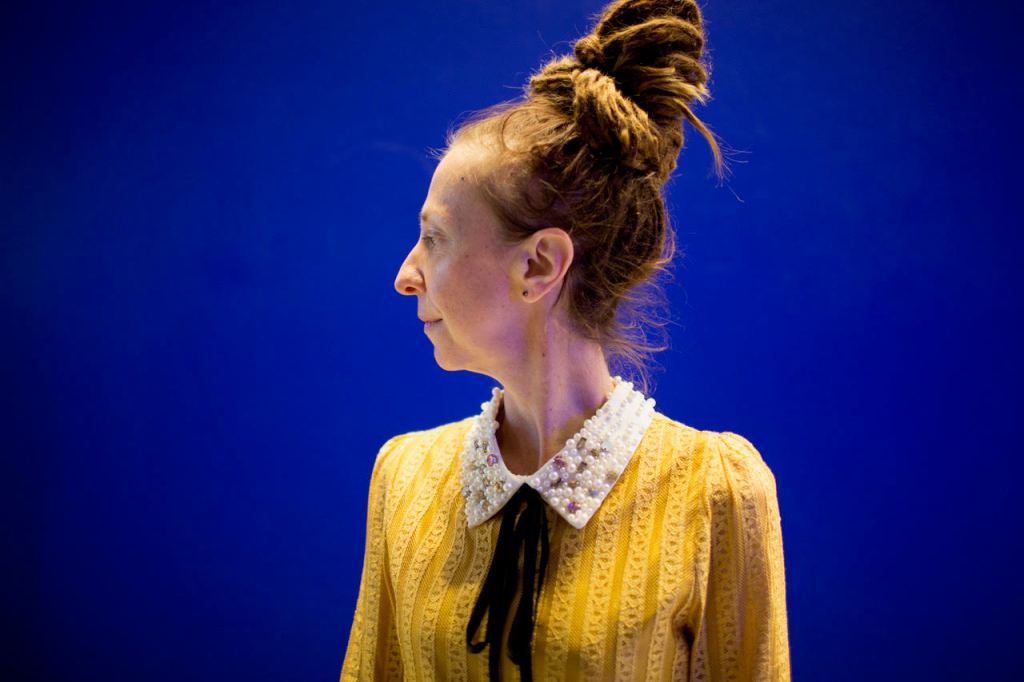
In the Room is a new NFB documentary about a group of dynamic ex-pat Afghan women who don’t fit neatly into their stereotypes. We meet a model, a TV news chief, an influencer and an actor and activist, in this unusual doc. The film is by noted Canadian documentarian Brishkay Ahmed whose work has frequently taken her back to the country of her birth. She’s known for her films In the Rumbling Belly of Motherland, Story of Burqa. The film won the Audience Award Showcase at its premiere at VIFF in Vancouver and played at the Reelworld film festival Toronto.
I spoke with Brishkay in Vancouver via Zoom.
Beginning on Tuesday, November 25, the National Film Board of Canada (NFB) will release In The Room for free streaming across the country on nfb.ca and the NFB app.
When to stop. Films reviewed: Friendship, Hurry up Tomorrow, The Old Woman with the Knife
Hi, this is Daniel Garber at the Movies for culturalmining.com and CIUT 89.5 FM.
This week, I’m looking at three new movies — an action thriller, a dark comedy, and a fictional music biopic — all about people who don’t know when to stop. There’s a middle-aged dad looking for a friend, a super-fan looking for the object of her obsession; and an elderly hitman in her declining years who refuses to retire.
Friendship
Wri/Dir: Andrew DeYoung
Craig (Tim Robinson) is an ordinary guy in the suburbs who works at a tech communications firm. He’s geeky and boorish with marginal social skills. He spends time with his wife Katie (Kate Mara) who is in remission and their teenaged son Steven (Jack Dylan Grazer). He likes watching TV or for a real treat ordering the dinner specials at his favourite chain restaurant. But everything changes one day when a package is delivered to his house by mistake. He carries it over, rings the bell, and meets his neighbour for the first time. Austin (Paul Rudd) is everything Craig is not. He’s suave, handsome and self-confident. He’s even a minor celebrity as the weatherman on the local TV station.
And he smiles at Craig. Wow… Craig is ensorcelled. And when Austin takes him under his wing for an adventure in the woods, he is absolutely thrilled. A real friend! But the bromance is short-lived, when he makes a number of unforgivable faux pas at a get together with Austin’s entourage. He’s cancelled and so is their friendship. But Craig refuses to accept it, and vows to do anything to get Austin back. And as his obsession grows so does his hazardous behaviour. Is Craig a stalker or just an unrequited friend. And how far is too far?
Friendship is a very dark and very funny comedy about adult male friendships. Tim Robinson — best known for his show I
Think You Should Leave — is famous for his uncomfortable style of humour. This is comedy that makes you squirm, cringe or look away. You can see the results of his terrible mistakes coming a mile away but there’s you can do to stop it and it’s still painfully funny. Paul Rudd is good as his “straight man” but this is all about Tim Robinson.
I haven’t laughed this hard or this often at a comedy movie in at least six months.
Hurry up Tomorrow
Co-Wri/Dir: Trey Edward Shults
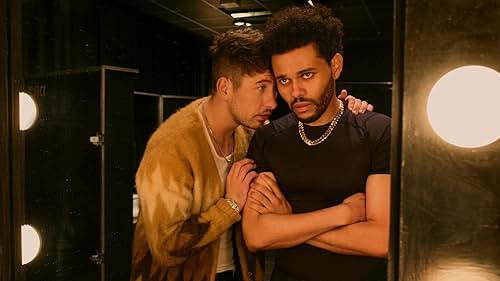
It’s the green room of a huge concert hall. The Weeknd (Toronto musician Abel Tesfaye) is a superstar in the midst of an exhausting world tour. He depends on his mellifluous voice to perform the songs his fans come to see. But he’s tense tonight and his throat is contracting. He’s upset with a voicemail from a woman he knows who recents his selfish and cold behaviour. Now plagued with self-doubt, he doesn’t feel up to performing. But his ever-present manager (Barry Keoghan) convinces him — through a combination of confidence-building words plus copious drugs and alcohol — that he owes it to his fans. But once on stage his voice fails him in the middle of a song and he runs off in disgrace.
There he collides with a super-fan who somehow got past bouncers and security. Anima (Jenna Ortega) offers words of love and comfort. They spend an enchanted day together far from his source of stress. But the next morning brings unanticipated and perilous consequences. Can The Weeknd return to his tour as of that day never happened?
Hurry Up Tomorrow is a complex but deeply flawed look at one day in the life of a singer on his world tour. The story is told at least four times through elliptical points of view. Anima sees herself as The Weeknd’s soulmate who only she can understand. But she is portrayed by the neutral camera as a deranged sadistic arsonist determined to erase her past problems by burning them down — literally. Ortega is allowed to run wild here. Keoghan as his manager sees himself as his best bud, almost his brother, the only one who can save The Weeknd from self-destruction (there are countless shots of him gazing longingly into his eyes.) Neutral camera? A sleazy, mercenary drug dealer. Then there’s the star himself. His mind drifts into hallucinatory depictions from deep in his psyche conveying, paranoia, claustrophobia and childlike helplessness. Neutral camera? A self-obsessed narcissist. So watching it with all these different points of view floating around, it’s hard to tell what’s real and what is a fantasy. Are the frequent tear-filled eyes actual or in one of their
imaginations? I’ve seen director Trey Edward Shults’s features It Comes at Night and Waves, both excellent movies — he’s highly skilled, but this one seems more muddy with less of an identifiable narrative. And it starts with a shockingly inappropriate music video… why? Why? On the other hand, the references to Stephen King movies like The Shining and Misery are much more interesting.
I’m glad I watched Hurry Up Tomorrow, but I wish it were a bit better.
The Old Woman with the Knife
Co-Wri/Dir: Min Kyu-dong
It’s winter in Seoul in the 1970s. A starving young woman, barefoot and dressed in rags is desperately searching for food in the drifting snow like The Little Match Girl. A kindly couple save her life by inviting her into their tiny diner for a meal, and later take her on as a dishwasher in exchange for room and board. But her relatively stable new life is shattered one night when she is cornered by an American GI in the cafe’s kitchen. She manages to fight off his sexual advances until he turns violent and starts to choke her to death with his barehands. In desperation, she grabs a nearby knife and stabs him. He dies. This is witnessed by a man named Ryu (Kim Mu-yeol) who invites her to join a secret organization that specializes in pest control. That’s their euphemism for the murderers, rapists and torturers, the scum of the earth, whom they are hired to kill.
Fifty years later and she’s still at it. Now known as Hornclaw (Lee Hye-yeong), she’s the hitman with the best reputation in the business. No one suspects an unassuming old woman — she can get away from any murder scene without anyone noticing. But she’s showing compassion — a complete taboo in the business — for a stray dog she finds. Her doctor is telling her to slow down, and her boss wants her to retire. Hornclaw, retire? Nevah!
But things really start to change when a brash newcomer
walks in. Bullfight (Kim Sung-cheol) doesn’t know the codes or rules, he just plays it by ear. He’s violent fearless and will stop at nothing to get her out of his way. Can he usurp her seat on the throne? And what grudge does he hold against his rival?
The Old Woman with the Knife is an action thriller with an elderly woman as the protagonist. And if you think this is a Murder She Wrote with little handguns and stilettos you couldn’t be more wrong.
She’s tough as Helen Mirren, and can take down and slice up a room full of thugs singlehandedly. And since it’s a Korean action movie, you can bet there’s a melodramatic subplot and at least one character whose motivation is revenge. (No spoilers.)
I liked this movie a lot.
Friendship, Lady with the Knife and Hurry up Tomorrow all open in Toronto this weekend; check your local listings. This is Daniel Garber at the Movies, each Saturday morning, on CIUT 89.5 FM and on my website culturalmining.com.
Daniel Garber talks with Ingrid Veninger about Crocodile Eyes
Hi, this is Daniel Garber at the Movies for culturalmining.com and CIUT 89.5 FM.
It’s present day Toronto. Independent filmmaker Ruby White (Ingrid Veninger) is working on a documentary about her family. She has stuck a hundred, hot-pink post-it notes on a wall, and is gradually filling in the blanks, using vintage footage she has dug up, and brand new snippets as they happen. Her daughter Sara, an artist, is very pregnant with a four- year-old daughter already there. Little Freya is exploring the world, one blade of grass at a time. Her son Jake is a manager at a movie theatre and a member of a
band. Ruby’s Slovakian parents, Dedo and Baba, still play an active role in their family; her Mom still vivacious, her Dad on his last legs. But with life, death and birth happening all around her, Ruby must decide what to include in her film and what to leave out. What is real and what is fictitious? And what will her family think of the final film?
Crocodile Eyes is a semi-fictional, semi-documentary slice-of-life drama, told through a raw and visceral lens. It’s both heartwarming and shocking. It’s the work of prize-winning, independent filmmaker Ingrid Veninger, whose films have
been shown at TIFF and festivals worldwide. She has also taught and mentored countless other filmmakers, many of whom who have risen to their own fame. I’ve been following her work for the past decade and a half, reviewing movies like the wonderful Modra and the hilarious I Am a Good Person/I Am a Bad Person, and have interviewed her twice on this show about Porcupine Lake (2017), and The Animal Project (2014).
I spoke wth Ingrid Veninger in person, at CIUT 89,5 FM.
Crocodile Eyes is having its world premiere on March 28th at the Canadian Film Fest.
Returns. Films reviewed: All We Imagine as Light, The Return PLUS Streaming Sites!
Hi, this is Daniel Garber at the Movies for culturalmining.com and CIUT 89.5 FM.
As the days grow shorter and colder, people tend to snuggle up at home. I’m here to tell you to get off your collective asses and go see a real movie on a big screen! But I know some of you are going to stay at home so today, I’m going to talk about some of the streaming sites out there you might want to join. And I’m looking two new dramas. A warrior king in ancient Greece returning to his island, and three nurses in Mumbai returning to Kerala.
Streaming Sites
Here are some streaming sites you might want to try.
First the free ones: CBC Gem, Kanopy and Tubi. CBC Gem has ads, but also plays some great docs, including There are no Fakes. You can find Tubi — a commercial site — online, again with irritating ads but a huge selection of middlebrow films. You can check out terrific movies on Kanopy using your library card, but you’re limited to a certain number per month. Britbox and Acorn TV both specialize in British TV series, especially detective mysteries. If you want Miss Marple peeking over your shoulder, this is what you want. Apple TV produces all their own stuff, including Slow Horses and the great Steve McQueen’s new film Blitz. On the other hand, the Apple TV app itself is extremely aggressive — you can only watch full screen and it flips back to the main site every time you navigate away.
If you’re into horror, thriller and the supernatural Shudder is the site for you. It’s exceptionally well-curated, with excellent art-house movies right beside slashers. Paramount+ has a seemingly endless supply of cop and military shows, plus CIA, FBI, firemen, navy, and — count ‘em! — 7 different NCIS spinoffs! Not my thing, but they do land some good movies like Smile 2, playing right now. Crave gives you access to everything HBO makes, as well as Canadian movies you might otherwise miss like the NFB doc Wilfred Buck. Criterion has the rights to some of the best movies of all time, from early Kurosawa to recent releases. MUBI streams new movies likely heading for the Oscars this year, including Maria, Girl with the Needle and The Substance.
And finally Netflix, the grande-dame of all streamers, has the most consistent and sheer quantity of good TV and self-produced movies, like Emilia Perez… but it’s getting way too expensive! They even have a new website called netflixinyourneighbourhood.ca which takes you to

THE MADNESS. The Donut Shop, 617 Parkdale Avenue, Hamilton, Ontario, featured in Episode 107 of The Madness. Cr. Courtesy of Netflix © 2024
locations where their movies are shot: in places like Toronto, Ottawa, Hamilton, Brockville, Dundas and Oshawa!
I still think movies should be seen in theatres but if you’re determined to stay at home, those are some of streaming sites you might want to subscribe to.
All We Imagine as Light
Wri/Dir: Payal Kapadia
It’s present-day Mumbai.
Prabha (Kani Kusruti) is a middle-aged hospital nurse. She is skilled at her job, teaching young trainees how to get over their feelings of revulsion. She spends time with a starry-eyed Doctor Manoj, who writes poems to her, but she is still very much married. Her husband moved to Germany to work in a factory, and he may as well not exist. Prabha shares an apartment with Anu (Divya Prabha), a vivacious young nurse at the same hospital. She likes shopping, fashion and romance, and most of all her secret boyfriend Shiaz (Hridhu Haroon). They’re in love (or at least young lust) but frustrated; it’s hard to find a private space to be together. More than that, she’s Hindu and he’s Muslim, and never the twain shall meet – their families will prevent that. Finally, Parvaty (Chhaya Kadam), an older nurse and a close friend of Prabha’s, is facing eviction from her home. Developers want to tear it down to build a high-rise condo. Since she’s a widow and doesn’t have the proper papers to
prove the place is hers, they’re sending goons to her door to kick her out.
For all these reasons the three of them end up back in Kerala, the place of their birth in southwest India. They stay in a beautiful beach town, where the three of them can finally shake off the heavy responsibility and stress of life in that big city. But how long will this last?
All We Imagine as Light is a personal, intimate drama about the lives of three women in Mumbai. It’s notable for a number of reasons. This is director Payal Kapadia’s first feature, and tells her story from a distinctly feminine gaze. It deals with big contemporary political and social issues — like Parvaty attending an angry tenants’ rights meeting — but also the importance of personal friendships among the three woman. In look and style, this film is strictly European cinema verite, about as far from Bollywood as a movie could possibly be. But it is set in Bombay and exults in that city, from the slums to the skyscrapers, with stunning aerial views of rooftop clotheslines and raucous street festivals. There’s amazing footage taken through the window of a fast-moving commuter train. Some scenes have documentary-style unidentified voices, expressing their bittersweet love and hatred for that
city that never sleeps, spoken in a plethora of languages: Hindi, Gujarati, Malayalam, and Bengali. I liked this movie for it’s emotions, but found much of it bleak and slow-moving; the story drags you down until it finally shifts from Mumbai to the beaches of Kerala, two-thirds of the way through.
But by the end it redeems itself with an unexpectedly satisfying finish.
All We Imagine as Light has been nominated for Best Foreign Language Film at the Golden Globes.
The Return
Dir: Uberto Pasolini
It’s 1200 BC in ancient Greece, and the island of Ithaca has no ruler. Decades ago, it was a mighty kingdom, ruled by the hero Odysseus — known for his bravery, fighting skills and intelligence. He devised the Trojan Horse and led the army that defeated Troy. But the soldiers — and their leader — never came home, and Ithaca has gone to seed. The queen, Penelope (Juliette Binoche) sits alone in her tower, weaving cloth, as she patiently waits for Odysseus’s return. Their son, Telemachus (Charlie Plummer) doesn’t know his father except from legends. The palace is filled aggressive brutes from abroad, each wanting to marry the widow Penelope so they can take over the kingdom. But is she actually a widow?
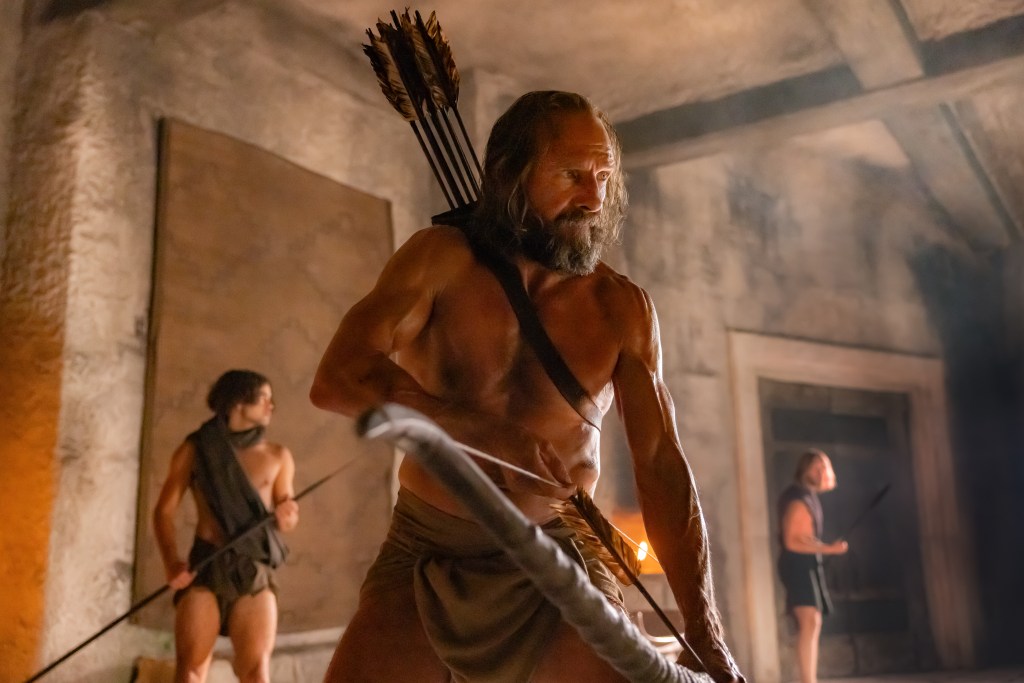
Around this time, the battle-scarred body of a soldier washes up on shore. He’s barely alive, but is nursed back to health by an honest pig farmer named Eumeo (Claudio Santamaria) and his sons. It is of course Odysseus (Ralph Fiennes), but without any uniform or weapon. He’s actually naked. He wraps himself in a blanket and carries a bowl — the clothing of a homeless beggar. And when he approaches the palace, almost no one recognizes him. Only Eurycleia (Ángela Molina), both his and his son Telemachus’s nurse as a child, realizes who

The Return, directed by Uberto Pasolini, with Ralph Fiennes (Odysseus), Juliette Binoche (Penelope), Charlie Plummer (Telemachus), Marwan Kenzari (Antinous), Claudio Santamaria (Eumaeus).
that beggar is. Is he still fit to be king? Can one man, tired and old, confront a bloodthirsty mob of young toughs? And will Penelope ever forgive him for staying away so long?
The Return is a magnificent retelling of a chapter in Homer’s The Odyssey. But it’s not about triumphant heroes; it’s more about the grinding effects war has upon both the victors and the vanquished. It contrasts Odysseus’s shame and self-doubt with Penelope’s eternal fidelity. Yes, this is an ancient greek story, with swords and sandals, but it feels very immediate. Parts of it even resemble a Hollywood action/thriller, with chase scenes and some very bloody fights.
The film was shot among the rocky cliffs of Corfu and the ruins of an ancient castle, which is echoed in the soundtrack. I love the dramatic look and sound of waves crashing on the sharp rocks. Though the women are all wrapped up, most of the male actors are dressed in togas or prancing around half naked, with Ralph Fiennes going full monty at the drop of a hat. I didn’t used to like him much, but after Conclave and now this one, I gotta admit, he’s a really good actor. Juliette Binoche is skillfully understated as Penelope, and Dutch actor Marwan Kenzari is very creepy as Antinous, the threateningly oleaginous suitor closest to Penelope.
The Return is a really good movie.
The Return and All we Imagine as Light is on at the TIFF Lightbox in Toronto; and Standing on the Shoulders of Kitties, A Trailer Park Boys movie featuring Bubbles and his band on tour, is now playing; check your local listings.
This is Daniel Garber at the Movies, each Saturday morning, on CIUT 89.5 FM and on my website culturalmining.com.
Good Euro at #TIFF24. Films reviewed: Miséricordia, Vermiglio, The Girl with the Needle
Hi, this is Daniel Garber at the Movies for culturalmining.com and CIUT 89.5 FM.
There was a dearth of European movies at TIFF this year with far fewer high-profile films from countries like France, Benelux, Scandinavia, Romania and Poland. But there were still some very good ones. So this week, I’m talking about three new European films that were featured at TIFF. There’s a mom with a baby in Copenhagen, an army deserter in Tyrol, and a funeral-goer in southeastern France.
Miséricordia
Dir: Alain Guiraudie (Review: Stranger by the Lake)
Jeremie (Félix Kysyl) is a boyish-looking man from Toulouse returning to the tiny village of L’Aveyron in southeastern France. He’s there for a funeral, the untimely death of the village’s baker. Jeremie knows the village and all its people very well, as he was the baker’s assistant for many years. He asks the baker’s widow, Martine (Catherine Frot), if he can stay there for a few days.
She puts him up in her adult son Vincent’s old room (Jean-Baptiste Durand) — which still look’s like it’s a kid’s room. Vincent, though, is a married adult, a tough guy known for his moodiness and sudden bursts of anger. Then there’s Walter (David Ayala), the town recluse, a large, droopy man with coarse features who seldom speaks with anyone other than his dog and Vincent. And an Abbey from an ancient monastery who always seems to turns up when anything significant happens.
So Jeremie’s presence upsets the local rhythm. Vincent treats Jeremie like they’re still kids, picking play-fights with him, grabbing and punching. He uses his key to barge in on Jeremie in bed at 4 am (on his way to work, he says). He suspects Jeremie is sleeping with his
mom. But in reality, Jeremie seems more attracted to the late baker than his wife. When Jeremie drops by Walter’s place for some chat and a few glass of the local pastis — Walter warns him not to let Vincent know he was there. With his tongue and inhibitions loosened Jeremie comes on to Walter sexually which shocks and confuses the much bigger man. By the next morning there’s a dead body buried in the woods, a witness, a killer trying to keep it a secret, and the gendarmes starting an investigation. Whodunnit, who will get caught, and what will happen to the rest of the characters?
Miséricordia is a cross between dark comedy and film noir. Like a stage play, it’s full of dialogue overheard through half open doors, people disappearing behind curtains or hiding in someone else’s bed. It deals with lust and passion — and compassion, anger but also forgiveness (Misericordia is Latin for mercy). And a fair amount of unexpected erotic nudity. It’s shot on grainy colour film, among the ancient whitewashed houses, stone monastery, and the wilds of the nearby forests — it’s visually beautiful. Alain Guiraudie who directed the great Stranger by the Lake once again crafts an unusual mystery with a queer undercurrent.
This is a really good movie.
Vermiglio
Dir: Maura Delpero
It’s near the end of WWII in a mountainous village tucked away in Tyrolia, northern Italy. Two faces arrive in town one day, one familiar, one unknown. They are both deserters, Italian soldiers press-ganged into the German army, but the stranger, a Sicilian named Pietro (Giuseppe De Domenico), knows only this friend Attilio, he served with. He also saved his life and practically carried him all the way home. Pietro’s Italian is totally different to them so he seldom speaks. They put them up in a barn, just to be safe, and feed them.
The patriarch of this village is Cesare (Tommaso Ragno) a highly respected schoolteacher with ten kids of his own. Most of the kids sleep together, some three to a bed, and there’s a constant stream of patter and dialogue within the family. The oldest daughter is Lucia (Martina Scrinzi), named after the village’s patron saint. There’s also Flavia, the precocious daughter and Ada the religious one. Lucia knows nothing about sex, but does know she likes Pietro. They flirt, court, kiss, and marry. He signs up for the adult literacy lessons his new father-in-law teaches. And finally, as Lucia’s belly grows, he abruptly leaves the village for a short visit home in far-off Sicily. But when he fails to return after months away without even a postcard, Lucia begins to worry. What has happened to her Pietro?
Vermiglio gives a look at the consequences of ambition, rivalry, love and betrayal in an isolated village where everyone knows what everyone else is doing. It follows all the members of this family, though especially the daughters and their hard-working mother (10 kids!) over the course of one year.There’s a lovely ebb and flow, with
characters appearing and disappearing, deftly interwoven throughout the film in dialogue and action. Though linear in structure there’s no clear explanation of much of what is going on — you have to figure that out yourself. Filmed under soft natural lighting, you’re as likely to see an extreme closeups of milking a cow’s udders, as you are a furtive kiss. I found Vermiglio fascinating and empathetic — you really care about what happens to all these characters.
I like this one.
The Girl with the Needle
Co-Wri/Dir: Magnus von Horn
It’s WWI in Copenhagen Denmark. Karoline (Vic Carmen Sonne) works in a sweatshop making uniforms. She hasn’t heard from her husband Peter since he enlisted with the Germans, and without his income she’s behind on her rent and faces eviction. In desperation she visits the factory owner Jørgen (Joachim Fjelstrup) and asks for her military widow’s pension. But without any proof of his death, there’s nothing he can do. But he does find her attractive and soon they are having furtive sex in back alleys. Inevitably she gets pregnant so he does the honourable thing and proposes… until his aristocratic mother stops him cold. Not only won’t he marry her, she must be
fired from her job. Meanwhile, it seems her husband was not killed at the battlefront, but he’s unrecognizable. Peter (Besir Zeciri) now wears a mask to cover his face that had been blown off and them sewn back together. Peter now works at a carnival freak show revealing his face for a few krone.
In desperation, Karoline takes a knitting needle to a public bath and attempts to kill the foetus in her womb by jabbing it, but ends up injuring herself and nearly passing out. But she’s spotted by Dagmar (Trine Dyrholm) who runs a local candy store, and her pretty, blonde daughter Erena (Ava Knox Martin). She nurses her and tells her what to do if she starts bleeding again. And she gives her a bag of candy with the shop’s address on it. Dagmar is always there when there’s no one else to turn to. And when she finally gives birth, penniless and homeless, Caroline shows up at the candy store asking for help give away her baby. She can’t afford to pay her — this is a business, Dagmar reminds her — but agrees to let her stay there for now, as an
on-call wet nurse. Many young women pass through there with their kids, so she’s always ready to lend a hand. But what really happens to those babies?
Based on a true story, The Girl with the Needle is a powerful movie about a horrifying case that shocked the world (no spoilers). It shows us a Copenhagen riddled with friction and sharp divisions between the haves and have-nots. It also repeats a theme of disturbing images of grotesquely deformed faces. It’s shot in glorious black and white by the Polish cinematographer Michal Dymek, who also filmed Jerzy Skolimowski’s EO two years ago. There’s some serious acting here, especially the three main women. This is one of those jaw-dropping movies where you go in expecting a conventional, scary-type horror movie, but you end up watching something much bigger than that. This is a fantastic and very disturbing movie, but with a touch of hope.
And it’s Denmark’s choice for the Oscar for best international Feature.
Keep your eyes peeled for Miséricordia, The Girl with the Needle, and Vermiglio, that all played at TIFF and should be opening theatrically over the next year.
This is Daniel Garber at the Movies, each Saturday morning, on CIUT 89.5 FM and on my website culturalmining.com.
Through the grapevine. Films reviewed: Twisters, Widow Clicquot
Hi, this is Daniel Garber at the Movies for culturalmining.com and CIUT 89.5 FM.
Is your headspace being dominated by thoughts of politics and elections? If so, you need some distractions! I’ve got just the thing for a hot day like today. This week, I’m looking at two new summer movies — an historical drama and a disaster-thriller — both about strong women. There’s a widow who risks the wrath of grapes, and a meteorologist who throws caution to the wind.
Twisters
Dir: Lee Isaac Chung (Review: Minari)
Kate (Daisy Edgar-Jones) is a meteorologist. Not the weatherman who writes numbers on a green screen on your local TV news; she’s the real thing, with an important job at a government bureau in New York City. So what is she doing in Oklahoma? The state is facing an unusual number of major tornadoes all at once. She was invited down there by Javi (Anthony Ramos), an old classmate and study-buddy who worked with her on her experiment involving using polymers to stop tornadoes. But the experiment went wrong, killing the rest of their team, thus taking away any desire she once had to chase tornadoes. And yet here she is back in Oklahoma. She’s lending a hand to Javi’s corporate sponsors, who supply shiny white SUVs in exchange for some crucial tornado info.
But she faces severe competition. The place is swarming with
adventure seekers, journalists and tourists. Tyler (Glenn Powell) is a cowboy huckster — a self-described “Tornado Wrangler” — who sells T-shirts and coffee mugs with his own grinning face on them. He’s a “chaser”, someone who seeks out tornadoes and gets as close to them as he can without being sucked away. His gimmick is to shoot fireworks up into tornadoes as they pass by. Looks great on YouTube… He drives a souped-up red jeep, and speeds ahead of Javi’s white vans. But Kate is in a league all her own. She can look at a dandelion and predict, with amazing accuracy, which way the next tornado is coming. And Tyler starts to take note. Who should Kate side with — serious Javi, or aw-shucks Tyler? And will any of them survive the big storm on the horizon?
Twisters is a thriller disaster movie about… well, tornadoes and the people who chase them. That’s most of the movie. It’s kind of a sequel to the movie Twister (1996) but shares none of the same characters, actors, or plot lines, except that they’re both about tornado chasers. There’s definite electricity between Kate and Tyler — Glenn Powell is brimming with charisma, and the appealing Englishwoman Daisy Edgar-Jones plays a credible American (though not much off an Oklahoman) — but those sparks never catch fire. If you’re expecting love, lust or sex, you chose the wrong movie. There’s not even a single kiss here. What you do get is amazing special effects: collapsing water towers, exploding oil refineries, roofs torn off buildings, streetcars running off their tracks…and lots sandlots of people holding onto something solid to avoid being swept away. I don’t know about you, but I really like disaster movies. Who needs a plot when you get to watch the world collapse?
Widow Clicquot
Dir: Thomas Napper
It’s the early 1800s in Napoleonic France. Madame Barbe-Nicole Ponsardin Clicquot (Haley Bennet) is a wealthy aristocrat from Champagne. In her early twenties she is married off to the equally rich François Clicquot (Tom Sturridge) who inherited vast vineyards. Although she dislikes him at first — he is somewhere between eccentric and crazy — she grows to love his childlike, playful exuberance. The guy has tousled hair and wears diaphanous pirate shirts, while Madame dresses in breezy white blouses. Soon he has her singing to grape vines, too. When she’s not in the vineyards, she’s in her laboratory studying wine sediment in beakers and test tubes. But eventually his eccentricity turns erratic, sometimes slipping into accidental violence. Madame sends their daughter off to the Abbee, but by their 6th year together, he is dead.
Now she’s a widow, and heir to the estate, but the trustees have never heard of a woman vintner. They offer her a fair settlement and tell her to take the money and run. Never!, cries widow Clicquot. These vines, this terroir it’s Francois’ soul! And she feels personally attached to it, too. But everything goes wrong. They buy cheap glass bottles which explode. And selling wine across borders is a no-no during the Napoleonic wars. She turns to Louis (Sam Riley) a wine salesman, for help. She needs to get her latest concoction — a dry pink wine with tiny bubbles — to the market. It’s the only thing that can save her grapes and the chateau she lives in. But will her new type of wine ever catch on?
Widow Clicquot is a historical drama filled with the expected
stories: passionately swooning lovers, double-crossing colleagues, floppy hair and costumes and verdant green valleys. It’s also about a rich woman who dares to fights the system. Not all that much happens in this movie which makes it drag in the middle. Tom Sturridge is ridiculous as the flakey husband, Haley Bennet is better though still stiff, as Madame, and Sam Riley as the travelling salesman is the best of those three. I was dreading a total corporate kiss-ass for the famous champagne maker, but it wasn’t that way at all. It’s based on a book that portrays her as a determined woman, despite her flaws, so two points for that. It’s not a spoiler that she is the famous Veuve Clicquot who basically invented modern champagne. And I liked the historical aspects.
Widow Clicquot is not a great movie, but lubricate yourself with enough flutes of Veuve and you won’t really care.
Widow Clicquot and Twisters both open this weekend in Toronto; check your local listings.
This is Daniel Garber at the Movies, each Saturday morning, on CIUT 89.5 FM and on my website culturalmining.com.
Class. Films reviewed: The Old Oak, Monkey Man, Wicked Little Letters
Hi, this is Daniel Garber at the Movies for culturalmining.com and CIUT 89.5 FM.
Ordinary people fighting back is an old story, but not a tired one. This week I’m looking at three new movies — one from northern England, one from southern England, and one from India — about people confronting injustice. There are women fighting the courts, a poor man fighting the oligarchs, and a lonely man trying to stop his town’s gradual collapse.
The Old Oak
Dir: Ken Loach (my interview: 2020)
It’s 2016 in a seaside village in northern England. TJ Ballantyne (Dave Turner) is the publican of The Old Oak, one of the few gathering places left standing. But like the town — once a thriving coal pit, but now impoverished and depressed — the pub is not what it used to be. It has few customers aside from a few regulars. The sign is sagging, and half of the building is no longer used. TJ lives above the pub; he’s lonely and pessimistic. His son won’t speak to him, and he has only a little dog to keep him company. But when a group of Syrian refugees arrives in town, TJ decides to help. Alongside Laura (Claire Rodgerson) he distributes furniture and food — donated through local churches and unions — to the newcomers. They are grateful, but some people resent it. Why are they helping refugees when local kids are going without food and heating? Syrian kids are bullied in schools, and a young photographer Yara (Ebla Mari)’s camera is broken.
What can they do to bring the community together? Together with Yara,
Laura, and dozens of volunteers, they reopen a long boarded up section of the Old Oak to provide a place where people can come to eat and spend time together. The photographs on the walls recall the coal miners strike of Thatcher’s England: If you eat together, you stick together, says one sign. But can they overcome old prejudices to form new friendships? Or will it all fall apart?
The Old Oak is a wonderfully poignant and deeply-moving drama that deals with big issues but on a personal scale. It looks at racism, poverty, unions and scabs, and how geopolitics affect us all. Like all of Ken Loach’s movies, it looks at imperfect people from multiple viewpoints. Some you like and end up hating, others seem like villains but you find out later they’re good people. Lots of grey, no black and white (aside from the photographs Yara takes.)
Once again, the script is by Loach’s longtime collaborator Paul Laverty, and the ensemble cast includes both professionals and first-time actors, many hired at the location.
It shows the real Britain, warts and all, not the shiny tourist-attraction you see in Hollywood movies. It’s a tear jerker, with more than one heartbreaking scenes. But it still leaves room for hope. The Old Oak may be Ken Loach’s final film, so you should get out and see it. I really like this film.
Monkey Man
Co-Wri/Dir: Dev Patel
Kid (Dev Patel) is a man with a vengeance — to punish those whose crimes he witnessed as a small child. Raised by his mother in a forest in rural India, he now lives in an unnamed megalopolis in the mythical state of Yatana (= torment, anguish). It is ruled by a god-king followed by throngs of devoted cult-like followers. They kick farmers off their land for corporate profit and persecute minorities with impunity. Kid earns his money as a boxer, beaten up regularly by bigger, stronger men. In the ring, he conceals his face behind a monkey mask, in honour of the god Hanuman whose story his mother had told him as a child. Following a complex scheme, he somehow manages to get work inside an exclusive nightclub ruled by a woman named Queenie (Ashwini Kalsekar). She warns him to never disobey her or step out of his class. He gradually works his way up the latter until he makes it into the kitchen. His goal? To shoot a corrupt police chief named Rana Singh (Sikandar Kher). But his plans all fail, and he ends up a nearly-dead fugitive, his body floating in a canal. He is rescued and brought back to health by a temple dedicated to Shiva, and run by androgynous priests.
They admire that he, an outcaste, dares to fight authority. But he needs the strength and skill if he wants to succeed. So, to the sounds of a tabla drum, he trains in the temple, gradually building up his stamina and muscles until he its
ready to face his enemies to the death once again. But does he even have a chance against the powers that be?
Monkey Man is a class-struggle action-thriller about one man’s quest for personal vengeance and his plan to overthrow by force corrupt and autocratic leaders. It’s told using intricate plotting, involving dozens of people cooperating for a single goal. And it interweaves visions and sounds, like a child’s picture book, an elaborate mural, and the thumping of a tabla music. There’s a lot of content to digest. The problem is, a large part of the movie consists of chases and violent fights, and they’re not very good. Blurred shots using a jiggly, hand-held camera may be artistic, but they’re unpleasant and hard to look at. Seasickness is not a valid substitute for good fight choreography.
I admire Dev Patel’s first attempt as a director and his transformation into an action hero, but Monkey Man doesn’t cut it.
Wicked Little Letters
Dir: Thea Sharrock
It’s the 1920s in Littlehampton, Sussex, a small town in southern England. Edith Swan (Olivia Colman) is a middle aged educated woman who still lives with her strict parents in a tiny row house. She reads the bible and quotes its teachings; basically, she’s an uptight prig. She shares a wall with Rose (Jessie Buckley) a migrant from the Emerald Isle. She is fond of drinking and carousing, can swear a blue streak, and is often seen wandering in just a slip outside her home. Rose likes her live-in boyfriend Bill (her husband died in WWI) but most of all, adores her daughter Nancy (Elisha Weir). But her neighbour, Edith’s father Edward Swan (Timothy Spall) despises Rose and her libertine ways, and blames her for everything going wrong in Littlehampton. They live in a tenuous detente, until everything changes when Edith receives a piece of hate mail. The unsigned letter is filled with cruel insults and vulgar words.
And when the letters pile up, the police come to investigate. They arrest Rose for the nasty letters and throw her in jail, despite her protests of innocence. The press picks up the story and it becomes a national scandal. But not everyone believes Rose is guilty. A small group of women, led by Police Officer Gladys Moss (Anjana Vasan), think Rose is innocent and set out to prove it. But can they find the true culprit before the trial? And what will happen to Nancy if her
mother ends up behind bars?
Wicked Little Letters is a delightful dark comedy, based on a true story; apparently this was a hot topic 100 years ago. Little is the key word: little letters, Littlehampton, and the kind of petty quarrels that can blow up into serious events. This is a movie that knows it’s own boundaries and sticks to them perfectly, without veering off into remote tangents, flashbacks or lengthy soliloquies. It’s tight, set in tiny homes around town, and in the courthouse and jail. The acting is wonderful — everyone’s a character. Olivia Colman and Jesse Buckley previously co-starred in The Lost Daughter, but I like this one much better. And though it’s a period drama set in 1920s England, it uses colourblind casting, with many roles played by black and brown actors, without racial or ethnic issues ever entering the story (except, of course, Rose being Irish in England).
If you’re looking for a fun night out, I think you’ll like this one.
Wicked Little Letters, Monkey Man and The Old Oak all open this weekend in Toronto: check your local listings.
This is Daniel Garber at the Movies, each Saturday morning, on CIUT 89.5 FM and on my website culturalmining.com.
International Women’s Day! Film reviewed: Analogue Revolution
Hi, this is Daniel Garber at the Movies for culturalmining.com and CIUT 89.5 FM.
Wednesday is International Women’s Day, a national holiday in many countries though not in North America. And changes have been slow coming in the film industry, but they are happening. Since the first academy awards, more than a century ago, less than two dozen films directed by women have ever been nominated for best picture. This year, there are three… and these numbers are steadily growing.
So if you want to celebrate movies at home, CBC Gem is featuring movies about women this month, including 20th Century Women a coming of age drama set in the 1980s starring Greta Gerwig, Annette Benning and Elle Fanning. MUBI is featuring films with female cinematographers, including Saint Omer, the compelling French courtroom drama, and The Invisible Life of Euridice Gusmão, the mysterious drama about two sisters in Rio de Janeiro, separated against their will. And NFB has an International Women’s Day Playlist available for free on their website, including Mary Two-Axe Earley: I Am Indian Again; Margaret Atwood – A Word after a Word after a Word is Power; and The Boxing Girls of Kabul. Lots to watch at home.
So this week, also in honour of International Women’s Day, I’m looking at one new documentary about the history of modern feminism in Canada as seen through its media.
Analogue Revolution
Wri/Dir: Marusya Bociurkiw
It’s 1967, and Canada is celebrating 100 years since Confederation. There’s a burst of national pride and an explosion of tiny, independent publishing houses producing CanCon (Canadian Content) throughout the country. This was also the time when feminism gained support, and women were in the spotlight, fighting the system, en masse. They expressed themselves in books, magazines, literary journals and newspapersl. Press Gang in Vancouver and Broadside magazine in Toronto were seminal to the movement.
Women’s own bodies were a central topic, as doctors, at the time, required a husband or father’s consent for a woman to request an operation like a tubal ligation. So in the late 1968, The Montreal Health Press published a birth control guide book for women that — in contemporary parlance — went viral. One American clinic ordered
50 thousand copies right after it was published, and students on campuses across the continent were snapping it up. It was sold at cost. Writing about IUDs, diaphragms and abortion was still illegal at the time, so this book played a crucial role in the women’s movement.
Radio, too was a major force, including shows Dykes on Mykes the longest running lesbian radio show in the world on CKUT-FM in Montreal. Travelling women’s film festivals carried their movies across the country showing the movies in small town church basements on the way.
In the 1970s, the National Film Board opened a new section known simply as Studio D, a bare-bones area where women workshopped and made documentaries. The filmmaker interviews filmmakers like Bonny Sher Klein whose Not a Love Story: A Film About
Pornography was both controversial and widely watched. Janis Cole and Holly Dale’s crucial documentaries P4W Prison for Women and Hookers on Davie also came out of Studio D.
This momentum continued producing hundreds of publications across the country. Tens of thousands of people marched through city streets on International Women’s Day while others reclaimed the streets at night to stop violence against women. And the movement shifted from one centred on civil rights, women’s bodies, and pay equity, to one stressing individual rights, racial inequity and gender theory. But successive austerity governments in the 1990s effectively destroyed all but a few small publications that relied on government grants to stay afloat.
Analogue Revolution is a comprehensive look at the feminist movement in Canada from the 1960s through the 90s and beyond. It covers massive territory — from a high school filmmaker in Saskatoon, to a Ukrainian Feminist women’s group out of Edmonton to publications in Halifax. There are extensive interviews with Quebecoise activists and writers, people of colour, radical feminists, nudists, and indigenous activists, as the movement changed decade by decade. It features new and vintage footage of Susan Cole, Audre Lorde, Judy Rebick, and many others. The Toronto Women’s Bookstore — the country’s biggest feminist bookstore, which was also firebombed by American anti-abortion militants — is notable by it’s absence… but you can’t include everything.
Analogue Revolution is an important and fascinating history of a movement.
Analogue Revolution is playing tonight at 630 and tomorrow afternoon at 1:30 at the Hot Docs cinema on Bloor st in Toronto: check your local listings.
This is Daniel Garber at the Movies, each Saturday morning, on CIUT 89.5 FM and on my website culturalmining.com.
Girls. Film reviewed: Ru, Totem, Four Daughters
Hi, this is Daniel Garber at the Movies for culturalmining.com and CIUT 89.5 FM.
There are lots of movies for girls about princesses, fairies and Barbie dolls, but not many about girls as, well, girls. This week I’m looking at three great new movies about girls and young women. There are four sisters in Tunisia, a Vietnamese girl arriving in 1970s Quebec, and a seven-year-old girl in Mexico going to a strange birthday party.
Ru
Dir: Charles-Olivier Michaud
It’s a small town in Quebec in the 1970s. Tinh (Chloé Djandji) is a young girl who has just arrived with her family in Canada. She feels strange, alienated and out of place. A tiny home in small-town Quebec is totally different from the luxurious mansion they lived in in Saigon. It’s also nothing like the leaky ship and the wretched refuge camps she lived through afterwards. (Her family is part of the so-called “boat people” who fled South Vietnam after the fall of Saigon in 1975.) Luckily, her family is befriended by the Girards who are helping them adjust to life in Quebec, introducing them to snow, tapping maple syrup and eating peanut butter on toast. And they have a daughter Tinh’s age she can play with. The problem is, Tinh can’t speak French, just Vietnamese. Her parents can — they were well to do and educated in French when Indochina was still a French colony. But the courses are starting to make sense. And she enjoys hanging out at the only Chinese restaurant in town, run by a Haitian man, and listening to the harrowing stories of other Vietnamese refugees (dramatized on the screen). But will she ever adjust to this new — and very different — life?
Ru is a fictionalized retelling of novelist Kim Thúy’s
childhood. It’s a new — and very different – look at the immigration experience from what you usually see. The film only covers her first few months in Quebec but packs a huge amount of story in that small space. It also shows, through flashbacks, her life in Saigon, and the frightening period she spent at sea. It also riffs on life in Quebec, some funny, others sad. A couple of the scenes struck me as jarring. Tinh is haunted by the killing of a bread vendor she witnessed, but in the movie she’s calling out “bread for sale” but carrying flowers, not bread. (Is this a deliberate aesthetic move by the director or just an editing mistake?) And “moving still photos” was a new gimmick in Quebec film about 15 years ago but looks dated now. Otherwise, though, RU is a fascinating, warm and engrossing look back in time.
I quite liked this one.
TOTEM
Wri/Dir: Lila Avilés
It’s present-day Mexico. Sol (Naima Senties) is a seven-year-old girl getting ready for a big party. She puts on a multicoloured fright wig and a clown’s red nose before her mom drops her off at her grandfather’s house. There will be food and drinks, music and performances, cake and presents, and lots of friends and relatives. She quietly takes it all in. Her bratty cousin Esther cuts up money with a pair of scissors. One neurotic aunt burns the cake she’s baking. Her grandpa — a psychiatrist — is busy pruning a Bonsai tree. Sol wanders off to explore nature, making friends with the snails and beetles she meets. But underlying it all is a dark, unspoken thought that makes everyone tense and depressed. This party is for her Dad (Mateo Garcia Elizonda) a young artist. He’s dying of cancer, and can barely get out of bed. Will he make it outside to the party? How will people react? And what will happen afterwards?
Totem is a lovely movie about a happy and sad party as seen through the eyes of a little girl. It paints a vivid picture of an eccentric, middle-class family in Mexico. It’s filled with realistic details — not the kind that are thrown into a film to make it look quirky or twee; it seems like a real-life family here. Visually, it’s intimate and close up, using a hand-held camera in confined, and sometimes obstructed, spaces. The dialogue is ongoing, but the point of view is constantly changing. And in its tribute to Mesoamerican culture, red, yellow and terra-cotta colours, and Aztec animals, swirls and suns fill the screen.
Totem is a wonderfully happy-sad story.
Four Daughters
Dir: Kaouther Ben Hania
Olfa is a single mom in Tunisia with four beautiful daughters: Ghofrane, Rahma, Eya and Tayssir. There here to tell us about their remarkable lives. Olfa grew up without her dad so functioned as the protector of her sisters. She cut her hair short and dressed like a boy to stop gangs of men from invading their home. She later married a good-for-nothing man she only slept with once a year to have another kid. He didn’t stay very long either when he only had daughters. The girls take different paths. Some become rebels. One dresses like a goth. Another has a boyfriend without her mom’s approval. She spanks her daughters when she thinks they’re going overboard. But when Olfa goes to Libya to earn a living — she’s the only one supporting the family — things start to fall apart, and two of the daughters disappear. What happened and what led them to their strange fate?
Four Daughters is a really unusual docu-drama that retells Olfa and her daughters’ real stories, and then acts them out for the screen. The two younger ones play themselves, but the two older ones are played by actresses (Ichraq Matar and Nour Karoui) because Ghofrane and Rahma aren’t there anymore (no spoilers). And Majd Mastoura plays all the male characters, including Olfa’s lover, a fugitive who escapes from prison during the Tunisian Revolution in 2010. It’s sort of an experimental film that never lets you forget the scenes you’re seeing are true, but not real; they’re recreations. The mother or the sisters themselves are often giving directions to the actresses on camera so they do the scene accurately. But though they are constantly breaking the fourth wall, it still manages to be a shocking and emotional journey through
their lives. It deals in depth with family, ostracism, puberty, sex, sexism, feminism, violence, men, religion and pop culture in the Arab world like you’ve never seen it before.
Four Daughters is a gorgeous and fascinating film about women in Tunisia, before and after the revolution. It’s a thousand times better than any “reality show.”
Ru and Totem both open this weekend, with Four Daughters — which has been nominated for a Best Documentary Oscar — is on at the TIFF Bell Lightbox in Toronto; check your local listings.
This is Daniel Garber at the Movies, each Saturday morning, on CIUT 89.5 FM and on my website culturalmining.com.
A New World? Films reviewed: Going In, Poor Things
Hi, this is Daniel Garber at the Movies for culturalmining.com and CIUT 89.5 FM.
December is supposed to be a time for fun and relaxation, so this week, I’m looking at two new movies that you might find fun to watch. There’s a comedy/action movie set 40 years ago in Toronto, and a wild comedic fable set a century ago in Europe.
Going In
Wri/Dir: Evan Rissi
It’s the late 1980s in Toronto. Leslie Booth (Evan Rissi) is a young lecturer who waxes eloquent about Hegelian dialectics to bored college students. He doesn’t smoke, drink or cuss and stays away from drugs. He even goes to bed early if his on-again, off-again girlfriend isn’t spending the night. But everything changes when a strange man, all dressed in black, starts showing up everywhere he goes. Reuben (Ira Goldman) is a Jamaican-Canadian who wears a huge Star of David around his neck. He used to be Leslie’s best friend, going out on the town every night, but haven’t seen each other for five years. And Leslie has been on the straight and narrow ever since.
But Reuben needs his help, and is calling in a favour. His brother has disappeared, and he suspects it’s the work of a Toronto drug kingpin named Feng (Victor D.S. Man). Feng has cornered the market on a highly-addictive pill hitting the streets known as Pearl. Users love the experience, but addicts end up looking like zombies with solid white eyes. Reuben wants to penetrate this Triad and save his brother’s life, but the only way to do it is to get hold of a pair of tickets to Feng’s annual tournament. So Leslie joins with Reuben
and finds himself falling into old habits, snorting coke and frequenting sleazy bars to get more information. But the closer they get to their target the more dangerous it all looks. What is that tournament about? And can they rescue Reuben’s and get out unscathed?
Going In is a Toronto action/comedy movie set in — and in the style of — the 1980s. It’s also a buddy movie with a black guy and a white guy, like Lethal Weapon, Beverley Hills Cop or Silver Streak. But unlike those Hollywood hits, Going In is a micro- budget movie — we’re talking tens of thousands not hundreds of millions — with unknown actors and minimal special effects. Evan Rissi
wrote, directed and stars as Leslie, while Ira Goldman who plays Reuben also produced it. And Victor D.S. Man as the villain looks like he walked straight out of an old Hong Kong flick.
Surprisingly, this movie works. It’s clearly low-budget but it doesn’t seem slapdash. While it plays into a lot of film conventions and stereotypes, there are some very original scenes that I’ve never seen before — like the tournament they’re trying so hard to get into (no spoilers) It also has a good soundtrack, a b-ball match, some fight scenes and even a psychedelic out-of-body experience. And it’s not afraid to have the CN Tower constantly popping up in the background, to remind us that it’s Toronto, not NY, Detroit, Boston, Phillie or any of the other cities Toronto usually pretends to be in movies shot here. Keep in mind that this is a DIY movie, not from a big studio, and you might get a kick out of it.
Poor Things
Dir: Yorgos Lanthimos
Max McCandles (Ramy Youssef) is a medical student in Victorian England. He regularly attends surgical demonstrations by Dr Godwin Baxter (an unrecognizable Willem Dafoe) a controversial scientist with outrageous ideas. Baxter’s face is grotesque, like something that was cut into pieces and sewn back together. But the doctor takes a liking to shy Max, and hires him to live in his home and look after his daughter Bella (Emma Stone). Bella is a beautiful woman in her late 20s, but who behaves like a recently-hatched duckling just learning to walk. She has a vocabulary of just six words, and is given to stabbing, tearing or biting anything put in front of her. But with Max’s help, she quickly learns to speak and think, and is full of questions about the world. She is not allowed out of her home — it’s too dangerous, they say. You see, Bella is an adult woman with a baby’s brain implanted in her skull, one of the mad scientist’s latest experiments. As she matures, she and Max fall in love and plan their wedding — though still in a strictly patriarchal relationship (she refers to her father/creator Godwin Baxter as God for short.) But before they can marry, a scoundrel named Duncan Wedderburn (Mark Ruffalo) shows up on the scene. He sweeps Bella off her feet with the introduction of something new into her vocabulary — sexual pleasure — which she greatly enjoys. He
promises endless sexual satisfaction and rollicking new adventures if she follows him on his trip. Bella realizes Duncan is a cad and a rake but agrees to go with him anyway, postponing her marriage to Max indefinitely or at least until after she sees the world.
She sets off on this journey with Duncan aboard an ocean liner docking in various ports which she naively explores and learns from what she sees. She’s the ultimate fish out pf water, a novelty to all she meets, because she speaks so frankly and forthrightly. Bella has yet to learn basic societal rules about class, money, capitalism, sex, nudity and modesty. She explores this strange world scientifically and logically, much to Duncan’s dismay. Who is she really and where did she come from? Is sex a market commodity or something more personal? Will her naivety lead to disaster? Or will she return,
triumphant, to London with her innocence intact?
Poor Things is a brilliant social satire about sex, class, feminism, and society. It incorporates elements of 18th century novels like Fanny Hill, Tom Jones and Candide. It’s surreal, absurdist and psychedelic, but ultimately comes across as a fable or a morality play. It’s all filmed on an elaborate set (shot in Hungary), in a weird, steampunk Europe that never existed beneath a sky filled with blimps and zeppelins. (It looks like Terry Gilliam’s movie Brazil.) The costumes are outrageous — Bella has enormous shoulder pads bigger than her head. Emma Stone is amazing as Bella, though Mark Ruffalo overdoes it as Duncan — teetering between funny and ridiculous.
I’ve been following Yorgos Lanthimos’s films since Dogtooth in 2009, and this one revisits many of his earliest themes: absurdist humour; adults who speak awkwardly like small children, and who grow up isolated, never
allowed to leave their home, by a dictatorial, god-like father figure. It feels like Dogtooth Part Two: The Outside World. But now he commands a big enough budget to build ornate sets, costumes and wigs, with dozens of fascinating characters. I’m sure some of you will hate this movie, or be offended by it, but I think it’s absolutely brilliant.
Poor Things opens this weekend in Toronto; check your local listings. Going In is available digitally online across North America, from December 19th.
This is Daniel Garber at the Movies, each Saturday morning, on CIUT 89.5 FM and on my website culturalmining.
leave a comment