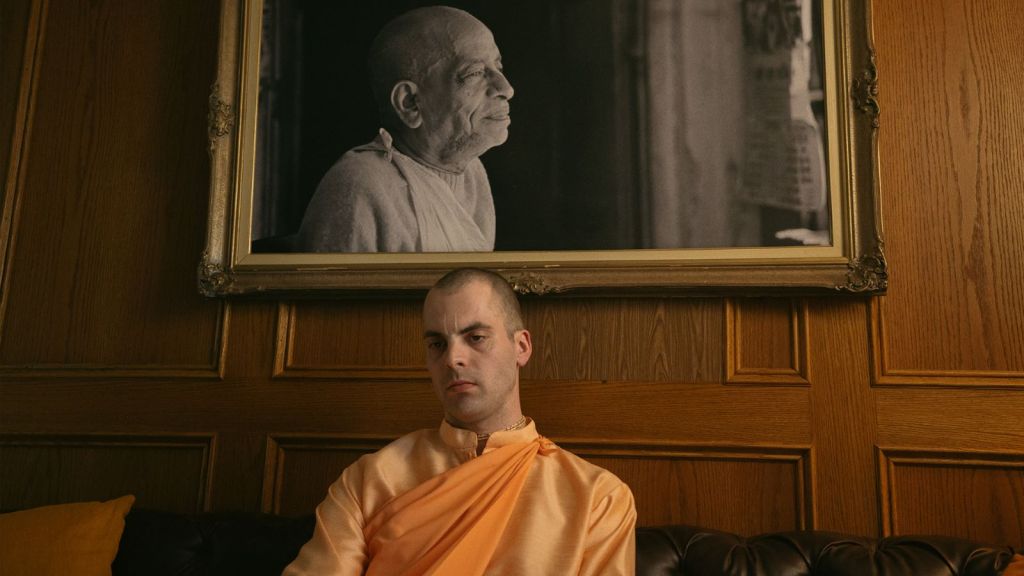
Daniel Garber talks with Gillian McKercher about her film Lucky Star premiering at ReelAsian

Posted in Calgary, Canada, Family, Gambling by CulturalMining.com on November 16, 2024

Hi, this is Daniel Garber at the Movies for culturalmining.com and CIUT 89.5 FM.

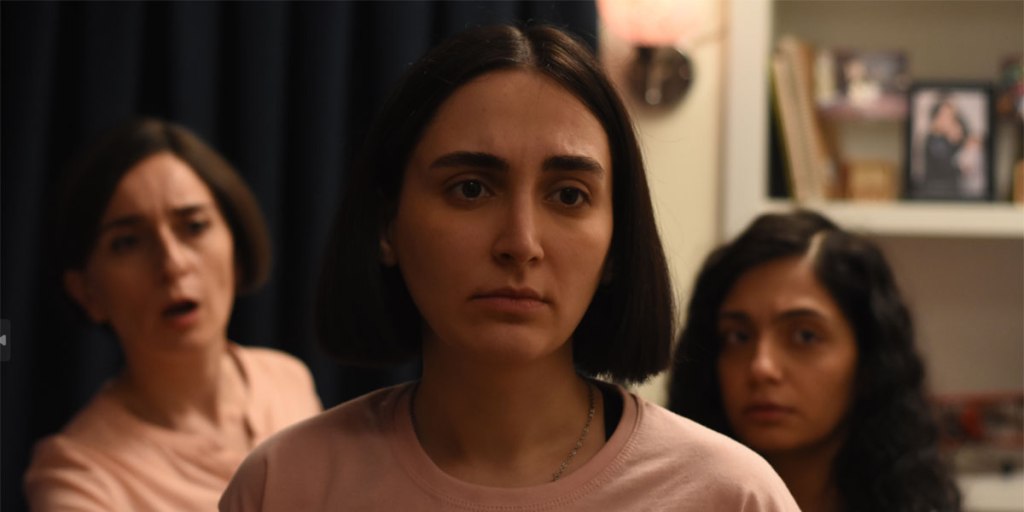
It’s a snowy December in Calgary, Alberta, and the Lee family is preparing for Christmas. Both parents run small businesses; Lucky, the dad, has a small electronic repair shop while Noel, the mom, tailors made-to-measure mens’ suits. Their older daughter Grace is on the verge of becoming the family’s first professional, while their youngest is still a pre-teen. But when Lucky gets a call from Revenue Canada demanding his back taxes, he springs into action, digging up all his savings with a quickie loan to pay the difference. When he discovers all his money went to a con artist, he is mortified by his own mistake. But this is not his first brush with financial ruin; Lucky has a dark history as a compulsive poker player. Should he come clean to his family? Or will a deck of cards be Lucky’s Lucky Star?

Lucky Star is also the name of a new Canadian drama set within Calgary’s close-knit Chinese community. It’s a complex, multi-layered story full of secrets and lies, suspense and suspicion. The film is writer/director Gillian McKercher’s second feature, and she’s a rising star herself, after a residency at the Canadian Film Centre and on Playback’s Top 10 To Watch for 2024.

I spoke with Gillian McKercher in Calgary, Alberta, via ZOOM from Toronto. Gillian talked about her film, the prairies, winter, history, second-generation diaspora, playing poker… and more!

Lucky Star had its Toronto premiere at the TIFF Lightbox as part of the ReelAsian Film Festival.

Blacks, Jews and Irishmen. Films reviewed: The Piano Lesson, A Real Pain, Small Things Like These

Posted in 1930s, 1980s, African-Americans, Family, Ghosts, Ireland, Nun, Pittsburg, Poland, Theatre by CulturalMining.com on November 8, 2024

Hi, this is Daniel Garber at the Movies for culturalmining.com and CIUT 89.5 FM.

Fall Film Festival Season continues with the EU Film Fest, showing free films from across Europe at Spadina Theatre starting on the 14th.

This week, I’m looking at three family dramas. There’s Black siblings in Pittsburgh, Jewish cousins in Warsaw, and an Irish dad with his five daughters, in… well, Ireland.

The Piano Lesson

Dir: Malcolm Washington

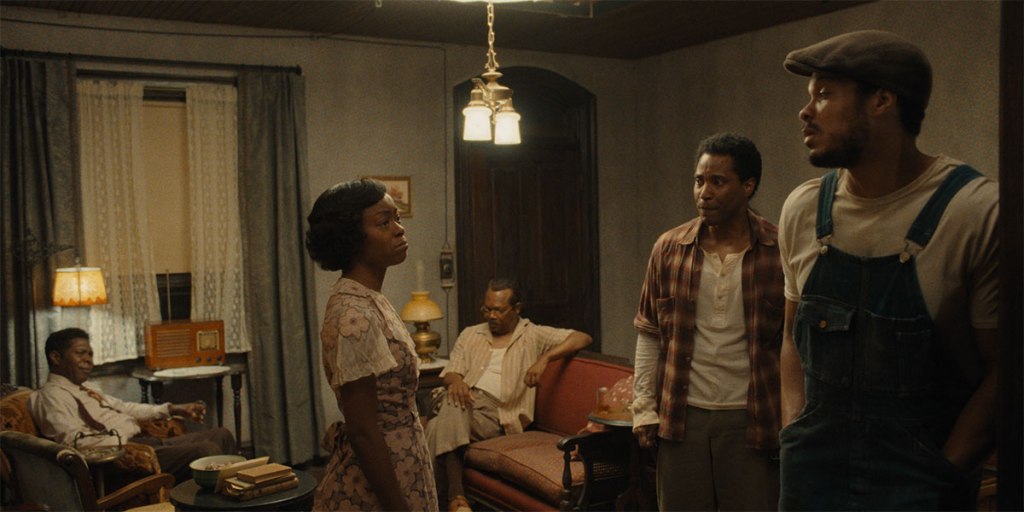
It’s 1936. Boy Willie Charles (John David Washington) and his friend Lymon are driving north from Mississippi with a truckload of watermelons, to visit his sister Berniece (Danielle Deadwyler) in Pittsburgh, Pennsylvania. She’s living with their uncle Doaker (Samuel L. Jackson). Once they sell the melons, Boy Willie plans to take his share of the profit (along with his savings) to purchase Sutter’s land. That’s the same place where his great grandparents were slaves, and where he still toils the land as a share-cropper. This is his one chance to own it.  But he’ll only have enough money if he sells the family piano. That’s why he’s visiting Pittsburgh. But Berniece refuses to sell it. Why? She grew up playing that piano, and more to the point it has family faces elegantly carved into the wood itself, dating back to pre-Civil War days. Besides, she says, that piano is haunted… and the ghost is getting meaner.  Meanwhile various family and friends, like a trickster and a preacher, are congregating at this house with different motives for being there. Can Boy Willie and Berniece come to terms about the piano? Or will bad spirits — both supernatural and human — ruin everything first?

The Piano Lesson is an excellent filmed version of playwright August Wilson’s drama. Fine acting all around, with Danielle Deadwyler outstanding as Berniece. Now, plays and movies are two different things. Actors emote louder and move bigger on stage (so everyone can see and hear them). And even the blocking and dialogue is different. Movies are no more real, but different. This Piano Lesson is very much a play. So I was a bit put off by it’s style… until the my brain started watching it as a play, at which point I really liked it.

If you notice a lot of Washingtons here, it’s no coincidence. Denzel Washington is the producer, and actor John David and director Malcolm are both sons of his. Denzel is committed to putting all ten of August Wilson’s Pittsburg Cycle on the big screen to preserve crucial Black American culture. Witness Fences in 2016 and Ma Rainey’s Black Bottom in 2020. The Piano Lesson is a fine addition to this series and should be watched.

A Real Pain

Wri/Dir: Jesse Eisenberg 

Benji and David Kaplan are cousins in their 30s, as close as brothers, but totally different. Benji (Kieran Culkin) is loud, gregarious, obnoxious and larger than life. He likes to raise a ruckus and mess things up. He lives alone in Binghamton, NY. David is shy, insecure and withdrawn. He’s married with a small kid and lives in Manhattan. He’s in a constant state of dithering and worrying. They’re travelling together to Poland to explore their family’s heritage. Their grandmother was Polish and a Holocaust survivor.

Benji was very close to her and devastated by her recent death, much more so than David. They’re part of a small tour group, all Jewish. Their guide (Will Sharpe) is a nerdy  English guy, very accommodating. Also on the tour are Marcia (Jennifer Grey) who suffers from intergenerational trauma;  Eloge (Kurt Egyiawan) from Winnipeg but originally from Rwanda where he survived Tutsi genocide; and a middle-class couple whose family immigrated from Poland generations ago but want to see where they came from. (“We’re Mayflower Jews”, he says).

Their journey takes in cultural and historical sites across Poland, but the closer they get to the concentration camp where their grandmother was imprisoned, the more agitated Benji gets.  He slips into shouted diatribes and lectures, causing scenes within their group and in public places — to David’s acute embarrassment. Can they both make it through the whole tour? Or will one of them drop out?

A Real Pain is a low-key, social comedy — yes, a comedy — about the uncomfortable dynamics within a family. it’s actually pretty funny, No slapstick or pratfalls, rather unexpected squirmy riffs on the two main characters’ personalities. (Like Benji telling David his bare feet are gorgeous, making him stare at them for the rest of the trip.)  It’s told in a series of clever vignettes over the course of the trip,  all hovering over unvoiced feelings of personal and collective mourning.   I’m always suspicious when actors play at directing, but this is no vanity pic. Eisenberg stays suitably subdued, letting Culkin go wild.

I like this movie.

Small Things Like These

Dir: Tim Mielants

It’s winter in a small town in Ireland in the 1980s. Bill Furlong (Cillian Murphy) is a working man who scrubs coal dust off his hands and face each day. But he doesn’t work in a coal mine; he has his own business, built from scratch, selling coal. His wife Eileen (Eileen Walsh) and his eldest daughter handle the finances. One day, he’s making a delivery when he’s alarmed to see a teenaged girl being dragged, kicking and screaming, into the local convent. That’s not right. She may be unmarried and pregnant, but why are they kidnapping that poor girl? 

So he steps inside to take a look. It’s the Magdalene Laundries, a Church organization that operates across Ireland, to care for unwed mothers. They put the babies up for adoption, and the girls and young women are trained to work as industrial laundresses. But to Bill it seems almost like a prison, where the girls are treated horribly. When one girl runs over, begging him to help her escape, he doesn’t know to do. The nuns quickly disabuse him of any notions he might have, and rush him out the front door. 

But Bill has history. He was brought up in this same town by his own single mum, who chose to stay away from that convent. He was bullied as a child because of this, but he still remembers how his mother — and her employer, an independently wealthy woman — defied the church. He feels he has to do something for that girl. But the nuns have their fingers in every pie; the school, government, they’re even a client of his own business. Should he confront the cold-eyed Sister Mary (Emily Watson) who runs everything? Or should he just worry about  his own family, and pretend nothing is wrong?

Small Things Like These is a deeply-moving drama about families, moral dilemmas and the checkered history of the Catholic Church in Ireland. This is the third such movie, after The Magdalene Sisters and Philomena, but its repercussions are still very much alive. Cillian Murphy —  who you probably recognize from Oppenheimer or Peaky Blinders — once again pulls you into the character he plays. He rarely speaks but the emotion in his features really affect you. So if you’re looking for a real tear-jerker, this is the one to watch.

A Real Pain, Small Things Like These, and The Piano Lesson all open in Toronto this weekend; check your local listings.

This is Daniel Garber at the Movies, each Saturday morning, on CIUT 89.5 FM and on my website culturalmining.com.

Trapped. Films reviewed: Captives, Here, Emilia Pèrez

Posted in 1800s, 1950s, 1960s, 1970s, AI, Crime, Family, France, Mental Illness, Mexico, Musical, Tom Hanks, Trans, Women by CulturalMining.com on November 1, 2024

Hi, this is Daniel Garber at the Movies for culturalmining.com and CIUT 89.5 FM.

Toronto Fall Film Festival Season continues with Cinefranco showing  contemporary French language movies from around the world at the Carlton Cinema. But this week, I’m looking at three new movies about traps. There’s a big-hearted woman trapped in a male drug-lord’s body, a French woman trapped in a mental hospital, and a movie camera trapped… in somebody’s living room!

Captives

Co-Wri/Dir: Arnaud des Pallières

It’s Paris in the late 19th century. Fanni Devander (Mélanie Thierry) is an elegant and educated woman searching for her mother. She disappeared when Fanni was just a child, but she has reasons to believe she is locked away somewhere in the city’s mental hospital. So Fanni voluntarily checks herself in to try to find her. Pitié-Salpêtrière is a home for the destitute, people with mental illness, learning disabilities or epilepsy, convicted criminals and even some foundling children. The one common factor is they’re all “undesirables” and all women. But once inside she realizes you can check in, but you can’t check out. It’s a de facto prison, presided over by the Matronly Bobette (Josiane Balasko),  and a hench-woman who would make Nurse Ratchet look like Florence Nightingale. Bobette’s one obsession is to perfectly execute their upcoming ball featuring her patients singing and dancing before a crowd of wealthy patrons. 

Fanni quickly learns the ropes and makes allies with Hersilie, a music teacher (Carole Bouquet)  and a lesbian school teacher with an eating disorder. And she finally meets a nearsighted older woman named Camomile (Yolande Moreau) who just might be her real mother. Can Fanni perform at the ball and safely escape with her supposed mother? Or will they all be stuck there forever? 

Captives is a fascinating historical thriller about the treatment of women in state institutions. It’s harrowing in parts — including scenes of torture — as Fanni navigates class and hierarchy within this enclosed universe. I purposely only mentioned some of the characters and plot turns, because the surprise is what makes it worth watching. But rest assured, it’s full of great acting, pathos, and beautiful period costumes — even within that terrible place.

I like this one.

Here

Dir: Robert Zemeckis (Reviews: Flight, Allied)

Ricky (Tom Hanks) is a teenaged baby boomer living the American dream. His Dad and Mom (Paul Bettany and Kelly Reilly) have lived in a house across the street from Ben Franklin’s historical home since they bought it on the GI Bill after WWII. Now Ricky and his kid brother and sister happily share the place, congregating in the living room for holidays, dinners, or just to watch TV. Ricky wants to be an artist, while his girlfriend Margaret (Robin Wright) dreams of going to law school. Unfortunately, when she gets pregnant while they’re both still in high school, they marry and settle down, still within Ricky (now called Richard’s) parents’ home. Life goes on, and the decades pass, and people are born, live and die. But will they always stay “here” in the same house?

Here is a movie about a place, specifically a living room facing the picture window and the street beyond. The camera never movies. It follows this location not just for Ricky’s family, but also the dinosaurs, the ice age, indigenous people, Ben Franklin, and various couples across the 20th century, constantly jumping back and forth in time. The one constant is the frame, the fourth wall, which never shifts. Picture this: a pop-up square will appear with different furniture and wallpaper in it, taking you to another era, in the style of a virtual staging of a house for sale on a real estate website. Indeed we get to meet real estate agents throughout the twentieth century. Which makes sense because its really about the place, not the meat puppets who wander around in it.

Does this new, experimental concept work?  No!  It’s indescribably awful.

I cannot convey the aesthetic revulsion I felt viewing this horrible non-movie movie. It features a de-aged, 68-year-old Tom Hanks playing himself as a teenager with a fake young teenage face plastered on, but who still talks and walks like the old man he is. What were they thinking?! Here is a tired, platitudinous high-concept exercise in futility disguised as an innovative film. All the characters are painful cliches, including a token black family whose sole purpose seems to be to recite a version of Ta-Nehisi Coates Letter to My Son… to their son.

Keep in mind, Zemeckis is known both for classics like Back to the Future but also unforgivable, semi-animated dreck like Polar Express and Forrest Gump. Here falls neatly into the dreck pile.

Emilia Pérez

Co-Wri/Dir: Jacques Audiard 

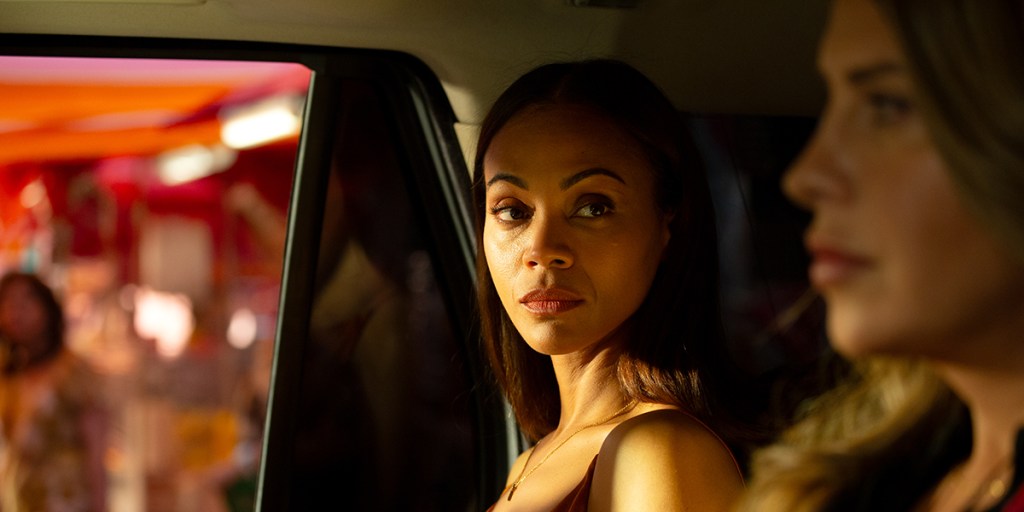
Rita (Zoe Saldaña) is an ambitious young defence lawyer in Mexico City. She spends hours crafting powerful opening statements for trials, but, as a black woman —  originally from the Dominican Republic — she gets none of the credit. But somebody is watching her and appreciates her skill. She finds out who, when she’s kidnapped with a black hood over her head and driven into the middle of the desert. There she meets the notorious head of a huge drug cartel, personally responsible for countless killings. Juan “Manitas” Del Monte, the cartel chief, needs her to help him disappear, in a way no one — including his wife Jessi (Selena Gomez) — will ever find him again.

The twist? This murderous, pock-marked, bearded monster… is trans, and wants to shed the awful male body and face, to live the rest of her life as an attractive woman. She needs someone she can trust to handle all this, both the finances and the surgery, leaving no paper trail. In exchange, Rita will have all the money she needs for the rest of her life, and her own private firm.

Years later, she meets with a potential client, a fabulously rich European woman named Emilia Pèrez (Karla Sofía Gascón). It’s her client from years back, who wants to re-enter the world and be reunited with her beloved family, all of whom think she is dead. And to atone for some of her past sins without revealing who she was. What will happen to these three remarkable women in the next chapter of their lives?

Emilia Pérez is an incredibly passionate and shocking movie. It’s simultaneously an action-thriller, an epic drama, and a musical. Yes, that’s right, a musical, where  characters do break into songs and dances throughout the film. But with its latin beats and shouting crowds, it’s the sort of songs you rarely encounter in a musical.  Zoe Saldaña is amazing as this tough-as-nails lawyer, and Karla Sofía Gascón, a Spanish actress I’ve never seen before, is unmatchable, both as Perez, and as the drug lord Manitas. (She’s a  transwoman herself.) French director Audiard (who previously brought us masterpieces like A Prophet, and Rust and Bone) seems to have no trouble creating a Mexican musical. I gotta say, Netflix churns out a load of content, most of which is forgettable crap, but, every year, they also produce a few really remarkable films. Emilia Pèrez is one of those.

I strongly recommend this movie.

Here and Amelia Perez both open this weekend in Toronto; check your local listings. And Captives is having its English Canada premiere at 8:45 tonight (Saturday, Nov 2, 2024) at Cinefranco at the Carlton.

This is Daniel Garber at the Movies, each Saturday morning, on CIUT 89.5 FM and on my website culturalmining.com.

Unobtainable, unsustainable, inevitable. Films reviewed: Bookworm, Monkey on a Stick, Smile 2

Posted in 1970s, 1980s, Addiction, Canada, Crime, Family, Hippies, Horror, India, Kids, Magic, New York City, New Zealand, Religion by CulturalMining.com on October 19, 2024

Hi, this is Daniel Garber at the Movies for culturalmining.com and CIUT 89.5 FM.

Toronto Fall Film Festival season continues with Rendezvous with Madness presenting docs and dramas, features and shorts, about addiction and mental health followed by in-person discussions, starting on October 25th. 

But this week, I’m looking at three new films, a kids’ movie, a doc and a horror film. There’s a precocious girl looking for the unobtainable; a group of deranged gurus trying to hold onto the unsustainable; and a pop starch wants to escape the inevitable. 

Bookworm

Co-Wri/Dir: Ant Timpson

Mildred (Nell Fisher) is a young girl who lives with her mom in New Zealand. She loves reading but hates school. Her desk is surrounded by leather-bound books alongside a microscope, a telescope, a typewriter and a record player. She talks like a grownup, and is obsessed by wild animals. Her dream? To catch on film a black panther said to be roaming in the woods (along with a big fat cash prize for anyone who can take a picture of it.) But her plans all change when her mother is sent to hospital in critical condition following an exploding toaster. That’s when her biological father comes into the picture. He flies in from America to save the day.

Strawn (Elijah Wood) is a professional magician — he prefers “illusionist” — who loves magic: like making small things disappear or pulling coins from behind someone’s ears. Most people are wowed by Strawn’s prestidigitations and puppy dog eyes, but not Mildred. She scoffs at magic and is quick to reveal all his tricks. They two are opposites at heart.  If you say “David Copperfield” she thinks of Dickens while he thinks of the magician. Nonetheless, they are stuck together for now, so he agrees to take her camping. But little do they know of the exciting adventures and frightening dangers — like criminals, wild animals and crazy escapes — that lie ahead.

Bookworm is a very cute coming-of-age adventure about two strangers put together to form a makeshift family. It feels like a cross between a Roald Dahl Matilda and Taika Waititi’s Hunt for the Wilderpeople. It’s shot in the New Zealand wilderness amidst stunning mountains, cliffs and lakes. Nell Fisher is adorable as the obnoxiously mature Mildred, while Elijah Wood is equally adorable as the man-child who won’t grow up. I wanted to see this one because I loved director Ant Timpson’s bizarre debut, the violent comedy Come to Daddy. Bookworm is as different as any film could be but just as enjoyable.

I liked this one a lot.

Monkey on a Stick

Dir: Jason Lapeyre

It’s 1965 and America is in high hippie mode.  A. C. Bhaktivedanta Swami Prabhupada arrives in New York City from Calcutta. He’s there to sell books, including his own translation of the Baghdad Gita. But he ends up heading the Hare Krishna movement, a vast multinational phenomenon, a religion that espouses dancing, singing and chanting mantras in order to achieve a better afterlife. After picking up many devotees in New York, the movement exploded in popularity once he reaches California. Allen Ginzburg endorses it and George Harrison writes a song about it. Countless people join  the religion, throwing away material possessions to dance, chant and collect alms in airports. But when the Swami dies, he leaves behind eleven gurus. That’s when things start to fall apart. This documentary — based on a bestselling book — exposes the crimes and excesses of the Hare Krishna movement in the 1970s and 80s.

One guru — in order to generate more money —  sets up a drug ring of devotees instructed to smuggle hash from Pakistan to Canada. They have ties to the mob, leading to a series of violent crimes until it is finally exposed. Another guru collects automatic weapons, and goes on a shooting spree in California.  A third guru — a self-declared Swami —  the scariest of them all, builds himself an ornate golden castle in West Virginia, while his disciples — who have given away all their worldly possessions — live in a shanty town beside the castle without toilet paper or plumbing. He later plans murders and is suspected of molesting children. 

In fact, the movement as a whole is riddled with problems. Women are treated as inferior beings who distract male practitioners from their religious obligations. Homosexuality is strictly forbidden as is all sex outside marriage. And heavy censorship prevails — no TV, magazines, newspapers, movies, or books are allowed, except for one official newspaper. And by the second generation — the 1970s and 80s, when most of the documentary takes place — kids are sent to schools with teachers who have no training. They lock kids in dark closets or dump them in trashcans as punishment, among even worse crimes. 

Monkey on a Stick is a documentary that looks at crimes of the Hare Krishna movement. It’s told using talking heads — including former devotees — period footage, and many reenactments, with actors visually demonstrating what the narrators are talking about. There’s also a series of random people sharing their views on religion, God and the afterlife. Though quite disturbing in parts, on the whole, it’s a fascinating story that exposes events I had never heard about before.

Smile 2

Wri/Dir: Parker Finn

Skye Riley (Naomi Scott) is a pop superstar, about to launch a worldwide tour. She lives in a luxury apartment on Park Avenue, and can buy anything she wants. She’s busy 24/7 at dance rehearsals, talk show appearances and autograph signings, under the constant supervision of her stage mom (Rosemarie DeWitt) and her PA (Miles Gutierrez-Riley). It’s her big comeback, after a year of rehab. This follows a bout of addiction culminating in a terrible car crash that killed her boyfriend and put her in intensive care. A year later, she still suffers from intense pain, pain so bad she is forced to buy opioids on the sly. But everything changes when she witnesses her high school friend (and drug supplier), Lewis (Lucas Gage) kill himself in front of her eyes in the most gruesome manner imaginable. And he dies with a rictus grin plastered on his face.

That’s when things start to go bad. Everywhere she looks she sees that awful smile. It’s like she caught a disease by witnessing her friend’s death. She starts seeing people who aren’t really there, and experiencing events that never happened — even though they feel so real. She begins to doubt her sanity. It’s like some alien presence has lodged itself into her brain. Her friends, family and colleagues look at her in a strange way, even as she fears she’ll end up dead in a matter of days, with that same awful smile. Can she break this smile cycle? Or is she headed for insanity and death?

Smile 2 is a genuinely-scary psychological thriller/ horror about fame, celebrity, and a deadly condition passed on from person to person. It’s also one of those Hollywood rarities: a sequel that’s demonstrably better than the original. Naomi Scott is terrific as Skye, a punky, self-centred celebrity; Skye’s not just a horror movie screamer, she’s a real character, complete with a psyche and a believable back story. The movie itself is really well made, with beautiful art direction, cool choreography, and ingenious camerawork and editing, where a scene can flip, elliptically, from an elevator ride to an overhead view of the street. Warning: it’s quite violent, so if you don’t like seeing blood and guts, stay away. But otherwise, Smile 2 is a really good, heart-pounding genre movie.

Bookworm, Monkey on a Stick and Smile 2 all open this weekend in Toronto; check your local listings.

This is Daniel Garber at the Movies, each Saturday morning, on CIUT 89.5 FM and on my website culturalmining.com.

Family-friendly pics at #TIFF24. Films reviewed: The Wild Robot, Sketch

Posted in Animals, Animation, Environmentalism, Family, Fantasy, Kids, Magic, Robots, Science Fiction by CulturalMining.com on September 28, 2024

Hi, this is Daniel Garber at the Movies for culturalmining.com and CIUT 89.5 FM.

There’s lots happening in Toronto this weekend. At the Toronto  Palestine Film Festival you can watch films and docs, go to concerts, art exhibitions, a brunch, workshops and discussions all weekend long, both online and at the Lightbox. And the Toronto Garlic Festival is on this Sunday on Spadina Road, with food, drinks, a garlic market and culture, too… including me!  I’ll be giving a talk on garlic and the movies at 12:00 noon, with free admission.

But today I’m talking about two new, family-friendly movies that were featured at TIFF this year. There are monster drawings that come to life, and a robot stranded on an island that can talk to the animals.

Wild Robot 

Co-Wri/Dir: Chris Sanders (Review: How to Train your Dragon)

It’s a small island in North America, sometime in the future. ROZZUM unit 7134 (Lupita Nyong’o) is a robot. She was built for family consumers, the product of a multinational corporation. Powered by AI, she speaks and understands multiple languages and is made to serve.  Somehow her box has washed ashore on this island, but the expected suburban home is nowhere to be found. This place is uninhabited… by humans that is, but it’s teeming with wildlife. Deer and moose, bears and foxes, raccoons, porcupines, skunks, beavers, possums and all types of birds, insects and aquatic life. She sees animals ruthlessly killing and eating each other as part of their daily lives. She gazes at them all in wonder, but they regard her cautiously. She has no smell, can’t be eaten, but isn’t a predator either — what good is she?

But for the robot, it’s imperative she complete her assignment, any assignment. So she studies all the animals and learns to speak their languages. And when she rescues a newly-hatched gosling (Kit Connor) from a sly fox (Pedro Pascal), she has finally found her purpose in life:  to take care of this newborn bird. You can call me Roz, she says, but the bird — who bonds with her the second he opens his eyes — would rather call her Mama. So Roz, the little bird, and the somewhat untrustworthy fox form a makeshift family, teaching the bird the facts of life as he grows up. But can they teach him to swim and fly before the great migration south for the winter?

The Wild Robot is an amazingly-moving animated film about nature and technology forming deep bonds of their own with humans nowhere to be seen. But the villains are all man-made. This is a thoroughly well-put-together movie, from the quirky characters, to the funny surprises, to the heart-stopping scenes of suspense. It’s a genuine tear-jerker, but with characters that are just loveable enough to care for, without making you cringe. Roz is a white enamel ball whose accordion arms can spring out and come back, and whose head has neat slots for add-on devices. Her whole body glows in different colours along the seams. I love the art direction, down to the 1950s woodsy, summer- camp font they use for the title. Based on a novel of the same time, it also borrows from classic kids’ literature like the Ugly Duckling, the Jungle Book and Doctor Doolittle, but it still feels completely original. It also features additional voices of Ving Rhames, Mark Hamill, and Catherine O’Hara to name just a few. 

I recommend this movie for people of all ages and most robots and animals, too.

Sketch

Wri/Dir:  Seth Worley

It’s a small town somewhere in the US. Taylor Wyatt (Tony Hale) lives with his two pre-teen kids Amber (Bianca Belle) and Jack (Kue Lawrence) in a lovely home backing onto a small forest. They’ve all been down in the dumps since their mom died, so Taylor has gone out of his way to hide any pictures of her, to help the family get through this difficult period.  And now he’s trying to sell the house — with the help of his sister Liz (D’Arcy Carden), a real estate agent. Maybe that will wipe the emotional slate clean. But it’s not working, as becomes clear when Taylor is called into the kids’ school to talk to the principal. Little Amber is accused of plotting to murder a classmate! And they have a drawing she made to prove it.

Luckily, the sensible guidance counsellor manages to defuse the situation right away. Amber is angry, right? So she gives her a sketch book where she can draw away all her frustrations, however she likes — the book is hers to keep and she doesn’t have to show it to anyone. Better to draw it than to do it, right? 

Meanwhile, her brother Jack spends lots of time in the woods where he discovers a small pond that seems to have curative powers. It heals a cut on his hand, and fixes a family heirloom he broke. Maybe if he dumps a box of his mom’s ashes into the water, it will bring her back to life? But Amber finds out and this leads to a big fight, followed by Amber’s sketchbook falling into the pond. And that’s when all the scary monsters she drew with crayons and glitter, start coming to life. 

Sketch is a delightful adventure about two kids trying to stop gigantic imaginary creatures — who have come to life — from destroying their town and killing all the people. It’s cute, it’s fun and it’s a bit scary. It’s also a touch psychological and moralistic but not enough to drag it down. Movies like this used to be fairly common, but nowadays it’s almost rare to find a movie that isn’t tied to a game, a toy, a Disney princess or a Marvel superhero. And the special-effect monsters are really cool. What other movie can you get a 30-foot- tall creature wreaking havoc in a cornfield that is clearly made of crayon scribbles? In his first feature, director Seth Worley has created a good, fun, stand-alone movie that kids will love, and parents can enjoy.

Sketch, and The Wild Robot both premiered at TIFF with Wild Robot opening this weekend in Toronto; check your local listings.

This is Daniel Garber at the Movies, each Saturday morning, on CIUT 89.5 FM and on my website culturalmining.com.

World premieres at #TIFF24. Films reviewed: Relay, We Live In Time, Hard Truths

Posted in Action, Drama, Espionage, Family, Mental Illness, Romance, UK by CulturalMining.com on September 14, 2024

Hi, this is Daniel Garber at the Movies for culturalmining.com and CIUT 89.5 FM.

TIFF is on its final weekend, but there are still many movies left to watch, including free screenings on Sunday of all the the Peoples Choice winners. So this week, I’m only talking about movies that had their World Premieres at TIFF. There’s an overly angry woman, a secret agent for hire, and a love affair that turns serious.

Relay

Dir: David Mackenzie (Review: Starred Up)

Ash (Riz Ahmed) runs an unusual business in New York City. It’s for whistle blowers who are afraid  for their lives and their family’s and want to make peace with their previous employer and return the incriminating evidence. The genius of Ash’s work is that neither side — the whistle blower and the corporation — know who he is… and both sides pay him. A win-win situation, at least for him. He relays information using an intermediary phone service connected to an ASL keyboard for the deaf that can’t be traced. And he always keeps one copy of the evidence just in case the employer ever reneges on the deal.

His latest client is a biologist named Sarah (Lily James), a would be whistle-blower who has proof of malfeasance by a big agro conglomerate she worked for. But now she wants out, because she’s afraid a gang of thugs working for the company (Sam Worthington, and three others) are going to kill her. Problem is Ash — who never lets his guard down — is smitten by the beautiful and sympathetic Sarah, who he goes out of his way to protect. Can Ash keep her safe from unknown forces? And is there something deeper going on between them?

Relay is an ingenious action film that doubles as a corporate spy flick. It’s full of complex schemes involving the postoffice, telephone services and communication devices. As well as lethal fights. Riz Ahmed is one of those actors who is so good that you can just go and see anything he’s in. Luckily, Relay is a super-taut thriller, with constant suspense, near-misses and clever chase scenes. Beware: you’ll be his with an enormous twist near the end (no spoilers) that will totally blindside you. I’m still trying to figure out whether it’s plausible ir not, but either way, this is a great thriller.

We Live In Time

Dir: John Crowley (Reviews: The Goldfinch, Brooklyn)

 Almut (Florence Pugh) is a chef in London whose restaurant is taking off. She had a long-term relationship with a woman, but eventually separated. Tobias (Andrew Garfield) works for Weetabix — yes the breakfast cereal —  and has been living with his dad since his first wife divorced him. The two meet with a bang. Literally. She runs him over with her car.  But this is no hit and run. She sticks around until he gets out of hospital, and invites him for dinner at her restaurant. Sparks fly and their relationship begins. But certain obstacles lie in their path. Is there any point to marriage? Should they have kids? And what happens when she is diagnosed with cancer?

We Live In Time is a surprisingly good romance. Most romances veer either toward slapstick comedy or treacly cornball. This one does neither. The time in th entitle is reflected in it’s narrative, which hope back and forth between different stages of their lives. And it’s full of evocative details, like when Almut — the chef — teaches Tobias the best way to crack an egg (on a flat surface, she says) While it’s clearly Oscar bait (what with the cancer and baby details artfully placed), it’s also a fully enjoyable and moving film to watch. Irish director John Crowley knows what he’s doing; he brought us movies the classic Brooklyn. Frances Pugh does Almut as tough but lovable  while Andrew plays it goofy and sweet.

This is good one.

Hard Truths

Co-Wri/Dir: Mike Leigh (Reviews: Peterloo, Mr Turner)

Pansy (Marianne Jean-Baptiste) is a middle-aged woman who lives with her family  in a quiet London suburb. Her husband Curtley (David Webber), a plumbing contractor, is away most of the day, while their son Moses (Tuwaine Barrett) in his twenties locks himself in his room with his ear phones on playing video games.  Perhaps because Pansy is so hard to deal with.  When Moses goes for a walk, she yells at him to stay away from police or he’ll be arrested for walking while black. And when Courtley is home she subjects him to a non-stop abusive barrage of complaints and insults about his work, the neighbours, a baby down the street, animals, germs and being disrespected.

Meanwhile, Pansy’s sister Chantal (Michele Austin) lives with her two successful daughters. Chantal is kind and amiable, listening to problems and gossip as she does her clients’ hair. And she — like everyone else — wonders why her sister Pansy is so angry bitter and paranoid all the time. And can she get her to visit the cemetery on Mother’s Day?

The topics — kinship, loss, mental illness —  seem ordinary but the movie is anything but. Hard Truths is a searing comedy-drama about two black families in London. By comedy-drama I mean you will be laughing uproariously through the first half and then crying through the second. It’s just fantastic. The character development, the dialogue, and the acting are dead on. Marianne Jean-Baptist is so funny and so real and so moving, she’s a phenomenon to behold. If she doesn’t get an Oscar nomination for this, I will be shocked. She co-starred with Brenda Blethyn in another Mike Leigh movie, Secrets and Lies, thirty years ago, and this one is even better. 

I would call Hard Truths a perfect movie.

Relay, We Live in Time, Hard Truths, all had their world premieres at TIFF .

This is Daniel Garber at the Movies, each Saturday morning, on CIUT 89.5 FM and on my website culturalmining.com.


Daniel Garber talks with filmmaker Helen Lee about Tenderness at #TIFF24

Posted in Canada, Clash of Cultures, Coming of Age, Drama, Family, Korea by CulturalMining.com on September 5, 2024


Hi, this is Daniel Garber at the Movies for culturalmining.com and CIUT 89.5 FM.

It’s the 2010s in Seoul, South Korea.

Yumi is a high school girl studying at cram tests to get into a good university. She spends her spare time hanging with a young guy named Yohan who works at a local convenience store. But hanging above her is news of a terrible ferry disaster that threatens the lives of hundreds of Korean students her age. She should go home, but it’s the one place she doesn’t want to be; her single dad is dating a gyopo — an English-speaking Korean woman — and Yumi isn’t happy.  She’s also dealing with grief, trauma and puberty. Where can she find a little tenderness?

Tenderness is a coming-of-age film about a young woman’s emotions and conflicts as she deals tragedy and trauma. It’s beautiful, powerful and introspective, but threaded with unexpected humour. And it packs a wallop of content in just half an hour. The film stars Kim Sewon as Yumi and Jeon Chan Hyeong  as Yohan. It’s written, directed and co-produced by filmmaker and theorist Helen Lee. Helen is an alumna of the University of Toronto, York, NYU, and the CFC, was a critic and journalist and has gone on to teach film aesthetics, screenwriting and directing at Queen’s, Yonsei University, Korea National University of Arts, and OCAD. She has also directed many films of her own, including My Niagara, Subrosa and Prey.

Tenderness had its world premiere at TIFF on Wednesday, September 11th at 915 PM, as part of the Short Cuts program.

I spoke with Helen Lee in Toronto, via ZOOM, during TIFF.

Tagged with: , , ,

Depression. Films reviewed: The Crow, Between the Temples

Posted in Depression, drugs, Family, Horror, Judaism, Music, Romance, Thriller by CulturalMining.com on August 24, 2024

Hi, this is Daniel Garber at the Movies for culturalmining.com and CIUT 89.5 FM.

Depression can lead to strange decisions. This week I’m looking at two new movies, a supernatural action thriller, and an unusual romantic comedy. There’s a lover who can’t live after his girlfriend dies; and a cantor who can’t sing after his wife dies.

The Crow

Dir: Rupert Sanders

It’s an unnamed big city somewhere in the world. Shelly (FKA twigs) is a piano prodigy, who, with help from her ambitious mom and some shady investors headed by the mysterious Mr Roeg (Danny Huston), has risen to the top. She is living the highlife in a swank apartment and hanging with beautiful people at exclusive nightclubs.

Eric (Bill Skarsgård: John Wick Chapter 4) is a ne’er-do-well who grew up on a rundown farm with neglectful parents. Now, he finds himself in the big city, his face and body covered in meaningful tattoos. He lives a precarious life with hoody friends, with a secret space to hide out in — a warehouse filled with plastic covered mannequins. His interests range from goth music to the pen and ink drawings he scratches on scraps of paper.

So how did they both end up locked in a juvie rehab centre? For Eric it’s a foregone conclusion, but Shelly is there for drug possession. But her life is in danger after discovering she has footage on her cel phone of a heinous crime,  committed by the dark and powerful Mr Roeg. When Eric and Shelly meet in the rehab/prison it’s love at first sight. They escape and run away, to the big city where they make passionate love in haut couture fashions while spilling bottles of champagne over each others’ bodies. But Mr Roeg’s bad guys soon catch up, murdering them both. That’s when Eric has to decide: should he pass back into the world of the living to seek revenge and Shelly from hell? Or will he let himself die and pass on to heaven? 

The Crow is a supernatural action/thriller about young lovers caught between life and death. It has attractive stars, opulent sets, cool fashions and a good music playlist. Along with some extended fight scenes. The thing is, the movie doesn’t really make sense, it’s hard to sympathize with the hollow main characters, and it’s full of unexplained plot turns and dead ends. It feels like an unresolved two-hour music video. It  begins in a city like Chicago, but where everyone has English accents.  There are cobblestone streets and European opera houses. The movie is called the Crow, but aside from some black birds flying in the background, they don’t have much to do with it. Eric stains his face with black mascara to match the iconic Crow movie poster, but we never find out why. 

I didn’t hate this movie, but it is a big pointless mess.

Between the Temples

Co-Wri/Dir: Nathan Silver

Ben (Jason Schwartzman: Asteroid City, My Entire Highschool Sinking into the Sea, The Overnight, Saving Mr Banks, A Glimpse Inside the Mind of Charles Swan III) is a middle aged guy in upstate New York. He’s been sad and withdrawn since his wife died. Now he  lives with his two moms, Judith and Meira Gottlieb (Dolly De Leon, Caroline Aaron). They’re taking care of him in this time of need. They’re also constantly setting him up with new girlfriends to replace his dearly departed… in which he has no interest. He’s a cantor who works at the local synagogue but lost his ability to sing when his wife died. And what good is a cantor who can’t chant? Which drives him into a deeper depression in an ongoing cycle. He reaches rock-bottom one day when he lies down on a highway hoping the next truck will end it all. Instead the sympathetic driver helps him up and drops him off at a roadside bar.  There, the teetotalling  Ben gets totally sloshed on Mudslides (a white Russian with Irish cream). This leads to a drunken fistfight with a random stranger and a shiner on his face. But that’s where he meets a new friend, a sympathetic older woman, who looks somehow familiar. And then he remembers: it’s Mrs O’Connor (Carol Kane) his music teacher when he was a small child. And she’s a widow, too.

Gradually they spend more time together, sharing their stories. Mrs O’Connor (now reverting to her original name, Carla Kessler) explains she was a red-diaper baby, the child of American communists. As a teenager she liked listening to her friends singing at their bar mitzvahs but she didn’t understand and totally rejected any religious meaning. But now, 60 years later, she wants to have a Bat Mitzvah herself. Couldn’t Ben, a real cantor, teach her how to do it? He agrees, and they enter an intimate professional relationship focussed on singing. As it turns out she’s the only one who can make him laugh. But can this lead to something more serious? And can a 40 year old man hit it off with a 70 year old woman?

Between the Temples is a cute and clever romantic comedy. It’s all about the humour in uncomfortable situations and family misunderstandings, both his and hers. I have to mention the classic Harold and Maude, but aside from the intergenerational theme and the nice hippy-ish soundtrack, this one is original and stands on its own. Carole Kane is marvellous as Carla — she’s a comic genius who with her curly blonde hair and enormous eyes has kept her waifish, childlike look in her 70s. Jason Schwartzman is great for his dry delivery. And Dolly De Leon (Triangle of Silence) is excellent as Ben’s Filipina Jewish mother.

With an amazing cast, this small, subtle comedy is warm and effective. 

The Crow and Between the Temples both open this weekend in Toronto; check your local listings. This is Daniel Garber at the Movies, each Saturday morning, on CIUT 89.5 FM and on my website culturalmining.com.

Fractured families. Films reviewed: Good One, Close to You

Posted in Canada, Drama, Family, LGBT, Toronto, Trans by CulturalMining.com on August 16, 2024

Hi, this is Daniel Garber at the Movies for culturalmining.com and CIUT 89.5 FM.

In Anna Karenina, Tolstoy said “All happy families are alike; each unhappy family is unhappy in its own way”.

Sometimes this leads to families torn at the seams, impossible to repair. While others can find the happy side of life. This week I’m looking at two new movies about cross-generational, fractured families. There’s a teenaged girl going camping with her divorced dad, and a trans man repairing relations with his estranged family.

Good One

Wri/Dir: India Donaldson

It’s a summer’s day in New York City. Sam (Lily Collias) is a high school student who lives with her mom; her parents are divorced. She spends most of her time fooling around with her girlfriend who is heading off to University in the fall. But this weekend, she’s preparing for some quality time with her dad, Chris (James Le Gros). Chris is an uptight, clean-freak who resented his ex-wife’s affair, but loves his daughter dearly and unconditionally. That’s why he’s taking her on a camping trip, along with his best friend, and his best friend’s son. Matt (Danny McCarthy) is an actor-turned-salesman. He’s also a bit of a douche, known for his inappropriate comments. Don’t take Matt seriously, says Chris, he has no filter. But his son is mad at him, so he ends up coming alone. Matt’s also irresponsible — he forgets things like basic clothes, camping equipment and even a sleeping bag. 

But soon enough, they’re at a camp sight, telling ghost stories and cooking instant ramen over a small fire. They reveal certain secrets from their past and share their deepest beliefs. But when Matt says something to Sam she considers deeply offensive, the tenor of the whole trip shifts. Will the adults learn from their mistakes? Or is it up to the children to teach them?

Good One is low-key, low-budget realistic movie about father/daughter relations. It seems at first like a traditional “generation gap” comedy, but it’s much more subtle than just that. It’s never in your face, you have to think about their facial expressions and what they’re really saying to get the full meaning. The acting is great — James Le Gros and Danny McCarthy serve as a surrogate Oscar and Felix (the Odd Couple) but as real people, never exaggerated caricatures. I’ve seen Le Gros in dozens of movies, but this is the first I’ve heard of Lily Collias — it’s from her refreshing point of view that we see this film. It’s a lovely looking and sounding film, the dramatic scenes alternating with long nature shots of grey rocks, green leaves and flowing water.  It’s lit by campfires at night and sunlight by day. And it’s laced with relaxing acoustic guitar. For a first film (this is India Donaldson’s first feature) this is really good. It may be subtle but it’s never boring. 

The title says it all — it’s a good one.

Close To You

Co-Wri/Dir: Dominic Savage

It’s winter in Toronto. Sam (Elliot Page) is a transman in his thirties who rents a room in a friend’s house in Kensington Market. He’s thin and muscular with short black hair, often in a red toque. He likes his new life: single, bisexual, exploring the city, with a good job, and a sense of freedom he never knew growing up. But today he’s taking the train back to ground-zero: his hometown, Cobourg. He’s going to see his family for his Dad’s birthday. It’s also the first time since his transition four years earlier, and he’s really wound up about it. He’s a failure, he’s inadequate, he’s not married like his siblings, and his life in no way resembles his parents’s solidly middle class home. All these thoughts are swirling around his mind and he’s ready to throw in the towel’s but decides to go anyway — he can always leave. And on the train, he recognizes the face of someone important to him as a teenager. Katherine (Hillary Baack) was his best friend… will she remember him?

Cobourg, isn’t Selma Alabama in the 1960s. No one looks at him funny or calls him names. His parents (Wendy Crewson, Peter Outerbridge) are overjoyed to see him again. But one of his in-laws (David Reale) seems less than enthusiastic. Will they accept his changes? Can he survive this reunion? And will he ever see Cat again?

Close to You is a dramatic, personal portrayal of the anxiety facing a man’s first visit back to his family since his transition. There’s also some unexpected sex and romance (no spoilers). It’s well-acted and realistically told. Locations range from Toronto’s Kensington Market and Union Station to the picturesque streets of Cobourg. It’s co-written by Elliot Page, who you’ve probably seen in hit movies and shows like Juno and The Umbrella Academy. I think the story is partially based on a fictionalized version of Page’s own experiences — like Sam, he transitioned about 4 years ago,  though as a major movie star and celebrity always in the public eye, Page’s life is very different from the introverted Sam. This is a very Canadian movie that casts actors who are deaf or black without out that identity ever entering the story line. In Canada, bigotry is quiet, not overt, but still there. It accurately portrays the pain of snide remarks, deadnaming and misgendering. It’s also sympathetic to other members of Sam’s family, struggling with their adult son’s changes.

There have been hundreds  of coming out movies about lesbians and gay men, but very few about transgendered men in the same situation. So there’s a real thirst for films like this one. 

I liked Close to You.

Close to You and Good One both open this weekend in Toronto; check your local listings.

This is Daniel Garber at the Movies, each Saturday morning, on CIUT 89.5 FM and on my website www.culturalmining.com.

Reduplicatives. Films reviewed: Didi, Sing Sing, Kneecap

Posted in Acting, Coming of Age, Family, Hiphop, Ireland, Music, Northern Ireland, Prison, Shakespeare, Theatre by CulturalMining.com on August 2, 2024

Hi, this is Daniel Garber at the Movies for culturalmining.com and CIUT 89.5 FM.

Any given movie can be placed somewhere between truth and fiction — just depends on how close a fictionalization sticks to the true story. But when actors play themselves it tends to shift toward the truth side. This week, I’m looking at three great new movies that deal in dramatizations, semi-autobiographies, and fictionalizations. There’s a group of actors in a maximum security prison, some Irish rappers in Belfast, and a Taiwanese-American adolescent in the Bay Area.

Didi (弟弟)

Wri/Dir: Sean Wang

Chris (Izaac Wang) is a preteen schoolboy in Fremont, California in the Bay Area. He lives with his Mom (Joan Chen) his big sister Vivian (Shirley Chen) and his elderly grandmother Nai-nai (Zhang Li Hua). Missing from this picture is his dad who supports the family from his job in their native Taiwan but whom they rarely see in person. Home life is fractious at best — Chris is waging a long war with Vivian, and their practical jokes are getting increasingly extreme. Nai-nai feels isolated and takes out her anger on his mom, while she just tries to keep the family from falling apart. At school and in the streets, Chris’ best bro is Fahad (Raul Dial), who hangs with the rest of their crew. They’re all Asian-Americans — Filipino, Korean, Indian —  but no one else is Taiwanese. He goes to his first house parties, and decides to meet a girl. He has crush on Madi (Mahaela Park) but doesn’t know what to do once they meet. And this is a seminal year. Vivian is heading off to college, and Nai-nai is rapidly aging. His mom pressures him to take  tutoring with her friends’ kids, but he can’t stand that group.

When his first try at dating ends ends up in a fiasco, he feels betrayed by his usual crew. So he tries to make new, cooler friends. He approaches three skaters at a skate park and proposes shooting their videos. He doesn’t know  the first thing about it, but at least he has new friends to hang with. He reinvents himself and hides his ethnicity (I’m half, he says). But as his anger, frustrations, insecurities and self-doubt build up, and his whole life feels uncertain, he doesn’t know which way to turn. Can Chris survive the unbearable pressures of adolescence?

Didi (the title means younger brother in Chinese) is a semi-autobiographical coming-of-age story about Sean Wang’s own life growing up in Fremont in 2008. It feels honest and real, full of the angst and heartbreak of youth. It’s full of myspace and early texting, his computer screens filled with nihilistic accidents and explosions. Something about this movie really hit me; yes it’s a coming-of-age story with many of the expected scenes, but without any of the usual cliches. The acting is all-around great and for a first feature this one’s a real accomplishment.

I quite liked this one.

Sing Sing

Dir: Greg Kwedar

It’s Sing Sing, the infamous, maximum security prison, 30 miles up the river from New York City. Divine G (Coleman Domingo) is a long-time prisoner there, known for his acting and oratory skills, as well as his kind and giving nature. He’s also a star of the plays they put on at the prison. And they’re looking for new participants. Like Clarence “Divine Eye” Macklin (played by himself). Macklin shakes down people in the yard and always displays a tough, gangsta image. But Divine G recognizes his talent and encourages him to join up. And at the same time he’s working on the play, he also helps other prisoners appeal for parole or pardons. He himself was wrongfully convicted, but has less luck than the people he helps. 

Now prisoners don’t just act there, they also direct, come up with the story, and do the production work as well. But despite his efforts to help him, Macklin brushes him off and puts down the acting exercises. This year’s play is made up of a fantastical amalgam of concepts: pirates, aliens, ancient Egyptians, and Shakespeare’s Hamlet, to name just a few. But obstacles threaten the whole production. Will Divine Eye learn to get along with Divine G?  And can this experimental play work?

Sing Sing is a wonderfully revealing and well-acted drama about people putting on a show while incarcerated. It tells, sequentially, all the stages of putting on a play: auditions, exercises, read- throughs, dress-rehearsals and the show itself. Some of the main characters are played by accomplished actors, like the wonderful Coleman Domingo, and Paul Raci as the director. But co-star Clarence “Divine Eye” Macklin plays himself; the film is based on his own story. Other formerly incarcerated performers play themselves or other prisoners. More than that, it fleshes out the true stories of the characters they play. Some of the actors — huge bruisers with facial tattoos — if you ran into them in a dark alley, you’d probably scream and run away. But they’re actually nice, creative, and intelligent guys who needed something like this. Rehabilitation Through the Arts (RTA) is a highly successful program that gives meaning and purpose to the lives of prisoners. Within three years of being released from prison in New York State, 43% are back behind bars. But for participants in RTA the 3-year recidivism rate is less than 3%. That shows you how important it is.

Despite the desolate, horrific and overcrowded conditions in prisons, this drama will make you feel good about the world again.

Kneecap

Co-Wri/Dir: Rich Peppiatt

(Co-written by Móglaí Bap, Mo Chara)

JJ teaches music and the Irish language to bored students at a public school in West Belfast. He also speaks Irish at home with his girlfriend. They’re interrupted in bed one night by a phone call asking her to translate at the police station. She doesn’t want to, so JJ goes in her stead. The suspect is Liam, a lad in trackies arrested at a rave in the woods, who claims to speak only Irish no English. The detective wants JJ to help with the interrogation. She’s also curious about Liam’s notebook, filled with scrawled poems. Thing is, speaking Irish has a political dimension, too — it’s been an act of rebellion since long before independence from the British. So JJ stealthily sides with Liam, pocketing the book while Liam distracts the detective. JJ loves the rhymes, and wants Liam to rap them, in Irish, to hip hop beats (something never done before). Liam says, never without Naoise, his best pal and business partner.

They’re childhood friends, since Naoise’s IRA dad taught them to speak Irish before he went underground. Now they’re not just besties, they’re the main local dealers in drugs and hallucinogens. They agree to make a go of it, and come up with a name, Kneecap. (Kneecapping was a form of torture and punishment during The Troubles). Naoise calls himself Móglaí Bap, Liam’s handle is Mo Chara, and JJ is DJ Próvai. But he has to hide his face behind an Irish-flag-striped balaclava, or risk losing his job. Their first gig is at a local pub before a handful of old geezers. But word spreads, and soon enough, kids everywhere are copying their rhymes to JJ’s backbeats. 

But not everyone loves them. The police detective is watching them closely, with veiled threats. A vigilante group — Radical Republicans Against Drugs — threaten physical punishment for snorting coke on stage. Naoise’s dad says their performance jeopardizes the cause. And even Liam’s clandestine girlfriend, Georgia — a Protestant no less! — hurls abuse at him as they have passionate sex in her bedroom. Will this Irish rap trio become famous? Or will they die trying?

Kneecap is a fast-moving musical, and a sex-and-drug-filled romp, with a large dose of Irish republican politics. This hilariously fictionalized biopic of the hiphop trio shows the nitty gritty of their sketchy lives. Surprisingly, the three chose to play themselves… and more surprising, they can actually act! They’re good. The rest of the cast are pro actors, including Josie Walker as the cop and Jessica Reynolds as Georgia, Liam’s sex friend. Gerry Adams plays himself, and Michael Fassbender — who was Bobby Sands in Steve McQueen’s gruelling Hunger — plays a similar role as Naoise’s underground Dad.

The film is stylized in presentation, with lots of cute animated details worked into the live action, plus occasional drug-filled fantasies using claymation. Even the violence — be it from guns or police clubs — is fantasy-like not gruesome. Most of the dialogue, and the rap, is in Irish/Gaelige, a once nearly dead language having a modern renaissance. Now, I don’t speak the language, but still, many of the Irish speakers in the movie sounded like absolute beginners, sounding out the words; but at least the three mains were speaking like it’s their native tongue, which is quite remarkable.

I found Kneecap a lot of fun.

Didi, Sing Sing and Kneecap all open in Toronto at the TIFF Lightbox this weekend; check your local listings.

This is Daniel Garber at the Movies, each Saturday morning, on CIUT 89.5 FM and on my website culturalmining.com.