Ambition. Films reviewed: The SpongeBob Movie: Search for SquarePants, Song Sung Blue, Marty Supreme
Hi, this is Daniel Garber at the Movies for culturalmining.com and CIUT 89.5 FM.
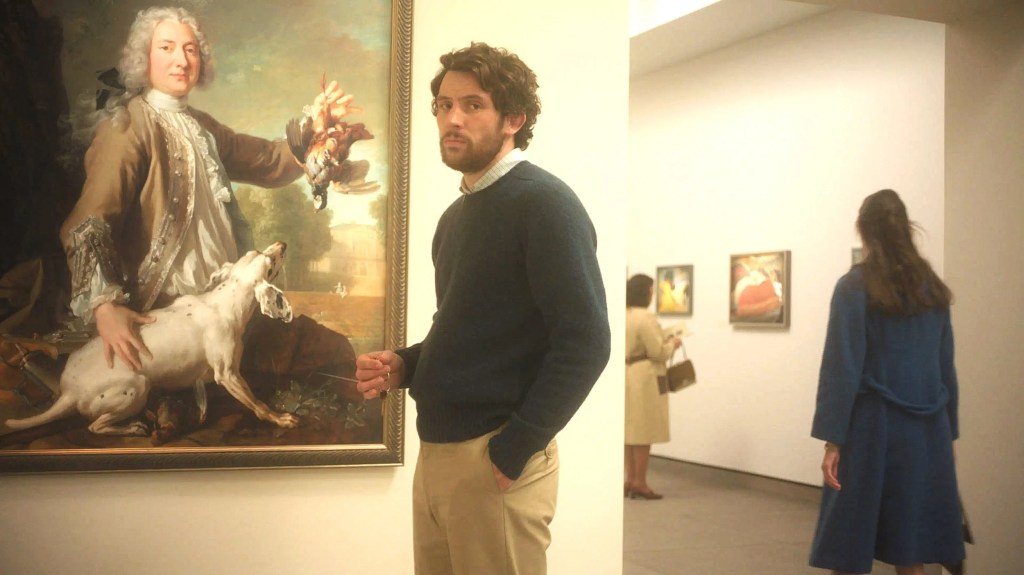
Some people are driven, willing to risk life and limb to reach their final goals. So this week I’m looking at three new movies about ambitious people. There’s an athlete who wants to conquer the world using pingpong balls, a pair of tribute singer who finds love on the music circuit, and a porous sea creature who just wants to be a swashbuckler.
The SpongeBob Movie: Search for Squarepants
Dir: Derek Drymon
SpongeBob SquarePants is a creature who lives under the sea in a town called Bikini Bottom. He has an adult job (he works as a fry cook) but acts more like a child. And like most kids, he wakes up one day to discover he’s grown taller, just tall enough to be allowed to ride the roller coaster at the local midway. He has always want to do it, so he sets off with his much taller best friend Patrick, a starfish, to fulfil his dream. But when he gets to the front of the line he is so overwhelmed by fear and anxiety, he turns around and runs away. He admits what happened to his boss, Mr Krebs, who tells him about his own experience facing fear head-on. You must overcome your fears by exhibiting bravery in the face of
danger. Only then can you be considered a true swashbuckler.
Soon afterwards, SpongeBob and Patrick meet an evil pirate’s ghost known as the Flying Dutchman, who offers to guide SpongeBob through a series of tasks so he can get the coveted Swashbuckler’s certificate. Being young and naïve, he follow the ghost into the underworld. But the older and wiser Mr. Krebs realizes SpongeBob is in danger so he drives after them on his quest. Will SpongeBob become a Big Boy? Or will he always be a bubble-blowing baby? And when will he realize the Flying Dutchman is up to no good?
The SpongeBob Movie: Search for SquarePants is the latest in a series of films, adapted from the wildly popular TV cartoon. It features the usual voices: Tom Kenny as SpongeBob, Bill Fagerbakke as Patrick Star, Clancy Brown as Mr Krabs and Rodger Bumpass as Squidward, and guest-starring Mark Hamill as the Flying Dutchman. The theme this time is everything pirate: a parrot, Davy Jones Locker, hornpipe, spyglass, three cornered hats… you get the picture. While you could call this a coming-of-age drama, that might be pushing it, because cartoon characters never really change or grow up.The look of this movie and its animation style is different from the largely two- dimensional TV show, more cinematic and less cartoony. (I prefer the flatter look to these 3D images.) But it’s nice to watch and quite funny in parts. Like
when Patrick turns his pirate eyepatch into a g-string presumably to conceal his non-existent starfish private parts. Other jokes can only be appreciated by the 3-5- year-old set, like repeating the same words over and over and over and over again until it turns into something marginally salacious.
If you want to entertain your own Ritalin-fuelled psyche — or that of your kids — you’ll probably like this one.
Song Sung Blue
Co-Wri/Dir: Craig Brewer (reviews: Dolemite is My Name, Footloose)
It’s the 1990s in Milwaukee, Wisconsin. Mike, aka Lightning (Hugh Jackman) is a professional musician who plays back-up for a Black R&B band. He once had his own group, but now he mainly earns a living doing tributes to washed out singers from decades past. But he is fired from the show when he refuses to dress up as Don Ho, when the usual singer doesn’t show up.
But something else happens that night: he meets Claire (Kate Hudson) who performs Patsy Cline songs. Sparks fly, and soon they’re a couple with a blended family; they both have kids from previous marriages. And they form an act, called Thunder and Lightning, where the two of them exclusively sing songs by Neil Diamond. They build up a fanbase and eventually are the opening act for Pearl Jam!
Looks like they finally made… until a series of unmitigated disasters threaten both of their lives. Can their love, family and music keep them together?
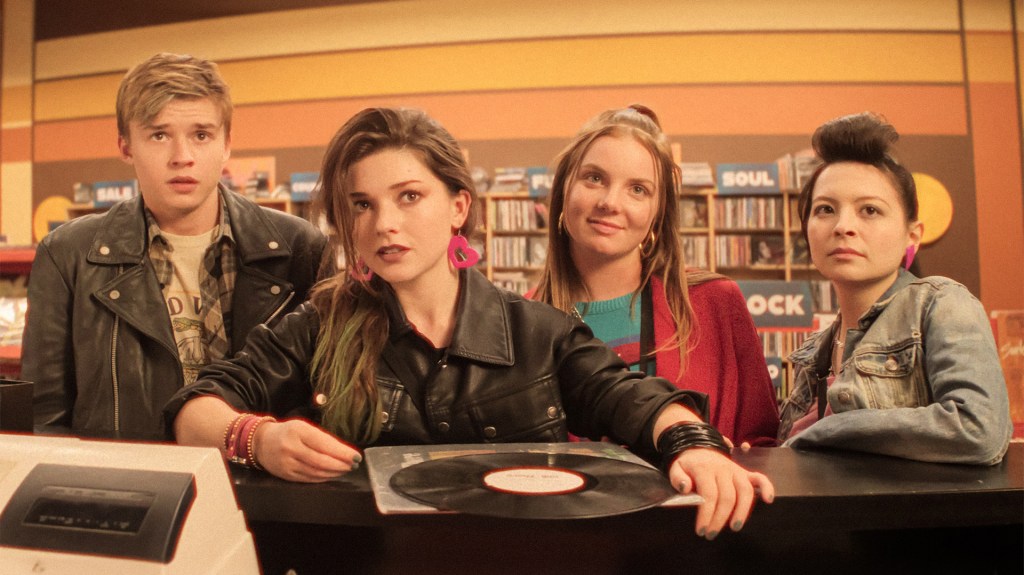
Song Sung Blue is a romantic biopic about a largely unknown
musical duo and their fascinating lives. It’s three main themes are love, family and nostalgia. The love is evident: the two leads have real chemistry. Kate Hudson does a very convincing Wisconsin accent, while Aussie Hugh Jackman sticks to a more of a generic American voice. Can they sing? Totally! They’re both good singers. The family parts are warm and convincing, as are the three kids. As for nostalgia, this is a case of people in 2025 longing for some good ol’ 1990’s nostalgia for the legendary 60s and 70s. So many layers, it’s like a nostalgic club sandwich. As for the tone, while this is not a Christian, faith-based movie, it has the same family-goodness-feel to it. Then there’s the music. Face it, Neil Diamond songs were never subversive or rock ’n’ roll; they’re about as mainstream as you can get… but with catchy tunes and memorable lyrics. People seem to love it.
Song Sung Blue is a cozy, cheesy movie with lots of tearjerking moments thrown in. I thoroughly enjoyed it, despite myself.
Marty Supreme
Co-Wri/Dir: Josh Safdie
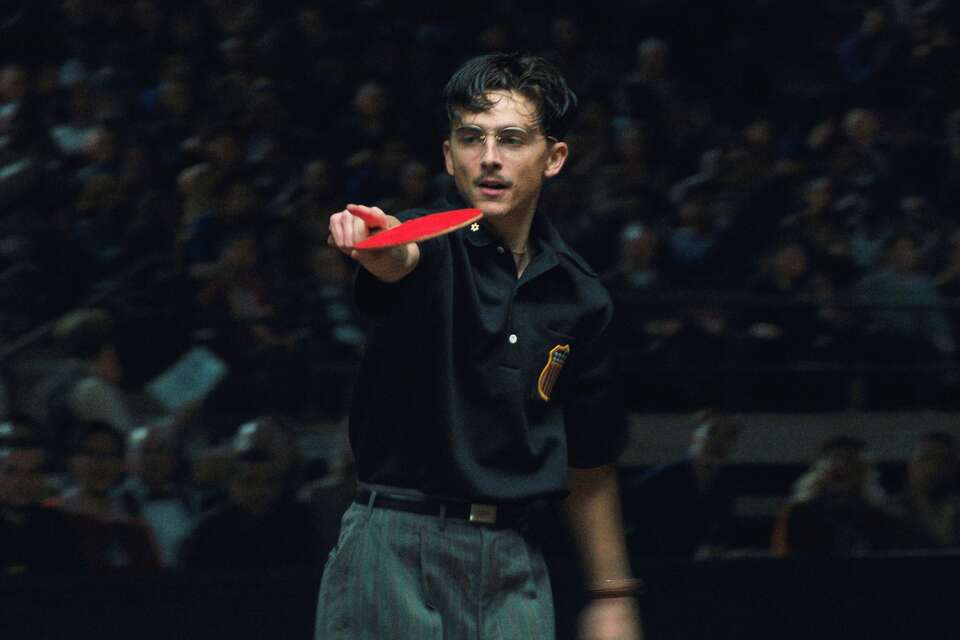
It’s the early 1950s in postwar NY City. Marty Mauser (Timothée Chalamet) is an extremely ambitious man in his twenties, who wants to be rich and famous, but who still lives in a tenement with his mom (Fran Drescher) and works at his uncle’s shoe store. He’s simultaneously charming, brash and audacious. He’s also secretly schtupping Rachel, the married woman who lives downstairs (Odessa A’zion). So what’s his ticket to fame and fortune? Pingpong. He’s a top player who jumps and dives with his paddle like an athletic ballet dancer. Table tennis lacks mainstream acceptance as a serious sport but he plans to change all that. Step one: to secure a plane ticket to London to win the world championship. But that’s not all. He’s looking for a sponsor to invest in his Marty Supreme brand pingpong balls. He also tries to seduce a faded but glamorous Hollywood star (Gwyneth Paltrow) at least twice his age and married to a rich industrialist. And somehow he finds himself part of a scheme with his pal Wally (Tyler the Creator) to bilk rubes n New Jersey as a ping pong ringer. And a side hustle
taking care of a vicious mobster (Abel Ferrara)’s shaggy dog. But the gangster’s pet is dognapped, Rachel reveals she’s pregnant and lots of people now want to see Marty dead. Can he escape all his troubles and follow his dream? Or is he destined to be a shoe salesman forever?
Marty Supreme is a stupefyingly good movie about a working class hero in mid-century America. It’s funny, constantly surprising and full of thrills, sex, and screwball-comedy violence. It’s frenetic and chaotic. Marty Mauser is a fictionalized version of Marty Reisman, a real athlete who chalked up pingpong tournament wins for half a century. Writer/director Josh Safdie is one of the Safdie brothers; they made Uncut Gems and Good Time together. This one is by far the best. It has a cast of thousands — Chalamet, A’Zion and
Paltrow are all great, but so are the smaller roles, like Piko Iyer,
Emory Cohen, Géza Röhrig and Koto Kawaguchi, to name just a few. And it wasn’t till the credits rolled that I realized the villainous, Kevin O’Leary-type industrialist was actually played by O’Leary himself. There’s just so much going on — US occupied Japan, the Harlem Globetrotters — it never ceases to amaze. And putting an 80s pop soundtrack into a 1950s story is a stroke of genius.
Marty Supreme is one hell of a good movie.
Song Sung Blue, The SpongeBob Movie: Search for SquarePants, and Marty Supreme all open in Toronto on Christmas Eve; check your local listings.
This is Daniel Garber at the Movies, each Saturday morning, on CIUT 89.5 FM and on my website culturalmining.com.
Bad Hombres. Films reviewed: Silent Night, Deadly Night, Dust Bunny, One Battle After Another
Hi, this is Daniel Garber at the Movies for culturalmining.com and CIUT 89.5 FM.
It’s easy to root for heroes with clean-scrubbed cheeks and virtuous demeanours, but they make for boring movies. Much more challenging are films where the main characters are anti-heroes, fatally flawed and yet still compelling.
So this week I’m looking at three movies featuring sympathetic portrayals of bad hombres. There’s a murderous Santa Claus, a retired revolutionary, and a monster who lives under your bed.
Silent Night, Deadly Night
Wri/Dir: Mike P. Nelson
It’s Christmastime and like every year Billy Chapman (Rohan Campbell: Halloween Ends) is on the road again. He’s a drifter in his early 20s, picking up work wherever he can find it. He ends up in a small town, and finds work in a store specializing in Christmas ornaments and memorabilia. He forms a crush on Pamela (Ruby Modine), the young woman who runs the store with her dad. But this place is doubly significant because Christmas is crucial to Billy’s self-identity. You see, when he was just a child, he witnessed his parents brutally murdered by a man dressed as Santa Claus. And now he has taken on that role for himself. Dressed in a Santa suit and wielding an axe, Billy kills one person per day, following his advent calendar, until Christmas.
So is Billy a psychopathic serial killer? Well, yes… but, like Santa, he punishes naughty people but lets good ones have a merry Christmas. Everyone he murders is bad… real bad. And how does he know this? A voice in his head tells him who to
kill. But things change when he finds himself falling in love with Pamela. And the feelings seem mutual; they somehow click. (She has Explosive Personality Disorder, sort of like his murder sprees only much less violent). Billy thinks it’s time to settle down, maybe give up all the killing. Can Billy ignore the nagging voice in his head? What will happen if he stops killing bad people? And how will Pamela react if she ever finds out the truth about Billy?
Silent Night, Deadly Night is a classic, slasher-horror Christmas movie about a young killer Santa. It’s ostensibly a remake of an 80s film of the same name (and its sequels) but updated to fit our times. It’s bloody, violent and sometimes disgusting but always in a funny, retro-camp style. I’m talking red & black freeze frames, and old-school soundtrack. And it’s shot in Manitoba, complete with hockey games and lumber yards. Ruby Modine is hilarious as Pamela, and Rohan Campbell manages to make his serial-killer Santa almost sympathetic.
Not your typical Christmas flick but if you’re looking for a funny, gross-out slasher, you can’t go wrong with Silent Night, Deadly Night.
Dust Bunny
Wri/Dir: Bryan Fuller
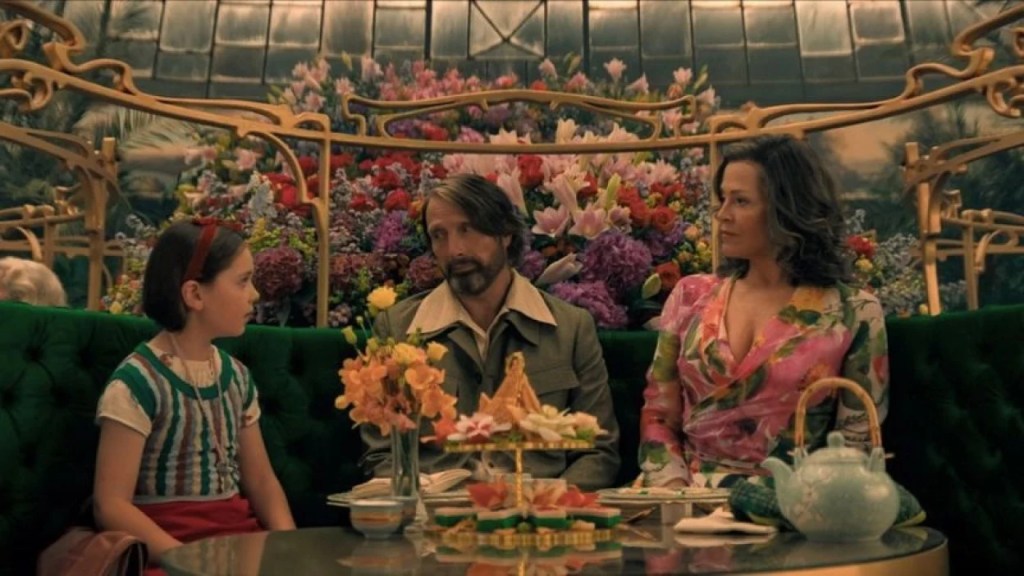
Aurora (Sophie Sloan) is a little girl who lives in a beautiful, antiquated apartment in an unnamed city. She is brave and resourceful with a wild imagination. Aurora has all the clothes, toys and games any girl could ever want. So why is she always so frightened? Because there’s something scary under her bed that won’t go away. It’s a dangerous monster that lives beneath her parquet floorboards, and she’s convinced he’ll eat you up if you ever step on the floor at night. So she gets around on a wooden hippo with wheels, using her mop as a paddle. Her parents tell her repeatedly that there’s nothing under her bed, just dust bunnies, but Aurora refuses to listen. She ends up sleeping on her outdoor fire escape to keep ahead of the monsters. One night she follows a stranger down a dark ally, where she witnesses him slaughtering a dragon. Here’s someone who can keep her safe from the monster — and he lives in her building! When her parents disappear one night she knows she needs help to stay alive. So she attempts to hire her downstairs neighbour (Mads Mikkelsen: The Promised Land, Indiana Jones and the Dial of Destiny, Riders of Justice, Another Round, The Hunt) as a hitman, to kill the monster hiding beneath her bed.
Problem is he doesn’t believe in monsters; he thinks someone was sent to get him, and killed her parents by mistake. But in
the end, he agrees to help her. This news gets her boss very angry. Uptight and evil Laverne (Sigourney Weaver) wants Aurora dead, since she witnessed one of his assignments (he’s a professional hired killer). Soon others start appearing at her door including a suspicious guy with a moustache (David Dastmalchian) and a dressed-to-kill social worker (Sheila Atim). Who are all these people really? And will no-one listen to Aurora about the monster under her bed?
Dust Bunny is a whimsical horror movie seen through the eyes of a young girl, balancing crime and the supernatural. The hitman making friends with a little girl harkens back to Luc Besson’s classic The Professional (1992), starring Jean Reno and a very young Natalie Portman). But the look and style of this movie is totally different. This is not noir, it’s horror fantasy. It’s exquisitely detailed with flowers painted on walls, brightly coloured outfits and creaky, steampunk gears in an ancient elevator. Sophie Sloan is great as the spunky Aurora and a good foil for a gruff Mads Mickelson. The other adults are all comical caricatures but still fun to watch. And the special effects are amazing using animation and puppetry to convey what Aurora can see.
Though scary in parts, I think Dust Bunny is suitable both for kids and grown ups.
I like this one.
One Battle After Another
Wri/Dir: Paul Thomas Anderson (Licorice Pizza)
It’s a couple decades ago, somewhere in the American Southwest. An underground revolutionary faction, known as “The French 75”, is carrying out their latest plan: to liberate hundreds of undocumented workers from an ICE-type detention centre. Members of the group have memorized codes and passwords, and only use their nicknames.
Like JunglePussy and Mae West. Perfidia Beverley Hills (Teyana Taylor) is one of the organizers, and her lover Bob aka Rocket Man (Leonardo DiCaprio) is their fireworks expert. Over the course of the action that night, Perfidia, in a power move, forces their chief enemy, a hardboiled military officer named Col Lockjaw (Sean Penn) to have coercive sex with her. This leaves Lockjaw infatuated, and Perfidia pregnant. After the baby is born, Perfidia is captured by Lockjaw, and rats on her allies, in exchange for witness protection. But she manages to escape to Mexico, while Bob and their newborn-baby Willa hide out in a sanctuary city in California.
17 years later, Bob has become a useless pothead whose only responsibility is keeping his daughter Willa (Chase Infiniti) safe. She can never leave their house without carrying a tracking device, just in case the feds discover who Bob really
is: an underground leftist revolutionary. Willa studies martial arts with her sensei (Benecio Del Toro) and has a close-knit group of friends, named Bluto, Bobo, Riri and Autumn. They’re all getting ready for their high school dance. But little does she realize: her Mom, Perfidia — who she always thought was dead — is back in town; Col Lockjaw is planning a massive attack in order to capture his potential biological daughter; and Bob — following the capture of a key member of the French 75 — is called back to duty by the revolutionary group of his youth. What will become of this estranged family, their allies and their enemies?
One Battle after Another is an amazingly complex and satirical action thriller about a tiny cadre of underground revolutionaries and their rivals the CIA, Ice and the military. Add to this an underground railroad that helps threatened migrants; The Christmas Adventurers — a white supremacist elite fraternity courting Lockjaw as a member — and a monastery full of bad-ass nuns with secret connections… and that’s only part of the complex plot of this movie.
It’s inspired by Thomas Pynchon’s Vineland, but is set in the present, not the 1970s. Its dialogue is detailed and rich but always tongue in cheek, especially the outlandish names of characters and organizations. It’s also an out-and-out action thriller, with chases and close escapes, gun fights and explosions. Sean Penn acts like someone who has been chopped up and sewn back together, Teyana Taylor is perfection as the double/triple or quadruple agent; this is the first time I’ve ever seen Chase Infiniti, but she’s a powerhouse, and Leo Dicaprio — I’m no fan, but he’s so good in this movie, constantly beaten down but always surviving, like a Die Hard character but on the left. One of his best roles ever.
The film is beautifully shot in valleys and deserts, in a cinematographic style I’ve never seen before, like a camera mounted to the front of cars as they go up and down a hilly highway. Amazing! Soundtrack, costumes, art direction and the huge cast — many unforgettable roles I haven’t even mentioned yet — all so good.
One Battle After Another is an unforgettable movie. I recommend this one.
Dust Bunny and Silent Night Deadly Night both open in Toronto this weekend; And One Battle after another is still playing in some repertory cinemas; check your local listings.
This is Daniel Garber at the Movies, each Saturday morning, on CIUT 89.5 FM and on my website culturalmining.com.
Dysfunctional Dystopia? Films reviewed: Sentimental Value, The Running Man, Left-Handed Girl
Hi, this is Daniel Garber at the Movies for culturalmining.com and CIUT 89.5 FM.
Still more Fall film festivals coming at you in Toronto, with the EU film fest — free films from each country of the European Union, plus Ukraine — and Ekran, the Polish Film Festival. So much to see, but look out for Agnieszaka Holland’s biopic of Franz Kafka (called Franz) at Ekran.
But this week, I’m looking at three great new movies, one action and two dramas. There’s an estranged family in Oslo; a fugitive on the run in a dystopian America, and a dysfunctional family in Taipei, Taiwan.
Sentimental Value
Co-Wri/Dir: Joachim Trier
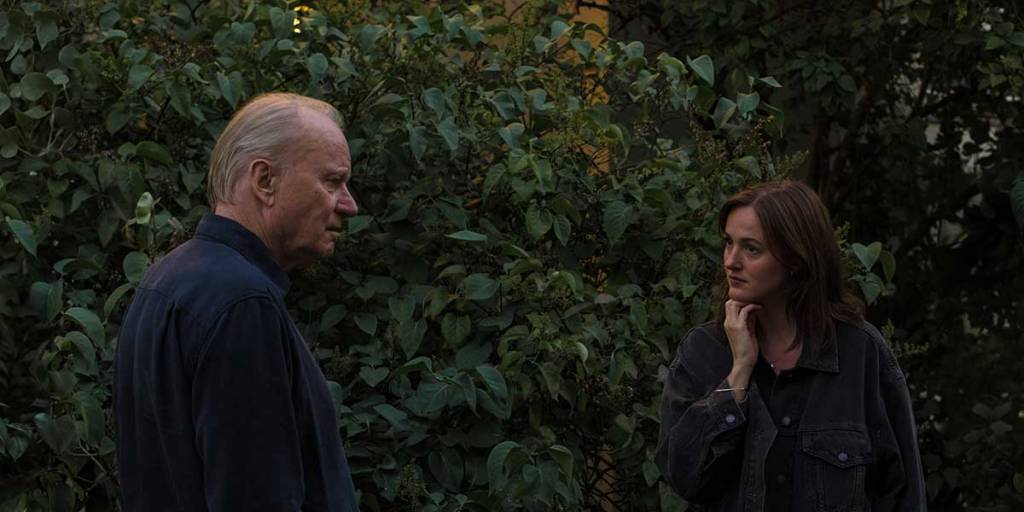
Nora Borg (Renate Reinsve) is a successful stage actress who lives in a grand old house in Oslo. It’s been in her family for generations: it’s where her grandmother killed herself, and where she grew up with her sister Agnes (Inga Ibsdotter Lilleaas) and their mom. Their dad, Gustav, (Stellan Skarsgård) disappeared after their divorce when she was still young, and they haven’t heard much from him in decades. Until now. Their mom just died and she and her sister have to deal with the house and go through all their family’s possessions (that’s the “sentimental value” of the title). And dad owns part of the house, too. But he has a second reason for showing up.
He wants to make a movie there, to use the house as his set. He’s a famous film director, but not in his prime anymore; he hasn’t shot a movie in decades. And he wants Nora in the main role of what is likely his swan song. You’re the only one who can do it, he says, just read the script! Nora refuses; bad blood runs deep. So, partly to get the funding he needs to make the picture, Gustav casts a Hollywood actress to play the role that Nora turned down. Rachel Kemp (Elle Fanning) is a big name, and she’s also a fan of Gustav’s work. What will happen to the house? Will Gustav make his film? And will they ever be on speaking terms again?
Sentimental Value is dramatic comedy about a Norwegian family. It’s full of clever asides and wide-ranging topics, but with a solid core at its centre. What makes Trier such a good director (The Worst Person in the World, Thelma, Oslo August 31st) is he creates believable characters in tough situations but without losing his sense of humour. He constantly plays around with his audience as to what is real and what is
artifice: we see Nora having a deep, emotional breakdown and then discover she’s acting a role on a stage set. He also uses biting satire to get his points across, skewering the superficiality of both Hollywood and bourgeois Norwegian society. He also repeatedly casts from a company of actors in his films. Elle Fanning and Swedish actor Stellan Skarsgård are new, but Renate Reinsve and Anders Danielsen Lie are familiar faces if you’ve ever seen Trier’s movies (and if you haven’t, you should).
Sentimental Value is moving, funny and full of good stuff to think about. I really liked this one.
The Running Man
Co-Wri/Dir: Edgar Wright
Based on a story by Steven King
It’s some point in the not-so-distant future in a dystopian America. A few rich people live luxurious lives, but the majority eke out a precarious existence within the endless sprawl of urban slums. They’re constantly surveilled by cameras, drones and DNA detectors while a brutal paramilitary police force patrols the streets. What keeps the people satisfied? Watching the reality shows and game shows broadcast from a single, big-brother-like monopoly network which controls the government, big business and media.
Ben Richards (Glen Powell) is a skilled labourer and union rep. He also has a volatile temper. He points out dangerous problems on the shop floor, which in this world gets you fired. So he’s out of work, his wife depends on tips in a hostess bar, and their 5 year old daughter is dying of an ordinary flu because they can’t afford basic medicine. What to do? There’s only one choice left: compete on THE RUNNING MAN, a reality show where all contestants try to survive for 30 days being hunted by a gang of professional killers. The winner gets a huge cash prize. And the losers pay with their lives. Luckily, the show’s producer, Dan Killian (Josh Brolin) takes a liking to Ben Richards — he’s smart, strong and most of all, angry! And the audience starts to like him… and his messages of rebellion. Can Ben outsmart the powers that be and survive? Or will the Network crush him, like they did with every Runner before him?
The Running Man is a non-stop action movie, with good
acting and an interesting plot. It’s set in the future, but done in a 1980s style, with zines, nerds and gadgets over spacemen and phasers. There are chase scenes using planes, trains and automobiles, and fiery explosions that level a city block. Glen Powell is wonderful in the lead role, appealing and heroic, painted like a Luigi Mangione fighting the corporate super-villain played by a slimy Josh Brolin. Director Edgar Wright — who brought us Toronto’s greatest Scott Pilgrim vs the Universe — keeps it funny and nerdy; he even casts Michael Cera as a nerdy revolutionary.
The Running Man is a lot of fun to watch.
Left-Handed Girl
Co-Wri/Dir: Shih-Ching Tsou
It’s Taipei’s night market, and a small family is moving into a tiny apartment nearby: I-Jing (Nina Ye) a little girl with a wild imagination, I-Ann (Shih-Yuan Ma) a diffident teenager with a chip on her shoulder, and their hardworking mom (Janel Tsai). She’s opening up a noodle stall to pay their basic rent cheque. Dad is nowhere to be seen; he ran off years ago, leaving the family high and dry. I-Jing quickly adjusts to her new kindergarten class and life in the constantly-moving marketplace. She even helps Johnny (Brando Huang) — a huckster with a heart of gold who sells carnival junk to unsuspecting shoppers — by making announcements on his loudspeaker. Mom is constantly busy, cooking and cleaning her stall, but can’t seem to earn a living. She also takes time to visit her ex-husband, now dying of cancer in hospital. Sadly he leaves his
abandoned family nothing but funeral debts and a pet meerkat. And I-Ann — who was once top of her class until she suddenly dropped out — works as a scantily-clad “betel nut beauty” selling smokes and the addictive chewing treat from her boyfriend’s shop.
But things get tense when the kids’ Mom is forced to visit their grandparents to ask for some money to tide them over. Mom’s brother is the golden boy who can do no wrong, and her two sisters both live in nice houses and are unsympathetic about her economic condition. And worst of all is grandpa, who scolds i-Jing for being left handed. He tells her left hand belongs to the devil (which she interprets as having an evil hand over which she has no control.) Now grandma is smuggling migrants through airports, mom faves eviction from the market, I-Ann missed her last period, and tiny I-Jing is turning into an avid shoplifter, using her “devil’s hand” to do the dirty work. Can this dysfunctional family ever pull itself back together?
Left-Handed Girl is a social drama about a family of women living on the brink. It’s tender, shocking and hilarious. It’s full of fast, clang-y music, flashy lights and hyper-saturated colour. It’s specifically Taiwanese in details (from bubble tea to class snobbery) but universal in its emotional appeal. And it’s co-written and edited by Sean Baker (Tangerine, The Florida Project, Red Rocket, Anora), who swept the Oscars last year with Anora. The characters speak Chinese but it’s clearly a Sean Baker movie, full of imperfect women in precarious times. And its Taiwanese-American director Shih-Ching Tsou worked on all of Baker’s films, so this is part of a long term partnership, with her taking the helm. And it’s Taiwan’s selection for best international Oscar.
I loved Left-Handed Girl, too.
Sentimental Value — opening this weekend — and Left-Handed Girl — next weekend — both played at TIFF. And The Running Man is now playing across Canada; check your local listings.
This is Daniel Garber at the Movies, each Saturday morning, on CIUT 89.5 FM and on my website culturalmining.com.
Daniel Garber talks with Eric San (Kid Koala) about Space Cadet at ReelAsian
Hi, this is Daniel Garber at the Movies for culturalmining.com and CIUT 89.5 FM.
It’s the near future in a major North American city. Celeste is a graduate of the space academy, studying rockets since she was a little girl. Her mother was a famous astronaut who disappeared on a space mission. So she is raised by a robot, who serves as her best friend and her parental unit. Now it’s her turn: she’s heading out on a six month trip into the far reaches of the galaxy… and beyond. Can Celeste travel to new planets, collecting samples for
scientific research and return safely to her home? And will her beloved robot still be waiting for this space cadet?
Space Cadet is a new animated film entirely without spoken dialogue. It’s a funny, poignant and bittersweet look at our futures. It’s the work of Montreal-based composer, musician, graphic novelist, scratch DJ, and director/producer Kid Koala, aka Eric San. His music has appeared on everything from NFB films to Sesame Street, movies like Scott Pilgrim and Baby Driver, and even Nintendo games. Space Cadet played at TIFF and Berlin to great acclaim.
I last spoke with Kid Koala on this show in 2014.
Outcastes. Films reviewed: The Mastermind, Regretting You, Bugonia
Hi, this is Daniel Garber at the Movies for culturalmining.com and CIUT 89.5 FM.
There are a ton of movies opening this weekend with lots of choices for every taste. This week I’m looking at three of them, all about outcasts and rebels. There’s a self-styled art thief in Massachusetts, a daughter fighting her mom when two families are brought together by tragedy in North Carolina, and a pair of cousins trying to save the earth… by kidnapping a CEO they think is an alien.
The Mastermind
Wri/Dir: Kelly Reichardt
It’s 1970 in Framingham, Massachusetts. James Blaine Mooney (Josh O’Connor) is an architect who is down on his luck. He loves his wife Terri (Alana Haim) and their two bright sons, Carl and Tommy (Sterling and Jasper Thompson), but he’s just not earning a living. He has no clients, and is forced to borrow money on the sly from his high-society mom. (Don’t let your father know about this.) He is smart, savvy and full of ideas but spends most of his time puttering around with his ne’erdowell pals. But now he has a get-rich-quick scheme he’s sure will solve all his family problems: stealing modern paintings from his small town art museum.
He tests and calculates every step: a sleepy unarmed guard, no alarms, clear exits, art easily taken off walls. He even has a stolen getaway car, and two henchmen with pantyhose to pull over their faces. It’s foolproof, and they pull it off with barely a hitch. But things goes south when one of the robbers gets caught at another job and spills the beans to the cops. James is labeled the mastermind behind the crime and is forced to flee the town and his family for an uncertain future. Where will he go and how will he survive on the lam?
The Mastermind is a brilliant period piece, a portrait of an America full of sketchy bus stations and flophouses, totally free of patriotic nostalgia. It’s set against — but separate from — the widespread antiwar protests of 1970. Josh O’Connor portrays James as a flawed antihero, who is nevertheless sympathetic. He commits his petty crimes wearing wooly sweaters and corduroy pants. The details in the production design are astoundingly precise. Kelly Reichardt is one of the best American directors you’ve probably never heard of. She
makes films, not high-concept schlock and if you haven’t seen her movies, this is a good one to start with. The Mastermind is one of those movies that starts in the middle of things and ends suddenly, before you think it’s over, but it all makes perfect sense.
This is a really good movie.
Regretting You
Wri/Dir: Josh Boone
It’s 17 years ago on a hot summer night in North Carolina. Two teenaged couples are at a pool party: Morgan and Chris, and Jonah and Jenny. Morgan and Jenny are sisters, Chris and Jonah best friends. They say opposites attract; Chris and Jenny are wild partiers, who like getting drunk and having wild sex, while Jonah and Morgan are smart, conscientious and non drinkers. Fast forward to the present.
Morgan (Allison Williams) has been married to Chris for 17 years, and they have raised their daughter Clara (Mckenna Grace) since they were still young. Jonah (Luigi-Mangione-lookalike Dave Franco) left town soon after graduation but came back recently and restarted his relationship with Jenny, soon leading to a newborn son. And then there’s Clara: everyone loves her. She’s a high school senior who dreams of becoming an actress after college. She tells her aunt Jenny all the things she can’t tell her mom; she’s like her best friend. She adores her dad Chris, and respects Jonah, who is also her high school teacher. And Clara is crushing on Miller, a popular guy at school,(Mason Thames) who lives on a farm with his gramps, cause his dad is in prison. He likes movies, sucking lollipops and moving roadsigns. But he has a girlfriend so he’s a no-go for Clara.
But everything is messed up when Chris and Jenny are killed in a terrible car crash, leaving Clara without her Dad and her Aunt, Jonah without his lover and the mother of their baby, and Morgan without her sister and the only man she’s ever been with. So Jonah turns to Morgan to form a make-shift family to deal with shock, grief, and the temporary raising of their two kids. (Clara and her Mom aren’t talking.) And while all this is going on, Clara and Miller start hanging out. Can
these estranged family members adjust to the drastic changes? What secrets will be revealed and what hidden loves awakened?
Regretting You is a very conventional drama/romance about two families recovering from unexpected loss. It’s also a coming-of-age story, along with some unrequited love. Based on a popular novel, it’s a very easy movie, with nothing transgressive: its set among church and proms and school plays and going to the movies. The characters are pleasant, and its directed in an easy-to-watch way: texts sent between Clara and Miller are also voiced, so no need to read. The story is divided between the grown ups and the teens, with the teens the more interesting half. But what’s weird about this one is the catastrophic events all happen off-camera, and toward the beginning. The rest of the movie is just about mending relations and recovering from the shocks. So instead of building up to a satisfying emotional purge, this one starts with the dramatic shock and then just coasts.
While I don’t regret seeing Regretting You, it’s not my preferred type of movie.
Bugonia
Dir: Yorgos Lanthimos
High-strung Teddy (Jesse Plemons) and shy, neurodivergent Don (Aidan Delbis) are cousins. They share a dilapidated house they inherited along with an attached farm, where they eke out a meagre existence — dressed in filthy Hazmat suits — through the cultivation of honey bees. But the bees are disappearing. What’s happening to their colony? They also work at a shipping station for a nearby big pharma corporation that specializes in lethal pesticides. Teddy holds a special grudge toward that company for past digressions it inflicted on him and his family.
The company is Auxolith and its CEO is Michelle (Emma Stone), a high-power, alpha careerist. She lives a magazine-like lifestyle in her modern mansion equipped with high security. She is a perfectionist, who only eats heathy food and insists her hair, makeup and power suits are always flawless. She works out using the latest machinery and is fully trained in martial arts. At work, though surrounded by a retinue of
yes-men, she seems oddly sterile and detached from all her employees.
But everything changes when Teddy — with Donny’s help — kidnap Michelle and drag her, undetected, to their lair. They shave her head, tie her to a bed, and cover her skin with weird emollients. Does they want money? Fame? A platform for their manifesto? No! Teddy is convinced Michelle is personally responsible for widespread ecological destruction of the planet — including his bees. And her motive? He is convinced she’s an alien from Andromeda with ties to a mothership parked just outside of the earth. Where do his bizarre theories come from? How can Michelle escape their clutches?
Bugonia is a weird movie pitting an eco-terrorists against a cold billionaire industrialist. Like all of Yorgos Lanthimos’s movies, Bugonia is simultaneously hilarious and disturbing. Grown adults talk like stilted children saying profound but outlandish statements. It’s laden with conspiracy theories, that are no less ridiculous than the corporate-speak the other half uses. Lanthimos likes to cast the same retinue of actors from his past pictures, so Emma Stone and Jesse Plemons are back again playing more quirky oddballs (though Aidan Delbis is entirely new). Bugonia is comical and absurd but also dark.
I really like Lanthimos’s style, but some people hate it; he’s not for everybody. But if you’re looking for something wack and dark and weird, you’ve got to see Bugonia.
Bugonia, Mastermind and Regretting You all open in Toronto this weekend; check your local listings.
This is Daniel Garber at the Movies, each Saturday morning, on CIUT 89.5 FM and on my website culturalmining.com.
More Cabins in the Woods. Films reviewed: Anemone, Queen of Bones, Bone Lake
Hi, this is Daniel Garber at the Movies for culturalmining.com and CIUT 89.5 FM.
From Goldilocks to Hansel and Gretel, we’ve all grown up with an innate fear and fascination of cabins in the woods. They’re isolated, mysterious and possibly dangerous. And that goes for movies, too, with cabins in the woods a common recurring theme, especially in horror movies. So this week, I’m looking at three such movies all opening this weekend.
There’s a fugitive in a house made of stone, a pair of twins looking for the Queen of Bones, and a young couple renting a place beside Bone Lake.
Anemone
Co-Wri/Dir: Ronan Day-Lewis
Jem and Nessa (Sean Bean, Samantha Morton) are a comfortably couple raising their 19 year old son Brian (Samuel Bottomley). So why is Brian at home in his room? He got in a fight and nearly beat the other guy to death. He’s depressed and frustrated, and desperately needs the help that they can’t provide. So Nessa asks Jem to do something he’s sworn never to do: find a man who disappeared 20 years ago. So Jem, armed with only a cryptic piece of paper with longitudinal measurements and a sealed letter from Nessa, sets out for a journey into a forest somewhere in the UK.
His clues lead him to a stone hut, literally in the middle of nowhere. As he approaches, a grizzled old man almost blows his head off with a rifle, but, just in time, he recognizes the sound of a clicking, childhood toy. It’s Ray (Daniel Day-Lewis) a fugitive from justice, who has been hidden away all this time. He is somehow connected to a killing that occurred during The Troubles in Northern Ireland. Not only that, he’s Jem’s big brother. What happened all those years back, what is Ray’s connection to Nessa and Brian, and will he agree to come out of hiding?
Anemone is a passionate and personal story about brothers, fathers and family history. Along the way, there’s lots of whiskey spilt and dirty jokes told, along with hiking and camping, punch-outs and wrestling. Lots of guy stuff, a Man’s-Own story. And it’s filmed among spectacular scenery, a stone beach, a glowing moon, distant hills and mountains. Just
gorgeous. Daniel Day- Lewis — who retires every 5-10 years, then makes another movie — puts a lot into his role, and Sean Bean is excellent as his foil. Samuel Bottomley seems like another Barry Keoghan. And there are some cool dreamlike sequences, and I even shed a tear near the end. But the movie as a whole just doesn’t seem quite right. It’s too contrived, too set up. I got a lot out of it aesthetically, but found it hard to connect emotionally. It’s directed by Daniel’s son Ronan and they wrote it together, but it’s just OK, not great.
Maybe it’s too weak a script and too strong an actor for a first-time directors to handle.
Queen of Bones
Dir: Robert Budreau
It’s the 1930s in a small house deep in the woods outside Portland, Oregon. Fraternal twins Lily and Sam are in their early teens. They were raised together by their single dad, a devout Christian (Martin Freeman). He’s a craftsman who makes exquisite violins to order. Lily (Julia Butters) takes after her mom, a violin virtuoso, while Sam (Jacob Tremblay) is more interested in trains and cars — he wants to be a mechanic, though his family still rides a horse and buggy. Their father has always said their mother died before they were born and it’s a miracle they came out alive, but they still wonder about what happened to her. And around this time, when they both reach puberty, Lily starts seeing strange cryptic signs carved into trees in the woods. What could they mean? She has dreams about wolves, and, if she concentrates hard enough, she thinks she can control the weather.
One day, Ida-May (Taylor Schilling) a local shopkeeper, drops by their home. She flirts with their dad, as they’re both widowed. But she also leaves behind a trunk of the twins’ mother’s possessions they inherited from their late grandfather. It’s full of shawls and dresses. But hidden at the bottom is a book of spells and incantations written by her mom. Lily hopes they can explain the mysteries surrounding her mother. But they have to keep it hidden from their dad, who abhors anything related to witchcraft, and keeps the
twins separated from anyone but him. Who is the Queen of the Bones? Was their mom a witch?Did Lily inherit her powers? And is there someone out there who can answer all these questions?
The Queen of Bones is a fairytale about a pair of twins trying to find a witch while evading their over-protective father. It’s low-budget, and simple, but kinda neat. It’s told in a series of short chapters, leading inexorably toward a dramatic end. Though set in Oregon, the locations and some of the cast is Canadian, from Jacob Tremblay (he was the little boy in Room) to the great stage actor Clare Coulter. Julia Butters is excellent as Lily.
I like witches and fairytales and cabins in the woods so, while not a terrific movie, I enjoyed it anyway.
Bone Lake
Dir: Mercedes Bryce Morgan
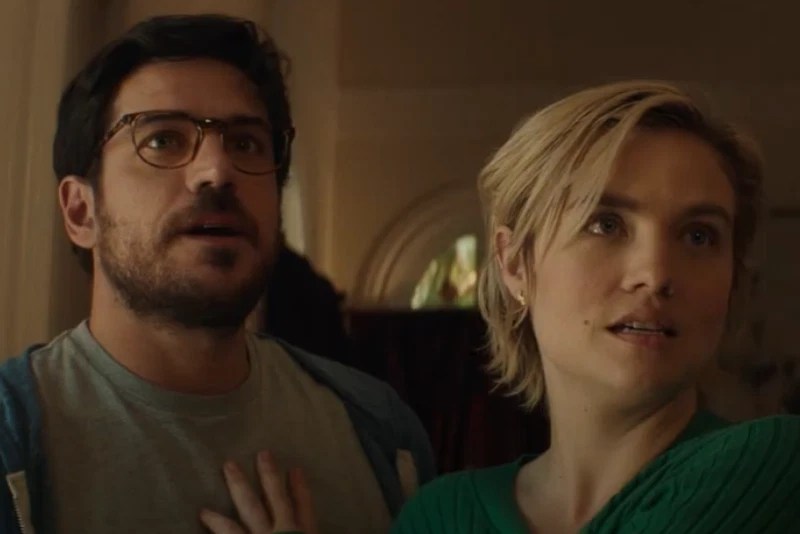
Sage and Diego are a professional couple heading for a luxury weekend in the country. Diego (Marco Pigossi) teaches creative writing at a community college but wants to write a novel. Sage (Maddie Hasson) is a freelance journalist known for her provocative features about sex toys. They are at a turning point in their relationship. Sage has agreed to take a desk job — an editing position — so Diego can pursue his dream for a year. And unbeknownst to her, he plans to propose to her, with his late grandmother’s ring. But when they get there, The BnB they rented is far from the rustic cabin they expected. It’s an enormous, elegant mansion on a huge lot overlooking a lake. It seems way too fancy for what they payed, but they decide not to look a gift horse in the mouth. They settle quite nicely in their new digs. Until another couple shows up claiming they rented the house for the weekend, too!
Sage and Diego decide to go with the flow, and let them share the place — it’s a huge mansion, remember. And the other couple happens to be younger, better-looking and scantily dressed. The appropriately-named Cin, short for Cinnamon (Andra Nechita), looks like a model, and so does her boyfriend, Will (Alex Roe). While Sage and Diego are looking for some alone time, Can and Will prefer games, both sexual
and psychological. Together they explore the locked rooms in the house, one quite sexual, another occult. Cin and Will proceed to ingratiate themselves into Sage and Diego’s lives, splitting them apart for intimate talks… and possible seductions. But as the games turn serious, no one knows who to trust. Who is behind this weird house, and what do they want?
Bone Lake is a psychological thriller about the relations between two couples in an isolated house in the woods. What starts out as a sex comedy, gradually shifts into a violent thriller/horror. There are hints from the start — the opening scene involves a naked couple pursued by unknown assailants carrying crossbows — but it’s left ambiguous whether it’s just
a scene from Diego’s novel or an actual event within the movie. While not entirely original, there’s more than enough enough sex and violence to keep you interested. The acting’s good and the tension is palpable.
All in all, Bone Lake is pretty good horror.
Anemone and Bone Lake both open this weekend in Toronto; check your local listings. And Queen of Bones is now available digitally and on demand.
This is Daniel Garber at the Movies, each Saturday morning, on CIUT 89.5 FM and on my website culturalmining.com.
Outstanding, great… or just ugly? Films reviewed: Eleanor the Great, Out Standing, The Ugly
Hi, this is Daniel Garber at the Movies for culturalmining.com and CIUT 89.5 FM.
Toronto Palestine Film Festival is on right now, with movies, shorts and docs by and about Palestinians, as well music, cuisine and art to share with other Canadians. This is it’s 17th year and it’s never been more relevant, so check it out.
But this week, I’m looking at three new movies that premiered at TIFF and are all opening theatrically this weekend. There’s an elderly woman who tells a lie, a woman with an “ugly” face who disappears without a trace, and a female officer in the Canadian Army who wishes a certain photo would just go away.
Eleanor the Great
Dir: Scarlett Johansson
Eleanor Morganstein (June Squibb) is a grandmother in her 90s. Since her husband died ten years back, she has shared her Florida condo with her best friend Bessie whom she’s known for 70 years. They do everything together, and work well as a team. Where Bessie is timid, Eleanor is brash and outspoken. If there’s something Bessie wants, Eleanor knows how to get it, even if it involves telling a few fibs. She has chutzpah to spare. But when Bessie suddenly dies, she realizes there’s no reason to stick around, so she packs up her stuff and flies back to New York for the first time in decades. She’s staying with her daughter Lisa (Jessica Hecht) and her grandson Max (Will Price). She’s hoping for some quality time but Lisa’s a worrywart and Max is always busy at school. So she takes up her daughter’s offer to attend some classes at the JCC she signed her up for; maybe she’ll make some friends. The first class is a washout — broadway musicals — so she wanders into another group almost by accident. It’s a support group for Holocaust survivors, and the members urge Eleanor — as a newcomer — to tell her story. She’s not a holocaust survivor, but her best friend Bessie was… and she knows all her memories, especially the death of her brother. So, in deference to Bessie, she tells them to the group as if they’re her own. Why not, right? It goes over well… a bit too well, actually. A teenaged college student Nina (Erin Kellyman) is auditing the group and soon bonds with Eleanor (her mom recently died and her dad is distant and
withdrawn.) The two women bond and start sharing intimate stories.
Nina is in a journalism class, and wants to make a video of her telling her holocaust memories as part of an assignment. Then things get really out of hand: Nina’s dad (Chiwetel Ejiofor) happens to be a popular TV news journalist… and he wants to make Eleanor his next feature. But what will happen to her friendship with Nina — never mind her own family — once the truth inevitably comes out?
Eleanor the Great is a nice, light movie-of-the-week-type drama about death, mourning, and inter-generational relations. It’s a very simple and easy movie, part comedy, part weeper. What’s good about it is the acting. June Squibb — who really is in her 90s — is great as the energetic, down-home Eleanor. (She played another rebellious granny in last year’s hit Thelma.) This is Scarlett Johansson’s first time as a director, and luckily she doesn’t bite off more than she can chew. She concentrates on characters — Squibb and Kellyman are both great in their roles — more than the basic story. And you know what? That’s good enough.
I wouldn’t call Eleanor the Great great, but it’s worth the watch.
Out Standing
Co-Wri/Dir: Mélanie Charbonneau
It’s the 1990s, and Captain Perron is leading a troop of UN peacekeeping forces in the former Yugoslavia. Why is this unusual? Sandra Perron (Nina Kiri) is a Canadian woman, the first to lead a squad of infantry soldiers in combat, and the first female to serve in the prestigious 22nd division, known as the Van Doos. Raised as an army brat in bases across Canada, she comes from a long line of soldiers, so it makes sense that she is following in her father’s vocation. She trained as a cadet and received commendations while still a teenager. And she’s the first woman to survive the brutal training that squadron demands. But there’s a photo circulating from her past that’s threatening to derail her military career. It’s a picture of her tied to a tree, barefoot, in the snow and semiconscious.
It was part of her training in a Prisoner of War exercise that went far beyond the normal treatment soldiers are forced to endure. A Canadian woman facing treatment tantamount to torture at CFB Gagetown in New Brunswick. But Captain Perron isn’t the one who released the photo, one fact she didn’t want the photo circulated. She had endured years of hazing bullying, harassment, obscene phone calls, sabotage to her kit, and a hidden campaign by certain officers to get rid of her. They detest the idea of serving alongside or under the command of a woman. And unlike the other women who
attempted to to join the Van Doos, she alone managed to survive and not quit.
Out Standing is a biopic about a trailblazing woman in the Canadian Armed Forces. It’s both moving and disturbing. The title, based on her memoirs, refers both to her achievements and to the notorious photo of her standing tied to a tree. (That pic was eventually published by the press, triggering a wave of shock and disgust across the country, and, one hopes, an improvement in how women are treated in the military.) Nina Kiri gives an excellent performance, totally believable as Perron.
While Hollywood churns out dozens of war movies each year, showcasing the latest weapons and fighter planes, you rarely see a Canadian one. This one is full of details carefully chosen to distinguish how soldiers behave here. The military culture is quite different. Unlike in the US there’s no Sir-yes-sir! And instead of saluting a Canadian soldier stand sharply at attention. I never knew this because you never see it in movies. For this alone it’s a eye-opener. The film is not perfect — there’s a particularly clumsy scene near the end — but altogether it’s a compelling and disturbing look at a Canadian woman’s life in the military.
The Ugly
Wri/Dir: Yeon Sang-ho (Peninsula, Train to Busan)
Lim Yeon-gyu (Kwon Hae-hyo) is a well-known carver of dojang, the name stamps used in Korea like a signature on official documents. He built up his business from scratch while raising his son as a single parent. (His wife ran away soon after the baby was born.) He trained his son Lim Dong-hwan (Park Jeong-min) in every aspect of the craft. Now an adult he is taking over the family business. At this moment, a documentary filmmaker (HAN Ji-hyeon) is celebrating this dad’s life as a national treasure. Why did she choose this man for her documentary? He’s been blind since birth, which makes his many accomplishments even more impressive. But filming is put on hold when a surprise announcement arrives. They’ve found Dong-hwan’s mother decades after she disappeared. Turns out she’s been dead all that time and only her bones remain. This comes as a total shock to Dong-hwan, and it just gets worse.
First his mother’s long lost relatives arrive for the funeral but they’re despicable people who just want to make sure he doesn’t claim any family inheritance.They bullied and beat his mother, a veritable Cinderella raised by this cruel family. It’s also the first time he hears his mother described as ugly. Ugly how? He longs to see a photo of her, something to display at the funeral, but there are no photos anywhere. Of course his blind father doesn’t have one. While Dong-hwan is trying to process all this new information, the filmmaker leaps on it as a great story and insists on continuing the documentary but with a new twist: who killed his mom and why? Together, over a series of interviews with hidden cameras, they uncover
events and people from her past as the tragic puzzle gradually falls into place.
The Ugly is a mystery about a kind-hearted woman — the main character’s mother — and how she is horribly treated because of her looks. It’s a heart wrenching story, a dark, bleak view of humanity with only Dong-hwan (and his mother) as redeeming characters. The story is told as a series of interviews with the various characters and extended flashbacks to what actually happened (The actor who plays Dong-hwa also plays his blind father as a young man in the flashbacks, while Jung Young-hee plays his mother, but always from behind or from the side, without ever revealing her face). In Yeon Sang-ho’s previous movies (Peninsula, Train to Busan) the action hero is surrounded by mutants or zombies or killers. The Ugly is about normal people but they’re just as hideous.
The Ugly is a powerful and dark look at human cruelty and physical beauty.
Eleanor the Great, Out Standing and the Ugly all open this weekend in Toronto; check your local listings. This is Daniel Garber at the Movies, each Saturday morning, on CIUT 89.5 FM and on my website culturalmining.com.
Daniel Garber talks with László Nemes about Orphan at #TIFF50
Hi, this is Daniel Garber at the Movies for culturalmining.com and CIUT 89.5 FM.
Photos by Jeff Harris.
It’s Spring, 1957, in Budapest, after the failed Hungarian uprising. Though young Andor Hirsch looks like an angelic Oliver Twist, he’s actually a tough kid, given to smoking, jumping onto streetcars and squeezing in and out of small places. He knows every loose fence, every crumbling building in his part of Budapest. He likes collecting ticket stubs and returning old bottles. He lives with his mother Klara (who survived the Holocaust in hiding) while his father was sent to the camps. But he still talks to his Dad each day, patiently waiting for his return. Until one day, an enormous thuggish
man, a heavy drinking pork butcher who speaks like an oaf and rides a motorcycle, enters his life. He knows his mom, and seems to like Andor, too, for some reason. But he refuses to accept that this creature could possibly be his biological father. He’d rather be called an orphan.
Orphan is the name of a new film that premiered at the Toronto International Film Festival. It is a lavishly detailed and deeply moving coming-of-age drama about the family history of a boy trying to survive in a ruined, Soviet-occupied Budapest. It’s co-written and directed by Oscar-winning filmmaker Laszlo Nemes (Son of Saul). I last interviewed him on this show in 2016, about Sunset.
I spoke with Laszlo Nemes in person during #TIFF50.
Orphan will open in North America next year.
Daniel Garber talks with Min Sook Lee about There are No Words at TIFF
Hi, this is Daniel Garber at the Movies for culturalmining.com and CIUT 89.5 FM.
Photos by Jeff Harris.
It’s the 1970s, and the Lee family — Dad, Mom and three daughters — are experiencing the typical immigrant life in Toronto. A brash dad and a soft-spoken mom spend all their time in the family convenience store so the girls can study for school in their high-rise apartment tower. But everything
changes when, seemingly out of nowhere, their mom dies by suicide, leaving only a few photos and silent memories. Now, decades later, one of those sisters has made a documentary about their hidden past… but there are no words to describe the shocking family history and generational trauma she unveils.
The film’s called There are no Words, and is written and directed by multiple award-winning Toronto-based documentary filmmaker Min Sook Lee. She is known for her moving documentaries that bring crucial global political issues down to a personal scale, as in
her doc Migrant Dreams in 2016, the last time I spoke with her on this show.
Incorporating period news footage and photos with new interviews with her family’s relatives and friends in Canada and Korea, as well as a shocking and revelatory talk with her father, There are No Words is a highly personal heart-wrenching look at the filmmaker’s own hidden family history.
I spoke with Min Sook Lee via Zoom.
There are No Words had its world premiere at TIFF, played at ReelAsian and will be released theatrically.
Hi, this is Daniel Garber at the Movies for culturalmining.com and CIUT 89.5 FM.
it’s the work of award-winning documentary filmmaker Tasha Hubbard, known for her powerful docs featuring indigenous subjects. Meadowlarks is her first narrative feature. I last interviewed Tasha in 2019 on this show about
leave a comment