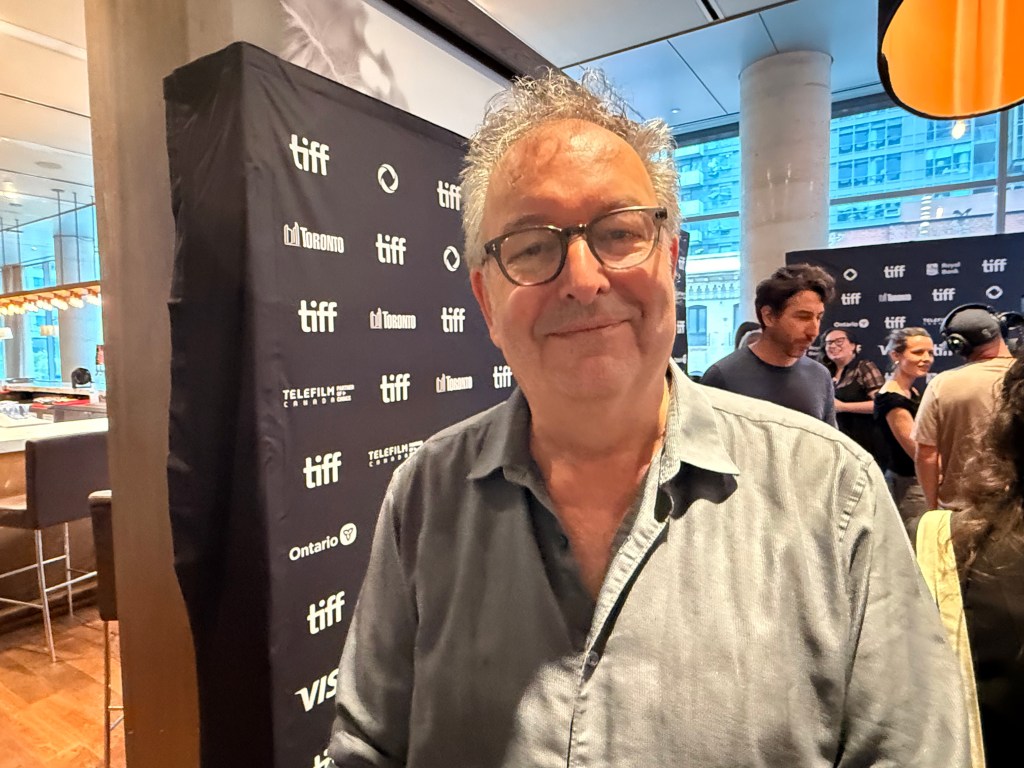
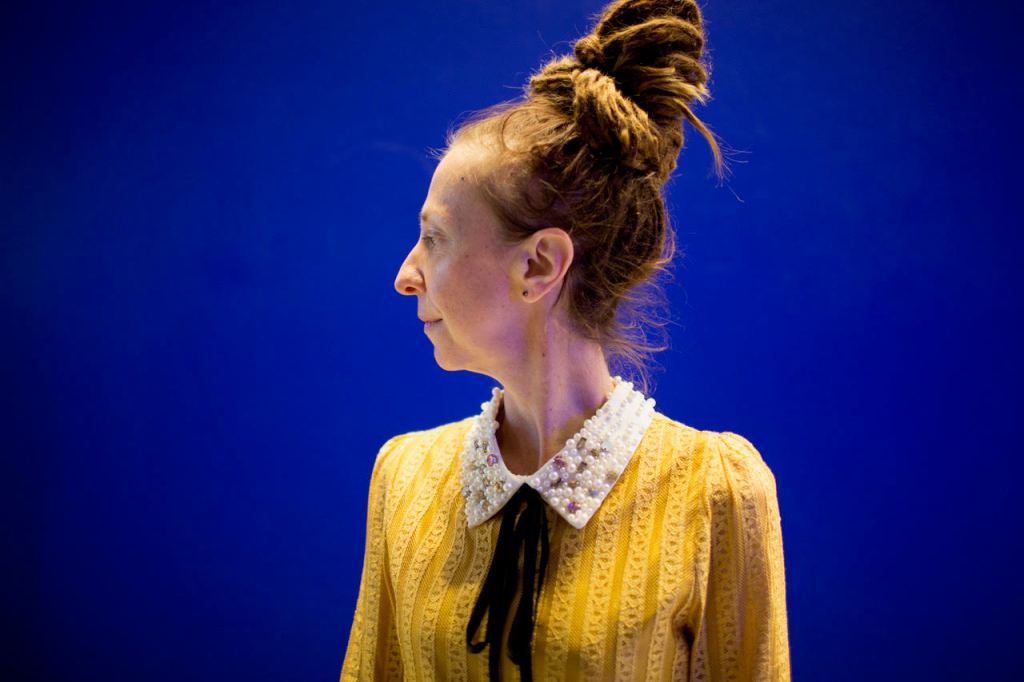
Daniel Garber talks with Peter Mettler about While the Green Grass Grows: A Cinematic Diary in Seven Parts
Part 1
Part 2
Hi, this is Daniel Garber at the Movies for culturalmining.com and CIUT 89.5 FM.
Media pundits say outlets like Tiktok and Instagram have distilled ideas into their purest and shortest form: a thirty second clip best viewed on a smartphone. This, they say, is our future. But not everything is shrinking. Some films are growing, lengthening and expanding. Would you believe I just saw a seven-and-a-half hour movie… and loved it?
It’s a film diary whose seven chapters are shown in two parts. This philosophical travelogue and life-record follows its
filmmaker over half a decade in Canada, New Mexico, Cuba and Switzerland. It deals with images of animals and caves, rivers and waterfalls, alongside a personal examination of life and death, and the past and the future.
The film’s called While the Green Grass Grows and is written, directed and photographed by award-winning Swiss-Canadian filmmaker Peter Mettler. Peter’s retrospectives — featuring Gambling Gods and LSD, and Picture of Light — have been shown at the Lincoln Center, the Jeu de Paume, and Cinémathèque Suisse, while his cinematography can be seen in movies like Robert Lepage’s Tectonic Plates and Jennifer Baichwal’s Manufactured Landscapes. With a distinct cinematic style that lies somewhere between experimental film and documentary, Peter explores both the physical world and the ideas we carry within our minds.
While the Green Grass Grows: A Diary in Seven Parts will have its world premiere at #TIFF50.
I spoke with Peter Mettler in Toronto, via ZOOM.
Daniel Garber talks with Ingrid Veninger about Crocodile Eyes
Hi, this is Daniel Garber at the Movies for culturalmining.com and CIUT 89.5 FM.
It’s present day Toronto. Independent filmmaker Ruby White (Ingrid Veninger) is working on a documentary about her family. She has stuck a hundred, hot-pink post-it notes on a wall, and is gradually filling in the blanks, using vintage footage she has dug up, and brand new snippets as they happen. Her daughter Sara, an artist, is very pregnant with a four- year-old daughter already there. Little Freya is exploring the world, one blade of grass at a time. Her son Jake is a manager at a movie theatre and a member of a
band. Ruby’s Slovakian parents, Dedo and Baba, still play an active role in their family; her Mom still vivacious, her Dad on his last legs. But with life, death and birth happening all around her, Ruby must decide what to include in her film and what to leave out. What is real and what is fictitious? And what will her family think of the final film?
Crocodile Eyes is a semi-fictional, semi-documentary slice-of-life drama, told through a raw and visceral lens. It’s both heartwarming and shocking. It’s the work of prize-winning, independent filmmaker Ingrid Veninger, whose films have
been shown at TIFF and festivals worldwide. She has also taught and mentored countless other filmmakers, many of whom who have risen to their own fame. I’ve been following her work for the past decade and a half, reviewing movies like the wonderful Modra and the hilarious I Am a Good Person/I Am a Bad Person, and have interviewed her twice on this show about Porcupine Lake (2017), and The Animal Project (2014).
I spoke wth Ingrid Veninger in person, at CIUT 89,5 FM.
Crocodile Eyes is having its world premiere on March 28th at the Canadian Film Fest.
Daniel Garber talks with Jeff Harris about #TIFF24!
Hi, this is Daniel Garber at the Movies for culturalmining.com and CIUT 89.5 FM.

TIFF is the most important film festival in this hemisphere, that gives us hints about the upcoming Awards season, what movies we should look out for, and where contemporary cinema is going. It ended six weeks ago, so it’s a good time to take a look at what TIFF brought us — the hits, flops, changes and sleepers, and just about the TIFF vibe itself. Jeff Harris is a professional photog who has covered TIFF for more than two decades, in photos and features for Macleans, The Walrus, and culturalmining among other outlets. So I’m very pleased have friend of the show Jeff Harris, here, in person, for a spirited discussion about this year’s TIFF.

TIFF 24 RECAP – PART 1
Films discussed include:
- The Substance
- The Assessment
- Bird
- Heretic
- Emilia Pérez
- The End
- Fanatical: The Catfishing of Tegan and Sara
- Elton John: Never Too Late
- The Tragically Hip: No Dress Rehearsal
- Piece By Piece
- Better Man

TIFF 24 RECAP – PART 2
Films discussed include:
- Paul Anka: His Way
- The Luckiest Man in America
- The Last Republican
- The Order
- The Seed of the Sacred Fig
- The Girl with the Needle
- Kill the Jockey
- Nightbitch

TIFF 24 RECAP – PART 3
Films discussed include:
- The Life Of Chuck
- The Wild Robot
- Mother Mother
- Pepe
- Dahomey
- The Brutalist
- Riff Raff
- Nutcrackers
Magical kids. Films reviewed: The New Boy, Butterfly Tale, Once Within a Time
Hi, this is Daniel Garber at the Movies for culturalmining.com and CIUT 89.5 FM.
You’ve heard of Peter Pan, right? He’s most famous for not growing up and for believing in fairies. And it’s true, kids are more likely to believe in magic than grown ups. This week, I’m looking at three new movies about the innocence and magic of childhood. There’s a disabled, teenaged butterfly that wants to migrate with his flock; an indigenous boy with magical powers sent to a church-run school; and a group of kids forced to face a fairytale apocalypse.
The New Boy
Wri/Dir: Warwick Thornton (Sweet Country)
It’s the 1940s at a remote Australian Benedictine monastery. Sister Eileen (Kate Blanchett) is excited because there’s a new student arriving soon. She runs the place, ever since the head Benedictine monk died — she keeps this detail a secret from the outside world. The new boy (Aswan Reid) is indigenous, can’t speak English, and has had virtually no contact with white Australia. He has blond hair and brown skin. He sleeps on the floor, not on a bed, and finds forks and spoons a mystery. At the same time, he can conjure up glowing particles to light his way, using just his hands. And he has magical powers: he can speak to trees, and cures people bitten by poisonous snakes.
The sisters teach him out to use an outhouse (which he finds both funny and revolting), and about western ways and foods. Above all, Sister Eileen wants to convert him to Christianity — she lives him deeply, and wants to save his soul. She uses a life-sized wooden statue of Jesus writhing on the cross as the catalyst. She hopes to change him completely, and ultimately to baptize him and give him a Christian name. Will he convert? And what will happen if he does?
The New Boy is a gentle, bittersweet look at religion,
colonization, forced assimilation and residential schools (known as boarding schools in Australia), as seen through one boy’s eyes. I found it both inspiring and tragic. Kate Blanchett is wonderful as the scheming but good-hearted nun, while young actor Aswan Reid is remarkable as the unnamed new boy. (The movie opens with a violent fight between him and a soldier in the bush, just one of many surprising scenes he manages to convey without uttering a single word.) Director Warwick Thornton based it partly on his own experiences as a boy in Alice Springs, and those personal details and feelings come through.
I liked The New Boy a lot.
Butterfly Tale
Dir: Sophie Roy
Patrick (Mena Massoud) is a young monarch butterfly who recently made the transition from caterpillar. He and his best friend Marty are looking forward to joining his village on their annual migration to Mexico. He is especially excited about spending quality time with the girl he’s crushing on, Jennifer (Tatiana Maslany). But there’s a problem. Patrick emerged from his cocoon with mismatched wings, so he’s disabled and can’t fly. And Marty is still a caterpillar. They are teased and bullied by the bigger butterflies as “butter fails”.
Worse still, Patrick’s mom, a leading flier in the “flutter” (what they call their butterfly community) wants him to stay home in the winter. But Patrick and Marty are determined to get there by hook or by crook. Jennifer, a strong flier, is pulling a leaf filled with milkweed so they can all eat on the way. Patric and Marty stowaway aboard that leaf! Little did they know they’ll face tornadoes, big box stores and angry birds posing life threatening dangers on the way. Will Patrick ever learn to fly? Will Marty ever make the transition from caterpillar to butterfly? And will Jennifer get over her hangups?
Butterfly Tale is an animated, coming-of-age road movie
about anthropomorphic butterflies. They’re basically people, with human hair, faces, and bodies but with big butterfly wings coming out of their backs. They wear T-shirts and hoodies, and worry about adolescent insecurities. (They even have to stop the flight along the way to take a leak.) Little kids might really identify with the characters and like this movie; it has good role models for children with disabilities, and deals with environmental issues. The thing is, it’s not original or funny or risky or challenging anywhere, just a typical adolescent drama, where the people happen to be butterflies. I’m not saying it was uninteresting — it kept my attention the whole time — there just wasn’t much to it.
Once Within a Time
Wri/Dir: Godfrey Reggio
Once upon a time, a bunch of happy kids follow the beckoning voice of a goddess onto a stage. After riding a merry-go-round they start to notice strange happenings. An Adam-and-Eve-like young couple in wire masks take a piece of fruit from a sinister looking apple-man, unleashing terrible events. Smart phones generate robots, a chimp in a monkey suit and another in a VR helmet, huge industrial power-towers, a baobab tree exploding into a mushroom cloud. Ecological and geopolitical devastation is at hand! Can we survive the end of this world… or maybe start a new one?
Once Within a Time is a phantasmagorical, magic-lantern fable performed on a two dimensional stage beneath a prominent proscenium arch. It’s equal parts live-action, documentary
footage, still images, and 3-D stop-motion animation.
I first saw Godfrey Reggio’s Koyaanasqatsi as a teenager and the barrage of apocalyptic images of corporate uniformity combined with Philip Glass’s pounding music left deep marks in my psyche. This one is kinder and gentler but still effective. It’s co-directed and edited by Jon Kane with amazing vintage special affects from irises to rear projections to dual spectroscope photos. There are tinted black & white shots, shadow puppets, grotesque masks, and dancing robots
that evoke everything from Georges Méliès to Guy Maddin to the late Peewee Herman’s Playhouse. Who knew the apocalypse could be so beautiful? It’s less than an hour in length, but provides about three times that in intensity. If you can, see it on a big screen and just let the images and music overwhelm you.
Great movie.
Butterfly Tale is now playing in Toronto; check your local listings. The New Boy is a feature at the ImagineNative film festival starting next week. And Once Within a Time is playing tomorrow (Sunday, October 15th, at 5 pm) at the TIFF Bell Lightbox.
This is Daniel Garber at the Movies, each Saturday morning, on CIUT 89.5 FM and on my website, culturalmining.com.
Daniel Garber talks with Lina Rodriguez about So Much Tenderness
Hi, this is Daniel Garber at the Movies for culturalmining.com and CIUT 89.5 FM.
Aurora is an environmental lawyer from Bogota whose husband is murdered because of the work she does. So she flees to Toronto as a refugee. She’s later joined by her daughter Lucia. While Lucia quickly adjusts to Canadian life, things take longer for Aurora. And just when she starts to feel at home, with a steady job and a potential lover, she thinks she sees her late husband’s killer on the Subway. Will Aurora ever escape her past? And can she reconcile her new life with the one she left behind?
So Much Tenderness is a new, mature drama by Toronto’s own Colombian Canadian director Lina Rodriguez who also did the writing, production, editing and sound design. It’s a tender and moving experimental film about family, loss, mourning, guilt and new
beginnings, as played out within the immigrant experience. This is her third feature-length drama, and her films have played at festivals including Berlin, TIFF and Locarno, with retrospectives in Spain, Argentina and Colombia. I last spoke with Lina in 2017 about her previous film Mañana a esta hora.
I spoke with Lina in Toronto via Zoom.
So Much Tenderness opens in Toronto this weekend at the TIFF Bell Lightbox.
A donkey and a wolf. Films reviewed: Eo, She Said
Hi, this is Daniel Garber at the Movies for culturalmining.com and CIUT 89.5 FM.
Fall Film Festival Season continues in Toronto with the EU film festival, offering free screenings from across Europe from now till Dec 2 at the Alliance Française. The Ekran film festival is also on now, showing the latest Polish movies at the Revue Cinema on Roncevalles; and Blood in the Snow or B.I.T.S. features made-in-Canada horror movies next week at the Elizabeth Bader Theatre from November 24-26th.
But this week I’m looking at two new movies about animals. There’s a defenceless donkey in Poland, and a dangerous wolf in Hollywood.
EO
Co-Wri/Dir: Jerzy Skolimowski
Eo is an adorable miniature donkey who works at a one-ring circus. He is lovingly cared for by a woman dressed in red, who performs with him on stage. But when animal rights activists close the circus down, Eo finds himself pulling a wooden cart full of scrap metal at a junk yard. Later he is trucked off to an elegant estate that raises championship horses. From there he’s sold to a farmer, wanders through a wolf-filled forest on his own, and fights off dangerous football hooligans. His journeys take him across Europe, among the rich and poor, the kind and cruel, but will he ever be reunited with his long lost love?
Eo is an incredibly beautiful and tender film about an adorable
donkey and the people — both good and bad — he encounters. Oe never speaks, but conveys his emotions through tear-filled eyes, cuddling gestures and loud angry wails. This is not a cutesy animal movie, it’s about adult emotions — like lust, betrayal, cruelty and violence. Stunningly cinematic, the film tells its story in an impressionistic manner, as seen through a donkey’s eyes. Periodically the entire screen is blood red; but there are also breathtaking, panoramic views of palazzi in Italy, manors in Poland, magnificent white horses, ancient, arched bridges,
green fields, flowing rivers, and dark skies: gorgeous images that can only be appreciated on a big screen. There’s very little dialogue, in Polish, English, French and Italian, with most of the meaning conveyed visually. There are cameo appearances by actors like Isabelle Huppert, but Eo (and the donkeys who play him) is the real star.
Jerzy Skolimowski, who attended the Łódź Film School, is not as well known as fellow alumni Andrzej Wajda, Roman Polanski and Krzysztof Kieślowski, but I think his films are just as amazing, with a dream-like quality.
OE must not be missed.
It’s 2015, in New York City. Meghan Twohey and Jodi Kantor are two investigative reporters within the juggernaut of that Gray Lady, the New York Times. Meghan (Grey Mulligan) is following a string of women all of whom say the Republican candidate for president, Donald Trump, sexually harassed them in the past. But they are all afraid to come forward in public. When she finally does get a woman willing to reveal her name in print, she suffers terribly, sent packages of human excrement in the mail, while Meghan gets death threats. So she takes maternal leave to care for her first baby.
Meanwhile, cub reporter Jodi Kantor (Zoe Kazan), also married with two young kids, is pursuing a very different story. Hollywood actress Rose McGowan is hinting that someone at Miramax, that extraordinarily successful independent movie studio, sexually harassed her in the past. Jodi wants to find out whodunnit — Rose isn’t saying — and to get her to commit to details on the record. So she turns to Meghan for help. How do I get women to talk? The two of them join forces, doing extensive research stretching back decades, using legal documents, withdrawn lawsuits, secret payments, and
clandestine Non-disclosure agreements. They discover there are women as far away as London and Hong Kong who suffered from horrible incidents of bullying, abuse, and sexual assault, all of which were later covered up. And the arrows pointed toward one man: Harvey Weinstein. Can the reporters get even one woman to commit using her name in an article against the formidable and frightening Hollywood powerbroker? Or will the paper be forced to retract it’s allegations?
She Said is a fascinating retelling of two journalists pursuing a major story just a few years ago. It takes us deep into the weeds of investigative journalism. And it’s told like a police procedural, as the journalists slowly uncover the facts. The thing is, computer screens and cel phones do not make for good cinema. Hollywood seems to churn out these newsroom dramas every couple years, including Spotlight about the Boston Globe’s revelation of pedophile priests, and The Post about the Washington Post and the Pentagon Papers. This is one is about the New York Times. So we sit through lots of dull editorial meetings.
Luckily, most of the story takes us out of the office and into the real world, with the reporters knocking on doors and approaching victims who haven’t spoken of the incidents for 30 years. This — and the victims’ own stories, always spoken verbally, never reenacted— is where it gets interesting and moving. The film faces problems telling a history that’s still happening (Although convicted and in prison, Weinstein has yet to be tried for many other alleged crimes.) And it’s all about real, living people, so it runs the risk of anodyne (if truthful) portrayals of the characters. Luckily the acting is terrific, and the characters — not just the reporters, but the sources — are believable. And Maria Schrader is an excellent German director (she did last year’s I’m Your Man), who knows how to avoid those excessive blubbery, gushing “Hollywood moments” that ruin so many movies. She Said might not be a great movie, but it is the first one about this major issue, and projects it on a wider screen. As they keep saying in the movie, it’s not about one man, it’s about an entire system that protects and supports the powerful and persecutes their victims.
EO is playing tonight at Ekran, Toronto’s Polish film festival, and opens next Friday at the TIFF Bell Lightbox. She Said starts this weekend; check your local listings.
This is Daniel Garber at the Movies, each Saturday morning, on CIUT 89.5 FM and on my website, culturalmining.com.
Around the World. Films reviewed: Memoria, Downton Abbey: A New Era, Confessions of Felix Krull
Hi, this is Daniel Garber at the Movies for culturalmining.com and CIUT 89.5 FM.
Toronto’s spring film festival season is on its way, with ReelAbilities Film Fest starting on Monday through June 10, bringing films by and about people with disabilities and deaf people. There’s a comedy night, workshops, panels and lots of films. This is a hybrid festival, with both digital and in-person events. And Inside-Out is just around the corner , starting on May 26th, featuring world premiers of films with 2SLGBTQ+ themes, actors and filmmakers. And tickets are going fast.
But this week I’m taking you around the world with new movies from the UK, Germany and Thailand There’s an aristocratic family on the Riviera looking at a villa, an ambitious young man in Paris seeking his fortune, and a woman in Colombia looking for an explanation to a strange noise she thinks she heard.
Wri/Dir: Apichatpong Weerasathakul
Jessica Holland (Tilda Swinton) is a middle-aged Scottish professional living in Bogota, Colombia. She’s helping out her married sister, Karen, who is in hospital after being struck by a mysterious ailment. But one night, she is awakened by a loud BOOM!, a noise that no one notices except her. So she decides to investigate. She is referred to a young man named Hernán Bedoya (Juan Pablo Urrego) who is a sound engineer in a recording studio. Hernan says he can locate and synthesize the exact sound she remembers based on her description alone. Sparks fly, and it seems like their professional relationship may turn personal. Jessica knows what the sound she heard was but not what it means, and she needs to learn more. So she leaves Hernan and travels inland toward Medellin. On the way she meets an older man (Elkin Díaz) who lives in an isolated cabin and does nothing all day except scaling fish. He’s
not just off the grid, he avoids it like the plague, won’t go near a radio, TV or cellphone — the noise is too much for him. You see, he’s blessed or cursed with a unique ability: he hears every story from the beginning of time just by touching a stone where it took place. And what’s his name? Hernán Bedoya!
Memoria is a hauntingly beautiful art-house film about storytelling, mysticism and perception. Like all of Apichatpong’s movies (I interviewed him here in 2015) it’s not mainstream, so don’t go expecting a Hollywood fantasy. Scenes are long and pensive, often with no dialogue or camera movement for long stretches, and it’s full of mundane hospital rooms, and institutional hallways. But despite the mundane images and slow pace, it is still fascinating, with
exquisite cinematography, amazing soundscapes, and terrific acting — Tilda Swinton, of course but many others you’ve never seen before. With lots of strange unexplained scenes you can just enjoy, even if you don’t understand them all. Apichatpong is a Thai master-director, and this is his first film outside his country with much of the dialogue in Spanish, but it doesn’t matter, it fits so clearly within his work.
What a lovely film Memoria is.
Dir: Simon Curtis
It’s 1930 in Yorkshire England, and the aristocratic Crawley family, along with their many relatives, inlays and servants, are celebrating the marriage of a daughter to their former chauffeur., bridging the gap between upstairs and downstairs for the first time. Aside from the wedding, two other big changes occur at Downton Abbey, their manor: the family matriarch Violet (Maggie Smith) discovers she has inherited a villa in the south of France, possibly from the estate of a long-lost lover; and a producer wants to use their home as a location for a film he’s shooting — and even really rich people need money to keep the house in a good state. So half the family travels to the French Riviera to investigate their possible new property, while the other half stays home while a movie is being shot in their hallowed hallways.
But there are complications. It’s revealed that Violet may have had an affair there and her son, now the patriarch of Downton Abbey, may have been illegitimate! Meanwhile, the film they’re shooting has to turn into a talkie, halfway through. This is fine for the dashing male lead who speaks “Received Pronunciation”, but not for the beautiful female star with her shrill, working class
accent. (Exactly like in Singin’ in the Rain). And many of the family and the staff are involved in clandestine love affairs on their own. What new changes are afoot at Downton Abbey?
Downton Abbey: A New Era is an anodyne soap opera that feels like two TV episodes linked loosely together and projected onto the silver screen. While the previous movie version of Downton
Abbey (which I liked) was cinematic — with a royal visit, assassins, intrigue and and a passionate love affair — this one seems to exist only for diehard fans can catch up on all their favourite characters. It’s very predictable with few surprises. At the same time, the acting is great (including Imelda Staunton, Dominic West, Tuppence Middleton, and too many others to mention) the dialogue is smooth, the stately home setting is fun, and the characters enjoyable. If you’re a fan of the TV series (personally, I hated it) I’m sure you’ll find lots to enjoy in this latest instalment. Otherwise, it’s just a comfortable, if uneventful, 90 minutes.
Co-Wri/Dir: Detlev Buck
Based on the novel by Thomas Mann
It’s 1900 at a grande hotel in Paris. Felix Krull (Jannis Niewöhner) is a handsome, charming, and eloquent young man with great ambitions. But he is not a guest in the hotel, he’s the elevator Boy. Though raised in a middle class family in Rhineland, he was left penniless and fatherless when the family wine business went bankrupt. So — after avoiding the draft, with the help of a beautiful woman named Zaza (Liv Lisa Fries), his only true love — he makes his way to Paris to seek his fortune. But though beautiful on the outside, the hotel is a den of corruption and inequity, though and through. Worst of all is Stanko, the Maitre d’with his hand in everyone’s pocket. He’s a combination pimp, extortionist, blackmailer and thug, who arranges trysts for all the young employees, male and female, to meet the rich and
powerful guests carnally, keeping a large percentage for himself. And though Felix (now known as Armand the elevator boy) resists at first, he soon recognizes this side work as the only way to rise up in status.
He has secret affairs with a number of people simultaniously, including Madame Houpflé, a lonely woman married to an Alsatian toilet mogul, who pays him with her seemingly endless supply of pearl necklaces. He also meets a French Marquis, a Scottish Lord, an eccentric professor, and various other members of the upper crust. But though he becomes
increasingly rich and well-dressed, can material wealth ever help him rise within the rigid class system? Or is he trapped in his class? Can he hold into his morals? And when Zaza reappears in Paris beside the same Marquis… things get complicated.
Confessions of Felix Krull is a wonderful adaptation of Thomas Mann’s unfinished coming-of-age-novel. When I was a teenager, I carried a hardcover copy of that book as I travelled across Europe, so I’m thrilled to see it on the big screen as a big budget movie. Most of the story is told by Felix to the Marquis, as part confession, and part con job — or so it seems. But Felix is not an immoral criminal; he is the most just and upright character in the story. All the actors, but especially, David Kross (Krabat, The Reader) as the Marquis, Liv Lisa Fries (Babylon Berlin) as Zaza, and newcomer Jannis Niewöhner, are just so much fun to watch. It’s an historical period piece about a long-gone world, but still feels so fresh, never turgid. I recommend this one.
And it’s playing as part of the Goethe Films series called The Art of the Con.
Memento just opened in Toronto at the TIFF Bell Lightbox; Confessions of Felix Krull is playing one night only, on May 19th, also at TIFF; and Downton Abbey a New Era, opens next week in Toronto; check your local listings.
This is Daniel Garber at the Movies, each Saturday morning, on CIUT 89.5 FM and on my website, culturalmining.com
Daniel Garber talks with Jim Shedden about Moments of Perception: Experimental Film in Canada
Hi, this is Daniel Garber at the Movies for culturalmining.com and CIUT 89.5 FM.
Photo of Jim Shedden by Brody White.
Since motion pictures took the world by storm, Canadian mainstream movies have been dominated by Hollywood. But avant-garde, independent and experimental films have a very different history. Pioneers like Norman MacLaren and Arthur Lipsett at the NFB, and artists like Michael Snow and Joyce Wieland established Canadian films on the world’s stage. And creativity exploded after 1967 in a surge of national expression. But what makes a film experimental, what makes it Canadian, and how have these criteria changed over the past century?
Moments of Perception: Experimental Film in Canada is a monumental,
landmark book released this week, accompanied by a series of screenings at the TIFF Bell Lightbox in Toronto. The screenings are curated by — and the book edited by — Barbara Sternberg and Jim Shedden. It includes a meticulous history of experimental film by Mike Zryd, a series of filmographies and profiles of the major players by Stephen Broomer, shorter bios compiled by Jim and Barbara who also wrote the preface, and it’s beautifully illustrated with contemporary photos of the filmmakers and stills from the films themselves.
Jim Shedden is a curator of inter-disciplinary exhibitions and head of the publishing program at the Art Gallery of Ontario.
I spoke with Jim via Zoom in Toronto.
Moments of Perception: Experimental Film in Canada is now available from Goose Lane Editions.
Northern Europe. Films reviewed: The Good Traitor, Boys from County Hell, About Endlessness
Hi, this is Daniel Garber at the Movies for culturalmining.com and CIUT 89.5 FM.
I don’t care what they tell you, movies are not the same without the whole movie experience — going out, choosing a movie, standing in line, eating popcorn… and sitting in a large space beside a crowd of strangers laughing, booing or screaming to the same things you are. You can’t get that watching a laptop or a flat screen TV.
Remember TimePlay? That movie trivia game you used to play before the film starts? Well, they’re about to launch a TimePlay app, replicating the movie experience, where you get to compete against other movie buffs in real time (The winner gets Cineplex Scene card points). I tried it out this week in a trial run for media, and it’s goofy but a lot of fun.
This week I’m looking at three very different movies, all from northern Europe; an existential arthouse film, a comedy/ horror, and an existential arthouse film, and an historical drama. There’s a Swedish storyteller, a Celtic vampire, and a Danish diplomat.
Dir: Christina Rosendahl
It’s 1939 in Washington DC, on the brink of WWII. Henrik Kauffmann (Ulrich Thomsen) is the Danish Ambassador, who lives with his brilliant wife Charlotte (Denise Gough) and their two young daughters. It’s a pleasant life, drinking champagne by the swimming pool or mingling at a cocktail party… but beneath the surface, everyone knows Hitler is going to invade Denmark. Should they just let it happen? Or should they do what they can to stop it? The Nazis march in and the Danish government declares nothing bad is happening here. But Henrik and an earnest young Danish lawyer (Mikkel Boe Følsgaard) decide to do something drastic. They declare themselves representatives of the Free Danish Government in exile. And they’re joined by a dozen other Danish Embassies around the world. But can they do for money? And will they get US government support them. (The US stayed out of the war until Pearl Harbour in late 1941).
This is where the real power comes to play. It’s Charlotte, his
brilliant wife. Her family has been friends with the Roosevelts since long before she met Henrik. But can she convince FDR to side with her husband? But there’s a twist; Henrik had a fling with Zilla, Charlotte’s vivacious younger sister (Zoë Tapper) a decade earlier in Beijing. And now she’s sure they’re sleeping together again in Washington. Will Charlotte and Henrik’s troubled relationship influence the geopolitical fate of the world?
The Good Traitor is a fascinating WWII drama viewed from afar, within the safe confines of Washington’s diplomatic corps. It gives hints at the importance of diplomacy and politics in world events, and how much of it takes place behind closed doors. And so do their personal relationships. This is a very tame retelling of true events, with no battles, no death, no violence, except for a shocking twist (no spoilers). But I liked it.
Dir: Chris Baugh
Eugene (Jack Rowan) is a youngish guy who lives in a small Irish town called Six Mile Hill. Its main claim to fame is its association with Dracula author Bram Stoker, and an ancient cairn (that’s a pile of stones) on a field. It’s said to be the burial place of a legendary vampire known as the Abhartach. When he’s not cleaning up an old house his mother left him, Eugene is probably hanging at the local pub with his best mates William (Fra Fee) his girl friend Claire (Louisa Harland) and SP (Michael Hough) the bearded maniac. They earn extra bucks as tour guides for gullible tourists. But one night, in the dark, William is brutally slaughtered near the cairn. Is there something to this vampire myth? Things are brought to a head when Eugene’s dad Francie, a hard-ass contractor, hires him to tear down the cairn, to make way for a development plan, damn the possible consequences. But someone, or something, doesn’t like that. Have they gone to far? And is the entire village in danger if the Abhartach returns?
Boys from County Hell is a horror comedy, with an emphasis on
the horror, but told in a lighter style. That means lots of blood, in the most disgusting way possible (when a vampire gets close, blood starts to flow spontaneously from the eyes and noses of anyone nearby.) But there are also a lot of over-the-top violence of the dark humour type, and quite a few surprises — there’s a mystery element. This is a very Irish movie, meaning you may have to turn on the subtitles to understand what some of them are saying. I haven’t seen a good vampire movie in quite a while, and this one varies from a lot of the cliches. The cast is appealing and the pace never drags. I quite liked this one, too.
Wri/Dir: Roy Andersson
A middle-aged man and woman are sitting on a park bench on a hillside overlooking a vast grey city. They tell each other interlocking stories, about men or women they saw — either in a dream, in a fantasy or in reality (it’s never made clear) People like an awkward virginal young man staring longingly at a busty hairdresser watering a dying potted palm. Or a man who gets increasingly frustrated by a stranger who ignores him passing by on an outdoor staircase, who he recognizes as someone he had bullied years ago in public school. And a catholic priest having a nervous breakdown because he lost his faith while preparing the communion — with a psychiatrist who refuses to see him because he doesn’t want to miss the bus home. Add to this Hitler in his
bunker, a father killing his daughter in an honour killing, prisoners in a Siberia trudging toward a gulag, and an ethereal couple in their nightgowns floating far above a city.
If you’ve ever seen a Roy Andersson movie, you’ll understand that there’s no linear narrative, no main characters, or plot, per se. Rather it’s a series of vignettes that together share a theme. In this one this Ione the theme seems to be about the unrelenting melancholy, frustration and futility, passing from generation to generation. Everything is ordinary, sepia toned and middling in its regularity. People wear plain, dumpy clothes, with average bodies and faces, People rarely speak and the camera hardly moves.
It sounds like I hated this movie, but I actually loved it. About Endlessness avoids prettiness like the plague, and is never twee. And it somehow manages to imbue common, depressing thoughts with an ethereal majesty.
The Good Traitor is now playing in VOD, Boys from County Hell starts streaming today on Shudder, and Beyond Endlessness opens next Friday at the Digital TIFF Bell Lightbox. And Timeplay is now running online every Sunday, Tuesday and Thursday at 8:30 pm ET.
This is Daniel Garber at the Movies, each Friday morning, on CIUT 89.5 FM and on my website, culturalmining.com


leave a comment