Daniel Garber talks with Jamie Kastner about Charlotte’s Castle

Posted in Canada, documentary, Housing, Toronto by CulturalMining.com on September 23, 2023

Hi, this is Daniel Garber at the Movies for culturalmining.com and CIUT 89.5 FM.

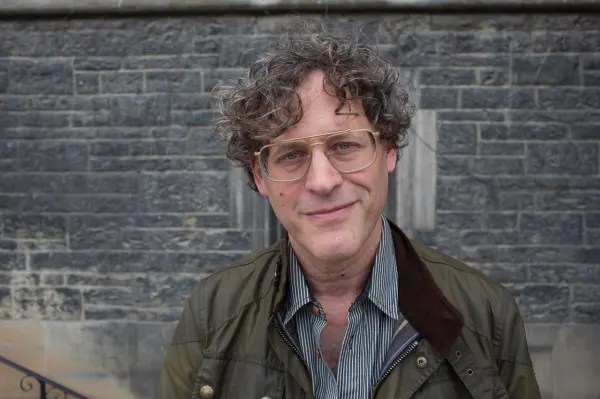
Photo by Jeff Harris.

Spadina Gardens is a legendary apartment building in the Annex, of downtown Toronto. Stratford actors, opera singers and robber barons have lived there, publishing houses were spawned there, and writers like Salman Rushdie and Patricia Highsmith passed through its doors. But when a dutch real estate conglomerate bought it, and words like renoviction started floating down its hallowed halls, the tenants decided to fight back. But can even an apartment as legendary as this one stop the rampant explosion of Toronto’s housing crisis?

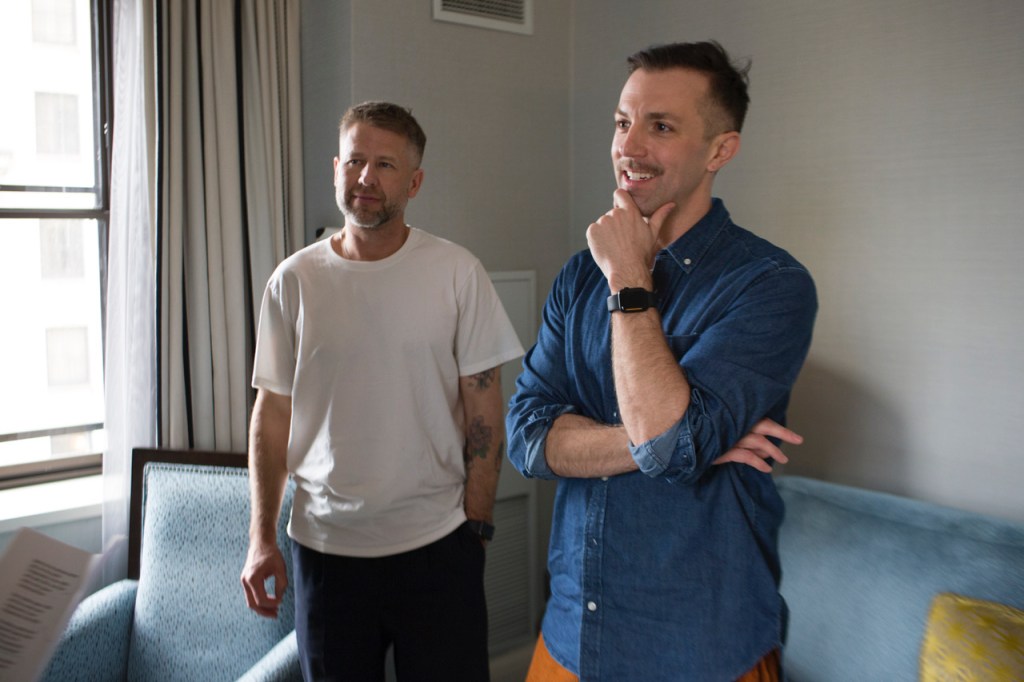
Charlotte’s Castle is a new documentary that looks at one Toronto apartment building — its history, aesthetics, architecture —  and the plight of its tenants: the people who live there. It’s the work of award-winning Toronto documentarian Jamie Kastner. I previously talked with Jamie about The Secret Disco Revolution in 2012, A Skyjacker’s Tale in 2016, and There are no Fakes in 2019.

Charlotte’s Castle is having its world premiere tomorrow, September 24th, at Toronto’s Hot Docs Cinema, and on TVO beginning on Tuesday, September 26th.

I spoke with Jamie in Toronto, via ZOOM. 

Daniel Garber talks with Stevie Salas and James Burns about Boil Alert premiering at #TIFF23

Posted in 1970s, 1980s, 1990s, Canada, documentary, Environmentalism, Indigenous, Police, Protest, Uncategorized by CulturalMining.com on August 26, 2023

Canada has about one fifth of the world’s drinking water, with less than half of one percent of the world’s population. So much water. Why then are there boil alerts in some communities, where the water is consider unfit to drink? Why have these warnings continued over many years? And why are so many of these communities indigenous? So asks a woman named Layla Staats. Layla travels across North America searching for these answers even as she explores her own connection with water and her indigenous heritage. On the way she encounters indigenous activists like Autumn Peltier and witnesses some of the most horrendous examples of ecological violations, contaminations and desecrations in Wet’suwet’en, Grassy Narrows, and the Navajo Nation. Will these boil alerts ever cease?

Boil Alert is also the name of a new documentary directed by Stevie Salas and James Burns. Stevie is a world-famous musician, called one of the 50 best guitarists of all time, and a producer of music, film, and TV shows. He composed the score for Bill and Red’s Excellent Adventure and as a director is best known for the doc RUMBLE: The Indians Who Rocked the World.

I spoke with Stevie and James in Austin via Zoom.

Boil Alert is having its world premiere at TIFF on September 15th, 2023.


D’Pharoah’s awesome footwear

On the “Boil Alert” Red Carpet

The TIFF premiere for “Boil Alert” was a who’s who of Indigenous A-listers… click on the thumbnails below to launch a gallery.

Photographs by Jeff Harris

Daniel Garber talks with Steve J. Adams and Sean Horlor about Satan Wants You!

Posted in 1970s, 1980s, Canada, documentary, Memory, Psychiatry, Psychology, Satanism, Secrets, Supernatural by CulturalMining.com on August 12, 2023


Hi, this is Daniel Garber at the Movies for culturalmining.com and CIUT 89.5 FM.

In the 1980s, tabloids like the National Enquirer and daytime talk shows from Oprah to Jerry Springer were talking about everyone’s biggest fear: that animals and small children were being kidnapped by witches and sacrificed to the devil. A new psychological method known as Recovered Memory Syndrome was in vogue, and countless adults who suffered trauma as a child, were somehow recalling bizarre satanic rituals doing back to their earliest memories. And in courtrooms across America, daycare workers, teachers and social workers were accused of heinous crimes, leading to arrests, trials and prison sentences, based on dubious testimony. Who would have thought this all harkened back to a young woman named Michelle Smith and her psychiatrist Lawrence Pazder in peaceful Victoria, BC?

Satan Wants You! is a new documentary that delves into the case of Michelle Smith, her psychiatrist Lawrence Pazder, the bestselling book Michelle Remembers that followed and the ramifications it led to. This compelling film tears the veil from this story, using period TV footage, and new interviews with family members and everyone involved. Satan Wants You is written and directed by Vancouver-based documentarians Steve J. Adams and Sean Horlor. Steve and Sean are a prize-winning team known for their films on pop culture and queer topics and whose doc Someone Like Me won the Audience Choice award at Hot Docs in 2021.

I spoke with Steve and Sean, in person, at TIFF 2023.

Satan Wants You! had its world premiere at this years Hotdocs Film Festival, and is now playing at the Rogers HotDocs Cinema in Toronto.

Autobiographies? Films reviewed: North of Normal, A Compassionate Spy, Shortcomings

Hi, this is Daniel Garber at the Movies for culturalmining.com and CIUT 89.5 FM.

August is here in Toronto, a great time for some outdoor screenings. TOPS — Toronto Outdoor Picture Show — is showing films for free, after dark at Christie Pits, Corktown Common, Bell Manor, Old Fort York and the Evergreen Brickworks, with no tickets or advance registration required — just show up and sit on the grass.

This week I’m looking at three new movies — a memoir, a doc and dramedy. There’s a hippy in a tipi in Yukon, a spy in Los Alamos, and a frustrated filmmaker in Oakland.

North of Normal

Dir: Carly Stone

Cea Sunrise Person (Amanda Fix) is a teenage girl experiencing city life for the first time. She’s both naive and worldly. Her mother Michelle (Sarah Gadon) gave birth to her when she was only 15, and acts more like a sister than a mom. Since she was a child, she’s been raised, hippy style, in Yukon, by her grandparents, including Michelle’s dad Papa Dick (Robert Carlyle). 

They shoot animals, go fishing and gather foraged foods.  She grew up living in a tipi, where any visitor to their mobile encampments likely slept with one or more of the adults. She’s familiar with the concepts of free sex, a barter economy, and the use of soft drugs, as well as living off the grid, avoiding any government interference — Papa Dick hasn’t paid taxes in decades.  So life down south (in an unnamed Canadian city) is totally alien to her. Though bright and friendly, she doesn’t understand school rules or social norms, and gets into fights with the locals. But she gradually adjusts — well, kind of — to a new life. But she really doesn’t get along with her mom’s new boyfriend, Sam (James D’Arcy) who happens to be a married man. Why does Michelle always fall for the bad boys? But one thing keeps her steady: Cea holds onto a childhood wish to move to Paris; she carries an Eiffel Tower snow globe wherever she goes. So when she is approached on the beach by a legit modelling scout, she wonders if this will be the fulfillment of her dreams. 

North of Normal is a touching, coming-of-age film based on Cea Sunrise Person’s memoir about her unusual life (she ended up as a professional fashion model and entrepreneur.) She’s beautifully portrayed by Amanda Fix as a teenager and by River Price-Maenpaa as a little girl. And it’s shot amongst the forests and lakes of Canada’s north. The plot is eliptical, bouncing back and forward in time as her suppressed memories are gradually revealed, while leaving out large parts of her life. Even so, I liked this story.

A Compassionate Spy

Dir: Steve James

It’s the 1940s and WWII is raging, and there are rumours the Third Reich is developing an atomic bomb. So the US government initiates the secretive Manhattan Project in Las Alamos, supervised by the Army. It’s a collection of scientists brought together to create the ultimate weapon before Germany does. Most of the names are already famous: Oppenheimer, Teller, Niels Bohr, von Neuman. But the youngest one of all is Ted Hall. Only 18 years old, the child prodigy has already graduated from Harvard. He’s an ardent leftist, and wants to defeat fascism in Europe. As a drafted soldier, he has to wear a uniform and sleep in a barracks on the site, but otherwise he works each day beside other scientists. Aside from his age, he is different from the rest of them in another way. He is passing intel to the Soviet Union. Hall is disturbed by the idea of an impending  nuclear holocaust, and doesn’t trust the US government to show restraint, if they’re the only holder of such a dangerous tool. So totally independently — with the help of is best friend, Savvy Sax — he seeks out the Soviets to tell them what’s going on. Is he arrested? Put in the electric chair like Ethel and Julius Rosenberg? No, he (and his wife Joan) keep their secret for half a century. 

A Compassionate Spy is a fascinating documentary packed with info that sheds light on what Hall did and why, and what became of his life afterwards. Hall worked on cancer cures at the Sloane Kettering institute, and later became a professor at Cambridge University. Most surprising is that while he opposed the bomb, his own brother created and built ICBMs — Intercontinental Ballistic Missiles which may have brought the two sides closer to destruction.) The doc is made up of a confessional video Hall made before he died, new interviews with his wife Joan and their kids, as well as with Savvy Sax’s family. It also recreates dramatic scenes from the period, along with contemporary newsreels, diaries, letters and photos. Joan Hall is this really fascinating and feisty  character who tells most of the story. Equally important, the film presents a lot of crucial information that is glossed over in the recent hit biopic Oppenheimer. Like the fact that many scientists (including Hall) petitioned FDR and Truman not to drop the bomb on Japan; the letter was stifled by Leslie Groves, and never sent. I never knew the US threatened to use the bomb on the USSR in 1946 after the Russian army occupied Iran. And lots more eye-openers. A Compassionate Spy is an excellent documentary by the Oscar-winning director of Hoop Dreams.

Shortcomings

Dir: Randall Park

Ben (Justin H. Min) is an aspiring filmmaker in Oakland, California. After  dropping out of cinema studies at Berkeley, he’s now he’s the manager of an art house theatre, so he still has a peripheral connection. He loves all women but treats any man as a potential competitor. His best friend is Alice (Sherry Cola), a queer Korean American. They hang together ogling girls in local cafes — for Ben, that’s mainly women with blonde hair. He acts as her beard, posing as her fiancé when she has to visit her conservative family.

He lives with Miko (Ally Maki) who also wants to make films; she’s involved with the local Asian American Film Festival. She’s the love of his life. But despite the fact that he, his girlfriend and his best friend are all Asian American he is quick to point he feels no racial identity or kinship, and loathes identity politics. His abrasive and defeatist attitude leads to frequent arguments with Miko. But everything changes when she suddenly moves to NY City for a film internship, leaving Ben unexpectedly unmoored. Does their temporary separation offer him a chance to explore his sexual fantasies (that is, sleeping with a white woman)? Or will he try to win Miko back again?

Shortcomings is a hilariously deadpan look at the life and thoughts of an Asian-American man. Its observations are simultaneously scathing social satire and self-deprecating humour. It’s based on the graphic novels of Adrian Tomine whom I’ve read for decades now, so I was worried the comics wouldn’t translate well into film. Luckily, Tomine wrote the screenplay, and it’s told, like his comics, in a series of connected vignettes. The characters are brilliant — Justin H Min is sympathetically  annoying as Ben, the guy who never misses a chance to mess things up. Sherry Cola is equally brilliant, as are the many priceless side characters — Autumn, a performance artist who photographs her own toilet use, Sasha, a frustrated bisexual, Leon, an annoying fashion designer who Ben calls a rice king, and Gene, a smug popcorn maker.

From the opening parody of Crazy Rich Asians to the closing scene, this perfect comedy has no shortcomings to speak of.

North of Normal is now playing; Shortcomings opens this weekend across Canada, check your local listings; and A Compassionate Spy is on now at the Rogers Hot Docs Cinema in Toronto.

This is Daniel Garber at the Movies, each Saturday morning, on CIUT 89.5 FM and on my website, culturalmining.com.

Summer tentpoles. Films reviewed: The Deepest Breath, Mission: Impossible — Dead Reckoning, Indiana Jones and the Dial of Destiny

Posted in 1940s, 1960s, Action, Adventure, documentary, Italy, Japan, Morocco, Sports by CulturalMining.com on July 15, 2023

Hi, this is Daniel Garber at the Movies for culturalmining.com and CIUT 89.5 FM.

A tentpole is a movie that, despite its extremely high budget, is expected to help a studio stay afloat so they can make lots of mid- or low-budget movies — the films I try to cover. But since a lot of these tentpoles are popping up this summer and inundating us with ads and publicity, I can’t completely ignore them. So this week, I’m looking at two of them — an action movie and an action/adventure —  plus a sports doc.

The Deepest Breath

Wri/Dir: Laura McGann

Alessia Zecchini is an Italian woman whose dream — since she was a little girl — has always been to free dive. Freediving refers to an extreme sport usually done in natural settings. While there are many variations, it generally involves swimming straight down underwater as deep as you can go, and then turning around and swimming back up to the surface. The type Alessia competes in involves a weighted rope that she follows when swimming down and up. The deeper you go, the better your chance of winning a competition or breaking a world record. But countless people go deep-sea diving — what sets this type apart? Free diving is done without scuba gear; competitors hold their breath the entire time they’e underwater. (We’re talking two, three or four minutes or longer!) It’s considered an extreme sport because if you swim too deep you might black out and drown. So there are safety divers who accompany you, to mitigate the danger — they propel your body to the surface if you pass out. One such safety diver is Stephen Keenan, an Irishman known for his skills and dedication. The two become close in their repeated dives. But can they remain safe in such a dangerous sport?

The Deepest Breath is a sports documentary about Stephen, Allessia and other free divers both in and out of competition, as well as talking-head interviews with their friends and relatives. I was attracted to this documentary because I love underwater photography — the deep blues, the colourful fish, the coral reefs, whales and orca people might see as they explore the depths. And the photography is quite beautiful. But I hadn’t realized that most of the movie would just be people competing as they swim down and then up again. Free climbing — rock climbing without ropes or nets — is a highly skilled and very hazardous sport. (A great doc called Free Solo came out a few years ago). Free diving is not the equivalent. It’s just about who can hold their breath the longest as they swim up and down a rope, like a human yo-yo. 

There are historical precedents, like women in Japan known as ama (海女) who used to swim topless in deep and rocky waters searching for pearls in oyster beds. But they did it as an occupation, not as a hobby. For the life of me, why do people risk their lives at something so pointless? I also found the movie manipulative: misleading audiences about implied relationships which may or may not have been real, while dropping false hints about the death of certain characters (no spoilers).

If you are a fan of (or a competitor in) free diving or other extreme sports, you’ll love this movie. Otherwise… maybe not.

Mission: Impossible — Dead Reckoning, Part 1

Dir:  Christopher McQuarrie

Ethan Hunt (Tom Cruise) is a spy who carries out top secret assignments as part of the IMF — the Impossible Mission Team,  known only to Kittridge, his boss (Henry Czerny) who works for the US government, and other members of the team. His mission? To rescue a special key from another agent, Ilsa (Rebecca Ferguson) and bring it back. But this is no ordinary key. When interlocked with a second, one, this key can activate a lethal  weapon so powerful it makes atomic bombs look like BB guns. The key was stolen from the Russians by an unknown entity, possibly an example of artificial intelligence gone rogue.  Hunt liberates the key, but his plans are interrupted by a new player on the scene. Grace (Hayley Atwell) is a beautiful and glamorous thief, who can pick any pocket and open any lock. She’s working for Gabriel (Esai Morales), a mysterious and ruthless villain who represents The Entity — that unknown person, group or computer program seeking to rule the world. And her nimble fingers soon take possession of the key. It’s up to Hunt and his team to follow her through scenic spots in Europe and get back the key, before the Entity blows us all up. But who can he trust?

Mission: Impossible — Day of Reckoning is a light, fun movie with non-stop action. I find Mission: Impossible movies annoying for their ponderous plots and Tom Cruise-centric focus. This time, it’s funnier than usual, and also has many interesting characters: Ilsa, Grace, but also a deranged assassin named Paris (Pom Klementieff) and a diffident criminal broker known only as The White Widow (Vanessa Kirby). That’s right, this is an action movie with four fascinating female central characters!  That’s rare. The stunts and special effects are really impressive, as is the scenery in Rome, Venice, and across the continent. 

On the other hand, the dialogue in this movie is atrocious. I mean abysmally bad, in some scenes.  A sequence set in the Pentagon may live on in history as some of the worst lines ever written. (Could it have been written by AI? No, it’s even worse than that.) It’s also Part One of a two-part series, so you’ll have to watch another one next year to  tie up the loose ends. 

But if you’re looking for pure summer entertainment, check this one out.

Indiana Jones and the Dial of Destiny

Dir: James Mangold

It’s 1944 in Nazi Germany. Indiana Jones (a de-aged Harrison Ford) is an archaeologist known for his bravery and derring-do. With his side-kick Basil Shaw (Toby Jones), they’re hoping to find a priceless relic amongst countless crates of stolen loot. They are captured and tortured by their cruel adversaries, but manage to escape, along with part of an ancient Greek device invented by Archimedes— the Dial of Destiny. Flash forward 25 years to Manhattan in the late 1960s. Indie is now an over-the-hill college professor, whose get up and go has got up and went. His treasure-hunting days are over, his wife (Karen Allen) has left him and his students don’t care what he says. But everything changes when Helena Shaw (Phoebe Waller-Bridge), Basil’s daughter, shows up unannounced. She grabs the dial and runs off with it to Morocco. She’s not the only one interested in this dial — government agents want it, too, and so does Dr Voller (Mads Mikkelsen) a former Nazi turned NASA rocket scientist who Indie and Basil encountered back in 1944. Indie reverts to his old personality, and complete with hat and whip, he flies off to Morocco. And after some jostling and negotiations, he joins Helena and her loyal street-urchin pal Teddy (Ethann Isidore) on a transcontinental journey to locate the other half of the dial. But who will get there first?

Indiana Jones and the Dial of Destiny is the latest, and possibly the last of the movie franchise. Considering Harrison Ford is 81 now, I think he carries it off pretty well. Does the movie work? Totally. It’s a family-oriented action/ adventure film. Maybe I like it for the nostalgia factor, which is the basis of the whole series — Spielberg and Lucas made Raiders of the Lost Arc in the 80s in an attempt to recapture the movies they grew up with. But it has enough twists and turns, secrets and surprises, to keep you interested, start to finish. Mads Mikkelsen plays a perfect villain, and Phoebe Waller-Bridge is great, too. I actually really liked this one — it redeems the whole series. 

One thing I don’t normally do is compare two movies, but I was struck by how similar this movie is to the latest Mission: Impossible. They both have chase scenes driving tiny cars pursued by gun-crazed drivers — a yellow Fiat 500 in Rome in Mission: Impossible, vs a Morrocan tuk-tuk in Indiana Jones. They both have half of a device with incredible power — a key and a dial — and are searching for the other half. They both have fight scenes on the roof of a fast-moving train passing in and out of tunnels. And there’s a clever pick-pocket — Grace in Mission, Teddy in Indie — who befuddles both the hero and the villains. And each of these tentpoles cost about $350 million each to make: That’s more than the budget of every feature made in Canada that year put together. Which is better? I liked them both, but I’d say Dial of Destiny is the better one. 

Indiana Jones and thee Dial of Destiny is playing now, Mission: Impossible — Dead Reckoning, Part 1 and The Deepest Breath both open this weekend; check your local listings. 

This is Daniel Garber at the Movies, each Saturday morning, on CIUT 89.5 FM and on my website, culturalmining.com.

Bikes and books. Films reviewed: The Last Rider, Umberto Eco: A Library of the World

Posted in Books, documentary, France, History, Italy, Language, Philosophy, Semiotics, Sports, US by CulturalMining.com on July 8, 2023

Hi, this is Daniel Garber at the Movies for culturalmining.com and CIUT 89.5 FM.

It’s Summertime and Toronto is melting. Luckily there are lots of new movies playing at festivals, both indoors and out. The ICFF is showing great movies from Morocco to China at the distillery district throughout July. Art of Documentary Film Festival is on next Saturday, July 15th, at Innis Town Hall Theatre featuring a talk by Shasha Nakhai and Rich Williamson, the great Toronto directors who brought us Scarborough.  And later this month keep an eye out for the Female Eye Film Fest featuring memorable movies and shorts directed by women.

But this week I’m looking at two new documentaries that stimulate the body and the mind. There’s an Italian film about books and American one about Bikes.

The Last Rider

Wri/Dir: Alex Holmes (Maiden)

It’s 1989. Greg LeMond is a champion professional cyclist who was the first American ever to win the Tour de France. He has trained since a teenager in Lake Tahoe, growing up with a gut-knowledge of their mountains and steep roads. He meets Cathy, his future wife, like in a movie, at a Holiday Inn. He is soon recruited as a member of the Renault team, moves to France for training, and becomes world famous. Cathy comes with him, dropping out of College.

But after winning the Tour, he falls into a deep depression, followed by a terrible accident: he is accidentally shot and almost killed on a turkey hunt with his family. This happens while Cathy is in labour, so Greg barely gets a chance to see their newborn for weeks.  But after a few years of recovery, they decide he should try once again.. Not to win the Tour de France, but just to see if he can finish it (remember: competitive cycling, especially climbing up gruelling Alpen roads like in the Tour, requires absolute perfection  in strength, skill and stamina— and Greg still has metal pellets riddling his body!)

But to everyone’s surprise, it becomes a three way race for Greg, Pedro Delgado and Laurent Fignon. Who will wear the yellow jersey?

The Last Rider is a biographical sports doc about that historical and exciting race in 1989. It’s 75% period video footage — the Tour de France is heavily photographed, start to finish — and 25% new taking-head interviews with LeMond, his family and many participants in that race. 1989 was before the dirty side of professional cycling — all the scandals, illegal drugs and supplements that became endemic in the sport — so there is a sense of innocence and pathos permeating this story. I am not a big fan of the sport — I barely follow it — but it was still an exciting watch.

Umberto Eco: A Library of the World

Dir: Davide Ferrario 

Umberto Eco is a writer, novelist and semiotician from Piedmont, Italy. He writes books — including international bestselling novels like The Name the Rose and Foucault’s Pendulum — and academic essays and treatises. He also accumulates and reads an astonishingly diverse number of books. And though he is an academic, he avoids ranking books by their moral or political value, ignoring the usual canons of good vs bad literature.

His shelves are filled with Charlie Brown bobble heads beside Voltaire, devoting equal space to fumetti — low-brow italian comics — and pulp fiction, as he does to obscure codices scribed by medieval monks. The more obscure the better. There are illuminated manuscripts of animals with human heads. And — unlike the current vogue of labelling works as misinformation, disinformation or “fake news” — Eco loves writers who churn out huge quantities of books of dubious credibility and provenance. Like the 17th-century German Jesuit Athanasius Kircher, who studied and wrote about practically everything, including travelogues of China (despite never having been there), and treatises on mathematics, music, medicine, the tower of Babel and Egyptian hieroglyphics. There’s always room for mysticism, conspiracy theories and apostate Cathars.  Eco died in 2016 but left behind a stupendous collection of books, including his own voluminous output.

Umberto Eco: A Library of the World is a fascinating, esoteric and aesthetically pleasing documentary about Eco and his writing, the books he read, and about libraries worldwide. Members of his family tell their stories and they and actors recite aloud some of Eco’s works, both profound and mundane.  There are also countless TV talks in Italian, French and English of eco himself spannng his career. And the cameras take us through lush stacks of burnished wood in libraries throughout the world, caressing atlases and thesauruses. To the whimsical music of Carl Orff and striking architectural locations, this doc, like Eco himself,  is a nearly limitless compendium of everything wondrous, grotesque and interesting.

If you like Umberto Eco’s work, this is a must-see; and if you’ve never heard of him watch this movie — you’ll learn learn a thing or two. 

Umbertio Eco: A Library of the World starts next Friday at Hot Docs cinema, and The Last Rider which recently opened in Toronto is playing later this month at the Lavazza INCLUCITY FESTIVAL in the distillery district; check your local listings.

This is Daniel Garber at the Movies, each Saturday morning, on CIUT 89.5 FM and on my website, culturalmining.com.

“I” and “L”. Films reviewed: Every Body, Blue Jean

Posted in 1980s, documentary, Drama, Education, High School, Intersex, Sports, UK, US, Women by CulturalMining.com on June 24, 2023

Hi, this is Daniel Garber at the Movies for culturalmining.com and CIUT 89.5 FM.

Toronto’s Spring Film Festival continues with ICFF, the Italian Contemporary Film Fest, once again showing movies out of doors in the Distillery District. The seats are huge and comfortable, complete with large puffy earphones, and there’s a great selection of movies to watch, starting Tuesday with Freaks Out, a fantasy  about a circus in Rome in the midst of WWII. The festival continues through July 22. 

But this weekend, there’s another big event in this city, the Pride Parade. So, in honour of that, I’m looking at two new movies, a drama and a doc, that fall into the alphabet soup of  2SLGBTQQI+, specifically in the L and the I categories, meaning Lesbian and Intersex. There’s a gym teacher facing trouble in Thatcher’s England, and three Americans coming out as Intersex.

Every Body

Dir: Julie Cohen (RBG)

What is meant by intersex? And why is it kept a secret? And what medical practices and procedures and popular beliefs should be challenged? Intersex refers to people who don’t fall neatly into our typical male/female definitions of sexual anatomy, reproduction and genetics. But it’s not just one thing, it’s many things; there are over 40 different types of people who fall under that definition. And until recently, it was relegated to the shadows and almost never mentioned in public. This is changing.

This new documentary looks at three intersex Americans and what they’re doing to give people like themselves a public face.  Alicia Roth Weigel is a political consultant in Austin, Texas who rose to fame when she testified before state hearings on a so-called Bathroom Bill, intended to prevent trans people from using public washrooms that don’t match their “biological sex”. The thing is, although Alicia presents physically as a woman since birth, her chromosomes are XY — according to this bill she is “biologically” male, and thus should be barred from using women’s washrooms. River Gallo, a stage actor and  screenwriter from New Jersey, was born without male gonads but brought up by their Salvadoran parents as a boy. And as a teenager doctors surgically implanted prosthetic testicles so they could feel  more “male”. Now River presents as a woman but with a notably deep voice. They’re fighting to stop doctors from performing unnecessary cosmetic surgery on kids with atypical genitals. Sean Saifa Wall is a PhD student and intersex advocate originally from the Bronx who was raised as a girl. He was born with testicles inside his body, but doctors castrated him at puberty, saying they could lead to cancer. He ties his struggle for intersex rights with his equally intrinsic identity as a black man.

The documentary first follows all three subjects as they tell their stories, and then talks to them as a group. They are shown the notorious case of David Reimer. Born as a twin boy in Winnipeg, David’s penis was badly damaged in a botched hospital circumcision. Under the guidance of Dr John Money at Johns Hopkins University, he was raised as a girl. Money theorized any child’s gender is fluid until the age of two, and used him as a celebrated case study that proves his theory. But in fact, it didn’t work, and as a child he continued to strongly resist the gender and new name imposed on him, and upon reaching puberty he refused to go on female hormones. Though his case is now well-known in Canada — he made his story public as an adult — a generation of doctors were trained using his specific case as the basis of numerous medical decisions. Finally, the movie brings intersex people together as part of a movement, one that is little known but quickly growing.

Every Body is the first documentary I’ve seen that turns to intersex people for their information, rather than using them as objects to be examined or as research subjects. It shows you a group of people more common than you think — up to 1.7% of the population share intersex traits —  and what should be done, politically, medically, and socially, to better recognize their rights. 

Every Body has fascinating stories — a real eye-opener.

Blue Jean

Wri/Dir: Georgia Oakley

It’s 1988 in Newcastle, England. Jean (Rosy McEwen) is a Phys Ed teacher at a state school. She’s pretty and athletic with bleached blonde hair in a pixie cut.  By day, she coaches the girls’ netball team. By night, she plays snooker at a lesbian bar. She loves spending time with her girlfriend Viv (Kerrie Hayes), who is buxom and butch with a buzz cut. But what she doesn’t want is for the two sides of her life to overlap. Boundaries are crucial. Especially since Thatcher’s government is introducing harsh anti-gay laws; Section 28 would prohibit the “promotion of homosexuality”.

Though broadly sweeping in its scope, the new measures seem aimed particularly at state schools. So Jean keeps her private life completely private. Boundaries! Then there’s her family life to make things even more complicated. Jean is divorced and wants nothing to do with her ex-husband. But when her sister suddenly appears with her  five-year-old nephew when their mom has a stroke, the privacy of her relationship with Viv is also called into question.

Meanwhile, there’s a new girl in her class. Lois (Lucy Halliday) is confident and outspoken with tousled brown hair. Jean likes her and encourages her to join the netball team. And Lois seems to have a bit of crush on her favourite gym teacher. But she has to deal with Siobhan a ginger rival on the team, who is loathe to lose her status as top player, and is prone to starting fights. As a teacher Jean knows how to defuse student problems — she does it on a daily basis. But everything starts to fall apart when she spots Lois playing snooker at her lesbian bar. If Lois comes out at school, and is somehow associated with Jean, her career would be finished. What is a woman  to do?

Blue Jean is an intimate drama about the problems facing a young lesbian teacher in Thatcher’s repressive England. It’s moving and romantic with a rising tension permeating the story. Radio and TV reports in the background about Thatcher’s Section 28 along with period music, provide a constant thread that holds the narrative together. And her mundane work life is presented in opposition to the sex, music and spectacle of her nightlife. This may be writer/director Georgia Oakley’s first film, but she manages to bring together great acting and a compelling story without ever resorting to treacle.

I liked this one a lot. 

Blue Jean is now playing at the TIFF Bell Lightbox and Every Body opens on July 30th in Toronto; check your local listings.

This is Daniel Garber at the Movies, each Saturday morning, on CIUT 89.5 FM and on my website, culturalmining.com.

From Paper to Film. Films reviewed: My Name is Andrea, The Zen Diary

Posted in 1980s, Buddhism, Cooking, documentary, Feminism, Food, Japan, Poetry, Protest, US, Vegetarianism, violence, Women, 日本映画 by CulturalMining.com on June 10, 2023

Hi, this is Daniel Garber at the Movies for culturalmining.com and CIUT 89.5 FM.

Toronto’s Spring Film Festival season continues with the Jewish Film festival closing this weekend and the Japanese Film Festival just starting up. And ICFF, the Italian Contemporary Film Festival starting in two weeks.

This week, I’m looking at two new movies playing at the two TJFFs, both based on writings and their writers. There is a radical feminist on violence against women, and a zen Buddhist on sustainable vegetarianism.

My Name is Andrea

Wri/Dir: Pratibha Parmar

Based on the writings of Andrea Dworkin

Andrea Dworkin was a poet, a writer and a radical feminist theorist who wrote about the outrage of violence against women, abuse, harassment and rape. Born in the 1940s in Camden, NJ, she grew up in a happy, middle-class family in suburban Cherry Hill. She was assaulted as a teenager, and later, as a college student protesting against the War in Vietnam, she was arrested and sent to the notorious Women’s House of Detention in New York. There she and other political prisoners were subject to horrible abuses by the doctors there. (Her testimony against the prison led to its eventual closing.) She travelled to Europe where she was exposed to the writings of Franz Fanon, Kate Millet and others, which, together with her own experiences, helped develop her radical feminist theory that the patriarchal system of power was based on violence against. And as a poet and writer, she expanded her critique to include the arts by deconstructing the male gaze within literature 

She was also an activist, participating in movements like Take Back the Streets, the aftermath of the École Polytechnique massacre and later, along with Catherine McKinnon, in the movement of Women Against Pornography. She died in 2005. 

My Name is Andrea is an unusual biographical documentary, that looks at Dworkin’s life, her writings and her philosophy. It includes early home movies, TV footage and personal letters and notes. What’s unusual is there’s no outside narrator or recent talking heads; instead it relies on recordings of her own voice (and those of other people she talked to) to advance the narrative. And since much of her writing was never recorded, a number of actors — including Christine Lahti, Ashley Judd and Amandla Stenberg — take on her role. I’ve read some of her writing before but this is one of the first times I’ve heard her voice and she was an extremely passionate speaker, whether giving a speech at Cambridge or on the Phil Donahue show. And it also lets her own voice defend herself from misrepresentation of her ideas (at various times she was accused of hating men, of calling intercourse rape, and of advocating obscenity laws). My Name is Andrea is a fascinating tribute to Dworkin’s work.

The Zen Diary

Wri/Dir: Yuji Nakae

Based on the book “Tsuchi wo Kurau Hibi; Waga Shojin Juuni ka Getsu” by Mizukami Tsutomu

Tsutomu (Sawada Kenji) is a prize-winning Japanese novelist who lives alone in a remote farmhouse in the mountains. His wife died 13 years earlier but he still keeps her ashes. He’s under pressure by Machiko, his publisher (Matsu Takako ) to write another book, so he decides to record what happens each month over the course of a year (hence the title). Interestingly, while this includes big events in his life, it’s also about the minutiae of living. As a kid, he was a novice monk at a Buddhist monastery in Kyoto, where he was trained in cooking, cleaning, planting, harvesting and foraging for food. He brings those childhood memories into play as an elderly man who is also a vegetarian.

Everything he does is done by hand: from cleaning rice to finding edible roots in the garden. He digs up bamboo shoots in a forest and looks for mushrooms and fiddleheads on the hillside. Even seemingly inedible vegetables — like the first sprouts of certain tree leaves in the spring — are delicately picked, scrubbed clean, cut-up and cooked. He shines the wooden floor on his hands and knees. He also visits his elderly mother-in-law who lives in a tiny shack, and trades foods with far-off neighbours. But a surprise death — and the threat of his own mortality — makes him rethink his daily life. Should he settle things and prepare to die? Or forge ahead with new projects?

The Zen Diary is a subtle, low-key drama about life off the grid. It feels almost like a documentary, but the parts are actually all played by actors (Sawada Kenji has been a pop idol, composer, actor and celebrity for 60 years.) And the book it’s based on is real — it’s Mizukami Tsutomu’s last work (he died in 2004). There’s something deeply satisfying and inspiring about watching the foods being made from the dirt to the table — and some of the dishes he makes, like tofu made from sesame seeds and daikon with miso, look truly delicious. It’s also a  bittersweet story about death and remembrance, family, kinship and relationships. The storyline is simple, and the film is extremely low-key, but it leaves you with something you didn’t have deep inside you before you saw this movie.

The Zen Diary is playing at the Japanese Canadian Culture Centre on June 17th, at the Toronto Japanese Film Festival; and My Name is Andrea played at the Toronto Jewish Film Festival.

This is Daniel Garber at the Movies, each Saturday morning, on CIUT 89.5 FM and on my website, culturalmining.com.

Daniel Garber talks with Valerie Kontakos and David Bourla about Queen of the Deuce

Posted in 1930s, 1960s, 1970s, documentary, Family, Feminism, Greece, LGBT, Movies, New York City, Porn by CulturalMining.com on June 3, 2023


Hi, this is Daniel Garber at the Movies for culturalmining.com and CIUT 89.5 FM.

New York City in the 1970s is a gritty city with a chip on its shoulder. Crime is rampant, and its government faces bankruptcy. But it’s also exploding with creativity and freedom of expression, in film, theatre, music and art, while the sexual revolution, the women’s movement and gay rights are in full swing. The city’s centre is 42nd street, and the strip running from Times Square to the Port Authority and north on 8th ave is filled with porn theatres and peep shows. And on top of it all sits a Jewish Greek-American woman, Chelly Wilson, ruling over her porn empire. 

Queen of the Deuce is a fantastic new documentary about Chelly’s life, her work, her family and the world she built. Born in Thessaloniki, she hid her children, escaped the Nazi invasion, and gradually made her way to the top of the NY porn movie industry. The doc includes personal photos and letters, period footage, animation and talking heads to give a first-hand look at a previously unknown hero. 

The film was directed by Valerie Kontakos, a well-known documentarian, founder of the NY Greek Film festival and on the Board of Directors of the Greek Cinematheque. The film features members of Chelly’s family, including her grandson, David Bourla, a screenwriter in his own right, known for action films like Push.

I spoke with Valerie in Athens and David in New York City from Toronto, via Zoom.

Queen of the Deuce is playing in Toronto at the Hot Docs Cinema as part of TJFF on June 3rd, 2023.

Daniel Garber talks with Cam Christiansen about Echo of Everything

Posted in Art, Canada, Dance, documentary, Dreams, Music, Psychology, Science, Spirituality by CulturalMining.com on May 6, 2023

Hi, this is Daniel Garber at the Movies for culturalmining.com and CIUT 89.5 FM.

What do punk, gospel, jazz and Andalusian duende music have in common? They all bring an ecstatic reaction from musicians making the music and listeners dancing to it. It’s a primal response dating back thousands of years, with music bringing joy, anger, sadness, and inspiring sex and even violence from its listeners. Are these ecstatic reactions still around today? And are the notes and rhythms we hear an echo of ancient rituals or even primordial sound waves?

Echo of Everything is an amazing new documentary about music and how it affects us emotionally, spiritually and scientifically. A highly personal film it incorporates expressionistic scenes in black and white, philosophic interviews and intense musical performances recorded in supersaturated colour. And running throughout is a constant stream of sound and rhythm, recorded around the world.

Echo of Everything is written and directed by Calgary-based filmmaker and animator Cam Christiansen, known for his award-winning features Wall and I Have Seen the Future.

I spoke with Cam in person, on-site during Hot Docs at the Luma Café at the TIFF Bell Lightbox.

Echo of Everything had its world premiere at Hot Docs and is opening theatrically later this year.