It’s all lies! Films reviewed: Jay Kelly, Zodiac Killer Project, Wicked: For Good
Hi, this is Daniel Garber at the Movies for culturalmining.com and CIUT 89.5 FM.
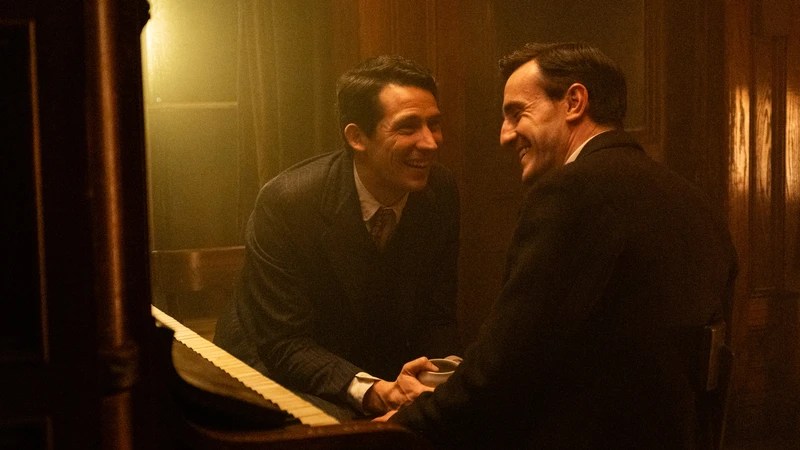
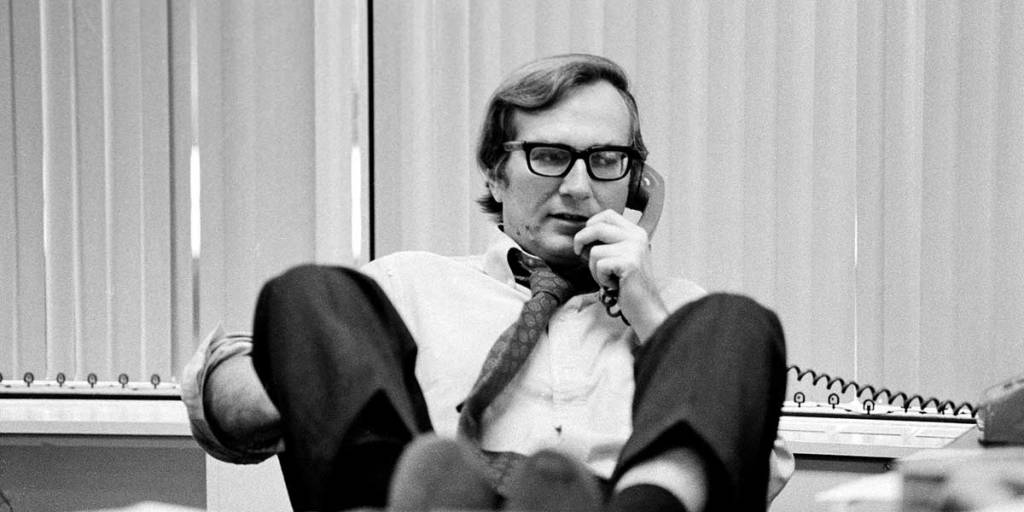
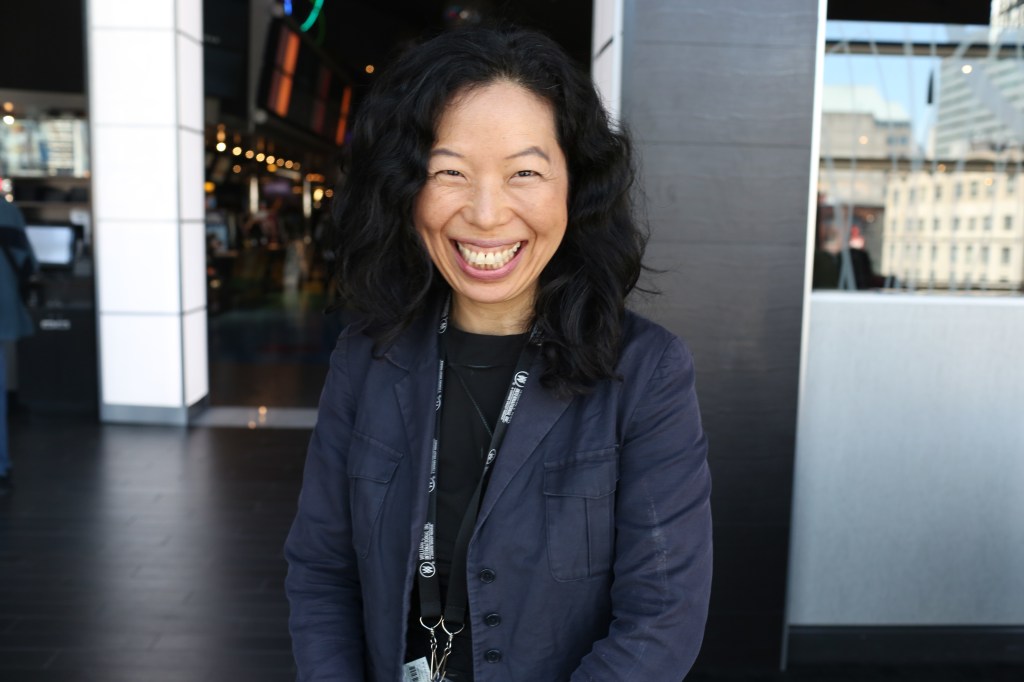
This week, I’m looking at three new movies, about people who lie. There’s a movie star who smiles for the cameras, onscreen and off; two witches and a wizard who hides behind his curtain, and a filmmaker who looks at what lies behind True Crime documentaries.
Jay Kelly
Co-Wri/Dir: Noah Baumbach
Jay Kelly (George Clooney) a major Hollywood star known for his action movies, is wrapping up the last scene of his latest film. He gets a few days off before starting his next feature after attending a tribute to him in Tuscany, as his friend and manager, Ron (Adam Sandler) keeps reminding him. But then a series of unfortunate events begins to occur. Ron tells him that Peter (Jim Broadbent) a noted director who launched Jay’s career when he was just an acting student — has died. And his younger daughter says she’s heading off to backpack and ride the rails in Europe before starting University in the fall… meaning his nest will be empty from now on. So when he runs into Tim (Billy Crudup) at Peter’s funeral — a blast from the past who he hasn’t seen in decades — he decides to join him for a drink at one of their old LA haunts. Tim was a method actor, someone so good he could read a menu aloud in a way that will make you cry. But their drinks turn to fisticuffs when Tim blames Jay for stealing his first role, sleeping with his girlfriend and generally ruining his life. Jay leaves the reunion with a black eye and Tim with a broken nose and a smouldering grudge.
So Jay decides on a change of plans: he’ll fly to Europe and surprise his daughter in Paris for some spontaneous fun. But nothing can be spontaneous for an A-list movie star. Jay flies there in his private jet, with a huge entourage, including his manager, hair stylist, PA, bodyguard and publicist (Laura Dern). But aside from his adoring fans, he can’t seem to make friends, spend time with his family, or do anything of lasting value. What’s a lonely, rich-and-famous guy to do?
Jay Kelly is a sardonic look at the hollowness of a Hollywood movie star’s life. Jay Kelly seems to be modelled on George
Clooney’s own career; they even show clips from Clooney’s past films at Jay Kelly’s tribute, thus blurring the line between reality and fiction. Jay Kelly is always flashing his pearly whites, but seems to have no actual feelings, just poses — that his director, or his publicist tells him to do. The movie’s not bad, but it’s hard to have deep feelings about someone so fake, a character that only finds his true self on the silver screen. It’s like he’s always acting. The biggest surprise is Adam Sandler in a serious role, without any bombastic elements. He’s actually good!
Jay Kelly is a cute light story, with a dark undertone. While not fantastic, it’s still worth watching.
Zodiac Killer Project
Dir: Charlie Shackleton
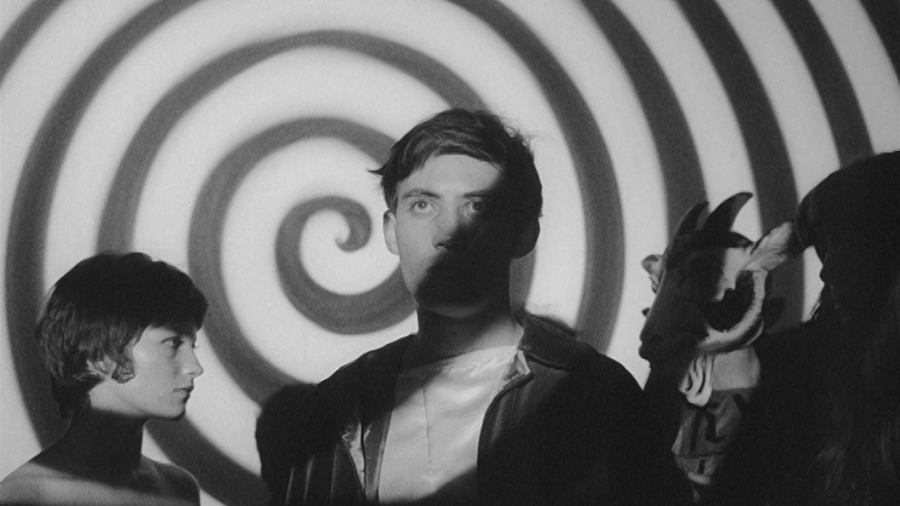
Charlie Shackleton is a documentary filmmaker from the UK who is obsessed with the case of the Zodiac Killer. He was a notorious serial killer who murdered any number of victims in the 1960s around the SF Bay Area, but was never caught. Part of his mystique was the many killings later attributed to him, and the series of cryptic letters sent to his victims and fans. Charlie wants to make a documentary based on a book by a policeman who actually encountered the killer… but negotiations with the authors of the book falls through, thus killing any chance of making the Zodiac Killer doc. Instead he decides to make a doc about how he would have made the doc he can’t make.
So the movie ends up being a spoken word-essay — Charlie’s words throughout — as he walks us through what he would have shot, scene by scene: a road stop outside of San Francisco; an urban street corner in Vallejo; a modernistic suburban church. Mundane images all, but always accompanied by clanky music and his eerie descriptions of what eyewitnesses saw in their search for the Zodiac Killer. Added to this are short clips and commentary of other True Crime docs, including films like Joe Berlinger and Bruce
Sinofsky’s Paradise Lost trilogy, about the three teenagers falsely accused of ritual child murder in West Memphis, Arkansas.
(Which is a great series, btw). But what Charlie points out is, many True Crime directors manipulate viewers using music, camera work and edited interviews to put the suspicion on someone the filmmakers want to blame, but who may or may not be responsible for the crime. And he calls into question the myth of the documentary director as an impartial observer rather than a biased manipulator of the truth.
Zodiac Killer Project is not a normal movie, by any stretch of the imagination (though it is pretty funny) It’s a filmmaker’s monologue on (what I think is) a very interesting topic, that is the deception and self-righteousness behind an entire genre — True Crime; accompanied by extended film images of, frankly, mundane locations. If you’re a cineaste, a movie buff, or a true crime fan, I think you’ll like this one; I do. But if you go expecting the bread-and-butter of True Crime media, the titillating images, the exploitational gross-outs, or self righteous harrumphing about the killer’s innate barbarism, you ain’t gonna find it here.
Wicked: for Good
Dir: Jon M. Chu
It’s another day in the Land of Oz, but things have changed over the past few years. Elphaba (Cynthia Erivo) has been in hiding ever since a massive government propaganda campaign has labeled her the “Wicked Witch of the West”. Her former best friend Glinda (Ariana Grande) is a figurehead who appears before the public in a mechanical bubble. She has no real magic but her job is to keep the peasants calm. She publicly professes her love for handsome Prince Fiyero (Jonathan Bailey) a captain in the army, but he pines only for the green-faced Elphaba. And Elphaba’s little sister Nessarose (Marissa Bode) is now an autocratic Governor, passing vindictive laws. But Nessa, too, suffers from setbacks: her long-time companion, the Munchkin Buck (Ethan Slater) has had enough of her (he’s secretly in love with Glinda.) And under the under the direction of the two scheming bullies with the only real power in this world — the Wizard of Oz (Jeff Goldblum) and Madame (Michelle Yeoh) — Oz is passing ever more draconian laws, including the stripping of all rights from animals, who once lived and worked side by side with
humans. Will Elphaba and Glinda ever be friends again? Can they stop the Wizard’s nefarious plans? And who will Prince Fiyero choose to marry?
Wicked: for Good is part two of the film adaptation of the hit Broadway musical. It’s an intriguingly revisionist version of the original Wizard of Oz story. Dorothy and the cowardly Lion appear but only as insipid background characters, The Wizard of Oz is a bad guy, and the Wicked Witch of the West a potential heroine. It’s 2 1/2 hours long but never boring, including three new songs by Stephen Schwartz that weren’t in the original play. Now, personally, I’m not a fan of that genre of music, but Cynthia Erivo and Ariana Grande’s voices are a pleasure to listen to. It’s visually dead-on, from the artificial, candy-coloured palate of the Emerald City, to cute and rustic Munchkinland. And I love the Art Deco, steam-punk machinery everywhere. It’s exquisite. Great production values all around: sets, costumes, elaborate dance numbers, and, of course, the flying monkeys.
It does feel like the second part of a two-act play — following a year-long intermission — and it is a much darker ride than last year’s Wicked — but I still enjoyed it.
Jay Kelly, Wicked for good and Zodiac Killer Project are all playing now in Toronto; check your local listings.
This is Daniel Garber at the Movies, each Saturday morning, on CIUT 89.5 FM and on my website culturalmining.com.
Daniel Garber talks with Brishkay Ahmed about In the Room
Hi, this is Daniel Garber at the Movies for culturalmining.com and CIUT 89.5 FM.
It’s August, 2021 in Kabul Afghanistan. The Taliban is at the city gates and large crowds are congregating at the airport. Some manage to get out, but the women who remain face unheard of restrictions imposed by the Taliban. Restrictions in dress, education, work and general daily life: there’s no school after grade 6, women barred from universities, government work and from most professions, along with freedom of speech, expression, and even congregating in
public… leaving some women virtually locked away in their rooms.
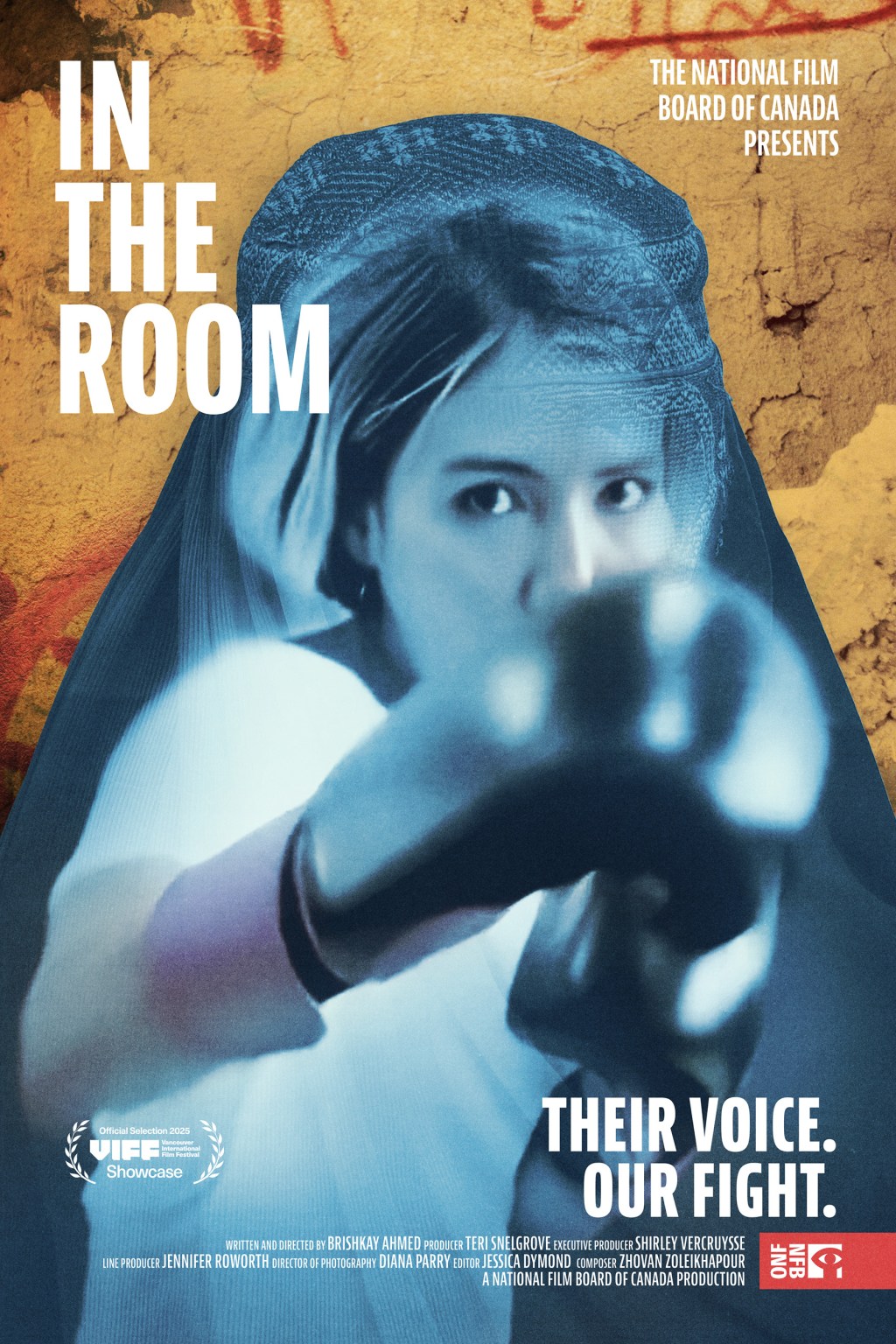
In the Room is a new NFB documentary about a group of dynamic ex-pat Afghan women who don’t fit neatly into their stereotypes. We meet a model, a TV news chief, an influencer and an actor and activist, in this unusual doc. The film is by noted Canadian documentarian Brishkay Ahmed whose work has frequently taken her back to the country of her birth. She’s known for her films In the Rumbling Belly of Motherland, Story of Burqa. The film won the Audience Award Showcase at its premiere at VIFF in Vancouver and played at the Reelworld film festival Toronto.
I spoke with Brishkay in Vancouver via Zoom.
Beginning on Tuesday, November 25, the National Film Board of Canada (NFB) will release In The Room for free streaming across the country on nfb.ca and the NFB app.
Daniel Garber talks with Alan Zweig about Love, Harold (+Tubby)
Hi, this is Daniel Garber at the Movies for culturalmining.com and CIUT 89.5 FM.
Some people’s biggest fear is of a late-night call from a hospital that someone close to them —a child, a parent, a lover or a friend — has suddenly died in an unexpected accident, something you can’t predict. It’s devastating. But what if that death was by suicide? How do you deal with news like that? Why did they choose to do it? Was it somehow your own fault or something you could have prevented? Well, a new film looks at survivors of suicide loss and the effect it has on their lives.
The film’s called Love, Harold, and it’s a sympathetic and very moving look at how the aftermath of a suicide by talking with the friends, partner or family member of the ones who died. This NFB film is written, and directed by renowned Toronto-based filmmaker Alan Zweig, whose deeply- personal and
intimate documentaries look at people — including himself — facing crises, both major and mundane, in everyday life. His films have won numerous awards including the prestigious Platform prize at TIFF, a Genie and a Canadian Screen Award.
I’ve covered many of his docs and interviewed him at this station, including Fifteen Reasons to Live (2013). And I know Alan off mic, through work, mutual friends… and he used to be my next-door neighbour! Alan is also currently hosting a self-help podcast called TUBBY about weight issues.
I spoke with Alan in Toronto via ZOOM.
Love Harold is the centrepiece film at Rendezvous with Madness on October 24.
This film contains discussions of suicide, and the effects on survivors of suicide loss. If you need support services, please call your local Distress Centre. If you need immediate help, please call or text 9-8-8.
You can listen to Tubby on Left of Dial Media.
Not always pretty. Films reviewed: I Really Love my Husband, Orwell: 2+2=5, Roofman
Hi, this is Daniel Garber at the Movies for culturalmining.com and CIUT 89.5 FM.
TIFF is over but Fall Film Festival Season continues in Toronto. FeFF or Female Eye Film Festival is entering its 23rd year, showcasing features, shorts and docs directed by women. This year’s theme is Always Honest, Not Always Pretty, so you can expect some challenging and surprising work from women around the world. Expect innovative screenings, many with the directors present, as well as pitches, workshops and tributes.The festival runs from October 14-19, at the TIFF Lightbox, the Women’s Art Associations of Canada and the City Playhouse Theatre in Vaughan.
So this week, I’m looking at three movies, one from FeFF and two from TIFF. There’s honeymooners in the Caribbean, a famous writer on a tiny Scottish isle, and an ingenious thief, who lives, undetected, in a big box store.
I Really Love my Husband
Co-Wri/Dir: G.G. Hawkins
Teresa (Madison Lanesey) lives in LA with her husband Drew (Travis Quentin Young). They’ve been married for a year but have yet to go on a real honeymoon. They both work at unfulfilling professions with little time for amorous interludes. But that’s about to change: Theresa and Drew are heading south for a week, to relax and spend time with each other on the sandy beaches of Bocas del Toro, Panama. It’s a chain of Caribbean islands known for their blue skies and warm waves. And even when the airline lose their baggage and the promised welcome meal is nowhere to be seen, they are still happy with the place. The manager, a boyish, non-binary beach bum named Paz (Arta Gee), is ready to help make their stay more comfortable, however they can. For Theresa, that means thinking outside the marital envelope. She urges Drew to join with her in seducing Paz. Though hesitant at first, Drew dives into the three-way, head first, and their marriage feels stronger than ever. And Paz promises to take them to
their secret island for one final fling.
But the mood starts to shift when jealousy rears its ugly head. A fourth wheel joins the group to make things even more confusing. Kiki (Lisa Jacqueline Starrett) a ginger-haired influencer with a venomous tongue, is a reality-show reject voted off the island. But she stays on, planting bad ideas in the couples’ heads, Can Teresa and Drew’s marriage endure all these complications? Can the insecure Teresa keep her anger in check?
I Really Love my Husband is a funny, bittersweet rom-com about the doubts plaguing a couple of millennials on a belated honeymoon. It pokes fun at a whole generation — from breakfast fasting to mushroom edibles to friendship stones — exposing some of the worst and silliest trends and fads. The characters are as worried about ratings and social networks as they are about actual love and affection. For a first-time feature by a new director with a largely unknown cast, this is a fun slice of life. Madison Lanesey is nicely sardonic, Arta Gee appropriately chill, and Travis Quentin Young always sweet strumming his guitar. Though not totally original, I Really Love my Husband does seem to capture the zeitgeist of LA’s millennials.
Orwell: 2+2=5
Dir: Raoul Peck
It’s the late 1940s in Scotland’s Inner Hebrides on a tiny, inaccessible island called Jura. George Orwell is there to write a novel in an isolated home, inaccessible by cars. His young son, his sister and their housekeeper keep him company as he sits by his typewriter. He’s dying of tuberculosis but wants to make sure his last book is completed and published. The novel is called 1984 and becomes a crucial part of contemporary culture, even today. You’ve probably heard of Big Brother; or at least the surveillance based reality show it inspired. It has been made into many films and TV shows and is referenced everywhere, Words like sexcrime and concepts like doublethink are firmly imbedded in our culture. The book is about the perpetual war between competing totalitarian nations. But more than that, it’s about the propaganda, mass surveillance and thought- control ordinary people are subject to. The hero, Winston Smith, works for the Ministry of Truth propagandizing Newspeak to the nation. But eventually he too falls victim to the machinations of the government of Oceania, ruled by Big Brother. He is tortured because, although he accepts their ludicrous proposition that 2+2=5, and espouses their slogans (War is Peace!, Ignorance is Strength! Freedom
is Slavery!), he doesn’t really believe them. This story shows that the contents and concepts of 1984 are as relevant today as when Orwell wrote them.
Orwell 2+2=5 is a combination documentary, docudrama and diatribe about Orwell, his writing and its influence on popular culture. It covers not just 1984 but Orwell’s earlier books, including Burmese Days, Homage to Catalonia (he volunteered to fight fascism in the Spanish Civil War), and Animal Farm, his allegorical look at Stalinist Russia. It’s based on both his books and his private correspondence. The movie also uses clips from the many film adaptations of 1984 to tell that story. And finally, it includes a barrage of brand-new news footage of leaders like Trump, Putin, Orban and Xi Jinping. These are altered with Orwellian slogans superimposed in bright colours over the media images.
Raoul Peck is a well-known Haitian documentary filmmaker, and maybe it’s because I already know so much about Orwell and his writings, this movie — with the exception of his last days on Jura — wasn’t as mind blowing as it might have been if it were all new. And it can’t compare to other docs like Peck’s I Am Not Your Negro, his biography of James Baldwin. Even so, Orwell 2+2=5 does stand as a historical document with a good dose of agit-prop.
Roofman
Co-Wri/Dir: Derek Cianfrance
It’s the early 2000s in Charlotte, North Carolina. Jeffrey Manchester (Channing Tatum) is the happy father of a young daughter and twin infants. He’s smart, nimble and observant. But he is underpaid and overworked as his job, and can’t seem to keep the family afloat. When he has to resort to regifting his own childhood toys for his daughter’s birthday party, he realizes something must change. He resorts to a life of crime, involving no violence. He robs McDonalds restaurants by an ingenious method: cutting a hole in the roof after dark, and stealing the cash. After dozens of such robberies the press subs him “Roofman”. His family moves up the social ladder, living the american dream of life with a swank car and and a nicely decorated home. Alas, he is finally caught, and sent to prison. His wife cuts him off, and he can’t even talk to his own kids anymore.
Later, following an ingenious plan, he escapes from prison undetected and looks for a place to hide. Most surprisingly he discovers an unsurveilled corner of a Toys R Us big box store with enough hidden space to make set up a tiny apartment. He initially survives on peanut M&Ms pilfered from the shelves, but eventually moves on to pawning video games and DVDs. And he learns the layout of the cameras and computers, making him virtually invisible… though in plain site. He
surveils the store management instead of vice versa. He has a crush on one employee Leigh (Kirsten Dunst) a single mom with two teenaged daughters. They eventually meet, unexpectedly, at an evangelical church toy drive (he “donates” toys stolen from his Toys R Us). Sparks fly and they become very close, but with Jeff still concealing his life of crime and his current home. Can he start a new life in his own home town without getting caught? Or should he just get the hell out of there?
Roofman is an exciting adventure / romance / comedy based entirely on a true storytelling. It’s funny, clever and constantly surprising. Channing Tatum is brilliant as Jeff, displaying an acrobatic sense of movement and timing, climbing walls, crawling through ceiling tiles or swooshing around cars on foot to avoid detection. The rest of the cast is also great: former teen actor Kirsten Dunst has eased comfortably into middle age and her character is very empathetic; Lakeith Stanfield is Steve, his sketchy war buddy; Aussie Ben Mendelsohn as guileless Pastor Ron, and Peter Dinklage appropriately dislikable as toy store manager Mitch. Filmmaker Derek Cianfrance (he directed the passionate Blue Valentine and the dark The Place Beyond the Pines) hasn’t made a movie in ages, but if he’s looking for a comeback, this is it.
I like Roofman a lot.
Roofman and premiered at TIFF and open in Toronto, this weekend; check your local listings; and I really love my husband is coming soon to FIFF.
This is Daniel Garber at the Movies, each Saturday morning, on CIUT 89.5 FM and on my website culturalmining.com.
Men, music and sports. Films reviewed: The History of Sound, Him, EPIC: Elvis Presley in Concert
Hi, this is Daniel Garber at the Movies for culturalmining.com and CIUT 89.5 FM.
TIFF is over but the movies keep coming. So this week, I’m looking at three new American movies, two about music and one about sports. There are two men recording folk songs in the forest, an ambitious quarterback at a training camp in the desert, and a former teen idol wowing audiences on a Vegas stage.
The History of Sound
Dir: Oliver Hermanus
It’s the early 20th Century in rural Kentucky. Lionel (Paul Mescal) likes listening to his father sing while he plays the fiddle. Music for him is different from most folks: he has synesthesia. This means each musical note has a distinct colour, flavour and meaning. Eventually his love of music and beautiful voice wins him a full scholarship to the New England Conservatory of Music. At a Boston pub one night, he recognizes a song his father used to play, coming from a young man at the piano. David (Josh O’Connor) knows every word. As an ethnomusicologist, he wants to collect as many distinct folk songs and ballads as he can, before they are lost forever. David has perfect pitch and a photographic memory. The two trade songs they know, and somehow, end up in bed together that night. That chance encounter turns into regular trysts at David’s apartment.
Later he invites Lionel to join him in a fieldwork project. They roam across the state of Maine, recording songs everywhere from logging camps to schoolhouses, And they record it all on wax cylinders (this is before flat discs are invented) carefully
stored in a leather satchel. And each night they sleep together in a tiny tent. Is this true love? And what will happen to their relationship after the project is finished?
The History of Sound is a touching, bittersweet gay romance — before the word gay existed — set within the larger context of war and music. It’s directed by South African filmmaker Oliver Hermanus (Moffie) and its based on a short story by Ben Shattuck. I wonder if the characters are modelled on Alan Lomax, the ethnomusicologist who recorded thousands of songs and started the folk music revival in the 1950s. Paul Mescal is spot-on as the sensitive kid in a clapboard shack who grows up to be a cosmopolitan musician; as is Josh O’Connor’s portrayal of an enigmatic musical genius with hidden secrets. The images are as lovely as the music in this tender and moving film.
I really liked it.
Him
Co-Wri/Dir: Justin Tipping
It’s San Antonio, Texas, and their NFL team, the Saviours, is looking for a new quarterback to replace their MVP Isaiah White (Marlon Wayans), due to retire in a year. Cameron Cade (Tyriq Withers) is a young quarterback who lives for football — his father trained him for this since he was a little kid. When he’s offered the position if he agrees to an intense one-on-one, bootcamp with his idol Isaiah White, of course he says yes; this is the fulfillment of all his dream. Thing is, he recently had a serious injury that left him with a bad concussion and a track of staples in his head. If he aggravates his brain, it might end his football career before it starts. But as his father always told him, No Pain, No Gain. Cameron heads out to the training camp in the desert.
There he encounters absolute luxury: gourmet food and priceless art in a spacious brutalist palace. There are saunas and ice baths, and daily blood transfusions for Isaiah. Cameron too tastes this luxury — and sexual temptations — offered by Isaiah’s entourage, especially the grotesquely made-up wife Elsie White (Julia Fox), an influencer who sells her own line of sex toys. Isaiah is the GOAT — the Greatest of All Time — and his virulent fans wear goat horns on their
heads. Cameron, on the other hand, holds onto silver cross. He’s given a series of Squid-Game-like ordeals he must endure before Isaiah gives him the nod. And as the tasks grow increasingly horrific, his morals are severely challenged. Can he pass the tests? And is he ready to give up his innate morality and embrace pro-sports and all it offers?
Him is a psychological thriller about a young man confronting his hero (who is also his nemesis) even as he uncovers the dark underbelly of pro football. It’s produced by Jordan Peele, so you might expect a suspense/thriller with mind-blowing surprises. If so, you’ll be sorely disappointed. What you’ll get instead is more like a highly-stylized, extended music video than a horror film. There’s lots of dazzle and flash — and an equal amount of blood — but it’s never scary or surprising. And director Tipping uses film techniques like a kid playing with toys. Why are people shown in in infrared X-rays? Why a long fashion shot sequence in what’s supposed to be a scary scene? Why do cowboy-hatted cheerleaders continue dancing in the face of horrific deaths? There are some great visual cues — like the aluminium stitches in his skull evoking the side of a football — but it’s all show, no substance in this cheap morality play.
Him is fun to look at, but there’s nothing there.
EPIC: Elvis Presley in Concert
Dir: Baz Luhrmann
It’s the 1950s. Elvis is the King of Rock and Roll with a series of hits and the nation goes wild over his thrusting pelvis and his soulful voice. Later, he is drafted into the army where he serves two years. Afterwards he turns to Hollywood where hue churns out a series of hits alongside sex goddesses like Ann-Margaret. And late in the 1960s he signs a multi-year contract to perform before sold-out audiences at a Las Vegas Casino. He’s up there every day, dressed in eggshell blue jumpsuits, covered in silver studs, sequins and spangles, joking with the crowds, and sweating buckets. He is accompanied by a retinue of back up singers, musicians and elaborate lighting. And that is basically how Elvis spends the rest of his life, until he collapses and dies in Graceland, age 42.
EPIC: Elvis Presley in Concert is a combination documentary and musical performance. Just two years ago, we had both Baz Lurhmann’s biopic Elvis and Sofia Coppola’s Priscilla, two similar stories told from different points of view, neither of which were particularly good. And now, out of nowhere comes this third one. I’m not an Elvis fan, nor do I like the kitschy

Buzz Luhrmann at EPIC’s world premiere at TIFF50: Photo (c) Jeff Harris
and gaudy films of Baz Luhrmann. Which is why I’m shocked at how much I enjoyed this movie (I saw it on an IMAX screen at TIFF last week, almost by accident.) Ostensibly just a musical record it’s actually a succinct and tight history of the man, so much better than those bloated biopics.
It’s fantastic, a masterpiece of creative editing, colour restoration and music mixing. It’s absolutely stunning. The songs he sings are mainly hits from the 1960s cover-versions of Bridge Over Troubled Water, You’ve lost that Loving Feeling, and even gospel songs. And over the course of a single song, we see him on stage, in rehearsal, or in the recording studio, shot over many years, but without a break in the music. And despite Luhrmann’s gaudy excess, somehow his capture of Elvis in a psychedelic shirt or sparkling gold belt buckles just looks right.
EPIC is the perfect concert film.
Him and The History of Music both open this weekend in Toronto; check your local listings; EPIC: Elvis Presley In Concert played at TIFF and will be released soon.
This is Daniel Garber at the Movies, each Saturday morning, on CIUT 89.5 FM and on my website culturalmining.com.
TIFF gems. Films reviewed: Girl, I Swear, Cover-Up
Hi, this is Daniel Garber at the Movies for culturalmining.com and CIUT 89.5 FM.
TIFF, Toronto’s International Film Festival is winding down after a busy week, but there is still a lot to see, including the People’s Choice awards offering free screenings of the winning films tomorrow. So this week I’m looking at three terrific movies that premiered at TIFF but aren’t getting the degree of coverage I think they deserve. There’s a coming-of-age story about a girl in Taiwan, a biopic about a man in Scotland, and a documentary about a legendary American journalist.
Girl
Wri/Dir: Shu Qi
Lin Xiaoli (Bai Xiao-Ying) is a working class tween in middle school in Taiwan. She lives with her mom, and her domineering stepdad who terrorizes her mother and her. Xiaoli hides inside a zip-up wardrobe in her bedroom as protection from his violent outbursts. He works as a mechanic in his Uncle’s garage, and usually comes home drunk to the gills. Her Mom works in a hair salon and makes artificial flowers at home to earn extra money, but takes out her anger on her much smaller daughter. Xiaoli takes care of her younger sister, who is favoured by both her parents. At school she tries to stay unnoticed to avoid more of the violence and anxiety he gets at home.
Until she meets a vivacious girl named Li Lily (Lin Pin-Tung). Lily lived in the States for a few years but now she’s back and living with her grandparents who let her do whatever she
wants. Though the too are complete opposites, Lily is helping Xiaoli climb out of her shell. And one day they cut class, wear makeup, smoke a cigarette, go to a video cafe, sing songs, and eventually meet a bunch teenaged boys riding motor scooters. But will this day change her life in a good way… or in a bad way?
Girl is a realistic coming-of- age drama set in the previous millennium (with no computers or cel phones) and full of poignant details. It’s a very moving story about parental abuse passed down through generations, but it’s also full of hope. It follows the points of view of all the main characters, not just
Xiaoli. Now, I have a rule, I avoid first films at TIFF directed by actors. Why? They’re usually crap. Vanity pics, Oscar bate, self-serving vehicles or relentless navel gazing. Shu Qi is a very famous Taiwanese actress, and Girl is her first try at directing. Luckily, it’s really good. She has acted in three movies by Hou Hsiao Hsien and Girl resembles his films in both style and content, though a totally original take. It’s rough and violent in parts, which is hard to handle in a realistic movie, but there’s lots of sweet stuff, too.
Girl is an excellent first feature.
I Swear
Wri/Dir: Kirk Jones
It’s the late 1990s. John Davidson (Scott Ellis Watson) is a popular teenager in Galashiels, Scotland He’s starting at a new school, getting friendly with a girl he fancies, and is the prized goalie on the local boys’ football team. His Dad has even arranged for a scout to the next match. But then something unexpected happens. He starts twitching in class, just a little at first, like a nervous tic. But it soon turns to rapid movements, facial contortions, and barking sounds. Followed by spitting, random punching and the uttering of the most offensive words. He gets caned by the headmaster for acting the ckown, his mother makes him eat his meals on the floor facing the fireplace. HIs father abandons his family. His onetime girlfriend slaps his face and other kids bully him at school, But none of it is intentional; he has Tourette’s syndrome.
Decades later, John (Robert Aramayo) still lives with his mother, heavily sedated, not allowed to speak with anyone for fear of an incident. A miserable existence indeed. Until he runs into an old school friend who invites him for dinner at home. He repeatedly declines — for good reason — until his friend’s mom Dottie (Maxine Peake), a psychiatric nurse
diagnosed with cancer, insist he come in for spaghetti dinner. The first thing he says to her is You’re dying of cancer, haha! before skulking away, mortified. But Dottie brushes it off as the most honest thing she’s heard in years. She invites him back, and tells him to stop apologizing for things that aren’t his fault. Eventually he moves in to try to live a normal life. But is that possible with Tourettes?
I Swear is a comedy/drama, based on a true story, about one man’s life with Tourette’s. The title refers to the profane and deeply offensive words that spew forth from his moth at the worst possible times. It’s mortifying but also excruciatingly funny, and the two actors who play him, Watson and Aramayo, exude sympathy and humour in every scene, despite their seemingly insurmountable problems. I laughed my ass off for most of this film (whenever I wasn’t crying out of sympathy). I Swear tells a heart-warming story, even as it educates — without lecturing — about Tourette’s.
I strongly recommend this feel-good movie.
Cover-Up
Wri/Dir: Laura Poitras (All The Beauty and the Bloodshed)
and Mark Obenhaus
It’s the 1960s and America is at war. Sy Hersh, a freelance reporter, hears a rumour of mass murder in Vietnam by American troops. He speaks with GIs on base and the soldiers accused of these crimes. He also got a hold of a secret military investigation the massacre. And the facts he finds are horrifying. There include synchronized sexual assaults and murders of hundreds of women, men and children, and even babies, by American soldiers. Hersh blames My Lai on General Westmoreland and others who ordered the mass killings — which happened in a number of places on the same day — solely for the purpose of raising the body count. They needed more dead bodies to prove they were winning the war. The story has major repercussions all the way to the top — Nixon and Kissinger were recorded calling Hersh a son of a bitch — and played a role in turning public sentiment away from the war. For Hersh, My Lai is the first of many crucial stories he breaks in the decades to come. He becomes the NY Times daily reporter on the Watergate scandal. He uncovers US involvement in Pinochet’s bloody coup in Chile and the assassination of
Allende; illegal CIA infiltration of anti-war groups, the secret bombing of Cambodia, the invasion of Gaza (ongoing), and the abuse and torture of Iraqis by American soldiers during the Gulf War at the infamous Abu Ghraib prison.
Cover-Up is a journalistic documentary about journalism itself. It features historical documents and period photos and film — many very disturbing — new interviews with people involved in the stories, and extended talks with Sy Hersh, who at the age of 88 is still a full-time journalist. You get to see
him see at work talking to anonymous sources and vetting incoming photos and leaks. He’s a bit prickly about protecting his sources even from the documentary makers (who take care never to reveal anyone still alive), because it’s that core of consciences bureaucrats, soldiers, and spies who still uphold the constitution and flout illegal coverups. They’re the sources who keep freedom of the press alive.
After the TIFF screening, Hersh said that American journalism is in a bad state with reporters running scared. How many important stories are being gagged or stifled now — or in the past — under White House pressure? It shows how badly we need more adversarial journalists who question the powers that be and uncover what they’re hiding.
And that’s what Cover-Up is all about.
I Swear, Girl and Cover-Up all played at TIFF and should be released over the next few months. This is Daniel Garber at the Movies, each Saturday morning, on CIUT 89.5 FM and on my website culturalmining.com.
Daniel Garber talks with Min Sook Lee about There are No Words at TIFF
Hi, this is Daniel Garber at the Movies for culturalmining.com and CIUT 89.5 FM.
Photos by Jeff Harris.
It’s the 1970s, and the Lee family — Dad, Mom and three daughters — are experiencing the typical immigrant life in Toronto. A brash dad and a soft-spoken mom spend all their time in the family convenience store so the girls can study for school in their high-rise apartment tower. But everything
changes when, seemingly out of nowhere, their mom dies by suicide, leaving only a few photos and silent memories. Now, decades later, one of those sisters has made a documentary about their hidden past… but there are no words to describe the shocking family history and generational trauma she unveils.
The film’s called There are no Words, and is written and directed by multiple award-winning Toronto-based documentary filmmaker Min Sook Lee. She is known for her moving documentaries that bring crucial global political issues down to a personal scale, as in
her doc Migrant Dreams in 2016, the last time I spoke with her on this show.
Incorporating period news footage and photos with new interviews with her family’s relatives and friends in Canada and Korea, as well as a shocking and revelatory talk with her father, There are No Words is a highly personal heart-wrenching look at the filmmaker’s own hidden family history.
I spoke with Min Sook Lee via Zoom.
There are No Words had its world premiere at TIFF, played at ReelAsian and will be released theatrically.
Unusual road movies. Films reviewed: Nirvanna, the Band, the Show, the Movie; The Long Walk, Sirât PLUS #TIFF50!
Hi, this is Daniel Garber at the Movies for culturalmining.com and CIUT 89.5 FM.
If you’re in Toronto this weekend, get your collective ass down to “Festival Street” — King st, from University to
Spadina — to celebrate TIFF’s 50th anniversary. Even if you can’t afford the tickets, they’re tons to see and do. They’re giving away loads of free stuff, like Italian beer, cold brew coffee, Korean noodles… and even free mouthwash. Why
mouthwash? Why any of this… they’re promotions. But they’re all free! Free outdoor movies, too, each night in David Pecaut Square. And if you’re into celebs, you might see stars like Scarlet Johansen, Mia Goth, Keanu Reeves and
Jodie Foster, just a few expected to show up.
This week I’m looking at three new road movies, two opening at TIFF. There are European ravers driving through the Sahara desert, 50 boys in a dystopian America on a walkathon for their lives, and two Toronto musicians time-travelling on Queen St West in a magic bus.
Nirvanna, the Band, the Show, the Movie
Co-Wri/Dir: Matt Johnson
It’s about 17 years ago in downtown Toronto. Aspiring musicians Matt Johnson and Jay McCarrol (played by themselves) are composing music and planning elaborate schemes to get invited to play on the stage at the Rivoli on Queen St West But so far no luck. The band is called “Nirvanna”, with an extra N; but they sound more broadway than grunge. They live in a Toronto row house with a trailer home parked behind. Fast forward a few decades and Matt and Jay are still trying to get booked at the Rivoli for the first time. Matt’s latest scheme? To jump off the top of the CN Tower with parachutes and land inside the Skydome in the middle of a Blue Jays game. That should get enough attention to get their band booked, right? But as Matt’s ridiculous schemes get ever more outlandish and dangerous, Jay becomes increasingly frustrated. And when they somehow manage to travel back in time, a la Back to the Future, thus changing history, it messes up everything and their band might cease to exist. Can the two of them get back together in time to save the band… and their own lives?
Nirvanna… is an uproariously funny pseudo-documentary, done in the manner of Borat, but more gently Canadian. I absolutely love Matt Johnson (The Dirties, Blackberry), with his cringey sense of humour, always lightly dipped in horror and disaster. I’m not familiar with Jay McCarrol, but he’s an excellent musician and a perfect foil for Johnson’s grandstanding ineptitude. The
time travel is accomplished because they’ve been filming the series for about 20 years. As for the special effects, I’m still not sure if they actually jumped off the CN tower… but it sure looks like they did. Breaking news: I literally just spoke with the filmmakers: Matt says it’s all real, Jay says it’s all fake. Either way, Nirvanna now stands beside Scott Pilgrim as the most Toronto-y movie of the century.
The Long Walk
Dir: Francis Lawrence (The Hunger Games: The Ballad of Songbirds and Snakes)
It’s the corn belt in a dystopian, future United States. The country is a military dictatorship and the people live in poverty. Fifty young men, one from each state, have signed up for an annual race. The winner gets a huge cash prize as well as any dream he wishes to fulfil. His triumph will add a sense of hope and pride to the country’s citizens — or so the contest’s organizer, The Major barks at the boys (played by an unrecognizable Mark Hamill).
One competitor, Ray (Cooper Hoffman: Licorice Pizza) introduces himself to other players, and quickly makes friends with Pete (David Jonsson). They soon added Art Baker from Louisiana (Tut Nyuot) who wants to win the money, and Hank Olsen (Ben Wang) a nerdy-looking guy with a wisecracking, urban accent. They call themselves the four musketeers, and vow to look out for each other. Some of the racers keep to themselves. Barkovitch, (Charlie Plummer: Lean on Pete, The Return) a rabble rousing misanthrope hurls discouraging insults at his competitors. Collie (Joshua Odjick) is an indigenous man who walks to the beat of a different drum. And an ultra-fit athlete (Garrett Wareing) is so sure of his own victory he doesn’t even grace anyone with a response. The problem is, there can only be one winner. And the 49 losers? They will all be dead. You see, it’s a race to the death, and anyone who lags behind the requisite three miles an hour is summarily murdered by soldiers in tanks rolling beside the walkers. If anyone lags in their walk three times — including drinking, tying your shoes or even sleeping — they die. Who will survive this gruelling competition?
The Long Walk is a dark dystopian road movie movie about
male bonding, friendship and resistance to an autocratic state. It’s shot in a rustic, sepia tones in marked contrast to its horror theme. It’s based on a story by Stephen King, and directed by Francis Lawrence who brought us the Hunger Games movies. While it doesn’t hold back on violent blood, guts, and despair, at least it keeps alive some feeling of hope throughout. The Long Walk is totally watchable, the acting is great and I like the characters. But — maybe because of the story’s inevitability — it never really grabbed me. This could have been a deeply moving weeper, but instead it’s just a gruesome race, with a wee bit of political consciousness.
Sirât
Dir: Oliver Laxe
It’s a red sandstone skyline somewhere in Northwest Africa. A huge wall of speakers is spewing heavy drum and bass rhythms out of a wall of speakers, with hundreds of semi-nude dancers moving in a throbbing crowd. It’s a European rave attracting people who look like they’ve been moving to the music since the 1990s. Totally out of place are a middle aged Spanish man named Luis (Sergi López) and his young son Esteban (Bruno Núñez Arjona). They’re handing tiny leaflets to everyone they see, about their missing daughter/sister. She’s also a raver but hasn’t been seen in years. Suddenly the music stops, soldiers march in and one if them starts shouting through a megaphone: the area must be evacuated immediately, with all Europeans following the military back to safety. With much grumbling, the dancers pile into makeshift schoolbuses move out of the area… until suddenly two vehicles — an ATV and a military transport truck — veer off track and head in the opposite direction. They’re going south toward a legendary rave near Mauritania. In a split-second decision, Luis and Esteban decide to follow
them in their urban SUV, of their best chance of finding the missing girl. The crusty ravers don’t want them to follow but agree to let them tag along.
And a ragtag bunch they are, with weathered features, pierces and tattoos, peg-legs and missing limbs. They speak French, Spanish and English.But they also have a wicked sense of humour, and an overriding communal spirit. What no-one seems to realize is they’re driving headfirst into the impossible terrain of the western Sahara desert in the middle of a revolutionary war.
Sirat is a fantastic, nihilistic road movie, that combines elements of Mad Max, Nomadland and Waiting for Godot. It takes you on the twists and turns of disaster, keeping you on your toes all the way. I’m not revealing any more of the plot, but suffice it to say it thumbs its nose at traditional Hollywood narratives. The acting seems very close to documentary style, and apart from López as Luis, all the cast seems to be non-actors playing themselves. (They are called by their real names.)
If you can stand the shock, you must see Sirat.
Sirat and Nirvanna, the Band, the Show, the Movie are both premiering at TIFF right now; and The Long Walk opens across Canada on Sept 12.
This is Daniel Garber at the Movies, each Saturday morning, on CIUT 89.5 FM and on my website culturalmining.com.
Daniel Garber talks with Peter Mettler about While the Green Grass Grows: A Cinematic Diary in Seven Parts
Part 1
Part 2
Hi, this is Daniel Garber at the Movies for culturalmining.com and CIUT 89.5 FM.
Media pundits say outlets like Tiktok and Instagram have distilled ideas into their purest and shortest form: a thirty second clip best viewed on a smartphone. This, they say, is our future. But not everything is shrinking. Some films are growing, lengthening and expanding. Would you believe I just saw a seven-and-a-half hour movie… and loved it?
It’s a film diary whose seven chapters are shown in two parts. This philosophical travelogue and life-record follows its
filmmaker over half a decade in Canada, New Mexico, Cuba and Switzerland. It deals with images of animals and caves, rivers and waterfalls, alongside a personal examination of life and death, and the past and the future.
The film’s called While the Green Grass Grows and is written, directed and photographed by award-winning Swiss-Canadian filmmaker Peter Mettler. Peter’s retrospectives — featuring Gambling Gods and LSD, and Picture of Light — have been shown at the Lincoln Center, the Jeu de Paume, and Cinémathèque Suisse, while his cinematography can be seen in movies like Robert Lepage’s Tectonic Plates and Jennifer Baichwal’s Manufactured Landscapes. With a distinct cinematic style that lies somewhere between experimental film and documentary, Peter explores both the physical world and the ideas we carry within our minds.
While the Green Grass Grows: A Diary in Seven Parts will have its world premiere at #TIFF50.
I spoke with Peter Mettler in Toronto, via ZOOM.
Daniel Garber talks with Anastasia Trofimova about Russians at War
Hi, this is Daniel Garber at the Movies for culturalmining.com and CIUT 89.5 FM.
It’s 2023 near the Ukraine/Russian border, and things are bleak. Cities are filled with empty bombed out apartments, and in nearly deserted villages only the old, poor and infirm remain. Countless soldiers have been killed there, with new recruits taking their place, as they prepare to fight and kill the enemy, even as
medics drive around looking for the wounded and the dead. Capturing all this is a woman with a camera, named Anastasia, asking probing questions of the soldiers she’s with. Are they justified in what they are doing? Do they want to be there? And all this is taking place… on the Russian side!
Russians at War is the name of a new documentary that goes across the border to film Russian soldiers in their war against
Ukraine. It captures the cynicism, pessimism and fear of a never-ending war machine. It’s produced, directed and photographed by award-winning Russian- Canadian documentarian Anastasia Trofimova known for her TV work in the Middle East, Africa and Eastern Europe and as a fixer and translator for the CBC, New York Times, Magnum Photos, and the Washington Post . This is her first feature.
I spoke with Anastasia about her controversial film from Toronto, via ZOOM.
Her documentary will be released online (russiansatwar.com) on August 12, 2025.
leave a comment