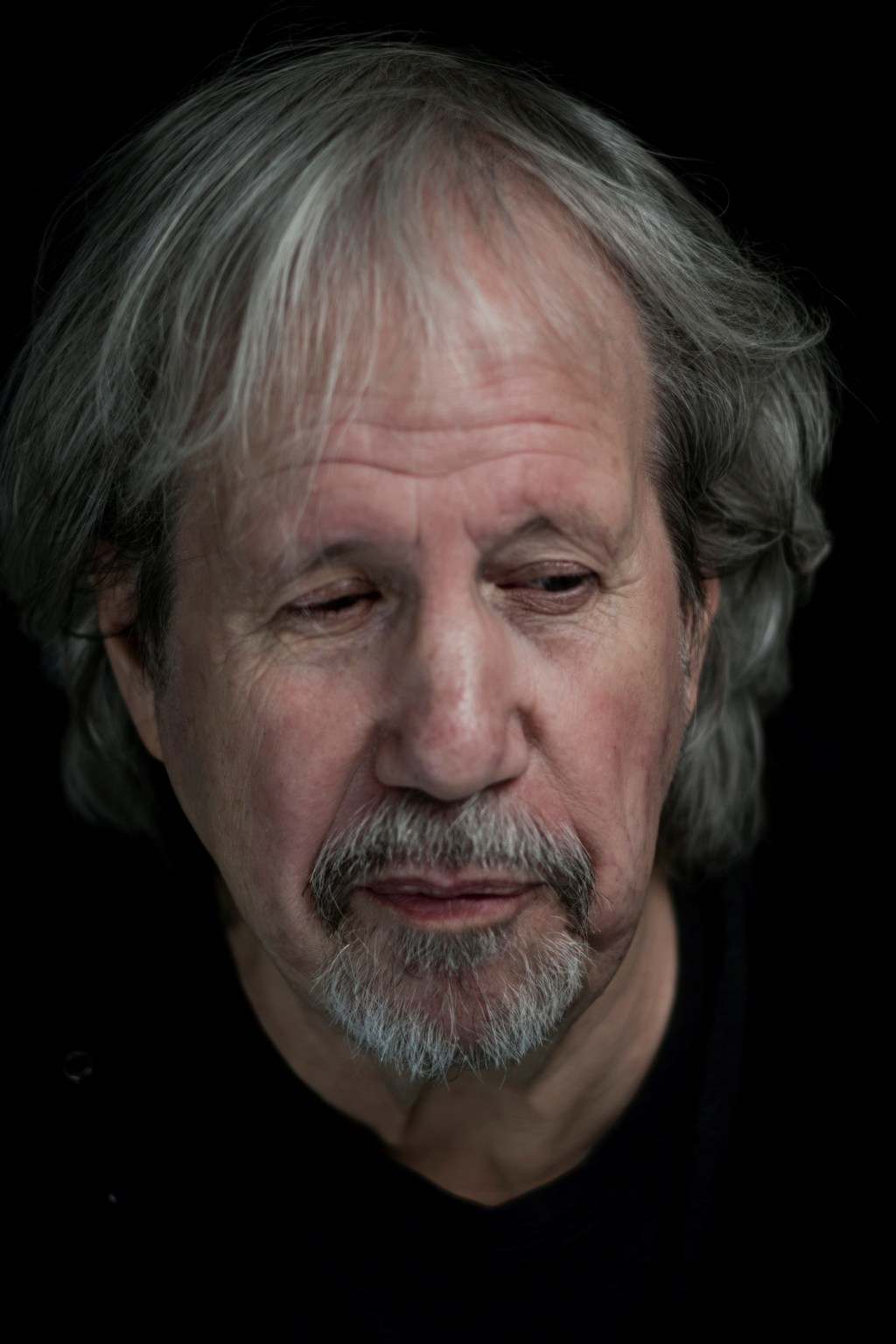
Daniel Garber talks with Alan Zweig about Love, Harold (+Tubby)

Posted in Canada, Death, Depression, documentary, Podcasts, Suicide by CulturalMining.com on October 18, 2025

Hi, this is Daniel Garber at the Movies for culturalmining.com and CIUT 89.5 FM.

Some people’s biggest fear is of a late-night call from a hospital that someone close to them —a child, a parent, a lover or a friend — has suddenly died in an unexpected accident, something you can’t predict. It’s devastating. But what if that death was by suicide? How do you deal with news like that? Why did they choose to do it? Was it somehow your own fault or something you could have prevented?  Well, a new film looks at survivors of suicide loss and the effect it has on their lives. 

The film’s called Love, Harold, and it’s a sympathetic and very moving look at how the aftermath of a suicide by talking with the friends, partner or family member of the ones who died.  This NFB film is written, and directed by renowned Toronto-based filmmaker Alan Zweig, whose deeply- personal and intimate documentaries look at people — including himself — facing crises, both major and mundane, in everyday life. His films have won numerous awards including the prestigious Platform prize at TIFF, a Genie and a Canadian Screen Award.

I’ve covered many of his docs and interviewed him at this station, including Fifteen Reasons to Live (2013). And I know Alan off mic, through work, mutual friends… and he used to be my next-door neighbour! Alan is also currently hosting a self-help podcast called TUBBY about weight issues.

I spoke with Alan in Toronto via ZOOM.

Love Harold is the centrepiece film at Rendezvous with Madness on October 24.

This film contains discussions of suicide, and the effects on survivors of suicide loss. If you need support services, please call your local Distress Centre. If you need immediate help, please call or text 9-8-8.

You can listen to  Tubby on Left of Dial Media.

Twentieth century troubles. Films reviewed: White Bird, Hold Your Breath, Saturday Night

Posted in 1930s, 1940s, 1970s, comedy, Depression, France, Nazi, Psychological Thriller, Romance, TV, WWII, Y.A. by CulturalMining.com on October 5, 2024

Hi, this is Daniel Garber at the Movies for culturalmining.com and CIUT 89.5 FM.

Lots and lots of movies coming to Toronto. Opening this weekend is the monster comedy Frankie Freako by Toronto’s own Steven Kostanski; and next week, look out for the Goethe Films, Aftermath: Echoes of War series featuring classics by Fassbinder and Wim Wenders at the TIFF Lightbox.

But today, I’m looking at three new movies, all set in the 20th Century. There’s dustbowl horror in 1930s Oklahoma, Nazi occupation in 1940s France, and the opening night of a live TV show in 1970s New York City.

White Bird

Dir: Marc Forster

It’s 1943, during WWII, in a picturesque French village near the Swiss border. Sarah Blum (Ariella Glaser) is a happy middle class kid in her school with high marks and many friends. And she loves drawing pictures in the margins of her notebook. One young boy clearly has a crush on her.  Julien (Orlando Schwerdt) is smart and kind, but also a victim of bullying. Not only does his father work in the sewers but Julien has a brace on one leg and uses a crutch to get around, making him a ready target for cruel bullies. But things change rapidly under the Nazi Occupation. Sarah and the other Jewish kids are pulled out of class one day to be deported to the camps. She alone manages to escape and hide in the woods. But the former class bullies are now classroom Nazis and they’re always on the look out for Sarah. Luckily she has a saviour — it’s Julien, of course, who lets her hide in the hayloft of his barn. As the months go by, he serves as her one-man classroom, relating the lessons she misses each day. And as they get to know each other better, they grow closer — is love at hand? And can they keep her hidden during the Nazi Occupation?

White Bird is an historical romantic drama. Adapted from a YA graphic novel by R. J. Palacio, it’s a sequel to an earlier book (also adapted into a film) called Wonder. The historical plot is framed by a kid named Julien in present-day New York, whose French Grand-mère (Helen Mirren) is telling him a story from her youth. I found the movie OK, with some real weepy moments. It does have odd details: why is the French resistance’s oath Vive l’Humanité!? But I like the graphic novel feel of the whole thing, with rapid story development and unexpected twists and turns. If you’re looking for a good, historical, teenaged tearjerker, check out White Bird.

Hold Your Breath

Co-Dir: Karrie Crouse, William Joines

It’s 1933 on the Oklahoma panhandle. Margaret Bellum (Sarah Paulson) lives with her two daughters on a farm. Life is miserable. Once their land was covered with acres of wheat, the cows and horses thriving in the barn. But years of drought has turned their land into a giant dustbowl. It’s so bad that you can choke to death in a dust storm. Her husband Henry is in Philadelphia looking for paid work, leaving the three women alone, waiting for his first paycheque to arrive so they can join him. Rose (Amiah Miller) the older daughter is yearning to see a big city, while little sister Ollie, who is deaf (Alona Jane Robbins) is shy and easily frightened. Especially so since Rose read her a scary book about The Gray Man, a mythical bogeyman who embodies the terror of a dust storm. The neighbours are nervous, too — rumours abound that a drifter made his way into someone’s home and killed all the women. 

So Margaret is on high alert, her rifle cocked and ready to fire, when a drifter appears in their barn. Wallace Grady (Ebon Moss-Bachrach) calms her down, saying he knows her husband who told him to check up on his family. I’m a man of the cloth, he says, and a faith healer. But strange unexplained things start happening. Is he a killer or a pastor? Does he have supernatural powers? Or is he the mythical Gray Man?

Hold Your Breath is a psychological thriller in a gothic setting. It’s spooky and creepy, and a little bit scary, full of feelings of suspicion and psychosis. the acting, especially Sarah Paulson, is quite good. One thing I found interesting is, though it’s ostensibly set during the Great Depression, it feels like an allegory of the recent pandemic. The family puts on elaborate white face masks to protect from the lethal dust whenever they go outside, are afraid to leave their home, and they are terrified of an unknown invisible enemy who can “get inside their home and their bodies unnoticed, just by breathing”. 

Nothing is very surprising here, and the story seemed less scary than tragic, but if you’re heavily into southern gothic horror, I think you’ll appreciate Hold your Breath.

Saturday Night 

Co-Wri/Dir: Jason Reitman

It’s October 11, 1975 in New York City, and in a few hours a new show will be broadcast live across the United States. It’s a new concept; not the “live” part; that was a staple of TV programming from its earliest days. What’s new are the guests — Jim Henson and his muppets — the comedians — Andy Kaufman and George Carlin —  the controversial topics, the live musicians, and the “not ready for prime time” players.  The show is meant otherwise be produced on the fly with minimal rehearsals — they plan to read their lines from cue cards or just wing it. The show is Saturday Night Live, and up until the moment it airs, no one’s sure whether the show will be canceled even before it starts. 

It’s up to the creators Lorne Michaels (Gabriel LaBelle) and Dick Ebersol to get the show ready in time. Lorne is working closely with his writer (and partner) Rosie Shuster (Rachel Sennot). But he’s badgered by network VPs who seem to be determined to make it fail. On top of this, John Belushi has passed out somewhere, the union crew refuse to put the set together, they can’t find a live audience to sit in a studio at midnight, snd all the local station bosses are there with their own gripes.

What can a guy do?

Saturday Night is an instantly forgettable but warmly nostalgic look at the start of an iconic TV show.  More surprising is the movie is genuinely funny. A lot funnier, in fact,  than the TV show it’s celebrating. This is not a documentary; it’s a comic dramatization of what might have been going on that first night, exactly 50 years ago next week. There’s an enormous cast, with every producer, writer and comic portrayed by people who weren’t even born when that show started.

I love the frenetic energy running through this film, as the camera flies around the set following a plethora of characters all talking at once as they try to get the show on the air. It has a cast of thousands, it’s fun to watch and never boring. Like I said, there’s nothing much to it, but I enjoyed Saturday Night.

Saturday Night and White Bird both open this weekend in Toronto; check your local listings. Hold Your Breath is now streaming on Disney+.

This is Daniel Garber at the Movies, each Saturday morning, on CIUT 89.5 FM and on my website culturalmining.com.

Depression. Films reviewed: The Crow, Between the Temples

Posted in Depression, drugs, Family, Horror, Judaism, Music, Romance, Thriller by CulturalMining.com on August 24, 2024

Hi, this is Daniel Garber at the Movies for culturalmining.com and CIUT 89.5 FM.

Depression can lead to strange decisions. This week I’m looking at two new movies, a supernatural action thriller, and an unusual romantic comedy. There’s a lover who can’t live after his girlfriend dies; and a cantor who can’t sing after his wife dies.

The Crow

Dir: Rupert Sanders

It’s an unnamed big city somewhere in the world. Shelly (FKA twigs) is a piano prodigy, who, with help from her ambitious mom and some shady investors headed by the mysterious Mr Roeg (Danny Huston), has risen to the top. She is living the highlife in a swank apartment and hanging with beautiful people at exclusive nightclubs.

Eric (Bill Skarsgård: John Wick Chapter 4) is a ne’er-do-well who grew up on a rundown farm with neglectful parents. Now, he finds himself in the big city, his face and body covered in meaningful tattoos. He lives a precarious life with hoody friends, with a secret space to hide out in — a warehouse filled with plastic covered mannequins. His interests range from goth music to the pen and ink drawings he scratches on scraps of paper.

So how did they both end up locked in a juvie rehab centre? For Eric it’s a foregone conclusion, but Shelly is there for drug possession. But her life is in danger after discovering she has footage on her cel phone of a heinous crime,  committed by the dark and powerful Mr Roeg. When Eric and Shelly meet in the rehab/prison it’s love at first sight. They escape and run away, to the big city where they make passionate love in haut couture fashions while spilling bottles of champagne over each others’ bodies. But Mr Roeg’s bad guys soon catch up, murdering them both. That’s when Eric has to decide: should he pass back into the world of the living to seek revenge and Shelly from hell? Or will he let himself die and pass on to heaven? 

The Crow is a supernatural action/thriller about young lovers caught between life and death. It has attractive stars, opulent sets, cool fashions and a good music playlist. Along with some extended fight scenes. The thing is, the movie doesn’t really make sense, it’s hard to sympathize with the hollow main characters, and it’s full of unexplained plot turns and dead ends. It feels like an unresolved two-hour music video. It  begins in a city like Chicago, but where everyone has English accents.  There are cobblestone streets and European opera houses. The movie is called the Crow, but aside from some black birds flying in the background, they don’t have much to do with it. Eric stains his face with black mascara to match the iconic Crow movie poster, but we never find out why. 

I didn’t hate this movie, but it is a big pointless mess.

Between the Temples

Co-Wri/Dir: Nathan Silver

Ben (Jason Schwartzman: Asteroid City, My Entire Highschool Sinking into the Sea, The Overnight, Saving Mr Banks, A Glimpse Inside the Mind of Charles Swan III) is a middle aged guy in upstate New York. He’s been sad and withdrawn since his wife died. Now he  lives with his two moms, Judith and Meira Gottlieb (Dolly De Leon, Caroline Aaron). They’re taking care of him in this time of need. They’re also constantly setting him up with new girlfriends to replace his dearly departed… in which he has no interest. He’s a cantor who works at the local synagogue but lost his ability to sing when his wife died. And what good is a cantor who can’t chant? Which drives him into a deeper depression in an ongoing cycle. He reaches rock-bottom one day when he lies down on a highway hoping the next truck will end it all. Instead the sympathetic driver helps him up and drops him off at a roadside bar.  There, the teetotalling  Ben gets totally sloshed on Mudslides (a white Russian with Irish cream). This leads to a drunken fistfight with a random stranger and a shiner on his face. But that’s where he meets a new friend, a sympathetic older woman, who looks somehow familiar. And then he remembers: it’s Mrs O’Connor (Carol Kane) his music teacher when he was a small child. And she’s a widow, too.

Gradually they spend more time together, sharing their stories. Mrs O’Connor (now reverting to her original name, Carla Kessler) explains she was a red-diaper baby, the child of American communists. As a teenager she liked listening to her friends singing at their bar mitzvahs but she didn’t understand and totally rejected any religious meaning. But now, 60 years later, she wants to have a Bat Mitzvah herself. Couldn’t Ben, a real cantor, teach her how to do it? He agrees, and they enter an intimate professional relationship focussed on singing. As it turns out she’s the only one who can make him laugh. But can this lead to something more serious? And can a 40 year old man hit it off with a 70 year old woman?

Between the Temples is a cute and clever romantic comedy. It’s all about the humour in uncomfortable situations and family misunderstandings, both his and hers. I have to mention the classic Harold and Maude, but aside from the intergenerational theme and the nice hippy-ish soundtrack, this one is original and stands on its own. Carole Kane is marvellous as Carla — she’s a comic genius who with her curly blonde hair and enormous eyes has kept her waifish, childlike look in her 70s. Jason Schwartzman is great for his dry delivery. And Dolly De Leon (Triangle of Silence) is excellent as Ben’s Filipina Jewish mother.

With an amazing cast, this small, subtle comedy is warm and effective. 

The Crow and Between the Temples both open this weekend in Toronto; check your local listings. This is Daniel Garber at the Movies, each Saturday morning, on CIUT 89.5 FM and on my website culturalmining.com.

Separated. Films reviewed: I Used to be Funny, Longing, Robot Dreams

Posted in 1980s, Animation, Canada, comedy, Comics, Death, Depression, Friendship, Hamilton, LGBT, New York City, Robots, Spain, TIFF, Toronto by CulturalMining.com on June 8, 2024

Hi, this is Daniel Garber at the Movies for culturalmining.com and CIUT 89.5 FM.

Not all love is sexual, and not all relationships lead to marriage. This week, I’m looking at three bittersweet dramas about people separated, against their will, from those they love. There’s a teenaged girl separated from her nanny (who is also a standup comic); a man separated from his biological son (who is also dead); and a dog separated from his best friend (who is also a robot).

I Used To Be Funny

Wri/Dir: Ally Pankiw

Sam (Rachel Sennott: Shiva Baby) is a standup comic in downtown Toronto. She shares an apartment with friends and fellow comics Paige and Philip (Sabrina Jalee, Caleb Hearon). But Sam can’t do her act anymore. She rarely showers, changes her clothes, or eats. She dumped her longtime boyfriend Noah (Ennis Esmer), and she quit the day job that used to pay her rent. Now she just sits around all day, staring at the wall. Why? Well, obviously she’s severely depressed. She’s also recovering from a traumatic violent event. 

Things used to be better. She had a job in the suburbs as a nanny for a troubled 12-year-old named Brooke (Olga Petsa). Brooke’s mother was dying in hospital, her aunt had little free time and her dad was always busy — he’s a cop. But now Brooke has disappeared and her aunt doesn’t even know where to look for her.  And when Brooke throws a rock through her window, Sam decides maybe she should join the effort to find the runaway and bring her home. But where is she hiding, why is she angry at Sam, and what will happen if she finds her?

I Used to Be Funny is a bittersweet comedy about a wise-  But it’s also Sam dealing with a not-at-all funny event — no spoilers here. It costars many Canadian comic actors, including Hoodo Hersi, Dan Beirne (The Twentieth Century, Great, Great, Great) and Jason Jones in a rare serious role. Rachel Sennott is excellent as Sam.

I Used to be Funny is a humorous look at depression and assault. 

Longing

Wri/Dir: Savi Gabizon

Daniel Bloch (Richard Gere) is a successful businessman, and committed bachelor. He enjoys sex, not commitment or kids.  He owns a factory and lives in a luxurious penthouse suite looking down on Manhattan. But when a when a surprise visitor arrives at his door, he is floored by her message.  Rachel (Suzanne Clément) is a Canadian woman he had a fling with 20 years earlier. She reveals she was pregnant when she returned to Canada, later married and raised Allen — his biological son — with another man she married. But Allen died in an accident two weeks earlier. Daniel is floored. She hasn’t come for money or legal action, just to tell him the news. So he travels north to Hamilton, to attend a memorial and find out more about the son he never knew. And what he found was both frightening and endearing. 

He talks to the people who played a key role in his son’s life, and discovers some surprising facts. He was a piano virtuoso. His best friend (Wayne Burns) says Allen was involved in a drug deal. A much younger girl (Jessica Clement) was in love with him, but says the feelings were not reciprocal. And his school teacher Alice (Diane Kruger) says he was obsessed with her and painted romantic poems about her on the school walls. What was Daniel’s son really like?  And what can he do to remember someone he never knew?

Longing is a quirky, disjointed drama about kinship and death as a father desperately tries to become a belated part of his late son’s life. Richard Gere underplays his role, almost to the point of absurdity, but it somehow makes sense within the nature of his character. It’s also about the boy’s parents, not just Daniel and Rachel, but his other de facto parents And it all takes place in a very posh and elegant version of Hamilton, unlike any Hamilton I’ve ever seen. This is a strange movie that sets up lots of tension-filled revelations, but then attempts to resolve them all using an absurd ceremony.

Longing never blew me away, but it stayed interesting enough to watch.

Robot Dreams

Co-Wri/Dir: Pablo Berger

It’s the early 1980s in the East Village of NY City. There are tons of people, but they’re not people, they’re animals. Literally. Bulls and ducks, racoons and gorillas. Dog — a dog with floppy ears and a pot belly — lives there, alone in an apartment, gazing longingly out the window at happy couples cavorting in the summer sun. Dog plays pong by himself, or eats TV dinners while watching TV. He’s bored and lonely, with no one to play Pong with or just hang out. Until he orders a robot —  as advertised on TV, some assembly required —  and waits eagerly for it to arrive. He’s a delight with tubular arms, a mailbox shaped trunk, an elongated German helmet as a head, with round eyes  and a happy smile. They are instant friends, maybe soulmates. They go rollerskating in central park, take pictures in a photo booth. Feelings grow. Another day they head out for the beach. They sunbathe and swim together — a perfect day. Until the robot finds himself rusted solid just as the beach is closing for the night. And despite Dog’s efforts, he is too heavy to drag home, so he comes back one next day to get him. But the beach is closed for the season, locked up behind a metal fence. And despite repeated tries, Dog can’t seem to rescue Robot from his sandy prison. Can Robot survive for a year, unmoving, in the great outdoors? And will that spark between Robot and Dog still remain in the spring?

Robot Dreams is an amazing animated film about friendship and loss. It’s called Robot Dreams because much of the film takes place inside the robot’s imagination as he lay on the beach,  It’s set in the grittiness of 1980s New York, with graffiti-filled subways, punks in East Village, break dancing teens and Jean-Michel Basquiat. Remember Zootopia, that animated movie where everyone is an animal? Robot Dreams is the flip side of that, darker, cooler, adult, more Fritz the Cat than Disney or Pixar. There’s also no dialogue, but it’s anything but silent, with constant music and grunts and quick-changing gags and cultural references. But it’s also very moving — you can feel the pathos between Dog and Robot.  I saw this movie cold (without reading any descriptions) and it wasn’t till afterwards that I realized it’s by Pablo Berger, the Spanish director who, more than a decade ago, made the equally amazing Blancanieves, a silent, B&W version of Snow White as a toreador. The man’s a genius.  

I totally love Robot Dreams.

I Used To Be Funny, Longing and Robot Dreams all open theatrically this weekend in Toronto; check your local listings. 

This is Daniel Garber at the Movies each Saturday morning on CIUT 89.5 FM and on my website culturalmining.com.

Surprising fantasy lives. Films reviewed: Sometimes I Think about Dying, Argylle

Posted in comedy, Depression, Espionage, Fantasy, Romance, Romantic Comedy, Thriller, Writers by CulturalMining.com on February 3, 2024

Hi, this is Daniel Garber at the Movies for culturalmining.com and CIUT 89.5 FM.

February is Black History Month, which is the best time to celebrate black cinema from a historical perspective. The Toronto Black Film Festival is running from Feb 14-19th, showing new features, docs and shorts. This year they’re celebrating actress Pam Grier, with her 70s film Foxy Brown, and in a tribute to the late, great Charles Officer, they’re showing Akilla’s Escape, a thriller set in Toronto. And Sway, Emmanuel Kabongo’s new thriller is having its Canadian premiere at this same festival. Mubi, the streaming site for avant-garde, indie and festival films, is programming black cinema this month in their Cut to Black series. You should check out  Samuel D. Pollard’s excellent  documentary MLK/FBI about J Edgar Hoover’s wiretapping and execrable treatment of the Rev. Dr. Martin Luther King, Jr, and his family.

This week, I’m looking at something completely different: two new movies about lonely women with surprising fantasy lives. There’s an office worker who dreams of dying, and a reclusive novelist who dreams of adventure.

Sometimes I Think about Dying

Dir: Rachel Lambert

Fran (Daisy Ridley) — best known as Rey in the Star Wars movies) is a young woman in a small coastal town in the pacific northwest. She works at a dull office job, in charge of supplies and flow charts. Fran likes beige sweaters and cottage cheese. She spends all day staring out the window at ships docking in the harbour, loading and unloading containers by crane. Basically, she’s depressed, bored and lonely; she lives alone and never goes out. The only unusual thing about her — something that she’ll never confess to anyone else — is the strange fantasies that bounce around her head. She pictures herself lying in a grassy forest… dead. She enjoys the calm and peacefulness of being a corpse. She isn’t suicidal, she isn’t a zombie, she just likes the concept.

Until one day, a stranger arrives at the office, taking the place of Fran’s recently retired coworker. Robert (Dave Merheje) comes directly from Montreal. He’s bald and bearded with a dry sense of humour. His big secret is he has never worked in an office job before, and is completely baffled by the culture. They bond through texting, and he eventually asks her out on a date. And suddenly Fran’s life changes for the better. Her fantasies shift from grassy knolls to funeral pyres! They go to an actual party and meet new friends. But will she ever open up to him? Can she reveal her secret? And will she ever smile?

Sometimes I Think about Dying is a tender social satire about the boredom of daily life and the bubbling cauldron of emotions lurking just beneath the surface. It feels like an Aki Kaurismaki movie transplanted to small-town USA. Daisy Ridley — the British actor best known as fighter-pilot Rey in the Star Wars franchise — is subtly funny as Fran. And Canadian actor and stand-up comic Dave Merheje is good as her “normal guy” foil Robert. It’s a simple movie, but with enough twisted humour to keep you interested. 

It’s cute.

Argylle

Dir: Matthew Vaughn

Elly Conway (Bryce Dallas Howard) is a frumpy middle-aged woman who lives with her cat Alfie in a log cabin between a picturesque mountain and a lake. She earns her living writing action novels about a dashing spy named Argylle, who roams the planet on daring missions. Elly, on the other hand, is a homebody who is deathly afraid of flying and will only leave her home to attend a book launch in a nearby city. Her books are bestsellers, with her devoted fans eagerly awaiting #5 in the series. But her mom (Catherine O’Hara) — who proffers advice on all her books before they’re published — says the ending just doesn’t do it.

So she sets off on a train ride to hash through the manuscript with her mother. But everything changes on that train ride, when a stranger — a bearded long-haired man in dirty clothes —  aggressively takes the seat across from her and refuses to move. He’s a  fan of her books, he says. Turns out the entire train knows exactly who she is… and for some reason, they think her books are the key to the secret world of espionage, and for that reason, want her dead! 

This strange man (Sam Rockwell) turns out to be a spy himself, fighting for the good guys. He manages to fight off dozens of would be assassins and brings Elly to safety. She grabs her cat and they fly off to Europe. But this is just the first step in a whirlwind journey of international intrigue, where the CIA — the good guys?! — are fighting the bad guys (a sinister cabal known as The Division) for worldwide domination. Why does everyone think her fiction is prophetic?  Can frumpy Elly solve these mysteries? And will she ever know the truth?

Argylle is a highly stylized roller-coaster ride of light comedy and high-speed action. The bright colours and extreme violence and mass murder — but with no blood — is fueled by a non-stop infectious disco soundtrack. The movie begins with scenes from her novels where Argylle (a plastic-looking Henry Cavill) and his teammates have unbelievable ridiculous shoot outs and chase scenes in exotic locales. But it soon resets to “real life” where things are slightly more believable. The thing is, it all starts to merge, to the point where “reality’ is even more extreme than “fiction”. In Elly’s mind, her fictional spy Argylle periodically takes the place of her less appealing cohort.

The story makes marginal sense, with so many U-turns and double crosses your head will spin. But that’s not what the movie is about. It’s there for sheer entertainment — a ride on planes, trains and ice skates — as the film chugs along its merry way. Visually, it’s one giant green screen, with endless CGI and special effects, to the point where it’s almost a cartoon. Is that Henry Cavill’s face and hair or a computer generated plastic figurine? Is that Bryce Howard’s breasts or a CGI simulacrum? Who knows? Who cares!

This is all about spectacle, with some truly spectacular scenes of mass murder muted by bright billows of pink and lavender smoke. There’s gun porn, with the camera caressing thousands of assault weapons lined up in a shiny-white tribute to machine guns. And major star power, including Dua Lipa, John Cena, Ariana DeBose, Bryan Cranston, and Samuel L Jackson.

Is Argylle a good movie?

No!! It’s ridiculous, high-budget schlock… but it’s also eye-candy perfection.

Argylle starts this weekend, and Sometimes I think about Dying opens next week; check your local listings. 

This is Daniel Garber at the Movies, each Saturday morning, on CIUT 89.5 FM and on my website culturalmining.com.

Women at work. Films reviewed: I.S.S., Memory, The Teachers’ Lounge

Posted in Addiction, Dementia, Depression, Disabilities, Drama, Germany, Kids, Russia, School, Science Fiction, Space by CulturalMining.com on January 20, 2024

Hi, this is Daniel Garber at the Movies for culturalmining.com and CIUT 89.5 FM.

In traditional movies (and even contemporary ones) men are typically portrayed at work with women at home. But that’s not real life for most people. So this week I’m looking at three new movies about women around the world at work. There’s a social worker in New York who meets a man with dementia; a teacher in Germany with a rebellious student; and an astronaut in space interacting with cosmonauts.

I.S.S.

Dir: Gabriela Cowperthwaite (review: Our Friend)

It’s present day in the thermosphere. Kira (Ariana DeBose) is a biologist on board the international space station, manned equally by Russians and Americans, an example of world peace, scientific cooperation and mutual respect. It’s her first day in space, and she feels weird and queazy living without gravity. She does love the cake and vodka, though. The space station has a ramshackle feel to it, with exposed wires and old video screens, but gets used to it pretty soon.

She’s there to conduct experiments on mice, alongside her Russian counterpart Alexey (Pilou Asbæk). Also on board are Gordon (Chris Messina) a moustached astronaut, and Christian (John Gallagher Jr.) a US Air Force officer; and on the other team, the beautiful and glamorous cosmonaut Weronika (Masha Mashkova) and Nicolai (Costa Ronin), representing the Russian military. Gordon and Weronica — who seem especially close — are impressively bilingual, while the rest get by with broken English and Russian.

In honour of her first day in space, Kira’s teammates show her something very few people have ever seen: a view of the peaceful, blue planet without conflict or national boundaries. But everything changes a few days into her voyage, when communication breaks with earth and secret messages arrive to both teams: Since the US and Russia are in conflict on earth, they’re ordered to seize control of the space station…by any means necessary. What is really happening down there? Can international friendship override their planetary orders? Or is the  space station doomed?

I.S.S. is a classic, smart, sci-fi space opera with a contemporary twist. The acting is not bad, though I had trouble distinguishing between the two Russian men who have similar builds, faces and brown beards. And at the beginning of this movie, the non-gravity scenes looked very fake. But after a few minutes everything looked normal again. I liked the taut structure of the film, the constant tension, and the shifting if alliances among the six players. The film also takes you out of the ship, into an unplanned and untethered journey in space. There’s even a guest appearance by the famed Canadarm, but this one was clunky and concrete and a little bit  dangerous. With geopolitics as fragile as they are these days, this film’s themes seem especially appropriate. While there is some violence, ISS kept me interested the whole time.

Memory

Wri/Dir: Michel Franco

(review: New Order)

Sylvia (Jessica Chastain) is a social worker in New York at a home for adults with mental disabilities. Sylvia goes to AA meetings regularly; she’s stayed totally dry since the year before her 13-year-old daughter Anna (Brooke Timber) was born. They occasionally spends time with Sylvia’s sister Olivia’s family (Merritt Wever), but she’s very protective; she doesn’t want Anna to start drinking, smoking or taking drugs with her cousins. One evening, heading home after a high school reunion, she notices a man looking at her. He follows her home from a distance and spends the night outside her door in the pouring rain. Who is he and what is their connection? His name is Saul (Peter Sarsgaard) and — according to the card he wears around his neck — his emergency contact is his brother Isaac (Josh Charles).

Sylvia painfully remembers Saul as part of a group of older boys who sexual abused her when she was still in Junior High. It was one of a number of incidents that drove her to the alcoholism and depression she still carries with her. She agrees to meet him in the park so she can make him answer for his crimes. But to her chagrin she learns he has severe memory loss caused by early-onset dementia. She also discovers — through a third party — that he could’t have attacked her; he hadn’t even moved to that area yet when the incidents she remembers took place. 

Later, Isaac hires her as a part-time caregiver — he says Saul never stops talking about her. She’s just supposed to keep him company in his home and make sure he doesn’t wander away.  This puts them in a strange situation. He clearly likes her… but does she have feelings for him? And what will happen if their relationship changes from caregiver/patient to lovers?

Memory is a terrific drama about two troubled adults learning to understand each other despite their own deficits. It’s filled with shocking plot turns and secret revelations that totally change your perception as it goes. But through it all, the heart and warmth of the main characters always comes through. I wanted to see this because it’s by the fantastic Mexican filmmaker Michel Franco (the stunning New Order in 2020), but this one is totally different. While it also deals with issues of class, crime and family, it is as thoughtful and complex as New Order is hair-raising and revolting. Memory comes through as an unexpectedly powerful film while retaining a lightly playful and always unpredictable core.

Really interesting movie.

The Teachers Lounge

Co-Wri/Dir: Ilker Çatak

A public school in present-day Germany. Frau Nowak (Leonie Benesch) is a new, Grade 4 teacher, and her kids just love her. She has them instantly clapping twice when noise gets out of hand, and chanting answers to her when she poses daily questions. She does trust games, physical exercises and is always positive, but doesn’t let cheaters get away with it. She also encourages the kids to be creative in problem solving, especially, Oskar (Leonard Stettnisch), clearly the smartest kid in the class.

Between classes, she rests in the teachers’ lounge. But there’s trouble brewing. Someone is stealing cash from other kids’ wallets, and her students are forced — not by Frau Nowak —  to point out potential suspects, who are pulled out of class by the admin. This leads to a feeling of distrust and tension. She thinks the problem isn’t with the kids, it’s with grownups — she sees teachers pilfering money from the coffee fund piggy bank. So one day she deliberately leaves her wallet in her jacket and steps out with her laptop set up to tape everything while she’s gone. 

Sure enough, she notices some of her money is missing, and an arm (though no face) in a distinctive blouse is recorded reaching into her pocket. She privately confronts a woman wearing the same blouse that day and demands her money back. The woman Frau Kuhn (Eva Löbau) vehemently denies it. She’s a longtime staff who manages the school office, while Frau Nowak is a newcomer. The case goes to the principal’s office and Frau Kuhn is put on leave. The problem is, Oskar — the top student — is Frau Kuhn’s son. And he demands Frau Nowak publicly apologize for lying about her mom — or she’ll regret it. The news goes viral among the students, staff and even the parents, till it spirals out of control. Can this problem ever be resolved? Who, if anyone needs to apologize? And what will happen if they don’t?

The Teachers’ Lounge is a fantastic drama that explores school life from a dozen angles. While the story is told from Frau Nowak’s point of view, it brings in tons of distinct characters, from the kids in her class, to the journalists at the school paper, to the complaining parents, the gossipy teachers, the bullies, the teachers pets, and the ordinary students just trying to fit in. Leonie Benesch is amazing as Frau Nowak, as she struggles to maintain control while doing the right thing as she sees it, even as she sees her students’ trust crumbling around here. This is a realy great movie, deep, realistic, moving and really well-acted. It’s Germany’s entry as best foreign language film at the Oscars, and I can see why. 

Excellent movie.

Memory, I.S.S., and The Teachers’ Lounge all open this weekend in Toronto; check your local listings. And for some great new Canadian films, shorts and docs, be sure to check out the Milton Film Festival next weekend, January 26-28 at the FirstOntario Arts Center, in Milton. 

This is Daniel Garber at the Movies, each Saturday morning, on CIUT 89.5 FM and on my website culturalmining.com.

On the media. Films reviewed: A Wounded Fawn, Spoiler Alert, Empire of Light

Posted in 1980s, 1990s, Death, Depression, Disease, Feminism, Gay, Greece, Horror, Mental Illness, Movies, Racism, Revenge, Romance, Theatre, Women by CulturalMining.com on December 10, 2022

Hi, this is Daniel Garber at the Movies for culturalmining.com and CIUT 89.5 FM.

It’s December, but not everything is about Christmas. This week I’m looking at three new movies with themes set in the arts: there’s a woman who works at a cinema but never watches movies; a serial killer who finds himself part of an ancient greek play, and a writer for TV Guide who thinks his life is like a sitcom.

A Wounded Fawn

Co-Wri/Dir:Travis Stevens

It’s a fine art auction in NY City, and the collectors and dealers are in fighting mode tonight. The prized item is a small bronze sculpture from ancient Greece showing the Furies seeking revenge on a prone man. Kate (Malin Barr) gets the high bid and returns home triumphant with the piece  in hand. So she’s surprised to see Bruce (Josh Ruben) a rival bidder, show up at her door. His boss still covets the statue and is willing pay double. Doubling her money in 24 hours seems like a good deal. She invites him in for a glass of champagne. But before long, she is dead on the floor in a pool of blood, and the sculpture — and Bruce — are long gone.

Later, Meredith, another beautiful young woman (Sarah Lind) is excited over an upcoming weekend in the country with her latest paramour. Her last boyfriend was abusive, but her new one seems nice, generous and attractive.  And he’s into fine art just like Mer (she works in a museum).They set off for a fun filled adventure at his isolated cottage in the woods. She is thrilled to see the cabin is actually a finished home overlooking a dense forest, and decorated with modern art. But something is strange: she hears a woman’s voice in her ear warning her to leave. And she recognizes the Greek sculpture of the Furies on his coffee table — she authenticated it for an auction just a few weeks ago. (It’s just a copy, says Bruce) What she doesn’t know is that Bruce is a serial killer… and she might be his next victim. (Bruce is waiting for directions from a gigantic man-owl with blood red feathers who tells him who he should kill). Can Mer fight him off? And where do those strange voices come from? 

A Wounded Fawn is a low budget, exquisitely-crafted art-house thriller horror. What starts as a simple slasher, soon turns into a revenge pic about halfway through, where Meredith, Kate and a third victim return as the Furies to visit punishment upon Bruce. What’s really remarkable is how it incorporates greco-roman aesthetics, mythology and theatre into what could have been a simple scary horror movie, to turn it into something totally original. While it’s not always clear whether something happens for real, or just inside Bruce’s damaged brain, it doesn’t matter.  A Wounded Fawn is weird and fascinating, either way.

Spoiler Alert

Dir: Michael Showalter

It’s the 1990s. Michael Ausiello (Jim Parsons) is a nerdy gay guy who lives in NJ but works in Manhattan. He grew up obsessed by TV, living his life as if he were a character on an 80s sitcom. Now he’s a writer for TV Guide, where he devotes himself to work and remains perpetually single. Until he meets Kit Cowan (Ben Aldridge) at a dance club — he’s handsome, fit and popular and says Michael is just his type —a tall geek. Kit’s also in the media — he’s a professional photographer. They hit it off, but keep certain secrets to themselves. Kit lives a free-wheeling sex life — he’s not one to settle down. And Michael never came out to his small-town parents (Sally Field and Bill Irwin); he’s afraid they won’t accept him. And he’s afraid to show Kit his apartment. What is he hiding there? His Smurf collection; a veritable fuzzy blue tsunami filling every nook and cranny. But after settling their deferences, they eventually move in together. Most of the Smurfs are packed away, Michael comes out to his parents (they still love him) and they settle into domestic bliss. 

Flash forward 15 years, and their relationship is on the rocks; the spark has died and they’ve grown a bit distant toward each other. But everything changes when — spoiler alert! — Kit discovers he has terminal cancer. Can they handle his imminent death? Will their love be rekindled? And how will they spend what might be their last year together? 

Spoiler Alert is a touching dramady about love and loss, based on a true story — Michael Ausiello’s own memoir of his life with Kit. Like the book, the movie begins with the death of Kit in Michael’s arms, hence “spoiler alert”. The director Michael Showalter, previously made The Big Sick, also about a couple and their family facing a serious illness. So is this the gay Big Sick? Not exactly — it’s a new story with a different style, like his version of Michael’s childhood as a sitcom, complete with laugh-track. And there are lots of funny parts. The bigger question is, is Jim Parsons up to playing a dramatic role, or is he forever stuck in peoples’ minds as Sheldon on the Big Bang? In this case, I think he pulls it off. He fits the role and manages to make him quirkily sympathetic. So if you’re into terminal illness comedies, here’s a good one to try on for size. 

Empire of Light

Wri/Dir: Sam Mendes

Its the winter of 1981 in a sea-side city in southern England. Hilary (Olivia Coleman) is a middle-aged woman who works at the Empire Theatre as the front of house manager. It’s an art-deco movie palace, but like the town, it’s long past its prime. Half the screens are closed and the third floor ballroom has been taken over by pigeons. Hilary is lonely and depressed, on meds, recovering from a hospital stay. Her social life consists of ballroom dancing with old men, and her sex life is furtive encounters with her sleazy, married boss (Colin Firth) in his darkened office.

But her life changes when a young man, Stephen (Michael Ward) is hired to work there. She finds him attractive, ambitious (he wants to study architecture at university)` and compassionate: he nurses a wounded pigeon back to health. He’s mom’s a nurse, from the Windrush generation, but he wants more. Hillary may be his mom’s age but there’s something there. After a few intimate moments they start a clandestine relationship. But Michael’s real ambition is to leave this town — to escape increasingly racist street violence (he’s black), and to become more than just an usher.  Can their relationship last? And if they break up, can the fragile Hilary handle it?

Empire of Light is a romantic time capsule of life in Thatcher’s England. It’s also about the joy and troubles of an intergenerational, mixed-race love affair.  And it’s also about sexual harassment and anti-black racism in everyday life. And it’s also about Hillary’s mental illness, including her sudden, manic episodes. And it’s also about the rise of skinheads and the National Front, and the concurrent anti-racist ska revival.  And it’s also about the collective friendship that develops among the people working at the Empire theatre. (Maybe too many ands for one movie?)

Like many of Sam Mendes films (which I generally don’t like), it’s pandering and emotionally manipulative and has a  meandering storyline, that keeps you watching while it’s on, but leaves you feeling vaguely unsatisfied afterwards. But the acting is really good, especially Olivia Coleman and Michael Ward, who rise above the movie’s many flaws. Maybe even good enough to make Empire of Light worth a watch, despite all its problems.  

Empire of Light and Spoiler Alert both open this weekend in Toronto; check your local listings. And A Wounded Fawn is now streaming on Shudder. 

This is Daniel Garber at the Movies, each Saturday morning, on CIUT 89.5 FM and on my website, culturalmining.com.

Lost Souls. Films reviewed: Apples, Moloch, Passengers of the Night

Posted in 1980s, Archaeology, comedy, Covid-19, Depression, Disease, Drama, Family, Feminism, France, Ghosts, Greece, Homelessness, Horror, Netherlands, Radio by CulturalMining.com on July 10, 2022

Hi, this is Daniel Garber at the Movies for culturalmining.com and CIUT 89.5 FM.

It’s Nunavut day, so what better time is there to catch up on Inuit movies. Slash/Back, a brand-new movie about aliens in a small arctic town, is playing right now. The Grizzlies is a feel-good film about a high school lacrosse team. And if you’ve never seen Zacharias Kunuk’s movies — including The Journals of Knud Rasmussen and Atanarjuat: The Fast Runner — well… you’d better.

But this week I’m looking at three new European movies — from Greece, the Netherlands and France — about lost souls. There’s a lonely guy in Athens who loses his memory in a pandemic; a divorced mom in Paris who seeks solace in late night talk radio; and a widowed mom in the Netherlands who is haunted by the lost souls… in a peat-moss bog. 

Apples

Wri/Dir: Christos Nikou

Aris (Aris Servetalis) lives by himself in Athens, Greece. One day while going for a walk he forgets where he lives. Also his family, his identity, even his first name. He has acute amnesia, the symptom of a strange pandemic, sweeping across the planet. He’s taken to hospital, with the hope a family member will arrive to identify him. But no one comes. About the only thing he knows is he likes apples. The hospital arranges for him to move into an apartment, where they hope he can regain his memory, or at least achieve some level of self worth and identity.  To achieve this they put him into an experimental program. He’s given a series of mundane tasks, all of which he is expected to record, using a polaroid camera. Ride a bike, go to a movie, attend a party, drink alcohol, meet a new friend. It also includes things like picking up a woman in a bar (he accidentally goes to a strip bar with embarrassing consequences) But during his recovery, while viewing the Texas Chainsaw Massacre, he encounters another alienated, memory-deficient person.   

Anna (Sofia Georgovasili) is clearly on the same program. Two is better than one, so they begin to see one another, if in a detached, alienated way. But as time progresses, Aris begins to remember things, including sad memories he wants to suppress. Will Anna be his soul mate? Will he ever find his original home? And is there any meaning to his life?

Apples is a satirical look at modern urban alienation in a time of pandemic. Interestingly, this film was completed in 2019 BC, (before Covid). But somehow it captures the mundane, seemingly meaningless medical obsessions, the injections, the tests,  the isolation, loneliness and self-doubt that we all experienced over the past two years.

Writer-director Christos Nikou worked with the now famous Yorgos Lanthimos, on his earliest film, Dogtooth, and like that movie, it’s funny, weird and extremely awkward, with adults behaving like children, and people blindly obeying seemingly nonsensical rules. It takes place in the present day but it’s filled with obsolete gadgets like polaroid cameras, and cassette tape players not a cel phone or a laptop in sight. Aris Servetalis is excellent as the main character, who fits perfectly within the film’s minimalist feel.

I like this one.

Moloch

Co-Wri/Dir: Nico van den Brink

Betriek (Sallie Harmsen) is a woman in her thirties who lives in an isolated home with her parents and her young daughter, in northern Netherlands. Her home is in a forest, surrounded by peat moss bogs. Her daughter goes to public school but Betriek likes the isolation — she thinks her family is cursed so it’s best to keep to herself. Easier said than done. Especially when a strange man appears in her living room! He can’t stop it, he says, they won’t let him! And his voice seems to be an unworldly chorus of a thousand souls. And then he tries to kill them all. Turns out he worked at a nearby archaeological dig, headed by Jonas (Alexandre Willaume) a Danish man.

Peat moss is a natural preservative and they’re digging up mummified bodies from ancient times. And when they examine them, they discover they are all victims of the same sort of ancient ritual sacrifice to some primeval god. By disturbing the graves they may have let loose ancient demons, possessing her friends and family. Meanwhile, her mother is going through another difficult period with her brain — is it related? Her father says they’d better leave the place and never come back. And when Betriek encounters strange visions of a little girl sending her a message, she realizes things are very wrong. Will Jonas ever believe there’s something evil going on? Can Betriek break her family’s curse? Will they fall in love? And together can they fight off an ancient evil god?

Moloch is an excellent Dutch horror movie about life in a remote village built over secrets that never should have been disturbed. It sounds like a simple story, but actually it’s a multi-layered drama. The film even incorporates a school Christmas pageant where small children innocently reenact an ancient pagan tribute even while mayhem is happening outside. The movie’s in Dutch, but because of the multiplicity of languages, much of the dialogue is in English. And remarkable for a horror movie, the cinematography is gorgeous, as warm and grainy as any 70s Hollywood movie. I liked this one, too.

Passengers of the Night

Dir: Mikhaël Hers

It’s the mid-1980s in Paris. Elisabeth (Charlotte Gainsbourg) lives with her two teenaged kids high up in an apartment tower. Her daughter Judith, is outspoken and into politics, while her son Matthias (Quito Rayon- Richter) is more introspective — he gets in trouble for writing poems in history class. The dad, though, is nowhere to be seen. He moved in with his girlfriend and pays no child support. So Elisabeth is forced to search for a job to keep her family afloat.  She finds solace listening to a late-night radio talk show, and applies to work there. She lands a job at the switchboard vetting callers and guests for the host, Vanda (Emmanuelle Béart). She invites a young woman to the show based on a touching letter she wrote. Tallulah (Noée Abita) is 18 but has lived on the streets of Paris for years, sleeping under bridges and in squats. She has raven hair, pale skin and doe eyes. 

Elisabeth can’t stand the thought of her sleeping in the rough, so she invites Tallulah to stay, temporarily, in a spare room tucked away far above their apartment. She wants to keep her separate from her kids, but they soon meet up. She’s street smart, and teaches them how to live on nothing and tricks like how to get into a movie theatre without a ticket. Matthias is smitten by her and longs to take it further. But after a late night tryst, she flees the apartment and disappears, leaving the family shocked and saddened. Four years later, things have changed. The kids are growing up, Elisabeth has gained self-confidence and she has a day job and a much younger boyfriend named Hugo.  But when her ex says he’s selling the home, it’s time for major changes. That’s when Tallulah reappears again at their door in a bad state. Can Elisabeth save Tallulah from her spiral into darkness? And what will the future bring?

Passengers of the Night is a beautiful and heartfelt look at a Parisian family navigating its way through unexpected shifts in their lives, and how a visitor can change everything. The film is set in the 80s (from 1981 through 1988), not just the costumes, music, and Talulah’s big hair but also the tumultuous political and social changes from that era. And it’s punctuated by views of Paris from that era — high-rises, sunsets and views through commuter train windows — shot on a narrower bias, to give it a realistic feel. While more gentle than a sob story, it still brings tears to your eyes.

Passengers of the Night and Apples are both playing at the TIFF Bell Lightbox. And Moloch is now streaming on Shudder.

This is Daniel Garber at the Movies, each Saturday morning, on CIUT 89.5 FM and on my website, culturalmining.com

Is reality just an illusion? Films reviewed: Petite Maman, Doctor Strange in the Multiverse of Madness, Stanleyville

Posted in Comics, Depression, Family, Fantasy, France, Games, Horror, Reality, Super Villains, Super-heroes, Supernatural, Time Travel by CulturalMining.com on May 7, 2022

Hi, this is Daniel Garber at the Movies for culturalmining.com and CIUT 89.5 FM.

Spring festival season is on now, with Hot Docs, entering its final weekend with tons of great documentaries still playing. Check it out while you still can.

But this week, I’m looking at three new movies, where reality, time and space are just illusions. There’s a magical doctor trapped in a parallel universe; a disillusioned office worker caught up in a deadly reality show; and a little girl who encounters another little girl in the woods… who is actually her own mother.

Petite Maman

Dir: Céline Sciamma

Nelly (Joséphine Sanz) is a little French girl who is visiting her grandmother’s house with her parents. It’s where her mother grew up. But grand-mere isn’t there anymore. She died recently in a nursing home.  Rather, they’re there to go over old possessions and letters and to spend a night there before they close it up for good. But the family is in a crisis with her parents not getting along. And Nelly’s mom (Nina Meurisse) flees the house without even saying goodbye to her. Meanwhile, Nelly explores the house and the woods behind it where she encounters another little girl named Marion (played by her twin sister, Gabrielle Sanz). They play in a fort she built in an old tree. She follows her home to a house that looks exactly like grand-mère’s… except it’s prettier, with a warm glow all about it. And there she meets grande-mère, alive again, when she was still her mother’s age. That would make Marion her mother when she is just a girl, going through another crisis of her own. Can this new understanding of her mother’s past help hold her family together?

Petite Maman is a very simple, very short story, which is at the same time, quite moving and sentimental. It’s all about memory, loss and mother-daughter relationships. Although there’s a magical, time-travel element to it, this is no Harry Potter — it doesn’t dwell on the supernatural, that’s just a matter-of-fact element of a child’s life. Petite Maman is a wonderfully understated drama — cute but not cutesy, sentimental but never treacly — that leaves you feeling warm inside.  I saw this last year at TIFF, and I put it on my best 10 movies of the year list in January, so I’m really glad it’s finally being released.

This is a tiny, perfect movie.

Doctor Strange in the Multiverse of Madness

Dir: Sam Raimi 

Doctor Stephen Strange (Benedict Cumberbatch) is a former medical doctor who has changed his practice from surgeon to sorcerer. He lives in an enormous mansion in New York City. He is friends with Wong (Benedict Wong) and another doctor Christine (Rachel McAdams) who is the love of his life, but also a love lost. She couldn’t stand his hubris and self-centred nature. And he is forced to confront his rival Baron Mordo (Chiwetel Ejiofor). But when he dabbles with the dark arts, the universe is turned into chaos and he finds himself in another universe. 

There he encounters the Scarlett Witch (Elizabeth Olsen) who dreams each night of a suburban housewife named Wanda. She wants to rule the world so she can return to this lost life. But the one person with the power to transcend parallel universes is a naive young girl in sneakers and a bluejean jacket named America (Xochitl Gomez). She wants to return to her own universe so she can see her two moms again. Doctor Strange rescues her just in time and they end up hurling through dimensions and realities, before landing on a topsy-turvy New York where green means stop and red means go. Can Doctor Strange fight the witch, break the spells, and make the multiple universes all safe again? 

Doctor Strange in the Multiverse of Madness is the latest instalment in a seemingly endless number of movies and TV shows. While I recognized the parade of various minor superheroes and villains as they appeared in different guises, I have to say I don’t quite get it. What is the point of this movie and why should I care? It’s directed by horror great Sam Raimi, so I was expecting some chiller-thriller elements, but I wasn’t ever scared, not even a tiny bit. It’s much too tame for that. It is fun to watch: there’s a cool psychedelic sequence in the middle along with a brilliant house of mirrors and some old -school Hong Kong kung-fu mid-air battles that I liked, but in general, I found the movie not great… just good enough.

Stanleyville

Dir: Maxwell McCabe-Lokos

Maria (Susanne Wuest) is a woman who works at a pointless office job in a high-rise tower. One day she is disturbed by an omen — a noble bird flying in the sky that crashes into her office window. Though married with a teenaged daughter and a full-time career, she gives it all top in an instant. She empties her pocketbook, including money, phone and credit cards and wanders aimlessly into a shopping mall. There she encounters a geeky man with glasses, named Homunculus (Julian Richings) who tells her matter of factly, that she’s been chosen from 100s of millions of people to participate in a contest with four others. The winner gets an orange-coloured SUV (in which she has no interest), but more than that she can find her true self. In an abandoned warehouse called The Pavilion the five contestants are given tasks to complete, with one winner declared at the end of each round, recorded on a large blackboard. 

Her ridiculously-named fellow contestants are Manny Jumpcannon (Adam Brown), a fearful snivelling man in a leopard-print shirt;  Felicie Arkady (Cara Ricketts) a conniving woman who will stop at nothing for a free SUV; Bofill Pacreas (George Tchortov) a muscle-headed obsessive body-building; and Andrew Frisbee, Jr (Christian Serritiello) an insufferable corporate executive with daddy issues.  Their tasks start as simple as blowing up a balloon, but gradually become more and more difficult, some of which threaten their lives. And deprived of cel phones, their only contact with the outside world is an electrified conch shell that  Maria somehow rigged up. As the alpha-types fight each other, possibly to death, only Maria seeks to get in touch with her inner self. Will they ever leave the pavilion? Will somebody win? Or is it all just an illusion?

Stanleyville is a mystical, comedy/horror movie, with echoes of Lord of the Flies, Squid Game, and other life-or-death dystopian survival stories. But this one is intentionally absurd, quirky and ridiculous. The characters all play to stereotypes but in a humorous way. So if you’re looking for something completely different, you might enjoy Stanleyville.

I did.

Petite Maman, Doctor Strange and the Multiverse of Madness, and Stanleyville all open this weekend in Toronto; check your local listings.

This is Daniel Garber at the Movies, each Saturday morning, on CIUT 89.5 FM and on my website, culturalmining.com

Class divide. Films reviewed: Sundown, Ambulance, Mothering Sunday

Posted in Action, Clash of Cultures, Class, Crime, Depression, Drama, Heist, L.A., Mexico, Sex, UK by CulturalMining.com on April 9, 2022

Hi, this is Daniel Garber at the Movies for culturalmining.com and CIUT 89.5 FM.

This week I’m looking at three new movies — from the UK, Hollywood and Mexico — about the class divide. There’s a penniless orphan having a passionate affair with an upper-class Englishman; a London billionaire who intentionally disappears in Acapulco; and a bank robber who commandeers an ambulance on the streets of LA to protect 16 million dollars.

Sundown

Wri/Dir: Michel Franco

Neil (Tim Roth) is an Englishman on holiday in Acapulco with his sister Alice (Charlotte Gainsbourg) and her two teenaged kids. They’re staying at a luxury resort , the kind of place where you never have to leave your private infinity pool, as waiters will bring martinis directly to your suite. They can watch locals diving off the cliffs in exchange for small tips — let them eat cake! Neil and Alice are the heirs to a vast fortune worth billions. But a shocking telephone call upsets their plans, forcing them to fly back to London immediately.  But Neil, claiming he left his passport at the hotel, doesn’t get on the plane. Instead, he disappears, checking into a cheap local guesthouse. His days are spent drinking beer on Mexican beaches, and he soon hooks up with a beautiful woman named Berenice (Iazua Larios).  But all is not well. Acapulco is a dangerous city with drive-by killings invading even his beachfront. His hotel room is robbed and he finds himself surrounded by petty criminals. Meanwhile his sister is frantic with worry. Why has he not returned to London? What sort of a game is he playing? Is he trying to bilk her out of her share of the family fortune?  Or, as he says, he has no interest in money at all? And why is he withdrawing from life?

Sundown is a disturbing Mexican film about the class divide and how one man deals with it in his own way. Tim Roth plays Neil as an introverted trying to escape from everything. He barely speaks or makes decisions as his world collapses all around him. He endures crime, violence, and even jail with barely a reaction. But internally he is plagued with bizarre hallucinations, with giant hogs invading his mind-space. While not nearly as upsetting as his previous film, New Order, in Sundown Michel Franco once again probes the fear, corruption and violence permeating the class divide in contemporary Mexico. 

Ambulance

Dir: Michael Bay

Danny and Will Sharpe are best friends and brothers (Will was adopted). They group up together on the streets of LA, but took different paths as adults. Will (Yahya Abdul-Mateen II) stuck to the straight and narrow, joining the military and is now married with a small child. Danny (Jake Gyllenhaal) took after their dad, a notorious bank robber who left many dead bodies in his wake. But good guys seem to finish last. Will’s wife needs complex surgery something he can’t afford — he van barely feed his family. So he goes to Danny, cap in hand, asking for help. Danny agrees as long as he participates in what he calls a simple bank robbery that’ll leave them both rich beyond their wildest dreams. But the robbery goes south, and they are forced to flee in an ambulance with a wounded cop and a paramedic named Cam (Eliza González) trying to keep him alive. Can they escape with the money without killing the cop?

Ambulance is a two hour chase scene disguised as a movie. As they race through the streets of LA they are pursued by helicopters, police cars and the FBI, trying to kill the bank robbers without killing the cop. Michael Bay is known for his trademark enormous explosions and spectacular car crashes, and he doesn’t disappoint. There are also some cool new camera tricks, like a drone camera hugging the side of a police station as it plunges many storeys straight down to the sidewalk (it almost made me carsick!). But fancy camerawork and lots of crashes does not a movie make.  And with cookie-cutter characters and ultra-simplistic storylines like this, why go to a movie when you can find the same thing on a game like GTO?

Ambulance is not boring, it’s just totally pointless.

Mothering Sunday

Dir: Eva Husson

It’s England between the wars. Jane Fairchild (Odessa Young) is a teen orphan who earns her living as a maid. As her name shows, she was abandoned by her mother as a child. Her upper-class employer (Colin Firth and Olivia Coleman) give her a a holiday on Sundays every so often when they go for a picnic with their friends. This gives Jane the chance to sneak away to spend time with her secret boyfriend Paul (Josh O’Connor) whose maid is also given the day off. It’s a passionate relationship full of unbridled sex all around the family mansion. Is this love or infatuation? Either way it’s no coincidence Jane and Paul both have free time on the same day. Paul’s parents and Jane’s employers are meeting at the same picnic, where Paul is heading too, to make an important announcement. But something shocking happens on the way. 

Mothering Sunday is a beautiful film about a woman whose status gradually rises as she makes her way from house servant to independent writer. It’s also about the lovers and partners she meets along her way. Although it starts slowly the film becomes more and more interesting as details and secrets of her life are gradually revealed. Odessa Young is amazing as Jane Fairchild, someone you can really identify with. Eva Husson is French director and this is the first thing I’ve seen by her, but she’s really good — she knows how to subtly set up a scene, and then turn it on its head with a shocking revelation. This is a relatively simple, low-budget movie, but something about it out really grabbed me, and left me thinking about months after I saw it.

I really like this one.  

Ambulance and Mothering Sunday both open this weekend; check your local listings. Sundown is now playing at the TIFF Bell Lightbox.

This is Daniel Garber at the Movies, each Saturday morning, on CIUT 89.5 FM and on my website, culturalmining.com.