Daniel Garber talks with Eric San (Kid Koala) about Space Cadet at ReelAsian
Hi, this is Daniel Garber at the Movies for culturalmining.com and CIUT 89.5 FM.
It’s the near future in a major North American city. Celeste is a graduate of the space academy, studying rockets since she was a little girl. Her mother was a famous astronaut who disappeared on a space mission. So she is raised by a robot, who serves as her best friend and her parental unit. Now it’s her turn: she’s heading out on a six month trip into the far reaches of the galaxy… and beyond. Can Celeste travel to new planets, collecting samples for
scientific research and return safely to her home? And will her beloved robot still be waiting for this space cadet?
Space Cadet is a new animated film entirely without spoken dialogue. It’s a funny, poignant and bittersweet look at our futures. It’s the work of Montreal-based composer, musician, graphic novelist, scratch DJ, and director/producer Kid Koala, aka Eric San. His music has appeared on everything from NFB films to Sesame Street, movies like Scott Pilgrim and Baby Driver, and even Nintendo games. Space Cadet played at TIFF and Berlin to great acclaim.
I last spoke with Kid Koala on this show in 2014.
Hot and cool. Films reviewed: Ne Zha 2, Honey Don’t! PLUS Canadian films at #TIFF50
Hi, this is Daniel Garber at the Movies for culturalmining.com and CIUT 89.5 FM.
This week, I’m talking about two more hot summer movies, one from China and one from the US. There’s a red-hot demon who wants to live forever, and a cool, hard-boiled detective who faces death on a daily basis.
But first a look at Canadian movies premiering at TIFF’s 50th anniversary.
TIFF Canada
This year, TIFF has programmed dozens of Canadian movies — far two many to mention, but here’s a brief survey of some films worth notice.
First some documentaries:
In Modern Whore director Nicole Bazuin and subject Andrea Werhun (she was featured in Paying for It: Interview last year) challenge misconceptions about sex work and sex workers. Ni-naadamaadiz: Red Power Rising by Shane Belcourt (Red Rover: review) with Tanya Talaga is about an indigenous youth-led, 90 day armed occupation in Kenora, Ontario, back in 1974. And Min-Sook Lee’s (Migrant Dreams: interview) deeply personal film There Are No Words looks at her own mother’s suicide when she was still a child.
How about some dramas? First, two Canadian films set nowhere in particular:
There’s Honey Bunch, by Madeleine Sims-Fewer, Dusty Mancinelli, a psychological thriller about a couple in an isolated rehab centre; and Clement Virgo’s (Brother: Review; The Book of Negroes: Interview) Steal Away, the story of two princesses… of a sort.
From Atlantic Canada comes Sk+te’kmujue’katik (At the Place of Ghosts) Bretten Hannam’s (Wildwood: Interview) eerie thriller about two Mi’kmaw brothers confronting their past; And Andy Hines’ Little Lorraine, a crime thriller about drug-smugglers in a Cape Breton mining town.
Two Quebec movies look really promising. Philippe Felardeau’s (Monsieur Lazhar: Review) Lovely Day is a comedy drama about the events leading up to a wedding; and Mathieu Denis’ (Corbo: review) The Cost of Heaven, a shocking true-crime family drama that took actually place in Montreal in 2012.
I’m really looking forward to seeing what two young Toronto directors are up to next. Chandler Levack’s (I like Movies: Interview) Mile End Kicks is a romantic comedy about a music critic who moves to Montreal to get her life in order. While Matt Johnson’s (Blackberry: Review) Nirvanna the Band the Show the Movie is a comedy apparently about a failed cover band in Toronto want to play at the Rivoli.
Blood Lines is Gail Maurice’s (Rosie: Interview) singular, same-sex Metis love story from the Prairies. And Tasha Hubbard’s (Nîpawistamâsowin: We Will Stand Up: Interview) Meadowlarks is a real-life drama about four indigenous siblings separated by the Sixties Scoop getting back together again in Banff, Alberta for the first time in 50 years.
And, finally, from the North comes Oscar-winner Zacharias Kunuk’s (Maliglutit: review) The Wrong Husband, an Inuit historical drama / folktale set 4,000 year in the past.
That’s just a sample of some of the Canadian films premiering at TIFF.
Ne Zha 2
Wri/Dir: Jiaozi
It’s hundreds of years ago in China, when demons and gods still roam the earth. Two supernatural beings, the fiery and impetuous Ne Zha and the calm and focused Ao Bing, once rivals, now find themselves in the same situation.They are both bodyless, floating around like ghosts. If they don’t get their bodies back soon, they will cease to exist. Once they’re reborn, if they pass three tests, they can drink the potion of immortality. Fortunately, a magical cure involving a giant lotus blossom drenched with semen-like fluid, can bring them back to life. Unfortunately, it works for Ne Zha but not for Ao Bing. And Ne Zha needs Ao Bing’s steady hand to pass the trials. So they come to a compromise: Ao Bing’s spirit will share Ne Zha’s body and they’ll try to work together. But can they pass the tests, resist the four dragons, cooperate with the old man of the south in his floating jade castle, stay out of the cauldron of fire, and fight off the thousands of evil demons who may try to eat them?
Ne Zha 2 is an animated kids’ movie straight out of China, about a rambunctious little red devil with pointy teeth, a wide mouth and fierce eyes. It’s a sequel, and is immensely popular in East Asia, even more so than the original. Ne Zha 2 has only played in IMAX in China but has already cleared 2 billion
dollars. There’s tons of Chinese cultural and folklore and historical stuff you probably won’t understand, but I think kids will get it. Lots of jokes little kids will laugh at, about farts, piss, and vomit. There are dozens of characters voiced in English by stars like Michelle Yeoh. The animation is usually great, but there are scenes where the background doesn’t match the characters, which is off-putting. And it’s 2 1/2 hours long, which is a big chunk of your time. So if you curious about what the most popular animated film ever looks like, now’s your chance.
Honey Don’t!
Dir: Ethan Coen
It’s a hot summer’s day in Bakersfield, California; so hot you could fry an egg on the trunk of a car. But you wouldn’t want to do it on this one: it’s upside down in the desert, the wheels still spinning, a woman dead inside. An accident? Or murder? Honey O’Donohue, PI (Margaret Qualley) is there to investigate. And so is a police detective named Marty (Charlie Day) who practically drools whenever Honey is around. To his eyes, she’s a tall glass of water — and he wants a sip! — but he’s barking up the wrong tree: Honey only sleeps with women… and usually one night stands. And she’s not just a pretty face, she’s sharp, with a dry wit, a hard drinker who can deck any gunman without breaking a nail. She’s at the crime scene because the dead woman is her client — she hired Honey because she felt she was in danger. Turns out she was right, and dead bodies are piling up for unknown reasons. And all roads lead to a deeply corrupt and lascivious preacher named Drew Devlin (Chris Evans) who clearly has the devil in him. He has wanton sex with parishioners and a
side hustle selling drugs for the French Mob. So Honey enlists a rough-looking gumshoe named MG (Aubrey Plaza) to help her catch the bad guys, and find her missing niece. They end up in bed together, repeatedly. Is this love? Or just lust? And will Honey ever find out who’s behind the crime wave?
Honey Don’t! is a very light and fun detective story, loaded with sex and violence, that spoofs old fashioned film noir movies. It quotes generously from Russ Myers’ films like Faster Pussycat, Kill! Kill!, and other cult classics. It’s the work of Ethan Coen — one of the two Coen Brothers — and his partner Tricia Cooke. This is number two of a planned trilogy of Lesbian B-Movies (Cooke is bisexual). Admittedly, I walked out of this movie scratching my head — it’s highly entertaining, but very superficial and doesn’t neatly tie up all the loose ends. But you know what? After a day thinking about it, I kinda like the way it doesn’t completely finish… it feels like the pilot episode of a TV detective series. Margaret Qualley is terrific, and Aubrey Plaza looks and acts totally different from any of her recent roles. So if you’re yearning for 90 minutes of forgettable sex, violence and over-the-top characters, I think you’ll like Honey, Don’t.
I did.
Honey Don’t and Ne Zha 2 both open this weekend in Toronto; check your local listings.
This is Daniel Garber at the Movies, each Saturday morning, on CIUT 89.5 FM and on my website culturalmining.com.
All Canadian. Films reviewed: Seven Veils, Night of the Zoopocalypse, Shepherds
Hi, this is Daniel Garber at the Movies for culturalmining.com and CIUT 89.5 FM.
Most of the movies we see come out of Hollywood, but now that the US government has declared (economic) war, I figure why not look at more Canadian movies, instead.
So for this week, I’m talking about three new Canadian movies all opening this weekend. There’s a Montreal PR exec who wants to become a shepherd, a wolf in a theme park who doesn’t want to become a zombie, and an opera director in Toronto who says the show must go on.
Seven Veils
Wri/Dir: Atom Egoyan
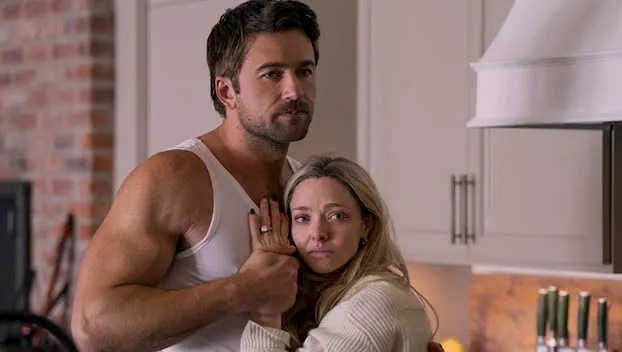
It’s winter in Toronto. Jeanine (Amanda Seyfried) has flown in for a new project: she has been selected (by the late director) to remount his production of the opera Salome. She knows this version inside and out, as she was his assistant on it while still a student. But by taking on this role, she has opened a pandora’s box of hidden secrets: The male lead, Johann (Michael Kupfer-Radecky), is notorious for his roving hands. Ambur (Ambur Braid) sings the part of Salome but her past misgivings with Johann threaten to erupt. Then there are the understudies. Johann’s second knew Jeanine from their student days, and follows her with puppy dog eyes and long-held hurt. Rachel, Ambur’s understudy, is dating the same woman Ambur used to be with, before she was a superstar.
Jeanine is requested to add personal changes to the remount, but whenever she tries something outrageous, the management swoops in to stop her. And then there’s her home life: She left their young daughter with her husband, but her mother whispers her pretty and young caregiver is sleeping with Jeanine’s husband.All of these pressure-points seem ready to burst at any time. Can Jeanine survive this trouble-filled production? Or is it headed for disaster?
Seven Veils is a dramatic, behind-the scenes look of the remounting of an opera. It has some good acting and lovely cinematography, but it’s laden down by a messy, overly-complicated plot. It feels like a full season of a reality show condensed into 1 hour and 50 minutes. Atom Egoyan filmed this movie even as he was directing a live performance off the same opera with the same singers on the same set. Is this
creative brilliance, or just double-dipping? Egoyan has long been known as a pioneer in incorporating video footage within his films and stage productions. But he went whole hog with this one, including more mixed media than you can shake a stick at: Zoom calls, a snarky podcast recording, a making-of doc filmed on the prop director’s cel phone, and even creepy childhood home videos by Jeanine’s dad. Some of these fall flat — Jeanine’s voiceover narration is embarrassingly clunky. Others examples are brilliant: like a giant projection of Johann’s mouth on a scrim on stage objecting haughtily with any directions Jeanine tries to give him. The film also covers myriad diverse topics, including intersectionality, sexual harassment, women fighting the patriarchy, a severed head, backstabbing, entrapment and revenge.
Way too much stuff to fit in one film, but with enough good parts to keep it going.
Night of the Zoopocalypse
Co-Dir: Ricardo Curtis, Rodrigo Perez-Castro
Gracie is a young wolf who likes hunting on his own. He ignores his Alpha grandma’s warnings to always stay with the pack. After all, what does it matter; they live in a theme park (the Colepepper Zoo) with no predators! But Gracie has spoken too soon. That night, a radioactive meteor crashes through the sky and lands smack-dab into their collective home. Anyone who touches the glowing rock is instantly transformed into a hideous version of their former self with glowing eyes and zombie-like behaviour. The infection spreads across the zoo, with ever more animals being zombified. Luckily Gracie finds safety in the zoo hospital, along with Ash the ostrich, Xavier the lemur, Felix, a self-centred proboscis monkey, Frida a capybara, and a dangerous-looking mountain lion called Dan. If they work together maybe they can fend off this otherworldly ailment; or they could split up and see who can make it out of the park.
Can these creatures find a common aim? Or will they all be zombified before dawn? And what will happen to the outside world once the park’s gates reopen?
Night of the Zoopocalypse is a cute, animated kids movie about animals infected by an alien disease, featuring the voices of David Harbour, Scott Thompson, and Paul Sun-
Hyung Lee. The unoriginal dialogue seems aimed at very young children, not adults, but perhaps zombies are too scary for the youngest ones. But I do like a lot of things in Zoopocalypse, from the obnoxious theme songs, to the eerie Kenny Scharf-like cut-out designs of grotesquely smiling figures. And who couldn’t like Poot, the baby pygmy hippo! If your kids don’t scare easily, I think they’ll like Night of the Zoopocalypse.
Shepherds (Bergers)
Co-Wri/Dir: Sophie Deraspe (Interview: Antigone)
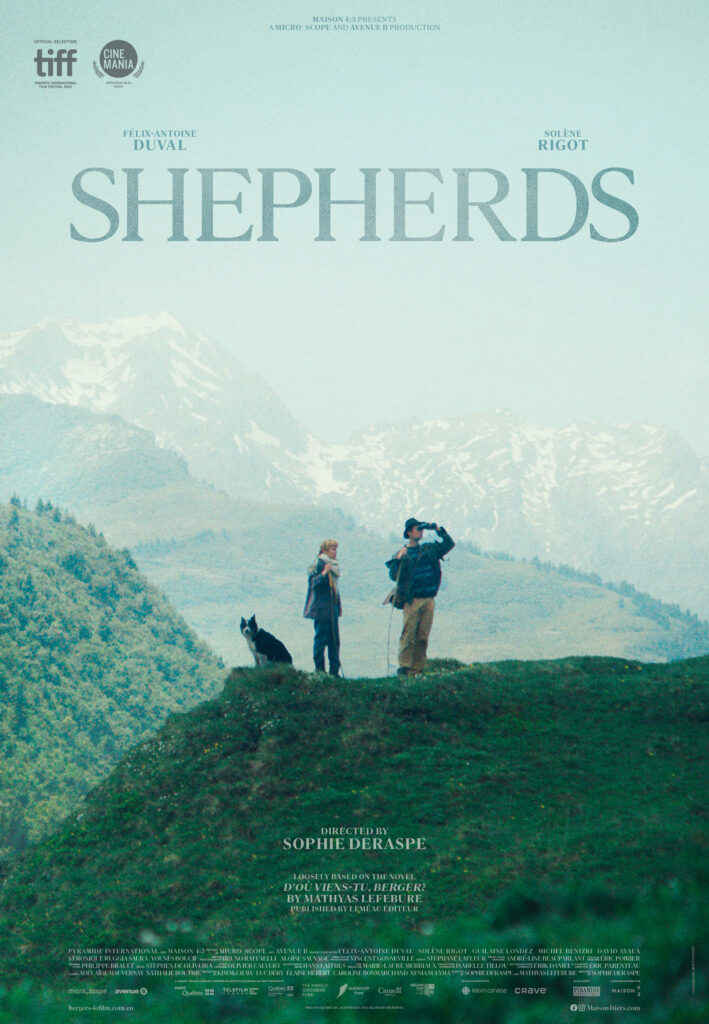
Mathyas (Félix-Antoine Duval) is a young man who works as a copywriter at a Montreal PR firm. He’s creative, sensitive and ambitious. So what is he doing sipping yellow Pastis in a small town cafe in Provence? To change his life from pointless and unfulfilling to a simpler one, entirely off the grid. He’s in Provence because he wants to become a shepherd. You heard me: someone who herds sheep. And he wants to write a book about his experiences afterwards. He has already bought a requisite black hat and leather satchel, and he’s been boning up on all the books on how to herd sheep. But he’s having trouble finding a sheep breeder willing to take him on. His try is a total wash-out: he’s never stood in a flock of sheep in his life.
So he pays a visit to the local government office, in hopes of getting a work visa. No such luck, but he does meet the cute bureaucrat behind the counter. Elise (Solène Rigot) is smart, pretty and bored with her job, too. She’s impressed by Mathyas’ convictions, but is sorry to tell him you can’t apply from within the country. But he keeps up his correspondence
with her via handwritten snail mail, and her simple responses keep him sane.
He eventually finds under-the-counter work as an apprentice shepherd for a retired, childless couple looking for someone to take over. But he finds the environment hostile and violent, full of cruelty and insanity… nothing like what he was looking for. So when Elise shows up suddenly, he decides to quit. Surprisingly, the two of them are hired almost immediately as a team, to work through the summer tending sheep in a stone cottage way up in the Alps. Can two non-shepherds learn the lay of the land and how to take care of hundreds of pregnant sheep? And will their friendship develop into something more?
Shepherds is a wonderful movie about going back to the land. The story is based on the novel D’où viens tu, berger? by the real Mathyas Lefebure who actually did leave Quebec to seek his fortune as a shepherd in Provence. I’ve always liked Sophie Deraspe’s brilliant films. And while Shepherds is very different from her past work, it’s just as good. Félix-Antoine Duval is amazing as Mathyas with just the right blend of vulnerability and sincerity, like a gawky teenager trapped in an adult’s body. French actress Solène Rigot conveys such warmth she’s totally loveable.
Shepherds is a gorgeous movie with unforgettable images, like rivers of sheep pouring across a valley and through alpine city streets. Absolutely breathtaking. One warning: After watching Bergers, you might consider becoming a shepherd, too.
Night of the Zoopocalypse, Shepherds, and Seven Veils all open this weekend in Toronto; check your local listings. This is Daniel Garber at the Movies, each Saturday morning, on CIUT 89.5 FM and on my website culturalmining.com.
Tough Cookies. Films reviewed: Maria, Flow, The G
Hi, this is Daniel Garber at the Movies for culturalmining.com and CIUT 89.5 FM.
With a rapidly aging population, the traditional image of frightened, little-old cat ladies is gradually shifting to one of strength and cunning. Witness new TV shows like Matlock. So this week I’m looking at two new movies about tough older women and one about a cat. There’s an opera diva in Paris preparing her swan song; a rustbelt widow who wants to go out with a bang; and a cat on a sailboat in a world covered in water.
Maria
Dir: Pablo Larraín (Reviews: Spencer, The Club)
It’s 1977 in Paris, and Maria Callas (Angelina Jolie: Salt, The Tourist, Unbroken) — one of the greatest divas in opera history, is not doing well. She rarely eats, often never leaving the bedroom of her palatial apartments for days at a time. She rarely speaks with anyone anymore, aside from her servants. She runs her butler ragged (Pierfrancesco Favino: The Hummingbird, in a red monkey suit) and she relies on her cook (Alba Rohrwacher: Sworn Virgin, Hungry Hearts, The Ties/Lucci ) for judgement on the quality of her vocal chords.
But she’s not completely alone. She is seeing a pianist for his unvarnished opinion on whether her legendary “voice” has returned. And has agreed to an unheard-of interview with a young journalist named Mandrax (Kodi Smit-McPhee: The Road, The Congress, The Power of the Dog, Memoir of a Snail). But Maria faces a number of problems. She refuses to see a doctor, despite her rapidly declining health, and she won’t stop popping Quaaludes, leading to frequent
hallucinations and delusions. Can her devoted servants save her life? Or is this the end?
Maria is a biopic about the death of a legendary Greek-American diva. The movie begins with her demise at age 53, then goes back in time to show what led up to it. This includes flashbacks to her chubby adolescence in German-occupied Athens in WWII, her failed marriage, and at the peak of career, including trysts with Aristotle Onassis and JFK.
But is this biopic any good? I have very mixed feelings about that. I love the beautifully shot interiors, the ostentatious costumes and the amazing arias provided by recordings of Callas herself. Italian actors Rohrwacher and Favino provide wonderfully painful performances. And, as the latest in a series of films about famous woman by Chilean director Pablo Larraín it has good pedigree, especially Spencer (with Kristen Stewart as Princess Diana). But this movie depends on Angeline Jolie, and she doesn’t carry it off. She always seems to be acting. I don’t see Maria Callas here, I see Jolie posing for the camera, with a haughty face here and a dramatic gestures there; so you rapidly lose sympathy with the main character. Perhaps Maria Callas really did act like that, even behind closed doors, but Jolie plays her somewhere between high camp and kitsch.
Maria is never boring… just a bit embarrassing.
Flow
Co-Wri/Dir: Gints Zilbalodis
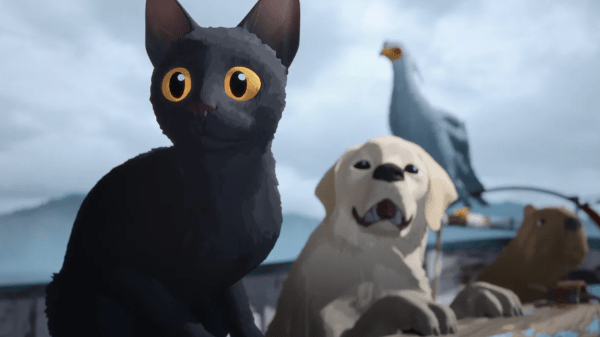
It’s some time in the future, somewhere in the world. A small grey cat with golden eyes and pointy ears is enjoying a walk in the woods. The cat lives by an abandoned old house surrounded by enormous cat statues. The cat is very shy, and fears, most of all, a pack of feral dogs. Suddenly, there’s a stampede of animals running in one direction, full speed. They‘re trying to avoid a massive flood, sweeping away everything in its path. But cat and a friendly, white dog are among its victims. Survival instinct kicks in and eventually cat manages to climb on board a tattered sailboat. There Cat discovers a gentle, sloth-like capybara already on board. Other animals make their way onto the sailboat, including an ingenious lemur, that big, white dog and a majestic-looking phoenix. Together they form an uneasy friendship as they brave a dangerous water-covered world. But can they learn to get along? And is this world worth living in?
Flow is a brilliantly animated film about a picaresque journey by a mismatched troupe of animals. It’s tender, heart moving and lovely to watch. It’s all about friendship and cooperation learned by
animals living in a gently hostile world. And though they behave a tiny bit like humans, there are no people in the story, and no dialogue either; just grunts meows and barks. Dogs still want to fetch. Cats want to catch fish.
And though it’s post-apocalyptic, there is nothing futuristic in this film; human technology is limited to abandoned ancient cities, glass bottles and sailboats; no cars or smartphones to be seen. The science fiction comes in with its universality, where animals from different continents, along with mythical beasts like sea monsters, can randomly encounter and learn from one another. I just watched Flow, and I already want to see it again.
Flow is Latvia’s Oscar submission for Best International Feature.
The G
Wri/Dir: Karl R. Hearne
It’s a rust-belt city somewhere in North America. Ann Hunter (Dale Dickey) is a tough cookie in her 70s, who is feeling depressed. You can see it in every wrinkle on her face. She lives with her ailing husband in their fully-owned condo. He was once a tough guy, but is rapidly sliding into immobility and dementia. She grudgingly takes care of him, and drowns her sorrows in rot-gut alcohol straight from the bottle. Aside from him, she only spends time with Emma, step-granddaughter (Romane Denis). Emma models her life on The G (as she calls her grandmother) someone who doesn’t take crap from anyone. The G also helps her out financially, and doles out hardboiled words of wisdom.
But everything changes when a man in a suit named Rivera (Bruce Ramsay), out of the blue, breaks down The G’s front door, accompanied by two toughs: Matt (Joey Scarpellino), a handsome but simple-minded gardener; and Ralph, a psychopath with bleach blond hair (Jonathan Koensgen). Together they violently shove Ann and her husband into a van, who wind up locked in a threadbare room without a phone, in a nursing home that feels more like a
prison. This is your new home, Rivera says, and there’s nothing you can do to stop me. He’s now their legal guardian and has the documents to prove it; their doctor (a silent partner in the scam) has declared them both incompetent. No one’s allowed to go in or out for the first month. He roughs up her husband to try to find the proverbial pot of gold he thinks they’re hiding. But they underestimate the G, her stubbornness, and her shady connections back in Texas.
Meanwhile, Emma is shocked when she discovers her grandparents have suddenly disappeared, leaving behind just a torn-up home. She scours the city to find them, and makes friends with a caretaker who works at the home (who also happens to be Matt, the friendly thug). It’s too late to save her grandpa but she vows to get the G out of there. And even while Emma is trying to free her, the G has vowed vengeance on all her enemies — and she’s not messing around. Who can they trust? Can two women best a criminal organization? Or will they end up buried alive?
The G is a great revenge thriller about the very real phenomenon of organized criminals attacking and abusing the elderly. It’s dark and disturbing. Dale Dickey blows this movie out of the water, supported by a good Quebecois cast. (It’s shot in Montreal). If you’re looking for a gratifyingly violent revenge flic, this is the one to see.
Maria and Flow are now playing at the TIFF Lightbox, with Maria streaming on MUBI on December 11th; and The G is opening across Canada; check your local listings.
This is Daniel Garber at the Movies, each Saturday morning, on CIUT 89.5 FM and on my website culturalmining.com.
Family-friendly pics at #TIFF24. Films reviewed: The Wild Robot, Sketch
Hi, this is Daniel Garber at the Movies for culturalmining.com and CIUT 89.5 FM.
There’s lots happening in Toronto this weekend. At the Toronto Palestine Film Festival you can watch films and docs, go to concerts, art exhibitions, a brunch, workshops and discussions all weekend long, both online and at the Lightbox. And the Toronto Garlic Festival is on this Sunday on Spadina Road, with food, drinks, a garlic market and culture, too… including me! I’ll be giving a talk on garlic and the movies at 12:00 noon, with free admission.
But today I’m talking about two new, family-friendly movies that were featured at TIFF this year. There are monster drawings that come to life, and a robot stranded on an island that can talk to the animals.
Wild Robot
Co-Wri/Dir: Chris Sanders (Review: How to Train your Dragon)
It’s a small island in North America, sometime in the future. ROZZUM unit 7134 (Lupita Nyong’o) is a robot. She was built for family consumers, the product of a multinational corporation. Powered by AI, she speaks and understands multiple languages and is made to serve. Somehow her box has washed ashore on this island, but the expected suburban home is nowhere to be found. This place is uninhabited… by humans that is, but it’s teeming with wildlife. Deer and moose, bears and foxes, raccoons, porcupines, skunks, beavers, possums and all types of birds, insects and aquatic life. She sees animals ruthlessly killing and eating each other as part of their daily lives. She gazes at them all in wonder, but they regard her cautiously. She has no smell, can’t be eaten, but isn’t a predator either — what good is she?
But for the robot, it’s imperative she complete her assignment, any assignment. So she studies all the animals and learns to speak their languages. And when she rescues a newly-hatched gosling (Kit Connor) from a sly fox (Pedro Pascal), she has finally found her purpose in life: to take care of this newborn bird. You can call me
Roz, she says, but the bird — who bonds with her the second he opens his eyes — would rather call her Mama. So Roz, the little bird, and the somewhat untrustworthy fox form a makeshift family, teaching the bird the facts of life as he grows up. But can they teach him to swim and fly before the great migration south for the winter?
The Wild Robot is an amazingly-moving animated film about nature and technology forming deep bonds of their own with humans nowhere to be seen. But the villains are all man-made. This is a thoroughly well-put-together movie, from the quirky characters, to the funny surprises, to the heart-stopping scenes of suspense. It’s a genuine tear-jerker, but with characters that are just loveable enough to care for, without making you cringe. Roz is a white enamel ball whose accordion arms can spring out and come back, and whose head has neat slots for add-on devices. Her whole body glows in different colours along the seams. I love the art direction, down to the 1950s woodsy, summer- camp font they use for the title. Based on a novel of the same time, it also borrows from classic kids’ literature like the Ugly Duckling, the Jungle Book and Doctor Doolittle, but it still feels completely original. It also features additional voices of Ving Rhames, Mark Hamill, and Catherine O’Hara to name just a few.
I recommend this movie for people of all ages and most robots and animals, too.
Sketch
Wri/Dir: Seth Worley
It’s a small town somewhere in the US. Taylor Wyatt (Tony Hale) lives with his two pre-teen kids Amber (Bianca Belle) and Jack (Kue Lawrence) in a lovely home backing onto a small forest. They’ve all been down in the dumps since their mom died, so Taylor has gone out of his way to hide any pictures of her, to help the family get through this difficult period. And now he’s trying to sell the house — with the help of his sister Liz (D’Arcy Carden), a real estate agent. Maybe that will wipe the emotional slate clean. But it’s not working, as becomes clear when Taylor is called into the kids’ school to talk to the principal. Little Amber is accused of plotting to murder a classmate! And they have a drawing she made to prove it.
Luckily, the sensible guidance counsellor manages to defuse the situation right away. Amber is angry, right? So she gives her a sketch book where she can draw away all her frustrations, however she likes — the book is hers to keep and she doesn’t have to show it to anyone. Better to draw it than to do it, right?
Meanwhile, her brother Jack spends lots of time in the woods where he discovers a small pond that seems to have curative powers. It heals a cut on his hand, and fixes a family heirloom he broke. Maybe if he dumps a box of his mom’s ashes into the water, it will bring her back to life? But Amber finds out and this leads to a big fight, followed by Amber’s sketchbook falling into the pond. And that’s when all the scary monsters she drew with crayons and glitter, start coming to life.
Sketch is a delightful adventure about two kids trying to stop gigantic imaginary creatures — who have come to life — from destroying their town and killing all the people. It’s cute, it’s fun and it’s a bit scary. It’s also a touch psychological and moralistic but not enough to drag it down. Movies like this used to be fairly common, but nowadays it’s almost rare to find a movie that isn’t tied to a game, a toy, a Disney princess or a Marvel superhero. And the special-effect monsters are really cool. What other movie can you get a 30-foot- tall creature wreaking havoc in a cornfield that is clearly made of crayon scribbles? In his first feature, director Seth Worley has created a good, fun, stand-alone movie that kids will love, and parents can enjoy.
Sketch, and The Wild Robot both premiered at TIFF with Wild Robot opening this weekend in Toronto; check your local listings.
This is Daniel Garber at the Movies, each Saturday morning, on CIUT 89.5 FM and on my website culturalmining.com.
Archnemeses! Films reviewed: Kill, Despicable Me 4, Escape
Hi, this is Daniel Garber at the Movies for culturalmining.com and CIUT 89.5 FM.
Classic novels and movies needed a hero or a heroine to save the day. But in really good stories there’s also a nemesis, an enemy to fight and defeat. This week I’m looking at three new movies, from Korea, India and France — two action thrillers and an animated comedy — about arch-nemeses. There’s a former villain in witness protection, a commando on a train heading in a southern direction and a communist sergeant preparing his own defection!
Kill
Co-Wri/Dir: Nikhil Nagesh Bhat
Amrit (Lakshya) is a commando in a special unit of the Indian army. Along with his best buddy Viresh (Abhishek Chauhan) they lead their troops in tactical operations using martial arts and hand-to-hand combat. But he’s in a bit of a jam. The love of his life, Tulika (Tanya Maniktala) is pledged to another man in an arranged marriage. To elope seems too risky; her father is an oligarch with immense power and wealth. Even so, they arrange for a secret meeting aboard the express train her family are riding south from Amritsar to Delhi. And, right there, with the two of them squeezed into a cramped toilet Amrit proposes marriage, complete with ring. But what neither of them realize is the train has been targeted by a brutal gang of bandits for an attack on the sleeper cars. The dacoits kill the guards, and steal watches, jewelry and cash from everyone there. And they sexually threaten the women. They’re led by a capricious Fani (Raghav Juyal) the nefarious son of the clan’s patriarch. But when Amrit and Viresh see what’s happening, they decide it’s time to fight back… but can just two commandos take on an entire family of bandits?
Kill is a non-stop, violent action movie, the first of its kind out of
India. It’s nothing like Bollywood, no songs, dances, or extended flirting. This is heavy-duty fighting all the way through. This is Lakshya’s first starring role — he’s good-looking and intense, a natural leading man. He plays Amrit as a regular Punjabi drawn almost to madness when he sees his lover threatened. Then he goes berserk. He wears a blood-stained shirt for most of the film, and beware: there’s a lot of blood to be spilt. Much of the action takes place in the aisles of an express train, between cars, on the roof, and out the exit doors. Weapons range from sabres, to rifles, a metal fire extinguisher and the fighters’ bare fists. The fighting is superbly choreographed, really well done. And the sound effects are chilling — the sound of skull hitting metal the slash. Off a knife, the thud if fists hitting flesh…I’ve never seen an Indian movie like this, and I quite enjoyed it. If you can get into intensely violent, non-stop action movies — on the scale of the great Indonesian flic The Raid — then I think you’ll really like Kill.
Despicable Me 4
Dir: Chris Renaud, Patrick Delage
Gru (Steve Carell) is a former supervillain who is now on the straight and narrow. He lives with his beloved wife Lucy (Kristen Wiig), their three adopted daughters, Margo, Edith and Agnes, and their newborn baby son. But he has to dive back into the world of villainy when he is sent on a secret assignment: to return to the criminal boarding school of his childhood, the Lycée Pas Bon. Once there he must capture and jail his lifelong rival Maxime Le Mal (Will Ferrell). Now Gru has his Minions — diminutive bright yellow creatures who obey his orders but are always up to no good — but Maxime has minions of his own: cockroaches! He’s built up a veritable army of the insects, and when he escapes from prison, he vows revenge against Gru and all those around him. To safeguard his family, Gru enters a witness protection program where they are all given new names and identities and a suburban home to live, and told to “blend in”.
The problem is their next door neighbours, the Prescotts, have a precocious but obnoxious daughter named Poppy. She has guessed Gru’s true identity and threatens to expose him unless he helps her pull off a heist of her own. But can Gru keep his family safe while pulling off this audacious caper? Or will they fall prey to Maxime and his cockroach empire?
Despicable Me 4 is an animated kids’ comedy about a former villain facing off against a current villain. It’s the latest in an immensely successful French movie franchise (Reviews: Despicable Me, Minions: The Rise of Gru) about a likeable villain and his makeshift family. It combines simple animation with funny lines and goofy characters, Once again, I viewed it in an audience packed with kids who seem to love it. Personally, it seems to be getting a bit tired, like they’re running out of new ideas. The one genuinely funny aspect are the Minions, all voiced by Pierre Coffin. When they’re around, you’ll be laughing with their silly and imaginative slapstick humour. Despicable Me 4 isn’t great, but it did keep me entertained. And the kids will love it.
Escape
Dir: Lee Jong-pil
It’s present day at the DMZ in North Korea. The Demilitarized Zone — it separates the north from the south — is full of landmines, with sentinels in towers watching closely for any movement on either side. Kyu-nam (Lee Je-hoon) is a Sergeant in the Korean Peoples Army nearing the end of his ten-year term there, and dreads returning to work in a coal mine. There is no family to go home to. He has firmly embraced the national ideology of Juche, or self-reliance. But in Kyu-nam’s case, self-reliance has taken on new meaning. Each night, he sneaks out of his bunker, climbs through a window, and crawls his way across the minefields toward the border, recording all the safe spots along the way. He plans to defect to the South before the next rainfall causes the landmines to shift. But he runs into trouble when a pudgy private named Dong-hyuk (Hong Sa-bin), who idolizes the Sergeant sees his trial runs. Dong-hyuk longs to be reunited with his mother and sister in South Korea. So he tries to escape on his own, using Kyunam’s map… but he mucks things up, putting them both in danger of a firing squad.
But who appears at the desertion trial, but Hyun-sang (Koo Kyo-hwan), a Major with connections. He has connections with Kyu-nam going way back, and declares him a national hero, and sets him up in a cushy job as an aide-de-camp for a drunk general. But Kyu-nam is committed to his plans. Can he reach the border before Hyun-sang can catch him? Or are they doomed to a violent end?
Escape is a fast-moving action thriller, full of complex schemes
and near escapes… along with plenty of unexpected surprises. Koo Kyo-hwan plays the major as a slightly effeminate, upper-class nepo-baby who would rather be a concert pianist than an officer. This villain reveals hints of a secret gay past, adding to his mystery. Lee Je-hoon plays a macho, self-reliant soldier who just wants to choose his own future and have enough food to eat (based on what he heard about the South from the propaganda broadcasts he picked up on his transistor radio). The entire film takes place in the North. It portrays a country filled with poverty, malnutrition and class divisions— based on Party membership — where the ordinary people just scrape by, while the effete elites gorge on fine meats and liquors. I have no idea how accurate it is, but I liked the details, from the socialist realist murals, the giant slogans, and the maroon coloured dress-uniforms the officers wear.
And, of course, its gripping plot that will keep you glued to the screen.
Kill, and Despicable Me 4, both open this weekend in Toronto, and you can catch Escape at the TIFF Lightbox; check your local listings. This is Daniel Garber at the Movies, each Saturday morning, on CIUT 89.5 FM and on my website culturalmining.com.
Separated. Films reviewed: I Used to be Funny, Longing, Robot Dreams
Hi, this is Daniel Garber at the Movies for culturalmining.com and CIUT 89.5 FM.
Not all love is sexual, and not all relationships lead to marriage. This week, I’m looking at three bittersweet dramas about people separated, against their will, from those they love. There’s a teenaged girl separated from her nanny (who is also a standup comic); a man separated from his biological son (who is also dead); and a dog separated from his best friend (who is also a robot).
I Used To Be Funny
Wri/Dir: Ally Pankiw
Sam (Rachel Sennott: Shiva Baby) is a standup comic in downtown Toronto. She shares an apartment with friends and fellow comics Paige and Philip (Sabrina Jalee, Caleb Hearon). But Sam can’t do her act anymore. She rarely showers, changes her clothes, or eats. She dumped her longtime boyfriend Noah (Ennis Esmer), and she quit the day job that used to pay her rent. Now she just sits around all day, staring at the wall. Why? Well, obviously she’s severely depressed. She’s also recovering from a traumatic violent event.
Things used to be better. She had a job in the suburbs as a nanny for a troubled 12-year-old named Brooke (Olga Petsa). Brooke’s mother was dying in hospital, her aunt had little free time and her dad was always busy — he’s a cop. But now Brooke has disappeared and her aunt doesn’t even know where to look for her. And when Brooke throws a rock through her window, Sam decides maybe she should join the effort to find the runaway and bring her home. But where is she hiding, why is she angry at Sam, and what will happen if she finds her?
I Used to Be Funny is a bittersweet comedy about a wise-
But it’s also Sam dealing with a not-at-all funny event — no spoilers here. It costars many Canadian comic actors, including Hoodo Hersi, Dan Beirne (The Twentieth Century, Great, Great, Great) and Jason Jones in a rare serious role. Rachel Sennott is excellent as Sam.
I Used to be Funny is a humorous look at depression and assault.
Longing
Wri/Dir: Savi Gabizon
Daniel Bloch (Richard Gere) is a successful businessman, and committed bachelor. He enjoys sex, not commitment or kids. He owns a factory and lives in a luxurious penthouse suite looking down on Manhattan. But when a when a surprise visitor arrives at his door, he is floored by her message. Rachel (Suzanne Clément) is a Canadian woman he had a fling with 20 years earlier. She reveals she was pregnant when she returned to Canada, later married and raised Allen — his biological son — with another man she married. But Allen died in an accident two weeks earlier. Daniel is floored. She hasn’t come for money or legal action, just to tell him the news. So he travels north to Hamilton, to attend a memorial and find out more about the son he never knew. And what he found was both frightening and endearing.
He talks to the people who played a key role in his son’s life, and discovers some surprising facts. He was a piano virtuoso. His best friend (Wayne Burns) says Allen was involved in a drug deal. A much younger girl (Jessica Clement) was in love with him, but says the feelings were not reciprocal. And his school teacher Alice (Diane Kruger) says he was obsessed with her and painted romantic poems about her on the school walls. What was Daniel’s son really like? And what can he do to remember someone he never knew?
Longing is a quirky, disjointed drama about kinship and death as a father desperately tries to become a belated part of his late son’s life. Richard Gere underplays his role, almost to the point of absurdity, but it somehow makes sense within the nature of his character. It’s also about the boy’s parents, not just Daniel and Rachel, but his other de facto parents And it all takes place in a very posh and elegant version of Hamilton, unlike any Hamilton I’ve ever seen. This is a strange movie that sets up lots of tension-filled revelations, but then attempts to resolve them all using an absurd ceremony.
Longing never blew me away, but it stayed interesting enough to watch.
Robot Dreams
Co-Wri/Dir: Pablo Berger
It’s the early 1980s in the East Village of NY City. There are tons of people, but they’re not people, they’re animals. Literally. Bulls and ducks, racoons and gorillas. Dog — a dog with floppy ears and a pot belly — lives there, alone in an apartment, gazing longingly out the window at happy couples cavorting in the summer sun. Dog plays pong by himself, or eats TV dinners while watching TV. He’s bored and lonely, with no one to play Pong with or just hang out. Until he orders a robot — as advertised on TV, some assembly required — and waits eagerly for it to arrive. He’s a delight with tubular arms, a mailbox shaped trunk, an elongated German helmet as a head, with round eyes and a happy smile. They are instant friends, maybe soulmates. They go rollerskating in central park, take pictures in a photo booth. Feelings grow. Another day they head out for the beach. They sunbathe and swim together — a perfect day. Until the robot finds himself rusted solid just as the beach is closing for the night. And despite Dog’s efforts, he is too heavy to drag home, so he comes back one next day to get him. But the beach is closed for the season, locked up behind a metal fence. And despite repeated tries, Dog can’t
seem to rescue Robot from his sandy prison. Can Robot survive for a year, unmoving, in the great outdoors? And will that spark between Robot and Dog still remain in the spring?
Robot Dreams is an amazing animated film about friendship and loss. It’s called Robot Dreams because much of the film takes place inside the robot’s imagination as he lay on the beach, It’s set in the grittiness of 1980s New York, with graffiti-filled subways, punks in East Village, break dancing teens and Jean-Michel Basquiat. Remember Zootopia, that animated movie where everyone is an animal? Robot Dreams is the flip side of
that, darker, cooler, adult, more Fritz the Cat than Disney or Pixar. There’s also no dialogue, but it’s anything but silent, with constant music and grunts and quick-changing gags and cultural references. But it’s also very moving — you can feel the pathos between Dog and Robot. I saw this movie cold (without reading any descriptions) and it wasn’t till afterwards that I realized it’s by Pablo Berger, the Spanish director who, more than a decade ago, made the equally amazing Blancanieves, a silent, B&W version of Snow White as a toreador. The man’s a genius.
I totally love Robot Dreams.
I Used To Be Funny, Longing and Robot Dreams all open theatrically this weekend in Toronto; check your local listings.
This is Daniel Garber at the Movies each Saturday morning on CIUT 89.5 FM and on my website culturalmining.com.
Family movies worth watching. Films reviewed: The Boy and the Heron, The Three Musketeers: d’Artagnan
Hi, this is Daniel Garber at the Movies for culturalmining.com and CIUT 89.5 FM.
With the holidays upon us and lots of families getting together, it’s hard to find movies that interest kids without boring adults. But this week, I’m looking at two new movies — from Japan and France — that families can actually enjoy together, and without any product placement whatsoever. There’s a boy in 1940s Japan searching for his mother, and a young swordsman in 1620s France looking for adventure.
The Boy and the Heron
Wri/Dir: Hayao Miyazaki
It’s 1943 in Japan, during WWII. Mahito is a teenaged schoolboy who recently moved away from Tokyo with his dad after his mother died, into a huge country house where his aunt Natsuko (his mom’s younger sister) lives. He is troubled by the fact his father has married Natsuko — who looks very much like his mother — and treats her almost as if they’re the same person . The house sits near a placid pond by a crumbling stone tower. Aside from his aunt, there is a bevy of old biddies who work on the estate. Mahito feels lost and abandoned and is bullied at school. One day on the way home he hits himself in the head with a rock, to make it look like he was attacked at school. Now bedridden, he
recovers in his new home, disturbed only by an enormous heron who taps at the glass of his window. But things take a strange turn when he is lured on a journey to the old tower by the heron, who it turns out… can talk! The Heron says if Mahito is looking for his mother, the he knows where to look. Chased by Kiriko, one of the elderly maids, he decides to enter the tower to see what’s what.
From there, he finds himself in a new universe, completely unlike anything he’s seen before. It’s a place where people and ghosts, the living and the dead, coexist. There are talking animals, including giant, fascistic parakeets marching under the sway of a military dictator. He joins forces with a brave and strong sailor, a young woman who looks somehow familiar to him. And tiny, floating bubble-creatures known as warawara, who
can cross to the real world from this other world. Can Mahito survive the dangers that await him? Can he rescue his mother and take her back home? Or will he be trapped there forever?
The Boy and the Heron is a brilliant animated story about a boy who visits a strange otherworld. It’s surreal and psychedelic. It deals with concepts like birth and death, reincarnation, souls, spirits, ghosts and gods, all situated within an authoritarian wartime Japan. It’s the work of Hayao Miyazaki’s Ghibli Studios, and is partially based on his own childhood. A master animated filmmaker, Miyazaki supposedly retired about a decade ago, but apparently never stopped drawing, and this is the result: an amazing burst of creativity and imagination. The Boy and The Heron is a beautiful — and sometimes heartbreaking — movie.
I recommend this one.

© 2023 CHAPTER 2/PATHE FILMS/M6 FILMS
LES TROIS MOUSQUETAIRES : D’ARTAGNAN
réal. : Martin Bourboulon. int. : François Civil, Vincent Cassel, Romain Duris, Pio Marmaï, Eva Green, Louis Garrel, Vicky Krieps, Lhyna Khoudri, Jacob Fortune-Lloyd, Marc Barbé, Patrick Mille, Julien Frison (de la Comédie-Française), Raph Amoussou.
pays : France. durée : 2 h 02. dist. : Pathé
Sortie en salle le 5 avril 2023
The Three Musketeers: D’Artagnan
Dir: Martin Bourboulon
It’s the 1620s in France. Charles d’Artagnan (François Civil) is a brash young man from Gascony travelling on horseback to Paris. He wants to join the famed musketeers, an elite force serving under Louis XIII (Louis Garrel). On the way he witnesses a crime involving a stage coach, a sealed letter, and a mysterious woman in a black-hooded cape. When he comes to the rescue of a besieged woman in the coach, she shoots him! He is buried alive, but that doesn’t stop him. He makes his way to the palace, looking worse for the wear, and manages to sneak in to present his credentials. However, though a fine fighter, he can be both clumsy and arrogant and somehow offends three separate men, each of whom challenges him to a duel. He shows up at the assigned hour, prepared to die. Turns out the three men all know each other: Athos (Vincent Cassel) Porthos (Pio Marmaï) and Aramis (Romain Duris) all widely known for their sword skills and lusty habits. But before the duels can begin they are accosted by a small army of soldiers, working for Cardinal Richelieu. All for one they say, and d’Artagnan joins them in the fight, soon proving his
mettle. The three men are of course, the Three Musketeers.
Now, having been invited to join the cadets, but not the elite musketeer corps, d’Artagnan moves into an apartment near Constance (Lyna Khoudri) — a personal confident of the queen— whom he fell in love with at first sight. But trouble is brewing. The King’s brother (along with Cardinal Richelieu) is plotting to send the country to war with the Protestants — meaning, England. The Queen (Vicky Krieps) is romantically involved with the Duke of Buckingham. Athos is accused of murder but says he has no recollection of the night’s events (he was drunk, as usual). And the Queen — who rashly gave a diamond necklace to Buckingham as a keepsake — is ordered by the king to wear it at an upcoming ball. And of course there’s the mysterious Milady (Eva Green) who seems to be involved in all the intrigue swirling around the palace. Can they rescue the necklace, stop Athos’s execution, uncover a secret plot and prevent an upcoming war? And will d’Artagnan ever be accepted by the Three Musketeers?
The Three Musketeers is, of course, the latest version of the classic swashbuckler based on the novel by Alexandre Dumas. It’s a Hollywood perennial; they release countless versions of this film, usually once a decade, stretching back to silent movies, featuring stars like Douglas Fairbanks and Adolph Menjou, Gene Kelly and Lana Turner, Raquel Welch and
Oliver Reed, Charlie Sheen and Keifer Sutherland. And these are just the Hollywood ones; there also have been many French versions, like this one, plus Mexican, Japanese, Italian… you name it. The story has action, intrigue, adventures, romance and comedy. So how does this one stand up?
I found it very enjoyable, sticking close to the original book, but with enough new or unfamiliar parts to keep you guessing. Less “bodice-ripping,” more fighting. In this version, the musketeers actually use their muskets — so there are gun fights, not just sword fights. Porthos is polysexual — he’ll sleep with anyone that movies. And this d’Artagnan is dirtier, poorer and scruffier than usual, but the actor (François Civil) does have electric appeal. There are horseback chase scenes, masked balls, overheard plot turns and daring escapes — I love this stuff. It’s shot among lush forests, cliff-side beaches, in crowded marketplaces or dark palace corridors. Warning: this is part one of two films, and leaves you with a bit of a cliff-hanger.
Personally, I think Richard Lester’s 1973 version is the best, but this one definitely holds its own.
The Boy and the Heron and The Three Musketeers, Part 1: D’Artagnan are both playing now at select theatres across Canada; check your local listings.
This is Daniel Garber at the Movies, each Saturday morning, on CIUT 89.5 FM and on my website, culturalmining.
Hi, this is Daniel Garber at the Movies for culturalmining.com and CIUT 89.5 FM.
histories on the reserve and in the big city — the images of the people involved will be added later.
voices to present an oral history of two very different parts of Canada: Shamatawa and Toronto. It focuses on the lives, histories, and stories, of the filmmakers Seth and Peter Scriver, their friends and families. It’s hilarious, visceral and chaotic, and not like anything you’ve ever seen before. Seth is a Toronto-based writer, sculptor, carpenter, comic book artist and
animator, whose first film Asphalt Watches won best Canadian first feature at TIFF in 2013. Peter is a storyteller, writer and woodcarver, who has served as Chief and Magistrate of
the Shamattawa First Nation in Northern Manitoba. He lived in Toronto as a teen. A skilled hunter and trapper, he now works as a Canadian Ranger while he raises his nine amazing kids.
Memoir of a Snail
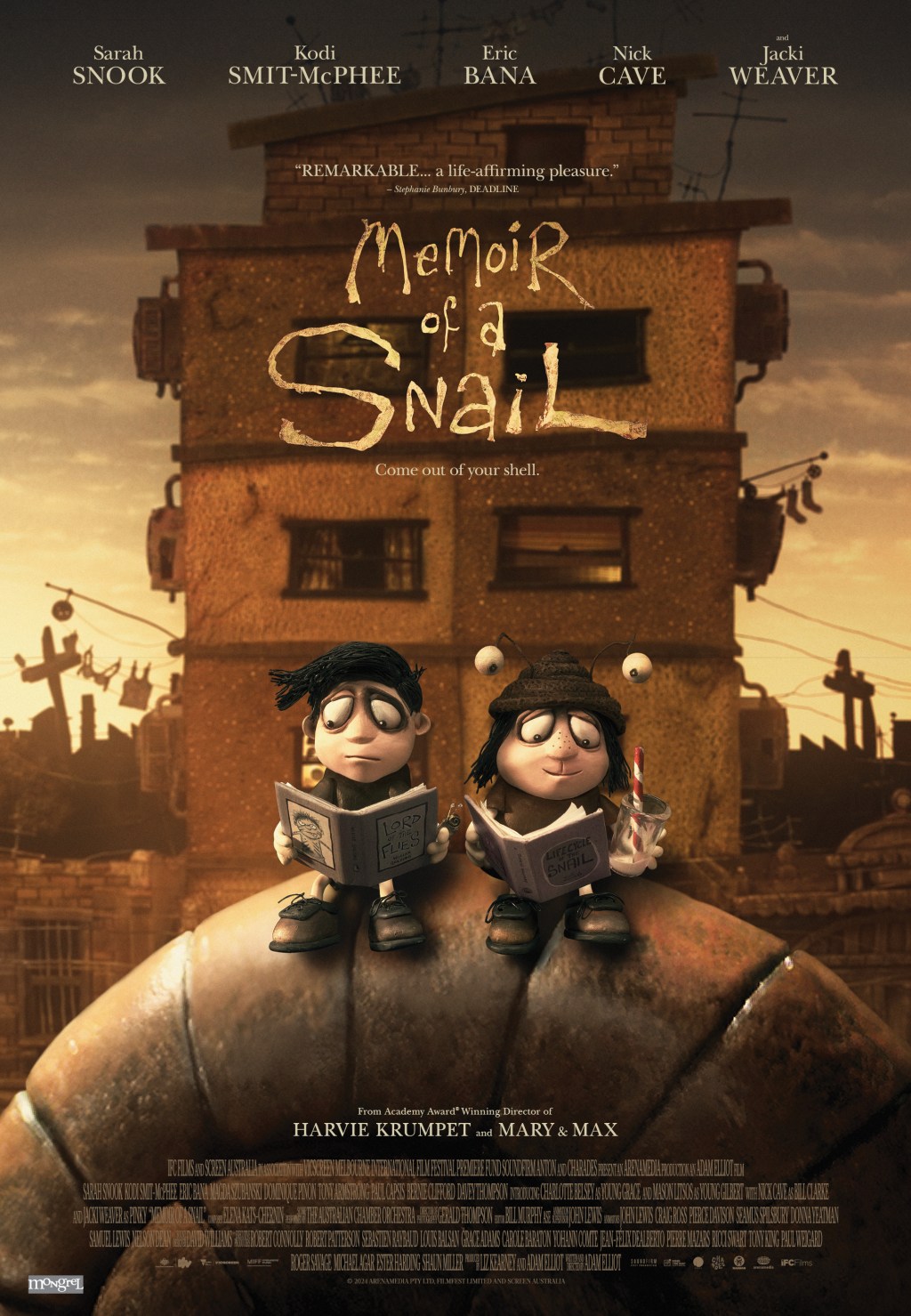
The two survive only by sending one another letters. Gilbert wants desperately to leave, while Grace becomes a recluse holed up in her home surrounded by the kitty snail-like objects she hoards. Can they survive in their dystopian prisons? And will they ever see one another again?
The Line
dating a black, feminist who doesn’t shave her armpits. And the university itself is coming down hard on the Greeks, following reports of dangerous practices going on there.
1 comment