Scary creatures. Films reviewed: Jurassic World Rebirth, 40 Acres, Sorry Baby

Posted in Action, African-Americans, Canada, Cannibalism, College, comedy, Dinosaurs, post-apocalypse, Science Fiction by CulturalMining.com on July 5, 2025

Hi, this is Daniel Garber at the Movies for culturalmining.com and CIUT 89.5 FM.

Yorgos Lanthimos, who brought us films like The Favourite and Poor Things, didn’t come from nowhere; he’s been directing weird, original movies for two decades. One of his first — and one of my first reviews on this show — is Dogtooth, which still holds a place in my heart. It’s being re-released on the big screen in July, so if you haven’t seen it, now’s your chance.

But this week, I’m looking at three new movies about people dealing with scary creatures. There are dinosaurs on the equator, cannibals on the prairies, and a monster in a New England college town.

Jurassic World: Rebirth

Dir: Gareth Edwards

It’s present-day New York City, where giant, benign  dinosaurs amble through city parks. Bennet (Scarlett Johansson) is a hard-boiled mercenary who dares to go where you’re not supposed to be to steal things you aren’t supposed have. Her latest client? A certain Mr Krebs (Rupert Friend), the sketchy rep of a Big Pharma multinational. And the job? To bring back blood samples from three of the biggest and most dangerous dinosaurs in the world: one from the sea, one from the sky, and one from the ground. The only place these creatures live is around the equator, in areas international law says we can’t go. But Bennet will, along with her longtime collaborator Kinkaid (Mahershala Ali) and their henchmen. Rounding out the pack is Dr Loomis (Jonathan Bailey) a palaeontologist whose dream has always been to see the dinosaurs (whose fossils he studies) alive and in the flesh.

Along the way they rescue a family whose plans — to sail across the Atlantic —  are capsized when their boat is attacked by a giant sea monster. They all end up on an island, full of hybrid dinosaurs created in labs a generation ago by genetic scientists who abandoned the project when it became too dangerous. But which of them will survive 24 hours among those killer beasts?

Jurassic World: Rebirth is an action adventure, the latest instalment in the ongoing franchise. It’s a cautionary tale of what happens when ambitious scientists bring dinosaurs back to life to build a profitable theme park. Ironically, while the theme parks are gone, the movie feels like a series of carnival rides. First you’re in a speedboat escaping something in the water, then you’re hanging from a cliff, avoiding killer Pterodactyls… Which makes it fun and entertaining, but in an entirely predictable way.

I loved the thrill of the raptors in the first Jurassic Park, but the weird and artificial dino-hybrids in this version look more sad or silly than scary. 

40 Acres

Co-Wri/Dir: R.T. Thorne 

It’s the near future in rural Canada after an apocalyptic pandemic has left the whole world in ruins, starving for food. Hailey Freeman (Danielle Deadwyler) lives on the same farm her African-American ancestors moved to after the US Civil War. She’s a hard-ass mom who rules her family like a sergeant (she spent time in the military). Her oldest son, Manny, (Kataem O’Connor) still responds to her questions with only a yes ma’am / no ma’am. Though they live a calm and peaceful life — trading goods with other farmers using shortwave radio and a shared depot —  just outside the gate marauders rove around, trying to break into farms and steal their coveted farmland. The Freemans are a blended family, Black and indigenous, with Galen as Dad (Michael Greyeyes) Hailey as Mom, the older kids from previous marriages, and the younger kids born here. They are trained not just how to plant and harvest, but also how to handle heavy artillery, hidden beneath their house. Hailey may operate in a constant state of paranoia, but there are reasons for her extreme caution. If the predators at the gate break through, they won’t just take the farm, they’ll eat the family. Yes, the outsiders are cannibals!

But Manny is growing up, and when he sees a beautiful young woman (Milcania Diaz-Rojas) swimming in a lake outside the farm, he is stricken with equal parts love and lust. And when she appears at the fence begging for help he sneaks her inside. Can she be trusted? Or is she a cannibal? And could this mean the end of the Freemans?

40 Acres is a post-apocalyptic, science fiction action thriller. It’s gripping, surprising and pretty scary. It presents an unusual point of view, combining an American individualistic, top-down, gun-friendly “get off of my lawn” attitude with a multicultural, work-together Canadian ethos. It’s also a zombie-pocalypse movie, but without the walking dead — it’s humans who do the killing and eating. And in between violent shootouts and fights, the lovely cinematography gives us lots of misty cornfields and lush forests on which to feast our eyes. But the biggest reason to see 40 Acres is Danielle Deadwyler, a dynamic powerhouse in her role as Hailey. 

All I can say is: Wow!

Sorry Baby

Wri/Dir Eva Victor

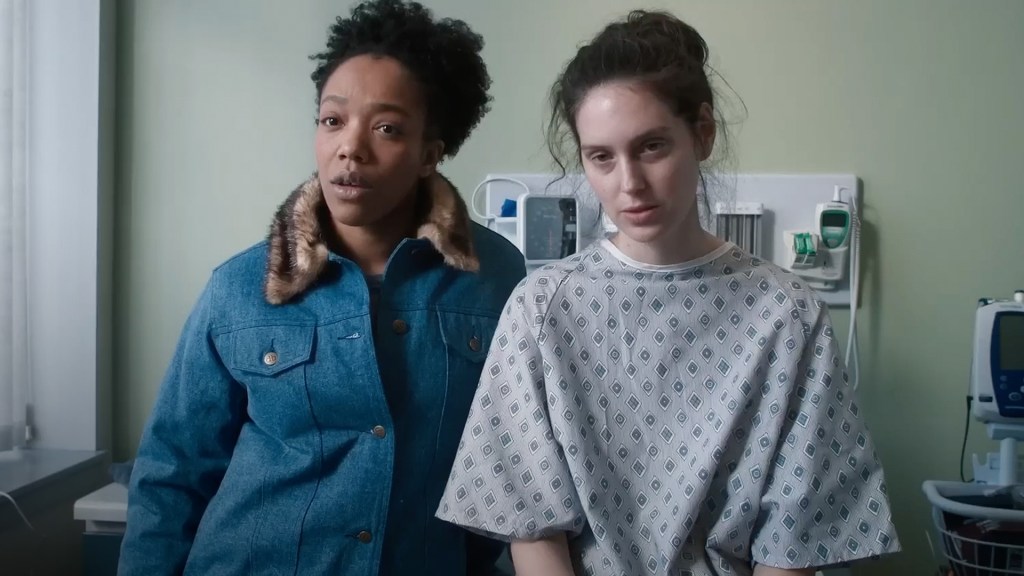
Agnes is an assistant prof in English Lit at a small liberal arts college in New England. She’s lonely, depressed and frightened living in a draughty home with just her cat to keep her company. Well, that and a neighbour who  occasionally drops to share her bed (Lucas Hedges). Thankfully, her best friend and former housemate Lydie (Naomi Ackie) is back for a much-needed visit. They lived together as grad students, but while Lydie found work — and a female lover — in New York City, Agnes is trapped in the same college,  with same home, same faculty, same courses… she even works out of the same office that used to belong to her thesis advisor. On the surface, she has achieved all the measures of academic success… so why is Agnes so miserable?

Flashback to a few years ago. Even as she is struggling to finish her grad thesis, something very bad happens to her: she is sexually assaulted on campus by someone she knows very well. Though Lydie is supportive, her doctor and the school administration are not. The bad thing is made worse by how messed up she gets afterwards. How can Agnes deal with, accept and overcome her past? 

Sorry Baby is a deeply personal coming-of-age story about one woman’s life in the academic world and the dark incident that colours it. Now, I bet you’re thinking: this is an important issue, but it sounds like a real drag so I don’t want to watch it. And listening to how I just described it, I understand why you’d think that. But you’d be totally wrong. This is a very funny, sardonic dark comedy, with quirky characters and realistic situations anyone can relate to; the sexual assault is never shown, only talked about. And the film is packed with brilliant scenes: Agnes talking with a snack bar owner, meeting Lydie’s unfriendly partner and their new baby, serving jury duty, her relationship with her sex buddy, and dealing with her fellow student and detestable rival Natasha (wonderfully played by Kelly McCormack). So I really liked watching this movie but was wondering who is this actress I’ve never seen before, sort of a new Aubrey Plaza?  But it wasn’t till the final credits rolled that I realized the writer/director is also the lead actress! Eva Victor plays a literary version of herself. 

Sorry, Baby is her first film and it’s pretty fantastic.

Jurassic World: Rebirth, 40 Acres and Sorry Baby all open this weekend in Toronto; check your local listings.

This is Daniel Garber at the Movies, each Saturday morning, on CIUT 89.5 FM and on my website culturalmining.com.

Three generations. Films reviewed: My Dead Friend Zoe, Exhibiting Forgiveness 

Posted in Addiction, African-Americans, Army, Art, Black, Family by CulturalMining.com on March 1, 2025

Hi, this is Daniel Garber at the Movies for culturalmining.com and CIUT 89.5 FM.

It may be the closing of Black History Month, but there are still good movies opening this weekend. So this week, I’m looking at two new American movies, about three-generation families.  There’s an Army vet with PTSD whose grandpa has dementia; and an artist with a young son whose dad is addicted to crack.

My Dead Friend Zoe

Co-Wri/Dir: Kyle Hausmann-Stokes

Merit (Sonequa Martin-Green) is a US Army Vet who lives in Portland, Oregon. She was a lightweight vehicle mechanic in Afghanistan, but hasn’t done much since she was discharged. The fact is, like many vets she is depressed and suffers from PTSD. That’s why she goes to a military support group especially for people like her. And she always brings her best friend and fellow vet Zoe (Natalie Morales) with her.  Zoe’s the only one who could understand what she’s been going through. But to the group leader, Dr Cole (Morgan Freeman) that’s not enough. He wants her to tell them all what’s the matter. You see, Zoe is dead, and Merit’s the only one who can see her. And unless she shares with the group, Dr Cole won’t sign the form keeping her out of jail.

Then she gets a long distance phone call from her mom (Gloria Reuben). Merit’s Grandpa (Ed Harris) has lived alone in a beautiful lakeside home outside of Portland since Merit’s Grandma died. He was spotted wandering on a country road near his house. For Merit’s mom, that means he has dementia and so, for his own good, he has to be locked up in a nursing home. 

But Grandpa is as stubborn as Merit. They’re both war vets — he’s the one who inspired her to sign up — and they carry similar mental scars. Will Grandpa agree to leave his home? Can Merit ever admit her terrible secret? And why is Zoe still around?

My Dead Friend Zoe is a gentle comedy-drama about the very serious effects war has on American soldiers, and the multigenerational trauma it brings to a mixed-race family. (Like most war movies, it never mentions the people they killed on the other side.) The movie is divided among flashbacks to Merit and Zoe in Afghanistan; Merit and (dead) Zoe in the present day; and the time spent with her Grandfather. Part weeper, part comedy (plus a tiny bit of romance) it has big name stars — like Ed Harris and Morgan Freeman — but not all that much happens. It’s not bad — I like Sonequa Martin-Green and Natalie Morales as Merit and Zoe, and their relationship is the most interesting part of the story — but as a whole, the film is missing its drive.

Exhibiting Forgiveness 

Wri/Dir: Titus Kaphar

Tarrell (André Holland) is an artist who lives with his nuclear family in a pretty American suburb. His wife Aisha (Andra Day), also an artist, is a singer-songwriter, and they both adore their three-year-old son. Tarrell paints realistic aspects of his personal history inspired by his own memories and snapshots. They’re painted on enormous, larger-than-life canvases, mounted on the towering walls of their studio. His last show was a smashing success and his agent is pressing him for another (lucrative) show, ASAP. But the images in his paintings are not bucolic… they recall past traumas that Tarrell lived through but has yet to deal with. He frequently wakes up in bed, screaming from night terrors.

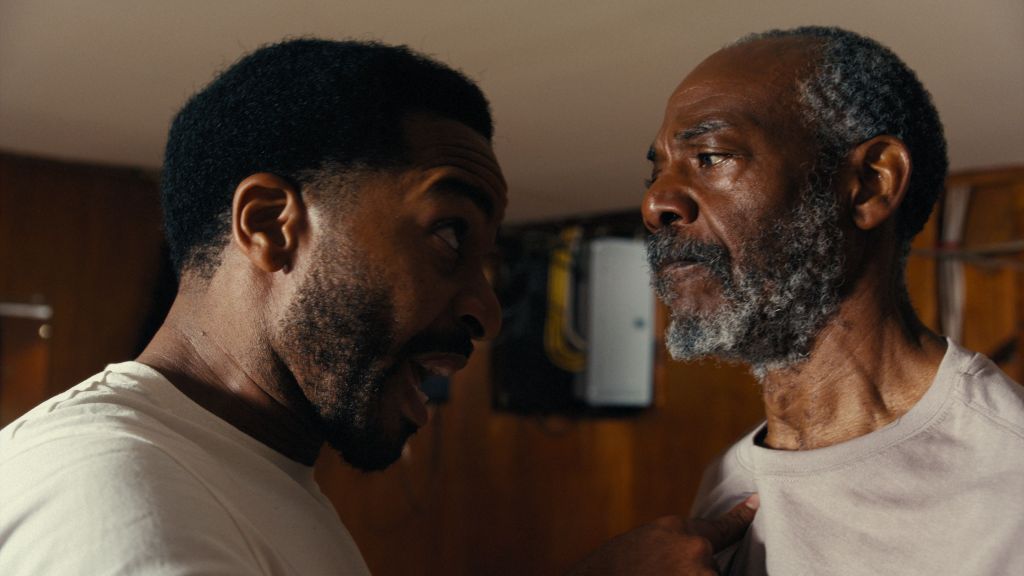
Meanwhile, in a bad part of town, La’Ron (John Earl Jelks) a homeless addict with a long, grey beard, struggles to make it through each day. He ekes out his meagre existence collecting spare change for shining hubcaps and washing cars outside a skid-row liquor store. But when he ends up in hospital, near-dead after a severe beating by a stickup crook, he decides it’s time to go clean. His brother offers him temporary shelter, and sends him to rehab. His estranged wife Joyce (Aunjanue Ellis-Taylor) forgives him once again in hopes of future familial reconciliation. But what does homeless La’Ron have to do with artist Tarrell? He’s his father, and  bad blood flows between them. He taught his son that as a black man, no one will care about him, no one will help him, and unless he gets tough and works extra hard, he’ll never survive and no one will care. But to Tarrell, the abuse visited upon him by his father was mean, self-serving and sadistic, exploiting his son’s labour to pay for his crack habit. And now La’ron shows up at his door again — what is it he wants now? Can father and son talk honestly? Has La’ron’s nature change? Can Tarrell ever forgive him? And can this extended family be saved?

Exhibiting Forgiveness is a multigenerational look at the hidden fissures and cruelty of masculinity unintentionally visited by fathers upon their sons. It’s rich and moving in its portrayals. The story is told both as a drama and as an artist’s representation of current and past events. We see Tarrell paint three youths; one of them his younger self (Ian Foreman). He later erases two of them by obliterating  their images with whitewash on the canvas. In another he cuts his teenaged self out of a painting with an x-acto knife, later draping the missing image on a chair,

So I’m watching this movie with the striking canvases in the paintings — this is not just anonymous crap-art made-up for the movie, it’s the real stuff — but when  Tarrell violates the art by splashes white paint or cutting it up… I was a bit disturbed, thinking, OK, the director is making a point, but he’s also destroying another artist’s work. So I looked him up afterwards:   The director is an artist, the paintings are his, and cutting up and altering his own canvases is an integral part of his work. He’s primarily an artist, and this is his first film. Watching the movie, I liked the passion of the acting and the emotional (and physical) violence in the characters they portrayed. But once I connected it with Titus Kaphar’s physical art, it suddenly became something much bigger than the sum of its parts. 

Exhibiting Forgiveness is an impressive first feature.

My Dead Friend Zoe opens this weekend in Toronto; check your local listings; and Exhibiting Forgiveness is now available on VOD. 

This is Daniel Garber at the Movies, each Saturday morning, on CIUT 89.5 FM and on my website culturalmining.com.

Dangerous places. Films reviewed: Flight Risk, Presence, Nickel Boys

Posted in 1960s, African-Americans, Coming of Age, High School, Suspense, Thriller by CulturalMining.com on January 25, 2025

Hi, this is Daniel Garber at the Movies for culturalmining.com and CIUT 89.5 FM.

Mike Leigh’s Hard Truths is finally opening theatrically this weekend; I loved it at TIFF, it’s one of the best movies of the year and Marianne Jean-Baptiste’s performance as Pansy is unparalleled — don’t miss Hard Truths. 

But this week I’m looking at three more movies set in dangerous places. There’s a witness in a prop plane in Alaska, a family in a haunted house, and two teens in a reform school that’s rotten to the core. 

Flight Risk

Dir: Mel Gibson (Review: Hacksaw Ridge) 

Winston (Topher Grace) is a bookkeeper on the lam. He used to work for the mob, but when they found out he was pocketing too much of their earnings he decided to run. Now he’s hidden away in a remote corner of Alaska where he’s sure they’ll never find him. They didn’t find him, but a pair of US Marshalls did. The cops are led by the hardboiled Madolyn (Michelle Dockery). She’s eager to be on active duty, after years stuck at her desk. She promises Winston full immunity if he agrees to testify. Now she just has to safely bring him to the lower 48. But first to an international airport in Anchorage. It’ll be a short ride over some mountains, and they’ll be on their way. Sure enough, there’s an old prop plane waiting on the tarmac the next morning. The pilot, Daryl (Mark Wahlberg) is a bit of a character, who directs his non-stop patter toward Madolyn. She sits beside him in the cockpit, with Winston — a potential flight risk — safely chained down in the back. Everything’s going perfectly until they realize the plane isn’t heading in the right direction. And the face on Daryl’s pilot license? Well, it isn’t Daryl. Who is in danger, who is dangerous, and who can safely fly the plane to Anchorage?

Flight Risk is a compact, action-thriller set aboard an old prop plane flying over the Alaskan mountains. It’s fast-moving, funny and a bit violent. The characters are all cartoonish: Mark Wahlberg has his head shaved with a deranged smile like Jack Nicholson in the Shining. Michelle Dockery, an English actress makes a good tough-as-nails cop. And  Topher Grace completes the triumvirate playing Winston as an awkward petty criminal trying to overcome his fears. It feels like those Covid-era movies, with its small cast and single location. But in this case, it’s the constant fights and the changing balance of power in a tiny enclosed space — aboard a fast-moving plane — that give this film its oomph.  

Flight Risk is no masterpiece, but I enjoyed it. 

Presence

Dir: Steven Soderbergh (The Laundromat, Side Effects, And Everything is Going Fine)

A typical family is moving into their new home. It’s beautiful, quite old, with lots of wood and windows. Chloe and Tyler (Callina Liang, Eddy Maday) each have their own room, but that doesn’t stop them from bugging each other. Tyler is a self-centred high school jock who wants to join the in crowd, and will do anything to get there. To booster his chances, he brings a popular, but suspect, guy Ryan (West Mulholland) into the house. Ryan has his eyes on Tyler’s younger sister Chloe, who is going through the trials and tribulations of adolescence and self doubt. Their Mom and Dad (Lucy Liu and Chris Sullivan) are also adjusting. She’s the main breadwinner in this family, and is facing a crisis at work. Has she been cooking the books? Dad — an educator — is more laid back, but still senses trouble, especially when it’s interfering with their relationship. But none of them seem aware of a bigger problem that affects them all: The place is haunted! There’s a ghostly presence in this house, that has been there a long time, and is not going anywhere. It floats through the place, unseen and unheard, observing everything but doing nothing. Until it starts letting itself be known. Is this presence a ghost or a poltergeist? Is it good or evil? And what will it do to this family? 

Presence is a typical family drama but seen through the eyes of a ghost. The camera (meaning the presence) never leaves the house, and if someone steps outside we can’t hear what they’re saying. It’s not a real horror movie; while there is a hint of the supernatural, and a fair bit of suspense, it doesn’t overpower the drama. 

And yet… I quite liked this movie. Steven Soderbergh is hit and miss. Some of his films are cheap-looking and predictable, filled with clichéd characters and cookie-cutter stories. Others are innovative and surprising. This one totally works

If you’re looking for a typical horror movie, this ain’t it, but if you want something new and different, you should check out Presence. 

Nickel Boys

Co-Wri/Dir: RaMell Ross (Hale County This Morning, This Evening)

(Based on the novel by Colson Whitehead)

It’s the early 1960s in segregated Tallahassee, Fla. Elwood (Ethan Herisse) is an earnest and polite young student who lives with his grandmother (Aunjanue Ellis-Taylor). He loves reading and studying and is interested in Black American history and the civil rights movement happening all around him. When his history teacher, Mr Hill  — an actual Freedom Rider! — gets him a scholarship at a prestigious Black technical school, everything is falling into place. Until, Elwood,  while hitchhiking to his new school is arrested for riding while black! The driver of the car he’s in — a total stranger — is charged with some crime, and Elwood is his accessory. He ends up sentenced to serve time at a notorious reform school called Nickel Academy. 

Nickel is a cesspool of corruption and cruelty, a school in name only. The kids are rented out as prison labour, like picking oranges off a tree. When he defends a little kid being beaten up at the school, Elwood is the one punished, not the bullies. And the punishment is severe: beaten until he bleeds or locked into a “sweat box”. Worse than that are the kids who suddenly “disappear”, never to be seen again. Luckily one kid stands up for him and becomes his best friend. Turner (Brandon Wilson) is as cynical as Elwood is idealistic. Elwood’s Nana has hired a lawyer to overturn his sentence — that’s what keeps him going. Turner — from Texas — has never had it easy, so he has no hope, just the will to survive. For a black kid in the Jim Crow south, the law doesn’t mean much. He tells Elwood that to get out of this place alive you have to know the rules. There are no laws, or right and wrong; last till you’re 18 and you’ll be free.

But as time passes, and Elwood’s future looks increasingly bleak, he starts to keep copious records of the violence crimes and corruption at Nickel Academy. Can he get the information to the authorities? Will it do any good? And which of the Nickel boys will survive?

Nickel Boys is an excellent historical drama about two young black men trapped in a horrific reform school. While historical in its details, it’s experimental and unconventional in its form. Most scened are shot from Elwood’s or Turner’s POV, with the focus often the ground, the sky, someone else’s hands or feet or the inside of his own head. It’s disconcerting at the beginning but you get used to it. The narrative is not completely linear either, with time jumping forward 20 and 40 years, to show what happens to Elwood in the future. It’s full of compelling memorable images, like kids picking oranges using high wooden stilts. The two main actors are newcomers but very good in their portrayals. But over everything hangs the awful truth of the terrible crimes at these sorts of places (like the Residential Schools in Canada).

Nickel Boys is both moving and upsetting to watch. 

Nickel Boys is now playing, with Flight Risk and Presence both opening in Toronto this weekend; check your local listings.

This is Daniel Garber at the Movies, each Saturday morning, on CIUT 89.5 FM and on my website culturalmining.com.

Blacks, Jews and Irishmen. Films reviewed: The Piano Lesson, A Real Pain, Small Things Like These

Posted in 1930s, 1980s, African-Americans, Family, Ghosts, Ireland, Nun, Pittsburg, Poland, Theatre by CulturalMining.com on November 8, 2024

Hi, this is Daniel Garber at the Movies for culturalmining.com and CIUT 89.5 FM.

Fall Film Festival Season continues with the EU Film Fest, showing free films from across Europe at Spadina Theatre starting on the 14th.

This week, I’m looking at three family dramas. There’s Black siblings in Pittsburgh, Jewish cousins in Warsaw, and an Irish dad with his five daughters, in… well, Ireland.

The Piano Lesson

Dir: Malcolm Washington

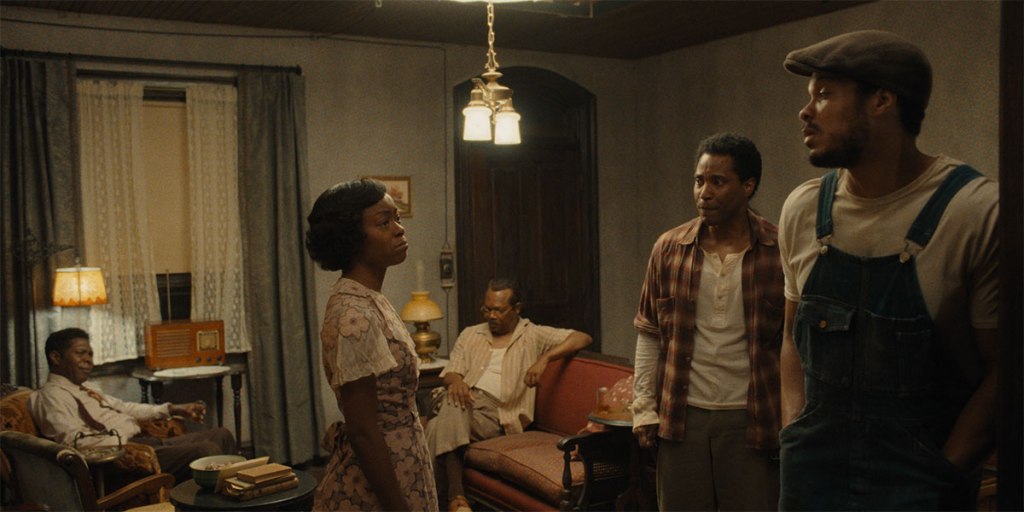
It’s 1936. Boy Willie Charles (John David Washington) and his friend Lymon are driving north from Mississippi with a truckload of watermelons, to visit his sister Berniece (Danielle Deadwyler) in Pittsburgh, Pennsylvania. She’s living with their uncle Doaker (Samuel L. Jackson). Once they sell the melons, Boy Willie plans to take his share of the profit (along with his savings) to purchase Sutter’s land. That’s the same place where his great grandparents were slaves, and where he still toils the land as a share-cropper. This is his one chance to own it.  But he’ll only have enough money if he sells the family piano. That’s why he’s visiting Pittsburgh. But Berniece refuses to sell it. Why? She grew up playing that piano, and more to the point it has family faces elegantly carved into the wood itself, dating back to pre-Civil War days. Besides, she says, that piano is haunted… and the ghost is getting meaner.  Meanwhile various family and friends, like a trickster and a preacher, are congregating at this house with different motives for being there. Can Boy Willie and Berniece come to terms about the piano? Or will bad spirits — both supernatural and human — ruin everything first?

The Piano Lesson is an excellent filmed version of playwright August Wilson’s drama. Fine acting all around, with Danielle Deadwyler outstanding as Berniece. Now, plays and movies are two different things. Actors emote louder and move bigger on stage (so everyone can see and hear them). And even the blocking and dialogue is different. Movies are no more real, but different. This Piano Lesson is very much a play. So I was a bit put off by it’s style… until the my brain started watching it as a play, at which point I really liked it.

If you notice a lot of Washingtons here, it’s no coincidence. Denzel Washington is the producer, and actor John David and director Malcolm are both sons of his. Denzel is committed to putting all ten of August Wilson’s Pittsburg Cycle on the big screen to preserve crucial Black American culture. Witness Fences in 2016 and Ma Rainey’s Black Bottom in 2020. The Piano Lesson is a fine addition to this series and should be watched.

A Real Pain

Wri/Dir: Jesse Eisenberg 

Benji and David Kaplan are cousins in their 30s, as close as brothers, but totally different. Benji (Kieran Culkin) is loud, gregarious, obnoxious and larger than life. He likes to raise a ruckus and mess things up. He lives alone in Binghamton, NY. David is shy, insecure and withdrawn. He’s married with a small kid and lives in Manhattan. He’s in a constant state of dithering and worrying. They’re travelling together to Poland to explore their family’s heritage. Their grandmother was Polish and a Holocaust survivor.

Benji was very close to her and devastated by her recent death, much more so than David. They’re part of a small tour group, all Jewish. Their guide (Will Sharpe) is a nerdy  English guy, very accommodating. Also on the tour are Marcia (Jennifer Grey) who suffers from intergenerational trauma;  Eloge (Kurt Egyiawan) from Winnipeg but originally from Rwanda where he survived Tutsi genocide; and a middle-class couple whose family immigrated from Poland generations ago but want to see where they came from. (“We’re Mayflower Jews”, he says).

Their journey takes in cultural and historical sites across Poland, but the closer they get to the concentration camp where their grandmother was imprisoned, the more agitated Benji gets.  He slips into shouted diatribes and lectures, causing scenes within their group and in public places — to David’s acute embarrassment. Can they both make it through the whole tour? Or will one of them drop out?

A Real Pain is a low-key, social comedy — yes, a comedy — about the uncomfortable dynamics within a family. it’s actually pretty funny, No slapstick or pratfalls, rather unexpected squirmy riffs on the two main characters’ personalities. (Like Benji telling David his bare feet are gorgeous, making him stare at them for the rest of the trip.)  It’s told in a series of clever vignettes over the course of the trip,  all hovering over unvoiced feelings of personal and collective mourning.   I’m always suspicious when actors play at directing, but this is no vanity pic. Eisenberg stays suitably subdued, letting Culkin go wild.

I like this movie.

Small Things Like These

Dir: Tim Mielants

It’s winter in a small town in Ireland in the 1980s. Bill Furlong (Cillian Murphy) is a working man who scrubs coal dust off his hands and face each day. But he doesn’t work in a coal mine; he has his own business, built from scratch, selling coal. His wife Eileen (Eileen Walsh) and his eldest daughter handle the finances. One day, he’s making a delivery when he’s alarmed to see a teenaged girl being dragged, kicking and screaming, into the local convent. That’s not right. She may be unmarried and pregnant, but why are they kidnapping that poor girl? 

So he steps inside to take a look. It’s the Magdalene Laundries, a Church organization that operates across Ireland, to care for unwed mothers. They put the babies up for adoption, and the girls and young women are trained to work as industrial laundresses. But to Bill it seems almost like a prison, where the girls are treated horribly. When one girl runs over, begging him to help her escape, he doesn’t know to do. The nuns quickly disabuse him of any notions he might have, and rush him out the front door. 

But Bill has history. He was brought up in this same town by his own single mum, who chose to stay away from that convent. He was bullied as a child because of this, but he still remembers how his mother — and her employer, an independently wealthy woman — defied the church. He feels he has to do something for that girl. But the nuns have their fingers in every pie; the school, government, they’re even a client of his own business. Should he confront the cold-eyed Sister Mary (Emily Watson) who runs everything? Or should he just worry about  his own family, and pretend nothing is wrong?

Small Things Like These is a deeply-moving drama about families, moral dilemmas and the checkered history of the Catholic Church in Ireland. This is the third such movie, after The Magdalene Sisters and Philomena, but its repercussions are still very much alive. Cillian Murphy —  who you probably recognize from Oppenheimer or Peaky Blinders — once again pulls you into the character he plays. He rarely speaks but the emotion in his features really affect you. So if you’re looking for a real tear-jerker, this is the one to watch.

A Real Pain, Small Things Like These, and The Piano Lesson all open in Toronto this weekend; check your local listings.

This is Daniel Garber at the Movies, each Saturday morning, on CIUT 89.5 FM and on my website culturalmining.com.

Places. Films reviewed: The Burning Season, We Grown Now, Evil Does Not Exist

Posted in 1990s, African-Americans, Canada, Chicago, Clash of Cultures, Coming of Age, Japan, Kids, Poverty, Resistance, Romance, Secrets by CulturalMining.com on May 11, 2024

Hi, this is Daniel Garber at the Movies for culturalmining.com and CIUT 89.5 FM.

If you’re looking for a fun night out, check out a beautifully renovated movie palace known as  The Paradise Theatre in Toronto. It’s now running Flurry of Filth, the aptly titled John Waters retrospective, including camp classics like Female Trouble, Hairspray, Polyester and Cry Baby, featuring Divine, Mink Stole, Tab Hunter and many more, on now through May 18th.

But this week, I’m looking at three new indie movies, from Canada, the US and Japan. There’s a jack-of-all-trades in a mountain village near Tokyo, a hotelier on a lake in Northern Ontario, and two kids in a housing project in Chicago.

The Burning Season

Dir: Sean Garrity (Interviews: 2013, 2016, 2022)

It’s summer at a resort on Luna Lake in northern Ontario. JB (Jonas Chernick) is preparing to marry his longtime girlfriend Poppy (Tanisha Thammavongsa). Guests at the lavish outdoor wedding include Alena (Sara Canning) and her husband Tom (Joe Pingue), a couple who make it a point to visit the resort each summer. This is where JB grew up — his family owned the place — and he knows every inch of the woods. But it turns into a wedding from hell when the groom-zilla starts snorting coke, improvising his vows, breaking dishes, and getting in a fistfight with Tom. What’s the cause of all this anger, confusion and mayhem? It seems JB and Alena have been having a secret affair at the park since they both were teenagers. This summertime relationship continued even after they both met their life partners. And it all stems back to a fire at the cottages the first time they met. What’s the attraction? What rules do they play by? And will they ever own up to their secret past?

The Burning Season is a bittersweet chronicle of a longtime furtive romance set in Algonquin Park. The very first scene shows the teenaged couple taking vows of secrecy in front of a big fire, but from there it jumps forward to the faulty marriage many years later. The rest of the movie fills in the blanks, summer by summer, going back in time in reverse chronological order. Winnipeg director Sean Garrity has a history of making identifiably Canadian movies — including location, story, actors and music — but often with a dark, twisted theme. This one is co-written by Garrity’s long-time collaborator Jonas Chernick (The Last Mark,  James vs his Future Self, A Swingers Weekend) and carries on this tradition. What does that mean? It means you get a twisted plot, good acting, beautiful scenery, and a fair amount of sex. 

What more do you need?

We Grown Now

Wri/Dir: Minhal Baig

It’s 1992 in Cabrini-Green, a vast, mainly black public housing project in Chicago’s north side. Malik (Blake Cameron James) and Eric (Gian Knight Ramirez) are best friends in elementary school. They study and hang together, often staying at Malik’s home with his mother Dolores (Jurnee Smollett) and his Grandma. Eric’s Dad works at a pizza place and his much older sister helps out at home. They don’t have much money but life is still good. Until everything changes when a classmate is killed by a stray bullet. 

Mayor Daley declares war, and suddenly the kids all have to carry IDs, and their homes are broken into, without warrants, by swarms of police. Cabrini-Green is suddenly made a symbol of crime, and its days are numbered. Should Delores look for somewhere else to live? Even outside of Chicago? And what will happen to friends like Eric and Malik?

We Grown Now is a coming-of-age drama about two kids living in a long gone housing project (it was torn down a few years after the film takes place.) It’s well-acted and brings back to life an important place and its historical significance. The problem is it didn’t grab me. It’s missing something: the joys of childhood and friendship don’t seem real. The whole movie is drab and dreary, not fun. Where are the games they play, the comic books they read, the TV shows, the video games, the music they listen to? What are their favourite sports teams? Not in this movie. When they play hooky it’s to go to an art museum but back home do they start drawing and painting their own art? No.  Aside from jumping on mattresses on the street these kids don’t ever seem to have fun, or do anything exceptional except being poor. The filmmaker says she talked to people who used to live there, but it translates into an earnest but lifeless movie set in aspic.

Evil Does Not Exist

Co-Wri/Dir: Hamaguchi Ryusuke 

Takumi (Omika Hitoshi) is a jack-of-all-trades living in a tiny mountain village outside Tokyo. He chops wood, forages for wild vegetables, and carries water from a stream. (The villagers prize the delicious, clean taste of their well water.) And he devotes himself to his young daughter Hana (Nishikawa Ryo). Hana loves exploring the woods nearby, picking up things she finds along the way, like feathers. Everyone knows everyone in this village — the school kids, the retired folks, the local noodle shop owner — and Takumi is the de facto spokesman. So he takes the lead when rumours of a huge change strikes the town.

A Tokyo-based company apparently plans to open a “glamping” resort just outside the village. “Glamping” means glamorous camping, a luxury, outdoor encampment for city folk. And they set up an information meeting in the town hall. But there’s no one from the company — just a pair of friendly actors from a talent agency (Kosaka Ryuji, Shibutani Ayaka).  After their glitzy presentation comes the Q&A, and the locals are not pleased. This glamping venture would ruin their idyllic, back-to-nature lifestyle and contaminate their water with a leaking septic tank upstream. Can the two sides find common ground? 

Evil Does Not Exist is a stunning clash of cultures and the unexpected spinoff a seemingly-inoffensive idea can generate. It’s also a great character study, both of the stubborn NIMBY townsfolk and the affable talents who realize they’re actually the pawns of corporate treachery. It’s beautifully shot at a leisurely pace with amazing cinematography, and a jarring soundtrack that features lush romantic music that will stops suddenly, without warning. The film is written and directed by Hamaguchi Ryusuke, who brought us Drive My Car a couple years ago, which garnered four Oscar nominations. Evil Does Not Exist has a totally different theme but shares the same dark undercurrent. 

This is a very good movie.

We Grown Now and Evil Does Not Exist open this weekend at the TIFF Lightbox; The Burning Season also opens in Toronto; check your local listings.

This is Daniel Garber at the Movies, each Saturday morning, on CIUT 89.5 FM and on my website culturalmining.com.

Wives and Moms. Films Reviewed: Ticket to Paradise, My Policeman, Till

Posted in 1950s, 1960s, African-Americans, Family, Indonesia, LGBT, Mississippi, Racism, Romantic Comedy, UK by CulturalMining.com on October 22, 2022

Hi, this is Daniel Garber at the Movies for culturalmining.com and CIUT 89.5 FM.

With Halloween approaching, Toronto After Dark is here until Sunday night to scare your pants off. And ImagineNative continues through the weekend with in-person screenings, followed by online movies till the end of the month.

This week I’m looking at three new movies — two historical dramas and one rom-com — about wives and mothers. There’s a wedding in Bali, a love triangle in Brighton… and a lynching in Mississippi.

Ticket to Paradise

Co-Wri/Dir: Ol Parker

David and Georgia Cotton (George Clooney, Julia Roberts) are a power couple. He’s a celebrated architect, while she directs a famous art gallery. They met in University, married and brought up their only child Lily (Kaitlyn Dever). She’s 24 now, but her parents? They’ve been divorced for two decades. They rarely see one another, and when they do, their conversation consists of put downs, and oneupmanship. But Lily loves both her parents, and is excited when they turn up for her law school graduation. And loves the fact they both accompany her to the airport. She’s flying with her best friend Wren (Billie Lourd) for a one-in-a-lifetime vacation at a fancy resort in Bali, before starting her job at a law firm in the fall. 

Once there, Lily is loving their vacation, until everything changes, when she’s stranded in the ocean far from shore. She’s rescued by a Balinese guy in a boat named Gede (Maxime Bouttier, the French/Indonesian actor/model). It’s love at first sight, and a few weeks later Lily has ditched her plans to be a lawyer and wants to live on the beach forever with a seaweed farmer. David and Georgia are invited to the wedding, and fly over together, bickering all the way. Tension rises when David discovers the jet is piloted by Georgia’s much younger boyfriend Paul (Lucas Bravo, Emily in Paris). 

But the ex-couple can agree on one thing. Lily is making a terrible mistake and they must do everything they can to stop it from happening. You see, Georgia gave up a promising career at an LA art gallery when David proposed to her — but their marriage fell apart after just a few years. So they owe it to their daughter to stop her from making the biggest mistake of her life. Will their plans succeed? Or will they alienate the only one they both love? And can David and Georgia ever get along? 

Ticket to Paradise is a traditional rom-com set in an “exotic” locale with big stars and some real laughs. The plot is threadbare and ridiculous — seriously, can you imagine grown- ups thinking they can stop a marriage merely by hiding the wedding rings? And it’s shot in Australia, not Bali; there’s no Kuta beach or Denpasar or Ubud, or anywhere else that evokes the island, aside from a few location shots That said, if you’re a fan of Clooney and Roberts — and they are fun to watch — and if you’re just looking for some ultra-light entertainment, and if rom-coms are your thing… well, you’ll probably like this one a lot. And even if you don’t like any of those (like me) it’s still totally watchable.

My Policeman

Dir: Michael Grandage (Genius: my review here)

Marion and Tom (Gina McKee, Linus Roache) are a retired couple living a quiet life in a seaside home in Brighton. But their marriage hits a rocky period when an invalid elderly boarder recovering from a stroke (Rupert Everett: The Happy Prince, review here) moves into their home. Marion feels they should take care of him, since he has no living relatives, while Tom is very disturbed by the notion. Who is he to us? He asks. What do we owe him? The answer lies in the journals he brought with him. Because, in fact, way back in the late 1950s, the three of them were very close. 

Tom (Harry Styles) is a young policeman dating Marion, a schoolteacher (Emma Corrin). It’s a tender courtship and the two are deeply in love. Tom introduces her to Patrick (David Dawson) who works at the local art museum: He’s smart and sophisticated. They met at the museum when Patrick asked Tom to model for his drawings. Will Marion fall for the sophisticated Patrick over the simple, but handsome policeman? No! There is a love triangle brewing here, but Marion isn’t the fulcrum, Tom is. He’s having a secret affair with Patrick. And when Tom says he’s travelling with him to Italy to work as his personal assistant, Marion gets suspicious. Thing is, being gay (or having gay sex) was a serious crime in the UK at the time. Somehow word gets out, and Patrick is arrested. Are Patrick and Tom in love? How about Marion? Who will vouch for Patrick if he goes to trial? Can Tom remain a policeman if his connection to Patrick gets out? And over 50 years later what will happen now that old secrets are being uncovered? 

My Policeman (based on the novel by Bethan Roberts) is a low-key, bitter-sweet drama about a menage a trois, and the fallout that comes from it. It’s told in flashforwards and flashback, following both periods simultaneously. It’s a compelling story but with a weak ending. The problem is the 50s section is much more interesting and moving, while the present day is dull and uneventful, which drags down the whole story. Harry Styles — the hugely popular pop singer — surprisingly, is not bad at all as an actor. Emma Corrin is great as the young Marion, likewise David Dawson who plays Patrick like a young Alan Cumming. I like the mood and the music and all, but as a whole My Policeman is easily forgettable. 

Till

Co-Wri/Dir: Chinonye Chukwu

It’s 1955 in Chicago.

Emmet Till (Jalyn Hall) — known as Beau to his Mom and Bobo to his friends — is 14 years old. He’s a happy, middle-class kid, who likes listening to music on the radio and playing with toys . He lives with his mom and grandparents. He’s getting ready for a train trip to visit his cousins in Mississippi, and he’s dressed in his Sunday best. But his mother, Mamie (Danielle Deadwyler) doesn’t want him to go. She warns him that Black people down there aren’t treated the same way. You have to make yourself “small”. You can’t look a white person in the eyes. Emmett does a Steppin Fetchit imitation, but Mamie says this is no joke. She comes from there, it’s a dangerous place and she never wants to go back.

On the train heading south, Emmett starts to feel Jim Crow. He and all the other black passengers are forced to leave their seats and move to segregated cars. In Mississippi, all his relatives are share- croppers who pick their plantation managers’ cotton, even the kids, and spend all their money in the company store. Emmett, though, still doesn’t really get it. But when he buys some candy and whistles at the pretty white cashier, things turn from bad to worse. Three days later men bang at the door in the middle of the night and take Emmett away in a pickup truck. His lynched body, mutilated and swollen, is found floating in a river.

His mother is crushed, devastated, but, she buries her son in an open casket. It gets nationwide attention when his photos are featured in Jet magazine. And with the urging of the NAACP, she decides to return to Mississippi to seeking justice.

Till is an accurate and moving drama about this awful crime and the travesty of justice that follows. The lynching of Emmett Till served as a catalyst for the civil rights movement, but it’s also a symbol of the pervasive violence of anti-black racism. Danielle Deadwyler is stupendous as Mamie; and it’s her performance that makes this movie worth seeing. It’s told through Mamie’s eyes: before the killing, at the funeral, in the trial that follows and its aftermath.  What doesn’t work so well are the dozens of historical figures with walk-on parts. Their lines are dutifully recited but lack Deadwyler’s passionate acting; they just seem flat, and there are too many characters to keep track of. Stand-out exceptions include Darian Rolle’s powerful portrayal as Willie Reed, a surprise witness at the trial; and, of course, Jalyn Hall playing Emmett himself. Till is an important historical record that must not be forgotten.

My Policeman opens at the Tiff Bell Lightbox, with Till and Ticket to Paradise playing across North America this weekend; check your local listings.

This is Daniel Garber at the Movies, each Saturday morning, on CIUT 89.5 FM and on my website, culturalmining.com.

Non-TIFF movies. Films reviewed: Nightclubbing, Honk for Jesus, Save Your Soul

Posted in African-Americans, Christianity, comedy, documentary, Music, New York City, Punk, Religion, Satire, Sexual Harassment by CulturalMining.com on September 3, 2022

Hi, this is Daniel Garber at the Movies for culturalmining.com and CIUT 89.5 FM.

TIFF, the Toronto International Film Festival starts in less than a week, and kicks off fall film festival season in Toronto. 

I‘ll be bringing you lots more about TIFF later, but don’t forget the other festivals on this month. Caribbean Tales International Film Festival runs from Sept 7th through the 23rd; The Toronto Independent Film Festival is on from September 14 – 17; and the Toronto Palestine Film Festival opens on September 22nd.

But this week I’m talking about a couple movies not playing at festivals. There’s a documentary about the rise of punk rock in New York City, and a mocumentary about the fall of a Baptist preacher in Atlanta. 

Wri/ Dir: Adamma Ebo

It’s springtime in Atlanta, Georgia, and churchgoers are preparing for Easter. It will also be the date of the triumphant re-opening of a Baptist megachurch, under the direction of Pastor Lee-Curtis Childs (Sterling K. Brown). Along with his wife, “First Lady” Trinitie Childs (Regina Hall) are looking forward to the triumphant return of their flock. But he has important issues to deal with  — like what suit should he wear — his pink Prada, his purple Prada or his periwinkle Prada. Presentation is important. Trinitie, likewise, has been shopping for a particular beaded church hat, the perfect combination of beauty, wealth and reserve. But so far the response has been less than stellar; only a handful of true believers show up for the first Wednesday night service. 

The Pastor is known for his fiery, passionate preaching, about things like the “sins of homosexuality” and other such vices. But he fell from grace after his own sexual dalliances came to light. Nothing illegal — “consenting adults” and all that — but his reputation as a trusted guide and healer is in tatters. Meanwhile a rival church has sprung up down the road. Run by a younger couple, Keon and Shakura Sumpter (Conphidance, Nicole Beharie), their church has no dark clouds hovering overhead. A few of the faithful have stuck with the Pastor, but most of them switched churches. Can Lee-Curtis and Trinitie convince their flock that all is well and it’s time to come home? Can Trinitie stand by her husband after what he did? Or is this the beginning of the end?

Honk for Jesus, Save your Soul is a satirical social comedy about hypocrisy in religion. The title refers to one of their many attempts to get people to come back to the mega-church’s reopening. The film is done in the form of a documentary, an invisible crew that follows them around, unwittingly exposing their embarrassing or horrible behaviour. (Through no fault of her own, the “First Lady” suffers the effects of his misdeeds.) This alternates with off-camera moments, like Lee-Curtis and Trinitie attempting to have sex in bed (apparently, for a man with a mission, he doesn’t want anything missionary-style just from behind with his eyes closed, to her great disappointment.) 

Does this movie work? Only partly. It’s a comedy but it’s rarely funny. The camerawork is well done — from their gaudy suits and the royal thrones they sit on, to poignant images like a tiny black Jesus statue wheeled out in a last attempt. And the acting is very good: Sterling K. Brown perfectly plays the pastor as a conceited show-off, bearing his near-naked body whenever possible. Regina Hall as the always suffering Trinitie — who has to face the vitriol of her former friends — gives a nicely  sympathetic performance. But the movie itself drags. There are few surprises. It feels way too long, and it’s not very funny… it just makes you squirm uncomfortably. Honk for Jesus all you want, but don’t rush to see this one.

Nightclubbing: The Birth of Punk Rock in New York City

Wri/Dir: Danny Garcia

Its the 1960s in a rough neighbourhood in Manhattan. Max’s Kansas City is a restaurant with an upstairs bar and lounge, where musicians perform before small audiences. Its down the street from Andy Warhol’s factory whose denizens hang out there along with writers and artists. But everything changes when the Greenwich Village mainstay, The Gaslight, loses its lease. Its manager moves to Max’s and starts booking bigger and bigger acts. Velvet Underground, establishes its rep there, as a place for independent bands. Iggy Pop meets David Bowie at Max’s and start to collaborate, and the New York Dolls set up camp there. As its fame grows, punk becomes a phenomenon with lots of sex, drugs and rock ’n’ roll. Max’s washrooms double as a notorious site for quickies. Someone in the film says they everyone there was high all the time, with heroine the drug of choice. Malcolm McLaren shows up after Sid Vicious leaves the Sex Pistols and becomes the Doll’s manager, bankrolling their rehab in exchange for them wearing his clothes on the stage. Though CBGBs ends up more famous, it’s Max’s that really starts the punk scene in NY.

Nightclubbing is an oral history of the early days of the NY punk scene told by the musicians themselves, their fans and followers, staff at the clubs, family and friends. Featured artists include Billy Idol, Alice Cooper, Penny Arcade, Sylvain Sylvain, and many many others.

Illustrated with still photos and archive footage, it is meticulously researched and edited into a continuous seamless narrative. And the music never stops.  Some people are on the screen for just a few seconds, with maybe a simple line or two, while others, like Jayne County, provide the funniest and juiciest bits.  And it’s a pretty juicy story. Like did you know Deedee Ramone’s girlfriend tried to pull a Lorena Bobbitt on him when she discovered he was hustling on 53rd st? Or that Max’s owners were busy counterfeiting hundred dollar bills in the back room? The club closed forever in 1981, but its legend lives on. If you’re into the history of early NY punk, Nightclubbing is a must-see.

Nightclubbing: The Birth of Punk Rock in New York City will be playing at the Carlton Cinema in Toronto on September 16th-18th; and you can catch Honk for Jesus, Save your Soul across North America starting this weekend; check your local listings.

This is Daniel Garber at the Movies, each Saturday morning, on CIUT 89.5 FM and on my website, culturalmining.com

Daniel Garber talks with writer and lawyer Jay Paul Deratany about Foster Boy at the Toronto Black Film Festival

Posted in African-Americans, Chicago, Corruption, Courtroom Drama, Family, Movies, Orphans, Resistance, Secrets, Thriller, violence by CulturalMining.com on February 19, 2021

Hi, this is Daniel Garber at the Movies for culturalmining.com and CIUT 89.5 FM.

Jamal is an angry 19-year-old who finds himself back in a Chicago courtroom once again. He’s a product of the deeply- flawed foster care industry, a privatized system which left him physically and mentally scarred, and in and out of prison. But this time he’s before a judge voluntarily; he’s suing the corporation that put him through hell. His lawyer? An unsympathetic corporate shill assigned to his case, pro bono, by a sympathetic judge. Jamal sees a “three-piece” supporter of the system he’s fighting, and the lawyer sees Jamal as a “thug” he’s ordered to represent. Can the two of them fight the power of an abusive system that made him a foster boy?

Foster Boy is the name a new courtroom drama and legal thriller inspired by true events, that was the opening night feature at the Toronto Black Film Festival. It’s produced by Shaquille O’Neal directed by Youssef Delara and stars Shane Paul McGhie, Matthew Modine, and Louis Gosset, Jr.

The script is by Jay Paul Deratany, a screenwriter who is also an accomplished Chicago lawyer and a foster youth advocate.

I spoke with Jay Paul Deratany in Chicago, via ZOOM, on February 17, 2021.

Foster Boy is available across North America at the Toronto Black Film Festival through Sunday, and online VOD.

Life changes. Films reviewed: Dating Amber, No Hard Feelings, Keyboard Fantasies: the Beverly Glenn-Copeland Story at #InsideOut30

Posted in African-Americans, Canada, Coming of Age, documentary, Germany, High School, Iran, Ireland, LGBT, Music, Trans by CulturalMining.com on October 10, 2020

Hi, this is Daniel Garber at the Movies for culturalmining.com and CIUT 89.5 FM.

Fall festival season continues with Toronto’s Inside Out LGBT festival playing now both digitally and at drive-ins through the weekend. So this week I’m looking at three movies playing at Inside Out. There’s love amongst refugees in present-day Germany, an odd-ball relationship in Ireland in the 90s, and a Canadian musician whose fantasies finally come true in his seventies.

Keyboard Fantasies: The Beverly Glenn Copeland Story

Dir: Posey Dixon

Beverly is a musician who grows up in a comfortable middle class home in post-war Philadelphia. Her father is a classical pianist and her mother sings spirituals at church. They send her to McGill in the early 1960s, where she is one of the first black students in her discipline, and where she comes out as a lesbian, virtually unheard of at the time, when homosexuality was still illegal in Canada. Later, she moves to Toronto where the Yorkville scene is nurturing folk musicians like Joni Mitchell. She cuts an eponymous record album with famous players on backup, in a unique style, combining jazz with blues and classical music. Unfortunately it disappears without a trace. She finds work as a musician and on TV – she is a regular on Mr Dressup! – but eventually moves into an isolated house in Muskoka with her lover.

In the 1980s she discovers computer-generated electronic music and self-produces a cassette of beautiful passionate songs. It sells maybe a few dozen copies. But in the 2000s, two big things happen: First Beverly realizes he’s trans, and begins transitioning female-to-male; and in the 2010s his album Keyboard Fantasies from the mid-80s is rediscovered in a tiny record shop in Japan. The owner requests more copies – all of which sell out in a day or two. The record is remastered and re-released and goes viral, and Beverly in his mid-seventies, is sudden’y a star with a devoited following. He embarks on a European tour backed up by a band of millennial hipsters and adoring young fans.

Keyboard Fantasies is a fascinating documentary about Beverley Glenn Copeland’s life, music and career. It’s filled with unusual psychedelic imagery, and upside-down and negative-coloured camera work reflecting the sudden reversals of Beverly’s own gender and career. His music is captivating, his voice sublime, and his life story like none other. This tale of rebirth in old age is a beautiful history not to be missed.

No Hard Feelings (Futur Drei)

Dir: Faraz Shariat

Parvis (Benny Radjaipour) is a young, gay German with dyed blond hair who lives in his family home in Hannover. He’s into sex, dancing and Sailor Moon. His Iranian parents sought asylum there 40 years earlier, to give their kids a better life, but he feels unmotivated, cut-off and trapped in limbo between two worlds. Raised within German pop-culture he knows nothing about Iranian dance or music. At home he speaks Farsi with a German accent, but the men he meets in gay bars constantly ask “where are you from?” (He’s from there!) But his life changes when, after being caught shoplifting, he is sentenced to community service as a translator at a refugee centre.

There he meets an adult sister and brother, a pair that seem almost joined at the hip, who eventually become his friends. They live together almost like lovers. Banafshe (Banafshe Hourmazdi) is outgoing and savvy, fluent in German, but facing deportation back to Iran. Her brother Amon (Eidin Jalali) is a nice guy but a bit stand-offish. He tells the flamboyant Parvis not to be seen with him at the refugee centre; his friends told him gayness is contagious. But the situation changes when the brother and sister spend the night at Parvis’s home. Parvis and Amon become lovers but are forced to keep it on the down low, constantly searching for secret places they can meet undetected. Will their love last? Can Amon and Bana gain refugee status in Germany or will she be deported? And can Parvis find his identity both within his family and in the larger German gay community?

No Hard Feelings is a touching and realistic drama about cultural and sexual alienation set within the vast and lethargic bureaucracy of the country’s immigration machine. It’s a distinctly German story, but one told mainly in Farsi and from that point of view. Good acting with some beautiful cinematography as well as occasional experimental, stylized footage. This is a great story about a subculture rarely represented on film. And it won the Inside Out prize for Best First Feature.

Dating Amber

Wri/Dir: David Freyne

It’s Ireland in 1995. Homosexuality was decriminalized just two years earlier, divorce is still against the law, and sex education is taught by nuns. Eddie (Fionn O’Shea: Handsome Devil) is a student at a rural high school outside of Dublin near an army base. He’s wants to become a cadet to please his dad but he’s not the right type; he’s frail, naïve and skittish. And he has a crush on his (male) math teacher. Amber (Lola Petticrew) is a plain-talking girl with blue streaks in her hair, who walks like she’s wearing army boots. She lives in a trailer with her mom since her father died. She’s saving up enough money to move to London after graduation to open an anarchist bookstore. She likes punk rock, but hates penises – they make her “vom” she says. Like Eddie, she’s bullied on a daily basis. Why? Because they’re both gay (though Eddie won’t admit it). So Amber comes up with a plan. Let’s pretend to be a couple until we graduate, so they’ll leave us alone. Will it work? Will it last? And what will it lead to?

Dating Amber is a terrific coming-of-age comedy about an unusual relationship in rural Ireland. It draws on a wry nostalgia for the 90s – fashion, hairstyles, pop music and attitudes — to construct some very real, funny characters. It’s romantic, hilarious, and deeply touching. This is a great movie.

Dating Amber, No Hard Feelings, and Keyboard Fantasies: the Beverly Glenn-Copeland Story are all playing at the Inside Out Festival which continues through the weekend. Go to insideout.ca for details.

This is Daniel Garber at the Movies each Friday morning on CIUT 89.5 FM and on my website culturalmining.com.

Exploding. Films reviewed: Atlantics, The Mystery of Henri Pick, Waves

Posted in Africa, African-Americans, Books, Death, Drama, France, High School, Movies, Mystery, Poverty, Romance by CulturalMining.com on November 22, 2019

Hi, this is Daniel Garber at the Movies for culturalmining.com and CIUT 89.5 FM.

Toronto Fall film festivals this weekend include Blood in the Snow, featuring Canadian horror and genre films, with the festival’s first short film from Newfoundland called New Woman. And CineFranco features French-language films from Ontario and around the world.

This week I’m looking at three new movies about metaphoric explosions. There’s a literary explosion in France, spontaneous combustion of a marital bed in Senegal, and a highschool wr3stle4 in Florida who feels ready to explode.

Atlantics

Wri/Dir Mati Diop

It’s Dakar, Senegal.

Ada (Mame Bineta Sane) is a pretty young woman set to marry a guy named Omar. He drives a swank car, lives in an expensive apartment and comes from a rich family. So why isn’t she happy? Because she’s in love with Suleiman (Traore) a handsome construction worker, building a monstrous tower in the city. She made out with him in the sand just yesterday – they’re a committed couple. Ada wants to hang with her friends Fanta and Dior at a beachside bar, not cooped up in a kitchen as a good pious wife.

But what she doesn’t realize is Suleiman has disappeared. None of the construction workers ever got paid, so they all hopped aboard a sailboat for a chance at better work in Europe. This means the kiss on the beach may have been their last one. So she goes ahead with the wedding, until… weird things start to happen. Their marital bed burst into flames. Strange-looking people appear inside high-security condos demanding retribution. And a diligent police inspector thinks Ada and Suleiman are behind it all. Will Ada marry her true love or the arranged marriage? And what is the cause of these supernatural events in downtown Dakar?

Atlantics is a fascinating study of life in urban west Africa seen through the eyes of a young woman. It combines contemporary problems – wealth distribution, the spread of viruses, and migrant workers – with a dose of magic realism. It’s shot around the Atlantic beaches of Dakar giving it all a glowing and haunting feel, an entirely new image unseen in west African films.

Atlantics is Senegal’s choice for best foreign film Oscar.

The Mystery of Henri Pick

Wri/Dir: Rémi Bezançon

Daphné and Fred are a young couple in Brittany with a literary bent. Daphné works for a major publisher and Fred is promoting his first novel. They have high hopes. So when Jean Michel Rouche (Fabrice Luchini) – the hugely popular TV literary critic – skips the promised review of his book (sorry, we’re out of time) they are both deeply disappointed. To pull herself out of the dumps, she visits a unique bookstore only for the “refusée”. That is, manuscripts that have been rejected by publishers.

And after looking at shelf after shelf of terrible writing she finds a masterpiece, a passionate love story about the dying days of Russian poet Alexander Pushkin! It’s erotic and sublime, a literary gem. She rushes it to her publisher, an instant bestseller. What’s especially intriguing is it was written by a certain Henri Pick, a pizza maker who died two years earlier. To promote the book, Daphné brings Henri’s widow and his adult daughter Joséphine (Camille Cottin) to Paris for an interview with the book critic, live on TV.

But things go awry when Rouche says he doesn’t believe a pizza maker – who owns no books and has never written a word in his life – could have penned such a masterpiece. In the mayhem that ensues he’s fired from the TV show and his wife leaves him. But he won’t let it drop. Soon he’s travelling across the country to find out who really wrote the novel. Was it Henri Pick? And will Jean Michel’s obsession lead to his ruin?

They Mystery of Henri Pick is a light comedy with a literary twist. It’s cute, somewhat funny, and well acted, with lots of cameos by greats like Hanna Schygulla. And it gives you a peek into the complex and arcane world of the French literary obsession.

Entertaining movie.

Waves

Wri/Dir: Trey Edward Shults

Tyler (Kelvin Harrison Jr) is a Florida high school senior headed for glory. He’s a champion wrestler, a top student and in love with his girlfriend Alexis. He lives in a beautiful upper middle class home with his father (Sterling K Brown) his mom (Renée Elise Goldsberry) and his sister Emily (Taylor Russell). Hhis doctor tells him to take it easy – he’s straining his body to the point of permanent injury, and the pain is getting worse. But his dad is pressuring him to win! win! win! for ultimate success. And the opiates he’s popping to stop the pain are messing up his mind. Until…he can’t take it anymore and it all explodes in a terrible event.

But wait… the movie is only half over!

Waves is basically two short films played back to back. The second film takes place later on, this one focussing on Tyler’s sister Emily. Emily is still at a school where her brother’s name is a pariah. She’s pursued by the sympathetic Luke (Lucas Hedges), one of Tyler’s wrestling teammates. What does he want from her?

Meanwhile her father finally opens up to his neglected daughter: was everything his fault for pushing his son too hard?

Waves is an unusual family drama, told in two related stories. Does its two-part structure work? Ultimately yes, though at first it left me feeling confused and puzzled. Beautifully shot with nice music, Waves also has a uniformly good cast, but Kelvin Harrison Jr in particular is terrific. Following his great performances in It Comes at Night and Luce, Harrison is once again playing a teenaged boy with a dark side, each time creating an entirely different (and almost unrecognizable) new character.

Shults with Harrison is a force to be reckoned with.

Waves opens today in Toronto; check your local lostings; Atlantics starts at the TIFF Bell Lightbox, and The Mystery of Henri Pick is playing at the Hotdocs Cinema as part of Cinefranco.

This is Daniel Garber at the Movies, each Friday morning, on CIUT 89.5 FM and on my website, culturalmining.com.