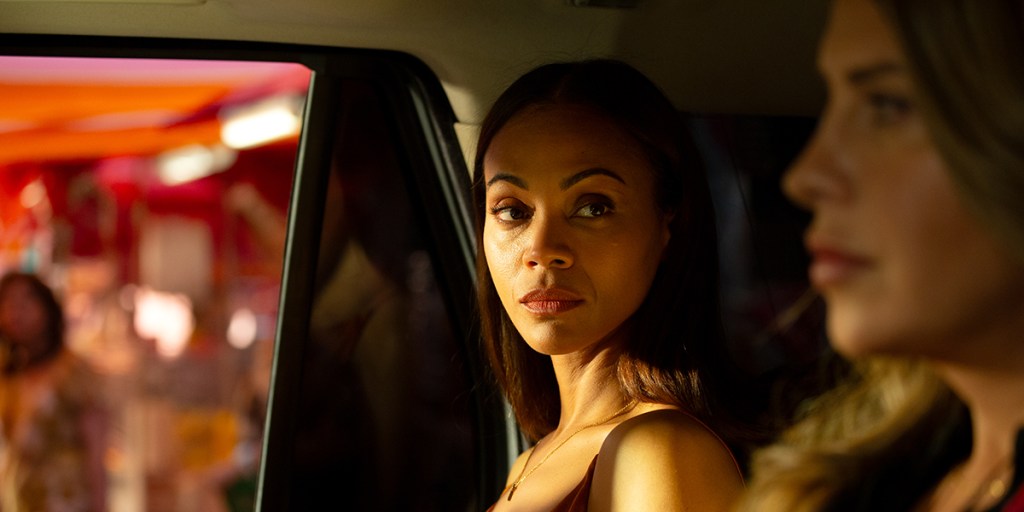
It’s all lies! Films reviewed: Jay Kelly, Zodiac Killer Project, Wicked: For Good
Hi, this is Daniel Garber at the Movies for culturalmining.com and CIUT 89.5 FM.
This week, I’m looking at three new movies, about people who lie. There’s a movie star who smiles for the cameras, onscreen and off; two witches and a wizard who hides behind his curtain, and a filmmaker who looks at what lies behind True Crime documentaries.
Jay Kelly
Co-Wri/Dir: Noah Baumbach
Jay Kelly (George Clooney) a major Hollywood star known for his action movies, is wrapping up the last scene of his latest film. He gets a few days off before starting his next feature after attending a tribute to him in Tuscany, as his friend and manager, Ron (Adam Sandler) keeps reminding him. But then a series of unfortunate events begins to occur. Ron tells him that Peter (Jim Broadbent) a noted director who launched Jay’s career when he was just an acting student — has died. And his younger daughter says she’s heading off to backpack and ride the rails in Europe before starting University in the fall… meaning his nest will be empty from now on. So when he runs into Tim (Billy Crudup) at Peter’s funeral — a blast from the past who he hasn’t seen in decades — he decides to join him for a drink at one of their old LA haunts. Tim was a method actor, someone so good he could read a menu aloud in a way that will make you cry. But their drinks turn to fisticuffs when Tim blames Jay for stealing his first role, sleeping with his girlfriend and generally ruining his life. Jay leaves the reunion with a black eye and Tim with a broken nose and a smouldering grudge.
So Jay decides on a change of plans: he’ll fly to Europe and surprise his daughter in Paris for some spontaneous fun. But nothing can be spontaneous for an A-list movie star. Jay flies there in his private jet, with a huge entourage, including his manager, hair stylist, PA, bodyguard and publicist (Laura Dern). But aside from his adoring fans, he can’t seem to make friends, spend time with his family, or do anything of lasting value. What’s a lonely, rich-and-famous guy to do?
Jay Kelly is a sardonic look at the hollowness of a Hollywood movie star’s life. Jay Kelly seems to be modelled on George
Clooney’s own career; they even show clips from Clooney’s past films at Jay Kelly’s tribute, thus blurring the line between reality and fiction. Jay Kelly is always flashing his pearly whites, but seems to have no actual feelings, just poses — that his director, or his publicist tells him to do. The movie’s not bad, but it’s hard to have deep feelings about someone so fake, a character that only finds his true self on the silver screen. It’s like he’s always acting. The biggest surprise is Adam Sandler in a serious role, without any bombastic elements. He’s actually good!
Jay Kelly is a cute light story, with a dark undertone. While not fantastic, it’s still worth watching.
Zodiac Killer Project
Dir: Charlie Shackleton
Charlie Shackleton is a documentary filmmaker from the UK who is obsessed with the case of the Zodiac Killer. He was a notorious serial killer who murdered any number of victims in the 1960s around the SF Bay Area, but was never caught. Part of his mystique was the many killings later attributed to him, and the series of cryptic letters sent to his victims and fans. Charlie wants to make a documentary based on a book by a policeman who actually encountered the killer… but negotiations with the authors of the book falls through, thus killing any chance of making the Zodiac Killer doc. Instead he decides to make a doc about how he would have made the doc he can’t make.
So the movie ends up being a spoken word-essay — Charlie’s words throughout — as he walks us through what he would have shot, scene by scene: a road stop outside of San Francisco; an urban street corner in Vallejo; a modernistic suburban church. Mundane images all, but always accompanied by clanky music and his eerie descriptions of what eyewitnesses saw in their search for the Zodiac Killer. Added to this are short clips and commentary of other True Crime docs, including films like Joe Berlinger and Bruce
Sinofsky’s Paradise Lost trilogy, about the three teenagers falsely accused of ritual child murder in West Memphis, Arkansas.
(Which is a great series, btw). But what Charlie points out is, many True Crime directors manipulate viewers using music, camera work and edited interviews to put the suspicion on someone the filmmakers want to blame, but who may or may not be responsible for the crime. And he calls into question the myth of the documentary director as an impartial observer rather than a biased manipulator of the truth.
Zodiac Killer Project is not a normal movie, by any stretch of the imagination (though it is pretty funny) It’s a filmmaker’s monologue on (what I think is) a very interesting topic, that is the deception and self-righteousness behind an entire genre — True Crime; accompanied by extended film images of, frankly, mundane locations. If you’re a cineaste, a movie buff, or a true crime fan, I think you’ll like this one; I do. But if you go expecting the bread-and-butter of True Crime media, the titillating images, the exploitational gross-outs, or self righteous harrumphing about the killer’s innate barbarism, you ain’t gonna find it here.
Wicked: for Good
Dir: Jon M. Chu
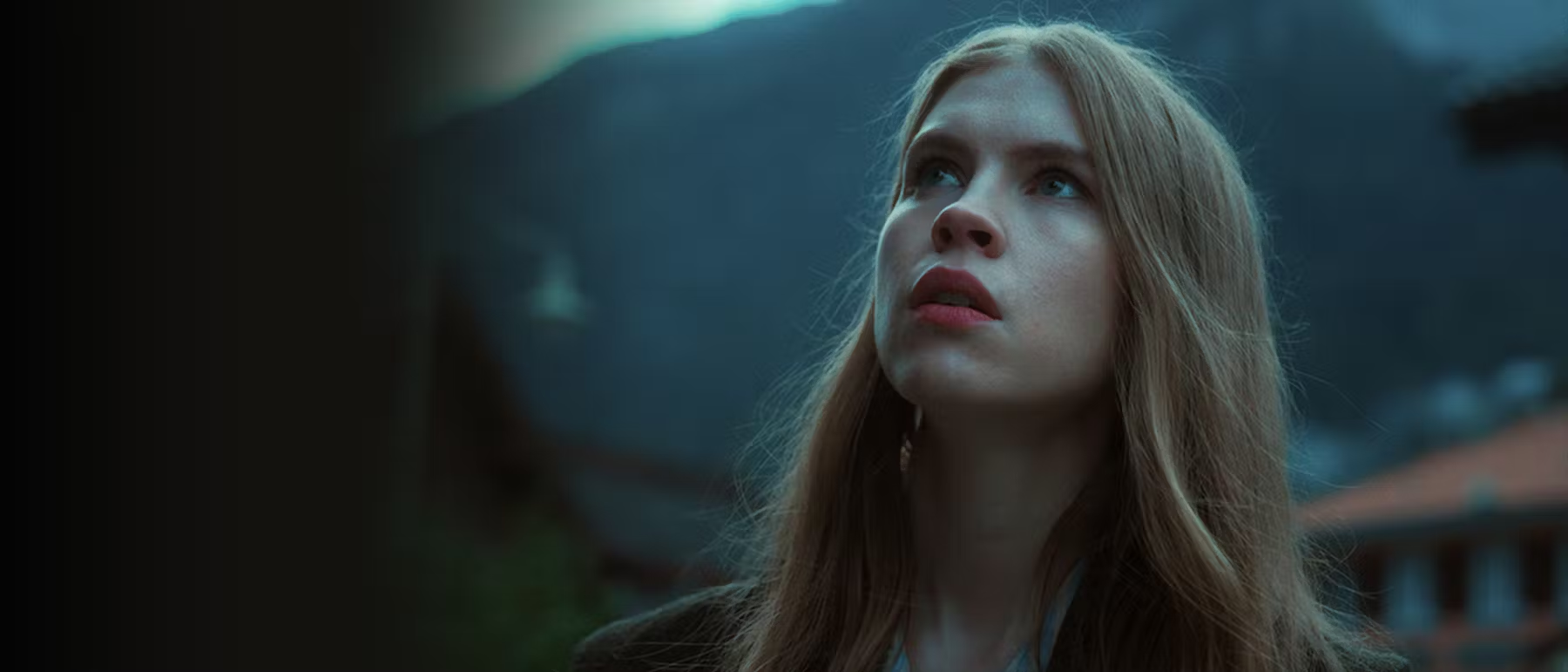
It’s another day in the Land of Oz, but things have changed over the past few years. Elphaba (Cynthia Erivo) has been in hiding ever since a massive government propaganda campaign has labeled her the “Wicked Witch of the West”. Her former best friend Glinda (Ariana Grande) is a figurehead who appears before the public in a mechanical bubble. She has no real magic but her job is to keep the peasants calm. She publicly professes her love for handsome Prince Fiyero (Jonathan Bailey) a captain in the army, but he pines only for the green-faced Elphaba. And Elphaba’s little sister Nessarose (Marissa Bode) is now an autocratic Governor, passing vindictive laws. But Nessa, too, suffers from setbacks: her long-time companion, the Munchkin Buck (Ethan Slater) has had enough of her (he’s secretly in love with Glinda.) And under the under the direction of the two scheming bullies with the only real power in this world — the Wizard of Oz (Jeff Goldblum) and Madame (Michelle Yeoh) — Oz is passing ever more draconian laws, including the stripping of all rights from animals, who once lived and worked side by side with
humans. Will Elphaba and Glinda ever be friends again? Can they stop the Wizard’s nefarious plans? And who will Prince Fiyero choose to marry?
Wicked: for Good is part two of the film adaptation of the hit Broadway musical. It’s an intriguingly revisionist version of the original Wizard of Oz story. Dorothy and the cowardly Lion appear but only as insipid background characters, The Wizard of Oz is a bad guy, and the Wicked Witch of the West a potential heroine. It’s 2 1/2 hours long but never boring, including three new songs by Stephen Schwartz that weren’t in the original play. Now, personally, I’m not a fan of that genre of music, but Cynthia Erivo and Ariana Grande’s voices are a pleasure to listen to. It’s visually dead-on, from the artificial, candy-coloured palate of the Emerald City, to cute and rustic Munchkinland. And I love the Art Deco, steam-punk machinery everywhere. It’s exquisite. Great production values all around: sets, costumes, elaborate dance numbers, and, of course, the flying monkeys.
It does feel like the second part of a two-act play — following a year-long intermission — and it is a much darker ride than last year’s Wicked — but I still enjoyed it.
Jay Kelly, Wicked for good and Zodiac Killer Project are all playing now in Toronto; check your local listings.
This is Daniel Garber at the Movies, each Saturday morning, on CIUT 89.5 FM and on my website culturalmining.com.
Halloween-y. Films reviewed: Sew Torn, Kryptic
Hi, this is Daniel Garber at the Movies for culturalmining.com and CIUT 89.5 FM.
Rarely have I seen two movies by the same director playing simultaneously, but that’s what’s happening right now. Richard Linklater (known for classics like Dazed and Confused, Boyhood, and Before Sunrise) is releasing two pictures. Blue Moon is a theatrical-style drama about the night when Rogers & Hart are replaced by Rogers & Hammerstein as the ruling
Broadway musical pair (starring Ethan Hawke, Andrew Scott and Margaret Qualley). And Nouvelle Vague is a tribute to the French New Wave, and in particular, the filming of Jean-Luc Godard’s seminal film Breathless (À bout de souffle) in 1960. The movie’s in French, shot in beautiful B&W, and stars Guillaume Marbeck as Godard, Adrien Rouyard as Truffaut, and Zoey Deutch as Jean Seberg.
Together they make a perfect double-feature.
But it is Hallowe’en, so this week, I’m looking at two first-time features, a couple of Hallowe’en-y movies to watch at home this weekend. There’s a seamstress who witnesses a crime, and a zoologist who thinks she’s seen a mythical beast.
Sew Torn
Co-Wri/Dir: Freddy Macdonald
Barbara (Eve Connolly) is depressed. Up till now, she’s led a simple life. She lives in a remote village in the Swiss alps — a land of schnitzels and yodels — sleeps above her mom’s sewing shop. Barbara lives a cartoonish life carrying a flip phone, and driving a tiny, blue putt-putt car with a giant spool of thread and needle mounted on the back. She calls herself the Travelling Seamstress, and makes house-calls even for the tiniest job. Problem is her mom died recently, and she doesn’t know what to do now. Her work and life seem meaningless without her mother’s guidance. Though technically a grown up, she still feels and acts like a child. But life goes on.
Today’s appointment? Sewing a single button onto a wedding dress worn by a strident, middle-aged woman on her way to the ceremony (Caroline Goodall). But on the road she interrupts a shocking accident involving two armed criminals. Both men — a young guy (Calum Worthy) and a motorcyclist
— lie bleeding on the tarmac, surrounded by plastic packages of white powder, and a suitcase full of Swiss francs. A drug deal gone wrong. But the criminals are strangers, and with all that money up for grabs… should she commit a perfect crime? Or call the police? Or just drive away, like it never happened? Each choice holds potential pitfalls. And what she doesn’t realize is the crime boss behind the whole operation (John Lynch) is cruel, ruthless and headed her way. Which path should Barbara take, and how will they change her future?
Sew Torn is an ingenious, crime/thriller, about a clever seamstress confronting dangerous killers. It’s also a mother-
daughter / father- son coming of age story, with each of the young characters dealing with the legacy of their parents. The story is told and retold, as Barbara experience her various choices. The characters are cute, and the scenery appropriately incongruous. What’s really great are the intricate Rube Goldberg devices Barbara creates to fight off the criminals. All her schemes involve spools of thread, sharp needles and the ubiquitous sewing machines… adding still more surprises to this delightfully violent crime thriller.
Sew Torn is so good.
Kryptic
Dir: Kourtney Roy
Kay Hall (Chloe Pirrie) is a tall, gaunt woman with lanky hair and an intense gaze. She’s part of an afternoon hiking club walking through the hills and mountains of southern BC. Their tour guide tells them they’re in an area teeming with mythical creatures: The Ogopogos, the Sasquatch, the Windigo. In fact, a woman named Barbara Valentine disappeared a few years ago, so it’s important to stick together. Hearing this, Kay promptly veers away from the group into a nearby ravine in the hopes of catching a photo of the local monster. You see, she’s a veterinarian but also a cryptozoologist, in search of the unknown. And then she sees him, on a nearby hill: tall, hairy, stinky and dangerous… and headed her way. She wakes up dazed and confused, covered with a viscous white fluid… and no idea who she is. She has to use her driver’s license to find her name, her car and her home. And she’s haunted by sexually violent visions of her encounter with the creature.
The next day, she sets out on a journey through southwestern BC, in search of the beast… by tracing the steps of the missing Barbara Valentine. She follows the clues through rustic
motels, sleazy roadhouses and trailer parks teeming with drug-fuelled swinger parties. And as she gets closer to finding out the truth, she discovers her own crucial role in all this. What dangerous secrets will her search reveal? Who is she…and what is her attraction to the cryptic beast?
Kryptic is a low-budget, monster/body horror flick set in rural BC, about a woman’s memory, identity and sexual attraction. There’s a fair amount of nudity, pervy sex and gory violence within a haze of alcohol and cannabis smoke. The story is OK (occasionally verging on the ridiculous) but it really takes off
with all the strange characters — mainly women — she meets along the way. Like a faded glamour star running a motel, a die-hard monster hunter dressed like the beast, a barfly with crucial info, and a woman who claims to have had carnal encounters with the monster. Chloe Pirrie is great as Kay, wavering between naive and brazen, whenever her eyes glow green. Kamantha Naidoo is tough but sympathetic. Also notable are Pam Kearns, Jennifer Copping and Patti Allan. I also like the softly threatening and surreal feel of much of the film.
Though far from perfect, Kryptic still has lots of unexpected images to look at on a cold Hallowe’en night.
Sew Torn is now streaming on Shudder while Kryptic is available on Hollywood Suite. And the two Linklater movies — Blue Moon and Nouvelle Vague — are both playing at the TIFF Lightbox in Toronto; check your local listings.
This is Daniel Garber at the Movies, each Saturday morning, on CIUT 89.5 FM and on my website culturalmining.com.
Men, music and sports. Films reviewed: The History of Sound, Him, EPIC: Elvis Presley in Concert
Hi, this is Daniel Garber at the Movies for culturalmining.com and CIUT 89.5 FM.
TIFF is over but the movies keep coming. So this week, I’m looking at three new American movies, two about music and one about sports. There are two men recording folk songs in the forest, an ambitious quarterback at a training camp in the desert, and a former teen idol wowing audiences on a Vegas stage.
The History of Sound
Dir: Oliver Hermanus
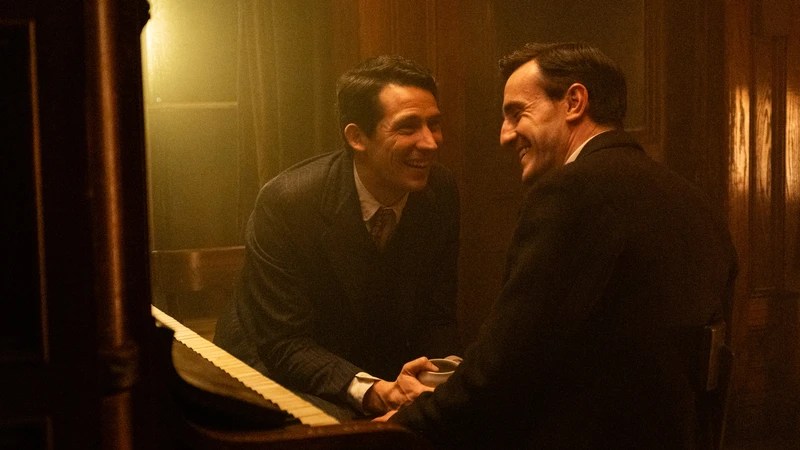
It’s the early 20th Century in rural Kentucky. Lionel (Paul Mescal) likes listening to his father sing while he plays the fiddle. Music for him is different from most folks: he has synesthesia. This means each musical note has a distinct colour, flavour and meaning. Eventually his love of music and beautiful voice wins him a full scholarship to the New England Conservatory of Music. At a Boston pub one night, he recognizes a song his father used to play, coming from a young man at the piano. David (Josh O’Connor) knows every word. As an ethnomusicologist, he wants to collect as many distinct folk songs and ballads as he can, before they are lost forever. David has perfect pitch and a photographic memory. The two trade songs they know, and somehow, end up in bed together that night. That chance encounter turns into regular trysts at David’s apartment.
Later he invites Lionel to join him in a fieldwork project. They roam across the state of Maine, recording songs everywhere from logging camps to schoolhouses, And they record it all on wax cylinders (this is before flat discs are invented) carefully
stored in a leather satchel. And each night they sleep together in a tiny tent. Is this true love? And what will happen to their relationship after the project is finished?
The History of Sound is a touching, bittersweet gay romance — before the word gay existed — set within the larger context of war and music. It’s directed by South African filmmaker Oliver Hermanus (Moffie) and its based on a short story by Ben Shattuck. I wonder if the characters are modelled on Alan Lomax, the ethnomusicologist who recorded thousands of songs and started the folk music revival in the 1950s. Paul Mescal is spot-on as the sensitive kid in a clapboard shack who grows up to be a cosmopolitan musician; as is Josh O’Connor’s portrayal of an enigmatic musical genius with hidden secrets. The images are as lovely as the music in this tender and moving film.
I really liked it.
Him
Co-Wri/Dir: Justin Tipping
It’s San Antonio, Texas, and their NFL team, the Saviours, is looking for a new quarterback to replace their MVP Isaiah White (Marlon Wayans), due to retire in a year. Cameron Cade (Tyriq Withers) is a young quarterback who lives for football — his father trained him for this since he was a little kid. When he’s offered the position if he agrees to an intense one-on-one, bootcamp with his idol Isaiah White, of course he says yes; this is the fulfillment of all his dream. Thing is, he recently had a serious injury that left him with a bad concussion and a track of staples in his head. If he aggravates his brain, it might end his football career before it starts. But as his father always told him, No Pain, No Gain. Cameron heads out to the training camp in the desert.
There he encounters absolute luxury: gourmet food and priceless art in a spacious brutalist palace. There are saunas and ice baths, and daily blood transfusions for Isaiah. Cameron too tastes this luxury — and sexual temptations — offered by Isaiah’s entourage, especially the grotesquely made-up wife Elsie White (Julia Fox), an influencer who sells her own line of sex toys. Isaiah is the GOAT — the Greatest of All Time — and his virulent fans wear goat horns on their
heads. Cameron, on the other hand, holds onto silver cross. He’s given a series of Squid-Game-like ordeals he must endure before Isaiah gives him the nod. And as the tasks grow increasingly horrific, his morals are severely challenged. Can he pass the tests? And is he ready to give up his innate morality and embrace pro-sports and all it offers?
Him is a psychological thriller about a young man confronting his hero (who is also his nemesis) even as he uncovers the dark underbelly of pro football. It’s produced by Jordan Peele, so you might expect a suspense/thriller with mind-blowing surprises. If so, you’ll be sorely disappointed. What you’ll get instead is more like a highly-stylized, extended music video than a horror film. There’s lots of dazzle and flash — and an equal amount of blood — but it’s never scary or surprising. And director Tipping uses film techniques like a kid playing with toys. Why are people shown in in infrared X-rays? Why a long fashion shot sequence in what’s supposed to be a scary scene? Why do cowboy-hatted cheerleaders continue dancing in the face of horrific deaths? There are some great visual cues — like the aluminium stitches in his skull evoking the side of a football — but it’s all show, no substance in this cheap morality play.
Him is fun to look at, but there’s nothing there.
EPIC: Elvis Presley in Concert
Dir: Baz Luhrmann
It’s the 1950s. Elvis is the King of Rock and Roll with a series of hits and the nation goes wild over his thrusting pelvis and his soulful voice. Later, he is drafted into the army where he serves two years. Afterwards he turns to Hollywood where hue churns out a series of hits alongside sex goddesses like Ann-Margaret. And late in the 1960s he signs a multi-year contract to perform before sold-out audiences at a Las Vegas Casino. He’s up there every day, dressed in eggshell blue jumpsuits, covered in silver studs, sequins and spangles, joking with the crowds, and sweating buckets. He is accompanied by a retinue of back up singers, musicians and elaborate lighting. And that is basically how Elvis spends the rest of his life, until he collapses and dies in Graceland, age 42.
EPIC: Elvis Presley in Concert is a combination documentary and musical performance. Just two years ago, we had both Baz Lurhmann’s biopic Elvis and Sofia Coppola’s Priscilla, two similar stories told from different points of view, neither of which were particularly good. And now, out of nowhere comes this third one. I’m not an Elvis fan, nor do I like the kitschy

Buzz Luhrmann at EPIC’s world premiere at TIFF50: Photo (c) Jeff Harris
and gaudy films of Baz Luhrmann. Which is why I’m shocked at how much I enjoyed this movie (I saw it on an IMAX screen at TIFF last week, almost by accident.) Ostensibly just a musical record it’s actually a succinct and tight history of the man, so much better than those bloated biopics.
It’s fantastic, a masterpiece of creative editing, colour restoration and music mixing. It’s absolutely stunning. The songs he sings are mainly hits from the 1960s cover-versions of Bridge Over Troubled Water, You’ve lost that Loving Feeling, and even gospel songs. And over the course of a single song, we see him on stage, in rehearsal, or in the recording studio, shot over many years, but without a break in the music. And despite Luhrmann’s gaudy excess, somehow his capture of Elvis in a psychedelic shirt or sparkling gold belt buckles just looks right.
EPIC is the perfect concert film.
Him and The History of Music both open this weekend in Toronto; check your local listings; EPIC: Elvis Presley In Concert played at TIFF and will be released soon.
This is Daniel Garber at the Movies, each Saturday morning, on CIUT 89.5 FM and on my website culturalmining.com.
Pleasant danger. Films reviewed: How to Train a Dragon, The Life of Chuck PLUS TJFF!
Hi, this is Daniel Garber at the Movies for culturalmining.com and CIUT 89.5 FM.
As the days get longer and the skies get warmer, people want to go out and have fun, looking for an enjoyable night out. So this week, I’m looking at two new entertaining, feel-good movies, that at first glance seem to be just the opposite. One’s about horrible monsters terrorizing a small island, the other’s about the end of the world.
But before that, let me tell you about a few movies playing at the Toronto Jewish Film Festival showing movies from around the world through this weekend, and digitally until June 18th.
TJFF, 2025
The festival opened with Once Upon My Mother, (Ma Mere, Dieu et Sylvie Vartan), bilingual-Canadian director Ken Scott’s (review: Starbuck) humorous look at the memoir of Roland Perez, a renowned Parisian attorney and writer. He’s the 6th child in a crowded family of Moroccan immigrants born with a clubfoot in 1963, but whose driven mother, Esther (wonderfully played by Leïla Bekhti), refuses to accept it. She — and will power alone — will make him walk, no, dance!, as if there were no physical problems standing in his way. These efforts are all done to the tunes of pop singer Sylvie Vartan on his sisters’ record player, as he struggles to learn to read.
This is a charming and quirky family comedy.
In The Other, documentarian Joy Sela attempts the impossible: to film people from two sides of an intractable conflict — that of Israel and Palestine — talking frankly with each other. Ordinary Israelis, and Palestinians from the West Bank, East Jerusalem, Gaza and those from Israel proper, voluntarily getting together. People on both sides of this polarizing conflict, whose families or friends have been killed, kidnapped, jailed or persecuted, attempt to share personal photos and stories, and actually get to know “The Other”. While most of the film was shot before the enormities of the current Gaza war took place, it’s still important in that it holds out the hope of peace and understanding, and the end of this brutal war and the events and conditions that led up to it.
Never Alone (by Finnish director Klaus Härö) is a true story set in Helsinki in 1942, where an outspoken, prominent businessman, Abraham Stiller (Ville Virtanen), comes to the rescue of a group of Jewish refugees who arrive by ship from Austria. And soon after, Stiller has a noisy run-in in his store with a random man who loudly opposes the presence of refugees. What he doesn’t realize is he has picked a fight with Arno Anthoni, a Nazi collaborator and the head of the Finnish State Police. The movie has a noir-ish feel, full of secret papers, clandestine backroom deals, and shadowy prison cells. Never Alone is a tense, historical drama that looks at Finland’s somewhat spotty record in the first half of WWII.
How to Train Your Dragon
Co-Wri/Dir: Dean DeBlois
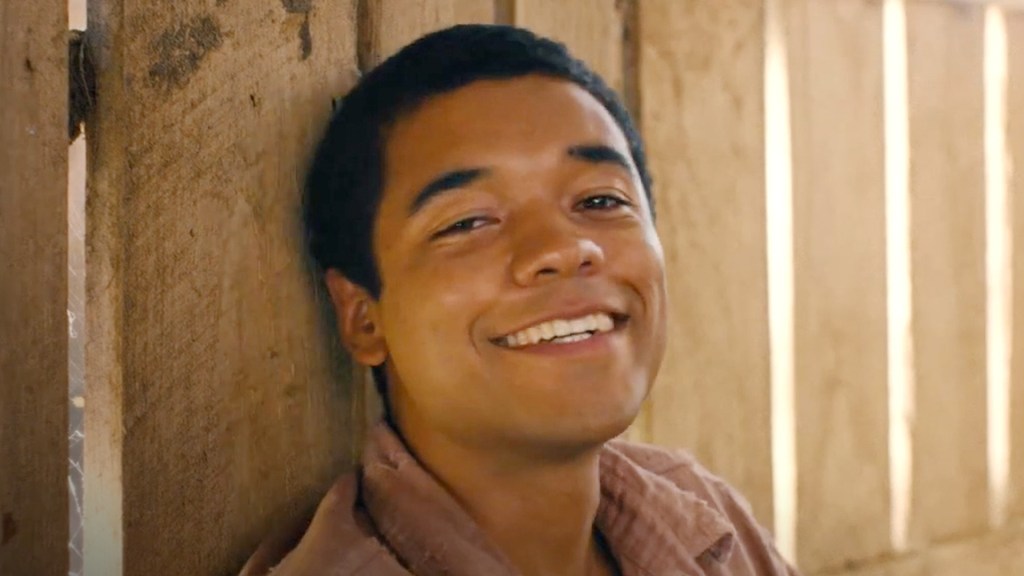
It’s the middle ages on a remote, mountainous island populated by a multicultural Viking consortium. They speak with Scottish brogues and wear pointy horns on their helmets. Their biggest problem? Dragons — of every shape and form — who steal their sheep and wreak havoc. Stoic, the island’s ridiculously bearded chieftain (Gerard Butler) leads them repeatedly into dangerous battles with these fire-breathing monsters, in the hope of someday discovering their lair, and killing them all. But young Hiccup (Mason Thames), an inventive, non-conformist, doesn’t want to kill dragons. He’s a lover, not a fighter, and has a major crush on the young swordswoman Astrid (Nico Parker). When he discovers a disabled Night Fury dragon that he names Toothless, Hiccup fashions a prosthesis so he can fly again. He trains Toothless to fill a space somewhere between rival, best friend and pet. And by closely observing his strengths and foibles Hiccup learns all the dragons’s secrets. But his dad — the Chieftain — enrols him in a gladiator-like training camp, full of ambitious viking wannabes — like Snotlout, Fishlegs, Ruffnut and Tuffnut,— to teach him to kill the beasts, including his secret best friend. Are dragons the dreaded enemies of the Vikings, or are they just big misunderstood puppy dogs?
If “How to Train Your Dragon” sounds familiar, it’s because it’s a live action remake of the hit 2010 3-D animated kids’ movie by the same name. (And in the same vein, this review is largely the same as the one I wrote 15 years ago. If they can do it, so can I) But I was a bit trepidacious about what they might do to the cartoon version which I really liked. Well no need to worry. It’s similar but not identical. The animated version is funnier and goofier. I like the new costumes, especially the furry mukluks they all wear. Part of the cast — like Gerard Butler — are back again, and the newbies, especially Mason Thames, with his cartoon-like features, fit their parts fine. But as I watched this one on the big screen, I was blown away by the spectacular mid air flying scenes, where Hiccup rides through the skies on Toothless’s back. I don’t remember that from the first one. When I looked at my old review, there it was. The “…effects were great…with a lot of breathtaking scenes and battles, and a good amount of suspense. At times it felt like being part of a good video game – weaving between rock formations, through the clouds, under the northern lights – and I mean that as a compliment.”
This may be a kids’ movie, but I totally enjoyed watching How to Train Your Dragon all over again.
The Life of Chuck
Co-Wri/Dir: Mike Flanagan
Marty (Chiwetel Ejiofor) is a school teacher in a bucolic small town… who feels a bit strange. Things aren’t functioning like they used do. Everyday people and buildings disappear, even as the stars in the sky fizzle out, one by one. The one thing that is working are posters, billboards, skywriters and flashy ads everywhere celebrating an unknown man named Chuck. Who is this Chuck? What’s going on? Is this the end of the world? Yes, it is… well, sort of.
But then comes act two.
A well dressed man in a business suit hears a busker playing the drums in a city square in Boston. He begins to dance, first alone, and then with a ginger-haired woman, who, caught up in the excitement, joins him. Here is the ‘Chuck’ Krantz (Tom Hiddleston) we’ve been hearing so much about. Act three fills in the blanks: where Chuck came from (played here as a young man by Jacob Tremblay), why he is so central to this story,
and what he represents for this world, and how magic plays a small part.
While The Life of Chuck is ostensibly a film about the end of the world as seen through horror-meister Stephen King’s eyes — the man who brought us The Shining, and Carrie and Misery and Cujo and Pet Semetary — it’s actually a sweet and gentle revelatory movie that owes more to the poems of Walt Whitman than to any ghosts or vampires.
I have to admit, I’m no fan of Tom Hiddleston I didn’t like him in the Hank Williams biopic, or as Loki in the Thor Movies. But he is perfect in this movie about Chuck. So if you’re in the mood for a really nice, inspiring, easy-to-watch movie with lots of semi-profundities, you should see the uncategorizable and always surprising Life of Chuck.
I really liked this one.
How TO Train Your Dragon and The Life of Chuck open this weekend in Toronto; check your local listings. Never Alone, The Other and Ma Mere, Dieu et Sylvie Vartan. Are among many films playing at TJFF in person and digitally.
This is Daniel Garber at the Movies, each Saturday morning, on CIUT 89.5 FM and on my website culturalmining.com.
Broken. Films reviewed: Parthenope, The Unbreakable Boy, The Monkey
Hi, this is Daniel Garber at the Movies for culturalmining.com and CIUT 89.5 FM.
This week, I’m looking at three new movies: there’s a boy with breakable bones, a toy monkey who could break your bones, and a woman whose beauty breaks every man’s heart.
Parthenope
Wri/Dir: Paolo Sorrentino (Reviews: Youth, Hand of God, The Great Beauty)
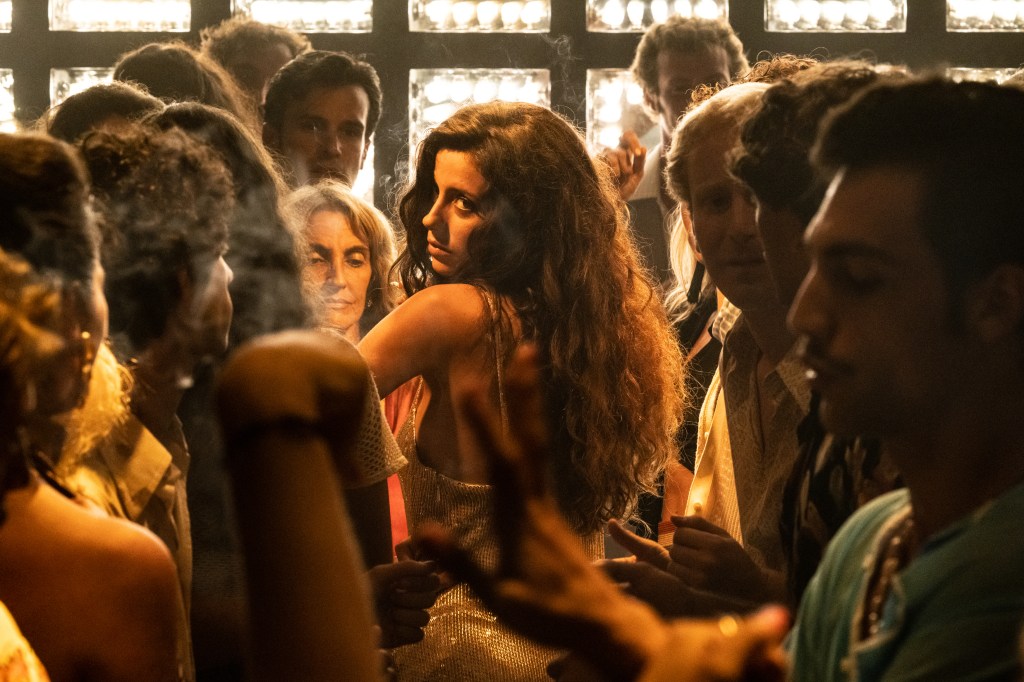
It’s Naples, 1950 and a woman gives birth in the waters of the Tyrrhenian Sea. The baby is called Parthenope, named for both the city and the Greek myth. She grows up to be a young woman of epic beauty and legendary intellect (Celeste Dalla Porta). Men who try to seduce her, find their own words silenced by her pithy comebacks. Her days are filed with a search for beauty, happiness and meaning. She absorbs everything she reads, from John Cheever to Claude Levi-Strauss. Her closest friends are her brother Sandrino (Dario Aita) and Raimondo (Daniele Rienzo) the son of a maid. Together they form sort of a quasi menage a trois.
Parthenope aces her orals and is accepted into the prestigious anthropology department at the local university. From there she follows three very different paths: Academia — a professor takes her under his wing; Love, deciding which of her countless suitors should she consent to sleep with; and the
city of Naples, itself. Along the way she encounters a corrupt and carnal bishop, a depressed superstar diva, a millionaire with a private helicopter, and many others. But will any of these people provide her with the answers she seeks?
Parthenope is a gorgeous and sumptuous look at post-war Naples as seen through the eyes of a beautiful woman as she lives her life. Celeste Dalla Porta is appealing to watch, but she is opaque and impenetrable: she merely observes without ever doing anything. Paolo Sorrentino is known for his his beautiful images, especially women as objects of desire. But he doesn’t seem to know what to do with a woman as his subject. Instead we get a hollow simulacrum of a main character, who drifts aimlessly but happily through her life as she encounters quirky strangers. I love the photography, the scenery, the people and the music — a collection of bright and shiny colours — but watching Parthenope leaves you feeling like you just flipped the glossy pages of a fashion magazine: superficially attractive but pointless.
The Unbreakable Boy
Co-Wri/Dir: Jon Gunn (Reviews: Ordinary Angels, I Still Believe, American Underdog, Jesus Revolution)
Scott (Zachary Levi) is a young salesman with big ambitions: he plans to move to Manhattan someday and make it big. But in the meantime, he likes golf, fine wine and travelling. He spends most of his time with his best friend Joe, a burley bearded man who is always giving him advice (Drew Powell). One day he meets a pretty and charming woman named Teresa (Meghann Fahy). Sparks fly, and nine months later, she gives birth to Austin (Jacob Laval). They’re not married but decide to bring him up together. But there’s a catch: he requires special care. Like his mom, Austin has Osteogenesis imperfecta (OI), a genetic condition that makes your bones very brittle. He suffers his first fracture in the birth canal, with many more breakages to follow. Eventually he is joined by a younger brother, Logan, who doesn’t share his breakability.
13 years later, Austin — aka the Aus-man — is now a happy school kid with a vivid imagination. He’s also on the autistic spectrum, but contrary to stereotypes, he’s outgoing, talkative and attends normal classes. He talks constantly, just like his dad. (I forgot to mention: Scott’s best friend Joe is imaginary) But all is not well. The family is deeply in debt. Austin is bullied at school. And Scott is drinking way too much, especially since he lost his job. Can the family pull itself back together? Or are they headed for ruin?
The Unbreakable Boy is a very cute, true story about an ordinary family working together to overcome their problems. As narrated by Jacob Laval as the Aus Man, it’s simple, touching and funny. I like the way it demystifies kids with
medical conditions and autism. And unlike most medical dramas, it’s not a weeper, though perhaps overly earnest. One warning: it is a faith-based movie, generally a red flag for cringe. Not my thing. Thankfully this one avoids most of the problems of that genre; preachiness and finger wagging and in-your-face prayers. If you’re in the mood for a light, informative, feel-good Christian movie that won’t make you squirm, check this one out.
The Monkey
Wri/Dir: Osgood Perkins (Reviews: Longlegs, Gretel and Hansel)
Hal and Bill (Christian Convery) are identical twins, but they couldn’t be more different. Bill, who was born a few minutes earlier, is self confident, athletic and aggressive. Hal is withdrawn and wears glasses as he tries to keep out of Bill’s way. But his brother is a bully, humiliating and hurting Hal on a daily basis, using a posse of popular girls as his private army. The two live with their single Mom (Tatiana Maslany) ever since their Dad, an airline pilot, walked away one day and never came back. When the boys go through the many souvenirs he brought home from around the world, they uncover something very unusual. It’s a mechanical automaton that’s an organ-grinder monkey. You wind him up and he plays a drum to the sound of carnival music. A harmless toy, right? Not exactly. When the drumstick comes down something terrible happens. Like when their babysitter is accidentally decapitated at a Benihana restaurant. But when it kills their beloved mother, the boys decided to hide the monkey somewhere that it can do no more harm. They are adopted by their aunt and uncle, a pair of swingers in small-town Maine. But they too are eventually killed in gruesome accidents. Was the money to blame?
Flash-forward 25 years. Hal (Theo James) still lives in Maine close to his teenaged son Petey (Colin O’Brien). He visits him only once a year, to lesson the chances of the cursed monkey in harming him. But then two cataclysmic events threaten Hal’s normal
life. First, Petey’s stepfather Ted (Elijah Wood) announces his plans to adopt him, making this the last time Hal will see him. Second, a series of terrible events are killing countless people in and around the town he grew up in. Can Hal find that damned Monkey and stop it from killing someone else? And can he simultaneously spend his last days with his son while keeping him out of danger?
The Monkey is a shocking and disgustingly hilarious movie about an evil toy and the people it affects. It’s done in a retro style, like Mad Magazine meets the Twilight Zone. It’s directed by Oz Perkins, known for his stylized movies that feel like fairytales (Gretel and Hansel) or nightmares (Longlegs). With this one, based on a short story by Stephen King, he seems to have found a happy medium. Simultaneously comical and grotesque, you watch the movie waiting with baited breath for the next disaster to happen. Theo James is perfect as the hapless Hal, but so is every other character in this weird movie, each given their own minute of ghastly glory: a pawn shop owner, a girl gang, a real estate agent, a pot dealer, a televangelist… it’s a limitless, mind-blowing romp. The Monkey is grotesque comedy/horror at its peak.
I love this movie.
Parthenope, The Unbreakable Boy, and The Monkey all open this weekend in Toronto; check your local listings.
This is Daniel Garber at the Movies, each Saturday morning, on CIUT 89.5 FM and on my website culturalmining.com.
Dangerous places. Films reviewed: Flight Risk, Presence, Nickel Boys
Hi, this is Daniel Garber at the Movies for culturalmining.com and CIUT 89.5 FM.
Mike Leigh’s Hard Truths is finally opening theatrically this weekend; I loved it at TIFF, it’s one of the best movies of the year and Marianne Jean-Baptiste’s performance as Pansy is unparalleled — don’t miss Hard Truths.
But this week I’m looking at three more movies set in dangerous places. There’s a witness in a prop plane in Alaska, a family in a haunted house, and two teens in a reform school that’s rotten to the core.
Flight Risk
Dir: Mel Gibson (Review: Hacksaw Ridge)
Winston (Topher Grace) is a bookkeeper on the lam. He used to work for the mob, but when they found out he was pocketing too much of their earnings he decided to run. Now he’s hidden away in a remote corner of Alaska where he’s sure they’ll never find him. They didn’t find him, but a pair of US Marshalls did. The cops are led by the hardboiled Madolyn (Michelle Dockery). She’s eager to be on active duty, after years stuck at her desk. She promises Winston full immunity if he agrees to testify. Now she just has to safely bring him to the lower 48. But first to an international airport in Anchorage. It’ll be a short ride over some mountains, and they’ll be on their way. Sure enough, there’s an old prop plane waiting on the tarmac the next morning. The pilot, Daryl (Mark Wahlberg) is a bit of a character, who directs his non-stop patter toward Madolyn. She sits beside him in the cockpit, with Winston — a potential flight risk — safely chained down in the back. Everything’s going perfectly until they realize the plane isn’t heading in the right direction. And the face on Daryl’s pilot license? Well, it isn’t Daryl. Who is in danger, who is dangerous, and who can safely fly the plane to Anchorage?
Flight Risk is a compact, action-thriller set aboard an old prop plane flying over the Alaskan mountains. It’s fast-moving,
funny and a bit violent. The characters are all cartoonish: Mark Wahlberg has his head shaved with a deranged smile like Jack Nicholson in the Shining. Michelle Dockery, an English actress makes a good tough-as-nails cop. And Topher Grace completes the triumvirate playing Winston as an awkward petty criminal trying to overcome his fears. It feels like those Covid-era movies, with its small cast and single location. But in this case, it’s the constant fights and the changing balance of power in a tiny enclosed space — aboard a fast-moving plane — that give this film its oomph.
Flight Risk is no masterpiece, but I enjoyed it.
Presence
Dir: Steven Soderbergh (The Laundromat, Side Effects, And Everything is Going Fine)
A typical family is moving into their new home. It’s beautiful, quite old, with lots of wood and windows. Chloe and Tyler (Callina Liang, Eddy Maday) each have their own room, but that doesn’t stop them from bugging each other. Tyler is a self-centred high school jock who wants to join the in crowd, and will do anything to get there. To booster his chances, he brings a popular, but suspect, guy Ryan (West Mulholland) into the house. Ryan has his eyes on Tyler’s younger sister Chloe, who is going through the trials and tribulations of adolescence and self doubt. Their Mom and Dad (Lucy Liu and Chris Sullivan) are also adjusting. She’s the main breadwinner in this family, and is facing a crisis at work. Has she been cooking the books? Dad — an educator — is more laid back, but still senses trouble, especially when it’s interfering with their relationship. But none of them seem aware of a bigger problem that affects them all: The place is haunted! There’s a ghostly presence in this house, that has been there a long time, and is not going anywhere. It floats through the place, unseen and unheard, observing everything but doing nothing. Until it starts letting itself be known. Is this presence a ghost or a poltergeist? Is it good or evil? And what will it do to this family?
Presence is a typical family drama but seen through the eyes of a ghost. The camera (meaning the presence) never leaves the house, and if someone steps outside we can’t hear what they’re saying. It’s not a real horror movie; while there is a
hint of the supernatural, and a fair bit of suspense, it doesn’t overpower the drama.
And yet… I quite liked this movie. Steven Soderbergh is hit and miss. Some of his films are cheap-looking and predictable, filled with clichéd characters and cookie-cutter stories. Others are innovative and surprising. This one totally works
If you’re looking for a typical horror movie, this ain’t it, but if you want something new and different, you should check out Presence.
Nickel Boys
Co-Wri/Dir: RaMell Ross (Hale County This Morning, This Evening)
(Based on the novel by Colson Whitehead)
It’s the early 1960s in segregated Tallahassee, Fla. Elwood (Ethan Herisse) is an earnest and polite young student who lives with his grandmother (Aunjanue Ellis-Taylor). He loves reading and studying and is interested in Black American history and the civil rights movement happening all around him. When his history teacher, Mr Hill — an actual Freedom Rider! — gets him a scholarship at a prestigious Black technical school, everything is falling into place. Until, Elwood, while hitchhiking to his new school is arrested for riding while black! The driver of the car he’s in — a total stranger — is charged with some crime, and Elwood is his accessory. He ends up sentenced to serve time at a notorious reform school called Nickel Academy.
Nickel is a cesspool of corruption and cruelty, a school in name only. The kids are rented out as prison labour, like picking oranges off a tree. When he defends a little kid being beaten up at the school, Elwood is the one punished, not the bullies. And the punishment is severe: beaten until he bleeds or locked into a “sweat box”. Worse than that are the kids who suddenly “disappear”, never to be seen again. Luckily one kid stands up for him and becomes his best friend. Turner (Brandon Wilson) is as cynical as Elwood is idealistic. Elwood’s Nana has hired a lawyer to overturn his sentence — that’s what keeps him going. Turner — from Texas — has
never had it easy, so he has no hope, just the will to survive. For a black kid in the Jim Crow south, the law doesn’t mean much. He tells Elwood that to get out of this place alive you have to know the rules. There are no laws, or right and wrong; last till you’re 18 and you’ll be free.
But as time passes, and Elwood’s future looks increasingly bleak, he starts to keep copious records of the violence crimes and corruption at Nickel Academy. Can he get the information to the authorities? Will it do any good? And which of the Nickel boys will survive?
Nickel Boys is an excellent historical drama about two young black men trapped in a horrific reform school. While historical in its details, it’s experimental and unconventional in its form. Most scened are shot from Elwood’s or Turner’s POV, with the focus often the ground, the sky, someone else’s hands or feet or the inside of his own head. It’s disconcerting at the beginning but you get used to it. The narrative is not completely linear either, with time jumping forward 20 and
40 years, to show what happens to Elwood in the future. It’s full of compelling memorable images, like kids picking oranges using high wooden stilts. The two main actors are newcomers but very good in their portrayals. But over everything hangs the awful truth of the terrible crimes at these sorts of places (like the Residential Schools in Canada).
Nickel Boys is both moving and upsetting to watch.
Nickel Boys is now playing, with Flight Risk and Presence both opening in Toronto this weekend; check your local listings.
This is Daniel Garber at the Movies, each Saturday morning, on CIUT 89.5 FM and on my website culturalmining.com.
Bobby, Robbie and Tom. Films reviewed: A Complete Unknown, Better Man, Nosferatu
Hi, this is Daniel Garber at the Movies for culturalmining.com and CIUT 89.5 FM.
Christmas is coming in just a few days, so this week I’m looking at three new movies — two musical biopics and a gothic horror — all opening on the 25th. There’s a young man named Bobby who hails from Minnesota, another named Robbie who looks like a gorilla, and a third named Tom who is headed for Transylvania.
A Complete Unknown
Co-Wri/Dir:James Mangold (Indiana Jones…)
It’s 1961 in Greenwich Village. Bobby Dylan (Timothée Chalamet: Dune, The French Dispatch, Call Me by Your Name, ) is a 19 year old boy from Minnesota, who arrives penniless with just a guitar on his back. The Village is the centre of the folk revival sweeping across America, alongside the civil rights and anti-war movements. Bobby is looking for his hero Woody Guthrie (Scoot McNairy), and tracks him down at a Psychiatric Hospital in New Jersey. Guthrie is suffering from a debilitating case of Hunnington’s disease. He communicates using grunts and gestures, but clearly likes Bobby’s songs. Pete Seeger (Edward Norton) — the folk giant and political activist — is there too, visiting Woody. He takes Bob under his wing and later introduces him at an open mic show at the Gaslight Cafe. There he meets the beautiful and talented Joan Baez (Monica Barbaro), a wildly popular folksinger and activist in her own right.
Bob’s still broke and prone to couch surfing, but soon settles into a casual relationship with Sylvie Russo (Elle Fanning: Somewhere, Super 8, Ginger and Rosa, Neon Demon, Twentieth Century Women, The Beguiled, The Roads Not Taken, Mary Shelley). Is it love? And despite his unconventional voice, he quickly attracts fans — including stars like Johnny Cash — and his recording career takes off. Joan Baez adapts some of his songs with great success, and the two of them go on tour together — where they become intimate on and off stage. But Bob feels constrained by the folk community and wants to forge new
musical pathways. What will happen when Bob Dylan goes electric?
A Complete Unknown: The Ballad of a True Original is a biopic about Bob Dylan. It spans a relatively short period of his life and music from his arrival in New York until the Newport Folk Festival of 1965. Chalamet is excellent as the young Bob Dylan, portraying him both as kind and self centred, ambitious and indifferent… usually sitting around in his underwear strumming a guitar. Norton is surprisingly believable as Pete Seeger. Elle Fanning, as Dylan’s neglected lover, seems less real, more of a cinematic concoction to add a romantic undertone to the story. Indeed, much of the plot and characters are invented out of whole cloth— with Dylan’s approval.
What’s really good though is the music. 75% of the movie is
just singing and playing instruments, performed by the actors themselves. Maybe it’s me, but those songs, those joyful songs… they made me sing along and literally brought tears to my eyes. Live concerts, jams, hootenannies, jamborees, recording gigs… this movie includes everything. Whatever its false notes or historical inaccuracies, the music makes it.
I enjoyed this movie so much.
Better Man
Co-Wri/Dir: Michael Gracey
It’s the 1980s in Stoke-on-Trent, England. Robbie Williams (Jonno Davies) is a boy who lives with his dad, mum and grandmother (Steve Pemberton, Kate Mulvany, and Alison Steadman). He goes to Catholic school where he’s the class clown. He loves singing, acting and telling jokes. He’s not particularly talented but he is charming and cheeky, always ready with a smile, a wink, and a wiggle. He longs for approval from his neglectful father, but rarely gets it. So he vows to become famous some day to prove his worth. Unfortunately he’s the only one who thinks he can make it. Still, somehow he passes the auditions and is invited to join a new boy band called Take That.
Robbie doesn’t mind performing semi-clad at gay bars; their popularity is growing, and their catchy tunes are being listened to. And when they finally make it big, he is dazzled by the adoration of countless fans. He falls for the allure of alcohol, drugs and willing sex partners. But why isn’t he making much money? It’s because he doesn’t write the songs, he just performs them.His drug use is getting out of hand. When he quits the band for a solo career, thing look rough. Will his own talent ever be recognized? Will his father ever be
proud of him? And can he overcome the self doubt that plagues his career?
Better Man is a music biopic about the rise, fall and rise again of the pop singer and performer. The music and plot of this film are both pretty basic. What’s interesting is how he is portrayed. Through the use of CGI, Robbie Williams looks like a human but with the features and fur of a chimpanzee. No one ever mentions it, he doesn’t eat bananas or climb trees, but throughout the movie, he looks like an ape. It represents the self-doubt and insecurity that drives him.
Director Michael Gracey had his start as an animator who learned special effects from the ground up, which leaves him with a vast supply of techniques to dazzle audiences. He has no fear of green screens and embraces CGI whole heartedly. Most of the movie feels like a non-stop, never-ending music video, expertly made. I’m not a fan of boy-band pop, but the sparkling presentation makes Better Man fun to watch.
Nosferatu
Co-Wri/Dir: Robert Eggers (Lighthouse Eggers interview, The Northman, The VVitch Reviews)
It’s the 1830s in a small port city in Northern Germany. Thomas and Ellen Hutter (Nicholas Hoult, Lily-Rose Depp) are a young couple, passionately in love. To support their family and any future kids, Tom has a new position at a financial firm, run by the eccentric Mr Knock. Tom is a Bob Cratchit, always trying to please his boss. His first assignment: to visit a fabulously wealthy noble, have him sign a contract, and accompany him back to the city. It seems like a simple task. But Ellen is dead-set against it. Count Orlov cannot be trusted — he will kill you, Tom, she says. How does she know? The nightmares she’s had since adolescence predict it.
But, despite her warnings, Tom heads off to Transylvania. Count Orlov’s (Bill Skarsgård) castle is intimidating, set amongst the stark Carpathian mountain, and none of the local villagers dare to go with him, even draped in ropes of garlic. Tom braves it on his own, but finds the Count mysterious and oppressive. The castle is filled of vicious wolves and with rats.
Tom wakes up each morning feeling drained, with teeth marks on his torso.
Meanwhile, back in Germany, Ellen is tormented with nightmares, driving her toward insanity, despite help from her friends Friedrich and Anna (Aaron Taylor-Johnson, Emma Corrin). Tom disappears and, when the Count arrives in the German town, unaccompanied, people start dropping dead from the plague. Can Tom and Ellen free themselves of Count Orlov’s treachery? And what are this vampire’s real motives?
Nosferatu is a remake of Murnau’s 1922 silent film, which in turn was an adaptation of Bram Stoker’s Dracula. But far from being just another vampire movie, this one is totally original. It’s sexualized, scary, funny and grotesque. I saw it in IMAX in all its gothic glory.
Murnau’s Nosferatu was a masterpiece of German expressionism, both modern and iconoclastic; Ironically, this one, made a century later, is deeply rooted in the distant past. Robert Eggers loves this old stuff, and pays meticulous attention to every word of the script and every frame of the film. It’s full of unnecessary but delightful scenes, like Roma singers and Magyar slap dancers, and rat infested canals. Eggers went to Transylvania just to capture that castle on film. He gives us a new Dracula, no Bela Lugosi accent or widow’s peak. This Nosferatu is a burly, imposing man, draped in fur robes, with a grand Hungarian moustache. His skin and muscles are rotting away, putrid with decay. He is driven not by an insatiable thirst for human blood but by lust: he covets a woman.
If you’re into new explorations in horror, I think you’ll love Nosferatu.
Better Man, A Complete Unknown, and Nosferatu all open on Christmas Day in Toronto; check your local listings.
This is Daniel Garber at the Movies, each Saturday morning, on CIUT 89.5 FM and on my website culturalmining.com.
Americans abroad. Films reviewed: Queer, September 5, Oh Canada
Hi, this is Daniel Garber at the Movies for culturalmining.com and CIUT 89.5 FM.
This week I’m looking at three new movies set in the 1950s, 60s and 70s, about Americans abroad. There’s a novelist in Mexico City, a TV sportswriter in Munich, and a documentary filmmaker in Montreal.
Queer
Dir: Luca Guadagnino (I am Love, A Bigger Splash, Call me by your Name, Suspiria)
It’s the 1950s in Mexico City. William Lee (Daniel Craig) is a middle-aged American writer addicted to heroine who hangs around local bar called Ship Ahoy. If he doesn’t get completely drunk he might spend the night with a man he meets. He’s friends with other flamboyant ex-pats, especially Joe (Jason Schwartzman) a portly, bearded man who shares Lee’s lascivious predilections. Lately, he has had his eyes on Eugene Alerton (Drew Starkey), an ex-GI who spends most of his days playing chess with an older red-haired woman. Eugene is no “queer”, but is up to talking with Lee.
After repeated drinks, and some opiates he eventually shares Lee’s bed in his seedy rental. Lee is smitten, Eugene content. Later the two head south in their quest for ever more potent drugs culminating in a journey toward the ultimate psychedelic experience. They end up in the Ecuadorean Amazon, in a remote shack guarded by a vicious but slow-moving three toed sloth. Inside, a mysterious doctor (Lesley Manville) holds the answers to all their questions. Is Eugene the man of his dreams? Will they ever reach hallucinatory
nirvana? Or is life just an illusion?
Queer is a bizarre, sex-and-drug-filled psychedelic fantasy. It’s divided into three chapters: their meeting in Mexico City; their journey south; and their adventures in Ecuador. It’s adapted from William S Burroughs’ semi-autobiographical novel written in the 1950s but not published for another 34 years. It swerves wildly between actual memoirs and pure imagination. Burroughs was a writer in the beat movement, and was married and had a son with another writer Joan Vollmer (perhaps she’s the red-haired woman Mary in the film).
The thing is, Queer is not a grave, serious movie, it’s a high-camp comic fantasy. Psychedelia has always been difficult to film, and there’s a fine line between the profound and the ridiculous. Some scenes, like the unfortunate semi-nude, interpretive dance sequence, falls on the (unintentionally) funny side. Others scenes were kinda cool. It’s a beautiful film to watch, for its music, set, costumes and art direction. Shot
entirely in Rome’s Cinecitta, it’s never meant to look realistic. Daniel Craig plays Burroughs not as the usual chill junkie observer, but as a panting and sweating horndog, with bulging eyes, nearly choking on his own lust.
If your looking for a sentimental romance a la Call Me by You Name, or a deeply profound meditation on psychedelic trips, this ain’t it. But if you just want a weird and funny drug-infused dream-filled movie with lots of soft-core gay sex, you’ll probably have a great time.
September 5
Co-Wri/Dir: Tim Fehlbaum
It’s September 5, 1972 at the Munich Summer Olympics and the crowds are roaring. Americans are glued to their sets watching the US cleaning up, with swimmer Mark Spitz winning an unheard of seven gold medals. ABC is the perennial loser of the top three networks. So their sportscasters are thrilled to have won exclusive coverage rights. The team behind the cameras are hard at work. Geoffrey Mason (John Magaro) is the newbie, trying to prove his chops. His boss Marvin (Ben Chaplin) wants things to run smoothly, and his boss’s boss (Peter Sarsgaard) is thinking of the bigger picture. Jacques (Zinedine Soualem) is their French cameraman with Marianne (Leonie Benesch) the only woman on the team, is a German journalist, and their de facto translator. Everything is great until they hear gunshots… not at the games, but at the nearby Olympic village. A group of masked militants, known as the Black September Organization is holding Israel’s Olympic team hostage.
Suddenly, the ABC sportscasters realize they are the only American TV journalists in Munich. They have the cameras, the boom mics and the broadcast and satellite rights ready to send stories home. They shift their telephoto lenses from pointing toward the swimming pools to the athletes’ dormitories, trying to catch a glimpse of the hostages. What
will happen next? Will German authorities step in? And can a sports crew handle crisis news?
September 5 is a journalistic thriller about 24 hours at the Munich Olympics. Despite its title, this isn’t about the Israel/Palestine conflict — they barely delve into it. That’s just the backdrop. What it really looks at is how a team of US journalists — at the right place at the wrong time — figure out how to get the news out even as the crisis grows. I love the period details: giant-sized spools of reel-to-reel videotapes, and how little white tiles on a black background were superimposed onto a sports channel screen. So cool. I’ve never heard of Swiss director Tim Fehlbaum before, but he keeps the action moving in the midst of constantly shifting mayhem. The acting is ok, but best by far is Leonie Benesch who starred in last year’s The Teacher’s Lounge. I went into this movie full of dread. It’s clearly Oscar-bait; Hollywood churns out journalistic dramas every year. But this one is surprisingly good, and had my heart pumping all the way through. If you’re looking for some journalistic excitement, check out September 5.
Oh Canada
Co-Wri/Dir: Paul Schrader (First Reformed)
Based on the story by Russell Banks
Leo Fife (Richard Gere) is a renowned documentary filmmaker in Montreal. He is getting ready for an interview in his own living room in the grand old home he shares with his wife Emma (Uma Thurman). The director, Malcolm (Michael Imperioli) and his crew are longtime admirers of Leo’s legendary work. After crossing the northern border in the 1960s to protest the war in Vietnam, he ended filming docs that changed the course of history. He uncovered the use of Agent Orange at the military base in Gagetown, New Brunswick, and became a university prof teaching young journalists how to make movies. Now, decades later, Leo is on his deathbed, dying of cancer, so Malcolm wants to record his final thoughts.
Leo treats this film as a confession — he wants to clear the record. He starts by talking about his first wife and son, a family he left behind in Virginia. But she’s not the only skeleton in his closet. His past life is full of lies, deceptions and possibly terrible acts. Emma doesn’t like him talking like this and wants him to stop. Leo’s nurse thinks can’t take all this stress. But the filmmakers persist and Leo perseveres. Are any of his stories true? Was he a good man or a bad man? And what do we really know about Leo Fife?
Oh Canada is a fictional story about a day in the life of an American filmmaker and activist recalling his past. It’s a simple concept with a slight plot. It’s structurally divided between the documentary being made about him, and his
hidden past, shown in a series of flashbacks (He is played by Jacob Elordi as his younger self.) The film is almost too simple. But with Paul Schrader at the helm, you know there’s going to be more to it. He wrote Taxi Driver and Raging Bull for Scorsese, and directed movies like The Yakuza (1974) First Reformed (2017) and American Gigolo (1980) that also starred Richard Gere.
Unfortunately, Gere is the weakest part of this film; he rants and complains, but there’s no heart in his performance. The film’s called Oh Canada, but it’s really Oh America. It was entirely shot there, with so-called Canadian characters using americanisms like “restroom”. What’s interesting is Schrader’s use of false visual narratives. There are flashback scenes where Elordi as a young Leo is suddenly replaced by a contemporary Gere while all the other characters remain unchanged. Likewise, the names of past lovers seem to melt away. Perhaps Leo has dementia, or maybe this contrasts Leo’s current story with his past truths. Also interesting is the way we see Leo’s face throughout the eye of Malcolm’s camera, giving it a meta aspect that messes with your brain.
Oh Canada is not one of Schrader’s better films, but there’s enough stuff going on to keep it intriguing.
Oh Canada, Queer and September 5 all open this weekend in Toronto; check your local listings.
This is Daniel Garber at the Movies, each Saturday morning, on CIUT 89.5 FM and on my website culturalmining.com.
Tough Cookies. Films reviewed: Maria, Flow, The G
Hi, this is Daniel Garber at the Movies for culturalmining.com and CIUT 89.5 FM.
With a rapidly aging population, the traditional image of frightened, little-old cat ladies is gradually shifting to one of strength and cunning. Witness new TV shows like Matlock. So this week I’m looking at two new movies about tough older women and one about a cat. There’s an opera diva in Paris preparing her swan song; a rustbelt widow who wants to go out with a bang; and a cat on a sailboat in a world covered in water.
Maria
Dir: Pablo Larraín (Reviews: Spencer, The Club)
It’s 1977 in Paris, and Maria Callas (Angelina Jolie: Salt, The Tourist, Unbroken) — one of the greatest divas in opera history, is not doing well. She rarely eats, often never leaving the bedroom of her palatial apartments for days at a time. She rarely speaks with anyone anymore, aside from her servants. She runs her butler ragged (Pierfrancesco Favino: The Hummingbird, in a red monkey suit) and she relies on her cook (Alba Rohrwacher: Sworn Virgin, Hungry Hearts, The Ties/Lucci ) for judgement on the quality of her vocal chords.
But she’s not completely alone. She is seeing a pianist for his unvarnished opinion on whether her legendary “voice” has returned. And has agreed to an unheard-of interview with a young journalist named Mandrax (Kodi Smit-McPhee: The Road, The Congress, The Power of the Dog, Memoir of a Snail). But Maria faces a number of problems. She refuses to see a doctor, despite her rapidly declining health, and she won’t stop popping Quaaludes, leading to frequent
hallucinations and delusions. Can her devoted servants save her life? Or is this the end?
Maria is a biopic about the death of a legendary Greek-American diva. The movie begins with her demise at age 53, then goes back in time to show what led up to it. This includes flashbacks to her chubby adolescence in German-occupied Athens in WWII, her failed marriage, and at the peak of career, including trysts with Aristotle Onassis and JFK.
But is this biopic any good? I have very mixed feelings about that. I love the beautifully shot interiors, the ostentatious costumes and the amazing arias provided by recordings of Callas herself. Italian actors Rohrwacher and Favino provide wonderfully painful performances. And, as the latest in a series of films about famous woman by Chilean director Pablo Larraín it has good pedigree, especially Spencer (with Kristen Stewart as Princess Diana). But this movie depends on Angeline Jolie, and she doesn’t carry it off. She always seems to be acting. I don’t see Maria Callas here, I see Jolie posing for the camera, with a haughty face here and a dramatic gestures there; so you rapidly lose sympathy with the main character. Perhaps Maria Callas really did act like that, even behind closed doors, but Jolie plays her somewhere between high camp and kitsch.
Maria is never boring… just a bit embarrassing.
Flow
Co-Wri/Dir: Gints Zilbalodis
It’s some time in the future, somewhere in the world. A small grey cat with golden eyes and pointy ears is enjoying a walk in the woods. The cat lives by an abandoned old house surrounded by enormous cat statues. The cat is very shy, and fears, most of all, a pack of feral dogs. Suddenly, there’s a stampede of animals running in one direction, full speed. They‘re trying to avoid a massive flood, sweeping away everything in its path. But cat and a friendly, white dog are among its victims. Survival instinct kicks in and eventually cat manages to climb on board a tattered sailboat. There Cat discovers a gentle, sloth-like capybara already on board. Other animals make their way onto the sailboat, including an ingenious lemur, that big, white dog and a majestic-looking phoenix. Together they form an uneasy friendship as they brave a dangerous water-covered world. But can they learn to get along? And is this world worth living in?
Flow is a brilliantly animated film about a picaresque journey by a mismatched troupe of animals. It’s tender, heart moving and lovely to watch. It’s all about friendship and cooperation learned by
animals living in a gently hostile world. And though they behave a tiny bit like humans, there are no people in the story, and no dialogue either; just grunts meows and barks. Dogs still want to fetch. Cats want to catch fish.
And though it’s post-apocalyptic, there is nothing futuristic in this film; human technology is limited to abandoned ancient cities, glass bottles and sailboats; no cars or smartphones to be seen. The science fiction comes in with its universality, where animals from different continents, along with mythical beasts like sea monsters, can randomly encounter and learn from one another. I just watched Flow, and I already want to see it again.
Flow is Latvia’s Oscar submission for Best International Feature.
The G
Wri/Dir: Karl R. Hearne
It’s a rust-belt city somewhere in North America. Ann Hunter (Dale Dickey) is a tough cookie in her 70s, who is feeling depressed. You can see it in every wrinkle on her face. She lives with her ailing husband in their fully-owned condo. He was once a tough guy, but is rapidly sliding into immobility and dementia. She grudgingly takes care of him, and drowns her sorrows in rot-gut alcohol straight from the bottle. Aside from him, she only spends time with Emma, step-granddaughter (Romane Denis). Emma models her life on The G (as she calls her grandmother) someone who doesn’t take crap from anyone. The G also helps her out financially, and doles out hardboiled words of wisdom.
But everything changes when a man in a suit named Rivera (Bruce Ramsay), out of the blue, breaks down The G’s front door, accompanied by two toughs: Matt (Joey Scarpellino), a handsome but simple-minded gardener; and Ralph, a psychopath with bleach blond hair (Jonathan Koensgen). Together they violently shove Ann and her husband into a van, who wind up locked in a threadbare room without a phone, in a nursing home that feels more like a
prison. This is your new home, Rivera says, and there’s nothing you can do to stop me. He’s now their legal guardian and has the documents to prove it; their doctor (a silent partner in the scam) has declared them both incompetent. No one’s allowed to go in or out for the first month. He roughs up her husband to try to find the proverbial pot of gold he thinks they’re hiding. But they underestimate the G, her stubbornness, and her shady connections back in Texas.
Meanwhile, Emma is shocked when she discovers her grandparents have suddenly disappeared, leaving behind just a torn-up home. She scours the city to find them, and makes friends with a caretaker who works at the home (who also happens to be Matt, the friendly thug). It’s too late to save her grandpa but she vows to get the G out of there. And even while Emma is trying to free her, the G has vowed vengeance on all her enemies — and she’s not messing around. Who can they trust? Can two women best a criminal organization? Or will they end up buried alive?
The G is a great revenge thriller about the very real phenomenon of organized criminals attacking and abusing the elderly. It’s dark and disturbing. Dale Dickey blows this movie out of the water, supported by a good Quebecois cast. (It’s shot in Montreal). If you’re looking for a gratifyingly violent revenge flic, this is the one to see.
Maria and Flow are now playing at the TIFF Lightbox, with Maria streaming on MUBI on December 11th; and The G is opening across Canada; check your local listings.
This is Daniel Garber at the Movies, each Saturday morning, on CIUT 89.5 FM and on my website culturalmining.com.
Trapped. Films reviewed: Captives, Here, Emilia Pèrez
Hi, this is Daniel Garber at the Movies for culturalmining.com and CIUT 89.5 FM.
Toronto Fall Film Festival Season continues with Cinefranco showing contemporary French language movies from around the world at the Carlton Cinema. But this week, I’m looking at three new movies about traps. There’s a big-hearted woman trapped in a male drug-lord’s body, a French woman trapped in a mental hospital, and a movie camera trapped… in somebody’s living room!
Captives
Co-Wri/Dir: Arnaud des Pallières
It’s Paris in the late 19th century. Fanni Devander (Mélanie Thierry) is an elegant and educated woman searching for her mother. She disappeared when Fanni was just a child, but she has reasons to believe she is locked away somewhere in the city’s mental hospital. So Fanni voluntarily checks herself in to try to find her. Pitié-Salpêtrière is a home for the destitute, people with mental illness, learning disabilities or epilepsy, convicted criminals and even some foundling children. The one common factor is they’re all “undesirables” and all women. But once inside she realizes you can check in, but you can’t check out. It’s a de facto prison, presided over by the Matronly Bobette (Josiane Balasko), and a hench-woman who would make Nurse Ratchet look like Florence Nightingale. Bobette’s one obsession is to perfectly execute their upcoming ball featuring her patients singing and dancing before a crowd of wealthy patrons.
Fanni quickly learns the ropes and makes allies with Hersilie, a music teacher (Carole Bouquet) and a lesbian school teacher with an eating disorder. And she finally meets a nearsighted older woman named Camomile (Yolande Moreau) who just might be her real mother. Can Fanni perform at the ball and safely escape
with her supposed mother? Or will they all be stuck there forever?
Captives is a fascinating historical thriller about the treatment of women in state institutions. It’s harrowing in parts — including scenes of torture — as Fanni navigates class and hierarchy within this enclosed universe. I purposely only mentioned some of the characters and plot turns, because the surprise is what makes it worth watching. But rest assured, it’s full of great acting, pathos, and beautiful period costumes — even within that terrible place.
I like this one.
Here
Dir: Robert Zemeckis (Reviews: Flight, Allied)
Ricky (Tom Hanks) is a teenaged baby boomer living the American dream. His Dad and Mom (Paul Bettany and Kelly Reilly) have lived in a house across the street from Ben Franklin’s historical home since they bought it on the GI Bill after WWII. Now Ricky and his kid brother and sister happily share the place, congregating in the living room for holidays, dinners, or just to watch TV. Ricky wants to be an artist, while his girlfriend Margaret (Robin Wright) dreams of going to law school. Unfortunately, when she gets pregnant while they’re both still in high school, they marry and settle down, still within Ricky (now called Richard’s) parents’ home. Life goes on, and the decades pass, and people are born, live and die. But will they always stay “here” in the same house?
Here is a movie about a place, specifically a living room facing the picture window and the street beyond. The camera never movies. It follows this location not just for Ricky’s family, but also the dinosaurs, the ice age, indigenous people, Ben Franklin, and various couples across the 20th century, constantly jumping back and forth in time. The one constant is the frame, the fourth wall, which never shifts. Picture this: a pop-up square will appear with different furniture and wallpaper in it, taking you to another era, in the style of a virtual staging of a house for sale on a real estate
website. Indeed we get to meet real estate agents throughout the twentieth century. Which makes sense because its really about the place, not the meat puppets who wander around in it.
Does this new, experimental concept work? No! It’s indescribably awful.
I cannot convey the aesthetic revulsion I felt viewing this horrible non-movie movie. It features a de-aged, 68-year-old Tom Hanks playing himself as a teenager with a fake young teenage face plastered on, but who still talks and walks like the old man he is. What were they thinking?! Here is a tired, platitudinous high-concept exercise in futility disguised as an innovative film. All the characters are painful cliches, including a token black family whose sole purpose seems to be to recite a version of Ta-Nehisi Coates Letter to My Son… to their son.
Keep in mind, Zemeckis is known both for classics like Back to the Future but also unforgivable, semi-animated dreck like Polar Express and Forrest Gump. Here falls neatly into the dreck pile.
Emilia Pérez
Co-Wri/Dir: Jacques Audiard
Rita (Zoe Saldaña) is an ambitious young defence lawyer in Mexico City. She spends hours crafting powerful opening statements for trials, but, as a black woman — originally from the Dominican Republic — she gets none of the credit. But somebody is watching her and appreciates her skill. She finds out who, when she’s kidnapped with a black hood over her head and driven into the middle of the desert. There she meets the notorious head of a huge drug cartel, personally responsible for countless killings. Juan “Manitas” Del Monte, the cartel chief, needs her to help him disappear, in a way no one — including his wife Jessi (Selena Gomez) — will ever find him again.
The twist? This murderous, pock-marked, bearded monster… is trans, and wants to shed the awful male body and face, to live the rest of her life as an attractive woman. She needs someone she can trust to handle all this, both the finances and the surgery, leaving no paper trail. In exchange, Rita will have all the money she needs for the rest of her life, and her own private firm.
Years later, she meets with a potential client, a fabulously rich European woman named Emilia Pèrez (Karla Sofía Gascón). It’s
her client from years back, who wants to re-enter the world and be reunited with her beloved family, all of whom think she is dead. And to atone for some of her past sins without revealing who she was. What will happen to these three remarkable women in the next chapter of their lives?
Emilia Pérez is an incredibly passionate and shocking movie. It’s simultaneously an action-thriller, an epic drama, and a musical. Yes, that’s right, a musical, where characters do break into songs and dances throughout the film. But with its latin beats and shouting crowds, it’s the sort of songs you rarely encounter in a musical. Zoe Saldaña is amazing as this tough-as-nails lawyer, and Karla Sofía Gascón, a Spanish actress I’ve never seen before, is unmatchable, both as Perez, and as the drug lord Manitas. (She’s a transwoman herself.) French director Audiard (who previously brought us masterpieces like A Prophet, and Rust and Bone) seems to have no trouble creating a Mexican musical. I gotta say, Netflix churns out a load of content, most of which is forgettable crap, but, every year, they also produce a few really remarkable films. Emilia Pèrez is one of those.
I strongly recommend this movie.
Here and Amelia Perez both open this weekend in Toronto; check your local listings. And Captives is having its English Canada premiere at 8:45 tonight (Saturday, Nov 2, 2024) at Cinefranco at the Carlton.
This is Daniel Garber at the Movies, each Saturday morning, on CIUT 89.5 FM and on my website culturalmining.com.
leave a comment