Men, music and sports. Films reviewed: The History of Sound, Him, EPIC: Elvis Presley in Concert
Hi, this is Daniel Garber at the Movies for culturalmining.com and CIUT 89.5 FM.
TIFF is over but the movies keep coming. So this week, I’m looking at three new American movies, two about music and one about sports. There are two men recording folk songs in the forest, an ambitious quarterback at a training camp in the desert, and a former teen idol wowing audiences on a Vegas stage.
The History of Sound
Dir: Oliver Hermanus
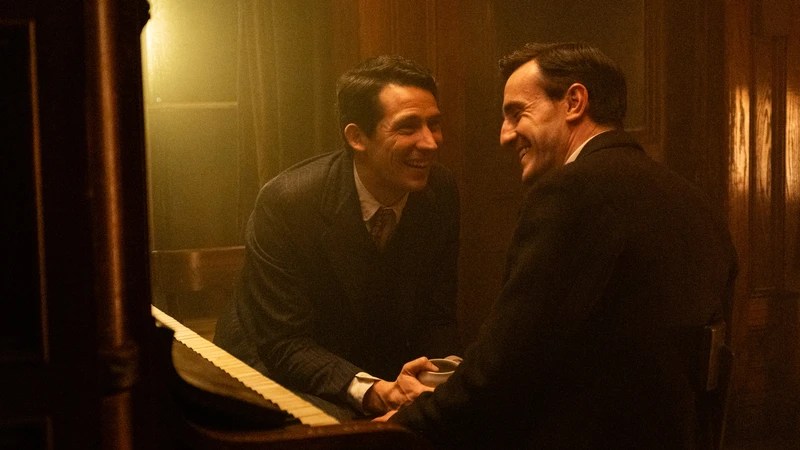
It’s the early 20th Century in rural Kentucky. Lionel (Paul Mescal) likes listening to his father sing while he plays the fiddle. Music for him is different from most folks: he has synesthesia. This means each musical note has a distinct colour, flavour and meaning. Eventually his love of music and beautiful voice wins him a full scholarship to the New England Conservatory of Music. At a Boston pub one night, he recognizes a song his father used to play, coming from a young man at the piano. David (Josh O’Connor) knows every word. As an ethnomusicologist, he wants to collect as many distinct folk songs and ballads as he can, before they are lost forever. David has perfect pitch and a photographic memory. The two trade songs they know, and somehow, end up in bed together that night. That chance encounter turns into regular trysts at David’s apartment.
Later he invites Lionel to join him in a fieldwork project. They roam across the state of Maine, recording songs everywhere from logging camps to schoolhouses, And they record it all on wax cylinders (this is before flat discs are invented) carefully
stored in a leather satchel. And each night they sleep together in a tiny tent. Is this true love? And what will happen to their relationship after the project is finished?
The History of Sound is a touching, bittersweet gay romance — before the word gay existed — set within the larger context of war and music. It’s directed by South African filmmaker Oliver Hermanus (Moffie) and its based on a short story by Ben Shattuck. I wonder if the characters are modelled on Alan Lomax, the ethnomusicologist who recorded thousands of songs and started the folk music revival in the 1950s. Paul Mescal is spot-on as the sensitive kid in a clapboard shack who grows up to be a cosmopolitan musician; as is Josh O’Connor’s portrayal of an enigmatic musical genius with hidden secrets. The images are as lovely as the music in this tender and moving film.
I really liked it.
Him
Co-Wri/Dir: Justin Tipping
It’s San Antonio, Texas, and their NFL team, the Saviours, is looking for a new quarterback to replace their MVP Isaiah White (Marlon Wayans), due to retire in a year. Cameron Cade (Tyriq Withers) is a young quarterback who lives for football — his father trained him for this since he was a little kid. When he’s offered the position if he agrees to an intense one-on-one, bootcamp with his idol Isaiah White, of course he says yes; this is the fulfillment of all his dream. Thing is, he recently had a serious injury that left him with a bad concussion and a track of staples in his head. If he aggravates his brain, it might end his football career before it starts. But as his father always told him, No Pain, No Gain. Cameron heads out to the training camp in the desert.
There he encounters absolute luxury: gourmet food and priceless art in a spacious brutalist palace. There are saunas and ice baths, and daily blood transfusions for Isaiah. Cameron too tastes this luxury — and sexual temptations — offered by Isaiah’s entourage, especially the grotesquely made-up wife Elsie White (Julia Fox), an influencer who sells her own line of sex toys. Isaiah is the GOAT — the Greatest of All Time — and his virulent fans wear goat horns on their
heads. Cameron, on the other hand, holds onto silver cross. He’s given a series of Squid-Game-like ordeals he must endure before Isaiah gives him the nod. And as the tasks grow increasingly horrific, his morals are severely challenged. Can he pass the tests? And is he ready to give up his innate morality and embrace pro-sports and all it offers?
Him is a psychological thriller about a young man confronting his hero (who is also his nemesis) even as he uncovers the dark underbelly of pro football. It’s produced by Jordan Peele, so you might expect a suspense/thriller with mind-blowing surprises. If so, you’ll be sorely disappointed. What you’ll get instead is more like a highly-stylized, extended music video than a horror film. There’s lots of dazzle and flash — and an equal amount of blood — but it’s never scary or surprising. And director Tipping uses film techniques like a kid playing with toys. Why are people shown in in infrared X-rays? Why a long fashion shot sequence in what’s supposed to be a scary scene? Why do cowboy-hatted cheerleaders continue dancing in the face of horrific deaths? There are some great visual cues — like the aluminium stitches in his skull evoking the side of a football — but it’s all show, no substance in this cheap morality play.
Him is fun to look at, but there’s nothing there.
EPIC: Elvis Presley in Concert
Dir: Baz Luhrmann
It’s the 1950s. Elvis is the King of Rock and Roll with a series of hits and the nation goes wild over his thrusting pelvis and his soulful voice. Later, he is drafted into the army where he serves two years. Afterwards he turns to Hollywood where hue churns out a series of hits alongside sex goddesses like Ann-Margaret. And late in the 1960s he signs a multi-year contract to perform before sold-out audiences at a Las Vegas Casino. He’s up there every day, dressed in eggshell blue jumpsuits, covered in silver studs, sequins and spangles, joking with the crowds, and sweating buckets. He is accompanied by a retinue of back up singers, musicians and elaborate lighting. And that is basically how Elvis spends the rest of his life, until he collapses and dies in Graceland, age 42.
EPIC: Elvis Presley in Concert is a combination documentary and musical performance. Just two years ago, we had both Baz Lurhmann’s biopic Elvis and Sofia Coppola’s Priscilla, two similar stories told from different points of view, neither of which were particularly good. And now, out of nowhere comes this third one. I’m not an Elvis fan, nor do I like the kitschy

Buzz Luhrmann at EPIC’s world premiere at TIFF50: Photo (c) Jeff Harris
and gaudy films of Baz Luhrmann. Which is why I’m shocked at how much I enjoyed this movie (I saw it on an IMAX screen at TIFF last week, almost by accident.) Ostensibly just a musical record it’s actually a succinct and tight history of the man, so much better than those bloated biopics.
It’s fantastic, a masterpiece of creative editing, colour restoration and music mixing. It’s absolutely stunning. The songs he sings are mainly hits from the 1960s cover-versions of Bridge Over Troubled Water, You’ve lost that Loving Feeling, and even gospel songs. And over the course of a single song, we see him on stage, in rehearsal, or in the recording studio, shot over many years, but without a break in the music. And despite Luhrmann’s gaudy excess, somehow his capture of Elvis in a psychedelic shirt or sparkling gold belt buckles just looks right.
EPIC is the perfect concert film.
Him and The History of Music both open this weekend in Toronto; check your local listings; EPIC: Elvis Presley In Concert played at TIFF and will be released soon.
This is Daniel Garber at the Movies, each Saturday morning, on CIUT 89.5 FM and on my website culturalmining.com.
Intrigue. Films reviewed: The Phoenician Scheme, The Ritual, Ballerina
Hi, this is Daniel Garber at the Movies for culturalmining.com and CIUT 89.5 FM.
imagineNative — Toronto’s own indigenous film and media arts festival — is on now through Sunday with docs, films, exhibitions and performances from around the world with both free and paid events. Check it out!
But this week I’m looking at three new movies: an art house comedy, a religious horror movie and an action thriller. There’s a devious mogul preparing his daughter to take over his busines, a priest attempting an exorcism, and a professional assassin fighting to avenge her dad.
The Phoenician Scheme
Co-Wri/Dir: Wes Anderson (Reviews: Fantastic Mr Fox, Isle of Dogs, The French Dispatch, Asteroid City)
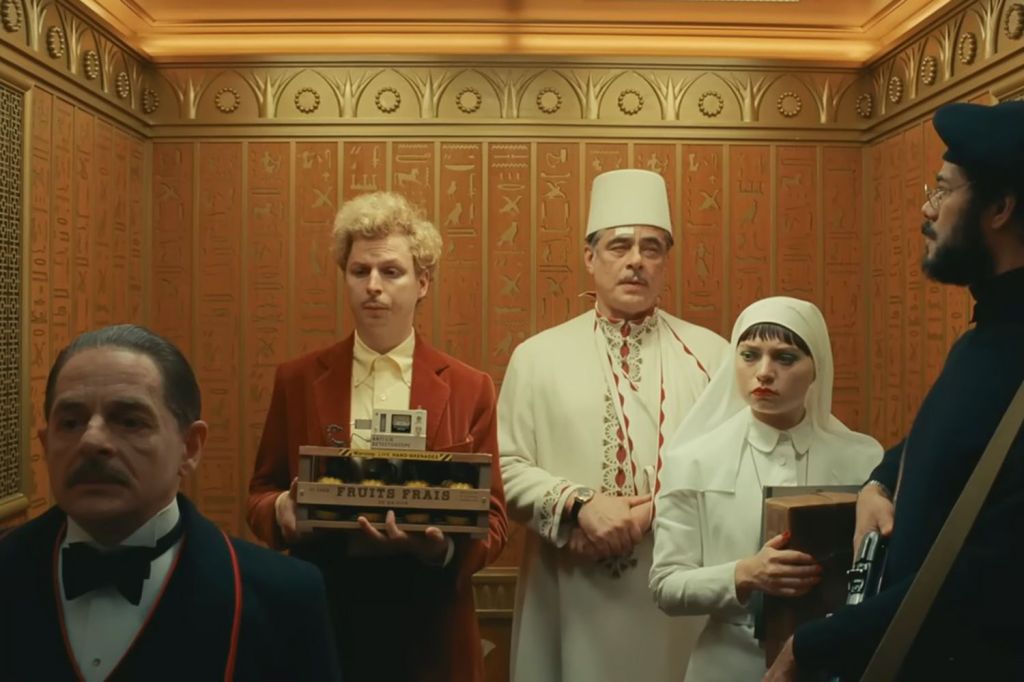
Zsa-Zsa Korda (Benicia Del Toro) is the richest industrialist in the world. He amasses millions by embarking on huge projects in developing countries using virtual slave labour. He’s ruthless and cruel. He has sired a dozen kids whose names he can’t remember and whom he keeps locked up in a threadbare orphanage. Except, one. Liesl (Mia Threapleton) is a novice, brought up in a convent and dresses like a nun but who who has yet to take her vows. Korda is grooming her to take over his huge business interests after he dies. And attempts on his life — like poisons, bombs and sabotaged airplanes — are a routine part of his life. But he always seems to survive. And so he embarks on a grand scheme to involving interconnected tunnels, waterways and cornering global markets. But first he must raise the money from investors. He takes Liesly along with him as he carries out his complex plans. And accompanying them is Bjorn (Michael Cera) a Scandinavian tutor, ostensibly hired to educate his kids, but instead tags along on these journeys. But they face hostile business partners, revolutionaries, spies and assassins, quicksand,
plane crashes and other symbols of disaster. Will his scheme be successful? Will Liesl learn to love him? And will he survive the final attempt on his life?
The Phoenician Scheme is an art-house comedy film, the latest in Wes Anderson’s collection. It’s stylized and formalistic, shot in almost two-dimensional geometric settings with precisely directed sequences. Combining social satire with silliness, it’s wacky and always surprising. It consists of a series of segments as he checks off the list of the projects he planned as he swindles repeated capitalists out of their investments. The story line is punctuated by repeated dreams fantasies of Korda — in his near-death experiences — as he faces judgement in Heaven, but always ending up back again on earth. Threapleton is fun to watch as she gradually transforms from an avowed zealot to a lover of luxury, as Korda replaces her rosary with semiprecious stones, and her simple corncob pipe with an inlayed treasure from Cartier.
Cera is hilarious as the insect-loving tutor Bjorn, and Del Toro is sufficiently both grand and seedy to convey his anti-hero’s character. Like all of Wes Anderson’s films, many members of his stable of actors reappear in short, cute roles: Tom Hanks, Willem Defoe, Bryan Cranston, Charlotte Gainsbourg, Richard Ayoade, Scarlett Johansson, Ris Ahmet, Bill Murray, and Benedict Cumberbatch, to name just a few. Some people are put off by Anderson’s emphasis on style and form — which, admittedly, doesn’t always work — but in this case, I think he’s made a fine movie that’s a pleasure to watch.
The Ritual
Co-Wri/Dir: David Midell
It’s the late 1920s in a small town in Iowa and Father Joseph Steiger (Dan Stevens) is mourning the death of his only brother. But his grief is interrupted by a young woman in his parish. Emma Schmidt (Abigail Cowen) says she is possessed by a demon. For many years she has seen doctors and psychiatrists but no one can explain her strange condition. So she has turned to the Church to cure her, and says only an exorcism can free of from her very real torment. This is unheard of, but the ritual has been approved by the local Bishop, with an expert in demonic possession heading their way. Father Theophilus Riesinger (Al Pacino) is a shaggy-haired little monk who wears a cowl and talks like Tevye from Fiddler on the Roof. But he knows the practice of exorcisms inside and out. Along with a bevy of assorted nuns to help out, the ceremony begins. Emma is tied to the bed as her body writhes. She pukes pea soup and breaks out in weird rashes. The furniture flies around the room as she curses in five languages. But can they exorcise this demon before it consumes her?
The Ritual is a horror movie that (supposedly) reenacts an actual historical event: the performance of an exorcism in the US. The script is based on documents from that era. Thing is it is also the inspiration for William Friedkin’s iconic film The
Exorcist, and the novel, by William Peter Blatty, it was based on. This version has atrocious writing, painful acting, and cheap-ass special effects. Fear and grief is conveyed by actors covering their faces with their hands, over and over. The whole movie is shot with in extreme close-ups using a hand-held camera that jiggle enough to make any viewer feel nauseous. Although the chapters of each ritual is documented, there’s minimal difference from one to the next. It isn’t even vaguely scary, more boring than anything else. It feels more like a Sunday school sermon than a horror movie. Al Pacino? Dan Stevens? These are famous actors! What are they doing in this dreadful movie? They must really be desperate.
The obvious question is, what possessed the filmmakers to attempt to retell a story that’s already been told so well?
What a clunker.
Ballerina
Dir: Len Wiseman
Eve (Ana de Armas) is a little girl raised by her father in a hidden palace somewhere in Eastern Europe. She is kept hidden from the rest of the world for her own safety. Until a man named The Chancellor (Garbiel Byrne) tracks her down, kills her father and takes her away. All she has left to remember her dad by is a music box snow globe with a dancing ballerina inside. She is immediately enrolled in a school run by The Director (Anjelica Huston), a cruel teacher in the tradition of the Ruska Roma who trains her girls to endure the pain of classical ballet dancing. They also learn how to kill their adversaries using fists, kicks, knives or any other dangerous object. Upon graduation, only those with true bloodlust are farmed out across the globe as killers to hire. And Eve is at the top of her class. She is highly successful as an assassin, but has another hidden motive: vengeance for the death of her father and sister.
Her relentless search leads her to a picturesque alpine village
filled with jolly bakers and wood carvers. The women have blond braids and rosy cheeks while the men happily quaff steins of pilsener. Unfortunately, everyone in the village, I mean everyone, is a trained killer. And they happen to belong to a criminal outfit in an uneasy truce with the clan works for. Can she find her father’s killer and escape the village alive?
Ballerina is an action/thriller about a young, female assassin out for revenge. Its a spin-off of the John Wick franchise with many of the same recurring characters, including cameos by Keanu Reeves as John Wick himself. The plot is simple, and the script has relatively few lines. What it does have is fighting and lots of it, which it does really well, whether hand to hand or using enormous lethal weapons. The fight choreography is skillful and creative — it’s ballet. And I liked Ana de Armas as the protagonist… enough that if there were another Ballerina movie, I’d watch that one too. This is good action feature.
Ballerina and The Ritual both open this weekend in Toronto and The Phoenecian Scheme expands across Canada; ; check your local listings;
This is Daniel Garber at the Movies, each Saturday morning, on CIUT 89.5 FM and on my website culturalmining.com.
Class. Films reviewed: The Old Oak, Monkey Man, Wicked Little Letters
Hi, this is Daniel Garber at the Movies for culturalmining.com and CIUT 89.5 FM.
Ordinary people fighting back is an old story, but not a tired one. This week I’m looking at three new movies — one from northern England, one from southern England, and one from India — about people confronting injustice. There are women fighting the courts, a poor man fighting the oligarchs, and a lonely man trying to stop his town’s gradual collapse.
The Old Oak
Dir: Ken Loach (my interview: 2020)
It’s 2016 in a seaside village in northern England. TJ Ballantyne (Dave Turner) is the publican of The Old Oak, one of the few gathering places left standing. But like the town — once a thriving coal pit, but now impoverished and depressed — the pub is not what it used to be. It has few customers aside from a few regulars. The sign is sagging, and half of the building is no longer used. TJ lives above the pub; he’s lonely and pessimistic. His son won’t speak to him, and he has only a little dog to keep him company. But when a group of Syrian refugees arrives in town, TJ decides to help. Alongside Laura (Claire Rodgerson) he distributes furniture and food — donated through local churches and unions — to the newcomers. They are grateful, but some people resent it. Why are they helping refugees when local kids are going without food and heating? Syrian kids are bullied in schools, and a young photographer Yara (Ebla Mari)’s camera is broken.
What can they do to bring the community together? Together with Yara,
Laura, and dozens of volunteers, they reopen a long boarded up section of the Old Oak to provide a place where people can come to eat and spend time together. The photographs on the walls recall the coal miners strike of Thatcher’s England: If you eat together, you stick together, says one sign. But can they overcome old prejudices to form new friendships? Or will it all fall apart?
The Old Oak is a wonderfully poignant and deeply-moving drama that deals with big issues but on a personal scale. It looks at racism, poverty, unions and scabs, and how geopolitics affect us all. Like all of Ken Loach’s movies, it looks at imperfect people from multiple viewpoints. Some you like and end up hating, others seem like villains but you find out later they’re good people. Lots of grey, no black and white (aside from the photographs Yara takes.)
Once again, the script is by Loach’s longtime collaborator Paul Laverty, and the ensemble cast includes both professionals and first-time actors, many hired at the location.
It shows the real Britain, warts and all, not the shiny tourist-attraction you see in Hollywood movies. It’s a tear jerker, with more than one heartbreaking scenes. But it still leaves room for hope. The Old Oak may be Ken Loach’s final film, so you should get out and see it. I really like this film.
Monkey Man
Co-Wri/Dir: Dev Patel
Kid (Dev Patel) is a man with a vengeance — to punish those whose crimes he witnessed as a small child. Raised by his mother in a forest in rural India, he now lives in an unnamed megalopolis in the mythical state of Yatana (= torment, anguish). It is ruled by a god-king followed by throngs of devoted cult-like followers. They kick farmers off their land for corporate profit and persecute minorities with impunity. Kid earns his money as a boxer, beaten up regularly by bigger, stronger men. In the ring, he conceals his face behind a monkey mask, in honour of the god Hanuman whose story his mother had told him as a child. Following a complex scheme, he somehow manages to get work inside an exclusive nightclub ruled by a woman named Queenie (Ashwini Kalsekar). She warns him to never disobey her or step out of his class. He gradually works his way up the latter until he makes it into the kitchen. His goal? To shoot a corrupt police chief named Rana Singh (Sikandar Kher). But his plans all fail, and he ends up a nearly-dead fugitive, his body floating in a canal. He is rescued and brought back to health by a temple dedicated to Shiva, and run by androgynous priests.
They admire that he, an outcaste, dares to fight authority. But he needs the strength and skill if he wants to succeed. So, to the sounds of a tabla drum, he trains in the temple, gradually building up his stamina and muscles until he its
ready to face his enemies to the death once again. But does he even have a chance against the powers that be?
Monkey Man is a class-struggle action-thriller about one man’s quest for personal vengeance and his plan to overthrow by force corrupt and autocratic leaders. It’s told using intricate plotting, involving dozens of people cooperating for a single goal. And it interweaves visions and sounds, like a child’s picture book, an elaborate mural, and the thumping of a tabla music. There’s a lot of content to digest. The problem is, a large part of the movie consists of chases and violent fights, and they’re not very good. Blurred shots using a jiggly, hand-held camera may be artistic, but they’re unpleasant and hard to look at. Seasickness is not a valid substitute for good fight choreography.
I admire Dev Patel’s first attempt as a director and his transformation into an action hero, but Monkey Man doesn’t cut it.
Wicked Little Letters
Dir: Thea Sharrock
It’s the 1920s in Littlehampton, Sussex, a small town in southern England. Edith Swan (Olivia Colman) is a middle aged educated woman who still lives with her strict parents in a tiny row house. She reads the bible and quotes its teachings; basically, she’s an uptight prig. She shares a wall with Rose (Jessie Buckley) a migrant from the Emerald Isle. She is fond of drinking and carousing, can swear a blue streak, and is often seen wandering in just a slip outside her home. Rose likes her live-in boyfriend Bill (her husband died in WWI) but most of all, adores her daughter Nancy (Elisha Weir). But her neighbour, Edith’s father Edward Swan (Timothy Spall) despises Rose and her libertine ways, and blames her for everything going wrong in Littlehampton. They live in a tenuous detente, until everything changes when Edith receives a piece of hate mail. The unsigned letter is filled with cruel insults and vulgar words.
And when the letters pile up, the police come to investigate. They arrest Rose for the nasty letters and throw her in jail, despite her protests of innocence. The press picks up the story and it becomes a national scandal. But not everyone believes Rose is guilty. A small group of women, led by Police Officer Gladys Moss (Anjana Vasan), think Rose is innocent and set out to prove it. But can they find the true culprit before the trial? And what will happen to Nancy if her
mother ends up behind bars?
Wicked Little Letters is a delightful dark comedy, based on a true story; apparently this was a hot topic 100 years ago. Little is the key word: little letters, Littlehampton, and the kind of petty quarrels that can blow up into serious events. This is a movie that knows it’s own boundaries and sticks to them perfectly, without veering off into remote tangents, flashbacks or lengthy soliloquies. It’s tight, set in tiny homes around town, and in the courthouse and jail. The acting is wonderful — everyone’s a character. Olivia Colman and Jesse Buckley previously co-starred in The Lost Daughter, but I like this one much better. And though it’s a period drama set in 1920s England, it uses colourblind casting, with many roles played by black and brown actors, without racial or ethnic issues ever entering the story (except, of course, Rose being Irish in England).
If you’re looking for a fun night out, I think you’ll like this one.
Wicked Little Letters, Monkey Man and The Old Oak all open this weekend in Toronto: check your local listings.
This is Daniel Garber at the Movies, each Saturday morning, on CIUT 89.5 FM and on my website culturalmining.com.
With love, from Poland. Films reviewed: March’68, Norwegian Dream, Bones of Crows

Hi, this is Daniel Garber at the Movies for culturalmining.com and CIUT 89.5 FM.
Spring film festival season continues in Toronto in June. The Inside Out festival which ushered in Pride Month, closes tonight with a jukebox musical called Glitter & Doom, a love story based on songs from the Indigo Girls. And TJFF, the Toronto Jewish Film Fest, is just starting up, with an excellent selection of comedies, dramas and documentaries from four continents, viewable online or in person with a number of special guests. And keep your eyes open for the other TJFF, Toronto Japanese Film Festival, beginning next week.
This week, I’m looking at three excellent new movies: two Polish romances, one each from Inside-out and TJFF, plus an epic indigenous drama made in Canada.
March’68
Co-Wri/Dir: Krzysztof Lang
It’s 1967 in Warsaw. Hania (Vanessa Aleksander) is a talented young actress studying theatre. She’s in a rush to view a controversial new play from backstage. It references Adam Mickiewicz, the 19th century Polish poet and playwright. But on the way she is bowled over by a young stranger. Janek (Ignacy Liss) is a student at the same university. She brushes him off but he doggedly follows her as far as the theatre. And — perhaps because of his relentless pursuit — Hania gradually begins to like him. Like turns to love, and soon they’re a couple.
But these are not ordinary times. Władysław Gomułka’s one-party state is cracking down on intellectuals and student dissidents. At the same time, it’s running a harsh purge of all Poles of Jewish descent within the Party’s apparatus. This repression soon spreads to University campuses and throughout the country at large. How does this affect the young couple? Hania’s dad is a neurosurgeon who has just lost his prestigious job in the anti-Jewish campaign. While Janek’s father is a Colonel in the Interior Ministry — basically a spy who holds everyone’s secret files, and is a major figure behind both the crackdown on student protesters and the anti-Jewish purge. Can this Romeo and Juliet couple stay together despite the purge? Or will politics cross generations?
March’68 is an excellent romantic drama set in Warsaw
during that dark, tumultuous and repressive time. (The title refers to the month when the government imposed their harshest laws.) It deftly combines real historical events and figures — from Gomulka to Adam Michnik, a future intellectual and journalist — with the fictional heroes. Through the use of period footage and reenactments, it brings you right into the middle of riots, mass arrests and interrogations alongside Hania and Janek.
This is an excellent movie.
Norwegian Dream
Dir: Leiv Igor Devold
Robert (Hubert Milkowski) is a 19-year-old boy from Bialystok, Poland. He’s starting a new job in Norway at a remote salmon processing plant. He shares an apartment in a crowded, overpriced dormitory with Marek and the rest of the Polish workers at the plant. The foreman assigns Ivar (Karl Bekele Steinland) a young Norwegian man, to train him. He’s patient and thoughtful, and befriends Robert. He’s also Black. Knowing Robert is in need of income, he offers him a weekend job in Trondheim handling the lights for Ivar’s performance. But when Robert finds out what kind of performance it was, he quits in a panic and runs away. Ivar’s a flamboyant drag queen, and Robert is terrified at being seen with him. Is he repulsed by Ivar, or is there a mutual attraction? And could Robert handle a gay relationship within a racist and homophobic environment?
Norwegian Dream is a touching romantic drama set within
the lives of migrant Polish workers in Norway. It’s made in a realistic style, with conversations happening while hundreds of dead salmon roll past on a conveyor belt. It also deals with the bigger issues of class, race, and sexuality. And while told in a simple and straightforward way, it also poses many paradoxes. Ivar may be black, but he’s also the adopted son of the owner of the fish plant and lives in a houseboat, while working-class Robert is just trying to keep his head above water. And though the casual behaviour of the Polish workers’ may be racist and anti-gay, they are also trying to form a union to get a decent wage from their exploitative employers. And while the dialogue — mainly in Polish and English — feels a bit stilted, it actually adds a further element of authenticity to the film.
I like this movie.
Bones of Crows
Wri/Dir: Marie Clements
It’s the early 20th century in Canada. Aline Spears (Grace Dove) is a girl from a Cree nation in Manitoba. She, her brother and sister are taken away from their parents and forcibly put into a residential school. It’s run by priests who feast on fine food and wine while the kids are left hungry. But Aline is given special privileges when Father Jacobs (Remy Girard) discovers she’s a prodigy on the piano. He nurtures her talent and assigns her a special tutor. But despite her new status, she is far from safe, and after suffering unspeakable acts, she and her siblings try to escape the school.
Much later, she joins the military in WWII and is assigned to London where she becomes part of a crucial team sending telegrams in Cree, this creating a code impossible for the Germans to crack. There she falls in love with and marries Adam (Phillip Lewitski) an indigenous member of the Canadian military. But despite their their bravery, they face a hard life back in Canada, their deeds forgotten. Much of her
efforts are now spent caring for their family and trying to protect her little sister Perseverance (Alyssa Wapanatâhk) who has fallen by the wayside. Can Aline’s past violations and injustices ever be rectified?
Blood of Crows is an epic drama with a gripping story about one woman’s amazing life. Although its about Aline, it’s also a metaphor for the treatment of an entire people. It’s a 100+ year long story. Stretching back to confederation, it includes the wiping out of the buffalo, residential schools, the lack of status and Canadian citizenship, denial of services, and the widespread incarceration, death and disappearance suffered by indigenous women. But, don’t worry, this is not meant as a depressing story suffering, it’s actually inspiring, about her descendants who fight for rights and redress. This movie, with its large indigenous cast and crew from the director on down, is both convincing and compelling. I saw this one last fall at TIFF, and it was one of my favourite movies there; I’m so glad it’s finally hitting theatres.
Don’t miss it.
Bones of Crows opens this weekend in Toronto; check your local listings. Norwegian Dream played the Inside Out Film Festival, and March’68 is coming to the Toronto Jewish Film Festival.
This is Daniel Garber at the Movies, each Saturday morning, on CIUT 89.5 FM and on my website, culturalmining.com.
New Year Movies. Films reviewed: Babylon, Broker
Hi, this is Daniel Garber at the Movies for culturalmining.com and CIUT 89.5 FM.
This week I’m looking at two new movies to bring in the new year. There’s an abandoned baby in Busan, and excessive abandon of 1920s Hollywood.
Wri/Dir: Damien Chazelle (La La Land, Whiplash)
It’s a hot day in Santa Ana, near LA, in the 1920s. Manny (Diego Calva) has a strange job. He has to get an elephant through the desert to a mansion in time for a huge Hollywood party that night. There he meets Nellie LeRoy (Margot Robbie) an aspiring young actress who claims to be a movie star. She’s never actually been in anything yet but she says in Hollywood if you say you’re a star you are a star. The doorman is unimpressed but Manny, now in a sweaty tux, gets her through the door. Inside it’s a jazz-filled mayhem of half-naked dancers snorting cocaine as they prepare for their next writhing orgy. The guest of honour is Jack Conrad (Brad Pitt), Hollywood’s top moustachioed movie star.
Manny stays relatively sober but Nellie goes whole hog, successfully transforming herself into a wild-child party animal. Manny saves the day when he manages to sneak a dead body out of the party on behalf of the studio, without the gossip rags — including Photoplay’s notorious columnist (Jean Smart) — noticing. A woman died in a back room with a Fatty Arbuckle lookalike. By morning, both Manny and Nellie are invited to work on location on some movies being shot there; she as a starlet and he as a fixer, helping out in emergencies.
The movie follows the three of them — Manny, Nellie and Jack — as they make their way up and down
Hollywood’s precarious ladder. Nellie is a smash hit — she can cry on cue in a tragedy, and minutes later turn herself into a laughing floozie in a western bar. Manny works behind the scenes, doing the dirty things the top producers shy away from. Jack is still the top star, but is gradually slipping at the box office, acting in one flop after another. has a meteoric rise but faces trouble when the talkies arrive. Manny makes his way to executive level, but likes himself less and less. Will Jack find a wife who loves him? Can Nellie lose her Jersey accent in time for the talkies? Which one of them will survive the dog-eat-dog world of the movie industry?
Babylon is a very long but frenetically-paced movie about the early days of the motion picture industry. It recreates a version of that world with exquisite attention to detail — the music, the costumes, and incredible reenactments of the filming of war scenes and dance numbers using hundreds of extras. It gives you an uncommon, behind-the-scenes look at the silent movie era. Scenes in Babylon melt one into the next with cameras that lead you through tunnels, up staircases, from room to room in seemingly endless long shots. The story is part myth, part history. I’m guessing Chazelle found his inspiration in books like Kenneth Anger’s Hollywood Babylon, about the excessive and scandalous depravity that rocked the industry before the restrictive Hays code came into effect in the mid 1930s. He frequently quotes other famous
movies set in LA about the movies themselves, everything from Sunset Boulevard to A Star is Born, to Singin’ in the Rain. (See how many you can spot.) And the over-the-top acting, especially Margot Robbie, is a lot of fun.
Is Babylon a good film? I had trouble identifying with the main characters — they all seem like pawns in the director’s hands as he tells his epic story. It features some non-white, non-conventional characters, from a female movie director, to a lesbian singer from Shanghai, and a black Jazz musician showing off his trumpet skills. Ironically they all seem to be inserted more to demonstrate the director’s commitment to historical diversity rather than as central characters. But it’s not really about the characters, it’s about the city of Los Angeles. Chazelle puts in lots of things meant to shock — nudity, defecation, urination, projectile vomiting, even characters who die as punchlines to jokes — that don’t quite fit. But all that didn’t stop me from loving the movie-making on display.
If you’re a movie-lover, this epic deserves to be seen.
Wri/Dir: Kore-eda Hirokazu (Shoplidters, After the Storm, Our Little Sister, Like Father Like Son)
It’s nighttime at a church in present-day Busan, South Korea. A young woman, a sex worker named So-young (Lee Ji-eun) is carrying her newborn infant which she leaves in a “baby box”, a small door where unwed mothers can leave their unwanted infants, knowing that they’ll be taken care of. What she doesn’t realize is there are two men on the other side of the door: Sang-hyun (Song Kang-ho), a younger guy who works at the church; and Dong-soo (Gang Dong-won) a middle aged man who owns a tiny hand laundry shop. Right after So-young leaves, they erase the surveillance video and make off with the infant. Their plan? To sell it to a young married couple with fertility problems and keep the profit. But these two men don’t realize that Detective Ji-Sun (Bae Doona) and her subordinate (Lee Joo-young) are watching the whole thing from their police car parked just down the hill. They’re excited that what they see tonight might solve the baby trafficking case they’ve been working on for a long time. But they can’t prove anything until a transaction takes place.
But nothing is as simple as it seems. After a few days, So-young wants her baby back. She left a note saying the arrangement was only temporary. But she can’t involve the police. So she tracks down the two brokers. Turns out Sang-hyun grew
up in an orphanage, so finding loving parents will spare the baby from growing up within the bleak institution he lived through. And Dong-soo has both monetary reasons — he’s deeply in debt — and personal reasons why this has to go through. So the three of them form an easy alliance of brokers looking for a permanent home for the infant. And when they discover Hae-jin (Lim Seung-Soo) a feisty kid from an orphanage they’re dealing with stowed away in their car, they suddenly become a makeshift family. But how long will it last?
Broker is a wonderful, multifaceted movie about love, kinship and makeshift families. It’s also a murder mystery, a romance, a police procedural, and a road movie. Each of the characters has a rich background full of secrets and motives all of which a are gradually revealed. It’s directed by Kore-eda Hirokazu, one of favourite directors who always finds a way to make dramas with unforgettable characters who are deeply flawed but still sympathetic. He made Shoplifters a few years ago, and this one picks up on some of his themes. Kore-eda is Japanese, but everything else in this film is Korean — from the language to the locations and the
fantastic cast. You’ll recognize some of them: Song Kang-ho starred in Parasite, Bae Doona has been in everything from The Host to Cloud Atlas. So Broker is both a Korean movie, and unmistakably Kore-eda. I saw it four months ago at TIFF, but it really is stuck in my head.
I strongly recommend this movie.
Babylon is now playing; check your local listings. Broker opens this weekend in Toronto at the TIFF Bell Lighbox.
This is Daniel Garber at the Movies, each Saturday morning, on CIUT 89.5 FM and on my website, culturalmining.com.
Friends divorce, killer nurse, even worse. Films reviewed: Decision to Leave, The Good Nurse, The Banshees of Inisherin
Hi, this is Daniel Garber at the Movies for culturalmining.com and CIUT 89.5 FM.
It’s Halloween weekend, with lots of good scary movies playing now, but if you’re staying home, you check out the streamer Shudder, with some of the coolest indie horror and fantasy movies out there. Or if you’re on Netflix, check out Guillermo del Toro’s Cabinet of Curiosities, his new anthology series of well-made, one-hour dramas.
But this week I’m looking at three new movies, all of which I saw this year at TIFF. There’s an Irish friendship threatened with divorce, a killer who may be a nurse, and a detective obsessed with a suspect who may be a killer… or worse.
Co-Wri/Dir: Park Chan-wook
Hae jun (Park Hae-il) is a homicide detective in Busan, Korea. He is devoted to his job, but less so to his wife, whom he only sees on weekends. She lives in Ipo, a small town with very few murders. In comparison, Busan is a veritable hotbed of organized crime, drugs and violence. But one unusual case catches his attention: a middle aged mountain-climbing enthusiast who fell to his death from an especially steep cliff. it seems to be a cut and dry accident, except for his widow’s reaction, she barely had one. He decides to follow her, stake her out and surveil and record her every movement. The widow Seo-rae (Tang Wei) is a femme fatale, young, beautiful, and exotic in his eyes (she’s originally from China.) And unknown to him, she gets off on being followed and watched. His obsession shifts from interrogation to first-hand contact and eventually to a passionate, clandestine affair. He later moves to the quiet town of Ipo to be with his wife. But when he discovers Seo-rae lives
there too, and is remarried to very rich man, his suspicions are raised. Is she a killer or just an innocent woman? And will seeing her again lead to trouble?
Decision to Leave is a fast-moving and stylish police thriller, told with an absurdist touch. It never takes itself too seriously, but it’s a lot of fun to watch. Tang Wei (who was great in Ang Lee’s Lust, Caution) has a classic noir feel to her. And Park Hae-il plays the beguiled but committed police detective very well. The movie is beautifully crafted but constantly plays tricks on the viewers. It has some of the strangest shifts in point of view I’ve ever seen, including even one shot seen through the cloudy eyes of a dead fish. Which makes the movie a bit challenging to follow, but worth it.
Dir: Tobias Lindholm
Amy (Jessica Chastain) is a single mom with two cute but rambunctious young girls. She has a woman who takes care of the kids when she works late, but her patience is running out. Amy works full time as a registered nurse at a corporate hospital in New Jersey. She also has a heart condition, which requires major surgery. But if the hospital finds out about her pre-existing condition before she finishes her probationary period, she’ll be let go. enter Charlie (Eddie Redmayne) a kindly inoffensive nurse who just transferred from another hospital. He helps her out, covering for her when she faints at work, and volunteering to help with her kids. He’s divorced with kids himself so he’s good with children.
But things start to go wrong at the hospital. Patients are dying for no good reason. And when the police come to investigate,
they are stonewalled by the hospital management, who refuse to cooperate. But two of the patients died on Amy’s shift, so she needs to find out what happened. Like why did an otherwise healthy senior die of a suddenly skyrocketing insulin level? And what about a little kid? All of the patients are in hospital for a reason, but that’s not how they died. The more she investigates, the more it looks like good ol’ Charlie is somehow connected. Can she figure out why the patients are dying and who is responsible? Or will this put her and her family in danger?
The Good Nurse is a mystery thriller, based on a true story. It’s two hours long, and it doesn’t get good till near the end of the first hour. I saw this movie at TIFF on a huge screen at Roy Thompson Hall, and I found it visually oppressive. Everything is drab and dull, grey and light blue, dim and soft focussed, with an intensely boring colour palate. All you see are institutions —
hospitals and police— at their most plain and mundane. Movies are meant to be a pleasure watch, why make it so a chore to look at. (Admittedly, I saw it again on Netflix on a small screen, and it didn’t bother me visually nearly as much.) In any case, the story is good, thrilling and tense, once it picks up. Jessica Chastain is sympathetic as Amy, and Eddie Redmayne is excellent as a milquetoast guy with a dark side. If you just want to spend two hours on a true crime hospital mystery with no expectations, The Good Nurse will probably satisfy you.
Dir: Martin McDonagh
It’s 1923, on a tiny, fictional island, separated by water from the Irish civil war raging in the distance. Pádraic (Collin Farrell) is a simple man living a simple life. He plays with his miniature donkey, sells his cows’ milk to the local shop, and sleeps soundly in his cottage close to his sister Siobhan’s bed (Kerry Condon). But most important of all, is his best friend Colm (Brendan Gleeson). They meet each afternoon to walk to the pub and chat over beer. Which is why he is shocked and confused when Colm decides one day, not to go drinking with Pádraic. Just today? No, now and forever. Colm doesn’t want to drink with him, Colm talk with him, He doesn’t even look at him. He has wasted enough time on pointless chatter, and now wants to his life worthwhile, to do something noteworthy. Colm plays the fiddle, perhaps he can
compose a great work. But Pádraic refuses to allow his best friend to just walk away. He won’t leave him. Until Colm makes a vow: If you ever speak with me again, I will cut off one of my own fingers. And if you persist, I will cut off another and another until you leave me alone. What’s wrong with Colm? Should Pádraic take him seriously? Is this all his own fault?
The Banshees of Inisherin is a really good dark comedy, that builds from a simple disagreement to one of increasingly dramatic reactions on each side. I’m only touching on one plot — there are also subplots involving Dom (Barry Keoghan) a simpleton who has a crush on Padraic’s sister; Mrs McCormick
(Shiela Flitton) a creepy, banshee-like neighbour, as well as an abusive policeman who is also Dominic’s dad.
I’m guessing here, but maybe — even though it’s never explicitly mentioned in the movie — the story is a metaphor for the Irish Civil War, with Pádraic as the pro-treaty side who wants things to stay the same, and Colm as the IRA who wants a dramatic change even if it involves violence and loss. Or maybe it’s just director Martin McDonagh having his usual brilliant, chaotic fun with great characters, some violence and a cool political subtext. He’s known for movies like Seven Psychopaths and Three Billboards Outside Ebbing Missouri… maybe this one should be called The Five Fingers of Inisherin?
Decision to Leave is starting at the Tiff Bell Lightbox; The Banshees of Inisherin opens this weekend, check your local listings; and The Good Nurse is now screening on Netflix.
This is Daniel Garber at the Movies, each Saturday morning, on CIUT 89.5 FM and on my website, culturalmining.com.
Witches and Poets. Films reviewed: Benediction, Lux Æterna
Hi, this is Daniel Garber at the Movies for culturalmining.com and CIUT 89.5 FM.
Spring film festival season is in full swing this week in Toronto, with ReelAbilities, Inside-out and the Toronto Arab Film festival all on right now. TAF is a pan-Arab film festival; featuring movies from 19 countries, including dramas, docs, animation and experimental, and it’s on through Sunday. ReelAbilities has films by for and about people from disabled and deaf communities and it’s running through June 10th in a hybrid format. And Inside out, Toronto’s LGBT festival is on now through Sunday June 5th, featuring many world premieres, and presenting at the TIFF Bell Lightbox.
Some of the movies at Inside-out I’m looking forward to seeing include a stunning-looking musical from Rwanda called Neptune Frost, Camilla Comes Out Tonight, an Argentinian coming-of-age drama, So Damn Easy Going a Scandinavian story of the messy relationships of a young woman with ADHD, and The Divide, about the breakup of a couple in France during the “yellow vest” protests
But this week, I’m looking at two new movies both opening this weekend in Toronto that handle narratives in an experimental way. There’s a film from France about a burning witch, and a biopic from the UK about a war poet.
Wri/Dir: Terrence Davies
Siegfried Sassoon (Jack Lowden) is a Lieutenant in the British Army at the western front in WWI, known for his bravery and valour. He’s also famous as a war poet. An aristocrat, he’s a descendent of the Sassoon clan, late of Baghdad, Bombay and Shanghai. But by 1917, he is sickened by the war and the death of his men, so he writes and publishes a formal letter protesting it. Instead of being courtmartialed, he is diagnosed as shell-shocked and sent to a psych ward near Edinborough. There he befriends a young soldier named Wilfred afflicted with night terrors, and together they write poetry for the hospital’s literary magazine, the Hydra.
After the war he joins other writers, musicians and artists around London. One evening, while reciting his dark poetry at a soiree, he meets Ivor Novello (Jeremy Irvine), a hugely famous celebrity
whose sentimental songs — like Keep the Homefires Burning — kept up morale during the war. By that evening they are sleeping together with Ivor unceremoniously dumping his previous boyfriend Glen. But while Siegfried is a passionate romantic, Ivor is cold and cruel; he cares more about his looks and career than love or commitment. So after a messy break up, Siegfried has a series of relationships with various bright young aristocrats like Stephen Tennant in the 1920s-30s. But will he ever find true love?
Benediction is an impressionistic biopic about the life of Siegfried Sassoon and his friends and lovers between the two wars. This means he’s as likely to see Edith Sitwell reciting her doggerel as running into Lawrence of Arabia at a wedding rehearsal. But you never forget that this is a Terrence Davies movie, his unique style always apparent. Like singing — whether it’s soldiers breaking into song, actors on a west-end
stage or just sitting by a piano at a party. And Sassoon’s own voice recites his poetry over photos of war dead. Flashbacks might fade from one to the next then back again reflecting the thoughts of a character, often with black and white newsreels projected in the background. There’s a lush, dark look to the whole film, in its music, images and sets. The acting — especially Lowden and Irvine but also Calam Lynch as Stephen Tennant and Gemma Jones as his ultimate wife Hester — is terrific all around. (The movie flashes forward to a reclusive and bitter Sassoon (Peter Capaldi) with a wife and adult son in post WWII England.) Benediction is romantic in the classical sense, more like a Wagnerian opera than a rom-com. The script is exquisitely written, with almost every line a bon mot, a witty observation or a cutting insult. Benediction is experimental and idiosyncratic in style but with a deeply moving story.
I really like this film.
Wri/Dir: Gaspar Noé
Béatrice Dalle and Charlotte Gainsbourg (played by themselves) are two French famous actresses making a film together. Beatrice is trying her hand as director and Charlotte is the star. The film they’re shooting, on set, is a feminist reboot of accused witches being burned at the stake by religious zealots in the manner of the Inquisition. They chat about the meaning of burning witches as a misogynistic crime. But all is not well.
The producers of the film, are plotting to get Beatrice fired, so a young man named Tom is ordered to follow her everywhere and record it on film, with the hope of catching an error. Meanwhile, an American actor, Karl (Karl Glusmann) is trying to have a meeting with Charlotte, various models are desperately looking for the proper costumes and hair, and all of the personal assistants are incompetent. Worst of all, though, something is wrong with the lighting system, which begins generating as series of multi-coloured strobe lights, the kind that can induce a tonic-clonic seizure. Can the scene be shot? Or will panic destroy everything before it’s caught on film?
Lux Æterna is simultaneously an experimental piece of art, and a satirical look at the film industry, the Me Too Movement and the backlash that followed it. Gaspar Noe is the enfant terrible of French filmmakers, all of whose films somehow provoke and torture its viewers. In the past it was through extreme violence, horror, drugs or explicit sex. This time, it’s (theoretically) supposed to induce tonic-clonic seizures among epileptic
viewers of the film. Why? Because the aura leading up to as seizure is said to be the ultimate psychedelic experience. (Not sure who said it because I can assure you there’s nothing pleasant about having a seizure!) Anyway, about a quarter of the film consists of the gorgeous multicoloured strobe effect projected over the crucified bodies of the witches. Another portion is in the titles themselves (Gaspar Noe is the master of creative titling — no font is accidental in any of his films) with old Roman capitals used to advance the plot. All the characters use their real names, and the shooting takes place on a movie set, just in case you need more meta.
If you like Gaspar Noe — I love his stuff but it’s certainly not for everybody — well, Lux Aeterna is his latest artistic experiment. A large part of it resembles Dreyer’s 1928 silent film The Passion of Joan of Arc, beautifully done, as if photographed on Calvary. And the strobe light effect is hypnotic though irritating. There’s very little plot or acting involved, with lots of gratuitous nudity, but, hey, it’s only about an hour long. I like everything he does, but this is not a major work, more like him fooling around. If you like art, you might enjoy this experiment, just don’t expect a normal movie.
Benedction is playing at the TIFF Bell Lightbox; and you can see Luxe Aeterna at the Revue Cinema in Toronto; check your local listings.
This is Daniel Garber at the Movies, each Saturday morning, on CIUT 89.5 FM and on my website, culturalmining.com
Advances in Technology. Films reviewed: The Automat, Dope is Death, After Yang
Hi, this is Daniel Garber at the Movies for culturalmining.com and CIUT 89.5 FM.
Technology, whether we find it good or bad, always affects our lives. This week, I’m looking at three movies — two documentaries and a science fiction drama — that look at advances in technology. There’s a new type of restaurant a hundred years ago that sells hot food out of metal and glass dispensers; a clinic 50 years ago that uses acupuncture to detox heroin addicts; and a future world where androids serve as siblings.
Dir: Lisa Hurwitz
It’s the 1920s in New York and the city is booming. 300,000 women work as stenographers and they — along with everyone else — all need to eat lunch. And one modern restaurant chain, Horn & Hardart’s Automat, is serving them all. Art Deco palaces welcome anyone with a nickel to buy a slice of pie or a cup of steaming French-press coffee expelled through shiny brass dolphin heads. Customers share marble topped tables with whoever sits down beside them. And behind stacks and rows of pristine glass and metal drawers, a nickel or two dropped in a slot opens the door to a single servings of macaroni and cheese, creamed spinach, baked beans, or Salisbury steak all made at a central commissary and shipped out that very same day. At its peak they served 800,000 diners each day in NY and Philadelphia (where the chain was founded). But what goes up must come down. I wandered into an automat just once as a teenager and never went back. It was disgusting, the food looked unpalatable and aside from the novelty of buying a stale, egg salad
sandwiches behind a little glass door, I couldn’t see why anyone would go there. But its fans from earlier generations remember it well, swearing by their specialties like strawberry rhubarb pies.
The Automat is a fun and breezy look at this fabled restaurant chain, and its rise and fall. It interviews former owners, staff and customers, including celebrities like Mel Brooks and Carl Reiner. And although the doc was shot pretty recently, many of the featured interviewees — like Ruth Bader Ginzburg and Colin Powell — have sadly passed away. This is an interesting doc about an almost forgotten phenomenon.
Wri/Dir: Mia Donovan (Inside Lara Roxx)
It’s the early 1970s in the South Bronx, NY and heroin use is rampant. Nixon has declared a war on drugs, devoting money to incarceration and maintenance programs (like methadone), but nothing for detoxification and ending addiction. So black, brown and white activists in groups like the Black Panthers and the Young Lords decided to take action. They occupied Lincoln Hospital and managed to open a detox clinic there. The program was led by Dr Mutulu Shakur, (that’s Tupac Shakur’s step-father, and a separatist activist in the Republic of New Afrika movement.) who tried something new — acupuncture! A half dozen medics went up to Montreal and returned a couple years later as medically-trained acupuncturists, staffing the new clinic, specifically to
relieve drug addicts from their need for heroin.
Dope is Death is a brilliant, politically-informed historical documentary that looks at all the people involved in this movement— interviewing former addicts, acupuncturists and political activists. Sadly many were jailed or went underground following a brutal FBI crackdown. This film includes pristine colour footage from the era, along with period posters, photos, and audio and video interviews. Although most of the film is set in NY city, the story takes us exotic locales from Montreal to Beijing. Sadly this fascinating doc was released during covid, but it’s finally showing on the big screen one day next week in Toronto.
Dir: Kogonada
It’s the near future somewhere in the world. Kyra and Jake (Jodie Turner-Smith, Colin Farrell) are a happily married couple with a daughter named Mika (Malea Emma Tjandrawidjaja). To help Mika cope with differences (Mika is Black and English, Jake white and Irish, and she was adopted as an infant from mainland China) they purchase an android named Yang. He is programmed to help Mika discover fun facts about her heritage and learn to speak Chinese. Yang (Justin H Min) is like a gentle adult brother, there to explain and comfort her while her parents are away (mom works in an office, while dad sells tea leaves — his obsession — out of a small shop). But when Yang malfunctions and stops working altogether, that is, he dies, little Kyra is devastated,
sending the family on a downward spiral. It’s up to Jake to try to bring them back together by preserving Yang’s thoughts and memories. But in trying to save him, Jake discovers new things about their lives, and Yang’s, things he knew nothing about.
After Yang is an unusual science fiction movie, without space ships, laser beams, or violence of any kind. In this future world people (or at least this family) live in stunning glass and wooden houses and dress in colourful hand-sewn clothing. They hilariously compete as a family in online dancing competitions (this has to be seen to be believed). Jake’s investigations
uncover Yang’s hidden past lives, before he lived with them, including a woman he was in love with. This is a very low-key and visually-pleasing look at a future just like our present but prettier… and where artificial intelligence plays a crucial part in our lives. It also deals with privacy, death, technology and everyday middle class problems. The director incorporates experimental film techniques in the movie, things like multiple repetitions of some of the lines to convey the way we — or an android — might remember things. Characters rarely show strong emotions; everything is repressed. And to tell you the truth, not much happens. So while not completely satisfying, After Yang is still a pleasure to watch.
After Yang opens this weekend in Toronto; check your local listings. And Hot Docs Cinema is featuring special screenings of The Automat and Dope is Death next week, with the directors present for Q&As; go to hotdocs.ca for details.
This is Daniel Garber at the Movies, each Saturday morning, on CIUT 89.5 FM and on my website, culturalmining.com.
In depth. Films reviewed: The Velvet Underground, Kímmapiiyipitssini: The Meaning of Empathy, The Power of the Dog
Hi, this is Daniel Garber at the Movies for culturalmining.com and CIUT 89.5 FM.
We are all flooded each day with new images and stories, both broadcast and online, but don’t they all seem to be fleeting and ethereal, lasting no longer than the average news cycle or two. Rarely do we get in-depth examinations of anything. But movies can do that, opening your eyes to deeper thoughts. So this week I’m looking at three new movies — a western and two feature-length docs —that look at things up close. There’s cowboys in Montana, First Nations in Alberta, and avant-garde rockers in Greenwich Village.
Wri/Dir: Todd Haynes
It’s the early 1960s. Lou Reed is a Brooklyn-born teenager who lives in suburban Long Island. He’s depressed and his parents send him for electroshock therapy. He teaches himself guitar listening to doo-wop and rockabilly on the radio. Later at university in Syracuse, he studies under Delmore Schwartz. He goes to Harlem with his girlfriend to buy hard drugs and writes poems about furtive sex with men he meets in dark alleys. John Cale is the son of a coal miner in Wales who studies classical music in London. They meet in the Village and start a band within the exploding world of avant-garde film, music, art and poetry. Velvet Underground plays long, drawn-out tones with a dark drone grinding in the background, combining Reed’s dark lyrics and Cale’s musicality (he plays viola in a rock band!) They perform at Andy Warhol’s Factory and Nico, the enigmatic European
actress, completes their sound. Though never a huge success and breaking up after a few years, the Velvets influenced generations of musicians.
This two-hour doc looks at the band itself (Reed and Cale, along with Moe Tucker and Sterling Morrison) and where it fit within New York’s burgeoning underground scene. Aside from the usual suspects, it talks about or interviews unexpected faces,
musicians Jonathan Richman and Jackson Browne, and experimental filmmakers like Jonas Mekas and Jack Smith. Aside from its meticulous retelling of group’s history, it’s the look of this doc that really blew me away. Todd Haynes exploits that era’s avant-garde film techniques, from split screens to three-quarter projections, along with a good dose of 60s pop culture. And there’s a constant stream of music from start to finish, including rare tracks of early songs before they found their groove. I had to watch The Velvet Underground on my laptop but this beautiful documentary deserves to be appreciated on a movie screen.
Kímmapiiyipitssini: The Meaning of Empathy
Dir: Elle-Máijá Tailfeathers
It’s the mid-2010s and opioids are ravaging the Kainai Blackfoot First Nation in Alberta (that’s the largest reserve in Canada). Families are torn apart, and hundreds of lives are lost. The abstinence and cold-turkey programs just aren’t working, especially for the most marginalized, who end up homeless in cities. So instead they start up harm reduction centres like those pioneered on the streets of Vancouver’s Downtown Eastside. This highly-personal documentary follows a number of addicts — of both opioids and alcohol — as they enter harm-reduction treatments and through its various stages. It’s spearheaded by the filmmaker’s own mother, Dr Esther
Tailfeathers, a physician, but also includes Social workers, EMS, nurses and councellors, in drop ins, detox centres, hospitals and clinics, both on the reserve and in nearby cities like Lethbridge.
As the title suggests, caring and empathy saves more lives than punishment, threats or abstinence. Rather than kicking people out, it embraces them while standing by to treat overdoses, and on a bigger scale helping them find purpose and meaning, along with food, shelter and medical care. The doc also looks at the intergenerational causes that led to these addictions, from broken treaties to residential schools. Kímmapiiyipitssini: The Meaning of Empathy is gruelling in parts — and not an easy film to watch — but it is one that turns despair into hope.
Wri/Dir: Jane Campion
It’s the 1920s. Phil Burbank (Benedict Cumberbatch) is durned mean cuss. He owns a ranch in Montana with his brother George (Jesse Plemons), and regularly drives cattle with his posse of young cowboys. They always stop by a roadhouse run by the widow Rose (Kirsten Dunst) and her skinny sensitive son Peter (Kodi Smit-McPhee). Phil went to one of them Ivy League schools in the east, but they don’t know nuthin about the life of a cowboy. He learned everything from an older buckaroo when he was just a lad, and now keeps a shrine to him in his stables. But like I said, Phil is a mean bastard who directs his venom all around him. He calls his brother fatso, and
when George marries Rose, Phil torments her and drives her to drink. And he calls her son Pete a pansy. Until… Pete discovers Phil’s secret. He finds his illicit porn stash and catches him in a hidden grove luxuriating in mud-covered self-love. That’s when Phil changes his mind and decides to mentor Pete in the old cowboy ways. But is that what Pete is really after?
I walked into The Way of the Dog at TIFF expecting a conventional Western, but I saw something much bigger than that. It’s a subversive twist on a classic genre. It’s set in the 1920s, avoiding the blatantly racist portrayals of indigenous
people in most Westerns (the “Indians” in “Cowboys and Indians”) which take place in the 19th century when settlers were slaughtering them with impunity in their western migration. This one is set 50 years later. There are also no hold-ups or show-downs; guns don’t play a major war in this Western. It’s directed by Jane Campion who won big time awards for The Piano thirty years ago, but I hadn’t heard much about her for a long time. So I wasn’t expecting much. But this film really shocked me with its gothic tone, complex characters and twisted plot. The interplay between Cumberbatch and Cody-Smit is fascinating. All of this played out against the wide, western skies (it was actually filmed in New Zealand) makes The Power of The Dog a really great movie.
The Velvet Underground is playing theatrically in Canada for one night only, Sunday, Nov 28th at 8 pm, at the Rogers Hot Docs cinema in Toronto; and Kímmapiiyipitssini: The Meaning of Empathy opens today, also at Hot Docs; and The Power of the Dog just opened at the Tiff Bell Lightbox.
This is Daniel Garber at the Movies, each Saturday morning, on CIUT 89.5 FM and on my website, culturalmining.com.
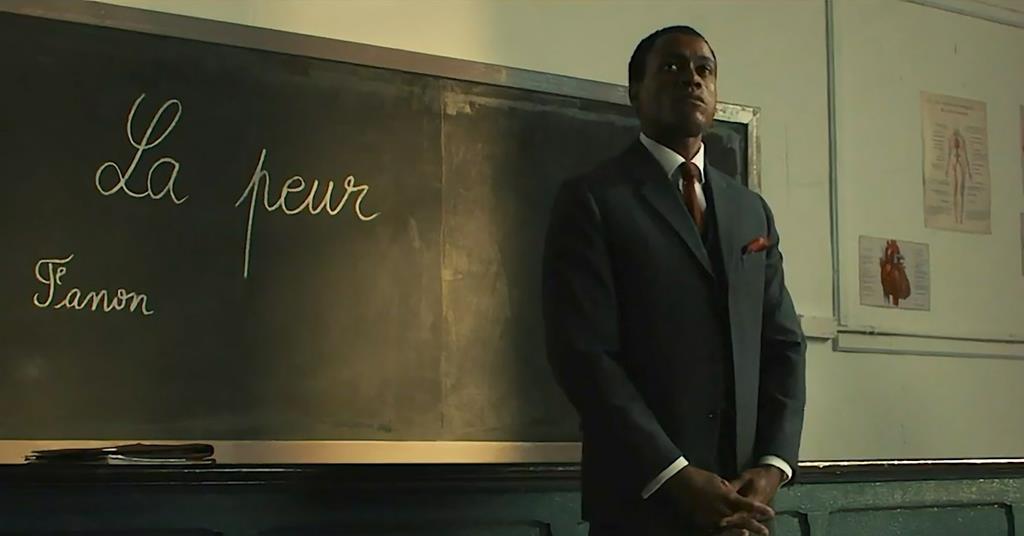
Fanon
books (dictated to his wife) about the effect of colonization on the mental health of the colonized in Algeria. Their own self-image is denigrated by their oppressors, he writes, when they internally accept their status as “the other”. Word gets out and he’s invited to join the FLN, (considered terrorists by the French). But the threat of violence reaches his hospital, as personified by Sergeant Rolland (Stanislas Merhar), a particularly violent soldier who checks in as a patient. How can Frantz Fanon simultaneously balance his various roles — as a husband and father, as a Black man serving the French empire, as an innovative psychiatrist, and as an intellectual joining the Algerian struggle for independence?
Train Dreams
humour or intellect. The men all look like they’re posing for a Carhartt fashion shoot. I try to feel sympathy toward Rainier
Christy
moving, and despite her flaws, Christy Martin’s life is super-sympathetic. Sydney Sweeney is amazing. Yes, it’s Oscar-bait (you can tell by the prosthetic teeth and mullet haircuts, playing down her image as a sex-object) but she totally gets into this role. And Ben Foster is superbly hate-able as Jim — I seriously didn’t realize it was him till the credits rolled; he’s that skillful.


leave a comment