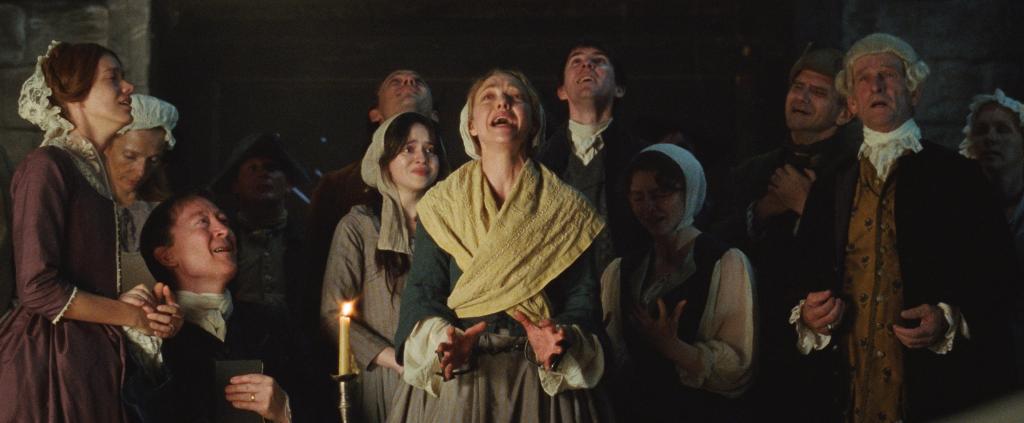
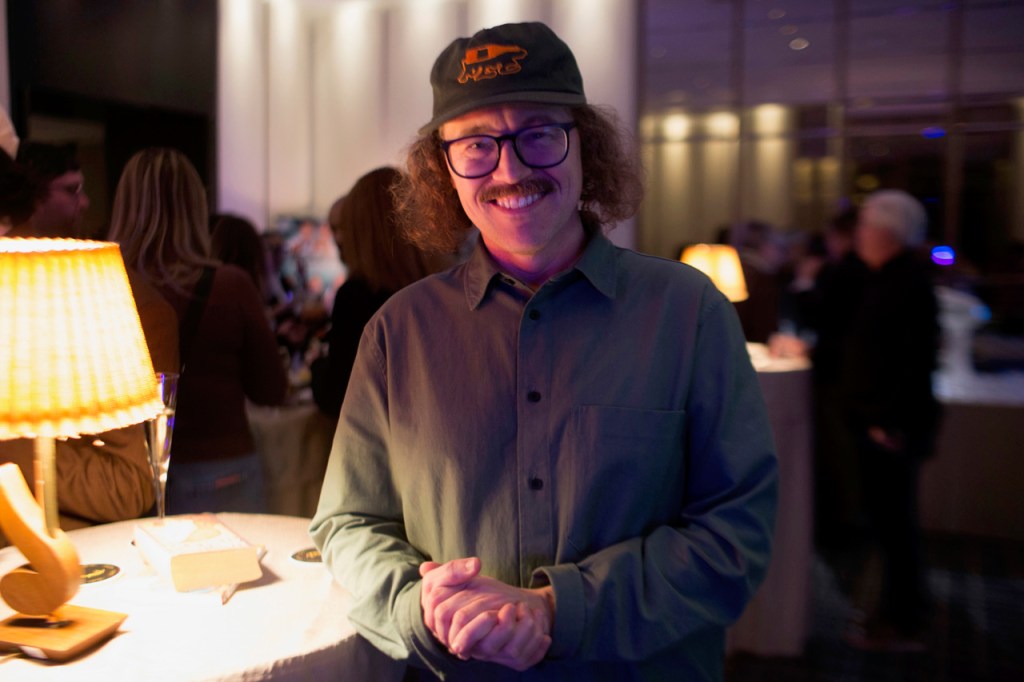
Daniel Garber talks with José Avelino Gilles Corbett Lourenço about Young Werther
Hi, this is Daniel Garber at the Movies for culturalmining.com and CIUT 89.5 FM.
Photos by Jeff Harris.
It’s a sunny, summer day at Toronto’s Union Station. Werther, a young dandy from Westmount, has just arrived with his neurotic, best friend Paul. Werther is there to pick up a family heirloom, and to explore the town. But soon after his arrival he meets Charlotte, a pretty, witty and kind young woman. It’s her birthday! They end up discussing Salinger, dancing a waltz together and smoking a joint. Werther is smitten: this is the woman he wants to marry! He plans to
sweep her off her feet. But things are not so simple. Charlotte serves as a defacto mother to her six orphaned siblings, and is engaged to Albert, a much older and more successful lawyer. Can young Werther win Charlotte’s heart? Or is he headed for disaster?
Young Werther is a new Canadian romantic comedy based on Goethe’s famous 18th century coming-of-age novel, updated to modern times. It’s a love triangle full of passion and lovelorn loss. It’s written and directed by award-winning,
Toronto-based filmmaker José Avelino Gilles Corbett Lourenço. José is best known for his short films and music videos but also has an accomplished history in advertising. This is his first feature.
I spoke with José in Toronto via ZOOM.
Young Werther had its world premiere at TIFF24 and is now playing in Toronto.
Films reviewed: Orlando: My Political Biography, Fallen Leaves
Hi, this is Daniel Garber at the Movies for culturalmining.com and CIUT 89.5 FM.
Toronto’s Fall film festival season continues in December with the Jayu Human Rights film festival showing insightful documentaries on pertinent issues, along with a slam poetry competition at the Ace Hotel.
But this week, I’m looking at two new European movies that played at TIFF this year and are now in cinemas. There are trans shape-shifters in France and lonely job-seekers in Finland.
Orlando: My Political Biography
Wri/Dir: Paul B. Preciado
It’s 17th century, Elizabethan England. Orlando is a teenaged boy, a handsome courtier in the Queen’s castle. He’s also an aspiring writer, waxing lyrical on oak trees and winter frosts. He falls in love with Sasha, a blonde, Russian aristocrat. But at the age of 30, he wakes from a deep sleep transformed into a woman. Orlando’s life takes her (and him) through various guises over hundreds of years, to capitals as far away as Constantinople, until finally returning by ship to 20th century London, where they finally complete and publish their book. Such is the “biography” of Orlando in Virginia Woolf’s famous novel. So what’s different about this film?
For one thing, the entire cast is trans or non-binary, as is Preciado, the director. And the cast is huge. Each version of Orlando is played by another actor, their sex, gender and sexuality presented in a myriad of ways. Orlando is plural in this incarnation. Not just that, Orlando’s race, colour and language also shifts, with the actors ages ranging from small children to the elderly. Some characters wear chainmail like Joan of Arc, while others recline, luxuriantly, in an Ottoman seraglio. The one common factor is their Elizabethan white
neck ruffs, the fashion of the day.
Orlando, My Political Biography is not the first film version of the novel — far from it. It seems to attract the most experimental and avant garde filmmakers out there. German director Ulrike Ottinger made Freak Orlando in 1981 which entirely rejects the conventions of both narrative and art movies. English director Sally Potter (see: The Roads Not Taken, The Party, Ginger and Rosa)’s Orlando of 1992 starred Tilda Swinton as the various Orlandos and featured Jimmy Sommerville singing up in a tree.
But this French political biography adopts Bertolt Brecht’s (and Jean-Luc Godard’s) method of deliberately alienating the audience to promote a political stand. Each Orlando introduces their scene by announcing directly to the camera their real /adopted name and personal history, followed by their Orlando passage, often reading directly from a copy of Woolf’s book. But it remains engaging because of the beauty of the photography and costumes and the sincerity of the players in the film. Settings vary from deliberately artificial backdrops to an exquisite forest and a grotesque Parisian catacomb.
The political stance is complex, and involves a rejection of the accepted binary. Some take issue with psychiatrists, surgeons and pharmacists having control of their identities and bodies.
Says one young Orlando: you must hate your genitals if you want the doctor to give you hormones… but I don’t hate my genitals. Says another: I adopted a ridiculous caricature of masculinity for a year after transitioning before realizing I shouldn’t erase my personal history just because I’m trans.
Orlando, My Political Biography is equal parts intellectual lecture, political diatribe, performance art, and cinematic experiment, and, most surprisingly… it works.
Fallen Leaves
Wri/Dir: Aki Kaurismaki
It’s typical day in Helsinki, Finland.
Ansa (Alma Pöysti), a single woman in her thirties, works at a low-paying job in a supermarket. She lives in a small apartment and subsists on frozen microwave dinners. She likes listening to relaxing music, but her bakelite radio only plays bad news from the Ukrainian war these days. She does go out occasionally to a local karaoke bar, with her best friend Liisa (Nuppu Koivu). There she encounters — but doesn’t actually meet — Holappa (Jussi Vatanen). Holappa is a depressed guy who works as a welder at a small factory. He lives in the company dorm, along with acquaintances and his best friend and confident Huotari (Janne Hyytiäinen). He handles his depression with constant drinking, which only gets him more depressed. After a few near misses they finally meet face to face. Their first date? A zombie movie at a local rep cinema. Sparks fly and they vow to meet again soon. But various unfortunate coincidences seem destined to keep these soulmates far apart. Can they ever find happiness together? Or is this a relationship that can never happen?
Fallen Leaves is a tragicomic proletarian love story par
excellence. Its also a deadpan comedy, which despite it’s nearly tragic atmosphere, will have you laughing and crying all the way through. If you’ve ever seen an Aki Kaurismaki movie before you’ll instantly recognize his style: seedy bars, bearded bikers, dark rock n roll, and a noir-ish, retro feel. Similar to Jim Jarmusch, but much funnier. It also deals with real-life issues like alcoholism and poverty. Ansa loses her job for taking home an expired cookie instead of throwing it away, while Holappa is driven close to self- destruction by his constant boozing. If you haven’t seen his movies before, Fallen Leaves is a great one to start.
Everything in this film is retro. Finland is the high-tech home of Nokia and Supercell, but in Kaurismaki’s world the characters use avocado coloured landlines, with cel phones or video games
nowhere to be seen. Computers seem relegated to internet cafes. Phone numbers are written on slips of paper, blown away with the wind. Movie theatres only play classics, and every bar is on skid row.
At the same time, there’s always a niceness and sweetness burbling just below the surface of the humdrum futility of everyday life. Fallen Leaves is a wonderfully depressing movie with a feel-good atmosphere. I love this movie.
Fallen Leaves and Orlando My Political Biography are both playing now at the TIFF Bell Lightbox, and at other theatres across Canada — check your local listings.
This is Daniel Garber at the Movies, each Saturday morning, on CIUT 89.5 FM and on my website culturalmining.com.
The best movie of the year? Films reviewed: Chevalier, Quasi, Beau is Afraid
Hi, this is Daniel Garber at the Movies for culturalmining.com and CIUT 89.5 FM.
Spring film festival season continues with Images, where indie film and experimental video meets avant-garde art and media culture. And Hot Docs Documentary Festival starts next week. But this week I’m talking about three new features — a comedy, a historical drama and a movie that defies categorization. There’s a hunchback whose name rings a bell, a musician whose work rivals Mozart’s, and a recluse who must confront what he fears most.
Chevalier
Wri/Dir: Stephen Williams
It’s the 1780s in Paris, and Joseph de Boulogne (Kelvin Harrison, Jr) is the talk of the town. He’s handsome, witty, educated and highly-skilled. He’s a champion fencer and a violin virtuoso. He can also compose a score for opera, ballet or orchestra. When Mozart comes to town, he jumps onto the stage and challenges him to a duel — using violins as their weapons. Men admire him, and women swoon. And the Queen of France, Marie Antoinette (Lucy Boynton) dubs him Chevalier de Saint-George, the highest title he can receive. Most unusual of all, Joseph de Bologne is Black. Born in the French Caribbean, his father is a wealthy colonist, and his mother a West-African-born slave.
He takes on as his lover the beautiful Marie Josephine (Samara Weaving); together they hope to
launch his career in opera. But he faces opposition from people in high places. His lover is married to a powerful, but abusive man. The Chevalier earlier snubbed another patron La Guimard (Minnie Driver) who bears a grudge. Can a black man in 18th century France rise to the top of a rigid system? And what about the revolution?
Chevalier tells an interesting story about an almost-forgotten historical figure. It’s full of ornate wigs and costumes, dancing ensembles, and crowds on cobblestone streets shouting Liberté, Egalité, Fraternité! What it’s missing, though, is a soul. It’s hard to get past the big issues and petty intrigues to care deeply about the main characters. This film has great production values and acting. In fact Kelvin Harrison, Jr is one of the best young actors around, and I’ll see anything he’s in — he’s that good. Sadly, he’s better than the material he has to work with. Chevalier is good enough, but it never reaches the greatness I was hoping for.
Quasi
By Broken Lizard
It’s France in the 1400s, and Quasimodo, the legendary hunchback with a twisted face, works not as a bellringer in Notre Dame but as a royal torturer. He got the job because he invented the rack to straighten out the hump of fatty tissue on his back. Didn’t work, but turns out the rack is great for causing pain. And the new queen (Adrienne Palicki) has taken a shine to Quasi. She likes his outspoken nature, and the fact he listens to what she says, unlike the vain and egotistical King Guy. Things are looking up when Quasi wins the national lottery. But the grand prize — meeting with the King — ends up a fiasco. Far from being a fun filled smorgasbord, Quasi leaves the palace with orders to kill the Pope! If not, the King will kill him and all his friends instead. To add to his troubles, when he meets the Pope, Quasi is ordered to assassinate the King! He’s caught in the middle of a feud between two cruel and powerful leaders. How will he ever get out of this one?
Quasi is a sketch comedy parody that transplants The Hunchback of Notre Dame into a new
setting. Unfortunately — aside from a bit of bawdy humour — most of the jokes never go beyond foul language, torture humour and opaque references to oysters. (Why oysters? Why indeed). Then there are scenes like one character having his testicles nailed to a wooden board. (Is this supposed to be funny? I don’t get it.) The film is the product of comedy troupe Broken Lizard whose five members — Jay Chandrasekhar, Paul Soter, Kevin Heffernan, Steve Lemme, and Eric Hanske — wrote, produced and starred in multiple roles, with Heffernan at the helm. Apparently, they’re quite well-known and popular and have made some other movies, including “Super Troopers 1 & 2”. Perhaps they’re an acquired taste (which I have yet to develop) and if I ever do, I’ll be sure to let you know. But in the meantime, I failed to find humour anywhere in this unfortunate exercise in juvenile excess.
I guess we could call this a quasi-comedy.
Beau is Afraid
Wri/Dir: Ari Aster
Beau (Joaquin Phoenix) is a meek, mild-mannered, middle-aged man who lives in an unnamed city. He’s the ultimate passive introvert, whose main goal is to avoid conflict. He has no job or friends and lives alone, but does see a therapist regularly. His main topic? His mom, Mona Wasserman (Patti Lupone) a very successful entrepreneur from a small town called Wasserton. His dad died before Beau was born, so Mona has always been the main influence in his life. Then there’s Elaine, the girl of his dreams, whose Polaroid photo he carries with him wherever he goes. Their time together as teenagers was brief but he will never forget her.
Now he’s supposed to fly to visit his mother, but Beau is afraid. And for good reason. He lives in a
dystopian slum full of criminals, drug addicts and naked serial killers roaming the streets. He’s in danger the moment he steps out his door. And his apartment isn’t safe either — it’s infested with poisonous spiders, and bloodthirsty neighbours who slide threatening notes under his door. Nowhere is safe. Luckily his analyst prescribed him a new medication he’s sure will calm Beau down. But it comes with unexpected side effects.
When he misses his flight, he sets out on foot, beginning a picaresque journey full of strange, wonderful and sometimes hazardous people he encounters along the way. His face and body are battered and bruised, his survival due to sheer luck. But will he ever see his mother again?
Beau is Afraid is a hilarious, dreadful, shocking and amazing drama. It’s uncategorizable, one of those few movies that stand alone, like work by David Lynch, Gaspar Noe or Lars Von Trier. It’s three hours long, uncomfortable to watch, but clearly something special. It’s multiple-layers deep with more detail than you can absorb in a single viewing. I’m purposely not touching most of the characters and plot because one of the joys of watching this thing is the constant surprises.
The whole movie is intentionally ambiguous as to what is real, what is imagined, and whether you’re inside a dream or a drug-induced psychosis.
The acting is superb, from Joaquin Phoenix as the eternally abused milquetoast to Patty Lupone as his monstrous mother (possibly her best film performance, ever?), with unforgettable scenes by Parker Posey as an unexpected visitor, Kylie Rogers as a vindictive teen, and Amy Ryan as a Gold Star Mother. Beau is Afraid chews up and spits out everything, from the collapse of the American Dream, to psychoanalysis, hippy communes, police violence, poverty, Big Pharma, and rampant capitalism.
Some people will hate this movie, but I think it’s amazing; maybe the best film of the year.
Beau is Afraid and Chevalier both open across Canada this weekend; check your local listings. Quasi is now streaming across Canada on Disney+.
This is Daniel Garber at the Movies, each Saturday morning, on CIUT 89.5 FM and on my website, culturalmining.com.
Controversial European Directors. Films reviewed: The Favourite, The House that Jack Built
Hi, this is Daniel Garber at the Movies for culturalmining.com.
This week I’m looking at two movies in English by controversial European directors from Denmark and Greece. There’s a satirical horror movie about a Jack in his house; and a historical dramedy about a Queen in her palace.
Dir: Yorgos Lanthimos
It’s England in the early 1700s, a time of heavy makeup, high heels and elaborate wigs. (I’m talking about the men here). Women, on the other hand, rule the country. At the top of the heap is Queen Anne (Olivia Coleman) a
long-suffering widow. And always by her side is her childhood friend Sarah Churchill, the Duchess of Malborough (Rachel Weisz). Her husband is leading a battle in France, leaving Sarah free to her own devices. She advises the Queen about when to go to war and whose taxes should pay for it. Together, they – not the male politicians – decide where the country should head.
Until one day, when a new woman appears on the scene, upsetting the delicate balance. Abigail (Emma Stone), Sarah’s naïve cousin, shows up at the palace gates asking for a job. She is pretty and speaks with an upper class accent but she hasn’t been rich since her father, a
compulsive gambler, lost her in a card game when she was still a teen. Now she’s single again and penniless. They put her to work as a scullery maid where the other servants treat her cruely. But gradually Abigail learns how to play the game.
She seduces a young aristocrat she meets in the woods with the aim of marrying up. And she manoeuvres her status in the palace by “accidentally” running into the Queen as often as she can. She expresses sympathy for the sad Queen and the rabbits she keeps as pets to replace all her lost children. While Sarah can be cruel and domineering –
she dresses in dominant, tight black bodices, and sends withering looks at Anne when she gets too sentimental – Abigail presents herself as a dainty ingénue, devoted to the Queen’s happiness.
Is it all just an act? And can she replace Sarah as the Queen’s favourite?
The Favourite is a brilliant comedy – based on historical facts – about two women fighting for the Queen’s favour. It’s also a love triangle, about what happens in the royal bedchambers behind closed doors. It’s by Greek director Yorgos
Lanthimos, whose unique style I’ve loved since his first film Dogtooth almost a decade ago. All his movies (Alps, The Lobster, The Killing of a Sacred Deer) have a strange stilted, faux-naïve style to them that puts some people off. His characters always seem slightly out of place in their suburban homes. But by setting it in an 18th century royal palace, suddenly the dialogue (Deborah Davis, Tony McNamara) seems witty, not stilted, and everything makes perfect sense.
With its exquisite costumes, beautiful musical score and great acting, especially Coleman and Weisz, this is a great movie.
Wri/Dir: Lars von Trier
Jack (Matt Dillon, in a despicably good performance) is an independently wealthy engineer who would rather be an architect. He is building himself a house. But he is also a perfectionist with OCD (obsessive-compulsive disorder) which makes him a captive of his own fear of failure. Each
version he tries to complete ends in frustration. So he turns to other ways to express himself artistically.
But he’s also a psychopath with no moral sense so first he has to teach himself to fake normal emotions so people will trust him. He uses these new skills to meet women, often at random, and murders them. He
takes the bodies to a huge walk-in freezer, poses them, and then send his photographs to the tabloids as Mister Sophistication. These are his “works of art”.
And despite how obvious and blatant his killings are – he even brags to the police that he’s a serial killer – nobody ever tries to stop him.
The film is narrated by Jack’s voice, off camera, confessing all to a man named Virgil (Bruno Ganz) in a reference to Dante’s Inferno. Jack tells Verge about a few of his more than
60 murders, which are shown in explicit detail on the screen. The unnamed victims – strange characters all – are played by Uma Thurman, Siobhan Fallon Hogan, Sophie Gråbøl, and Riley Keough (Elvis’s granddaughter).
Is Jack the epitome of evil? Or just an amoral idiot? And will
he ever be punished for what he did?
The House that Jack Built is Lars von Trier’s latest work, and like many before – Antichrist, Melancholia, Nymphomaniac – it’s a tough movie to watch. Excruciating, actually, because you know there’s going to be more horrible violence coming up. I was in a constant state of cringe through most of the movie.
But in retrospective it seems very elegant and funny, a
self-referential exercise in comedy/ horror/satire. Like most of von Trier’s movies, it’s told in chapters and sub-chapters, bookended by Jack and Virgil’s conversation. It’s also filled with repeated cultural
references, visual and audio, including Glenn Gould Plays Bach, Bob Dylan’s Subterranean Homesick Blues video, David Bowie’s Fame, William Blake’s drawings and Delacroix’ The Barque of Dante… even clips from von Trier’s own movies. Jack compares his “art” — the murders themselves and the arranged bodies — to the works of these great artists.
This film is Lars von Trier’s reply to past accusations of
being a nazi, a misogynist, a bigot and a narcissist. Here he invents a character that combines the worst elements of all of these, and spews it back at the viewers in triumphant, hideous glory.
One thing: the screening I went to was a total sausage fest. The audience was maybe 99% male — rockers, hipsters, film geeks, von Trier fans and Incels — so when parts of the audience burst into laughter and applause when Jack violently attacks and mutilates yet another nameless female victim, it just added to the general creepiness of the experience.
The Favourite opens today in Toronto; check your local listings; and The House that Jack Built opens next Friday in theatres and on VOD.
This is Daniel Garber at the Movies, each Friday morning, on CIUT 89.5 FM and on my website, culturalmining.com.
The Movie Teller
Do Not Expect Too Much From the End of the World
biting satirical film about contemporary Romania. It mocks pop culture, government censorship, corporate greed, in a way sure to offend almost everybody. Thereme, Deloitte, KFC, Ukraine, Orban, Putin, Germans, American gun culture,
The Promised Land (Bastarden)
makeshift family to face the elements as they attempt to produce


leave a comment