A coup, a cult and a cry. Films reviewed: The Penguin Lessons, AUM: the cult at the end of the world, Bob Trevino Likes It

Posted in 1970s, 1990s, Argentina, comedy, documentary, Family, High School, Japan, Protest, Religion, Social Networks, US by CulturalMining.com on March 29, 2025

Hi, this is Daniel Garber at the Movies for culturalmining.com and CIUT 89.5 FM.

In these times of extreme uncertainty, many people feel there’s something missing in their lives but they’re not sure what. Some turn to new religions for spiritual fulfillment, others to pets they can love, or to chosen families to replace their inadequate biological ones.

So this week, I’m looking at three new movies, two dramas and a documentary about people trying to replace something missing. There’s an English teacher in Argentina who talks to a penguin, a  caregiver in Kentucky looking for a replacement dad, and a religious cult in Japan trying to bring about the end of the world.

The Penguin Lessons 

Dir: Peter Cattaneo

(Based on a true story)

It’s March, 1976 in Buenos Aires, Argentina. Tom Michell (Steve Coogan) is a newly-hired English teacher at a boys’ prep school for rich kids. It’s run by the strictly by-the-book Headmaster Buckle (Jonathan Pryce). No pets and no politics. Divorced, middle-aged and jaded, Michell cares little about morals. He describes himself as like Hemingway but without money and who never wrote anything. The boys in his class are spoiled and unruly; they don’t listen to a word he says. But bombs and rifles can be heard even within the walls of this elite academy. There’s a US-backed coup d’etat going on out there to install a military dictatorship! When the school closes for a week, Michell and fellow-teacher Tapio, a hapless Finn (Björn Gustafsson) head out to the Punta del Este in Uruguay to sit out the coup. But a romantic seaside stroll with a woman Michell meets turns —  much to his chagrin — into a mission to save a flock of birds caught in an oil spill. They clean a penguin’s feathers, but by morning, the woman’s gone, and the penguin won’t leave him alone. He reluctantly takes him back to the school, in the hopes of donating him to a zoo. But the school kids adore him, and actually start to pay attention as long as the bird is around. But all is not well. Plainclothes police are disappearing anyone who disagrees with the government, including the beautiful but opinionated Sofia (Vivian El Jaber), the school’s cleaning woman.

Can a little penguin bring peace to the school and pull them all together? What will happen if Headmaster catches him with the bird? And will Michell ever stick his neck out to challenge the status quo?

The Penguin Lessons is a touching, cute, nostalgic and easily digestible story set during a dark and sinister era. Director Cattaneo brought us similar English crowd-pleasers like The Full Monty. And I’ll see anything with Steve Coogan in it. This movie is full all the cliched crowd pleasers: kids, animals, history, and a wise-cracking cynic who might have a soul. But I don’t care. That penguin is just soooo cute. 

OK, I admit it, I’ve been played, I’m a sucker of a critic who fell for a bird… but so will you. 

I liked this movie.

AUM: The Cult at the End of the World

Wri/Dir: Ben Braun, Chiaki Yanagimoto

It’s March, 1995 in Tokyo when something unexpected and terrifying happens. Someone lets loose poison gas at Kasumigaseki station, where three train lines converge. 5,800 people are injured and 13 of them killed. And this is a planned attack, not an accident. Who is responsible and why did they do it?

Decades early, a child named Chizuo is born into a post-WWII family with visual disabilities. Years later he opens a yoga school to attract paying customers. Somewhere along the way, it changes first into a religious sect, and later into a bonafide cult with tens of thousands of members. The group is called Aum Shinrikyo, and they set up headquarters on the banks of the sacred Mt Fuji.  Their guru, now known as Shoko Asahara, with long hair and beard and flowing pink robes, convinces his worshippers that he is a god with supernatural powers. Popular music and anime videos extolling Asahara attract lots of favourable media attention, and detached young Japanese join in droves to experience miracles like levitation. These followers drink his bathwater or take tiny transfusions of his blood, even as he drains their bank accounts dry. Others have wires attached to their brains. Only bland food is permitted, no sex, no free-thinking. The cult expands internationally, migrating to Moscow once the Soviet Union falls, converting countless Russians to their cause. And while they’re there, they get ahold of military-grade artillery, chemical and biological weapons which they ship back to Japan. And eventually this leads to the horrific Sarin gas killings, in Tokyo and Matsumoto.

AUM: The Cult at the End of the World is an extensive, shocking and at terrifying documentary about this bizarre and dangerous cult. It covers the story throughout Asahara’s life and beyond, using period footage and new talking-head interviews. It goes right to the source — its victims, innocent people wrongly blamed for Aum’s crimes, journalists who follow the story, and advocates who — long before the sarin attacks — were trying to free friends and relatives from their clutches. Perhaps most chilling of all are the interviews with Joyu the high-ranked Aum Shinrikyo member who was allegedly behind some of its most heinous chemicals weapons.

I found this documentary extremely engrossing and well researched, narrated  in the form of an oral history by those most affected by these atrocities. I couldn’t stop watching this one. I wonder why there have been loads of movies about the Manson Family, but relatively few on Aum Shinrikyo. This one helps fill that gap.

Bob Trevino Likes It

Wri/Dir: Tracie Laymon 

(Based on a true story) 

It’s present-day northern Kentucky. Lily Trevino (Barbie Ferreira) is young woman who works as a caregiver for Dapne (Laureen “Lolo” Spencer) a woman with a degenerative condition. Lily has no friends, and 

her boyfriend dumped her using texts. Robert Trevino, her dad (French Stewart) is a flippantly cruel and self-centred man-boy responsible for most of Lily’s neuroses. He blames her for ruining his life (her mom died as an addict when she was a child). But things hit rock-bottom when her dad cuts off all communication with her. In a desperate search on Facebook to see what he’s up to, she ends up “liking” a different Bob Trevino. This Bob (John Leguizamo) is everything her own father is not. He’s kind, honest and giving, someone who pays attention to her texts. Bob works as a contractor out of his trailer. He has few hobbies — he likes gazing at the shooting stars, while his wife Jeanie (Rachel Bay Jones) is into making scrap books. When childless Bob and parentless Lily finally meet face to face, they feel a familial warmth they can’t quite explain. Jeanie thinks Lily’s a grifter or an aspiring catfish, trying to get his money. While insecure Lily is afraid of messing things up. Can two people, who live in different states ever have a real friendship? And is this new friendship superficial or deep?

Bob Trevino Likes It is a very cute, very sweet tear-jerker of a movie about friendship, kinship and chosen families. Much of the story is told through text messages and Facebook posts. Barbie Ferreira plays Lily as a non-stop faucet. She weeps in the opening, she cries in the middle and bawls at the end. And as the viewer, I cried along with her. John Leguizamo — once known for his over-the-top comedy — is at his most restrained in this one. But despite all the tears, it’s told in a light, humorous way.

This is a really nice indie movie.

Bob Trevino Likes It is now playing across Canada, with The Penguin Lessons opening this weekend in Toronto; check your local listings. And Aum is now available on VOD.

This is Daniel Garber at the Movies, each Saturday morning, on CIUT 89.5 FM and on my website culturalmining.com.

Canadian Film Fest! Movies reviewed: The Players, To the Moon, Skeet

Posted in Acting, Addiction, Canada, comedy, Coming of Age, Crime, Family, Fantasy, Friendship, LGBT, Newfoundland, Nova Scotia, Theatre, Toronto by CulturalMining.com on March 22, 2025

Hi, this is Daniel Garber at the Movies for culturalmining.com and CIUT 89.5 FM.

With the warmer weather, spring film festival season comes to Toronto, starting with the Canadian Film Fest. It features world-, national- and local premieres of great Canadian movies that will be opening later this year. It has a wide variety of genres and topics — sci-fi, comedies, dramas and documentaries — from across the land. They’re very accessible and a lot of fun, and they bring to light current topics unique to this country. And each screening includes a feature and a short film along with the filmmakers themselves in person.

So this week, I’m writing some shorter-than-normal reviews to give you an idea of what’s playing at the CFF this year. There’s a teenaged girl in Toronto trying to broaden her horizons, an ex-con in Saint Johns, trying to follow the straight and narrow, and a middle-aged single dad in Halifax who does ritual dances to the moon.

The Players

Wri/Dir: Sarah Galea-Davis

It’s summer in the early 1990s in Toronto. Emily (Stefani Kimber) is a naive but listless 15 year old girl who wishes her parents would get back together. Her dad moved when her mom returned to University and started sleeping with her prof. But Emily thinks she’s found her calling when she runs into an experimental theatre group in a park, and successfully auditions for a show. But this is no ordinary theatrical troupe. It’s run by a Svengali-like director named Reinhardt (Eric Johnson) and his girlfriend actress Marley (Jess Salgueiro). Rehearsals last for hours, full of primal screams and heavy body contact. Emily is in heaven, viewing herself and the world in brand new ways. Reinhardt pays special attention to Emily, giving her readings in French literature so she can really “understand” the art their creating (an eight-hour version of Hamlet). Even when she spends days at the studio without going home, and strange bruises start appearing on her body, she accepts that it’s part of becoming an actor. But the cultish nature of the group, and Reinhardt’s increasingly dangerous, abusive and sexualized behaviour starts to gnaw at Emily’s psyche. Should she see it through, or get the hell out of that place while she still can?

The Players is a gripping, coming-of-age drama about life as a young actress in the 1990s, long before the #MeToo movement. It’s first exhilarating and then horrifying. Stefani Kimber is excellent and well-rounded as Emily, through whose eyes the entire story is told. And though it’s director Sarah Galea-Davis first feature, it’s powerful and prescient.

To the Moon

Wri/Dir: Kevin Hartford

Sam (Jacob Sampson) is a corporate executive in Halfax, Nova Scotia. He has recently moved to a picturesque suburb with  his rudderless teenaged daughter Ella (Phoebe Rex); his wife died soon after Ella was born. Since then he has given up all sex and dating. Instead, each morning,  Sam and Ella do an elaborate dance ritual, ostensibly to stop the moon from crashing into earth! But everything changes when Sam’s sexuality begins to reveal itself when he meets an attractive man at a lunch spot. Is Sam gay? Ella, meanwhile, auditions for a play at her new school, in the hopes of meeting a guy she has a crush on… but is thwarted at every step by a cruel, bully-girl named Isobel. And all of Sam and Ella’s lives are observed by Claire (Amy Groening) a neurotic and  nosy next-door neighbour novelist, facing writers block. Can Ella find satisfaction at her new school? Can Sam come out as gay, even to himself? And what will happen to their lives if they stop doing the sacred moon dance?

To the Moon is a funny, oddball comedy set in Nova Scotia. It’s the kind of comedy where every character is quirky and armed with a quick witty comeback. It’s cute though hard to believe, but what’s truly hard to believe is the totally unexpected wack ending (no spoilers here.) This may be the first film of Kevin Hartford I’ve ever seen, but it has the blessing of Thom Fitzgerald, the film’s producer, who is an icon in the world of LGBT movies and directed two classics: The Hanging Garden and Cloudburst. If you’re looking for a zany gay comedy from down east, check out To The Moon.

Skeet

Co-Wri/Dir: Nik Sexton

St John’s, Newfoundland. Billy Skinner (Sean Dalton) is a skeet, a tough-guy enforcer who did three years hard time for violent crime. Now he’s out again, back in his sketchy neighbourhood, still ruled by a gangster-poet named Leo (Garth Sexton). But things look worse than what he left. His brother can barely walk, his former crime buddy collects empty beer cans, his mom’s a fentanyl head, and she snorted all the money he was sending her to take care of his teenaged son Brandon (Jackson Petten). But Billy is determined to turn his life around — no more crime or fighting. He’s gets a job mopping floors at the chicken plant, spends time with his son, stays off drugs and attends an obligatory support group. And strangest of all, makes friends with his neighbour Mo (Jay Abdo), a taxi driver, one of many Syrian refugees recently housed in his neighbourhood. Can Billy shake off the cursed Skinner family name? Or will he revert to life as a skeet?

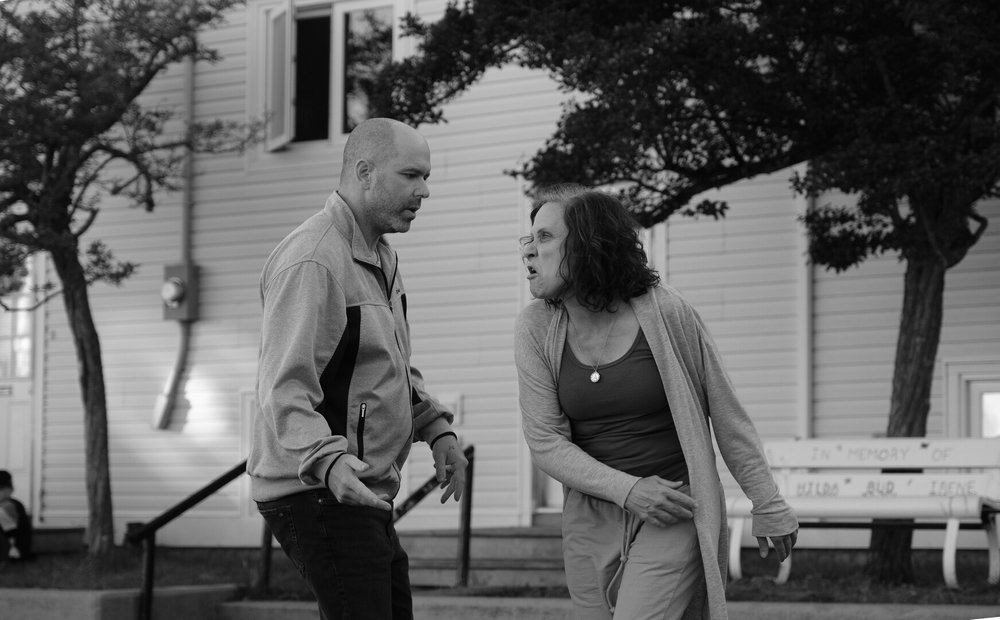
Skeet is a moving and hard-hitting drama about a ne’erdowell trying to make it in the tough parts of St Johns. Well acted and shot in glorious black and white,  it gives us a sympathetic portrayal of the bleak parts of Newfoundland we rarely if ever see. Luckily, director Nik Sexton — who has honed his craft for years at the Rick Mercer Report and This Hour has 22 Minutes — doesn’t know how not to be funny, so there’s enough humour to keep it from being a drag. I guess you could call Skeet Donnie Dumphy’s evil twin.

Great movie.

Skeet won People’s Pick for Best Flick (Nik Sexton) at CFF.

The Players won Best Director award (Sarah Galea-Davis) and Best Acting award (Stefani Kimber) at CFF.

Skeet, To the Moon, and The Players are three of the movies premiering at the Canadian Film Festival, running Monday March 24th through Saturday, March 29 at the Scotiabank cinema in Toronto. Go to canfilmfest.ca for tickets and showtimes.

This is Daniel Garber at the Movies, each Saturday morning, on CIUT 89.5 FM and on my website culturalmining.com.

Daniel Garber talks with Ingrid Veninger about Crocodile Eyes

Posted in Canada, Death, Docudrama, Drama, Experimental Film, Family, Feminism, Reality by CulturalMining.com on March 22, 2025

Hi, this is Daniel Garber at the Movies for culturalmining.com and CIUT 89.5 FM.

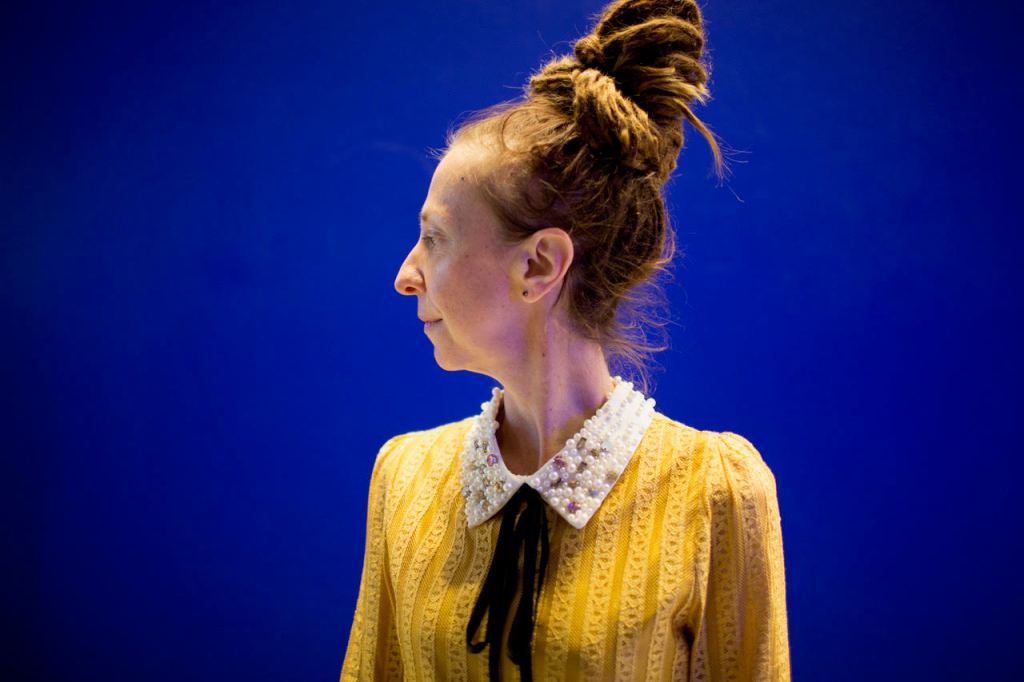
It’s present day Toronto. Independent filmmaker  Ruby White (Ingrid Veninger) is working on a documentary about her family. She has stuck a hundred, hot-pink post-it notes on a  wall, and is gradually filling in the blanks, using vintage footage she has dug up, and brand new snippets as they happen. Her daughter Sara, an artist, is very pregnant with a four- year-old daughter already there. Little Freya is exploring the world, one blade of grass at a time. Her son Jake is a manager at a movie theatre and a member of a band. Ruby’s Slovakian parents, Dedo and Baba, still play an active role in their family; her Mom still vivacious, her Dad on his last legs. But with life, death and birth happening all around her, Ruby must decide what to include in her film and what to leave out. What is real and what is fictitious? And what will her family think of the final film?

Crocodile Eyes is a semi-fictional, semi-documentary slice-of-life drama, told through a raw and visceral lens. It’s both heartwarming and shocking. It’s the work of prize-winning, independent filmmaker Ingrid Veninger, whose films have been shown at TIFF and festivals worldwide. She has also taught and mentored countless other filmmakers, many of whom who have risen to their own fame. I’ve been following her work for the past decade and a half, reviewing movies like the wonderful Modra and the hilarious I Am a Good Person/I Am a Bad Person, and have interviewed her twice on this show about Porcupine Lake (2017), and The Animal Project (2014).

I spoke wth Ingrid Veninger in person, at CIUT 89,5 FM.

Crocodile Eyes is having its world premiere on March 28th at the Canadian Film Fest.

Sensory extremes. Films reviewed: Black Bag, Novocaine

Posted in Action, comedy, Espionage, Romance, South Africa, Thriller, Torture, UK by CulturalMining.com on March 15, 2025

Hi, this is Daniel Garber at the Movies for culturalmining.com and CIUT 89.5 FM.

March break is coming to a close, so I have two genre movies — an action comedy and a spy thriller — you might want to watch this weekend. There’s a London spy who suspects everyone, and a San Diego bank manager who feels nothing.

But before that I’m going to tell you about some other movies you might not know about. 

Unusual movies to catch in Toronto

If you’re into the indie music scene, there’s a special screening tonight at the TIFF Lightbox. We Forgot to Break Up is a movie about the rise and fall of a small-town gender queer band that goes from performing in a barn in rural Ontario to attempting to make it big in downtown Toronto. Its headed by rising young actor/musician Lane Webber, the songs are by Torquil Campbell, and the soundtrack includes Peaches, Gentleman Reg, and The Hidden Cameras. I saw this one at Inside Out last year, and I quite liked it.

Also playing at the Lightbox is the new Goethe Institute’s series Extra.Ordinary showing three great new German flics. I haven’t seen any of these yet (two will be Toronto premieres) but GoetheFilms programming is always top-notch. Similarly, the Japan Foundation is screening Still Walking, a classic by fave director Kore-eda Hirokazu, next week.

And finally, I bet you’ve never heard of Terrible Fest, have you? Well it’s a Super 8, B-Movie short film festival at Eyesore Cinema on March 25 and 30th, including titles like these: Wallet Monster, Dirty Show with Video Hoser, Air Fryer Slaughter, and of course that future cult-classic Girls Just Want to Have Kill. You can get a pass to all the films for just 12 bucks.

So, if you feel like going to a movie, but don’t want something too conventional, there are still alternatives to see.

Black Bag

Dir: Steven Soderbergh

George (Michael Fassbender) is a high ranked bureaucrat at Mi6, London’s international spy agency. He’s trying to find the identity of a suspected double agent. But instead of one name, the asset gives him a list with five names on it, and only one is the traitor. So he invites them all to a dinner party. Interestingly, four of the 5 are couples: Freddie and Clarissa (Tom Burke, Marisa Abela) and James and Zoe (Regé-Jean Page, Naomie Harris). And the fifth? It’s his own wife Kathryn (Cate Blanchett) whom he loves dearly, but if she’s the double agent, it’s his duty to catch her in the act. 

Apparently, one of them possesses information about a top secret weapon and is peddling it to the Russians. This weapon is so terrible it could kill tens of thousands and plunge us into WWIII. And to George’s dismay, Kate is on a secret mission on the Continent, exchanging information for cash. Can George uncover the truth? Is Katherine the villain? And if so, will he turn her in?

Black Bag is a classic British spy-thriller, with everything going for it. It’s done in the style of a Le Carre novel. Michael Fassbender, Cate Blanchett and Naomie Harris provide star appeal. And the director/writer team of Steven Soderbergh with David Koepp are a winning combination (they released another movie Presence, just a few weeks ago, which I liked).  So why does Black Bag suck so bad? The script is terrible, with an array of dull, unsympathetic characters, and a cookie-cutter plot. The witty repartee you expect from a British spy movie is totally missing. But I manly blame this one on Soderbergh himself, its director, editor and cinematographer. He’s like a film student with his first video camera, fooling around just for fun as he figures out how it works. The opening scene follows George around from behind until it finally reveals his face. Why? No reason, it doesn’t surprise you or advance the story, it’s just there. In other scenes we get to watch all the characters looking up from below their chins. Overly-bright candles at a dinner table obscure the characters’ faces. (What do audiences want to see? Candles or faces?) The music seems off-kilter with the mood. It’s all just so sloppy, distracting and off-putting, making the whole movie feel like a rush-job.  

Admittedly, the story does get interesting in the last 15-20 minute, but it’s way too late to redeem this dud.

What a shame, Black Bag could have been so good.

Novocaine

Dir: Dan Berk, Robert Olsen

Nathan Caine (Jack Quaid) is a mild-mannered assistant manager at a San Diego savings bank who lives a highly- sheltered life. He doesn’t drink, he doesn’t go on dates, he doesn’t even go out at night. All sharp corners in his office are blunted by tennis balls. He won’t even chew sharp foods — anything that hasn’t been through a blender will never get past his lips. Why? He’s afraid he’ll hurt himself and not know it. You see, he suffers from a rare medical condition called CIPA; he can’t feel pain. When he was a school kid, bullies beat him up just for the novelty of it; they called him Novocaine.

When Nate’s not at work, he spends most of his time playing video games with online friends, including his best buddy Roscoe (Jacob Batalon) a guy he’s never actually met. But everything changes one day when Sherry (Amber Midthunder), a woman he has a major crush on at work, shows genuine interest in him. They actually go on a date, and it’s like a door to a whole new world opens up for him. He tries solid food (Is this what pie is? I love pie!) and has sex for the first time. He decides Sherry is is his life partner, the love of his life, the reason for his existence… and he will never let her go. That’s why he’s so upset when a gang of murderous thieves (dressed in Santa suits) storm into the bank, kill the manager, clear out the safe and drive off with Sherry as their hostage. The cops seem uninterested in catching the criminals — they even suspect Nate. He decides to throw caution to the wind, and hunt down those criminals himself, using his medical condition as sort of a super power. They can’t stop him because he feels no pain. Can he defeat the bad guys through willpower alone? And will he get to Sherry in time? 

Novocaine is a brand-new take on gory action/ comedy, with a twisted plot, funny characters and surprisingly good acting. Jack Quaid is the ultimate Hollywood nepo-baby, the offspring of Dennis Quaid and Meg Ryan. Awful, right? No —  in Novocaine, he’s amazing, both endearing and self-effacing. Amber Midthunder (who is currently starring in two different movies) is very appealing, and together they have obvious chemistry.

Novocaine has all the requisite action sequences — fight scenes, shoot outs and chases — but it manages to combine them in new ways. I can’t stand “gorno” or torture porn; it’s upsetting to watch people suffering from excessive, constant pain. And there’s tons of it in this movie: Nate gets shot by arrows, scalded with boiling oil, tortured with knives and scissors, muscles bruised and bones broken. But because he is totally oblivious to pain, he turns squirms into laughter. Obviously the violence is explicit and plentiful, so if you can’t stand it, stay away. But there are so many clever, disarming twists that the violence never overpowers the laughs.

I found Novocaine totally entertaining.

Black Bag and Novocaine both open this weekend in Toronto; check your local listings.

This is Daniel Garber at the Movies, each Saturday morning, on CIUT 89.5 FM and on my website culturalmining.com.

Daniel Garber talks with Ann Marie Fleming about Can I Get a Witness?

Posted in Canada, Climate Change, Death, Science Fiction by CulturalMining.com on March 8, 2025

Hi, this is Daniel Garber at the Movies for culturalmining.com and CIUT 89.5 FM.

It’s rural Canada, at some point in the near future. Kiah is young woman about to start a new phase of her life. She lives with her mother in a homey but threadbare shack, a testament to the joys of back-to-nature living. They ride bikes and grow their own vegetables. But what will her new job be? She’s going to be a witness, someone who officially records a major event.

You see, in this post-carbon future, there are no digital cameras or cell phones to record events, just people like Kiah and their hand-made drawings. But what will she be witnessing? The dignified but obligatory  end-of-life ceremonies that everyone must go through before their 50th birthday. Can Kiah adjust to her bittersweet new job? And what will it mean for her relationship with her mother?

Can I Get a Witness is a gentle and heartfelt cautionary tale about where our world may be heading. It’s a Canadian coming-of-age drama with equal parts comedy and empathy, with just a bit of light horror thrown in. It stars Sandra Oh, Joel Oulette and Keira Jang as Kiah.

Can I Get a Witness was written, directed and produced by award-winning Vancouver-based filmmaker Ann Marie Fleming, who brought us the wonderful animated feature Window Horses, back in 2016. She has worked with the National Film Board and independently, producing animated films and shorts, of a sort you’ve probably never seen before.

I spoke with Ann Marie in Vancouver via ZOOM.

Can I Get a Witness opens in Toronto, Montreal and Vancouver this weekend.

All Canadian. Films reviewed: Seven Veils, Night of the Zoopocalypse, Shepherds

Posted in Aliens, Animals, Animation, Canada, Farming, France, Opera, Quebec, Zombie by CulturalMining.com on March 8, 2025

Hi, this is Daniel Garber at the Movies for culturalmining.com and CIUT 89.5 FM.

Most of the movies we see come out of Hollywood, but now that the US government has declared (economic) war, I figure why not look at more Canadian movies, instead.

So for this week, I’m talking about three new Canadian movies all opening this weekend. There’s a Montreal PR exec who wants to become a shepherd, a wolf in a theme park who doesn’t want to become a zombie, and an opera director in Toronto who says the show must go on. 

Seven Veils

Wri/Dir: Atom Egoyan

It’s winter in Toronto. Jeanine (Amanda Seyfried) has flown in for a new project: she has been selected (by the late director) to remount his production of the opera Salome. She knows this version inside and out, as she was his assistant on it while still a student. But by taking on this role, she has opened a pandora’s box of hidden secrets: The male lead, Johann (Michael Kupfer-Radecky), is notorious for his roving hands. Ambur (Ambur Braid) sings the part of Salome but her past misgivings with Johann threaten to erupt. Then there are the understudies. Johann’s second knew Jeanine from their student days, and follows her with puppy dog eyes and long-held hurt. Rachel, Ambur’s understudy, is dating the same woman Ambur used to be with, before she was a superstar.  

Jeanine is requested to add personal changes to the remount, but whenever she tries something outrageous, the management swoops in to stop her. And then there’s her home life: She left their young daughter with her husband,  but her mother whispers her pretty and young caregiver is sleeping with Jeanine’s husband.All of these pressure-points seem ready to burst at any time. Can Jeanine survive this trouble-filled production? Or is it headed for disaster?

Seven Veils is a dramatic, behind-the scenes look of the remounting of an opera. It has some good acting and lovely cinematography, but it’s laden down by a messy, overly-complicated plot. It feels like a full season of a reality show condensed into 1 hour and 50 minutes. Atom Egoyan filmed this movie even as he was directing a live performance off the same opera with the same singers on the same set. Is this creative brilliance, or just double-dipping? Egoyan has long been known as a pioneer in incorporating video footage within his films and stage productions. But he went whole hog with this one, including more mixed media than you can shake a stick at: Zoom calls, a snarky podcast recording, a making-of doc filmed on the prop director’s cel phone, and even creepy childhood home videos by Jeanine’s dad. Some of these fall flat — Jeanine’s voiceover narration is embarrassingly clunky.  Others examples are brilliant: like a giant projection of Johann’s mouth on a scrim on stage objecting haughtily with any directions Jeanine tries to give him. The film also covers myriad diverse topics, including intersectionality,  sexual harassment, women fighting the patriarchy, a severed head, backstabbing, entrapment and revenge.

Way too much stuff to fit in one film, but with enough good parts to keep it going. 

Night of the Zoopocalypse

Co-Dir: Ricardo Curtis, Rodrigo Perez-Castro

Gracie is a young wolf who likes hunting on his own. He ignores his Alpha grandma’s warnings to always stay with the pack. After all, what does it matter; they live in a theme park (the Colepepper Zoo) with no predators! But Gracie has spoken too soon. That night, a radioactive meteor crashes through the sky and lands smack-dab into their collective home. Anyone who touches the glowing rock is instantly transformed into a hideous version of their former self with glowing eyes and zombie-like behaviour. The infection spreads across the zoo, with ever more animals being zombified. Luckily Gracie finds safety in the zoo hospital, along with Ash the ostrich, Xavier the lemur, Felix, a self-centred proboscis monkey, Frida a capybara, and a dangerous-looking mountain lion called Dan. If they work together maybe they can fend off this otherworldly ailment; or they could split up and see who can make it out of the park. Can these creatures find a common aim? Or will they all be zombified before dawn? And what will happen to the outside world once the park’s gates reopen?

Night of the Zoopocalypse is a cute, animated kids movie about animals infected by an alien disease, featuring  the voices of David Harbour, Scott Thompson, and Paul Sun-Hyung Lee. The unoriginal dialogue seems aimed at very young children, not adults, but perhaps zombies are too scary for the youngest ones. But I do like a lot of things in Zoopocalypse, from the obnoxious theme songs, to the eerie Kenny Scharf-like cut-out designs of grotesquely smiling figures. And who couldn’t like Poot, the baby pygmy hippo!  If your kids don’t scare easily, I think they’ll like Night of the Zoopocalypse. 

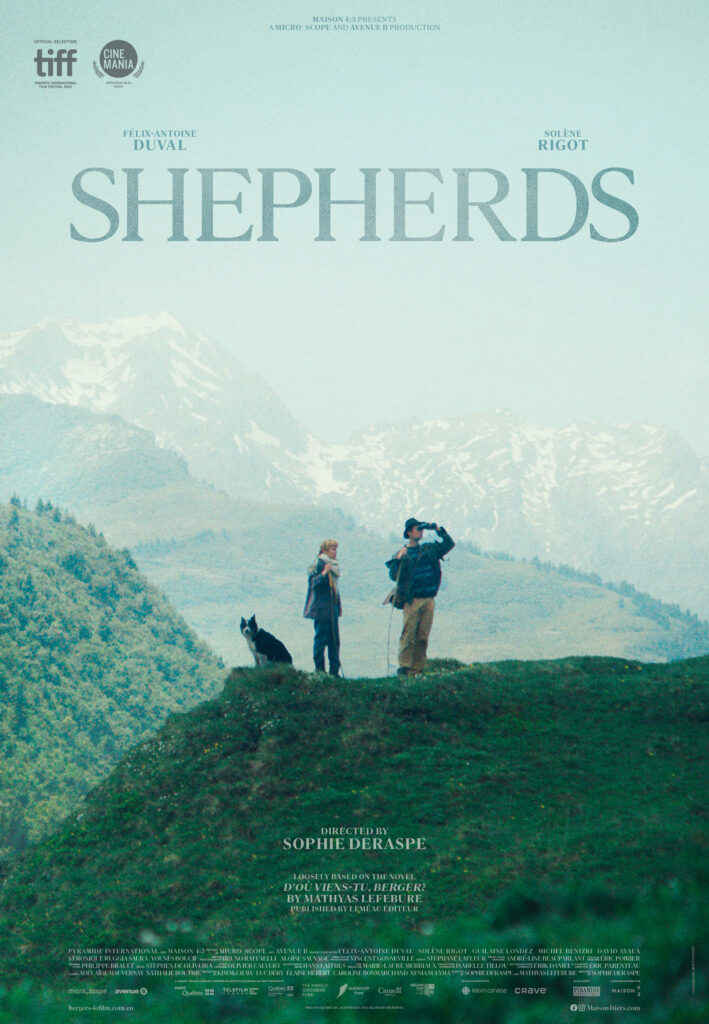
Shepherds (Bergers)

Co-Wri/Dir: Sophie Deraspe (Interview: Antigone)

Mathyas (Félix-Antoine Duval) is a young man who works as a copywriter at a Montreal PR firm. He’s creative, sensitive and ambitious. So what is he doing sipping yellow Pastis in a small town cafe in Provence? To change his life from pointless and unfulfilling to a simpler one, entirely off the grid. He’s in Provence because he wants to become a shepherd. You heard me: someone who herds sheep. And he wants to write a book about his experiences afterwards. He has already bought a requisite black hat and leather satchel, and he’s been boning up on all the books on how to herd sheep. But he’s having trouble finding a sheep breeder willing to take him on. His try is a total wash-out: he’s never stood in a flock of sheep in his life.  

So he pays a visit to the local government office, in hopes of getting a work visa. No such luck, but he does meet the cute bureaucrat behind the counter. Elise (Solène Rigot) is smart, pretty and bored with her job, too. She’s impressed by Mathyas’ convictions, but is sorry to tell him you can’t apply from within the country. But he keeps up his correspondence with her via handwritten snail mail, and her simple responses keep him sane.

He eventually finds under-the-counter work as an apprentice shepherd for a retired, childless couple looking for someone to take over. But he finds the environment hostile and violent, full of cruelty and insanity… nothing like what he was looking for. So when Elise shows up suddenly, he decides to quit. Surprisingly, the two of them are hired almost immediately as a team, to work through the summer tending sheep in a stone cottage way up in the Alps. Can two non-shepherds learn the lay of the land and how to take care of hundreds of pregnant sheep? And will their friendship develop into something more?

Shepherds is a wonderful movie about going back to the land. The story is based on the novel D’où viens tu, berger? by the real Mathyas Lefebure who actually did leave Quebec to seek his fortune as a shepherd in Provence. I’ve always liked Sophie Deraspe’s brilliant films. And while Shepherds is very different from her past work, it’s just as good.  Félix-Antoine Duval is amazing as Mathyas with just the right blend of vulnerability and sincerity, like a gawky teenager trapped in an adult’s body. French actress Solène Rigot conveys such warmth she’s totally loveable.

Shepherds is a gorgeous movie with unforgettable images, like rivers of sheep pouring across a valley and through alpine city streets. Absolutely breathtaking.  One warning: After watching Bergers, you might consider becoming a shepherd, too.

Night of the Zoopocalypse,  Shepherds, and Seven Veils all open this weekend in Toronto; check your local listings. This is Daniel Garber at the Movies, each Saturday morning, on CIUT 89.5 FM and on my website culturalmining.com.

Three generations. Films reviewed: My Dead Friend Zoe, Exhibiting Forgiveness 

Posted in Addiction, African-Americans, Army, Art, Black, Family by CulturalMining.com on March 1, 2025

Hi, this is Daniel Garber at the Movies for culturalmining.com and CIUT 89.5 FM.

It may be the closing of Black History Month, but there are still good movies opening this weekend. So this week, I’m looking at two new American movies, about three-generation families.  There’s an Army vet with PTSD whose grandpa has dementia; and an artist with a young son whose dad is addicted to crack.

My Dead Friend Zoe

Co-Wri/Dir: Kyle Hausmann-Stokes

Merit (Sonequa Martin-Green) is a US Army Vet who lives in Portland, Oregon. She was a lightweight vehicle mechanic in Afghanistan, but hasn’t done much since she was discharged. The fact is, like many vets she is depressed and suffers from PTSD. That’s why she goes to a military support group especially for people like her. And she always brings her best friend and fellow vet Zoe (Natalie Morales) with her.  Zoe’s the only one who could understand what she’s been going through. But to the group leader, Dr Cole (Morgan Freeman) that’s not enough. He wants her to tell them all what’s the matter. You see, Zoe is dead, and Merit’s the only one who can see her. And unless she shares with the group, Dr Cole won’t sign the form keeping her out of jail.

Then she gets a long distance phone call from her mom (Gloria Reuben). Merit’s Grandpa (Ed Harris) has lived alone in a beautiful lakeside home outside of Portland since Merit’s Grandma died. He was spotted wandering on a country road near his house. For Merit’s mom, that means he has dementia and so, for his own good, he has to be locked up in a nursing home. 

But Grandpa is as stubborn as Merit. They’re both war vets — he’s the one who inspired her to sign up — and they carry similar mental scars. Will Grandpa agree to leave his home? Can Merit ever admit her terrible secret? And why is Zoe still around?

My Dead Friend Zoe is a gentle comedy-drama about the very serious effects war has on American soldiers, and the multigenerational trauma it brings to a mixed-race family. (Like most war movies, it never mentions the people they killed on the other side.) The movie is divided among flashbacks to Merit and Zoe in Afghanistan; Merit and (dead) Zoe in the present day; and the time spent with her Grandfather. Part weeper, part comedy (plus a tiny bit of romance) it has big name stars — like Ed Harris and Morgan Freeman — but not all that much happens. It’s not bad — I like Sonequa Martin-Green and Natalie Morales as Merit and Zoe, and their relationship is the most interesting part of the story — but as a whole, the film is missing its drive.

Exhibiting Forgiveness 

Wri/Dir: Titus Kaphar

Tarrell (André Holland) is an artist who lives with his nuclear family in a pretty American suburb. His wife Aisha (Andra Day), also an artist, is a singer-songwriter, and they both adore their three-year-old son. Tarrell paints realistic aspects of his personal history inspired by his own memories and snapshots. They’re painted on enormous, larger-than-life canvases, mounted on the towering walls of their studio. His last show was a smashing success and his agent is pressing him for another (lucrative) show, ASAP. But the images in his paintings are not bucolic… they recall past traumas that Tarrell lived through but has yet to deal with. He frequently wakes up in bed, screaming from night terrors.

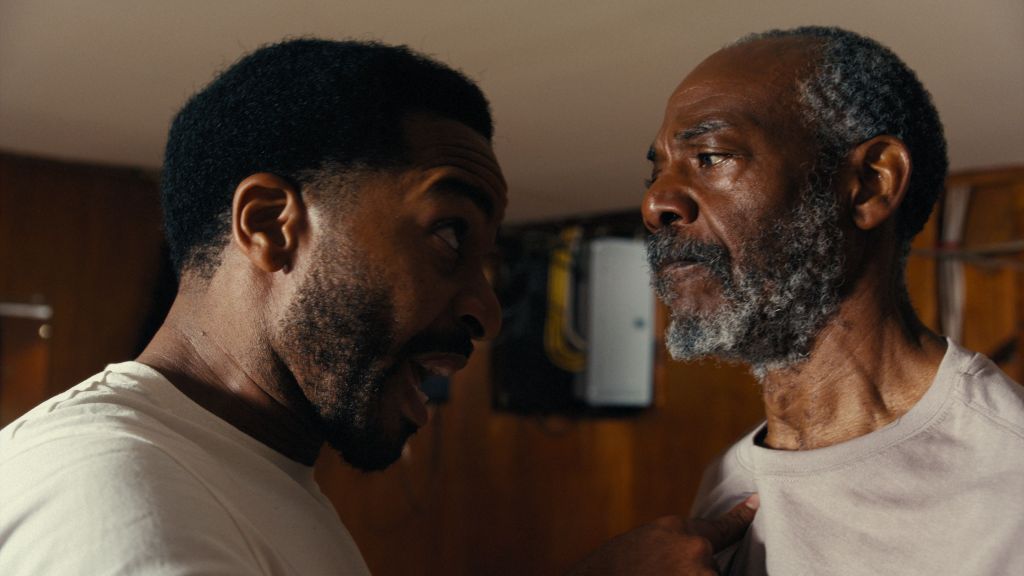
Meanwhile, in a bad part of town, La’Ron (John Earl Jelks) a homeless addict with a long, grey beard, struggles to make it through each day. He ekes out his meagre existence collecting spare change for shining hubcaps and washing cars outside a skid-row liquor store. But when he ends up in hospital, near-dead after a severe beating by a stickup crook, he decides it’s time to go clean. His brother offers him temporary shelter, and sends him to rehab. His estranged wife Joyce (Aunjanue Ellis-Taylor) forgives him once again in hopes of future familial reconciliation. But what does homeless La’Ron have to do with artist Tarrell? He’s his father, and  bad blood flows between them. He taught his son that as a black man, no one will care about him, no one will help him, and unless he gets tough and works extra hard, he’ll never survive and no one will care. But to Tarrell, the abuse visited upon him by his father was mean, self-serving and sadistic, exploiting his son’s labour to pay for his crack habit. And now La’ron shows up at his door again — what is it he wants now? Can father and son talk honestly? Has La’ron’s nature change? Can Tarrell ever forgive him? And can this extended family be saved?

Exhibiting Forgiveness is a multigenerational look at the hidden fissures and cruelty of masculinity unintentionally visited by fathers upon their sons. It’s rich and moving in its portrayals. The story is told both as a drama and as an artist’s representation of current and past events. We see Tarrell paint three youths; one of them his younger self (Ian Foreman). He later erases two of them by obliterating  their images with whitewash on the canvas. In another he cuts his teenaged self out of a painting with an x-acto knife, later draping the missing image on a chair,

So I’m watching this movie with the striking canvases in the paintings — this is not just anonymous crap-art made-up for the movie, it’s the real stuff — but when  Tarrell violates the art by splashes white paint or cutting it up… I was a bit disturbed, thinking, OK, the director is making a point, but he’s also destroying another artist’s work. So I looked him up afterwards:   The director is an artist, the paintings are his, and cutting up and altering his own canvases is an integral part of his work. He’s primarily an artist, and this is his first film. Watching the movie, I liked the passion of the acting and the emotional (and physical) violence in the characters they portrayed. But once I connected it with Titus Kaphar’s physical art, it suddenly became something much bigger than the sum of its parts. 

Exhibiting Forgiveness is an impressive first feature.

My Dead Friend Zoe opens this weekend in Toronto; check your local listings; and Exhibiting Forgiveness is now available on VOD. 

This is Daniel Garber at the Movies, each Saturday morning, on CIUT 89.5 FM and on my website culturalmining.com.