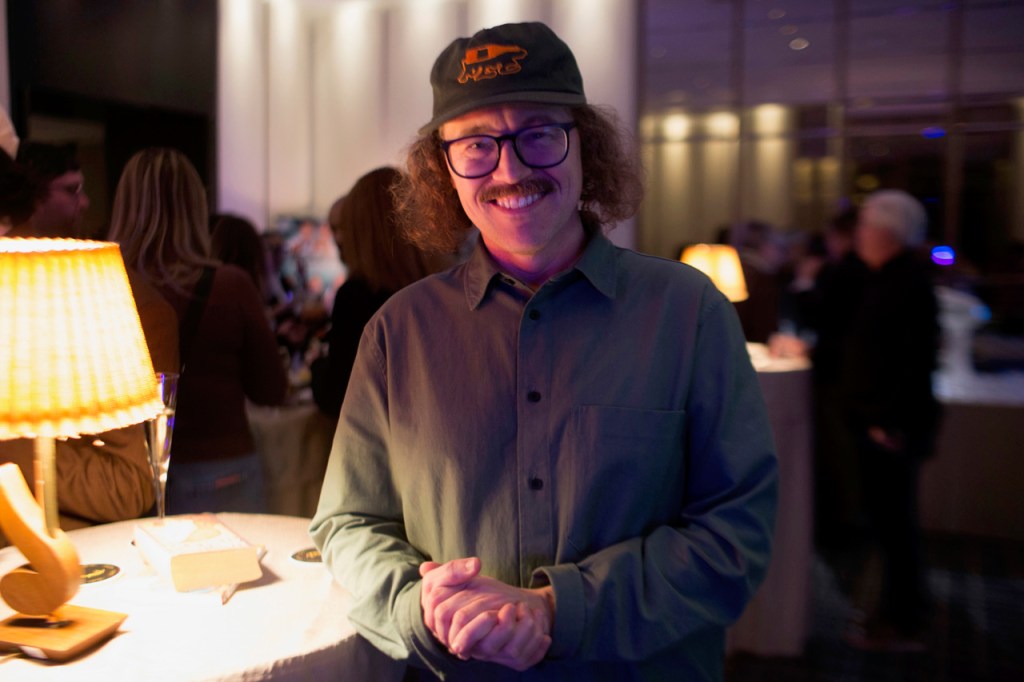
Daniel Garber talks with Matthew Rankin, Ila Firouzabadi and Pirouz Nemati about Universal Language at #TIFF24

Photographs by Jeff Harris.
Hi, this is Daniel Garber at the Movies for culturalmining.com and CIUT 89.5 FM.
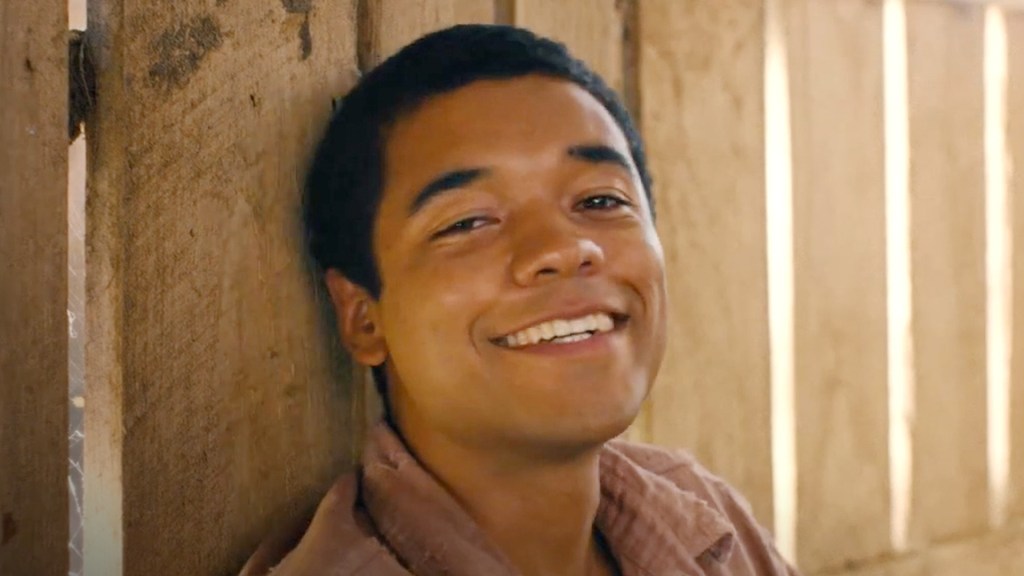
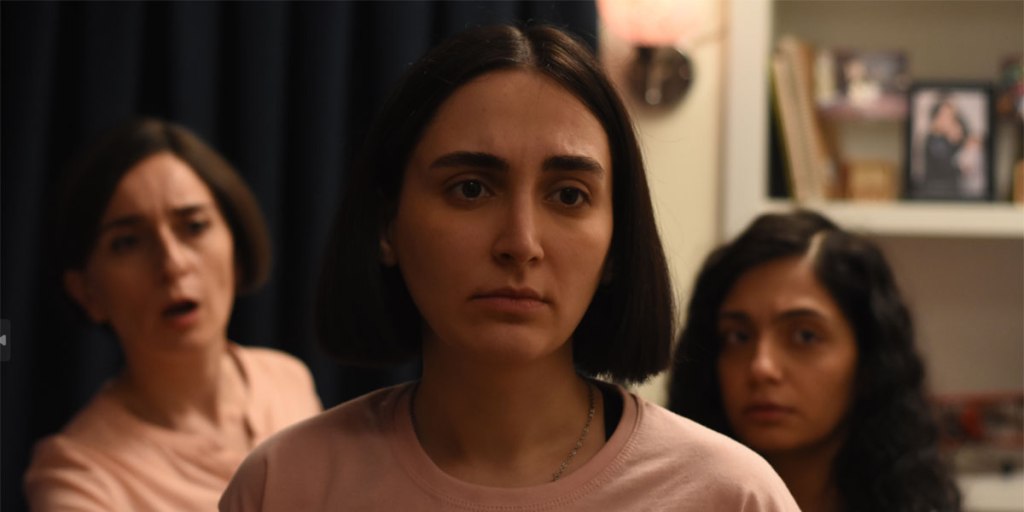
It’s December in Winnipeg. Matthew Rankin, a Montreal bureaucrat, is travelling home to see his elderly mother. Most of his favourite spots are still there, but something is different; he feels lost, alienated. He sees two girls trying to free a large banknote frozen in ice. And he encounters a man who welcomes him into his home. After many years spent working in French, he is relieved to return to his native tongue and culture. But who would have guessed his universal language… is Farsi?

Universal Language is the name of a dream-like and haunting new feature that reimagines Canada’s two solitudes: francophone Quebec, and the rest of the country a unique mixture of Iran and the vast northern dominion. It’s as if Winnipeg froze unchanged somewhere in the 1980s and morphed into a non-religious People’s Republic of Iran. It’s co-written and directed by award-winning Winnipeg filmmaker Matthew Rankin, whose experimental films reimagine the country in a stylized and retro milieu. I interviewed him in 2020 about his first feature The Twentieth Century. The co-writers are both Iran-born and Montreal-based. Actor and multi-disciplinary artist Ila Firouzabadi is known for the violence and intimacy of her sculptures; while independent filmmaker, artist and actor Pirouz Nemati is completing an upcoming documentary on the matriarch of Montreal’s Byblos Le Petit Café.

I spoke with Matt, Ila and Pirouz on site at #TIFF24
Universal Language was lauded at Cannes and TIFF, on the list for an Oscar nomination for best international film, and will open in theatres soon.
Dangerous places. Films reviewed: Flight Risk, Presence, Nickel Boys
Hi, this is Daniel Garber at the Movies for culturalmining.com and CIUT 89.5 FM.
Mike Leigh’s Hard Truths is finally opening theatrically this weekend; I loved it at TIFF, it’s one of the best movies of the year and Marianne Jean-Baptiste’s performance as Pansy is unparalleled — don’t miss Hard Truths.
But this week I’m looking at three more movies set in dangerous places. There’s a witness in a prop plane in Alaska, a family in a haunted house, and two teens in a reform school that’s rotten to the core.
Flight Risk
Dir: Mel Gibson (Review: Hacksaw Ridge)
Winston (Topher Grace) is a bookkeeper on the lam. He used to work for the mob, but when they found out he was pocketing too much of their earnings he decided to run. Now he’s hidden away in a remote corner of Alaska where he’s sure they’ll never find him. They didn’t find him, but a pair of US Marshalls did. The cops are led by the hardboiled Madolyn (Michelle Dockery). She’s eager to be on active duty, after years stuck at her desk. She promises Winston full immunity if he agrees to testify. Now she just has to safely bring him to the lower 48. But first to an international airport in Anchorage. It’ll be a short ride over some mountains, and they’ll be on their way. Sure enough, there’s an old prop plane waiting on the tarmac the next morning. The pilot, Daryl (Mark Wahlberg) is a bit of a character, who directs his non-stop patter toward Madolyn. She sits beside him in the cockpit, with Winston — a potential flight risk — safely chained down in the back. Everything’s going perfectly until they realize the plane isn’t heading in the right direction. And the face on Daryl’s pilot license? Well, it isn’t Daryl. Who is in danger, who is dangerous, and who can safely fly the plane to Anchorage?
Flight Risk is a compact, action-thriller set aboard an old prop plane flying over the Alaskan mountains. It’s fast-moving,
funny and a bit violent. The characters are all cartoonish: Mark Wahlberg has his head shaved with a deranged smile like Jack Nicholson in the Shining. Michelle Dockery, an English actress makes a good tough-as-nails cop. And Topher Grace completes the triumvirate playing Winston as an awkward petty criminal trying to overcome his fears. It feels like those Covid-era movies, with its small cast and single location. But in this case, it’s the constant fights and the changing balance of power in a tiny enclosed space — aboard a fast-moving plane — that give this film its oomph.
Flight Risk is no masterpiece, but I enjoyed it.
Presence
Dir: Steven Soderbergh (The Laundromat, Side Effects, And Everything is Going Fine)
A typical family is moving into their new home. It’s beautiful, quite old, with lots of wood and windows. Chloe and Tyler (Callina Liang, Eddy Maday) each have their own room, but that doesn’t stop them from bugging each other. Tyler is a self-centred high school jock who wants to join the in crowd, and will do anything to get there. To booster his chances, he brings a popular, but suspect, guy Ryan (West Mulholland) into the house. Ryan has his eyes on Tyler’s younger sister Chloe, who is going through the trials and tribulations of adolescence and self doubt. Their Mom and Dad (Lucy Liu and Chris Sullivan) are also adjusting. She’s the main breadwinner in this family, and is facing a crisis at work. Has she been cooking the books? Dad — an educator — is more laid back, but still senses trouble, especially when it’s interfering with their relationship. But none of them seem aware of a bigger problem that affects them all: The place is haunted! There’s a ghostly presence in this house, that has been there a long time, and is not going anywhere. It floats through the place, unseen and unheard, observing everything but doing nothing. Until it starts letting itself be known. Is this presence a ghost or a poltergeist? Is it good or evil? And what will it do to this family?
Presence is a typical family drama but seen through the eyes of a ghost. The camera (meaning the presence) never leaves the house, and if someone steps outside we can’t hear what they’re saying. It’s not a real horror movie; while there is a
hint of the supernatural, and a fair bit of suspense, it doesn’t overpower the drama.
And yet… I quite liked this movie. Steven Soderbergh is hit and miss. Some of his films are cheap-looking and predictable, filled with clichéd characters and cookie-cutter stories. Others are innovative and surprising. This one totally works
If you’re looking for a typical horror movie, this ain’t it, but if you want something new and different, you should check out Presence.
Nickel Boys
Co-Wri/Dir: RaMell Ross (Hale County This Morning, This Evening)
(Based on the novel by Colson Whitehead)
It’s the early 1960s in segregated Tallahassee, Fla. Elwood (Ethan Herisse) is an earnest and polite young student who lives with his grandmother (Aunjanue Ellis-Taylor). He loves reading and studying and is interested in Black American history and the civil rights movement happening all around him. When his history teacher, Mr Hill — an actual Freedom Rider! — gets him a scholarship at a prestigious Black technical school, everything is falling into place. Until, Elwood, while hitchhiking to his new school is arrested for riding while black! The driver of the car he’s in — a total stranger — is charged with some crime, and Elwood is his accessory. He ends up sentenced to serve time at a notorious reform school called Nickel Academy.
Nickel is a cesspool of corruption and cruelty, a school in name only. The kids are rented out as prison labour, like picking oranges off a tree. When he defends a little kid being beaten up at the school, Elwood is the one punished, not the bullies. And the punishment is severe: beaten until he bleeds or locked into a “sweat box”. Worse than that are the kids who suddenly “disappear”, never to be seen again. Luckily one kid stands up for him and becomes his best friend. Turner (Brandon Wilson) is as cynical as Elwood is idealistic. Elwood’s Nana has hired a lawyer to overturn his sentence — that’s what keeps him going. Turner — from Texas — has
never had it easy, so he has no hope, just the will to survive. For a black kid in the Jim Crow south, the law doesn’t mean much. He tells Elwood that to get out of this place alive you have to know the rules. There are no laws, or right and wrong; last till you’re 18 and you’ll be free.
But as time passes, and Elwood’s future looks increasingly bleak, he starts to keep copious records of the violence crimes and corruption at Nickel Academy. Can he get the information to the authorities? Will it do any good? And which of the Nickel boys will survive?
Nickel Boys is an excellent historical drama about two young black men trapped in a horrific reform school. While historical in its details, it’s experimental and unconventional in its form. Most scened are shot from Elwood’s or Turner’s POV, with the focus often the ground, the sky, someone else’s hands or feet or the inside of his own head. It’s disconcerting at the beginning but you get used to it. The narrative is not completely linear either, with time jumping forward 20 and
40 years, to show what happens to Elwood in the future. It’s full of compelling memorable images, like kids picking oranges using high wooden stilts. The two main actors are newcomers but very good in their portrayals. But over everything hangs the awful truth of the terrible crimes at these sorts of places (like the Residential Schools in Canada).
Nickel Boys is both moving and upsetting to watch.
Nickel Boys is now playing, with Flight Risk and Presence both opening in Toronto this weekend; check your local listings.
This is Daniel Garber at the Movies, each Saturday morning, on CIUT 89.5 FM and on my website culturalmining.com.
Wolf men and assassins. Films reviewed: Wolf Man, Soundtrack to a Coup d’Etat
Hi, this is Daniel Garber at the Movies for culturalmining.com and CIUT 89.5 FM.
It may be cold outside, but things are burning up on the big screen. This week I’m looking a two new movies, a thriller horror and a documentary. There are wolf men in Oregon, and assassins in Congo.
Wolf Man
Co-Wri/Dir: Leigh Whannell
It’s present-day San Francisco. Blake (Christopher Abbot) is a lapsed writer who devotes his life to his wife and daughter. Charlotte (Julia Garner) is a careerist who is rarely at home, so Blake takes on the parenting role. He spends all his time with their precocious 10-year-old daughter, Ginger (Matilda Firth). But he and Charlotte are constantly bickering about her absentee-mom-ism. So when a package arrives with his late father’s will and a set of keys, he wonders if this is the miracle they need to keep thew family together. He has inherited — a house, a barn, and countless acres of lush green forest — the beautiful country he grew up in. Blake suggests the three of them go on a road trip together for some quality time. Young Blake was raised in isolation by a hard-ass survivalist who was strict and demanding toward his motherless son. That’s why Blake is so indulgent towards Ginger, who still dresses like a Disney princess at age 10.
So off they head for his isolated cabin in remote Oregon. But
what Blake seems to have forgotten is there are wolves in them thar hills! Big bad wolves, mean ugly wolves, the kind who stand on two feet and like wolfing down people like them. Sure enough, as they approach their farm one of them woolfies drives their u-haul off the road… and they’re forced to run for their lives. Luckily the house is still wolf-proof, with iron bars on all the windows. Unluckily, Blake gets himself slashed by the Wolf Man, and he’s changing into something different. Can he keep his vulpine urges in check and protect his family from harm? Or will he be the biggest danger to them of all?
Wolf Man is a cabin-in-the-woods werewolf movie with a few new twist. In this version, people don’t turn into wolves on a full moon and then change back again; they’re in it for the long haul. And these werewolves aren’t sleek, or sexy or furry, never mind cute or loveable. They’re more like zombies infected with a horrible virus that makes their teeth and hair fall out and their skin go bumpy and gross. These werewolves want to eat flesh and blood, preferably human. Once infected, they can no longer speak or understand people.
There’s no sex in this movie, not even a kiss, it’s totally sterile. In this neck of the woods everyone’s a guy, with literally no women at all. And every man could be a wolf man. Women and girls are urban sophisticates, while men and boys are potential redneck killers. Christopher Abbot plays Blake as a male Oprah mom who is inevitably drawn back to the dangerous manliness he grew up with. Julia Garner’s Charlotte is a less developed character, just an aloof woman forced to either scream and run or fight back.
There are a lot of misfires in this movie. Charlotte dresses in black and white like an English barrister emerging from a courtroom; but turns out she’s a journalist leaving her newsroom… huh?? Blake who grew up in a world of misery and death that he left far behind, now decides to take his family back there… for vacation? Why? There are some good parts, too. Like when the story is told through a werewolf’s eyes and ears, we hear the pounding footsteps of a tiny insect, and see the world as a glowing colourful prism — very cool.
But not enough to save a story that doesn’t quite cut it.
Soundtrack to a Coup d’Etat
Co-Wri/Dir: Johan Grimonprez
It’s June 30, 1960, and the Democratic Republic of Congo is reborn as a free, democratic state, after nearly a century of brutal colonial rule under the King of Belgium. Leopold II is notorious for chopping off the hands of men, women and children who didn’t produce their quota of rubber. Congo (under the Union Minière) is a very rich country full of diamonds, copper, tin, and uranium, extracted and shipped to Europe and the US. Its rubber and copper were crucial to winning the world wars and their uranium fuelled the atomic bombs dropped on Japan. Its first elected prime minister, Patrice Lumumba, gives a speech on independence day, celebrating the transfer of power from their previous colonial rulers. He rightly condemns the colonial atrocities and speaks out in favour of the non-aligned movement (former colonies in Europe and Asia). While his speech is well-received locally, Europeans — including the Belgian
royal family — are shocked and aghast. Will they lose control of the Union Minière, and will the US give up its uranium source? Not a chance. They accuse Lumumba of being a communist, despite his stressing independence and nationalism. So they declare Katanga, an area rich in minerals, as independent from the DRC. The seceded state is essentially ruled by white Europeans and Rhodesian mercenary police and a military that operates with impunity, kidnapping miners and bombing uncooperative villages.
The US (especially the CIA), fearing the so-called communist Lumumba, launch a two-pronged campaign: a covert one, involving assassinations, bombings, kidnappings and regime change; and a diplomatic one, where famous American jazz musicians are flown to independent African states to perform as ambassadors of Jazz. Louis Armstrong, Dizzy Gillespie, Nina Simone and Max Roach, have no idea they ware working
for a CIA front. By January, 1961, the wildly popular Lumumba is dead, assassinated in Katanga with Belgian and American complicity.
Soundtrack of a Coup d’Etat is a fantastic documentary that retells the events of those six months. The doc is 2 1/2 hours long, so I can only give you the briefest outline of what it’s about. But the film itself is amazing, covering everything from pan-African nationalism and the Cold War, to non-aligned nations, colonialism, and the UN. We hear Malcolm X in Harlem, Andrée Blouin on women’s rights in Africa, Castro in NY, and Nikita Khrushchev’s famous shoe speech (where apparently he didn’t actually say what they said he said) in the general assembly. It’s filled with compelling imagery: Alan Dulles the head of the CIA smoking his pipe; a North Rhodesian mercenary recounting the tens of thousands of people they killed with impunity; the Soviets crushing Hungary, and Voice of America broadcasts. There are hilarious propaganda newsreels like the US parachuting record players and vinyl discs across the iron curtain. And through it all, jazz music from America to Africa.
The film is made of excerpts from previously-made audio
documentaries combined with non-stop black and white footage and stills. Most cuts are only about 2-3 seconds, giving the whole film the feeling of a glorious collage of African history. (It’s similar to the films of Adam Curtis, but without his spoken narration.) Many of the subtitles are large fonts superimposed on photos in blues, yellows and pinks, like the cover of a Blue Note jazz album.
A crucial historical document and a work of art, Johan Grimonprez’s Soundtrack to a Coup d’Etat is a must-see.
Soundtrack to a Coup d’Etat and Wolf Man both open this weekend in Toronto; check your local listings.
This is Daniel Garber at the Movies, each Saturday morning, on CIUT 89.5 FM and on my website culturalmining.com.
Daniel Garber talks with José Avelino Gilles Corbett Lourenço about Young Werther
Hi, this is Daniel Garber at the Movies for culturalmining.com and CIUT 89.5 FM.
Photos by Jeff Harris.
It’s a sunny, summer day at Toronto’s Union Station. Werther, a young dandy from Westmount, has just arrived with his neurotic, best friend Paul. Werther is there to pick up a family heirloom, and to explore the town. But soon after his arrival he meets Charlotte, a pretty, witty and kind young woman. It’s her birthday! They end up discussing Salinger, dancing a waltz together and smoking a joint. Werther is smitten: this is the woman he wants to marry! He plans to
sweep her off her feet. But things are not so simple. Charlotte serves as a defacto mother to her six orphaned siblings, and is engaged to Albert, a much older and more successful lawyer. Can young Werther win Charlotte’s heart? Or is he headed for disaster?
Young Werther is a new Canadian romantic comedy based on Goethe’s famous 18th century coming-of-age novel, updated to modern times. It’s a love triangle full of passion and lovelorn loss. It’s written and directed by award-winning,
Toronto-based filmmaker José Avelino Gilles Corbett Lourenço. José is best known for his short films and music videos but also has an accomplished history in advertising. This is his first feature.
I spoke with José in Toronto via ZOOM.
Young Werther had its world premiere at TIFF24 and is now playing in Toronto.
The thrill of uncertainty. Films reviewed: Harbin, Babygirl, The Brutalist
Hi, this is Daniel Garber at the Movies for culturalmining.com and CIUT 89.5 FM.
First let me wish you all a Happy New Year! With a new year comes renewal, hope… and potential dread. So this week, I’m looking at three new movies where people face potentially dreadful situations, partly of their own making. There’s an abused architect, a compromised CEO, and a sympathetic assassin.
Harbin
Co-Wri/Dir: Min-ho Woo
It’s 1909 in Korea. After defeating a European empire in the Russo-Japanese war, Japan is flush with imperial ambition. They want more colonies on the mainland and are looking hungrily at Korea, Manchuria, Mongolia, and China. But some independence-minded Koreans are regrouping to fight Japan. Their leader, Ahn Jung-geun (Hyun Bin), managed to defeat a Japanese battalion in a bloody battle. But when, following international laws, Anh released the disarmed POWs, their leader Mori (Park Hoon) shot a cannon at their base killing everyone except Anh. Now the survivors are meeting in Vladivostok to decide what to do next. This includes Kim (Jo Woo-jin) his closest ally, and Woo, (Park Jeong-min) his biggest rival. And some of them think Anh is a Japanese mole. To atone for his mistakes and to do something big, he vows to assassinate Ito
Hirobumi (Lilly Franky: Shoplifters, Like Father, Like Son) one of the top statesmen of Imperial Japan who is calling for the annexation of Korea.
To do this killing Anh must make his way to Harbin, a rail hub city right on the border of Russia and northeast China where Ito plans to give a public speech. But If he travels by train he will be caught. He must turn to a former comrade turned bandit, Ms Gong (Jeon Yeo-been) to try to secure explosives. But there is a traitor in their midsts, telling the Japanese all their plans. Can they make it to Harbin undetected, find the rat, fool their enemies, and carry out the assassination? Or are they fated to be erased from their country’s history?
Harbin is a vivid and gripping retelling of a famous historical event. It’s a classic cloak & dagger, full of action, thrills, drama, and deception. It’s done in the traditional style, with the name of each character appearing on the screen to help
you keep track of which moustachioed fighter is which. But easier said than done, when everyone pulls down the brims of their fedoras to cover their faces. The locations are amazing: Anh crawling across the frozen waters of the Tumen River, horse caravans on the sands of Mongolia, ancient Russian train stations… very impressive! The sets and costumes are great too, with a drunken warlord festooned in animal furs or the ceiling lamps aboard a Russian train, swinging from side to side. If you have any interest in action-thrillers, spy stories or even NE Asian history, Harbin is the film for you.
Babygirl
Co-Wri/Dir: Halina Reijn
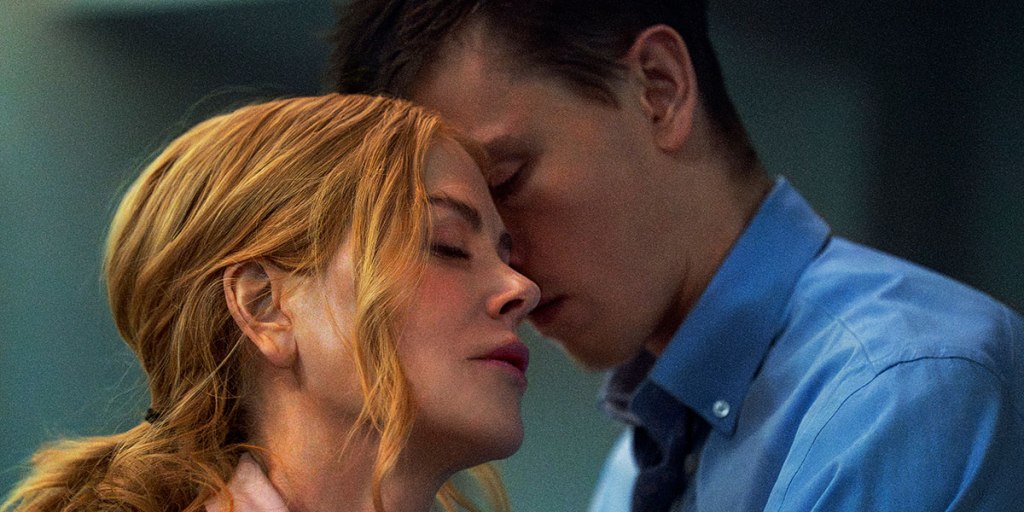
Romy (Nicole Kidman) is the CEO of a large, successful corporation that makes automated parcel-sorting equipment — similar to what Amazon has in their warehouses. She lives with her husband Jason a play director (Antonio Banderas) and their two teenage daughters, Isabel and Nora. Her life is almost perfect, but is missing a certain…. je ne said quoi. She is not sexually satisfied. One day she is startled by a vicious dog running rampant outside her office tower. She witnesses a random young man calm the dog down and return it to its owner. Later, inside her office, she is introduced to her latest intern; it’s the same guy she saw outside. Samuel (Harris Dickinson) has an unusually forthright manner, almost rude and overbearing for someone so young. He makes her feel unhinged and yet… intrigued. Who is this twerp, and why is he like that? She finds him overconfident and almost ridiculous. And yet… eventually, to her great surprise, they kiss and sparks fly.
Soon she is secretly meeting him in seedy hotel rooms for furtive sex. But he wants more — total domination over her in an S&M relationship. Romy loves her husband and kids has never done anything like this before. Even though he takes the dominant role, in real life she holds all the cards: she’s older, richer and his boss. She has more to lose, though, and it’s that threat that excites her. And she can’t got enough of him. What will happen if word gets out? Has she bit off more than she can chew?
Babygirl is an erotic drama about an older woman’s fling with
a much younger man for the thrill of it all. It’s both highly sexualized and yet uncomfortable to watch in parts. It’s entirely told from Nicole Kidman’s (Before I go to Sleep, Genius, The Beguiled, The Killing of a Sacred Deer, Boy Erased, The Upside, Destroyer, The Goldfinch, Bombshell, The Northman) Romy’s point of view; we share her agony, her ecstasy, her cringing embarrassment (he treats her like a domesticated pet). As Samuel, Dickinson is opaque, functioning mainly as her erotic foil. He’s usually an excellent actor (Beach Rats, Triangle of Sadness, Scrapper, The Iron Claw) but in this movie he takes second all the way. Some people love this movie, others despise it. I’m somewhere in between. The plot is just a slight twist to the hoary old cliche of the powerful executive submitting to a dominatrix. I don’t need to watch a grown woman lick milk from a saucer. But other parts are quite exciting and altogether it’s worth it for Nicole Kidman’s performance.
The Brutalist
Co-Wri/Dir: Brady Corbet
It’s post-WWII. László Tóth (Adrian Brody: Splice, Predators, The French Dispatch, Asteroid City) is a holocaust survivor from Hungary who arrives in America as a displaced person. His wife Erzsébet (Felicity Jones) and niece Zsófia are nowhere to be seen. His cousin Attila (Alessandro Nivola) gives him a place to stay in his furniture store and puts him to work designing and building chairs. Things look up when the son of an oligarch offers him a job redesigning his father’s home library. Laszlo takes to it like a fish out of water, building a modernistic room with synchronized wooden panels and shelves beneath an open skylight. But when the industrialist Harrison Lee Van Buren Sr. (Guy Pearce) sees it, he goes ballistic and fires him without pay. Soon after his cousin falsely accuses him of sleeping with his wife Laszlo finds himself unemployed, homeless and addicted to drugs. He gets work doing manual labour at a ship yard with Gordon (Isaach De Bankolé) a man he
befriended earlier until the industrialist who fired him seeks him out ago. Turns out Laszlo was a Bauhaus architect before the war, and the library was featured in modern architecture. Lee immediately rehires him, this time to build a monumental memorial on a hilltop in honour of his mother. But conflicts still trouble the two men’s relationship. Will Laszlo ever complete his masterpiece? Or will Lee crush him with his oppressive and egoistical nature?
The Brutalist is a moving drama about the American Dream and the class struggle between two men. (The title refers to the Brutalist style of architecture Laszlo favours). It’s a full-fledged four hour epic, compete with an overture, intermission and various story lines within the plot. I’m only giving you a taste of it here, a three-minute review of a four hour movie. It is visually and audibly stunning, both in design and execution, from the score to the crisp camera work, even the surprising credit roll. The acting is superb — I’m referring to Brody, Pierce, Jones and the rest of the large cast. This is a mature film made by a young director and former child actor. I’ve only seen one other movie by him, Vox Luxe, which, while visually interesting, didn’t have much to it. The Brutalist takes a quantum leap beyond that, filling in all the parts left out of his previous work. The movie is exciting, full of both hope and crushing devastation. It’s so well done that I left the theatre assuming it was a biopic, only later realizing it’s entirely fictional.
The Brutalist is a stupendous movie that must be seen to be appreciated.
The Brutalist and Babygirl are now playing in Toronto, with Harbin opening this weekend; check your local listings.
This is Daniel Garber at the Movies, each Saturday morning, on CIUT 89.5 FM and on my website culturalmining.com.
Mark your calendars, boys and girls, because the annual Canada’s Top Ten film series starts in just a few weeks. If you’re into highly original movies, you really gotta check this out. I’ve already reviewed many of them, or interviewed them already, but there’s lots left to discover.
Cronenberg’s The Shrouds, a truly bizarre mystery about an entrepreneur who invents burial shrouds that allow you to see in real time the decaying buried body of your loved one. It stars Vincent Cassell, Diane Kruger and Guy Pearce. Or Kazik Radwanski (
brilliant Matt & Mara, with an almost totally improvised script follows old friends (Matt Johnson, Deragh Campbell) who suddenly meet each other again, opening a real can of worms. There are also short films at this festival — I can’t wait to see NFB animator
curious what Canadian actor Connor Jessup is up to now with his short film Julian and the Wind. He starred in the movies
The Seed of the Sacred Fig
influence of an authoritarian government on all of their lives. It was shot entirely in Iran, on the sly, by noted director Mohammad Rasoulof who smuggled it out of the country. (It was edited in Germany.)
The Room Next Door
daughter). And though deathly afraid of death, Ingrid agrees. They move to a gorgeous isolated wood-and-glass
between. Instead it is subtle, soft, and gentle. And yet it still clearly is Almodovar’s work. The set design, colour palette, camerawork, the
leave a comment